

May 21, 2024, 11:24 AM CT


Share
MADISON, Wis. (CIVIC MEDIA) – DNR confirms the ‘Brood XIII’ 17-year Cicada is seen rising from the state’s southern soil.
The Wisconsin Department of Natural Resources confirmed Tuesday the first sighted emergence of cicadas in Wisconsin.
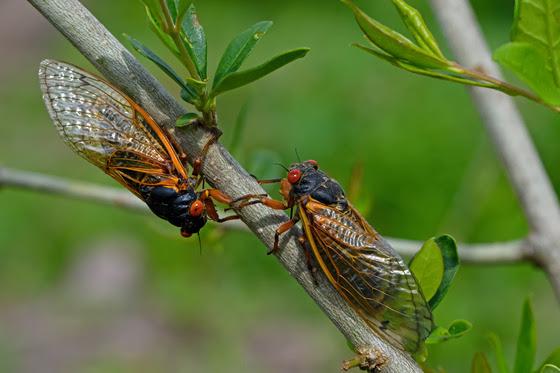
A resident of Lake Geneva sent photos of the newly emerged bug (Magicicada spp.) taken on Friday, May 17th. The DNR confirmed that these insects are indeed the Brood XIII cicadas.
“Dozens are hatching in my yard,” the photographer wrote in their email to the DNR.
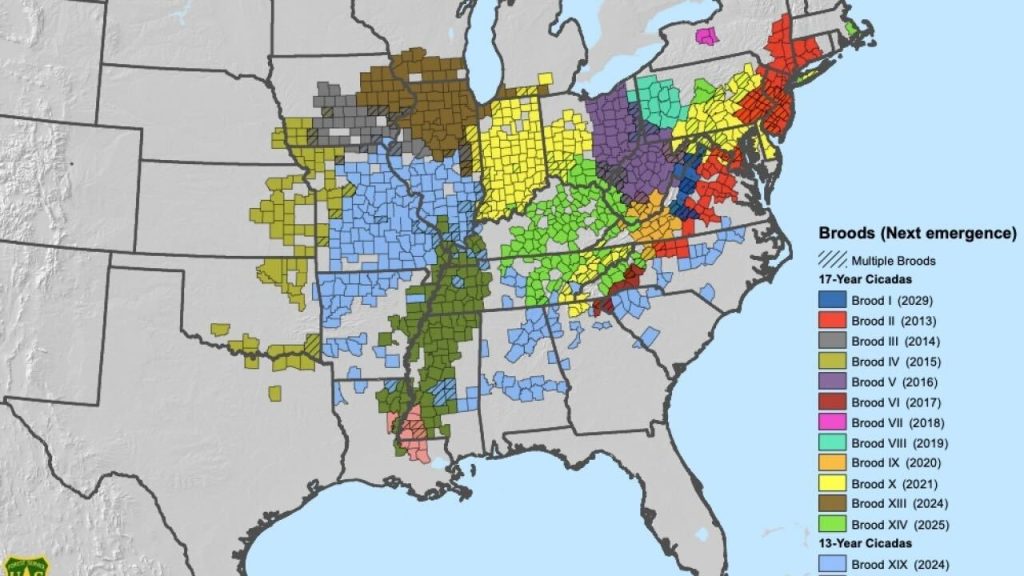
Periodical cicadas are found in the eastern half of the United States and nowhere else. There are seven species, four of which have 13-year life cycles and three that have 17-year cycles. Of those, there are 15 “broods” or year classes.
The 17-year Brood XIII is the only one known to emerge in Wisconsin, though only in the southernmost counties. However, other parts of the Midwest, like Illinois and even further south, will see the emergence of both Brood XIII and the 13-year Brood XIX. This will be the first time these two broods have emerged in the same year since 1803… that’s 221 years ago!
Cicadas’ deafening mating calls can be annoying; after they mate, their carcasses can become a nuisance as they litter the ground. The insects do not bite or sting; in fact, many people cook and eat cicadas; some even call them “tree shrimp.”
When cicadas emerge, they emerge en masse. Densities of tens to hundreds of thousands of cicadas per acre can be common. The noisy insects remain active for four to six weeks after emerging, feeding by sucking plant fluids from a wide variety of deciduous plants and shrubs. This feeding generally does not injure mature plants that are otherwise healthy.
The insects are expected to keep emerging in southern Wisconsin into June and will not appear again in the state until 2041. Individuals who spot cicadas on their property or public lands are encouraged to report the sighting on the Cicada Safari app to help track the co-emergence of Broods XIII and XIX.
For more information, visit the University of Wisconsin–Madison’s Periodical Cicadas in Wisconsin webpage.

Brittney Merlot is Civic Media’s Meteorologist. Email her at [email protected].
Want More Local News?

Civic Media
Civic Media Inc.
The Civic Media App
Put us in your pocket.