
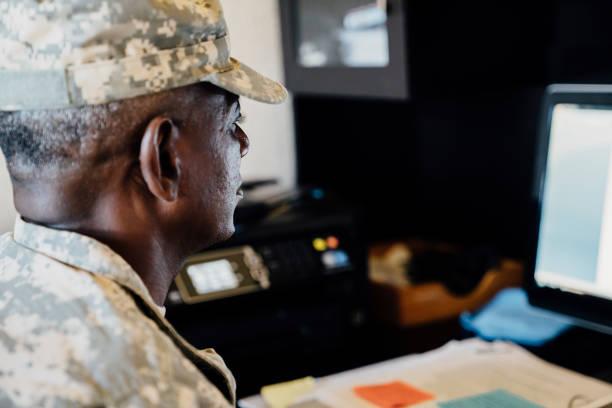
Source: Inti St Clair / Getty Images
The Draft Is Back on the Table — And Our Communities Need to Pay Attention

Apr 10, 2026, 4:46 AM CT


Share
Let’s be clear about something. The United States military has never been an equal opportunity institution — not historically, not racially, not economically. And now, with automatic Selective Service registration set to take effect nationwide in December 2026, it’s time for our communities to have a real conversation about what this means for our sons, our daughters, and yes, even our undocumented neighbors.
Starting this December, young men between the ages of 18 and 26 will be automatically registered for the military draft pool, a measure tucked into the National Defense Authorization Act that President Trump signed into law late last year. According to CNN, no longer will young men need to remember to walk into an office or check a box at the DMV. The government will do it for them.
Before anyone panics, understand this: Congress would still have to approve an actual draft before anyone gets an induction notice. And not every registered man would be called — there would be a lottery system based on birthdays (CNN, 2026). But in a political climate where the Trump administration has declined to rule out putting American boots on the ground in Iran, the timing of this renewed attention on draft policy is not lost on anyone paying attention.
Our community has always borne a disproportionate share of America’s military burdens. During the Vietnam era, the draft exposed the fault lines of race and class with brutal honesty. Black men were drafted at higher rates, assigned to combat roles more frequently, and denied the deferments that wealthy and well-connected white men used to avoid service altogether. The wounds of that era — both physical and spiritual — never fully healed.
Since the end of the draft in 1973, America moved to an all-volunteer force. But “volunteer” has always been a complicated word. Today, approximately one-third of all active-duty service members — about 407,000 people — self-identify with a racial minority group. Black Americans make up 21.4% of active-duty Army soldiers alone. According to U.S. military data, people of color are not underrepresented in our military. They are, in many cases, over-represented — drawn in by enlistment bonuses, college benefits, and a lack of comparable economic opportunity at home.
The share of racial and ethnic minorities in the military has grown steadily in recent decades, with minorities now making up more than 43% of active-duty forces (Pew Research Center, 2026). That is not a coincidence. That is the consequence of policy choices that have underinvested in Black and brown communities for generations.
Now here is something that will raise eyebrows in neighborhoods across Milwaukee. The automatic registration requirement applies not only to male U.S. citizens, but to green-card holders, refugees, asylum seekers, and undocumented men between 18 and 26. Those on nonimmigrant visas are exempt. Read that again. Undocumented young men — the same people this administration has been deporting at record rates — are now being folded into the draft registration system.
The cruel irony writes itself. A government that has made immigrants feel hunted now wants them registered for potential military service. And while military service has historically offered a pathway to citizenship, that pathway has grown narrower and more uncertain under current immigration policy. Families deserve clarity, not contradiction.
What does all of this mean for our young people? It means we need to be informed. Failing to register remains a felony — punishable by up to five years in prison and a fine of up to $250,000 — and can result in the loss of federal student loans and certain federal jobs.
Know your rights. Know the exemptions. And know that an informed community is a protected community.

Dr. LaKeshia Nicole Myers is an accomplished education leader, public servant, and advocate for educational excellence with more than 17 years of experience across K–12, higher education, and public policy. A former member of the Wisconsin State Assembly (2019–2024), she championed education initiatives while serving on key legislative committees and previously worked in federal policy with the U.S. House of Representatives. Dr. Myers currently serves as an Adjunct Professor of History at Lakeland University and Managing Partner of EduStar Consulting, bringing deep expertise in instructional leadership, special education, and equity-focused educational reform.
Want More Local News?

Civic Media
Civic Media Inc.
The Civic Media App
Put us in your pocket.