
Source: Milwaukee Neighborhood News Service
This Is Bigger Than Litter: One Citizen’s Blueprint for Saving Milwaukee’s Water Future

Apr 17, 2026, 10:31 AM CT


Share
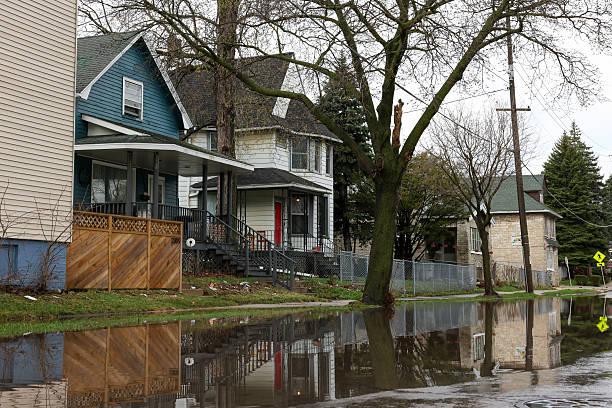
In August of 2025, Milwaukee got a message written in water. Up to 14 inches of rain fell in two days. The tunnel that was supposed to hold it all — the deep tunnel that Milwaukeeans have been told for decades was the solution — gave way. Two treatment facilities were overwhelmed. And 5.14 billion gallons of raw sewage poured into our rivers and into Lake Michigan. The largest overflow since the tunnel opened in 1994. More than $200 million in damages. Sixty-five water rescues. Families displaced for weeks.
And when Wisconsin asked the federal government for $26.5 million to help repair public infrastructure, the answer came back: No. No explanation given. Wisconsin appealed. Denied again. Milwaukee County — already carrying a $46.7 million budget deficit — was left to absorb $22 million in repair costs on its own. Bus routes were cut. Behavioral health programs were reduced. The people who had already lost the most were asked to lose a little more.
Now, there are people who will tell you that a flood is an act of God. That you can’t legislate rain. That this is nobody’s fault. I want you to hold that thought and sit with it, because Dr. Oby Nwabuzor has written a response to that argument, and it is thorough, it is documented, and it does not accept the premise.
Dr. Nwabuzor is not a civil engineer. She is not a water systems expert. She holds no elected office. She is a Milwaukee citizen — a community leader working at the intersection of public health, real estate development, and systems innovation — who looked at what happened to her city and refused to be satisfied with condolences. The result is a policy brief that is already making its way across desks in this city and should be making its way across desks in Madison and Washington, D.C. as well.
Her paper is called Milwaukee’s Flooding Requires Legislation, Not Just Response, and the title says everything you need to know about her argument. She is not asking for a disaster fund. She is not asking for a candlelight vigil. She is asking for structural, durable, enforceable policy — and she has done the work of showing exactly what that looks like, tier by tier, jurisdiction by jurisdiction, committee by committee.
The neighborhoods that flooded were not random. They never are. NASA’s Applied Sciences program confirmed what many Milwaukee residents already knew: flood risk in this city is highest in neighborhoods that were historically redlined, and in areas where most residents are Black or Hispanic. Groundwork Milwaukee and the Medical College of Wisconsin went further, mapping every neighborhood by flood risk and by residents’ capacity to absorb flood damage. About 39 percent of Milwaukee residents live in a neighborhood with high flood risk, high vulnerability, or both. Black residents are disproportionately represented in those neighborhoods. This is not a coincidence. This is the architecture of environmental racism, and it did not arrive with the August storms — it has been building for generations.
The root of it, Dr. Nwabuzor explains, is infrastructure that was never designed for what Milwaukee faces now. The city’s combined sewer system — a single pipe covering 23.5 square miles of the oldest and most densely populated neighborhoods — was built to carry both sewage and rainwater. It was not built for the scale of storms Milwaukee now regularly receives. And the rules governing it, the funding behind it, and the legal obligations attached to it have not kept pace. That is the policy failure. That is what her paper addresses.
Dr. Nwabuzor lays out five concrete actions organized by urgency and jurisdiction. Two of them require nothing more than a Common Council vote — updating the city’s stormwater rule for new construction, and requiring that infrastructure dollars actually follow the flood vulnerability map that already exists and is already public. No new money. No state permission. Just political will.
A third action asks the County Board and the state legislature to move simultaneously to create a protected enterprise fund for stormwater infrastructure — a dedicated account that cannot be raided during budget season the way stormwater money has been raided for years. Forty-three states already operate their water utilities this way. Wisconsin should not be the exception.
The fourth action is a state backstop: a law that triggers automatically when the federal government denies public assistance after a declared disaster, so that Milwaukee County is never again left absorbing $22 million in flood recovery costs while cutting buses and mental health services. The political foundation for this legislation, she notes, is already in place — Governor Evers has included flood infrastructure funding in three consecutive state budgets, and U.S. Senator Tammy Baldwin and Congresswoman Gwen Moore have both condemned the federal denial on the record. The bill has not been introduced. Someone needs to introduce it.
The fifth action asks both the Common Council and the County Board to jointly demand that MMSD commit to a real, binding timeline on sewer separation — not a goal, not a vision, but a legal obligation with funding behind it and a displacement impact assessment required before a single shovel goes into the ground. Because Nwabuzor is also clear-eyed about the risk that infrastructure investment, without anti-displacement protections, simply pushes long-term Black and Brown residents out of the neighborhoods that have been promised relief.
What I want to add to Dr. Nwabuzor’s framework is a challenge to every elected official in this state: read this paper and ask what it demands of you specifically. Can the City of Milwaukee work with Secretary of State Sarah Godlewski to utilize the State Trust Fund Loan Program to modernize and expand its water and sewerage system? That program exists. That conversation has not been had. Is there room in Wisconsin’s agricultural policy to create meaningful diversion strategies — green infrastructure at scale — that could absorb catastrophic storm runoff before it reaches combined sewers in Milwaukee and cities like it? What are the statewide fiscal implications of more frequent and more severe flooding events on Wisconsin’s infrastructure budget, its insurance markets, and its housing affordability? What does it mean for homeownership — the primary vehicle for generational wealth in this state — when flood insurance becomes unaffordable or unavailable in entire ZIP codes?
And then there is the national question. What Milwaukee is experiencing is not unique to Milwaukee. Cities across the Midwest are living with combined sewer systems built for a different climate. Communities in the Southwest are watching aqueducts designed for the 20th century fail the 21st. The conversation Dr. Nwabuzor has started in Milwaukee is a conversation that belongs in Congress as well — about the long-term national investment in water infrastructure that the country has deferred for decades while the storms get bigger and the pipes get older.
I want to be direct: this problem is bigger than litter. It is bigger than any single mayor, any single county executive, any single legislative session. It is about what kind of city Milwaukee chooses to be, what kind of state Wisconsin chooses to be, and whether the people who have absorbed the most damage over the longest period will finally be treated as the priority the data says they are.
Dr. Oby Nwabuzor did not wait for a commission or a consultant. She watched her city flood, and she went to work. She did not come with abstractions. She came with committee assignments, ordinance language, companion resolutions, and a timeline. She came with the acknowledgment that the $96 million MMSD has committed, while meaningful, is not a solution to a billion-dollar problem — and that building the governance and financial foundation to get to that solution is the work that must begin right now.
To the members of the Milwaukee Common Council, the Milwaukee County Board, the Wisconsin State Legislature, the Governor’s office, and our congressional delegation: this paper is on your desk. The flood vulnerability map is public. The damage from August 2025 is documented. The federal denial is on record. The question now is whether you will act with the urgency the data demands, or whether the people of Milwaukee will be asked to wait through another storm season, another budget debate, another round of deferred maintenance — before someone decides that 39 percent is finally too many.
I do not believe they should have to wait. And I do not believe Dr. Nwabuzor does either.

Dr. LaKeshia Nicole Myers is an accomplished education leader, public servant, and advocate for educational excellence with more than 17 years of experience across K–12, higher education, and public policy. A former member of the Wisconsin State Assembly (2019–2024), she championed education initiatives while serving on key legislative committees and previously worked in federal policy with the U.S. House of Representatives. Dr. Myers currently serves as an Adjunct Professor of History at Lakeland University and Managing Partner of EduStar Consulting, bringing deep expertise in instructional leadership, special education, and equity-focused educational reform.
Want More Local News?

Civic Media
Civic Media Inc.
The Civic Media App
Put us in your pocket.