Transcript
Healthcare's Broken System: A Wake-Up Call
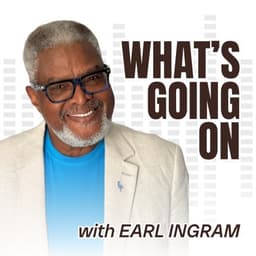
What's Going On with Earl Ingram · Thu Aug 13, 2026

Welcome back to what's going on with Earl Ingram.
It is always a privilege and an honor to have an opportunity to come before you to a listening audience.
I really pride myself in having conversations that are relevant.
Far too many people are on airways and they're talking about nonsense and things that don't really matter.
And that's why I'm so excited about my guest today.
If I really took the time out to talk about his bio, we'd still be here to this time next year.
But I'm gonna just try to give a short bio of my guest because he's just done so many wonderful things in his life.
So my guest is Dr. Peter Cowey.
And he is the William Wickoff Smith chair in cardiovascular research at the Lackinow Institute of Medical Research and Professor of Medicine and Clinical Pharmacology at Thomas Jefferson University in Philadelphia.
He is also the author of the upcoming book, Failure to Treat How a Broken Healthcare System Puts Patients.
and providers at risk.
It is that backdrop that I say and welcome Dr. Peter Cowley.
Good morning to you, sir.
How are you?
I'm doing well.
And I want to thank you very much.
Your introduction, by the way, was solidly on point.
There's nothing more relevant to talk about for people these days than health care.
You know, you know, I just I was saying to you earlier and I'll say it now.
before the audience, I am a 72 year old old geezer and uh I'm out geezer and proud to be a geezer right but but I in my life I've been blessed to never have been without health care and
And I was telling the doctor that, you know, as a young man, my dad worked in the auto industry and other places and he always had healthcare.
Healthcare was a part of, I don't care where you work, it was a part of the fabric of our nation.
And it was, if there was somebody who worked full time who didn't have healthcare, we would all be amazed.
because it was part of, I think, a moral imperative that corporations looked at their employees as people that they valued.
And so here we are at a time today where so many people, and we have a nation that says,
it's completely changed over the last 40, 50 years, 40 years or so, where they look at it as a handout.
And the short sightedness of a doctor, and then we'll let you go ahead and talk about this unbelievable book that is as timely as any book that has ever been.
And the name of the book is Failure to Treat.
is that the short-sightedness of not covering people with health care and they're talking about the cost of overall cost of health care and that we can't afford it.
Well, it's because of that short-sightedness that people wind up in emergency rooms that are just throwing money away with that backdrop.
Am I so far old based in what I just said, doctor?
I know you're horribly on point, Earl.
I mean, you've spread up probably three or four of the most important issues that the book deals with and that I've been concerned about for many years.
One is lack of availability of healthcare.
It's unimaginable that we would have gone from what you described 50 years ago.
My father, by the way, was a teamster.
He was a truck driver.
Okay,
yeah.
Yeah, and he had great insurance.
But the other thing or all that was really interesting back then is that healthcare didn't cost as much.
I remember going to the family doctor.
He had very simple office, no receptionist, no office.
You walked in, you didn't even have an appointment.
You waited your turn, you went in the same, right?
Ten bucks.
Ten bucks, you got your pills, you got your shots, you got examined, and the guy was so good to you that you thought he was God.
It was honest to God, Earl.
It's what prompted me to go into medicine was my interactions with that guy.
He was just such a, he was like a demigod to my parents.
But anyway, we didn't have to worry if we went into the hospital, my father had horrible asthma.
And every once in a while, he'd have to go to the emergency room and get epinephrine or some other shot or whatever.
Never cost him a penny, nothing, zero for all those visits.
So how we got there, from there to a situation where
upwards of 30 or 40 percent of people in this country don't have health insurance.
And then the other thing that people don't realize is another 30 or 40 percent are underinsured.
They have incredible copayments.
They're paying a ridiculous amount of money out of pocket, and they're not even covered for everything.
It is unimaginable.
But Earl, what you said, another thing that you said that I think is very important is that
This is a very rich healthcare system.
We've spent five and a half trillion dollars in 2025 on healthcare in the United States, five and a half trillion dollars.
And yet we have the worst healthcare system in the developed world.
There's no other country, no other developed country that has a worse healthcare system than we do.
Everybody else gets covered.
They get what they need, including their medications.
And they have better outcomes than we do.
So it's not only do we paying a lot of money,
We're not ensuring everybody, and we're not even taking care of the problems that we should be taking care of.
So doctor, so 30 years ago or so, maybe 40 years ago, there were private practices.
I had my own private doctor.
He had his own practice.
And so if I needed to see him, I could call him up.
He knew me personally.
He knew.
What was going on with me?
I'd call the doctor.
Hey dr. Dale I need to get in and see you he would he would say okay come on in this afternoon and And now I have a doctor a Primary doctor that I see twice a year when I'm not blaming the doctor, but when I see him His nurse sees me for about 15 minutes and then he runs in and he
He says, open your mouth and he looks in my ear and he puts the stethoscope on and he checks and then he hits my knee with a little hammer and he says, oh, you're doing fine.
I'll see you the next time around.
What happened?
Yeah.
Well, what happened was that we had the incursion of private equity and other mechanisms by which we wanted health care to generate more revenue.
And in order to generate more revenue, doctors need to see more patients.
So in order for that to happen, there's only so many hours in the day, visit times were shrunk.
The average visit time with a primary care doctor in the United States is 10 minutes, Earl.
How is a doctor who's taking care of all of your problems?
all of your medications, all your organ systems, supposed to be able to make an assessment in 10 minutes.
Oh, by the way, that also includes documenting the visit.
So that includes a note or some kind of an entry into a computer.
So what we've done is we've gotten a lot of physician assistants and associated professionals to come in, as you said, and sort of lay the groundwork.
The doctor visit is extraordinarily short.
trying to get hold of somebody in the office when you do have a problem is extraordinarily difficult.
Then the another thing that's happened earlier is that those doctors are not seeing you when you're in the hospital.
If you get hospitalized, you're not going to see your primary care doctor.
You're going to see a hospitalist who doesn't know you from Adam, doesn't understand your problems and fragments care because they have to order things and do things because they're practicing in a vacuum.
They don't understand your problems.
It's created a good deal of dissatisfaction among the public.
People are not happy with this system as it's currently been rolled out.
So let me ask you, Dr. Corey, you and I, a bit long of a tooth.
So we remember a time when this wasn't the case, but there's also a whole group of people who never saw the other time.
And so they're...
this is what they think it it's okay this is all they've ever seen and so you've you've written this book to try to bring attention to what we those of us who've been around a little while know is is is some a train headed down the wrong path and yet we can't change it because money and capitalism
has taken complete control over it.
And so the people in the discipline of medicine and health come second fiddle to that.
Am I
wrong?
No, you hit it right.
Again, you're very insightful, Earl.
You're right on point that when you mix medicine and business, when you mix medicine with making money, it's the formula for disaster.
Doctors, you know, people who go into medicine,
they understand they're going to make a comfortable living but they're not going into medicine in order the vast majority know that they're not going to make a lot of money there are there's always a few bad actors who take advantage but the vast majority of people nurses doctors especially nurses go into this because they they really do want to help people they really do want to take care of people but they get into the system where everything is put in their path to
Prevent them from doing the kinds of things that they want to do.
I'm sure that if your primary care doctor had 20 minutes He would he would he or she would love to sit down with you and talk to you about family and your problems They just simply can't do it I had a friend a very close friend with the college with in primary care and when his practice was bought out by a very large health care system they came to him and said
We have a problem with you.
You're not seeing enough patients.
And if you don't increase the number of patients, we're going to have to make sure you come in on Saturdays and do a full day on Saturday to make up for the backlog that you're not seeing.
And he said, but I want to spend more time with my patients.
And they said, that's just too bad.
You either do what we tell you or you're gone.
And eventually, the next month, he quit because he just couldn't take it anymore.
That's what's happening in primary care.
We're losing doctors because
They're under extraordinary pressure to produce and to make money.
You know, it's a can to an assembly line.
Yeah.
And so when I go in, the other part of this doctor is the unbelievable edifices that are built now.
Oh my God.
You know, I mean, again, I remember going into my doctor's office, like you said,
No frills.
Just a little office.
And he would spend, if it was 30 minutes, whatever it took.
And he would say, by the way, how's the kids?
How's your mom?
And while those things were going on, it was more personal.
But now, I don't know one hospital that survived.
that isn't just on a campus that is unbelievable.
It's like a mausoleum, and they're beautiful, right?
I mean, they've got the latest gadgets, and technology continues to advance, and they've got to have the latest, well, if they're buying all those expensive new items, they've got to certainly use
them.
So all these things add to the cost.
Is it safe to say
that?
Oh, it's totally out of control.
I mean, we have high tech in medicine that is replicated many times.
For example, in Philadelphia, we have more high tech.
I'm an arrhythmia, as you recall from my biography.
My area is cardiac rhythm abnormalities.
We have more arrhythmia laboratories.
for people get studies in this area where I live, then in the entire United Kingdom.
Wow.
Do we need all of these laboratories?
Of course we don't.
But when you have a laboratory, like you remember what Mark Twain said, you know, to a guy with a hammer, everything looks like a nail.
If you have a laboratory, you're going to use it.
you have to use it, you have to generate revenue to pay for it and for the staff that are in the laboratory.
So this competition that we have among big city hospitals, for example, and hospital systems has contributed to the waste and the high cost of medical care that
people just don't care about.
Patients want to talk to their doctors.
They want to have their doctors available when they need them.
They want their simple questions answered and they just basically want human care and they're not getting it because of the system that we've created.
You know, Dr. Cody, I could talk to you for 10 years because what we see here is almost criminal.
the competition, how many, um, and I'm forgetting now where they, they made, they created them not so long ago where you, they put your body in this machine and it, and it shoots pictures.
What is that machine?
An MRI or MRI machine.
And, and so they've got, everybody's got them.
And so because everybody's got them this competition.
And so we've got to do this.
We've got to move.
And yet, you know, the cost of those things, it's almost impossible to keep up with that.
As a person who doesn't have insurance, they're not going to get that kind of treatment.
Isn't there something immoral about that?
Well, let me take it one step further, Earl.
You've built these machines and you have a hospital and you're trying to create demand.
One of the ways that you create demand is by advertising.
Advertising for medical services is just off the charts.
And every hospital advertisement tells you that they are the best hospital.
I don't know how that happened, by the way.
I don't know how everybody that advertises is the best, but it somehow has happened.
And think about the amount of money that's spent.
on advertising things like drugs, hospitals, how about health insurance?
I don't know if you're a baseball fan or not, but I'm a
big Philly.
I
am.
I am.
I'm a big Philly's fan, because I'm hearing Philly.
If you look at the field... Sorry about
that, but anyway, go ahead.
If
you look at the field in Philadelphia, there's a great big advertisement along the first and third baselines for a medical insurance company.
Why do they need to, this is the largest medical insurance company in our area.
Why do they need to spend millions of dollars on advertising their services when they deny service to people who have common problems?
You know about this, right?
Pre-certification, you need a test, the insurance company says no.
They're trying to save money, but they have no problem spending money on advertising.
The situation is really, I think,
I think you're exactly right.
We're getting close to the situation, which is not only absurd, but it's getting to the point of whether it's actually moral or not.
You know, Dr.
Kowie, because I can just take my own life and my own experiences with health care and what I've been experiencing.
And it just so happens, I was taking the medication.
It's called Repatha Pretty new medication and the doctor prescribed it for me and I had been taking it and It was really making a difference with my a1c and all those kind of things just a great medication and and all of a sudden I'm looking to get a refill and I'm going to get the refill and the pharmacy says well You're no longer approved for it
And I'm like, okay, I've been taking this medication now for months and six months.
And now you're telling me you took me off another medication in order for me to take this new medication.
And now here I am.
I'm not taking either the old medication or this new medication that you prescribed and trying to follow that path as just an average person.
I got caught up in like a nightmare.
Try who's passing this on, they're passing it on.
Who do I talk to, the doctors can, the healthcare provider, all these different people.
And it took me almost a month and a half.
I'm supposed to take this every two weeks before we could finally get this worked out.
That's another part of this failure to treat.
and system broken that you're talking about.
Yeah, as you recall, Earl, in the book, there's a story about a woman who had a pretty unusual tachycardia heart rhythm problem.
Her heart would start racing.
It's a story in the book.
It actually was my patient.
All the stories in the book are anonymized so that we don't, you know, there's nothing about them that you can tell who it is.
We gave her some medication and it worked like stink.
It was, it was just terrific.
It took her arrhythmia away.
She was so happy.
We gave her samples and then when she went to get her prescription filled, it was denied by the insurance company and they wouldn't pay for it.
And she ended up going someplace else and having a procedure and the procedure basically destroyed her electrical system and she ended up, this is a 30-some-year-old woman ends up with a permanent cardiac patient.
That's an example of the insanity of the system where people like you and her need something that is already proven to be effective and safe for that indication.
And yet in the middle of treatment or before treatment even starts, it's denied.
I was on the phone, it must have been at least a half a dozen times with people at the insurance company trying to talk them into giving this woman this medication.
I was never able to do it.
It was completely, it was futile, and it was just an awful experience for both the patient, obviously, and for me as well.
You know, Dr, healthcare coverage.
People can't get healthcare coverage.
You know, I'm on Medicare, and so I'm fortunate, fortunate, that I have lived long enough.
If I wasn't on Medicare There by the grace of God goes I At my age and I'm pretty healthy 72 year old But but I would not be able to be as healthy as I am now Because with my doctors I go see my doctors.
I don't you know, I don't miss I'm I'm a person who you know, I know about
This life, I don't know about what's happening in the next life.
They tell me how great it is, but I'm trying to hold on to this one I got right now.
And so every opportunity I get, I'm following up with my doctors.
Well, what about people?
Look, they took away the Affordable Care Act.
They kicked people off of coverage, Medicare.
They took a trillion dollars out.
of Medicare.
I don't even know, Dr. Coley, if people are even aware of the impact of the things that have already happened.
Yeah, people don't haven't seen what's going to happen with this trillion dollar cut in Medicaid and SNAP, for example.
They're just
coming
in.
The Medicaid cuts are just going to be implemented next year.
And when it starts happening,
it's going to be a catastrophe.
Something you said a few minutes ago, Earl, that's very important, which is the ramification of people not having insurance is that they have diseases that could easily be treated at an early stage, but they don't get them treated and they end up in the emergency room half dead, right?
And so our emergency rooms get crammed with people who are very, very sick because they have no place else to go and they've not had any medical care.
So this is penny wise, pound foolish.
Yeah, you can save some money by not having Medicaid coverage, but the hospitals are going to really take a gigantic hit from patients coming in who simply can't pay for their medical care.
The other issue here that's come up is this work requirement for Medicaid.
I think we can't underestimate how dangerous and harmful that's going to be for people to have to try to prove that they're disabled,
and therefore our candidates for Medicaid, it's going to create a tremendous bureaucratic problem.
And we're going to have a lot of people who are not going to be covered, who probably should be covered.
And so it's another issue that's going to create, I think, a really very dangerous situation for
everybody.
You know, Dr, think about the seniors who aren't quite old enough for Medicare, right?
And you're going to take away
That next opportunity with Medicaid you're gonna take that away from them.
Yeah, and I don't know how many tens of millions of people we're talking about But it's it's it's on the level of that and probably even much greater than that That you're basically the state of those people Well go to the emergency the emergency room can't the best the emergency room can do is say
unless you're basically about to keel over, the best in the emergency room can say is, hey, go see your doctor, we'll give you something.
They're not the people who, they're not the hospital, right?
Absolutely.
The emergency room is not equipped to handle the kind of care that people need, especially when they're older and have a lot of
a lot of other medical problems.
The other thing, Earl, that has been really evil that people don't think about a whole lot is that even with Medicare, it's necessary for you to get accessory coverage.
So you're not completely covered.
You have to have some kind of gap, some kind of gap or Medicare advantage or whatever.
It's created a great deal of confusion among seniors, trying to figure out how to get that extra 20% coverage so that they don't face large bills.
Medicare should be simple.
Medicare should just be they cover your medical care.
And there shouldn't be any question about whether it's 20% or 80% or whatever it is.
It's because the insurance companies were successful in lobbying for that extra amount of money that they wanted to get out of people and they've succeeded in doing that.
We really, you know, Earl, when you boil it all down, I know that a lot of people don't like to hear this, but I'll say it, and that is we must have universal healthcare for everybody in this country.
Everybody in this country should have basic healthcare coverage.
I'm not saying they need to get like fancy schmancy coverage, you know, we can get everything done, but the ability to go and see a doctor, get your medicines and get treated when you're sick,
should be, it's a right, it's not a privilege, it's a right that every people, every person in this country deserves.
You know Dr. Cole, you just, the wealthiest nation on earth, that's who we are.
325, 350 million people.
And yet, there are nations that far exceed our population.
and they have healthcare coverage for everybody.
You can't tell me that it can't be done, right?
There's no will to do it here because you use the dreaded term lobbyists.
But the American people don't, as far too many American people don't know anything about lobbyists, and they don't understand that our nation and our rights
and all the things that our nation stands for has been usurped by something called a lobbyist.
And so our political leadership, we vote for people.
You correct me if I'm wrong.
We vote for people in these elections, congressmen, senators and whatnot.
And so we put them in office and then some guy called a lobbyist comes in.
We don't see the conversation with the lobbyists.
And so we've elected these people to do our bidding, but a lobbyist comes in and then the person we elected is sitting down with a lobbyist and he has to make a decision, am I going to listen to the lobbyist or the people who put me in office?
And they're choosing the lobbyists.
Yeah, well, because they want to get reelected.
They want the money that the lobbyists will generate.
They're self-interest Trump, excuse that.
Yeah, right.
No part of this.
Self-interest
Trump, what the people really need.
You know, I think this is very simple, Earl.
When I look at a political candidate these days, I know that single issues are dangerous, but when I see a political candidate, the first question I ask them or want to know what their position is, I want to know whether they support health care for everybody.
and making that happen.
And if they've been in Congress and have not voted for something that would help people, then I think they need to go.
I think we need to vote people out who are not willing, who are doing exactly what you just said, which is paying more attention to their own interests and ignoring what's happening in the general public.
This is a death sentence for people.
This is putting people on the line to die before they need to die, simply because our legislators don't have the will to do what's right.
And those people should not be in office.
They should just be on.
You know, Dr, the thing is you're not being overly dramatic with that statement.
It's because it's true.
And so why is it that when you hear people talk about for health care, I mean, health care for all.
that that's a dirty word.
All right.
I mean, how is it possible that saying healthcare for human beings, all human beings, we are human beings before we're Democrats and Republicans and rich and poor and black and white.
Isn't that it?
I mean, we're human beings.
That should be number one.
The crime here.
Of course, and the crime is because of this, that makes you want to just scream, is that we have the money to do it.
We could easily put into place an infrastructure where everybody gets an insurance card.
And that insurance card and titles, as I said, we're not talking about people being able to get facelifts.
That's not what we're talking about here.
We're not talking about plastic surgery and a bunch of garbage.
We're talking about when you need to see a doctor, you go see the doctor.
And if you have high blood pressure, you can go see a doctor and you can get medication to lower your blood pressure.
Earl, there are so many diseases like hypertension and diabetes.
that if we had a system of basic healthcare for human beings, we could literally save, literally save millions of lives in this country every year.
We could extend, we would, instead of having the worst life expectancy among developed countries, we could have the best life expectancy.
I mean, the stakes here are just gigantic.
So we're not talking with triviality here.
We're talking about people living or dying by what we're talking about.
And it's time for, that's what the book's about.
The book is a wake up call.
Wake up everybody.
We got to do something and we have to do it soon.
So let me say to you, it takes a lot of courage for a man in your discipline to publicly talk about this, right?
I mean, it's,
you know, if you were starting out as a doctor, you know, might be a little more difficult for you to be having this conversation in the public.
But it takes courage.
And most doctors aren't going to, even though they believe what you were saying, you know, they're starting, someone's starting out in their practices and they certainly don't want to take the risk.
For heaven's sakes, you even put it in a book, right?
Yeah.
I mean, I'm sure you're not alone that there are other doctors who feel the same way you feel, but they didn't have the courage and I understand why, right?
I mean, you're taking on Madison Avenue.
Yeah, that's correct.
And I thought a long heart about it, Earl.
And
I just couldn't live with myself anymore.
I just couldn't sit there and put up with this anymore.
My wife, who's a very, very impressive human being, said to me, you got to stop bitching about this and do something.
And this was, I've written, as you know, I've written other things.
I've written books and textbooks and stuff.
But this was an important right for me.
And you know what's really interesting, Earl?
In the almost one year since this book was first published,
I don't think I've had anybody, and I'm not exaggerating, anybody criticize me for writing it.
Everybody tells me when they read the book that I'm correct, I've made the point, and then the first, the next thing they wanna do, Earl, is tell me their story.
Everybody has a story of what happened to them in the healthcare system, what happened to them, or a loved one, somebody in the family, a friend who got run over or steamrolled.
by the healthcare system.
So everybody knows that this is true.
What's keeping us are special interests, lobbyists, legislators, people who are making money off of the system.
They're the ones
that are in our way.
So look, we're talking about, and spending a lot of time talking about guys from your mind generation, but health deserts.
We hear about food deserts, but children, but children.
Children in this society in certain areas There's nowhere For children to go and be seen and so things that can be prevented Just by seeing a doctor on a semi or regular basis They they grow in these these these maladies and by the time
the child becomes an adult.
It's too late.
You know, Earl, I'm sure as you were talking just this minute ago, you were thinking about the inner city, where we're even rural areas.
That's the point.
That's the point to be made.
If you have money and you live in some rich, rich rural area outside of Philadelphia, for example,
you have just as much of a problem with health deserts as people who live in Center City, Philadelphia.
In fact, it may even be worse.
And this is,
again, a story in the book about an affluent couple that moves out to Chester County, which is this really affluent area near here, who had a kid who had a congenital heart problem and got sick in the middle of the night.
And they thought that they had been, they moved to this area because they had a hospital nearby.
And when they put the kid in the car and drove the kid to the hospital, the emergency room was closed.
The hospital was open, but they had closed their emergency services because they couldn't afford to keep them open.
And they had to drive another 30 or 40 miles to find somebody to take care of the kid and the kid died.
Again, a true story anonymized, but rich people are not off the hook here, okay?
If you think that this is a problem for poor African American people in the inner city or Hispanics, guess again, it's everybody.
We're gonna face the issue of not having the availability of health services.
Earl, I have so many friends who can't get in to see a specialist.
I mean, if you need to have an appointment, for example, with a neurologist in this area or an endocrinologist in this area, it's months to get in to see a doctor.
So not only are there not hospitals, there aren't even practitioners who are available because the way we've set up our system, we've biased it towards certain areas where metropolises where we have lots of facilities and we left a lot of people out in the cold.
You know, doctor, as I said to you,
this subject matter that we are talking about, we can talk about it for weeks on end because it, you know, we can't, here we are, we're saying, well, we need $1.5 trillion for military defense.
Okay.
And, and, and the people are saying, yeah, yeah, yeah, okay.
Nobody's coming to get us that we need to keep spending that kind of money.
on defense, I'm not a guy who thinks that we should be defenseless, but I think we should spend more money on making sure that the American people are healthy.
I mean, I don't, I don't, that just doesn't compute to me.
No, it makes, it's so foolish.
It's so short-sighted.
There's another area, Earl, that people don't think about, but
There have also recently been massive cuts in biomedical research funding.
So a lot of laboratories that are really looking at new ways of treating common diseases, for example, have had to close their facilities because their grants have been revoked by this administration.
And so not only are we jeopardizing contemporary care, we're also jeopardizing care that we might be able to access in the future.
Well, we won't see the results of this obviously for a few years, but it's going to have very strong implications for the way we manage our patients.
I mean, we could go, as you said, we could spend hours talking about all of these problems, but what it all boils down to is that we have to hold our leaders accountable for not responding to the needs of the people who really need healthcare.
Healthcare, as I said several times, healthcare is a right.
not a privilege?
You
know, doctor, I have a brother who, as we speak, has his stage four cancer.
And so he was just in the hospital the other day because things were just getting progressively worse.
So we're in the hospital.
And he spent a few days in the hospital.
This beautiful
hospital.
And you know, there are no patients in the hospital.
They've got all of these rooms with all of this equipment, doctor, and sick people.
And yet there's, there's no, there's no room at the end, as the Bible would say.
There's no room.
I mean, there's plenty of room for people to be who need to be in the hospital.
but they can't afford to have people in the hospital.
How does this make any sense?
No, it doesn't make any sense whatsoever.
We have misallocated massive amounts of money to spend on things that are not important to patients.
As I said, patients expect pretty simple care.
You know, another aspect of this are all that we didn't talk about, and that is the veterans.
My brother's a veteran.
Yeah, and I was going to ask you that.
I was going to ask you, do you have family members that have been in the armed forces?
Yeah,
it's Vietnam veteran.
They're on the cut list, right?
In the one big, beautiful bill, there's massive cuts in the VA system.
There's not enough doctors.
There's not enough nurses.
People are waiting months to be seen in the VA clinics.
How do we treat people who have sacrificed themselves, put themselves on the line?
been injured and massively injured in some cases and trying to defend this country, how do we treat them?
We treat them just as shabbily as we treat everybody else, if not worse.
It's
just great.
Dr. Coey, it's amazing.
I just did a podcast yesterday with a veteran and we talked about, thank you very much for your service.
That's not acceptable.
Okay.
No, no, no, no, no.
So
we've got to get away from that.
I hate that expression.
I really hate it, Pearl, because they don't need to be thanked.
They need to be taken care of.
Taken care of, yes, sir.
You know, that's what they need.
And you know what else they need?
They need that we need.
We need to get rid of veterans.
We need to stop having stupid wars to create veterans.
I mean, look at the most recent wars that we've had have been absurd.
what are we doing in the Middle East?
We don't even know what we're doing over there, but children are having their legs blown off and stepping on mines, but the whole Afghanistan thing.
If we want to honor our veterans, we do two things.
One is we take care of the ones that we really take care of the ones we have and we try to create as few in the future as possible.
Those are the two things that I think would help our veterans.
you know burn pits and all those kind of things and Agent Orange and all those kind of things and and and veterans eating out of garbage cans and sleeping under bridges and and then we say thank you very much for your service It just burns me up
So angry it makes me I want to put my fists through a wall sometimes stupid expression,
you know doctor it's medication Let's go there we spend
tax dollars for to develop medications.
Tax dollars are being spent for research to develop medications.
Am I right?
Yeah.
Oh, yeah.
Why is it then that the American people can't afford the medication when they ship it overseas somewhere else?
How does this make any
sense?
Remember the word you used earlier, lobbyists?
Yes, sir.
Big pharma has a lot of money, Earl.
And they know how to spend it.
They know how to spend it to influence what people in Congress do about health care costs and drug costs in particular.
But the cost of drugs in this country is absurd.
They don't need to charge as much as they do.
One of the things that really pisses me off, Earl, is drug advertising.
I mean, how many of these people are spending for ads on television?
I don't even know what the hell the diseases are that they're talking about anymore.
They're so rare.
They're rare diseases, and yet they're advertising drugs on television.
What is the problem here if we stop drug advertising?
Think about how many millions of dollars we could save and reduce the price of the drugs themselves.
It's another part of the absurdity of
of what's happening in this country across so many different areas of health care.
You're right to bring it up.
So with your book and with our conversation thus far, we pointed out the issues that are at the crux of health issues in this country.
How do we fix it?
Well, I think it's clearly bringing our leaders, making them accountable for the decisions that they're making.
We need to reallocate the money.
And you said this already.
We need to reallocate the money that we're spending on things that really don't help patients.
Big, gorgeous buildings, for example, or spending money on drug advertising, which we just talked about.
we need to put the medical insurance companies on the snide, make sure that they're really accountable.
And you mentioned the Affordable Care Act and Obamacare and how that's been bastardized.
There's so many things that could be done at the legislative level to fix this.
It just needs to be put in as a priority.
And if you look very carefully over the last several years, there's really not been
any legislation to protect patients.
There hasn't been anything done to fix any of these things.
As I said, we need people in Congress.
We need people who are our leaders, even at the state level, to really start paying attention to these issues and make some changes.
You know, you know, Doctor, you're my generation.
I'm very fortunate because, you know, we've gotten to where we are at our age.
And so we still will receive some support because Medicare is still there for those of us.
But long term, they're going to find a way to not, I mean, you can see it.
We can't sustain this.
The amount of money that's being spent on medical care, we cannot sustain it.
And eventually, Medicare is going to
They're progressively already doing it.
They're already cutting payments to doctors and hospitals.
They're going to have to continue to do that to the point where it's going to become ridiculous.
We're not going to see it or you and I are not going to see it because it's probably 20 or 30 years away.
But it's the other area, by the way, that makes me just crazy is social security.
I mean, you want to put these things next to each other if people lose their social security or have that reduced.
And then in addition, have Medicare cuts.
We basically will just have to stop being a country.
We won't even be here anymore.
It's a very, very dark future for people in this country.
And you know, Earl, I'm worried about my kids and I'm worried about my grandkids because I think they're going to be facing some really tough times in the future unless we change course.
You know, doctor, you just kind of pointed out what I keep saying to people.
And they keep saying, well, why are you still trying to fight?
I said, for grandchildren and great-grandchildren, okay?
Baby boomers have been blessed.
We were born at a time, and not that we ourselves were so much special, more special than the great generation before us, or then the generation X that came after us, or whoever it is that came after us.
But we were just blessed.
We were born at the right time and we got to live our lives in kind of a utopia reality.
Those before us didn't experience and live the way we did and those after us aren't going to.
So I still believe that those of us who still have the health and standard of mind,
that we have to fight this your book is doing that you're not writing you didn't write this book for baby boomers right i mean you wrote this book for what is coming not just what is what is already happening but you're you're sounding the alarm
yeah and what i tried to do with each of the stories are all as you recall is
offer some ideas about how things might be changed so that we could make things better for everybody.
But yeah, you're right about the book.
I had a terrific childhood.
We had all kinds of... My father was a truck driver.
I mean, it's not like we were rich or anything, but I had every opportunity to go to school, to go to college, to make something out of myself.
And as you said in the very beginning,
Medical care of course had medical care.
I mean, what are you talking about everybody?
We lived a we lived a charmed life We owe it to our succeeding generations To try to make sure that they can say the same thing We're just saying when they're in their 70s when they're in their 70s Can they say the same thing that we're saying now and the only way that's gonna happen is if we make some changes in the system That's that's that that really is placing them in danger
And so it always upsets me, doctor, when I hear people say, socialize healthcare, do you want it to be like Canada?
And I'm like, wait a minute, well, it takes forever to be able to get something done.
Well, well, so I would say to people who say that, you know, if you're a person who is well off and in this country and you are privileged,
in this country because of your resources, you can get something done that a person who doesn't have those resources.
So you'll get basically better treatment.
Let's just be honest about that.
Well, for the most part, when there's socialized healthcare, it's hey, we're not gonna, you know, we've got some people who've been waiting in line for a long time.
Got heart palpitations, and we've got to do this.
And so those people have been waiting.
They're on the list.
They come first.
Well, no, do you know who I am?
You know, I'm Donald Trump.
OK.
OK, Mr. Trump, we understand who you are.
But we're covering everybody.
You've got to wait your turn.
What's wrong with that?
There's absolutely nothing wrong with that.
And in fact, if you wanted to have a system where Donald Trump could purchase some extra coverage so that he could maybe have better access, put the money on the table.
All right, spend it.
If you're rich enough to be able to do that, go ahead and do it.
But you can't disadvantage other people.
You can't disadvantage rank and file.
the common man, you cannot disadvantage the way we are.
We just can't put these people in jeopardy like this.
And as I said, Earl, it isn't about complicated treatments.
It's simple stuff that we're, I did a session for a church down in Delaware.
It was African American, predominantly.
And so, so I did a thing for the men, men's health.
Well, conference.
And I was in the room for the about 60 African American men.
Somewhere in the age is like 50 to 60 to 70 right and I said how many people in this I said I know this is hippo I'm violating hippo, but how many people in this room have type 2 diabetes and 80% of the people in the room raised their hand it is it's an epidemic, but it's so frigging treatable it's If you have a doctor and you can get medication you can treat it and you can live with it and we're not doing it
We're not doing the common things that we need to do for people who really deserve to be treated so much better than they are.
You know, doctor, I do podcasts with cardiologists, with specialists from all different disciplines with, I do a common one with a pharmacist, you know, a compounder, really bright pharmacist.
And so I do these and I'll tell you this one I've had with you Has really been even more riveting than any of those others even though those guys those other people are great with this in their specialists and all those kind of things because Because you're talking about the ills of the system
Right, they're talking about the disciplines and what's you know, what what's happening, but the reason this conversation is so valuable is because people we know about this and We know this catastrophe is coming and and in human life and human beings
are just going to be passing away before they even get a chance to live their lives.
I don't know how we can go to sleep at night as Americans, knowing that in the wealthiest nation on earth, heaven sakes, you know, we can't take care of our brothers.
You know, I don't care who they are.
You talked about these, these, these gentlemen, these African Americans.
who have all of these issues.
But I'll tell you, we also live in a society that poisons the people.
We know that what we're feeding people makes them sick.
How does that make sense to me, doctor?
I don't understand.
We put stuff in the food that we know is gonna make the people sick.
Right.
And then, and then we say buyer beware.
Well, here's a, here's a, an irony, an irony that, that really drives me completely crazy.
The minimum wage in, in Pennsylvania is currently $7.50 an hour.
In Wisconsin where I
am
is
$7.25.
I
know.
So we are keeping people in extreme poverty.
And so when they have to get food and food and food deserts by the way where they live They go to Popeyes.
Okay, or they go to Wendy's or whatever and they're eating junk.
They're eating crap Robert Kennedy gets up and talks about all this problem.
But until and by the way, we're taking away snap benefits, right?
So they can't even through the snap.
So it's it's like we're torturing these people.
We have them in food deserts We're not paying them a living wage
They're in poverty and they're not going to be able to get food stamps.
And then we tell them that they shouldn't be eating ultra processed foods.
What the hell are they going to eat?
It's it's insane what we're doing to people.
We're we're driving people into into diseases like diabetes and hypertension that are going to kill them at an early age.
And as I said earlier, this is a death sentence that's being carried out by our government.
And it's just
freaking crazy.
You know, doctor, going to the nursing homes, it used to be when I would go into the nursing homes, there would be elderly people in the nursing homes.
I go into nursing homes now.
They're young people there with limbs cut off in the thirties.
Yeah, right?
Yeah.
I don't know if people are aware of this doctor.
That that that kind of that this is happening.
And as you stated can be prevented.
Yeah, there's It's it's raising public awareness Earl and what you're doing with this with this interview and what I'm trying to do with the book is making people aware I think if people Know what's going on people are smart enough to be able to figure out what might be done about it and So the first step is awareness and I want to compliment you on your willingness to take this on discuss it because it's
There's nothing more important than healthcare, Earl.
When you're sick, think about when you're sick.
Is there anything else you think about?
I mean, is there anything else you care about?
Other than if you have a serious illness, it consumes you.
The ability to take that away and lift it off of somebody's shoulders is the reason why I went into medicine, that I could try to restore some kind of a reasonable life for those people.
Healthcare is everything.
And until we realize it and make people aware of that and what's happening, we're not doing our job.
Dr, this is by far one of the best interviews I've had in my 20 plus years of doing this.
And I just want to say we've got to do this again.
Oh, I'm up for it, buddy.
I will definitely reach back out to you.
It's been an honor and a privilege.
And it's good to know that there are people like you who get it, right?
And not only get it, but who are willing to put it on the line for what's
right.
Yeah, but I wouldn't have a voice if it weren't for people like you, Earl.
So again, I want to thank you for taking this on.
And you got it, buddy.
Any time I'm back.
I will definitely do that.
Thank you very much.
I've been a privilege and an honor until the next time.
Take care.
All right.
That's a wrap for what's going on with Earl Ingram.
See you next time.