
You're listening to Civic Media.
You can tune into any of our live shows on any radio station across the state with the Civic Media app.
Find us in your phone's app store and listen anytime, anywhere.
it's
So it
Kick out the jams.
You know what I really like about this sunny weather is that I have transition lenses.
Oh, yeah.
And boy, do they get dark.
And, you know, I could basically look at the sun.
I could just look at it.
You don't want to do it for long, but now I can see it.
You wouldn't do that normally, but that's how dark the glasses get.
Those lenses have
Well, actually the AI glasses that I ordered.
I could have ordered lenses that are transition lenses.
Yeah.
But then I couldn't get the prescription.
Lenses which is odd because you can really get prescription transition lenses if you want, but they didn't offer it So I didn't get it.
I just got the prescription
Did you work out

know.
I am standing up.
I appreciate the standing desk over here.
Right.
So I gotta put on my thinking cap, though, about this AI glasses business.
I
I'm
Those are...
Those are really cool, but I have to figure them out first and I think there's a bug or a kink in one of the
abilities it has to address AI.
It has proactive AI which is listening to you constantly and it does answer you constantly.
But there is active AI which means I just ask the question, it detects that and then answers it but it's not doing that and I haven't figured it out yet.
Could somebody please help me
perfect.
It's still not great, but it's better, yeah.
Domini in the morning, we like to pull it down and then it shoots right back up and oftentimes it'll hit me right in the chin.
Really?
the
Yeah, that's good.
What do you mean?
They're low to the desk so it doesn't block the face So yeah, that's why they have them in a lot of blog Podcasts, so I don't know.
I'm just you know, I never thought of that John.
You're really thinking now.
I'm overthinking it well
That's why we do but you know, I couldn't help but overthink it when we used to put the mics on books Books were our mic stand live for a long time and I was sitting there just pondering what could what else could we do with this?
were
Is that the data centers?
Yeah.
The secrecy around data centers will be talking to him about that.
And he's coming up at two 30.
Yeah.
Okay.
35.
All right.
And then of course we have Jim Santel to three 30 and then rocker at four 30.
That's it.
That's a big lineup.
It's pretty easy to remember that we've got packed.
We've got so many other stories to get to today.
Uh, Greg Bovino.
Border Patrol commander who is getting shifted to California.
He's come out with an amazing statement.
An absolutely amazing statement.
I haven't heard this yet.
And we're thinking, I had a discussion with my sons and my wife about this, but we're thinking that he was reassigned simply because they knew this video was coming out.
And
We also will get to that.
Have our Chula Vista getaway overnight stay.
We'll give away another getaway here for six people to go up to beautiful Chula Vista in Wisconsin Dells.
Waterpark passes are included.
It's an overnight stay.
And we'll do that in the three o'clock hour, about 3.05 or so.
All right.
So that's coming up.
Well, let's get to Bovina right now.
set up
knock it down sure
it El
434.
So you catch what I'm, it's
all about us
now and about them.
Professional, legal after the moral.
You know what we're talking about.
Legal after the moral.
You're on camera.
Whatever the fact is what we do.
Arrest as many people that touch you as you want to.
Those are the general orders all the way to the top.
Everybody fucking gets it if they touch you.
You hear what I'm saying?
There's less legals.
So you catch what I'm, it's all about us now and about them.
Professional, legal after immoral.
You know what we're talking about.
Legal after immoral.
You're on camera.
Whatever the fact
is what we do.
Our
Hi.
I got some eyes of the future from the past.
Oh, what do you mean?
When I was when I was going to high school, we had a show and tell in a class.
And my show and tell was the Beatles Pool on the Hill song.
And the eyes out of it become because
The pool on the hill sees the world spinning around.
It's like our foreign policy just spins with the globe.
It does spin around, right?
you.
Like 1967.
Yeah.
You know 18 years and corrections here So I know a little bit about that and if if they were holding to what he said That if somebody touched them they could arrest them.
Yeah, that wouldn't have been awful
But that's not what they're not doing any of that.
None of these people are touching them and they're still tackling them and all this other garbage and, you know, gassing them just because shooting them in the face with gas, which is something else.
I've been, I was gassed almost every year that I was in correction.
And that's another thing we weren't taught.
person once you throw somebody to the ground.
They're gonna start.
Yeah, not even resisting but defending themselves,
Yeah,
natural instinct, right?
Yeah, exactly.
That's yep.
Good
You're listening to Civic Media.
Stay up to date on the latest news and information for your local community and Wisconsin by signing up for our free email newsletter.
Visit civicmedia.us slash email to get started.
What?
No, it doesn't.
Still too cold.
But we are walking in sunshine.
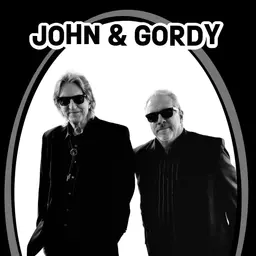
This is John and Gordy in the afternoon.
And we're talking about Greg Bovino, who
made some outrageous comments, and this was what he was telling his agents, border patrol agents.
You know, it's all about them.
It's not about Minneapolis.
And plus, you know, arrest anybody that touches them.
Of course, they...
Provoke people and they grabbed them through them to the ground so they could touch them.
Yeah, I think maybe that's what they were trying to do anyway, right?
But I I truly believe it was this video that was coming out That changed everything for Greg bovino that guy is Really really out there and I think that Holman is trying to come in as these this rough
subtle voice, the man of reason, the adult in the room.
And I don't think that's working either because we know who Tom Holman is.
I saw the press conference.
In one breath he's saying, yes, we're going to try to tone it down and act responsibly here.
And then he says, but we're really going to go after you.
So thanks for the
up?
Well, I guess it used to be protect and serve meant to protect and serve the public, but apparently now protect and serve means to protect and serve their own
I don't
Yeah.
I know that they're spending an awful lot of money on all of this stuff, Cindy.
So that's one thing that just came out is Trump's sweeping deployment of the National Guard troops in all these cities cost taxpayers approximately $500 million.
Wow.
From June to December.
Just a half a year.
Wow.
Okay.
And the Guard members get $95,000 per person per year.
And that amounts to, I believe they've figured this out, it'll cost $1.1 billion in 2026, eventually sending all these National Guard troops throughout the U.S., blue cities, essentially.
So, oh, by the way, the Republican National Committee is spending a lot of money on makeup.
They spent $59,000 between April and November on media preparation makeup.
Wait,
the
But anyway, it's costing them $59,000 for about a half a year.
In 2023, the former
RNC Chairwoman, Rona McDaniel, spent $17,000 on hair and makeup services alone.
Wow.
Seems like a lot.
Yes.
And those are our taxpayer dollars paying for that.
You know, I hear often from the Megas that they don't want to pay for some of these things that Democrats like, that liberals want to do.
No one asked us, we don't want to pay for that stuff.
But you know what?
I don't want to pay for the RNC.
I don't want to pay for any of this stuff.
I don't want to pay the National Guard.
Uh, what is it?
$1.1 billion to go into blue cities and harass people and kill them.
Right.
Yeah.
That's, I mean, that's just outrageous.
Yeah.
No, it's our money.
It is.
Right.
Yeah.
So anyway, that's, uh, that's a lot of money being spent.
We talked about it here.
How much money are these guys spending on stuff?
It's just one thing after the next.
Out of control.
It is out of control.
$400 million
RNC, yeah.
That was for media preparation, they call it.
So you pay two makeup artists.
And they use all the clay and all of the injections they can.
And then Botox, they send you out there.
And the thing is, their excuse is that they're constantly out there in the press.
You know, this is a very open administration.
And because they're out there always talking to the media, they always have their makeup artists with them.
And they're always.
laying on the makeup.
I don't know.
Is this even possible?
Wow.
But maybe we should tell them to tone down the makeup.
I find that,
I don't know what to say about that.
Well, I don't know what, you know, we don't have a lot to say about it.
They don't really tell us a lot about these things.
This is from the congressional budget office.
They released these numbers and, you know, this is well after the fact.
So now we know kind of what to expect in the year to come this year, you know, how much money they're going to keep spending on everything.
Right.
But, you know, when we find out.
You know, all we have to do is keep watching the deficit go up and up and up.
Right.
natural gas prices growing up like they did.
I mean, that was outrageous.
You know, we had the story in the show a while back and it was in our newscast, but I mean, seriously, they're talking $100 more dollars a month in your gas bill simply because natural gas prices went up.
While everything is all going down, I don't think so.
Gas at the pumps, going down just a little.
Right?
But it's not making up for your, uh, heating bill.
That's for
You're not coming in.
This is John and Gordon in the afternoon.
And we're going to talk about the data centers, the non-disclosure agreements that are made in communities throughout Wisconsin.
And we're talking to Wisconsin watch reporter Tom Kircher.
Welcome to the program.
Hey, Tom.
Hey, thanks guys.
Good to be with you.
So the title of your column is at least four Wisconsin communities signed secrecy deals for billion dollar data centers and that's a lot.
For people that are not actually aware of the fact that their communities are planning data centers, it's a big surprise when they do find out
What is the reaction to a lot of these communities when they finally find out near the end of these agreements?
Because they do reveal a lot of the details after they've come to an agreement with the political process in their communities.
What's been the reaction, Tom?
You know, it has varied.
I mean, in Beaver Dam, there was a nondisclosure agreement that kept the project, the proposal.
quiet for more than a year, but that's been approved and is now under construction.
In contrast, in DeForest near Madison, there was not a formal non-disclosure agreement signed there, but the village government did take steps to keep that data center proposal quiet for more than seven months.
Eventually, that was revealed late last year.
A lot of opposition grew to that, and actually just this week, that proposal was
Right.
Well, beaver
really didn't.
They get to the data centers themselves.
This particular story really focused on how local governments kept the public out of the process.
So whether data centers are good for a community or not good for a community, the question becomes, when should the public be informed that these proposals are in the works?
And again, we're not talking about a new business opening up down the street or even a Walmart Supercenter or a shopping center.
These are data centers worth a billion dollars or even up to 20 billion dollars and not pleasant.
They affect land use, they affect water use, power use.
And so the question becomes, you know, for something that's that transformative, when should the public be made aware that something like that is in the works?
We were talking off the air about there was a column about
Are these data centers making any money for the people building them and it says here US tech giant spent three hundred and eighty billion dollars on AI driven infrastructure in 2025 with no Measurable return now should should we play this cut for you?
Let's listen to
it.
I'm having a hard time finding that one
Here's 249.
OpenAI's projects from just the past two days add up to nearly half of the $2 trillion global AI infrastructure surge HSBC now forecasts.
The scale is staggering, even for a company raising a record amount of private market cash.
I spoke to OpenAI CEO Sam Altman in Abilene, Texas.
He called this the largest infrastructure push of the modern internet era and acknowledged that the $850 billion build out may look scary from the outside, but argued that it's the
only way to keep up with demand that's already grown tenfold in the last 18 months.
And this is what it takes to deliver AI.
AI, unlike previous technological revolutions or previous versions of the internet, there's so much infrastructure that's required.
And this is a small sample of
it.
The development insisted the building boom is in response to soaring demand, noting that OpenAI is growing faster than any business that he's ever heard of.
People will lose a lot of money, people will make a lot of money, but I am confident that long term the value of this technology is going to be gigantic to society.
The CFO has reported no change across the board for labor productivity, decision making speed, customer satisfaction, time spent on high value tasks.
No change.
So Tom, I mean, you know, we're not seeing a huge benefit so far with these data centers, and a lot of people are thinking we're going to have like a data center bubble burst here, all this money being spent by the tech giants, and then all of a sudden everything just kind of collapses around it.
What do you think about it?
Is there any kind of feel for that from the people that have been planning these data centers in Wisconsin?
I mean, there certainly is a race, I guess you could say, to build data centers.
As you mentioned, we tallied up $57 billion.
That's for six projects that are proposed or under construction.
There's a seventh one that figures have not been disclosed for.
So there's no doubt it's a ton of investment.
It can be a longer term thing.
We talked about Beaver Dam approving its data center.
construction has just begun on that that's not supposed to begin operating until 2027 so in terms of returns you know that's that's somewhere down the road
yeah now it seems to me that if they were at absolute if they were able to disclose all this information about building these data centers early on the residents might be more prone to
agree with it or at least have some input in it while you know they discuss the details behind the scenes and then reveal those later on as well.
Wouldn't it be better if they just came out and said something?
Are there are there cities or towns doing just that in Wisconsin other than the non-disclosure agreement cities?
That's a question that's really appending right now.
Because of the backlash, part of it is just opposition to data centers' concerns about their impact on the environment, for example.
But part of it is a backlash of, hey, how is it that this project worth a billion dollars or more has been in the works behind the scenes for months and we didn't know about it?
And that's generated opposition on its own.
It's an awkward thing.
It's one thing if I want to buy land from you,
And you and I make a non-disclosure agreement.
It's a private transaction.
We agree not to talk about it.
You know, that's one thing.
But when a local government, if a city or a village, for example, is signing a non-disclosure agreement with a data center company, you know, the local government is supposed to be looking out for the residents and forming the residents, doing what's in the public interest.
And if it's signing a contract, agreeing to keep details of major, major projects,
secret.
You know, that's a question.
That is part of what happens is, you know, rather than a recognizable name like a Microsoft coming forward with a data center proposal, there might be
a limited liability corporation that's brand new and no one's ever heard of making a non-disclosure agreement with a local government.
So in that case, even if someone became aware that there was an NDA, a person might not know what balloonus is.
And the NDAs themselves typically talk about, we will keep details of this project confidential.
There's not even a mention of data center.
is another way that things are kept
ahead.
Thanks.
Long time listener, frequent caller.
I just want to understand data centers just a little more.
There's something that's not being said out loud.
And I could be wrong that it's even possible that this is part of it.
AI, of course, is what we all think this is about because it takes so
so much data and space and all that stuff.
But isn't it also my wedding pictures?
I mean, isn't it also cloud stuff that's going in?
And it's the future, man.
If we're not going to have pictures anymore, we're going to go all digital, right?
We're not printing things.
We're going digital for everything.
This is what we have to put up with.
This is the future.
Am I crazy?
Am I wrong?
centers are really transformative.
They're just going to take up so much energy.
They cost so much money to build.
And again, that's why the questions become, when should the public be made aware?
So to go to an extreme, if I'm Microsoft and I call the city of Madison one day and say, hey, we'd like to explore the possibility of a data center in Madison.
Well,
Should that trigger an immediate public announcement with TV cameras and all the rest?
Or is it somewhere down the road?
Should a company have a little bit of time to work with a local community to see if a data center is even feasible?
And then the public's brought in.
So that question of that timeline is really in play here.
comments here on the program.
It's Cam and he writes, also they can't disclose early on because it established in other cases in law where things like data centers being disclosed in full detail can give competitors an idea of what they are doing based on power draw, size, location, water intake, et cetera.
Yeah, that's the incentive.
So if you're a data center company, if I want to build a
data center in one community or another.
I don't necessarily want my competitor to know what I'm looking at, nor do I maybe even want different local governments looking, knowing that I'm looking at more than one site.
So from that perspective, you can understand the desire for confidentiality.
For a local government, they want economic development.
They might be open to a certain level of confidentiality too.
But when you get so far down the road where there's a lot of interactions between
city officials and a company over a period of months or even a year.
And only then is the project even announced to the public that it exists.
You know, that's a question.
Yeah, yes.
That's another one that's under construction, right?
Port Washington did not use a nondisclosure agreement.
So it does vary.
I should mention that last week, state representative did propose legislation that would outlaw nondisclosure agreements between a local government.
and a data center operator.
So that's in the very early stages, but it is evidence of part of the backlash of people finding out about these projects relatively late in the process.
right?
There is, yeah.
Madison has talked about a moratorium on that.
There are other people that would like to see that done on a statewide basis.
Yeah.
I haven't examined that, how practical or legal that might be.
But again, that is evidence of, to some people, boy, this feels like a lot
information going on very fast.
How do we figure out what's right for our community?
Kind of clearing it up about what's going on with data centers in Wisconsin.
At Wisconsin Watch, you can catch the article.
It's a great article.
It tells you everything you need to know.
At least four Wisconsin communities signed secrecy deals for billion-dollar data centers.
Thanks, Tom.
You're listening to Civic Media.
Find the latest news, information, and archives of all your favorite shows on the Civic Media website, civicmedia.us.
There's a map included at Wisconsin Watch with all the data centers that are being proposed, even one in Fitchburg.
And we were looking at that one in Menomedy.
We believe is on a reservation.
Could be.
It might be.
We don't know for sure.
The article that I was referring to where they really haven't seen a measurable return.
on all of these data centers, there's also this part of it, is the grid ready for this?
And it isn't.
Okay, really?
That's the bottom line.
Yeah, the bottom line
And the fact is that we have put off updating the grid for so many years.
Here in Wisconsin?
No, throughout the entire country, except Biden had put in place, you know, improving the grid that we have, the electric grid that we have now.
But I don't know if they've gone back on that, stopped funding it.
I don't know what the Trump administration has done in particular with that.
And it's pricing consumers out of their computers, buying new computers.
Everybody said buying them now because, you know, you're not going to be able to afford the components that are in those computers anymore.
I know my sons have been trying and saving up to buy some kind of graphics card, but they're finding it almost impossible.
Great interview and really great subject.
Thank you for that.
And I hope
return to it because it's not going away as an issue.
I did want to drop in one little absolutely delightful and smart situation that has come up, which is that Atlantic Magazine has nominated the City of Minneapolis for a Nobel Peace Prize, which I think is beautiful.
Yeah, and I don't know.
I was looking at who can nominate for a peace prize, and it says only certain qualified people, and they mentioned, for example, members of national assemblies or previous winners, and then also university professors who are in law or social sciences.
So I don't know if the Atlantic Magazine would fit into that.
I should think so, but I don't know whether they would be considered a possible nominator.
So I would just suggest if anybody knows a professor in social sciences or law that would be applicable for peace and conflict studies, maybe have them throw a little nomination in there.
deadline is January 31st.
So yeah, well, you know, people can pull things together quickly if they need to.
If you wanted to, the article that the Atlantic magazine has about why they chose to make this step is really beautiful and has some great thoughts in it.
It's an interesting idea too that a city has never been nominated for a peace prize.
But their contention is that these people have every right to have blown up into violence and they have not in this cold fridge.
weather.
They've been there for each other and they've been just a beacon of hope and a really a great example of how to meet this god-awful aggression on the part of their government.
So anyway, so you might want to take a look at the article guys in audience.
It's really
that?
Oh, I don't have it right in front of me, but it's
Atlantic magazine.
You could find it at Atlantic magazine.
look.
Okay.
Yeah, yeah.
it.
Isn't that wonderful?
Take care guys.
Coming up in about, oh, about 15 minutes, we'll get into our contest zone today.
We have an overnight stay at Chula Vista.
in Wisconsin Dells up for grabs in our three o'clock hour and we'll select a winner and you and a few of your friends can go up there for an overnight stay.
And we'll tell you more about that, but that includes water park passes and the whole works at Chula Vista in Wisconsin Dells.
And a little bit later on, Rocker will be in the studio with a max sync preview.
That's in our 430
We've got a special edition with Jim Santel because what.
the country is trying to do right now, what the administration is trying to do right now is track down all of the left wing organizations out there.
And one way to do it is to attack all of those people, ICE observers
who are
They're using signal and people are getting in on signal and turning these people in.
They're supposedly doxing people.
I don't see that happening on this side of the aisle, but maybe we'll find out.
We'll talk to Jim all about what's going on on signal and the legalities of letting other people know that ice is in their area.
afternoon.
Civic Media is dedicated to providing quality local and state news coverage across Wisconsin.
With the Civic Media app, you can get notifications about local stories that matter to you and your community.
Find the free Civic Media app in your phone's app store and choose notifications from the menu to tell us what kind of news you want to hear about.