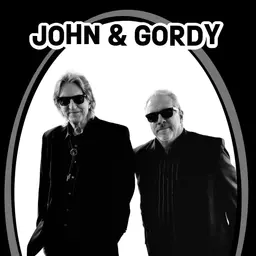
Good morning, I'm Matt Rothschild welcome to the John and Gordy show the guys are off this morning They're back this afternoon from two to five all across the civic media radio network so you can catch them then and You know you can catch them every afternoon these days from two to five and Mondays and Fridays typically in the morning here But for now you got me and my favorite guest co-host Angela Lang the exact director of block.
How you doing this morning Angela?
I'm good.
How are you?
I'm doing all right, still kind of reeling from the Rob Reiner news, I guess, but that was such a shock.
And of course, Trump's typical narcissistic reaction was part of the shock of the whole thing.
Stuff like that coming out of his mouth shouldn't be shocking anymore.
You can join the conversation at 608-879-8255.
That's 608-879-8255 here on WMDX 92.7.
In Madison, Angela, when we were speaking last week, you were about to have your big gala.
I wonder how the big gala went.
It went so great.
Shout out to all of our partners, allies, friends.
We had a lot of questions about the food because it was so good.
It was like vegan soul food approved.
And we had some meat options as well.
But it was such a good time.
And we surprised our deputy director, Keisha, because we had plans that we were going to announce.
that we are moving to a co-executive director model.
So we are now going to be co-executive directors.
Keisha is no longer deputy director.
We are equal and we're excited for this and we were able to give her a little bit of a surprise with some videos of her favorite friends and family and supporters congratulating her and she had no idea that was happening.
So we were very excited to surprise her with that.
Well congratulations to her and congratulations to you.
Angelang is
the
founder and now co-executive director of Block, Black Leaders Organizing for Communities.
We have a call already from Matt in Middleton.
So let's hear what Matt's got to say.
Hey, Matt.
Morning, guys.
Thanks for hosting.
Morning.
The Atlantic has an article out now basically stating that John Roberts has far more to do with this dictatorship than I had realized.
And considering this
block of Christians who never wanted democracy in the first place and this new rise of the Confederacy.
I personally want your opinion because I think that America breaking up might be better in the long run because these people are always going to want a republic run by a group of white men.
And they're not going to, they're always going to fight us and not allow us to have this democracy that the rest of us want.
Wouldn't we be better off being a new, different country that we leave those people out and let them have their own?
Well, because their country will be weaker and will be stronger.
Well, thanks for the call, Matt, from Middleton always raises interesting questions.
It's just, you know, what would it look like to get from here to there and how.
horrible would that transition be?
That would be the question I have.
So I still want us to survive as a country and as a democracy.
But this threat from white nationalism certainly is huge.
We're going to talk a little bit about that.
It's 636 with Dan Barker, Freedom from Religion Foundation.
We'll throw that question to him.
And I'll talk a little bit more about John Roberts, but I want to get Angela's response to your question too.
What do you think, Angela?
You know, I remember being younger, like teenager, right?
And seeing some disagreements, especially after like 9-11 and how some of my Muslim friends were treated.
And I remember kind of having a similar kind of feeling.
I was like, well, can't like everybody just go to their own separate islands?
Like, if you are super racist or bigoted, just go over here, do your own thing.
And then all the other people were gonna be over here.
And I remember thinking about like, yeah, maybe that's just the thing we should do.
But I also think,
that, yeah, I think the big question is how to get from point A to point B. And what does that actually do?
It doesn't really, I think to me, because I remember having conversations about like,
you know segregation and people are like was segregation a good thing um which is like wild to think about but I think um you know it doesn't really stop kind of the issues it kind of just like morse them and puts them into different boxes so instead of like the bigoted um white nationalist folks you know stop being bigoted uh now they kind of have their own space to even kind of flourish even more and we've seen some of this I don't remember where it was but there was this like
White only commune that was like being built.
I think it was like CNN and some other folks were reporting on it And they all kind of lived together in their own communes for like whites only and that didn't work So I think there's also like allocation of resources as well too when you start to kind of do some of that I think as we've talked about this at length is that I think a lot of it comes down to With people's amount of wealth, you know the billionaires we talked about that on the previous show as well too
Um, and so I think it's a complicated, I think it's an interesting thought provoking question.
Um, and I think it could be like an interesting exercise to think through what that looks like.
Um, but unfortunately I don't know how realistic it is.
Yeah.
Matt from Middleton.
Thanks again for the call and you can call to it, 608-879-8255 and join me, Matt Rothschild and my guest co-host, Angela Lang as we go through the day.
I mean, Matt.
From Middleton mentioned John Roberts, and I do hold John Roberts as one of the top three people responsible for the predicament we're in right now.
I mean, his immunity decision that he shepherded through the Supreme Court, if he had ruled the other way, he probably could have brought Amy Coney Barrett along with him with the liberal justices and not given Trump this blank check that Trump is cashing every which way he goes.
Also, John Roberts gave us Citizens United.
you know, you can go through any number of decisions that he has done.
There was a hope among some naive watchers of the court that John Roberts might be, you know, kind of in the middle and moderating and an institutionalist.
We heard that cliche over and over again.
Guess what?
He's just a hack.
He's
a
smart Republican hack.
But at bottom, he's a hack for this right-wing agenda that's been coming down the...
the tracks here and
running
us over.
So he's one of the people I hold responsible.
Mitch McConnell's another.
Mitch McConnell could have gotten rid of Donald Trump in that second impeachment trial.
If you remember his speech that night, I was listening to it live and thought, oh my God, he's going to vote to convict Donald Trump.
But no, he weaned out at the last minute.
And
so, of course, Rupert Murdoch, I blame for changing the whole country.
And then, you know,
Merritt Garland could have moved a little faster and we could have gotten rid of Trump that way.
So those are the people I'm old responsible right now.
I don't know.
Do you have anyone on that list, Angela?
I mean, I think all of that makes sense.
I got to throw Stephen Miller in there because he's just and Steve Bannon to like the kind of the propaganda machine.
But yeah, I think it also goes to show as we have our own state Supreme Court coming up, I think it's always a constant reminder that like
who we elect, whether it's in Wisconsin directly electing our justices, or even if it's presidents, that will have consequences, right?
It's not just immediate tariffs or immediate rights.
Citizens United happened how many years ago, right?
The Trump immunity was more recent than that, but we see how these landmark cases do set up kind of this environment that we're in, five, 10, some kind of cases 20 years later.
Yeah, if you want to weigh in with who you hold responsible for the.
predicament we're in right now, you can call us at 608-879-8255.
I'm Matt Rothschild here talking with Angel LeLang.
We're co-hosting this morning.
We've got a great show.
We've got Dan Barker from the Freedom from Religion Foundation at 636.
Judy Davidoff, longtime friend of mine, editor of The Isthmus, coming in at 650.
We have the media and public relations manager for Second Harvest of Southern Wisconsin in the second hour.
And then really looking forward to Dexter Patterson, co-founder of the BIPOC Birding Club of Wisconsin and author of Birds of the Great Lakes, coming in at 735.
I
gotta say, Matt,
You are really good at getting all these guests.
I don't know how you do it I think I said this last time you're on and I still say that I'm not gonna change it.
It's it's it's amazing How many people you know I was a producer in another life?
It's always a good show.
It's always a good lineup.
Exactly.
I
mean, I like having
guests I love
interviewing people and hearing what they have to say Yeah, and of course I love doing the show with Angela every time we can so that that's nice if you're just waking up.
It's a beautiful morning today.
It's
clear out.
It was clear when I got out of the house at 515.
The stars were out still.
The moon was out.
Sun's coming out this morning.
It's going to be high of 37.
We're going to have warm weather essentially from now through Christmas.
So that cold blast is gone.
So it's kind of nice.
You said high of 37.
That's what I saw.
Yeah.
Eat wave.
Woo.
Yeah.
That's what it feels like compared to the last week or two.
You know, when winter starts at Thanksgiving, it can be long.
So I'm grateful for the break here.
I did want to bring it back around to Trump and his just narcissism, which we saw on flagrant display over the last 24 hours with the murder of Rob Reiner and his wife, Michelle and Trump.
showing no compassion whatsoever, making it all about him.
He doubled down again yesterday afterwards when he was getting criticism about it.
He kept essentially saying the same thing that Rob Reiner was very bad for our country.
I mean, who says that after someone's just been murdered?
But Donald Trump did.
And I saw a quote from a column, this is thanks to Robert Reich, who cited a Toronto...
journalist named Andrew Coyne in the Toronto Globe and Mail who captured Trump's pathology perfectly.
I just want to read this one paragraph.
In any situation he will always without fail say and do not just the wrong thing but the worst possible thing.
He will always without fail say and do the opposite of what is right or lawful or conventional or logical or even rationally self-interested.
It all comes from the same insatiable desire.
or desires to dominate, to be the center of attention, to indulge his appetites, and of course, to offend and annoy anyone he has ever felt insecure around or who has humiliated him in the past.
That's Andrew Coyne writing in the Toronto Globe and Mail.
That captures him, doesn't it, Angela?
Pretty spot-on to me.
I mean, I was watching.
I mean, I saw the...
the social media post.
And then just like every other social media post of Donald Trump.
So I have to go back, check it.
Cause I'm like, is this real?
Is this AI?
Like this is the era we live in.
And it was real.
And then I saw a clip where a reporter confronted him about it and he like doubled down.
And one, not only is it like wildly offensive and disrespectful and just like horrid on so many levels.
It's also not helping the case about people.
talking about his mental abilities at this point.
Like, why is he talking in third person?
Why is he being this narcissistic over, you know, this tragic passing?
So, but again, those same folks that called Sleepy Joe Biden are kind of quiet right now.
Yeah, I mean, the derangement is just out of control.
We did get a text from the 608 about who to blame for the predicament we're in.
I blame Reagan.
The text or right.
Oh,
yeah, and the court that gave the presidency to Bush instead of Al Gore I remember my dad was a lawyer and a believer in the law and Kind of you know, he wasn't a naive person at all, but he thought the Supreme Court is never gonna take Bush v. Gore They don't have
they should
just let it go and let the count continue and slow and behold
They threw it to Bush, and that was that.
And it was a huge thing.
And of course, Reagan deregulating communications, giving us Rupert Murdoch, essentially, and right-wing talk radio, all of that part of how we got to where we are today.
And we'll be continuing the conversation after this short break.
I'm Matt Rothschild.
I'm here with Angela Lange, inviting your calls and texts at 608-879-8255.
We got Tom in the studio.
Yeah, it was classic.
So I'm driving into the studio at, it must have been 548.
And I called Tom and said, hey, I'm here a couple of birthday songs.
Can you get in a hurry here and hustle them in?
And sure enough, he's unstoppable.
And then John and Yoko's classic Wars Over If You Want It was released in 1969.
And of course, on this date, that song was released in 1969.
I remember I was in Washington, DC the day that John Lennon was killed.
And yeah, I mean, his double fantasy album had come out a little bit before that.
And I was a huge John Lennon fan and Beatles fan.
And it was just a real shock.
So whenever that song comes on, it kind of makes me sad and reflective.
And, you know, to lose visionaries like that so early, it's such a tragedy.
So, so that's a tough one for me, John Lennon.
Also staying with music, 1770, Beethoven was born.
We got some birthdays to celebrate today.
That's one of them for you classical music fans.
Of course, there's Beethoven's fifth.
And then.
Politically, 1773 on this date is the Boston Tea Party.
And then for you literary folks, 1775, Jane Austen was born.
And then finally, and this is a hero of our own center, Tammy Baldwin, Margaret Mead was born in 1901.
Tammy Baldwin often quotes Margaret Mead saying, I don't have the quote on hand, but you don't need a huge amount of people to make change, but you need some dedicated people.
to get it done.
And so those are some of the things that struck out, stuck out to me today.
Battle of the Bulge for you, World War II military historians.
On this date in 1944, the Battle of the Bulge begins when Germany tried to break through and failed.
And then sadly, tragically here in Madison, today is the first anniversary of the abundant life Christian school shooting.
that killed Aaron Michelle West and Ruby Patricia in the Vergara and shook the community really hard.
Remember, Angela, we had Melissa Agart on Dane County exec last week when we were doing the show and she was saying what a difficult year it was for her in particular because of this shooting.
Yeah, I mean, it's just it's awful, you know, it's the holiday season.
And then, you know, you think about how like, it feels like every couple of months folks are retraumatized by a new shooting, you know, of what happened at Brown University.
And it's weird because I now like personally, I've developed a fear of like mass shootings and I've had weird nightmares the last like week or so.
And so I can only imagine being, you know, a mayor or county executive or just like a representative where something tragic like that happens in your community.
It's not just, you know, getting through the immediate chaos and supporting people.
It's that long lasting trauma that stays, I think, with all of us.
And you're right, Angela Lange, every shooting recapitulates the horror of the prior shooting.
And for those who were witnesses or victims, much worse of such shootings, it's got to be ghastly.
just haunting.
And then I think of the shooting in Australia, I'm a Jewish American, and to see people who are out celebrating Hanukkah and being mowed down was just awful.
I do think the heroism of that man who jumped on top of that shooter, if you haven't seen that video, you got to go look that video up.
It's
remarkable.
Yeah.
This was real heroism.
And he's in the hospital right now.
I think they said that he was also shot once or twice.
And yet, if you see the video, he still saved so many more lives.
And I think everybody acknowledged that.
But we shouldn't have to even be here, right?
It shouldn't have to be innocent civilians and bystanders that are disrupting things.
We shouldn't even have these moments and these tragedies even happen.
it should be on our legislators and our representatives to fix this problem, not a bystander doing the right thing trying to save lives.
Yeah, if you want to join the conversation, the phone number to call 608-879-8255, call or text about any of these shootings or the anniversary of the abundant life shooting here in Madison.
Or if you want to talk more about Trump and his disgraceful behavior, we could do that till...
the end of the show, but you know, I know a lot of people don't even want to mention his name.
I don't want to look at his face.
I know you can go to some websites that are critical of Trump, some progressive websites, and they're just doing click bait by having Trump's picture everywhere.
I don't want to go there.
I don't want to see.
12 pictures of Donald Trump scowling.
That's, that's just doesn't make my day.
So, but you know, I'm feeling for the people at Brown too.
I mean, they don't need, they haven't even captured a suspect there yet and how horrifying that must have been.
We got to do something in this country about this calamity of mass shootings.
And you're right, Angela, it becomes almost, oh, it's another day in America.
There's another mass shooting.
And we can't feel that way either.
I mean,
We can feel that way, but we got pizza box, Mike, for a minute.
Let's get him in.
I love pizza box, Mike.
How you doing, my
friend?
Good morning.
Good morning.
It's getting very depressing when you go to social media and you see strong people that are, are pained and suffering from all this violence and death and destruction.
And last year I was driving down Buckeye road when the police came screaming up to the.
to the school and I knew something bad had happened.
But it's gotten so bad people that now we have people that have survived high school shootings and experienced it in college as well.
Seriously, how could anybody go through two of those events in one lifetime?
Yeah, thanks, Pizza Box.
Mike, it's always great to hear your voice, my friend.
Yeah, I was on the belt line when I heard the news, too, of the shooting at Abundant Life, and it was just, oh my god, it's come home here to Madison.
It's come home everywhere in America, unfortunately.
We'll be right back.
on WMDX 92.7.
I'm Matt Rothschild, co-hosting with Angela Lying for John and Gordy, who will be on this afternoon.
We'll be right back with Dan Barker, co-president of Freedom from Religion Foundation here in the studio.
Please stand by for that.
Hey Matt Rothschild with you this morning.
John and Gordy are off this morning, but back this afternoon from two to five You can catch them there all across the civic media radio network, but I'm joined by my favorite co-host Angela Lang.
How you doing Angela?
I'm good.
Always a good time good conversation.
We're only just past six thirty.
Yeah, it's
nice to hear a lot more conversation to go.
Nice to hear pizza box Mike's voice.
Yep.
He's a friend of
ours and has been a great activist for a living wage for many years was very active in the 2011 uprising against Scott Walker.
And that's
how I met
him.
Yeah.
Yeah.
He's he's terrific.
And I walked with him on the David Cooper take back the cross rally
in
August up this up the state street.
That was fun.
So and I wish him well.
He's struggling with some health issues and Lord were
hoping he can pull through on that.
And he's a bird watcher too, like me.
So we have fun exchanging bird notes.
With us now is Dan Barker, another old friend of mine, co-president of the Freedom from Religion Foundation, located just up the street from us at our studios here in downtown Madison.
Thanks for being on the show this morning,
Dan.
Good morning.
Good to see you, Matt.
Yeah, it's always good to talk with you, Angela.
You too, thanks for being
here.
And if you're listening, you can join the conversation anytime you want at 608-879-8255.
That's 608, of course.
879-8255, call or text.
Well, we had a caller in the last half hour, Dan Matt from Middleton, who wondered about the problem of Christian nationalism, and he thought we should separate into two countries.
But how do you assess the...
the problem of Christian nationalism right now.
Well, there was another time when we were going to separate into two countries, wasn't there?
Yes, indeed.
Over divisiveness.
A
lot of people
died.
Well, Christian nationalism, these are Christians and they're not all this way.
Many Christians are wonderful, moderate liberals, but the extreme right wing believed that America is and was intended to be a Christian nation and should be a Christian nation.
And their symbols and their words should be plastered everywhere because they think it's good for morality and they think that's what the white European settlers decided when they came over and built this city on the hill.
But think about our founders.
Yesterday was the anniversary of the Bill of Rights.
And you had a celebration there.
We were celebrating the Bill of Rights yesterday.
I heard your advertisements all across Stephanie Miller and Tom Hartman's show.
Yeah, yeah.
And, you know, James Madison and the founder, imagine these founders were really smart guys, right?
They were well read.
They were concerned.
They fought a revolution and they founded this country.
And if they intended this to be a Christian nation, they were not smart enough to write that down somewhere.
You know, it's not written in any of the founding documents.
There's no Christianity.
There's no God in our constitution.
And Madison believed in religious liberty.
He pretty much crafted the Bill of Rights.
And he would have said something about this being a Christian nation, but no, it's not there.
He was in favor of people having the freedom of conscience free from government interference in private views.
And if people wanted to be Christians or Jews or whatever,
He was all for that.
In fact, many of them were believers, but they did not believe, like Madison said, if you mix government and religion, they both get dirty.
They should be separated.
It should be a matter of the heart.
And one of the slogans during the Revolutionary War,
Chief Cooper, David Cooper told me this.
I didn't know that before and was not only no kings, but no kings, no bishops.
And
I thought that was
a fascinating excavation of US history and the separation of church and state.
That's like what Margaret Sanger said on her newsletter, no gods, no masters.
Let every person have their own freedom to think and believe what they want.
And of course, in the First Amendment, they enshrine that belief.
Yeah.
Yeah, the separation of church and state.
And a lot of the Christian nationalists today say those words are not there.
It doesn't say separation of church and state, but we all know that Jefferson wrote his famous letter to the Baptist church in Connecticut where he coined that phrase that the First Amendment intended to build a wall of separation between church and state.
And it served us well.
It served us well.
And now they want to undo that wonderful legacy.
They're tearing it.
They're trying to tear down that wall for sure We're talking with Dan Barker who is co-president of the Freedom from Religion Foundation, and I'm Matt Rothschild co-hosting here with Angela Lang Also, I mean they misconstrue the founding they also misconstrue a lot of the Biblical texts too or they pick and choose yeah, and that must You know get under your skin a little bit too.
You probably read a fugal singh's book separation of church and hate
where he makes an argument that good Christians should not be Christian nationalists.
They're disobeying their own leader, their own Jesus, and he quotes him, you know, saying, you know, he was this dark-skinned liberal, you know, at the time.
They they really it's all about power.
They want power and they're they're regretting the loss of the power They used to enjoy in this country the white Christian nationalists and they're they see it crumble and it makes them angry and they're kind of like a wounded animal that's trying to Bring everything down at Cannes as it's going to and they know they're going down in in in Demography in in popular culture with gay rights with abortion with women's rights and all of that they know they are losing losing losing so they are just
desperately grasping to maintain some of that glory they used to have.
But they're very powerful.
They may be losing you, but they are very powerful
right now.
Yeah, they're a powerful minority, but you're right.
They can do a lot of damage.
And they're doing that damage
right
now from the very top.
You've got a display in the state capitol right now.
Why don't you talk about that?
So we have a display.
We've had it about a dozen years.
It's celebrating December 15th because
December is more than just one day.
It's more than December 25th.
And the Christians have that day, but the whole month of December has many other things to celebrate.
December 15th was the birth of the Bill of Rights, and the display is some of the Founding Fathers and the Statue of Liberty gazing adoringly down at a manger.
And in the manger is the Bill of Rights.
And we've had that display up all over for many years.
There's one in New Hampshire, one going up in Washington State.
There's one in Chicago right now.
And 10 years ago, this month, December of 2015, the governor of Texas took down that display of ours from the state capitol in Austin saying that it was offensive and it was mocking Christianity.
And we sued him and we won.
It took eight years.
We sued him on free speech grounds that he violated our freedom of speech.
And the display mentions December the 15th and that, of course, it makes it.
applicable to this month.
So you can go to the state capitol right now here in Madison and see, we have two displays up actually, and you can see that one.
And the Freedom from Religion Foundation does a lot of legal work too, not just to defend your own displays, right?
We have ten full-time attorneys and a growing legal staff.
We take lawsuits challenging violations of state church separation all over the country.
We've had, what, dozens of lawsuits and many, most of them we win.
A lot of them are in the schools.
Ten commandments in the schools religion in the schools, but all over you know public symbols nativity scenes and public money going to to private religious colleges and such and we're suing right here in the city of Madison for real estate favoritism over some religious groups that are getting a tax break that they shouldn't be getting well explain that a little Well, there's a place called press house and a place called lumen house here in Madison that are owned by religious orders But they're they're basically just commercial rental properties that
primarily to students, and there was a special law carved here in Wisconsin to allow them to be tax-exempt.
So Annie Laurie and I, as taxpayers in Madison, have standing to sue.
We're suing the city of this.
And that's unfair.
It's racing everyone else's property.
taxes because they're not really doing anything religious there.
It's just a rental property and there's over the years millions of dollars of taxes that are being denied the city for that.
And the Annie Laurie that you refers to is Annie Laurie Gaylor who is the co-president
from Religion Foundation.
And co-founder back in the 70s.
With her mom.
Yeah.
Tell us a little bit about your story.
You started
from a religious background, correct?
I was a Christian minister for 19 years.
I preached the gospel.
I was an evangelist, Christian songwriter, missionary, and I loved it, and I thought Jesus was coming any minute, but I changed my mind, obviously.
I did some reading, and it was agonizing, and I realized, no, there's no good definition, no good argument, no good evidence, no good reason.
to believe in this deity, and so I became a happy atheist.
I thought I was the only one.
I thought I was the only atheist until I finally read Annie Laurie's book about women in the Bible, and I said, there's more.
I
heard a story, maybe it's apocryphal, that you were on some media events.
with Annie Laurie when you were still a minister.
Is that true?
No, it wasn't.
It was after I had left a few months later.
It was the Oprah Winfrey show in Chicago.
She invited Annie Laurie and her mom and they wanted, she wanted, her producers wanted somebody who had come out of religion and I had just come out.
So they flew me out to Chicago and that's the day Annie Laurie and I met.
And we have a video of the day we met on Oprah's show.
And of course we've been married now for what, 30?
38 years now, I guess, but so so that was fun
meeting on the Oprah
Winfrey show Who has
a better story than that?
We
showed we showed our daughter the video when she was laughing not only that
I had hair, you know, and it was... It was a while ago.
But she was laughing at that audience.
It was great TV.
She packed that audience with Bible thumpers who were calling Annie Luria a witch.
It really was an amazing show.
It was the first time I had ever spoken publicly about any of this.
And were you nervous?
I was for about 10 seconds.
But then we just start rolling.
It always happens when you do public speaking or debating.
I've done 141 public debates.
And the first 10, 15 seconds are nervous, but then you connect with the audience and then you just go.
Speaking with Dan Barker, who is co-president of the Freedom from Religion Foundation with Annie Laurie Gaylor, his wife.
They're a team.
You do a lot of media stuff within the Freedom from Religion Foundation.
Tell us a little bit about what you produced there.
We have a national radio show.
We're coming up to 20 years now.
April of 2006, this broadcast around the country.
We had had a TV show called Freethought Matters broadcast, but now we've moved over.
We have our own TV app now.
It's called Free Thought TV.
Like if Roku, you can just go on and look for Free Thought TV and you can see many years and a lot of content.
And then we actually have a YouTube show that we call Secular Spotlight, which we focus on secular
issues.
It looks like we have a caller, Joe from Madison.
Joe, what's on your mind?
A great guest and really an important subject, especially to look at the kind of the history of our efforts to have freedom of religion in this country or freedom from religion as you choose.
It's interesting to me, I don't know how many people are ever taking a peek at how many countries have a state religion, which is why a lot of people left our forefathers, left and mothers, left England because they didn't want to be part of the
The Anglican Church of England.
They didn't want it.
They were Quakers, whatever.
But it's interesting to look at.
I mean, even, for example, Orthodox Greece in Georgia, the country of Georgia, or Armenia, or Lutheran in Denmark.
And then you get into ones that we think of like the Sunni or Shia religions in either countries such as Algeria or Iraq, very different versions, deadly division between their understanding of what
Muslims should be.
One of the things that it gives us when we say we have freedom of religion is you can belong to whatever sect of Christianity you want to, and they really, really vary in terms of what they believe and what they expect of their adherence.
I don't know.
I think it's important from the get-go, and I think that our forefathers and mothers had the right idea.
Absolutely the right idea.
Thanks a lot, you guys.
Joe, for Madison, thanks
for that call.
Thanks, Joe.
And Dan Barker, Co-President of Freedom from Religion Foundation right here in Madison.
Thanks for being on the program.
Thank you for inviting me, man.
That's just fun.
Oh, it's great to see you.
Let's do it again soon.
And we'll be right back with Judy Davidoff of The Isthmus.
Beautiful sunrise in Madtown right now.
Hey, I'm Matt Rothschild.
Welcome to John and Gordy in the morning.
The guys are off this morning, but they're back this afternoon from two to five all across the Civic Media Radio Network so you can catch them.
Then they're always fun to listen to.
Right now you've got me and Angela Lange, my favorite co-host as we
Go through this next hour.
And right now we're joined by an old friend.
It was nice having Dan Barker, another old friend on just a minute ago.
And now we got Judy Davidoff, editor of The Isthmus.
Hey, Judy, how are you?
I'm good.
Thank you.
Hello, everybody.
Hello.
Judy, do you know Angela Lang of Block down in Milwaukee?
No, we have not ever met.
Oh, you guys got to get together.
You have a
lot in common.
Thanks for being on.
All right.
Judy, tell us what's new at Isthmus.
Well, a couple of months ago, maybe it was last month, I actually wrote a column that said, we're a non-profit because it's not new to us.
it is still new to some people because of course we've been around for next year return 50 so um
congratulations you know
we were privately owned thank you COVID came and um we became a nonprofit in 2021 so it's kind of a continuous education process on that score because of course that changes how we're funded and supported
So you get some support.
You can get donations, and this is donation season.
I used to say when I was at the Progressive, we were a non-profit legally and literally.
But maybe the case for you, too, if people want to support you at Isthmus, what do they do, Judy?
Oh, I mean, there are several things.
We have a support button on the website, of course.
There are certain, there are different membership tiers people can join at.
They can
donate once a year.
They can donate every month kind of a continuing, you know, support like public media, people write checks.
Honestly, people, a lot of people still write checks.
We always have a little coupon in the paper.
People on our newsletter lists get, you know, support asks and we send out appeals via email as well.
Yeah, well, please support Ismus.
It's a great part of the Madison community.
It has been for decades now, as Judy Dave Doff suggests.
Now, I saw your latest column, and you sent an email about it as well.
It was about this survey that was taken on people's views on the importance of local news and other things.
Do you want to talk about that?
Sure.
Yeah, it was actually a rather large survey, about 3,000 adults.
It was commissioned by Press Forward, which is this very large $500 million fundraising initiative to support local news across the country.
They commissioned it.
And, you know, essentially it was to help news outlets like us send our message to people, you know, why should people, why should readers, why should community members
support local news.
And it was really, I think, to suss out what strikes people for whatever reason as kind of negative and what's more positive messaging.
And yeah, as I write about some surprising findings, at least maybe to us in local news, that even the word journalism can have negative connotations.
Of course, I guess that's not surprising, given the attacks on
the press at least for a decade or more, you know, very noisy attacks.
But even things like nonpartisan and storytelling just did not strike people in the same positive tone as some other things, like simply local news.
So the good news is for us anyway, here in community, you know, local news,
media that people still are very supportive of their local news reporters, of local news outlets.
It's just, it's really how to message that.
Judy, on messaging, the one word that popped out to me among words to avoid, as you put it,
in your piece was democracy.
Do you want to talk about that?
Because, you know, civic media is a pro-democracy radio network.
I used to work at the Wisconsin Democracy Campaign and the Progressive Magazine where democracy was a big word.
Why to avoid the word democracy?
You know, all that I can tell you is what, you know, I read in the report on the survey and they said, and I will quote,
Years of political messaging have created fatigue around the word democracy, and it now triggers partisan defenses, regardless of people's actual beliefs.
You know, I've heard that from other pollsters and messaging gurus.
Angela, what do you make of that?
Yeah, I mean, it's interesting.
I think of even folks like James Carville, who wrote an article recently and saying that, like,
You know, folks are getting too woke and that's why Democrats are losing because they're talking about woke things.
And I think like my concern is I don't think we stop talking about it, whether we use the word or not.
I think because I think.
a lot of times you know I've talked about this as we're on doors when people are like you got to show up to save democracy what does that mean for people right and so it's not saying
that we
stop talking about the issue but I think it's how we're talking about it talking about how having a living wage is actually a democracy issue uh safe affordable uh housing and health care are democracy issues and so I'm always really curious of like
We can talk about the issues, especially right now, if you're using words like DEI and democracy, you suddenly have a target on your back.
But I think that there's other ways to talk about the issues.
I'm curious of how folks reconcile both of those
things.
So it's talking about rights and liberties, maybe, than the deal.
Right.
But I can't give it up myself.
Same.
Right.
And I think it also just depends on who you're talking to.
I mean, even with the word journalism,
I wrote later in the piece because we had just asked our readers in a kind of online survey to tell us what they value about isthmus and we ended up putting that in an ad and you know there were a couple right there about we value journalism.
Judy David Duff.
Sorry to interrupt Judy we've got to run.
Pick up Judy, David Duff's latest issue of the isthmus in her column on this survey and we'll be right back after the break.
Trying to change the world here on WMDX 92.7 here in Madison you can join the conversation by calling 608-879-8255 I'm Matt Rothschild subbing in here for John and Gordy and also subbing in is Angela Lank my favorite co-host she's the executive now the co-executive director of block black leaders organizing for communities It's a beautiful sunrise right now in Madison, and I want to just drop a couple lines of verse
In case I forget, because we always bring poetry and birds into our conversation.
This is from William Blake, he who binds himself to a joy does the winged life destroy, but he who kisses the joy as it flies lives in eternity sunrise.
So it's a beautiful sunrise and kiss that joy as it flies.
And we're gonna be talking birds at 7 36 to the end of the.
session maybe with Dexter Patterson, who's got a book coming out, just came out called Birds of the Great Lakes.
He is the co-founder of the Wisconsin BIPOC birding club.
So been waiting to talk to him too.
And right now I'm delighted to have back in the studio with us, Chris Taslar.
He's the media and public relations manager at Second Harvest Food Bank of Southern Wisconsin.
Welcome back to the show.
Good morning.
Thanks for having me.
Oh, it's always great to see you.
And it's important to talk to you and issues of food insecurity, especially at this time of year, but year round also.
I imagine it's been a tricky year over at Second Harvest, especially with the withholding of SNAP benefits in the fall.
How's it been for you?
Yeah, I mean, tricky is definitely one way to describe it.
Because, you know, with the government shutdown, with the delay in the food share benefits, it was kind of a both two-edged coin, right?
It really, it's shown a light.
on the number of people who are food insecure here in southern Wisconsin.
But then it also had kind of a devastating impact, you know, certainly on the folks who were directly impacted.
Now, luckily, the SNAP benefits were only cut back by about a week, which was thanks to the governor.
But, you know, that light that was put upon the issue really kind of reminded the public that
people are struggling with hunger here in southwestern Wisconsin and there are places like Second Harvest and our network of partner agencies and programs who really need their support and so the public has really responded.
What is that number of people who are...
are going hungry or food insecure, is it called?
Yeah, in our 16 counties that we support, it's about 147,000 people who do struggle with hunger.
And about 40,000 of those are kids.
So it's not an insignificant number.
It's about one in nine when you think of all ages.
And so it's our neighbors.
It's the kids who are in class with our kid in school.
It's the seniors.
And so it really
as every community.
And so that's why Second Harvest is here.
Yeah, that's a lot of people.
That's a ridiculous, scandalous percentage, right, Angela?
Yeah, it's a moral failing.
I'm sorry.
It just, it is.
And I'm also curious too, because I don't think that this is going away anytime soon.
It feels like things are only going to get worse and worse.
I'm curious of how, you know, your
you're wrestling with this kind of like instability even internally like yes the government shut down the government is now reopened but are we going to be in that same situation in a couple more months are we still going to have cuts to snap in the future and I can I can assume it's very hard to kind of plan right with that level of instability and back and forth um how do you wrestle with that and are there ways that uh community members can also show up in support too?
You know, you ask a great question and really...
I've been at Second Harvest now a little over 14 years, and there has been the instability that you talk about throughout the years, really since I started.
We never quite know what situation is going to be happening out in the world, and we never know how people are going to respond to that.
We know that during the pandemic, for example, people really, really responded to Second Harvest.
They knew that there was
tens of thousands of people who were struggling prior to the pandemic, but now they're struggling even at the time they were struggling even worse.
But the reality is we're actually putting out more food.
now than we were at the height of the pandemic.
In fact, almost twice as much food.
At the height of the pandemic, we were putting out about a million pounds of food a month, and now we're a little over two million pounds of food a month.
So, and that's kind of surprising to the general public.
They would have thought, oh, height of the pandemic, that was the height of hunger.
And now we're kind of on this downside, and it's really the exact opposite.
And, you know, about 70% of our partner agencies recently reported
more people walking through their doors.
Some of those were talking about 30, 40, 50, even 100% increases in the number of people walking through their doors seeking assistance.
So we never quite know what's gonna happen.
And in terms of how do we react, how do we respond?
Well, one, we need to be nimble.
We really showed our ability to be nimble during the pandemic.
We went to a whole different.
type of distribution where it had to be contactless, right?
And so, you know, we really reacted to that need to be nimble and we need to do that all the time.
And the reality is that with the government shutdown and the delay in snap benefits, yes, it impacted temporarily, but I think that the bigger impact really started.
December 1st because that's when those new requirements for getting those food share benefits across the state of Wisconsin really took place.
We're just now starting to see, well, what is going to happen?
Are we going to see more people walking into our partner agency doors?
And so we need to be prepared to meet that increase.
And the only way we can do that is through a response by the public.
Those new rules could be devastating for people, though, right?
Yeah.
Yeah.
I mean, they are significant, you know, jumping up to 80 hours that you need to prove that you're either you're working or volunteering or in training and that going from age, you know, from the top end age used to be 54.
four now it's 64.
And so we're certainly anticipating that that is going to have a significant impact with our partner agencies.
And so we just have to find ways to make sure we can respond.
Yeah, that's just a brutal change.
Angela Lang mentioned the moral failing that hunger in Wisconsin and hunger in America is it's also a social economic political failing.
And you you
Talk about that at Second Harvest.
We're talking with Chris Taslar.
He's the media and public relations manager over at Second Harvest Food Bank of Southern Wisconsin.
On your website, you talk about some root causes here.
And you all at Second Harvest aren't deaf to those.
Do you want to talk about those a little bit?
Yeah, some of the root causes that we really focus on are affordable health care, affordable housing, and access to kind of living wage jobs.
And when you take those all into account, you really need to address those before you can really have this sense of, oh yeah, we can't solve hunger permanently.
But until we resolve those, until it doesn't cost somebody
$10,000 out of pocket to go to an emergency room until you can solve some of those things.
Unfortunately, I don't know that we're going to ever be able to solve it in terms of being able to end hunger because those challenges will always exist.
You'll always have the senior who lives beyond what they may have saved for after retirement.
You're always going to have the individual who is less than fully able so they can't work and yet they don't have enough income.
in order to support, you know, kind of a thriving life.
And so that's what we're here to try to do is to do our part, but we know it's going to take more.
I'm just wondering, it must be tricky for you or, you know, a little bit of conflict knowing that
The crisis is so large and that the issues you're dealing with and you're just just doing patchwork here.
It's more in Band-Aids, but you're, you know, it
feels like that.
You know, finger
in the dike, you know, there's just a huge amount of water coming and you're just putting one finger to plug one little hole.
That must be frustrating to some
extent.
It can certainly be challenging because, you know, with the dedication to those three issues that we talked about.
And I didn't even mention systemic racism.
I mean, that has huge socioeconomic impacts up and down the line.
But the reality is, what can Second Harvest really do about any of those very huge socioeconomic issues?
We can only do what we can do, and we're really, really good at providing food.
But what can we truly do about
affordable healthcare.
What can we truly do about affordable housing?
And so, and the other challenges.
And so, yes, it can feel like that, but we're still here to plug the dykes that we can plug, but we can only do that through the support of the public.
And doing really important work.
over at Second Harvest Food Bank of Southern Wisconsin.
You are in Southern Wisconsin, Southwestern Wisconsin, not Southeastern Wisconsin.
Is there a comparable organization or group of organizations?
Angela's in Milwaukee, for instance.
Yeah, in the Milwaukee area, it's Feeding America, Eastern Wisconsin.
They actually cover, I want to say it's 36 counties on the eastern side of the state.
We cover 16 counties.
But we are a peer food bank.
of feeding America.
We're completely separate 501C3s.
So we're separate entities, but it's like an association membership, right?
And there is an associated food bank that covers every county in the United States.
And so there's, I think, four food banks that cover counties in Wisconsin.
The two biggest would be Second Harvest and Feeding America East from Wisconsin.
And so you all work together in a way you're collegial.
Oh, absolutely.
You know, we're sharing food all the time.
We're sharing opportunities.
opportunities to raise funds.
And we try to share as much as we possibly can.
We learn from each other because, you know, why reinvent the wheel when it comes to trying to end hunger?
We're not competitors.
We are, you know, we are truly peers.
Well, it looks like we have a call.
So let's take the call.
Who do we have, Dom?
We have Catherine Lake.
Catherine Lake.
How are you
doing this
morning, Catherine?
Thanks.
Thanks for taking the time.
I just have a quick question.
Food banks, I did some volunteering in Illinois and Chicago for a while.
You know, we got a chance to go to food banks and help them do whatever, sort, move, create packages.
Is there an opportunity like that?
with your organization possibly?
Oh, we couldn't do what we do without volunteers.
About 25% of all the work that is done on behalf of Second Harvest is done by a volunteer.
And so we've got volunteer shifts at our distribution center on Madison's
southeast side, basically, off of Flom Road, every day of the week.
Well, not Sundays, but.
So, you know, Monday through Friday, certainly we've got a couple of shifts, and we, even every once in a while, we'll have a Saturday shift.
So just go out to our website, secondharvestsw.org, and you can learn all about our volunteer opportunities.
And the reality is, you know, we work with about 300 partner agencies and programs throughout the 16 counties, and they also rely on volunteers.
And so,
So there's a multitude of volunteer opportunities where you can really make a difference.
Thanks, Catherine, for that call.
And people also can donate, I imagine, to Second Harvest Food Bank.
Oh, they can very much donate to us.
For every $20 donated, we can actually provide five bags of groceries.
And so they can really make a difference with their dollar as well.
and just go to the website for that.
Correct.
SecondHarvestSW.org.
Well, Chris Tazzler, thanks so much for being with us.
Chris is with Second Harvest Food Bank of Southern Wisconsin, and we'll be right back to talk about some court cases in Wisconsin for a few minutes before we get to birds at 7.36.
Hey Matt Rothschild here in Mad City on the John and Gordy in the morning show.
The guys are off this morning, but they're back this afternoon from two to five all across the Civic Media Radio Network.
And I'm here with you until eight o'clock with my co-host Angela Lang, the co-executive director of Block Black Leaders Organizing for Communities.
It was great having Chris Tazela from Second Harvest here, giving a sense of what it's like to be on the front lines of this issue of hunger.
in Wisconsin, hunger in America, doing what they can to prevent the nasty consequences of bad public policies that they're dealing with.
And, you know, the numbers were pretty dramatic.
They're 9% of people in Wisconsin.
I was surprised to hear them say that um their monthly um amount of food that they give out has like doubled from the pandemic and I think yeah there's this idea that things were so bad in the pandemic that even when things are bad now it's still probably a little bit better and that's not the case right and I think that's a very um important point right that like
We're in it for the long haul.
Like this is a longstanding issue.
Yeah.
And as you pointed out, it's going to get worse.
And one of the reasons it's going to get worse is those work requirements that were imposed in that bill that went through Congress.
So we had a text from Mark from Prairie to Sack reading from Charles Dickinson's Christmas Carol.
Here's the quote that he pulled out of it, which is kind of amazing.
At this festive season of the year, Mr. Scrooge, it is more than usually desirable that we should make some light provisions for the poor and the destitute who suffer greatly at the present time.
Many thousands are in want of common necessaries, said the character in this Dickens book.
Hundreds of thousands are in want of common comforts.
And as Mark said,
in the end of his text as true in Dickens's day as today.
So true.
Thank you, Mark.
Mark from Prairie to Sack, who is a faithful listener to WMDX and civic media and often has wonderful calls.
You can call or text yourself if you'd like at 608-879-8255 here on 92.7 WMDX.
Matt Rothschild with Angela Lang with you and
Angela, in the news over the last 24 hours or so, there was this court case with some of the defendants in this effort in Wisconsin to invalidate our voting in 2020.
This was the conspiracy by the false electors and their legal advisors.
Well, the legal advisors are now defendants in a
court case here in Dane County, Jim Trupas, Kenneth Cheeseboro and Michael Roman, those are the three people who are standing trial and after a day long hearing yesterday, I'm reading from Molly Beck's report from the Milwaukee Journal Sentinel, Dane County Judge John Highland ruled there's enough evidence to move forward with a trial in the case against Jim Trupas and Michael Roman, a former attorney.
uh, uh, troopers, former attorney and former Gaines County judge for a year or two, if you can believe that.
And then he joined the conspiracy.
Uh, and Roman was an aide to Trump, uh, for their, uh, roles in this, uh,
conspiracy with the false electors.
The false electors themselves were never charged by Attorney General Josh Call.
I wish they had been.
I wish Josh Call had gotten on that.
But at least he went after somebody, finally.
And the judges, according to Molly Beck, is considering evidence separately against Kenneth Cheesebro, who also former Trump attorney, who is one of the
geniuses behind this anti-democracy conspiracy of the false electors.
Finally, there might be some accountability here, though, Angela.
I'm hoping for some.
Yeah, I mean, that was my first reaction was like, okay, wow, finally.
I know the court system moves slow, but I'm like, okay, finally.
And as someone that has been, you know, a die-hard, I guess, antagonist of Bob Spindel, I'm like, there's names missing from this list.
I wish that the fake electors were also on there as well because they definitely had a responsibility and a role to play.
And I know there was some agreement where Bob Spindel had to say that he won't do it again and he was sorry.
But to me, that's not any level of accountability.
I do think
Um, it's a step in the right direction, but I'm like, we got to do
more.
And Bob Spindel was not only one of the false electors, he still sits on the Wisconsin elections commission, which is incredible.
He also, uh, published a racist email bragging about, uh, the efforts by the Republican party in the Milwaukee area to, uh, lower
black
disenfranchised black and Latino turnout,
uh,
by suppressing the vote.
And so, you know, the lack of accountability for him, and there's been a call from many pro-democracy nonprofit groups to have him get off the Wisconsin elections board.
And I testified once at one of their public hearings and told him to get off, didn't do any good, he's still there.
But maybe there'll be some accountability for Troupas and Cheesebro and Michael Roman.
It should be accountability time.
I mean, the fact that we don't have accountability with Trump because Merrick Garland kicked that case is going to haunt us for a long time.
But here we could have the possibility of accountability for the lead conspirators in the false electors plot.
Thankfully.
Josh Call has brought a case against them.
Thankfully, Dane County Judge John Highland is staying on the case, did not accept Trupas' wish for him and every other judge in Dane County to get off the case, which was an outrageous attempt to dodge responsibility by Trupas and a pretty pathetic legal maneuver that, fortunately, didn't work.
So that's where we are on that case.
That trial is continuing this week, and we'll have to see what happens.
But I am...
begging for accountability.
And we'll be back after the break with Angela Lange and also with Dexter Patterson, the co-founder of the BIPOC Wisconsin Birding Club and author of a cool new little book called Birds of the Great Lakes.
So stay with us, Matt Rothschild and Angela Lange and Dexter Patterson right after the break.
Hey, Matt Rothschild with you.
That's Shawn Michael Dargan with the little takeoff on the great song from Paul Simon.
And I'm co-hosting this morning on the John and Gordy show with Angela Lang, who is the now co-executive director of Black Leaders Organizing for Communities, blocked down in Milwaukee.
And I always like to do some bird talk here in the last half hour of the show.
We're hoping to get Dexter Patterson on.
If and when he comes on, we'll jump right in.
In the meantime, I want to just tell everyone, including you, Angela, about the tundra swans that have been congregating on Lake Minota and Lake Mendota.
My wife and I drove around looking at them at picnic point, around picnic point on Lake Mendota just two days ago.
There must have been 400 tundra swans there.
And they were...
pretty close to where you put in your boat there if you can just park your car
there
as we did and you got great looks at these tundra swans.
She was also at a party at a friend's house who lives near Lake Mendota and the noise there was quite loud.
We'll give you a sample of what that sounds like.
So these are tundra swans that come down from the Arctic when things start to freeze up there and they're looking for open water and food.
And they are often in great numbers on Lake Mendota and some on Lake Minona here in the winter before the lakes freeze.
So I was wondering if the lakes were going to freeze just in the sub-zero weather.
I don't think they have yet.
So there's still some
tundra swans around.
We used to call those whistling swans when I was growing up.
That's what they were called in the old Roger Torrey Peterson book, which was my Bible as a geeky kid birdwatcher as I was.
There also been some sightings of trumpeter swans that look
almost identical to whistling swans.
They're a little bit bigger.
Their neck is a little bit taller and straighter.
They don't have any yellow on the bill, as the whistling swans, tundra swans, do.
But you almost have to have them side by side to be able to figure out which is which.
So, beautiful birds.
Some trumpeter swans nest at Huracan.
which is great work on here in Wisconsin is one of our great treasures.
But yeah, if you are in Madison and you can get to Lake Mendota to look for some tundra swans, now's the time to do them.
And I think you can see them down in Milwaukee too, Angela.
Yeah, I was wondering, especially with like the cold and like the weather being so, you know, it was.
We were like, are we in for a rough winter?
And we talked about this, I think maybe last winter sometime on air.
I'm always curious about how different climate patterns affect the migration of birds and how that leads to delays or even reproduction if they're not able to find food.
Yeah, I mean, as someone that's not a birder, but fascinated, I'm also thinking about the climate change effects on our bird ecosystem, too.
Yeah, we're seeing all sorts of different birds coming up.
People are seeing mockingbirds in the summer in Wisconsin,
which is a
southern bird.
So, Matt, I have a question for you.
Do you have a pamphlet?
Like because I'm not too well versed with birdwatching.
Do you have like a pamphlet that you if you see a bird you check it off or you kind of just is that
around what you do, or like, how does that work?
You got an
app now.
You can do it with your Merlin app.
There used to be in the old Roger Torrey Peterson Field Guide to the Eastern Birds of the United States, there used to be a checklist where the index, right after the index, where you could go in and check off the birds you'd seen.
And a lot of birders have a so-called life list.
How many birds have you seen in your life?
And I
used to keep that, but I gave it up.
Shortly after coming to Madison, when I was 23 or 24, I was birding at picnic point, which I was able to see a prethonatory warbler for the first time there.
And I was coming back from this little walkthrough picnic point, and I saw a middle-aged couple and asked them, what did they see?
Did they see this, that, and the other?
And this woman kind of scornfully said, oh, are you that kind of person?
You've got to count every bird.
It
took me
back a step but then I started to think well do I really need to just check off every bird that I've ever seen and then look for the next one because there's a problem if you're just one of those competitive seekers
and
I'm a very competitive person I grant you
but then
you're not
I got to the point where I wasn't enjoying looking at the birds.
I
was just checking them off.
And so it kind of distorts the joy of birdwatching.
And I'm really right now, especially in my older years, into the joy of just seeing pretty birds.
Even cardinals in the snow, I think, are just extraordinary.
And so even a common bird like the cardinal, both the male and female, they're just beautiful and beautiful against the snow.
When I stopped counting, I started to appreciate him more.
So that was kind of an epiphany for me.
I feel like if I were to ever go into this, I feel like I would have the same issue because I'm 22 as well.
And I feel like I'm such a competitive person.
I would do the exact same thing that I would be like, oh, let's just check this off, check this off, check this off.
And I wouldn't actually take the time to really look at the.
Colors and and how beautiful birds can be
I mean you could see the the far-skill nature of that in the in the big year the movie the big year where they're chasing birds to see either It is a thing people want to see how many different birds they can see in a year.
So there's that and also Yeah, it just gets really acquisitive in a way, which is different than appreciating nature for for what it is But yeah, I'm hoping this winter
to see several birds that I haven't seen in a long time.
One is a snowy owl.
If any listener has seen a snowy owl this winter, please give us a call at 608-879-8255.
There have been a lot of snowy owls in the Green Bay area.
There have also been a lot of snowy owls seen around the Devil's Lake area, I think.
Also, golden eagles seen in the Devil's Lake area.
I'd love to see them.
Sometimes they're...
they're seen in western Wisconsin, golden eagles.
So those are two, those are two big birds I want to see this winter.
And then there's smaller birds that are coming down from Canada, two in the growspeak family.
We know the rose-breasted growspeak in the spring in May, the beautiful pink triangle on the throat, black and white on the back.
They come to your bird feeder sunflower seeds in the spring with Baltimore Orioles.
But in the winter, their cousins, the pine growspeak, which is pink and black and white,
come down are coming down and evening gross speaks which are yellow and black and white.
So if you're in like Minakwa or up in Hayward you might be certainly Bayfield and Washburn you you'll be seeing those kinds of Canadian finches that are coming down but it's been a big migration south so even here in Dane County I'm waiting to see the first
evening growth speaks or pine growth speaks that are supposed to be coming down.
So that's part of the fun of winter for me is seeing these winter birds come down.
We've got a call from Dick and Madison.
Dick, what do you got for us?
Uh, Lake Minone is pretty much frozen.
It's, you know, it just skinned over kind of in the last day or so.
Okay.
Also, I think I've told you in the past, I used to live in the Arboretum till the early 2000s.
through the nineties and you brought up one that I hadn't seen since I was a kid.
And we had it twice in the spring, an Oreo that, you know, they have that hanging nest that looks like a beehive.
And it was crazy.
And then we see egrets down there, which was pretty, I had never noticed them before, but several different years.
Yeah.
Thanks, Dick, from Madison.
You had the amazing thing when I came to, to, uh, Madison 40.
three years ago.
I'd never seen sandal cranes in the wild.
I'd never seen swans.
And, you know, there's sandhill cranes all over Dane County, now all over Wisconsin.
I'd never seen a wild turkey in the wild.
Now they're wild turkeys, you know, throughout where Dick lives in the arboretum, they'll practically run you down.
And I have wild turkeys in my house just a few miles south of Madison.
So it's amazing what you can see, egrets, the American egret or the great egret as it's called in the late summer, marshes and little ponds.
In Dane County, you can see dozens of them, beautiful white herons.
So it's just a tremendous place to live when I was interviewing for a job here in Madison to work at the Progressive when I was just a young whipper snapper editor.
One of the key things that made me take the job was one of the employees drove me through the arboretum.
where Dick was
living.
And I just said, wow, I could get back into my childhood hobby here,
which I had
pretty much put on the shelf for a few years.
Birdwatching is a great hobby for kids, for adults, for retirees.
It's just a wonderful, healthy outdoor activity that
you can enjoy whether you're just looking outside at your sparrows and nut hatches and downy woodpeckers and and cardinals or whether you're you know driving around looking for the snowy owl or the golden eagle or whatever it is so to me it's been a rewarding hobby and I would
commended to anybody, and you can get a bird book right now instead of the Roger Torrey Peterson guide.
Most people have the Sibley guide, S-I-B-L-E-Y.
Sibley's guide.
That's a bird book.
Maybe I'll give that to you, Dom, for
the holiday here.
Honestly, yes.
And going back real quick...
turkeys, wild turkeys.
This was the first time, because I just moved to Madison a couple months back, and I had no clue that there were wild turkeys just everywhere.
In fact, I almost hit one because I didn't know, and luckily I stopped, but I had no idea because I'm from Illinois.
They're not down there.
So I just kind of shocked me.
I was like, oh, this is pretty cool.
I got to tell my parents this, you know.
Yeah.
It is the the wild turkey.
When I got here, there were no wild turkeys in Wisconsin.
They were imported.
The DNR made an effort to reintroduce turkeys into Wisconsin.
It was a native species of Wisconsin, but there were virtually none here 45 years or 50 years
ago.
And so the DNR intentionally brought some back.
both for bird watchers and for hunters.
And they've made this tremendous comeback as anyone who drives around can see.
And it's wonderful to have them here.
And it's wonderful if you're a turkey hunter.
I know Mark from Prairie Du Sac goes out and does some turkey hunting.
I went with my brother-in-law many, many years ago in Western Wisconsin.
He didn't get it.
He was there with his rifle and I was there with my binoculars.
But it was
just beautiful just being out.
And that's also one of the joys of bird watching, being out there with the birds and with the wildlife, with the deer.
And you never know what you're going to see.
We really have
no idea that turkeys were like reintroduced into what's got here in Milwaukee.
You know, you're on the East side.
You're close to UWM or Columbia, St.
Mary's and like, they're all over.
And, you know, you stop your car and you're delayed and everyone has to wait for them to cross the street.
But there's always kind of like jokes about them because, you know, they they're so big and massive.
But I
always thought that they were here because I feel like I've always seen them.
I feel like I've seen them a lot more recently on the east side areas, but I had no idea.
Yeah, it was a very successful reintroduction.
Catherine on the text line wonders if the cranes were reintroduced too.
I think the cranes just...
proliferated on their own over the last 20 years or so.
There weren't that many.
They're really common right now on campus.
You know, you can see them crossing the street.
And it's a wonderful thing because I came from Illinois too, Dom.
And we didn't have sandhill cranes in Illinois.
We didn't have tundra swans.
We didn't have wild turkey.
So it's amazing what you can see.
here in Dane County and across Wisconsin, a great place for birdwatching.
I think the tourist agency and Governor Evers' office should play up the birdwatching more.
It'd be great for our economy.
I don't want them to scare away the good birds, but, you know, I'm Matt Rothschild.
I've been speaking with Angela Lang of Block, my co-host and Dom, our producer.
We'll be right back.
You can call with your bird sightings, 608-879-8255.
And who want to want to fly like an eagle I sure would Matt Rothschild here co-hosting with Angela Lang on the John and Gordy morning show They'll be back this afternoon from two to five all across the civic media radio network But it's been a lot of fun to be with you Angela this morning and to be with our callers and textures
Also shout out to Dom for always like having the good music transitions.
I clock it.
I notice it.
I want to acknowledge it
It is a free bird, Leonard Skinner, you know, Steve Miller.
Yeah.
Yeah.
Is a skill.
And he hustled all sorts of audio for me this morning on very short deadline.
So grateful for Dom, who works with me on our podcast here for Civic Media, Wisconsin Four, where I've interviewed a lot of the candidates.
Where do you think that governor's race is right now, Angela?
You know, I feel like I haven't heard a lot of people talking about it recently.
I feel like every time there's a new candidate, there's like buzz and gossip and all the group chats blow up.
And then it kind of like fizzles.
And then it's like, oh, something tragic happened.
Oh, the Hannah Duggan trial.
So I'll be curious to see when things really start to ramp up.
I will say that I received my first two male pieces from eight candidates.
Really?
Do you want to say which candidate that was?
Mandela Barnes.
There you
go.
I was surprised that Joel Brennan joined the race, and I'm not all that familiar with him.
He's from Milwaukee.
He was in the Evers administration, had a department of administration for a while, and he's done work at what, Greater Milwaukee or whatever that.
organization is and why is he running it was it was just there's just so many people and I don't know what his lane is there and he just threw his head in so I'm just wondering what you thought of that you you're in Milwaukee probably know him better than I
do yeah I mean and that's the thing not well like I know the name I'm I'm fairly familiar but um I think I said this before I'm really glad that there is a robust um the primary I do think um it makes everybody kind of stronger and it
you know, I think provides just more opportunities for more voices and it moves conversations along and issues along.
But that was my big question with him is like, okay, what is your path?
Right?
I feel like everyone is starting to kind of create their own lanes or cut their own brands.
And I'm not sure where his path is in comparison to other folks.
just because I don't know doesn't mean he doesn't know right um he could you know be the underdog and surprise a whole bunch of folks um and just because I don't understand or see it now doesn't mean it doesn't negate his candidacy but I did think it was interesting.
I also think it's a kind of a crowded lane that he's in because it's kind of the lane that Missy Hughes is in and to some extent Sarah Rodriguez so I have a an odd thought on this race and that is the more
candidates, especially establishment candidates that are in the race, the better it is for French has gone because she has carved out, you know, I'm the Democrat socialist.
I'm the only one who's a tenant right now.
I, you know, I work in the restaurant industry.
I can really relate to your problems, everyday Wisconsinites problems.
And she's, well, she's getting some enthusiasm from
of the progressive base and from young people and her social media presence is really smart.
And I
was just going to say all the comments on her social media posts.
Yeah.
And sometimes it's not even her posts.
I will not name names here, but there will be other candidates that will post something and it'll be on their campaign page and they're like.
Yeah, no, Francesca Hong, Francesca Hong all the way.
So it's, it's interesting.
And I'm curious too, because social media is huge, but I'm curious to see how that translates offline and in real life too, to votes.
Yeah, I'm just telling political reporters, do not underestimate Francesca Hong.
You may be surprised.
And I think she has a copyright infringement suit to go again.
And this is a joke on Mandela Barnes, because I saw Mandela Barnes use a slogan that Francesca Hong has been using, make better possible.
All of a sudden.
Mandela Barnes was saying, we can make better possible.
So I don't know if they're going to have to hash that one out.
But
yeah, it's a good line though.
It's a good line.
It's a good slogan.
Uh, and I totally agree with you.
It is important to have primaries with a lot of.
good candidates.
And the Democrats should be proud of the slate here.
You know, I would hear complaints over the years, oh, there's no bench for the Democrats.
Hey, there's a great bench right now.
These candidates, many of these candidates that are running are really qualified, could do a great job as governor of Wisconsin.
We've got a tremendous slate of candidates and they just need to hash it out.
And you, the listener, you, the voter, should try to
get as much information as you can on each candidate and Dom and I interviewed six or seven of them already.
We did.
We've got a feeler out to Mandela Barnes.
I'm going to get a feeler out to Brennan and try to get them here so that people just go to the Wisconsin Forward Podcast and get a lot of information.
There are other places they can go.
I hope there will be rowdy debates.
coming up that are televised because last time I couldn't even find a debate except online and so I'm hoping that you know there will be debates that are televised on Wisconsin Public TV or other places where the mass of citizens here can see them because otherwise it's just going to be how much money can you raise
and how good are your ads?
And that shouldn't be how races are decided.
Unfortunately, that's the way it's going.
And there's going to be just a vast amount of money, a ridiculous amount of money, because of our campaign finance laws allowing it on both sides, on the Republican side and Democratic side.
So we're going to be awashing it again as we are every election season here in Wisconsin.
But figure out who your favorite candidate is and make sure you go out and vote in the primaries in August.
It's coming up, and then we have the Supreme Court one before that this spring, which is crucial to Chris Taylor is a great candidate for that.
Angela Lange has been great hosting the show with me today.
I hope we can do it again soon.
And I want to thank the callers and the textors and our guests, Dan Barker, Judy Davidoff, Chris Taslar, and Dahmer, tremendous producers.
So it's been great.
All right, once more, Hugh binds himself to a joy, does the winged life destroy, but Hugh kisses the joy as it flies.
lives in eternity sunrise.