
You're listening to Civic Media.
You can tune into any of our live shows on any radio station across the state with the Civic Media app.
Find us in your phone's app store and listen anytime,
Now if you do that, you know, you're
Obviously, someday you're going to have to disinfect your clothes because it's not hot water anymore.
And that bacteria builds up over time and starts smelling, so you're going to have to do that.
And that's the way it normally is now with these new washers and the new temperatures they're using.
And everybody's saving their clothes that way.
Do you have the heat on with your dryer?
I, yes, yes I do, but no, not all the way up.
I don't use that anymore.
Yeah, don't do
And they'll just come out with a decision and no explanation for it.
But they keep giving the president more and more powers.
And yeah, is that a good thing?
I'll say I'm working out for us.
Amy Coney Barrett had that interview with Brett Barrett and it was very revealing because she says, well, you know, we're making decisions not just for this president, but every president after her.
So all of this applies to all those other presidents.
Really, you think there might be a president after this guy?
Not sure about that.
So, you know, just handing people these decisions without any facts.
Okay, you're you're making these decisions.
You're giving more power to the president But you're giving more power to all the presidents after that.
Is that still a good idea?
No, it's the same thing You know, you don't want the presidents to have power that is not vested to them in the Constitution and
I wish the questions had gone that way just a little bit with Brett Bear.
He did ask good questions.
He just avoided some of the more important ones.
How'd you come to that decision?
That was an easy question.
That's the way
Oh, no way.
Do you use dryer sheets?
No.
Really?
Not at all?
No, not at all because it leaves a coating in the dryer and you don't want a coating on some of the stuff.
Now we put our
eyeglass towels in there as well.
So if you put your eyeglass towels, you know, you clean them off with these towels, and you have that coating on it, the softener coating, it just smears it.
Come on, yeah, I mean, really.
No, I don't think so.
If you just dry it normally and not at a super high temperature and you dry it longer but at a lower temperature, your clothes turn up perfectly and you don't shrink all of the polyesters and everything else that are now interwoven in your cottons, it doesn't hurt that stuff and you save your clothing for a longer period of time.
You know, a texture from Catherine says, leaves a coating on clothes too.
It does.
Well, that's, and that's the point of it, right?
And you don't want that.
You don't want it, it leaves a coating in the dryer drum and it puts coating on everything.
So again, if you don't want coating on whatever it is you're drying, you're stuck.
Your dryer is all coated up with that gunk.
I'm learning more here.
So
So you have to
You have to do the towels a little bit differently.
Sometimes you put it on sanitize, which is another setting.
Hey, guys, have you ever looked at that?
Fascinating.
No, what?
Never looked at the part of the dial that says sanitize.
No, tell us.
I have
That's why you know The thing is with cinches it really does make your window shine it makes glass shine and it's just super clean and shines It's it's really really great stuff and used it in the cleaning business.
She had for just a little while Okay, so we're very familiar with that one of the things though that a lot of people don't know and you get all these the spray cleaners right and
at the store.
You don't need that for all you need is what I use is, uh, is straight vinegar.
Okay.
Straight vinegar.
Straight vinegar because straight.
Yeah, it does, but then it doesn't smell, you know, dries and goes away.
I put it, sometimes I put a little dawn on it just to kind of add a little, you know, soap to it, but you can use that amazingly.
You get all of that crud around your handles, your sink handles and
You know, I'm on the sink surface.
That's it takes it takes it away.
None of the stuff you buy in the store to clean your countertops is
Works.
None of that works.
Only vinegar does.
You're listening to Civic Media.
Stay up to date on the latest news and information for your local community and Wisconsin by signing up for our free email newsletter.
Visit civicmedia.us slash email to get started.
Yeah.
I don't know.
What's up?
What do we talk about?
I don't know.
It's the age of stupid.
And that's what it's really all about.
You know, all the accolades for Charlie Kirk.
I mean, it was, it was wall-to-wall last night.
Yeah, it was.
And you wouldn't have expected something like that.
I mean, this was just Charlie Kirk.
now, you know Charlie Kirk said a lot of very controversial things we'll get to those a little after seven but I was listening on the way into NPR and
Steve Inskeep has been a reporter there for ages and he gets all the big interviews and he was talking to a Republican, a very young Republican, a Jen Zier, who's running for Congress.
And Charlie Kirk was his mentor, helped him out, helped
He started a group.
to encourage Gen Z individuals to run for political offices.
And Charlie Kirk helped fund that for him.
And then Steve Inkscape said, well, you know, Charlie had said a lot of controversial things, but he always went out there and he had these discussions and these debates.
And he went out to the college campuses.
Was there anything that he learned from that?
And this guy went off on Steve in Skipe.
He just said, are you kidding me?
Is that what you're getting at here?
And he was never like that.
Boy, you guys, you and the media, you always do this to people on the right.
And it's just like it was one of those.
those moments where poor Steven's kid was just trying to say, do you think he learned any lessons or maybe, you know, changed his mind about a few things?
Very innocent question.
But this guy leveled off on him.
That was just uncomfortable.
I wish I'd heard that.
Yeah, I'll try to find that.
I actually try to find it on the way in driving.
You know, it's not easy doing a search.
When you're driving the space car.
Oh, I gotta tell you this.
You know, the space car comes with a certain connection.
It's called Kia Connection.
It's software.
It gives you the ability to do a few things like
run your car remotely.
I could be in the house, I could turn it on, I could get the car warmed up before I go out there.
And you can do all these things with Kia Connect.
Well, it's a pay service, get that.
So now this is another pay service.
I might as well have another streaming service.
Everything,
sitting in those big long history trying to find the shows It's just what show was it that I like so much, you know You can't just save the ones you like but yeah, it's it's pretty expensive But now I'm you know I'm Kia connect Kia connect and I had to get a special bad I had to come up with a certificate.
This is my story I had to come up with a nickname for my car.
Oh, and you know what it is space car
How are we doing?
Yeah.
Well, it seems that last year's graduating class, they can't read.
Really?
The simplicity is that.
I mean, yeah, you know, so any, uh, so that would mean freshmen this year in college, um, have gone to college without the ability to read.
Wow.
Well, that's pretty, that seems like that's not great information.
Yeah.
Yeah, the National Assessment of Educational Progress, the NAPE, it's called the Nation's Report Card, released scores last week.
And the highlight, or was it earlier this week, I forget, but the highlight was is that the reading assessment portion of the test for high school seniors indicated that a whole entire third of high school seniors
read Below basic levels and that's that's one of the the bars that they put in the name basic and Below basic is you know an indicator and a third and you go, okay?
What's what's going on there?
Is this really a drop in test scores and you know typically Johnny and I really rail on
test scores as, um, and, and again, these are really worth railing on too.
But, um, they are actually lower than the test scores of high school seniors in 1992.
Wow.
Yeah.
And so what's going on there?
Um, good question.
Are you thinking cell phones?
I was seen and that's we do a lot of reading on our cell phones Well, there's a there's a big issue right now With this that it has brought up is is that well, of course, they can't read we don't ask them to You know, we don't do any You know reading they don't read books
Wasn't
Yeah, that's the you know kind of the reality there in this move over the last 40 years to get test scores up One of the tactics was is to break reading down down down down down So that we were actually doing this thing called close reading
where we don't ask people to read long works of fiction or anything like that.
You teach them how to read paragraphs to elicit good test scores.
And it seems that the high school, the senior level reading assessment for the NAEP is really geared towards actually seeing if kids have an ability
to understand deep meaning.
Well, they don't.
And I'm kind of looking at this going, well, why would they?
Because we've spent 30 years trying to tell them that deep meaning in reading, that's not the goal.
The goal is to read short passages and remember which colors were mentioned in the first three sentences.
Well, no.
Come on.
There's what you guys, like what we all remember, and then actually it was my first years in teaching, and I was teaching second grade and fifth grade, Pizza Hut.
had a reading initiative and so every time kids came in and let me know they read a book.
You know, I gave them like a free pizza coupon.
Wow.
That's nice.
You know, and I'm still to this day pretty convinced that most of the parents who signed that their kid read 13 books overnight, they could get 13 pizzas.
I'm pretty sure that that was the parents saying, get these free pizzas.
And a whole stack of cliff notes.
You know, but
Pizza Hut
closed.
They went
away free
known for
either.
All those books read.
We brought this up though on the Wednesday show and actually because
I admit this we had we have great gas and put people on make sure you tune into the show on Saturday Randy Weingarten president of AFT me and she but this came out because she has a new book out why fascists fear teachers and Kind of coming into it.
Wow.
I admitted that I don't read books anymore Myself
Let me get this frog out of my no
But it's true this goes back to what you kind of the original part of saying it's like has reading itself also changed in the air cell phones social media.
Yeah
You know, we read we do a lot of short reading nowadays.
we're information gatherers we're we don't get in depth and you know, hey, guess what when it when it comes to being deep Netflix But but I brought this up because I said, you know, I hadn't read a full book and I couldn't remember how long until we got
you know, an advanced copy of Randy Weingarten's book, and digging deep into that, it was a great book.
And so, you know, kind of thinking about this and putting the test scores in there together, and kind of, you know what, maybe the test that is testing for something we don't really do anymore, which is this kind of deep reading.
And now we can criticize that, the fact that we maybe don't do that anymore.
But
the reality is, is what we said is, you know, we're not doing in depth, deep book type of reading.
And if that's the type of reading we're trying to assess, seems to not make sense.
And so maybe these test scores are suspect from the standpoint of going, you know, were they really testing the things that kids are doing today?
Because, you know, short form reading is what we do.
But anyway, you know, put all that together.
But why fascist for your teachers now if you want to start reading deep long books not again not really really long Randy Weingarten's new book is fully worth Sitting down John and I know your wife might get mad that you read this book over hers.
Oh, yeah, but but I would take the opportunity to read this book
I
we
is.
And, you know, yeah, we started off with a little bit of the lightness with the NAEP scores, but why fascist fear teachers
then, you know, the horrendous...
episode that happened yesterday, you know, in Utah Valley University with the political assassination of Charlie Kirk.
And recognizing where are we at in these times that actually education places where, you know, we said, and this is what we really liked about what Randy talked about, is that schools and teachers for the longest time have been inviting people
with differences to safe spaces to have critical, sometimes uncomfortable conversations.
And that's the work of a teacher.
And the reality that we've now been facing is that, you know, welcoming differences was this kind of like, well, that's diversity, equity and inclusion.
That's woke indoctrination.
You can't do that.
and mix that in together where we've got these, you know, political extreme conversations happening on the fringes that, you know, is there a safe space?
And this is frightening to realize that college campuses and, you know, let's not forget that yesterday there was another high school shooting in Colorado.
Yeah.
Yeah.
are spaces of where we're supposed to feel safe because you can't learn if you don't feel safe.
These places now have been fully now put up to say, yeah, guess what?
There's there's no safe place right now in America for for us to have conversations about potentially critical topics, things we disagree with.
And
How did we get here?
You know, how did we get to this point that now it seems that your political opposition, the way you engage with them is to take them out.
Yeah, it's a sad state of affairs.
You know, we have these free speech zones, but when they had those, then they banned firearms near them.
And they kind of suggested that.
They were dangerous areas to be in if you were in a free speech zone because you weren't armed.
And then, of course, I think all of these speakers, like Charlie Kirk, way back when, maybe 10, 20 years from this point, they all
played up the fact that they were in danger speaking on campus.
I don't
remember it was the academic freedom movement and they invited these very controversial guests and the conservative ones played up the fact that their lives were threatened and they had to have these huge entourages of protection around them.
The universities couldn't even afford the protection for some of these people.
their requests for protection.
They couldn't afford it so they didn't invite these people on and then they got in trouble for not doing that.
So it became a badge of honor having a lot of protection around you because your life is always threatened.
I think they brought on a lot of this by suggesting that, you know, maybe you're a target.
Just a theory.
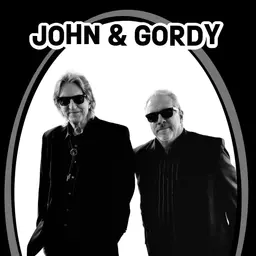
Gordy.
You're listening to Civic Media.
Find the latest news, information and archives of all your favorite shows on the Civic Media website, civicmedia.us.
It is 6.52.
We've got partly cloudy skies this morning.
We should be in for a good deal of sunshine mixed in with the clouds.
Highs in the mid-70s today, right now, 56 degrees.
We started out this conversation talking about reading skills and tests that have recently shown that- And not reading books
I remember big bookshelves in just about every room of the house.
And so I grew up in that environment and, you know, the library was a place to go to see all the different books and just see the thousands of books out there that have been written over the ages.
And what do you want to take a look at?
You know, you'd wander around the library and just pick out something interesting.
And also I still to this day, I guess, unlike you guys, I still, you know, read at least two or three books a year.
And I feel like I'm not I'm kind of lack.
in that.
I think I should be
reading more.
Man, I didn't realize that you were that old.
Yes, I'm that old.
Wow.
But I still enjoy
Yeah.
Well, I think what you're, though, what you're talking about, Gordy, though, too, is there's a cultural shift that actually, you know, and it's worth criticizing.
It's worth knowing about.
And it's also kind of worth going
Huh.
You know, so maybe what I did isn't necessarily, you know, the way things should be done now.
That's not criticizing you for being, you know, a weird solo kid hanging out in the library when...
You know, other kids were out playing.
You know, it wasn't quite like that.
It was quiet.
Collecting the
Well, there that goes.
We've got we've got Prager you now.
But you're right.
It
My
don't think she's a reader.
It is shifting.
Again, is it the information?
How we get information now?
How it's delivered?
Print reading, the idea of holding a book.
you get your book on your phone.
If you do want to read it, you know, the Kindle kind of in that sense.
And I remember, you know, my father-in-law and my mother-in-law, you know, who were, again, voracious readers.
You know, they had transitioned though to the Kindle
not holding a book, you know, moving on and so thinking about now students and kids who are on their phones and they can get books and things like that.
So, you know, are they reading but then how much of that turns into
this kind of, you know, short form scrolling for information.
And then the ability and we even said, you know, so audio books, I mean, even back in the 90s, when I was driving back and forth the University of Maryland for my doctorate, I was doing books on tape like crazy just because I was spending it.
And so I was getting that that way.
And now here's something to throw at you guys.
I could take a book, I could throw it into my favorite chat GPT feature and I can ask chat GPT to read it to me with some some voice intonation that makes it
Fun and
actually load up my chat GPT and say actually what I want you to do with this book is actually Scale it down figure out where there are probably likely going to be test questions from this book and prepare me for the test that Obviously my teacher is going to throw at me for reading this book So yeah, so what does all this mean?
Um, and we said during the break, it might mean that we just go back to the feather quill.
Well, I use it, you know, when my wife and I have our disagreements, I turn it on and record and then I have an earbud in and I have it say, now say this to her.
You know, and it helps.
Oh, that's
There's a lot of fun.
Hey, Saturday show, Randy Weingarten.
Why fascist fear teachers?
Well, that sounds
The national news cycle never stops, but it can be hard to find news about your local community.
Civic Media is dedicated to providing quality local and state news coverage across Wisconsin.
With the Civic Media app, you can get notifications about local stories that matter to you and your community.
Find the free Civic Media app in your phone's app store and choose notifications from the menu to tell us what kind of news you want to hear about.