


New federal dollars could extend the life of one of Wisconsin’s remaining coal power plants.
The Trump administration plans to spend $425 million to support operations at 13 coal plants in 10 states, arguing the move will help meet rising electricity demand and preserve thousands of jobs tied to the ailing coal industry. The White House will do so by invoking the Defense Production Act, a Cold War-era law that gives the president broad authority to accelerate American industrial output at times of crisis.
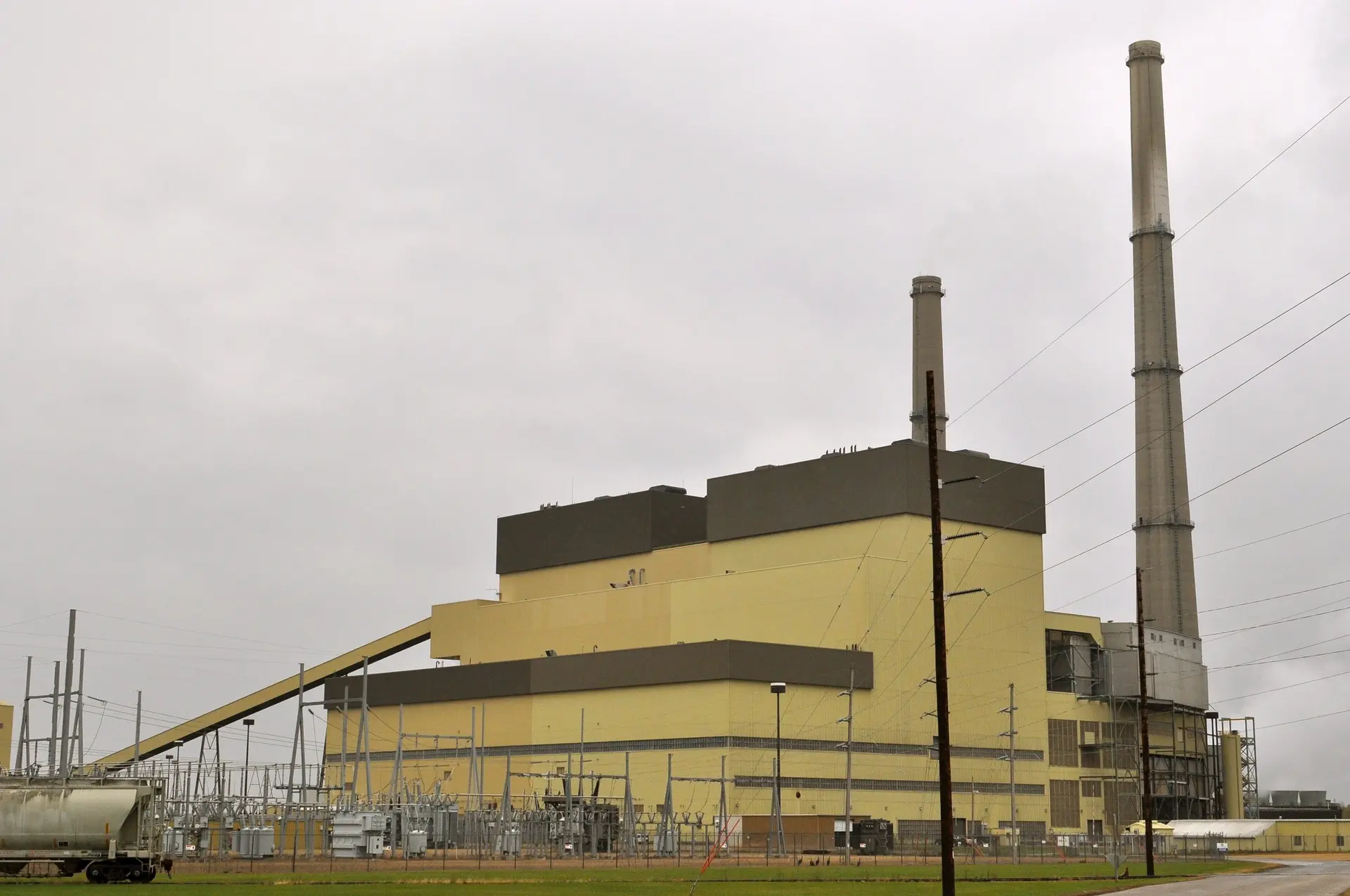
Some of that funding could go to Madison-based utility Alliant Energy, which told Wisconsin Watch that it applied for a $19 million grant to extend the life of coal-powered units it owns at the Columbia Energy Center near Portage in central Wisconsin. The utility previously planned to retire the plant’s coal units before the end of the decade.
President Donald Trump announced the action from the Oval Office Thursday, highlighting that the coal plants set to benefit are all in states he won during the 2024 election.
“Wisconsin put you over the edge,” U.S. Rep. Derrick Van Orden, R-Wis., interjected, standing among the gaggle of Republican lawmakers and Cabinet officials behind the president.
“Our action will allow these facilities to invest in upgrades that will extend their operational lives for decades into the future, reinforce the reliability of our electrical grid … and keep electricity prices low for the American people,” Trump said, adding that the move may also bolster the nation’s artificial intelligence boom.
The administration will also distribute $200 million in Department of Energy grants to reopen a coal plant in Maryland and build the first new coal plants in the U.S. in over a decade: one in Alaska and another in West Virginia.
The Trump administration has already intervened to block the retirement of coal plants in Michigan, Indiana and elsewhere. But the White House did not pair those earlier orders with funding to support ongoing operations, so ratepayers across most of the Midwest — including in Wisconsin — will pick up the bill for those extensions.
Wisconsin’s Citizens Utility Board (CUB) and other Midwestern ratepayer advocacy groups have since filed an amicus brief in support of a lawsuit challenging federal orders blocking the closure of the Michigan and Indiana plants. The costs of extending aging coal plants’ operations “are adding to an affordability challenge customers are already experiencing in Wisconsin and nearby states,” said CUB Wisconsin Executive Director Tom Content.
Alliant has already pushed back the retirement dates for its coal-powered generators at the Columbia Energy Center and Edgewater Energy Center in Sheboygan. The company initially pledged to shut down the last coal generator at the Columbia plant by 2024; Alliant did not clarify the new expected life span of the plant.
The Edgewater plant is slated to transition to natural gas generation by 2029.
Coal generation accounts for a declining share of Wisconsin’s and the Midwest’s overall energy mix. Natural gas surpassed coal as the state’s primary fuel for generating electricity in 2022.
Wisconsin ratepayers owe at least $1 billion to pay off debts tied to retired coal plants, including We Energies’ now-shuttered Pleasant Prairie Power Plant in Kenosha County.
Extending operations at Alliant’s remaining coal plants could reduce the amount ratepayers will still owe when those facilities eventually close.
Wisconsin clean energy advocates reacted with alarm to the White House’s doubling down on coal generation.
“Burning coal in Wisconsin releases a long list of toxic chemicals and heavy metals, both into the air and water,” said Clean Wisconsin spokesperson Amy Barrilleaux. “No one in Wisconsin is asking for more mercury, arsenic, lead or soot. But we will be getting all of it, especially as the Trump administration dismantles pollution safeguards at coal plants, insisting more power is needed for the ‘AI data center revolution.’”
“It’s also important to note that burning coal is one of the most expensive ways to produce energy in Wisconsin — far more expensive than wind and solar farms, which are the cheapest,” she added. “So Wisconsinites will have higher energy costs and will be paying for the health costs, the longer we burn coal in this state.”
Alliant has scaled up investments in renewable energy generation in recent years, buoyed in part by clean energy tax credits extended by the Inflation Reduction Act in 2022. The U.S. Department of Energy also agreed to back $3 billion in loans supporting Alliant’s wind generation and battery storage buildouts in the final days of the Biden administration.
The Trump administration has since largely reversed Biden-era tax incentives for renewable energy development. In its 2025 annual report to the Securities and Exchange Commission, Alliant noted that the termination of clean energy tax credits could “adversely impact” the company’s finances.
The company did not immediately respond to an inquiry about the status of Department of Energy financing for its wind and battery storage projects.
U.S. Interior Secretary Doug Burgum argued Thursday that clean energy tax incentives created a false impression of the viability of renewable energy sources. Wind energy developers, he said, “weren’t trying to generate electricity. They’re just trying to generate tax credits.”
“Energy shouldn’t need subsidy,” Trump responded.
Editor’s note: This story was updated on June 5, 2026 to include information from Citizens Utility Board of Wisconsin