
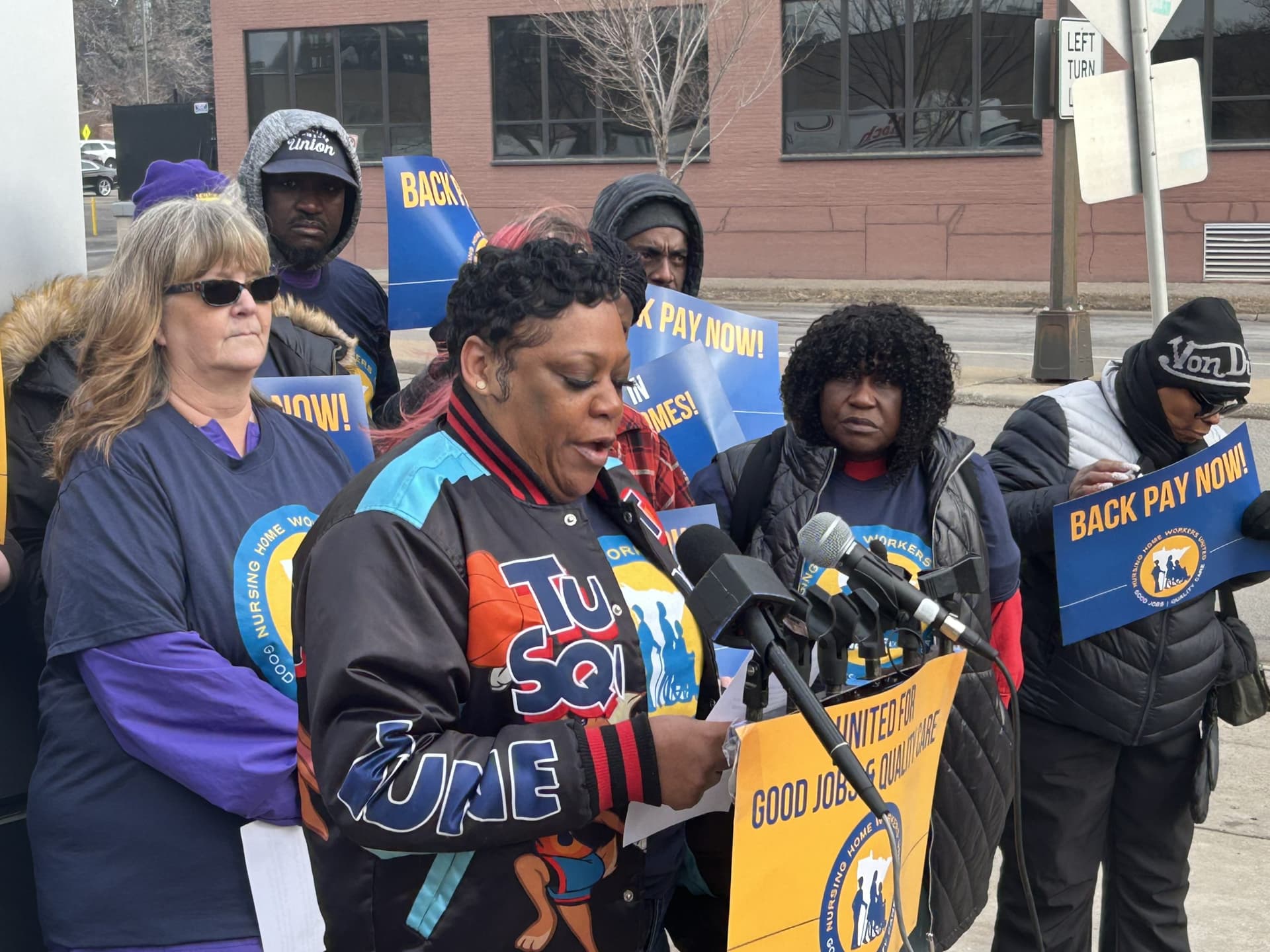


Thousands of nursing home employees are set to get $400 and $200 checks courtesy of the state of Minnesota.
The provision to help people who work for private nursing home operators is a needle in the 378-page haystack of the Human Services spending bill the Minnesota Legislature passed last week.
It was prompted by an indefinite delay in the implementation of a first of its kind Minnesota law that would set wage standards specifically for the nursing home industry. The law was set to go into effect Jan. 1.
The state planned to use federal Medicaid dollars to help nursing homes meet these new wage standards, which required federal approval. Under the statute, all nursing home workers would get $19 an hour with minimums for licensed nurses going up to $27.50 an hour.
But the Trump administration, which has called Minnesota Medicaid a bastion of rampant fraud, has yet to approve this use of taxpayer dollars.
So, for now, the state is inviting nursing home employees to apply for $400 and $200 checks, depending on the amount of wages they have lost from the law not going into effect.
Lawmakers set aside $9.5 million for these payments, which pencils out to a $400 check for 23,750 employees.
The measure’s inclusion in the larger Department of Human Services package demonstrates the lobbying power of SEIU Health Care Minnesota and Iowa, which has vociferously argued for back pay to nursing home workers that had expected a wage bump in 2026.
“We are relieved that nursing home workers are getting this bonus,” Rasha Ahmad Sharif, executive vice president of the union, said in a statement. “We know in every corner of the state workers make endless sacrifices to support residents, which is why we are so committed to improving standards for their work.”
But it also showed the clout of the nursing homes themselves, which, especially in Minnesota, depend on public moneys to operate.
“While this is a temporary solution, these payments will provide meaningful support for caregivers across Minnesota while implementation issues continue to be resolved,” Kari Thurlow, CEO of LeadingAge Minnesota, said in a statement.
Besides liking the state spending money to prop up their industry, there is little else nursing home operators and SEIU currently agree about.
In March, the Long-Term Care Imperative, an umbrella association of elder care facilities, filed a lawsuit in federal court calling for the abolition of the Nursing Home Workforce Standards Board, an arm of the state government that created the unprecedented wage floor for nursing home workers.
Among the lawsuit’s arguments is that nursing home operators essentially bargain against themselves on the nine-member workforce board, which includes three representatives from employers, three from labor and three from the Walz administration. Operators point out that Walz and the unions have voted in lockstep, effectively voiding their voice.
Federal judge Nancy Brasel heard oral arguments two weeks ago on the Walz administration’s motion to dismiss the lawsuit. Brasel has yet to make a decision.
Meanwhile, the federal Centers for Medicare and Medicaid Services are still mulling whether to approve the use of $18 million in federal Medicaid funds to help pay for better wages. The state of Minnesota has argued this is a good use of money, because it will improve worker retention while not jeopardizing the finances of nursing homes.
The Department of Human Services was months late in filing the needed paperwork with CMS. The feds now have a window that reaches into August to make their decision.
Mehmet Oz, CMS’s administrator, appeared at a press conference last Thursday in Minneapolis, where he said that Minnesota state agencies did not have fraud committed by Medicaid providers under control.



