
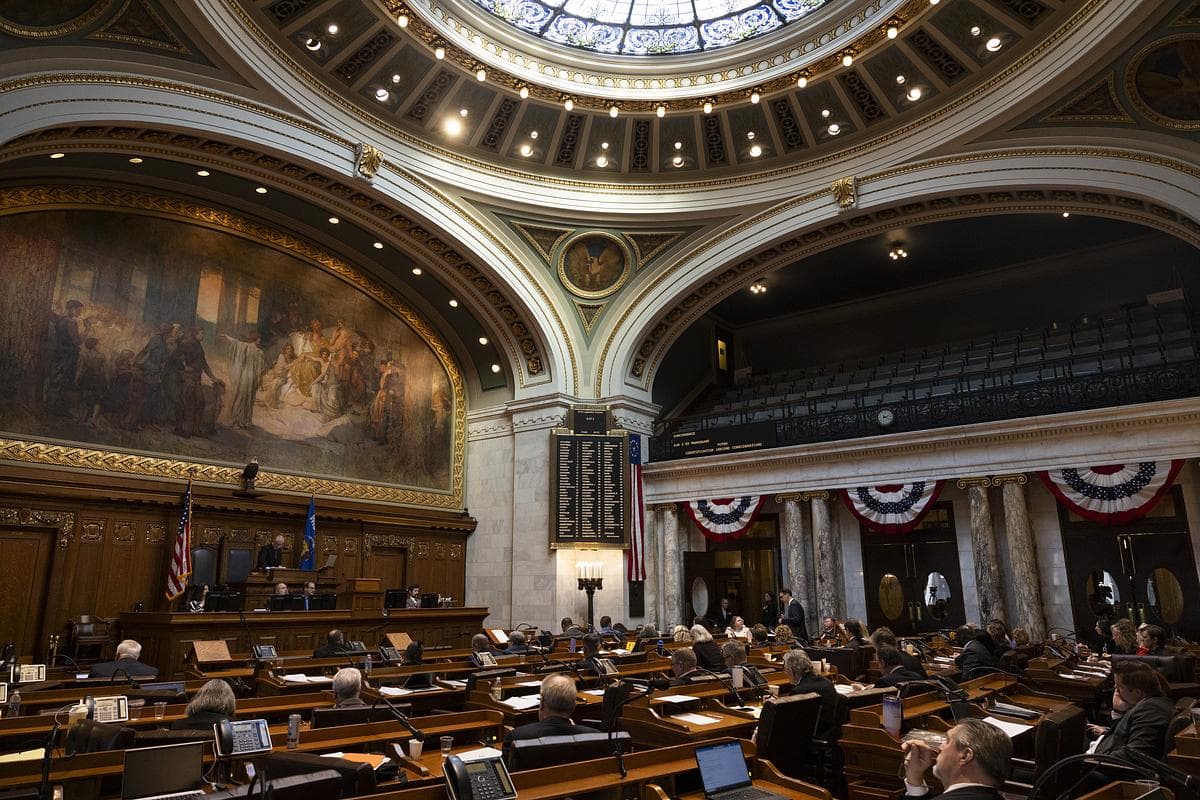


In a late-night press conference during the final days of the Assembly session in February, eight Republican lawmakers in some of the chamber’s most closely contested districts made a dramatic announcement.
They told reporters they had persuaded longtime Assembly Speaker Robin Vos, R-Rochester, to allow essential votes on bills to extend postpartum Medicaid coverage for new Wisconsin mothers and to require insurance companies to cover additional screenings for women at increased risk of breast cancer. Vos had opposed the bills, which stalled in the Assembly for months.
Two months after the bills passed the Assembly, the Jobs First Coalition, a political advocacy organization that has backed Republican candidates, released ads lauding the efforts of some of those GOP lawmakers to get the two women’s health bills signed into law. Michelle Litjens Vos, the speaker’s wife and a former state lawmaker, works on fundraising and event planning for the Jobs First Coalition, according to recent tax documents.
The group specifically shared video ads focused on Greenfield state Rep. Bob Donovan, De Pere state Rep. Benjamin Franklin, Dodgeville state Rep. Todd Novak and Weston state Rep. Patrick Snyder. The ads featured clips of their remarks from the February press conference. Those four lawmakers won their districts in 2024 by 1 to 6 percentage points and hold seats the campaign arm of the Assembly Democrats is targeting this fall.
Google’s Ad Transparency Center shows the ads began running April 16 and that the Jobs First Coalition has spent less than $5,000 to run the videos as of May 1.
“Todd never stops fighting for Wisconsin women, standing up to his own party’s leadership to pass the bill expanding postpartum coverage,” a voiceover says on an ad supporting Novak, which encourages viewers to call his office and thank him for “delivering a win for women’s health care.” The ad flashes a headline from the conservative news outlet Wisconsin Right Now calling the eight a “courageous band of Republican legislators.”

An ad centered on Donovan focuses on his support of the breast cancer screening bill and shows photos of him and his wife. At the February press conference, Donovan explained his wife was diagnosed with metastatic breast cancer.
“Detecting cancer early saves lives, that’s why Rep. Bob Donovan never stopped fighting to expand cancer screening for women,” a voiceover says. “And Bob delivered, ensuring women get the additional screening they need.”
The ads, which have been shared as candidates are circulating nomination papers to get on the November ballot, point to an Assembly Republican strategy cognizant of a national mood that has turned on President Donald Trump and the Republican establishment. The bills also highlight a political issue that appeals to female voters, a voting group that Republicans have often struggled with at the national level.
“It makes sense that these candidates would want to differentiate themselves from the Republican Party more broadly, from Trump, from Vos, from really anyone in leadership who might be a drag on their campaigns,” said Barry Burden, director of the Elections Research Center and political science professor at the University of Wisconsin-Madison. “If they can establish a kind of independent identity as a common sense legislator who’s doing things to help real people in real places, that might be enough to carry the day.”
After new legislative maps were signed into law in 2024, Assembly Democrats flipped 10 seats previously held by Republicans during an election year when Trump won the state. Two years later, the Marquette University Law School Poll shows Trump’s job approval among registered voters at 42% and at least eight Assembly Republicans as of May 1 have announced they won’t seek reelection. That includes Rep. Dean Kaufert, R-Neenah, who won his seat in 2024 by less than 400 votes.
While there are challenges for Republicans in 2026, getting the two women’s health bills across the finish line could help candidates in some of these close Assembly districts and fend off potential attacks from Democrats, said Snyder, who authored the postpartum Medicaid extension bill.
“I’m worried that so many people think that we are somehow like Trump and the federal government and they just lump us in with all of that. I think a bill like this, to me, would help,” Snyder said in an interview with Wisconsin Watch. “It could actually show, hey, Republicans do care. They do care about health. They do care about the health of women and children.”
In a statement provided to Wisconsin Watch, Assembly Minority Leader Greta Neubauer, D-Racine, said the bills extending postpartum Medicaid and covering breast cancer screenings were only passed after Democrats “effectively stopped legislative business” in the final days of the Assembly session in February. Lawmakers proposed amendments related to the women’s health legislation on every bill before the Assembly in an effort to force a vote from Republicans.
“These ads are incredibly disingenuous and frankly insulting to the women of Wisconsin, who know better than to trust Republican legislators on women’s health issues,” Neubauer said.


The Jobs First Coalition did not respond to phone calls or emails from Wisconsin Watch with questions about the ads for Donovan, Franklin, Novak and Snyder and if they’ve released any for the other lawmakers who supported the postpartum Medicaid and breast cancer screening bills. In addition to Kaufert, Reps. Jessie Rodriguez, Clint Moses and Shannon Zimmerman were among the eight who advocated for Vos to allow a vote on the bills.
Wisconsin Watch viewed video ads for each of the four candidates on Google’s Ad Transparency Center, but the video about Franklin was later removed. The page where the video was located indicates it was shown in the Green Bay area, which Franklin represents.
Both Snyder and Novak told Wisconsin Watch they heard about the group’s ads supporting them, but had not seen the videos. Novak said he has heard a wave of stories from constituents about their experiences with breast cancer and postpartum health issues after the bills were passed.
“I think that this is a real personal issue to a lot of people, so that’s, I think, what gives me faith in what we did, and I’m glad we finally got it done,” Novak said. “I still would have rather had it done when it was first introduced, but sometimes in that building, it takes a while to move things.”