
Source: FG Trade
Black America Speaks Black-on-Black Classism: What Were We Taught to See?

Apr 24, 2026, 4:12 AM CT


Share
Carter G. Woodson, “If you can control a man’s thinking, you do not have to worry about his actions.”
We are not just divided.
We were taught to be divided.
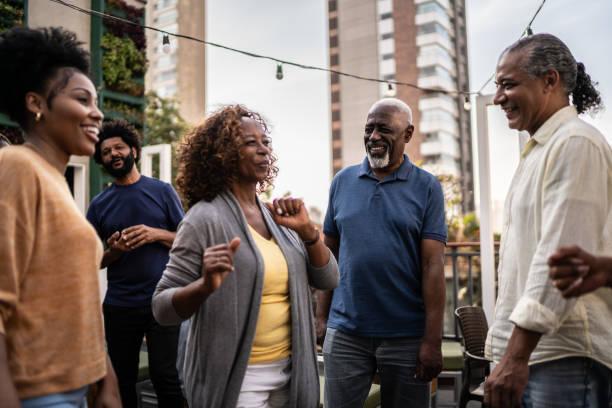
Many of us grew up with a reference point for wisdom.
Our grandparents.
They didn’t need degrees to be respected.
They had lived experience. Discernment. Presence.
When they spoke, people listened.
When they corrected, people adjusted.
When they led, the family followed.
Now look at how we move today.
We honor that same wisdom in private—but ignore it in public.
We pass by people every day who carry real knowledge, real experience, real understanding—and we don’t even see them.
It’s not because we think they lack value.
But because we have been trained to define value differently.
The standard shifted.
Education.
Income.
Status.
Without realizing it, we began sorting each other using the same framework that has historically been used against us.
White America established a hierarchy—reinforced through media and policy—that positioned Black people at the bottom.
We were labeled.
Criminal.
Dangerous.
“Super predators.”
Images repeated until they became belief.
Belief repeated until it became behavior.
Behavior repeated until it became culture.
Now we have to ask:
How often do we replicate that same pattern with each other?
Poverty has been demonized.
Struggle has been criminalized.
And those living within those realities are often treated as less than—less intelligent, less capable, less worthy of respect.
Not always directly.
But consistently.
We’ve accepted categories given to us, created and implemented them into our own way of life..
The educated.
The professional.
The “successful.”
And then—
Everyone else.
But we rarely question where that system of value came from.
The same education system we trust to define intelligence is the one that defined what knowledge matters in the first place.
Who created the curriculum?
Who decided what should be taught?
Who determined what qualifies as intelligence?
And more importantly—
Who benefits from that long-term definition?
Because while many are taught how to operate within systems—
others are positioned to shape them.
And now, we are entering another layer.
Artificial Intelligence.
A system trained on existing data, existing narratives, existing frameworks—now positioned as a source of knowledge, answers, and authority.
But even AI is only as “intelligent” as the information it has been given.
It does not live.
It does not experience.
It does not struggle.
Yet it can be perceived as more credible than a person standing right in front of you with lived knowledge.
That should force a question.
When did we start trusting systems over people?
When did we start valuing programmed knowledge over lived experience?
Because if we are not careful, we will repeat the same pattern:
Assigning authority to what is structured—
While overlooking what is real.
This is not a rejection of education.
Or technology.
It is a call for awareness.
Because when we honor wisdom in our family—but ignore it in our community—
that is not growth.
That is conditioning.
Black America cannot afford to mirror the same hierarchy that was used against us.
We cannot continue to assign value based on standards we did not create, without questioning them.
This is not about tearing down success.
It is about expanding our understanding of intelligence.
Wisdom is not confined to institutions—it lives in experience, survival, perspective, and in the people we have been trained not to see.
It lives in experience.
In survival.
In perspective.
In people we have been trained not to see.
And until we confront that—
we will continue to divide ourselves, while believing it’s natural.
Black America Speaks.
Marveta “Lotus Jay” Johnson is a Milwaukee-based writer and commentator who explores culture, community, and the social forces shaping urban life. Her work often examines how history, policy, and environment influence expectations and opportunity in Black communities. Through reflective commentary, she connects music, lived experience, and public discourse to encourage deeper understanding and dialogue.
Want More Local News?

Civic Media
Civic Media Inc.
The Civic Media App
Put us in your pocket.