
Source: FG Trade / Getty Images

Mar 19, 2026, 6:10 AM CT


Share
If politicians want the support of the Black community, they may need to start in a place many of them have forgotten.
Big Momma’s house.
For generations—long before political consultants, policy think tanks, or community engagement meetings—the real pulse of the Black community lived in the homes of our elders, especially the women who quietly held entire neighborhoods together.
Big Momma’s house wasn’t just a home.
It was an institution.
It was where wisdom was exchanged, problems were solved, children were corrected, and neighbors were welcomed. It was where you could hear the truth about what was really happening in the community long before it showed up in a city council meeting or a campaign speech.
Today, politicians spend millions trying to understand Black voters. They commission polls, hire strategists, and organize listening tours.
But the truth is much simpler.
If you want to understand the priorities of the Black community, start with the women who have been holding the Black family together for generations.
All around the world, people are crying out for liberation. Some interpret it through politics. Others feel it through culture.
Recently, something interesting has been happening. Old-school Motown and classic 1970s soul have begun flooding playlists again—from neighborhood DJ sets to international dance floors.
While some are tuning in to the collapse of the world, others are tuning in to something deeper: the soul of America.
It sounds like Saturday mornings.
The music your grandmother, mother, aunt, or older cousin used to play while cleaning the house. Old gospel or throwback soul filled the kitchen while pots stirred on the stove and love poured into every meal.
Two pieces of fish and five loaves of bread somehow stretched far enough to feed everyone who walked through the door—family, friends, and whoever else happened to stop by.
Three generations moving through the same home.
Family stopping by with a dish they cooked to share.
Church members exchanged the desserts for which they were known.
Neighborhood kids drift toward the smell of a barrel grill in the summertime.
One of the men standing over that grill in a white T-shirt, khaki pants, and church shoes, was handing out hot dogs whether he knew the kids or not.
The church lady who offered to take neighborhood kids to Vacation Bible School—and still bought them something from the ice cream truck even when they never showed up.
The paper boy was carrying Big Momma’s trash to the alley on a rainy Saturday morning because he didn’t want her walking through the storm.
And in return, Big Momma handed him a hot biscuit wrapped in foil, honey butter melting through the bread.
None of this was written into policy.
But it was policy.
It was a living system of accountability, care, and responsibility that held Black communities together long before anyone started studying “community development.”
Big Momma’s house was where the real conversations happened.
Who needed help?
Who was struggling?
Which child needed guidance?
Which young couple needed encouragement?
Which elder needed support?
It was where decisions were made about how to look out for one another.
And at the center of it all was a woman whose primary concern was always the same:
The well-being of her family and her community.
Big Momma didn’t care about titles.
She cared about outcomes.
Was the family safe?
Were the children being raised right?
Were the elders respected?
Was the community holding together?
That clarity is exactly what many of our communities—and our political systems—are missing today.
The Black community does not lack intelligence.
It does not lack talent.
It does not lack leadership.
What it often lacks is a place where wisdom across generations can gather with one agenda:
the protection and advancement of the Black family.
It is time to bring that structure back.
Across this country, we need what I call Big Momma Circles—and ultimately, Big Momma Houses—spaces where Black women from every walk of life come together with a single focus: the well-being, safety, and stability of the collective Black family.
These spaces must move beyond conversation into action. Community gardens in the side lots next to Big Momma’s Houses ensure that the Black American family can feed itself, sustain itself, and support one another.
These spaces must include every form of wisdom:
The sister educated through traditional institutions.
The sister whose insight comes from lived experience in neighborhoods policymakers rarely understand.
The sisters grounded in religious traditions.
The sisters committed to personal study, spiritual discernment, and the understanding of what sustains and heals us.
Young women already thinking about the future of their families.
And the mothers and elders who carry decades of knowledge, relationships, and experience.
Every voice matters.
Because Big Momma understood something many systems forget:
Families are the foundation of society.
When families are strong, communities stabilize.
When communities stabilize, nations strengthen.
But when families are under constant pressure—and the wisdom of the women who sustain them is ignored—the entire system begins to fracture.
If leaders genuinely want to serve the Black community, they must first be willing to listen to the women who have been carrying it.
Not as a photo opportunity.
Not as a campaign stop.
But as a governing principle.
Because Big Momma’s circle has always had one priority:
Protecting the future of her family.
And if politicians want the trust—and the support—of the Black community moving forward, they need to understand this:
Our family will support those who support us.
Before you can lead the neighborhood,
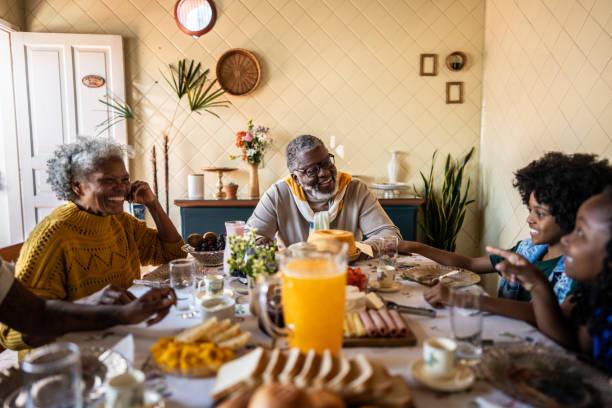
you must first be willing to sit at Big Momma’s table.

Marveta “Lotus Jay” Johnson is a Milwaukee-based writer and commentator who explores culture, community, and the social forces shaping urban life. Her work often examines how history, policy, and environment influence expectations and opportunity in Black communities. Through reflective commentary, she connects music, lived experience, and public discourse to encourage deeper understanding and dialogue.
Want More Local News?

Civic Media
Civic Media Inc.
The Civic Media App
Put us in your pocket.