


Meta recently announced it will spend $65 million this election year backing legislative candidates opposed to state regulation of artificial intelligence ventures. The company that owns Facebook, Instagram and WhatsApp is targeting issues like state limits on costs and locations of data centers, deepfakes, algorithmic discrimination in hiring and consumer privacy.
Meta’s big spending on behalf of sympathetic candidates is allowed by the U.S. Supreme Court’s 2010 decision, Citizens United v. FEC. It says corporations have the same constitutional rights to contribute to candidates as Americans. Paraphrasing the court, corporations are now people too.
Citizens United glosses over the fact that corporations are artificial entities created by state law. Each is set up according to the laws of the state where they are chartered.
Until now, efforts to reverse Citizens United have focused on amending the U.S. Constitution to forbid corporate spending. That would require approval of two-thirds of Congress and ratification by 38 states. That hasn’t happened since 1992 and is unlikely now.
A better, simpler approach is to change state corporate law to prohibit electoral spending by corporations. That’s the idea behind two different bills now in the Minnesota Legislature (SF4513/HF4235 and SF4240/HF 3419).
If enacted, either bill would amend Minnesota law chartering corporations to specifically forbid use of corporate dollars for electoral purposes. In other words, corporations would no longer have the same rights as people when it comes to election spending. Similar bills have been introduced in at least 10 other states, and a voter initiative with the same idea may be on this fall’s ballot in Montana.
Courts have long held states may amend their corporate law; apply changes to existing corporations; and bind corporations to their laws, even if they are chartered in other states, as long as they operate within the state with the new rules.
Meta, as allowed by Citizens United, is spending money to support or oppose legislative candidates based on their views on AI regulation. Contributions will come directly out of its corporate treasury, not from employees or sympathetic individuals. It is money which would ordinarily go into corporate stuff like research and development, marketing, employee pay or stockholder dividends. Meta is spending money on state races because the Trump administration’s opposition to federal regulation means for now AI regulation will be left up to the states.
Though Meta has committed to spending the most to fight state AI regulation, others are joining in. For example, tech venture capital firm, Andreessen Horowitz, donated $50 million to another group with the same goals. Other AI companies have committed to spending lesser amounts. The only limit on corporate expenditures is they can’t directly coordinate with campaigns or candidates.
Opposition to state regulation isn’t a partisan issue. Meta has set up a political action committee for each major party — Forge the Future Project backs Republicans, while Making Our Tomorrow supports Democrats. Initially, they’re focusing on two states considered key for future AI growth. Forge the Future is targeting red Texas while Making Our Tomorrow is concentrating on blue Illinois.
(Though most AI companies line up with Meta, Anthropic has a friendlier view toward industry regulation and has committed millions to a group that will “support public education about AI, promote safeguards, and ensure America leads the AI race.)
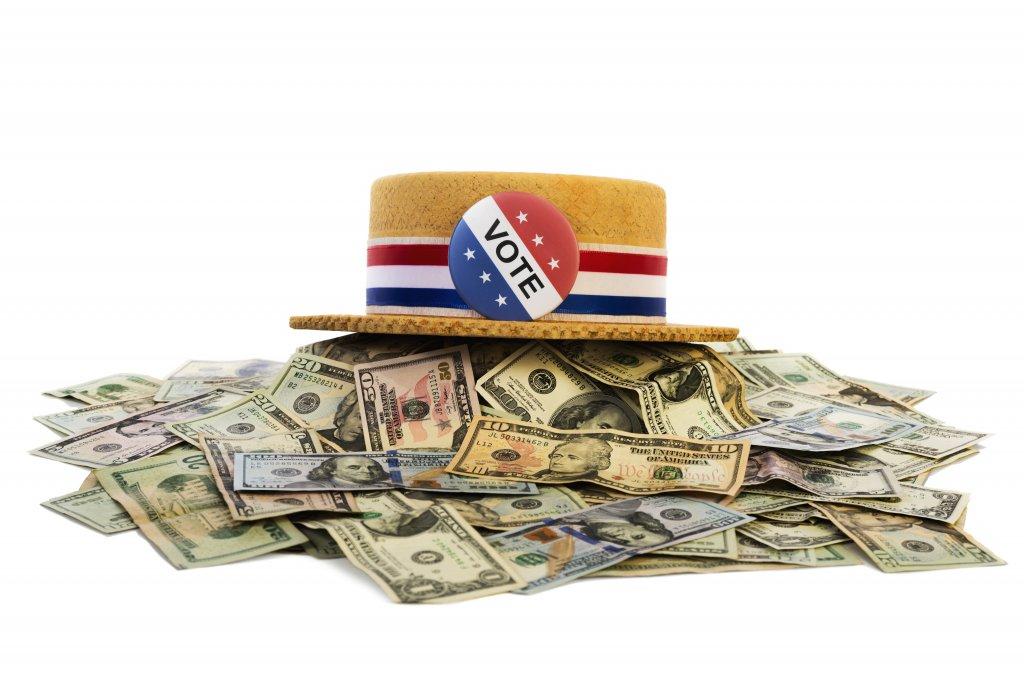
The challenge for we citizens is ensuring lawmakers aren’t unduly influenced by piles of money from corporations, in this case AI firms, profiting the most by legislative decisions.
Here’s what Meta and other AI firms don’t like: State Sen. Erin Maye Quade, DFL-Apple Valley, recently joined Sen. Eric Lucero, R-St. Michael, unveiling a slate of bills limiting how AI operates in Minnesota. Both say they are concerned the technology is evolving in harmful ways and needs to be limited. If Meta decides to spend its money here, instead of Illinois or Texas, the company and its corporate allies could damage the reelection chances of both.
Ending corporate spending allowed by Citizens United can ensure independent voices of both parties like Lucero and Maye Quade aren’t targeted with outside cash. It would also erode the ability of AI and other corporate interests to dominate our legislative decision making.
If one of the pending Minnesota bills is enacted this session or in the future, corporations like Meta would keep all powers they now have for conducting business, charitable activities, advocacy and lobbying. Individual employees could still contribute to candidates and issues they support, either directly or through political action committees. The only difference would be that corporate funds could no longer be used for electoral purposes.
That was the rule before the 2010 Citizens United decision, and it helped limit campaign spending and accompanying influence-buying.
We need that rule today.