
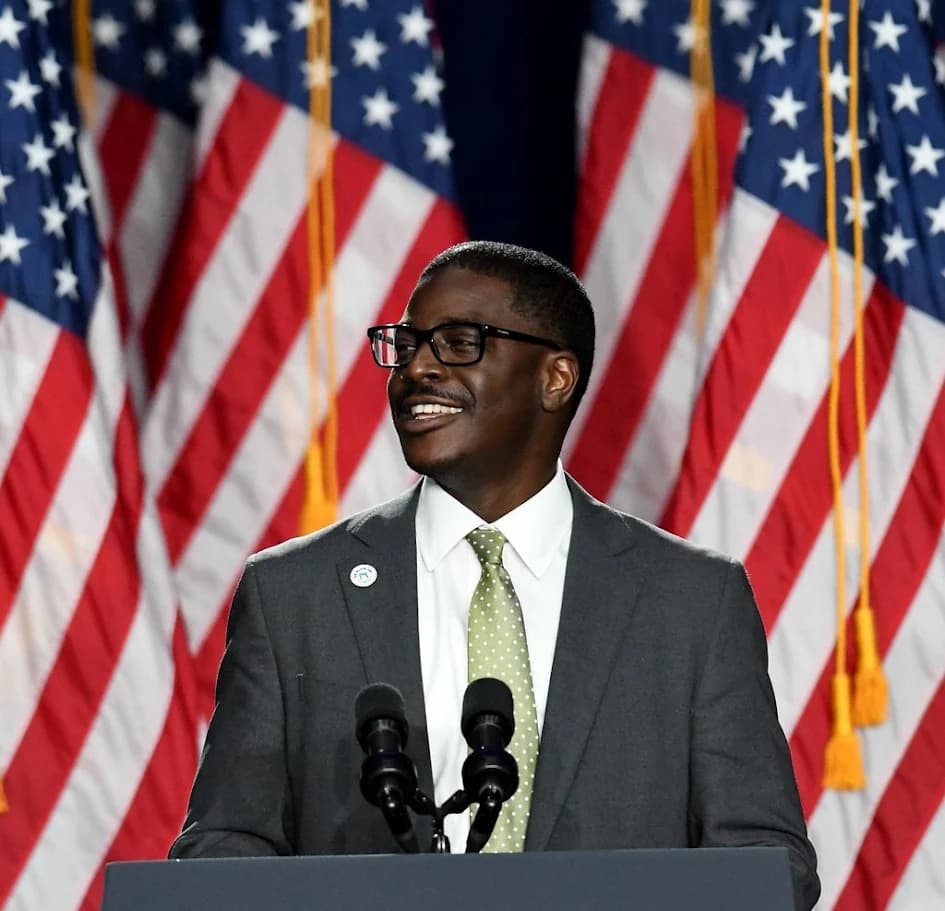
Policy over Personality. Can David Crowley Break Through the Noise of a Crowded Democratic Primary?

Mar 12, 2026, 10:24 AM CT


Share
These days, it seems as if popularity is more important than policy in deciding elections. For a long time, Wisconsin has steered away from this brand of leadership. At all levels of government, we have typically been served by doers looking to score wins for their constituents. And the best leaders have always put the state’s needs over partisan interests.
In many ways, David Crowley is a throwback. His time as Milwaukee County Executive is filled with examples of delivered wins for county residents—from transforming how the county responds to residents in crisis to helping broker deals that expand the tax base.
Milwaukee County is also deeply diverse, with divisions around class, race, and political ideology. Yet Crowley has managed those tensions with a temperament that has often centered the interests of the whole county.
Still, the question remains: can he break through the noise of a Democratic primary crowded with personalities?
We sat down with Crowley to talk about his campaign and the challenges facing Wisconsin.
Building a Campaign
Courier: Nobody thought you would be leading in fundraising. How did you pull that off?
Crowley: One, it’s unfortunate that all this money has to be involved in politics. But I think it’s a reflection of the grassroots base and the work we’ve been doing across the state.
My time as a staffer, as a state representative, as a county executive, and as an organizer—those relationships translate into support for this campaign.
Financial support also reflects trust. People believe you can do the job. While raising money helps us talk to more voters across Wisconsin, we also know that fundraising alone doesn’t translate into votes. It just gives us the opportunity to reach more people.
Risk and Political Capital
Courier: You’re still very young and have built a lot of political capital. Why risk it now?
Crowley: It’s about meeting the moment. The timing of when you decide to move up isn’t really about me. It’s about where we are as a state and where we are as a country.
There’s a lot on the line right now. Whether we’re talking about protecting democracy or bringing people together, we’re facing many of the same challenges.
Political capital isn’t something to hoard. It’s something you spend wisely empowering communities across the state.
And running is also about what we as Democrats are putting on the table. I think we haven’t always been clear about our mission.
Reaching Young Voters
Courier: How do you present yourself as the young candidate in an environment where you may also be the most experienced—and the only one with executive experience?
Crowley: Working with Urban Underground taught me that young people engage when they feel seen and heard. If we want young people at the table, we have to empower them by giving them responsibility, accountability, and ownership.
My first exposure to politics came through the Milwaukee County Youth Commission while I was involved with Urban Underground. I was part of the last cohort before it ended, and when I became County Executive, I brought it back because we needed young voices at the table.
Today those young people aren’t just being heard—they’re lobbying county supervisors and helping shape policy. They even received a budget this year and granted funding to Pathfinders to address youth homelessness.
When young people have the opportunity, they rise to the occasion. Politics isn’t just about getting someone to vote once. Engagement continues after elections, when policies are debated and passed.
Young people are not just our future—they are our now. When you look at the Civil Rights Movement, it was young people leading the charge. Malcolm X and Martin Luther King Jr. were both young when they changed the world.
My job is to make sure young people today have the knowledge and resources to lead so they can create even more opportunities than my generation had.
Data Centers and Big Tech
Courier: What is your plan for data centers?
Crowley: This is a healthy discussion for Wisconsin to have. The legislature shouldn’t leave session without putting protections in place.
Whether we like it or not, data centers are coming. The question is whether we confront big tech and set standards or allow them to operate without protecting our land, our water, and families—especially when it comes to utility costs.
Wisconsin is well positioned to lead on responsible tech investment. We can protect natural resources while also taking advantage of the opportunities that data centers and AI provide.
Courier: Should communities benefit directly?
Crowley: Absolutely. If data centers come into communities, they should pay upfront for energy costs and infrastructure upgrades.
We can also use this moment to grow a stronger clean-energy economy.
And if Wisconsin turns these projects away, they’ll go somewhere else. My concern is that they’ll go to another Great Lakes state with fewer protections. So why not set the bar and show what responsible investment in big tech looks like?
Especially with AI, we need guardrails.
Health Care and Affordability
Courier: What would you do about rising health care costs?
Crowley: Health care is a major driver of the affordability crisis.
Part of my campaign is making Wisconsin the healthiest state in the Midwest by 2035. Health isn’t just physical wellbeing—it’s transportation, education, housing, and access to care. All of these factors shape community health outcomes.
In Milwaukee County we implemented a “no wrong door” model for health and human services so residents don’t have to navigate multiple agencies to get help.
That approach helped reduce overdose deaths by 30 percent in one year and kept people out of emergency rooms and jails, which saves money in the long run.
We should apply that same thinking statewide.
Take BadgerCare. We should modernize it with a public option, sliding-scale premiums, and subsidies for gig workers, farmers, students, and small business owners.
We also need more telehealth access, especially for rural communities.
But the biggest opportunity is prevention. Early intervention is far cheaper than crisis care. Investing upstream saves money and improves outcomes.
Addiction as a Public Health Issue
Courier: You’ve talked openly about addiction affecting your family. How does that shape your approach?
Crowley: For me, addiction isn’t an abstract policy issue. It’s personal.
We have to meet people where they are and do it without judgment. Recovery is a lifelong journey, and support has to extend not just to those struggling with addiction but also to their families.
Milwaukee County secured more opioid settlement funding than any local government in Wisconsin history, and I want to use that experience to help communities across the state.
Incarceration doesn’t treat addiction, and it’s incredibly expensive. In Wisconsin it can cost more to incarcerate someone for a year than to send them to Harvard.
We have to shift the conversation from criminal justice to public health.
That’s why we launched the Better Ways to Cope campaign, working with trusted messengers and community organizations. Government shouldn’t be doing this work alone—we need partnerships.

Robert “Biko” Baker III, Ph.D. (UCLA, History), works at the intersection of culture, tech, and public engagement. A former contributor to The Source and Vibe, he later served as national executive director of the League of Young Voters, leading high-profile civic campaigns and collaborations, including the launch of No Guns Allowed with Snoop Dogg and Ron Conway. He has advised and served on boards for organizations including CIRCLE at Tufts and Sankofa.org, and was named to the NAACP’s “40 Under 40.” Biko is currently Operations Manager for WNOV 860AM/106.5FM and the Milwaukee Courier Newspaper.
Want More Local News?

Civic Media
Civic Media Inc.
The Civic Media App
Put us in your pocket.
