


Mar 6, 2026, 2:55 AM CT


Share
The Trump Administration’s Dangerous Contradiction in the Middle East
Let me be straight with you, Wisconsin. Right now, as you read this, hundreds of thousands of American citizens are stranded in the Middle East — many of them people who look like us — caught between the roar of military strikes and the deafening silence of a government that started a war without a plan to protect its own people.
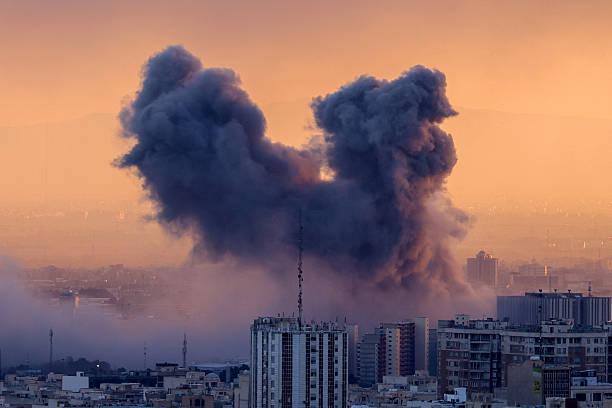
On February 28, 2026, the United States and Israel launched coordinated military strikes against Iran, killing Supreme Leader Ayatollah Ali Khamenei and triggering a wave of Iranian retaliatory attacks across the Gulf region — striking U.S. embassies, military installations, and civilian infrastructure in countries including Qatar, Kuwait, Bahrain, Saudi Arabia, and the United Arab Emirates. The Trump administration launched this offensive while knowing full well that approximately half a million Americans were living, working, and traveling across the region. When the bombs started falling, the response from Washington was two words: Depart now.
That’s it. “Depart now.”
No evacuation corridors. No chartered military flights on standby. No coordinated consular plan. Just a State Department post on X telling American citizens in 14 countries — Bahrain, Egypt, Iraq, Israel, Jordan, Kuwait, Lebanon, Oman, Qatar, Saudi Arabia, Syria, the UAE, Yemen, and Gaza — to use commercial transportation to get themselves out. The problem? Commercial airspace across the region had already been shut down. Airports were closed. Flights were canceled by the thousands. And when frightened Americans called the State Department’s emergency hotline, they were met with an automated message that explicitly told them the U.S. government had no plans to rescue them and to make their own accommodations.
This is not a logistics failure. This is a policy failure — and a moral one.
Consider the contradiction at the heart of this crisis. The Trump administration launched military operations that it had been quietly assembling for weeks, an armada of forces and equipment that lawmakers and security analysts say was months in the making. Senator Andy Kim of New Jersey, a former diplomat, called the belated evacuation advisories — issued three days into the conflict — “one of the biggest derelictions of duty I ever saw.” Yet the White House claimed it “all happened very quickly.”
Not quickly enough to miss, however. Not quickly enough to stop. Only quickly enough to abandon the Americans left behind.
There are an estimated 5.5 million American citizens living abroad, according to the Association of Americans Resident Overseas. Tens of thousands of them call the Middle East home — professionals, educators, military contractors, healthcare workers, and entrepreneurs who have built lives in cities like Dubai, Doha, and Riyadh. Among them are a growing number of Black Americans, drawn to cities like Dubai precisely because they offer professional opportunities, relative safety, and an escape from the exhaustions of racism that follow us in the United States. Many of our brothers and sisters chose the UAE as a place where their credentials and ambitions are taken more seriously than their complexion. They built lives there in good faith — and now they are stranded in a conflict they did not choose, being told by a government they pay taxes to that it cannot help them.
Let’s be honest about what that means. Black Americans have always had a complicated relationship with the expectation of government protection. We know what it looks like when the government decides some citizens are worth saving more urgently than others. We watched it when the U.S. invaded Grenada. We saw it in real time during Hurricane Katrina. We watched it during COVID-19. And we are watching it right now in the Middle East.
Meanwhile, compare how other nations responded. France deployed military aircraft to Abu Dhabi and chartered flights from Oman to begin evacuating vulnerable citizens — prioritizing families with children, the elderly, and those with medical needs. The United Kingdom’s Foreign Office organized structured repatriation flights from Muscat. Ireland coordinated directly with Emirates airline to secure a dedicated Dublin-bound flight for its citizens. Poland authorized military aircraft. Slovakia and the Czech Republic mounted government evacuation operations within days.
And the UAE itself — a country not even party to this conflict — stepped up in ways the United States did not. UAE authorities opened safe air corridors handling up to 48 repatriation flights per hour. The government waived visa overstay fines for tourists and residents stranded by the closures, acknowledging that people could not leave through no fault of their own. Emirates airline transitioned into repatriation mode, operating special relief flights while coordinating with foreign governments to get their nationals home. The UAE’s economy minister confirmed that nearly 17,500 passengers had already been moved across 60 flights — even as the U.S. government was still scrambling to figure out if it could charter a plane.
A foreign government showed more urgency in protecting American lives than our own administration did.
The State Department’s cuts — nearly half its budget slashed under this administration — left embassies understaffed, ambassadors unconfirmed in Saudi Arabia, the UAE, Qatar, Egypt, Kuwait, Algeria, and Iraq, and consular offices without the capacity to answer phones, let alone coordinate evacuations. Retired Major General Randy Manner, himself stranded in the UAE, told CNN that the State Department was in “survival mode.” He said Americans there “feel abandoned.” That is not the language of a superpower that has its people’s backs.
This administration made a choice to go to war without planning for the people caught in its wake. It told Americans to leave while simultaneously ensuring they had nowhere to go. It stripped the very infrastructure — ambassadors, consular staff, State Department funding — that exists precisely for moments like this one.
For Black Americans and all Americans living abroad, the message from Washington has been unmistakably clear: you are on your own.
We deserve better. Every American, no matter where they live, no matter what they look like, no matter which party they voted for, deserves a government that does not start a fire and then walk away while its own citizens burn. That is not a Democratic or Republican position. That is a basic standard of governance — and right now, this administration is failing it.

Dr. LaKeshia Nicole Myers is an accomplished education leader, public servant, and advocate for educational excellence with more than 17 years of experience across K–12, higher education, and public policy. A former member of the Wisconsin State Assembly (2019–2024), she championed education initiatives while serving on key legislative committees and previously worked in federal policy with the U.S. House of Representatives. Dr. Myers currently serves as an Adjunct Professor of History at Lakeland University and Managing Partner of EduStar Consulting, bringing deep expertise in instructional leadership, special education, and equity-focused educational reform.
Want More Local News?

Civic Media
Civic Media Inc.
The Civic Media App
Put us in your pocket.