
Source: pixdeluxe
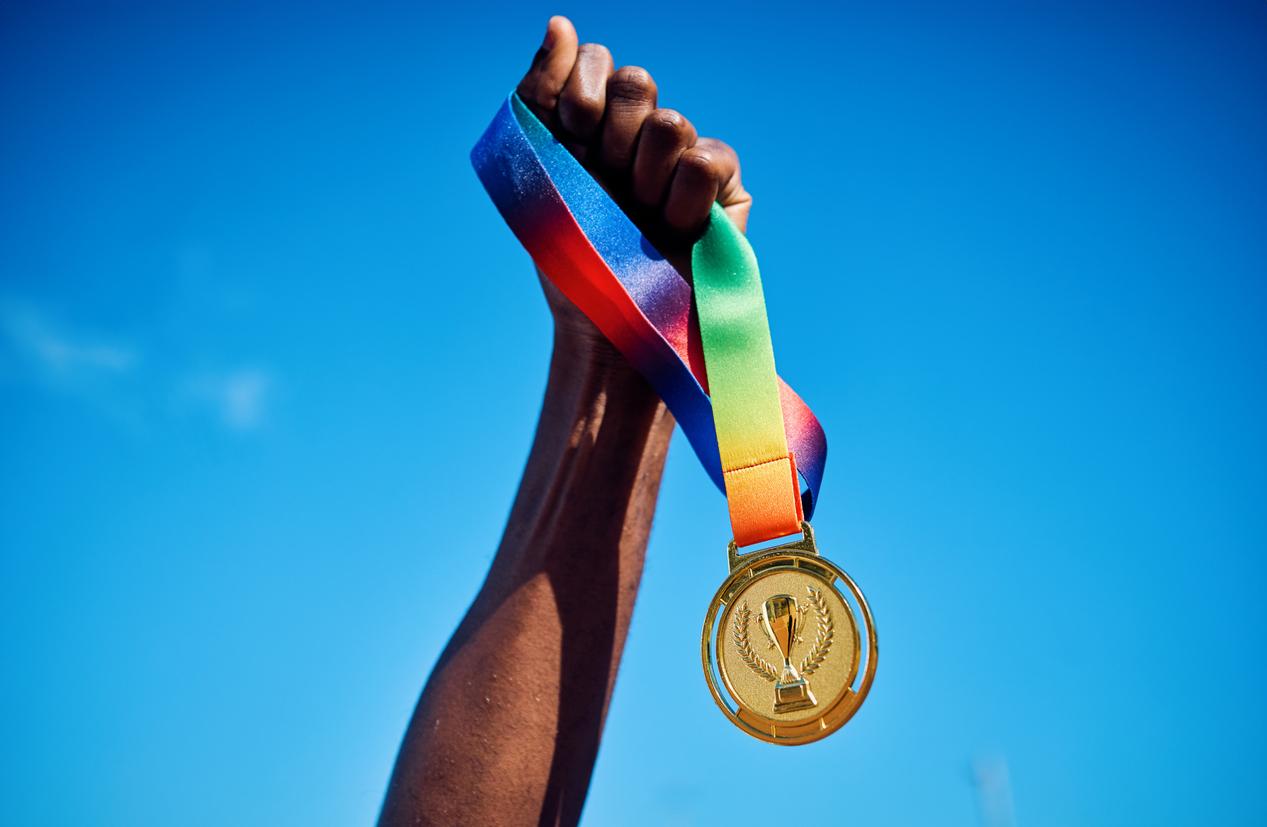
On Ice and Against the Odds: Honoring Our Black Winter Olympians

Feb 19, 2026, 3:06 PM CT


Share
Let me tell you something about excellence — it doesn’t wait for an invitation. It shows up anyway, carves its own lane, and leaves the door open for those who come after. That is precisely what our Black winter Olympians have done, generation after generation, on ice and snow that was never meant for them.
The history of Black participation in the Winter Olympics is short in number but towering in significance. For most of the Games’ modern history, winter sport was treated as the exclusive domain of the wealthy and the white — geographically, economically, and culturally gated in ways that kept our community on the outside looking in. But the modern era of Black winter Olympic presence truly began to take shape in the 1980s and beyond, when a generation of determined athletes refused to let barriers be the final word.
Two names that must be spoken in that breath are Dr. Debi Thomas and Surya Bonaly. Dr. Thomas, a Stanford-educated physician, became the first Black athlete to win a medal at a Winter Olympics when she captured bronze in figure skating at the 1988 Calgary Games. She did it with grace, fire, and a technical brilliance that silenced every doubt. Surya Bonaly, the French figure skater who dominated the early 1990s, was a force of nature — athletically superior to nearly everyone on the ice. She is still the only female figure skater in Olympic competition to land a backflip on one blade. She was routinely underscored by judges in ways that left audiences and observers shaking their heads. History has since vindicated her. Both women carried not just their own dreams, but the unspoken weight of representation — and they carried it beautifully.
Then came Vonetta Flowers. At the 2002 Salt Lake City Games, she became the first Black athlete from any nation to win a gold medal at the Winter Olympics, claiming the top of the podium in bobsled. That moment cracked the ceiling wide open. She was followed by decorated bobsled champion Elana Meyers Taylor, who has since become the most decorated Black winter athlete in U.S. history — four Olympic medals, five Olympic appearances, and still competing with championship hunger at the 2026 Milano Cortina Games.
And then there is Erin Jackson. When Jackson stood atop the podium at the 2022 Beijing Winter Olympics in speed skating, she became the first Black woman to win gold in an individual Winter Olympic event. A former inline skater from Ocala, Florida, Jackson pivoted to ice skating and within years was the best in the world at it. She returns to Italy for the 2026 Games as both a gold medal favorite and a living testament to what our people do when given even a sliver of a chance — we shine.
At the 2026 Milano Cortina Games, Black athletes are no longer just “firsts” or “exceptions” — they are contenders, medal threats, and faces of their sports. Alongside Erin Jackson and Elana Meyers Taylor, Team USA features Kelly Curtis, who made history four years ago as the first Black athlete to represent the U.S. in skeleton; Laila Edwards, the first Black woman to play for Team USA in international women’s hockey competition; bobsledders Jasmine Jones and Bryan Sosoo, the latter a Ghana-born Maryland kid who made his Olympic debut in Milan; and others who carry this legacy with purpose and pride.
To the young girls watching from Wisconsin, from anywhere that winter sports feel like somebody else’s world — look at these athletes. Look at Erin Jackson lacing up in Italy. Look at Elana Meyers Taylor steering a sled for the fifth time in her Olympic career. Look at Laila Edwards making history on the hockey ice.
The cold never stopped us. The cost cannot deter us. The closed doors have been forever opened to us. We are out here — on the ice, in the snow, at the top of the podium — because excellence doesn’t wait for an invitation.
It shows up anyway.

Dr. LaKeshia Nicole Myers is an accomplished education leader, public servant, and advocate for educational excellence with more than 17 years of experience across K–12, higher education, and public policy. A former member of the Wisconsin State Assembly (2019–2024), she championed education initiatives while serving on key legislative committees and previously worked in federal policy with the U.S. House of Representatives. Dr. Myers currently serves as an Adjunct Professor of History at Lakeland University and Managing Partner of EduStar Consulting, bringing deep expertise in instructional leadership, special education, and equity-focused educational reform.
Want More Local News?

Civic Media
Civic Media Inc.
The Civic Media App
Put us in your pocket.