
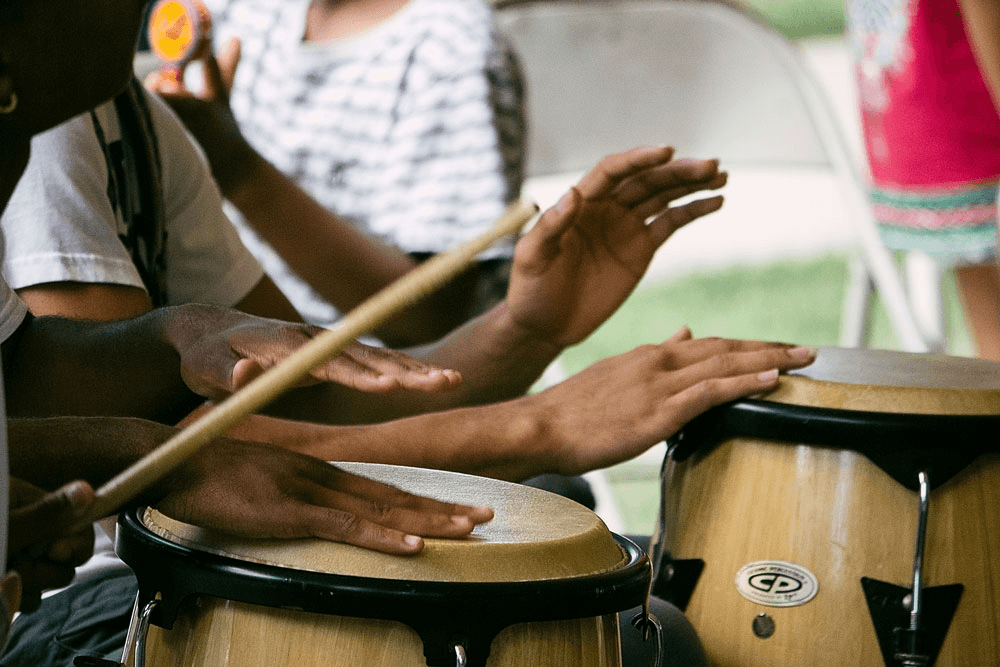
Source: Courtesy of revuewm.com
Celebrating Our Afro Latino Sisters and Brothers During Black History Month

Feb 13, 2026, 4:55 AM CT


Share
There is so much to be said about the impact of African culture on Caribbean and Latin America — it is vibrant and rich and magnificently multifaceted. It was the transatlantic slave trade, during which millions of Africans were forcibly brought to the Americas, have still preserved their traditions, beliefs, and customs that shape the identity of these regions today.
From music and dance, religion and spirituality to food and culinary traditions, the remarkable influence boldly lives in every facet of Caribbean and Latin American life today. In this article, I will share the African impact on music and dance.
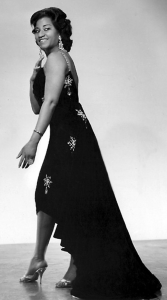
If you were around during the 1950’s and 60’s, Cuban-based or derived genres, such as son montuno, mambo, pachanga, and salsa, played by musicians such as Arsenio Rodriguez (born in Matanzas, Cuba), El Sexteto Habanero (band founded in La Havana, Cuba), and Johnny Pacheco (Born in Santiago de los Caballeros, Dominican Republic) provided the soundtrack for the African-influenced music of its time. Then in the 1970’s, salsa dura produced in New York reflected Latinos proximity to the Civil Rights struggle, and their own embrace of the Africanist elements that were a fundamental part of Spanish Caribbean culture. Famous artists such as Ismael Rivera (born in the South Bronx to Puerto Rican parents), Willie Colón (born in Loíza Aldea, Puerto Rico), and the incomparable Celia Cruz (born in La Havana, Cuba) strongly promoted the Africanist element in Latino culture, drawing frequently upon the imagery of Santería, the Yoruba religion practiced by descendants of African slaves in the Spanish Caribbean.
Colombia, with its rich cultural tapestry woven from indigenous, European, and African influences, boasts a dance form that embodies the energy, passion, and resilience of its people—the Mapalè dance. This lively and captivating Afro-Colombian dance is more than just rhythmic movements; it’s a celebration of heritage, a testament to unity, and an irresistible expression of joy.
The Mapalè dance originated on Colombia’s Caribbean coast, specifically in the regions of San Basilio de Palenque, Maria La Baja, and Cartagena. Its roots can be traced back to the African communities brought to Colombia during the colonial era through the transatlantic slave trade. These communities, determined to preserve their cultural identity, fused their African traditions with indigenous and European influences, giving birth to the vibrant Mapalè dance.
The African influence on Brazilian dance is profound, with several traditional forms being deeply rooted in African heritage. Here are some of the dances that showcase this influence: Samba, Capoeira, Maracatu, Roda Samba, Lundu Dance.
These dances not only reflect the African heritage but also the resilience and creativity of the Brazilian people, blending African traditions with Brazilian culture. To this day, they continue to be celebrated and preserved as part of Brazil’s rich cultural tapestry.
In Milwaukee, there are a variety of restaurants where you can find this beautiful music being played including, Cubanitas downtown and Oak Creek, Fiesta Colombia on South 20th, Sabor Divino in the Layton Park neighborhood, and Rodizio Grill and Steakhouse on Water Street downtown.

Want More Local News?

Civic Media
Civic Media Inc.
The Civic Media App
Put us in your pocket.