Bill Hankey is joining us.
He's the conservation warden for the state's Department of Natural Resources.
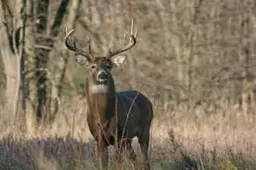
I guess it's not really a headline that tomorrow is the start of the gun deer season, right?
Yeah, I think everybody's very familiar with what the opening weekend of the gun deer season is like and you know looks like we're probably going to have a big one this year with Saturday.
The weather is going to be pretty nice and I expect we'll have a fair amount of people out.
Yeah, you were saying that you kind of expect that there's going to be some success tomorrow.
Yeah, we'll see if my prediction stands, but you know, we have nicer weather, so people tend to be out longer, be in the stands a little bit longer.
And then if the weather is going to turn, you know, Saturday night, you tend to move right before the weather changes.
So there'll probably be a fair amount of deer activity.
Okay, now
With the warmer temperatures, I guess you have to get the deer on ice a little quicker
Yeah, you're gonna want to get that the deer field dress as soon as possible and get that meat cooled down You know that I think the ideal hanging temperatures right around 42 degrees and obviously it's gonna be in the if it's gonna be in the 60s You're gonna have to cool that down fairly quickly whether it's You know rinsing it out with cold water or you know getting it to the locker plant But yeah, you're gonna want to do something to get it cooled down
And you have to register them online, right?
You can register online.
You can still do it the old-fashioned way by phone if you prefer to call it in.
Honestly, I did it online myself this year.
It's pretty easy, especially you can just go to your Go Wild account and you can select your tag and you just click on the one that you need to register your deer for.
And you have till 5pm the following day of harvest to go ahead and register that deer.
It's really easy, but it's important that we get that registration taken care of.
Okay.
Bill, just before we went on the air here, we were talking about CWD and EHD.
EHD is something a little bit different, right?
Yeah, so we had an outbreak of EHD, which is, and I'll pronounce as best I can, episodic hemorrhagic disease that occurred kind of centered around Washington County.
So there was a deer kill there.
That's
EHD is spread by midges, so it's going to be more of a weather related or condition related seasonal thing, whereas CWD is going to be more prevalent long term in the deer population and even persisting in the soil.
I know Washington County, I'm looking at the numbers here.
I had about 1,300 deer that did die that were at least suspected of having symptoms of EHD, and that's of October 29th this year.
What is a, what is a midge?
I'm kind of showing my ignorance here,
but... So similar to like a nat or a small fly.
Okay.
It's an insect.
It lives in...
Wet muddy conditions.
That's where they where they live and breed so When the deer walk down to get potentially to get water get a drink right and these midges are down there They'll bite him and potentially spread that disease to the deer my understanding it's it's
quite prevalent in southern deer.
Southern deer populations have somewhat of an immunity to it.
Um, but in northern populations, it's not as common just because we don't have the, the weather conditions that are quite as conducive.
All right.
So if you come across a deer with EHD, are they going to be dead or are they going to be carrying it with them?
Yeah, they're, you're probably going to find them dead.
And to be honest, he's probably behind us now.
So the midges, we, we've had a good heart frost already.
So I think of that.
that part is already behind us.
You know, there might be some dead deer that are discovered throughout the hunting season, but those are probably already, already killed if that's the case.
All right.
So you still have chronic wasting disease and you can have your deer tested, right?
Yeah.
So we have, you know, Fallot County, we've got a
drop off station right there at El Dorado off 23 it's there's the sign there you can stop in and you can there's instructions on how to do that you can drop your your deer head off to have it tested for CWD you know there's different if you go to the DNR website you can look up the CWD testing areas in your location and go ahead and get that deer tested
okay
So, if you're bringing your deer into the processor, you should probably have it tested before then, right?
I mean, it's a good idea.
Some processors might require it, but it's not a statewide requirement.
Now, you were telling me that some of the deer management units that had CWD and it still had, like,
a record harvest of deer last year?
Well, actually quite the opposite.
So the CWD counties, they have a relatively low harvest of deer.
If you look down over in the southwest portion of the state, you're not seeing those harvest numbers, but we did have in some of the other counties, including Final Out County, where CWD might be, but it's not expanded.
you know, as much as those other counties in the Southwest.
We did have 16 counties that had record buck harvest last year.
So, you know, Southern part of the state, we've got plenty of forage, you know, for these deer.
We've got a solid deer population and, you know, there's plenty of opportunity to get out there and hunt.
Okay.
So first day of the season is Saturday.
Yep.
And what?
The last day will be the following Sunday?
Yep, so it goes, so that's the regular gun deer will go until, it looks like Sunday is the 29th of November.
And then right after that, so on November 30th to December 9th is the statewide muzzle loader hunt.
So that's another opportunity for someone to get out there.
Of course, you can still go archery.
Archery season is already in swing, has been since September.
And you can still go archery season.
archery hunting, you know, potentially, if you're in some of the counties that allow it, you'll be able to archery hunt until January 31st.
Okay.
Do you have some safety reminders for us, for the hunters?
Yeah.
Obviously the four rules of firearm safety, we want to make sure, you know, we're, you know, keeping our, treating our firearms as if we're loaded.
We want to make sure we know our target and beyond.
I also want to stress, you know,
Safety as far as going up and down from the tree stand making sure the firearm is unloaded before you go up and descend from the tree stand You know safety the things that they would teach in hunter safety like you know making sure you're unloaded before you you know hand it across the fence or Using safe carry methods, you know making sure the firearm is is is unsafe Keeping your finger outside the trigger guard and tells ready to shoot the basics that you learn and
hunter safety, hunter education, those are important that you follow those through life because those are, you know, it's when people violate those, you know, those guidelines is when we see some of our
incidents.
So if you're using an ATV or a UTV, your gun should be unloaded until you get to your destination.
Yeah, any vehicle, including ATV, UTV, you want to have that firearm unloaded.
That means no rounds inside the firearm at all.
If you have a magazine, you can remove that magazine.
That's fine.
You can do that.
But you don't want to have any rounds inside the firearm at all.
And obviously, you want to double check and make sure you open the action to make sure it's unloaded.
OK.
And don't carry any passengers on things on the ATV or UTV that aren't meant to carry passengers, right?
Yeah, we don't want to see people in the box bouncing out the back.
Obviously, you know, it's comical, but at the same time, we're seeing people that do get injured by getting thrown out of those ATVs and UTVs.
So we want to be safe on those as well.
All right.
So the color of the day would be fluorescent.
well it would be blaze orange or fluorescent pink.
Yeah so it's your choice I guess if you want to wear blaze orange or blaze pink fluorescent pink you know you can either or but you do want to have the the law requires that you're wearing 50 percent above the waist if you're wearing a hat it's got to be either blaze orange or blaze pink so we want you to be safe out there and that's a requirement if you're a hunter I would even
Suggest that non hunters as you're out in the boat if you're just going for a hike down the trails probably not a bad idea to throw a blaze orange vest and
hat on And you still have the program where you can donate your venison for venison
hamburger, I guess.
Yeah, and I would also, some of your local processors will take dear note nations.
They'll work with some of the food pantries.
You can always reach out.
If you've got a regular processor that you like, reach out to them.
That's something you can do.
I know some counties have additional antler list tags, dough tags that you can get for free.
And some counties have up to, what, four tags that they give out.
most people aren't going to eat that many deer.
So that's an option is you can always donate some of that meat.
Okay.
Anything else that people should know about the 2026 gun deer season?
Well, you know, make sure you buy your license before you go out there.
Today is a good day to do it.
And, you know, we want everybody to be safe.
If you have any questions or anything you want to look up, I highly recommend the DNR website.
It's got a search tab.
You can reach, go to the website, type in the search bar what you're looking for, and you'll, nine times out of ten, probably even more than that, you'll be able to find the answer right there.
Bill, thank you for joining us today.
All right.
Thank you for having me and good luck to everybody out there.
We've been talking with William Henke, who is a conservation warden for the Wisconsin Department of Natural Resources.