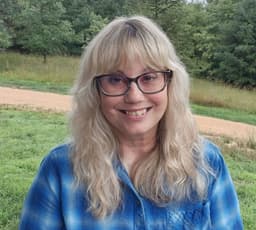
Joining us today, we have State Senator John Jagler, who represents the 13th State Senate District.
He's a Republican who is running for reelection.
Good morning, John.
Good morning, Bob.
How are you doing today?
I am good.
I'm good.
Now, you actually started out in the State Assembly.
Correct.
Yeah.
My first term in the State Assembly was in 2012.
That's when the last time redistricting occurred.
The city that I live in, Watertown, happened to be an open seat.
And I was encouraged by Assembly Speaker, Jeff Fitzgerald, the speaker back then, who was my boss.
I worked as his communications director.
He said, you know what?
You should run for this seat.
And after this was fresh after Act 10 and all the protests at the Capitol and death threats and all the things that he had to go through.
I don't know if that's a good idea.
But he said, you know, you, you should do this.
You're, you're the right person for the job.
And,
uh, after thinking about it, praying on it, my wife and I said, yeah, yeah, let's, let's go for it.
So, um, and a five-way primary back then won that primary.
And then that November was, uh, was elected for my first term.
And
then I went to the, I went to the Senate.
Um, when then state senators, uh, Senate majority leaders, Scott Fitzgerald, Jeff's brother, um, won a seat in Congress and
He, um, he, and he left for Congress and had, that opened up the thirteenth and to see, I ran in a special election and won that.
Okay.
So how long have you been representing the thirteenth then?
Well, about four years.
Okay.
Yeah.
All right.
All right.
So what do you see as some of the top issues in the campaign?
I know recently we've been talking about AI and data centers, but your thoughts,
um, you know, right now affordability is,
is everything we keep on hearing the cost of everything is too high people's property taxes are too high they're going to get their their bills coming up here in the next couple weeks for for the for the next year on property taxes and that's going to push it right back in certainly data centers has been on a lot of people's minds and and it's certainly an issue that uh... will take a look at the upcoming session but yeah those of the those are the big the big point though that we keep on hearing when we knock on people's doors and talk to people and
And, uh, you know, affordability and, and yeah, data centers for sure.
Okay.
Uh, now talk about the 400 year tax increase for schools.
Where, where did that money go?
Uh, well, it, uh, unfortunately a lot of, you know, where did the money go?
It went to the school districts.
Um, but the whole process of it was, was wrong.
It was.
We, the last budget that we voted for before this previous one, we had an increase for the next two years.
The Governor Evers changed that to make it 400 years of an increase per student.
It was not our intent.
He certainly pulled a fast one there and got away for it.
It's one of the things that's actually on the ballot here is one of the referendums is
can you can a governor you know to outlaw or making the constitution against the constitution to use the the line item veto to raise taxes and i think a lot of people are going to agree with that they saw what happened that wasn't wasn't uh... what what we intended you know when we we passed the budget and he signed the budget on a bipartisan basis and you know here we are we're stuck with with raising your property taxes for four hundred years uh... yeah it was it was very very
this is genuine and unfortunate because at a time now when people need every every bit of dollar that they can have in their wallet um you know he he set it up to perpetually for 400 years take it away from them.
Does the school funding formula need to be fixed?
School funding formula is always needed to be fixed Bob um it's it's it's it's a tough
a very tough thing to do and ever since i've been in the legislature before i got in the legislature when i was on your side of the microphone when i when i work in radio people complain because it always set up winners and losers uh... and that the problem is is that you perpetually hurts districts who were lower spending at the start of the formula uh... when it went into effect and it hurts them perpetually and the problem is though you you start picking winners and losers you can't find
the proper path and people on both sides of the aisle have said yeah that funding formula needs to change but no one's been able to come up with the exact way to change it and you know here we are the biggest problem we have right now and we're going to have there's no changing this at all in the near future is declining enrollment and you know we're seeing it across the board across all of wisconsin every school district
has declining enrollment.
Pugula, Wisconsin, has having fewer kids.
It's just a fact.
And at the same time, when we're doing this, you look at some of the costs administratively.
The costs have gone through the roof.
We're spending less money in the classroom, which has to change.
Some of these things, you talk about consolidation.
And I'm not talking about
losing identity of schools or you know people people worry about losing their mascot you know things like that but when you look at at districts that are geographically the payment size and are close to each other do we have to have at a business administrator for this aid aid you know administration bloke has has been created there's got to be some some consolidation now we can't force it or we can be very tough to go i don't think we get the votes
But we can incentivize districts to consolidate and pool resources.
That's something that we definitely should be looking at in the next session.
As I said, the biggest problem that we have is declining enrollment across the board, and that's only going to keep on perpetuating.
You mentioned affordability.
Can you expand on that a little bit, if you would?
Are you talking about housing?
Are you talking about the cost of living?
What are you talking about?
Yes, all of it all of it.
That's what we keep on hearing it.
Every family has a different story And it's all about keeping more of their money making more of their money The housing crisis is is very real right now when you have property taxes That are punishing, you know, just punishing and pummeling families But then you have the situation with the interest rates are so high the market, you know, I'm also a licensed realtor and and you see
these homes that nobody is moving, because why would you leave a mortgage that you have to maybe buy that next home, that next level home as your family grows, if you're going to all of a sudden double your mortgage rate?
So we are in a real situation where young families can't get into homes because families that are growing and would be moving onto that next home aren't moving.
They're staying in.
The affordable housing crisis is very real.
It's something we try to tackle every session.
we've worked on on numerous bills for it and and we've we've made that sense and it's certainly that it helped but it's it's it's a very real problem and you know we've we've got to figure out ways as well to uh... and developers come in make it easier for developers to come in to look for places for are are seniors folks though maybe just a little bit older than me who don't want to be uh... who don't want to have to shovel the driveway who don't want to do this
uh... did you know kind of the uh... a middle upper ground of of not affordable housing but kind of higher and senior housing because what's happening is a lot of folks are staying in their houses because they don't have anywhere to go in the age but they're not able to keep up the upgrade up people those houses i think of some of the city in my my district you know some of the older cities they have a housing stock is very old that we're approaching crisis levels in ten to fifteen years just from those homes not being able to come up they may be a beyond repair
But those homes, if we can get those seniors to move out, move into a facility that they feel comfortable with.
And then, you know, that opens up the pool for the, for the new first time home buyer.
Cause right now it's shocking.
First time home buyers in Wisconsin are approaching almost 50 years old, 45, 46 years old.
That's, that's just, you know, unacceptable from the times that we were young and starting out families.
Okay.
John, why should people vote for you on.
November 3rd.
Well, I'm a proven leader who knows how to do the job, who knows that, you know what, we've consistently balanced the budget.
We balanced the budget.
We lower taxes and we still have her money.
They know that I'm going to get the surplus back to them and they know that they have somebody who's got a great staff.
My goodness, Bob, I have a great staff on constituent issues that people call our office and need help.
We've helped thousands of people in the 13th Senate District.
We do it daily.
It's what we take pride in, and we will be there for them after November 4th, and we'll continue to serve in another term if the voters decide that's the path they want to go on.
I certainly hope they will.
You've been talking with State Senator John Jagler, who represents the 13th State Senate District, is running for reelection next Tuesday.
Joining us at this time, we have Sasha Ripley, who is a Democratic candidate for the 13th State Senate District seat.
Good morning, and thanks for joining us.
Good morning, Bob.
Thank you for having me and giving me the opportunity to share my message with voters today.
So you were telling me you live in Montello.
Yes, that's correct.
I am originally from Montello.
I moved from Montello all the way to Westfield when I was a kid and graduated from Westfield High School and I still live in Montello today.
And my profession, you're a teacher, you still teach some GED classes for Madison Area Technical College?
Yes, yes.
I went to UW-Stevens Point to get my bachelor's degree, and I went to college as a single mom, so it took me about seven years to get through all, you know, going to college part-time and working part-time.
I worked many years for Bentley's Pharmacies.
while I was putting myself through college.
And yes, I went for education and I am certified to teach actually grades 5th through 12th.
The subjects I am certified in are history, political science, psychology, biology, and social studies.
And then I also went to Marion College to get an additional graduate certificate to teach at risk adults.
And then I taught for Westfield School District and Alternative School.
I taught GED classes there.
And then I've continued to teach GED classes since.
And I'm currently teaching for MATC or Madison College.
All right.
Sasha, why don't you tell us what made you decide to run for the state senate?
Sure.
So, I've always been interested in politics since, you know, that was part of my degree, and I've been teaching political science and history and civics in those classes for about 25 years now.
But I never really considered running for office until the last couple of years, about two years ago, I just saw
So many people in my community are really struggling to get by.
And the more I looked into it and the more research I was doing to see what people in Madison from my district were doing to try to solve the problem of high housing costs and high health care costs and unaffordable child care.
I mean, we have
people really struggling to find a place to live, people moving in with their parents and grandparents, even though they're working full time, because they can't afford to live on their own, people living in campers.
There's very few rentals available.
And the more I looked into it, the less I felt comfortable
or confident that anything was going to be accomplished with the state legislature that we have as a majority right now.
And I decided that if I wanted something changed, I better just get involved and try to do something myself.
Okay.
Since you are by profession and education,
I see that one of your priorities would be restructuring funding for public schools.
Tell us about that, if you would, please.
Yes, thanks for asking about that because that is a huge problem for, well, the entire state of Wisconsin, but also specifically for the 13th District.
So first, I would like to mention that we recently have had the elementary school and endeavor closed several years ago.
We had another elementary school in Marquette County closed.
We have both school districts in Marquette County, Westfield and Montello up for referendum.
And after talking to
People talking to the administration and different people on the school board, it's become clear that there is a danger for both school districts, both public school districts in the, in Marquette County closing.
So those are only two public school districts in the entire county.
And there are several other referendums in the 13th district.
So we do need to do something about it.
Wisconsin used to pay two thirds of public schools operating costs with state aid until I think it was the 2003 budget when they changed that.
So I support going back to using state aid to fund two thirds of the operating costs for our public schools and paying a more realistic percentage of special education costs.
for public school programs because the Wisconsin Legislature has also been spending less and less on the special education costs for public schools while still requiring public schools to implement the programs.
So we've been then putting the burden
on homeowners to raise their own property taxes to make up for the difference that state aid has not been funding the public schools and a lot of our taxpayer dollars have been going to private school vouchers instead of to our public schools and that is a big part of our problem as well.
Okay, want to get to a couple other things if we could.
Worker protection, you have something to say about that.
I do, I do.
We have a lot of things that we could really work on for help protecting our workers, protecting unions, supporting unions.
I do believe
that unions are important for growing the middle class and our workers create the wealth that the big corporations are seeing today.
They're the backbone of our economy and they should be enjoying more of the profits that they're creating.
Some of these businesses and big corporations are seeing record high profits and there's been increased worker productivity year after year.
So we should, for one thing, we should have better unemployment rates.
Wisconsin has the lowest unemployment rate of any of our burning states.
Illinois, Michigan,
Minnesota, they all have much higher, some of them are twice what we receive in Wisconsin.
And I do think that we do need guaranteed paid family and medical leave for workers in Wisconsin.
Okay.
We're kind of running out of time here, but you have a number of issues on your website.
What is your website, Sasha?
My website is Ripley4Wisconsin.com and I do also have a Facebook page.
Well, can look me up.
They can just search Sasha Ripley for Wisconsin to find my Facebook page also.
Okay.
Again, the primary reason for this interview is to ask you why you're running for the 13th State Senate seat.
So I'm going to give you that opportunity again to tell us why you're running.
Okay.
So basically I am running because I saw problems with data centers is a big one.
Beaver Dam is in the 13th district and what happened in Beaver Dam shows that we are way behind on regulations, statewide regulations to protect our people, communities, environment from data centers.
And I think that we need to elect legislators who will stand up to some of these big tech companies and protect people.
Schools, high cost for housing, health care, childcare, utilities.
So basically, I am running to try and make life better, easier, and more affordable for Wisconsin residents.
Okay.
Well, Sasha, thank you very much for...
Joining us this morning and telling us more about your candidacy for the State Senate.
Thank you.
I really appreciate the opportunity.