Transcript
Milwaukee Schools Budget and the Future of Public Education
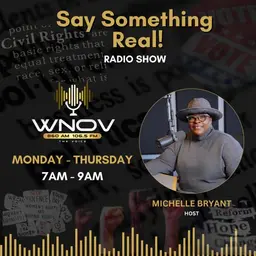
Say Something Real · Wed Aug 5, 2026
Good morning. Good morning, everybody. This is Angela Harris. This is Angela Harris filling in once again for Michelle. Brian, Michelle is enjoying a much well-deserved vacation and we are wishing her some much needed rest and we promise to hold things down until she gets back. Good morning, gentlemen. How are y'all doing this morning? Well, I'm doing pretty.
Well, I'm okay. Sinuses is clowning right now. I gotta be feeling some kind of way, but I'm here. I think that's that's the consensus. Mine are bothering me as well. DJ Clark King, how you doing this morning? Who you with? Who you with?
Who you with? Don't get me started. It's too early in the morning. Them was the days! Listen! Them were the... Don't even get me started, y'all. We won't say no. We won't talk nothing about the education. We'll talk about the matrix, but now how you doing, DJ?
How are you doing? I'm doing all right on this Wednesday. You know, Michelle is the only person that'll give me up this morning, especially during summer break. I'm a teacher on summer break, y'all. I should be at home asleep. But anyways, you know, the last time I was, I sat behind this microphone, Milwaukee Public Schools is in the middle of one of its biggest budget conversations that we have seen in years. So a lot has happened since the last time I was here, y'all. The budget has been approved. People received.
the excess notices programs have been reduced schools have been making budget and staffing decisions the school board has changed how it will conduct its work and the district is already looking to the future of the long-range facilities plan so today
isn't about rumors. It is about saying something real. It is about talking about where Milwaukee Public Schools stands today and where we are headed next. So if you are a parent and educator, a taxpayer or somebody who just simply cares about public education, please give us a call at 414-444-5490. Again, that number is 414-444549.
So we are going to start with the budget. And although the vote has been passed, it still is just beginning and the impacts of that budget are still just beginning. You know, your budgets are funny, right? Like people will say.
budgets are moral documents, budgets will tell us, you know, how we feel about things, what our priorities are. And I think the thing that often concerns me about NPS's budget in general, right, is that everybody pays attention when the budget is being debated. Everybody is involved. Everybody wants to have a say about how the money should be spent. But once the budget is passed, very few people are
paying attention anymore. Very few people are actually concerned or even questioned how those dollars are being allocated, how they are meeting the students, right? And so once the budget is passed, that's actually when like the real story about the way the district handles things is, it starts to happen.
So Milwaukee Public Schools approved a budget intended to address a $46 million deficit while simultaneously protecting classroom instruction. And that is according to district leadership. But here's what.
educators and people on the ground are seeing. They are seeing schools having to adjust staff, losing assistant principals, right? Assistant principals were reduced. Departments at the district level were reorganized. And I think that that's something that I really want to talk to y'all about today. Some schools are being forced to make really difficult decisions about things like art, music, and physical education based on their staffing allocations, support staff.
positions have changed and many educators are asking, like, what does protecting classrooms actually look like? When we think about, you know, what it means to protect our classrooms, you would think that that would mean that the people that are closest to the students are the ones who are going to not be affected by any cuts, right? And when I say closest to the students, that doesn't always necessarily mean working
directly in a classroom every single day. So we have...
We have programs like Black and Latino Male Achievement. And although those are not classroom educators that are sitting in the classroom every single day with students, they are a student-centered position. They work closely and directly with students and staff. So when you have a department like that that is now facing cuts due to this budget, that negatively impacts the students.
We also think about positions like paraprofessionals, right? And children's health assistance, social workers, behavior supports. Over the course of the last two years, we've seen continued cuts to our trauma support specialist within the district. And what does it mean?
when you have children who are experiencing a high rate of trauma, not having access to the very folks who are supposed to help assist them with that.
These are, you know, adults whose names most people don't know, right? They know the direct person that they contact every day at the school, the school secretary, the school administrator's name. They know their child's teacher's names, but they don't know the names of these people that are doing some of this important work until they are no longer there, right, for us to lean on. And I know many people.
have concerns about changes that are affecting programs like BLMA, gender and inclusion, restorative practices, PBIS. And you know, whether you agree or disagree with these decisions, they're worth discussing because these programs were created to address specific student needs. I believe we do have a caller on the line. Caller, good morning.
Good morning, Ms. Angela. How are you? I'm doing well. How are you doing? Who I'm speaking with this morning? This is Kiki from the Northside. All right, Kiki. And I haven't had a chance to eat my boiled egg and drink a sip of coffee. And I appreciate you. But we're looking for that question of the day from Jermaine Ryder. You just jumped right in. Oh, I did. I'm sorry. My apologies. Oh, no. And then my other question was,
What's the best MTS K3 through eighth grade school that you would recommend for a young black little boy? What is that? That is such a loaded question because I believe there are so many good options. This is what I always suggest to parents when they ask me. We don't have to go to the south side. Yeah, yes. This is what I always suggest to parents when they ask me what school should they send their child to? What are you looking for in a school?
What type of environment do you want your child to be in?
you know, do you are you looking for a really strong school community, right? Where you have school staff that's been there for, you know, quite some time you have families that are coming back repeatedly to the school. Are you looking for access to experiences, right? Like those specialties, language emerging, music, like what exactly are you looking for? So for my children, my two youngest, I decided to go the
the Montessori route. I believe that Montessori schools allow children to learn at their own pace, right? So if you have a child that is high functioning, right, they're going to be in a classroom space of multi-age learners, right? So most.
They went to McDowell, Montessori, in the old Juneau. And so the nice thing about McDowell also is it's a K through 12. I don't want to sound like I'm campaigning for one school over another, but... No, no. I was just looking at, like, the school he's in now, it is Montessori. However, I don't want him being the only one in the classroom, like, and I'm just seeing the northern whales now, so it's hitting hard.
And this whole Barack Obama phase that I was in, it seems like that's gone, unless we do something in November. But I'm considering changing schools so that he can still have a really good school that's on paper that looks good and the teachers are.
really good at what they do, but I'm now looking for that social piece of it and making sure I don't go wrong that route. So the one thing I would say about McDowell is it definitely has a very strong school community and culture and it's also still a really diverse school. And when I say diverse, I mean, there are students, there are students of all races and ethnicities, but it's a good mixture of black students and white students, right? So my children were able to get.
Right. My children were able to get all of those experiences. Both of them are coming out of McDowell, knowing how to play instruments, right? Having access to language is also an IB school, which allowed them to transition smoothly into Rufus King. So, um, yeah. So definitely think about that. Okay. But Jermaine, she won't show QOTD question of the day. Thank you. You too. I'm a good.
when we come back from break, because my brain is foggy. Sleepy. So we'll get the QLTD after break, y'all. All right. OK, but I have some questions for y'all.
folks who have either attended Milwaukee Public Schools, sent your children to Milwaukee Public Schools. If you're an educator in Milwaukee Public Schools, I would like to hear from you. What changes have you seen in your child's school or in school in general? And what's different this August compared to last August, right? And for me, I will say,
not only am I an NPS parent, I am an NPS educator, I attended NPS schools, my husband attended NPS schools. There are a lot of changes that I have seen in the district, even in my last 14 years as an educator, but from last August to this August, I would say, you know, we were
going through some tumultuous times with our previous superintendent, we had brought on a new superintendent who was kind of inheriting all of this mess. And I think for me, it was really important for me to give her a year to, you know, see how she would handle things. And I think one of my biggest criticisms
of Brenda Cosilius is that she didn't take enough time to get to know our city before she started making decisions that were going to really impact the students and staff of Milwaukee public schools. I think it's very important when you're coming into a place like Milwaukee to really immerse yourself in not only the city, but the history of the city, understanding
you know, the city's culture, understanding how deeply segregated our city is, right, understanding the relationship between the state legislature and Milwaukee public schools. I think that there's so many moving parts involved in our district that to just come in from the outside and to begin to make decisions is really not only unfair to her, but unfair to the students and the staff. I think that we have another caller on the line.
color. Good morning. Yes. Well, I was hearing about Donald Trump trying to get her moves to a chance to get it right, but he couldn't. So I don't know what's going on with that. I heard him lose this morning. They keep saying one thing and another. I don't know. You were saying you were giving Donald Trump a chance to get what right exactly?
No, I was just saying that Donald Trump was going on Facebook. I mean, he was one of us that he did post and stuff. That's what I was trying to refer to email. Oh, that he was posting stuff on Facebook about education. No. Oh, the straight of home home. Oh, I couldn't get straight of home news. Sure. Sure. Um, okay. Thank you for sharing that. Uh, we're talking about education today. You have a great day. Okay.
Bye-bye. So while Milwaukee Public Schools is doing all of these things, I recently saw a post from our district saying that they are recruiting teachers from Chicago Public Schools that have been laid off.
All are very interested in this topic. So while they're adjusting, we're adjusting our own staffing needs, right? So the reason for the excess of a lot of staff was to cover our staffing shortages that exist in our schools currently. And so I believe that this is another one of the opportunities in their minds to.
share up some of our shortages that exist in NPS. And so I think that this is something worth us talking about as well, because experienced teachers, you all, there is a research that proves that the longer a teacher is teaching, the longer that they are engaged in teaching and become a veteran teacher, the better the students do academically. So there is
proof that we need experienced veteran teachers in our classroom. And so if talented educators are looking for work, Milwaukee Public Schools should absolutely tell a story and we should be asking those teachers to come here and work for us. But here's the question, y'all. How do we recruit new educators while also making sure the educators that are here want to stay? So one of the things that
What's happening on the post was a conversation around NPS stating that the average teacher salary is $90,000. And so there were lots of teachers who are in the comments who were saying like, I don't make 90 that like I don't make close to $90,000. And I think it's misleading, right to new teachers who might be interested in coming and working for the district. So when we say things like.
average teacher salary. That means that they take all of our salaries, combine them together, and they come out with an average. So what that really tells me is that we have a lot of teachers in the district who are probably on the higher end of our salary schedule, which is pushing that $90,000 up a little bit. So listen, if you work in...
If you work in education in Chicago, and you're thinking about coming to Milwaukee Public Schools, our starting salary is not $90,000. That is not what you will be making to start. I think it's important, right? Recruitment matters, retention matters, right? Keeping the teachers that are currently here, getting new teachers to come, culture matters, support matters, trust matters. But I want the educators that are listening this morning, if somebody asked you today, would you
NPS as a place to work, why or why not? And if it's educators listening, please call in and share with us your why or why not. If someone asked me today, would I recommend NPS as a place to work? I guess I would say it depends on what you're coming to NPS to do.
I think me as a person who is a abolitionist educator who believes in advocating for the things, the learning environments that students deserve, I do that in NPS. So it's not difficult for me to work for this district because I know that I have a voice. And if I want things to change, I know that I can use my voice to try to leverage that change.
I think that if you find the right school, NPS can be a really, really great place to work. I think NPS needs to do a much better job of supporting all of its teachers, not just new teachers that are entering into the district, but all teachers in general. I think that they don't do a really good job at all of supporting new educators. Although we do have mentor teachers, I think that there's just another layer.
of support that new educators could definitely use. I would even say educators, mid-year educators too, right, that are between that five and 10-year mark. It wasn't until I probably hit year 10.
that I really, really felt like I was settled in my classroom practice and I was able to manage the classroom effectively and I knew and understood the curriculum, but also understanding that the curriculum is always constantly shifting and changing. Every five years, we go through the process of
choosing new curriculums and reading math, science, and social studies. So there's always a learning curve involved in being a teacher. And so like, how do we support teachers that are going through these constant shifts and changes? And so I just think that that's one of the things that I would say NPS probably needs to do a better job at is just supporting teachers overall. I think when we talk about schools that are high needs and have high trauma, there's a lot of burnout that happens.
you know.
in those schools. And so when we talk about teacher retention, how do we keep teachers from burning out? How do we support them when they're having traumatic experiences happen to them in their school homes? And so those are just some of the things that I would say. NPS has so much potential. I believe if we get enough of the right teachers in the right places, we could really shift the trajectory of this district. And so perhaps those teachers are going to come from
Chicago. I'm not certain. But you know, that would be my advice. And I just want to remind y'all if y'all want to be a part of this conversation, please call in at 414-444-5490. And 414-44-44.
50 to 552 50 all right, so if y'all want to be a part of this conversation, please call in and talk with us today and good morning to all the people that are tuning in on Facebook. So you know.
Question on Facebook. Do you agree with the soon to be new governor stands on the voucher system? They are that was one of the the topics that I wanted to talk about today you while I think that there's been a lot of conversation around This governor's race and the first thing that I want to say to y'all is as as deeply Attached as deeply
concerned as you all are about who's going to be the next governor of Wisconsin, I want you all to be as equally concerned about what is happening in Milwaukee public schools, okay? Because I'm gonna say this over and over again, anytime I get a microphone in front of my face, Milwaukee public schools is the heart of this community, right? If we do not have strong public schools, we do not have strong communities.
So I want y'all to think about that. We're going to get ready to take our first break and then we'll talk about the upcoming governor's race and their stance on education when we come back. Welcome back. Welcome back. This is Angela Harris sitting in for Michelle Bryant.
who is enjoying some much needed time off. Just a reminder, if you want to be a part of this conversation, please give us a call at 414-444-5490 or 414-444-5250. When we left to go on the break, we were going to talk about the upcoming governor's race and
their positions on education. So if you follow me on Facebook, you know that I have been posting things about the governor's race. I've been posting my opinion on things. I think that the last thing that I posted was the governor, the
all of the candidates positions on education. And I think that it's an important conversation for us to have because a lot of what we see happening at the local level in terms of education funding starts at the state level.
So I want to read y'all what I posted and then let's have a conversation about it. So there's been a lot of noise around sunsetting vouchers and Wisconsin's governor's race. It keeps bringing me back to my favorite question. What does education liberation actually look like?
Does it look like every neighborhood school having the resources, staffing and support to thrive where every child regardless of zip code has access to high quality education and every school is held to the same standards of transparency and accountability?
Or does it look like maintaining the system where some schools can choose which accountability measures apply to them? While neighborhood public schools remain under resource, expect expected to do more with less and judged by a different set of rules. If we're serious about educational equity, the conversation can't stop at whether vouchers should exist.
It has to include whether we're willing to build a public education system where every neighborhood school has what it needs to succeed and every school receiving public dollars is held equally accountable. That's the conversation I want us to have. That's the conversation we should be having. So I'll ask again, what does education liberation look like? And when I think about vouchers,
in Milwaukee specifically. I think that people are so sensitive about sunsetting of vouchers because of the way that vouchers were created here in the city. In the 1990s, a group of black parents came together and decided that they were no longer satisfied with the way that Milwaukee public schools was teaching black students and they wanted to have a choice.
You will never hear me argue against a parent's right to choose the educational environment that is best for their child. You will never ever hear me argue against that. But what you will hear me argue against is public dollars being used to support students.
and no accountability being attached to those public dollars. You will also hear me argue for fully funding public schools and people will often
say things like, oh, well, NPS gets $18,000 per pupil in their per pupil funding. And I want you all to understand that when you are serving students, remember, let's go back to what I was saying earlier. When you are serving students that are in historically under resourced communities, you are serving students who are coming from communities where food deserts exist. You are serving students that are coming
coming from communities where there's high rates of violence, houselessness, unemployment, the needs of those students are going to be different in comparison to other places, right? That might not necessarily be serving those students. NPS also has a very high rate of students with special education needs and services. So what it would take to support a...
Neuro-typical regular student is not the same amount of money that it's going to take to serve a neuro-spicy student, a student that has trauma, a student that needs additional supports. I believe that we have a caller on the line. Caller, good morning. Good morning. You said no accountability. That's not fair.
I said hello. Yeah, you said I said no accountability and you said that's not fair. Right. You said you're suggesting that the other schools don't have accountability. Um, I'm suggesting that the accountability that they have is not the same accountability.
that is placed upon public schools, right? So we have a duly elected school board that holds the district. I understand that it may not be the same, but it's not no accountability. And I just thought that it's not fair to suggest that. And I think one of the reasons that to your point about the parents, it wasn't just that they wanted something different. The educators in
in public schools and whether it's a charter or whether it is a private school, the amount that is paid for the child is different and the flexibility or freedom for the educators are also different depending on the type, whether you have a traditional public school or a public charter.
is the accountability is different even in those two or the amount of flexibility for the teachers and the educators, the administrators are different in those. And so those are also part of the reasons that those schools get started. So like for example, the public charters versus the...
ones that are chartered outside of school versus the private schools, they all have a different degree of flexibility, like the instrumentality charters versus the others. So I just, I know the argument is to say that there's no accountability, but that's not true. And I just think it's unfair to say that. So I didn't say, so I didn't say no accountability. I said they choose, I said they choose
They choose how they want to do accountability. They choose which ways they want to hold themselves accountable. Public schools don't have a choice. Accountability looks one way. And so my argument, or not my argument, my position is we should all be held accountable exactly the same way.
that that's my position so if charter schools and voucher schools are going to exist accountability should be consistent across the board because you can't hold Milwaukee public schools to a different standard and then point at us and say oh they're failing they're failing they're failing when you're not meeting that you're not being held to that same standard right and I also would love the audience to like if you have an opinion on this right because if we don't if
We don't sunset vouchers, right? If we continue to let, if this doesn't happen and we continue to let vouchers persist.
what happens when vouchers become the predominant education source in the city, we're going to see the same problems, right? Because the systems are the same on both sides, if I'm being honest. There is no difference. And so if we're still operating within the same educational system and just calling it something different, we're still going to experience the same outcomes. What would it look like for voucher schools to absorb all of the students that currently
exist in Milwaukee Public Schools. The same argument that's being made about NPS not being able to absorb voucher students, the argument could be made on the reverse. Voucher schools are not ready to absorb all of the NPS students that exist. And I would also argue that they don't want a lot of those children anyways because that's why they end up coming back to us after third Friday. So a couple things. The first
You know, the first thing is the accountability is different. I won't argue because the amount is different. It's like not quite 50% less anymore, but about 50% less compared to what is paid when.
there is a child that goes to a traditional public school. It's even different if the child is in a charter versus a public charter. Let me ask you this question. Do you believe that if one dollar of public money goes to a child at any school, there should be accountability that follows that dollar? So I don't believe that there is no accountability. I know that there is some. Do I believe that the accountability is, well, is the accountability exactly the same? It is not.
However, my argument in the part that I was trying to articulate that I think is very important is that the amount of dollars are different. So for lack of a better way to say it, it's almost as if the way that the state system set it up is that if you want flexibility and you want to not have originally teachers that were even credentials, that you get to pay less for the education.
of the children, for lack of a better way to say it, the state saved money and made Milwaukee pay money. So number one, I just wanted to make sure that because a lot of things are said in this education argument, don't say that there's no accountability because it is. You can say the accountability is not exactly the same, that's true, but the dollar amounts are different. The other thing that you said is, you know,
And you said a number of things that I wanted you to be able to say what you were saying, but you ended with, you know, speaking about the fact that, you know, you don't think that they want all of the kids on my block. Same thing happens in public schools that are public schools in suburban communities. The third count is. Yeah, I don't.
disagree. You got cut off, but I don't disagree with that. That last point, I think that suburban public schools do something very similar. The one thing I'm talking to you, but if I, if you go say it and when I go to respond, you just don't go on, then I'll just let you go on and do the shot. I don't think that you can't. You got cut off. So yeah.
you got cut off. So that's why I started to talk. I wasn't trying to interrupt you. Um, I appreciate you calling in. No, we do need to take a break. What I was saying was I think that suburban schools do do the same thing as they do. Right. I don't think traditional public schools. If I go to Ruth's King and then I decide I'm gonna go to Reagan.
We can get to keep the money after the third count. Oh, she said you gotta go to break. So my point is the same thing happened with kids. The money follows, don't follow the kid immediately. Right, right. Yep. And I think we could talk about that. I want to talk about that after break too. Like making sure that the money is following the child after they move from school to school. I think that's real. I hear you. Thank you so much for calling in. I appreciate you. Other schools. Okay. You're welcome. Bye bye.
All right, y'all, we are going to take a break and we'll be back. Welcome back. Welcome back, everybody. Just a reminder, if you want to be a part of this conversation, please give us a call at 414-444-5490 or 414-5250. Again, that's 414-444-5490 or 414-444-5250. And I promise you all, I am a good listener. I am.
I just, the phone was breaking up and I couldn't hear, I'm sorry. But there's a couple of things that the last caller did talk about that I think that we should continue our conversation with. Two things.
She brought up the funding from the state. And I think that that is one of the areas in which the candidates differ, right? One of the candidates has discussed fixing the flawed funding formula, right? Which relies heavily upon property taxes to fund our schools. And I think that we have got to remove the connection between our property taxes and our school funding.
And then the second thing that she brought up was this idea that money should follow the child. And I 100% agree with that statement, no matter where the child goes. Because one of the things that admittedly we will see in Milwaukee public schools is children who get what is called a central office referral, right? So they have.
encourage so many behavior infractions at their present school that it pushes them to central office to have a hearing. And in that hearing, it is determined whether or not that child can remain in the district or be expelled from the district.
It has to be really extenuating circumstances for a student to get expelled from Milwaukee public schools. And so what tends to happen is they will end up floating them to another NPS school. And typically these are students who have high support needs. And when you have a student that has high support needs and you're moving them into a new school environment.
without any additional funding, any additional resources that puts a unnecessary strain on the school. We're not talking about students who are moving from charter back to traditional public schools or private back to traditional public schools or even within the public school sphere that are
traditional students and even those students the money should follow them but a lot of times it is students that have very high needs need high behavioral support right and so when you're moving them into a new school environment but not providing that
Extra support via resources and funding that like I said as an additional strain on the school that should not be happening So, you know one of the things that I would like to see whomever not Tom Tiffany one of the things that I would like to see whomever becomes the Democratic elected governor do is to look at the funding formula
Number one, and to also ensure that funding is following students wherever they go, no matter what the educational system would look like. I believe that there is a way to sunset vouchers in a way that is fair in a way that respects parents and families and pour back into our.
our public schools, our neighborhood schools, I would love to see more untraditional school models right within our school system. We can create choices for parents in a public school model. It doesn't have to be an outside voucher or if vouchers are going to continue to exist, the same level of accountability should be applicable amongst all
all systems. We have a caller on the line. Caller, good morning. Good morning. Good morning. Good morning, Miss Angela. Good morning. Good morning, Mr. Rideout. Good morning, Mayor Clark Kent. Good morning, Milwaukee. I'm on W speaking. Good morning, Mayor DeWall. A couple of different things. I want to ask you a question real quick. Is there anything saying that, well, three strikes and you're out in the current
you know like three suspensions and you're out or um X amount of 72s and you have to be shifted to I don't know what you know with the disciplinary um format is now I mean back back when I was in get a 72 I'll tell you I've gotten 72s for things I've done I've gotten 72s for things I didn't do I've been suspended for things I've done I've been suspended for things I didn't do so
You know, I I'll let you answer that you know, is it three straight in y'all? Is that where we are now or No, okay. No, so there's a discipline matrix, right? And there is based upon behaviors. Okay, so certain behaviors will you know, like
The best way that I can explain it is it's like tier one, tier two, tier three, right? So like certain behaviors will fall in tier one, which typically means like a suspension, like between one and three days suspension.
Then there's behaviors that will fall in that second tier, which could be a five day suspension or a central office referral. Okay. And then there's like the third tier, which is like automatic central office referral that could either lead to expulsion or school change. Yeah. Okay. Well, thank you. That clears that up. But now I'll say this.
Well, any day, well, I mean, three-day, five-day, most might spend three days, but I mean, if the schoolwork doesn't follow them, well, that's basically they're behind when they come back. It's almost like a three-day vacation because you're doing whatever you're doing at home or whatever, but you're suspended for three days. I never had a five-day when I had to come three-day ones, but you come back and you're still behind. I mean, you're further behind, you're three days behind.
You're talking about hiring. There's so many layers to it, Miss Angela. It's got to be a caring position. I remember a lot of my teachers really cared over the years, as much as I've traveled and stuff there. Then you had some that seemed like they were there for the money. Oh man, he was my shop teacher, Eddie was my science teacher.
Man, every time I would walk, I know I was, you know, relatively, I'm a black Cherokee and I'm kind of like a peanut butter red, you know. And no boy's head would get big and his ears would turn red. I'm like, man, what's wrong with you? Like, he was about to break out with something. I mean, you know, so, I mean, not all to that level, but I mean, if you got that degree of prejudice or dislike in you, you shouldn't be getting the job. So, I mean,
It has to be you have to know that you're going in dealing with human beings with different types of elements and issues going on and The pay may not be what you think it's going to be or whatever But it has to be a caring from the beginning and then you let your money forward may work You know on your credentials or your capabilities are and things like that which are qualified to do But yeah, so it has to be you know caring position and I don't know it's
especially now with all this different stuff out here vaping and stuff. They're full of smoking stuff and their brain is fried all summer because they didn't smoke all this stuff. Man, it's just a very difficult challenge to say, well, you know, how can I meet you midway where you are with all the different things you're doing, smoking, tobacco, nicotine, vaping, plus dope and all this other stuff. I mean, it's boyfriend, girlfriend challenges.
all these different things you know it's just a whole lot for uh to put on the plate of a teacher there but that's what they're dealing with when you're dealing with all these different personalities you're talking about a classroom of you know 25 30 people and you got to deal with all these these different personalities and i think that's why you know i brought up
departments like black and Latino male achieve me, um, gender and inclusion, restorative practices, PBIS, all of the, all of those departments do that and, and Siller and Siller and Sillery work. Right. Right. Okay. Right. They do that. Right. They do that work that makes my job easier as a teacher, right? Because, because I don't have to necessarily do.
all of those other things to help those students along, right? Like Black and Latino male achievement does a really good job of talking to students about the dangers of vaping and, you know, why they shouldn't engage in those kinds of things. And so this is how we support students and better support their behavior. Thank you so much for coming. And I'll say this on the way out real quick, but the police should be the last ones to be walking the halls of our schools. Say it again. Say it again. You know, but no, after you got counselors for
get to the principal's office, you know, have the parent come in, hash out the differences, you know, but the police should be on the street taking care of the things on the streets there. Yeah, thank you so much. Have a good one. Thank you. All right, so we're going to get ready to head to a break and we'll be back.
Welcome back. This is Angela Harris sitting in for Michelle Bryant. She is on a much needed vacation. Just a reminder for our last hour, if you want to be a part of this conversation, please give us a call at 414-444-5490 or 414-444-5250. Again, that is 414-444-5490 or 414-44452.
and before I jump into my last segment, I believe we have a caller on the line, caller, good morning. Good morning. How are you? Not as well as you, I'm looking at you. Ah, that's so sweet. Thank you. Are you connected to the MPS? Am I? Yes, I am a Milwaukee Public Schools teacher. I teach at Milwaukee Academy of Chinese Language.
more than 50 years of experience in education. Okay. Teach me something. I have a couple suggestions. Yes, teach me something. I have a task for you. Okay. Do I need to take a, do I need to get out of pen and a piece of paper? Whatever you want to do, you can make a mental note. Okey dokey. I want to conference with you and the superintendent.
I'm going to make this promulgation right now. The superintendent should have Bob well as a right-hand person before she breathes hard. Another thing. Yes. When I was teaching, I was an administrator counselor and teacher.
somebody earlier was talking about the 72. When I was an administrator, we had in school suspension. And then at State Hall. And I used to do detention room. And my thing is, in all those kinds of spaces, they should have graduated materials that you don't need a lot of assistance with. And students should be given education in all of those.
I agree. When I was a fifth impression at Custer, I came up with the package. When you went to school suspension, you took the computer package and be out of there. You know, you don't have time, but accomplishment. And I had many occasions where the students would rather go home
and go ahead and do some work. What she said, they said, suspend me, please. They would take a make-up and expensive for themselves. And when they came back, I told them, the only opening we have for you is the thing we had. Do you call you? No, that's right. I know that's right. Another thing, too, a part of your graduation package is community service.
They should have students as tutors in these detention zones, the prevention zones, and they can help each other.
Well, Dr. Ward, so your first thing, meeting with me, the superintendent and Matthew Boswell, I do have her direct phone number, so I could definitely set that up. I also meet regularly with Matthew Boswell and John Jagman as a part of that equity work.
So, and he is, you know, he is in charge of student services. So he is the person to talk to. Yes, yes, he does. You are exactly right. I appreciate you calling this morning. Thank you so much for sharing your knowledge and you have a good one. Also, and I love what he said about.
I don't know if we realize this, but school suspensions is time out of school. That is instruction, no time that is missed. So if a student is out of school for one day, three days or five days.
that is instructional time. And we are talking about children that are already coming to us with academic deficits. And so if you are at an academic deficit and now you are spending time outside of the school walls, that is only going to make that gap grow. So for me, it's always how can we keep children in school, right? How can we keep them present? And so having rooms where students are supported, right? Through instruction, but also receiving
Perhaps that additional behavior support that might be needed would be so valuable, but all of those things require funding while we cannot. That is the thing about public education. We are asked to do so much with so little staffing is required to cover those rooms. So that means that you need additional support, whether it's a paraprofessional or a teacher or some staff member that's going to be able to staff that room. We talk about things that.
like calming rooms or restorative rooms where students can just go and take a break as needed. Those rooms need support and they need staffing and that requires a lot of funding. I wanted to talk about though, we were talking while we were on break and Jermaine was saying, you know what Milwaukee Public Schools needs and I want him to tell y'all what Milwaukee Public Schools needs. Yeah, I was just saying on break that I really believe
that the MPS system needs strong black men in the school that, you know, from elementary on up, but starting at elementary, if you have the strong black men in the school, when the kids act up, because nine times out of 10, they are acting up because of situations that's happening at home. They don't know how to channel.
some of this anger or some of the stuff that's happening and Some of these kids don't have a male figure in the home. So it's the mama that's constantly yelling at him. It's the It's the mama that's trying to put him in place But if you have that strong black man or a strong man period That can when that kid is acting up in school You kind of raise your voice a little bit and you put that fear
in them. Now, I'm not saying, you know, scare them to the point that they're scared of you, but to the point that they're scared of doing wrong in front of you because they know I'm going to get in trouble, you know, such and such is going to get me. And it's just the fact that I know it to be true because I've seen it that when you have kids that's acting up and they're wallowing out and that man said, hey,
They straighten up or don't you do that and they know going on about their business, whatever It's that man. It's that strong voice and That's just what I believe now again We all are entitled to our own opinion But I just believe in that we need some strong men around the kids while they're young Because then when they get older
that same voice that they'd heard when they was younger, they go hear it some way, somehow in their head, in their conscience, you know, when they set off to do wrong. They're gonna be like, here go Mr. Rideout. You know, you know, you know Mr. Rideout don't play. Yeah. So, you know, he gonna say something. He gonna, you know, he gonna pull you aside, so you don't know. And all of that is...
coupled with research, right? It is a proven fact that if black students have a black teacher in their formative educational years, meaning first through third grade, they automatically become five times more likely to graduate from high school. And that percentage only goes up based upon the more black teachers that they have, and particularly black male teachers. I can remember when
I started working at Dr. King, MLK. Shout out Dr. Martin Luther King Junior Elementary School, the African American Immersion School. I'm gonna always shout out that school every time I open up my mouth because I don't know if y'all realize what a gym Dr. King actually is. It represents one of the only public African American immersion schools in the United States of America. And so that is something that I'm always going to champion. But when I first started at that school,
We had eight or nine black male teachers that teachers. That was the most black man I had ever seen working in a school. We had two black male administrators. That was the most black man that I had ever seen working in a school building before.
in my life. And it was such a beautiful thing to watch because Jermaine is right. The relationship that black boys have with black men is very different than the relationship that black boys have with black women. So I'm often looked at as the mother, the auntie, the granny, right? And they look at black males as bro, right? As big bro, as aunt.
And so that relationship, that feeling is very different. I have had black boys, even my husband, right? Who is not a school teacher will come in and he coached the basketball team at MLK and the boys were straightened up. They be acting up in the hallway. He walk in the building. He just be like, amen. And they straighten up right away. And it's like, there's just this difference. And I also say like, you have to see it to know that you could be it.
Right. Right. And so if I see a black man standing in front of me, educating me, I know that I then in turn can be a black man that stands up one day and educates someone else, right? Listen, one thing I found out, I know this to be true. Nobody cares what you know until they know that you care. Hello. Hello. So if you, so if you show them and even from the biblical standpoint,
the with love and kindness will I draw. So if you, if you, you know, come to them to with love, but still fine with it, like, Hey, listen, man, I want to see you be successful. I want to see you be some in life. But in order for that to happen, you got to start now. And if, and if that person can find favor in you, I guarantee you.
When they see you and if they're acting up Who's ever with that person who's who's ever with that young man or that young lady? She's gonna straighten them all or he's gonna straighten them all out by a that goes such as such y'all Let's not do that in front of him and after a while it would become the norm of not doing yep
See what I'm saying? Listen, I've had new baby teachers ask me all the time, like, Mrs. Harris, how do you get these kids to respect you? Not just the kids in my classroom, right? The kids in the whole school respect me because they know. Mrs. Harris, don't play. I don't play about you. I don't play about your education. I don't play about any of this. Like Barbara said in the comments, a strong, stern, and respected voice. Being loud means nothing to these students. This is definitely the match energy
generation, right? And so I always like to come to them with a very calm, steady energy. I'm never going to escalate. I'm never going to raise my voice because I want you to meet me where I'm at. I want you to match my energy, right? And I think that, you know, there's something about a black man that's firm.
Right that isn't all it doesn't have to be loud, right? It doesn't have to be angry. It's just for right It's just something about a black man that is firm. Um Yeah, I appreciate that. We got a caller on the line caller. Good morning. How are you? Good morning. Forgive me for double different miss Harris. Uh Tyrone W speaking again. I agree with me. I agree with Jermaine. Mr. Right up man. He's I told him get him a couple of lives and a couple of limited
to not get some citrus in him and not that energy down his throat. He needs some running. I need some milk. But very quickly, because I don't understand the real purpose, you know, study hall. I mean, there's a modern day study hall still holding what they're intending to do, because I mean, I actually got in trouble in the study hall up at Madison High School.
It's one of the reasons they ship me over to John Marshall. There's no talking. You know, I mean, well, children are going to do what they're going to do. You know, they're going to talk about what they want to do after school or, you know, at lunchtime or whatever there. But I mean, it makes it seem more like a prison, you know, study, you know, and, you know, the teacher or the attendant was just sitting there and there was talking going on in the back, but me and at that time, Terry,
We got singled out, you know, no talking in study hall and was like, well, you know, you know, it's just you know talking about lunch, you know and things like that So but anyway, is it really serving a purpose or can that can that I would be used to be allocated for something more? Positivity now this deal of the year. Thank you for giving me for double dip. No, you are right first of all study hall was really designed for people
to get your homework and stuff done. And if you needed to help while you was in school, you can use that study hall moment to actually work on your work from your prior classes.
if you had it before a certain class, you can get the homework done that you didn't finish at night time. And then, but then also you got the study art person that's sitting there, to me, instead of just sitting there and watching them, they read. It's one of the kids asked for help and they don't know, you know, you need a study art teacher in there that knows.
with you know that knows what they you know helping what they work instead of just sitting there reading the book because that's what we had well well yeah that you know that kind of works two ways because you know with the study hall they kind of want you to
you know, do your work and if you need help to ask for help. So, I do understand that aspect. So, it's not called study hall anymore. And they call study hall? No, it's called. Oh, Clark. Yeah, y'all old school, study hall. It's actually called advisory, right? So, students can have an advisory period. Wait, what is it called? Advisory. Too long.
Who's going to say that? I'm going to advisory. Yeah, no. So I mean, the students get used to it. They, they say, but advisory is essentially what y'all are saying, but it also allows them to go get help from other teachers so they don't necessarily have to stay in that room. Right. So like, say for instance, my, my, my youngest daughter that's in middle school, um, she needed extra help in science for her advisory. So she would go to her science teacher.
during advisory. She wouldn't stay in advisory. So even if the science teacher is teaching? No, no, the teacher has to be available, right? So the teacher has to be available during your advisory period.
in order for you to go get additional support from that teacher. So how do that work if you have advisory first hour? Right, yeah, so then those students, yeah, those students kind of lose out. Yeah, they lose out. So that makes no sense. Right, so advisory is still like traditional study hall in that sense, right, where you go, you work on extra work, extra assignments. Now you could always communicate with your teacher and say, hey,
I want to work on my missing assignments during advisory, and then you could go get those missing assignments. But being able to, I think the most impactful things for students is being able to have that one-on-one support from the actual teacher. That's why study halls didn't always work, because you have a person in there that might not even necessarily, like if I need helping algebra, right? I need helping algebra one.
I might have a study hall teacher that doesn't know anything about math. So how am I getting that extra help? Well, actually, your study hall, that person that was at the desk, was really like a babysitter. Right, right. So in reality, they wasn't there to.
help you, help you. They was there to watch you. And I think that that's why the district moved away from this idea of study hall and more along the lines of an advisory period. Because you not not only just your teacher, you could go to the guidance counselor during advisory. I mean, the school counselor during advisory, you could go to college. So we don't have to stay in the room. You don't have to stay in that advisory. You don't have to stay in that room. You know, for some.
Some students like my middle daughter, she's a very high achieving child. Her advisory period is typically spent, you know, like now she's prepping college applications and submitting scholarships and stuff like that. So it really gives you an opportunity to do the things that you need to do or want to do.
I think I'd have chose the one to do. I'd have been on my phone. No, but you can't be on your phones. And then we ain't even got to start. We haven't even started talking about the new cell phone policy that's going to come down. But we have a caller on the phone. Good morning, caller. How are you? Good morning. This program today is hitting everything on the head. And I would like to make a comment. And it's good that some of the Afro-American
well-known men are calling in because they got it together this morning. And I never called and she'll be because it and the system's right on time. So I appreciate you. Thank you so much for your compliments and thank you for being a first-time caller. We appreciate you. I'm not a first-time call-up, but this one really caught my attention because every one of those young
Well, gentlemen's that call this morning like Boswell, Mr. Douglas, those people will remember it. And then another thing, they all went black. There was a few, but they call them white gentlemen's at Bursom. And most of all those kids that I know, they've done very well. And it was sticking to the teachings of those men in the walk. They need to,
The union just killed the schools, period. And thank you, sister, for bringing it up.
So I don't know if you know, I mean, no, you probably do know, but in the 90s, NPS has some of the most high performing schools in the entire state of Wisconsin. Dr. King being one of them, I think one of Dr. King's claims to fame in the 90s was they were a 90, 90, 90 school, meaning that 90% of their students were title one, right? Meaning they received some sort of outside state funding. They had 90% black...
Black students and they had 90% of their students that were at or above grade level. That is like a humongous accomplishment and not something that we see.
very often in Milwaukee public schools that have those same demographics. And I think that that can really be attributed to the teaching and learning that was happening in the 90s, the amount of black teachers that existed in the district during the 90s, right? It's very different than what it looks like now. And so it's always my dream to try to recreate what y'all were doing back in the 90s. So anytime I can hear from educators or folks who were directly involved
in schooling in Milwaukee in the early 90s, in the mid 90s and into the 2000s. I'm always willing to listen and learn and take some tips because we need to bring back whatever that spirit is that y'all had. We need to bring that back in our district immediately, immediately. Thank you so much for calling in. We got to get ready to go to our last break of the morning.
Welcome back. Welcome back. This is Angela Harris closing out this last half hour sitting in for Michelle Brand. I always appreciate the opportunity to come and have these conversations with y'all, especially as it relates to education in Milwaukee. This final segment, we're going to talk about who holds the power in Milwaukee. But I want y'all to remember the question that I asked earlier. What does education liberation look like? We have a caller on the line. Good morning, caller. How are you?
And I'm fine, how are you listening? I'm doing well. Okay, I was listening to what your conversation was. And I heard a call in, because I heard a lady say something about unions. Yes, ma'am. That they were the cause of whatever, whatever, the dysfunction of the school kids. I don't believe that, because I am the school here all my life. I'm 77. I was the kindergarten owner.
And like I say, it is a good system that a lot of white people stay down here before they get off of the nice of the city, you know, build them up in stress ways to move them out. And they had, like, the people that was moving out had clients to say, we're not moving to Siberia. We like it here. But that was the racial divide. And then my kids had to be both out to school because the integration stuff.
And so they were bused out, and they told us we had to pick a school or else they were going to pick it. And so there was a lot that went on that I didn't want to know. And because we don't study politics like that in cities and stuff like that, I have to learn it all. And I got grown. I don't know at all, but I can see what happened to this city to deny this. And to say black people are your crime, and we got the crime here, but the houses are evacuated.
You know, our race was politics. And so had we been more aware, I think we would have been more in politics. You know, my husband, my husband was very aware, and he came from our community. And so I was mainly here, so my parents never talked. So we never understood what was going on with us guys racially. But anyways, I worked for Rockwell. You know, we had a union. We fought, we marched for benefit. And that's how we got the benefit.
And so to say, give it to your union, that's what the company said. That's when I forced to doubt their best union and their best teachers unions and everything else, because you could ask for affordable wage. And those who go to school get to be in education. You know what I mean? I don't see what people are doing. You gotta watch what your people doing that's over the union. You're gonna like your president, this, that, that. But we have to give that right because
I don't disagree with any of what you are saying. Thank you so much for calling in. I will say this. I think that there is an argument to be made about the impact that the union had on the number of black teachers
Being in a specific building, so something that I think negatively impacted black teachers was the union fighting for. There to be a eat.
Equal disbursement, even disbursement of educators across the district, meaning that one school like Dr. King that had 90%, 95% black teachers at one time couldn't do that, right? They wanted to make it a more equal disbursement of teachers. And so somebody could consider that to be harmful. I'll say this, the union does a really good job.
fighting for bread and butter issues and that's a union's job, right? To make sure that people are paid well, that they have fair, stable, healthy working conditions, right? That is the job of the union.
the Milwaukee Teachers Education Association proclaims itself as a social justice union though. And so when you start to delve into issues of social justice, then we have to start having conversations about equity, about racial justice, about culturally relevant teaching, anti-bias, anti-racist teaching practices, all of those things that
that come along with social justice and really advocating for the community and not just the benefit of the teachers. And so I believe that that's one thing that they could do better, right? We would be having a lot more different conversations if we had a union that is almost at this point, I am a member of the union.
I always like to be transparent. We have a union that is almost 6,000 members strong. And so if we had 6,000 members showing up to advocate for learning conditions where black students were thriving, there's no doubt in my mind that that would actually be occurring. Right. And so that's just, that's just what I'm going to say about that. I think that there are definite. Benefits and power.
to a union. And I think that we've seen places like Chicago, Los Angeles really fight for the common good, their teachers unions really fight for the common good and lift up entire communities. And I just want to see the same for us here. You know, we've spent some time talking about the district budget. And I just want to shift us real quick before we get ready to go to talk a little bit about governance.
So, you know, budgets are one thing. Governance is something completely different and we are getting ready to go into another election cycle for school board members. And very much like this governor's election matter, governor's election matters. Our school board elections matter equally as much. We do have a caller on the line. Good morning caller. How are you? I'm doing well. I just want to say that.
I want to say amen to what Dr. Wright out there said earlier. And I want to pat myself on the back a little bit. I had two students who gave me the best compliments I've ever had. One was named Annette Pfizer. The late Annette Pfizer. She told me, Mr. Ward, you know you're the daddy for the whole school. And this other girl, Selena Slocum, gave me a class picture.
And on the back, she said, to Mr. Ward, and teach whoever you want to learn or not. And another one, I was walking down the hall, on the hall dude in the dude's behind me cushion. And another student told her, if Mr. Ward, if Mr. Ward would inspect highway and air. And what I learned from that was, not to wear fat tires.
I'm not going to wear that again. But I take it in humor, you know. And I allow in this student to talk to me like they want to talk to me. And if I can't talk to them, it's on me. And y'all have a good one. Oh, when I was doing the detention room, Gloria Erkin, who was the principal of that set of tasks, she would bring materials for the detention room.
So we could get some work for all the students. And then when the students went to the teaching room, teachers were supposed to send them work. And a substitute teacher found out that teachers were not sending them work to pitch. That's why you need to have your own materials there.
And y'all have a good one. You have a good one too. Thank you so much for calling. You know, one of the things that I keep hearing consistently is that you are prioritized learning. You know, back in the day, whether it was in school, suspension room, detention room, whatever it was, the leaders that were in charge of those schools, the teachers in those buildings decided that even though this child had.
this behavior infraction, something happened that caused them to that caused them to have to be in school suspension, they still were going to learn. And I think that that's something that we need to get back to is really prioritizing the importance of learning, no matter what, right? No matter where the student is, you know, no matter what the behavior looks like, we need to make learning a priority for them. I so appreciate these lessons that I'm getting this.
and we do have another caller on the line. Caller, good morning. How are you? Caller, good morning. Good morning. Yes. I know you're talking about a lot of things, and you know, we have a lot of fires we need to put out. We got a lot of feelings we need to have, and we have to major reset buttons we need to hit. My question for you is, why do you feel within the Black community?
that a lot of people really don't want to be brutally honest with safe people. You know, when you look at the school system, a lot of these teachers are both out because a lot of these people created their kids and they don't want to do their job. Actually, they're doing the bare minimum. You know, the teacher is there to educate not to be the mother, the father, buying the kids clothes or the parents say, well, I don't want to deal with it.
I feel like if you don't want to deal with something that you made at two o'clock in the morning, you should keep him or her home with you and you raise your kids yourself. The other thing that's going on with the nurse immunity, there's a lack of pride and a lack of laziness and the stuff that I'm going to let God handle. The God should not be having nothing that you was mauling at two o'clock in the morning. You handle it. Also, there's a lot of things that's going on back
portray black people as punching bags or trying to be the good nipro. Like, whoa, I can't ever see that the table. Just give me a chance or it's, oh, I want to be mighty kind. We got so many things that's holding black people back. Why they don't want to hurt their feelings? Because you know when they're getting them bottles, all hell break loose.
Well, you know, you said a couple of things and I think we were actually having a little bit of this conversation during break. You know, DJ Clark was talking about this idea that parents are parenting differently than they were perhaps 20 or 30 years ago. And I said, you know, I believe that my responsibility as an educator is to be an educator.
I can't be responsible for what parents are doing or aren't doing in their homes. And truthfully, I feel like when we talk about parenting as an issue, that is a solution-less conversation, right? Because it can't make people parent. You can't make people do what we think that they should do or what we expect them to do. I think that what happens in education is
societal issues become the responsibility of schools, right? So when we're talking about purchasing clothes for students, the reason I have to purchase clothes for my students is because their parents can't afford to get them clothes and students don't want to come to school and clothes that are dirty or smelly for fear that they're going to be ridiculed by their peers. And so in order for me to make sure that you come to school every day,
You got to have on some fresh clean clothes. Let's make sure that that happens. But that's why someone brought this up in the comments online. I think it was Barbara Smith talking about things like community schools, right? When we have a community school, that school provides things like laundry service, right? A washer and dryer where parents can come and wash their clothes so that ensuring that children have clean clothes to where there might be a food pantry or a resource closet where
Parents can come and get clothes and things like that. There might be a dental clinic or Optometrist in the school so that they can give vision and dental screenings or even a medical clinic like Lincoln Avenue, I believe has had 16th Street clinic attached to it. So copying models like that so that teachers are then not responsible for filling in societal gaps. I think that's why a lot of teachers are burnt out is because we're filling in
gaps from society instead of being able to do what we went to school to do, which is to come to teach, right? And so I think that that's the issue. I think within the black community, again, we have to have a conversation about what liberation looks like, right? And so for me, liberation means
I always have felt like I need both equal parts, righteous and ratchet, right? I cannot exclude anybody in my vision of liberation. Everybody's going to come to people that were to do rags and the bonnets and the people that were they Sunday best every day. Everybody, everybody needs to be a part of this conversation. And I think that's the conversation that black people are afraid to have. I also am not willing to frame my people in a deficit, right? I think that so much of society and like systemic issues have been
around black people being lazy. They don't want to work. They don't know how to take care of themselves well. And so I refuse to even acknowledge or be a part of that narrative. Black people are some of the most beautifully talented, creative. We have given so much to American culture and received so little in return.
And I think that once we start to realize our worth, our wealth and our greatness, but also not be afraid to have some of these difficult conversations, the better off we'll be as a people. But what I will say about Milwaukee in particular.
is because we are such a segregated city, it is on us to take back our educational system. If we want educational systems where our students are thriving, where black children are successful, then black folks got to start showing up. And that is one of my biggest challenges as a person who advocates for better improved Milwaukee public schools. There are not a lot of us that show up at the school board meetings, right? There are not a lot of us who are asking for
a participatory budgeting in the NPS budgeting process, right? We had a group of parents, white parents come out during the budgeting cycle, right? And call for these things, and black people have been calling for it for quite some time, but they're getting the recognition because they organize themselves. Black people need to do the exact same thing. Thank you so much for calling in. I do believe we have another caller on the line. Good morning, caller, how are you?
I think the problem starts from 100 years ago when progressives pushed this idea that capitalism is evil. And they carried it originally by saying, well, capitalism unregulated, unshackled, unbridled capitalism is evil. So they took the kids and put them in these work camps called schools.
But instead of that, the talent you were just talking about a couple seconds ago is inside of every kid. And for this, I'm almost said, I'm terrified by technology. The kids are not terrified by technology. I see stuff on the web where I'm fascinated by maps and stuff and there's this thing called teachers pay teachers. The beautiful website where there's all kinds of maps and stuff. I'm not part of it, but as a consumer, I see it and there's tons of opportunity
for the schools to leverage kids organically brought up in a tech world which old guy like me is so intimidated by. Now, just imagine all the kids out there that are, to my mind, geniuses. I don't care what ethnicity is there. They're all geniuses. But it's stuff that they know that comes from their internal growing into a society that you and me, well, maybe not you, because you're younger than me, but especially my generation. I have to work
tons of hard, I have to work really hard to catch up with those kids where they could look at me. If I gave them all of my stuff I saved on some site, I have no idea how to even get into my stuff. But I save it just because I know some kid might be able to help me someday. It's happened in my own research. This is how they could make money at doing that and they could pay for everything. I appreciate it.
Yep, I appreciate that so much. Remember, we only got a few minutes left in the show. I love the idea, though. Technology is access to the future. I will say this time and time again, we live in the 21st century. The children who are born today will have more access to technology than any of us have ever had. And so we have to figure out a way to leverage that, harness that in our classrooms. And these are
admittedly going to be the jobs of the future, right? And so we have got to start preparing our children for those things. Thank you so much for calling in. I would be remiss you all if I did not take a moment to just talk about Madison, Wisconsin.
And, okay, inquiries. So I just want to say that my heart and prayers. Thank you to the person who reminded us in the comments, heart and prayers go out to those people as they are tearing down the monument last night. And this morning, I believe it has been.
such a joy and a pleasure. Every time I come on the show, I learn so much. I love talking to the community directly and having these conversations about education, about what's happening in Milwaukee, about what's happening in Milwaukee public schools. Just know that if you are interested in learning more from me or following me, you can find me on social media. Angela Harris, I am on TikTok, Instagram, Facebook and YouTube, the spicy teacher.
I want to thank Michelle for reaching out to me and providing me with this opportunity yet again. Thank you to my navigators, Jermaine and DJ Clark Kent for assisting me this morning. Thank you to everybody that called in on the show and I just so appreciate this opportunity. Thank you all so much Milwaukee. I'll talk to y'all later.
Good morning.
Good morning, everybody.
This is Angela Harris.
This is Angela Harris filling in once again for Michelle.
Brian, Michelle is enjoying a much well-deserved vacation and we are wishing her some much needed rest and we promise to hold things down until she gets back.
Good morning, gentlemen.
How are y'all doing this morning?
Well, I'm doing pretty.
Well, I'm okay.
Sinuses is clowning right now.
I gotta be feeling some kind of way, but I'm here.
I think that's the consensus.
Mine are bothering me as well.
DJ Clarkin, how you doing this morning?
Who you with?
I don't know who you with.
Who you with?
Don't get me started.
It's too early in the morning.
Them was the days!
Listen!
Them were the... Don't even get me started, y'all.
We won't say no.
We won't talk nothing about the education.
We'll talk about the matrix, but now how you
are you doing?
I'm doing all right on this Wednesday.
You know, Michelle is the only person that'll give me up this morning, especially during summer break.
I'm a teacher on summer break, y'all.
I should be at home asleep.
But anyways, you know, the last time I was, I sat behind this microphone, Milwaukee Public Schools is in the middle of one of its biggest budget conversations that we have seen in years.
So a lot has happened since the last time I was here, y'all.
The budget has been approved.
People received.
the excess notices programs have been reduced schools have been making budget and staffing decisions the school board has changed how it will conduct its work and the district is already looking to the future of the long-range facilities plan so today
isn't about rumors.
It is about saying something real.
It is about talking about where Milwaukee Public Schools stands today and where we are headed next.
So if you are a parent and educator, a taxpayer or somebody who just simply cares about public education, please give us a call at 414-444-5490.
Again, that number is 414-444549.
So we are going to start with the budget.
And although the vote has been passed, it still is just beginning and the impacts of that budget are still just beginning.
You know, your budgets are funny, right?
Like people will say.
budgets are moral documents, budgets will tell us how we feel about things, what our priorities are.
And I think the thing that often concerns me about NPS's budget in general is that everybody pays attention when the budget is being debated.
Everybody is involved.
Everybody wants to have a say about how the money should be spent.
But once the budget is passed, very few people are
paying attention anymore.
Very few people are actually concerned or even questioned how those dollars are being allocated, how they are meeting the students, right?
And so once the budget is passed, that's actually when like the real story about the way the district handles things is, it starts to happen.
So Milwaukee Public Schools approved a budget intended to address a $46 million deficit while simultaneously protecting classroom instruction.
And that is according to district leadership.
But here's what.
educators and people on the ground are seeing.
They are seeing schools having to adjust staff, losing assistant principals, right?
Assistant principals were reduced.
Departments at the district level were reorganized.
And I think that that's something that I really want to talk to y'all about today.
Some schools are being forced to make really difficult decisions about things like art, music, and physical education based on their staffing allocations, support staff.
positions have changed and many educators are asking, like, what does protecting classrooms actually look like?
When we think about, you know, what it means to protect our classrooms, you would think that that would mean that the people that are closest to the students are the ones who are going to not be affected by any cuts, right?
And when I say closest to the students, that doesn't always necessarily mean working
directly in a classroom every single day.
So we have...
We have programs like Black and Latino Male Achievement.
And although those are not classroom educators that are sitting in the classroom every single day with students, they are a student-centered position.
They work closely and directly with students and staff.
So when you have a department like that that is now facing cuts due to this budget, that negatively impacts the students.
We also think about positions like paraprofessionals and children's health assistance, social workers, behavior supports.
Over the course of the last two years, we've seen continued cuts to our trauma support specialist within the district.
And what does it mean?
when you have children who are experiencing a high rate of trauma, not having access to the very folks who are supposed to help assist them with that.
These are, you know, adults whose names most people don't know, right?
They know the direct person that they contact every day at the school, the school secretary, the school administrator's name.
They know their child's teacher's names, but they don't know the names of these people that are doing some of this important work until they are no longer there, right, for us to lean on.
And I know many people.
have concerns about changes that are affecting programs like BLMA, gender and inclusion, restorative practices, PBIS.
And you know, whether you agree or disagree with these decisions, they're worth discussing because these programs were created to address specific student needs.
I believe we do have a caller on the line.
Caller, good morning.
Good morning, Ms.
Angela.
How are you?
I'm doing well.
How are you doing?
Who I'm speaking with this morning?
This is Kiki from the Northside.
All
right, Kiki.
I haven't had a chance to eat my boiled egg and drink a sip of coffee.
And I appreciate you.
But we're looking for that question of the day from Jermaine Rida.
You just jumped right in.
Oh, I did.
I'm sorry.
My apologies.
Oh, yeah.
And then my other question was,
What's the best MTS K3 through eighth grade school that you would recommend for a young black little boy?
What is that?
That is such a loaded question because I believe there are so many good options.
This is what I always suggest to parents when they ask me.
We don't
have to go to the south side.
Yeah, yes.
This is what I always suggest to parents when they ask me what school should they send their child to?
What are you looking for in a school?
What type of environment do you want your child to be in?
you know, do you are you looking for a really strong school community, right?
Where you have school staff that's been there for, you know, quite some time you have families that are coming back repeatedly to the school.
Are you looking for access to experiences, right?
Like those specialties, language emerging, music, like what exactly are you looking for?
So for my children, my two youngest, I decided to go the
the Montessori route.
I believe that Montessori schools allow children to learn at their own pace, right?
So if you have a child that is high functioning, right, they're going to be in a classroom space of multi-age learners, right?
So most.
They went to McDowell, Montessori, in the old Juneau.
And so the nice thing about McDowell also is it's a K through 12.
I don't want to sound like I'm campaigning for one school over another, but...
No, no.
I was just looking at, like, the school he's in now, it is Montessori.
However, I don't want him being the only one in the classroom, like, and I'm just seeing the northern whales now, so it's hitting hard.
And this whole Barack Obama phase that I was in, it seems like that's gone, unless we do something in November.
But I'm considering changing schools so that he can still have a really good school that's on paper that looks good and the teachers are.
really good at what they do, but I'm now looking for that social piece of it and making sure I don't go wrong that route.
So.
So the one thing I would say about McDowell is it definitely has a very strong school community and culture and it's also still a really diverse school.
And when I say diverse, I mean there are students, there are students of all races and ethnicities, but it's a good mixture of black students and white students, right?
So my children were able to get.
Right.
My children were able to get all of those experiences.
Both of them are coming out of McDowell, knowing how to play instruments, right?
Having access to language is also an IB school, which allowed them to transition smoothly into Rufus King.
So, um, yeah.
So definitely think about that.
Okay.
But Jermaine, she won't show QOTD question of the day.
Thank you.
You
too.
I'm a good.
when we come back from break, because my brain is foggy.
Sleepy.
So we'll get the QLTD after break, y'all.
All right.
OK, but I have some questions for y'all.
folks who have either attended Milwaukee Public Schools, sent your children to Milwaukee Public Schools.
If you're an educator in Milwaukee Public Schools, I would like to hear from you.
What changes have you seen in your child's school or in school in general?
And what's different this August compared to last August, right?
And for me, I will say,
not only am I an NPS parent, I am an NPS educator, I attended NPS schools, my husband attended NPS schools.
There are a lot of changes that I have seen in the district, even in my last 14 years as an educator, but from last August to this August, I would say, you know, we were
going through some tumultuous times with our previous superintendent, we had brought on a new superintendent who was kind of inheriting all of this mess.
And I think for me, it was really important for me to give her a year to, you know, see how she would handle things.
And I think one of my biggest criticisms
of Brenda Cosilius is that she didn't take enough time to get to know our city before she started making decisions that were going to really impact the students and staff of Milwaukee public schools.
I think it's very important when you're coming into a place like Milwaukee to really immerse yourself in not only the city, but the history of the city, understanding
you know, the city's culture, understanding how deeply segregated our city is, right, understanding the relationship between the state legislature and Milwaukee public schools.
I think that there's so many moving parts involved in our district that to just come in from the outside and to begin to make decisions is really not only unfair to her, but unfair to the students and the staff.
I think that we have another caller on the line.
color.
Good morning.
Yes.
Well, I was hearing about Donald Trump trying to get her moves to a chance to get it right, but he couldn't.
So I don't know what's going on with that.
I heard him lose this morning.
They keep saying one thing and another.
I don't know.
You were saying you were giving Donald Trump a chance to get what right exactly?
No, I was just saying, like Donald Trump was going on Facebook.
I mean, he was one of us that he did post and stuff.
That's what I was trying to refer to email.
Oh, that he was posting stuff on Facebook about education.
No.
Oh, the straight of home home.
Oh, I couldn't get straight of home news.
Sure.
Sure.
Um, okay.
Thank you for sharing that.
Uh, we're talking about education today.
You have a great day.
Okay.
Bye-bye.
So while Milwaukee Public Schools is doing all of these things, I recently saw a post from our district saying that they are recruiting teachers from Chicago Public Schools that have been laid off.
All are very interested in this topic.
So while they're adjusting, we're adjusting our own staffing needs, right?
So the reason for the excess of a lot of staff was to cover our staffing shortages that exist in our schools currently.
And so I believe that this is another one of the opportunities in their minds to.
share up some of our shortages that exist in NPS.
And so I think that this is something worth us talking about as well, because experienced teachers, you all, there is a research that proves that the longer a teacher is teaching, the longer that they are engaged in teaching and become a veteran teacher, the better the students do academically.
So there is
proof that we need experienced veteran teachers in our classroom.
And so if talented educators are looking for work, Milwaukee Public Schools should absolutely tell a story and we should be asking those teachers to come here and work for us.
But here's the question, y'all.
How do we recruit new educators while also making sure the educators that are here want to stay?
So one of the things that
What's happening on the post was a conversation around NPS stating that the average teacher salary is $90,000.
And so there were lots of teachers who are in the comments who were saying like, I don't make 90 that like I don't make close to $90,000.
And I think it's misleading, right to new teachers who might be interested in coming and working for the district.
So when we say things like.
average teacher salary.
That means that they take all of our salaries, combine them together, and they come out with an average.
So what that really tells me is that we have a lot of teachers in the district who are probably on the higher end of our salary schedule, which is pushing that $90,000 up a little bit.
So listen, if you work in...
If you work in education in Chicago, and you're thinking about coming to Milwaukee Public Schools, our starting salary is not $90,000.
That is not what you will be making to start.
I think it's important, right?
Recruitment matters, retention matters, right?
Keeping the teachers that are currently here, getting new teachers to come, culture matters, support matters, trust matters.
But I want the educators that are listening this morning, if somebody asked you today, would you
NPS as a place to work, why or why not?
And if it's educators listening, please call in and share with us your why or why not.
If someone asked me today, would I recommend NPS as a place to work?
I guess I would say it depends on what you're coming to NPS to do.
I think me as a person who is a abolitionist educator who believes in advocating for the things, the learning environments that students deserve, I do that in NPS.
So it's not difficult for me to work for this district because I know that I have a voice.
And if I want things to change, I know that I can use my voice to try to leverage that change.
I think that if you find the right school, NPS can be a really, really great place to work.
I think NPS needs to do a much better job of supporting all of its teachers, not just new teachers that are entering into the district, but all teachers in general.
I think that they don't do a really good job at all of supporting new educators.
Although we do have mentor teachers, I think that there's just another layer.
of support that new educators could definitely use.
I would even say educators, mid-year educators too, right, that are between that five and 10-year mark.
It wasn't until I probably hit year 10.
that I really, really felt like I was settled in my classroom practice and I was able to manage the classroom effectively and I knew and understood the curriculum, but also understanding that the curriculum is always constantly shifting and changing.
Every five years, we go through the process of
choosing new curriculums and reading math, science, and social studies.
So there's always a learning curve involved in being a teacher.
And so like, how do we support teachers that are going through these constant shifts and changes?
And so I just think that that's one of the things that I would say NPS probably needs to do a better job at is just supporting teachers overall.
I think when we talk about schools that are high needs and have high trauma, there's a lot of burnout that happens.
you know.
in those schools.
And so when we talk about teacher retention, how do we keep teachers from burning out?
How do we support them when they're having traumatic experiences happen to them in their school homes?
And so those are just some of the things that I would say.
NPS has so much potential.
I believe if we get enough of the right teachers in the right places, we could really shift the trajectory of this district.
And so perhaps those teachers are going to come from
Chicago.
I'm not certain.
But you know, that would be my advice.
And I just want to remind y'all if y'all want to be a part of this conversation, please call in at 414-444-5490.
And 414-44-44.
50 to 552 50 all right, so if y'all want to be a part of this conversation, please call in and talk with us today and good morning to all the people that are tuning in on Facebook.
So you know.
Question on Facebook.
Do you agree with the soon to be new governor stands on the voucher system?
They are that was one of the the topics that I wanted to talk about today you while I think that there's been a lot of conversation around This governor's race and the first thing that I want to say to y'all is as as deeply Attached as deeply
concerned as you all are about who's going to be the next governor of Wisconsin, I want you all to be as equally concerned about what is happening in Milwaukee public schools, okay?
Because I'm gonna say this over and over again, anytime I get a microphone in front of my face, Milwaukee public schools is the heart of this community, right?
If we do not have strong public schools, we do not have strong communities.
So I want y'all to think about that.
We're going to get ready to take our first break and then we'll talk about the upcoming governor's race and their stance on education when we come back.
Welcome back.
Welcome back.
This is Angela Harris sitting in for Michelle Bryant.
who is enjoying some much needed time off.
Just a reminder, if you want to be a part of this conversation, please give us a call at 414-444-5490 or 414-444-5250.
When we left to go on the break, we were going to talk about the upcoming governor's race and
their positions on education.
So if you follow me on Facebook, you know that I have been posting things about the governor's race.
I've been posting my opinion on things.
I think that the last thing that I posted was the governor, the
all of the candidates positions on education.
And I think that it's an important conversation for us to have because a lot of what we see happening at the local level in terms of education funding starts at the state level.
So I want to read y'all what I posted and then let's have a conversation about it.
So there's been a lot of noise around sunsetting vouchers and Wisconsin's governor's race.
It keeps bringing me back to my favorite question.
What does education liberation actually look like?
Does it look like every neighborhood school having the resources, staffing and support to thrive where every child regardless of zip code has access to high quality education and every school is held to the same standards of transparency and accountability?
Or does it look like maintaining the system where some schools can choose which accountability measures apply to them?
While neighborhood public schools remain under resource, expect expected to do more with less and judged by a different set of rules.
If we're serious about educational equity, the conversation can't stop at whether vouchers should exist.
It has to include whether we're willing to build a public education system where every neighborhood school has what it needs to succeed and every school receiving public dollars is held equally accountable.
That's the conversation I want us to have.
That's the conversation we should be having.
So I'll ask again, what does education liberation look like?
And when I think about vouchers,
in Milwaukee specifically.
I think that people are so sensitive about sunsetting of vouchers because of the way that vouchers were created here in the city.
In the 1990s, a group of black parents came together and decided that they were no longer satisfied with the way that Milwaukee public schools was teaching black students and they wanted to have a choice.
You will never hear me argue against a parent's right to choose the educational environment that is best for their child.
You will never ever hear me argue against that.
But what you will hear me argue against is public dollars being used to support students.
and no accountability being attached to those public dollars.
You will also hear me argue for fully funding public schools and people will often
say things like, oh, well, NPS gets $18,000 per pupil in their per pupil funding.
And I want you all to understand that when you are serving students, remember, let's go back to what I was saying earlier.
When you are serving students that are in historically under resourced communities, you are serving students who are coming from communities where food deserts exist.
You are serving students that are coming
coming from communities where there's high rates of violence, houselessness, unemployment, the needs of those students are going to be different in comparison to other places, right?
That might not necessarily be serving those students.
NPS also has a very high rate of special students with special education needs and services.
So what it would take to support a
Neuro-typical regular student is not the same amount of money that it's going to take to serve a neuro-spicy student, a student that has trauma, a student that needs additional supports.
I believe that we have a caller on the line.
Caller, good morning.
Good morning.
You said no accountability.
That's not
fair.
I said hello.
Yeah, you said I said no accountability and you said that's not fair.
Right.
You said you're suggesting that the other schools don't have accountability.
Um, I'm suggesting that the accountability that they have is not the same accountability.
that is placed upon public schools, right?
So we have a duly elected school board that holds the
district.
I understand that it may not be the same, but it's not no accountability.
And I just thought that it's not fair to suggest that.
And I think one of the reasons that to your point about the parents, it wasn't just that they wanted something different.
The educators in
in public schools and whether it's a charter or whether it is a private school, the amount that is paid for the child is different and the flexibility or freedom for the educators are also different depending on the type, whether you have a traditional public school or a public charter.
is the accountability is different, even in those two, or the amount of flexibility for the teachers and the educators, the administrators are different in those.
And so those are also part of the reasons that those schools get started.
So like for example, the public charters versus the...
ones that are chartered outside of school versus the private schools, they all have a different degree of flexibility, like the instrumentality charters versus the others.
So I just, I know the argument is to say that there's no accountability, but that's not true.
And I just think it's unfair to say that.
So I didn't say, so I didn't say no accountability.
I said they choose, I said they choose
They choose how they want to do accountability.
They choose which ways they want to hold themselves accountable.
Public schools don't have a choice.
Accountability looks one way.
And so my argument, or not my argument, my position is we should all be held accountable exactly the same way.
that that's my position so if charter schools and voucher schools are going to exist accountability should be consistent across the board because you can't hold Milwaukee public schools to a different standard and then point at us and say oh they're failing they're failing they're failing when you're not meeting that you're not being held to that same standard right and I also would love the audience to like if you have an opinion on this right because if we don't if
We don't sunset vouchers, right?
If we continue to let, if this doesn't happen and we continue to let vouchers persist.
what happens when vouchers become the predominant education source in the city, we're going to see the same problems, right?
Because the systems are the same on both sides, if I'm being honest.
There is no difference.
And so if we're still operating within the same educational system and just calling it something different, we're still going to experience the same outcomes.
What would it look like for voucher schools to absorb all of the students that currently
exist in Milwaukee Public Schools.
The same argument that's being made about NPS not being able to absorb voucher students, the argument could be made on the reverse.
Voucher schools are not ready to absorb all of the NPS students that exist.
And I would also argue that they don't want a lot of those children anyways because that's why they end up coming back to us after third Friday.
So a couple things.
The first
You know, the first thing is the accountability is different.
I won't argue because the amount is different.
It's like not quite 50% less anymore, but about 50% less compared to what is paid when.
there is a child that goes to a traditional public school.
It's even different if the child is in a charter versus a public charter.
Let me ask you this question.
Do you believe that if one dollar of public money goes to a child at any school, there should be accountability that follows that dollar?
So I don't believe that there is no accountability.
I know that there is some.
Do I believe that the accountability is, well, is the accountability exactly the same?
It is not.
However, my argument in the part that I was trying to articulate that I think is very important is that the amount of dollars are different.
So for lack of a better way to say it, it's almost as if the way that the state system set it up is that if you want flexibility and you want to not have originally teachers that were even credentials, that you get to pay less for the education.
of the children, for lack of a better way to say it, the state saved money and made Milwaukee pay money.
So number one, I just wanted to make sure that because a lot of things are said in this education argument, don't say that there's no accountability because it is.
You can say the accountability is not exactly the same, that's true, but the dollar amounts are different.
The other thing that you said is, you know,
And you said a number of things that I wanted you to be able to say what you were saying, but you ended with, you know, speaking about the fact that, you know, you don't think that they want all of the kids on my block.
Same thing happens in public schools that are public schools in suburban communities.
The third count is.
Yeah, I don't.
disagree.
You got cut off, but I don't disagree with that.
That last point, I think that suburban public schools do something very similar.
The one thing
I'm talking to you, but if I, if you go say it and when I go to respond, you just don't go on, then I'll just let you go on and do the
shot.
I don't think that you can't.
You got cut off.
So yeah.
you got cut off.
So that's why I started to talk.
I wasn't trying to interrupt you.
Um, I appreciate you calling in.
No, we do need to take a break.
What I was saying was I think that suburban schools do do the same thing as they do.
Right.
I don't think
traditional public schools.
If I go to Ruth's King and then I decide I'm gonna go to Reagan.
We can get to keep the money after the third count.
Oh, she said you gotta go to break.
So my point is the same thing happened with kids.
The money follows, don't follow the kid immediately.
Right,
right.
Yep.
And I think we could talk about that.
I want to talk about that after break too.
Like making sure that the money is following the child after they move from school to school.
I
think that's real.
I hear you.
Thank you
so much for calling in.
I
appreciate you.
Other schools.
Okay.
You're welcome.
Bye bye.
All right, y'all, we are going to take a break and we'll be back.
Welcome back.
Welcome back, everybody.
Just a reminder, if you want to be a part of this conversation, please give us a call at 414-444-5490 or 414-5250.
Again, that's 414-444-5490 or 414-444-5250.
And I promise you all, I am a good listener.
I am.
I just, the phone was breaking up and I couldn't hear, I'm sorry.
But there's a couple of things that the last caller did talk about that I think that we should continue our conversation with.
Two things.
She brought up the funding from the state.
And I think that that is one of the areas in which the candidates differ, right?
One of the candidates has discussed fixing the flawed funding formula, right?
Which relies heavily upon property taxes to fund our schools.
And I think that we have got to remove the connection between our property taxes and our school funding.
And then the second thing that she brought up was this idea that money should follow the child.
And I 100% agree with that statement, no matter where the child goes.
Because one of the things that admittedly we will see in Milwaukee public schools is children who get what is called a central office referral, right?
So they have.
encourage so many behavior infractions at their present school that it pushes them to central office to have a hearing.
And in that hearing, it is determined whether or not that child can remain in the district or be expelled from the district.
It has to be really extenuating circumstances for a student to get expelled from Milwaukee public schools.
And so what tends to happen is they will end up floating them to another NPS school.
And typically these are students who have high support needs.
And when you have a student that has high support needs and you're moving them into a new school environment.
without any additional funding, any additional resources that puts a unnecessary strain on the school.
We're not talking about students who are moving from charter back to traditional public schools or private back to traditional public schools or even within the public school sphere that are
traditional students and even those students the money should follow them but a lot of times it is students that have very high needs need high behavioral support right and so when you're moving them into a new school environment but not providing that
Extra support via resources and funding that like I said as an additional strain on the school that should not be happening So, you know one of the things that I would like to see whomever not Tom Tiffany one of the things that I would like to see whomever becomes the Democratic elected governor do is to look at the funding formula
Number one, and to also ensure that funding is following students wherever they go, no matter what the educational system would look like.
I believe that there is a way to sunset vouchers in a way that is fair in a way that respects parents and families and pour back into our.
our public schools, our neighborhood schools, I would love to see more untraditional school models right within our school system.
We can create choices for parents in a public school model.
It doesn't have to be an outside voucher or if vouchers are going to continue to exist, the same level of accountability should be applicable amongst all
all systems.
We have a caller on the line.
Caller, good morning.
Good morning.
Good morning.
Good morning, Miss Angela.
Good morning.
Good morning, Mr. Rideout.
Good morning, Mayor Clark Kent.
Good morning, Milwaukee.
I'm on W speaking.
Good morning, Mayor DeWall.
A couple of different things.
I want to ask you a question real quick.
Is there anything saying that, well, three strikes and you're out in the current
you know like three suspensions and you're out or um X amount of 72s and you have to be shifted to I don't know what you know with the disciplinary um format is now I mean back back when I was in get a 72 I'll tell you I've gotten 72s for things I've done I've gotten 72s for things I didn't do I've been suspended for things I've done I've been suspended for things I didn't do so
You know, I I'll let you answer that you know, is it three straight in y'all?
Is that where we are now or
No,
okay.
No, so there's a discipline matrix, right?
And there is based upon behaviors.
Okay, so certain behaviors will you know, like
The best way that I can explain it is it's like tier one, tier two, tier three, right?
So like certain behaviors will fall in tier one, which typically means like a suspension, like between one and three days suspension.
Then there's behaviors that will fall in that second tier, which could be a five day suspension or a central office referral.
Okay.
And then there's like the third tier, which is like automatic central office referral that could either lead to expulsion or school change.
Yeah.
Okay.
Well, thank you.
That clears that up.
But now I'll say this.
Well, any day, well, I mean, three-day, five-day, most might spend three days, but I mean, if the schoolwork doesn't follow them, well, that's basically they're behind when they come back.
It's almost like a three-day vacation because you're doing whatever you're doing at home or whatever, but you're suspended for three days.
I never had a five-day when I had to come three-day ones, but you come back and you're still behind.
I mean, you're further behind, you're three days behind.
You're talking about hiring.
There's so many layers to it, Miss Angela.
It's got to be a caring position.
I remember a lot of my teachers really cared over the years as much as I've traveled and stuff there.
Then you had some that seemed like they were there for the money.
Oh man, I keep forgetting, man.
He was my shop teacher, Eddie was my science teacher.
Man, every time I would walk, I know I was, you know, relatively, I'm a black Cherokee and I'm kind of like a peanut butter red, you know.
And no boy's head would get big and his ears would turn red.
I'm like, man, what's wrong with you?
Like, he was about to break out with something.
I mean, you know, so I mean, not all to that level, but I mean, if you got that degree of prejudice or dislike in you, you shouldn't be getting the job.
So, I mean,
It has to be you have to know that you're going in dealing with human beings with different types of elements and issues going on and The pay may not be what you think it's going to be or whatever But it has to be a caring from the beginning and then you let your money forward may work, you know on your credentials or your Capabilities are and things like that which are qualified to do but yeah, so it has to be you know caring position and I don't know it's
especially now with all this different stuff out here vaping and stuff.
They're full of smoking stuff and their brain is fried all summer because they didn't smoke all this stuff.
Man, it's just a very difficult challenge to say, well, you know, how can I meet you midway where you are with all the different things you're doing, smoking, tobacco, nicotine, vaping, plus dope and all this other stuff.
I mean, it's boyfriend, girlfriend challenges.
all these different things you know it's just a whole lot for uh to put on the plate of a teacher there but that's what they're dealing with when you're dealing with all these different personalities you're talking about a classroom of you know 25 30 people and you got to deal with all these these different
personalities and i think that's why you know i brought up
departments like black and Latino male achieve me, um, gender and inclusion, restorative practices, PBIS, all of the, all of those departments do that and, and Siller and Siller and Sillery work.
Right.
Right.
Okay.
Right.
They do that.
Right.
They do that work that makes my job easier as a teacher, right?
Because, because I don't have to necessarily do.
all of those other things to help those students along, right?
Like Black and Latino male achievement does a really good job of talking to students about the dangers of vaping and, you know, why they shouldn't engage in those kinds of things.
And so this is how we support students and better support their behavior.
Thank you so much for coming.
I'll say
this on the way out real quick, but the police should be the last ones to be walking the halls of our
You know, but no, after you got counselors for
get to the principal's office, you know, have the parent come in, hash out the differences, you know, but the police should be on the street taking care of the things on the streets there.
Yeah, thank you so much.
Have a good
one.
Thank you.
All right, so we're going to get ready to head to a break and we'll be back.
Welcome back.
This is Angela Harris sitting in for Michelle Bryant.
She is on a much needed vacation.
Just a reminder for our last hour, if you want to be a part of this conversation, please give us a call at 414-444-5490 or 414-444-5250.
Again, that is 414-444-5490 or 414-44452.
and before I jump into my last segment, I believe we have a caller on the line, caller, good morning.
Good
morning.
How are you?
Not as well as you, I'm looking at you.
Ah, that's so sweet.
Thank you.
Are you connected to the MPS?
Am I?
Yes, I am a Milwaukee Public Schools teacher.
I teach at Milwaukee Academy of Chinese
Language.
more than 50 years in education.
Okay.
Teach me something.
I have a couple suggestions.
Yes, teach me something.
I have a task for you.
Okay.
Do I need to take a, do I need to get out a pen and a piece of paper?
Whatever you want to do, you can make a mental note.
Okey dokey.
I want to compass with you and the superintendent and my as
I'm going to make this promulgation right now.
The superintendent should have Bob well as a right-hand person before she breathes hard.
Yes.
When I was teaching, I was an administrator counselor and teacher.
somebody earlier was talking about the 72.
When I was an administrator, we had in school suspension.
And then at State Hall.
And I used to do detention room.
my thing is, in all those kinds of spaces, they should have graduated materials that you don't need a lot of assistance with.
And students should be given education in all of those.
I agree.
When I was a fifth impression at Custer, I came up with the package.
When you went to school suspension, you took the computer package and be out of there.
You know, you don't have time, but accomplishment.
And I had many occasions where the students would rather go home
and go ahead and do some work.
What she said, they said, suspend me,
please.
They would take a make-up and expensive for themselves.
And when they came back, I told them, the only opening we have for you is the thing we had.
Do you call you?
No, that's right.
I know that's right.
Another thing, too, a part of your graduation package is community service.
They should have students as tutors in these detention zones, the prevention zones, and they can help each other.
Well, Dr. Ward, so your first thing, meeting with me, the superintendent and Matthew Boswell, I do have her direct phone number, so I could definitely set that up.
I also meet regularly with Matthew Boswell and John Jagman as a part of that equity
work.
So, and he is, you know, he is in charge of student services.
So he is the person to talk to.
Yes,
yes, he does.
You are exactly right.
I appreciate you calling this morning.
Thank you so much for sharing your knowledge and you have a good one.
Also, and I love what he said about.
I don't know if we realize this, but school suspensions is time out of school.
That is instruction, no time that is missed.
So if a student is out of school for one day, three days or five days.
that is instructional time.
And we are talking about children that are already coming to us with academic deficits.
And so if you are at an academic deficit and now you are spending time outside of the school walls, that is only going to make that gap grow.
So for me, it's always how can we keep children in school, right?
How can we keep them present?
And so having rooms where students are supported, right?
Through instruction, but also receiving
Perhaps that additional behavior support that might be needed would be so valuable, but all of those things require funding while we cannot.
That is the thing about public education.
We are asked to do so much with so little staffing is required to cover those rooms.
So that means that you need additional support, whether it's a paraprofessional or a teacher or some staff member that's going to be able to staff that room.
We talk about things that.
like calming rooms or restorative rooms where students can just go and take a break as needed.
Those rooms need support and they need staffing and that requires a lot of funding.
I wanted to talk about though, we were talking while we were on break and Jermaine was saying, you know what Milwaukee Public Schools needs and I want him to tell y'all what Milwaukee Public Schools needs.
Yeah, I was just saying on break that I really believe
that the MPS system needs strong black men in the school that, you know, from elementary on up, but starting at elementary, if you have the strong black men in the school, when the kids act up, because nine times out of 10, they are acting up because of situations that's happening at home, they don't know how to channel.
some of this anger or some of the stuff that's happening and Some of these kids don't have a male figure in the home.
So it's the mama that's constantly yelling at him.
It's the It's the mama
that's
trying to put him in place But if you have that strong black man or a strong man period That can when that kid is acting up in school You kind of raise your voice a little bit and you put that fear
in them.
Now, I'm not saying, you know, scare them to the point that they're scared of you, but to the point that they're scared of doing wrong in front of you because they know I'm going to get in trouble, you know, such and such is going to get me.
And it's just the fact that I know it to be true because I've seen it that when you have kids that's acting up and they're wallowing out and that man said, hey,
They straighten up or don't you do that and they know going on about their business, whatever It's that man.
It's that strong voice and That's just what I believe now again We all are entitled to our own opinion But I just believe in that we need some strong men around the kids while they're young Because then when they get older
that same voice that they'd heard when they was younger, they go hear it some way, somehow in their head, in their conscience, you know, when they set off to do wrong.
They're gonna be like, he gonna miss the ride out.
You know, you know, you know, Mr. Ride Out don't play.
Yeah.
So, you know, he gonna say something.
He
gonna,
you know,
he gonna pull you aside, so you don't
know.
And all of that is...
coupled with research, right?
It is a proven fact that if black students have a black teacher in their formative educational years, meaning first through third grade, they automatically become five times more likely to graduate from high school.
And that percentage only goes up based upon the more black teachers that they have, and particularly black male teachers.
I can remember when
I started working at Dr. King, MLK.
Shout out Dr. Martin Luther King Junior Elementary School, the African American Immersion School.
I'm gonna always shout out that school every time I open up my mouth because I don't know if y'all realize what a gym Dr. King actually is.
It represents one of the only public African American immersion schools in the United States of America.
And so that is something that I'm always going to champion.
But when I first started at that school,
We had eight or nine black male teachers that teachers.
That was the most black man I had ever seen working in a school.
We had two black male administrators.
That was the most black man that I had ever seen working in a school building before.
in my life.
And it was such a beautiful thing to watch because Jermaine is right.
The relationship that black boys have with black men is very different than the relationship that black boys have with black women.
So I'm often looked at as the mother, the auntie, the granny, right?
And they look at black males as bro, right?
As big bro, as aunt.
And so that relationship, that feeling is very different.
I have had black boys, even my husband, right?
Who is not a school teacher will come in and he coached the basketball team at MLK and the boys were straightened up.
They be acting up in the hallway.
He walk in the building.
He just be like, amen.
And they straighten up right away.
And it's like, there's just this difference.
And I also say like, you have to see it to know that you could be it.
Right.
Right.
And so if I see a black man standing in front of me, educating me, I know that I then in turn can be a black man that stands up one day and educates someone else, right?
Listen, one thing I found out, I know this to be true.
Nobody cares what you know until they know that you care.
Hello.
Hello.
So
if you, so if you show them and even from the biblical standpoint,
the with love and kindness will I draw.
So if you, if you, you know, come to them to with love, but still fine with it, like, Hey, listen, man, I want to see you be successful.
I want to see you be some in life.
But in order for that to happen, you got to start now.
And if, and if that person can find favor in you, I guarantee you.
When they see you and if they're acting up Who's ever with that person who's who's ever with that young man or that young lady?
She's gonna straighten them all or he's gonna straighten them all out by a that goes such as such y'all Let's not do that in front of him and after a while it would become the norm of not doing
yep
See what
I'm saying?
Listen, I've had new baby teachers ask me all the time, like, Mrs. Harris, how do you get these kids to respect you?
Not just the kids in my classroom, right?
The kids in the whole school respect me because they know.
Mrs. Harris, don't play.
I don't play about you.
I don't play about your education.
I don't play about any of this.
Like Barbara said in the comments, a strong, stern, and respected voice.
Being loud means nothing to these students.
This is definitely the match energy
generation, right?
And so I always like to come to them with a very calm, steady energy.
I'm never going to escalate.
I'm never going to raise my voice because I want you to meet me where I'm at.
I want you to match my energy, right?
And I think that, you know, there's something about a black man that's firm.
Right that isn't all it doesn't have to be loud, right?
It doesn't have to be angry.
It's just for right It's just something about a black man that is firm.
Um Yeah, I appreciate that.
We got a caller on the line caller.
Good morning.
How are you?
Good morning.
Forgive me for double different miss Harris.
Uh Tyrone W speaking again.
I agree with me.
I agree with Jermaine.
Mr. Right up man.
He's I told him get him a couple of lives and a couple of
to get some citrus in him and knock that allergy down his throat.
He needs some running.
I need some milk.
But very quickly, because I don't understand the real purpose study hall.
I mean, does the modern day study hall still hold what they're intending to do?
Because I mean, I actually got in trouble in the study hall up at Madison High School.
It's one of the reasons they ship me over to John Marshall.
There's no talking.
You know, I mean, well, children are going to do what they're going to do.
You know, they're going to talk about what they want to do after school or, you know, at lunchtime or whatever there.
But I mean, it makes it seem more like a prison, you know, study, you know, and, you know, the teacher or the attendant was just sitting there and there was talking going on in the back, but me and at that time, Terry,
We got singled out, you know, no talking in study hall and was like, well, you know, you know, it's just you know talking about lunch, you know and things like that So but anyway, is it really serving a purpose or can that can that I would be used to be allocated for something more?
Positivity now this deal of the year.
Thank you for giving me for double dip.
No, you are right first of all study hall was really designed for people
to get your homework and stuff done.
And if you needed to help while you was in school, you can use that study hall moment to actually work on your work from your prior classes.
if you had it before a certain class, you can get the homework done that you didn't finish at night time.
And then, but then also you got the study art person that's sitting there, to me, instead of just sitting there and watching them, they read.
It's one of the kids asked for help and they don't know, you know, you need a study art teacher in there that knows.
with you know that knows what they you know helping what they work instead of just sitting there reading the book because that's what we had
well well yeah that you know that kind of works two ways because you know with the study hall they kind of want you to
you know, do your work and if you need help to ask for help.
So, I do understand that aspect.
So, it's not called study hall anymore.
And they call study hall?
No, it's called.
Oh, Clark.
Yeah, y'all old school, study hall.
It's actually called advisory, right?
So, students can have an advisory period.
Wait, what is it called?
Advisory.
Too
long.
Who's going to say that?
I'm going to advisory.
Yeah, no.
So I mean, the students get used to it.
They, they say, but advisory is essentially what y'all are saying, but it also allows them to go get help from other teachers so they don't necessarily have to stay in that room.
Right.
So like, say for instance, my, my, my youngest daughter that's in middle school, um, she needed extra help in science for her advisory.
So she would go to her science teacher.
during advisory.
She wouldn't stay in advisory.
So even if the science teacher is teaching?
No, no, the teacher has to be available, right?
So the teacher has to be available during your advisory period.
in order for you to go get additional support from that teacher.
So
how do that work if you have advisory first hour?
Right, yeah, so then those students, yeah, those students kind of lose out.
Yeah,
they lose out.
So that makes no sense.
Right, so advisory is still like traditional study hall in that sense, right, where you go, you work on extra work, extra assignments.
Now you could always communicate with your teacher and say, hey,
I want to work on my missing assignments during advisory, and then you could go get those missing assignments.
But being able to, I think the most impactful things for students is being able to have that one-on-one support from the actual teacher.
That's why study halls didn't always work, because you have a person in there that might not even necessarily, like if I need helping algebra, right?
I need helping algebra one.
I might have a study hall teacher that doesn't know anything about math.
So how am I getting that extra
help?
Well, actually, your study hall, that person that was at the desk, was really like a babysitter.
Right, right.
So in reality, they wasn't there to.
help you, help you.
They was there to watch you.
And I think that that's why the district moved away from this idea of study hall and more along the lines of an advisory period.
Because you not not only just your teacher, you could go to the guidance counselor during advisory.
I mean, the school counselor during advisory, you could go to college.
So we don't have
to stay in the
room.
You don't have to stay in that advisory.
You don't have to stay in that room.
You know, for some.
Some students like my middle daughter, she's a very high achieving child.
Her advisory period is typically spent, you know, like now she's prepping college applications and submitting scholarships and stuff like that.
So it really gives you an opportunity to do the things that you need to do or want to do.
I think I'd have chose the one to do.
I'd have been on
my phone.
No, but you can't be on your phones.
And then we ain't even got to start.
We haven't even started talking about the new cell phone policy that's going to come down.
But we have a caller on the phone.
Good morning, caller.
How are you?
Good morning.
This program today is hitting everything on the head.
And I would like to make a comment.
And it's good that some of the Afro-American
well-known men are calling in because they got it together this morning.
And I never called and she'll be because it and the system's right on time.
So I appreciate you.
Thank you so much for your compliments and thank you for being a first-time caller.
We appreciate you.
I'm not a first-time call-up, but this one really caught my attention because every one of those young
Well, gentlemen's that call this morning like Boswell, Mr. Douglas, those people will remember it.
And then another thing, they all went black.
There was a few, but they call them white gentlemen's at Bursom.
And most of all those kids that I know, they've done very well.
And it was sticking to the teachings of those men in the walk.
They need to,
The union just killed the schools, period.
And thank you, sister, for bringing it up.
So I don't know if you know, I mean, no, you probably do know, but in the 90s, NPS has some of the most high performing schools in the entire state of Wisconsin.
Dr. King being one of them, I think one of Dr. King's claims to fame in the 90s was they were a 90, 90, 90 school, meaning that 90% of their students were title one, right?
Meaning they received some sort of outside state funding.
They had 90% black...
Black students and they had 90% of their students that were at or above grade level.
That is like a humongous accomplishment and not something that we see.
very often in Milwaukee public schools that have those same demographics.
And I think that that can really be attributed to the teaching and learning that was happening in the 90s, the amount of black teachers that existed in the district during the 90s, right?
It's very different than what it looks like now.
And so it's always my dream to try to recreate what y'all were doing back in the 90s.
So anytime I can hear from educators or folks who were directly involved
in schooling in Milwaukee in the early 90s, in the mid 90s and into the 2000s.
I'm always willing to listen and learn and take some tips because we need to bring back whatever that spirit is that y'all had.
We need to bring that back in our district immediately, immediately.
Thank you so much for calling in.
We got to get ready to go to our last break of the morning.
Welcome back.
Welcome back.
This is Angela Harris closing out this last half hour sitting in for Michelle Brand.
I always appreciate the opportunity to come and have these conversations with y'all, especially as it relates to education in Milwaukee.
This final segment, we're going to talk about who holds the power in Milwaukee.
But I want y'all to remember the question that I asked earlier.
What does education liberation look like?
We have a caller on the line.
Good morning, caller.
How are you?
how
listening?
I'm doing well.
Okay, I was listening to what your conversation was.
And I heard a call in, because I heard a lady say something about unions.
Yes, ma'am.
That
they were the cause of whatever, whatever, the dysfunction of the school kids.
I don't believe that, because I am the school here all my life.
I'm 77.
I was the kindergarten owner.
And like I say, it is a good system that a lot of white people stay down here before they get off of the nice of the city, you know, build them up in stress ways to move them out.
And they had, like, the people that was moving out had clients to say, we're not moving to Siberia.
We like it here.
But that was the racial divide.
And then my kids had to be both out to school because the integration stuff.
And so they were bused out, and they told us we had to pick a school or else they were going to pick it.
And so there was a lot that went on that I did not know.
And because we don't study politics like that in cities and stuff like that, I had to learn it all.
And I got grown.
I don't know at all.
But I could see what happened to this city to deny this.
And to say black people are your crime, and we got the crime here, but the houses are evacuated.
You know, our race was politics.
And so had we been more aware, I think we would have been more in politics.
You know, my husband, my husband was very aware, and he came from our community.
And so I was mainly here, so my parents never talked.
So we never understood what was going on with us guys racially.
But anyways, I worked for Rockwell.
You know, we had a union.
We fought, we marched for benefit.
And that's how we got the benefit.
And so to say, give it to your union, that's what the company said.
That's when I forced to doubt their best union and their best teachers unions and everything else, because you could ask for affordable wage.
And those who go to school get to be in education.
You know what I mean?
I don't see what people are doing.
You gotta watch your people doing that over the union.
You know, like your president, this man, that.
But we have to give that right because
I don't
disagree with any of what you are saying.
Thank you so much for calling in.
I will say this.
I think that there is an argument to be made about the impact that the union had on the number of black teachers
Being in a specific building, so something that I think negatively impacted black teachers was the union fighting for.
There to be a eat.
Equal disbursement, even disbursement of educators across the district, meaning that one school like Dr. King that had 90%, 95% black teachers at one time couldn't do that, right?
They wanted to make it a more equal disbursement of teachers.
And so somebody could consider that to be harmful.
I'll say this, the union does a really good job.
fighting for bread and butter issues and that's a union's job, right?
To make sure that people are paid well, that they have fair, stable, healthy working conditions, right?
That is the job of the union.
the Milwaukee Teachers Education Association proclaims itself as a social justice union though.
And so when you start to delve into issues of social justice, then we have to start having conversations about equity, about racial justice, about culturally relevant teaching, anti-bias, anti-racist teaching practices, all of those things that
that come along with social justice and really advocating for the community and not just the benefit of the teachers.
And so I believe that that's one thing that they could do better, right?
We would be having a lot more different conversations if we had a union that is almost at this point, I am a member of the union.
I always like to be transparent.
We have a union that is almost 6,000 members strong.
And so if we had 6,000 members showing up to advocate for learning conditions where black students were thriving, there's no doubt in my mind that that would actually be occurring.
Right.
And so that's just, that's just what I'm going to say about that.
I think that there are definite.
Benefits and power.
to a union.
And I think that we've seen places like Chicago, Los Angeles really fight for the common good, their teachers unions really fight for the common good and lift up entire communities.
And I just want to see the same for us here.
You know, we've spent some time talking about the district budget.
And I just want to shift us real quick before we get ready to go to talk a little bit about governance.
So, you know, budgets are one thing.
Governance is something completely different and we are getting ready to go into another election cycle for school board members.
And very much like this governor's election matter, governor's election matters.
Our school board elections matter equally as much.
We do have a caller on the line.
Good morning caller.
How are you?
I'm doing well.
I just want to say that.
I want to say amen to what Dr. Wright out there said earlier.
And I want to pat myself on the back a little bit.
I had two students who gave me the best compliments I've ever had.
One was named Annette Pfizer.
The late Annette Pfizer.
She told me, Mr. Ward, you know you're the daddy for the whole
school.
And this other girl, Selena Slocum, gave me a class picture.
And on the back, she said, to Mr. Ward, and teach whoever you want to learn or not.
And another one, I was walking down the hall, on the hall dude in the dude's behind me cushion.
And another student told her, if Mr. Ward, if Mr. Ward would inspect highway and air.
And what I learned from that was, not to wear fat fat.
I'm not going to wear that
again.
But I take it in humor, you know.
And
I
allow in this student to talk to me like they want to talk to me.
And if I can't talk to them, it's on me.
And y'all have a good one.
Oh, when I was doing the detention room, Gloria Erkin, who was the principal of that set of tasks, she would bring materials for the detention room.
So we could get some work for all the students.
And then when the students went to the teaching room, teachers were supposed to send them work.
And a substitute teacher found out that teachers were not sending them work to pitch.
That's why you need to have your own materials there.
And y'all have a good one.
You have a good one too.
Thank you so much for calling.
You know, one of the things that I keep hearing consistently is that you are prioritized learning.
You know, back in the day, whether it was in school, suspension room, detention room, whatever it was, the leaders that were in charge of those schools, the teachers in those buildings decided that even though this child had.
this behavior infraction, something happened that caused them to that caused them to have to be in school suspension, they still were going to learn.
And I think that that's something that we need to get back to is really prioritizing the importance of learning, no matter what, right?
No matter where the student is, you know, no matter what the behavior looks like, we need to make learning a priority for them.
I so appreciate these lessons that I'm getting this.
and we do have another caller on the line.
Caller, good morning.
How are you?
Caller,
good morning.
Good morning.
Yes.
I know you're talking about a lot of things, and you know, we have a lot of fires we need to put out.
We got a lot of feelings we need to have, and we have to major reset buttons we need to hit.
My question for you is, why do you feel within the Black community?
that a lot of people really don't want to be brutally honest with safe people.
You know, when you look at the school system, a lot of these teachers are both out because a lot of these people created their kids and they don't want to do their job.
Actually, they're doing the bare minimum.
You know, the teacher is there to educate not to be the mother, the father, buying the kids clothes or the parents say, well, I don't want to deal with it.
I feel like if you don't want to deal with something that you made at two o'clock in the morning, you should keep him or her home with you and you raise your kids yourself.
The other thing that's going on with the nurse immunity, there's a lack of pride and a lack of laziness and the stuff that I'm going to let God handle.
The God should not be having nothing that you was mauling at two o'clock in the morning.
You handle it.
Also, there's a lot of things that's going on back
portray black people as punching bags or trying to be the good nipro.
Like, whoa, I can't ever see that the table.
Just give me a chance or it's, oh, I want to be my decad.
We got so many things that's holding black people back.
Why they don't want to hurt their feelings?
Because you know when they're getting them bottles, all hell break loose.
Well, you know, you said a couple of things and I think we were actually having a little bit of this conversation during break.
You know, DJ Clark was talking about this idea that parents are parenting differently than they were perhaps 20 or 30 years ago.
And I said, you know, I believe that my responsibility as an educator is to be an educator.
I can't be responsible for what parents are doing or aren't doing in their homes.
And truthfully, I feel like when we talk about parenting as an issue, that is a solution-less conversation, right?
Because it can't make people parent.
You can't make people do what we think that they should do or what we expect them to do.
I think that what happens in education is
societal issues become the responsibility of schools, right?
So when we're talking about purchasing clothes for students, the reason I have to purchase clothes for my students is because their parents can't afford to get them clothes and students don't want to come to school and clothes that are dirty or smelly for fear that they're going to be ridiculed by their peers.
And so in order for me to make sure that you come to school every day,
You got to have on some fresh clean clothes.
Let's make sure that that happens.
But that's why someone brought this up in the comments online.
I think it was Barbara Smith talking about things like community schools, right?
When we have a community school, that school provides things like laundry service, right?
A washer and dryer where parents can come and wash their clothes so that ensuring that children have clean clothes to where there might be a food pantry or a resource closet where
Parents can come and get clothes and things like that.
There might be a dental clinic or Optometrist in the school so that they can give vision and dental screenings or even a medical clinic like Lincoln Avenue, I believe has had 16th Street clinic attached to it.
So copying models like that so that teachers are then not responsible for filling in societal gaps.
I think that's why a lot of teachers are burnt out is because we're filling in
gaps from society instead of being able to do what we went to school to do, which is to come to teach, right?
And so I think that that's the issue.
I think within the black community, again, we have to have a conversation about what liberation looks like, right?
And so for me, liberation means
I always have felt like I need both equal parts, righteous and ratchet, right?
I cannot exclude anybody in my vision of liberation.
Everybody's going to come to people that were to do rags and the bonnets and the people that were they Sunday best every day.
Everybody, everybody needs to be a part of this conversation.
And I think that's the conversation that black people are afraid to have.
I also am not willing to frame my people in a deficit, right?
I think that so much of society and like systemic issues have been
around black people being lazy.
They don't want to work.
They don't know how to take care of themselves well.
And so I refuse to even acknowledge or be a part of that narrative.
Black people are some of the most beautifully talented, creative.
We have given so much to American culture and received so little in return.
And I think that once we start to realize our worth, our wealth, and our greatness, but also not be afraid to have some of these difficult conversations, the better off we'll be as a people.
But what I will say about Milwaukee in particular.
is because we are such a segregated city, it is on us to take back our educational system.
If we want educational systems where our students are thriving, where black children are successful, then black folks got to start showing up.
And that is one of my biggest challenges as a person who advocates for better improved Milwaukee public schools.
There are not a lot of us that show up at the school board meetings, right?
There are not a lot of us who are asking for
a participatory budgeting in the NPS budgeting process, right?
We had a group of parents, white parents come out during the budgeting cycle, right?
And call for these things, and black people have been calling for it for quite some time, but they're getting the recognition because they organize themselves.
Black people need to do the exact same thing.
Thank you so much for calling in.
I do believe we have another caller on the line.
Good morning, caller, how are you?
I think the problem starts from 100 years ago when progressives pushed this idea that capitalism is evil.
And they carried it originally by saying, well, capitalism unregulated, unshackled, unbridled capitalism is evil.
So they took the kids and put them in these work camps called schools.
But instead of that, the talent you were just talking about a couple seconds ago is inside of every kid.
And I'm in a little sense, and I'm terrified by technology.
The kids are not terrified by technology.
I see stuff on the web where I'm fascinated by maps and stuff and there's this thing called teachers pay teachers.
The beautiful website where there's all kinds of maps and stuff.
I'm not part of it, but as a consumer, I see it and there's tons of opportunity
for the schools to leverage kids organically brought up in a tech world which old guy like me is so intimidated by.
Now, just imagine all the kids out there that are, to my mind, geniuses.
I don't care what ethnicity is there.
They're all geniuses.
But it's stuff that they know that comes from their internal growing into a society that you and me, well, maybe you're younger than me, but especially my generation.
I have to work.
tons of hard, I have to work really hard to catch up with those kids where they could look at me.
If I gave them all of my stuff I saved on some site, I have no idea how to even get into my
But I save it just because I know some kid might be able to help me someday.
It's happened in my own research.
This is how they could make money at doing that and they could pay for everything.
I appreciate
it.
Yep, I appreciate that so much.
Remember, we only got a few minutes left in the show.
I love the idea, though.
Technology is access to the future.
I will say this time and time again, we live in the 21st century.
The children who are born today will have more access to technology than any of us have ever had.
And so we have to figure out a way to leverage that, harness that in our classrooms.
And these are
admittedly going to be the jobs of the future, right?
And so we have got to start preparing our children for those things.
Thank you so much for calling in.
I would be remiss you all if I did not take a moment to just talk about Madison, Wisconsin.
And, okay, inquiries.
So I just want to say that my heart and prayers.
Thank you to the person who reminded us in the comments, heart and prayers go out to those people as they are tearing down the monument last night and this morning, I believe it has been.
such a joy and a pleasure.
Every time I come on the show, I learn so much.
I love talking to the community directly and having these conversations about education, about what's happening in Milwaukee, about what's happening in Milwaukee public schools.
Just know that if you are interested in learning more from me or following me, you can find me on social media.
Angela Harris, I am on TikTok, Instagram, Facebook and YouTube, the spicy teacher.
I want to thank Michelle for reaching out to me and providing me with this opportunity yet again.
Thank you to my navigators, Jermaine and DJ Clark Kent for assisting me this morning.
Thank you to everybody that called in on the show and I just so appreciate this opportunity.
Thank you all so much Milwaukee.
I'll talk to y'all later.