Transcript
Emily DeaKyne on "Diverse Corn Belt" Film
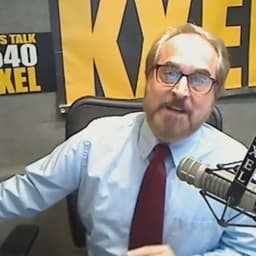
KXEL Live & Local with Jeff Stein · Wed Oct 28, 2026
It is always a privilege to welcome on the news line Mark Micks, Mr. Micks, as president of the National Right to Work Committee.
Mr. Micks, good morning.
Welcome back, sir.
Jeff, good to be with you.
How are things in Iowa?
I suspect cold temperatures, but blue skies, I hope.
Well, actually, we are above normal for the temperatures.
And so it's a very beautiful fall, only littered, if you will, not by the leaves falling, but all those campaign ads and yard signs.
And that's the topic for our conversation today.
There are a lot of things that are on the ballot, but something that is, I will say, sneakily on the ballot is right to work.
It's not something that has drawn as much attention as some of these other issues.
Remind people, though, first of all, National Right to Work Committee, who are you folks and what do you do?
Yeah, Jeff, real simply, we believe at the National Right to Work Committee that every worker should have the right to join a union, but no one should be compelled or forced to pay dues or fees to a private organization in order to work.
And for 79 years, Iowans have basically labored under that right to work law that was passed all those years ago that it really is that simple.
Individual freedom in the American workplace is something that I think is
part and parcel of our founding documents.
You know, the idea of the right to associate presupposes logically the right not to associate, but yet in labor policy, in 24 states across the country, 26 states have right to work laws, 24 do not, you literally can lose your job if you don't pay a union, you know, 50 or 60 bucks a month, basically to allow
them to allow you to keep your job.
It's wrong and, interestingly enough, to your point, Jeff, it's not a marquee issue in any campaigns, really, but it is an issue in your Senate race, and it's an important issue in your Senate
race.
So Iowa has a right to work law because of your good efforts.
You have literally a majority, right, 26, right to work state laws.
But that is subject, as I recall our past conversations, Mark Mix, that's subject to the grace of the federal government, which means a change in Congress could change everything for a majority of the states.
That's exactly right.
It is, using the word grace with the federal government is something that I would regularly not want to do, but you're right.
They give the states the grace, if you will, since 1947 to pass what are known as right to work laws.
This is a result of the tremendous power that was granted to union officials in the 1930s, allowing them to force themselves onto workers, and force themselves onto workers who never wanted, never asked for, and never voted for a labor union.
And involved with that forced association comes with quote unquote, and I'm using my finger quotes here, Jeff, you can't see it, but the quote unquote duty to pay money to the organization in order to work.
So yeah, the federal government imposed force unions on the entire country in 1947 when they figured out that this power was really kind of unique for any private organization in the country.
They reformed it and said, if a state, by affirmative vote, whether it be the legislature or the people, they could outlaw the so-called pro, the closed shop that was basically handed down by the federal government.
And to your point, 26 states have done that.
But if the Congress repeals Section 14B of the Taft-Hartley Act,
then every right to work law goes away, the moment a president would sign that or the moment that a veto would be overridden, whatever, it would end all the right to work laws in the country.
So this is a fight on two fronts.
One, at the federal level to make sure that nothing changes with regard to the states having this ability.
But two, you have to work at the state level, not just to try to flip 24 states, but to keep the current 26 states where they are
And so that's where, again, an election of any sort makes a big difference.
Let's focus on the one that you just mentioned, and that is for the U.S.
Senate.
You have a libertarian candidate, Thomas Lane.
You have a Democrat, Josh Turrick.
You have a Republican, Ashley Hinson, by all accounts, very, very tight race.
What's at stake from your entity's viewpoint?
Well Jeff, that was a good way to introduce this and give it a little more substance because not only do we have a state battle with Josh Turrick, he was the prime sponsor of House file 281 introduced in 2025 in the Iowa legislature to repeal Iowa's right to work law.
And now on the campaign trail, he is articulating a position on a bill known as the PRO Act, the so-called Protecting the Right to Organize Act, which doesn't do anything to protect the rights to organize.
It simply gives union officials more power over workers.
And the first thing the bill would do is repeal all right to work laws by repealing that small section of the Taft-Hartley Act, Section 14b, that allows states to have right to work laws.
So not only do we have
a gentleman who is interested in repealing the state right to work law but he's also now articulating his position that he wants to repeal other right to work laws and return to a federal statute that gives union officials the ability to force workers to pay dues all across the country in the private sector to get or keep a job.
Now I have not heard Mr. Turrick speak to this issue very often if at all
He did our television program prior to the primary He did not respond to our requests for an appearance before the general election So I don't know what he is actually saying out there, but I guess regardless of what he's saying You have seen the performance based upon when he was in the state house
that's exactly right his record speaks for itself and you know it's interesting jaff you've been around well i know you're a young man and i know that uh... that i am a lot older than you but i think you remember uh... grabbing a check over who ran for governor who basically campaigned without ever talking about right to work in iowa but it moment he was elected the first big issue that came up in the iowa legislature with governor culvers then governor culver support was the repeal of the right to work law
and that was a major battle uh... we ended up getting a a fairly sizable group of democrats to vote against the bill and killed it in the legislature and we really haven't had a fight about it since that time when culver was in the legislature or was in the governor's mansion but one of the things that we wrapped around his neck was his his
unspoken support for appealing right to work on the campaign trail but is full-throated support for appealing it when he was the governor and politics has a strange way of punishing people sometimes and when people stand up for forced unionism it's usually a liability.
Well, I'm afraid the calendar and the hourglass shows you and I are right about the same age and every time you mention Chet Culver's name I have PTSD because that subscribes to the theory that I've often said I once elected Democrat as governor every couple of decades to remember why they don't elect a Democrat as governor and and sadly It is Governor Culver's lot in life to have that as the Albatross but by contrast
if Josh Turek would want to get rid of state right to work laws.
And you have to assume who's backing him for the Senate race, US Senate.
You have to assume he's four square on board with those efforts there.
What's Ashley Hinson's record as the Republican?
Has she demonstrated a track record you could count on on this on this topic?
Yes, he really has Jeff and she's been a she's a co-sponsor of our national right to work act in the house We have a hundred and twenty nine co-sponsors on bill hr 1232, which is the national right to work law.
Jeff.
This is a simple bill It's a one-page bill.
It doesn't add a single word to federal law It goes back into that statute that was passed in the 1930s and upheld by the Supreme Court after President Roosevelt threatened to pack the court and it simply repeals the compulsion in the law and makes
unionism voluntary in the federal statute.
It's so simple that it's too simple.
I mean, you usually need 5,000 pages of legislation to make sure that people understand it, and then you've got to pass it first to find out what's in it.
In this bill, one page, it just doesn't add a single word.
Ashley Hinson is a co-sponsor of that bill in the House right now, and so I would hope that that means that she would be a supporter of right to work if she's in the U.S.
Senate, and we think that would be the case, but
We'll let the people of Iowa decide what they want in the U.S.
Senate.
Someone who supports compulsion and force and someone who, up to this point, is indicated they believe in voluntary unionism.
Mark Mix is the president of the National Right to Work Committee.
You find them online, nrtwc.org, National Right to Work Committee, nrtwc.org.
In addition, Mr. Mix is the president of the National Right to Work Legal Defense Foundation, an ancillary connected group, but separate, separate website, nrtw.org.
I mentioned the Legal Defense Foundation because of two things.
One, I know you folks have helped.
Iowa workers out, and so I want to make sure that we have the opportunity to tell folks listening what it is the legal foundation does.
But I also have to ask, are you finding a lot more business coming across the desk of the Legal Defense Foundation these days of folks who are saying, wait a second, they're not following the law?
Absolutely, Jeff.
In fact, our legal director reported to me that we have over 260 active cases right now on behalf of individual employees across the country at various venues, whether it be the federal courts, the state courts in front of administrative agencies across the country.
And we're providing that free legal aid to those employees who have the courage to stand up and fight back.
And boy, oh, boy, it takes a lot of courage, but it also takes the opportunity to basically predicate
and hopefully establish precedence to protect even more workers than the ones that have the courage to stand up and the foundation's been doing that since 1968 and all this legal support that we provide is free because people believe in the idea of voluntary unionism as opposed to force and coercion.
NRTW.org National Right to Work Legal Defense Foundation if you need their assistance there are links right there where again no cost just let them know what the issue is they'll tell you if there's a case or not and
if you are of means and like what you're hearing in this conversation there's a subtle make a donation button as well at nrtw.org and I know when when I taught college students media law and we would talk about freedom of speech and could you wear this on your t-shirt or not and there would be students who would say well now wait a minute my high school had rules you're telling us that those are illegal why did the school do it and my answer always was because no one challenged it
And so you've got the same situation here and it's difficult.
You know, I mean do you want to go to your parents and say blow the college fund to file a lawsuit against the school so I can wear a risque t-shirt and that's not a good sell.
But if you're a worker and you're living paycheck to paycheck and it's a tight economy
You don't want to make waves and you don't have the financial resources to do it yourself, but it's really important that people do stand up because, again, they get away with it until somebody calls their bluff legally.
Exactly, Jeff.
And for those courageous people that have stood with us and allowed us to stand with them, we've made a real difference.
For example, we had a Supreme Court case called Janice Viasme that freed every government employee across the nation from being forced to pay dues or fees in order to work for government.
I mean, that's one person in one case going to the highest court in the land and winning the idea that no one should be forced to pay dues or fees to work for government.
What a great victory and something that couldn't have been done without the help of our supporters and couldn't have been done without the courage of that particular individual.
All right, once again, National Right to Work Legal Defense Foundation is online, nrtw.org.
The National Right to Work Committee, online, nrtwc.org, both entities helmed by our guest Mark Mix, who's with us for another couple of minutes at best because he's got a lot of work to do besides talking to us.
Do you get a sense that this could be, I don't want to say a tipping point, but are we at the point where
Unless things break just a certain way unless people pay attention This could be an issue that you're going to be fighting much harder than needs to be the case in the next two to five years
Yeah indeed Jeff and you know the cycles the cycles move up and down and left and right and We're always there We've most of the most of the history of your right to work organization has been a defensive posture where we're trying to your point earlier about saving state right to work laws and also Trying to stop or block any additional powers that union officials would get over workers remember union officials are wards of government action That's why they have to play politics to the degree as they do and literally Jeff they spend
by based on their own reports about two billion dollars every two years to make sure that state legislatures and the United States Congress are agreeable to their terms for additional powers and their power is a derivative of government action so they've got to play politics and you know Samuel Gompers the founder of the American labor movement basically in his final speech in nineteen twenty four in El Paso Texas argued vehemently against this he said that if you compel
workers, you will destroy the union movement that was based and built on volunteerism back then when Gomphers was the president of the AFL.
And rightfully so now, their power is a derivative of government action.
They're not convincing workers to join them.
They're using the government power to basically compel people to be associated with unions and to pay dues in the 24 states that don't have a right to work laws.
And that's just wrong.
And we're going to fix it.
But yeah, we may be on defense again.
It's generally where we are.
We're trying to stop things from happening.
And that's probably maybe where we'll be in January, come January, but we hope that we can stay on offense as well and talk about freedom and liberty in the American workplace.
NRTWC.org, all sorts of good information there.
And again, the Legal Foundation, NRTW.org.
Mark Mix, thanks so much for the always enlightening, always informative conversation.
Keep up the fight.
We'll talk again soon.
Thanks, Jeff.
Appreciate the opportunity.
All right.
Take good care, sir.
And Mark Mix joined us live on the news line from his home base in the DC Metroplex on News Talk 1540 KXEL, where Iowa comes to talk.
News Talk 1540 KXCL, where Iowa comes to talk and good morning.
The Cedar River Film Festival is this weekend at the Oster Regent Theater in Cedar Falls.
It's focused on Midwest stories of all kinds.
One of the films that will be shown runs on Sunday morning and zooms in on three Midwestern farmers trying to move away from corn and soybeans to more varied crop choices.
Diverse Corn Belt is the name of the film.
Dekine is the manager of a group with the same name, the Diverse Corn Belt Project at Purdue University and joins us this morning.
Thanks for being with us.
Glad to be here.
Since the group that you work with and this film both have the same name, I suppose we should start there and talk about what is the Diverse Corn Belt Project.
Great.
Yeah.
So the Diverse Corn Belt Project is funded by the United States Department of Agriculture.
And we are an interdisciplinary group of researchers from Illinois, Indiana, Iowa, and beyond.
And what we're doing is exploring opportunities and challenges to incorporate different production systems into the corn and bean system.
So not necessarily getting out of corn and bean, but adding to our corn and bean systems in the Midwest.
Give us an example of what this might look like in practice.
Yeah, so in practice, diversification can look like a lot of things.
We talk about five different production systems.
So we focus on extended rotation, grazed livestock, horticultural food crops, perennial bioenergy crops, as well as agroforestry.
So for example, an extended rotation could be corn, beans, and oats, which is what one of our Iowa farmers featured in the film does.
We're talking with Emily DeKine of Purdue University and of the Diverse Corn Belt Project.
And there's going to be a film of the same name that will be shown at the Cedar River Film Festival this weekend as part of the Sunday session.
And why tell this story through a film?
I know that this is more of a documentary, but it's going to be in this festival, for example, with all kinds of other movies that could be much different in character, especially Halloween weekend.
Yeah, so our film producers are great and the way that they approach this task of making a film was really showcasing the stories of farmers who are diversifying their operation and talking about sort of the on-farm elements of it.
So why they're doing what they're doing on their farm, how they're doing it, talking about the economic elements of it, where are their markets, how do they find these markets, and then talking about sort of the landscape.
scale of it all.
So how does diversification impact the region?
So while this Diverse Corn Belt project is a research-based project, there's a lot of really interesting people stories that emerged from it.
And those stories are really what is shown and highlighted in the film.
And we think that the best way to communicate a lot of these findings and a lot of these issues is through the stories of farmers themselves.
So it's a very narrative driven film about what farmers are doing in the Midwest.
and a certain amount of tension or drama as well because if there are farmers listening to us I don't think they need to be told that switching from corn and soybeans to something totally different comes with a lot of risk and that's what these three farmers who are in the spotlight are doing in the story of how they're doing it.
Yeah, absolutely.
So each each farmer has has their own story One of our farmers from Latimer, Iowa Landon and and plaguey There are opes farmers and they are building a mill up in Albert Lee, Minnesota So that sort of addresses the market element And one of the big findings that that we found in the project was that market infrastructure such as an oatmeal really drives landscape change.
So that's one of the
One of the stories, another one is Will Glazick, who's out of Paxton, Illinois.
And Will does a great job of finding markets for all of his products.
So you kind of see how a very creative marketing mind finds markets for his products.
And then Wendy Johnson out of Charles City, Iowa is another...
farmer that we highlight who does food, feed, and fiber.
And she is also working with her father on a conventional corn and bean farm.
So sort of that dynamic of the next generation of farmers and what the next generation of farmers want and what people are hoping for in the future.
You know, interesting talking about Wendy Johnson and the idea that there's still some more conventional farming that's going on.
And I suspect that as you work with the Diverse Corn Belt project, that's a necessity.
You have to go through that stage of working through a transition very cautiously.
Yeah.
And actually at the Diverse Corn Belt project and throughout the film,
we acknowledge that sort of the conventional corn and bean system isn't going anywhere.
So that system is really baked into our infrastructure, into our politics, into everything.
So what we're showing these three farmers, what they're doing is that each of them farm corn and beans.
Our Illinois farmer is organic.
The other two are conventional.
And
they have found ways to incorporate new systems into that rotation, so into their farming operation.
So we're saying that agriculture can have corn, beans, and something else.
And there's markets for it, there's interest in it, and there's hope for the future in it.
We're talking with Emily DeKine of the Diverse Corn Belt Project, a documentary film of the same name, Diverse Corn Belt, will be shown at the Cedar River Film Festival this weekend.
It's going to be shown on Sunday, and that's the Oster Regent Theater in Cedar Falls.
Do you find...
working with farmers whether for this film or in general as part of the project that they have a little bit of insulation from some of the swings of the market for corn and soybeans because they have these other projects that they're working on.
Yeah, that's that's one of the big benefits of diversification.
So as we know, sometimes the commodity markets have some swings.
There's some geopolitics.
There's some trade issues.
So things are not always as stable as they have been in the past.
And if you have.
a diverse number of crops or a diverse number of products or market streams that can kind of insulate you from some of the swings of the larger commodity products.
So that's one of the big perks from like an economic and sort of operational standpoint for sure.
So, Charles City, Iowa, and Latimer, and Paxton, Illinois, a little far afield from West Lafayette in Indiana where you're working.
I know that the Diverse Corn Belt Project does span over a wider area with a number of different educational institutions involved, but did you guys go and find these farmers already at work on this?
Did they come find you?
How did they end up getting into this film and being really spotlighted as the faces of this
project.
Yeah, that's a great question.
We had a long list of potential farmers to highlight.
And we kind of did a couple of sort of practice shoots with all of them.
And we were able to kind of find the stories that fit what we were trying to tell sort of best.
So each of these farmers has a great stage presence, of course.
But each of these farmers also have a unique perspective about
diversification and agriculture, and they each bring something a little bit different.
So like I mentioned before, Will Glazek sort of has all these really creative market channels, Landon and Ann Plagey, are really doing great innovative stuff with oats and building an oat mill.
And Wendy has this really great position where she has a very regenerative and diverse farm but is also farming conventionally with her father.
So that does a really great job of showing three separate operations who are doing diversification but in different ways.
So really kind of showcasing that there's a lot of ways to do it and a lot of benefits to it as well.
As well as challenges.
Each of them face a number of challenges that we discussed in the film.
What you alluded to the human interest element of telling their stories on film and we've talked about this being at the Cedar River Film Festival with a number of other films that may be very different in character.
This is a documentary film as opposed to a wide variety of other films that are going to be shown.
But big picture beyond this particular festival this weekend in Cedar Falls.
Where would you like this film to go?
Who would you like to see it?
What kind of impact do you think that it
could potentially have.
Yeah.
So this film has potential to have really big impact, I think, from a couple of different groups.
So if farmers see the film, they can hear from fellow farmers themselves about what they're doing and maybe thinking about, you know, if they are interested in diversifying their operation, what are some of the channels they can look at?
Also consumers watching the film.
I think consumers are a really big constituency that that hold a lot of power.
So each of these farmers has, you know, there's a consumer facing element to it.
So consumers can kind of see where they can plug in if they are interested in supporting these farmers and supporting diversified agriculture.
But also we touch a lot about.
economic development and how diversification can play a big role in rural economic development and rural vitality.
So I think that there's a big opportunity for small towns, for medium-sized towns, and even states to recognize some of the benefits of diversification and potentially provide some enabling policies or enabling elements to support these diverse systems and see their local rural communities grow.
Emily DeKine is the manager of the Diverse Corn Belt Project.
She's based at Purdue University.
Thanks so much for being with us.
Thanks a lot, Tim.
And the film of the same name, Diverse Corn Belt, will be shown at the Cedar River Film Festival in Cedar Falls this weekend, scheduled to run on Sunday morning as part of the festival, which runs throughout this weekend.
This is the station where Iowa comes to talk.
News Talk 1540 KXEL.
Welcome, Ben Ginsberg.
Mr. Ginsberg is one of the most well-known Republican election lawyers in the country.
These days, affiliated with the Principled Leadership Project, online Principled Leadership Project.org.
Ben Ginsberg, Jeff Stein, filling in for Todd Starnes today.
Thanks for joining the program.
How are you?
I'm good.
Thanks for having me, Jeff.
Tell us about Principled Leadership Project.
What is this sort of thing and how'd you become involved?
Well, I became involved because I've been doing election law for 40 years and worked a lot with Republican candidates and with election officials as well.
And so there's obviously a lot of discussion, shall we say, about the upcoming election.
And this is an attempt to sort of take what 40 years teaches you and talk about the reliability of elections.
Now I'm coming to you from the state of Iowa and I've mentioned to this audience here on the national show before Even we have a Republican Secretary of State even the Democrats seeking the job admit They have no concern about the accuracy of the vote or the integrity of the vote process So that's a pretty good thing, but there are folks who have concerns.
What are some of the things that you hear people are concerned about?
and are the concerns valid?
Well, you know, we have 10,000 election jurisdictions in this country and so that means the very, very local process run at your community level with some overlay from the state and a little bit from the federal government.
So what people are concerned about is that the voter rolls in their states are accurate and kept up to date and there are no
illegal voters casting ballots.
I think people have concerns about the accuracy of voting machines because that's a little bit of a black box that can't be understood.
I think the actual casting and counting of votes in their own communities, people have a lot of faith in, but they're not so sure about other communities in their states that they're not as familiar with.
So you've got a little bit of a big sprawling system that people don't always have the ability to pop up the hood and really inspect it underneath.
And that's an interesting point because we have seen it for decades in public opinion polling where people will say,
They hate Congress, but they like their member of Congress, right?
It's the, it's the thing that's the distant object that's bad as an entity broadly, but they like their own.
You're suggesting it's somewhat similar where they believe in their local area, but geez, I don't know about these other folks.
Yeah, there's a little bit of, of natural doubt about it, but I think fuels the concerns about elections.
Now for, for, for better or worse, I have spent
a few decades going around and looking for mistakes in the election system and looking for problems.
I've done recounts and contests in almost every state in the country.
And so that's a chance to really do some inspecting.
And I think you have to be honest about the evidence that's been produced.
And the truth is, I think our election systems are reliable and accurate.
because I haven't seen any proof to the contrary that there's some sort of systemic problem with it.
Again, 10,000 jurisdictions.
So there are going to be mistakes.
It's a very human process.
We want to do this in our local communities.
But it means there is some lack of consistency among jurisdictions.
And mistakes do happen, but the overall results are reliable.
And if people don't think a particular election is reliable,
They have the opportunity to seek a recount or do an election contest or go to court to be able to deal with those issues.
And Ginsburg is our guest, GOP election lawyer, principled leadership project.org.
He joins us on the Patriot Mobile Newsmaker line.
Jeff Stein in for Todd Starnes on the Starnes show today.
Election certification.
Explain what that is and why that's something that you feel is important that people understand fully.
Sure.
Well, the process itself differs from state to state, but the basic components are the same.
All the totals on election night are sent to the county level.
The county then counts up all the votes from its jurisdictions, sends those results to the state for the certification process.
That occurs, again, depending on the state.
somewhere between a week and five weeks after the election, and all the races in the jurisdiction are tallied up, and a certificate of election is signed by the appropriate state authority.
Usually a governor, sometimes the secretary of state, sometimes both, sometimes somebody else in other jurisdictions.
And that certification is the evidence
that a particular person has been elected to office.
So for Congress, for example, the certificates of election from the Iowa Secretary of State's office would be sent to the clerk of the House of Representatives this year, and that would determine who gets seated in the results, similar for the state legislature, for all the statewide office holders.
And so that certificate is the
the group of who won the election is determined by the state authority.
Now, as you look at things and you've mentioned, there are people who have concerns in a jurisdiction or another.
But as anyone listening to this national radio program today, if they're thinking about the upcoming election and they have just concerns, maybe it's curiosity.
They don't know enough about the process.
What should they be looking for?
in order to give them peace of mind that it's a fair fight, shall we say?
Well, the single best thing you can do is to ask your questions of the relevant election authority.
You're the election official in the jurisdiction you have questions about.
I found that election officials are more than willing to answer questions.
They're very transparent.
I think the single best thing that somebody who has questions about the process, it can do is to actually go and volunteer.
Sometimes they're even paid positions for the government, for the entity that's putting on the elections and volunteer and see it from the inside.
So before the election, you can kick the tires by asking the relevant election official and then
on election day you can become an election worker and see from the inside what's actually happening in the polling place in the counting house
people talk a lot about
elections and being able to trust it and with social media, you get all manner of frenzy, shall we say, getting whipped up and in this era where people can doctor videos, you have no idea what you're really looking at.
Let's close with something perhaps positive.
I mean, what's the takeaway to secure in people's minds the fact that
We always need to be vigilant.
We need to participate.
We need to really be paying attention, but the house is not on fire.
Well, you know, the real key, again, is to recognize that social media and even cable television is all going to come at you from a particular attempt to get more eyeballs on it.
It may not be completely accurate.
So like anything else,
Being an eyewitness to the process is is the single best thing you can do and to remember that when you talk about elections, they really are conducted people who Sign in voters and who count the ballots are all local folks from that community number one and number two is that in every state
There is a procedure for allowing observers to look at the elections.
And so every candidate and every political party is eligible to send people to the exact places where ballots are being cast and then later where they're being counted and to observe the process.
So again, the first hand experience is most important.
And most election jurisdictions today have live-streaming of what's going on in their counting houses.
And so on election night, if you're worried about the way it's being done, there is a way in most jurisdictions, especially the larger jurisdictions where people are most susceptible or suspicious, that they can actually look at what's happening there.
GOP election attorney, Van Ginsburg, Principal Leadership Project.org.
Thanks so much for taking the time to join us and bring some light to the topic.
I appreciate it.
Well, thank you, Jeff.
Thanks for having me.