Transcript
UNI Dr. Jayme Renfro Election Stress --- Thu. Oct. 22, 2026
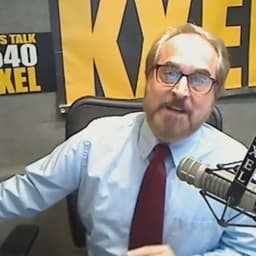
KXEL Live & Local with Jeff Stein · Thu Oct 22, 2026
Newstalk 1540 KXEL, where Iowa comes to talk.
Are you feeling stressed this fall?
Maybe all of the election talk is having more of an impact than you might expect.
University of Northern Iowa Professor Jamie Renfrow has explored the intersection of elections and psychology, particularly stress, and we connect with Dr. Renfrow now.
Thanks for being with us.
Thanks for having me.
When we hear repeatedly that this is the biggest election ever and that all sorts of terrible things are going to happen if that one candidate gets elected, whether it's one candidate on one side or the other, it doesn't really matter which, it seems like, yeah, people are going to be a little bit stressed out.
Yeah, and it turns out not just a little bit stressed out.
The APA, the American Psychological Association, does studies every time we have these big elections, and every time more and more people report having extreme levels of stress related to the elections, so much so that in the last presidential election, two-thirds of respondents reported having extreme levels of stress regarding the election.
It's a much bigger deal than just, you know, people are freaking out a little bit about the election.
We're seeing some real, both mental health and physical health outcomes that happen because of that.
Stress isn't very good for you.
So those studies you reference are people identifying their stress and directly tying it to politics and elections.
Is this stress often misidentified?
Those other people that aren't saying that they're stressed out by the election, are they really and just finding other things that they think are the cause when it might actually be that election talk?
That's a really good question actually that I hadn't.
thought about.
My guess on that is that prior to 2016, that that probably was the case.
Since 2016, just with the way that the United States has been so polarized, not just that some people identify as Democrats, some people identify as Republicans, and people disagree about policies.
It's not just that now we're seeing real hatred, real
vitriol you know between those two groups and because of that because of the way the media covers all of this since 2016 I think it's been a lot more obvious what the stressful parts of the election are like what the implications might be what the even if they're exaggerated or you know even if it's somebody kind of projecting what they think it's going to be
We're in this cycle of talking about it so much that I anymore, I think it would be difficult to not know that that's what the cause of some of the stresses.
We're talking with Dr. Jamie Renfrow, professor at the University of Northern Iowa about.
stress, and in particular political stress, you'll be offering a program this week on campus.
Political stress is real.
Now what?
So tell me what you'll be talking about with the students, I assume primarily, but I suppose there could be some other folks in the audience.
Yeah, it's open to anybody who wants to come.
So it is in Saban Hall room 32, I believe, on Thursday evening.
And yeah, it's open to anybody who wants to come.
But kind of my main message and what I want to get across to the students, first of all, is that it's not silly to feel stressed out about politics.
Politics is interesting because it is very, very deeply rooted inside of our very beings, right?
It's not just about what's happening in Washington, D.C.
It's not just about what, you know, so-and-so senator is up to or what scandal is happening.
Politics ultimately gets...
to the part of how we each feel about how society should be operating.
You know, what kind of security measures we should be taking, who should be getting what, and those are really deeply rooted feelings that we've found through research partially comes from our biology.
I mean, just for a couple like small examples, we know that people who have
certain parts of their brain, certain size.
So if your ACC, your anterior cingulate cortex is larger than average, those people tend to identify as Democrat.
And it's like, well, does having that part of your brain be big make you a Democrat?
No, absolutely not.
That's not how any of this science works.
But that part of your brain is responsible for being open to things, being open to new people, being open to new experiences, being less threat averse.
And so it would make sense that if you have the part of your brain that's less threat averse and that is open to new things that you might identify with the policies of the Democratic Party.
And so that's why there's a connection there.
But there's those sorts of connections in a lot of different biological ways.
And so...
It's not silly, it's not trivial to feel so strongly about politics and about what's going to happen because it gets to your very core of what you think society is supposed to be doing.
So I really want to get that point across that when people feel that way that there are reasons for it.
And I think that that also like knowing that about other people, knowing that other people are having maybe similarly strong feelings been in a different way because their bodies are made up differently.
That maybe that could help us be a little bit chiller with people who have different policy preferences than we do.
We're talking with University of Northern Iowa professor Dr. Jamie Renfrow about election related stress.
Let's talk about fear.
Fear is a tool that can be used in marketing and sales and certainly political campaigns have latched onto that.
That's not anything that's new.
But how much of this stress that people are feeling is is driven by fear and for lack of a better term, let's call it fear mongering.
Oh, most of it.
Absolutely most of it.
There is a lot of research in the political science world about how
the physiological and psychological constructs of fear, how that works in people and how you can trigger certain things and how triggering those things can cause people to act in certain ways.
The political parties are aware of all of this.
It is not...
that they use fear mongering, like you said, in the advertising because they know that nothing motivates people more than fear.
We have a biological predisposition to keep ourselves alive.
That's why fear exists, right?
There's a chemical reaction inside of our bodies to fight off mastodons and saber-toothed tigers.
And our bodies don't know the difference between doing that and a commercial that is telling us that immigrants are coming to rape and kill your wives and daughters.
Your cortisol and your adrenaline doesn't know the difference between...
those types of fear.
And so you get the same physiological response where it's, you know, fight or flight, it's what I need to do something about this.
And the political parties know this.
And they know that it's likely to get you to come out to vote.
Well, does early voting help?
We've heard about some of the upsides and downsides of early voting in a number of different contexts.
But when it comes to the psychology of this election stress, does early voting make any difference?
For a lot of people it does because it kind of settles the uncertainty part of the brain, you know, it checks off the to-do list item and so, and for a lot of people too, it helps them tune out all of the ads.
Like I already did the voting part, I am better able to not pay attention to any of this stuff that's being thrown at me.
24 hours a day, you know, depending on how much media you consume, it could be all day long.
And so for a lot of people, it kind of helps settle that down.
But for other people who are trying to stay engaged and who try to, you know, keep watching the news, nothing has really happened until we know who's going to win.
And then even after that, the amount of stress that people feel when their candidate loses goes up.
So it doesn't get better for half of the people after the elections over.
We're talking with Professor Jamie Renfrow of the University of Northern Iowa about election stress and again on Thursday evening Dr. Renfrow will be making a presentation.
Political stress is real, now what?
I mentioned that you'll be speaking, I'm guessing
in large part to students and as we talked about there will be the opportunity for anybody to attend the presentation but do you find that there are differences when it comes to young voters who are likely those kids on campus who maybe have participated in an election before once twice at the most probably versus more experienced voters?
Does the stress change for younger voters versus older voters?
Yes, what the research shows is that the kind of type of issues
surrounding all of this are different.
Younger voters are feeling the stress and anxiety of all of this worse, largely because like their lives are unknown, right?
Like they already kind of don't know what's going to happen to them, you know, next year, the year after in four years, like they don't know.
What they know is that they're hearing that the job market is terrible.
They're hearing that wages are not great.
They're hearing that the cost of living is high.
And they know that they are going to have to try to live in that.
So for them, the implications of the election.
Feel like they're going to determine what the whole rest of their lives are going to look like and so it's very very stressful for Many of them, especially the ones who try to stay engaged the ones who try to keep up on the news For older adults like for example, I'm giving a another talk on the book to
to some residents over at one of the nursing homes here in town.
For older adults like that, a lot more of the stress comes from trying to maintain relationships with people in your network, members of your family, your kids, your grandkids, other people in your community.
How to maintain relationships with those people when there's a lot of political disagreement.
What do you do when your grandkids are mad at how you vote it?
Like, what are you supposed to do to keep a relationship with them?
Because that can be very stressful.
Like, how do you talk through that when people disagree so vehemently?
Let me just wrap up.
Dr. Renfrow, if you have a word of advice or maybe more than one word of advice for folks about what to do about the stress that they might be feeling that they can tie directly to the election.
Well, the first piece of advice would be and I said that I certainly don't want anybody to tune out I don't want people to think that they have to tune out of the news of media in order to
Keep any kind of sanity when it comes to this kind of stuff because it is so important right that we as a Society as a democratic society that we keep up on things that are going that we are knowledgeable about the things that are going on But we need to be smart in our in our media consumption, right?
There are things that we need to know in order to operate, but we don't maybe need to dwell on things.
If something terrible happens, if there's an accident and something terrible happens, you might need to know where it is so that you don't drive that way.
You might want to know who's involved to make sure that no one that you know is involved.
But you need to spend all the time when they go on and on about the details of what happened or the sad details of the victims or whatever.
Maybe not.
Maybe that is not what you need.
And so careful news consumption is really, really important in these instances.
Like stay up to date on things, but be careful not to think that you need to over consume.
And then the second piece advice is the main part of being resilient.
Like when bad things happen or when you feel not great about the way that things are going,
is to have relationships with people.
But again, we need to be smart about our relationships.
There are different types of people and different types of relationships that we have with people, and not everybody is the right person to talk politics with.
You know, if I'm sad about something, my best friend Courtney is not the right person for me to talk to.
She's just, you know, dispositionally, that is not her, you know, strong point.
But if I need somebody to reassure me about
you know something that I'm being anxious about she's absolutely the person to go to and we all have different people in our lives that are like that and so don't force a political talk with somebody who is not the right person to have a political talk with you can still hang out with that person you can still talk with about other things with that person but maybe they're just not the right person to talk politics with and that's okay
Dr. Jamie Renfrow, professor at the University of Northern Iowa with us talking about election related stress.
Thanks so much for sharing your insights.
Thank you for having me.
This is the station where Iowa comes to talk.
News Talk 1540 KXEL.
News Talk 1540 KXEL, where Iowa comes to talk.
Hello, I'm Jeff Stein.
During KXEL live and local each Tuesday and Thursday, we have the opportunity for an extended RFD 1540 conversation with Dustin Hoffman, supervising editor, senior farm broadcaster with the Iowa Agribusiness Radio Network.
You hear reports from the network nine times each weekday and as noted, Dustin joins us on the program Tuesdays and Thursdays.
So China has made purchases.
that's supposed to be a really good thing, but the markets looked at it a little differently.
Yeah, Jeff and it's an interesting situation because China's making good on their 25 million bushel You know a million tons I should say not no bushel but tons of Purchases there about halfway just a little bit better than halfway through now They bought about four days worth here in the last week or so But the markets haven't been reacting so well to that and you'd think that that would happen But there's a couple different factors and as we're talking with different analysts for one thing and the most obvious one is the markets pretty well based that in when we have the announcement that they were gonna buy You know we had that handshake agreement which again
as I like to remind everybody can't be enforced so they decide to pull out of that agreement.
But they are making purchases.
Now it's not unusual for them to be making purchases this time of year because we're in the midst of harvest and that's when they come for our beans is during the harvest season.
Brazil is the same way that when Brazil is harvesting that's when they're most active in buying as well.
But the thing is
Not only have the markets priced that in, we're seeing the pressure on the harvest.
Obviously, we know in Iowa that harvest has been slowed.
We talked about that earlier this week.
But the fact of the matter is, is that shows right there that no matter how much things can move the market, outside pressures can move the market, different news can move the market up or down when it comes down to the nitty gritty of it.
crop progress and weather are still the biggest catalyst for moving the markets.
And so the slow progress in harvesting
Has been overshadowing anything that China has done and like I said again, they've already made the purchases That's pretty well been booked in but we saw earlier, you know yesterday in the markets wheat was down through the tubes because of the fact that Russia said they were open to negotiations between themselves the US and Ukraine for ending the conflict that starts putting the threat of taking the war premium out of the out of the wheat market that has supported it for so long and so there's a lot of pressure from outside Influences to begin with but once you start throwing that that
crop progress in there anything can happen.
And again so much of this is baked into the markets but yet we're also at harvest time and there are so many other factors going on right now that makes what might otherwise be a simple linear result a much more complicated solution or situation as you're telling us.
Yeah, exactly it.
I mean, weather is the only thing we can't predict.
The only thing the market can't bulk in.
I mean, there is some weather premium.
You can see some of that can bulk in early if you get the announcement that, hey, it looks like if Noah comes out and says, hey, it looks like the El Nino is going to switch to an El Nino this year is what we saw in the beginning here.
The markets are going to react.
But until it won't be very much because until you see the full effect of how it reacts, when it reacts, or when it happens, I should say, that's when you're going to see the market make the reactions.
It's going to be the day to day how
is the weather affecting the marketplace?
How is it affecting planting or harvesting or spraying?
anything like that.
Is that leading to a slowdown which leads to more pressure from weeds or pests or diseases?
And so the weather is one of those fluid things that is always moving the market, but yet no matter what happens, it is the most important thing driving a market.
We hear about drought somewhere, the markets react.
You hear about a flood somewhere, the markets react.
You hear about the fact that the weather is absolutely perfect, that you hear the markets react.
And so that is always going to be the big question mark day in and day out and it can change over the course
of just hours when we see what can happen or a hurricane hits even, I should say too, in the Southeast, that does things to help the markets or hurt the markets either way.
And so that's one of the things that harvest progress, the proof is in the pudding.
When we finally have to put our money where our mouth is, that's when we're gonna find out the true value of what are we harvesting, how much of it do we have and what condition is it in?
So we have talked about wheat at times.
There are issues there.
Are there some segments of the commodity markets that are either hurting or really prospering at this very moment, understanding we're in the middle of the Midwest Harvest?
Right now, the fact of the matter is USDA's estimates in their WASDE report almost two weeks ago now, Jeff.
They put the numbers very high for what they thought the production was going to be and the carryover was going to be, and that has affected the markets and has been a negative pressure on them since.
Now, soybeans are down 75, 80 cents compared to what they were just a few weeks ago.
We were seeing corn prices up in around $5, and now when you factor in the basis prices, some elevators are paying less than four.
a lot has changed in just a very short amount of time because of these reports.
And that also bakes into what we are going to have for market prices, obviously.
And so there's been a lot of that corn and soybeans have taken that on the chin.
Wheat has been very volatile because we just never know what's happening in the Black Sea.
Russia and Ukraine are such huge exporters of wheat.
And so to have them be in this uncertainty has seen them go back and forth when they negotiate peace or talking about they're going to have a ceasefire wheat goes down because it looks like the
the war premium could come out, as I said earlier.
But then when things fire right back up, it comes flying back up.
And a lot of times when you have volatile swings like that in any of the grain markets,
it can take the others for a ride.
Usually corn is the first one to get caught up in whatever momentum wheat goes with.
Now the markets have similar aspects, similar ways of reacting to the same news.
And so wheat kind of takes corn along for the ride.
If it gets bad enough or strong enough, one way or the other, soybeans sometimes get caught in the wake as well, but sometimes they're able to separate themselves just a little bit better from the corn and wheat markets.
But again, wheat's been suffering, hogs have been suffering quite a bit, and cattle has been
just hitting highs and bouncing off of lows.
And I mean, it's been volatile, but even the volatility lower has not much to shake off that some of these high premiums we're seeing for beef right now.
But wheat is volatile and hogs are volatile right now.
I would say are your best takeaways from how the market's looking.
Now I understand beef because we've talked about that for some time and I would imagine, and I may well be wrong, please correct me, but if you're somebody at the grocery store and you see the price of beef being at a level that you just don't feel is appropriate, you might turn to pork.
I would think that might help the pork market, but perhaps not.
Yeah, and it comes down to supply and demand.
The thing is we have seen this and marketers have been talking to us about this for a while.
It has been strange that beef prices have been where they're at because of the supply or the lack of supply, the demand being higher than supply, and that price has gone up, but people are still paying.
the premium prices at the meat counter.
We've mentioned this many times before.
Ground beef is higher.
Pound of ground beef costs more than the federal minimum wage, which, you know, a lot of people aren't making.
They're making more than that now.
But the point is it's costing more than the federal minimum wage.
That still is not stopping anybody from buying a pound of hamburger or buying a ribeye or going to other cuts.
You know, we're getting to that roast season more again.
You know, you're going to see some of those bigger larger cuts go go out more.
And so you're starting to see those prices creep up.
again, as demand is going to shift from more outdoor grilling cuts like your steaks and your burgers to more of your indoor roasts and things like that.
The hog market though has been traditionally strong in production.
And so that's been.
boating well for, you know, farmers, you know, having a supply on hand and for the grocers to have a supply on hand.
But if people aren't buying it, we're not getting the demand to match it.
And so hogs are doing well supply-wise.
It's more of a demand issue.
It's just, it's going to take, you know, some shift.
And we talked about this last year about this time.
You go into the holidays, you see a lot of roasts being bought.
You see a lot of turkey being bought.
You know, a lot of those beef cuts go up right around, you know, we have that demand high around the Christmas holidays.
and Thanksgiving holidays.
But once we get passed into the new year again, we might see that taper off.
That holiday surge is one thing in the market kind of just bakes in and waits for.
But right now we haven't seen that shift ever really dwindle from these higher cuts of beef and the more expensive cuts of beef.
And that's what's keeping the market strong and beef expensive at the counter.
Dustin, thanks so much for the excellent insight.
We'll do it again next Tuesday morning on KXEL Live and Local.
Sounds good, Jeff.
Dustin Hoffman is supervising editor lead farm broadcaster Iowa Agra Business Radio Network and don't forget the excellent half hour weekend program.
from the network Weekend Ag Matters.
It airs Saturday mornings at six or in addition, or if you prefer, Sunday mornings at 11.30.
And again, Dustin joins us Tuesdays and Thursdays for this RFD 1540 conversation.
On News Talk 1540, KXEL, where Iowa comes to talk.