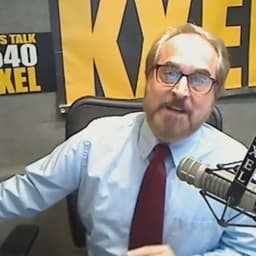
And as KXEL Live and Local continues in this 10 o'clock hour on a Tuesday, now that's when you're hearing the conversation.
We actually recorded it yesterday afternoon for convenience of schedules because our guest at this time is getting ready for a big event in Des Moines.
Tonight as you're hearing it Tuesday, I'm joined via Zoom by Ken Chester.
Mr. Chester is the host of the Tech Mobility Show.
You also know weekdays, the Tech Mobility Minute and Tech Mobility and Focus.
Our topic today is
Can Chester as author of the new book Two Hour Entrepreneur Build a Real Business in Two Hours a Week?
There's a special event, and if you're in the Des Moines area, or at this point, just get in the car and go on over.
Tonight, 6.30 until eight.
I mean, the weather's nice for a drive.
6.30 until eight at Beaverdale Books.
Beaverdale Books is at 2629 Beaver Avenue in Des Moines.
Mr. Chester joins us from the Des Moines metro area via Zoom.
Thank you so much for the time, sir.
Always a pleasure.
I had the opportunity to read The Two Hour Entrepreneur.
And it is very interesting.
And there's one thing about it that really just was like a light bulb.
But I want you first to tell folks who may not be aware the two hour entrepreneur.
It's not just a book.
It's a system.
Tell me what it is and how you came up with it.
Well, we'll start with a little history, little context, as I always love to do.
I have been consulting small businesses for most of my business life.
And in the last couple of years, actually about now, a little over a year ago, I found myself giving the same advice to two completely different people.
And a light bulb went off.
And that advice was, what you need is to take two hours a week that you can dedicate to what you're doing.
Just two hours, it's all you need to do it.
As I thought about that, I said, you know, there's some there, there, and develop a system because so many people
have that one idea or group of ideas or an idea machine, and you know the drill.
You're living your best life.
You're working full-time.
You've got family, other obligations in and about the community.
It's always when I get time, when the kids are grown, when they're out of high school, when I graduate college, when I retire, when, when, when.
Never happens.
For those people who don't have a clue of how to go forward,
To our entrepreneur is actually a system that is developed, I tell you at the beginning of the book, in which you will learn, each chapter builds upon itself, designed to learn something, master it, take that into the next chapter, build on it.
The goal is two things.
One, for you to develop that one idea worth putting the time into.
Second, develop a minimum viable offer, and I lied, this is actually a third item.
The third item is to get that first sale that is not friends or family.
There's so many books, seminars, any, you name it, that are out there once you figure it out.
And I'm not trying to reinvent the wheel.
I also developed online a notion, series of notion templates and what these are for those people who said, you know what, I like the idea.
I really could use some more structure.
And the notion templates offer the structure necessary for you to track and develop along the book.
Do you need it?
No.
You don't need it.
If you're an organized person, pen and paper, spreadsheet, you're fine.
If you don't go that way and you really want it kind of already preloaded to know what to do, this will help you.
But unlike a lot of other books out there, I refuse to lure you into, okay, you buy the book, now here's a seminar that you can sign up for.
Here's a newsletter you should, you know, or here's something else.
They tell you.
believe it or not, when you write a book, that the money is not made from the book.
I disagree.
I don't want to do that.
I refuse to do that because if you are new to the book, if you purchase this book, chances are you don't have the money for all that other stuff, let alone the time.
That's the whole point.
This is designed to get you to that point so that you can make the next steps, but at least now you have something to work with.
And that's the whole point.
You were kind enough to come into the studio just before the launch of the book and we talked about it then and it seems to me this is a book that takes you through the process and you might be hung up on chapter five for a couple of weeks by design and then you move on and on.
It's designed to to roll with
life provided you silo out those two hours every week and don't let anybody steal those from you.
But here's what I found.
I read it cover to cover over the period of days.
I think it may actually help people if they do read it cover to cover and then go back and implement it in the timeframe you have intended because it helps them see
What the grand picture is at the end they can in other words It's not just getting into a car and waiting for the next direction prompt to come up.
You know where you're going you see it at the other end and then you can go back with a better appreciation and Work the plan now.
That's just my view.
I don't know if you thought that
but that's a good point Jeff I mean the issue is being consistent.
It's one thing I've learned in business.
It's not flooding the zone
Most business people tell you today, well, you need to go bigger, go home.
It's not that.
Most of us can't do that.
We don't have the bandwidth.
We don't have the time.
Point taken.
It's being consistent.
And yes, you might miss a week from time to time, but it's the commitment and assistance.
And the books design, to your point, it may take some people six months.
It may take some people two years.
And that's totally fine.
You don't lose anything.
in that just follow the pattern and dedicate the time and you're fine
Ken Chester is our guest mr. Chester is the author of the book the two-hour entrepreneur and Two-hour entrepreneur.
Well, you want your copy show up tonight Tuesday night at beaverdale books in Des Moines
Mr. Chester will be there for a book event from 6.30 until 8.00 free and open to everyone.
Come by and meet Ken and pick up a copy of his book.
It will be available for purchase.
And Mr. Chester joins us on News Talk 1540KXEL.
KennethJChester.com is the website where you can get all manner of good information on his programs, the Tech Mobility Series, but also on Two Hour Entrepreneur.
Now I said that as I read it,
There was something that jumped out at me and and again, you're a serial entrepreneur.
I've done enough of it.
So to where, you know, I know how this this game is played.
This was the was the nugget that really led me to read that sentence twice.
And you say something like you need to think like an entrepreneur and not any employee.
And that really.
led me down a few roads as I was contemplating that.
Tell the folks what you mean by that, because I really think that's central to this whole, to the success of this whole effort.
Being an employee makes certain assumptions about the availability of assets, resources, et cetera.
It means that someone's going to give you guidelines in terms of this is your parameters, this is how you're being judged, et cetera.
Entrepreneurs are self-starters.
You're not going to have the resources.
There is no safety net.
You make your own fortune.
You make your own luck.
That takes time and investment and it takes a mindset that basically you have to get to a point where if I don't do it, it don't get done.
Bottom line, if I don't do it, it don't get done.
There's no one that's going to tap me on the shoulder saying, hey, this is your next step or hey, you're late or hey, you need to consider this.
Nope, that's the whole thing.
There's a reason why not everybody is fit to be an entrepreneur because self-starting is hard.
It means being dedicated times when you don't feel like it, times when you don't want to, times when you're wondering, am I even on the right track?
This is the spirit of an entrepreneur that here's a value.
I'm going to pursue it.
If I fall on my face, fine, but I might succeed.
And I'm going to stick it out to the end.
And that's really the bottom
line.
because it's a self-evident point once you verbalize it, or once I read it, and of course I hear your voice, because the book is written in a very conversational, approachable way, so it's like Professor Chester at the lectern here.
But there are a lot of people in a workplace who think they can do it better than anybody else, right?
The Boston note he's doing, or if I ran the place I do this, that, or the other, and they may have some good ideas,
But it's all still predicated on.
There's a safety net.
There's somebody else's money at risk.
I'm still getting my paycheck.
That is still thinking like an employee.
When you're the entrepreneur and you open the door of the office, whether it's your home office or maybe you've rented space or whatever, and you realize it is all you.
That's a whole different, uh, you gotta have a lot of, uh, uh, Tums or Maylocks or something to stomach all of that.
Well, it makes staff meetings real easy and looking in the mirror
and enjoyable.
They're a lot more fun.
Well, it is.
And you get a lot more decisions made.
You know, you don't have to run it
up the flagpole.
You look at a mirror and handle it.
Yeah.
At one point, though, I do want to make
please
in this pre.
in this exercise, in this system.
This makes the assumption that the person hasn't really declared being an entrepreneur yet.
They're not there yet.
So please understand when you read this book, it is not expecting you to go out and rent a space or quit your job or any of that.
This assumes that you're gonna do what you need to do to put food on the table in the meanwhile.
This gives you a second path to develop
something that maybe people have told you, you need a bottle that, or you should start that, or you should go into business, you should provide this product to service because you're so good at it.
And you said, yeah, yeah, yeah, you'll get a round of it.
This is an opportunity to turn it from an idea into something tangible without the cancel culture, without the hustle culture, without having to put your family or your finances at risk.
Now, when you get to the end of the book,
You do have a decision to make do I want to do this full time?
Do I still want it to be you know a gig?
Do I want to you know?
I don't know invite some investors or people into it But that's a decision at the end of the book But to get you there the whole purpose is to get you there and one other thing It's also the beginning part of my second book that I'm in the process of writing but more on that at another time because it's not done yet
But that is such an excellent point because when I got to the end of the book
It almost seemed to just kind of end and here's what I mean by that and I can tell by the expression on your face We're connected by zoom that was on purpose because you've taken people from the idea in their head You everybody can find a couple hours a week You're doing your regular stuff.
You're doing your family stuff But once you actually develop your basic thing whatever it is and as you say you're able to make a sale outside friends and family you've proven
to yourself that it's viable.
That's where the book ends because it's then the decision of, okay, do you scale up?
Do you think that this is a nice side hustle?
Do you think this will replace the annoying job you don't like?
But that's just left there because again, your point is not in this first book to our entrepreneur.
The point is not, here's how you go be successful.
It's how do you figure out
If this rocket a launch and that's really so important and I want to remind people can Chester is our guest He is the author of two-hour entrepreneur build a real business in two hours a week
a step-by-step system for the idea stuck in your head.
Amazon.com, KennethJChester.com, or tonight in person, Beaverdale Books in Des Moines, and again, they're online at beaverdalebooks.com.
You can get all the information.
Mr. Chester will be there, 6.30 until eight tonight.
What's been the reaction so far from folks, whether they are folks who you know, like we know each other, and so I'm giving you my feedback and have before and am here, or from folks who bought the book and started to put it into a process?
Well, I haven't met anybody who's gotten to the end of the book yet.
You might be the first.
And that's okay.
Well, I wasn't building a business over the course of weeks.
I got to the end of the book, but because again, this, this is not, when you say two hours, it's not two hours and you're done.
It's two hours a week for upwards of months or a year.
Yeah.
Absolutely.
And that's the whole point.
We're in a world today where attention span is high.
where everything's coming at you.
You're being flooded from all corners with everything you name it.
This is that one piece that you can call your own.
And if there was ever a time in the world that you can start a business, that was it.
Now, there's also a piece in there.
I spend a chapter talking about technology and how technology you can use it at to augment
the process to get leverage beyond even your own knowledge and what you know.
And it's an important multiplier when looking at trying to scale something.
And it's valuable because right now those resources will never be as inexpensive as they are right now.
So it makes the book even more pertinent.
One thing I do want to squeeze in here a little sideways,
sort
of a Jason topic, but not not exactly on topic.
Sure.
Those folks who are willing to hear this interview and you come on out, mention the interview because the person who mentions his KXEL interview, I got something special for you, limited probably the first couple of folk.
But if you show up, I got something special for you for free.
And I'm not going to tell you what it is.
You're gonna have to find out, but trust me, you'll be one of only 36 people on the planet that have it.
And we'll leave it right there.
And it's my favorite word.
Free.
Yep.
Absolutely.
So if you come to Beaverdale Books tonight in Des Moines between 6.30 and eight, mention that you heard Ken Chester and I talked today on KXEL.
And if you're one of the first couple to do that, he'll have something for you other than a smile and a hearty handshake.
Those are both also available.
And as I've heard you mention in the radio ads, if somebody thinks, okay, I can't get to Des Moines, I'm interested in this, but I kind of want a little more information.
You even have a freebie on the website, don't you?
I do.
I believe that is the proper URL is free-chapter.kenethjchester.com.
And that will get you to the free chapter.
And again, folks, step by step, very simple process.
A lot of things that I trust people hadn't thought of.
who wanted to take this little journey of being an entrepreneur.
But I don't think there's anything in there, at least from my eyes.
There was nothing in there that led me as a reader to say, oh, this is impossible, you know, to scare people off.
It's just honest information.
And you're presenting it in a way where you say, you got a couple of hours that you're just wasting time doing something else.
Try this.
Absolutely.
All right, Beaverdale Books is the place in Des Moines, 638 to eight tonight for the event.
Ken Chester, two hour entrepreneur.
And again, KennethJChester.com.
He's Mr. Tech Mobility and you hear him multiple times a day here on KXEL.
Mr. Chester, thank you kindly for the time and have a great time at the event.
That's a great
story.
Always a pleasure to be with you, Jeff.
Thank you so much.
This is where Iowa comes to talk.
News Talk 1540 KXEL.
And as KXEL Live and Local continues in this 9 o'clock hour on a Tuesday, that's when you're hearing it.
We recorded it for convenience of schedules yesterday afternoon.
Join now on Zoom.
By the Iowa Secretary of Agriculture and Land Stewardship, the Honorable Mike Nagy, joins us from his office at the Capitol Complex.
More specifically, the Hoover State Office Building.
Mr. Secretary, thank you for the time.
Hey Jeff, it's always great to to catch up especially when we can talk a little bit of harvest activity for once
Yeah, but it was delayed getting started pretty soupy out there for September and even in this neck of the woods more than an inch of rain in one day last week
Yeah, and that was that was certainly not welcomed last week because it definitely knocked people had started to really get going and then then we sat pretty much widespread across the state of Iowa, but yeah that that historically wet September
just caused us to get a late start on things.
You can generally say we're about two weeks behind average in the state of Iowa.
We always know that when people can get in and get harvest going, man, they can really roll.
But even that's been challenging because you've had some wet conditions here and there.
it's uh it's been a challenge but uh folks will get it done but it's just going to be a little more difficult this year and we're certainly starting to compress that harvest window.
Now your family place is up in northwest Iowa are you folks up there because it had been drier all year are you further along than folks say in southeast Iowa?
We are for sure and you know you uh
For me, when I'm going up to the farm, you start to get north of Fort Dodge, and you get even a little further north of Humboldt, and boy, it's really like a light switch is switched.
We have been really making great progress, but we were drier, really all year, and certainly July and all the way through August was very dry.
And so we were just able to hold more of that water.
And then right as we got started with harvest, we missed one of those big four inch rain events across the state.
So things actually, we're pretty blessed up our way.
A lot of progress getting made and yields looking pretty darn good, to be honest.
So we're gonna be sad, let's just say this, we're satisfied, but you don't have to go too far from home for me and folks are really, really struggling.
So it's just one of those years where you say there's gonna be a ton of variability across the state.
And, uh, and folks are just going to have to grind at it a little bit here.
Well, you've taught me you don't count the bushels till they're in the bin.
So I'm just wondering at this early stage, does, does it seem like we're getting the numbers, the yield that folks had hoped for?
You said you were satisfied, but broadly.
Yeah, I think we will.
USDA grew the crop a little bit, and I don't know to what extent, I don't know how enthusiastic I'm gonna be, but I just think what I'm hearing is you're hearing about folks saying phenomenal record setting.
A lot of folks are telling me, hey, okay, everything's on par average.
Some years are just average, Jeff, and that's just how it is, and you're satisfied with those things.
I'm hearing very few places where people have said, hey, things fell apart.
You know what I mean?
If anything, it was parts of the state where there was too much water.
That might be the biggest impact.
But I think we're looking at strong soybean.
In fact, I think we'll probably have record soybean crop.
And I think we're going to have strong corn yields when you look across the state of Iowa.
But that doesn't mean there aren't pockets and places here and there.
They're going to have some some numbers that they're not happy with.
Now, you sort of set up a late harvest by the fact that as co-chair of Iowa's America 250 effort, you scheduled the America's Harvest Festival for this coming Saturday.
Thinking, of course, in most years, we're well done with harvest and folks have time to attend.
That's going to be a little tricky this year, isn't it?
Yeah, I think there's a couple things we're looking at.
One is that harvest fest.
Here's how we're going to spin that, Jeff.
We're just going to say, well, isn't it fitting that we would be in full swing actually harvesting?
during the Harvest Fest, but yeah, we're actually really excited.
That's that kind of bookend event that we've talked about.
It'll be in Des Moines in the Capitol Complex, the America's Harvest Festival, which is really the culmination of our America 250 commemoration this year, really highlighting Iowa's role in agriculture in this country and the importance of food and agriculture production in this country to our American story.
And that's really exciting.
uh america's harvest fest dot com is where you can go to find more information but the other thing jeff would be you know and this is more of a treat this like a public service announcement which is uh the other thing is we're usually done with harvest by election day and that's something else actually secretary pate and i did a in our official capacities did some some media
this week kind of on that topic of hey, you know normally harvest is well in hand this year that's not going to be the case and so just encouraging farmers and Anybody that's involved in ag around that farm to make a plan to vote take advantage of early voting if you had one of those late start days or you had a Needed to run to town for parts or maybe there is a rainy day in the next two weeks and go ahead and take advantage of that go to the courthouse type of thing
early voting did begin last Wednesday and
Secretary Pate joined us to talk about that, but that's an excellent point because again, you think your day is clear and then all of a sudden you don't want to wake up on Wednesday after election day and say, I forgot to vote.
So voterready.iowa.gov is where you go for all that information.
Going back to America's Harvest Festival, this is a great opportunity.
Is it not to reflect on the economic impact of what we do in Iowa as it relates to the nation?
100% is, and so the statistics are a third of our state's GDP tied to agriculture, one in four jobs in Iowa associated with agriculture.
You and I have talked about this, manufacturing, agriculture, financial services, the three main pillars of Iowa's economy, and ag makes up a pretty big chunk of manufacturing and financial services.
And so it's certainly an economic driver.
There's a study out recently.
talking about something that I think we all know just intuitively, which is times when the state of Iowa's overall economy is doing well, guess what's happening in ag?
It's strong, good returns.
When the overall state's economy is lagging somewhat, you can pretty much go back to and look and see ag has been struggling.
And of course, the last three years, ag has been struggling and profitability has been under pressure.
And I think just tying that all together and reminding folks that a strong ag lifts everybody,
The other piece is just the cultural piece of it, if you will, the heritage, the legacy.
This is the Century Farm, Heritage Farm conversation.
This is talking about the very fabric of our...
of our state is something that we can celebrate and really our state's history is really tied in and around agriculture and so I just think it makes perfect sense for it.
And then the other piece is reminding people of the importance that Iowa plays in our national story in terms of agriculture.
California is number one in food and ag value.
Iowa is number two.
And I just sometimes you watch people kind of go who haven't heard that before just kind of look at you like is that that can't be true.
Think of how big California is, how many people there are.
And here's Iowa, number two in the nation when it comes to our value.
And that's not an accident.
You know, there's a lot of work that's going into that.
Iowa Secretary of Agriculture and Land Stewardship Mike Nag joining us on News Talk 1540 KXEL.
It used to be the ag department and then to reflect the role of conservation some decades ago They added and land stewardship.
That's not just a tag-on.
That's a big part of things and That's not just in the rural areas It's also in urban areas and there are some grants are there not that might help spur people in the cities Where the the black of the asphalt is seen as opposed to the black of the dirt to to take care of business
It's true.
And so we actually have right now we've opened up another round or availability of urban conservation grants We do about 16 or 15 16 18 of those a year Several million dollars.
You know, you're talking three and a half to four million dollars that the state will put in huge return I think this last group that we did last year 16 projects state of Iowa put 3.6 million in and that leveraged a total investment of 10 and a half million
And let me give you a couple of examples.
Had two recent stops.
One was down in Cedar Rapids, and the other one over in Durant, right on Scott County, Cedar County line there.
Both were looking at these types of urban wetlands and urban conservation practices as well.
We're looking to improve water quality for the water that's flowing through those.
In both cases, they were also dealing with significant storm water.
challenges as in quantities.
And in both cases, they were also planning ahead.
Durant was looking at a housing development that they expect to be put on that side of town.
And this pond, this wetland, is good for water quality, but it's also planning ahead to when there might be houses there someday.
The other piece is over in Cedar Rapids.
Now that was one, the school district is involved.
And again, projecting out years from now when there might be a school building sitting here,
and think of the parking lots and the roof and all that.
And so they sized the wetland working with our team.
They sized that wetland correctly to anticipate that kind of growth.
I love that.
And so that was a good example of how you flood mitigation, stormwater management, water quality, and both are in these great park settings that can be educational for folks as well.
And it just drives home this idea that we all have a role to play when it comes to improving water quality.
It's not just in the farm.
landscape is but it's also in that urban landscape as well that we can see great progress and I'm really proud of our urban conservation team and the way that they work with people and really put together some nice projects.
You and I have talked previously including on site in Cedar Rapids because again that's a major city but they are much more concerned with what's happening upriver because what happens there that
is impacting their water supply.
And so it really is all connected.
And we've talked many times with various groups, you and others, about cover crops and how that's good for the environment and good for water conservation.
Pretty good for the pocketbook.
If you're a farmer who purchases crop insurance, I was not aware of this.
Yeah, this is one of those.
This is a really pretty cool.
It's an innovative approach to things.
I want to give credit where credit's due 10 years ago.
We actually started this as a pilot, testing this out.
Practical Farmers of Iowa was involved in it.
Some other groups in our department, and then we got the USDA involved.
Most of the time, cost share is done where you apply in advance.
And by the way, we had a record year for cover crop cost share applications, 1.4 million acres.
That was twice what it was last year.
So a huge increase in demand.
But you apply in advance.
your application is approved, and then you go and plant the cover crop.
This is all done in advance.
We were really trying to think about a creative way to engage more folks, cover more acres, provide an incentive.
And so this is a very streamlined, very easy application.
It's online, cleanwateriowa.org.
You apply after the fact.
Well, we do some verification and auditing to make sure that those acres got seeded down.
It's not a free-for-all for goodness sake.
But it's all done on the back side.
It's very simple, very streamlined.
Participants in the program tell us they love it because of that very thing.
And then we do the background work.
We work with USDA risk management.
And this shows up as a reduction in your crop insurance premium that you pay next year.
$5 per acre reduction in your premium.
And it's all done automatically.
It shows up on your invoice.
And there's a lot of work that happens behind the scenes, but that was the whole point.
It was like, we didn't want farmers to have to labor over this.
We want them to sign up, or do the practice, sign up, and then we'll take care of the background work.
Really cool.
10 years in the program, we've now serviced over, well, millions of acres through the program now after those years, and it continues to be really popular with folks.
And for folks listening who are like me trying to write down the website for that, what is it again?
cleanwateriowa.org and this enrollment window starts December 1st.
Again, this is all done in arrears, right?
You'll need to tell us where that field location is that you signed up and do that.
It's all online.
Don't have to go into the office.
December 1st through January 22nd, and we do the work on the back end.
And somebody might say, well, it's only X amount of dollars.
Well, I don't know.
Any amount of free dollars is more than I had yesterday, and I don't have to work for it, it sounds like.
Well, and what the deal is is, you know, the traditional cost share programs usually have a cap.
For instance, one of our programs has a cap on acres, 160 acres.
And so this is for that farm that's, and really, let's be honest, what I'm pushing for here is we pay that higher rate of cost share on those 160 acres, because I want to encourage people to try the practice for the first time.
But we don't, we're not going to cost share on every acre that gets done in state of Iowa.
We can't afford that.
Then this is a way to spread those dollars around a little more.
It's still an incentive.
But now it's for those folks that are saying, I'm going to go from 160 acres to 1,000 acres.
And here's a way to provide a little bit of a bump, a little bit of a boost.
And it's all done in a way that's really easy.
Iowa Secretary of Agriculture and Land Stewardship Mike Nagg joining us on KXEL.
When you were with us a month ago, you previewed the.
Choose Iowa Farm Crawl which was held recently with some pretty nice weather as I recall that weekend, but you've got some grants that are available to enhance the type of Iowa businesses that are the stock in trade of Choose Iowa.
Yeah, absolutely.
So it's our most recent round of grants that we're opening up for applications.
And so this is our butchery equipment grant.
And so we've got a, I think like we've talked about, you know, in the Choose Iowa membership, which is our state's branded program for Iowa grown, Iowa made, Iowa raised.
There's a significant number of Choose Iowa members now 360 and growing that sell meat direct to consumers.
And then there's several meat lockers themselves that are Choose Iowa members.
And we are offering grants to those meat lockers.
In this case, we're limiting it just to equipment because we're here getting feedback that that's really a targeted.
smaller dollar grants, and we're listening to our membership and listening to those lockers and giving them what they want.
But now over the past several years, we have delivered millions in support for our meat lockers, allowing them to upgrade facilities, add refrigeration, increase capacity.
Gosh, I just visited, not in your listening area, but a great locker down in Atlantic, Iowa, Cass County.
It's a young couple that bought this meat locker just a couple of years ago.
and are continuing to invest in it.
And what I love to see is that young generation, young next generation taking this over, that there's been a locker in Atlantic forever, and there's going to continue to be.
And they have made use of some of these grant programs.
And so really exciting to see that.
And that story plays out all across the state.
You know, folks just continuing to look for quality, nutritious.
local, and when it comes to meat, but I tell you, it's nice to know where it's coming from, and then you can order up exactly how you want things packaged, and how big, and how many in a package, and all those types of things.
It's really convenient, and it's also great stuff, and so we really are excited about continuing to offer that.
Chooseiowa.com is where you can find more information on that program.
Now, honesty requires me to point out that when I drive through Atlantic, which I do on occasion,
I'm still listening to KXL.
I just thought I'd roll that out.
Okay, good,
good.
Well, that's true.
You know what?
I should have said that.
Depending on the reach is pretty broad, right?
Coast to coast, border to border, and then some.
Well, one of the things that, and you just touched on it, we care about where our food comes from, especially more as we hear about, you know, these horror stories.
Some of them may not be true, but you know, you put it on social media, people believe it.
That's part of what you have to do is to make sure that the food supply is safe and whether it's choose Iowa grants for butchery equipment or whether it has to do with disease.
I mean that's a big part of your daily work.
Oh it is and those are two things that look I always say you know you if you aren't getting food safety rights and you aren't taking care of animal health those are things that have a direct and can have an immediate impact on the on the availability and the price of food.
And it is a critically important mission of the department and it's a team effort.
But yeah, unfortunately, we've continued to deal with some challenges on the animal health side.
New World Screw Worm continues to be something that, thankfully, not an issue in Iowa, but it's something that we're watching very, very closely across the Texas and New Mexico, the borders, states, you know, watching that very closely.
And the second thing is on high path avian influenza, which is
We're no stranger to that.
You and I have talked about this many times.
I suppose the main thing to talk about is the fact that it's fall, the fall migration.
Even though the fall migration is kind of having fits and starts because of, we'll have some cool weather and those birds start really heading south and then we warm up to 80 degrees and they think, well, heck, we'll just stay here, right?
But we know that birds are moving and we unfortunately know that that wild bird population does have high path in it again this year.
It's a time for vigilance, both for our larger poultry farms, but also anybody that's got backyard chickens as well.
This is just a time to remember, keep your birds separate from those wild birds as best you can.
I hate to close this conversation on a negative note, but EPA and refinery exemptions.
I mean, holy cow, just when you think you've got something set and then it goes wacky on you, doesn't it?
Well, I can turn this into something positive.
All right, then let's go
dance a little bit
you go I
think I think you and I have talked many times about the frustration around the lack of action on year-round nationwide access to E15 Which by the way our congressional delegation the governor and I I mean this the whole group has been pushing so hard the farms trying to get this done and sure enough It it's still a viable option in that farm bill in that Senate version of the farm.
So that's one piece
Second piece is these small refinery exemptions EPA did grant and it's it's where these refineries smaller refineries Though Jeff I have to tell you many of these smaller refineries are owned by very very big oil companies And so I don't think that they're justified oftentimes But there is a provision that allows the EPA to grant these smaller refinery exemptions But what the EPA administrator Zeldin did say was that he was committed to reallocating those gallons and and you kind of think of it this way
Hey, there's a certain number of gallons of ethanol that's supposed to be blended into the fuel supply.
And as long as you don't get too hung up on who's doing it, as long as the number is achieved, that's kind of where we are right now.
EPA announced that their proposal is to fully reallocate those gallons that were exempted for smaller refineries.
And so from an overall market dynamic, it continues to send that demand and that growth signal to our ethanol.
Sector and so that's good.
So there's the positive news.
I think EPA said they were going to reallocate those gallons and they have and Now we've just got to continue to do the work with Congress to to clean up on this E15 piece Especially when fuel prices are so high American Iowans know the value of the difference between unleaded 88 and an 87 and E15 and E10 Wouldn't it be great if all Americans could could experience the same kind of savings?
Well, wouldn't it be great if all Americans could experience a harvest in Iowa?
Agree.
Agree.
There's a few Iowans that wish they could experience a harvest in Iowa, unfortunately, Jeff.
Well,
I'm guessing you'd, uh, well, yeah, because of the weather, but I'm guessing if somebody out there had an extra pair of hands, you wouldn't say no.
100%.
I think there'd be all hands on deck right now.
You bet.
You bet.
Iowa Secretary of Agriculture and Land Stewardship Mike Nag.
Thanks so much for the monthly conversation.
As always, good luck on November 3rd because there is an election.
We'll talk next month, if not before.
Hey, thanks, Jeff.
Take care.
This is where Iowa comes to talk.
News Talk 1540, KXEL.
News Talk 1540 KXEL, where Iowa comes to talk.
You can do a lot by doing a little less during your fall yard cleanup.
Let's find out the particulars about that this morning from Iowa State University Extension consumer horticulture specialist Aaron Stile.
Thanks for being back with us.
Yes, happy to be here.
So you wrote about this recently and you describe this as taking a more selective approach, which is often better for plants, for wildlife, for the other things that are out there around the yard and garden.
When you're talking about being more selective, cleaning up the garden, raking the leaves, give us an example of what the tipping point might be.
Yeah, I think a lot of us have this idea that
going into winter a tidy clean slate is really ideal and in reality
Most of our landscape areas except for the lawn can just be left alone.
So leaving those leaves in place, leaving all of the stems and leaves from perennials in place can really help with all those things that you mentioned.
So it's really just the lawn that we want to manage because a layer of leaves on the lawn will smother the grass over the winter and that tends to lead to bears.
in the spring, those bare spots are very easily colonized by a whole host of weeds, but they're usually annual weeds like crabgrass and purslane.
These things, I mean, even if you like weeds like dandelions for the pollinators, these annual weeds like crabgrass, they don't actually help pollinators either.
So making sure that we have a healthy lawn so that those types of plants aren't being introduced is really important and keeping the leaves off the lawn is a good part of that.
So tell us what is a good plan for maintenance on the lawn in particular.
Are you thinking about spreading some end of season fertilizer or some application that would help to limit the weeds in the spring?
Is it too late for that?
No, it's not too late for those things.
For most of us, the easiest way to manage the leaves on the lawn is to just mow them.
As long as you can see the grass when you're done, those clippings and all that leaf debris that's chopped up and falls down between the grass blades can help provide organic matter for the grass and a little bit of nutrients too.
But grass does take a lot of nutrients to be healthy and so a fall application of fertilizer is a nice idea and especially with the frost.
Now is a great time to apply weed control.
If that's something you're interested in, plants are actively pulling resources down from the leaves into their root system.
So if we apply your herbicide at this time, it more efficiently and effectively gets pulled into the root system, which is exactly what we want to see to kill the weeds.
We're talking with Aaron Stiles, Iowa State University Extension.
He's a consumer horticulture specialist.
They're talking about maybe not going too far over the top when it comes to some of the cleanup at this time of year around the yard and garden.
And I know that when I mow my lawn, I'm not supposed to spray the grass clippings out into the street.
It's bad form a couple of different times over, but also it allows a lot of nutrients to run off when it rains and they go down the drain and into the waterways.
Does that
Change or does it become even worse when there are leaves out there?
Is that a real problem if I'm chopping up those leaves and they're ending up on the pavement?
you know the brown leaves don't have a lot of the active nitrogen that we would see in like green grass clippings and so we don't see that as I mean it's a mess of course and I mean I'm always disappointed when I don't get all my leaves pulled up off of the sidewalk before the first snow because shoveling is awful when that happens so it is a good idea to kind of keep it clean and we want to keep that stuff in areas where it can be beneficial so
So it's definitely not beneficial on the street or the sidewalk.
It helps us better in our compost pile, in our garden beds or chopped up down in between our grass leaf blades.
Well, and let's talk about beneficial.
So where is this beneficial and why and is there a point where enough is too much?
You know, they've done research on leaves in the lawn and you can.
chop up as much as four inches of leaf debris and see no negative effect.
Now, practically speaking, chopping up that much leaf material is
very difficult.
It would take so many passes with the lawnmower.
It'd probably just be easier to rake or one of my favorite things to do is to simply just bag and then you have shredded leaves that you can put on your compost pile that decompose quite quickly and often by mid-season next year you'll have compost that you can use.
Sort of a judgment call and it's going to vary based on the trees that people have around their lawn, but is there a point where it's just good to bag those up and have them hauled away as opposed to trying to mulch them or to use them in the lawn with the mulching mower?
The goal if we are going to mulch them in with the mower is to be able to see the grass when we're done.
And so if that's going to take a lot of effort or if you just feel like there's just way too much there to be able to get that done practically speaking, that's when I make the decision to either bag and put on my compost pile or to rake and collect and put on my compost pile, put in the municipal compost or something like that.
We're talking with Aaron Stile.
consumer horticulture specialist at Iowa State University Extension and talking about the degree that lawn and gardens might need to be or maybe don't need to be cleaned up in the fall.
Let's talk about bugs, Erin, and good bugs, bad bugs.
How does that factor into the discussion or the decisions that people make?
The vast majority of insects in our gardens and landscapes are either absolutely no consequence to us or beneficial.
only if we're seeing the significant insect pressure would we want to remove that material.
And sometimes we see a lot of disease issue and we don't want that to overwinter on the dead material to possibly infect the plant again next year.
We saw a lot of powdery mildew on peony for example.
So pulling that leaf material out of the garden bed can be really beneficial but otherwise leaving these leaves does provide more habitat for
all sorts of wildlife, not just insects.
It also helps protect the root systems of these plants and it is more interesting to look at all winter than a big flat.
bear garden beds.
So seed heads and leaf material, you know, like the seed head of a coneflower is not only nice to look at over the winter, but it feeds finches and birds and that's nice too.
So just all the better reason to hold on to that stuff when it's in your garden beds.
A lot of our listeners I know have been hearing about this being an exceptional El Nino year and the forecast as a result for Iowa is that it's likely to be warmer, it's likely to be wetter.
Of course, we won't know until March or April what the real conditions will be, but if you knew with certainty that 100%, that was going to be the reality.
Would you do anything different this time of year as opposed to knowing with 100% certainty that we were going to be bitter cold and it was going to be a long frigid winter?
Yeah, the interesting thing about snow in particular is that
consistent snow cover is good for our gardens.
It provides an insulating layer and so when we have these warmer winters we have very sporadic snow cover and leaving something there to help kind of insulate and cover the ground is really beneficial and so knowing that going into this season making sure that I'm not being too tidy this time of year is going to be really beneficial.
Well, finally, Erin, exceptions to different rules.
I know the one thing that comes to mind for me, having grown up next to a very big black walnut tree, is that there are some trees that you do want to make sure that you get those leaves off your grass, might have some negative implications.
Anything besides the black walnut problem that you would point out to people.
Yeah, I had the same problem in my own garden.
They're so messy The other thing I would mention is that any of the plants in your garden that seem really seedy Making sure that you get rid of seed heads making sure that you cut off those things and remove them from the garden can really help with Weeding next spring and so I always focus like garlic chives are a great example those flowers are really interesting over the winter but
the seed that it sets is just almost unmanageable.
So cutting that off, removing that from the garden, and probably putting it in a compost, like a municipal compost, because even our home compost usually doesn't get hot enough or long enough to kill the seeds.
So we want to get that stuff out of the garden so we're not covered in, you know, little seedlings next spring.
Looking out for seedy characters, that sounds like it could be a public service message for Neighborhood Watch or something.
Exactly.
Aaron Stile is Iowa State University Extension's consumer horticulture specialist and with us to talk about cleaning up the garden, maybe what doesn't need to be cleaned up around the yard and garden.
Aaron, thanks so much for your time this morning and for sharing some expertise and insights.
You're welcome.
This is the station where Iowa comes to talk, News Talk 1540 KXCL.
And as kxl live and local continues on this Tuesday morning time now for today's rft 1540 conversation for that as per custom we drop on the inside of Dustin Hoffman supervising editor senior farm broadcaster Iowa agribusiness radio network.
You hear their reports nine times each weekday here on kxl and Dustin joins us here Tuesdays and Thursdays for this extended conversation.
Well I did notice as I was driving around and I this is not the scientific survey and certainly not an exhaustive bit of traveling but I
saw far more fields were cleared, were harvested than not.
That's quite a change in a week.
What are we hearing about harvest from your vantage point?
Well, I did quite a bit of windshield harvesting monitoring here over the weekend.
I was up in the Mason City area.
I had been up in North Central Iowa two weeks prior to that, and it's amazing how much has changed.
And we knew that once the weather started to cooperate and that rain backed off, I only could get things dry.
We knew it was going to be a matter of time.
And I mean, two weeks ago when I was up in that Clear Lake area, there was hardly anything gone.
A few fields were open where they were combining.
It was maybe in higher elevations or hills.
sides of fields that were more rolly.
A little bit of corn was coming out with the track combines and track tractors and the track grain haulers.
you know other than that there wasn't much going on and now this week I had back up that directions last week I had up that direction and there was totally different story I didn't think I saw a soybean field left that was that have any had anything still in it now corn we've been hearing about some reports of it being a little bit more weak and so I had been seeing some folks taking corn but it wasn't a lot out I was expecting to see more because there was worry about stock weakness with all the rain and with some of the
Late times we got in there was worried that some of those stocks could fall and then once it's falling It's you're not getting that corn unless you get lucky and pick it up But you know so that's where I was a little bit shocked, but we I saw a few open cornfields You know head rows and rows whatever you want to call them taken off a few had a few loads taken up But I honestly Jeff did not see one combine on the trip running and I know we had that rain to end the week last week You know if anything mother nature maybe gave farmers a day or two to
Just take a breather.
get things settled, move grain around in the bins if you have to, out of the dryers if you have to, just get things caught up, get things relaxed, maybe go through and say, hey, I got to fix something that I've noticed is broken or needs to be replaced on the tractor or the combine.
And you've got time to get that done.
But I'm not going to be surprised, Jeff, to see those combines go right back at it now full throttle.
And of course, you know, combines do take a little bit of work to get them ready from soybean harvest to corn harvest, you know, you got to switch the heads and you got to make sure everything's ready to go there as well.
But again, I
did not see, I don't remember seeing any soybean fields that were still needing to be harvest on my part of the travels.
But again, corn opened up, but I still think we got a lot to go.
But if we can keep this weather like it is right now, Jeff, I could see that we could have a lot of it wrapped up even by the end of this week.
The most recent forecast we get from the folks at TV9 say the first chance of rain in the eastern half of the state.
They first thought it'd be Sunday, now they're thinking Monday of next week.
So by the time you have temperatures,
10, 12 degrees above normal in the 70s during the day and no precipitation that could make quite a difference.
My only travel was maybe 10 miles worth on Saturday morning after the freeze or frost depending on where you're at and nobody was out then either and so that does not surprise.
Are markets reacting or do we not have enough information yet in terms of quality of harvest in order to go to that place?
Well, honestly, Jeff, we found out yesterday we got the crop progress report and markets are reacting.
We talked about this last week as well.
The crop progress numbers usually throughout most of the growing season is not something we watch too closely.
And even during the harvest season in a normal year, we just kind of look at it and you kind of dismiss it and keep going.
But this year, because things are behind in the corn belt, we've had a lot of rain in our part.
You've seen a lot of rain in areas that didn't have a lot of rain before.
And it's just different things.
And one state might be close to finishing up, and I'm looking at Illinois and Indiana even.
They might be close to finishing up.
Some of us are just getting started here in Iowa and Nebraska.
And it's just been a role of the
ice here throughout this harvest season and so the markets are paying close attention to it.
I mean because last week we saw these major Chinese soybean purchases but they've been pretty well either one factored in to the markets and so there wasn't a whole lot of positive momentum or two that's how much weight these crop progress reports and the harvest progress is having that even though we're seeing some of these very nice Chinese bean purchases
that's not enough to outweigh the fact of, are we going to have enough for them to keep coming back to the table?
Now, I don't think there's any major concern, but right now things are slow.
And so the market likes to just speculate wherever it can.
And so these reports are going to keep being worth their weight in gold here as these next couple of weeks grow on, but go on, I should say.
But I don't think it's going to be much longer when we start seeing things wrapped up.
And I mean, we've seen stuff going on.
I mean, there's been some tillage going on too, I should mention as well.
And I even saw someone
Well, actually, I should say I smelled it before I saw it, Jeff, but someone was out there knifing in their hog pit.
They were pumping pits of knife and into the ground.
So, yeah, obviously.
We're still got business going on as usual I said not a lot of combining but you know I think everybody was just taking a much needed break But yeah, I don't think if we can keep this weather like you're saying where we may have another week before we see any chance of precipitation I would say that we're you know only gonna be limited by our ability to haul the grain fast enough and Get it dried if it needs to be dried and I haven't heard a lot about you know overly wet
corn products, you know, right now.
So I think a lot of farmers are also, if they can let it hold for a couple more days and maybe dry it just a little more down, you know, that's a little bit better because the less gas you've got to use and less fuel you've got to use to dry that corn crop in the bin, the more, you know, profit margin you have.
And so, you know, giving an extra day or two to dry down may not be, you know, that big of an issue.
If you think you can get everything done in, you know, four or five days, you're not really rushing the clock at this moment.
You're just kind of playing the averages and maybe you take your dryer
fields first and work your way down to the ones that might need a little more drying down and work your way out that way accordingly.
And so it's everybody's operations gonna be different at this time of year and what they can do and what they can handle and how they're gonna attack it.
So for those without a farming background, your pro tip for the day is if you smell manure in the air, that means they're done and they're stocking the field with manure.
Well, at least the soybean fields are wherever they're deciding that the fertilizer is needed.
Now, you know, it's not like when I was growing up and we had the manure spreader behind the 3010 and, you know, you just let it fly over the ground wherever you had space to spread it.
Now everything's got to be, is EPA ruled and regulated and you've got to knife it into the ground instead of just spreading it over so it doesn't wash away and all of that.
And so it's become a lot more scientific, but wherever they've got it.
And a lot of that's also a lot of what farmers are doing.
They're looking at their fertilizer needs and saying, hey,
I may need to take this cornfield before I take the soybean field because it's time to pump the pit.
And if you're scheduled to get your pit pumped, you go when it's scheduled.
And so you've got to have certain fields ready to go.
And so that might be part of the attack as well.
But as my dad used to call it, it was the smell of money.
You knew you were making some money in hogs even though if you look at the markets, it's kind of hard to see that but you at least know that It's that time of year and fertilizers being spread and knifed into the ground and and so yeah, it's just just the part of it and of course It's always fun to hear the my friends in the in the cities in the towns going oh my god It's that time of year again and you also get the people who are completely disconnected from agriculture sometimes on social media saying why can't they do that some other time and It ruins Halloween or this and that and it's like
you go when you go, it's just like you make hay when the sun shines, you harvest corn when it's time, you had knife in the manure and pump the pits when it's that time as well.
I love that.
Why can't they do it some other time?
Well,
no time like the present.
That's one of those things.
What is it as the kids say?
Show us you know nothing about agriculture without showing us you know nothing about agriculture.
Well, you know plenty about it and I appreciate the insight today.
Dustin, thanks for the time.
We'll do it again Thursday.
Sounds good, Jeff.
Dustin Hoffman, supervising editor, senior farm broadcaster Iowa Agribusiness Radio Network, and he joined us for this RFD 1540 conversation on a Tuesday on News Talk 1540, KXEL, where Iowa comes to talk.