Transcript
Scot Bertram with Author Delano Squires
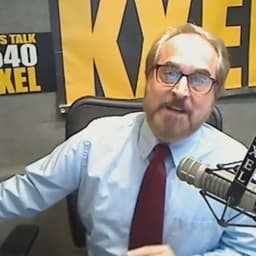
KXEL Live & Local with Jeff Stein · Mon Oct 19, 2026
News Talk 1540 KXCL, where Iowa comes to talk.
Hawkeye Community College is hosting the annual Cedar Valley Manufacturing Conference on Wednesday, October the 28th.
That's coming up in a hurry and let's get more details as we welcome back Celia Even, Hawkeye's Associate Director of Business and Community Outreach.
Thanks for being back with us.
Thanks for having me guys.
I know that we were talking about this last year around this time, but it's really remarkable how much these things tend to evolve and change with the new topics.
What are you looking forward to sharing with folks this year?
Sure, so we try to offer this event every year just to get a pulse on what's going on in manufacturing throughout Iowa.
There's always changes, especially in the age of AI, new technologies, process improvement.
So this year we're excited.
AI, we did a little bit on last year.
This year we're going to talk about how to bridge it with your human workforce, how to use it to make your people better and more efficient, and then also not make them feel like they're getting replaced by AI.
So how those can really work in tandem together.
I know a lot of folks in what have traditionally been referred to as white collar jobs have been concerned about AI.
It seems like there's been less concern about manufacturing jobs, but what is the talk when it comes to manufacturing and AI?
So we hear some different things.
One of the things I think we're excited for and I think some employers are excited for.
is that it could help with some of the more repetitive, redundant, boring tasks throughout both blue collar and white collar jobs to allow more bandwidth for those folks to do tasks that have more impact.
Building relationships with their peers, with their teams, just more of those things that AI cannot replace.
So we're excited.
We don't want people to be scared of AI.
We just want them to embrace it, maybe for some of the more boring, simple things, and then realize that it will help them.
free up time to do some of the more important things or some of the tests that they enjoy doing.
Do you see that being different from other forms of automation, particularly in manufacturing, which has had, you know, various different kinds of automation for a couple of generations now?
I do.
With robotics, some of the tests that the robots take are dangerous.
And so we've seen not necessarily humans get replaced, but robots come in to do some tests that are maybe dangerous or work alongside humans.
AI I really think can be much more collaborative.
Folks can use it to do what they want to do.
They can give it assignments tasks.
It's not as limited as maybe a robot would be, but give it the things that they don't want to do and then proceed to work on things that they prefer or that they think have a better impact for their business.
We're talking with Celia Even, Hawkeye Community College's Associate Director of Business and Community Outreach, talking about the Hawkeye-sponsored Cedar Valley Manufacturing Conference, which will be hosted
on the downtown Waterloo campus site.
That's the Vangie Miller Adult Learning Center on Jefferson Street in Waterloo.
It's a free event on October the 28th.
Registration is required.
The registration is due by Friday October the 23rd later on this week.
And this is open to anybody in manufacturing in the Cedar Valley and around the Northeast Iowa area that wants to attend.
Who will they be hearing from because this is an opportunity to bring in some people that folks involved in manufacturing can learn from?
Sure, we are actually welcoming manufacturers from throughout the state of Iowa.
Anybody is welcome to join us.
I won't stop you and our education providers.
We have other community colleges that sometimes attend with us as well.
This year we're looking forward, we're going to get a state of manufacturing in Iowa update from Cirrus down at Iowa State.
They did a study this spring and so they're going to let us know kind of what they found out what's trending for manufacturing and coming ahead.
We tend to cover grant programs, anything that's available to manufacturers in the state of Iowa.
We'll hear from Iowa Workforce Development on some new ones and then also I'll present and some of our team members will present on ones that are available through Hawkeye Community College.
And then we will have a keynote.
Dr. Selena Peerman will be joining us for a conversation around how to integrate AI with your human workforce and to get people using it efficiently and to help them embrace it.
And so we're really excited for some of those topics this year.
Can you tell us a little bit more about Dr. Peerman and her background?
Where she brings that expertise from?
Sure, we're actually very lucky.
She is local to us.
She hails from Waverly.
We've hired her.
For several events, conferences throughout the Cedar Valley, she's been fantastic to work with.
She speaks at a national level and she's been working on this how to integrate humans and AI together presentation for us for probably a year now.
AI is always evolving and so she's really keeping up on the pulse of how it's changing so that it can be the most relevant to our manufacturers and so we're really excited for that presentation.
Do you have a number of attendees that you're hoping for or expecting that will be coming out to the conference on the 28th?
Well, the building caps us at about 80.
We are not there yet.
And so we are still welcoming registrations.
If you do a quick web search for the manufacturing conference at Hawkeye Community College, it will pop right up.
Again, it is a free event.
We just asked for registration because we are providing lunch.
And so we'll need a headcount for that.
And then.
It is open to anyone that would like to attend, though it's focused more towards manufacturing.
Anyone who supports manufacturing, vendors, educators are all welcome as well.
We're talking with Celia Even, Hawkeye Community College's Associate Director of Business and Community Outreach about Hawkeye's Cedar Valley Manufacturing Conference, which is coming up on October the 28th.
It's gonna be in downtown Waterloo at the Van G. Miller Adult Learning Center.
And I don't know if there's actually a term for this, but I imagine that there's some type of AI fatigue that there's potential that people could be having.
I imagine that parts of our conversation this morning may have made a few people kind of zone out because they've been just slammed with so much about AI all the time in so many different contexts.
So this is a conference that's focused on the future of manufacturing.
I know that that involves a lot of AI, a lot of people thinking about that topic.
Are there some things when you think about the future of manufacturing that maybe don't involve AI or really have it more on the periphery that we could share with that audience member out there who's just had enough of AI?
Sure, we are not going to cover AI on a technical level this year.
Just a little bit about how humans and AI can work together.
But really the future of manufacturing, that would be all trending technologies.
So if you're trying to get robotics into your facility, if you're trying to improve your processes so that your workforce can be more efficient, if you're losing people, we talk a lot about workforce retention, training, how to keep those folks and to keep the turnover rates low.
And so we do talk a lot more outside of AI as well.
It's a great conference for anyone that's just interested in what's going on in manufacturing where it's headed in the state of Iowa.
what we've been seeing and then talking to other manufacturers, talking with a network of folks that are probably experiencing some of the same problems as you, and we really spent some time working those out with employers that joined us.
Thinking of losing people, one reason for that is retirements with a lot of expertise going out of the workforce.
We've heard about that trend for a while.
Do you find that that's leveling off or getting any better?
Are we still losing talent and experience faster than it's becoming available?
Unfortunately, we're really seeing a trend.
More folks are going out the door than are coming in the door.
We are encouraging some of our businesses.
We do help with corporate training and process improvement.
We're encouraging some of our businesses to embrace improving those processes as they are losing that workforce.
We want to prepare succession planning is really important.
A lot of companies don't think about until somebody is like ready to retire and then they're going to be gone in two weeks or 30 days.
And you have to do a really quick who's going to take this job.
But we encourage succession planning, cross training.
implementing new technologies where they can help you.
And so if it's a position that maybe a robot could assist with or a cobot that can work alongside a human, those are all things that will help that workforce.
We'll hear from our folks at Cirrus about the state of manufacturing in Iowa, but they're essentially literally is not enough people in Iowa working to take the place of all the folks that are leaving the workforce.
And that's the case for at least the next few years.
And so.
Anything that companies can do to improve their processes and become more efficient is really going to help ease the pain of that.
But we also want folks to stay.
We want to keep them in their jobs, keep developing them, upskill them so that they're happy and the business is booming.
You know, the biggest story in Iowa manufacturing this fall
has to be about the news of the new steel plant that's planned for Lee County.
I know that's geographically quite a ways away.
Something that might not happen for quite a while before it becomes up and running.
But I'm just curious, Celia, for a last thought, since that is sort of the top of mind topic.
I know it'll probably be on the minds of a lot of folks who are at this manufacturing conference later on this month.
If that signals anything to you about the future of manufacturing, because
This steel plant will obviously look a lot different than a steel plant that might have been built 60 years ago and it could be still in operation.
I think one of the things that both the college and manufacturers have been relaying to folks for the last decade for sure is how clean manufacturing is now, how advanced technology it is.
It's not a dirty job 60 years ago.
It was a dirty facility.
There was dust everywhere.
I mean, now it is.
very impressive what our manufacturers are doing, how clean the facilities are, how highly skilled some of those jobs are.
It's not just shoving products down the line.
And we've been, as we encourage young folks to see if manufacturing is of interest to them, we remind them that it's a lot different than your grandparents' manufacturing plant.
I'm excited to see how that new steel plant does, but here in the Cedar Valley, we have seen some very impressive technologies and even companies that have been around 60 years.
have really become more technologically advanced implemented new processes really cleaned up and so I'd say it's true for nearly all of the manufacturers that we work with and that's a stigma that a lot of them are trying to break is that it's it's hard dirty gross and it's it's just not it's just not what manufacturing is anymore.
The Hawkeye Community College Cedar Valley Manufacturing Conference is Wednesday, October the 28th in downtown Waterloo.
The registration deadline again is Friday, that's the 23rd this Friday, and there is still space to register and be part of this event.
We've been learning about it from Celia Even, Hawkeye's Associate Director of Business and Community Outreach.
Thanks for being back with us.
Thanks for having me Tim.
I'm really excited.
I hope you guys will all come to Manufacturing Conference Wednesday the 28th.
This is the station where Iowa comes to talk.
News Talk 1540 KXCL.
We're joined by Delano Squires.
He's director of the Heritage Foundation's DeVos Center for Human Flourishing and the author of the recent book, The Vanishing Black Family, how welfare and feminism made marriage optional and children vulnerable.
Delano, thanks so much for joining us.
Thank you for having me.
Appreciate the time today to talk about a very important subject.
Let's begin.
What's the status?
How would you describe the status of the Black family in the United States and
And then why perhaps should we be so concerned?
So, I mean, it's easy to point to statistics and many people have heard the fact that today 70% of black children are born to unmarried parents and a close to half live with a single parent.
The vast majority of that being with a single mom.
But if I had to characterize it, I would say that the marriage culture and family structure that was a norm in black America from the end of the civil war through the end of the civil rights movement.
is now the exception today.
And that means in far too many neighborhoods, it is rare to find a child being raised by their married mom and dad under the same roof.
And that's really why I wanted to write the book to bring attention to that issue.
But the first part of beginning to fix an issue is being willing to face it and be honest about what's going on.
One of the striking things about the vanishing black family that I saw was that how much it echoes the 1965 report by Daniel Patrick Moynihan.
60 years later now, what did he get right even at that time that perhaps people didn't want to hear?
I
think what he got right is the idea that family structure matters.
And for context, when he wrote that report in 1965, the report officially was called The Negro Family, a Case of National Action.
The non-marital birth rate for black families was about 25%.
And at the time, nationally, it was about 7%, about 7% nationally.
He was right to understand that as families grew weaker, the chances and hopes for racial uplift and racial progress grew weaker as well.
So he attributed, you know, a lack of social progress in the coming generations to one, the breakdown of family structure.
And then also, again, this is the 1960s, and he also said, you know, another generation of the virulent strain of racism in American bloodstream.
I think people on the progressive left certainly would agree with the latter point in terms of the impact of racism, again, right in the 1960s.
But the the first point he made about the importance of family was was ignored and and now What you see is you go from a 25% non-marital birth rate to a 70% non-marital birth rate over the course of three generations But part of that to be fair is that I think while Moynihan Had the right diagnosis he and many liberals like him in the 1960s and particularly President Johnson
had the wrong cure because what ended up happening was the promotion of a larger welfare state.
The idea that giving families money as long as they weren't married and a man was not living in the home would help lift the condition of low-income families and particularly low-income black families actually move welfare from a symptom of family breakdown to one of its primary causes.
Talking with Delano Squires, he is director of Heritage Foundations Deval Center for Human Flourishing.
Also the author of the book The Vanishing Black Family, Welfare and Feminism Made Marriage Optional and Children Vulnerable.
You quote this young mother from a 1986 documentary that says male figures are not substantially important in the family.
That's 20 years or so since the mid 1960s.
Has that idea become even more culturally acceptable since that point?
Yes, even though people won't say it specifically that way, that idea, the idea that marriage is obsolete and fathers are optional, is the de facto worldview, specifically when you're talking about policymakers, pundits, people in the media.
When they think about low-income Black families or Black families in working-class neighborhoods, whether you're talking about Washington, DC, Philadelphia, Baltimore, Atlanta, New Orleans, Cleveland, Detroit, Memphis, when they think about low-income Black families in those places, their default, even if it's not expressed, is to think about an unmarried mother and her children and think about the father in a separate category.
So for instance, I write about a program in Washington DC called Strong Family, Strong Futures.
The name sounds good.
It expresses a view that everyone can agree with.
But when the mayor of Washington DC, and I worked for DC government for 15 years, when Mayor Muriel Bowser announced the program, the only references were to new and expecting moms and their babies.
And she talked about the program, which was a guaranteed income program, which gave mothers $10,800, either as a lump sum or as a monthly payment.
She talked about it providing financial autonomy for moms.
And when the Washington Post did a write up of, you know, the pilot phase, it only used the word father two times in the entire story.
Once when it described a father who went along with
the mother of his three children on a luxury trip to Florida because they took the lump sum payout.
And the other time is when they talked about how the fathers of a woman's children were not involved in their home.
So increasingly, again, even if people don't say it explicitly, there's this idea that family can be detached from marriage.
And because of that, the focus is always on moms and babies and never
the unified household bonded together and built on the foundation of marriage.
So what might a genuinely father-inclusive approach to fighting poverty look like?
Well, I think it's impossible to do that without putting emphasis on family structure and without restoring marriage as the foundation of family formation.
So, for instance, I can go back to a program like the one I mentioned.
The people designing the program should say, look, we understand that many of the women, if not all the women in this program are not going to be married, but we still want to include co-parenting as a unit in this six month, one year family strengthening program.
We still want to include rhetoric about the importance of
of building strong families and on the foundation of marriage, when we talk about our vision for this city or another city.
So there are ways you can do it through rhetoric and through program design.
I recently sent a model bill to the Washington DC city council to create, it's a marriage and family commission, but I call it a commission on racial equity and family structures because
This is a progressive city council and racial equity is the language that they speak.
And part of what it would do would, again, provide an evidentiary basis for policymakers to consider the importance of family structure with respect to social outcomes.
And that can be done through original research, can be done through focus groups, drawing on an existing body of research as it relates to the importance of family, and then making recommendations on how the city
can better incorporate family structure into every part of how it does business.
So I'm hoping that that goes forward.
And I think that could be a model for other cities and states.
Delano Squires is with us.
He's with the Heritage Foundation, also author of the recent book, The Vanishing Black Family, how welfare and feminism made marriage optional and children vulnerable.
Delano, we have talked a lot about welfare.
feminism, particularly this kind of second wave feminism that says marriage is a trap, home is not the place for a woman to be.
What kind of work needs to be done can be done to perhaps convince women, again, that marriage is a good life outcome for them.
Yeah, this is, I write about feminism because what I say in the chapter in chapter three is that second wave feminists deceive women into believing that
Femininity is weak.
Masculinity is toxic in men, but empowering in women.
That marriage is oppressive.
The home is a prison and children are a burden.
And those things have informed public policy.
They've informed cultural norms for the better part of 60 years.
And it was important to say that because there are many women and men, for that matter, who have never taken a class in feminist theory, who have never taken a class.
in women's studies, but who have been shaped by those ideas.
So for instance, oftentimes people say, no, feminism is just about giving women choices.
But if you were to take a group of women, let's say, from the business world or from the legal field and you take them to a middle school and they're talking to an all girls class and they ask the girls what they want to be when they grow up.
And half of the girls say, I want to be president, lawyer, doctor, engineer.
And the other half say, I want to be a mom and a wife.
The women standing in the front of the room are going to support the first group of girls and then question the second group of girls.
Is that all you want to do with your life?
And even that question in and of itself contributes to the diminishment
of family life that has been accepted in every part of society.
It doesn't mean that people are anti-family.
It just means that they prioritize family in different ways than we did as a culture in decades past.
So I think part of what we need to do is, I believe marriage as an institution needs a rebrand.
I believe that the vocations of husband and father and also wife and mother
need to be accorded the status, the social status that reflects the importance that they play in continuing the human species on a very basic level.
And that can be done whether through public policy, certainly through culture.
A lot of this is about what things we afford status to in our culture.
And we have been draining marriage and family of status.
for the better part of 60 years.
You put a lot of responsibility on the black church to perhaps help with a solution or help push us in a better path.
What has the church stopped doing that it must start doing again?
I
think one of the things that many black churches and I don't want to paint with too broad a brush because in the book I'm specifically named the most politically active
black churches and pastors.
And I throw some names in there.
Those churches are the ones that are afraid to preach biblical truth when it comes to sex, sexuality, marriage, and family.
And in fact, their fear ends up being a barrier to family reconstruction and not an asset.
But thankfully, there are many black churches that still hold to God's word as it relates to
to biblical sexual ethics that have marriage ministries that work with premarital couples, couples who intend to get married, that have post-marital ministries, if that's a thing.
I even know when I've written about churches that work with cohabiting couples in the community to help move them from simply living together to committing to one another for life.
So I think there are many things that the church can do.
And one of them is really to just elevate
this issue, the issue of family reconstruction and revival to the national prominence and to a national stage that it deserves.
Because again, the most politically active churches tend to focus all their attention on voting rights.
And what I say is that they can divert some of that attention and reallocate some of that social, cultural, and political capital for the purpose of focusing on marriage rights.
So, R-I-T-E-S.
So, there's a lot that the church can do.
The problem is that this has not been a priority in many churches for a number of years.
The other institution that you identify, the historically black colleges and universities, what role can institutions like those colleges and universities play that the government cannot play?
HBCUs can play a huge role.
Some of that may be hosting conferences on marriage and family.
I've drafted a proposal to create an HBCU marriage and family consortium that does original research, not just on population level statistics, but even more importantly on attitudes and views.
Because it's important to understand how the next generation, I'm talking Gen Z and increasingly Gen Alpha, how they look at the institution of marriage because
I would want to know, for instance, whether the average 24-year-old man in North Philly believes that it is necessary to be married before having a child.
And the same for an average young woman in Atlanta.
I want to know how young people make sense of these institutions and this structure.
And we just don't have that data available, particularly when it comes to black families.
So I think HBCUs can play an important role in terms of research, but there's also a role that they can play in terms of building culture.
I work at the Heritage Foundation and I notice that every time we welcome a new class of interns, at least one is already engaged.
And two of the interns who helped me with research on the book are now married and working back at Heritage.
I don't know that that culture exists in any significant way on HBCU campuses.
It's possible that it does.
But when I reached out to people who know that space well, very few could think of a campus where that's the case.
And part of it is due to the gender imbalance on many of these campuses.
So for instance, Howard University here in DC, known as the Mecca, probably the most well-known HBCU.
The New York Times did a story on Howard a few years ago and found that only 19% of undergraduates at Howard University are black men.
So when you have a gender split that skewed, it's hard to create the type of culture where young people see the benefit of pairing off and potentially finding their future spouse.
while they are on campus for four years.
So I think, as I said, HBCUs can do a lot in terms of teaching, in terms of convening, in terms of research, and in terms of culture.
Delano Squires is director of the Heritage Foundation's DeVos Center for Human Flourishing, also author of the recent book, The Vanishing Black Family, a welfare and feminism made marriage optional and children vulnerable.
You can find that where you get your books.
Delano, thanks so much for joining us here on the Radio Free Heels to Allow Our.
Thank you for having me.
I'm Scott Bertram.
This is the Radio Free Heels to Allow Our.