Transcript
Catherine DeLong Conservation Pros Map
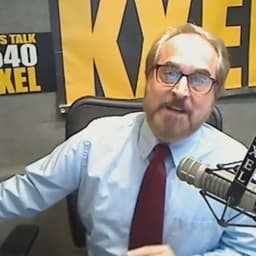
KXEL Live & Local with Jeff Stein · Tue Oct 13, 2026
Let's go now live to the news line and speak with the Attorney General of the State of Iowa, the Honorable Brenna Bird.
She's kind enough to join us on a monthly basis for a review of activities in her office.
The website once again is IowaAttorneyGeneral.gov.
Madam Attorney General, good morning and thank you for the time.
Yeah, good morning.
So, as I look at some of the things that you folks have been doing lately in the office, a lot of things tied to China, these are lawsuits that you folks are filing because of Chinese influence and potentially spying, if I'm reading this correctly, tell me about this baby monitor one in particular.
Yeah, it's something that really got my attention.
These are Chinese-backed companies.
Some of them make baby monitors, some of them routers that would make your home Wi-Fi or office Wi-Fi, and some of them security webcams.
But they have deep China ties that they don't disclose, and there's some real security vulnerabilities with those.
China should not have access to things like our baby monitors,
our Wi-Fi, our webcams, that's a security problem, and they need to disclose to people.
That's why we're pursuing it under our consumer protection laws, taking them to court to hold those Chinese backed companies accountable.
So we've sued three different companies about that, making sure that we're holding them accountable because they are not telling the truth about your products.
People listening right now, the chance that they have a TP-Link router if they have a home Wi-Fi system, well, that could be pretty high because they control 60% of the US retail router market for Wi-Fi systems.
And I know that people have expressed some concern.
You know, China is listening to everything we're doing, et cetera.
Is there evidence to show that
something like the baby monitor that that stuff is directly leading back to some database off our shores or how is it that we know I mean I'm not saying we shouldn't act in a preventive manner I'm just wondering what can we show that that demonstrates that this is actually going to a nefarious people
Well, I mean, the whole point here is that they can.
And it's often hard to know whether they are or aren't.
I know most people, when you install a baby monitor, you're focused on watching and listening to your baby and making sure that, you know, when they're sleeping and when they're waking up and when they need you, you're not thinking about, OK, that data, is there a back door in that where it's going to go to China?
And here's some of the concerns we've got.
And we're going to be getting to the bottom.
of some of this as well, but we have some concerns.
One is they say that they are a U.S.
company that they don't have China manufacturing, and that's just not the case.
There's also ties between the Chinese government and these companies.
And in fact, one of them, the router company, says they make the routers in Vietnam, but only half of a percent of the components
that that plant uses are bought in Vietnam.
All the rest is imported by or through China.
And then just to put an even finer point on it, that factory in Vietnam, when they were building it, the construction was formed by the Chinese military company that performed that construction at the Vietnam factory.
So the China ties are very deep.
It's a big concern.
I mean, there's a lot of private data that would go through someone's
home Wi-Fi system and we certainly don't want anybody monitoring our security cameras or our baby monitor cameras.
That's a deep invasion of privacy and it also opens things up to hackers, whether they're Chinese or Russian or some other hostile nation.
The origin doesn't matter, they're bad people, but especially in a case where we are having these open conflicts
with places like Russia and China, it certainly gets our attention.
And I wonder, you know, I only know enough to get myself in trouble, so to speak, with some of this stuff.
And so at home, I have CenturyLink as a vendor.
And so, well, when it works.
But I mean, they provide the router, right?
You know, you contract with a vendor, and I'm sure it's the same with MediaCom or any of these others.
you sign up they say here's your router you think nothing of it as the homeowner you plug it in you have no idea where this comes from unless you take the next step to investigate it correct I mean so in other words people are sitting here saying well I don't have to worry I had the the phone company or the cable company install it well that's no guarantee
It's no guarantee.
And just to be clear, they didn't tell the truth to the cable company or the phone company either.
These companies, that's the concern that they had to disclose the risk that they couldn't say that they're not Chinese made when there's these very serious ties there.
And a lot of secure information goes through that.
So I think it's important to take a look, see what your router is, get information, talk to your provider if that's helpful.
But that's why I do these things as attorney general because every Iowan can't
possibly stay on top of the latest vulnerabilities when it comes to what China is doing or what they might be trying to do.
So when we hear about something that's going on, we investigate, we look at it, and if it's something that's hurting Iowans where we need to hold someone accountable, then we file these lawsuits and take them to court, which is why I have these three lawsuits going on to hold them accountable.
And I hope that the federal government will put them on a watch list too.
We need to make sure that all of our American data is safe and we're not given a
backdoor to China by buying their products at a cheaper price.
So the routers, this lawsuit, which was filed just a week ago, that's TP-Link.
We also talked about baby monitors, and this is a company called Lorex, L-O-R-E-X, the camera equipment is called Babycam, among other things, but you've also got this video surveillance company, what is it, ADI Global.
ADI.
Exactly.
And just so you know, Jeff, for your listeners, these types of products would be sold online through reputable online retailers.
They would be sold in stores.
This is something that would be pretty easy to buy or be pretty easy for your internet provider.
Maybe that's the one that they use.
But it's something you should know and, you know, that's why we're going after them under Iowa's Consumer Fraud Act.
And again, three lawsuits in the space of four days last week.
And again, that's ADI Global Distribution.
Boy, if any company had a name that should lead a red flag to co-op, global distribution of video surveillance, what good can come of that?
How many other folks are involved in some of these suits?
You go alone with our consumer protection laws.
Some of them you join others.
Tell us about these China suits.
Are these initiatives of your office or collaborations?
So these are initiatives in our office because we're suing in state court under state law, but other attorneys general are also doing the same thing in their home states.
And so if I remember right, there's at least four other states that are also either doing this or looking at this.
And I believe that list will continue to grow.
because this is something we did not know was happening and once we started to realize what was going on, we realized it's important that we take action now so people have that information and we need to hold these companies accountable so that they will either stop selling these products or that we can find a way to make sure that Iowans are secure if they have one of these products.
Iowa Attorney General Brenna Burr joining us live on News Talk 1540 KXEL.
I'm always interested in these large
collaborations that lead to big settlements, especially with drug companies, and since you and I last talked just about 10 days ago, a settlement with somebody called Sandos, and this has to do with actually trying to get some money back for people who are overcharged, if I'm correct.
Yeah, they were overcharged, and we're doing that.
It's a coalition of 43 states, so
A lot of the things like the China lawsuits that I just mentioned, you know, will be an early whistleblower filing a state.
Other times we'll be looking into a company that's overcharging for drugs and here 43 states and territories are part of that one.
It's a $400 million settlement when you take it all put together.
And what happened was price manipulation that made these prescription drugs more expensive.
and then less competition as well.
So the Iowa share of this settlement is $1.3 million.
And what happened?
Excuse me, Jeff, I got allergies, believe it or not, fall allergies with all the harvest.
But it was all kinds of drugs you might use.
So it might be antibiotics, it might be blood pressure medicine.
And if there's an Iowan that bought one of these drugs between May of 2009 and December of 2019, they could be eligible for compensation.
They can either call my office and we'll direct you to the right place.
or our website with information about the settlement, uh, has contact information where you can reach out and see if you're eligible for that settlement and for, uh, some funds for some things you might have bought.
So Sando's S-A-N-D-O-Z, a generic drug manufacturer makes a lot of drugs that Iowans would depend on, uh, to keep themselves safe or to monitor a chronic condition.
By the way, I spent time in the yard
And it's not like harvest, but I was trying to mow leaves and the sneezing started immediately.
So no apologies necessary madam attorney general for this living in the country this time of year.
The problem I think we find often back to the Sando situation.
We hear about generic drugs and we immediately think well that's low cost.
That's bargain basement.
We get the same quality, et cetera.
We don't necessarily think that if it's a generic that somebody might be goosing the price up a bit.
Yeah, and that's why it's so important because we all know those name brand ones where there's no generic available.
Those are pricey, but generic are supposed to be more affordable.
So when we have something like this price manipulation going on with generic drugs, that has some really serious consequences because you're right, people think it's the generic
I'm getting the best deal that I can get.
And oftentimes they're more affordable.
The other thing is there's a lot of generic drugs that Iowans would take every day, like a high blood pressure medication or other important medication they need to take.
So if you think about that, when someone is getting ripped off with a higher price than it's something they take every day, that really adds up.
And we do not want that to happen.
I don't want anybody to not
fill their prescription because of the price and because of price manipulation.
So doing this helps to hold them accountable.
We make them give up the money they took, but then we also are putting out a warning to any other generic drug manufacturers.
If they're going to try to engage in this price manipulation, they will get caught.
They will be held accountable and they will have to give up the money they made.
Now this is one of the problems and and this litigation or litigation like this started a decade ago as I understand from the department news release and so those who Have a claim we're talking about a time period from 2009 to 2019 Well, this is one of the problem with the narrative wells because they by the time Folks figure out that there's an issue so that you can get 43 attorneys general involved etc
It's hard for folks to make a claim simply because of the passage of time.
That's not a fault of any law enforcement entities going after them.
It just shows that it's hard to catch these people and actually make them really pay or to get actual justice for the people who are wronged.
It is, and that's one of the reasons too that we do want the money to go back to the people who were overcharged.
That's really important, but let's say it's not possible to locate that or we're not able to do that 100%.
We still want the company to pay and pay those funds, and our office has a fund that we fund similar types of cases out of so that we can use that funding to go after the next case and get justice on the next issue to hold them accountable because
We have to stay vigilant all the time.
These are big companies that we are taking on and that's why we do it together with other states.
We have to keep on it, you know, keep on watching what they might be doing.
They might change their practices and we just want them to follow the law.
Don't engage in any kind of price manipulation and that'll protect Iowans and all Americans when it comes to generic prescription drugs and being able to afford them.
Iowa Attorney General Brenneberg joining us for a few minutes more on KXEL.
Well speaking of things that have taken far too long.
We noted earlier this autumn the 25th anniversary of the 9-11 attacks on America.
We're still trying to get funds to compensate the families of victims.
And when you've got 30 state attorneys general saying could you please loosen up the funds having to argue this
uh... with uh... an amicus brief of the supreme court uh... that's that's such a travesty frankly
well it is it should not be that way let me say that that was twenty five years ago uh... but it's the principal of it all and this case is before the i was a pretty court what we're doing in this was a brief that
I led, it's a bipartisan group of attorneys general from around the country, a friend of the court brief at the United States Supreme Court.
And what we are saying is let the 9-11 victim families collect the financial judgments that they won against the Taliban and use the money that is frozen by the U.S.
Treasury.
That Taliban money, those bank accounts that were frozen, there's $3.5 billion in frozen funds.
That should go to the 9-11 victims.
It's been frozen for a long time.
The funds were frozen after the Taliban took over Afghanistan to keep those terrorists from getting the money.
Now that that money's been frozen, it's been frozen this whole time, it should go to the victims.
That's where it needs to go and that's our argument before the court.
How long?
Is that kind of stuff going to take?
I mean, obviously there's an argument pending.
Is this something where there might be some resolution even within the next 12 months or so?
Well, I can tell you, uh, justice the latest justice denied.
And I think 25 years is absolutely way too long,
you know,
but, uh, you know, the court system kind of grinds on a little bit.
And I have to say it goes to persistence too, not giving up, uh, not taking no for an answer.
And, and it's like squeezing blood out of a turnip to get money out of terrorists like the Taliban, but you know, they should have to give it up.
And those funds should be given up.
What'll happen is I hopefully win at the U S Supreme court.
I mean, I certainly think the law is on our side.
goes back to the district court to apply the Supreme Court and they go through their process there so it could take a little while longer even after a Supreme Court decision but it's just something Jeff we're just not going to give up on it it's about the principle of the thing and it's about that terrorist money that was frozen should go to the families who were hurt.
Certainly cannot give up on it because again
Justice delayed is justice denied, but justice that is not obtained at all is a true travesty.
These conversations we have are with you as an office holder, not as a politician, but in our 20 seconds or so we chatted before going on the air.
You reminded me, boy, I think of Election Day as November 3rd, but folks can get going as early as what, tomorrow?
Yeah, the first election day is tomorrow, so I'm going to go into my county auditor's office In my home county of Guthrie County with my driver's license and I'm going to vote early tomorrow morning I'm going to bring my my husband with me and Bob and my our 10 year old because I remember what it was like Voting with my mom and dad when I was a kid and one of the nice things about our auditor is
Bob and I will get our I voted sticker but Beckett our son will also get one too and so kind of teaches him about civics and that's how you teach your kids to be part of our society and and take their part in our democracy is to bring them with you.
So we're going to be doing that tomorrow morning.
I encourage everybody to learn about early voting and you can call your auditor if you have a question but go in and vote bring your ID because we do support voter ID.
That is required.
Bring your ID and get ready to vote.
Thank your vote.
I thought I was the only geeky kid that crawled into the voting booth with the parent.
This is back when we had the big flipping of the levers and the curtain, you know, that came across.
So I'm glad to know that tradition continues.
Attorney General Brenna Bird, Iowa AttorneyGeneral.gov is the website.
Thank you kindly for always being so generous with your time.
Appreciate it.
We'll do it again next month, if not before.
All right, sound good.
All right, take good care.
And Iowa Attorney General Brenneberg joined us live on the news line on News Talk 1540 KXEL, where Iowa comes to talk.
News Talk 1540 KXCL, where Iowa comes to talk, Iowa State University Extension has released an Iowa Conservation Professionals Map.
It's an online resource that helps farmers and landowners connect with conservation professionals who work in their local area.
We're going to find out more this morning from Katherine DeLong, Water Quality Program Manager at Iowa State University Extension.
Thanks for being with us.
Thanks for having me, Tim.
Why was it important to show this information on a map as opposed to a directory or a list of those folks that are are noted here?
Yeah, that's a great question You know, I think I think one thing is that some of these conservation practices that we talk about that we encourage landowners and farmers to adopt things like cover crops buffers wetlands these can be sort of complex Practices and so we really wanted
farmers and landowners to be able to quickly and easily find someone who could help them put in these practices, decide which practices right for them, figure out how to cite it, how to pay for it.
And so this is a great resource for that.
I think a big reason that it's a map and not necessarily a directory or something like that is that Iowa actually has like a really large conservation workforce.
And you might not be aware of this because until just
Two weeks ago, we didn't have a resource that could really show you all these professionals who work across the state.
And I think the nice thing about this map is that a farmer or landowner can click on their local area, they can put in their address, and it'll show them their most local conservation professional.
And the last thing I think I'll mention on that is that
You know, I don't need to tell you that we do have natural resources issues in our state.
We're all aware of the conversations around water quality.
And in order to improve water quality, we really need agriculture to play a big role in adopting some of these conservation practices.
You know, we want all row crop farmers to use cover crops.
We need more wetlands, we need more buffers.
So we want to make it as absolutely easy as possible for someone to find their most local conservation professional and also to have some choice in who they work with.
That's one of the nice things about this map is that you can put in your address or click on your area and it will show your most local person, but then you can cycle through everyone who covers that area and you can have some choice about like who you want to work with, who you don't want to work with.
Your area of expertise is in water quality, but this conservation map does go quite a ways beyond that corner of conservation Who are some of the other types of people who a landowner or farmer might be able to track down?
Yeah, yeah, so let me give you a little more details on like who's included on the map So right now it includes
over 70 conservation professionals across the state.
And so I think most people are probably aware of.
NRCS, Natural Resources Conservation Service Employees.
This map doesn't include those folks.
It includes all the other people who people might not be aware of.
And so it includes folks who work for the Iowa Department of Agriculture, the Department of Natural Resources, different agricultural co-ops, Iowa Soybean Association, the Nature Conservancy, cities, towns, counties, soil and water conservation districts.
These are all people who work with farmers and landowners to put in conservation practices at no cost.
And they usually have titles like watershed coordinator or conservation agronomist.
Every acre in Iowa is covered.
And so anyone in the state can click somewhere on the map and find someone who can help them.
And like I mentioned earlier, you also have some choice.
It doesn't include, as I mentioned, folks from the NRCS or right now people from pheasants forever.
And the reason for that is just that Iowa State Extension already has a resource for that.
So if you go to our natural resources extension website, we have a contacts feature where you can find habitat contacts.
You can find your local Soil and Water Conservation District and our CS office.
So that resource is already there.
We wanted to find a way for you to meet and get help from all the other conservation professionals across the state.
So how the map works.
Once you have it up on your phone or on your computer, you can just enter your address or you can click anywhere on the map and it'll show you the most local person who covers that area.
And then you can kind of cycle through it and see through who are all the people who cover your specific parcel of land.
talking with Katherine DeLong, Water Quality Program Manager at Iowa State University Extension about a new Iowa Conservation Professionals map, which was just recently released.
And let me come back to the idea of choice.
Talking to farmers, landowners, do they feel like they might get different information from a different source from someone who works from a different agency or from a different perspective?
Why is the choice important?
Yeah.
You know, I think the choice is important just because people have preferences.
You know, someone might look at the map and see that someone who covers the area that they're interested in works for the nature conservancy.
But they might rather work with the Iowa Soybean Association.
And so it just gives them that option.
I think most of these professionals, you know, the nice thing about them is that
A lot of them do have the same expertise.
So if you want to know more about managing cover crops, right?
You could talk to a watershed coordinator, but sometimes you might have better luck talking to a conservation agronomist, someone who has a little bit more of an agronomic background on that.
So depending on what you're interested in, I think it's a good option to look through all the people who cover that area.
And also, realistically,
We're all busy.
And so if you might contact someone and they don't initially get back to you, reach out to someone else, we just really want people to know that someone will be there to help them.
They don't have to try to navigate this themselves.
That there is someone out of all these different types of organizations across the state who can help them.
Let me come back to the interface that the user will have with this map.
You mentioned being able to type in your address or being able to click on the map and see what's there.
What else should people know to try to get the most out of this resource?
Yeah, that's a great question.
So I think the main thing is that just start exploring.
Take a look.
I think one of the issues sometimes with conservation or natural resources management is that it's trying to understand who are all the different organizations who work there.
Maybe you don't know the difference between the Iowa Soybean Association and the Nature Conservancy.
You don't need to...
Sometimes it can just be really helpful to connect with a real human.
So you can talk through all this so you can stop, you know, browsing the internet to try and solve all these problems.
But let me give you, I think what would be helpful too is just to give you an example of how this resource works.
So say you're located around the city of Cedar Rapids.
And so if you go to this map and you zoom into the area of Cedar Rapids,
You'll see that there are nine people who covered sort of the Cedar Rapids area.
And so if you click on the map, the first person who pops up will be Rowan McCarthy.
So Rowan is a soil health coordinator with Lynn County.
And then if you keep looking through the other folks who cover that area, you'll see there's John Rathbun.
He works for the Iowa Department of Agriculture, and he covers Lynn County, but also Benton and Buchanan County.
Keep going.
You'll find Evan Brehm.
Evan is a conservation agronomist with Iowa Soybean Association.
So just to give you an idea of like the range of folks who you can access on this resource and all of them would be happy to hear from you.
They're all working together.
Don't worry about which one is the right person for you to contact.
Reach out to all of them and see which one is the most helpful to you.
All these folks work together and they're ready to help.
Talking with Katherine DeLong of Iowa State University Extension Water Quality Program Manager there and talking about a new resource that's recently become available, the Iowa Conservation Professionals Map.
Folks can link to it through the extension website.
And finally Katherine, I just want to ask what you would consider to be a success for this resource.
Do you have a thought about how many people are going to access it over a certain length of time or how widespread the information is going to become available?
available to farmers and landowners to use?
Yeah, that's a great question.
You know, one of the nice things is that we have been working on this resource and wanting a resource like this for like 10 plus years.
And so we are just really thrilled to have it out in the world.
You know, we're doing press releases.
We're getting the word out.
We have a great group of partners who are helping us get the word out.
This is such a useful tool.
It's something people have been asking for for 10 plus years in our state and so we know it's going to be useful to folks and we're tracking the numbers to see how many people are using it and so it just came out about two weeks ago and we know we've already had hundreds of people come and visit.
So I don't have necessarily a threshold for what I think would be success, but it's been nice to get lots of responses from people about like, ugh, you know, we've been wanting something like this for 10 years.
I'm so glad it's finally out.
So it has been, honestly, Tim, it's been a labor of love.
Like I have been working on this for a long time.
So I'm just trying to bask a little bit in the joy of having it out in the world.
The Iowa Conservation Professionals Map is a resource available from Iowa State University Extension.
It points farmers and landowners towards a wide variety of conservation professionals working across different groups and agencies.
We've been finding out about it from Katherine DeLong, Water Quality Program Manager for Iowa State University Extension.
Thanks so much for your time and congratulations on making this resource available after some time that it took to pull it all together.
Thanks Tim.
Appreciate your time.
This is the station where Iowa comes to talk.
News Talk 1540 KXCL.
News Talk 1540 KXEL where Iowa comes to talk a good Tuesday morning to you.
I'm Jeff Stein.
Each Tuesday and Thursday we have the opportunity during KXEL live and local for an RFD 1540 conversation.
with Dustin Hoffman, supervising editor, senior farm broadcaster Iowa agribusiness radio network.
You hear reports from the network nine times each weekday.
And as noted, Dustin joins us here Tuesdays and Thursdays.
We had a very soggy month of September leading into October.
We've had a fair amount of dry days, not much interruption in that well above normal temperatures, pretty brisk wind.
So, what's that tell us about?
How harvest is coming along after that delayed start?
Well, you know, we are looking, Jeff, at some decent progress.
Now, we have seen combines rolling in many parts of the state all over the state.
And so, you know, seeing that progress going is definitely good.
Now, we did have some rain shower activity here in the central part of the state back on Thursday night, but just sort of as a slowdown maybe and not so much of a
A stoppage once again, but the fact of the matter is we're still behind schedule You know and that's and that's the thing that farmers are gonna have to be quite cognizant of here as we keep rolling along through the fall You know we know that harvest is a marathon not a sprint But the fact of the matter is that because we had to wait so long to get going It has become more of a sprint and so I think this is where the farmers are pushing it
They're going to make sure they get as much done as they can because we don't know what Mother Nature is going to have in store.
Now we've had some warm weather and wind, so that has helped dry things out and keep things a little bit drier.
But we don't know what the next couple of days are going to be running.
Cooler temperatures.
Is there going to be rain shower activity coming or not?
So those are things farmers are going to be looking at very closely.
How much can they get done?
How soon can they get it done?
But we are also seeing
and we've talked about farm safety before we've seen instances of combine fires in different parts of the corn belt so it's uh you know when you have these drier conditions and windier conditions and those combines get running hot it doesn't take much for some of that debris to catch on fire or start a combine fire and so you got to be careful about that as well and again we focused on the farm safety aspect earlier but it is just nice to keep that in the front of the mind but progress is going to take some time uh we are going to get closer to normal but just
be careful out there as you start going but you know we've been in different parts of the state to a western part of the state seeing some good progress we've seen personally i've been in the north central part of the state in the last week or so and saw some good progress there as well and so it's moving uh farmers are definitely maybe even testing
And earlier last week, we're probably testing how dry their fields were, maybe just a little soon.
But some places we're combining on hillsides where the drying out would be a lot better.
And leaving the low spots, so seeing combines of tracks going out into some of those fields.
So that, of course, also helps with the mud situation a little bit.
You might be able to go in a day or two sooner than with the standard tires.
But again, progress is happening.
It's just now it's time to make sure, again, we heed those warnings and those things that we talked about a month.
to go Jeff.
You know for those of us who don't drive real tractors, we drive little lawn tractors to mower lawns, I found that
I thought things were fairly damp and it was in some parts of the yard over the weekend but then I started chopping up leaves and oh my goodness the dust etc and that made me think okay it's drier than you might have thought and with all these leaves in my case you get near a hot motor of an engine you had to be careful and that led me to think boy I wouldn't take much and we heard a few news reports over the weekend of problems on various farms because again you're in a hurry
You figure, well, it's finally dry enough, but it's a pretty razor thin line before all of a sudden it's too dry and you could have a flame shoot out there.
Exactly it and of course we're also hearing stories and seeing I've been seeing things on social media too of of combines or even tractors and grain carts that maybe found a spot that wasn't quite as dry as we hoped it had been you know it's similar to the situation you're talking about with the grass and the leaves it was damper in the grass because of the fact that it's thicker and it takes longer for that soil to dry out with all the thickness of the grass but the leaves sitting on top of the grass dry out much quicker because they've got the wind blowing on they can sit in the sun and so that's a similar thing with with fields I mean just because you're
end rows or head rows as you call them if they're drier that's because they get a little more access to the sun and they get a little bit more wind but you might get into the middle of the field and still find a spot that's wet and it doesn't take long for a tractor to get stuck and with that weight a grain cart to get stuck and even the combines and so you've got to be cautious
Don't push too hard.
If you find a spot that's getting a little soft yet or maybe hasn't quite dried up, there's no shaving back and up and going around it for a little while.
And maybe as the sun goes, maybe wait a day or two and it'll be ready to finish up.
You know, I know there's not quite what we like, but you know, sometimes you gotta hit what's pitched and.
Of course, you know, then it won't be long.
We'll be talking about tillage or obviously cover crops going into are going into place and them taking over, you know, fertilizer applications for the fall.
What's that going to look like?
There's so much going on.
We're just getting started.
And of course, we know that we're already up against the calendar and the clock.
Now, on the bright side, we're past the point in some areas of the state by two weeks of the first frost.
I'm not talking about a freeze.
I'm talking about frost.
We haven't had any of that kind of talk yet.
And so in that respect, okay, that changes the calendar a bit.
Do we have any reaction from markets you mentioned you and your team had been at various different places in the state?
And so you've got some eyes on reports.
Do you have any sense of how markets are reacting to this delayed start and what they're hearing so far in terms of results?
Well on the markets have been you know anxious waiting for that information Jeff.
I mean we've seen progress in other parts of the country so I mean we're making good progress in the places outside of the corn belt where we've been getting that rain activity now we're starting to fire up and get moving and so we are seeing a little bit of
I don't want to say impatience with the markets, not full blown, crazy, everything's going bad.
But the markets are noticing, but they're also seeing now that we're getting into the fields, things are rolling along.
How fast are we making up progress?
That's the kind of stuff we're going to be watching.
I mean, this weekly crop progress report that came out yesterday, we saw where we're at.
We got an idea of comparing that to before we could really wade into the fields too far last week.
Now we're seeing more of a realistic assessment of how far we've come.
And so, Jeff, is there a ways to go?
Yes, there is.
I mean, we have a delayed start, but like you said, no frost.
Of course, a freeze is definitely the final straw.
We know then the plants are completely done.
I mean, I checked the cornfield up around the Clearlake area last week, and the black layer was there in the corn, but very thin.
and was seeing a little bit of conditions like some white mold and black mold both forming on the ears and on the leaves and the husks themselves as well and so the the need to get this out and of course with the wet weather we've had when this trying to finish has implicated or introduced some new problems we've talked about sprouting on the cob already and we've talked about some black beans showing up in a few spots and so
those those problems are starting to be realized how much of it it's going to be hard to say but as we're waiting into the field this week we're going to get a pretty good idea of what the harvest is looking like what the quality is looking like and I think that's going to go a long way to give the markets their first opinion because now they're going to get a good bite into that into that harvest progress here in Iowa Illinois places like that and if they see some grain quality issues that's going to paint a picture of the markets going to be watching and so this report we had out yesterday uh yesterday afternoon is definitely setting the markets up for what could be
interesting next couple of days.
Dustin, as always, appreciate the great insight.
We'll do it again Thursday.
Sounds good, Jeff.
Dustin Hoffman, Supervising Editor, Senior Farm Broadcaster, Iowa Agrabusiness Radio Network, and he joins us on KXEL Live and Local for this RFD 1540 conversation Tuesdays and Thursdays.
Only on News Talk 1540, KXEL, where Iowa comes to talk.