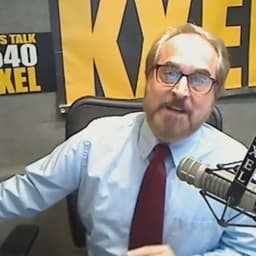
This is Iowa Talking Points, the candidates, produced by Studio 5 at Mud Advertising and totally Iowa Media, where you hear from candidates in the November 2026 general election.
Now, Iowa Talking Points, the candidates.
From Studio 5 at Mud and Cedar Falls, here is Jeff Stein.
Hello and welcome.
The office of the state auditor is the taxpayers watchdog.
It is an open seat.
The incumbent is seeking other office.
You'll find two people on the ballot.
One of them joins us here today.
He is Taylor Weddick.
Mr. Weddick is the Democratic nominee for State Auditor.
Weddick4Iowa.com is the website.
Thanks so much for taking the time, sir.
Thank you, Jeff.
Grateful to be here with you all day and hopefully get the word out and share a message with folks.
Let's start with the role of the office itself.
I said taxpayers watchdog.
There are various constitutional and legislative provided duties.
Give us a sense of beyond what we see on paper.
Your vision for the role of the state auditor.
Yeah, so I think you framed it perfectly as to how we think about this.
The office of the state auditor is supposed to be an independent watchdog.
It's supposed to look out against corruption from politicians or folks in local government stealing people's tax dollars and then to protect those tax dollars to make sure that that money is being spent.
efficiently, effectively, actually helping out folks in our state.
It's really important that it is an independent watchdog, though, in addition to just being, you know, the taxpayer's watchdog, because you need to know that whoever is in power, Democrat, Republican or otherwise, that this office is going to do things the right way.
And that is how we approach this.
My belief is that the office is all about making sure that you follow the money.
wherever it is, you ask the tough questions of folks in either party or no party, and you make sure that you protect the money of the taxpayer.
I think especially right now at a time when folks are really struggling, when folks are
paying more and more for everything and they're working harder than ever before.
But a lot of us feel like we're falling further behind.
It's so important to make sure that we have somebody that will do the job the right way, protect the independence of this office, and we'll continue to fight for folks all through our state, regardless of party.
The visibility of the office has been greater with the current occupant.
That's not a praise or criticism.
I think it's just a fact that.
there has been a higher visibility.
How do you see yourself as state auditor with regard to the contact with people regularly, et cetera?
Yeah, I think that, you know, Rob has put in a lot of work in this office.
And, you know, we would like to continue on a lot of the good things he has done.
And that's including to your point about making sure that folks understand, have visibility to this office.
One thing I think that he's done very good job of is getting all throughout
state annually, he's done a 99-county town hall tour every year, and I think that's really important for the state to do, especially considering that the nature of this office is focused, of course, on state budgetary issues.
A lot of it, which a lot of folks maybe may not be paying as much attention to is in local government.
So it's really important that we have a state auditor that gets out there and talks to folks in the local communities that gets that perspective directly from them face to face and make sure that they can continue to look into the sorts of issues that folks are facing locally.
So we're going to focus on continuing that.
Another thing that I think this office has done well in the past few years that's helped make sure that folks can understand what this
office is doing is in its effort to allow folks to work all throughout the state, not necessarily just working in Des Moines.
Historically, folks had to all be working in the Des Moines office.
And now you have folks actually working in the communities that they're from.
It's made it easier.
for the office to retain and attract really high quality folks.
But it's also made easier for the office to be able to know what's going on in our local communities all throughout the state and to be able to respond aptly to that.
So I think it's very important to continue on that sort of effort to make sure that especially considering the real focus of this office on local government concerns that this office is regularly engaged with folks all throughout the state of Iowa.
and I would continue that work.
Are there things that you would want to employ that are, I'll say more proactive, and here's what I mean by
that.
Often, the auditor's office is contacted by an elected official who says, we don't like how the budget or the balance sheet is turning out, or it might be a citizen who has a concern,
and then
there is a special audit that is conducted.
Are there more proactive measures that you may want to take
to effect the goal of being the
watchdog.
Great question.
So 100%, right?
I think we just talked about the local focus and getting that information out there and making sure that folks
could understand where the otter is on these issues and also bring up the positions that they might Have based on what they've seen as being problems or you know good things to improve on I think you know one thing Rob had done there that I did not flag was he did this program called the public innovations and efficiencies program the PI program which has helped to spotlight proactively things that are being done effectively at the local level when it comes to innovating with odds and terms of also efficiencies with odds to make sure that
We then could take those ideas and proactively spread those ideas throughout other local governments to make sure that we're building on what good folks are doing in their local communities.
So that's something that I want to continue with and also expand on.
But I think to your point about proactivity, one thing that I do think that we can do more of is, you know, a lot of times we're in a situation of sort of playing whack-a-mole.
As you framed it where we're going after these problems you find out about them and by the time you get to them Well, it's more expensive to solve it It's more painful for the communities that you're solving and one thing I want to do is I want to provide more support on the front end for our local communities and especially right for Communities that could really need that support especially rural areas and small towns
where they might not have the same sorts of technology, training, or support that you might have in your bigger cities in the state of Iowa.
And so, you know, I think it's really important that we have a forceful enforcement when there is fraud.
But it's also really important to provide that support in the front end.
And if we can do that, it's going to be a lot less painful and a lot less expensive for everybody than trying to catch these problems down the road.
Based on your understanding of things.
Is there more of an issue of, I'll say, ignorance as opposed to malfeasance?
We see stories sometimes of someone who is entrusted with public dollars, who make the wrong choice and commit theft.
But then we also hear of audits where things just are not accounted for the way they should be.
Is the bigger issue bad actors or...
Again, I'll say ignorance for lack of a better
term.
Yeah Well, I think you know when people talk about what this office does they often do pay attention to the bad actors and of course of course they do that makes sense and This office I think has done a great job of going after those bad actors regardless of party Democrat
independent Republican, which is what they're supposed to do.
But one thing I try to emphasize is that there is a lot of the other.
There is a lot of situations where you get folks that maybe aren't as prepared.
They don't have the technology to track what's going on.
They don't have the infrastructure to do the job as effectively as others might do.
And they find themselves getting into situations where there are problems.
You know, I think while a lot of the tension might be being paid to those bad actors and while this office under my leadership will always be focused on that, I do think that we can do more to make sure that we're guarding against situations where folks just don't have the preparation or the support that they need to do their job.
And by doing that, we can get ahead of a lot of those sorts of problems before they might become bigger problems down the road.
Now, you mentioned a moment ago in passing, you would go after bad actors and just to be clear,
The auditor's office doesn't engage in charging or anything.
Explain for folks so we make sure we understand.
The role of the office is what in that regard?
The role of the office is to review the finances, review the state or local programs that are covered by the auditor, and to make sure that there is no misspending.
waste, fraud, abuse, theft of that money.
When that money is, for example, if it's stolen, if it's fraudulently taken, then they work with attorneys, including the state attorney general as well as other attorneys.
given the situation to go after those sorts of problems.
But to that point, one thing I do believe in is I think we need to make sure that we have the right kind of teeth.
We need to provide the support up front for our local communities and of course also for our state agencies.
But if there are bad actors, we do need to make sure that they have the sorts of punishments that would deter.
deter bad actors from stealing our money.
And so I'm supportive of working with the legislature to make sure that there is mandatory jail time when money is stolen.
I think that 10 years mandatory jail time would be an effective deterrent and I think we should make sure that we provide that sort of support.
So that way when we do find problems that our law enforcement folks can actually pursue those problems with the right sort of defense and continue to encourage folks to do things the right way.
So what you're suggesting is, and I had flagged that I wanted to talk about possible legislative changes, but one that you would support is to say that if a public official personally benefits from public money in a criminal way, none of this probation or deferred judgment mandatory minimum sentence as a deterrent.
Yes, yes, I think that
Folks deserve that, and folks need to know that their money is going to be spent the right way.
And if you're afraid that money's getting stolen, it creates all kinds of problems beyond the money getting stolen itself.
It leads to distrust in our government.
Right now, of course, faith in our government after a lot of tough things that have been going on in our state is at a low point.
And I think that folks need to be able to know that if folks are getting their money stolen,
that the right kinds of responses will be taken to go after those bad actors.
Taylor
Weddick is the Democratic nominee for Auditor of the State of Iowa.
Weddick for Iowa.com is the website.
More when Iowa Talking Points, the candidates continues in a moment.
One opportunity, change your career.
Mud advertising is hiring product specialists.
$20 an hour, paid weekly.
That's 52 weeks a year plus record-breaking profit sharing.
Let me repeat, $20 an hour plus record-breaking profit sharing.
But we're just getting started.
The best in the business, 401k, company match, gold standard health plans, on-site fitness center, generous pay time off and so much more.
Apply today and don't look back.
You're watching Iowa Talking Points, the candidates.
Here again is Jeff Stein.
And we continue with the Democratic candidate for state auditor, Taylor Wettek.
Wettek4Iowa.com is the website.
Give us a sense of your background that led you to seek
this position.
Yeah, thanks, Jeff.
Appreciate that.
So I am a 7th generation Iowan.
I'm from Muscatine.
And I grew up in a community that was really focused on looking after each other.
I grew up
uh, learning to work hard from really good public school teachers, uh, learning to listen to folks from all walks of life as a high V checkout boy, uh, and learning to do the right thing, especially when it's hard from my faith and as an Eagle Scout.
And it was that upbringing that inspired me to pursue a career as an attorney, uh, focusing on complex matters of law and finance.
hoping to serve my community, support my country, and do things the right way.
And so gained a lot of great experience there, reviewing multi-billion-dollar contracts and transactions for the finances, but also the legal matters that are related to those, and making sure things were done the right way.
But I think right now, at a time when folks are really struggling, we need folks that will stand up against corruption, our state, that will protect tax dollars and really felt to me like this was a fight that needed to be fought, that we needed folks that would do things the right way and would always stand up against corruption and make sure this office follows the laws and goes after bad actors, whoever they are, no matter their party.
And so that's the sort of commitment that I bring and the experience I bring to this office.
When you moved back to Iowa to your home area originally you saw a different office this cycle and then shifted your focus to the auditor's race Give us give a voter a sense of the minds that that went into that choice
Yeah, well, you know, I think as I had gotten involved right in a lot of the efforts that are going on here politically a lot of folks really flagged to me just how important
this office was.
Just how important it was to have somebody that would call a spade a spade, that would follow the law, that would make sure that this office does everything it can to look out for the taxpayer.
And, you know, I came to understand more and more the effects of a law that took place in 2023, a law that was passed to take away the ability of this office to get some of the information that it needs to do its job.
This law that was passed has made it more difficult for the state auditor to be able to ask tough questions of politicians of both parties has made it more difficult for this office to get the information it needs to protect the taxpayer and That for me felt like a fight that need to be fought given my background dealing with complex multi-billion-dollar finances in the law
It really felt like this is where I could do the most good for folks.
And especially to concern that my opponent had supported this law, had been one of the folks that had taken action that made it more difficult for this office to do this job.
It really felt to me like this is where I need to be fighting the fight to look out for folks in our state.
In the last segment, you made a comment about faith, people's faith in government is at a low point.
Give
us some...
some examples of what you're talking about when you say that people's faith in government is at a low point.
Yeah.
You know, I think a number of things that people will bring up all the time to me, right?
They're seeing a system where folks at the very top of the system that are benefiting from it, political insiders,
powerful donors and the rest of us you know feeling like economy is not working out for us.
You have a system where a lot of folks feel like well when they see political actors stealing money or engaging in self-dealing.
that they can't trust the system.
And I don't blame them, right?
I feel the same sorts of frustrations.
If we are going to not only look out for people and protect their tax dollars, right, and make sure that we have a system that folks can actually believe in, then we need to make sure that we have the right kinds of leaders in government that will call a spade a spade, that will follow the law.
that will ask the sorts of questions of folks in either party that need to be asked.
And, you know, I always want to emphasize that I think the folks that are, you know, paying attention to us right now, well, they may say, well, if so-and-so is a Republican, so-and-so is a Democrat, if you're doing this job the right way...
You are looking out for the taxpayer and there's nothing that's Democrat or Republican about that.
There's nothing that's left or right about that.
It's about right or wrong.
And so I think that that is a sort of model of leadership that I want to provide for folks.
I want to provide a model of leadership that is focused on asking those tough questions of folks in either party and showing that we can be that sort of state again.
That we can be that sort of state where we do things the right way, the Iowa way, no matter what.
We've talked a bit about
legislative changes.
We talked about the mandatory minimum punishment for elected officials who engage in financial malfeasance.
What are some other proposals that you might, as state auditor, suggest that the General Assembly should take a look at?
Well, I think probably the most obvious one is making sure that the Office of State Auditor can do its job fully.
This law that was passed in 2023 has made it more difficult
for the office to do its job.
And one thing I like to emphasize is, you know, while the elected person in charge of the office, you know, is somebody who is elected through political process, the vast majority of the folks that work in this office are career civil servants.
They are accountants and they're lawyers that have committed themselves to looking out for the Iowa taxpayer.
They're not partisan in what they do.
And so the way that I see it
is that's my job as state auditor when I'm elected to make sure that the non-parist and public servants in the office can do their job.
And to do that, right, we need to make sure that they are not facing the sorts of political pressures that they've faced.
And that, you know, is political pressures from anybody.
My view is it doesn't matter if we have a Democratic governor or a Republican governor, the state auditor and the folks in this office should be able to do their job without political favor or pressure.
And so I think it's important that we work with folks in the legislature to make sure that this office can have the powers that folks in the office, non-partisan public servants in that office, but also Democratic and Republican state orders before have been able to have in order to make sure that they're actually following the money and going up against corruption wherever it is in our state.
what are other things that the office needs in order to be successful in this mission, whether it's additional legislative changes or uniformity of practices across the
state, etc.
Yeah.
Well, I think we need to make sure that the office has the independence that we talked about and has the support from the government that we talked about.
And to the point of support, you know, one thing I'd say is we need to make sure that the office continues to get the ability that it needs to do its job.
And by that, I mean have the kinds of employees that this office depends upon.
This office has been historically under resourced.
And, you know, there are comments out there about, you know, using technology to doge the office, right, to apply the sorts of ideas that, for example, Elon Musk did in the federal government.
Well, you know, we need to make sure that technology is being used, but we need to make sure it's being used in a way that enhances the folks in this office and their work that they're doing.
We need to make sure that the nonpartisan public servants in this office get all the
support that they need to be able to go after fraud and bad actors in the state.
If we can provide that sort of support, then we will be able to save more money.
I think Rob Sand and the folks in this office have really shown that a strong, independent-minded office
with the sorts of supports that it deserves can save millions of tax dollars, right, if we provide that sort of support.
So I hope to not only make sure that has the independence that it needs, but to advocate for the folks in this office to be able to do their job and to be able to do it in a way that actually is able to go after the bad actors all through our state.
So when you're talking about that it's been traditionally under resourced, is that staff?
Is it technology or is that is that a premature question for me to ask?
Well, you know, the office does need the sort of staff that it requires.
And I think a lot of folks are surprised that the office has staff that's about just about 100 in the office.
And that's a lot of work that has to get done in a state that has a lot of folks in a lot of communities that this office is reviewing.
And so I think, you know,
that's where too I like to emphasize I think a lot of times folks will understand this office does state work or they might understand that this office does local work but it does all of that right it's responsible ultimately for looking at state government but it's also responsible for looking at local government and we need to make sure that the folks in the office have all the support that they need to do that sort of work in a non-partisan way.
Taylor Weddick is the Democratic nominee for Auditor of the State of Iowa.
Weddickforiowa.com is the website.
We'll have more when Iowa Talking Points, the candidates, returns after a short break.
Studio 5 at Mud is built to get attention and get results.
From radio and television to digital video and live productions, it all happens inside our 3100 square foot production studio.
An infinity wall, multi-camera live webcast capabilities, massive green screen, audience seating and a full creative team for pre and post production.
Whatever you need for media or production, get noticed and get results.
At Mud Advertising, we love it when you succeed.
Watch all the programs in the Iowa Talking Point series online at IowaTalkingPoints.com.
Iowa Talking Points, the candidates, continues with Jeff Stein.
And we continue with the Democratic nominee for auditor of state, Taylor Weddick.
WeddickForIowa.com is his website.
As noted earlier, there are two of you on the ballot.
Differentiate yourself from your opponent for those who are trying to make their decision.
Yeah.
So I think to start with, right, the biggest differentiation, I'd say, is when it comes to our views on the independence of this office, our views on making sure this office has the ability to do its job, regardless of partisan favor.
Motivation that I had for getting in this office or getting into this race, rather, for this office
was my concern about the office being able to have the independence that it needs, the independence it's had under Democratic and Republican state auditors alike.
My opponent had voted for the bill that we discussed, the 2023 bill that made it more difficult for this office to ask tough questions to folks.
It's made it more difficult for this office to protect taxpayer money.
I think that's
The biggest difference between us is how we feel about the ability of this office to be independent in what it does.
And my view is that this office needs to be a non-parison independent watchdog and it shouldn't matter who's in power.
You cannot take away the ability of that watchdog to actually watch out for the taxpayer.
And so I believe it's important to make sure that we continue to defend its independence.
And that for me is a big motivator to be in this race.
Beyond that, what I'd say is my background is I'm not a career politician.
I'm a lawyer that focused on multi-billion-dollar complex financial matters.
I have significant experience reviewing multi-billion-dollar contracts, reviewing and negotiating multi-billion-dollar transactions, working with some of the best accountants and auditors across the country.
and in the state and Making sure that information is correct within those transactions within those contracts and if there are problems to fix those problems and make sure that the law is being followed So I bring that background dealing with those complex financials and legal issues in a way that my opponent does not My opponent does not have a background in dealing with those sorts of complex financial legal matters And so I bring that sort of preparation to make sure that we always have somebody that can work with
with the auditing staff in that office to review those financials.
But then where we find problems, right, if there are issues that are going on, to actually be able to build those cases, to really understand, you know, what the problems are and make sure that we can go after those sorts of problems with the full force of the law in coordination with law enforcement.
So I think, you know, if we have an order that can maintain the independence and authority of this office in a non-parison way and will execute the law and follow the money wherever it is, then we'll be able to actually look out for the taxpayers and the state at a moment and
which I think we really need that.
The state auditor and I have talked on my radio program about the 2023 law over the course of time.
But for those who are watching this program or listening to this program and they're not familiar, you've referenced that law.
What exactly did it do that you say makes it more difficult for the state auditor to do his or her job?
Yeah, I appreciate the chance to dig into that.
So for folks that...
may not be aware of this law, I may not know the details of it.
What was done was traditionally, and by standard procedure, this office says when they've requested information from state agencies, if those state agencies say that they don't think that information is necessary to provide, they've been able to go through a judicial review process, a process in which
an independent judicial body is able to review that request for information and determine whether that information is necessary to be given or not.
They're not saying, yes, whenever the auditor wants information, they get the information.
They're saying, no, actually, you have to go to an independent review to determine whether that information is actually necessary.
Well, what they did was they changed the rule so that instead of getting an independent review,
From an outside judicial body, what you get is you get a review of that request for information by a panel made up of the sorts of agencies and sorts of actors that are actually getting audited.
So it's like if I'm the auditor at your company, and you hire the auditor to come in, and you say, well, you're actually not going to let the auditor get a review from an independent review of what actually is going on here, I'm actually now going to tell the auditor whether or not this information should be provided.
That's not auditing, right?
When we have an order, right, when we have an independent review, the review has to be independent.
Otherwise, we can't trust that the information is being provided in an accurate way.
We can't trust that the order has a full view of if money is being wasted, misspent, or stolen.
So it's so important that we continue to have an independent watchdog in this office.
And it's so important that we have somebody that will work to maintain that.
not have an otter in this office who's actively tried to make it harder for the otter to have that sort of independent review and to look out for tax dollars.
Earlier in our conversation you talked about
proactive education for some of these municipalities.
Give us a sense of what that might look like if you are the next state auditor.
Yeah, so we talked about how a lot of the times the auditor finds itself in the sort of position of playing whack-a-mole, right?
Being on the back end, finding these problems, you know, two, three years down the road.
And I always say, you know, when we're talking with folks, it's like getting, you know, finding yourself in a situation where
You're sick and you find out you need expensive or painful specialist care once you're in that position.
It's much more inexpensive and a lot less painful to get good primary care up front.
So the same thing is true for how we're talking about this, right?
A lot of times, especially in our local communities and our small towns and rural communities, they don't have the technology, right?
They don't have the training, right?
They don't have
the support that folks do have in our urban areas.
And so I want this office to be more active on the front end.
I want to expand the training curriculum that's provided.
I want to expand the technology support that's provided.
I want this office to be actively in the room with folks on the front end.
answering questions actively early on and make sure we provide all the support for this office to be able to do that so we can actually make sure that folks no matter where they live in our great state of Iowa can have their tax dollars protected and can have that sort of independent review.
It should not matter if you're living in Cedar Falls or if you're living in
You know Cedar Rapids or if you're living in a small town like Wilton in my home in Muscatine County That you can have that sort of support and that we can go after the bad actors that might be trying to take the money from you
and I often see reports from the state auditor's office where they say there is a Report of agreed upon compliance or the term is that's not the exact term, but the idea is there was a problem it was
investigated by the auditor who said, well, here's how you should do it going forward.
The
municipality agrees because again, they just didn't have the right procedures.
What you're talking about is proactively not needing the report of compliance because on the front end, you've told them how to do it before a problem surfaced.
Right, exactly.
It's a situation where instead of, well, you got to take this medicine and remediate, right?
When you're already sick, you say, well, okay, have you been
doing everything right?
Have you been exercising?
Are you making sure you're getting your health checks at the right time?
Well, then you get ahead of that situation where they're telling you, you need to take this medicine to fix the problem.
You need to get this surgery to fix this problem.
It's a lot less painful and a lot less expensive if you provide that support.
And that's why it's so important to make sure that we can continue to have an independent watchdog in this office, that this office
gets the support it deserves and that we don't approach it in a sort of way where we're saying, well, we're going to have political favoritism, but also where we don't say that we're going to go in and, you know, doge the office and things like that, right?
We need to make sure that we provide technology, provide support for the office to do its job and to be able to multiply its resources, provide that sort of support so folks aren't being left behind in our local communities.
He's Taylor Wettig, Democrat, State Auditor Candidate.
You'll find him on the ballot in November.
Wettig4Iowa.com is the website, a final segment when Iowa Talking Points, the candidates continues in a moment.
Iowa has a wonderful heritage.
And each day I'll share these stories of historic people and events with you.
I'm Jeff Stein.
Join me for the Iowa Almanac program and learn more about this great place we call home.
Now, seven days a week.
Listen on radio stations across the state via podcast or at IowaAlmanac.com.
Signs can set the tone.
Signs can direct, instruct, and motivate, and even seal the deal.
At MUD Advertising, we create signs in every shape, size, and material for clients nationwide.
From point-of-purchase displays that turn heads and drive traffic to campaign signage that brings your marketing to life.
Need to go big?
We do that too, with large format banners, trade show displays, vehicle wraps, and more.
Whatever the message, whatever the size, wherever it needs to go,
Whatever your signage need, call us today.
At Mud Advertising, we love it when you succeed.
You're watching Iowa Talking Points, the candidates.
Here again is Jeff Stein.
A few minutes more with Taylor Weddick.
He is the Democratic candidate for auditor of the state of Iowa.
WeddickforIowa.com is the website.
it takes an awful lot to run for any elective office, whether it's in a small town like where I grew up, or whether it is a statewide race, you take time away from your business, your family, et cetera, I have great respect for everyone who's willing to enter the arena as the saying goes, but what drove you to come back to the state and engage in any political campaign, much less a statewide one?
Well,
He all really starts with how I was raised, right?
I grew up in Muscatine, just where I live, seven generation of Iowa, and grew up in an environment where folks were really focused on looking out for each other.
My parents taught me from a young age that I had no more important responsibility than looking out for my neighbors.
And I saw this in, you know, with my family more broadly, with my grandpa's efforts to support his...
small rural community up in northeast Iowa while maintaining my family's Century Farm.
I heard about this in stories of my great-grandpa Pete Wettick who was a county supervisor covering 10 counties in southeast Iowa with the Farm Security Administration helping keep farm families afloat during the Great Depression and around that area.
That's how I was raised
And you know, it was really that upbringing that inspired me to pursue a career in law with the hope of really looking out for people and You know, my faith is a big motivator for me My faith encourages me to be of service to others to lift up others to look out for the needy and look out for the downtrodden and I think that's you know, what really motivates a lot of folks in Iowa I think that's what motivates a lot of folks in our state and you know, I think right now
Folks are looking for that.
I think folks desperately need a sort of values-based leadership.
For me, I'd pursue a career as a lawyer.
I did a lot of good work there that I was proud of.
I did a lot of good work helping out folks and helping out in causes that I believed in, but reached a point where I was really concerned with the way things were going.
I was really concerned with the corruption.
that is going on in our state and in our country.
Really concerned about a system where I think a lot of folks are being left behind economically and really concerned about where things were going to go if we did not continue to have an independent watchdog in this state.
I did not plan to be running for office.
I planned to be a lawyer in private practice and in public service.
But it really reached a point for me where it felt like we needed people to step up and the way that I was raised You know when you're in a situation where you can do good
you should do it.
And, you know, it's a lot of work to do it.
We are working really, really hard to get all throughout the state.
Anybody that knows me knows just how busy we are in making sure we get all throughout the state.
And so, you know, my view is that's what folks are looking for.
That's what I've seen.
We're getting out, you know, in urban areas and really, really rural areas.
We're getting out in areas where there are Democrats and where there are lots of Republicans.
And I think if we can provide that sort of representation for folks, we'll be able to provide the kind of
leadership that folks are looking for in this office and continue to be an independent watchdog for folks in this critical moment when their tax dollars are at risk and where we're facing corruption.
I don't want to overgeneralize, put words in your mouth, you'll stop me if I do, but you're using the phrase independent watchdog.
The inference of that is your opponent would not be.
Is that a fair assessment?
I can only look at what has been done here, right?
And what we do know is that she tried to make it more difficult.
not less difficult for the non-Parisian public servants in this office to be able to do their job.
And, you know, my view is it doesn't matter if it's a Democrat or a Republican who's in the governor's office.
I'm going to do my job with regard to following the law and making sure that independent folks in that office can do their job.
And it also doesn't matter to me, you know, ultimately, right?
I obviously hope that I'm elected as a state auditor.
But if my opponents elected as well, my view is that the folks in that office should be able to do their job, regardless of Paris and preference.
And so, you know, I'd say it's just really important, I think that we have a leader that will do things that way.
I've shown in my life and my experiences, folks have seen this, including when, you know, my former law firm was targeted with political bullying.
I resigned in protest, right?
That was how I ended up getting involved.
And a lot of this was my concern about corruption going on.
I quit my firm rather than go along with the deal that I felt would be partisan in nature and would cause me to go against my oath to pull the Constitution.
So you know what kind of person I am.
I'm the kind of person that makes decisions like that.
And I just hope that if we keep on getting the word out there throughout the state, making sure we meet folks where they're at, and leading with servant leadership,
first that's focused on looking out for folks in our state regardless of party that folks will see that and we'll be able to continue to build on the good work that folks have done before in this office.
You are asking Iowans to elect you as the next state auditor.
We have just a few minutes left.
I'll let you make your case directly to them in that remaining time.
Yeah, well, thanks again, Jeff for the chance to chat with you and thanks for the folks that are paying attention to us.
What I'd say is right.
Iowa is my home.
I'm a seventh generation of Iowa and I come from a tradition of service.
I come from a tradition of faith and I come from a tradition of looking out for your neighbors.
I'm doing this right now because I believe that's what we need right now more than everything else.
I think right now we're torn apart by partisan divides.
I think we're torn apart by efforts to politicize things.
I think we're torn apart by corruption.
And we're torn apart by a system that would like to pivot people against each other when we should be trying to maintain an economy that works for all of us and we should be trying to maintain a political system where our political leaders have to follow the law.
I have the experience of reviewing multi-billion-dollar financial issues and I have the experience of standing up to bad actors.
I have the knowledge to do things the right way and I have the...
a real demonstrated effort and proof of being the kind of person that will call a spade a spade and do things the right way.
That's the sort of commitment that I bring to folks in the state.
That's the sort of commitment that I brought throughout this entire race, working hard to get everywhere throughout the state to earn every vote.
And that's the commitment that I make to you in this race.
And as your state auditor, as your state auditor, I will go everywhere.
I will talk to everyone.
I will be connected with folks who are throughout the state, regardless of if they're an urban area or rural area.
And regardless of what your party is, I'm gonna earn your vote.
I'm going to work hard to earn your support.
And with your support, we'll look forward to providing the real sort of independent watchdog leadership that this office demands and deserves to stand up against corruption, to lower costs, protect your tax dollars and do things the right way from November and beyond.
Thank you.
Thank you for taking the time and good luck in November, sir.
Thank you, sir.
Appreciate Jeff and grateful for your time here.
And we'll hope to get folks vote in November on November 3rd.
He is Taylor Weddick.
Mr. Weddick is the Democratic candidate for Auditor of the State of Iowa.
Weddick4Iowa.com is the website.
He's from Muscatine and an attorney seeking the job of state auditor.
And that brings us to the close of this edition of Iowa Talking Points.
The candidates, as always, we thank you for watching.
This has been Iowa Talking Points.
The candidates produced by Studio 5 at Mud Advertising and totally Iowa Media.
For more information on this series, go to IowaTalkingPoints.com.
And as KXEL Live and Local continues in this 9 o'clock hour on a Thursday, time for our monthly conversation with the senior senator of the state of Iowa, the Honorable Charles Grassley of New Hartford.
He called in yesterday afternoon on the news line so you could hear the conversation now.
Senator, most recently before Congress left town for the October break, you were chairing a hearing where this fellow Jack Smith was testifying and this is all about arctic frost, etc.
Remind the Iowa voter.
What impact all of that had on our system?
How big a deal is that?
There are some people who say, well, it's just inside Washington, but how big a deal is all of this?
Pretty darn big because it shows the power of government when you weaponize the FBI and the Justice Department to put an ex-president now
President or let's say he was citizen Trump then to put him in jail in Prison so he couldn't ever run for president again now a lot of people say Watergate was bad, but Watergate I think was an example of the private sector a scheming things not the entire federal government so in this case the FBI
Uh, set a stage, uh, that made it possible for Jack Smith to be appointed, uh, special counsel.
And then he went about, uh, not only going after Trump, but he went after 50 journalists with subpoenas.
He went after more than a several hundred, uh, Republican organizations.
even the cell phones of 44 members of Congress.
So you can see how sweeping his fishing expedition was, and you could easily conclude that it wasn't only to hurt Trump, it was to hurt all of the Republican machinery.
By the way, we exposed and put in the record documents that even the government
Didn't know I had and for sure Jack Smith didn't I know I had when I say documents.
I mean emails and letters and sorts of communications That proved all this stuff that I'm telling you about And the reason we had them and the government didn't know I had it is because of the thoroughness of our work But we work with whistleblowers and we got that input most that information from whistleblowers
but government documents
it is quite frightening to contemplate all of this as a lawyer i know if you go to a judge requesting subpoenas in a prosecution requesting warrants you're stating all of the facts supposedly in order for the judge to issue an appropriate order
It sounds like Mr. Smith left it off a lot of things out just to get his way, figuring that it was worth violating a few rules on the front side because the payoff would be in locking a lot of people up on the back side.
I think this judge's name was Howell.
In my opening remarks, I talked about two judges and I think one of them was even in conversation with Jack Smith.
or his investigative staff and staff or lawyers, which is just goes against the judicial ethics.
Obviously, citizens would be outraged if this sort of thing happened to them.
What assurances might we have that there is a deterrent effect to prevent something similar from happening to people in office, in government, private citizens down the road?
Well, for the citizens that would ask me, this is all history.
Why are you worried about it?
We want to expose all this stuff, so it'll never happen to anybody in the future, including Jane Doe and Jim Smith here at the Grass Roots of Iowa.
By the way, some of the stuff that was subpoenaed was
bank records people making contributions of even small amounts of money to the trump organization the trump campaign and and so forty seven hundred americans had their bank records uh... subpoenaed and full of those forty seven hundred there were forty two uh... iowans that had their bank records check and why would
uh... uh... spent the bank records of forty two iowans when you get something in the government files so the fb i is going to have the names of the signatures uh... and the addresses uh... and the routing numbers uh... and and where the bank accounts are of forty two iowans and forty seven hundred americans that's an invasion of
Privacy.
Shifting topics, Senator, and that's a very important topic to be sure, but a lot of folks are concerned about rural health care.
and the provisions of the Reconciliation Act last year appropriated some money for certain programs in Iowa.
We call it healthy hometowns and you've been active with the rest of the delegation to not only mention some of these that have been successful, but to urge the federal government to loosen up the purse strings and make some additional awards to people in our state.
That's called the Transitional, a World Transitional
hospital funds and maybe some of it goes to organizations other than hospitals But anyway, let me give you a little background.
Sure.
So in the tax bill of last year There was so much fraud and illegal aliens as one example or people being both on Obamacare and Medicare and you don't need to be on both There was so much of that going on
that we want to take the fraud out of Medicaid.
So quite frankly, we don't know whether we did it exactly the right way.
And there's a two year phase in period.
So we have this $50 billion transition fund that in turn will be dished out
$10 billion over five years, $50 billion.
So the first 10 years was last year.
Now we're looking at the next $10 billion.
By the way, out of the last $10 billion, Iowa got 209 billion.
So we're backing up governor's request for the next tranche of this transition money to go towards the program.
that Governor Reynolds started.
By all rights, this is money that is helping areas that otherwise would not have sustainable health care.
I hear a lot of Democrats saying Republicans have just gutted these sorts of things.
This has proved to the contrary, is it not?
Of course it is.
I'll tell you, everything that we were changing was a result of Biden
Setting up temporary programs.
Well, it seems like in government temporary programs soon become permanent programs But when the time was running out we were going to cut off these temporary programs and And they have a scheme of temporary programs to get things started get people used to them and then they never end well, we've ended some of those programs and
and we're saving the taxpayers a lot of money.
But we have this transition money to help hospitals transition into this new environment of taking the fraud out of Medicaid.
This is harvest time here in Iowa, tough time for folks with diesel fuel, et cetera, but there have been some provisions made to try to help.
You and your fellow farmers out, frankly, what do you hear from folks about how they feel about things in the climate for harvest this year?
People are legitimately mad about six
and a
half dollar diesel, six
and a
half dollar gallon diesel.
By the way, I think Trump's going to get blamed for 100% of this.
But let me explain to you that half of the diesel on the world market comes from Russia, and Ukraine has bombed about 50% of the refineries in Russia, and they aren't exporting diesel.
What diesel they have in Russia, they're using domestically.
And so I just say that because I think Trump shouldn't get all of the blame for the price of diesel going up.
Beyond that, Trump did take a very important step to eliminate for the next four months the federal diesel tax in this way.
We have red dye in diesel that goes into tractors because if you use diesel in the field, you shouldn't pay road use
of that.
They're going to be able to use the dyed diesel in their trucks and that will save them 24 cents a gallon at the federal level and I think something like 20 cents at the state level.
Governor Reynolds followed on by taking it off.
So that's going to be some help for the increase
And by the way, let me say this, the Republican candidate for governor in Iowa, Zach Lane, brought this very issue up with the vice president when he was in Omaha.
And the vice president took it very seriously, took it back to Trump.
And the Washington Post gave our Republican candidate Lane
credit for talking this up with the vice president about a week ago.
Now there is the election coming up and I think this is probably the last time you and I will speak on the radio before the election.
What advice do you have for Iowa voters?
You're not on the ballot, but what advice do you have for them generally?
This is a very important election from this standpoint that we have the Democratic Socialists of America who wanted
open up prisons, or not have prisons, do away with ICE, do away with the United States Senate, hack the Supreme Court, and a lot of other crazy ideas.
Now, just because you're a member of the Democratic Socialists of America, what I'm saying doesn't apply to every Democrat in Iowa or the United States.
But at least 40% of the Democrats in polls say that they're open to socialist ideas.
So this is an important election from this standpoint.
If you believe in our former government, what America stands for, the uniqueness of America, you better get out and vote.
Let me ask you finally, this coming Wednesday,
You're hosting another one of your federal judiciary youth summits in Des Moines.
What is that and what led you to get behind such an effort for young people?
Well, it's because everybody knows what the president does.
Most everybody knows what the Congress does, but hardly anybody has an appreciation for the judicial branch of government.
And it's a very important branch of government because it serves as a referee between government and the people.
It serves as a referee between powers of the president versus powers of the Congress and so many other ways.
And they have the job of looking at the facts and the laws that applies to the facts.
and I don't think people understand it.
So I think this is the fifth or sixth time we've had such a thing for high school students to bring them greater acquaintance with the judicial branch of government so they have an appreciation for the importance of the judiciary.
Important event to be sure.
Senator, thank you for the time.
I always appreciate how gracious you are and generous with your time.
Good luck with harvest there at the Grassley Place.
Yeah, it's it's going slow because there's a lot of moisture still in the corn but with a couple hot days and the wind blowing like it is now I'll better dries down a point or two every day So maybe it'll it'll go faster now that the dryers will speed up
Thank You senator for the time.
Take good care, sir.
Bye
And if you're interested, this Federal Judiciary Youth Summit, actually the seventh event the Senator has hosted, it's next Wednesday the 14th at the U.S.
District Courthouse in Des Moines.
And if you are at all interested, you can go to Senator Grassley's website, grassley.senate.gov and learn much more about it.
They've invited nearly 80 area high schools who can then bring a delegation
of four juniors or seniors and a teacher.
So this is quite an interesting event with a panel of federal court personnel involved, et cetera.
grassley.senate.gov for information on the federal judiciary youth summit next Wednesday or all manner of information about the senator and his work.
U.S.
Senator Charles Grassley called in from the farm in Butler County yesterday afternoon so you could hear the conversation now on a Thursday on News Talk 1540 KXEL.
where Iowa comes to talk.
News Talk 1540 KXCL where Iowa comes to talk.
Blackwok County Conservation is hosting a presentation on Iowa's Natural Resources and Outdoor Recreation Trust Fund.
The event is next Wednesday, that's October the 14th at the Rotary Reserve Lodge on Union Road in Cedar Falls starting at 10 o'clock and the speaker will be outdoor writer and photographer Dan Cohen.
He gives us a preview this morning.
Dan, thanks for being with us.
My pleasure, Tim.
So tell us about this trust fund, which people I'm sure have heard of, but might not be top of mind for them.
It's still a work in progress for Iowa legislators years after it was originally authorized by voters.
That's right.
We've basically gone 16 years now since Iowa voters went to the polls and amended their state constitution.
to include this trust fund that would protect and enhance water quality in natural areas in Iowa and would also include parks, trails, fish and wildlife habitat, and conserving agricultural soils in the state.
And this is what Iowans wanted.
They knew what they were voting on.
It was very well discussed, leading into it.
Actually, there was a four-year period of research and education.
trying to figure out the exact mechanisms and what this program could do.
But here we've been 16 years later and we still don't have the funding.
And that's because Iowans could change the Constitution and amend it to include this trust.
But in the state of Iowa, only the legislature and the governor can enact the trigger to fund the trust, which is a three-eighth cent increase of state sales tax.
Let's go back to the lead up to that 2010 vote and just remind us, Dan, amending a Constitution is not an easy process.
What went into making that change and getting this on the ballot in the first place, much less getting the voters to turn out and approve it?
Yeah, I mean, it actually started back in 2006.
The Iowa legislature realized
We haven't had really good way of funding natural resources in our state and our outdoor recreation areas.
And so they legislatively created this committee, which I was fortunate to serve on representing county conservation.
But the committee was very diverse, everything from the Iowa Farm Bureau, to the Iowa Natural Heritage Foundation, to state and local governments, to other nonprofit groups.
It included two Republicans, two Democrats, two Senators, two legislators.
It had the authority of the
state law so we could do research, we could bring in people to testify, we did a polling of what Iowans would be willing to pay.
This went on for years and came up with this idea of the trust fund which would be put into the Constitution so that it could not be rated, could not be used for any other purposes, and would be secure and would meet the promises that were made to Iowans.
So that's what happened.
But to change the Constitution, as you stated, is a difficult thing.
It had to pass both the House and the Senate in two different legislative sessions, which it did in 2009 and 2010.
So that was required.
And then that allowed it to go on the ballot for Iowans to vote on in the general election in November of 2010.
And then when Iowans went to the ballot box that year, more Iowans voted for the trust fund, then voted for the governor or voted for any other statewide elected leader.
It was very popular with 63% of the vote.
The idea was that then the legislature would follow through and fund the trust, but here we are again 16 years later still waiting for that to happen.
We're talking with Dan Cohen, who is an outdoor writer and photographer, as well as being the retired executive director of the Buchanan County Conservation Board.
We're talking about Iowa's Natural Resources and Outdoor Recreation Trust Fund, which was approved constitutionally in 2010, but has not ever been funded.
And there's a presentation in Blackhawk County at the Rotary Reserve Lodge next Wednesday, the 14th at 10 o'clock, which Dan will be presenting.
What kinds of things have legislators said about this when you've talked to them?
I'm sure you've talked to many of them.
Why has this never been funded?
Well, I will just step back with some good news.
for the first time in that 16 year history we've got two gubernatorial candidates that are actually outspoken stating that they recognize that iowans voted for this that iowans want this and that iowans should have this so both gubernatorial candidates um have come forth this year saying they want to see the trust fund funded uh different legislators however have not
necessarily been so outspoken.
We have come close a couple times.
We had some legislative support just before COVID hit and we thought maybe we'd get funded then but then COVID came and that kind of went to the wayside and then we haven't had the governor kind of lead the charge again since then to try to get the trust fund funded.
Sometimes these legislators
kind of misrepresented the trust fund to be honest as being some kind of public lands grab or or or have some other issues with it having to do with agriculture which is something that we'll talk about during the meeting but really the trust fund is developed for agriculture.
It's probably the biggest partners in all of this will be farmers that will allow Iowa to invest in
the projects that farmers are doing or want to do to improve water quality.
It'll help with small rural communities to have the investments that will allow for better outdoor recreation and keep our young people in the state.
So there's so much for rural Iowa, for agriculture, but also for everybody else in the state.
It's really a leveling of the playing field for outdoor recreation, water quality, flood control across the entire state of Iowa.
When this was first passed, we would have still been in the aftermath of the 2008 financial crisis.
You alluded to COVID being another hurdle that has come up in the last 16 years.
We're still dealing with inflation on a significant level and rising prices.
Three-eighths of a cent doesn't sound like much, but is there ever a good time to add a little bit more tax?
Because it seems like there's always going to be something that is going to be top of my...
when it comes to expenses that people are having and trying to keep their costs down.
Yeah, as you mentioned, it is a pretty small amount of money for people three eighths of a cent.
There is no really good time and that is one hurdle for legislators is nobody wants to be associated with raising the tax.
However, it is again, just kind of a sliver.
I was just up in Elie, Minnesota, for example, and I went to the store and I bought some stuff on the receipt.
You'll notice that their tax rate was 7.385 cents.
That .385 cents is what is 3.8 of a cent sales tax that Minnesota does.
So since Iowa came up with this idea, Minnesota has gone ahead and already done it.
And it's popular.
It's 0.385 cents.
So it's, you know, very little bit on top of that sales tax.
And it's funding their parks, natural resources, outdoor recreation in that state.
Similarly, Missouri has the same three-eighths of a cent.
They break theirs up into an eighth of a cent.
And a quarter of a percent that go to either parks and outdoor recreation areas or Water quality so they they got theirs kind of broke up that one gets voted on every so often and it is hugely popular usually getting in the high 70s or 80s percent Of the public wine to see that continue.
So it is a little bit of money But it's it in the end people really want it
and deserve it.
And again, it's a promise that Iowans made to themselves and to all future Iowans to come to clean our water and improve our outdoor recreation in the state.
We're talking with Dan Cohen, retired executive director for the Buchanan County Conservation Board, as well as currently working as an outdoor writer and photographer.
He'll be making a presentation in Cedar Falls at the Rotary Reserve Lodge Wednesday, October the 14th on Iowa's Natural Resources and Outdoor Recreation Trust Fund.
So, you know, we've talked about water quality being one of the uses for this.
We've talked about different recreational opportunities.
There are a lot of different entities and organizations.
that feel like they would get a boost from having this fund actually supported by this sales tax.
Can you give us an example of one concrete project?
Water quality is a big concept, recreation is a big concept.
If you think of one thing that could benefit from this and put it in concrete terms for us, Dan, give us a good example.
Yeah, one thing is this money would be something that people can count on year to year to year Because it is a percentage of sales tax and it is protected by the Constitution So if you start on a multi-year project, you know this funds going to be there every year You know that it can't be taken away and used for something crazy in state government it has to go just for these things and You know that it has to fund these these these types of projects.
So with that said
you know partnerships can can really work on things for example if you're working on a watershed project locally in Black Hawk County or somewhere you can get together with there's a program that's been put forth for this trust fund called the local partnership program where maybe a county conservation board partners with the Iowa Department of Ag land stewardship
with maybe the pheasants forever chapter and nonprofit group and with maybe even a couple others and puts forth a project to get a watershed cleaned up to get the land in that watershed put into conservation practices and protect that watershed for flooding and also protect it for any contamination from nitrates or other chemical pollutants.
They could all work together with this funding in place.
Right now there's a program called Watershed Management Authorities that have no dollars, but they meet all the time thinking of these kind of projects and there's no way to fund it.
So that's one example.
There's many, many, many.
The county conservation system across the state of Iowa has hundreds of millions of dollars of backlogs of projects for their parks and trails and places for people to recreate and
what's holding them back because there's absolutely no pull of money to invest in those things.
So just there's so many that we could go on.
That could be your full radio program.
But yeah, there's many, many things that these dollars could do.
Well, last question, Dan, you alluded to both gubernatorial candidates from the major parties voicing support for this project.
I suspect that you wouldn't count on either of them being elected and that just being the end of the story, that there's probably a little bit more work that will have to be done.
What other things do you feel like need to be done to accomplish this goal of getting this trust fund actually up and running?
Yeah, I think the number one thing is we need Iowans to talk to other Iowans and to talk to their legislators regardless of who's elected the governor.
Any legislation to fund the trust will not start at the governor's office.
It's going to start in the legislature with some representative or senator introducing a bill.
So talk to your legislators.
Let them know that the future of Iowa's water quality and parks and recreation areas are important to you.
You may have a certain.
You know favorite thing about this trust fund make sure your legislator knows that listen to what they have to say about it and thank them for Their work on this and that's where it's gonna have to go from here.
We really need that support One other thing with the three eighths of a cent.
That's a really nice thing is that this project comes with its own funding so right now you may be realized how cash strap
the state of Iowa is we've been using all our reserve dollars the last few years and we just don't have revenue for any projects.
This is one of the few times when a program or initiative in the state of Iowa comes with its own funding.
So that's something that should be a selling point actually.
Dan Cohen's presentation on Iowa's Natural Resources and Outdoor Recreation Trust Fund will be at the Rotary Reserve Lodge in Cedar Falls on Union Road on Wednesday, October the 14th at 10 o'clock.
Dan is the retired executive director for Buchanan County Conservation, as well as an outdoor writer and photographer.
Thanks for being with us and for being our guest to talk about this topic.
Thank you very much, Tim.
I enjoyed it.
This is the station where Iowa comes to talk.
News Talk 1540 KXL.
And as KXEL Live and Local continues on this Thursday, time for today's RFD 1540 conversation.
We do this extended conversation Tuesdays and Thursdays with folks from the Iowa Agri-Business Radio Network.
Of course, you hear reports from the network nine times each weekday.
And as noted, we do this Tuesdays and Thursdays.
And I'm joined now by Riley Smith, digital editor and reporter with the network.
He joins us from their home base in downtown Des Moines.
Riley, thanks so much for the time.
Of course, Jeff, it's always great to be on.
U.S.
Ag Secretary Brooke Rollins has figured out her way to Iowa might almost qualify for resident status before too long.
She was here this week and made some news.
What's the announcement?
Yeah, it's a good point there, Jeff.
You know, she even commented when she was here of how often she's been in Iowa recently.
But I think that just goes to show that we have a lot going on here in the state for the entire U.S.
Ag industry.
They made an announcement of a $180 million investment to launch the seed sovereignty initiative.
Basically, it's an effort to strengthen U.S.
agriculture security by protecting the plant genetic resources that we have and also enable breakthroughs in U.S.
agricultural innovation.
So basically, what they're doing is all of the genetics that we have here in the U.S.
from U.S.
seed companies, we want to know exactly everything about them.
We want to...
study their genetics or we want to be able to sequence those collections and study the germplasm so that we can know fully how they work.
And then that is how they, as I mentioned earlier, that's how they find breakthroughs in those new seed varieties.
So when we hear from a company that like, hey, we found a new trait that's herbicide resistant or we found one that helps with pest damage, we find those through studying excessively.
you know, the seeds that we had.
So they're making an investment in that.
And that also comes on top of the announcement we heard earlier this year where they're going to be having one of those seed distribution centers at Iowa State.
So really, they're bringing a lot of that to Central Iowa and having that announcement, they're just going to be really pushing into that.
And of course, that plays into the national security part.
We've seen foreign interests come to the US and try to take those seeds.
We have a lot of...
really high-level seed technology here.
And the more we know about it, the more we can protect it ourselves.
This is a touchy area because the companies have proprietary information and technology, subject to patents, etc.
But by the same token, we have a pretty strong record
showing narrow-dwells coming in, not just from other countries, but we've seen it especially with regard to those who have Chinese interests, who have tried to steal some of that technology.
Never mind the fact that if you want to do business in China, you sort of give up a lot of your intellectual property rights.
And so this is a tough needle to thread, isn't it, for the government to want to have this stuff and the businesses to want to appropriately
keep a hold on the things that are worth an awful lot of money to them, and therefore a lot of money to other people if it falls in the wrong hands.
Yeah, absolutely, Jeff.
And, you know, that was one of the things that Secretary Rollins brought up is not only do we need to protect these things, but we're behind globally.
Other countries around the world, you know, where they got the information from, you know, really doesn't matter in this sense, it's they have more than us.
and they've done more to study the plant genetic resources.
So we need to catch up.
We need to make sure that we have all of that information.
You know, the information that we have already for the plant genetics is still not fully sequenced.
So we want to make sure that we have that and basically depend less on foreign countries for new seed technology.
How is it that we fell behind?
I think my history is correct that if you go back a century,
We developed it and not just we we in Iowa developed some of the the major strains of this.
How do we get behind?
Yeah, I don't know where we could pin it to exactly but Somewhere along the line and I think Jeff that we have felt this for a while in the ag industry It's just that felt like agriculture became less of a priority in the federal government in general And I think that's something that they're trying to regain here You know the USDA really touted this as like a new era of seed sovereignty
where, hey, let's re-prioritize agriculture.
I mean, the country was built on it.
The U.S.
wouldn't exist how it is today without the agricultural advancements that we made early in the country's history.
So, I think just somewhere along the way, in the past, you know, however many decades, it just felt like more focus was on other affairs, and agriculture kind of got put to the wayside, and we're seeing the consequence of that by we don't know enough about the plant genetics that we have already.
So what exactly will this funding do?
There were so many things that were covered when the secretary was in the state, and of course she's there to support Republican congressional candidates, and so the message gets diluted a little bit, so let's get down to brass tacks.
What exactly does this mean?
Yes, so the Seed Sovereignty Initiative will move the USDA from preserving America's agricultural genetic resources to fully understanding it.
and then using those resources to feedback into American agriculture.
So over two years, they're looking to characterize and sequence numerous NPGS, that's the National Plant German Plasm system, collections, and then use that technology, including superintelligence, the computer systems, to identify the traits that we found that are most valuable.
And then they can take that to more quickly respond to emerging pest issues.
disease issues.
I mean, I think a good example would be like Southern Rust.
We saw have such an impact last year.
Well, we could find a trait a lot faster if we study this germplasm to our full potential and then we can get a faster fix on that.
I mean, we always talk about Jeff that, yeah, here's this solution from USDA or another country and it's like, okay, when is this going to help?
Because we need help right now.
Well, here's something that could maybe not make it to where we'd get that help right now, but a lot faster.
And again, because it is a global marketplace, because others are trying to improve their position, every little bit helps on this.
I mean, I don't hear anyone poo-pooing this as not an important effort or not being big enough, quote, unquote.
But let's face it, if you could make incremental gains across the board, you've solidified your position as a player in the marketplace.
Absolutely.
And you know, something else that was touched on yesterday was that the USDA is expanding its existing memorandum of understanding with the Department of Justice as well.
So really kind of playing into that security part.
So they're going to be strengthening competition in agricultural input markets and have that emphasis on seeds.
There was a lot of emphasis on you don't get a crop without the seed.
We can talk about the yields.
We can talk about the end result.
But if you don't have strong seed technology,
Well, you're not going to get there.
That partnership with the Department of Justice will ensure greater transparency for American farmers, stronger competition, and then more choices in the seed marketplace.
Farmers want choice.
They want to be able to run their farm the way they want to.
They want to make those own decisions on the seed technology and everything that goes on on the farm.
Here's another way that they can do that.
I know that you covered Secretary Rollins' visit and you'll share some of that in addition to this conversation on Weekend Ag Matters coming up Saturday and Sunday on KXEL.
What else is on the docket?
Yeah, so Mark will be hosting this week on Weekend Ag Matters and then for our other news segment, Dustin will be visiting with USDA Undersecretary Richard Fordeis.
We have a bit of an interesting situation on the ARC and PLC sign up for 2026 going on right now.
The 2027 sign up will be back on a normal schedule, but he talked with four dice about that What producers need to know how they need to navigate it and why it is that it's different this year So look forward to that conversation this weekend
weekend egg matters Saturday morning at 6 or if you prefer or in addition Sunday morning at 11 30 the excellent half-hour weekly program from the network Riley.
Thanks so much for the time today.
Enjoy your weekend.
We'll talk to you folks from the network on Tuesday
Of course, Jeff, thanks again for having me on, and yeah, we will be talking again soon.
Riley Smith is digital editor and reporter with the Iowa Agribusiness Radio Network.
Folks from the network, kind enough to join us Tuesdays and Thursdays for this extended RFD 1540 conversation.
On News Talk 1540, KXEL, where Iowa comes to talk.