Transcript
Jason Bell, Author of "Operation Sparrow"
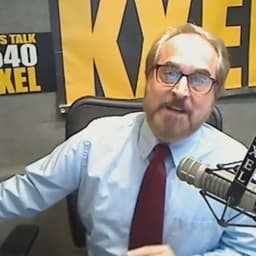
KXEL Live & Local with Jeff Stein · Wed Oct 7, 2026
And as KXEL Live and Local continues on this Wednesday morning, a conversation you're hearing now, we recorded it yesterday afternoon, just after the announcement was made of the new data from the Iowa Business Council, their third quarter economic outlook survey.
And I'm joined via Zoom by Joe Murphy.
Mr. Murphy is president of IBC, and he joins us from their headquarters in downtown Des Moines.
Joe, always good to talk.
Great to be with you Jeff.
Remind people who may have missed prior conversations.
The Iowa Business Council, who are you folks and what do you do?
The business council, the Iowa business council is a business association made up of some of the largest companies in the state of Iowa and our whole mission is to enhance Iowa's economic vitality for every single Iowa and we do that through economic research like what we'll talk about today.
We have a robust advocacy portfolio as well and then we engage in thought leadership opportunities across the state, visiting with roadways, chambers of commerce, other leaders across the state to
bring a message that business is a force for good in our state.
And I think it's important that we remind folks about that and remind folks about the sheer force that Iowa businesses do to enhance living conditions in our state.
Each quarter, you survey your members with a look toward the next six months.
So you've just completed this.
It is the
Third quarter survey and it looks ahead through the end of this year into the first three months of the next year What's the headline this time out?
I think the headline here today Jeff on our on our third quarter economic outlook surveys that we continue to the business council continues to exhibit resiliency in the face of really difficult circumstances and situations not just in Iowa but across the Midwest across the country and frankly across the world and so
Our survey indicates that we are once again projecting a positive economic outlook for Iowa over the course of the next six months But if there's a little change from the previous quarter, but I don't think that's necessarily bad, right?
I think I think a steady as she goes approach is prudent at this point in time And again, I think that that speaks to the resiliency of Iowa business council members and their ability to Do their job
it would appear that with
A fair amount of volatility all across the world in a variety of contexts.
It speaks to the business nature and the attitude of those running these Iowa businesses that they've insulated themselves just enough so that they are not subject to the very high highs, the very low lows that some other businesses find themselves in.
And when one thing goes out of line on the global stage, then they have a problem.
That's not the case with these folks.
That's not what we're seeing.
You know, certainly there are some industries that are more impacted by others, of course.
But by and large, you know, business council members have done an exceptional job of being cautiously optimistic about the future, but also at the same time taking the opportunity to invest strategically in their companies and their people and really project a positive way forward, which will enable
our members and in other businesses across the state to really come out of this this time in a much more strong position than probably some of our other sister states around around the Midwest
a lot of these companies the 22 members they work in Iowa many of them National many of them global and so again it speaks to the broad base of Business planning that they've engaged in
because it's not just living and dying by Iowa, and that's just a prudent course of action anyway.
In essence, hedging to protect what you're building from any outside influences to the extent that's possible.
I agree with that and I'd also say too that while you mentioned you know our members are the 22 largest companies in the state and they have national reach and international reach keep in mind these 22 companies of the Iowa Business Council have really strong ties to every every county in the state of Iowa they have business relationships of many small and medium-sized and other large companies all across our state so I do think it's reflective of the general state of the economy in Iowa again
Not necessarily where we want to be.
We would like to see less tariffs.
We'd like to see fuel costs decrease, obviously.
There's some weather challenges right now that we were just talking about.
But I think, again, and I, to the future, we're a resilient bunch.
And I think that's one of the good things that we have going for us at this point.
Three different categories are measured in the quarterly economic outlook surveys.
Sales, capital spending, and employment.
pretty stable as you indicated from when we talked about this three months ago.
Capital spending though had the biggest change.
It did have the biggest change.
That led the total increase, safe to say.
So we're up by just over three index points from the previous quarter to a value of more than 67 points.
And again, Jeff, I know you know this.
Anything above 50.
represents a positive outlook so the fact that we're well above that 50 point threshold for capital spending expectations clocking in at more than 67 points I think speaks to that resiliency but then also indicates the fact that that's a that's a key factor for future growth in our state and the fact that that's one of our stronger increases this this survey I think is indicative of of where Iowa business council members
are putting their time and energy, thinking about future growth, thinking about where they can expend capital to position their businesses in the best possible place moving forward.
And I have pointed this out perhaps more often than is necessary, but it seems to me that if these people were worried about the future, they'd sit on cash, they'd hold reserves.
But when you see capital spending,
Real live money going out the door with the expectation that it has a multi-year return on that investment that really shows confidence in the future does it not?
It does and so we're seeing a number of our members you know actually saying we're going to increase that capital spend expenditures within their companies and then even those who aren't saying they're going to increase their spending they're holding steady from where they were previously so we're not seeing
you know, on a negative side, you know, if you can call it that, we're not seeing people pull back on that spending, which I think is important, right?
You know, if this were a really bad situation, you would see that number decline and you would see companies pull back on those sort of investments.
We're not seeing that.
And again, I think that's what is really important to point out here speaks to the resiliency of our member companies and speaks to the resiliency of Iowa's economy.
Joe Murphy is president of the Iowa Business Council.
They're online, iowabusinesscouncil.org.
Yesterday they released their third quarter economic outlook survey projecting what we might expect in business for the next six months.
He's kind enough to join us on News Talk 1540, KXEL.
So capital spending increased the most.
But your sales category, even though it was plus or minus and a little bit down, that's still the highest of the three categories on your metric, where 50 is your fulcrum point.
Sales are way above that.
Well, above that.
Again, in the 70s, just north of 71 points down by about a point and a quarter, just over a point there from the second quarter survey score.
I'm not going to quibble with that, Jeff.
You know, we're down a little bit, but that's one of the highest points we've seen in this survey's history.
And, you know, similar to capital expenditures, the fact that our members are expecting sales to be, you know, so positive over the course of the next six months, I think is it provides good insight into the demand that's out there, the maybe even the pent up demand that people are hoping to see.
Iowa products and Iowa manufacturers.
So I do think despite the fact that it's down ever so slightly, you know, marginally by about a point and a quarter, well above that 50 point threshold and still a lot of positive momentum with respect to sales.
And to your point, it was sky high when
we talked
three months ago.
And so if it's anywhere near 70, I mean, again, that's way above the historical averages.
The Employment Expectation category, that took just a little bit of a hit as well still in the positive realm, identify those numbers for me and then give me a sense of whether that is because of need or ability to attract people because those are two very different things.
They are different things.
So yeah, the Employment Expectations did decrease by just under two points.
We're sitting at about 56 and a half.
index points again well above that six and a half points rather above that 50-point positive threshold.
So still positive.
That being said, a slight decrease and we've seen decreases quarter over quarter now with some consistency.
And again, what I see here is that companies aren't as hiring as much as they were previously.
And I also think we're seeing companies not necessarily replacing individuals who decide to leave the company for another opportunity, maybe with another company around the community or the state.
So we're not seeing terminations or layoffs, but we are seeing a hesitancy to
replace individuals when they decide through their own choice to move on to a new opportunity outside of the company.
I also think there's still a concern from where we sit on just the amount of people that we have available in this state.
We continue to see our labor force participation while still high from a national average perspective.
Pretty low.
When you think about Iowa's history, we're still at about 67, 67.5% labor force participation rate in our state.
Again, as a reminder, around COVID, just before COVID, we were right at 70%.
So the fact that we still are a bit low from our high point there before COVID, I know things have certainly changed dramatically since then.
But Iowa is not blessed with a giant population base, right?
We've talked about this many times before.
less people that are participating in our labor force, the more constrained our businesses will be to attract that talent.
And so we have to look elsewhere.
So that's why we're very strongly in support of, you know, immigration reform at the federal level and trying to bring in new lines from other high cost states around the Midwest and the, in the broader United States.
We need more people in this state to grow, not just our population, but for our business opportunities as well.
And you folks drill down into the data each time a little bit to see what the
Members feel are the biggest challenges and here we go again.
58% of your members say attracting and retaining that quality workforce is their top challenge.
It just makes
the
point you just mentioned.
Yeah, you know perennial top three business challenge for us.
I think for as long as I've been with the business council going on seven years now, that's been, you know, at least number one or number two.
most difficult challenge that are facing our members.
And look, that will continue to be the case, not to give a spoiler for our fourth quarter survey in January, but I suspect that that will be a similar story in the next three months.
Joe Murphy is president of the Iowa Business Council.
You can read all of this data compared to the past, et cetera, by going to their website, iowabusinesscouncil.org.
The third quarter economic outlook survey released yesterday
Now we're talking about workforce and one of the things that the Iowa Business Council had been championing in the past was a mega law and this has to do with economic development on a big scale and you got that across the finish line.
The legislature met in special session this past week because there needed to be some amendments to it because the scope of the project that was being brought in
exceeded even the expectations or anticipations of that original law.
Give us a sense from the Iowa Business Council standpoint, your view about how the mega law was used with regard to bringing this new steel mill to the state.
Yeah, you know, a really exciting opportunity for our state and for the potential of a massive investment.
And, you know, we talk in superlatives a lot, right?
You know,
huge investment, transformational, all of those things.
The fact is, this will be the largest investment in United States history of a steel plant this size, right?
And it's going to be landed in Iowa.
This is objectively a good thing for the state, right?
$15 billion of investment.
supporting 6,000 construction jobs to create the facility, more than 1,700 permanent jobs.
That's just the direct benefit and the apparatus around the facility itself.
Think about the multiplier effects that this will have to the broader community in Southeast Iowa, restaurants, hotels, supply chain opportunities for new companies to start up to supply this brand new facility that will be built.
So it's very exciting, right?
We have a long way to go.
Look, the MEGA program, the major economic growth attraction program, which was amended last week in special session to try to close the deal on this opportunity is a tool in the Iowa Economic Development Authority's toolbox.
This is designed to close deals and to close gigantic deals, right?
And this certainly qualifies.
And so yes, there are significant tax incentives,
that will be offered to this company.
And it has to be approved by the Iowa Economic Development Authorities Board.
And then there's a series of performance metrics that this company must achieve before they receive one penny of taxpayer dollars.
And so while the headline right now is $15 billion plant and $1.3 billion of incentives of Iowa taxpayer money, no doubt, going to that potential company, I think it's important to point out that
This is a once in a generation sort of opportunity for a state like ours, number one.
Number two, these dollars will not be invested into the company until the company is constructing the plant, meeting their performance requirements as required by the law.
And if they don't reach those numbers, if they don't hit that $15 billion of investment, or if they don't have those 1700 permanent jobs, they won't get as much money.
And so there are a number of safeguards in place here.
And I think the Economic Development Authority, Director Durham did an absolutely fantastic job talking about the merits of this project last week.
And I'm excited about the future.
It won't be online until 2030, so there's a long way to go.
But this has the potential to really usher in long-term sustainable economic growth and development, not just for Southeast Iowa, but for the entire state.
Correct me if I'm wrong, but there are folks who are critical of big projects or of government incentives government provided incentives and they will point to this plant that failed here this plant that didn't get constructed there my understanding is that Iowa sort of went to school on the things that did not go well elsewhere and so our Procedures have these guardrails these safeguards etc in place to help
prevent being used as a negative example in the future, correct?
I mean, we kind of, as I said, went to school on what these other folks learned.
Yeah, right.
I mean, we have safeguards and performance metrics and things that must occur that the company must do before they receive a taxpayer dollars, right?
And there's a series of steps and tranches that the company must perform on as they sort of stair step their way to total investment.
And as a result,
you know, I think you can argue it's accurate to say that the taxpayer here, you know, is protected.
And I think also, you know, look, this passed with strong bipartisan majorities, right?
You know, there was 78 votes in the Iowa House.
So we had great, great bipartisan support in the Iowa legislature.
And I think that that's a good sign for things to come.
It's not like there's a big cardboard check that is immediately given to a company.
It is a matter of you earn it as you go.
No different than I earn a paycheck.
They don't pay me five years of salary all at one time.
Right.
And I would add to Jeff, we just talked about the population struggles of our state.
And we really view the MEGA program as a population growth strategy tool for the state.
We're going out and trying to attract gigantic companies to invest in the state.
And that investment will bring in more people.
And that will increase our state's population and set us on a positive.
trajectory on all sorts of things, not just investment in dollars, but people, literal people coming into our state, moving into our state.
And it also indicates that Iowa is open for business.
And that's a good thing, right?
Our regulatory structure, our tax structure, we've made significant improvements over the last several years.
And companies around the country are seeing that and then exploring the opportunity to come home to Iowa.
Positive outlook from the nearly two dozen Iowa Business Council members for the next six months.
Joe Murphy, President, Iowa Business Council.
Thanks for sharing the good news and the good data and we'll talk again sooner than later.
Sounds great.
Thank you,
Jeff.
And Joe connected with us via Zoom from Des Moines yesterday afternoon so you could hear the conversation now on a Wednesday on News Talk 1540 KXEL, where Iowa comes to talk.
The Eagle has landed.
We are joined now by Eagle Ed Martin, most recently, pardon attorney in the Trump administration, formerly with Phyllis Schlafly's Eagles.
Ed Martin, thanks so much for the time.
How are you, sir?
I'm doing great.
Always good to be with you, Jeff.
I'm glad to hear your voice.
I'm happy to talk with your great, well, Todd's great listeners.
Well, and again, you're speaking to folks across the Heartland, your legal career and activism was based in Missouri, right here in the Heartland as well.
I've heard a number of reports as to why you opted to leave the pardon attorney role.
So I'll let you tell us what you're
doing now
and why you made the switch.
Well, you know, what I'm doing now is maybe most exciting.
I left and became a senior fellow at the Center for Renewing America.
which is the think tank that Russ Boat started.
He's now the head of OMB, the budget director for President Trump.
Russ Boat is amazing, probably the most valuable cabinet member.
He's just an amazing guy.
So it's a very cool think tank, really on the front lines of what I call MAGA conservatism, really getting after things.
So I'm really proud to be doing that.
I am doing some law, I'm practicing law.
I'm also doing some media.
But why I left, I served over 18 months for President Trump.
It was a sprint.
It was really important work.
We did a ton of stuff.
But part of the reason I left was because only four weeks from tomorrow, we have an election.
And I left about a month ago to go out and make sure people knew how much we accomplished, how much we've worked at it, and how important it is to get out and vote in the fall, in November, in the midterms.
There's always more to do.
And Phyllis Schlafly, she would say, you never give up.
You never stop because there's always the next thing.
There's always the most, you know, on the most important issues like pro-life and I'm not protecting the Constitution and even military superiority.
You never stop working, but you do have to sort of count your blessings.
And this president has allowed so many good people and so many good things to happen.
It's just so important to keep talking about it.
So that's what I've been doing a lot of.
And it's also, I think, it's really fun and powerful to work for the government.
But it's also tiring.
And so I felt like it was the right time to leave.
And no one would contest that this president keeps a schedule that would make
anyone
blush.
I mean,
holy
cow.
And you're a pretty good worker yourself, I'd have to say, based upon your background.
But I saw a report that you were
To some degree, positioning yourself that in the event there were shenanigans in some of these states around the time of the election, you could be dispatched or you could connect with people to make sure that the votes are fairly counted.
Is that perhaps
part of what might come?
Well, the timing, certainly, when I was leaving the president was, I had already been working in the position I was in with some of my colleagues in election integrity.
It's always something I cared about.
And the president said, you've got to keep working on that.
And that's exactly right.
I mean, the RMC has a really capable guy named John Sweeney, the former congressman.
He's the head of the sort of
um election integrity unit which is a lot of getting staffed up to have people on the ground but you know even as we speak there's a meeting going on in the Oval Office I can kind of break a little news with some key folks on election integrity I'm not in the meeting but I helped prep the meeting about how do we go forward when we know we have some problems with the voting machines and and so yes diligence you know you mentioned my background I was the chairman of the board of elections in St.
Louis 20 years ago and when you learn how elections work
you know, diligence in elections is never ending.
And there are two aspects to it.
One is you got to run a good system.
And that's a hard thing to do on an election.
It's like running the Super Bowl, but you only get to do it twice a year.
You don't get to play any other games.
It's really tough.
And so that's one thing that the system is hard to do.
The second thing, though, is you have to be talking about it in a way that gives people confidence.
And that means identifying what the problems are, fixing them, saying how they're going to be fixed.
And I was pointing, Jeff, to a post on X I made,
There's a letter that came out less than a little bit more than a month ago now that says the voting machines have parts that are from China and other foreign countries, and therefore they're not secure.
And this is Secretary Mullin of the DHS.
And he basically said, any state that needs to fix that, because it's a real problem, he's got a billion dollars on the table, and he'll come in and fix it.
You can change your system.
You can vote by paper, ballot, handmarked, whatever.
And so.
that's the kind of stuff that we've got to get more people to be aware of, and that's breaking today, even as we speak.
I saw you posted on the Twitter X machine this morning, and I found that to be fascinating because in states like, like where I am, I'm in Iowa, we run fair elections and even the Democrats have to admit that that's the case, probably to their chagrin.
But we don't understand, we have voter ID, we have paper ballots, we have audits, we don't understand all of this dust up in some of these states.
But holy cow, election machines with parts made in China?
What could possibly go wrong, Ed?
Yeah,
exactly.
Exactly.
When you say anything that allowed, Jeff, you kind of shake your head.
You can't believe it.
But I mean, again, you know, I just was doing a segment talking about this.
Politics is what's possible.
You know, we have to figure out what's possible, meaning it makes you crazy if you shake your head and say, how can we have any elections that work?
On the other hand, what we know is where Iowa has done a pretty good job.
Missouri has done a better job.
Some states are better at it.
I think Florida has done a really good job.
It's the risk by getting rid of some of the worst factors, like mail-in ballots and ballot-harving.
But it's diligence.
It's diligence in the face of what can only be described as malfeasance, people trying to steal the system.
But I agree with you.
I can't believe it.
Look, when I was running the elections, they would say things like, elections can't be hacked.
And the answer, of course,
Let's skip it if you don't plug them into the wall.
But if you plug them into the wall, they can be hacked.
If you're in the system, they can be hacked.
So you've got to really how to predict things.
And again, all this talk, I was really interested, Jeff, to see a report in political, I think it was.
I don't really trust that political, but I did trust the direction of this.
More Democrats not voted mail-in because they're worried that mail-in is not secure.
Well, they ought to be worried about that, and that's progress.
and we all ought to be saying it's not uh... uh... not secure enough and therefore why don't we vote on election day
well it's my pattern uh... i don't care what i'm gonna vote and get my little i voted sticker and i'm gonna watch the ballot go into the machine he's ed martin and he joins us on the patriot mobile newsmaker line todd star and show jeff stein filling in for todd todd is back tomorrow now one of the things that with regard to elections that that i found interesting is that
You know this is a what have you done for me lately society unfortunately in 2026 and you mentioned at the start of our conversation that you thought it was important to remind people of what this president has done with an awful lot of headwind thank you much.
What are some of the things that when you go out and talk to people and remind them of some of these accomplishments that they kind of look and go oh yeah that's right I forgot about that.
Well, you know, one of the things that's coming up now, and I point to it, is the USAID, the so-called DOGE effect of USAID, when hundreds and hundreds of millions of dollars was no longer funneled to these foreign organizations that we had no control over and no real accounting of, that's what DOGE did.
And people sometimes look back and they say DOGE was chaotic and DOGE was this and DOGE was that, all around the world.
They're having elections now.
They had one of Brazil a couple days ago where the elections look like they're more fair.
They look like they're more the will of the people.
And I have to say, it's largely in my mind because there's not hundreds of millions of dollars being sloshed around in Latin America and South America and in other parts of the world from our tax dollars where we couldn't see it.
That's a kind of known play in the playbook of the left.
So that's an example of things, by the way, that those... Look, I was here as attorney at the time, the first 60 days.
Actually, I was there 120 days.
But the first 60 days, I tell people, we fired more prosecutors who were lately unfair to the citizens.
We dismissed cases.
President Trump hardens all the J6ers, all of the pro-lifers.
He pardoned cops that were burdened by these things.
He just turned the government upside down.
Virginia, in many ways, is now a blue state because President Trump
got the workforce, government workforce, down to the lowest it's ever been by percentage.
And he did that in 60 days or maybe 90.
So all this kind of progress, building up the military, getting rid of the DEI stuff shouldn't be lost on people.
You know, it really had to remember the education department.
For decades and decades, Republicans said, we'll get rid of the education department.
Linda McMahon is actually getting rid of it completely.
But in other words, Trump did it.
So.
There's example after example.
Another one, by the way, my wife brings it up all the time because she thinks it's so important is the reinvigoration of NASA so that we are not trailing the Chinese on getting into space where there's going to be real serious issues and value.
So there's like one after another.
Do I wish the economy?
The economy, by the way, is really strong.
Do I wish that inflation was further down?
Yeah.
But you can't spend as much money as Biden did, trillions and trillions.
and get it down in just a year or two.
You know, do I wish gas prices were lower?
They're coming down, right?
So there's things that could be better.
But in general, directionally, I think people are very satisfied that immigration, I mean, there was pulling out this weekend that said that Hispanic Americans support President Trump's positions on immigration by a majority, I think it was, because you got to play by the rules, right?
So sealing the border and playing by the rules is
It's surprising to admit it, Jeff, but that's big progress.
And we had to do that because the previous administration was so far off.
I've only got about 60 seconds.
I work in radio.
It is not my business to tell people to watch TV.
Other than to say you can watch the Todd Starn Show on Newsmax too, weekday afternoons, five Eastern, four Central.
But you are now the early bird.
Uh, eagle ed martin, uh, tell us about the new thing that rolled out today that we can see replays on rumble on if nothing else.
Yeah, exactly.
That's right.
Uh, at five a.m.
each post time.
So crack a dawn out where you are, Jeff, but I do a show and the show is called the early bird.
It's an echo of two things.
One, uh, the early bird gets the worm, the great phrase your grandpa said to you, but also in the 1960s, 70s, 80s, 90s into 2000s.
There was something called the early bird.
It was an email.
It was a fax before there was a document in the Department of War defense at the time where they found talking points on what was key, what was important.
So every morning I'm going to try to drive the agenda for the day.
And it's on RAV, Real America's Voice, which is a rocket ship going up, up, up.
And so as people, as you point out, you can you can watch if you can get up early enough.
If not, go on social media and we will have all these segments.
I have a segment called name and shame.
where I talk about the people that are really, really bad actors in this country and that they should not only be held accountable, but they should be known and shamed.
So lots of different things, great interviews, and I hope people will check it out.
Instagram and X at Eagle Ed Martin.
Mr. Martin, it is always a privilege.
Love the energy.
Love the accomplishment.
We'll talk again sooner than later, sir.
Thanks, Jeff.
God bless you.
News talk 1540 KXEL where Iowa comes to talk a former professional football player leading a secret mission to misdirect the Axis powers during World War two.
It's a story that you may not know a story.
Historian Jason Bell recounts in his new book that's just out Operation Sparrow, the incredible true story of the spies who tricked Hitler and won the war.
We're joined by Jason Bell now.
He's an Iowa native.
Thanks for.
being with us.
Thanks for having me, Tim.
So I guess the basic question we need to start with is, what was the mission?
The mission was the only one of World War II designed to be captured by the Nazis to feed them misleading intelligence about where D-Day would land.
So did these three men, including former New York Giants football player Floramund Duke, did they know that...
They were supposed to be captured.
Did they go into this thinking that they were supposed to be doing something else and that supposed to be captured circumstance was something that was only known at a higher level of military intelligence?
They knew that the mission was supposed to be captured.
So the leader of the mission, Floormond Duke, the New York Giants player you mentioned, he was top brass with OSS, the Office of Strategic Services, which is today's
CIA and army special forces rolled into one.
So he helped plan the mission.
And the idea was they were going to jump over Hungary, which was allied with the Nazis.
And the protocol for people captured in Hungary was that they would be interrogated by German intelligence.
So that was the upshot of the mission to be interrogated.
So we're talking about 1944 and just
Set the scene for us when it comes to World War II at this particular moment.
What's happening as you alluded to D-Day had not happened yet and that's again key to this whole mission is that this is trying to misdirect attention from where the D-Day landing would be.
Yeah, so the basic problem that Allied planners faced was that Hitler had 8 million German troops in Europe and only 150,000 Allied troops could land on D-Day.
So Allied planners needed to make sure to get those German defenders somewhere else.
So the Allied deception planners created Operation Bodyguard, which was the deception mission to keep German troops as far from Normandy as possible.
So it came in two stages.
So stage one was to trick the Nazis into thinking that an invasion would happen in southeastern Europe, about a thousand miles southeast of France in the spring of 1944.
And then Stage 2 of Bodyguard would convince them that it was going to be closer to the Belgian border, north of Normandy, as the real D-Day approached.
So Operation Sparrow was the kickoff for the whole campaign.
It was the first major mission designed to attract Hitler's eyes to southeastern Europe.
We're talking with Jason Bell, author of a book that's just out within the last week or so.
Operation Sparrow, the incredible true story of the spies who tricked Hitler and won the war.
I'm sure a lot of our listeners this morning are at least somewhat familiar with D-Day.
They may be familiar with what was happening in Italy and North Africa in the years leading up to the end of World War II.
Might be familiar with the Russian front in the east, but there's not
Ben, it seems like a lot of popular knowledge that has continued to come to us about what was happening in the Balkans and southern Europe.
And can you kind of tell us a little bit about what the situation was there and maybe reflect on why that's a theater of World War II, especially by 1944 that has not gained as much attention historically?
Yeah, well, the main reason is not what was happening in World War II, but what followed World War II, the Cold War.
So Southeastern Europe came to be dominated by the Soviet powers.
So phase one of bodyguard took place in what came to be the Soviet sphere.
Phase two of bodyguard happened in Northwestern Europe, which became comfortably democratic.
So your listeners who are World War II buffs will know the Northwestern story.
So this is the Podekalai deception, the double cross operation, patents, fake armies, and so forth.
After World War II, well, even that was kept classified for a long time, but the Northwest phase was popularized and celebrated in the 1970s.
But of course, the Cold War was still going on then.
And so Operation Sparrow and the Southeastern deception was swept under the rug.
So these three Americans are dropped off in Hungary.
They parachute in.
What happens next?
They're captured, obviously, which was the plan, and take us through at least the quick summary of how Operation Sparrow progressed.
Well, the shocking fact of the mission was that Hitler's spies learned that the Sparrows were coming, and then the OSS learned that the Nazis knew that they were coming and decided to go forward with the mission anyways.
They still thought, the American side still thought that they would probably have some time to complete the mission.
And so the mission not only involved tricking Hitler about where Didier was going to come through, but it also involved switching Hungary from the Axis team to the Allied team, which the Hungarians wanted to do because they figured that Hitler would lose the war at that point and the Hungarians hoped to stave off the Soviet invasion.
And so this was approved at the highest levels of Hungarian politics, American politics.
President Roosevelt signed off on the mission.
But what nobody on the Allied side knew was just how much Hitler knew.
And so he prepared what became the last blitzkrieg of the war to invade Hungary and stop these three Americans.
So he sent in over 100,000 troops in addition to heavy artillery and airplanes to stop these three guys.
And so this invasion happened three days after the spirit was landed.
Hungarian intelligence had themselves been surprised about this invasion, but they hid the Americans.
for nine days so that they could get their stories straight.
They could coordinate both with Hungarian intelligence and the three sparrows could practice being interrogated by the Gestapo.
So this is when they were able to really make more concrete their deception plan, just like what they would say and when they would say it.
We're talking with Jason Bell, author of a recent book, Operation Sparrow, the incredible true story of the spies who tricked Hitler and won the war.
It's just out and Jason Bell is an Iowa native and let me come back to this.
So Hitler knew that Allied forces were trying to flip Hungary and change the trajectory of the war in that way.
But in terms of the intelligence, he didn't necessarily or maybe at all know about the misdirection.
effort that was going on with this is that right
that's exactly right so hitler saw half of the the story but not the whole story so that's what os s figured could make this mission still work uh and again these the three guys who went in knew that hitler knew uh the overall plan so they knew that they're going to get captured interrogated
They did not, however, know in advance that they were going to get interrogated with 100,000 German troops surrounding them.
They thought it was going to be maybe a slightly more genteel arrangement where they were going to be interviewed by German military intelligence in Hungary rather than by the Gestapo armed with submachine guns.
So I don't want to give away the important parts of the book that you really want to tell in a full treatment, but I think the question comes to mind for me and probably for a lot of us, how the heck did these three guys get out of there alive?
Well, there
was a
lot of luck involved, but there was also a lot of loyalty.
So there were Axis intelligence officers.
Again, these were people who wanted Hungary to be able to escape the Nazi grasp.
And they were really the first ones who kept the Sparrows alive by keeping them hidden for these nine days.
And they handed them over to an anti-Nazi German intelligence agent who worked to put them into the right spot.
Despite all of this, the Gestapo found out where they were.
They called this anti-Nazi intelligence agent off to Italy, and then the Gestapo rushed in and captured the three Sparrows and brought them
to underground prison in Belgrade to kill them the next day.
But then the Air Force intelligence major, who was an anti-Nazi, came in, told Flormon Duke that he needed to ramp up the D-Day story.
And then he called up his Air Force High Command and demanded custody.
So a custody fight began.
The German army got involved.
The Hungarian government got involved.
So suddenly four groups of people were trying to get the sparrows back At the Gestapo kept on insisting that according to Hitler's commando order they needed to be executed But the army and the air force said the Americans needed to be kept alive so that they could give D-Day intelligence
Well, you already alluded to the fact that this was happening behind what would become the iron curtain in the years which followed, and so a lot of this is information that didn't get out.
Could you talk more about why this was worth classifying for so long?
Were there reasons that the descendants of the OSS wanted to keep this quiet, maybe even for tactics that they might have considered using again?
Yeah, the main reason really is that the pro-democracy, pro-western Hungarians who were opposing the Nazis were the same ones who opposed the Soviets.
So this was an active group of people.
First they were oppressed by the Nazis, then they were oppressed by the Soviets.
A lot of them were killed, a lot of them had to flee abroad, but there always remained this core who remained.
So a little known fact about the end of the Cold War is that it was actually Hungary that was the first to pull the plug on the iron curtain.
Berlin and the rest of it didn't come until later when Germans were already escaping through Hungary.
So this was an active group of people who really favored British and American-style democracy.
And to keep those people safe, it just became better to keep this under wraps.
Well, finally, Jason, again, this is an untold story from an era that there's tremendous fascination about World War II and how everything transpired with, again, stories like this that are still coming out 80 years later.
Where do you hope to take this story?
Who do you want to hear it and what's your goal with the release of this book?
Well, my goal is as many people as possible can read it because it's a story that just makes me as an American proud as heck that there are people like this.
All three of the Sparrows were volunteers.
They had professional careers before and after the war.
They weren't professional soldiers.
They recognized the danger and the evil and Nazism and they stepped up.
So I think we get inspired by reading real life heroes and it also I think inspires us when we're walking down the street and we see people walking by and I think
We can easily picture those would be heroes if we needed them.
Another key thing I want readers to get out of this, especially during election season, is that the Sparrows represented the left and the right wing of the political spectrum.
So they were Democrats and Socialists and Republicans.
And they didn't always agree on politics, but they decided that they could work together anyways to defeat the Nazis.
Jason Bell, author of the new book, Operation Sparrow, the incredible true story of the spies who tricked Hitler and won the war.
Thanks so much for being with us.
Congratulations on the release of this book in just the last few weeks, and we'll hope that the audience is out there to take this story and learn so many potential lessons from it.
Thanks so much for having me, Tim.
I'm happy to talk to you and your Iowa listeners.
This is the station where Iowa comes to talk.
News Talk 1540 KXCL.