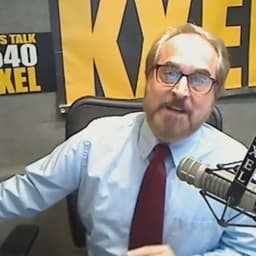
This is Iowa Talking Points, the candidates.
Produced by Studio 5 at Mud Advertising and totally Iowa Media.
Where you hear from candidates in the November 2026 general election.
Now Iowa Talking Points, the candidates.
From Studio 5 at Mud and Cedar Falls, here is Jeff Stein.
Hello and welcome.
The treasurer of the state of Iowa is the chief financial officer of the state.
When you go to vote in the November General Election, you'll see two candidates on the ballot.
One of them joins us here today.
He is the Democrat running for Treasurer of State, John Norwood.
Mr. Norwood's website is norwood4iowa.com.
That's the number for norwood4iowa.com.
Mr. Norwood, thank you for taking the time.
Jeff, it's great to be here with you and your viewers.
Talk about the office of the treasurer.
There are various things that are mandated by law, but there are also things that each individual holder of the office can
put a little bit
of
their own stamp on the office, your sense of what the state treasurer should.
Yeah, that's a great way of phrasing that.
Well, the first thing I like to tell our audience is it's really not a red or a blue office.
I like to say it's a green office.
We gotta be focused on the money and how we make that money, the Iowans money work harder for the state and for Iowa families and their communities.
What are some examples of how you might do that?
Yeah
to make the state's money work harder for this?
Yeah, well, and there's you know, there's three hats I like there's more than three but there's three hats that the treasure wears and we could talk maybe an example of the first the first hat which is the state's banker the treasure is the state's banker and so as the state's banker the treasures responsible for
managing the money that's coming into the office, the taxpayer money, the money that's going out of the office.
Some of that money needs to be parked and invested for a period of time and we want to make sure that that money is invested wisely and safely.
But also I think we need to think about where does that money get invested?
It might surprise the viewers.
It certainly surprised me as a lifelong learner to learn that a percentage, a large percentage of the money, short-term money, for example, the money we give to our schools and to our municipal governments, some of that money gets pooled.
That's a good thing.
But the pooled money is then more than a majority of the pooled money is going out of state.
Two and a half billion dollars is being pooled between those two groups and a percentage of that's going out of state.
Why does that matter?
Well, on one hand, we're chasing a return, but in addition to the return, we have to pay attention to where those deposits are going.
So if those deposits are leaving the state, essentially that's capital that's being used to grow somebody else's economy, not our economy.
So what should we be doing differently?
We ought to be thinking, how do we keep that money here in Iowa working with our banks and credit unions?
Why is that important?
because where those deposits land matters.
Banks and credit unions make loans based on their deposits.
No deposits, no loans.
Why are the loans important?
That's an incredibly important source of capital for our Iowa businesses if we want to create...
more jobs, if we want to create new growth businesses, if we want to add more housing, these are all affordability and economic growth issues.
Well, that money, staying in Iowa, will help magnify the growth of that using that capital.
How is it?
that we started sending our money to other
places.
And
is this a recent phenomenon?
Can you try the
origin of that?
Yeah, I think some of the history is important.
I think the amount of this money has grown.
One of the challenges, I think, of investing money wisely is to have the systems in place and able to do that.
So we want to make sure that the money is protected.
There's some scaling advantages, some of our banks and credit unions, they're
not
the size of some of the bigger banks or the U.S.
Treasury and so forth.
So convenience, I think, was one of the factors that has led to the fact that the money is going out of state.
A lot of the money is going out of state and there's well-developed markets.
Well, maybe we have to work a little harder.
to figure out how to keep the money here in Iowa and working with her banks and credit unions to do that.
So it's not necessarily that it's an easy thing to do.
These funds are doing some of them, keeping some of the money locally, but I think we need the banks and the credit unions I've spoken to are interested in doing more of this.
So let's help them do it.
Let's help them figure it out.
Was this something that started in the tenure of the current treasure or is this a decade?
I think this is a phenomena that's been going on a long time.
But as the amount of capital has grown, it's become more visible.
And so people start to pay attention to shiny things that have more money.
To your point, when you've got a larger amount of money, it makes a bigger difference.
So let's say that you're the next state trader.
What do you do as a starting point to help those banks and credit unions in Iowa?
Yeah, well, the first thing we do, I think, is raise the visibility of the issue.
And as a treasurer, as a candidate for office, one of my jobs, one of the reasons I'm on the campaign trail 30,000 miles since February, almost, talking to Iowans all over the state, is leadership starts with listening, being a good listener.
And I think as being a good listener, you start picking up on the pulse of what's happening.
And this is an issue, I think, that the legislature had some attention to in the spring.
And I think it needs to be amplified.
And we need to understand the cost and the benefits.
Maybe on one hand, we think, oh, we just want to go seek the highest return.
Let's go send the capital overseas.
Maybe we can get a better return over there.
Yeah, but we have to pay attention where in the state hat to where those deposits land.
to understand how capital works here in our own economy.
So I think we got to start, it starts with listening, then it starts with building coalitions.
You know, I don't get to decide these issues on my own.
I can surface the issue.
I can ask really good questions.
Ultimately, it's the legislature and some of the other partners we need to work with.
We need to work with the banks and the credit unions.
We may be the pooled funds.
We should be working with them and say, hey, how can we keep more of this money in Iowa?
We would like to do that.
There's a benefit for us doing that.
And again, there is a balance, I assume, because, as you said, if you chase the greatest return, well, on paper, that looks good.
Yes.
But should the state sacrifice a little bit of return because of the fact that you've put it in
a
bank in West Des Moines, and they've been able
to
fund building,
et cetera, et cetera?
This could be a very inexpensive form of economic development is what you're getting
at.
And yes, we have to understand the differentials if there's a little bit of a trade-off.
return a few basis points.
Well, that might be in the state's interest to figure out how to make that, you know, make up that difference.
So one of the jobs of the state treasurer is to be the state's banker.
What are
some of
the other ones?
Yeah.
So, you know, the state, I mean,
By nature, I'm a financial educator.
So I spend a lot of time, my career, working with businesses and organizations and helping them better understand financial issues.
The treasure, I believe, one of the fundamental roles of the state's treasure is really to be the advocate and the fiduciary.
for the people of Iowa and I mean it's hard to think about a policy issue or another you know sort of state-level matter that doesn't have a financial implication to it getting back to the point that let's not view this office through red or blue lens let's think about you know the green lens of what does it mean from a fiscal financial fiduciary responsibility a second hat we talked about a little bit about the banker hat
second hat
is really a pension fiduciary hat
And so the treasurer sits on the IPERS, the Iowa Public Employee Retirement System Board of Directors, one of seven voting members, the only directly elected member by the people of Iowa.
The other six are appointed by the governor.
IPERS, the first thing I want your viewers to understand is the importance of IPERS.
The importance of IPERS as a recruitment and retention tool for the 420,000 members.
that are islands that are part of the Eipers family.
This is our teachers, our corrections officers, our municipal employees.
It's one in eight islands is a member of Eipers.
So obviously that's got breadth across the state because you're talking about the R in Eipers is retirement.
Yes, yes.
And so Eipers is an important recruitment and retention tool for helping attract these teachers, for example, that may have a 20, 30, 40.
Your career and you know, they're not looking to have the biggest house or the fanciest car But they want to know after they've retired that they're gonna they're gonna have a reliable source of income and that's what diapers provides for them and if they happen to live to be 95 or 105 they're not gonna run out of money That's one of the benefits the beauty of a public pension system.
You don't have to be a financial genius and make all the right decision
you know, if you're sitting on top of a 401k.
So that's one aspect of IPERS that's incredibly important.
Another aspect of it, we talked about as money grows in size.
Well, IPERS has grown into a fund of $46, $47 billion now.
It's in sort of a mid-sized fund at the state level.
That's incredibly important.
The fund is supported by contributions by the employees and then the employer contributions.
That's a good chunk of this money.
earnings on the fund.
Well, the fund pays out about two and a half billion dollars each year almost to Iowa retirees.
Those retirees are sprinkled all across Iowa.
They're an important part of the economy, the spending in these communities.
So we don't want to privatize Eipers.
We don't want to weaken Eipers, I would argue.
In fact, it's a competitive advantage for the state.
Corporations have largely sort of, you know,
migrated away from public pensions and recently had a coffee with a former CEO from Des Moines telling me, well, it's all the corporate sectors shed these public pensions or their pensions.
These pensions are dinosaurs.
And I would argue the opposite.
No, corporations come and go so you can make an argument that having a pension fund for that corporation could become a liability and who's going to manage this and so forth.
The state, it's got a perpetual mission, right?
We want to hope.
it's a perpetual mission and so it's a benefit it can offer that the private sector relieved.
doesn't offer at this point, for the most part, that is attractive to that workforce.
So we want to do things to protect and strengthen IPERS.
We have some management issues.
We have lack of transparency of the portfolio.
We have some questions around performance bonuses being paid that were introduced in 2022 after Mike Fitzgerald left the office, potential conflicts of interest.
There's a whistleblower lawsuit.
The chief risk officer was fired two years ago.
I mean, for a $46, $47 billion.
fund, we don't think it's a good idea to have a risk officer.
The risk officer wasn't reporting to the board of directors.
I think that's another structural problem.
The board of directors really should have a risk officer reporting to them directly.
So they can understand how that $46, $47 billion fund is being managed.
We don't want to have a hiccup or a wrong turn in the management of that portfolio that costs the portfolio a couple billion dollars, let's say, as an example.
The governor does the hiring and firing of the hyper CEO at this point I think that's out of step with where it ought to be the board of directors that Over time of course this would have to be decided by the legislature to Realign really make it truly the independent agency I think they intended it to be when they when they moved it out of the executive branch
there have been some issues with Leadership people in leadership positions at hypers.
I'll phrase it that way.
Do you have some concerns about?
The solvency of the fund the management of the dollars of the fund we have been told if I'm hearing things correctly Don't worry about the investments anything that was Done wrong with people who are no longer with the place.
Yeah, that had nothing to do with the investments
What's your take?
My take is from a solvency perspective, the fund is doing very well against its future liabilities.
That's one metric of things we want to pay attention to at the state level.
We want to
have measurements.
How are we measuring things?
And so the assets represent over 90% of the future liabilities.
So that's a very good, that's a solid number.
I think where we need to focus more though is on the transparency and the relative complexity of the portfolio.
There's a percentage of that of course that has to do with alternative assets, private equity, private credit.
That's where some of the whistleblower complaints are surfaced in terms of how are they benchmarking that performance and what are the different layers of fees and so forth and are we paying attention?
Do we have an overly complicated portfolio?
We've got some experts who have weighed in on this topic, the Financial Times, which is not an insignificant publication.
Kind of the Wall Street Journal for the rest of Europe has written an article back in May talking about these governance issues and transparency.
Right here in Iowa, Professor Eric Lye, who is Chairman of the University of Iowa Finance Department and a forensic expert who I've spoken with, has written on this topic.
And others have written on the topic that there's too much
flexibility in the portfolio.
And we don't have the management structure, I think, needs to be addressed that if the CEO doesn't report, if the CEO, the board doesn't do the hiring and firing of the CEO and some of these duties are split, do we really have good alignment?
And I think the fact that the former CEO who was hired by Governor Reynolds in 2020 just resigned in May under investigation, I think the writing was on the wall there.
Number two guy, he brought.
and to be the benefits officer who had been fired from the Kentucky Penetration System.
And then I guess he thought it was a good idea to bring this person over.
This person just got fired.
So, I mean, I think there needs to be, the board needs to be, I think, better informed, better engaged.
And I think the fact that the governor right now appoints six of the seven positions with, you know, with Senate.
confirmation, that's important.
But I think there needs to be other people that get to, or groups, maybe the IPERS members themselves get to elect one representative that represents the working people and the one that represents the.
And then of course we want to make sure we have the expertise on the board itself.
Maybe the board should be doing some hiring of board members.
So these are things that structurally I think could be looked at by the legislature.
Let's look at best practices.
Let's look at what some of the other leading pension funds are doing.
John Norwood is the Democratic nominee for Treasurer of the State of Iowa.
Norwood4Iowa.com, that's the number four Norwood4Iowa.com is his website.
More when Iowa Talking Points, the candidates continues in a moment.
One opportunity, change your career.
Mud advertising is hiring product specialists.
$20 an hour, paid weekly.
That's 52 weeks a year plus record-breaking profit sharing.
Let me repeat, $20 an hour plus record-breaking profit sharing.
But we're just getting started.
The best in the business, 401k, company match, gold standard health plans, on-site fitness center, generous pay time off, and so much more.
Apply today and don't look back.
You're watching Iowa Talking Points, the candidates.
Here again is Jeff Stein.
And we continue with the Democratic nominee for Treasurer of the State of Iowa, John Norwood.
Mr. Norwood's website is norwood4iowa.com.
In the prior segment, we talked about some of the duties of state treasurer.
Let's learn a little more about your
background.
Yeah.
Well, you know, I'm a lifelong learner.
I'm from West Des Moines.
I've successfully raised an empty nester now.
Two children that have gone through the West Des Moines public schools, graduates of Valley High School.
So I like to start there with viewers understanding my background there.
Thirty years in business and finance and strategy.
I get to work.
I've worked with some of the largest companies in the country in my history.
I've worked for public agencies, large authorities, one in water supply in the Boston arena.
I've worked with municipalities here in Iowa.
agricultural co-ops, other kinds of businesses.
I do a lot of work with small businesses now.
One of the programs I work through, I'm a business advisor sponsored by the Goldman Sachs Foundation called 10,000 Small Business Incredibly Important Program.
That's now serviced over, I think, 17,000 businesses nationwide.
We started an Iowa chapter in 2019.
Over 430 businesses have gone through that program.
We can talk more about those if you'd like.
20 years of board and committee service.
Some of those appointed boards here, Polk County boards, City of West Des Moines boards, little history, historical nonprofit boards, elected board to soil water commissioner for Polk County in 18 and 22.
So lots of board service, understanding governance issues, private sector boards too, in agriculture.
Yale MBA.
Yale School of Management, second masters from Yale School of Forestry today called the Yale School of the Environment, connections to our agriculture.
We want to have a Treasury Secretary in this state, I would argue.
This agricultural state knows something about agriculture, because agriculture and banking are intimately connected.
Iowa is the number two agricultural state in terms of our total dollar value of that output, only exceeded by the state of California, a much bigger 40 million people versus about 3.2.
And so that's that sort of diverse experience, I think, that is useful.
for this kind of a leadership position as the state's CFO, helping people understand these financial aspects of this particular state, the agriculture being so important to the economy.
Probably the most concentrated state in terms of the agricultural portion or related portion of the economy.
We can talk more about that.
But that's some of my background.
And I'm a lifelong learner, as I mentioned.
I learned from you.
I learned from the people of Iowa.
and the other experts that I get to work with.
If you look at direct agriculture and its ancillary industries, I think we're at 25%, 28% of total GDP.
And manufacturing is at 16% to 20%, much of that is tied to agriculture as well, so it's all interconnected.
What you're suggesting the education role, I would suggest, is a little different for treasurers of the state over the past some decades.
What form would that take in your mind?
Well, I think we need more visibility.
with our treasurer.
I mean, what I've noticed in my campaigning, very few people know who the current treasurer is.
There's not much visibility there.
Part of that, I think, has to do with the fact that maybe he's trying to do this position from a home office, which I don't think you can do very effectively because part of the role of the treasurer, that state banker hat, that fiduciary, is you have to interact with people.
You have to get out there.
You have to go visit Iowans in their place.
You've got to build...
relationships with the legislative tours.
if you want to get things done because the, you know, the manager of the money is a key function of that position.
But how we make that money work harder, as we spoke about earlier, you know, there's some creativity there.
And so you got to work with people, get to build that trust and understanding in a way.
So I think that's important.
I think understanding, you know, the key drivers of our agricultural economy is very important.
If we want to begin to address things like water quality, which going back to my forestry school,
days you've got to understand some of this is a function of soil health.
Our health of our soil is at risk and that's been because of the concentration of the crops on corn and beans 23 million acres to corn and beans about half and a half.
So if we want to improve the water quality well we can do that by improving soil health.
How do we improve the soil health?
to prove the soil health by adding crop diversity, a third crop, for example.
Well, I was part of an effort.
Doors are just about to open a $70 million food grade oatmeal in Albert Lee, founded by two Iowans, Landon Plague and his wife Ann.
That plant has 130 farmer investors that I helped land in and get started.
The location, the fact that it's over in Albert Lee, that's a good location for it.
It's got infrastructure, it's got labor access, and it's still servicing Iowa farmers.
And that's going to allow that third crop to begin to rebuild that soil health.
So the water, that rainfall can actually be absorbed by the soil and it can hold on to that water in the nutrients versus.
you know just either running off the surface of the soil which can happen or subsurface it ends up you know in the in the creek or the river and then that has a deleterious effect then on our water quality it's best if we can keep as much of that water possible in the field so that requires well this plant 70 million dollars where'd you get the money for that we need to think about as the state how do we help
advance this infrastructure, this missing infrastructure.
The plants are a good example.
We see the infrastructure with our ethanol and biodiesel facility.
That's hundreds of billions of dollars behind those two crops.
Well, we need to have a similar mindset.
Okay, what are the markets for the third crops?
It's not all oats everywhere.
That's not gonna work.
It's gotta be differentiated.
But we gotta think about how do we align farmers?
How did Landon had to convince a bunch of farmers?
This was a good idea.
Farming is a team sport.
You know, that's part of what we need to, I think, re-establish.
And we got to understand how you build these markets.
Well, building the markets requires understanding finance.
Who are some of the partners we have to get involved?
Well, maybe the bankers.
The bankers who provide the operating capital to the farmers.
You better get those people on board.
What if we're growing a new crop and we don't have a history of growing the crop?
Well, that's how the crop insurance people price their products.
So we're going to have to figure out some of the barriers in the crop insurance market that may not yet exist.
So getting behind a vision that strengthens the corn and the bean infrastructure investments we have, but we can't rely just on those two crops.
That's not sufficient by itself.
So we have to understand how do we build these markets.
You better have a bank or you better have a treasurer.
who can help advance these ideas, this vision.
Again, it's economic development.
It's not limited to one agency.
It requires
an ecosystem.
It's a team sport.
And I think that the general idea that diversification will help us build that resiliency that we need to see in this system.
And there'll be other benefits to our rural communities.
Maybe we'll begin to see repopulation of the rural communities that really have suffered as the scaling of the commodity market agriculture has happened over the last 30 or 40 years.
That's because in a commodity market, you don't control price.
you control cost, and how do you control cost?
You get bigger, and that means fewer people in the rural areas.
So if we could modify and come up with a new vision for Iowa agriculture that builds on what we already have, but it's additive, it begins to address what's missing.
That's a key idea.
John Norwood is our guest.
He is the Democratic candidate for Treasurer of the State of Iowa.
Norwood4Iowa.com is the website.
More when Iowa Talking Points the candidates continues after this.
Studio 5 at Mud is built to get attention and get results.
From radio and television to digital video and live productions, it all happens inside our 3100 square foot production studio.
An infinity wall, multi-camera live webcast capabilities, massive green screen, audience seating and a full creative team for pre and post production.
Whatever you need for media or production, get noticed and get results.
At MUD Advertising, we love it when you
succeed.
Iowa Talking Points.
The candidates continues with Jeff Stein.
And we continue with John Norwood.
Mr. Norwood is the Democratic candidate for treasurer of the state of Iowa.
Norwood4Iowa.com.
That's the number four in there.
Norwood4Iowa.com.
I mentioned you are the Democratic candidate.
The Republican is the incumbent.
So as folks are deciding who they might support in the November election, distinguish yourself from the incumbent.
Yeah, well, I'm a lifelong learner, you know, and I don't come from one silo.
I have a very broad experience in background as we've spoken about.
And I think there's an aspect of this that
Position that really goes beyond being a comptroller just simply managing the flow of money There's a there's a creative strategic aspect to this office I think that that has been missing that we could we could add that would be very additive You know the treasure excuse me the the auditor plays an important function and we've seen the visibility of the auditor's office being raised with Rob sand It's not just a bunch of CPAs and you know with green eye shade
going through reports that's important part of this well you know the auditor looks backwards looking for waste fraud and abuse and that's important to transparency and accountability and trust in the system in the same way we I think we should have a treasurer as the state CFO and fiduciary and pension fiduciary looking forward through the windshield
and helping us understand where it is we're going.
And is it a good picture, a bad picture, or kind of an indifferent picture?
But that's important to the transparency, accountability of where the money is going, and making the thematic of making that money work harder.
So those are things that I will bring to the office.
I'm going to bring a full-time attitude.
I have a competitive advantage, I think, versus the incumbent.
I happen to live in Des Moines, the Des Moines area.
And so that means it's easier for me to be present and show up at the legislature.
I think that's a really important part of the job is to build those relationships and be present in that office on a regular basis.
I also bring, I think, experience from the East Coast, the West Coast here in Iowa, raising children and so forth.
So I think my value system is aligned with the Iowa people.
Very, very pragmatic person, good judgment.
transparent, open with the people.
Good listener.
Those are all things I'm going to bring to the office.
So I want to make sure that everyone is clear.
You're suggesting that the current occupant of the office is not dedicating full effort to
what I hear.
That's what I hear.
Yeah, I've heard that for former staff hear that from legislators who don't seem to haven't seen them in the in the building in the in the time they've been there.
others lobbyists and others who you would think they would have a pretty good eye on the treasure.
There was some work done in terms of the treasure using state taxpayer money to buy an office chair for his home office, take mileage reimbursements from his home, and so forth.
These would all be anecdotal.
you know, evidence that I think there was a reporter who was trying to get his attendance to see, you know, just tell everybody, you know, how frequently you come to the office.
And then we can sort of, I was going to assess whether that makes sense or not.
But, you know, fundamentally, I think the point is you need to have somebody who shows up, does the work, builds the relationship.
And if nobody knows who the current treasurer is or very few people do, that's probably a pretty good indication of what's been going on or has been going on.
With regard to the average Iowan you're suggesting a higher visibility partly its education partly its
fostering ideas of where to go.
Problem solver.
How does that manifest itself on a regular basis?
And I say that because, again, you mentioned one of the state office holders, that office now has a higher visibility.
Brass
facts, how would you do that?
Well, remember we started this conversation talking about leadership and the importance of listening and building trust.
So you got to start there in the 30 years of business work.
All these small business owners I get to work with all over the state of Iowa.
I mean, they ultimately
They're not forced to take my advice.
They're not forced to do something because I'm going to hire and fire them.
So why do they then adopt the ideas and the things that I have to say?
It's through persuasion and it's through the numbers.
The numbers are understanding the financial drivers and assumptions behind what we're doing and then the results and the metrics.
That's how I think we begin to change minds.
We have a very famous Iowan from
from Sioux City named Ed Deming.
And Ed Deming was a quality guru who really revolutionized, for example, how autos were manufactured.
And I'm paraphrasing what he said, but he more or less said, you can't manage what you don't measure.
And so he was very systematic about measuring manufacturing quality and using that to help with productivity.
These are a lot of the same kinds of tools and questions.
By listening, being a good listener, you can ask better questions.
By asking better questions, we can inform our legislators and other decision makers, hopefully, to make better decisions.
And we can inform Iowans as to what's happening so that they can hold.
their representatives accountable.
That's part of what's missing, I think, today.
We don't understand we're in a $1.2 billion structural budget deficit.
How did we get there?
One of the ways we got there was through the 22 and 24 tax cuts, part of that moved to a flat tax down to 3.8%.
I mean, who doesn't like a flat tax?
But that cost the state over a billion dollars, probably closer to a billion and a half dollars.
And about half of that went to 5% of the people.
So maybe those, you know, those concepts, those ideas should, we should raise the visibility and get people to contemplate that, understand that.
John Norwood is a Democrat running for Treasurer of the State of Iowa.
Norwood4Iowa.com is the website.
More when Iowa Talking Points.
The candidates continues after this.
Iowa has a wonderful heritage, and each day I'll share these stories of historic people and events with you.
I'm Jeff Stein.
Join me for the Iowa Almanac program and learn more about this great place we call home.
Now, seven days a week.
Listen on radio stations across the state via podcast or at IowaAlmanac.com.
Signs can set the tone.
Signs can direct, instruct, and motivate, and even seal the deal.
At MUD Advertising, we create signs in every shape, size, and material for clients nationwide.
From point-of-purchase displays that turn heads and drive traffic to campaign signage that brings your marketing to life.
Need to go big?
We do that too, with large format banners, trade show displays, vehicle wraps, and more.
Whatever the message whatever the size wherever it needs to go Whatever your signage need call us today at mud advertising.
We love it when you succeed
You're watching Iowa talking points the candidates here again is Jeff Stein
a few minutes more with John Norwood He is the Democrat running for treasurer of the state Norwood for Iowa comm is the website
Many folks know the Treasurer's Office for things like the 529 funds, the Great Iowa Treasurer Fund, et cetera.
Talk, if you will, about some of these programs within the agency and whether they would be continued, enhanced, whatever, if you are the next
Treasurer.
Well, the Great Iowa Treasurer Hunt is a great example of a program that was started by Mike Fitzgerald under his 40-year tenure in the office.
And of course, that's a very popular program.
And we want to continue that, make sure that we get money back to another property, back to rightful owners.
I would see that continuing.
And maybe there's some ways to improve the marketing.
The 529 plans are very important for helping Iowans save for their children's futures or grandchildren's or, you know, a child of interest, their future.
The 529s, I think, you know, the original focus was college.
And that's important.
But if a third to a half of our kids don't graduate from high school, don't go on to college, well, let's make sure if they're...
their aspiration is a trade or a small business buying or growing a small business that perhaps the 529s should be open and available to them as well.
If it's not, maybe there's some things we should be advocating for to expand the opportunities on the 529.
programs, IABLE is another variant there for special needs, that's important too.
Most people, I mean you go around the state and you ask for a show of hands, who knows how many, about the 529s, you'd be lucky to find half the audience that has an interest in that.
I've heard some chatter about administration of the people who have money and some of these funds needs to be improved.
those are some of the areas I think for improvement, the marketability and marketing of the 529s.
There are other programs.
Lyft is another one example.
LinkedIn investments for tomorrow.
Originally that was designed again by Mike Fitzgerald working with some legislators to help us diversify agriculture starting in the 80s.
Well, guess what?
We still have to do that.
So let's make sure that that program is right sized and modernized.
It's small business.
That's the engine of our economy.
The Goldman Sachs program, I told you about 430 graduates statewide.
I've worked with over 80 of the 430.
close to half, or maybe over half a billion dollars, the top line revenue, something like 50 over 5,000 jobs.
So small business, the small business of today might be the John here, or the Kevin of tomorrow.
Let's pay attention to the small business and help grow those businesses.
So again, with, for example, the Lyft program, how does that operate?
How does that?
Yeah.
get us to the goal.
Yeah,
well, part of it is and it goes back to the start of the conversation.
How do we get more of the money working staying here in Iowa?
So that lift program works for on some of that state capital that then gets works its way through the banks and the credit unions, the banks and the credit unions lend the money to the small business because that's their business to do that.
And the question would then be, well, can thematically can we figure out how to do more of that sort of thing and do it in a way that there's, you know, the taxpayer gets a return and the money's, you know, protected and so forth.
But
Those are the questions.
We should be asking, okay, if we need to have more mills like the Greenacre Milling, $70 million mill and going up in Albert Lee, and we want to do that success when we want to do more of that in different parts of Iowa, well, how do we do that?
Is there a role for the state?
We've got to work with the federal government.
Maybe we've got to figure out what the farm bill things that would help.
Advanced resiliency and improve water quality so forth.
So these are questions, you know, it starts with asking lots of questions
You mentioned the last segment about Structural budgeting and deficits and I just want
to
make sure that we're clear.
Yes,
we do this with everybody
who's
having the conversation There's a constitutional requirement.
Yes, the state budget be balanced sure you're not suggesting that that has been violated correct
Because there are reserves that are used.
Yes, we're using rainy day money right now, but we're spending that's one day That's one time money where the savings account is going down.
So at some point we're gonna have to pay the piper We're gonna have to do something different
That's why I call it a structural budget deficit
right and and and completely accurate We're spending more than we're taking
and
we're covering
the
shortfall with the surplus money Yes, but again the surplus stops at some
at some
point unless you change yes the dynamics of income or expenditure correct
What's your suggestion to the legislature?
Well, one of the first things so we should I think think about again It's a legislative choice.
We spend three hundred thirty million dollars on private school vouchers Okay, some people like them and and and I think they're structurally their weakness to our public school system We got we got to think about maintaining the integrity the strength of the public schools because Take away a strong public school in a community.
What happens to that community's economy?
What happens that community's property values in their time the two
or link, the two are tied together.
So if you go around Iowa, you will find that certain places that public schools are stronger than other places.
That's one of the inequities we need to address.
On the private school voucher, one of the first things we could do, which would be very common sense, is to think about who gets the voucher.
I mean, should we subsidizing millionaire families, some of whom would tell me, I don't need this voucher, to send our kids to private school?
That would be a means test or an income test.
That would be a first place to start.
We have just a few minutes and you're asking the voters of yeah to elect you as the next treasurer of state So I'll let you address them directly.
Yeah
final moments.
I appreciate that Well, you know, thank you again for taking the time if you've gone through the whole listen to the whole conversation I really appreciate that
My name is John Norwood.
I'm running for Treasurer of Iowa.
I think it's an incredibly important position It's probably one of the least visible and understood I intend to change that I will be visible engaged I will be coming to your community as I've told many visited across this great state with some of the mayors of various cities some of the smaller Cities Mayor Connie Boyer
Rob Bixman from Lamar is all the way up to Connie Bosen in Des Moines.
And so I'm going to be a good listener.
I'm going to wear a fiduciary hat.
I'm going to look out for all the Iowans to make sure that our taxpayer dollars are working hard.
They're safe.
And we're thinking about ways to grow our economy versus grow someone else's.
So I ask you to consider my candidacy.
And if you want to learn more about the
campaign, go to our website, norwiththenumber4iowa.com.
You can follow us on Facebook, for example, at Citizens for John Norwood.
If you got thoughts or ideas, that's how I learn, send those in.
We read every single email and respond, so please do that if you have thoughts or ideas for us.
And I hope you get to the polls in November.
I think it's incredibly important, this coming election, and all of our
Statewide offices here are important.
The federal ones are important too for Congress.
But I think here in the state we need to pay particular attention to line positions like the state treasurer on a day to day basis.
It has a tremendous impact on the lives of Iowa and the Iowa economy.
So thank you.
Thank you, sir, for the time and good luck in November.
Thanks, Jeff.
I appreciate that.
He's John Norwood.
Mr. Norwood is the Democrat running for Treasurer of the State of Iowa in the November 2026 General Election.
Norwood4Iowa.com, that's the number four, Norwood4Iowa.com.
And that brings us to the close of this edition of Iowa Talking Points, The Candidates.
As always, we thank you for watching.
This has been Iowa Talking Points, The Candidates, produced by Studio Five at Mud Advertising and Totally Iowa Media.
For more information on this series, go to IowaTalkingPoints.com.
I'm pleased to welcome in the studio live, State Senator Dave Syres.
Senator Syres, last time we actually chatted with him, he was all set to melk a cow at the KXEL Celebrity Cow Melking Contest.
Stellar performance there, even more stellar, just this past Friday in Des Moines at the State House as what I'm terming shenanigans took place.
Senator, thank you so much for taking the time.
Hey, thanks for letting me come in and talk.
I guess this is talk radio.
That's the theory.
It's not a secret that around the time, and I mentioned the Cal Congress as a frame of reference.
That was on the 24th.
And there was news and chatter about, hey, there might be a special session.
Hey, there might be some steel mill coming to Iowa.
And you mentioned you were pretty much as in the dark as everybody else at that point.
Then came last Monday.
Which was the 28th and in the Oval Office the president announced misobeying metallics biggest steel plant in history coming to Iowa The following day the governor set a special legislative session that was held this past Friday and y'all went to Des Moines What I think most people know from the coverage senator is that you went to Des Moines?
You had a special session a bill was passed the governor immediately signed it there all done for the weekend There's a lot more to it than that is there not
what a nightmare
I'm surprised this isn't the government that I learned about in fifth grade.
This has changed so dramatically they put all the power into the hands of maybe five down there at the Senate and they pretty much do whatever they want and push things around and there's so many followers that they have almost enough but
We started out, we first had seven that were against this, and I'm going to tell you the reasons that we were all against this stuff.
But what they pulled was really quite amazing.
They were going to run this through the Ways and Means Committee, which is the most powerful committee we have down there.
And a friend of mine, Dan Dawson, he's ahead of that, and he was against this too.
And he really got wildly bent out of shape when I called him on the phone on how bad all these things were.
And if you look on Senator Dave Sire's Facebook page, I've actually posted his
speech on there and I was to follow that up.
I thought there was going to be two more Democrats speaking and I was going to close on there.
But after he gave his speech, I'm like, there's nothing for me to add.
This is exactly how I feel as well.
And it was it was something down there.
They manipulated that committee.
They took two people off.
One was voluntary and I thought she was going to be a no vote, but she actually was a yes vote.
So they brought her in.
She was she was
quite a ways from your five and a half hours, she said she drove in to get here and didn't know if she could make it on time.
So hers was a voluntary that they took her off.
And what they did, they also took off my friend, Senator Jeff Taylor.
And Jeff was a no with me.
And so we had looked into a lot of these different things.
And if you just start right off the bat, it's a foreign corporation owning.
Iowa land and right there I'm against that.
We've all talked about it.
We've all talked about a foreign ownership of farmland and I'm a big huge no on that.
We've talked about that since the early 70s.
Back then it was actually the corporations that but farmers now are big and they're corporations themselves so but it's the foreign ownership that right away I was I was like no we can't do that.
You know, and so then I
want to back up just from a procedural standpoint so everybody understands all of the mechanics of this in order to pass an amendment to the mega bill major economic whatever
In order to give the incentives that a 15 billion with a B dollar plant required, you needed to enhance the bill that had been passed only a year or so ago because nobody anticipated that larger project.
Okay, that's the framework.
So a bill is introduced.
When did you all see the actual text of the legislation?
I believe it was the Thursday before.
So it was a day before.
And they never even put 24 hours on there.
And normally the only time that the public can speak on a bill is in subcommittee.
So what they did is they just pressed that forward and they said, we're going to have a subcommittee of the whole, which they did.
And they let people speak, but then they always put it in a small room, not as small as they did for the pipeline, which was also a big sham deal.
But
so you got to build a day before the Senate leadership.
Did a nose count in essence of the ways it means committee?
And they thought okay one of our yes votes may not be able to get here in time One of and again, that's a Republican another Republican on the committee said I'm a no The chairman said of the committee said I'm a no so Senate leadership remove two Republicans from their committee assignment
and replace them with two other individuals, each of whom were yes votes.
Correct, except for the one fact that the one who voluntarily removed herself, she was a yes, and I thought she was a no.
Well,
but the
idea is
they
weren't sure she'd even be there, and so it's like,
oh yeah, no, they had to fill that spot, absolutely.
Yeah, the concept
of we're counting noses, and we gotta
make
sure we have enough.
Let's say yes.
And then there was one more no on there from the Republicans and then the Democrats were going to vote with us and vote no us too.
So
we've got, so that's the shenanigans that at least get it through the committee on the Senate side.
Right.
Because otherwise it would have failed in committee, even if it had been a tie.
So when they lost their one yes vote, they still had to get rid of Senator Taylor.
So I went to him and I go, did you voluntarily step off of this?
And he goes, well, of course not.
And he's as adamant as I am once we make up our mind and we look at these things.
A lot of people just take whatever leadership says and they go with it.
They don't look into anything.
They don't see what's going on.
I had a lot of interesting phone calls.
But one of them came in from the Wall Street Journal and the fellow said, hey, I just got a few questions for you.
He says, this is going to be a $15 billion plan.
And I said,
as far as I can understand.
This is what
I hear.
And he said, well, the biggest plants are only about $8 billion.
He said, that would build you the biggest best plant right now, just about anywhere.
And he said, why do you think it's $15 billion?
I said, because they're going to be able to get 10% of that.
So the higher they push that number, the better off it is for them.
Because in terms of the incentives
from the state.
Right.
Oh, and the incentives weren't going to stop.
It was a quagmire because each one of the counties that was around there, they could have tipped their whole county if they wanted to.
So then we would have to backfill the schools with tax money.
And it's a nightmare.
I've been actually working down there to get rid of TIF districts because they've been so abused.
Instead of having TIFs be to create jobs, make a good deal better, it's not to make a bad deal good.
these incentives, it's to make a good deal better.
And the funny thing is if you listen to the entire speech of Dan Dawson on the floor, you really start to get the picture of what it is.
And some of the things, I couldn't.
Post the whole speech and I'll see if I can't but if you get on Senator Dave Sayers on Facebook you can watch the majority of it and that'll really enlighten you on what's going on because he's the guy who worked on our property tax bill and when he came to me a day before and he said this is what we're working on he said this is a nightmare and so we got into it pretty heavy and and
he raised his voice and I usually don't because I've been in a lot of these situations and it doesn't bother me that much but once we got done and I told him I said well you've never been on local government you really don't know how property taxes work in the local arena and enlightened him the next day when he came out with it everything that I had said to him that he got so mad about
he had put in there.
And that really saved a lot of small communities because they wanted to give free property taxes to everybody over 55 where their house was paid for.
I said, that's not fair at all.
And so, like I said, if you watch Dan Dawson on my Facebook page, that'll really give you some insight.
And there's so many things that were bad with this deal.
I had a call from a kid.
I call him a kid.
He's only 30.
I don't even have kids that young.
And he had told me he had worked on this deal for four months.
And I go, you don't know anything about anything.
You're 30 years.
I'm not beating on our young generation.
You can't negotiate a deal of billions of dollars and think that I'm going to just jump behind you because I'm Actually had been in business my entire life never taken a dollar and incentives for anything.
But isn't that a big part of it?
We're speaking with state senator Dave Sires live in studio on news talk 1540 KXEL The speed with which this all came down now.
I understand if you're trying to negotiate to bring a business Mums the word
I get that.
I get the fact that the political climate, the economic climate in Minnesota, which would have made plenty of sense
terms of where the iron ore comes from.
I understand why we wanted to make sure we could attract something that Minnesota couldn't.
Totally get all that.
The fact that it's early October,
You're already back in session in three months.
All right.
So this had to be done right darn now for political reasons because we don't know who's going to be the next governor.
We don't know the makeup of the legislature, et cetera.
You had the commerce secretary in the Oval Office say this is a done deal.
The incentives are not necessary.
You know, this is agreed
to.
So, but then we hear, well, no, we got to pass it this week.
Well, to be nice, he misspoke.
Uh, I would call it something else, but
I think he was probably misled by Iowa officials who assured them they'd done the nose count.
I think so too.
And, and then what they had said is that we were competing against Arkansas.
Well, when Senator Dawson checked into that, we were not.
And so we were competing against ourselves and ran up our own incentive package for no reason whatsoever.
So the 15 billion, I'm intrigued by this.
First of all, your point's about the foreign ownership.
We keep hearing, well, they do work in Minnesota.
Well, that's where the mine is.
Well, it's an India company that's headquartered in Egypt.
Okay, just start checking a few boxes here that I have questions about.
But let's go with the 15 billion.
They're all true so far what you're saying.
Well,
concerning points, okay?
I understand.
So, alright, 15 billion is
apparently an inflated number.
Did, to your knowledge, did anyone check to see if the numbers squared up or is it just they're using Pentagon toilet numbers?
Well, a 30 year old negotiated the deal, he said.
And I, I can't even believe that.
But the things that happened down there, I'm just shocked.
Okay.
So of all the things in the bill,
From a and you voted no on the final bill What bothered you?
What are some of the things in the bill that led you to vote?
No.
Yes, there's the foreign ownership.
That's a big deal.
Yes, the speed that may have been unnecessary Perhaps inflated price for the project.
Okay.
What else that
led you to vote no to protect Iowans?
Well, the whole thing is, is when you look at that amount of money, that's $14 million from each and every county in the state of Iowa.
Think what we could have done right here in Black Hawk County and Tama and Benton County, the places I represent, if each one of them had an influx of $14 million, you imagine the benefit, how that would spread out.
This is a tremendous amount of money.
Now, every year,
They say we have a balanced budget.
No, we don't have a balanced budget.
We're throwing in another billion point two, I believe, every year because we're short.
That doesn't make a balanced budget when you pull it out of your savings or pull it out of wherever.
So for a long time, we've not truly been told the truth.
I'm sure people will get on there and say, oh, blah, blah, blah, Syres wasn't right.
Well, Syres just calls it as he sees it.
Well, now we've talked about it on this program before because the Democrats running for office at the statewide level.
are calling that out repeatedly.
They're saying we don't have a balanced budget.
The Republicans that I talked to say, well, yes, we've met our constitutional mandate.
Both are correct because in order to meet the constitutional mandate, they're using reserves which are not going to last forever.
Common Sense Institute did a survey saying, well, if the state gets its budget spending in line, which I think the current budget does much more than the past couple of years, then it may be sustainable.
But again, the whole point was to drive down revenue.
That's why we lowered the taxes.
We had too much in surplus, but that doesn't mean you spend it all in one year.
Right.
And they also, you know, they need to say it more like we can fill our obligations for our budget because they're not meeting their budget.
You can't go along any one of us and have to pump out a savings into our budget.
our own general fund of our own savings are finite and and okay
so now to the point about the the amount of money that the state is giving they turn that around and say but it's an investment because there will be all these jobs and we'll have income tax revenue and it's a my phrase is you drop the pebble and then there's the concentric ripples of all this other development right
So they're saying you have to spend money to make money.
Is that a bogus?
But that's not their job.
Their job is for infrastructure.
Their job is for safety, all these other things.
These are commitments of a government.
When you start to invest in corporations, what the government needs to do is stay out of business.
And they need to have a climate where business can prosper and move forward.
There's the multiplier effect of five on how much you invest.
Well, it's not this
state's responsibility to invest in companies.
As I've said, we were in business since 1963.
We never got anything from the government except a tax bill, property tax bill, income tax bill.
That's what we got from the government.
And now we turn around to a foreign entity and give them a billion and a half.
Here's the other thing about their billion and a half dollars.
And that's the value of the state incentive package.
Right.
They've given it in refundable tax package.
And my wife worked for the U.S.
Treasury Department when we were first married.
And she said, you can't even trace those.
So wherever those go, they're non-traceable.
And that's what's really shocking.
So who knows where they're giving that?
I call them coupons because you're able to turn them in, and they'll probably sell those off for maybe 80 cents on the dollar to a big corporation that needs that kind of a break, et cetera.
And why are we doing this?
We have to give away our state to get somebody to come in here.
They say they're going to employ 1,750 people.
Well, we're paying eight hundred and twenty thousand dollars per job because all they actually all they have to do is employ half that many to cover their commitment to us
now that and now that's a great point because We've been assured there are all sorts of guardrails in here The guardrail you're telling us is they only have to hire half as many people as they promised in order to get the full benefit,
right?
It's not pro-rated.
No, it goes on and on.
It's a huge quagmire.
I just can't even believe anybody would vote for this.
And that's why I was easily able to say ahead of time, oh, I'm a no.
Then they even told us we couldn't amend this.
And then we couldn't postpone it.
We couldn't do anything.
It was almost like that's the same way they pushed the pipeline.
And the thing about that pipeline,
well, you could have, but there weren't the votes.
I mean, the leadership said, you can't do this.
We're not going to allow it because they had enough votes to block everything.
that you might've wanted to do.
Yeah, so we had to push, and then there was 12 of us at that time.
They've all kind of fallen away now on, I think, on their principles, but I want to be nice to them as much as I can be.
There are other issues that will come up another day.
I
get that.
There's just so much.
And I guess the thing that really gets me is the $14 million per county.
that we're throwing in there that we could have had.
Now, some of this money has come from the COVID relief, and that was supposed to go for property tax relief, not invest in a foreign country, foreign company, et cetera.
So they've really switched that money around.
And if you listen to Dan's full speech, that's where it starts to get shocking.
Okay, now we've only got about, I'll say 60 seconds.
And it's a great conversation.
But this isn't it.
I mean, the package has been passed.
The governor signed it.
There's more to come with this company, is there not?
Oh, absolutely.
They also need a big, huge gas pipeline to go in there to run the energy.
And then they'll need the infrastructure of the electricity.
And who pays for that?
Oh, exactly.
We'll be paying for that, too.
Because, and I can't remember if it was the guy that started Holiday Inn, but he got so big that he couldn't fail.
So when
He was having a little issue.
The banks couldn't just say, yeah, you're done.
We're going to sell you out.
And I can't remember if that was the exact company.
But companies get so big.
And when they say they're too big to fail, what they mean is the bankers have to stick behind them.
And this is going to be one of those things.
The state of Iowa is going to end up.
whether they end up owning it.
I don't know what's going to happen, but to rush this through, there was no reason for that.
We could have put it off till after.
We could have done all kinds of things, but they wanted to hammer it through.
And as again, they're not happy with me again, but I look out for the citizens of the state of Iowa.
I don't care what they think about me.
I'm going to go in there and fight and scrap for us.
We the people, I'm not even making, as you can see, sometimes I get pretty
Um, at a loss for words, because it's so wrong.
We were elected there to take care of the people who elected us, not to take care of the people who are down there that think they're going to run things.
I understand economic development.
I understand the need to pivot with the times.
I'm an old guy.
I don't like that, but I understand it.
I'm just.
This just doesn't feel right to me from the outside.
I haven't studied it like you have.
It just doesn't feel right.
And once again, how many thousands of acres of good Iowa farm ground will be destroyed?
Yeah.
I mean, at some point we got to eat, don't we?
Oh, I know.
And then, uh, I did have a economics, uh, guy, Mark, uh, Imerman, and I don't know if I'm pronouncing his last name right, but.
He sent me a whole big, and you can see it here, I'm looking through it about Iowa jobs and everything else.
And everybody needs to get on my Senator Dave Sires and I'll put a link to this because it's just so perfect.
All the things he looked into and the logistics of bringing down that ore from Minnesota and how much it was going to take.
And I'm amazed, he really did all the work.
He did all the work for me.
When I looked after I read all this, I'm like, wow, it's even worse than I thought.
State Senator Dave Sires, check out his Facebook page for all the links.
Great privilege as always.
Thank you
for taking the time.
It's always so nice to talk to you, Jeff.
This is where Iowa comes to talk.
News Talk 1540, KXEL.
The best-selling author, Emmy-nominated television producer and host, Brad Meltzer, you can learn all about his fiction and non-fiction books at BradMeltzer.com.
But I want you to make a note now about this other website because this is our focus today, OrdinaryPeopleChangeTheWorld.com.
Mr. Meltzer, good to talk to you again, Jeff Steininfurtad from Iowa.
How are you?
I'm good, Jeff.
Always good to be back and hear your voice.
It is a privilege to speak to you, and as I think you know, and this audience knows, I am a big history buff.
I've been fortunate enough to have written some books on history.
It is not easy work, and I don't have children, so I don't know how to relate to the little ones, but you have a real gift of being able to speak not only to those of us of a more senior status with history,
But this ordinary people change the world series.
Tell us about that and how the idea came to be.
Yeah, well, you know, a lot of people know me from my history channel, TV show, the code that we used to do.
And I love teaching history to adults, but then I had kids and I basically was like, I want to give my kids better heroes to look up to great American heroes like Abraham Lincoln.
So we did.
I am Abraham Lincoln.
We did.
I'm Amelia Earhart.
I am George Washington and I am Rosa Parks.
And we've been for the past
Decade plus helping people build this library of real heroes and we've now been at it so long.
We're on our 40th book in the series to teach kids, you know, I don't want my kids looking up to millionaire overpaid athletes.
I don't want them looking at people out of a million followers on Instagram doing their makeup like that's nonsense to me.
That's fame and being famous is very different than being a hero.
And so I started writing these books to give my kids lessons of kindness and compassion and perseverance and hard work and humility and dignity and What I love is that we're now on our 40th book in the series Which is we are the Wright brothers and we're focusing on that those great American heroes the Wright brothers
40 books
And it's reached, what, 10 million young people over the course of time?
That's a fantastic amount of reach.
Yeah.
No, my family buys a lot of copies.
So, no, but, but all kidding aside,
yours too, huh?
That's very helpful, isn't it?
When they do,
it's very helpful.
But, but, but all kidding aside, you know, I love the fact that people use our series.
Build libraries of real heroes for their kids and their grandkids and nieces and their nephews, right?
These are these are cartoon books.
They're picture books You can buy them for kids when they're born to you know five eight twelve I wrote when my kids were five and eight for them and they read them through the when they were 12 years old and I love the fact That you know right now in America week for the 40th book we let people vote we let America vote and the three people that came down to it was Taylor Swift it was LeBron James
and it was the right brothers and i thought i know who's going to win this i thought the short tell us what's going to win this here and it was the right brothers and it was so interesting to me if they were at this age right now where we're in the age of kind of of anger and and you know where you feel like the country is just divided and whatever side you're on you hate the other side but to me i love the fact that america chose these two american heroes from the middle of the country have nothing more
then ingenuity and working together and being connected to each other.
Those values are vital to America and we have to fight for them.
And I love the fact that that's what they stand for.
So it's amazing to me that of all the people they could pick, they chose the right brothers.
This is aspirational, right?
I mean, you know, LeBron James has tremendous talent and he's made the most of it.
Well, I was not so blessed.
So when I look to someone like that, I'm never gonna do that I was never gonna pitch for the Yankees No matter how much I wanted to but with a spark of invention I mean this is the sort of role model and the aspirational goal that can say to Somebody ages five to nine or whatever age these guys did this when everybody said they were crazy
You can follow your ideas and your dreams and be a massively constructive member of society to whatever extent you wish.
That's exactly right, Jeff.
In fact, one of my favorite stories of the Wright brothers in this book is this one.
Every time the Wright brothers went out to fly their plane, they would bring enough extra materials for multiple crashes, which means every time they went out, they knew they would fail.
And they would crash and rebuild and crash and rebuild.
And that's why they took off.
And I love that story.
I wanted my son to hear that story.
I wanted my daughter to hear that story.
I wanted everyone to know if you dream big and you work hard and you have a good side order of stubbornness, you could do anything in this world.
And I said, that's the book I want to write.
Not a book of rules, but I want to get my kids heroes.
And that's something we can all do.
Like you said, we can't.
I'm not going to play like LeBron.
I'm not even going to build the next airplane.
But I know what it's like to crash and then teach my kids to rebuild and crash and rebuild.
And that, again, is a lesson worth fighting for.
And now, you know, when you buy We Are The Right Brothers as a kid's book, that's the gift you're giving your kid.
It's teaching him how to do
that.
40th book in the series.
We are the Wright Brothers.
It's released on Tuesday.
You get it wherever you get your good books these days.
The author is our guest, Brad Meltzer, joining us on the Patriot Mobile Newsmaker Line on the Todd Starn Show, Jeff Stein, filling in for Todd today.
And I remember...
150 years ago as a young person, I'd go to the library and they had some series of biographies for young people.
Now, I was a little older than this target audience, but again, you could just immerse yourself in it and learn about people who did great things and think to yourself, all right, it's possible to come from humble beginnings, a town in my case of 2300 in the heartland.
There's also, though, the ability to use these
from a teaching perspective, as you mentioned, and you even help on this with educator resources so that people can actually not have to reinvent the wheel in every classroom, large or small.
We get so many homeschool families and people who just want to teach their kids good values.
I never wrote this theory to teach kids history.
What I wanted to do is teach them their ability
to make history and that's what we all can do so i get all these people who say i bought copies of my church i bought them from my synagogue i donate them i i make sure that you know i'd give them to the children's hospital because they want kids to have these lessons and we thought happening so much exactly what she said we started building teacher resources so you go to ordinary people change the world dot com hit the button that the teacher resources and you will see all these
You know, lesson plans and games you can play with your kids all free.
You don't have to pay for those.
And they go along with the book.
So when you, you know, you buy one of the books and you can teach the kids.
And I, you know, right now it's, it's, we, we, all of us are wringing our hands on, on how we teach history to our kids.
Everyone's worried about how we, you know, that we don't know our sense of history anymore, that we've lost our sense of history.
And to me.
I don't think we're in the age of division.
I don't think it's about being in the age of anger.
I think we can be in an age of inspiration, but only if we fight for it.
You've got to fight for it.
Believe it or not, there are shared values we all share, and I don't think those values are arguable, right?
To be a good person, to be kind to each other, to work hard, to dream big, to have humility, to make sure it's not all about I, I, I, me, me, me, but to make sure it's about
taking care of other people, those are things we all do agree on.
And to me, this has never been a set of book about history.
It's books that are about values and teaching you how to be a good human being.
And I can't change, Jeff, the minds of adults.
But for over a decade now, I have been fighting to give kids better heroes to look up to and arming the next generation of kids with these lessons of kindness and perseverance, and that is a fight I will take every day.
The books all have the same style theme etc.
You've worked with the same illustrator throughout correct?
Yeah, so Chris Oliopoulos is our incredible artist He has an art the reason kids love our books is if he's the secret weapon not me because his art style is a little bit like Charlie Brown meets Calvin and Hobbes and That's why kids like it.
They're like oh and we always draw you'll see on the cover that the kid that here is always drawn as a kid and the reason why we do that is
because we want kids to look at it and say, oh, that person was just like me.
And we don't focus on just when they're great.
We show you that George Washington lost his first election, that Abraham Lincoln lost half a dozen elections that rose apart.
When she stood up to that person, that bus driver on the bus, that wasn't the first time she encountered him.
She met him before that.
And she didn't, on that first day, stand up to him, but she then found that strength.
And I love the fact.
You know, right now we do this thing in America, we build big statues of our heroes and we worship and we make them look like they're bigger than life.
But I think we do those shows at this service because every person I've mentioned to you here today, right, whether it's Rosa Parks or Dr. King or Amelia Earhart or George Washington, Abraham Lincoln, they all have moments where they were scared and they were terrified and didn't know if they could go on.
But they did.
And that's the story we're telling, not the stories of famous people.
but what we're all capable of on our very best days.
Ordinary people change the world, not only a fact, but the name of the website and the book series, OrdinaryPeopleChangeTheWorld.com.
And lastly, I find interesting about this from a potential standpoint.
So let's say you give someone, I am George Washington.
I am Helen Keller, any of the soon to be 40 books in this series.
So they learn about the person at a young age.
I have a feeling that their interest may be peaked so that as they get to their teenage or young adult years and they see a different sort of biography, not a picture book per se, you know, one of those with with words and a few photos, I have a sense that they will build upon the knowledge.
because they've been, their interest has been peaked at a young age and then it just grows to where as the young person gets older, they can have a greater appreciation for these people they should be looking up to.
The nicest compliment that I've ever gotten for these books is every Halloween, on my social media, on Instagram, on Facebook, on everywhere, people send me pictures of their kids.
Not dressed as a princess from Disney, not dressed as some licensed character from a big corporation, but dressed as Rosa Parks, dressed as Jackie Robinson, dressed as Jane Goodall, dressed as Dolly Parton, saying that their kid read our books and wanted to dress like this hero, this Halloween.
And man, that's what I want my kids to be doing.
That's why I wrote these books.
Again, now kids are realizing these people are amazing and you don't grow out of that.
I used to dress as Batman when I was a little kid.
I still love Batman.
You know, I write Batman.
I've written this comic, but I love the fact when when someone loves Jane Goodall or loves Jackie Robinson and wants to dress like them as a kid, that's never going away.
And I love the fact that we get to be that little seed planted in them and that over time gets to sprout and stay with them.
It's such important work.
And I am a big fan of the concept, and I'm certainly a big fan if you're writing, whether it's the fiction, the nonfiction, or as we're talking about here, the 40th book in the Ordinary People Change the World series, released Tuesday, We Are the Right Brothers.
And you can find it at
Ordinary people change the world.com.
Mr. Meltzer's broad website, bradmeltzer.com.
Thank you so much for taking the time.
I really appreciate it and continued success with this series.
Lots of folks, you can still profile, I bet.
No, thank you and thanks for always supporting us, Brother Jeff.
We appreciate you.
Take good care, sir.
You too.
News Talk 1540 KXCL, where Iowa comes to talk.
When you think of farm hazards, you might think about tractor rollovers or grain bin accidents.
This morning, a look at another danger.
Maneuver storage can lead to a buildup of toxic gases, which you can't always smell.
Let's learn more from Iowa State University Extension Maneuver Management Specialist, Daniel Anderson, who joins us this morning.
Thanks for being with us.
Thanks for having me, Tim.
So why is the smell test not enough to know whether a manure storage area is safe?
Yeah, that's great.
So when you think of like, using natural gas in your house, we put a chemical in called mercaptan, and that's a sulfur smell.
And your nose is a great detector, as long as you don't smell it all the time.
But you sort of become nose blind to many of these smells.
And especially when I think about manure storages and anaerobic decomposition of manure, we're making hydrogen sulfide.
And that really smells a lot like mercaptan.
And the truth is your nose is too sensitive.
You smell it at a couple parts per million.
And by the time we get to the dangerous zone, your nose is saturated and basically says, I can't tell the difference.
And I might become nose blind to that smell altogether.
So it's not that we can't tell it was there.
It's that I got used to the environment and said, it smells like hydrogen sulfide.
I don't know how dangerous or safe this is going to be.
So it works in natural gas because we keep it small and any leak is bad.
Here there's a safe zone and then we get to that dangerous zone.
So your nose just isn't a good enough sensitive enough detector in the range we want to work.
I just want to talk about the term nose blind for a second, which I think I first encountered in a commercial for some sort of cleaning product or some sort of product that would make your home smell better than it might otherwise.
But this is a real thing.
It's a real thing.
And it's actually an interesting one.
We do tests on how intense odor is.
And the way you do that is you have an olfactameter.
So I make you smell two clean air samples and one smelly air sample.
In order to qualify, you have to smell enbutanol.
And I personally smell enbutanol just fine.
I'm an average human being.
But if you look at when I smell manure, I normally smell it at...
worse than everyone else.
And I think it's because I get used to or accustomed to that smell and your body still sort of blocks it out.
It says, that's a natural smell.
Don't worry about it, right?
And our nose was really detected as how are we in danger or not?
And if it's a nested or a natural smell that you get used to, you lose your ability to really recognizing your brain says, that's part of the background.
So yeah, nose blind.
And I think that was a company.
I remember that ad now that you bring it up that said, you don't always smell the smells that are natural to your area.
We're talking with Daniel Anderson, who is an Iowa State University Extension manure management specialist.
It will be manure application time as we get further on into fall.
We're talking about this from a safety standpoint, and is hydrogen sulfide the most significant, most concerning thing that might be out there when it comes to manure management?
Absolutely.
So hydrogen sulfide is the most dangerous of all the gases that are produced from manure.
It's not the only one we should worry about.
There's really four gases that we're making that we should think about.
One of them is carbon dioxide and that one's almost always safe unless it's really a confined space.
So if you have an old sump where it flows into sort of a pumping station then we have to lift it up into a slurry store.
If you go down in that sump, high concentrations of
carbon dioxide could get you, but that's about the only time we'll ever worry about carbon dioxide.
The other three are ammonia, hydrogen sulfide, and methane.
Ammonia, we're pretty good at sensing with our nose and with our eyes.
If it gets to the dangerous zone, I get a cough pretty much instantly.
I'll get watery eyes.
And that tends not to be an issue with pumping.
It's an issue when we go to low ventilation in the winter.
Hydrogen sulfide.
is the most toxic of all the gases.
It's one that we talk about the most.
The other one to pay some attention to is methane.
And that's because it's explosive or flammable.
And we have seen cases, especially this last year, where we get basically
a meringue on top of our manure and it's filled with gas and that gas is methane.
So then if you have a spark, we'll get a fire or an explosion.
So that's one to be mindful of, but there's a pretty good clue, right?
It has this meringue sitting on top of the manure that should be an indicator that that one might be a potential danger.
Otherwise, hydrogen sulfide at manure agitation is really the one that is most dangerous most years to all of us.
Well, I was going to ask too.
Yes, if there are particular conditions that are most dangerous and generally Are all of these mitigated to some degree if ventilation is done well
Yes, so there's definitely different conditions the only time we really have to worry about hydrogen sulfide is when we're mixing manure So agitating it pulling out of the barn or if you have a shallow pit if you're flushing or something like that So it's really related to manure movement when the manure is just sitting in the storage
Which is mostly here.
No, no real concerns with hydrogen sulfide at all But yeah a ventilation is the mitigation approach for most of these with the exception of foam where we might have to do something else It's really about making sure there's sufficient air to get down to concentrations that are safe for us So early in the application season here when we have nice weather like we're expected to have this week hydrogen sulfide tends to be
less problematic because we really can open up the barns and ventilate well for our livestock and for people.
As it gets a little colder, that gets to be a little bit more challenging because we're balancing animal comfort with that hydrogen sulfide risk.
So still we want to get those ventilation systems up, keep them elevated for about two hours after you stop pumping manure, but ventilation really is our best solution here.
We're talking with Daniel Anderson, Iowa State University Extension manure management specialist, talking about safely getting through this time of year where we'll be working through manure application and working with manure potentially in the fall.
And it's an interesting time this year because the weather conditions may have altered a lot of timelines for a lot of different things that happen on the farm.
That's right.
So with manure, we're really waiting for fields to open up before we can start applying.
I know we talk about 50 and falling before we really want to hit the heart of manure application season, but especially as much rain as we've had in the summer and then into fall, all these activities got pushed back some.
We're going to have to try and hit it hard when we hit it.
And that often means intense agitation.
The faster or harder we agitate, more hydrogen sulfide comes out.
So this year has the potential to be
a little bit more problematic than some in terms of hydrogen sulfide.
The easy things to remember are keep your agitator below the surface, subsurface agitation only, avoid surface agitation.
Get yourself a gas monitor.
They cost about $100 to $200.
You can clip it to your shirt right where you're breathing and it beeps at you in an annoying fashion as soon as we hit 10 parts per million.
And I've had great experiences with them where if I just move a step or two, I'm in safe good air again.
So it really just makes you alert.
that something dangerous could be happening.
The real concentration dangers happen at 25, 30 parts per million.
So when it's beeping at you at 10, you're in good shape as long as you make a corrective action then.
And then the last one is really just to make sure that we are paying attention to our ventilation system.
And that's both turning it on and making sure it's set properly, but also making sure all the fans are working as they should.
I think one of the bigger challenges I often see is
pit fans around the barn are one of the last things to get maintenance.
So especially this time of year, being on top of that, making sure everything's functioning is really critical.
You know, when it comes to maintenance, does that personal monitor need any recalibration?
Is there anything you need to do to check that and make sure if it hasn't been used since last fall that it's still working properly?
Yeah.
So most of those monitors work two years.
And if you wanted to
be right on.
You should do something called a bump test to make sure it responds.
As long as it's less than that year old, we're normally in good shape.
If it starts to get two years old, it's a good opportunity to bump test.
They basically sell a little vial of hydrogen sulfide.
You expose it to that and you're like, yes, it responded and beeps at me.
So that is a good practice to keep those meters running.
If you have one that has
in actual long-term life where we're talking more than two years, it's critical where you do that.
If you're buying monitors that last two years, I encourage you in that second year to bump test it, but most of the time it's still going to respond.
You just can't always trust the numbers.
It'll be very cognizant that if it says 10, it's definitely time to make a corrective action.
Any other best practices that you would recommend, Daniel, just the very outset here, starting points that people should be thinking about or things that people should be watching for?
So I think a couple things.
Watch for less wind in Iowa, especially as we get into the evenings.
That wind is a natural ventilation we use at many of our barns to keep people safe.
So if it gets calm still, especially in cooling air at night, hydrogen sulfide tends to be heavier than air.
It'll settle around us.
That's a dangerous condition to watch out for and where we tend to see many of the problems.
The other one is make sure you're wearing your meter.
And then the final one is oftentimes putting a
tarp down in the pump out when we're agitating to block some of the airflow from going on back in the barn is really helpful.
That's supposed to be an outlet of air from the barn and when we take off the cover and we drop our agitator in it often becomes an inlet so the ventilation system isn't functioning like it should.
But following those three steps making sure that we're thinking about where we set up set up upwind of the storage if it's an outdoor storage not downwind so the hydrogen sulfide is swept away from us really does keep you in pretty good condition most of the year.
Good reminders and valuable information as we get into manure application season.
Daniel, thanks so much for being with us.
Thanks, Tim, and stay safe this year.
Daniel Anderson is an Iowa State University Extension manure management specialist.
Our guest on the station where Iowa comes to talk, News Talk 1540 KXCL.
And as KXE Alive and Local continues on this Tuesday, it's time for today's RFD 1540 Conversation.
As per custom, we draw upon the insight of the folks at the Iowa Agribusiness Radio Network.
Now you hear their reports nine times each weekday here on the blow torch.
And we talk to folks from the network for this RFD 1540 Conversation Tuesdays and Thursdays.
And today we're pleased to be joined by Mark Magnuson, Field Editor and Farm Broadcaster with the network.
Mark, thanks so much for taking the time, sir.
Thank you Jeff.
Always appreciate it when you have me on the show.
So this past weekend we finally got some dry weather.
I spent most of Saturday and Sunday mowing.
That's kind of my problem.
It's a bigger problem though.
If it's too wet to get into the fields and that's what farmers across the Midwest are facing at harvest time.
That is so true, Jeff.
And you know what?
Really, Iowa has been the one spot that it has been a, I think, bigger problem than just about anywhere else in the Corn Belt, anywhere else in the Midwest.
When you look at the whole picture here, as we are at the end of the growing season and into harvest, it has just been so darn wet.
We've had those stretches, and I'm sure you can relate in eastern Iowa as well.
Here in central Iowa, we've had days, though, where it's been
rainstorm one after the other and we've just stacked those on top of each other and then we get into the start of the harvest season and it's been frustrating because we haven't been able to get out in the fields, get going in earnest with the combines.
And on top of that all, we've started to see some issues in the fields.
We've had some reports of sprouting, grain sprouting, corn on the cob actually sprouting in the plant.
And then we've heard about crack kernels.
We've heard about issues with toxins and mold.
And that's due to the fact that these plants are sitting out there in fields that are just so wet.
Some of them have reached the, and most of them have reached the point where they're ready to get out of the field, but farmers have just been unable to do that because it has been so wet.
And I thought it was very interesting.
This weekend, I traveled to Lincoln, Nebraska and on the drive there and the drive back, I did not see a single combine that was in motion and out there operating, which for this time of year, I make a lot of drives that way.
My parents live in Omaha, go to visit them quite often in the fall.
And usually you're seeing at this time of the year, everybody's out moving.
There's dust flying through the air.
Combines are rolling.
Not the case this past weekend.
Didn't see a single combine operating.
didn't see a single grain cart.
It was a weird feeling for this time of the year, but at the same time, completely understandable with how much rain there has been.
And just last week, I know Southeast Nebraska got about 5.9 inches of rain in one shot there, and it all happened at once too, so there was flooding concerns.
And we've seen that in Iowa where there's just been so much rain, it's made those fields wet, and it creates problems.
And the other thing is, yes, you're a little bit...
you know antsy you want to get out there and get moving but you don't want to push it too far because you make those ruts in a field that's not a problem that you're just dealing with right now you're also going to be having that problem later on where you look back and you see that you compacted your soil you made those ruts in the ground something you're going to have to deal with later on so it really does benefit to be patient hopefully we can continue to see more dry and warmer conditions that can dry things down
But I think this week we will start to see some combines really going here in Iowa.
Well, as you note, for the first full weekend of October, that usually is quite, quite a busy time and certainly no activity.
It's good to see that we won't have any rain in the forecast until this time next week.
However, still, still have to get things to dry out.
And it's going to not only cause a delay in the harvest,
But I assume drying costs are probably going to go up and we don't need any cost to be going up.
Yeah, that is a good point, Jeff, and something that we don't want to deal with is any added cost at this point of the year, where there's so many other things where those costs are really combining and causing some issues.
But I will say maybe the one side of it is that things dried down so quickly at the end of the year when it got real hot there.
towards the end of the growing season when those plants were still alive, that it did kind of, I think, speed things up in that process.
Now you add on all the water and the moisture we've received since then, maybe that throws a wrench into the proceedings, but it has certainly been an interesting year.
And the other strange thing that I keep coming back to is, you heard last year, there were so many disease problems, and at the same time, you would talk to farmers and they'd say, you know what?
I think I'm going to have a record yield with this crop or that crop."
And you thought, okay, that's interesting.
I'll store that away because the disease pressure you saw last year, maybe that was something that you would think would hold back yield, wasn't always the case.
Now this year, I haven't heard from anyone talking about record yields potentially.
Now granted, we haven't got going much in the way of harvest, but from people that got things done a little bit earlier, haven't really heard that this much this year.
So I guess it just goes to show you one that
The thing we all know, every year is completely different.
You don't know what to expect until it's actually happening in a growing season.
And then two, what you might think, for example, all the moisture we've received this year, you might think that that would have the bins busting at the end of the year, but not necessarily the case because of the timing of the rainfall and then also just too much rainfall maybe in the instances.
We've heard about those nitrogen loss problems throughout this growing season from a lot of farmers because there was just too much rain.
Mark Magnuson of the Iowa Agribusiness Radio Network joining us for today's RFD 1540 conversation on KXEL.
Well, we'll just have to be patient and be able to get into the fields when it's safe and prudent to do so.
But while we do, we can just look through all manner of reports that are released.
WASDE comes up later this week.
There were some other reports last week.
Give us a sense from the data front of what folks are paying attention to these days.
Yeah, Jeff it's gonna be interesting to see how the markets react the rest of this week leading up to the WASDE report on Friday because we had that quarterly grain stocks report last week and it turned out to be a bearish report for the corn side because that that number of
the grain on hand that number went up and so it created some issues there now we get ready for the WASDE report at the end of this week and we'll have to see if these deteriorating conditions that we saw at the end of the growing season and now with the grain that's sitting out in the field like we talked about what that's going to do to some of those yield numbers now I think more of the concern right now is on the quality of the grain with those issues we mentioned previously with the toxins the mold the crack
those types of things.
Not sure how much that's going to affect the yield but we'll have to see if they change those yield numbers in the WASDE report this week if they give a little bit more of a haircut because we know in the September report they did
Lower that corn yield estimate by 2.2 bushels per acre came in at 178.5 and the soybean yield actually increased but just by a tenth of a bushel per acre up to 52.8 So that's going to be the big one that we're watching this week and that of course is coming out on Friday It's the WASDE report from USDA released at 11 a.m.
And having that come out on a Friday midday at that I I know folks anticipate it.
They're waiting for it, but
I just wonder if it dropping on a Friday has a different impact as opposed to, for example, early or midweek for a report with multiple days of trading that would absorb the data immediately afterwards.
I think you make a great point because we do see that often with those reports that come out at the very end of the week or even just a new story or a headline.
And you have to remember as well, now it's in the middle of the day.
So this isn't so much of a factor, but any more with the algorithms.
the AI trading, if you will, the computers grab a headline and they run with it.
So if something happens in the overnight trade, that's why you will often see that where the markets will open up here in this country and things, the numbers might look immediately different.
And then once the human traders kind of look into the data a little bit more, they make those corrections as the day goes on and maybe trade things a little bit differently.
So that's the whole.
Kind of the situation we deal with here in 2026 you've got computers making trades and then the human element factors in and maybe pulls back on the reins a little bit or says this is a bigger deal than the computers might think of
making that trade just based on a headline and then the humans adjust as needed with those trades going forward.
But yeah, we might see an initial reaction on Friday that looks a little bit different after we've had a chance to go through the data over the weekend and then maybe the trading will start up on Monday with a little bit different tone.
Great insight, as always, Mark.
Thanks so much for the time today.
We'll talk to you again soon.
Thank you, Jeff.
Really appreciate it.
Mark Magnussen is field editor and farm broadcaster with the Iowa Agribusiness Radio Network and the folks from the network join us for this RFD 1540 conversation Tuesdays and Thursdays only on News Talk 1540, KXEL, where Iowa comes to talk.