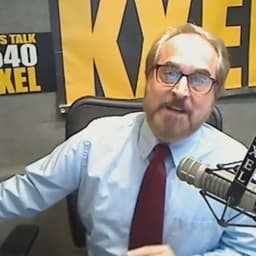
Transcript
Iowa Talking Points--Chris Cournoyer--Thu. Oct. 01, 2026
KXEL Live & Local with Jeff Stein · Fri Oct 2, 2026
This is Iowa Talking Points, the candidates, produced by Studio 5 at Mud Advertising and Totally Iowa Media, where you hear from candidates in the November 2026 general election.
Now, Iowa Talking Points, the candidates.
From Studio 5 at Mud and Cedar Falls, here is Jeff Stein.
Hello and welcome.
The attorney general of the state of Iowa is the chief legal officer for the state.
In the November general election, there will be two candidates on the ballot.
One is the Republican incumbent, and she joins us at the Iowa Talking Points table today.
The current attorney general, Republican Brenna Byrd, the website is Byrd4Iowa.com.
Thank you for taking the time.
Yeah, thank you.
Tell us about the office itself.
There are a variety of things that
fall under that category, give us a sense of what the Attorney General does.
Yeah, well, as Attorney General, I work really closely with our law enforcement all around the state, our prosecutors, people who help crime victims, and that is very important to serve in that way, to keep Iowa safe, to get justice for victims, and to always be looking out for what is right, and especially having the backs of our law enforcement, who they literally put their lives on the line to help, whether it's stopping a criminal or a...
traffic crash, whatever it is, they are there and I'm there for them too.
We also in the office file lawsuits to hold big companies accountable because in Iowa when, for example, let's say Instagram takes advantage of their teen that had a teen account and we did have a lawsuit over this, that parent can't just go to court and get justice for their family.
There wouldn't really be a good way for them to do that.
As Attorney General, I can step in on behalf of all the kids in Iowa
go and sue Facebook and Instagram when they aren't doing what they should be doing to take care of our kids online, make them change their practices, which we did, and then hold them accountable for the profits that they made while they were...
Well, the profits they made on the back of our kids and get a big settlement for Iowa that can be used to help kids online and help to keep kids safe.
So I get to do that as attorney general as well.
And that's something I find especially meaningful as a mom because I know how important it is and things have certainly changed a lot since my generation with the dangers that we worry about for our kids online.
There have been a number of actions filed by the Attorney General's office in collaboration with other states often.
And you mentioned the Instagram, but there have been a lot of other ones because, again, the targeting of young people, especially online, by all manner of actors seems to be increasing.
Well, I really worry about that.
It used to be that you worried about the windowless van, right, at the playground, and that someone would hand out candy, lure children away, and that was certainly something that people were scared of and that parents looked out for.
Now, that predator can be right in your own house, and you wouldn't know.
And that's
because of the access that a predator can have through a child's iPad or a phone or a computer.
And parents often don't know that these platforms are allowing people they don't know to have access to their kids.
So for example, I have sued Roblox because they said they were a safe platform for kids to build and learn and do things together.
But we found that predators were impersonating children to get access to kids on Roblox.
So we are suing them for that.
companies need to tell parents the truth about their platform.
And they also need to make sure that they're either keeping it safe for kids or making sure that kids can't have access to the platform, that it's adults only.
Now some of these settlements that you talked about, the money is helpful.
First question on that is what happens to it.
But the second point is.
Some of these companies have so much money it's a drop in the bucket.
You've also conformed behavior as you suggested.
Talk a bit about how that is important.
It's not just winning for money.
conforming action to state law or proper societal behavior is also important.
Yeah well when I'm standing up for Iowa kids and parents I think the money is important because those companies should not be able to keep the money they made by doing what they did and it's a way to deter them from doing it in the future so the money is a part of it but for example in the big settlement with Facebook Instagram with Metta
The other important aspect was the changes they are making to their platform to make it safer for kids.
So one thing that is very important to me is they removed the.
You will not believe this, but for example, teenagers on Instagram had access to plastic surgery filters.
So that's a filter that someone would put on a photo and it makes it look like they've had plastic surgery.
So they can alter how they look.
And the one thing I remember about growing up as a teenager is often teenagers are pretty sensitive about how we look, right?
And in critical, no teenager should be putting plastic surgery filters on their photos or the photos of their friend.
That just gives them an absolutely impossible standard of beauty.
And that's not something that kids should have access to.
So that's one example, making sure those types of things are not for kids.
Another is making sure they're not getting notifications during the school day or at night.
and changing the addictive algorithms so it doesn't just suck kids in.
Because as we know, kids, when it comes to games or online activities, they really sometimes do get sucked in more quickly than an adult does.
And we should make sure that we're taking care of kids.
We found that it was really impacting kids' mental health with depression, anxiety, other problems that were happening.
It's important that we protect our kids online and that accounts for teenagers should be different than adult accounts.
And for example,
when they say that younger kids shouldn't be on their platform, they should have a way to keep younger kids off so that we know that they're not on there.
And then, of course, giving parents better tools, things that are a little more user friendly so a parent can go and understand what a platform is doing and make sure that the way they parent is reflected in the types of controls they put into that as a parent.
Now, I don't have children, so what I'm about to say is simplistic.
A lot of folks might say, well,
It's the parent's responsibility.
Why aren't the parents doing more?
Why does the state have to do things?
My sense is that these days these things are so nefarious it's beyond what the average parent might be able to just
naturally take care of.
It's one thing to say you're grounded and you can't leave the house.
You can check on that.
The digital world is, as I noted, much more nefarious.
Well, it is very different.
I say it always is the job of parents to take care of their kids.
And so what we want to do is to empower parents so they have the information and the tools.
But when an online app or platform says it's safe for kids, it should actually be safe for kids.
They need to tell the truth.
And one example I'll use is TikTok.
They say they are
safe for kids 12 plus.
But when we did an investigation, we found, we impersonated basically a teenager and looked at the types of content that was being served through that burner phone, impersonating a teenager.
It was binge drinking.
illegal drug use, things that would encourage suicide, sexually explicit videos, things that parents would not think would be appropriate for that age range.
That was definitely something that would not be appropriate for a child.
And so when they tell a parent, you know, download this app for your child, they can, you know, watch some videos, enjoy being on social media, parents look at that 12 plus and they think that's a real rating.
and it needs to be.
So that's why we go after them.
They are not telling parents the truth.
And how can a parent-parent without the right information that they would rely on?
My sense, and this is probably simplistic, my sense is that many of these entities rather quickly settle relatively speaking quickly.
When you get a few dozen attorneys general lined up bipartisan basis often, there's a sense of they know
that they would not prevail.
Is that one of the more aggravating things in essence that here are people who are acting badly and they know it they're just sort of waiting for you to call them on it and then they'll go find some other way to have the same outcome and make you have to find that.
Yeah well you know there's a saying eternal vigilance is the price of liberty it's also the price of keeping our kids safe and so
When we go after one company, we're always looking for the next, if there's another company that is also doing something because we find that, you know, you might be able to fix one problem over here, but if there's something else that's happening, we need to stay on top of that.
And so that's why in our office, we really...
We keep abreast of the trends that are out there.
Then I talk to other AGs from other states and on a bipartisan basis as well and see what we can do together because together we are very powerful when it comes to all of us taking on a big tech company and holding them accountable.
One thing I also do is working in every county every year hearing from people.
I talk to law enforcement and that is how Roblox came to my attention.
I was hearing about kids that were on Roblox.
that were lured by predators.
And I won't go into all the details because it's some pretty tough stuff out there.
But it included things like child porn, it included things like sex abuse, other things that would just be every parent's worst nightmare.
And so when that came onto my radar from law enforcement investigating their criminal cases, it had my complete and full attention as a mom and a prosecutor.
Brenna Byrd is the Republican candidate for Attorney General, the incumbent.
Byrd4Iowa.com is the website.
We'll continue the conversation when Iowa Talking Points.
The candidates continues in a moment.
One opportunity, change your career.
Mud advertising is hiring product specialists.
$20 an hour, paid weekly.
That's 52 weeks a year plus record-breaking profit sharing.
Let me repeat, $20 an hour plus record-breaking profit sharing.
But we're just getting started.
The best in the business, 401k, company match, gold standard health plans, on-site fitness center, generous pay time off and so much more.
Apply today and don't look back.
You're watching Iowa Talking Points, the candidates.
Here again is Jeff Stein.
And we continue the conversation with the incumbent Republican Attorney General of the state of Iowa, Brenna Bird.
She is seeking reelection, bird4iowa.com.
I mentioned your current title.
Give us a broader sense of your biography and how you got to this point.
Oh, well, I was born and raised on a farm near Dexter.
So Dexter is a small town about 40 miles west of Des Moines on Interstate 80.
My family all farms, so my brother is a seventh generation farmer, and my husband and I live on my grandparents' old place on their farm in the house that my grandpa built.
So we have a son who's in fourth grade, so that keeps us good and busy, and enjoy spending some time together as a family.
I love living out in the country, so I have to say, living on a gravel road, I'm living the dream, and loving it every day.
Professionally, I'm a lawyer.
And so I went to law school because I was always really interested in American history and our Constitution and learning more about that It's really something special that we have as a country and that makes me proud to be an American But went to law school because I wanted to be able to help people and learn more about that So I've appreciated the chance to to be a lawyer and help people
Most recently, before being elected as attorney general, I was the Guthrie County attorney.
And so prosecute a lot of cases there and also have served as county attorney in well temporarily in Audubon when they were looking for somebody and then also Fremont County.
So got a lot of great experience there working with law enforcement, trying cases, helping victims, things that are very important that I take with me to the AG's office because.
I want to make sure we serve every single county in Iowa.
Every county is different, and I'm there for everybody.
Let's talk a bit about that because there used to be what I'll call an urban and rural split, where the issues or problems of an urban area were different than those of a rural area.
I don't know how true that is these days because of things like the internet, et cetera.
It really is quite different to be in Lynn or Polk County because of size and staffing as opposed to Tema or Winnishie County, for example.
Well, I think there are some big differences between rural and urban counties and also just different parts of the state.
Every part of the state is just a little bit different.
One thing that I think is a big benefit of being a rural county attorney.
So the first county that I worked in as county attorney, I was the attorney.
There was nobody else.
And so I got to learn everything about all different types of cases.
And that kind of broad experience was so valuable.
And I really appreciated the chance to do that.
And then even in Guthrie County, we just had two attorneys total to prosecute all the crimes and make sure the county had legal advice to work with law enforcement all over the county.
And so I think being a real county attorney is pretty special that way, because in a big county, I would imagine that not every police officer and deputy would have the county.
attorney's cell phone because it's too big.
Well, in a county like Guthrie County, everybody would have my cell phone.
And so I would get middle of the night phone calls when urgent legal advice was needed or something terrible had happened.
Yeah, just being there working hand in hand with law enforcement and that experience so valuable for me in the attorney general's office because I bring all of that with me.
And I know what it's like out there in the trenches and on the streets and in the types of dangerous law enforcement face, but also the types of crimes that are out there.
what we need to do to keep Iowa safe and to make sure we're doing the right thing, every part of the state.
You started this conversation by talking about working with law enforcement.
When you became attorney general with that past experience in Guthrie County, the other counties, what did you find that was lacking in terms of resources supported, et cetera?
What was necessary to help law enforcement do their jobs more effectively and more safely?
Well, there were several things that had to change.
One thing I did was double the number of prosecutors in my office in the Attorney General's office.
So we are always available to help counties with their cases or if there's a conflict or they need us to handle a case that doesn't come up very often in their area like a murder case or sex abuse case.
We want to be there to keep Iowa safe.
So that was a big change that we needed and that we made.
Another big one is something I'm very thankful for.
I campaigned on the need for a cold case unit in our office because Iowa did not have a dedicated statewide cold case unit.
And the thing about cold cases I know as a prosecutor, somebody has to be looking at them.
There has to be a dedicated resource that doesn't get pulled off when something comes in the door that needs their immediate attention and it really takes a special kind of investigator to investigate cold cases.
I also knew that we needed to have a prosecutor that worked closely with that team.
An experienced prosecutor because these cases are often difficult.
It's been a long time and we need to know that the investigation is being done with full support of a prosecutor who if we find who committed the murder.
and the evidence supports beyond reasonable doubt that we can take that case to.
to trial and get justice for the murder victim and their family.
So that is something that we changed in the office as well.
We've also changed our victim services so we're doing a better job of serving people all over Iowa in answering directly to the needs that law enforcement and prosecutors bring up to us.
That's one of the things that in my past work as a lawyer I know was a struggle for certain counties because they had the prosecutorial element, yes, but they also
We're serving the victims because, A, they were the witnesses, but you can't just prepare them as a witness.
There's counseling, depending on the situation, et cetera.
Are there more resources now from the Attorney General's office to help broadly across the state so that these individuals feel safe in reporting a crime and do not have repeat trauma from having to go through the prosecutorial aspect of
it?
Yeah.
Helping victims is something that I really learned as a county attorney because we would
work with them throughout the whole legal process, sometimes through trial, if it went to trial, in understanding what they go through and also all of the other things in their life that are going on, not just the criminal case, but everything else that can go along with it, whether it's a person who's been domestically abused by somebody that they loved and cared about or a child who's been molested.
People really go through a lot when they're a victim of crime.
And the legal system that we have, it
looks out for the defendants rights and that you know I agree with that because we need to protect people's constitutional rights that's very important to me as a prosecutor that we are respecting people's constitutional rights I take an oath to uphold the constitution and take it very seriously but one of the problems we have is victims are just not taken account of in the criminal justice system they are there as witness but it impacts their life and so I am committed to doing everything that I can do to help victims they're
Many of them are not prepared to be a victim of crime.
I don't know who would be, honestly.
It's very difficult.
Shoes that we wouldn't know what it's like until we have to walk in them.
And that's something that's very important to me.
That's why we've...
got more nurses that are specially trained to help sexual assault victims when they report to the hospital, to help them through the process, to help them through the medical care process, all of that.
And then also making sure that people know about the counseling resources that are out there and the resources that are out there for crime victims through our office.
Our office funds a lot of services for victim reimbursement.
There is the rural urban split that I mentioned previously.
There's also a sense and maybe it's just felt by those of us outside the Des Moines area that things are Des Moines centric or the state or Des Moines said in a derogatory phrase tells us what to do
How, as someone with the experience you've had, are you able to, from a state agency, work with these localities and not have it seem like big sister, big brother from Des Moines is telling everybody what to do?
Well, right.
And I don't live in Des Moines either.
So I think we've all felt that way sometimes.
But I just went to a prosecutor training this morning where we had prosecutors from 27 counties that came.
And one of the, we had it in Tama County.
at the Masquaki Nation Convention Center, which they donated, which I thought was very generous of them and very helpful for us to have the training there.
But one of the things that we...
we're hearing from people is you just can't have all the training in Des Moines, right?
And it's good to have different options for people.
And so I'm committed to having that training wherever it is most convenient and we come to where people are.
And I certainly know that Iowa is a big state.
We have 99 counties.
We need to make sure every county is getting served and that we all work together.
And the way I look at it is we all have the same goals.
We want to uphold the law.
We want to keep Iowa safe and we want to protect victims and get justice.
for them.
So when we work together for those common goals, I think that really helps us get justice.
Brenna Bird is the attorney general of the state of Iowa, Republican, seeking reelection on the November ballot.
Bird4Iowa.com is the website.
More when Iowa Talking Points, the candidates continues in a moment.
Studio 5 at Mud is built to get attention and get results.
From radio and television to digital video and live productions, it all happens inside our 3100 square foot production studio.
An infinity wall, multi-camera live webcast capabilities, massive green screen, audience seating and a full creative team for pre and post production.
Whatever you need for media or production, get noticed and get results.
At MUD Advertising, we love it when you
succeed.
And we continue with Brenna Bird.
She is the Republican candidate for Attorney General, the incumbent in the November General Election, bird4iowa.com.
There will be a Republican and a Democrat on the ballot.
This is the chance for me to ask you to differentiate yourself from your opponent in this race.
Well, I think it really matters who your attorney general is.
As attorney general, I uphold the law and the Constitution.
I make sure to keep Iowan safe.
And I have experience to do that as a prosecutor working with law enforcement, working with victims.
You know, in contrast, my opponent, Nate Willems, has never prosecuted a criminal case in his life.
He has never sent a criminal to prison.
And in fact, he is the most liberal lawyer to ever run for Attorney General in Iowa in recent memory.
So you don't have to look too far to know what he would be like in office.
He has a voting record from the legislature, and I'll just hit a few of them.
But he voted to raise taxes.
He voted against election integrity by voting against voter ID.
And I think voter ID is such a...
basic principle.
It just means that that person who's going to vote in a person's name is truly that person.
It is a way to prevent fraud.
It's a way to ensure election integrity.
It is so important to election integrity, something that the Attorney General's office upholds.
Not to mention in court, I defended and successfully so our election integrity law that requires things like voter ID.
So very important position.
My opponents also voted against the Second Amendment.
He voted against the basic standard ground protections that many Iowans rely on and that are part of our law to this day He voted against monitoring Child sex offenders when they leave prison and as a prosecutor I know it is so important that we monitor and protect the public from sex offenders and try to do everything we can to
hold sex offenders accountable when they commit a crime, send them to prison, but then if they get out of prison to make sure that we're protecting our community if they happen to be released, it is so important.
So it really matters who your attorney general is.
It makes a big difference.
You don't have to go too far to figure that out.
Just look at, oh well, I guess Minnesota and Illinois, and you can see the difference that it makes.
And as attorney general,
I work with our law enforcement.
I have their back.
I keep them safe.
And that's something we can't take for granted as a state.
How important that is that we all work together.
And Iowa just can't afford a radical liberal lawyer like Nate Willems as our attorney general.
They would hurt our state.
And I'm glad to keep our state safe and protect Iowans from scams, work with our law enforcement, hold
corporate crooks and big tech accountable.
It's so important and so that's why I'm running for another four years.
One of the things that the office has traditionally done is focus on consumer protection by that name and many of the things you've already discussed sort of fall within that but this is for many people they're
most common attachment to your office.
In other words, fortunately, they're not a victim of crime, but they might have a consumer complaint and that is still a robust area of the office, is it not?
It is.
So I also work to help Iowans either to prevent scams.
There are a lot of scammers and con artists out there that are trying to take advantage of Iowans.
So we give presentations all over Iowa about what some of those red flags are so that we can help our neighbors and friends and protect ourselves, but also.
we help people when they've been a victim of a scam.
And these scams are just evil.
They prey on the best in Iowans.
Are Iowan nice?
The trust that we have, the communities that we live in, and they try to take advantage of that and steal people's money.
And that's evil, and it makes me mad.
So we have gone after the scammers.
We'll help people when they call their office and see what we can do.
But we also look at, where's that root of the problem?
How do we stop that?
How do we stop the...
the con artists and scammers from getting Iowans hard on money.
And that's exactly why I sued the crypto ATM companies.
So I was hearing from law enforcement that Iowans were being ripped off through these things called crypto ATMs.
And I thought, what is this?
I have not seen one of these.
So I went and looked around and realized what it was.
It's a machine that looks like an ATM, but it's not a bank ATM.
People put money in, but they don't get money out of it.
That money goes into a scammer's crypto wallet, sometimes even an overseas scammer.
So we sued the two biggest crypto ATM companies in Iowa after our investigation showed over $20 million had been taken from Iowans.
We went through and called people who'd put money in the machines and heard their stories.
And after hearing their stories, which is heartbreaking, we knew we had to put a stop to it.
So we have sued them.
And as of today, one of those companies has declared bank
both lawsuits are still ongoing and it's made a real difference in helping Iowans.
In a simplistic earlier time we were more concerned with there was a hail storm and then folks would come in and offer to fix your roof for cheap and they take people's money etc.
That's still an issue to be sure
but it
does show how in I would suggest a relatively short chronological period of time we were worried about
scammers for rough tops.
Now it's cryptocurrency.
I mean, this this has gotten much more diversified, much more complicated, and I presume much more difficult to enforce because of the sheer breadth of it.
Yes, it has and we do hear about those people, those shoddy home repairs.
We help people with that or people who promise a new rough and don't deliver.
So those are things my office.
We also help people with that.
But what has happened is the scammers have gotten more sophisticated.
And so before some of these were more fly-by-night scammers is what I would call them.
Now these are scammers that are operating in foreign countries.
Often they are part of sophisticated international criminal organizations and they
engage in conversations with Iowans for months before they finally ask them for money.
So many times an Iowan will assume that they are talking to someone with shared interests.
They're, you know, their guard is not up.
They're just sharing recipes or talking about their favorite sports team.
But what they're really doing is there's a criminal organization that's basically softening them up, softening them up on maybe Facebook through text messages, phone calls and emails.
And then they go in for the kill and try to get
people's money from them.
So if anybody thinks this might be happening to them, I really encourage them to call local law enforcement, call my office.
We are there to help and we'll do everything we can to help.
But we have to be really, really vigilant.
And I hope that Iowans also don't blame themselves because the person who's being ripped off
They should never be ripped off, but they have nothing to be ashamed of.
They're Iowa Nices being used against them.
And so the person we need to go after and who should be ashamed of themselves is the con artist and the scammer because what they are doing is evil.
We've talked about a variety of different aspects within the office.
Give us a sense of your management style.
So as the person who sits behind the desk and oversees all of this.
What approach do you take broadly if someone were to try to pin you down to a style or a demeanor, if you will?
I think one is I really see myself as accountable to Iowans and working for Iowans.
So I view everybody who wants to work in my office as part of that mission.
And so I interview everyone that we hire in the office to make sure they understand that this is not a government agency.
It is not a bureaucracy.
It is the Attorney General's office and we work for every single Iowan and we're guided by the law and Constitution and all the work that we do.
And so I make sure that folks who work in the office are
people that want to help Iowans that want to do their best and understand the importance of public service and just what that means that it's for everybody in Iowa it doesn't have anything to do with politics it has to do with being a good neighbor a good Iowan and following the law
so you don't walk in and look at somebody and say
Who hired them?
It would be me.
Yes.
Yes.
Yeah.
No, I just, I, of course, they also get interviewed very carefully and all of that.
But by the time we're considering hiring somebody, I want to make sure that we have someone that is going to do a good job.
Because when I run for office, I make promises to Iowans about what I'm going to do and what our priorities are.
And I want to make sure that those promises are kept by everybody, whether it's a lawyer prosecuting a case, whether it's someone involved in a civil lawsuit, someone helping scam victims or the person answering the phone.
We're all part of that same mission.
Brenna Bird is the Attorney General of the State of Iowa, seeking another term in office.
She is a Republican on the November ballot.
Bird4Iowa.com is the website.
A final segment when Iowa Talking Points, the candidates, continues after this.
Iowa has a wonderful heritage.
And each day, I'll share these stories of historic people and events with you.
I'm Jeff Stein.
Join me for the Iowa Almanac program and learn more about this great place we call home.
Now, seven days a week.
Listen on radio stations across the state via podcast or at IowaAlmanac.com.
Signs can set the tone.
Signs can direct, instruct, and motivate, and even seal the deal.
At Mud Advertising, we create signs in every shape, size, and material for clients nationwide.
From point-of-purchase displays that turn heads and drive traffic to campaign signage that brings your marketing to life.
Need to go big?
We do that too, with large format banners, trade show displays, vehicle wraps, and more.
Whatever the message, whatever the size, wherever it needs to go,
Whatever your signage need, call us today.
At Mud Advertising, we love it when you succeed.
You're watching Iowa Talking Points, the candidates.
Here again is Jeff Stein.
A final segment now with the Attorney General of the State of Iowa seeking re-election.
Republican Brenna Bird, bird4iowa.com is the website.
Iowa is an agricultural state.
It's a manufacturing state.
There are a lot of great large businesses, small businesses, jobs that depend on it.
How does the Attorney General's office fit in with some of those businesses?
particularly with regard to agriculture?
Well, agriculture is really important to Iowa and to many of our communities.
And as somebody who is born and raised on a farm, I certainly understand that.
And one of the things that I've done as Attorney General is make sure, since Iowa is top in agriculture, we should be top in defending agriculture legally and working with other states to do that.
started a farm and freedom division in our office that does just that so a few examples might be for some reason California has decided it wants to push states like Iowa around because they're big and we might be a little smaller but Iowa farmers feed the world and so I stand up for Iowa agriculture against California trying to tell family farms that raise hogs how to raise hogs in Iowa that's something that's governed by federal law in Iowa law California does not
not get to tell Iowans what to do.
We've stood up against California's electric vehicle mandates that would force people to buy an electric car.
I think people should have a choice about the type of vehicle they want to buy and nobody should be forced to buy an electric car just because California thinks that's a good idea.
We've also taken on New York.
New York was saying that an Iowa ethanol producer made by corn has to report things to New York if their ethanol might
possibly be sold in a New York gas tank?
Well, I sure hope it is sold in a New York gas tank because our fuel is cheaper.
It's clean, and we can grow more of it every single year.
It's renewable, so it's very, very good for our country, but that was a way for them to try to attack ethanol.
So we have taken them to court, too, in their state courts, believe it or not, and in working together with other states as well, including Missouri and some other states where we have some friends who also believe in defending agriculture.
So that's been an important focus in my office to protect farmers and protect Iowa jobs.
Are there some legislative initiatives that you'd like to see the next General Assembly act on that either would help in some of the consumer items or with regard to crime in the state, which again was the issue we began the whole program talking about?
Well, I have a couple.
One is I would like to see us tackle cratum.
If people don't know what that is, they need to know.
We have had young people in particular, but it could happen to someone of any age.
overdosing on cratum that they may have bought at a grocery store or gas station and dying.
It's very, very serious, and we need to do something about it.
The Narcan that people use to protect themselves from a fentanyl overdose, that is effective against cratum, so I want people to know that.
But it's very important that we take action on this before any more Iowans die.
Another important issue that we have is one that I've been fighting for for a couple of years in the legislature, and that is the importance of protecting
children in court.
So
It used to be in Iowa that we had a law that now the Supreme Court has called into question.
That's why it's a problem that would allow a child to testify outside the presence of their abuser if they needed to in court.
So closed circuit TV, the defendants rights were protected.
They just weren't in the same room within arms length of the person who did something really horrific to them.
And it's the type of cases that most of us don't like to think about.
So imagine being a child who witnessed their sibling.
being beaten to death by, let's say, his mother's boyfriend or something like that.
It could be that that child would be unable to tell the court and the jury what they witnessed if that person was in the room.
They're scared of them.
It's a way that we protect kids.
So what I have proposed is a constitutional amendment which would restore things to the way that they used to be where a judge could decide that it was appropriate for a child to testify outside the presence of the criminal defendant and we could still protect the criminal defendants.
constitutional rights in that way.
But it's so important that we get justice for kids in these situations.
And to have a constitutional amendment, that means it needs to pass the legislature one more time after this general assembly, so after, I'm sorry, after this election.
So that is why I've been working so hard on that one.
We need to get that done, and then it goes to the people for a vote.
And again, the Constitution provides that the accused has the right to quote, confront their accuser.
The question is, what does it mean?
Can you, because of technology, there used to be testifying with a screen or, as you've mentioned, closed circuit, that's what you're talking about is defining what specifically the broad constitutional privilege means in a day-to-day courtroom.
That's right, and all it really means is that the accused defendant has a right to
ask questions of the witness through their lawyer, and that certainly happens through closed circuits.
So rights are protected, but we need to protect kids, too.
That's something that's important to me as a mom and a prosecutor, and especially in these types of cases.
They are heinous cases.
They're cases that they cry out for justice.
They really do.
And we need to make sure that we protect kids.
Kids are young.
They're vulnerable.
They're not just little, many adults, and the law should treat them differently.
So we've mentioned a few of the legislative things.
What is on the agenda for your next term if you are reelected?
Obviously you're seeking reelection because I presume the job is not done in your eyes.
So what would you want to accomplish in?
another four years?
Well, I'm going to continue my fight against big companies that take advantage of Iowans.
So we are still suing Roblox and TikTok.
We're on the lookout for any other tech companies that we need to look into or any other companies that are taking advantage of Iowans.
We have an investigation right now going into OpenAI, an artificial intelligence company that allowed its product to escape and was not aware of it.
And that hacked other companies, if you can
imagine that.
So we need to protect people's security and privacy and working with other states also to be able to do something like that.
Also on the on the criminal justice side, I think it's important that we grow that part of the office that protects the most vulnerable, which is why I've proposed a special victims unit.
And we will use some of the settlement from Facebook and Instagram is supposed to help kids to do that because we need to make sure that we are
investigating and going after whether it's child trafficking, which is absolutely vile, modern day slavery, or whether it's going after sexual abuse of children by bringing child molesters to justice, or those who use children for child porn or sexual exploitation.
So really important that we focus on the most vulnerable in our society and that when we find and investigate those cases, that we lock up those predators so they can't hurt anyone else.
We have just a few minutes left and you are asking Iowa voters to reelect you to the position of Attorney General.
I'll give you our remaining time to make that case to them directly.
Well as Attorney General, I work for Iowans all over the state whether it's making sure that we are
working with law enforcement, keeping Iowans safe from crime, holding criminals accountable, or working on cases with our cold case unit, it's so important.
Also protecting Iowans when it comes to consumer protection, whether it's a bad home repair or a warranty issue, or the con artists and the scammers that are out there trying to steal money from Iowans, we want to do everything we can to help.
And we go after those companies that are doing robo calls or the crypto ATM companies.
that's so important.
And then also making sure that we're standing up for Iowa's constitutional rights, defending farmers, defending our state laws, and protecting kids.
And it makes a big difference who your attorney general is.
And Iowa just can't afford a radical liberal attorney general like my opponent.
I will work for Iowa, and I do work for Iowa.
And that's why I'm asking for another four years to keep working with law enforcement, keep an Iowa safe, and do our best to serve this great state.
Thanks so much for taking the time and good luck in the election in November.
Thank you.
Brenna Byrd is the Iowa Attorney General Seeking Re-election Republican on the November ballot ByrdForIowa.com and that brings us to the close of this edition of Iowa Talking Points The Candidates.
Thank you for watching.
This has been Iowa Talking Points The Candidates produced by Studio 5 at Mud Advertising and totally Iowa Media.
For more information on this series, go to IowaTalkingPoints.com.
News Talk, 1540 KXEL, where Iowa comes to talk.
Hello, I'm Jeff Stein.
For decades, you've been familiar in this part of the world with the Job Foundation and their website, thejobfoundation.org.
The mission remains the same.
The name, however, is changing and to share information about this evolution.
We're joined by the executive director of the group, Linda Hudwalker Bowman.
Thanks so much for taking the time.
Nice to talk to you again.
Well, it's great to see you again, Jeff, too.
Thanks.
So remind us the Job Foundation, the mission, the...
how did it all come to be?
Well, the mission is to equip K through 12 students and their families for economic advancement.
And it's really the brainchild of one Waterloo woman who really had it on her heart that she wanted to do something to address poverty, really.
And she had lived among some section eight housing even when she was in college.
And so this kind of stirred in her heart.
And Jennifer Brost is her name.
Well, Jennifer and Mike had a friend
family tragedy.
They lost a son to stillbirth and his name was Job.
So that kind of propelled her into actually doing something.
And so she created this concept for the Job Foundation and it was really about financial literacy and her aha moment really came about when she said, you know, I got paid for my grades.
My parents paid me for grades and they had expectations I had to meet along the way.
What if we did something like that?
And that's really where one of our most unique components of the program came about as well.
So Jennifer really put all of the parameters around this program that included conditional cash transfers for a student's grades, earnings, and behavior at school.
And then it combined with ongoing financial literacy lessons and a supportive community around the students.
And that became the Joke Foundation.
Financial literacy to me anyway is so important because we're at a time where we have never as a country had more credit card debt than we have now.
Never mind the interest rates.
It's the mere debt.
You're right.
Because we've been conditioned that we need
it now and we need more and new and better and it's a disposable society and all these things that an old guy like me would be complaining about but the point is that's how they can get into real trouble if not shown the right path.
at an earlier age.
Oh, you're so right.
My oldest two sons are 24 and 23.
So it's been an ongoing conversation the past several years.
Well, mom, I have to have a credit card.
I need a credit score or I can't do anything.
So it's that constant conversation and you're going against the grain when you're saying, no, you have to be financially responsible first.
And that credit card is really a debt card.
And very easily you can get in over your head.
And I think the problem too, Jeff,
They're not getting that in school.
The schools have so much on them that they have to teach.
And in Iowa, you're required to have one semester of personal finance in high school.
But it can be combined with another class, actually.
So they're not getting much.
And so if you're not getting that at home because of your parents' economic circumstances, then you're at even a further disadvantage.
And I can recall again, long ago, you learned these things from your parents, not necessarily from them sitting you down and going over it, but you learned by example.
They'd sit, they'd write checks for the bills, et cetera.
Well, I assume in this society, we're paying our bills online.
It comes out of the account directly.
We never have that opportunity because it's mom or dad on their phone or the computer, and that could be any myriad of things.
We just don't have the opportunity for the kid to even
ask questions and say, what are you doing?
You're so right.
The visual that has stuck in my mind for my childhood is that in my mom's closet, because she handled all the money, were little baby food jars that she had labeled gas, $10, oh, for the day when we spent that in a month, food, $50 on and on.
And that was how they did their cash budgeting.
But no, my children don't see that now because I sit at the computer and do it.
So it is kind of a lost art.
And so we have to teach our kids if we want them to learn it.
So how long has the Job Foundation been in existence?
Well, we just had our 20th anniversary Which is really I think a milestone for as I like to call us a little nitty gritty nonprofit We're just scrappy and we get the job done and started with one woman who
talked to other people and they caught her passion for that vision and other people jumped in as volunteers and then there was a staff hired and we're still a staff of four and a half.
It's small and small but mighty I'd like to say.
So it's pretty amazing to me to reach this milestone actually and it was all people locally who just bought in and said we believe in this let's do it and we're gonna help make it happen.
And it shows the value of it to last 20 years.
Exactly.
You could just live on your laurels, but you said no 20 years and you're the executive director having taken that position earlier this year.
So here's the 20th anniversary and a rechristening.
That's rebrand.
Yes.
Well, we did a community impact study a couple of years ago.
We, of course, we were approaching the 20th and we knew that.
And so we got a small grant.
to be able to do some of that and really talk to people in the community about our work and what we do and perceptions of it and things like that, just to kind of help us build for the future.
And one of the things we heard was that our name was a little confusing because it is spelled J-O-B.
So people will say, oh, the job foundation, which it's not, but we've even had people come in the office pretty regularly looking for jobs.
That was just a place I can apply for work, that kind of thing.
So it felt like the right time to rebrand because I think organizations have a life cycle, just like, you know, other businesses or people have, you know, certain stages of their life.
And 20 seemed like,
We've been growing a lot in the past couple of years, and so we're on the precipice of moving forward again.
So
that's what we did it.
Yes,
exactly.
Now, the new name is what?
Lumicent.
Lumicent.
And what is the origin of lumicent?
And for the audience's benefit, L-U-M-I-C-E-N-T.
And I see a bit in the logo of emphasis on the word scent.
Lumicent.
Yes.
So we wanted something that nodded to our work with finances, of course.
And lumicent is a
combination word.
And so we took the Latin root word for light and bright.
So think luminescence.
So lumicent and we're really lighting the path to a stable independent financial future.
And that felt really good to us because
we really are about possibility and what our kids are capable of.
So they were born into maybe economic circumstances that, of course, they didn't get to choose.
And so maybe that future feels uncertain to them.
And so we just pour into them and give them the tools, equip them with those tools to go forward with hope and possibility for a different kind of financial future for themselves that they can create.
We're speaking with Linda Hudwocker Bowman.
She is the executive director of Loomiscent.
which you may know for the past 20 years is the Job Foundation.
We're having this conversation on News Talk 1540, KXEL.
So the various programs that Lumiscent offers.
It's basically tied to financial literacy, education, reward, et cetera.
But what is actually out there and what geographic area is currently being served?
We work with the Waterloo School District actually right now in the Waterloo School District.
And we are a partner in education with the entire district, not just one school.
And that's by design.
We would love to expand beyond that border one day.
But the reason we started in Waterloo is because the poverty rate is higher.
So there is a great need there.
there to do this work.
And we actually enroll students.
We have two criteria that they have to meet, be between kindergarten and third grade in a Waterloo public elementary school and then be living in a household that's at or below 150% of the federal poverty level.
So for example, for a family of four this year, that's about $49,500.
So it's young
people who are
within what statistics would say are at risk because of the socioeconomic
circumstance.
Exactly.
And then we are unusual or unique in that we keep our kids in the program until they graduate.
So it is a long-term investment in their future.
So we get to see them grow up.
We get to see them go from elementary school through those crazy middle school years and then really kind of pour into them again as high schoolers.
and building that savings account and getting them prepared to graduate and be ready to launch.
What's the track record?
Yeah, that's a great question.
So as I mentioned, we do conditional cash earnings for our students.
And there are a few reasons for that.
One is that if you're living in poverty, you are at higher risk for dropping out of school.
And we really
want our children to graduate.
And the reason for that, too, the data show us that if you graduate, that puts you in a much better position to break that cycle of poverty.
So that's the first thing we want them to do.
So we have them save 60% of their earnings off the bat, and that's all in accounts within Lumicent.
And if they meet all the criteria, they stay in the program, they get their earnings when they graduate.
And our requirement is that they have to save $3,400 along the way
Our graduates from the last six years have averaged about 5,500 in their savings accounts.
So they get that as they graduate, so they can.
A lot of them buy.
I used vehicle because transportation is so important.
I just talked to a graduate from four years ago and he said that he said, well, of course, you know, I bought a car and that car took me to Hawkeye Community College for all my classes.
It took me to work.
I had it for about two years.
I was able to graduate and I was able to keep working while I was going to school and getting my associate's degree.
Yeah, it's a necessity for them.
Transportation is a huge barrier for a lot of our kids.
So to have that money and be able to do that is huge.
Some of them use it to help pay for extra classes or training of some kind and really set them up for their futures.
Or maybe they need to move out on their own and they've got money to pay a deposit.
You know, if you don't have savings for that, how do you get started?
It's really tough to go out on your own.
So they have that account that...
that they can use for those kinds of things that they need.
And the good thing is that as they are learning these skills, it's not like the account is sitting there in a piggy bank on their dresser and they can snitch from it if they want to, because again, we all have willpower and we all have certain things that are shiny objects and we regret the purchase later.
And so this allows them to learn
and then see if you actually do save, you have a tangible benefit as opposed to just a short-lived enjoyment.
Exactly.
One of our students who just graduated in May, I was talking with her shortly before graduation, she said, you know, when I was a sophomore, I really kind of had an issue with online shopping.
I thought, oh, well, we can all relate to that.
And she said,
so what?
No, actually, it's a good lesson for all of us.
She said, so what I decided was I would put it in my cart at night and I would see these things I want.
I'd put them in my cart and the next morning I would get up and go, oh, I don't think I really need that.
So I wouldn't buy it.
like brilliant this is what we want our students to learn and how we want them to behave as adults because a lot of adults have trouble with that and can't restrain themselves and that's how a lot of people in this country get into debt so I'm so thrilled to hear her articulate that that she had come up with that from her financial lessons over the years so I'm very proud of our students.
For 20 years it was the Job Foundation and just within the past week at the anniversary rebranded as Lumicent
thejobfoundation.org, lumascent.org.
There's a transition of all the websites and emails and everything, but it's the same program and the same people.
Linda Hudwocker-Bohman, the executive director, joining us for a few minutes more on News Talk 1540KXL.
Where does the money come from for all of this?
It comes from the local community.
We are thrilled and so fortunate.
Really in the Cedar Valley, we have a thriving nonprofit community.
And I give kudos to the people who live here because they are the ones who become committed to something and they put
their money where their mouth is, and they say, no, I believe in this and I'm going to help you do it.
And so we have individual donors.
We have businesses that come alongside and support us.
We have churches and service organizations.
And then we have grant funders.
So that's like the Otto Schoetz Foundation here, RJ McElroy Trust, which was set up, you know, from that KWWL legacy to really support young people in this community, Northeast Community Foundation of Northeast Iowa.
These places have just been wonderful to us.
We apply for grants often and receive that.
True Stage is a local business that our missions align and so they love to support us in the work that we're doing.
So we've been very blessed that way.
And it does seem, you mentioned a business, but it does seem that this sort of financial literacy and education can be leveraged by these people
later into being either good employees, good managers, or entrepreneurs.
Oh, in fact, I just interviewed one in Des Moines, Jeff.
I'd love to tell this story because Tiara was really all about the money and she was one of our very first students and so she didn't even get the full 12 years because she started early on with Jennifer and she went to college, she worked for Wells Fargo Bank and mortgage loans, made great money for many years and then she decided
I am meant to do something that helps people.
And so she became an entrepreneur.
She has a body sculpting business in Des Moines.
She has clients flying in from other states, even from London, other places because she has built a reputation for her small business.
And while I was there, she was showing me that her 12 year old daughter makes bracelets.
She sells them at her mom's shop for five or $10 or when her mom's out doing vendor fairs or things with her chair massage.
her daughter selling things and she's already built a savings account of $2,500 at the age of 12 from her own business.
So it just keeps going like that.
So it's really fun to see where our students go.
We have talked to the folks from the Zach Johnson Foundation frequently and their Kids on Course program is limited to the Cedar Rapids Community Schools.
And when I say limited,
It's K through 12 and they're helping them beyond because it has grown to more buildings, more kids, etc.
But the point is they have made a very conscious decision to not expand beyond what they can really do well.
This is focused within the Waterloo Community School District.
Are there similar programs?
Do you have a thought of expanding or is this something that others who may be listening in another location might aspire to replicate in some way?
Oh, we would love that.
And, you know, really when Jennifer started, there were two or three schools in the Waterloo District that she worked with.
Now we have students in every school.
from the elementary, middle schools and high schools across the board in Waterloo.
We'd love to go into another school district.
The one thing that we do need more of to do that is money.
Not necessarily, like we've grown a lot.
So three years ago we were at 66 students, now we're at 146.
And we did that with no additional staff.
That's not necessarily where the budget
issue becomes both all of our kids are earning conditional cash earnings and so for instance this year we're going to spend more than probably about $65,000 in direct payments to our students so they learn how to manage money they can buy some necessities that they need along the way and that they're saving for the future so that's the pot of money that you really need to be concerned about in your budget every year and how you're going to make sure you have that because that's an obligation we have to meet to our students but it would be great to
to replicate it somewhere.
The conditional cash transfer program too, I'll tell you this when Jennifer started, she kind of had this idea, let's do this, hadn't heard of it in the States.
saw an article about this being done, I believe maybe in Africa, but it's more common in third world countries to do something like this, to give a conditional cash transfer of some kind to help a family get out of poverty.
There are a few bigger cities in America trying things like that, but not the way we do it with students either.
So it is still unique to our knowledge, but we'd love for it not to be the case if somebody else wanted to talk to us about that.
and all the contact information is at lumacent.org, thejobefoundation.org.
Lumacent, again, is spelled L-U-M-I-C-E-N-T.
And if you go to the website, there's a nice subtle donate button, so if you're so inclined and are of means and would like to help in whatever way, that would certainly be appreciated.
So with the rebranding, with the thought of it be nice to grow, et cetera,
what do you think the next five years holds?
And I know that's an impossible question when we're talking about education because we didn't expect a global pandemic that shut things down within the past decade, but I'll still ask at this point, all of the things being the same, what's the next five years look like?
hopefully not like the pandemic because that was very difficult on every school of course in any para school program kind of set us back a little bit on some things but we just did some strategic planning the last two days and about our next three years and one of the key goals of ours is determining our
program growth and that's not just enrollment because we have to look at what does that mean really to run the program the way we like it how many more mentors do we need that's a critically important part of our program and as we've grown we also need to attract more mentors well since COVID guess what unfortunately has happened a lot of people aren't volunteering the way they used to they'll volunteer and and we have a great community of volunteers
getting people to mentor and say, yes, I'll meet with a student once a month has proven to be harder.
They got
out of
the habit.
We got out of the habit of doing all of these things.
We did.
And so it's hard to get back into the habit.
But that's very important to us.
So we really want to build the whole program that way.
So we're looking at enrollment growth.
what that means in terms of, well, what extra money do we need to raise?
How many more volunteers would it take to get to this certain level or to expand to another town, that kind of thing?
So that's one of our key goals as we move forward.
So that's been
fun.
Linda Hudwalker Bowman, Executive Director.
Thank you for taking the time to share the story, the evolution, and the goals, and we wish you all continued success.
Thank you so much, Jeff.
It's been great talking to you.
Good to have you in the studio.
Thanks for being here.
On News Talk 1540, KXEL, where Iowa comes to talk.
News Talk, 1540 KXCL, where Iowa comes to talk happy Friday.
Maybe we'll dry out a little bit after days of rain this week and just in time for the weekend, the Iowa Gallivant, JJ Goodvin, to talk about another county in Iowa that might be a destination this weekend or at some point in the future.
JJ, thanks for being back with us.
That's right.
It's time to get on historic Lincoln Highway and get over to Green County.
We decided a couple of weeks ago when we talked last that would be the county We would talk about next and spotlight this week by the way I should mention too that you write about different destinations in Iowa at the iowa gallivant.com And every couple of weeks we connect to talk about different places and when we talked about Green County I know that we're just on the outside of Hispanic Heritage Month that would have been maybe more appropriate to have this conversation a couple days ago because you were gonna tell us about
something that would be right along those lines that you've enjoyed there more than anywhere else.
But we have to get something out of the way first.
Green Iowa, not in Green County.
So yeah, we have to make sure we're getting that.
And also, Jefferson, Iowa, not on the Jefferson Highway, on the Lincoln Highway.
Now we're getting really confusing.
But yes, our teaser from the last time we met up was about Casa de Oro.
They're in Jefferson, Iowa.
They have
a great patio and one of the reasons why is it's right there across the street from Wild Rose Casino and especially when
There is a season during the summer at the beans are planted across the street.
And even if it's corn, you're still going to experience an amazing sunset there.
It is the best place to watch the sunset, I think, in all of Iowa and while having Mexican food.
And it just goes on and on and on and on.
And Green County is a pretty flat county.
So when you're watching the sunset from that patio, it works to its advantage.
So in Casa de Oro, the food all around is pretty.
good and if you don't abuse the system they will refill your case so no extra charge but as long as you're not abusing the system so when they first did that first time I went there they brought back to our table a fresh bowl of case so I said oh no I'm sorry we didn't order another case so and they're like no don't worry about it and I'm like what and then the one of the locals said yeah they do they're happy to do that for you I'm like
No way So yeah great folks who own that place great great food and the locals Just live and die for that place.
So yeah,
you know when you said it goes on and on and on for a second I wasn't sure whether you were talking about the Sunset or the queso
Yeah, both.
Yeah, right.
So and once you experience the Mexican food you got to get the Chinese and Jefferson both you and I love the peony
Yeah, the the P&E is on the square in Jefferson and it is one of the things I think the locals in the community are really really proud of.
Oh, yes.
Yeah, they sure are.
And it is fantastic food.
And yeah, the locals will defend their local eateries tooth and nail for them.
But it is really, really good.
And the beef and broccoli is what I've had there a few times.
And I've had a few different things.
I even had their tofu of all things.
And it's really good.
I don't know what they're doing.
I'm not a big tofu guy.
There's just really good.
They said, just try it.
I said, okay.
And I'm like, well, darn it, you did do a great job with that.
And one of the locals, when we were there, he's like, I raise cattle, but yeah, I get the tofu every time I'm here too.
I'm like, you gotta be kidding me.
This is amazing.
So, and also.
We went to Docs Stadium.
That was our Green County tenderloin.
So, and while you're there, and we already mentioned the Wild Rose Casino that's in Jefferson.
What's wild about that place is Reba McIntyre actually did a private concert for, I think it was for a wedding party there.
And they got the pictures to prove it and everything.
I mean, how much did that cost?
I mean, really?
Did they call it a favor or something, but a private concert?
for a wedding party at the Wild Rose.
I mean, wow.
I wonder if she took requests.
One would hope so.
She was there anyway just for the wedding, but we're talking with JJ Goodvin.
He is the Iowa Gallivant and writes about traveling around the state at theiowagallivant.com.
We're talking about Green County in West Central Iowa.
You alluded to Green County being on the Lincoln Highway heritage route, and you'll see some Burma Shave signs if you drive through.
If they're still there, I believe there are still some there on the road between Grand Junction and Jefferson.
What else stands out to you, JJ, about Green County?
Well, when you're on that Lincoln Highway, you're going to go through Grand Junction in the 30 yard line, which obviously a great name for being on Highway 30 for a restaurant, a sports bar, Great Burgers.
So I want to get a Great Burger while you're in Green County and on Highway 30.
The 30 yard line is where to go.
And also the Mahaney Tower there in Jefferson.
Talk about a view.
And once again, Green County is pretty flat.
I'm not dismerging it.
We need our farmland and the best farmland is when you don't have to go up and downhill very much.
So when you get up there, you just it is a breathtaking view and you see what seems it's like you can see the entire county from there.
And it's it's a really interesting part of the state because you get to see just how our ag industry.
works, because you see the trees and everything in town.
And once again, you might see the sunset or why you're up there.
But then you see all those little, when they're not little, until you get up there.
But the little houses from those farms and the silos and the barns and everything, they don't look big until you get close to them.
But they look little from up there.
It just seems like they're growing out of the soil.
And it just is a great way to see Iowa.
I'm glad you mentioned the Bell Tower.
It is sort of the landmark for Jefferson and for Green County.
Jefferson quite literally has one stoplight, which is the only stoplight in Green County, and unless that's changed, maybe that has changed over the years, but it also is a railroad town on the Union Pacific line.
What else jumps out at you, JJ, about some of the other points of interest?
You know, I like Hyde Park in Scranton, and it's not the Scranton where you're going to find Dunder Mifflin in Dwight and all those guys.
So Hyde Park is just a simple park, but it's very rural.
And I really like it.
You can get some hiking done or just get that serenity you're looking for.
And I really, a lot of times when I'm traveling through the rural parts of Iowa, I seek those places out.
And Scranton's a very small town, so obviously Hyde Park is going to be in a very rural place.
So yeah.
You know, I think that this is actually across the Carroll County line, but right on the current Highway 30, I believe that is actually at that point, the historic Highway 30 route, the cemetery where Merle Hay is buried.
Oh, yes, you're right, Lydden.
Yeah, very close to it.
You're right.
And that is another historic landmark mural.
Hey, of course, for those that may not be familiar with the name or who may not only know it from the the road in Des Moines was the first American soldier killed in World War One.
Correct.
Yeah.
And obviously he his body did not come home.
They typically did not back in those days.
And there is a nice memorial there at the cemetery England.
Let's talk about some of the natural surroundings.
You mentioned the flatness of Green County, which is certainly a thing, but it is part of the Raccoon River Valley which flows through and that is perhaps the exception to that rule.
Yeah, and once you get onto the raccoon, of course, the foliage is going to pop up.
So right now, between now and the mid-month, you're going to start seeing the colors pop.
So anywhere on the raccoon river is definitely going to have some great foliage.
And yeah, so if you get over the Green County, you might as well get in those areas because the little towns, I've always told people, yeah, we want to go to the parks and some of our state forests.
places like that to see the foliage, but a lot of our little towns look absolutely stunning.
during the fall season.
So you get those Victorian era houses in the backdrop and or like one of the one of the churches or the main streets.
So I really suggest getting out to these main streets across the state.
It's been getting over there.
You can just getting on the Lincoln Highway too.
And the old Lincoln Highway that is.
And you'll go through a lot of main streets and get that get that fall foliage look to Iowa.
I have to just at least mention in passing the small towns of Peyton and Sheridan and Dana in the northern part of Green County.
Any anywhere else that you'd point us towards JJ before we move on and pick our next county?
Squirrel Hollow.
I just always like the name of that park and Jefferson.
That's just a good place to go creek stopping if you're with the kids, you know, and make sure you hold on to them and stuff like that, obviously.
But yeah, you know, just, you know, you get a little squirrely there in Green County.
Squirrel Hollow Park.
Yes, that makes a makes good sense.
Well the time has come now to pick the next destination that we will visit with JJ in spirit via radio and to do that as is custom we'll throw up a quarter and see where it lands and This one's got a few miles on it.
This is a 1983 George Washington quarter with eagle on the back looks like it's got a chip out of one side So we'll see if that affects its its flight and where it ultimately lands.
Let's toss this over the Iowa map They won't let us throw a dart at a map in the studio
to do this, so this is our method instead, and let's see where this quarter spins us to.
We're going to go just across the county line, it looks like, from Green County up into Webster County and Fort Dodge Territory.
JJ, do you have something that comes right to mind when we think about that for our next segment in a couple of weeks?
Alright, we are going to go...
to an area there in Webster County where they have Iowa's tallest mural and I'm going to tell you another place where I had one of the juiciest cheeseburgers of my life.
That will be worth listening for in a couple of weeks when JJ returns.
We're certainly looking forward to hearing about that and more about Webster County in a couple of weeks for our next segment with the Iowa Gallivant JJ Goodman.
He writes about traveling around the state at theiowagallivan.com and a return guest here on the station where Iowa comes to talk.
News Talk 1540 KXCL.
News Talk 1540 KXEL, where Iowa comes to talk.
Hello, I'm Jeff Stein.
Another conversation that we recorded out on the porch of the Borlaug Learning Center, the ISU Northeast Research Farm near Nashua.
The conversation recorded on September 10th part of the farms.
50th anniversary and I'm joined now by Vice President at Iowa State University Extension and Outreach Jason Henderson.
Mr. Vice President, thank you for taking the time.
Oh, it's my pleasure to be here.
My pleasure.
Talk about the importance of a facility like this to the work that you do that ISU Extension does.
For us in Extension, it's paramount and so vital for what we do.
Our ability to go out and reach farmers where they're at and where they live, because not everybody's going to come to Ames to talk about the education of where
it is and the other part of it is with these farms we have a lot of variation in topography across the state of Iowa and so right up here we're in the driftless region and so we have to have programs that are geared and designed for the various different regions that we have across the state and so these conducting research and doing educational programs is vital across the whole state not just in aims.
and I know there's a research summary booklet that's printed by each of these areas and right on the cover.
There's a map that shows the different districts and I mean to make your point find me an area of the state that is not significantly Represented by a similar facility.
Yeah, no we have facilities different types of association and farms about 15 across the whole state Working at various different levels and working with producers research and extension partnering working together And how do we deliver those educational programs turning science into practical applications?
Talk if you would about the importance of that mission
these days to the overall Iowa economy.
And I say that because manufacturing is huge in the state, much of that is tied to agriculture.
Obviously agriculture is huge, but for someone listening to this conversation who's not directly involved in agriculture, how does this all fit together from an economic standpoint?
Yeah, so in Iowa agriculture is a key cornerstone in base, the production that we have.
It supports not only just farmers, but also the take about the next level processing.
How many jobs does it
create in the next part up, but turning it into value-added products, whether it's food or fuel.
At the same point in time, it also supports other industries that support agriculture, from ag retailers to ag manufacturing, input suppliers and dealers all the way across.
And so when you think about where agriculture is, it's a huge cornerstone and part of that huge pipeline in terms of the Iowa economy.
Tell me a bit about your background.
You don't just become vice president of ISU Extension and Outreach without a pretty significant background in these related fields I would trust.
You're not going to hire me for the job.
Right.
No, no, no.
Yeah.
So I'm a farm kid just an hour east of here.
I grew up in Fayette County in Arlington, Iowa and went off to college at Central Impella.
But then I went to graduate school in economics and then finally ultimately three
years ago made my way back here to Iowa State and really what I found when I was going through there, the strength of communities are those that have access to really talented people and they're armed with knowledge, information, resources, and insights into how to make better decisions for their family, farms, and communities.
That's the role of extension.
That's the role of Alangra University and so just really glad to be back home and able to work in an industry that I grew up in.
You can't do this job without...
having to pivot based on all manner of challenges.
Some of them weather related, some of them changes in the institution, some of it coming from Des Moines because again it's a public institution.
What are some of the challenges that you face for Iowa State Extension and Outreach as 2026 and years 2027?
Very different time than 10, 20, 50 years ago when this facility was founded.
Yeah, so I think one of the biggest things is technology.
The technology just changes so rapidly.
Not only what we
need to know about in terms of ag technology and how to what we're showing farmers of what's happening but also you think about AI or the internet and a lot of people can get those basic answers now in various different ways so we have to become more specialized more focused and the problems that we're facing are more complex than what they were you know people get the easy answers in different ways.
The problems that come to extension now are hard ones.
They're very complex.
So we have to be ready to handle those in various different fashions.
And I was going to say, it's much more nuanced, right?
Because again, you can go to ask any website and you get the superficial answer, but...
But you all know there are 99 counties that no two are alike.
Exactly.
And that's the whole thing of it.
And when I talk about it, if you've been in one Iowa County, you've been in one Iowa County.
And it's all variations of where it is.
And so we have to have a little bit more depth, the sophistication, and the technologies moving so fast.
And at the same time, we have to be connected.
And it's really hard because people are like, wait a minute, I want to receive the information in different ways.
Maybe late at night.
Maybe early in the morning.
I want it online, but how do you build relationships?
Which has been a key to extension in a virtual world in addition to just an in-person world
and that's what occurs to be because again the whole concept of Extension as I used to know it, but now extension and outreach That's a very important term.
Yeah The original idea was bring the information from the University out to the people well that used to mean still does obviously today Yep means going out to the people
Now you have so many more opportunities, yes demands, but so many more opportunities to reach these folks where they are anytime in the middle of a field on a phone or in a classroom at one of your regional seminars.
Great opportunity, also great challenge.
It is, it is.
That's the whole thing, the technology and the way you communicate.
It opens up many different avenues to communicate with people, but at the same point in time, that means you have to be delivering over many different avenues and reaching people in different ways and very segmented.
And so, and the generations want to communicate differently.
Older generations to younger generations, how you reach them in different aspects, it's an opportunity, but it's also a challenge at the same time.
So five years from now, if we're sitting at the 55th anniversary of the Nashua facility and I say, all right, what have you been doing the last five years?
What are you sort of hoping ISU extension and outreach is or becomes?
Yeah.
So number one, I think they still view us as the place to learn what the latest new technology is and taking that technology and delivering it in ways that farmers walk away and understand.
I can implement this tomorrow and this is how I go about doing it.
Understanding that there is a cost to it but what's my ROI and how does it really impact on that aspect of it.
The second thing is that they walk away and realize that
We're also looking at just the balance between economic and environmental concerns that are happening across our state and that it's a balance and we can do both and figuring out how do we do both and I think if we can do that then I think we provide that the value that the state is looking for coming from extension.
Jason Henderson is Vice President of Iowa State University Extension and Outreach.
Thanks so much for the conversation and enjoy the 50th anniversary of this great facility.
No, thank you.
It's a pleasure to be here.
This is where Iowa comes to talk.
News Talk 1540 KXEL.
News Talk 1540 KXEL, where Iowa comes to talk.
Hello, I'm Jeff Stein, another in our series of conversations, recorded on September 10th, just outside of Nashua at the ISU Northeast Research Farm, the Borlaug Learning Center, the golden anniversary of this great facility.
And I'm joined by Corey Keane.
Corey, you represent what?
Chickasaw County, so this is a close by.
That's correct, yeah.
Yep, right next door.
Tell us how you got involved with being here at the research farm.
You got one of those
Fancy board member shirts, I think, right?
Yeah, definitely.
It was a couple years ago, one of my wife's uncles who I was farming with at the time said he goes, yeah, this got an opening, whatever.
I think you'd be good at it.
You should do it.
And I kind of jumped in blindly without really knowing what I was getting into.
So tell me a bit about your background, how you got interested in being on the farm and what kind of an operation you're part of.
Yeah, actually I grew up in Chickasaw County and I didn't know much about this farm at the time, but went to Iowa State University and majored in agronomy and then I got a job, I was going to sales, but ended up in research and I didn't know I'd like it, but I actually really did like research.
I got the opportunity to come home and farm, so I started farming and then figured out that there was more involvement in research, so I kept it going.
So what is it that the average person who's not involved with farming, what do they not understand about ag research?
I mean, they understand sales.
If you said you're going into sales, you said, well, I'm going to do research.
What do they not understand?
I think a lot of it is just focused on yield data.
So people just think it's as simple as, oh, what yields better?
And I like to know,
the fine tunings of research, how much of a thing, how little of a thing, at different timings and stuff like that.
So I always like to do test plots, not just like my own data, side by sides and everything.
I'm always trying out different things and trying to keep track of the data.
And some of us, and I'm a fair bit older than you, but we can remember you'd go to a trade show and there'd always be a little pocket journal that all the guys would pick a couple up on and they'd always have in their pocket and they're always taking notes about things.
This is the kind of stuff we're talking about, but it's like...
on steroids these days, the kinds of research and data you can collect.
Absolutely.
And technology is helping that out a lot.
I'm a believer in the paper journals, and I got notebooks scattered everywhere.
But it really helps to keep it all in one place, just with different apps and different technologies in the combine yield monitors.
And so it really helps to focus that you can actually track.
And it never fails.
You'll do a trial, and then you'll accidentally forget about it.
And you're like, oh, man, what was the data there?
I never actually kept track.
So, technology has come a long ways to help research advance.
So, for some of us again, without a direct background.
Talk about what you have in the machine if you're going through it's collecting data all the time and I mean you're looking at screens like crazy these days aren't
you?
Oh absolutely I think in our combine we've got three screens going on in there now kind of deal and it's it's constantly updating on a map and and now we've recently just got where the the grain carts Bluetooth talking to the combine two so then they know what's going on and we can do actual live
checks while we go and everything and it paints a picture.
I could know how that pass did before I even turn around.
It's earth the next one, Phil.
So we're talking about it.
It's talking about bushels.
It's talking about it.
This is far from the time that you'd be in the combine and look over and say, yeah, it looks like the carts getting full.
Absolutely bushels and moisture and
Exactly.
The back window level is not near as important as it used to be.
Corey Keene is our guest.
He is on the board of the Northeast Iowa Research Farm from Chickasaw County.
So we're getting all sorts of farm equipment coming in here.
I think that's probably the ethanol-based tractor.
I mean, just in the time that you've been involved in family farm operations, let's talk about how the machinery is different.
the folks who like green or the folks who like red or the other colors, that's about all that's the same as opposed to when this place opened a half century ago.
Oh,
absolutely.
Yeah, I know.
I was kind of hoping that green ethanol tractor would be here last week.
I could have used it to stop and silage and demoed it out.
But no, just in Hollywood, I've been farming.
Helped out of my dad's farm when I grew up, but
now I've
been farming full-time since 2016 and even then just the amount of Advancements when you're talking planter shutoffs and electronic clutches and and sprayer shutoffs and everything just the Precision and the accuracy that things can be done at now and and we still have our fair share of 40 50 year old tractors around the farm and and there's still a hot market for them, too And so it's a nice mix of new and old and everything's still serving a purpose and
Give us a sense, you said you run a lot of test plots, for example.
Give us a sense that if I came out to your operation and you were setting things up in the spring and you're staking it out and putting the signage and whatever, what is it that you're looking for?
What is it that you're trying to accomplish?
Because again, the ground up here is much different than the ground 100 miles south or 200 miles south.
Absolutely.
A lot of it is I'm trying to see one is if there's a return on investment.
like if it's gonna pay in the end, how much work it is to get there, because if I gotta make three applications with the sprayer to get there, then it's probably not overall worthwhile if I'm only gonna gain a couple bushels here and there.
But there's things, oh, we have cattle and hogs, and so we do manure tests, and I'm trying different things of anhydrous with manure, and says hydrous 32 with manure, so more of it's in big blocks, rather than it's actual side by side, or like a staked sign.
plots.
The old days when you drive along a county road and you'd see a certain sign to show you what it is, I guess that's the one thing that hasn't changed.
If you've got livestock, you've got an ample supply of manure.
Absolutely.
And as much as it's been raining lately, the manure keeps coming.
The cattle lots are hard to keep dry right
now.
And the good thing is, if you can find a way to efficiently use all of this, are you involved in cover crops at all?
Um,
it's
dabbling.
Yeah, we're still trying to find its place on our operation.
Uh, we
explain that to me and here's why I ask it the way I do.
I've talked to a lot of folks.
We've done Iowa soybean association events, et cetera, and they're adopting cover crops, et cetera.
But it doesn't work for everybody.
It's got to work for your specific situation, right?
Exactly.
We haven't given up on the tillage aspect of our farming operation yet just because there's a lot of high organic matter and traffic that we like to break up some compaction out there.
But what we have been trying it is...
when we chop about a hundred acres of silage, we hate to see it sit empty for that long.
So we've been putting out rye, cereal rye, to try it.
The first year we chopped it in the spring and it ended up tonning up a lot more than we expected.
So then we cut back, then we weren't going to chop it as much, and then this year we didn't need it.
We ran long on silage, so we didn't chop it at all.
And then we just terminated it and put our corn into it.
And that was kind of a learning experience while we did it, because this spring we had some good windows, but we had
It was kind of challenging, but the corn actually looks really good behind it.
So we'll see how it goes.
And we just finished shopping and we haven't seeded our cover crop yet, determining how much we're going to do.
And again, journaling it all the way so that you can keep track.
That's
exactly right.
So what can a facility like the Borlaug Learning Center, this research farm, how does that help?
what you do in your decision making as you take your data from your farm and plan ahead for 2027.
Yeah,
absolutely.
In my mind, it gives
somebody else locally can do the research without me having to try every possible option on my own operation because if we have ideas and they're already trying it and it's a kind of a disaster well then we know we don't necessarily need to retread that bridge and so there's just tests out here but they do so much work with cover crops and and termination times and tillage times and and what's the best opportunity to get
No an ample seat bed and and things like that and nutrient research and everything.
It's really good stuff
What generation are you in the family's operation?
I would be the third generation I believe yeah, so I grew up my dad actually farms nearby But then I started farming with with my wife and her folks so I'm kind of an in-law to the operation and as a
And as the second generation's been retiring, my father-in-law is the last one.
He's ready to retire here next year.
And then it's going to be taken over by a third generation, all of us.
Well, better to be the inlaw than the outlaw.
I feel like an
outlaw some days, yeah.
I think we all have that.
Corey Keene, thanks so much for taking the time and for having us out here at this great event.
Absolutely, I appreciate it.
And we're speaking at the Northeast Iowa Research and Demonstration Farm near Nashua, the Borlaug Learning Center.
You're welcome here anytime, a conversation we recorded as part of the 50th anniversary on September 10th on News Talk 1540, KXEL, where Iowa
comes to talk.
This is Iowa Talking Points, the candidates, produced by Studio 5 at Mud Advertising and totally Iowa Media, where you hear from candidates in the November 2026 general election.
Now, Iowa Talking Points, the candidates.
From Studio 5 at Mud and Cedar Falls, here is Jeff Stein.
Hello and welcome.
There will be a new state auditor in January of 2027.
It's an open seat due to the incumbent seeking other office.
Two candidates appear on the November General Election ballot, and one of them joins us at the Iowa Talking Points table today.
She is Chris Kanoyer.
Ms.
Kanoyer is a Republican.
She won the primary in June.
for the right to represent her party on the ballot for state auditor Kanoya for Iowa comm is the website thanks so much for taking the time thank you for the opportunity Jeff you currently serve as lieutenant governor seeking the office of auditor now because of the Constitution and laws etc there are certain duties of the office but each individual crafts it
more broadly, more narrowly based on the times.
What's the role of state auditor if you are the one taking the oath in January?
Well, the role of the state auditor is to be the taxpayer watchdog, an independent taxpayer watchdog who reviews audits and investigates the books of state and local government, make sure that the money is being used appropriately, and roots out waste, fraud, and abuse through investigations and audits, and then also should be helping local and state governments find efficiency.
through best practices, implementation of technology, and to make sure that they're delivering services as effectively and efficiently as possible.
So, truly, it comes down to being a taxpayer watchdog, making sure that the money, that the hard-working money that IWINS pay into the system is being used as efficiently as possible.
And, you know, I tell people, you know, why do you care about the taxpayer, or why do you care about the auditor's seat because you're a taxpayer?
to make sure that every time you pay into the system is being spent appropriately.
And in an era where we talk a lot about waste fraud and abuse, every taxpayer now knows that the office is there.
What are some things that, again, with the unique perspective of being a statewide office holder and being a state senator in the past, what are some of the things that you think you can bring to the office to help
meet those goals?
Well, I have a background in the technology sector and in the private sector.
And I think there's a lot of opportunities to run government more like a business, to modernize and optimize how we deliver services to the citizens of Iowa.
So to really just bring in a culture of innovation and continuous improvement, just to bring in that mindset, I think is really important.
A lot of people, I saw it as a school board member and in the state senate, you know, a lot of people in government just want to do things the way they've always done it.
And I think
truly now, especially as we're feeling the pinch of affordability and prices at the gas tank, we really need to be very cognizant of how we're spending the taxpayer money.
And any way we can make government more efficient, modernize how we do it, leverage technology to be able to broaden and deepen the analysis that we do when we do our audits and investigations, to not wait until next year's audit to find a problem, to be able to do that more in real time.
before a problem gets too big.
So tangibly, how might that be done?
Is it a matter of reviewing the current technology that is used?
Is it a staffing issue?
Is it Des Moines centric?
Is it state centric or what?
Well, I think the first thing that we need to do is just get in there and talk to the people in the auditor's office and find out what kind of resources they need from their leader to be able to conduct the audits and investigations in a more timely and effective manner.
That's something that I've
heard from across the state is that the audits and investigations are taking too long.
How can we leverage technology and best practices?
And then as the leader of the office, how can I help you get rid of some of those impediments to you being able to effectively do your job?
So I'm sure there are people in the auditor's office that have a lot of really good ideas on how we can do things better.
Also, I've been across the state as this Lieutenant Governor, and I'm hearing from local governments a lot of really good recommendations on how we can
and do things better and how we can better partner with them instead of being a gotcha organization.
How can we help local governments and state agencies be more audit ready instead of throwing everything on the board and hoping that they have a clean audit?
Let's do things the right way from the beginning so that there's no surprises when the audit time comes.
That's an interesting way that you phrased it that I had not thought of previously because often we hear of an audit that was done and bad things happen.
They either found malfeasance.
or...
things that just didn't add up, whether it was innocent or negligent, whatever.
You're talking about something that's a much more proactive.
Here is a way to do it, as opposed to the gotcha aspect of, here comes the auditor's office, everybody better scramble.
And a lot of our local governments, they just don't have the resources.
Sometimes there's a part-time clerk, for example, and they just don't have the time or the resources to be able to invest in R&D, research and development, or what best practices are.
technology is out there.
So I think as the auditor's office we should be a resource where we provide the expertise and funding maybe through a grant program to allow local governments to come to us and find out what they can do better to be better stewards of the taxpayer dollar.
Are you aware at this point if there is a need for more standardization?
I think a lot of citizens want
Strong home rule this county does what they want best suits their citizens etc But by the same token you have to have certain parameters and they might be surprised to find that there's not standardization in a B or C and I'm just wondering if standardization
broadly is a way to get at some of these goals you just articulated?
Sure, I mean I've worked with the Iowa Society of CPAs in Iowa and there definitely needs to be standardization in terms of how governmental audits happen and make sure that those third-party auditors that are doing some of those audits across the state understand what the guidelines, what the expectations are when conducting those audits, and making sure that we just constantly continually communicate.
to all levels of government on what the expectations are, what the standards are, making sure that we have training available to locally elected officials so they understand what kind of questions they should be asking for or things that they should be looking at at budget time or when they're meeting to discuss the budget and their local municipalities.
But I think we really need to lean on the experts here.
We've got some strong CPA expertise here in Iowa and making sure that we're working with them and looking at what's being done in other states.
to.
There's a lot of states that are kind of centralizing the center of excellence for auditing governmental entities in the auditor's office and making sure that those resources get out to all levels of government so that they have the tools they need to be successful.
Are there different
I don't want to say standards but are there different things that someone doing an audit of a governmental entity might consider as opposed to a CPA doing an audit of a business other than the fact that you're talking about the public dollars but are there some certain things that make this a more
term of art, technical sort of operation.
Yeah, there are standards specific for governmental audits, and it's important that everybody in our office and then across the state understand what those standards are, make sure that we have ongoing training and professional development, and make sure everybody knows what the expectations are, because again, a lot of our smaller towns and counties just don't have the resources to keep up with it, and we need to make sure that we have...
an area or a place where they can come.
And we will be responsive to their questions.
Another complaint that I've heard that the auditor's office hasn't been responsive to questions from some of our entities across the state.
So I want to make sure that we are responsive to the needs of our local governments across the state.
Well, certainly if you're a county or a municipality and you have a question about propriety or a procedure,
and you're not getting a call back, you're flipping the coin in essence and hoping that you're right.
Do you find, and again, this is as your experience as a senator and lieutenant governor, many times when we hear about the results of an audit.
Now, as someone in the media, I get the news releases on ones that are just fine.
and the ones where they're not just fine.
Is it more of negligence or innocent or benign neglect as opposed to malfeasance?
Where is the bigger problem when we hear about these things where money is not accounted for?
Is this more a matter of focusing on bad
evildoers as opposed to we just didn't teach them the right way.
Yeah well I mean I think most people are doing the best job they can with the resources that they have available to them.
But that's where I think continual training comes in and just really analyzing what kind of resources our local governments and our state agencies across the state need to be able to be accountable and transparent.
Do we modernize the technology so there's dashboards?
the media, the citizens of Iowa and legislators and all the oversight bodies can have access to where the money's going at all times in real time, which I think would really open the books to make sure that everybody's held accountable in the right place.
But I think in most cases, in a lot of cases, people are trying to do the right thing.
They just may not know what the current standards are and may not have the time to be able to investigate that.
And we need to be a resource to them so that they can do better.
Chris Kenoyer is the Republican nominee for State Auditor.
Kenoyer4Iowa.com is the website.
We'll have more when Iowa Talking Points.
The candidates continues in a
moment.
But we're just getting started.
The best in the business, or a 1K company match, gold standard health plans, on-site fitness center, generous pay time off, and so much more.
Apply today and don't look back.
You're watching Iowa Talking Points, the candidates.
Here again is Jeff Stein.
And we continue with Chris Kenoyer, currently the Lieutenant Governor of the state of Iowa, Republican nominee for state auditor on the November ballot.
Kenoyer4Iowa.com is the website.
I've mentioned your current title, mentioned some things you've done in the past, but I'll give you the opportunity to give us a
more fuller, biographical sketch of how you got to this point.
Sure.
Well, I'm the mother of four children, four adult children.
My youngest two are sophomores at the University of Iowa.
The other two have jobs with insurance, so I'm very proud of them.
But I'm mother of four children, background in computer science.
That's what my degree is in.
I worked in the corporate field technology sector right out of college, where we installed enterprise-wide software to help our clients deliver better services.
to their customers so I have that experience and then when I had my first child I decided I needed to be home.
and available to them.
So I started my own website development business.
So I've worked in the technology sector for over 30 years.
Being home for my children and being involved in their activities and did a lot in the schools, the Leclerc Library, the Chamber of Commerce.
I was a Reserve Deputy in the Scott County Sheriff's Office, coached a robotics team.
Just anything that my kids were involved in were things that I was interested in.
Didn't ever aspire to political office, but there was an issue in my school district and it was pretty important to me as a a mom of four children and my school board member didn't call me back and so you know I I Decided that I could be part of the problem or be part of the problem or I could be part of the solution so a friend of mine encouraged me to run against him and and I
reluctantly decided that I should probably put up or shut up.
So I ran against him and served six years on the Pleasant Valley School Board, two years as board president, and really appreciated the fact of really working at the local level.
I mean, your job as a school board member is to be a good steward of the taxpayer dollar and then also ensure all students get an excellent education.
And as our assessments were going up in our school district, we were able to lower the levy by 41 cents, which is something I'm very proud of.
able to implement technology to take school lunch money and payments online instead of me finding a check in the bottom of my twins backpack when they came home for the lunch lady.
So I was then recruited to run for the state Senate seat that represents Jackson, Scott and Clinton County.
And in my six years in the Senate, we voted to lower taxes all six years.
I became the chair of the technology committee where we ran the sixth in the nation consumer data privacy bill.
which I'm very proud of to protect the data that's collected on our citizens to make sure that their rights and privacy is protected.
And then in fall of 2024, the governor called me up and asked if I would become her lieutenant governor after Adam Gregg resigned to take another position.
So political office was not something I aspired to, but I do like to solve problems.
And I think with my technology experience and my experience as a mom of four children, I bring
I brought a lot of experience to the conversation and I think there's a lot I can do with my background in the technology sector to help modernize and optimize how we run government to continue to lower the tax burden on our citizens.
I would suggest that as a former state lawmaker you would have unique insight into how state government works at the statewide office level.
It's one thing to
in your case be the lieutenant governor and understand the auditor's office and then seek to move over but when you've transcended the legislative and the executive branches.
what are some of the things that you learned as a lawmaker that will be of help as state auditor?
Well, I think relationships matter and being in the state legislature for six years and having good relationships in both chambers and working in a bipartisan manner I think is gonna make a difference as the state auditor.
You know, really the last eight years there's been a pretty adversarial relationship between the auditor's office and the legislature and that really needs to change because we're not up there to fight, we're there to work.
for the taxpayers of Iowa.
So, you know, making sure that we're getting an appropriate, you know, appropriation for the office to make sure that we can, again, modernize and optimize and bring in technology and be a resource to local governments, but also making sure that policies, any policy that we need to get through the legislature to help modernize the office and optimize how we do things, you know, it takes 70, it's a rule of 78, you need 51 votes in the House, 26 votes in the Senate.
and you need a governor that's going to sign it.
So that's not no small task.
No one does it alone down there in Des Moines.
And so I think having those good relationships and having that experience in a legislature where I can make a case for things that need to be done in the auditor's office that require legislative action is going to make a difference.
You mentioned the current administration of the office and the current office holder has been very public about criticizing the legislature for.
laws that were passed that he claims have impeded the ability of members of the auditor's office to do their jobs.
And I'm just wondering if, as you look at it from the auditor's standpoint, are there things that need to be changed in either direction with regard to allowing
the mandate to be carried out.
Yeah, well, I mean, once again, I ran the data privacy bill when I was in the Senate.
So the rights and privacy of the data that's collected on our citizens is very important to me.
And unfortunately, when the auditor is going out and taking collecting data on people's health care records or their school records or things that don't have anything to do with the audit at hand, that's a problem.
Now, if there's a case for it, because it has something to do with the audit, then make a case for it.
But those things should not
be collected if they're not necessary for the audit.
The other thing is too, making sure that the auditor just isn't showing up and demanding information from various entities across the state or sending a text to somebody that he knows in the office to say, hey, give me this data or I'm going to audit you as if it's some sort of threat.
That's not OK.
There needs to be a letter of engagement.
And there needs to be some rules in place to make sure that the auditor isn't stepping out of bounds, conducting the audits and investigating.
across the state.
So I think that those guardrails were appropriate and it's unfortunate that we had to go to the legislature to put those in.
But I think first and foremost the rights and privacy of our citizens need to be taken into account and the auditor shouldn't be stepping out of bounds in that regard.
So with regard to the normal procedure and you suggested letters of engagement etc.
Give us a sense of how this would normally work.
And again, there are multiple types of audits.
Some are just the regular audits that a municipality may have done either from an outside firm or the office.
Often, though, it does come where someone raises their hand and says, we're not really sure that we like what's going on.
Or we can't tell.
That's often what it is.
A city council member may or a mayor may say, this isn't balancing.
What's the procedure?
Because obviously it shouldn't just be a text from one person to someone in an office.
Right, I mean the procedure should be a letter of engagement and making sure that the guardrails are in place to make sure that all entities have an understanding of what's going to take place.
So for your standard audits we'll go in and do the work and some of the issues that I've heard is
that the audits are just taking too long.
You know, I represent the governor on the state fair board, and we didn't get the state fair audit from 2024 until after the 2025 fair, and it's just taking way too long for those audits to take place.
Another example on an investigation, City of McCausland in Scott County, where I'm from, the bank had seen some irregularities and realized that they had a clerk that was skimming from the top, so to speak, and they called the auditor's office, and it took the auditor's
office eight months to conduct the investigation and not once did they actually travel to the city of McCausland to conduct the audit they did it all from they did desk audits from Des Moines so and they couldn't make an arrest until the investigation was done so you know those are things that we need to do better.
And again, I want to come in as the leader in the auditor's office and see what do the auditor's investigators in the office need from me as the leader of the office to be able to conduct those investigations and audits in a more, you know, a deep and broader way, but also in a more timely fashion so that we can hold bad actors accountable.
With that answer, this next question may not fit, but...
were there reasons given with regard to the State Fair Board for example of why it took so long was it because I'm sure someone asked and so I'm wondering if the rationale given was we didn't have the staff were overloaded there was somebody put up a brick wall and we couldn't get data I'm just wondering if there was
a response when the accountability request was made?
Yeah, I mean, the response is that they don't have the resources they need to get things done in a timely manner.
So again, I want to get in there and really talk to the staff and find out what they need from a leadership perspective, what kind of technology they need, and what kind of resources they need so that we can conduct those.
those investigations and audits in a more timely manner.
So if it's an appropriation or a request from the legislature, again, I have that relationship capital there.
But just really trying to get in there and understanding how we can do things better.
And I think there's probably a lot of good ideas in there.
They just need somebody to listen and help implement those changes.
Chris Kinoyer is the Republican nominee for State Auditor.
Kinoyer for Iowa.com is the website.
We're talking about issues in advance of the November 2026 general election.
We'll continue when Iowa Talking Points, the candidates returns after this.
Studio 5 at Mud is built to get attention and get results.
From radio and television to digital video and live productions, it all happens inside our 3100 square foot production studio.
An infinity wall, multi-camera live webcast capabilities, massive green screen, audience seating, and a full creative team for pre and post production.
Whatever you need for media or production, get noticed and get results.
At Mud Advertising, we love it when you succeed.
Watch all the programs in the Iowa Talking Point series online at IowaTalkingPoints.com.
Iowa Talking Points, the candidates, continues with Jeff Stein.
And we continue with Chris Kanoyer.
Ms.
Kanoyer is the Republican nominee for state auditor.
In the November general election, Kanoyer for Iowa.com is the website.
So you won your primary.
There is a Democrat on the ballot as well, so two options.
Distinguish yourself from your opponent for those who are starting to really look at the races and decide who to cast a vote for.
Yeah, well, I'm a mother for children, and I want to make sure that we have a very well run state for them and their future and my grandchildren.
But I have a background in technology 30 years in the technology sector.
And I believe that, you know, that mindset of implementing technology to be able to modernize and optimize how we conduct audits and investigations on behalf of the Iowa taxpayer is important.
I've served at the local level as a school board member, also as a state senator.
And now as
Lieutenant Governor, so I've seen the various aspects of how government is run, so I bring that unique experience.
Also have the relationships with the legislature and with the various departments across the state.
And so I think just bringing that energy to the auditor's office, a mindset for innovation and continuous improvement, and just collaboration.
How can we work with the Iowa Society of CPAs to help us really make sure that
we are using the the most current best practices for generally accounting except accounted generally accepted accounting principles as well as implementing technology that can allow us to broaden and deepen the analysis that we do and get those audits and investigations done in a more timely manner so I'm really looking forward to getting to work turning on the lights and opening the door at the auditor's office and being a partner with local and state governments to be able to implement those best
practices and technology to do better by the Iowa taxpayer.
So I have a father that he's 82 years old and every time I see him he wants to know what I'm doing to lower taxes and so he's also an industrial engineer so we're always looking for better ways to do things and so I hope to bring that mindset to the auditor's office to really work hard to be collaborative with our state departments and our locally elected officials so that they understand how to be the best stewards of
and how to implement change that can help them deliver services better to the citizens of that they serve.
Now I'm gleaning from that a sense of you can hit the ground running.
There's not a lot of on the job training.
Yes, the permutations of this job and I'm drawing from that that perhaps your opponent does not have that same.
Ready to go on day one skill set.
Sure.
Well, I mean I've lived here I've lived in Leclerc for the last 25 years my opponents lived on the East Coast Serving as a corporate lawyer out there.
He came back to Iowa to run for Congress last year and When I guess they already had their candidate for that first congressional district So he took the money that he had raised from the East Coast and found the first available seat Which was the auditor's office.
So I don't really believe that he wants to be the taxpayer
watchdog or the auditor of Iowa.
I think he's just looking for a place to start his political career.
So he's not registered to vote in Iowa.
He didn't vote in the last auditor's election in 2022.
He's still an active voter in DC.
So I think he came back here to start his political career.
And I don't think Iowans are interested in somebody with that kind of political ambition.
And I think I want to do it for the right reasons.
I want to get in and use my
technology background and my desire to make this Iowa a better place for my children and my grandchildren and by doing so be a good steward of the taxpayer dollar and see what we can do to continue to not only lower taxes and sustain those tax cuts but find efficiencies in government across the board to continue to lower that taxpayer burden for Iowans because I think that's what Iowans are looking for.
Now you were just talking about somebody wanting to start a political career.
It seems like everything has a political motivation these days, I'm afraid.
But an office like The Auditor, the numbers are either adding up or they're not adding up.
Is that one of the offices, and I understand why we have folks declare party affiliation,
but
there are some of these statewide offices that should transcend politics.
Is that something that
has been an issue with the auditor's office or how will you conduct it regardless of what others may have done because again in my simplistic view the numbers either add up or they don't.
Yeah no it absolutely should be an independent taxpayer watchdog and so you know that's another complaint about the current auditor really politicizing the office.
You can't
He's been very vocal, criticizing the actions of the governor and the legislature and some of the programs.
And then he wants to conduct audits and investigations on those programs.
And I don't think Iowans are fooled by an auditor that is blatantly partisan, criticizing...
various programs and then wanting to do a fair and unbiased audit of those programs.
So I think the opinion of the auditor needs to be kept to him or herself.
And again, look at the data, look at the facts and only talk about the data and the facts and then let the, you know, and then take the appropriate action.
But absolutely if someone is defrauding the taxpayer, it doesn't matter if they have a D or an R or an I or nothing behind their name, they need to be held accountable.
As part of the current administration, there's been a lot of work done with regard to trimming unnecessary expenses, whether you call it doge or just general trimming of expenses.
And again, your experience in the legislature at the time of government reorganization.
From a mindset standpoint, is that the sort of thing you would champion going forward?
Is that the sort of...
I'll say thrifting as my word but again that ties in with being the taxpayers watchdog.
Absolutely.
I mean when we're conducting the audits across the state at local and state agencies we're going to find a lot of things that can be improved on and I think acting on those recommendations and finding resources to act on those recommendations are important.
Something that I'm very proud of that I worked on as a state senator was the governor's realignment when she took her cabinet agency from 37 down to 16 at the time.
all of those agencies had their own IT.
And that's my background.
And it was just wildly inefficient in terms of how they were procuring software and hardware for the offices to the licenses and the subscriptions that no one was keeping track of.
So just...
pulling all of those departments under one IT umbrella has already saved taxpayers over $200 million.
And to me, that's low hanging fruit.
I mean, that's just the tip of the iceberg.
So, you know, and also being part of the administrative branch where the governor's moving data up to the cloud to again, save hundreds of millions of taxpayer dollars over the next 10 years.
Those are the kind of meaningful things that we can do to modernize and optimize the office so that we can continue to lower the taxpayer.
burden by just doing things more efficiently, leveraging technology and best practices.
That's the way we're gonna make a difference for the taxpayer of Iowa.
And I don't mean to be flip about it, but I know when an individual hears, well, we're gonna save in streamlined software.
And in many of our mindsets, just as individuals, all right, we're paying a license for Microsoft every year.
What's the big deal?
Well, the big deal is the multiplier impact.
And again, we're talking about in most of these offices,
custom, very detailed software and it's not the same as going to the store as you're used to and just buying a box of software.
I mean, these are expensive, complicated programs in redundancy.
or the inability from one to talk to the other.
That's where the real inefficiency is, is it not?
Right.
And just breaking down silos across departments and across government, making sure that we're communicating and everybody knows what assets we hold and which ones we actually need and what we're using.
And if we're not using it, get rid of it.
So I think just empowering individuals to find those efficiencies and that continuous improvement and being able to act on those recommendations.
in a timely manner, I think is going to make such a difference.
And there was an example where we had seven instances of our...
human resources software and how many did we need one so it's just egregious examples like that where you know getting it all under one umbrella and really paying attention to it and acting on those recommendations is really going to benefit the taxpayer and and this is where the auditor's office I think can really lead to find those inefficiencies and make those recommendations for change.
And I don't have any information on this but it would appear that if you have a variety of different agencies
They almost can fall into being little fiefdoms where no one wants to Give up a little because somebody else might gain and when you have the whole state government reorganization He gave us the opportunity did it not to break down any illusion of my phrase a fiefdom and have an integrated
state government that actually then can be efficient for the citizens?
Absolutely and you know change management is something that we did a lot when I worked in private sector and it's you know I think as we've gone through this realignment you know the various departments are seeing the benefits of how technology can improve how they deliver services and how they work together and the the amount the data that they can analyze and make decisions on in a much more efficient manner so you know again change management making sure that
We don't ever forget the people aspect of what installing and implementing technology looks like, but bringing them along the way and helping them understand how it can improve their lives, how they do their jobs and how they deliver services to IWINS.
We always have to make sure that we keep that human in the loop.
But I think leveraging the technology and being able to implement that change is really going to benefit us all in the end.
And then it's going to free up money to spend.
and on other thing, other priorities that we have in government.
Chris Kinoyer is the Republican nominee for auditor.
Kinoyer for Iowa.com is the website, a final segment when Iowa Talking Point, the candidates returns after this.
Iowa has a wonderful heritage.
And each day, I'll share these stories of historic people and events with you.
I'm Jeff Stein.
Join me for the Iowa Almanac program and learn more about this great place we call home.
Now, seven days a week.
Listen on radio stations across the state via podcast or at IowaAlmanac.com.
Signs can set the tone.
Signs can direct, instruct, and motivate, and even seal the deal.
At Mud Advertising, we create signs in every shape, size, and material for clients nationwide.
From point-of-purchase displays that turn heads and drive traffic to campaign signage that brings your marketing to life.
Need to go big?
We do that too, with large format banners, trade show displays, vehicle wraps, and more.
Whatever the message, whatever the size, wherever it needs to go,
Whatever your signage need, call us today.
At Mud Advertising, we love it when you
succeed.
for Iowa.com is the website.
When we were talking about where you are in Leclerc and for those of us who grew up anywhere other than Des Moines, with apologies I guess to people in Des Moines, you know some of us feel like Des Moines not the center of the universe.
It may be the center of the state and so I'm wondering does everything from the auditor's office have to
Be centered in Des Moines or is there in your view the ability to say
If you're from Leclerc and you can handle the work from Leclerc, you can do that or if it's Sue Center or Decora or wherever.
No, I think there is a lot of value to having people of the auditor's office across the state working regionally and having those relationships with the people in their communities when working with them to find those efficiencies conducting the audits and investigations and and not having that Des Moines centric view or doing desk audits from Des Moines.
I think it's really important that.
We have people across the state doing the work in the field, so to speak, and not just performing desk audits in Des Moines.
And again, it becomes costly to drive from Des Moines to say Dubuque, but if you have someone who is based in the second district, I'll say, for geographic purposes, you get the best of both.
You and I, you get the streamlined situation, someone can be on site, but yet also
They have the quality of life that they may want.
A hundred percent.
And there's a lot of there's a lot of talent across the state.
And we want to make sure that they live in the place that they want to be.
And they're given the resources they need to.
But I think it really adds a lot of value to the auditor's office.
I mean, the example that I gave you for the city of McCausland, where not one time did the auditor's office, anyone from the auditor's office show up to McCausland to help them navigate the malfeasance that was happening there.
And that's just not OK.
It's not acceptable.
I mean, they're going through a pretty traumatic situation and they need the support of the auditor's office on site going through all that to make sure that they're protected and they're taking care of business in their homes.
You mentioned your opponent and he can obviously speak for himself.
However, you have the record that you've laid out here and I'm not sure that folks are as well familiar perhaps with his background.
And so as you compare the two, I guess I'm
Just curious, if I'm laying skill set next to one another, I'd ask you to delve into that a bit more.
Well, I mean, he's from Muscatine.
He went to NYU Law and has been practicing corporate law on the East Coast for the last several years and just came back to Iowa to run for Congress.
And when he was kicked out of that race, he looked for the first available seat.
Auditor was open.
So two weeks before the deadline, he signed up to run for auditor.
So again, I am somebody that has, I have four children.
the background in local state and now the executive branch of government.
I have the technology background to come in and really modernize and optimize the seat and the office and really do better by the taxpayers of Iowa and continue to lower the burden for them.
I mean, I truly care about the state.
I care about the future of the state because of my children.
I didn't run for office because I had political ambition.
I ran for office because my school board member didn't call me back.
And I decided to be part of the solution instead of the problem and complain about it.
So I'm not here for political ambition.
I'm here to make Iowa a better place for my children and grandchildren.
I'm not somebody that moved back to the state after being gone for years just to get my foot in the door for my political ambition like my opponent did.
He's got some pretty...
pretty strong opinions that don't align well with Iowans.
He says he wants to repeal the Second Amendment, which is something that we enshrined in our Iowa Constitution just a few years ago.
So I think he's been out on the East Coast long enough that he's no longer in touch with the needs of Iowans and what's really important to us.
I mean, what's important to us is a great quality of life.
We want good schools.
We want safe communities.
We want the affordability and the quality of life and everything that makes Iowa a great place to live, work and play.
and I think being a strong independent taxpayer watchdog is what Iowans are looking for to continue to lessen that burden and let Iowans keep more of the money that they earn themselves.
So as you have gone on this journey that perhaps you didn't anticipate, whether it's the school board, the Senate, statewide office, what have you learned about yourself during some of these processes?
Because again,
standing up and and I applaud anyone who gets on a ballot and says I I'm willing to stand up and and and seek contributions votes etc.
What have you learned about yourself as the journey has moved along?
Well, I would say this God has a plan and in a lot of cases I think a sense of humor But you know, I've learned about myself, you know, and I get this from my parents and my grandparents and we're not people that are just gonna sit on the sidelines and Put up with something if we can be part of the solution so I never thought I was going to ever run for anything political or any kind of elected office in my life, but I saw there was a problem
And it was either if not me, then who.
So I decided to put myself out there.
And it is kind of a rough business.
You have to have pretty thick skin.
But I think it's worth the fight.
And it's something that I get a lot of personal gratification out of when I can make a difference with my unique skill set.
And I just want to be part of the solution.
I want to continue to make Iowa a great place.
You are asking Iowans to make you the next state auditor.
We have a couple of minutes left, so I'll let you make that case, finally, to them directly.
Okay.
Well, my name is Chris Kanoyer.
I am the proud mother of four children who didn't run for office because I had political ambition.
It's because I saw a problem and I wanted to be part of the solution.
So why do you care about the state auditor's race?
Because you're a taxpayer.
And the auditor of state is a taxpayer watchdog who conducts audits and investigations
to root out waste fraud and abuse and make recommendations for best practices and implementation for technology so that we can modernize and optimize how we investigate and audit the money that you pay into the system.
So I humbly ask for your vote on November 3rd.
With my technology background, I want to bring a culture of innovation and best practices into how we run government, more like a business, because the only way we're going to be able to cut taxes and sustain those tax cuts is if we run government more effectively and efficiently, just like you have to do with your own budget.
We need to be smarter about how we deliver services to the citizens of Iowa, and that's how we're going to be able to continue to lessen the tax burden for you.
So I humbly ask for your vote.
and I look forward to serving as your next state auditor.
Thank you.
Lieutenant Governor Chris Kinoyer, thanks so much for the time and good luck in November.
Absolutely, thanks for the opportunity, Jeff.
Chris Kinoyer, the Republican nominee for state auditor, as noted, Kinoyer for Iowa.com and again, the office of state auditor in the November general election.
And that brings us to the close of another edition of Iowa Talking Points.
The candidates, thank you for watching.
This has been Iowa Talking Points, the candidates.
Produced by Studio 5 at Mud Advertising and totally Iowa Media.
For more information on this series, go to iowatalkingpoints.com