Transcript
Barb Prather NEIFB Capacity Campaign Update
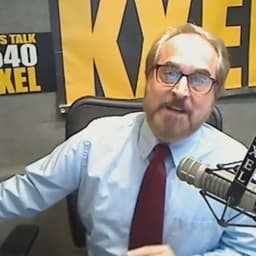
KXEL Live & Local with Jeff Stein · Mon Sep 28, 2026
But I want to go right now to the news line, and I welcome Joshua Lysik.
Mr. Lysik is a best-selling author.
He and Jeneca Pounds have collaborated on a new book that drops on October 20th, but you can order it right now at a discounted Amazon.
It's called Unelected, How You Paid a Sinister Elite to Take Over America.
Joshua Lysik, thanks so much for taking the time, sir.
Thank you for having me.
I'm glad to be here.
uh... you have written a number of books uh... that uh... folks have paid a lot of attention to because you're telling the stories that people don't want told you're connecting the dots explain first of all about the collaboration with jenica pounds who she is and and uh... why people might know her name
yes jenica is better known online at data republican she collaborated with the elon musk and others on the original doji effort
revealed these unfettered payments to the united states treasury to u f a i d u f aid and other systems that were creating billions upon billions of dollars in uh... it basically free money to uh... is to improve grants that were going to uh... very bluntly anti-american activities all over the world and of course within united states
That was upon exposure of that.
She and others as part of Doge were docs because anytime you're over the target, you're going to get the flak.
So that investigative effort originally Doge has been rolled up into a much larger expose of the entirety of the NGO administrative complex that's
In some cases, formal public-private partnership, but in other cases, it's informal alignment between organizations that want to increase the globalization of our economy, send even more tax dollars of Americans overseas, while paying for population replacement migration from the Third World
so that those people from elsewhere can get even more benefits, more opportunities, leaving less and less and less for American citizens.
And this is a project that's many decades into making.
Obviously, those folks are playing a long game.
And now that it is discovered, it's going to take a while to turn this around because of how well funded these outside groups have been over time.
This is nothing more than money laundering, correct?
Well, you could call it legalized money laundering because as far as it could seem, the grant system is above board.
And there's money that's going from taxpayers, you know, from taxpayers into the government, from the government into the grant system, from the grant system into radically left-wing organizations.
And there is this unelected, hence the title of the book, unelected,
This administrative elite, they exist within the bureaucracy.
In many cases, they bounce back and forth between working within the federal government, working for an NGO, working for a state government, working at a nonprofit or charitable foundation, something like that, or working and serving on the board of a company that they also work alongside with.
People who have done the same thing, the public and private, back and forth hopping.
What unites them all is an ideology that we've simply described as supranationalism.
Supranationalism.
Supranationalism is sort of the in-state of classical liberalism, a project of the Enlightenment that goes back almost 400 years.
And speaking of 400, our book has 472 pages because we also document the last four centuries of enlightenment progress from tradition, so-called progress, right?
From
tradition, religion, family, heritage, traditions that unite peoples and nations, and the sort of perpetual opening up of societies
to other cultures, other traditions, et cetera, to create sort of a global homogenous culture where, for example, taxpayers are paying for feminist studies in Pakistan or transgender ballet in Central America, millions upon millions of dollars, billions even, that's going overseas to liberalize and to bring the secular enlightenment
elsewhere.
And of course, the democracy-building measures of the global war on terror period, the end of the Iron Curtain period, and then more recently, the Arab Spring period.
But because those regime change wars were such a disaster, the new plan is, instead of sending our military into those countries, we simply bring those countries' populations here, projects that were accelerated under First President Obama.
and then President Biden, this again is supranationalism, where they have a patriotism in which all people all over the world are deemed equal in citizenship, in their status as citizenry.
So therefore, anyone from anywhere, be it a Haitian in Springfield or Somalia in Minnesota, these people are future Americans.
You see, that's why birthright citizenship is such an issue for the supranationalists is because they don't really see America as a sovereign nation of individuals as individual rights.
They see the progress of progressivism as needing to perpetually march ever forward towards greater and greater inclusion.
Joshua Lysik is our guest.
He and Genica Pounds, authors of the forthcoming book, Unelected, How You Paid a Sinister Elite to Take Over America.
It's released October 20th.
Get it now at Amazon or wherever you get your good books.
And Mr. Lysik, kind enough to join us live on News Talk 1540, KXEL.
I want to put a couple of things into context.
Just so that people understand the scope.
So for example,
We're talking 200 billion for Ukraine, 50 billion.
Again, this is in a year for USAID, 9 billion for the resettling of refugees.
Okay, those are all billions of dollars.
The median full-time salary in Iowa is 58,000 a year.
The average full-time salary is 74,000 a year.
So we're talking about stupid crazy amounts of money that the average citizen cannot even comprehend is that one of the reasons why?
Prior to the current Trump administration a lot of folks across the country just kind of didn't grasp this a they didn't know about it and be It's just so far beyond the realm of possibility.
No lottery winner is going to have this kind of money
Yes, I think this is a real problem, and we've all identified.
I'm over in Ohio, so we're in the collective Midwest together.
A lot of what I, with the experience thing, Ohioans, are as well.
And it seems ridiculous.
Why would we have to relatively suffer an economic malaise, and everyone's getting freebies, gimme-stimmies, and handouts all over the world?
But we have to come back to this.
late-stage liberalism concept of supra-nationalism.
You know, we have all heard the sort of kumbaya expression that this is one world and we need to love without borders and love your neighbor.
They actually believe this sort of stuff.
The elite, the unelected elite, they deem themselves our moral and ethical betters.
They see it as their
sacred responsibility to treat all citizens of the world equally.
Their patriotism is global.
This is why they adored NATO, the United Nations, regime change, conflicts.
So the way that they see it is there are people who are in Iowa and there are people in Ukraine.
If indeed all men are created equal, which is a favorite refrain of the supranationalists,
wildly overextending it from dignity before god to uh... equality of citizenship even if we're not citizens if your understanding of citizenship is being a global citizen then there's no difference between people in ukraine and people in iowa and while ukraine their suffering of war so obviously they need your money more than you do
And because, again, of the super nationalist philosophy, which is late stage, classical liberalism, Jeffersonian values, the secular enlightenment going back 400 years, we trace all of this in the book, all of it.
It makes sense when your patriotism is global and your understanding of citizenship is also global.
And that there are people who are having a hard time in
Somalia, well, we need to bring those people over here because their economy and their quality of life is so poor.
Well, look at what the average income in Somalia is.
It's not fair that Iowans earn more than Somalis, so we need to bring the Third World here so they can earn as much as you do.
And if that suppresses your wages, well, that's a sacrifice I'm willing to make of Iowa.
the ones who are in control saying it's a sacrifice they're willing to make because they're taking care of themselves.
It's the same way in any socialist or communist system, the ruling elites who know more than the rest of us poor schlubs, they do pretty well, don't they?
Oh, they do, yes.
They tend to be extremely wealthy, well connected,
This is the, many people have heard of Davos.
This would be the Davos demographic of this vast wealth and interconnectedness.
And the issue, of course, is that it's both parties.
It's not just a democratic party.
There are various foundations and initiatives and think tanks that are so-called conservatives, which are also dedicated to this obsessive
free market capitalism where if your job can be sent overseas to increase profit, make number go up and raise the stocks, well then your job will be sent overseas.
Oh, you're in Iowa.
Yeah, well, another country needs your jobs more than you do.
You can find something.
There's always WIC or EBT, food stamps for you.
This is how they think.
And it's also explicitly
an anti-white philosophy, because they look at the demographics through social justice.
All of these other people in these other cultures and other economies, they're largely non-white, non-European.
We need racial justice.
So we're going to import opportunities from largely white Iowa overseas, and that's fair.
That's balancing the scales.
This is how our unelected elite think, and it's in both parties.
Very much in both parties.
I'm so glad you made that point because we didn't get here in a day We're not going to turn it around in a day, but what's the best first start?
Obviously sunshine and the book unelected by you Joshua Lysik and Jenna compounds gives us the data the evidence that is necessary at a very approachable level But what's the easiest way?
What's the first best step?
to turn this sort of thing around.
Which do we unplug first to have the biggest impact, I guess?
I think one thing that could be done at a local level as a state level is to primary out Republicans, again, at the state level races, primary out Republicans who are of the super nationalist philosophy, who believe in one nation under GDP, and have these
Super nationalist talking points across Iowa across the nation primary them out through the state house state Senate County level county level races of course also and then us representatives the US senators This is the this is the first point of having people in positions of power who understand that from the perspective of Iowa America first means
Iowa first.
It means Iowans first and having that mentality.
We have our own problems in Ohio also where we regularly see representatives like Mike Turner, for example, the US representative, is always going on MSN now and CBS News talking about how important it is to continue sending money to Israel
to Ukraine and to the other most parts of the earth and just how important that is for us to continue doing because they need our money more than we do.
Unelected is the book.
The author is Jeneca Pounds and Joshua Lysik.
Mr. Lysik joins us live on KXEL for a couple of more minutes.
He's very generous with his time, but this is such an important topic.
Book is released October 20th.
Get it now.
Pre-order through Amazon everywhere else where you get your good books these days.
Do you have, and by the way, this is already a number one Amazon bestseller in one category, number two and another.
So this is getting attention.
Do you have a level of optimism that the forces of good can turn this around?
Because obviously, as you've noted, it's both parties.
It's so entrenched.
You're talking money.
You're talking about
a philosophy that some of these folks would go to their grave fighting for.
What level of optimism do you have that this can be turned around?
Well, one of the things I'm doing is that which is within my control.
You know, I'm a professional nonfiction book ghostwriter by training and experience, but in my work and in my life, I've become politically connected and salient and
I simply do what I can.
So I guess you could say I kind of break away from my own nonfiction book writing career to offer and co-author books that expose these things because, like a lot of Americans, I have children.
I have a genetic stake in the future.
The Norman Rockwell Heritage America is the America that I believed that I was promised, as many of us do.
And then we wake up and we go to our local
playground with our kids, and it's the demographics of the Dallas-Fort Worth Airport international arrivals.
What are we doing here?
So as long as each one of us does what we can to stand up and speak out into the best of our ability, say, no, this is not okay.
If each one of us does that, it's a little bit of courage, then that courage snowball and can become great change.
And that's such a wise counsel because, again, many times I talk to folks who hear these conversations and they say, I just don't know what I can do because the problem is so big.
Well, you do what you can in your corner of the world.
And if everybody does that, then things start to change.
Unelected, how you paid a sinister elite to take over America.
The forthcoming book by Jenica Pounds and our guest, Joshua Lisek.
Thank you so much, sir, for the time that you've put in.
on this writing project, but also in explaining it so clearly for us here today, and I hope we talk again.
All right.
Sounds good.
Thank you very much.
All right.
Take good care now.
And Mr. Lysik joined us live on the news line on News Talk 1540KXEL, where Iowa comes to talk.
News Talk 1540 KXCL, where Iowa comes to talk.
The Northeast Iowa Food Bank is working toward a major fundraising goal this morning.
An update from Food Bank Executive Director Barb Prather.
Barb, thanks for being back with us.
Thanks for having me.
It's
great to be here.
Before going into the details about the fundraising effort, let's just talk about some of the work that's been happening at the food bank.
It's been a very active stretch for construction.
Tell us what's different today than it might have looked maybe a year or so ago.
Yeah, you know, we've started about a year and a half ago raising money for a $14 million campaign to renovate the facility and about probably about the same time frame started.
construction to renovate the food bank.
And it's a phase project because we're also still working out of the facility.
You know, the focus of the goal is to ensure long term the food bank is viable for the community and we can ensure that we're taking food in and getting the food that we need versus turning it away.
And so the different phases are helping us do that.
One of the first phases that got finished was our new office space, which brings more community space for meetings.
We've already hosted a number of community meetings to get people into the food bank to see what we do, as well as provide collaborating space for our team to have meetings, to just, you know, get out of there day to day and go and sit in a comfortable spot.
to get their work done.
And it's it's proving to be very valuable.
The other parts of it include a new food pantry.
So on the south side of the building along Lafayette, you'll see a new food pantry built.
It opened in August, serving 1500 families the first week.
And if you look at that number compared to what we were serving the first month, the
Pantry onsite opened in 2013.
We served in the whole month 1,500 families.
So that just shows the demand and the need is up.
Along that same wall is our loading dock.
We have four new bays that load and unload trucks and distribute that out to the community as well as a drive-in bay for street level traffic.
And then also happening internally is once those items got done, we're adding on to our freezer and cooler.
We've renovated our clean room to provide bigger space to do more repackaging of product.
And it's a, it's a cold clean room.
So we're able to repack frozen foods as well.
The volunteer space is not done yet.
The kitchen space is not done yet.
And our new freezer cooler is not done yet.
They're slated to be done before the end of the year.
And at the same time, we still have our goal of raising $14 million, which we're not quite there yet.
And we just need your help and the community's help in helping us reach that goal.
And we're grateful for the people who have stepped up.
to date, but we need help getting over the hump and getting over the end goal of ensuring that we can raise that money so we can ensure that we'll be able to move forward for the long term.
So we do have some projects in the works that we're hoping to announce by the end of October, which will be great towards the funding part, but we're also asking the community to help push it over the end.
We're talking with Barb Prather, executive director of the Northeast Iowa Food Bank.
They're in the midst of their $14 million capacity campaign, while also taking on some renovation projects over the last year and a half or so.
And going back to starting this, as you were also doing the fundraising, in hindsight, does it feel like it was something of a leap of faith?
Obviously, that fundraising is coming along and still in progress, but there was obviously some need to do
this immediately.
Yeah we needed to do it immediately and it's a chicken and the egg thing.
Partners have come alongside us but you're right it is a chicken and the egg.
If we don't do it we're not going to be able to take the food we need but if we
go forward and we don't raise the money, then we have those issues to deal with.
Partners, we do have a lot of partners in place, as I said, but we also have some things in the works that hopefully will bring the whole thing to fruition by the end of the year as well.
And you're taking pledges as part of this campaign, so not necessarily needing people to...
provide all the funding with a check written on the spot.
Right, correct.
We're doing pledges, so you can pledge over four years what works for you, so it isn't all needed now.
We need to make sure that we have pledges in place for the long term.
Talking with Barb Prather, Executive Director of the Northeast Iowa Food Bank as the
capacity campaign for the food bank continues.
I also want to remind folks who might be listening a little further away from Waterloo Cedar Falls or who may not have been familiar with the food bank in the past that, you know, you were talking about the food pantry earlier at the food bank.
That's a minor part of what the food bank does is it works over 16 counties.
Right.
Correct.
You know, we have eight programs that work throughout 16 counties.
The food bank started as a food pantry in 1981 and then became a part of the Feeding American.
network and being a part of the Feeding America Network, we bring in food and distribute it out through our network of partners.
And so the whole goal is to be able to take more food in.
so we can provide more food back out through our 16 counties.
For 45,000 people who are food insecure in Northeast Iowa, they may not know where their next meal is coming from.
So our job is to make sure we can provide access at some point through partners throughout that area to ensure there's access to food.
Inflation's been a real challenge for a lot of people over the last, well, since this decade began.
Correct.
What's the impact then when you look around at the food bank and see the demand for food?
Great question.
So every spring we survey a lot of the people that are using our services.
And we do that to get feedback on our programs and how we can improve them, but also figure out where the biggest need is.
One of the questions we ask every year is what's your biggest barrier to being food secure?
This year 95% of the people who responded to that survey said inflation.
They may get a little increase in their wages.
They may get a little increase in their social security.
Whatever their barrier is, life costs more money today.
And that's when the food bank helps step in and bridge that gap, which is why we do meals at the YMCA, the YWCA.
the Salvation Army.
We do meals at the Boys and Girls Club.
That's why we do summer feeding at 21 sites throughout our service area.
That's why we partner with NEI 3A to provide senior boxes.
That's why we provide food to other nonprofits.
That's why we provide food through our mobiles.
So all of those different programs we do, we want to make sure that there's access.
And this year, what's really driving people being food secure is inflation.
Is there any other data you can give us from that survey work or from other things that you've seen, whether that's demographic data or trends, just anything to help us wrap our minds around what the situation is?
Yeah, for one in eight people in Northeast Iowa, they're food insecure.
One in eight people.
So you have a room of 16 people.
Two of them are likely to be food insecure.
They're not going to talk about it.
Um, the other things that are driving it, um, as there's changes to federal government nutrition programs, which is the safety net, um, our demand goes up.
You know, people need.
Know that they can reach out to these programs when they need it most.
And we're just trying to make sure that there is access, um, throughout that area for one in six kids in Northeast Iowa.
They don't know where the next meal.
is going to come from.
Right here in Blackhawk County, that's one in five kids.
And so what we try to look at and what we try to do is ask questions about, you know, what are your greatest needs and how can we help them?
We know SNAP benefits don't pay for personal care items.
In the summer, we do a personal care drive.
We know protein is one of the most expensive things for people to purchase.
So
As a part of our renovation, we doubled the size of the clean room because we do have access to protein that we can get repacked.
And so everything that we do for questions that we ask, it's driving what do we need to do better to make sure people have access to food.
We'll finally barb this $14 million capacity campaigns making progress and hopefully going to reach the goal at some point in the near future.
What are next steps?
What kinds of things are you hoping to tie up and on what timeline?
Yeah, so the project should hopefully be done by the end of the year.
Shout out to Crystal Distribution.
and shout out to the Waterloo Convention Center because they've stepped in and partnered with us this summer.
Crystal for storage and the convention center to help with our meals that we're doing for our kids cafe and our summer feeding meals.
But there's a whole lot of other people that are helping make this happen as well.
Our longer term plan is to make sure we're providing and sustaining and reaching out to people.
So we can make a difference in people's lives.
So what we've started doing is really looking at all the data that we bring in and targeting the areas that may have higher needs or if they don't have higher needs, there's no source of food within 15 minutes of where they're at.
So we're taking a deep dive into the data and then we'll be really targeting all of our programs to ensure that they're working at their full potential, but also targeting the areas that need a little extra help to make sure that people in those communities who are food insecure have access to food.
Barb Prather is Executive Director of the Northeast Iowa Food Bank, which is approaching the goals for its $14 million capacity campaign, but still taking pledges for that effort and more information available from the Food Bank website and social media pages.
Barb, thanks for being with us.
Thanks for having us.
This is the station where Iowa comes to talk, News Talk 1540 KXCL.
I am pleased to welcome on the news line Michael Lucci.
Mr. Lucci is founder and CEO of State Armor.
Mr. Lucci, thanks so much for taking the time, sir.
Thank you for having me on.
Thank you for covering the Trump Xi summit.
You know, the most important relationship in the world is the relationship between the United States and China.
And let's get into how they're working through some of the problems.
state armor.org is the website, the slogan, global threats, state solutions.
And before we get into those details, give us a sense.
Who is state armor?
Who are you?
What do you do?
We are a nonprofit organization that works with state leaders, so legislatures, governors and attorneys general to remove incursions by the Chinese Communist Party.
So sometimes they sell technologies into your state government that are essentially spyware.
We want that out.
Sometimes they make partnerships with our universities.
Really, most of our universities do this, where our universities are effectively partnering with the Chinese military to help China's military develop military technologies.
We want those to stop.
So we work at the state level on all the problems where China presents the state a unique problem.
We want to present a unique solution to their incursions.
As you noted, the president of China met with the president of the US multi-day
dinners, summit meetings, etc.
in Washington.
But this was also a pivotal week with regard to some other international agreements and partnerships.
So give us a sense in context, first of all, the China meeting with the president.
How does that rate in comparison to some of these other things, including our European defense?
Well, I think that
This is a really important question.
The most important thing that I think happened last week is our deal announced Wednesday with Denmark and Greenland that essentially gives the United States unprecedented access to Greenland for security purposes, for military deployment purposes, and also blocks China and Russia from Greenland, blocks them militarily, and it gives us the veto power on any economic investments they want to make.
I think it's important to realize, first of all, a lot of trade passageways in the Arctic area are opening up because some ice is melting, some is shifting.
And China has designs on what they call a polar silk road.
Russia is obviously an Arctic power.
They have a lot of territory in the Arctic.
And so it's very important for the United States, geopolitically, to lock down this region.
We have access through Alaska and now through Greenland.
I think that's the biggest thing that happened last week between the United States and our adversaries being China and Russia.
It's a huge deal.
It's a transformational deal.
And it's certainly a deal that China and Russia didn't like.
I think it was also messaging to the Chinese leader, the day before he arrived, we signed this deal that blocks them out of this part of the Arctic.
There were a number of bits of symbolism.
That was one of them, very clear.
President Trump meeting President Xi when he arrived and then there was a flyover.
Again, there were a lot of these things that some might just call coincidences, but it was all part, was it not, of saying, do not for a moment think that the United States is weak and we're ready to match you toe for toe.
I think that's exactly right.
So from the Chinese side, it's very important for their leader to project strength, to message to his people that, you know, we're equal with the United States.
We're peers with the United States.
And President Trump's willing to give them some optics.
You know, he met them at the airport tarmac.
He made this sort of grand display towards the Chinese leader.
But at the same time, there was a lot of symbolic messaging, such as the warplanes lying over the Chinese leader.
There was also the choice of songs at the state dinner for the Chinese leader.
One was from the musical Les Miserables.
That's actually quite hostile towards the Chinese Communist Party because that's the type of music that they banned during Hong Kong protests in 2019.
The Hong Kong protestors sang music from Les Miserables as protest against the Chinese Communist Party.
There was other music.
They played Taiwanese music during that dinner.
It's a little bit of a poke at the Chinese Communist Party.
In the next day when President Trump walked the Chinese leader through the foundation of democracy in the United States, the Declaration of Independence, the Constitution, showing our form of government, he then walked the Chinese leader, reportedly, through a series of treaties between the United States and China.
China hates those treaties.
They regard those treaties as a sign of their humiliation.
They call it a century of humiliation.
So if all of this is true, the President of the United States, President Trump, while giving the Chinese leader some optics victories, is clearly symbolically messaging, we are not, you know, we are not simpatico, and we are showing you our version of how the world is going to be run.
And it's very different from what the Chinese Communist Party wants.
Michael Lucci is our guest.
Mr. Lucci is founder and CEO of State Armor.
You find them online, StateArmor.org.
He's kind enough to join us live on News Talk 1540KXEL.
Too soon to tell, I think, if there were any tangible agreements
that came out of the meeting, and I say that because I don't think there was anything officially announced jointly.
There may have been some talk on AI.
There may have been some talk on agricultural commodities, but they've made promises before.
It sounds like this was a meeting that needed to be had, but that doesn't mean that anything good came of it.
Certainly nothing bad.
Tell me where I'm wrong on that, please.
Well, the American side,
treasury secretary bestent and our trade rep jamison greer said part of what they're doing here is a check-in on china's previous promises
and
some of those promises were to buy soybeans and some of those promises were to sell rare earth magnets so these are inputs into a lot of important technologies and as you said like china's always you know making a promise and then really breaking the word so part of this was a check-in on those promises and an opportunity for accountability
And we extended this so-called trade truce for just two months, which actually would concern me if I was on the Chinese side.
I'd be thinking, what happens two months later in January?
So it extended from November to January.
So not a long extension of that trade truce.
There was some talk about, as you're saying, reduced tariffs on some American agricultural goods, possibly even American coal being sent to China.
A lot of things that are relatively small, they even talked about sending two new panda bears, China sending two panda bears to the zoo in Atlanta.
So a lot of small things, and I think the reason why it's coming out that way, is America is making big moves outside of these meetings.
So these meetings are kind of, there's a lot of optics, a lot of show, but the big moves are removing China's best friend in Venezuela, Nicolas Maduro.
That was their guy.
He was selling all of their oil to China.
Similar things happening with Iran that is their guys in the Middle East is the terrorists in Tehran We're you know pressuring Cuba because of the on the island We've removed China from Panama Canal partially remove them at the ends of the canal So we're making all of these big moves outside of these meetings and we're getting off of Dependents or economic input and then at the meetings it's happy talk You know good optics while we are still you know sending these all messages that we're not necessarily the best of friends
If you go to nationalreview.com, you'll find a piece that was published last Wednesday by our guest, Michael Lucci.
It's entitled, Trump's China Strategy Is Bigger Than Tariffs and Summits.
Of course, that's what we're talking about here, but if you'd like to read the article, nationalreview.com, and we continue the conversation with Michael Lucci of State Armor Online, statearmor.org.
Obviously, those...
those shots that were taken at the at the Chinese playing Taiwanese music etc etc etc that doesn't sit well obviously they they have a certain sense of pride and public display is was there anything demonstrable from the Chinese that suggested that
They got the message and they didn't like it or was it just one of those things where you just have to swallow it because you're on the other guy's home turf
I think while they were here.
They had to swallow it I would also note that you know in China the media is state-controlled.
It's
just Tommy's party propaganda They are not covering the things that we just discussed.
They're
not covering the warplane flyover They're not covering the protesters yelling as Xi Jinping when he's on the stairs of the National Archives
They're not covering the choice of music.
They're presenting their leader as having achieved this equal position with the United States.
I don't think that's how the United States sees it.
I don't think that that's how President Trump sees it.
So they're covering it in their internal market in that way.
At the same time, I don't think it's possible.
For example, Chairman Xi's wife is a musician.
I don't think it's possible that she missed the music choice.
I don't think it's possible
that they missed the symbolism.
It's not possible that they could have avoided the symbolism of the Chinese-American documents that President Trump displayed to them.
They regard those treaties as very hostile towards their interests.
And so for Trump to choose to show them these treaties from the 19th century and some in the 20th century that they don't believe in at all, it's a pretty clear symbolic act
So he's he's making clear under the surface and through these global deals where the United States is at the same time He's giving them these optics wins like oh, you know, we're gonna shake hands.
We're gonna be so friendly with each other We're gonna say a lot of nice words to one another.
So there's kind of two stories going on at the same time
You've talked about this a bit this morning, but I want to laser in for a moment the US has
a market in China because of its sheer size.
However, I think you've suggested that we may have had a little too much dependency or reliance on the Chinese and that the Trump administration is positioning things a bit differently from the economic standpoint.
Give me a little more on that if you wouldn't mind.
The main input that China controls and they control this globally are rare earth magnets.
their low cost, their low margin, and that's actually why China controls those inputs, because if anyone tries to enter in competition, China will just drop the price, and they'll wipe out the French provider, the American provider.
Last year, when we went back and forth on trade spat, trade fighting, China finally pulled that card.
They never used that before.
They said, we're going to put export controls on these rare earth magnets.
What that actually meant
in the extreme case, which is how they wrote it.
If someone in South Korea sends a cell phone to Australia, China says you need their permission to do that because there's a little tiny bit of Chinese rare earth magnets in there.
So this finally woke up the world to a problem that has been talked about for two decades, but nobody has acted on, which is Chinese control over these rare earths, Paxilica, which is a deal with all of our trade partners who are not China to replace China
for these critical inputs, so they don't have this leverage over us anymore.
And so while a lot of folks say that, oh, Trump went back and forth, and then he backed off because they used that rare earth card, I actually think that this was one of the great American achievements of the last decade on our relationship with China as we finally exposed how hostile they could get on this key input.
And now we're really rapidly working
with all of our global partners to get rid of that Chinese control.
It was just covered in the last two days in the Wall Street Journal, the progress on this removal of dependence by the Chinese Communist Party.
And once we remove those points of dependence, we have a lot more flexibility towards them.
And maybe what is now just symbolic of American hostility towards Chinese will become much more out in the open.
Trump's China strategy is bigger than tariffs and summits.
It was a preview piece that was published by National Review last Wednesday.
You can still find it right there.
It's by our guest, Michael Lucci.
Michael Lucci of State Armor, onlinestatearmor.org.
Fascinating conversation, sir.
Thank you so much for the time today, and I hope we do it again sooner than later.
That sounds great.
Thank you for having me on.
All right, take good care now.
And Mr. Lucci was kind enough to join us live on the news line on News Talk 1540, KXEL, where Iowa comes to talk.