This is Iowa Talking Points, the candidates, produced by Studio 5 at Mud Advertising and Totally Iowa Media, where you hear from candidates in the November 2026 general election.
Now, Iowa Talking Points, the candidates.
From Studio 5 at Mud and Cedar Falls, here is Jeff Stein.
Hello and welcome.
There will be a new member of Congress representing Northeast Iowa's second district in Washington in January of 2027.
It is an open seat due to the incumbent seeking other office.
And there are no fewer than four candidates on the November general election ballot.
One of them joins us at the Iowa Talking Points table today.
She is Lindsay James.
Ms.
James is the Democratic nominee, having won the primary this past June.
Lindsay for.
Thanks so much for taking the time.
Jeff, it is so good to be here for the second time.
You were kind enough to join us prior to the primary election, but for those who may not recall that conversation or are now evaluating things with a four-way race in November, why did you decide to seek this congressional seat?
Jeff, it's an important question.
For those of you who don't know who I am or just tuning in to this race for the very first time, my name is Lindsay James.
I'm a mom.
I've got two teenagers.
So for those of you who have survived that stage of life, parenting teenagers, I like to say I'll take all of the advice and thoughts and prayers.
I have two amazing kids and actually being a mom is my absolute favorite title of all of the titles that I've got.
So I'm also an ordained Presbyterian pastor and I've spent the
bulk of my career as a chaplain, showing up for people in their hardest moments.
I've also spent eight years in the Iowa legislature working to lower costs for hardworking Iowa families here in our state.
And the reason why I decided to jump into this race was very clear to me.
Folks are making impossible choices because of their economic realities, because they're living paycheck to paycheck, because we are facing a cost of living crisis that are causing folks some real hardship when it comes to balancing their budgets.
I've talked to a mom who shared with me that she's making the impossible choice, do I pay my utility bill or do I buy my daughter a winter coat?
A dad who's struggling with
the choice, do I put food on the table or do I pay my rent?
I even spoke with a man who lives in a mobile home community that's been purchased by private equity.
Being priced gouged out of his home, he's making the impossible choice.
Do I pay for my rent and keep my mobile home or do I pay for my insulin medication and keep my foot?
These are the kinds of impossible choices that folks are making in the wealthiest country in the world.
And I think all of us can agree that that's just not right.
So what can a member of Congress do on these issues and I'm not diminishing the the story she just told but
what can you do as one of 435 in the U.S.
House to help alleviate the situation for those individuals?
Yes.
Well, the policy choices that are happening in Washington, D.C.
are directly impacting people in their pocketbooks.
Whether it's tariffs that are hurting our farmers, whether it is a war that has been impulsive and chaotic and caused American taxpayers billions and billions of dollars
Those kinds of policy choices mean that there are less resources for here in America and in Iowa in particular.
I will tell you that the big beautiful bill, which I would argue is only beautiful for billionaires, has resulted in 25,000 Iowans being at risk of losing their health care.
rural health care system is already under incredible financial strain because of policies coming from Washington DC, whether these were Medicaid cuts or ACA cuts.
These are the kinds of policies that are hurting everyday Iowans and are driving up costs.
And so my argument to folks who are thinking about this race is, you know, as someone who has shown up to people in their hardest moments,
That's what I'm going to do for them in Washington, DC.
Give us some examples, because again, you were talking about funding cuts for certain things.
Give us some examples of the direct application of those, because I have heard some people say, well, now maybe it's not the same sort of money that is necessary given inflation.
Some say it's an actual cut in money.
Some say it's a change in standards.
Give us.
the identification of the problem as you interpret.
So just a rural health care system in Iowa, Iowa's second congressional district will be about 60 million dollars loss to our hospitals in rural Iowa's.
That's a significant blow, but it's also been, you know, upwards of a billion dollars for all of the hospital systems here in Iowa.
The direct result of those policies has meant that hospital systems and healthcare providers are already making impossible choices.
We've seen layoffs of upwards of 100 medical providers in Grinnell.
We've seen layoffs of medical providers in Mason City.
We've seen a hospital clinic
This is in preparation and in response to these significant cuts, which is why if we roll back the Medicaid cuts, then we can infuse millions of dollars of resources back into our rural health care system.
And one of the alarming data points that we're facing right now is that Iowa is number one in the country for rising cancer rates.
We're number two in the country for the sheer number of cancer cases.
Now, when you have a combination of incredible increase in medical need and a financial strain on the healthcare system, that combination is deeply alarming.
As someone who is a chaplain, I've seen what cancer means to many, too many of our families here in this state.
All of us know and love someone who has either
struggled with a cancer battle or who they themselves have fought cancer.
And we want to make sure that we are giving our families their best chance and, you know, giving them affordable and accessible health care.
So as we talk about resources.
Yes.
We're now at $40 trillion.
of federal debt.
And when you were here prior to the primary, it wasn't quite that high.
And now it's just again because of the compounding of interest, which is a whole different issue.
So where does the money come from if you want to restore the funding you just mentioned?
It's got to come from somewhere at the basic level, understanding that we're in the hole.
Yeah,
the deficit is also deeply alarming.
I have balanced the budget in the Iowa State Legislature for the last eight years.
And we have seen actually what happens to a balanced budget when people with out of control spending, which is what we've seen land us in a budget deficit in our
state budget and needing to lean on emergency reserves in order to patch up the state budget.
We need people who are responsible, who are unwilling to strap this kind of deficit onto the backs of our kids.
You know, I said my favorite role is being, my favorite title is being a mom to my two teenagers and I want them to build a beautiful life here in Iowa.
we can't strap them with these kinds of burdens.
And so when you see a deficit continuing to grow because of the policies coming from Washington DC, it's time to say enough is enough.
And the way in which we can decrease when it comes to this deficit is to make those who are ultra wealthy pay their fair share into the system.
All right.
So the question I was going to ask was, is this a revenue issue or a spending issue?
And I guess I'll stick with that question and circle back to what you just mentioned in the next segment.
But is this a spending issue or is it a revenue issue?
So as someone who's balanced budgets, not only in my own family system, but in the state, we need to be really thoughtful about our spending.
And we also need to hold accountable those who have
benefited off of the backs of hardworking Iowans when it comes to their own success.
For example, I don't believe that Elon Musk should pay less in taxes than a teacher here in Waterloo.
Ultra-wealthy folks need to pay their fair share into our country.
Okay, so define ultra-wealthy, first of all.
And the reason why I'm asking it this way is I have said for a long time in broad conversation when you hear a
politicians say we should tax the rich.
A lot of folks say that's a great idea because nobody thinks of themselves as rich and so I always like to quantify.
So who's ultra wealthy?
Those who are billionaires have profited from the work of everyday hardworking families in this country and in particular in Iowa.
So those who are billionaires should be paying their fair share into this system.
Okay and then what is fair share?
Because they already are paying a larger percentage of their income than those who have
less income.
Well, I can tell you what's not fair.
Jeff is a teacher right here in Waterloo, a nurse who's working here in Waterloo, a family who's working to put food on the table for their kids.
Those folks here in Iowa, my neighbors should not be paying more in taxes than billionaires.
Lindsay James won the Democratic primary in June for U.S.
Congress from Northeast Iowa's second congressional district.
The website is lindsay4iowa.com, all one word.
We'll continue this conversation with Representative James as Iowa Talking Points, the candidates, continues after this.
One opportunity, change your career.
Mud advertising is hiring product specialists.
$20 an hour, paid weekly.
That's 52 weeks a year plus record-breaking profit sharing.
Let me repeat, $20 an hour plus record-breaking profit sharing.
But we're just getting started.
The best in the business, 401k, company match, gold standard health plans, on-site fitness center, generous pay time off, and so much more.
Apply today and don't look back.
You're watching Iowa Talking Points, the candidates.
Here again is Jeff Stein.
And we continue with Lindsay James.
She is the Democratic candidate for Northeast Iowa's second congressional district.
You'll find four candidates on the November ballot, a Democrat, a Republican, an Independent, and a Libertarian.
LindsayForIowa.com is her website.
You gave us a bit of your background in the prior segment, but tell us a little more about what brought you to Iowa and what brought you to running for the state house to begin with.
Yes.
So I am a proud Iowa transplant.
My husband received a job here and so we moved our family here and have built our life here in Iowa.
This is the only home our little kids know now teenagers.
It has been a real gift this state is the best place to live and work and raise a family and I love our neighbors deeply and I'm so passionate about doing right by them.
And one of the things that I can tell you as someone who has
worked as a chaplain showing up for people in their hardest moments is that you learn a lot about the struggles that folks are facing and you learn a lot about what's practically not working for them and
From showing up for people across the state and learning about the challenges that they're facing, it became very clear to me that there were practical things that we could do to help alleviate some of these challenges.
And that's why I ran for the state legislature a number of years ago and why as someone with deeply held faith commitments and a commitment to doing right by my neighbor, I am so passionate about now going to take all of my experience and heart and
passion for our state and going fighting against the corruption that we're seeing in Washington, D.C.
So what are the skills that you were able to hone at the State House?
Because again, it's a very different experience than one would have had in virtually anything else.
So now that you have that experience, what's that blend?
What is going to help you actually affect change in Washington, which
Many of us think is just kind of stagnant and it's just rearranging the names and the chairs, but nothing's getting done.
So what skill set do you have that helps us think you could move it forward?
Sure.
It's an important question.
As someone who has been trained as a chaplain, we are trained not just to show up.
not just to listen to gather information, but to listen in a way that understands the deeper realities and challenges that everyday families are facing.
That experience actually helped me be a bipartisan legislature in the state capital.
So every single year I worked on legislation and
worked on problems that needed to be solved across the aisle with colleagues of mine across the aisle.
Because for me, it doesn't matter what political affiliation you have, you're my neighbor.
And I am called to do right by you.
So I'm going to do everything I possibly can to solve the problems that families are facing here.
And so I was known in the Iowa capital as being a legislator who did a lot of bipartisan work and had a lot of respect within my own party.
and across the aisle.
And I am going to take that kind of experience and skill set and take that to Washington DC to actually reduce costs for hardworking families here in our state.
I'm going to ask, and I try to ask the candidates similar questions just so that the audience can balance and compare.
Good, yes, absolutely.
So what does it mean to be a Democrat in 2026?
And again, I've asked the Independent, the Libertarian, and the Republican who have all sat there the same thing.
What does it mean to be a Democrat?
as you take the oath in 2027.
So
I, you know, for me, I don't love party labels.
I am a mom who is someone who cares deeply about living out my faith commitments.
One of the things that I have been deeply shaped by, and I think that folks should know this, is the parable of the Good Samaritan.
And for many of us, that's a familiar parable.
But for those who maybe don't fully remember that story, it's a story of a traveler who's
hurt and harmed and robbed and beaten and left for dead on the side of a road.
And people come by and see him hurt and harmed on the side of the road and what do they do?
They turn a blind eye and they walk the other way.
And then the next person comes by.
They see him hurt and harmed on the side of the road.
They turn a blind eye and they walk the other way.
That to me feels like exactly what is happening in Washington DC right now.
People who see clearly the problems that our communities are facing, the people who have the power and the position and the ability to enact change in our lives are turning a blind eye and walking the other way.
It takes the Samaritan to stop and see the person and pick them up and give them the care that they need.
But what is so profound about this story is this image of a commitment to your neighbor.
But what has also shaped me is the interpretation of Dr. Martin Luther King, Jr.
What King said about this parable was that it's not just our moral obligation as people to pick up the person who is hurting and harmed on the side of the road.
it's our moral obligation to fix the road.
Because what King knew about the road was that it was a place that was notorious for being dangerous.
And unless we fixed it, it would happen over and over and over again.
What's happening in Washington, DC is people are turning a blind eye to the challenges that folks are facing every single day.
And we need someone who has a moral obligation to care for their neighbor and to fix the roads and the challenges and the problems that are causing the harm.
first place.
And that's to me why I'm running and how I understand the importance of this role in the life of our country.
For me, when it comes to my faith, caring for my neighbor is not optional.
And people are longing for someone who has a moral compass and courage of conviction to go and do right by them.
Now, how does that tie then with being a Democrat as
2026 moves into 2027 is the suggestion the other party doesn't do that or I don't want to put a word words in your mouth.
Right now what we're seeing is that Washington DC politicians are not doing that.
They are turning a blind eye and they are walking the other way.
Regardless of political party we need someone with a moral compass and courage of conviction.
That is who I am because when it comes to my faith again caring for my neighbor is not optional.
Another question that I ask each individual
One of the very first things you'll do once you get there is to vote for a leader of your party.
Are
you supporting Representative Jeffries?
to be either your caucus leader or the speaker, depending on how the vote breaks down in November.
You know, Jeff, I think that's also an important question.
What I'm focused on right now is the realities of everyday hardworking families in this state.
And when I get there, I look forward to having many conversations with my constituency about what they want in a leader.
And nobody has brought that up to this point?
Well, you know, that is one of those things that I'm ready to cross that bridge when we get there.
What do people bring up when you do a town hall or you go meet people at the coffee shop or wherever you find people these days as a candidate?
What do you hear most often?
Yes, everyone is talking about the cost of living, the cost of gasoline, the cost of groceries, the cost of health care.
One of the things I want to point out is that I'm the only person in this race who is going and holding public town halls.
I have gone to every single county in this entire district three different times.
I'm holding public town halls everywhere I go because again, what is missing right now is people showing up for everyday hardworking families and I am someone who is going to go
Be held accountable to my constituents because again, I'm going to say it over and over again when it comes to my faith.
Caring for my neighbor is not optional.
And I care deeply and take seriously the role of a representative to represent accurately all of my constituents, regardless of political party, regardless of background.
I want to do right by my neighbors.
Based on your experience then.
Are there various assignments or, I don't want to say specialties, but there are lanes, if you will, that people gravitate toward naturally, whether it's actually a committee or just kind of a lane that they have expertise in.
What would you, if they were to say, well, what do you want to do?
What would you suggest to them off the top of your head that plays well into your skill set, but also the constituents?
One of the things about a chaplain is that we show up in people's hardest moments.
When things get hard, we run toward that because we don't believe that people should struggle alone.
But when it comes to hard, challenging circumstances, chaplains are also people who tell the truth.
And we are people who fight to do right by others.
One of the things that we're seeing in Washington, DC, and I see and hear this from constituents that people are disillusioned.
and exhausted by politics.
They are longing for someone with a moral compass and courage of conviction, and yet what we see is a deeply corrupt system happening in Washington DC.
And that is why I feel extremely honored to have the support of the single largest anti-corruption organization in the country and Citizens United, because I have made
public commitment to not take corporate PAC dollars in my campaign, to ban stock trading amongst members of Congress, to ban the legislator to lobbyist.
pipeline to end Citizens United, to enact term limits and make sure that we have fair representation in our positions of elected office and in our government.
That is because I am someone who again feels held accountable to doing right by my neighbor and making sure that I'm doing the very best to represent folks.
So when they say you can have any committee assignment you want, what do you pick?
There's so many good options.
So healthcare is something that as a chaplain, you show up in a lot of people's hardest moments when they're dealing and wrestling with healthcare.
I had a conversation recently with a constituent who shared with me that he had been denied by an insurance company a life-saving surgery for pancreatic cancer.
And he had appealed that decision.
he was recently notified that that appeal would take anywhere from six months to a year to be heard.
Six months to a year is not the kind of time that someone who is battling with life-threatening cancer has on their hands.
And he said to me that he believes that his insurance company is simply waiting for him to die.
That is happening
in our country right now with folks who are in dire circumstances and I think that's morally reprehensible and wrong.
And as someone again who is
all about caring for my neighbor, I am going to do everything that I can to speak truth to power.
One of the first speeches that I ever gave on the floor of the Iowa House was after the privatization of Medicaid.
And one of my neighbors lost health insurance services that he so desperately needed in order to have a quality of life.
And when I learned his story, I decided I was going to share it on the floor of the house and that I would call out
the company AmeriGroup for denying him those services.
And you know what happened, Jeff?
This is wild as soon as I was done.
giving this speech and telling his story.
I get a request to speak to someone in the lobby, and I can imagine that you already know which lobbyist it was.
It was the Amerigroup lobbyist, and this Amerigroup lobbyist said to me, Representative James, we just don't do that in the Iowa House.
You don't just call out a company by name.
My response?
My response was, I don't care what the norms of the Iowa Capitol are.
I care that my neighbor gets the health care that they need.
I am all about speaking truth to power and making sure that the systems and structures that are meant to serve people actually serve people, not the powerful.
Lindsay James won the primary in June, earning the Democratic nomination for Northeast Iowa's second congressional district.
LindsayForIowa.com is the website.
More as Iowa Talking Points, the candidates continues after this.
Studio 5 at MUD is built to get attention and get results.
From radio and television to digital video and live productions, it all happens inside our 3100 square foot production studio.
An infinity wall, multi-camera live webcast capabilities, massive green screen, audience seating and a full creative team for pre and post production.
Whatever you need for media or production, get noticed and get results.
At MUD Advertising, we love it when you
succeed.
And we continue our conversation with Lindsay James.
She's currently a state representative, Democratic nominee for U.S.
Congress, Northeast Iowa's second district, lindsay4iowa.com is the website.
And I've mentioned it a couple of times.
Folks who have watched the other programs in the series know four people on the ballot.
Democrat, Republican, Libertarian, Independent.
If folks are now starting post labor day to pay attention, how do you differentiate yourself from
any of those three that people will see on the ballot?
Absolutely.
I think that's a very, very important question.
And I think there is a stark difference for voters here in this race in Iowa's second congressional district.
So I am a mom and I am all about keeping kids safe and, you know, making sure that our kids have the life that we know that they deserve to build in this amazing state and country.
And so these are top priorities for me, but I'm also a chaplain who, as I said earlier, have deeply held faith commitments and a moral compass that guides how I think about all kinds of issues and policies.
But for me, when it comes to my faith, caring for my neighbor is not optional.
I am running to care for my neighbor and make sure that they can build the life that we all know that they deserve in this amazing state and country.
And I am someone as a, I'll throw this out here.
I am a redhead.
And for those of you who know or love a redhead in your life, you know that we are a feisty bunch who have fire to go and do what's good and right and just for all people.
And so I am someone who is not afraid to take on corporations,
Special interest, moneyed interests, lobbyists who are harming my neighbors.
That is something that I do not take lightly and will not stand for, and I am someone who will go and fight for you.
So with that, I think that this is an incredible opportunity to send someone with a moral compass and courage of conviction to do right by Iowans to the legislature.
A vote for Joe Mitchell, who is my Republican opponent, is a vote for someone who is an insider who has spent his political career lining his own pockets.
when it comes to his own business interests.
Joe Mitchell is someone who served in the Iowa legislature, who then, after losing a race, became a lobbyist.
He actually founded a lobbying association that would then advocate for policies that would line his business interests, line his pockets, further his business interests.
And we've seen that
when he has voted for policies that would then give his business a leg up.
And we've seen him use those policies to enrich himself by the tune of $2.5 million.
We even know that Joe Mitchell has used
a million dollars of taxpayer dollars of our Iowa hard-earned money to build a housing development that included his own home.
This is someone who is in this for his own interests.
I am someone who is in this to fight for my neighbor.
I want to be very clear.
Are you suggesting any of that was illegal or are you discussing the
type of person broadly that we would be electing.
I just want to make sure that there's no misunderstanding about what it is yours.
Let me tell you what happened.
Joe Mitchell voted for and supported for policies that would benefit his business to the tune of $2.5 million.
That, to me, is something that speaks to the content of character.
He's in this for himself.
He is a super wealthy insider who is spending
$90,000 at Mar-a-Lago, partying with DC elites, whining and dining at those DC's elites and writing it off as a campaign expense.
$90,000 is more than the average Iowa household makes in an entire year.
Joe Mitchell has never had to struggle with saving for a down payment on a house.
He's never had to struggle with the cost of childcare or putting food on the table for kids.
I am someone who has
fought every single day in the Iowa legislature for folks in their hardest moments and doing everything that I can to make sure that corruption is held accountable.
And a vote for Joe Mitchell is one that is a vote for someone who is an insider who is in this for himself.
A vote for me in this race is a vote for a mom and a chaplain who is going to do everything that I possibly can to do right by my neighbor.
Earlier you talked about corruption.
tied to Washington.
Give me some examples of what we're talking about.
And I say that because it's easy to just blame, quote, Washington.
And so I want to make sure that I give you the chance to identify.
What is it you're talking about when you're talking about corruption in the federal level?
People need to be clear.
It's not just corruption on a federal level.
It's a corruption on a state level.
I remember my very first day in the Iowa legislature right outside the chambers in the Iowa legislatures where the lobby
sits and stands.
They have a disproportionate
outsized influence in our policymaking places.
And I remember that first day I was getting introduced to the lobbyist for this big corporation and that big corporation, the lobbyists for the big insurance companies and pharmaceutical companies.
And I begin looking around and I'm like, where's the lobbyists and advocates for everyday hardworking families that are my neighbors?
And it became very, very clear in that first day in the Iowa legislature that they had
special interest, moneyed interests have an outsized voice in influencing our politics and our policies.
And as someone who has deeply held faith commitments and a moral compass, I am here to say that's not right and we can do better.
On a federal government, we're seeing this exponentially.
We see members of Congress who are entering into Congress and having coming out of Congress with increased wealth because of insider information around stock trading that they
use to build their own portfolios.
I am someone who is going to go fight to ban stock trading amongst members of Congress because we need accountability and transparency there.
And that's why I don't take a dime of corporate PAC dollars when it comes to my campaign and why I'm going to tell all of the stories of how I'm fighting for everyday hardworking families in this state.
Lindsay James is a Democrat.
She is the nominee of her party for Congress, Northeast Iowa's second district, a final segment with Representative James, currently a state representative, when Iowa Talking Points, the candidates, concludes after this short break.
Iowa has a wonderful heritage, and each day I'll share these stories of historic people and events with you.
I'm Jeff Stein.
Join me for the Iowa Almanac program and learn more about this great place we call home.
Now, seven days a week.
Listen on radio stations across the state via podcast or at IowaAlmanac.com.
Signs can set the tone.
Signs can direct, instruct, and motivate, and even seal the deal.
At MUD Advertising, we create signs in every shape, size, and material for clients nationwide.
From point-of-purchase displays that turn heads and drive traffic to campaign signage that brings your marketing to life.
Need to go big?
We do that too, with large format banners, trade show displays, vehicle wraps, and more.
Whatever the message, whatever the size, wherever it needs to go,
Whatever your signage need call us today at mud advertising.
We love it when you succeed
You're watching Iowa talking points the candidates here again is Jeff Stein
And a final few minutes with Lindsay James.
She is a Democrat running for Congress from Northeast Iowa second district Lindsay for Iowa comm in some of the media messaging television ads your
talking to people at a trailer park and you mentioned that earlier in the conversation here.
This has to do with outside firms, private equity firms, there are a variety of names for these entities buying up some of these properties.
That's something that you say needs to be regulated or reviewed.
Absolutely.
So one of the things that we have seen is that
the role of private equity in, you know, really disrupting our markets.
So we have seen private equity come in in full force and buy up manufactured housing communities in this state.
Now, for those of you who don't know much about this,
Manufactured housing communities, the people who live there don't own the home or they, I'm sorry, they don't own the land that their home sits on.
They own their home.
And so these private equity firms have come in and purchased these communities and they've increased rent exponentially for those living there.
And it's caused a lot of families to have to make impossible choices like the one I shared earlier, the gentleman making the impossible choice, do I pay for my rent and keep my mobile home or do I pay for my
insulin medication and keep my foot.
These are impossible choices because of private equity coming in with huge amounts of resources and seeing people as a line item on a spreadsheet.
And I don't believe that's right.
But it hasn't just stopped there.
Private equity has invested in
single family homes, they've invested in purchasing nursing homes and assisted living facilities.
We've even seen private equity purchase storage unit facilities in order to turn a profit.
and in an exponential way at the cost of our people and our neighbors.
And so I engaged in this fight at the very beginning of my work in the Iowa legislature.
And every single year I signed on to or put forward legislation with Republicans to fight against these predatory business models.
And as someone who is a bipartisan legislator who will do what's
good and right and just for all people regardless of whatever political affiliation they may have.
I worked together across the aisle to pass protections for mobile home residents.
And every single year we got further progress.
But I would argue those protections weren't enough.
We have a lot more to do.
But this isn't just on a state level.
There are ways in which we can solve this on a federal level.
So we know that private equity firms are receiving low interest loans from the
federal government because they claim to be furthering affordable housing.
We can put national policies together that would have some accountability there to either claw back those resources or put provisions in place that would make sure that private equity are not price gouging families out of their home.
So we've got a lot of work to do.
I've done a lot of work on the state level.
I'm ready to take this fight to the national level.
Now I could understand if you want to say to a firm,
You can apply for all the federal loans you want, but here are the conditions.
The conditions are the term, the interest rate, and what you do with the money.
I could understand that.
But let's say I own a mobile home park and I want to sell it.
To somebody who will give me money because again capitalism Are you saying that you would propose that I might be limited who I sell it to?
Because it is a residential area.
I just want to be clear
Yeah, there's lots of different policies that we can put into place to protect folks one of the models that we could do is a co-op model where you know entire communities could get
access to low interest loans from the federal government to buy up their own community and, you know, regulate their own community and, you know, lead their own community.
That's one model.
There's ways of talking about this where if you, you know, to limit the increases in rent when it comes to if you've received a low interest loan from the federal government, that's a standard that we see in other places that we could engage.
One of the things people ought to know about when it comes to Iowa's state code is that
that renters in an apartment have more rights than a person who owns their mobile home living in a mobile home community.
And I would argue that that's not right.
And so I bring this up as an example of how I have fought for everyday hardworking families.
and held these big corporate interests accountable to making sure that they are not harming people who are just simply trying to build the life that we know that they deserve here in our state.
And I am someone who is not going to mince my words when it comes to fighting against these special interests, moneyed interests, and big corporations if they are harming my neighbors.
The reason I asked the question a moment ago the way I did one of your opponents and I had a conversation at this table about Farmland and his concern was that because this has to do with food supply We should regulate who purchases farm ground and I posed the same question Are you saying that if you want to sell your farm?
You're okay with the government telling you that you have to sell it for less etc and he was and
And that was very consistent, I think, but I'm just wanting to try to see where the line is on some of this.
Yes, these are both complicated questions and straightforward questions.
China should not be coming in here and buying up all of our land.
We need to have strong responses and regulations when it comes to outside influences.
And that is why I support that housing bill that actually passed in a bipartisan way.
That housing bill actually limited and capped the amount of
single-family homes that private equity could buy up.
This is a first step in a complicated process.
But again, at the end of the day, what voters need to know is that I'm on their side, that I am going to be a fighter for hardworking families, and I am not going to be a status quo politician who toes a party line.
I am someone with deeply held convictions and a moral compass and feel accountable to doing right by my neighbor.
You are asking Iowa voters in Northeast Iowa Second District to elect you to Congress.
We have a few minutes left, and I'll let you make the case directly to those voters.
Yes.
Well, it has been some of the most deeply meaningful work to serve you in the Iowa legislature, and I cannot wait to take on this fight with you in Washington, D.C.
As a mom...
as a chaplain, as someone who sees and understands the realities of this cost of living crisis.
that Iowans are facing, I am going to do everything I can to fight for you so that no one has to make an impossible choice like paying a utility bill or buying their child a winter coat.
No one has to make the impossible choice about putting groceries on the table for their kids or filling up the gas tank so that they can drive to work.
Iowans are struggling with impossible choices and this cost of living crisis, and I am going to do everything I possibly can as someone who is a person of faith to go and do right by you.
Because when it comes to my faith, caring for my neighbor is not optional.
Representative James, thanks so much for taking the time and good luck on November 3rd.
Thank you very much.
It's an honor to be here.
State Representative Lindsey James, the Democratic nominee for Northeast Iowa's second congressional district, lindsay4iowa.com is the website and that brings us to the close of this edition of Iowa Talking Points The Candidates and as always we thank you for watching.
This has been Iowa Talking Points The Candidates, produced by Studio 5 at Mud Advertising and totally Iowa Media.
For more information on this series, go to iowatalkingpoints.com
This is where Iowa comes to talk.
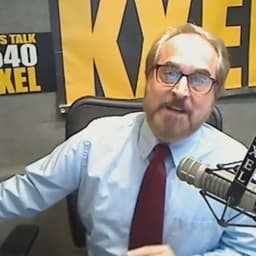
News Talk, 1540 KXEL.
And this is KXEL Live and Local.
From the KXEL News Center, here is Jeff Stein.
and good morning to you once again our number two of the program on the air live across the state of Iowa.
50,000 watts strong on a Thursday morning KXEL news time is five minutes past nine o'clock and it is our privilege to spend the next quarter hour with the great Bill O'Reilly.
Mr. O'Reilly joins us live on the news line he and Josh Hammer
are the authors of the brand new book entitled, Confronting America, What Has to Change.
You folks know we begin this program with the O'Reilly Morning Update.
We end it with the full Bill O'Reilly Update weekdays, and it is always a privilege to welcome Mr. O'Reilly to KXEL.
Good morning, sir.
Thank you for the time.
Thanks for having me back, Jeff.
How are you?
I am quite well and quite well informed after reading
my copy of confronting america what has to change third volume in the confronting series why this theme why this topic at this time
i'm an old guy now and uh... figured i have to put down uh... my experiences in journalism so confronting america is what i call eyewitness history so i was in the middle of all of what i write about i was actually standing there being shot at or
somebody was chasing me or whatever it might be and uh... i attach lessons learned which is the subtitle uh... what has to change in america to what i have seen what i have done and it's a fun book in the sense that uh... it's not fun when you say well america's got these problems that we can we can't seem to fix them that's not fun but what i went through
to gather the information, that is.
Because we're talking all the names, no anonymous sources.
They're all in there, my interactions with the presidents, with big time movie stars, all of that.
But always at the end, it applies to a problem we have that should be addressed in a better way.
I am assuming that as you set back,
in a mode of reflection and doing the reporting contemporaneously.
I'm guessing there were some points where as you collected the material, put together your recollections, certain things perhaps became more sharply in focus about how we got off the rails.
If that is the case, give us a few examples of that, if you would please.
Well, the biggest example and it's an excellent question you're asking is personal responsibility.
and so my uh... parents got married after world war two my father was a naval officer occupied japan and my mother uh... had a college degree very rare at that time so they got married uh... they have any money uh... we moved into levittown on long island new york and we uh... settled into a working class existence in the body of that
Were Americans who basically believe that their country was noble that was number one Okay, that would we had just defeated a Hitler and tojo in Japan and Everybody was riding a wave of we are a great country, but there are certain things that we don't do So we don't sell drugs to children We don't steal
We don't lie.
All personal responsibility stuff, but it was taught.
And if you violated that, the neighborhood itself would look a scans at you.
So if you were a dad and you ran out on your family, you just left.
Okay, you could never come back to Levittown.
You would be scorned, maybe even beaten.
for that kind of behavior.
So it was a uniformity of conduct, and it worked, except for African Americans.
They were shunned, and that was the weakness of the post-World War II era.
It was corrected somewhat, but if you have to be honest about your country if you want to solve any problem, that was the deficit right there.
But overwhelmingly Americans bought into the capitalistic system.
I work hard.
I'm honest.
I Develop my skills and I'll prosper and they did look at me.
I Came from no money at all Okay, and there are millions of other people like me Who have made it because they understood the system they took responsibility to develop their talents
and bingo.
That is not existing anymore.
That's the big midterm thing, Jeff.
The government will make your life better.
No, it won't.
It never has anywhere.
But that's what the Democratic Party is selling.
And it's interesting to see Iowa kind of buying it to some extent.
So because Iowa is always been a state of common sense to me when I visit And now I'm looking at a very close senatorial race Where one of the candidates the Democrat is ultra liberal and I'm going what happened there?
Is it all about gas and food prices?
So maybe you can tell me that because I don't know but individualism is the theme throughout Um confronting America good
positive individual behavior.
Confronting America what has to change the new book by our guest Bill O'Reilly along with Josh Hammer who writes many of the scripts that you hear Mr. O'Reilly edit and deliver on the air on KXEL.
Mr. O'Reilly joins us live and to the point you made I'm a second generation American.
One side of my family came over on the boat, literally, in the early 20th century, and it was a melting pot.
And I recall, oh, maybe 30 years ago, at an academic conference, I started hearing people say, it's not a melting pot, it's a divider plate.
And I thought, we are on the wrong path.
That's really a large part of this, is it not?
People come here not to become American.
but to, in many cases, destroy American ideals.
Yeah, but I think that's a little overblown.
Obviously, the Biden open border policy has damaged the country in profound ways.
There's no doubt about it.
But the most of the people, because I run three corporations and I hire a lot of foreign nationals, I check their papers, but they are the hardest working people that I have.
I mean, they really want to succeed.
They believe in America's greatness, most of them.
But it's just, if you have 20% who don't, then you've got a problem.
And Trump was able to solve the problem somewhat by an effective closure of the Southern border.
So that problem is pretty much front and center.
But I don't think it's the individual there.
That is the cause.
It's just the mass chaos on the part of the government that for, I don't know, four years, I think a full four, just waved everybody in.
Criminal, they don't care, sociopaths, come on in.
That's ridiculous.
And I think everybody knows it.
But now, we don't have an analysis of policy like that.
We have party loyalty.
We're tribal.
And that's why I was so surprised to see what was happening in Iowa, because it usually was a traditional conservative tribe in your state.
But that seems to be shifting a little bit.
Well, what's interesting is if you go by voter registration numbers, Democrats are a poor third behind Republicans and non-affiliated voters.
And when you are non-affiliated, and some of that is because they don't want to get on a certain mailing list, of course, or another whatever, but you don't have the same sort of tribal loyalty, and that can lead to swings in the electorate,
especially when you have Republicans running saying that that they're the bipartisan candidate and they'll work with everybody and kind of forgot the fact that the guy in the White House won handily three times in the state of Iowa and despite the issues you mentioned with gas prices and food prices, he's still popular here.
So there's a disconnect in that respect I think in terms of strategy.
Well maybe we'll see the result of that in the vote in November.
Look, if you want to succeed in America, it's not that complicated.
And that's why reiterating, confronting America, what has to change, is that your own attitude has to change.
How often, Jeff, have you walked into a restaurant?
You see a family of four sitting at a table, and all of them have the phones in their hands.
How many times have you seen that?
Every.
Every time.
Right.
So the parents aren't talking to the kids.
Kids aren't talking to the parents.
Nobody's learning anything.
Everybody's tick-tocking or whatever the hell they do.
Okay.
And I'm going to myself.
That was time where my parents talked to my sister and I about the country, about our situation, about school.
But now that doesn't happen anymore.
So we're drifting further and further away.
in the reality sweepstakes.
So here it is.
And then people have this vision that the government, whether it's state or local or federal, is gonna come in and give them a house.
Who's gonna do all this stuff out.
Affordability.
Affordability.
That's a democratic mantra.
Affordability.
You ever been to California?
That's run by Democrats.
Stop the bottom.
Is there anything affordable in that state?
Anything?
No.
So when you have the population that looks away and their thumb rules their life on the phone and they don't know anything, it's much easier for these slick politicians and political parties on both sides, on both sides to fool the people, to manipulate the people.
We have a few minutes more with Bill O'Reilly confronting America what has to change the excellent new book the afterward Summarizes everything if I may say so nicely because the fact-based stories are told for the first couple of hundred pages and then the summary
is what I hear, Mr. O'Reilly, our audience say when we talk about problems on the radio, the response is, okay, well, what can I do about it?
And you've laid that out so nicely.
I have to ask because I don't have children.
You've talked about your urchins.
How hard has it been to raise them the way you were raised given the societal changes that they're in the middle of every day despite your best
efforts?
It wasn't hard for me because I'm a dictator.
Sure.
Okay.
I mean, gotta be honest here.
I mean, once you walked into the O'Reilly home, um, it was, uh, hey, this is what we do.
And as they got older, my children got older.
Um, I did allow them to think for themselves as long as it wasn't destructive thinking.
So they weren't going to get a tattoo of a panther on their neck.
Yes,
it's not going to happen in my house.
All right.
And I had the authority and the credibility, um, to get away with it with the, with the kids.
They didn't always like it because there wasn't, there was a prohibition on the cell phone at the dinner table or the breakfast table or whatever table we're sitting at.
Put that away.
Okay.
How many times they heard that?
So for me, it wasn't that hard.
because I respected the way my parents were brought up by their parents and that was the great depression going way back to the twenties and how they brought me up so I'm a traditional guy and I'm not going to let high gas prices or food prices even though I understand how painful they are
Okay, but I'm not letting that deviate from what I believe the country should be.
So I tell my audience, Jeff, on the No Spin News below Riley.com, you're not voting for a person in November.
You're voting for a movement.
One movement wants to keep America strong, but improve.
I hope they want to improve it because it needs to be improved.
And the other was to tear it to pieces and replace it with a socialistic paradise.
Now, if you're going to vote for a Democrat, that's what you're voting for, no matter what the Democrat says, because they have to buy into that system just to exist in the party.
We saw yesterday, Kamala Harris show up with old Saeed in Michigan.
What
the
deuce was that?
Yeah.
Okay, this is a guy who hates Jews, who doesn't want cops to have guns, who doesn't want to put criminals in prison, and you're showing up indoors in him?
Kamala Harris?
What's the matter with you?
And then you can go back and say, my God, what if she were elected president?
Well, we wouldn't have the Iranian thing, you know, we wouldn't.
But boy, oh boy, I think the rest of the country would be a shambles at this point.
Lastly, do you have the same optimism for the future of America that you might have five or ten years ago?
Yeah, because I went through the Vietnam age.
Yes.
So in the Vietnam era, the anti-war people thought they had it.
They were going to change the US government forever.
All right, sex, drugs, rock and roll.
We got the power.
You know, just go back and look.
And that dissipated so fast, and you know what killed it?
The anti-war counterculture of the 1960s, early 70s.
You know what killed it?
Disco.
Disco.
Killed it.
So when I see all this, you know, it's temporary pain, particularly if the progressives win in November.
It's not going to be good.
But we always seem to snap back because the American spirit is one of accomplishment.
It's one of competition.
I don't think that will change, but it's not going to be as strong as it was when I was growing up.
That's the first positive thing I've said about disco or heard about disco in a very long time, sir.
But it's very amazing.
that a disco could knock out this whole counterculture entertainment movement, and that's exactly what happened.
Confronting America, what has to change?
The good folks at St.
Martin's Press, bring it to you.
Bill O'Reilly and Josh Hammer.
Mr. O'Reilly is the most successful nonfiction author in world history, and it continues with this book.
Always a privilege, sir.
Thank you so much for taking the time and sharing your insight in the book and with the audience here in Iowa today.
Appreciate it, Jeff.
Thanks for having me in.
All right, God bless, sir.
And Bill O'Reilly joined us live on the news line.
From his home base,
near New York City.
On News Talk 1540 KXEL, where Iowa comes to talk.
Newstalk 1540 KXEL where Iowa comes to talk.
It's been a very wet September and that will impact harvest timelines for some farmers.
Practical Farmers of Iowa has been thinking about wet spring conditions and whether cover crops have any mitigating impact at planting time.
Let's get the details from Stefan Galen's research director at Practical Farmers of Iowa.
Thanks for being back on our program.
No problem Tim glad to be
here.
So practical farmers of Iowa started to study this idea with some help from farmers in 2024.
What are the results suggest so far?
Right, well for years we've been hearing from farmers in our network using cover crops that they thought cover crops were helping them get into the field in the spring in a more timely fashion.
You were kind of mentioning that at the top there, but also paired with some evidence from.
scientific experiments across the Midwest shedding light on soil physical improvements that cover crops can provide to fields.
We wanted to see if improvements could be actually realized by actual farmers.
their actual farms and we found some pretty neat evidence to suggest that in the springtime cover crops are providing maybe one to two more days of field work in that kind of April to mid-June timeframe which is especially important for crop productivity planting
fertilizing, spraying, scouting, all those kinds of things.
So it was really neat, particularly for the farmers involved who had been using cover crops for years, to start to see some of that evidence go along with the stories they thought they were experiencing or seeing on their farms.
It's still a relatively small sample size that you're working with.
It was a little bit more than a dozen farms that started to make observations about this in the initial year, up to 38 last year.
What do you feel like you need to have to really have a solid sample size to be able to make some of these statements on a broad basis, not to mention the fact that one year is a little different from the next?
You nailed it right there.
We're looking to continue this project with more farmers and more locations, particularly because we know every spring, every year is a little different.
And so the more kinds of conditions, precipitation, temperature, conditions that we can experience while farmers make these kinds of observations.
I think that can just only help with the story we're trying to tell and uncover any more evidence or patterns that may reveal themselves.
So we are really looking forward for more people to participate.
We're also looking for a range of cover crop histories as well.
We started to see, for some of our participants who have been using cover crops for three, six, 11 years, they were the ones
that saw a little more of that field work advantage than people who maybe didn't as consistently use cover crops or were new to their cover crop usage.
So the more kinds of range of farmers cover crop histories that we can get in the project I think can help us shed more light on this phenomenon.
And really one of the major benefits has been from the farmers telling us that they've just really enjoyed
making these observations on a weekly basis kind of helps them fine tune their observations and improve their management of their fields writ large.
And so that kind of secondary finding that the farmers participating are just enjoying the experience, that was really rewarding for all of us as well.
We're talking with Stefan Galens who is the Director of Research for Practical Farmers of Iowa about a study that's in some way still in progress about cover crops and whether that allows farmers to get into their fields sooner after a field has had cover crops for the prior season or over several prior seasons.
And let's take a step back and talk about the fact that it's
been more challenging to find the time when those field conditions are right in springtime over the last several years.
That's the trend based on data from U.S.
Department of Agriculture.
Yeah, the trend Iowa State University Extension officials were kind of starting to pay attention to this and they plotted data from the 1960s to the present showing that wet weather is really keeping farmers out of their fields.
putting pressure on an already tight planting window and that that planting window has been getting smaller and since 1964 I think the data showed from Iowa State Extension.
We've lost about one day every six years so it's a very negative slope from the 60s till now and so part of this experiment this project was to see if
our cover crop fields kind of stemming that tide, pushing back on that trend.
Again, we were getting stories from farmers, and so we wanted to kind of take them from their word for their word and say, well, let's try to put pen and paper, take some observations to see if we can push back on that unfortunately negative trend.
And again, that's such an important time for planting and protecting our crops to be as productive and profitable as they can be.
So this project really was a way to see can we keep that window open as long as we can so that we can still really optimize our crop planting and productivity.
And my apologies, yeah, the USDA data in this project involves the current observations and comparing what USDA expects for field work availability versus what the farmers are seeing themselves.
I guess that leads to another question about methodology and do you have a sense that farmers and the understanding of what's a workable day on one farm corresponds with how USDA does their measurements?
Absolutely.
Per USDA, we use their definition in this project and the same definition that their reporters across the state are using on a weekly basis.
A suitable day is one where weather and field conditions allowed producers to work in fields a major portion of the day.
So by nature, that is extremely subjective.
And it is meant to be for humans to make that call.
So whether it's a farmer, a USDA official or someone working with USDA, everyone's going to have an opinion on that.
And I think that's okay, right?
Whether one feels that that definition.
their field meets that versus someone else and whether they have cover crops or not.
That was part of we embrace that kind of subjectivity from this project.
And that was part of the fun of it as well.
If again, that definition is being used to report those things and to provide that data since the 1960s that then, you know, Iowa state officials were kind of using to calculate that downward trend I mentioned.
We thought, well,
Our farmers are out there and experiencing this too and they're using cover crops and the predominant landscape does not cover crops so we can use their reports against what USDA is reporting and say well everyone's using this same definition and it's okay if everyone's going to have a little bit different of an interpretation.
We wanted to see how that just kind of shook out and again that was really part of the fun of it and what people enjoyed about the project totally.
We're talking with Stefan Galens, who is the research director at Practical Farmers of Iowa, about a continuing project to determine whether cover crops have some impact in the availability of fields for work in the springtime coming out of winter when conditions are often wet.
And the 38 farms that participated in this last cycle, they were spread across Iowa, but also Minnesota, Nebraska, and Wisconsin, so that would suggest
that you probably had a lot of land types, a lot of usage types.
Were there some differences that you could pick out from area to area?
Yeah, that's a great question.
We did see that in addition to cover crop history, I mentioned that longer cover crop history seemed to provide some benefit.
We did see a little bit of different in location, particularly in Iowa.
farmers in the northeast, northwest and southeast, they seem to have reported more days suitable for field work than the USDA average than those in some of the other districts or locations.
So we weren't sure if we'd see that kind of pattern, but that was one thing that stood out.
So location, obviously that is wrapped up with precipitation, climates, weather type things.
So we're not sure if
That's what did it for those locations, but certainly part of the reason why we're trying to continue this and get as many people as possible is to experience all these different regions in our network, which is the upper Midwest and kind of surrounding states to Iowa that have different soils, different slopes.
different weather patterns in the spring.
Again, that can just help us see if the trend is universal or is reserved for certain pockets of the region.
So we don't know that.
That's why we're looking to continue it and wanting more people to participate in, as we call it, kind of join the fun.
Well, and as you've alluded to, the project is ongoing.
Do you have a
maximum number that you'd like to have involved or any other threshold that you'd like to achieve when it comes to the number of participants?
And if someone's interested, how would they get involved?
Sure, I'd say the more the merrier.
You mentioned first year was about like 17 farmers and 38.
We've got 50 to 60 participating this year.
So again, we've got plenty of room for people to participate.
People are really enjoying it.
Again, it's a fun.
and what I hear also from the farmers, fairly simple project to participate in when it comes to research.
People want to learn more or get involved.
The best way to do that is on our website and that is practicalfarmers.org.
Stephen Galens is research director at Practical Farmers of Iowa, and he's been with us to talk about a project that's underway.
Learning more about whether cover crops impact the ability for farmers to get out into their fields sooner in the springtime.
Stephen, thanks for being with us.
Hey, no problem.
Glad to be here.
This is the station where Iowa comes to talk.
News Talk 1540 KXCL.
I want to go to our Patriot Mobile Newsmaker line.
Say hello to our good friend.
He is the number one talk radio host in the entire state of Iowa.
Jeff Stein, who is of course overseas, our great big blowtorch out there, KXEL.
Jeff, we were just talking about the concerns that are being levied in of all places, Iowa now.
And just wanted to, I mean, you would know if things are looking tough for Republicans.
it depends which race taught and i appreciate as always you having the on the program we have an open seat for governor with a retiring republican incumbent we have an open seat for u.s senate with a retiring republican incumbent and both of those races are going to be very very tight and democrats have an edge in both particularly the race for governor there's a money advantage for the democrats
there is uh... a candidate who has been a state office holder for eight years from a recognition is an issue what's really interesting to me overall in both of those races all the candidates are denying their party affiliation they don't put democrat or republican in the ads they say that they're a new breed of bipartisan uh... civic servant et cetera
Well, I think that's what the public wants to hear is that people will work together.
But, you know, and you're in a state that Trump won pretty handily three times, you would think some of the Republicans might want to grab ahold of the president's coattails a little firmer than they are.
You know, that's a good point.
And what brought this up?
Steve Dace, who I know you know, had posted that he's been hearing that Republicans were told by their pollsters
that, you know, if they're in a 10 plus district, they're already underwater.
Well, I don't know if it's that bad because one of the things, and this is what makes it impossible to predict, we have a huge number of registered independence.
In half of the state, you have a Republican registration advantage, followed by independence with Democrats, a far distant third.
There are many more independence than there are Democrats.
Republicans hold their registration advantage, at least by a narrow margin, in all of the counties, or at least the congressional districts.
But the key is, it's hard to tell when you've got this large number of people who are not as motivated to vote as partisans, who are not as predictable in their votes on top of it.
And again, everybody's running as the next great bipartisan wonder and what's a voter to do.
Hopefully pay attention and be able to sift through the stuff that piles up this time of year, shall we say?
Jeff, are the Republicans getting their message out there or are the voters just not buying it with the Republicans or trying to sell?
I think that there is not.
as consistent a message is i would like to hear uh... i know that they are really focusing on the phrase working-class tax cut they're not saying big beautiful bill they're saying working-class tax cut well i don't care what the verbiage is get the point across you now have two of the four members of congress who voted for the war powers act in the house this month both of them were the uniform one is still in the reserves
And it is interesting to see that shift this close to an election.
And now you have the US Senate candidate saying we've got to end the war despite voting for it repeatedly when the occasion came up, including two weeks ago.
So it's a matter, I think, that economic times are tough.
The audience, as we near the harvest for farmers, they don't want to be paying six and seven dollars for diesel.
But the bottom line is I think they still trust Trump, but you have all of these out of town consultants telling the candidates to run to the center.
And that may be a good strategy to some degree, but I just wonder if it's going to leave the base behind and you sure need to hold on to them.
Yeah, look, I'm that is an interesting point about the consultants because I have seen that in other states where they're telling these conservative candidates be more centrist.
Well, it's one thing if you've got a lot of independence and so you want to be able to Bring them across the finish line but Todd you cannot do it at the expense of your own base and if the Trump base notice I did not say Republican base if the Trump base does not turn out in this election as they have for him When he has been on the ballot, it's going to be problematic and that's why the president says pretend I'm on the ballot
He's got to get those mega voters, the Trump voters, plus the traditional Republicans, plus then a share of independence in order to maintain the majorities in Congress they need.
I'm not sure people really can appreciate, unless you are in a true farming state, the impact that these diesel prices are having on farmers and their families, because that means, you know,
Of course, you're not going out to eat all the time.
That means they may not be going out to eat at all.
I mean, they're going to be using every single penny they've got for diesel.
You have caught me as I am literally parked outside the National Cattle Congress Fair, which starts tomorrow.
It is a huge gathering of agribusiness and all manner of folks.
And I can already tell just in our preparatory meetings here, there is concern.
There's concern about
the chinese living up to their uh... purchase obligations the cost to bring in the crop and again many of these folks have nice big fuel tanks on the farm they bought before this latest bike but this is going to have a domino effect it's not just the farmers it's going to be now the cost to get the goods to market to your grocery store and guess who's going to pay for every nickel of increased fuel cost that's a supply chain issue
And Mr. and Mrs. Grocery Shopper at the Kroger, they're gonna be paying more because of the diesel cost.
It's not that it's not for a good cause, I get it.
But some folks only looked at the other end of their checkbook in making a voting choice, and that could be problematic.
Wow.
That's fascinating, fascinating.
Jeff, appreciate your great analysis, and we're going to check in with you.
And I appreciate you were literally, I'm like, we were texting in the break.
Can you hop on the show and you did a great job.
Thank you for jumping in here.
You know I'm here for you anytime PS.
All right the great Jeff Stein KXEL in Waterloo Cedar Rapids Cedar Falls is there too by the way great area It's really I you know, I love I love our nation But I got to tell you Iowa pretty cool pretty cool state if you haven't been you need to go check it out great great state great stuff to do and the people there are just beyond kind and
And as KXEL Live and Local continues on this Thursday morning, it's time for today's RFD 1540 Conversation and for that we draw upon the insight of Dustin Hoffman, supervising editor, senior farm broadcaster Iowa Agribusiness Radio Network.
You hear their reports nine times each weekday here on KXEL and Dustin joins us here for this extended RFD 1540 Conversation Tuesdays and Thursdays.
President Xi of China, President Trump of the United States, meeting today at the White House, obviously all manner of things that they may be discussing and should be discussing, but with a focus on the ag sector and the Iowa economy, what are some things that the folks you talk to tied to agribusiness, what are some things that they hope are discussed in Washington this week?
Well, of course with agriculture a lot of the concern is going to be you know, are they gonna buy any more soybeans?
That's what the market really wants to know because you know The prices have been kind of pricing in that we could see some more price action We did get that handshake agreement earlier this year in which they did say they would buy soybeans But we haven't really gotten any kind of well we've gotten purchases But we of course they have to still take delivery to make all of that work, but also we
we are hoping that maybe there'll be more purchases, more ag purchases, more stability coming to the marketplace.
But the question is, one, will it, and two, will the marketplace already have priced it in?
I mean, if they agree to it, could the market have already been overbought, overpriced for it and be, you know, it wouldn't make a difference anyway, or could it be a situation where, you know, we are going to see that action come, we could see even a bigger boost, or
Could we walk away with something completely different?
I mean, there's a lot to talk about besides ag, and we know that.
There's a lot of technical issues.
There's a lot of business issues that need to be talked about.
I mean, I should tell you, technology issues and those kinds of parts of the economy as well.
And so we're not the only thing on the table, but the agriculture is the one thing that they really need from us.
And so we've got to have those discussions, and we've got to find out if there's any more plans to boost this or not.
and hopefully come with some even better deals, maybe something more concrete even because a handshake agreement is one thing, but it doesn't mean anything until those purchases are actually made.
Interesting point you make, Ruth, with regard to the prices, and it reminds me, you know, I think in older days, not all that long ago,
You'd have the Federal Reserve issue its report and then the market reacted.
Well, now we have so much prediction and prognostication in advance that they bake in the expectation before the announcement is made.
The announcement therefore has no effect because it already had the effect.
And it sounds like it's something similar here where some of these folks are making presumptions about quantity and further agreements.
And that's already going to show up in the price.
So if they
come through with something in Washington it's almost anticlimactic with regard to the actual impact on markets as I hear you talk.
Yeah, and that's a direct possibility.
But again, it all depends on what numbers do we get out of those discussions?
I mean, so there's a lot to be considered there as well We could see greater numbers than even the market anticipates We could see lesser numbers and the markets could go down There's just so much but there are so many moving parts because obviously the situation in the Middle East is affecting China economically as well with their purchase of oil from Iran And so I know that discussion is gonna be on the table.
Could we be seeing work towards trying to find a settlement?
there.
Could China be one of those countries that could be helping mediate an agreement between the US and Iran?
It's hard to say.
And so there's a lot of things at play.
There's a lot of global dynamics.
And of course, you know, how much of the global economy is China trying to get control of?
I mean, we see what they're doing in Brazil and Argentina.
There's also talk about what they're trying to do in other places in the Middle East and also in Africa.
And so we have to, there's a lot of things to consider beyond just tariffs and trade, but any kind of positive
right now on this is going to be something I think we're all hoping to see.
And obviously it is a global market and they need our products.
They would need our products more if folks in other
Areas of the world, we're not producing up to expectations.
Do we have a sense?
Especially I'm thinking soybeans, but any of these commodities where some of these other regions of the world are not able to meet the demand that a place like China might.
And again, we don't know our harvest numbers, so that part is speculative, but it at least would set the table depending on what others have done.
Well, we're at a time frame right now, Jeff, where, you know, it's becoming spring in Brazil and Argentina.
And so those soybean crops, those first crop soybeans are going to be going in across much of those two countries.
And so, you know, we have to anticipate what their weather conditions are going to be.
El Nino affects them just as way as it affects us.
And usually it's the opposite, you know, where La Nina helps benefit them and it's come times can dry us out.
The El Nino kind of gives us the boost and can kind of make things a little bit difficult for them.
And so we have to see that.
I mean, their crops last year came out fairly decent.
I don't believe, and I don't have the figures in front of me, but I don't believe it was anything close to a record, but it was still pretty decent.
But you also understand a record, even a decent year for them can be bigger than a record year for us because of the sheer size of the
amount of work that they can do in a country that big.
And so there's a lot of going on there.
You have corn and wheat exports being affected by the Black Sea action.
And can that be a big problem?
Obviously it is.
So there's a lot of things going on.
Of course, straight to Hormuz is going to be one of those things that gets talked about too, because China relies on that for shipping, just like a lot of countries do.
And there's a lot happening there.
And that's why I think resolutions in a lot of these conflicts are going to benefit the global economy much, much more.
But right now, that also then means war premium could come out of our markets.
And that's something that with the input prices being what they are, we can't necessarily afford that either.
And so we're in a really interesting crossroads right now politically and economically.
And I'm glad you mentioned the folks in the other half of the world.
I could not remember how their harvest had been as they're now getting into the field.
So I didn't know if folks globally were looking for the U.S.
to make up a shortfall, et cetera, from a trading partner standpoint.
And as you quite accurately note,
Handshake is one thing, verbal agreement is one thing, but it's the delivery.
And I know it wasn't that long ago.
We got all excited that China acted like they were going to take more of our products.
And I don't know if that panned out across the board as anticipated.
Can we trust the agreement based on the current geopolitical situation?
Or is that one of these things that it's just premature to even tell?
Well, right now we have seen them make purchases.
Again, it has to be taking delivery.
And we've seen them take delivery on a few cargoes.
I mean, so there is still there, and a lot of it has been new crop beans that they bought, which those are still sitting in our fields waiting for, waiting for, you know, that to get out.
And so it's, it's.
There's a lot going on, but you know they have made purchases It's gonna be depending upon if we can deliver and right now the crops look pretty decent I mean are they gonna be record-breaking?
I just don't think so, but you know USDA seems to think they could be pretty close But again, they're waiting on new crop purchases.
They're wanting to get the stuff fresh from the field But that's also the time of year they're gonna start normally coming to the table to buy our stuff anyway because it's coming out of the field It's right there.
It's available.
It's ready to go and you know, so we're
It's kind of a same side of a coin.
We would be seeing them purchasing anyway, but they don't necessarily have to purchase anything, and that's the beauty of a free market.
But exactly, we're waiting to see if they take these deliveries at the shipment start to go out like they're supposed to.
Excellent stuff, as always.
We'll be anxiously watching what happens in Washington today, and we'll be anxiously listening to Weekend Ag Matters this weekend.
Give us a quick preview if you'd be so kind.
Well, I had to sit down with Iowa Ag Secretary Mike Nagel.
We'll be playing the first part of that talking about farm safety, also talking about nutrients and water quality, especially as fall nutrients are going to be applied.
And we also have to make sure we're not jumping the gun on that and make sure conditions are right for those.
And so that's part of the discussion we'll be having coming up this weekend.
weekend ag matter Saturday mornings at 6 or in addition or if you prefer Sunday mornings at 11 30 the excellent weekend program from the network Dustin thanks for the time have an excellent weekend we'll talk again here Tuesday morning sounds good Jeff Dustin Hoffman supervising editor senior farm broadcaster Iowa agribusiness radio network and he joined us for this rft 1540 conversation on a Thursday on news talk 1540 KXEL where Iowa comes to talk