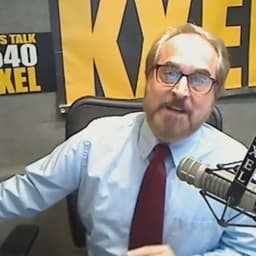
This is Iowa Talking Points, the candidates, produced by Studio 5 at Mud Advertising and Totally Iowa Media, where you hear from candidates in the November 2026 general election.
Now, Iowa Talking Points, the candidates.
From Studio 5 at Mud and Cedar Falls, here is Jeff Stein.
Hello and welcome.
The office of the Iowa Secretary of State is in charge of business filings and procedures and also responsible for administering elections.
Two candidates for the office will appear on the November General Election ballot.
One of them joins us at the Iowa Talking Points table here today.
He is Ryan Peterman.
Mr. Peterman is the Democratic candidate for Secretary of State.
Online Peterman4Iowa.com.
Thanks so much for taking the time.
Thanks for having
me on.
I really appreciate the opportunity.
Why make this run at this time and for this office?
That's a good question.
I'm somebody that's spent.
most of my life in public service.
That's something that's always been very important to me as a guy that spent a decade as a naval officer.
I came home to Iowa and realized I wanted to continue serving.
And I saw how much Iowa had changed from what I knew growing up.
And I decided I wanted to do something about it in public office seemed like a way I could do that.
And I think at a base level, I'm doing this for so many of the same reasons I decided to serve in the Navy.
I love the state of Iowa.
I love our country.
I care deeply about democracy.
I care deeply about the importance of public service.
And I think we need more folks in office who know that they are there to serve the public, not to serve themselves, not for the prestige or whatever, but there to actually serve and to solve problems and at the end of the day, make life better for folks here in Iowa.
And again, you wore the uniform.
Thank you for that.
So some of us did not have to.
Why particularly this office?
Because again, there are a variety of statewide offices, federal offices, local offices.
What was it about the Secretary of State's office that interested you for this next move in public service?
Right.
Well, for one thing, this is the office that protects really our most fundamental right in the democracy, the right to vote.
That's how we make our voice heard.
and choosing the leaders that shape the future of Iowa, the future of our country.
And it's how we hold our leaders accountable when we're not getting the job done.
So I think we need a secretary of state who always remembers and leads with the philosophy that this is about protecting the right to vote.
It's about ensuring Iowans always have their voice.
And I'd like to see a secretary of state who doesn't forget that.
There's an implication in that answer that that's not being done now.
Give me some examples of things that you would do to further the goal you just articulated.
Yeah, so when you take a look at my opponent, there's a gentleman that's been around for quite a long time.
And I do think somewhere along the way, he's lost sight of what this office has meant for.
In my view, protecting their right to vote means ensuring that our elections are secure, absolutely, but also that they are accessible.
And I think, especially in recent years in the past decade or so, we've heard
so much rhetoric about our elections that try to lead people to believe there's rampant fraud that they're not fair when that's just in fact not the case.
And that rhetoric has been designed to justify measures that have made it harder for folks to vote.
And I think we need to be focused on accessibility every bit as much as security.
And we've seen things like the shortening of the time period we had to vote.
We've seen things, actually fairly regular attacks recently on the right to vote by mail.
I voted by mail when I was in the Navy, so that's something that's particularly personal to me.
But every cycle, hundreds of thousands of Iowans vote absentee in some form.
And your circumstances, whatever they may be, should not dictate whether or not you can exercise your right to vote.
I think about the Iowans.
We do have serving away in uniform now.
I think about Iowans who are students studying away at school.
And I think about folks like my dad.
He's in his 70s.
He's wheelchair bound.
And it'd be difficult for him to get down and vote in person.
You have to make sure that, again, no matter what your circumstances are,
you have an avenue for making your voice heard an avenue for voting that is not difficult or cumbersome
is there a violation of state law occurring now in any of those aspects with regard to accessibility with regard to access by mail etc or is it
that you're looking to change the law that the legislature has put in place?
I would like to see some laws change here in Iowa.
And I recognize that as the Secretary of State, I would not be a lawmaker, but I think it's on me as the, or would be on me, should I be elected as the Chief Elections Official here, and I would advocate for better law.
I mean, when we need it, advocate for laws that keep our elections secure, but also to advocate for laws that make them more accessible, considering the circumstances of every Iowa.
Well, give us some examples.
What are the changes that the legislature has made over the past number of years that you cited?
What are the things that you would come into office and say, I'm proposing someone introduce a bill, because again, you can't do that, but you can draft a text to have someone introduce it.
What are some of the specifics that need to be changed?
So I would like to see us expand our early voting window.
It used to be 40 days.
We're at 29.
I'm not so naive as to believe that I can immediately
push a bill in there and get it back to 40 days.
But if we can't do 40, let's push for 30.
And if we can't do that, let's at least let county auditors mail out mail-in ballots before day one of that voting period beginning.
Right now, county auditors have to wait until day one of our early voting period.
That means you don't get your ballot until maybe a week later.
I'd like your ballot to show up on your doorstep day one if we can expand that time period.
I'd also like to see us, for a couple of reasons, make election day a state holiday.
One, this would
make it much easier for folks to go and vote on election day if they no longer have to work.
But I've talked to so many county auditors also who are struggling to find folks to work the polls on election day.
It is a long, often thankless day.
And if we don't have many more thousands of Iowans with the day off that is a much larger pool of folks for our county auditors to draw from and help them ease the burden, finding staff to actually work the polls on election day.
Have you had the opportunity to talk with folks in the legislature now
about those ideas.
In other words, is there some sort of growing sentiment that you think you could marshal with regard to that issue of election day being a holiday, et cetera?
I have spoken with folks in the legislature today about some of these ideas.
It's obviously not a given that they will be able to get passed through the legislature, but I think advocating for this includes and involves building
broad coalitions of people that can get behind this.
And to me, the perfect group of folks to bring into the fold here are county auditors.
Because when you think about the change from 40 days down to 20, that's now the same amount of work, county auditors and their hardworking staffs have to do in half the amount of time.
So if we can get together, band together with county auditors of both parties from across the state and just advocate for easing that burden a little bit, which will also make it more accessible for folks that have odd travel or work schedules, whatever your circumstances may be.
I think you can start incrementally making some
change to make sure, again, we're having elections that are secure, but also accessible.
Now, obviously, we had a smaller window for early voting.
It was then expanded to the 40, and then it was put to where it is now.
I would suggest probably as a result of experiences.
And so I'm just wondering, it wasn't that long ago, it was dropped to 20.
I'm just wondering the level of concern that you've heard expressed that would suggest we should change it again.
What I'll say is relatively quickly.
Right.
Part of this is two-fold.
You know, the vast majority of Iowans, it's not overly difficult to vote, but we have to be making sure we're considering the folks for whom it is.
And at the same time, the ballots need to be ready far in advance of that 20-day period anyways to comply with federal election laws.
So they're out there anyways.
They're waiting.
We might as well let people start voting early.
Do you have a concern of people who will be disenfranchised by voting too early?
And I say that because we've had the example in Iowa particularly in primary elections where candidates drop out after early voting has begun people have already cast their ballot that happened in a I think it was a primary for governor some years ago on the Democrat side.
I'm just wondering if
If there's a sweet spot if you will or is it one of these where well that stuff's gonna happen
Yeah, I think part of it is that stuff is is going to happen.
That's that's unavoidable And if you have the opportunity to choose when you're going to vote that should absolutely absolutely come into your decision-making process when you're considering the risks of voting orderly but if you know you can vote Only on day one of that window or you can't vote at all
then I think it's better to vote and to take that risk.
But again, that's a personal decision.
Voters will have to make if they do have the opportunity to choose on which day they want to vote.
Now, there's potentially a distinction.
I say potentially because I don't want to drive the conversation or lead you a certain way.
You can vote early in person.
You can also vote early via mail.
I say early because you get the ballot, you can return it whenever in order as long as it gets there by election day.
Is there a distinction in the timing?
Would you have the mail ballots go out at a different time, the in person at a different time?
I mean, how does this all play out in your mind?
I think if we can expand that window, we then get to a point where it's okay to have those ballots sent out on the first day right now with 20 days.
And I've talked to Iowans in rural areas.
who have experienced unreliable postal service.
Let's say they're worried about their ballot, making it back in time.
By the time they get it, it may have been over a week since the auditor actually signed it on day one.
If they happen to be out of town for whatever reason, by the time they get to their ballot and fill it out, it might not make it back in time.
So that's a concern for me because it's a concern for folks I've talked to across the state.
And barring us not being able to expand from 20 days, I think it is important to let auditors mail out ballots in advance so that you can get them on day one of that period.
So, I think that would be an instance where we should be mailing ballots out before day one of early in-person voting beginning.
Now, you've talked a lot about accessibility.
Do you have any concerns about the actual validity of the count as it's currently administered?
And again, accessibility and access, that's one thing.
Do you have any concern about the tally at this point or the propriety of the votes that are being cast under the current rules?
I don't have concerns about the tally from the point of view that our votes that have been cast being counted.
I think that is happening here and I want to say essentially we continue to ensure that is the case.
Ryan Peterman is the Democratic candidate for Secretary of State,
Peterman for Iowa.
All one word dot com.
The website will continue speaking with Mr. Peter in about his candidacy when Iowa talking points.
The candidates continues in a moment.
One opportunity, change your career.
Mud advertising is hiring product specialists.
$20 an hour, paid weekly.
That's 52 weeks a year plus record-breaking profit sharing.
Let me repeat, $20 an hour plus record-breaking profit sharing.
But we're just getting started.
The best in the business 401k company match, gold standard health plans, on-site fitness center, generous pay time off, and so much more.
Apply today and don't look back.
You're watching Iowa Talking Points, the candidates.
Here again is Jeff Stein.
And we continue this conversation with Ryan Peterman.
Mr. Peterman is the Democratic nominee for Iowa Secretary of State.
Peterman4Iowa.com is the website.
As you mentioned in the earlier segment, you wore the uniform.
Give us a little more of a sense of your background and
where you grew up and where you hang your hat these days?
Absolutely, not far from where I grew up.
I grew up in the Quad Cities and in Bettendorf specifically.
I'm a proud Bettendorf bulldog and I live in Davenport now, so just a couple miles from my child at home.
But growing up, I came from a family full of teachers, my mother, my grandmother, sister and cousins.
Anywhere you look, then you can find a teacher in my family.
And then my dad, he's an Army veteran, a small business owner for part of my life, worked in the HVAC control industry.
I think their example, the lessons they taught me growing up, along with the lessons of my own teachers and coaches growing up in Benton, North, I learned a lot of important things.
But the biggest thing I took away was the importance of public service.
And I know we hit on that briefly before, but I had some, in addition to my dad and my grandfather, who were veterans, I had a couple of football coaches in high school that served in the armed services.
And I think their examples, what really led me to want to join the armed forces myself, ultimately decided on the Navy and was fortunate enough to get a nomination
to the Naval Academy.
So I went out to Annapolis four years of school.
I was fortunate again.
I knew I wanted to be a Navy pilot and the Navy said I could go ahead and do that.
So I went down to flight school.
spent a couple of years in Pensacola, Florida, earned my wings of gold, and was assigned to a West Coast squadron.
So I flew helicopters out in San Diego.
While it was out there, I had the opportunity to deploy with the Theodore Roosevelt Carrier Strike Group.
We went to the Pacific in the Middle East on that deployment.
The brunt of that time, we spent in the Persian Gulf and did multiple transits to the Strait of Hormuz at a time when most people weren't thinking about that part of the world on a day-to-day basis.
That's not quite where we're at now, but it was.
That was a wonderful experience.
I served with incredible people from all over the country, pilots, air crew, but I also led a division of about 30 sailors, the most junior sailors in the squadron.
So it was nice to help shape their first experience out in the fleet.
These were folks that worked on the helicopter and were learning the job they were going to do to work on our helicopter for the rest of their career.
So very informative.
experience for them and for myself.
I got back from that and then went off the beaten path a little bit for a typical Navy pilot.
I'd heard about this fellowship program that's run by the Department of Defense, applied for that and was accepted and then spent the next year working in the U.S.
Senate as a fellow.
working mostly on defense and national security policy.
And again, another eye opening and enlightening experience for me.
It's neat to have that perspective on how the government operates and to see that there aren't really are dedicated people and these roles that are smart.
They work hard and they care about service and they care about making a difference.
And after that, the Navy sent me back to the Naval Academy where I served as the honor, education and remediation officer.
So I taught midshipman.
the next generation of Navy and Marine Corps officers, really about the importance of serving with honor and integrity in their careers.
And again, another phenomenal experience of the Navy.
I really did love everything I did in the Navy.
I loved all the people I served with, but I miss being home in Iowa.
And that's ultimately why I decided to get out of the Navy a couple of years ago, to come home, to be close to family and to help take care of my dad, who's got some significant health issues.
And I knew I just wanted to be around, wanted to spend time with family, but also to help take care of him.
And that brings a
brings us pretty close to today.
How'd that conversation go if your dad was an army man and you said, I want to go to Annapolis?
How was that?
He was actually very supportive of it.
He thought the Navy was the way to go.
He enjoyed his army experience too, but I think there's something about his experience that maybe he wished he would have joined the Navy or he thought it was neat.
The whole join the Navy, see the world kind of thing.
I think he really bought into, which turns out that is the case.
I've seen a lot of the world because of my service in the Navy and I'm grateful for that.
But also my grandfather served in the Army and the Navy, and I remember as a child he passed away when I was relatively young, but he always said he liked his experience in the Navy more.
So as we look at state government these days, the Iowa Secretary of State's office has undertaken a number of, I'm going to call them ancillary programs that may not give them the full credit they deserve, but
I started by talking about business and elections.
Well, there's also an entity supported by the office against human trafficking.
There is an entity that has to do with making sure people's addresses, victims of crime, their addresses are protected so they can still register, devote, etc.
You're familiar with some of those initiatives and I'm just wondering, as Secretary of State,
Would you continue those or do you have some additional ones that you would suggest putting into place?
Well, I think when we take a look at things like the Safe at Home program or combating human trafficking, these are natural partnerships for an office like the Secretary of State.
Many businesses across the state might be some of the first people that see evidence of someone being trafficked here.
We have obviously a ton of traffic traveling along our roads through Iowa with I-80 and I-35, so I think
to have a program that helps let business owners and folks that work in businesses know what to look for and how to spot traffic.
That's something we should continue to do, partner with our wonderful businesses across Iowa to make sure that we're doing everything we can to stop this heinous crime from happening.
And the Save at Home program, too.
The Secretary of State is a registrar of a lot of people's personal information, particularly when you go to register to vote.
We should make sure that people that are at risk.
we're doing everything we can to protect them from folks that may want to harm them.
So I'd like to see those programs continue.
By constitution, by statute, the Iowa Secretary of State is involved in various boards and commissions.
One of them has to do with elections, but also just the general appeals board.
And that's where settlements are approved, et cetera.
Do you have a sense, a broad sense of
how you would treat those.
In other words, something comes before you as a member of the board that has to approve settlements.
Do you have any sense that these are either in the current world coming through too often or we're not holding people accountable enough or anything on that front?
Because we often hear about it after the fact.
Right.
And I don't want to speculate as to what matters might come before the board.
Should I be elected Secretary of State?
But the consistent
philosophy that I always, excuse me, I will always keep in mind when it comes to matters like this is, is it in the best interest of Iowans?
You know, not, is it in the best interest of Democrats or Republicans or people I happen to be friends with or someone else happens to be close with, but is it in the best interest of Iowans?
And that's a philosophy that will drive any kind of decision making like that.
And I think that's the way it should be.
And I think a part of that for me has been my really career long commitment to service and nonpartisanship as a military officer you're required.
to not be partisan in the exercise of your duties.
And I think we should hold all our elected officials to that standard as well, particularly someone like the Secretary of State who protects really our most basic right in the democracy.
And to that point, to close this segment, you're running as a Democrat because, again, that's how we've, you know, you could be an independent or libertarian or Republican or Democrat, but you have a party affiliation.
How does that fit in your mind?
as the Secretary of State on a day-to-day basis.
I mean, you would be elected as a Democrat.
Does that take you a certain direction or a different direction as opposed to other party labels or who might be serving down the hall from you at the Capitol?
I don't think it does, and I don't think it should.
I am a Democrat, but when it comes to the duties of the Secretary of State, we hit on them before briefly, but it's about making sure folks can vote.
and making sure that our elections are secure.
And then to me, that there's no role for partisanship in that.
It's not the job of the Secretary of State to try to shape an election in a way that achieves their desired outcome.
It really is to make sure that people have their voice.
And I pledge to always remain true to that commitment to that principle.
He is Ryan Peterman.
Mr. Peterman is the Democratic nominee for Iowa Secretary of State.
Peterman4Iowa.com is the website.
Midway through this edition of the program will continue.
The conversation with Ryan Peterman when Iowa Talking Points the candidates continues after this.
Studio 5 at Mud is built to get attention and get results.
From radio and television to digital video and live productions, it all happens inside our 3100 square foot production studio.
An infinity wall, multi-camera live webcast capabilities, massive green screen, audience seating and a full creative team for pre and post production.
Whatever you need for media or production, get noticed and get results.
At Mud Advertising, we love it when you succeed.
Watch all the programs in the Iowa Talking Point series online at IowaTalkingPoints.com.
Iowa Talking Points, the candidates, continues with Jeff Stein.
And we continue this conversation with the Democratic candidate for Iowa's Secretary of State.
He is Ryan Peterman.
Peterman for Iowa.com is the website.
Just two of you on the ballot for this race Republican incumbent yourself Separate yourself from the incumbent in this race if people are looking and trying to make a decision Based on what you understand his track record or positions to be separate the two of you for a voter
And I think right off the bat you mentioned he is an incumbent a long-term incumbent is
Been in elected office really since before I was born elected to the legislature in 88 sworn in in 89 I was born in 1990 and I'm a first-time candidate I'm not a career politician and as we talked about I spent most of my career in the Navy I'm here because I want to serve and I do think that somewhere along the line secretary paid
He's lost sight of what this office is about.
He's lost sight to some degree of who he's worked for.
We've seen that when he's caved in and given our voter data over to the Department of Justice.
When in 2017, he told us that would have violated privacy law to do so.
So I think we need to get the office back to a point where it's focused on working for Iowans, not pleasing or appeasing party leaders, but just working for everyday Iowans, folks that want to vote, folks that want to start and run a small business here.
Let's talk about that voter data issue for those who are not really aware of it as you understand it.
You've made public comments about it, but give us a sense of what that issue is and how would you have responded or how would you respond going forward if a similar situation arose if you're the secretary of state?
Yeah, so earlier this year the DOJ came to all the states and asked secretaries of state for voter registration data, personally identifying.
Personally identifiable information with things like driver's license numbers Social security numbers in some instances and across the country We saw a lot of secretary of states push back and say no they stood up fought for their constituents and they said it violated privacy law and DOJ has no right to this information that was both Republicans and Democratic secretaries of state 30 of them and so far I think 24 of those cases the DOJ has sued all 30 but 24 those cases have been thrown out the DOJ hasn't won a single one and
Here in Iowa, when Secretary Pate decided to give our information over, he told us he had to do that.
But I think the results of these cases show that he did not have to do it.
As he said in 2017, it's likely this violates privacy law.
And to me, it's telling.
It shows that, again, he's forgotten to some degree that he's here to work for Iowans, not to work for the DOJ, not to work for a president, no matter who's in office.
And that's something.
that is important to me.
Never losing sight of that fact that you're here for Iowans.
You're here to protect the right to vote and you're here to make sure they can run and operate a small business and that's not a burdensome process either.
I do not have the knowledge of these specific requests and have not studied it as you no doubt have.
Was there a substantial difference between the most recent request and the one from 2017 where you suggested he commented that it would not be appropriate?
to give up the data.
It's my understanding that that was a request for largely the same information.
Now, in addition to elections, and I dare say most people would have a more frequent contact with the Secretary of State through the business aspect, the business filing.
Certainly, if you run a business, you're dealing with the Secretary of State's office.
Give us a sense of
how the office is being run presently with regard to serving businesses in the state, what you might do differently.
So the biggest thing I want to tackle when it comes to the business services side of things as Secretary of State is really just about customer service.
Right now, this is something you can do through the mail or online if you want to start a business here in Iowa.
And that should remain the case.
But I think we need to update and modernize our website so that it's not a cumbersome process.
It's clear and user friendly.
And also, I think you should be able to get someone on the phone and get an answer in a timely manner if you do have a question about the process.
I do think we do it better than some states here in Iowa, but I also think there are states that do it better than we do.
And we should be striving to be the best, to make it as clear and as straightforward as easy as.
possible.
If you just want to start a small business, I know some larger companies have more intricate things, then that's going to be a more cumbersome process.
But if you want to open a store and to have an important or wherever it may be, it should not be difficult.
You should be able to get online, knock it out on the website in 30 minutes.
And if you do have a question, you should be able to get one, someone on the phone and answer in a timely manner.
I think we do have room, room to improve there.
Absolutely.
Are you aware of situations where people could not get online and knock it out in 30 minutes?
I am, yes.
I've talked to folks across the state.
Mixed reviews from folks, but I think no matter who you are, what your circumstances are, if you're trying to start a small business, it should be easy.
You know, I've talked to folks that have done it online, had no issues.
I've talked to folks that have tried to do it online.
I've had to go out and hire an attorney.
And that shouldn't be the case for trying to start a small, simple business here in Iowa.
And then I've talked to folks that prefer to do it through the mail and over the phone.
And a lot of those folks said it's been difficult to get an answer.
on the phone when they do have a question about what they need to do to complete the requisite paperwork to start a business.
Are there issues with regard to the fees and reporting requirements, frequency of reporting, the dollar amount that may be attached with a certain filing for either a new business or a biennial report for a corporation, for example?
So I have
not heard complaints about the fees.
I've heard one or two people say that they could actually be higher.
I'm not advocating for that at all, but I haven't heard anyone complain that they are too high, which has been good feedback.
In terms of being an advocate for business, what's the role of the secretary of state?
Because again, obviously you handle business violence.
You want it to be easy so that you encourage businesses to start, grow, thrive, et cetera.
I don't know that I want to say from a bully pulpit standpoint, but from the encouragement standpoint, how would you operate as Iowa Secretary of State different from others in the past, perhaps?
Well, since the Secretary of State's office is the central place everyone needs to go to if they want to run a business here in Iowa, I think it could and should serve a role in
Helping people out if they have curiosities about what it's like to start a small business and you know my parents are small business owners I mentioned my mom's a teacher Both my parents are retired now and then they run a bar and have important and in my experience Most small business owners are eager and willing to help out other people who are curious or interested in taking that leap into entrepreneurship So I think the Secretary of State's office should start a voluntary program where business owners can help
guide and mentor other folks in their communities through the process of starting a small business, making sure they're considering the things they should be considering, making sure they're being forward-looking enough to know what's on the horizon, what decisions they'll have to make in order to run a successful business here in Iowa.
So since then is the central location everyone goes to.
I think it should be more robust in its resources we provide and connections we provide to Iowa's small business owners.
Now, is that going to require more resources going to the office or are there resources currently there that can be redeployed to run a program like you're suggesting?
I think it could be done with limited resources.
Obviously, I wouldn't want to force anyone to take part in a program like this, but you could opt in, for example, when you do your biennial report to mentor or when you set up your paperwork to start a business, you could say, hey, I'd like to
be put in contact with someone in my community who might be willing to help me out.
And obviously there are other groups across the state at some of our universities and at the community level too that do the same sort of thing.
But if we could have one place everybody goes to and they know they can go to get put in touch with folks in their community, I think that would be a big help for not a lot of commitment of extra resources.
Now you're running as a Democrat if you are elected and I say this not in a.
Derogatory manner, but I think you're going to find I think even the most optimistic Democrat would admit you're going to find a Republican majority in the House and the Senate How will you?
Approach that sort of divided government if you will in other words if you want to get something across the legislature and you have a different Partisan identifier by your name than the majority what sort of skill set have you built over time in your experience that will?
lead you to actually get things accomplished as opposed to a door slammed in your face, for example, because you don't have the right color jersey.
Right.
That's a good question.
And I think this is a skill set that I've developed throughout my career as an able officer.
When it comes to solving problems, a lot of that is about finding common ground.
It's about building relationships with people and showing folks that at the end of the day, we might have some
you know, viewpoints that differ on policy.
But at the end of the day, the one I want to do as well as it can, and identifying points where we do have common ground can make it easier to break down some of those barriers and make good progress for the state of Iowa.
So that's what I intend to do.
Find groups of folks that might be experiencing
the same difficulties or have the same problems they want to solve when working together.
I might not get 100% of what I want.
They might not get 100% of what they want, but at the end of the day, if we can work together, find some kind of compromise to move forward and solve problems for Iowa.
I think that's what most people expect out of their elected leaders, whether that's folks in the legislature or state wide office.
And I think all of us, everybody in office now and folks that are hoping to be elected office can do a much better job of that, recognizing that really this...
maybe it's kind of cliche, but there really is a lot more that unites us than divides us.
And I think returning to nevus is on that will will serve us all well.
Ryan Peterman is our guest.
He is the Democrat nominee for Iowa Secretary of State in the November general election.
You can learn more at his website, peterman4iowa.com.
That's all one word, peterman4iowa.com.
A final segment when Iowa talking points, the candidates continues.
after this.
Iowa has a wonderful heritage and each day I'll share these stories of historic people and events with you.
I'm Jeff Stein.
Join me for the Iowa Almanac program and learn more about this great place we call home.
Now, seven days a week.
Listen on radio stations across the state
via podcast or at IowaAlmanac.com.
Signs can set the tone.
Signs can direct, instruct, and motivate, and even seal the deal.
At MUD Advertising, we create signs in every shape, size, and material for clients nationwide.
From point-of-purchase displays that turn heads and drive traffic to campaign signage that brings your marketing to life.
Need to go big?
We do that too, with large format banners, trade show displays, vehicle wraps, and more.
Whatever the message, whatever the size, wherever it needs to go.
Whatever your signage need, call us today.
At Mud Advertising, we love it when you succeed.
You're watching Iowa Talking Points, the candidates.
Here again is Jeff Stein.
A final segment with our guest Ryan Peterman.
He is the Democratic candidate for Iowa Secretary of State in the November 2026 general election.
Peterman4iowa.com is the website.
Now as we are recording this program in mid-September the issue of voter lists and elections and things are popping before various courts and when someone is either hearing this on the radio or viewing it online
It could be a few weeks from now, but because as we are talking the Supreme Court weighed in on a voting decision, give us your reaction.
I know you've issued a statement on the topic.
Yeah, I was happy to see the
Supreme Court's decision
last night.
And best set up what that is for those who may not be
following.
There was a proposed rule change that the Postal Service was going to implement.
It was challenged in court, went all the way up to the Supreme Court.
It would have changed how the Postal Service processes ballots and moved them for more of a
Service that delivers mail to an organization that takes part in election administration Which is not what our founders had in mind in the Constitution But at this point in game whether or not you agree or disagree on the merits of the rule change It's way too late in the game.
I do making sweeping changes like that We've heard people press back from within the postal service as well as large
groups of election administrators across the country, both Republicans and Democrats, and said there's no way to feasibly implement this.
So it would have resulted in potentially the disenfranchisement of thousands of folks across the country, including likely some here in Iowa.
So that decision is a huge win for voters.
You know, we saw secretaries of states, both parties pushed back.
I wish our own secretary of state, Paul Pate, would have signed on to the amicus brief, but thankfully this decision went the way.
That's in favor of the voters and I was pleased to see that.
So don't worry about the Postal Service not delivering a mail-in ballot at this point in time.
And again, the short of it, and I'm simplifying it for the sake of conversation, the Postal Service under this proposal would have been required to not just simply deliver mail to a certain address, which is essentially what they do now.
If it says occupant or if it's somebody who used to live at my address or it's my name,
the mail goes where it is addressed, this would have put a different responsibility on them to make sure that the person receiving a ballot had the right to receive a ballot, correct?
In short, it would have likely been checked against some databases, but the problem is these databases have been shown time and time again to be flawed and it would have not just
Stop the delivery of one ballot potentially the delivery of as many as 10,000 ballots of one were to have been flagged So he could have resulted in many thousands of eligible voters Not getting their ballot not being able to cast their ballot which to me is is flying out wrong
a number of years ago the state elected school board members in a September election concurrent with the start of a school year and not very long ago that was all merged into the
general election every year as a cost-saving measure in one respect and also because I think they thought the school election would have greater visibility if it was part of a November election people were used to.
Is that a good idea?
We also have certain designated dates in the law of when school districts can have bond issues, for example.
Is there any change that you would advocate with regard to those types of elections?
You know, there are good arguments on both sides of that argument, but I recognize that bringing that election into a larger election does ease the burden on a lot of our county otters.
I think from that point of view, I mean, it's probably a good change to implement.
Do we have too many dates for some of these bond elections?
Because, again, it's according to statute.
You can only take this if you're a school district to the voters on certain dates.
I think there are four a year.
I may have that wrong.
Is that appropriate or are we offering too many opportunities for folks to take things up for a fresh election that, again, has a cost?
You know, that's a good question.
There are, again, two sides of that.
I mean, you want it to be done in a timely manner, but at the same time, one, you want to ease the burden on county honors, but also
These types of elections are not things that people are thinking about in their day-to-day lives.
So it's also a larger communication burden to get the word out to folks.
So I think we need to make sure that whatever we decide on this, we're deciding it for the right reasons.
And at the end of the day, we're letting voters know when issues come before the voters, whether that's on their own or roped in with another larger election.
So when we were talking about the business filings, you can go online and start a business.
You can file reports.
You can do a whole manner of things.
We don't have the ability to vote remotely in that way, electronically, remotely.
Is that something you've studied?
Is that something that you think is on the near-term horizon for the next Iowa Secretary of State?
A change in our system to where you might be able to pick up your phone or go to a secure computer?
I don't think so.
That's not something I'm advocating for.
I'm glad we have paper mallets here and I with hard physical copies, something that is auditable, and that we do audit.
We should keep doing that here and I. I haven't heard anyone at least in recent years.
I feel like a couple decades ago, people started talking about voting digitally, but I don't think it's anything we should be pursuing here in Iowa.
I hope people don't pursue it elsewhere.
We have just a few minutes left.
You are asking Iowans to elect you as the next Iowa Secretary of State concerning elections and business filings.
So I'll let you make your case to those voters directly.
Absolutely.
If you listen to the whole program, you've heard that I've spent my life in public service.
Those are the lessons I learned growing up in Benton, North, and I spent a decade as a naval officer and Navy helicopter pilot because I love my country and I want to serve my country.
I was a nonpartisan doing that, and I think we need someone who brings that kind of nonpartisan approach to the Secretary of State's office, who knows that they are there to serve the public, to solve problems, to make sure that no matter what your circumstances are, we run
a secure election, but also an accessible election.
And I committed to doing that.
I would be grateful to have your support this November.
You can head to my website, petermanforiowa.com, to read a bit more about me.
Mr. Peterman, thank you so much for, again, your prior service for running for office.
That's no small undertaking.
And for being here today, good luck on November 3rd.
Thank you so much.
Appreciate it.
Ryan Peterman is the Democratic candidate for Iowa's Secretary of State.
And again, his website, petermanforiowa.com.
The Republican incumbent versus Mr. Peterman, the Democratic candidate, Iowa Secretary of State on your November ballot.
And that brings us to the close of this edition of Iowa Talking Points, The Candidates.
Thanks so much for being with us.
This has been Iowa Talking Points, The Candidates.
Produced by Studio 5 at Mud Advertising and totally Iowa Media.
For more information on this series, go to IowaTalkingPoints.com.
Newstock 1540 KXEL, where Iowa comes to talk.
Good Tuesday morning to you.
It's Tuesday as you're hearing this conversation, which we recorded late yesterday morning for convenience of schedules, and we're joined as per custom on a monthly basis by Iowa Secretary of Agriculture and Land Stewardship Mike Nagy joins us via Zoom from his office at the Hoover Building at the Capitol Complex in Des Moines.
Mr. Secretary, good morning, and thank you for the time, sir.
Good morning, Jeff.
It is always great to catch up.
And here we are just on the verge of harvest.
If it wasn't so wet, I think we'd be seeing a little more activity out there.
But always great to catch up with you.
Well, and again, because it is wet, things maybe aren't moving as fast.
And even when you all get in there, I imagine now you've got drying costs you had hoped not to have to incur.
What are you hearing from folks as they are preparing to get into the field?
Yeah, well I've been traveling extensively here the last couple of weeks so I have seen a good chunk of Iowa and of course there's our beef producers and our dairy producers have been out there doing some chopping and harvesting some high moisture corn so really harvest has now been underway for several weeks but it's a slower start.
We're not really into the full
the full throes of harvest just yet, but exactly what you might suspect, which is folks are starting to get anxious.
It's still early.
Look, I mean, where here we are, you know, you get to the last week of September, then folks really start to think it's time to roll.
But, you know, this is that time of year where you might go out and test a little bit.
You might go out and try.
You might take the end rows off.
You might shake down the combine, the dryer, those types of things.
And so it's really still plenty early.
I'm hearing about some cover crops that are being flown on.
you know, which is something that's happening this time of year.
You know, what you're doing is you're flying those, you're seeding that cover crop from a plane into standing corn or soybeans and then that way you get some growth.
You don't wait until after the harvest is complete.
So you gain yourself a few extra weeks on trying to get that cover crop germinated.
But yeah, it's ramping up to be a very, very busy time and folks are anxious now to
We've been talking about the crop, we've been thinking about the crop, praying about the crop, wondering about the crop.
Now you get to go out and find out what's actually out there.
Well, the problem when folks are anxious is that sometimes mistakes happen.
And when motorists are anxious, that's where there are problems as well.
It's no secret that Farm Safety and Health Week is the third week of September for a reason.
And again already we've had some tragic stories that have come out and so it can never be mentioned enough and hopefully folks are paying attention especially this year because of some of these unique situations like rainy weather and whatever else.
Yeah it's it's a hundred percent true and this is this is farm safety and health week and really just a couple of things that were really stressing to the farm community it is it's you know it's such a thing where it's like you might have been doing this particular you might this might be your 30th year of harvesting but that doesn't mean that you can't.
have those moments where you lose focus or something happens, it's, you know, we've got to keep safety top of mind.
And I think it's that, let's just call it the deep breath before the activity of harvest ramps up.
And we just want to, these are times to look at equipment, make sure safety equipment is in place to be thinking about and be focused on what you're doing.
You know, it gets to be, we're working long hours, you know, especially in a year.
And, you know, we don't know, it's too soon to say whether we're going to be behind schedule, but you know, especially in years where maybe you're fighting the weather,
or you feel like you're behind schedule, causes some people to maybe cut some corners.
And safety is just something we can't compromise.
Farming is still one of the most dangerous professions in the country.
And there's just so many literally moving parts, but lots of things on your mind.
And there's the stress of farming too.
And so it's also not just physical safety, but it's mental health as well.
And we always want to encourage folks.
It's okay.
We all need help at times in our lives or somebody to talk to.
And this is just one of those moments where we just really want to remind folks of that.
To the non-farm public, exactly.
Most of the time it's that interaction on the roadways that can be problematic.
And again, just remember that sometimes it's hard to see when folks are up, but the farmers are up in that equipment operating.
They can't always don't have all the...
They can't see everything like they would if they're driving in a car.
And so we just ask folks, really, be patient, slow down, give that equipment a wide berth, and be really mindful.
One of the things that always bothers me as a farmer and somebody that does move equipment up and down the road, it's that time where I'm trying to turn left.
And you don't really have a good signal or you can't always see it.
And you're really trying to watch that.
And those are scary moments that people need to be thinking about.
So we would ask the non-farm public to be thinking about that too.
But again, the final would be just that hit that again on mental health.
This can be a stressful time.
And we just don't want people to think that they don't have somebody to talk to.
There's resources.
The Iowa Concerns hotline is probably the go-to for me.
And that number is 800-447.
1985 and it's powered by Iowa State University Extension.
Somebody that knows Ag will be there to talk to you.
This is also the first harvest season where the county roads are back most of them anyway to 60 miles an hour and so now as some of us as motorists are getting used to going faster
The farm machinery hasn't changed its speed and so now you've got again a whole, whole different dynamic.
Now you mentioned cover crops a moment ago.
That's a huge thing for conservation and we're seeing more and more of it being done.
And your department has an awful lot to do with that in order to help finance the startup for some of these folks who want to give it a go, but they're just a little nervous.
They need an encouragement.
Well, and we've had a couple crops is one of those.
So it's one of those key conservation practices that's listed out in the nutrient reduction strategy.
And just to remember, I'm talking a lot about this these days and I'm trying to kind of refresh some people's memories on what's happening with the strategy.
The strategy lays out multiple types, different types of practices, conservation practices that can be implemented on a farm.
And those practices have a corresponding
reduction in nutrient loss.
So the science, it's not just me saying that, it's the science that says that.
So for cover crops, roughly speaking, it's about a 30% reduction in the amount of nitrogen or phosphorus that you lose from that landscape.
Sometimes it's more, sometimes it's less, but on average it's 30%, and that's a big deal.
On the farm, it does things like it ties those nutrients up in that plant, then it releases those nutrients back out next spring.
You get ground cover, which helps suppress weeds next year.
Those roots go down and break up the soil.
It helps to infiltrate water, which is really important in times like this, where from a flooding standpoint, you're not running water over the top and into streams and causing flooding.
But you're also not washing away soil.
It's infiltrating down.
There's more available for the crop.
I mean, there's all kinds of reasons.
For cattle producers, it's good for livestock feed.
But we've had a big year for cover crops.
The numbers are in, so we offer cost share.
The State of Iowa, the Department of Agilent Stewardship, offers cost share for the users of cover crops.
We had an incredible year.
We had nearly 1.4 million acres of cover crops enrolled in that cost share program.
And Jeff, that's about double what it was last year.
Really excited about that.
We worked with Governor Reynolds.
She was able to provide us with some additional funding.
Actually, it was kind of some leftover from the pandemic relief funding that the state of Iowa received.
And conservation actually qualified as an expense.
And so she was able to give us some additional dollars.
We were able to just blow the lid off of this cover crop cost share offering this year.
And what it's showing me, and we wanted to kind of stretch the legs of this program and see what was possible.
And what it shows me is actually there was still more demand than what we were able to meet.
with this offering.
So I think there's a ton of interest in this.
We've been talking about it.
There's so many groups that are promoting cover crops.
And I think what it shows is when resources are available, farmers are willing to step up and do it.
And by the way, farmers don't cost share usually on every acre that they're planting.
They're cost sharing on some and they're planting on more.
And that's why we're sitting at about 4 million acres of cover crops in the state of Iowa.
And we've got to go beyond that.
The strategy calls for us to have something more like 12 to 14 million acres of cover crops.
So clearly a lot of work to do, but we've gone from having just a few thousand acres of cover crops before the nutrient reduction strategy a dozen years ago to having four million acres today and we're growing.
So that's what I want people to know in the non-farm public is there's a ton of work going on and we are pushing hard to grow that number every single year.
But a record year for cover crop usage and cover crop cost share
the state of Iowa.
Iowa Secretary of Agriculture and Land Stewardship Mike Nagg joining us for our monthly visit on News Talk 1540 KXEL.
Well, this is sort of, well, it's nice that they did it, but it doesn't mean we're done.
And I'm talking about, yes, the Farm Bill got through the U.S.
Senate Ag Committee, barely.
It doesn't look like the House Bill.
They still are going to need a ton of votes in the full Senate to get it across the finish line.
Yeah,
I guess this is better than not.
Yeah, boy, uh, you know, how many months have we talked about this in a row?
Unfortunately, but I would say here, Jeff, think about though, how many times we've talked about it where I've had to say, well, nothing to report, right?
No, no, no action whatsoever.
And now just in the last two months now, and just really last week in the Senate, we have had action.
Uh, we now have a farm bill that has made it through the house ag committee.
It has been passed by the.
U.S.
House of Representatives and now even though the margin was tight, the Senate Agriculture Committee has in fact passed the Farm Bill through their committee.
Next stop is the Senate.
I think realistically this calendar is what it is and what the election coming up.
All likelihood is that that Farm Bill won't see action in the full Senate until after the election.
It'll be a lame duck.
you know, session activity, but you can't have the conversation about getting it passed through the Senate unless you get it through the Ag Committee.
So you know what?
We're going to take that as a good step.
The other piece is that it does include provisions that are very important.
One is around year-round nationwide access to E-15.
And Jeff, you're going to hang on.
I don't want you to fall out of your chair, but I'm going to have to say something positive about the State of California.
And that is that even California has now done a good thing.
Newsom just signed it into law and that is that the state of California is now going to even allow year-round nationwide or not They're gonna allow access to e-15 in the state of California And so we have to begrudgingly even say like look that now even shows to these members of Congress What are you waiting for?
Let's get this done even California has agreed that it's the right thing to do
And so we're pushing hard on that.
And then, of course, the other is Ashley Henson's, you know, well, we're trying to continue to get that fixed for Prop 12.
Wish that that could have gotten in, but that's an example of where it's in the, you know, we got it alive in the house.
You keep it alive.
You know, you try to get it into the Senate.
You try to move these things together.
What I'm saying there is you got to bring these bills together in the end and get it reconciled and that's how you get these things accomplished.
So legislative process can be messy, but we can get some work done here.
We're speaking with Mike Dagg, the Iowa Secretary of Agriculture and Land Stewardship on KXEL.
Choose Iowa is such a unique program and it has been so successful.
There are a few components about it that I want to address, but before we talk about either of those, kindly remind the audience, what is Choose Iowa and give us some metrics about how popular it has become in such a short period of time.
Yeah, Choose Iowa launched three years ago at the Iowa State Fair.
It's our state's branded program for Iowa grown.
Iowa Made, Iowa Raised.
We're sitting at over 360 members today.
That number is growing.
You can go to ChooseIowa.com and you can see who those members are.
But what I love about it is it's a diverse array of all kinds of different food and ag products.
Beekeepers selling meat direct to consumer fruits and vegetables.
Brewing, distilling, winemaking, horticulture crops.
I mean, you name it.
Soy candles, those types of things.
It's just really cool to see the diversity of what's happening within Chew's, Iowa.
And of course, what we're trying to do then with that, under that umbrella, is to be able to promote all of that and to really encourage folks to, again, shop local, which is something that I would say they want to do more of.
Uh, we are encouraging people to go have an experience, go out and actually go shop on a farm, go visit, have a, have an agritourism experience and do some business as well.
But we're, we're thrilled with how things are going with Choose Iowa and always looking for opportunities to expand even more.
And to that point, we say we want to buy American, buy local shop, local, et cetera.
But a lot of folks would say, yeah, I want to do that.
I just don't know where and I don't know how.
But Choose Iowa has been the venue where people can not only get the listing, then get information, et cetera, and you've certified them all.
I mean, you don't just take everybody who comes, you're making sure that they meet certain standards, correct?
Correct, and you know, it is got to be, we're talking, this is about promoting Iowa grown, right?
Iowa made, Iowa raised.
It's not for everybody.
And that doesn't mean there's not great folks out there doing some other things.
It's just that if you're gonna be, if you're gonna have that Choose Iowa logo and have the Choose Iowa member, there are certain standards that you're gonna have to meet up with.
You know, the other thing that we're really trying to think is just really continue to grow where you're gonna find these Choose Iowa products.
So, you know, if I have the idea of, hey, I wanna go out and visit a farm store.
You know, maybe it's a dairy that has a farm store.
That's pretty logical.
Drive out there, go shopping.
You know, we're also trying to look at how do we expand that market.
And so one of those would be getting more Choose Iowa products on the shelves of the grocery store.
And that's happening, but we really want to push in that direction.
Get distributors to start buying local and then they are distributing to the grocery stores.
And so you're going to start seeing those more and more.
And there are some great products that are already showing up in Fairway and Hivee.
And the other is that we're really trying to encourage institutional buyers, you know, so.
think of if the University of Northern Iowa is buying more and more direct from these Choose Iowa members, then you start to build out this institutional buyer that our farms can then plan on.
Hey, if I'm gonna sell X% of my product to this institutional buyer and I might even have a contract around it, boy, then you can start looking at, hey, how do I work with my lender to grow?
Or how do I go ahead and invest in this project?
Because I know that I'm not totally reliant on a
maybe a farmer's market that might have a weather impact, but I am able to really plan for next year and the year after.
And so we're really making a push into that institutional buyer category as well.
And one of those would be K-12 schools, because again, they have some...
ready-made access to people very close to them.
But I also know a lot of the distributors are kind of closed.
These these big distributors that are coming in from the outside and so once again you've got to give them a little nudge, don't you?
We do, and this has been a great project that we piloted last year, and this is where it's called the Choose Iowa Local Food for Schools.
And the whole concept here is, look, I have so much respect for our school nutrition directors.
They are busy people.
Their teams are busy.
They have a tough job every single day to provide that safe, nutritious, enjoyable, hopefully, meal for our kids.
It's very logical to say, look, they try to simplify things.
They maybe just work with one distributor for all of their ingredients or all the products.
And so what we would like to do is to try to ease or try to create a little incentive for those nutrition directors to try to connect local or.
to have Archie's Iowa members approach that school nutrition director and say, hey, here's what I've got available.
So we piloted this last year.
So some are out there saying, gee, this is a new concept this year.
No, this is something that we actually started last year as a pilot program.
I included it.
I asked for it to become a permanent program in the Iowa Farm Act, which you and I talked about, that passed this legislative session.
And it was, in fact,
created as a permanent program now with permanent funding by the legislature which we certainly appreciate.
We went through a little grant cycle here again the second year now and we granted
funds to 125 school districts, public and private schools across the state of Iowa.
It totals just about a $1,600 per district.
So it's not a lot of money and it does require a one-to-one match.
But what they're doing then is they're gonna source using that money, $3,200 will be used to source a product or an ingredient.
We think a lot of meat
yogurt, apples.
I mean, there's some pretty logical things that you can very easily cheese that can end up pretty easily in the school lunch program.
And, Jeff, I can't think of a better group of Iowans to benefit from consuming something that's local and fresh and nutritious than our kids who are, you know, powering those brains every single day trying to learn, but they can also enjoy this local.
And so what we're finding is you connect the dots.
The school nutrition director is saying, hey, I need
this quantity of this product in this way, the farm maybe didn't know that, they're working with their meat locker or whatever, and you get this back and forth, this conversation that happens, here's what I really want, here's how I really want it, and once you create those linkages, boy, the likelihood that that's gonna continue into the future is pretty high, and we've had some wonderful success stories from last year, really excited about where this can all go.
And from an economic development standpoint, it's perfect because the school is going to purchase food, probably this very same food.
So isn't it better that the dollars stay in the community and it also then gives a lift to these choose Iowa approved businesses?
100% and actually I think there's room here.
So that's true and that's true through this program, but I think there's even ways we ought to be looking at the school lunch program the school nutrition program and how food is purchased in this country and Shouldn't we want to be trying to source more and more of that locally?
You know, it's got to be done in a way that's safe It's got to be done in a way that makes sense economically But I think there's an opportunity to do that at a big scale with national policy But certainly at the local level well look I mean if I'm a
If I'm a beef producer and I'm selling something local, I'm raising the beef, which I'm paying for those types of inputs.
I'm processing locally.
I sell it locally and it's consumed locally.
Every dollar in that supply chain stayed.
local and it bounced around several times and got multiplied.
But we do that time and time again.
I mean, it's good for business.
It's good for these farms to have a more predictable marketplace and a growing customer base.
And it's also great for those kids and for those directors to be able to do that.
So again, the Choose Iowa Local Food for Schools grant program, we just announced those and they're really spread all across the state.
And again, I want to thank the legislature for the support for creating this now as a permanent program.
Well that's great for kids but those of us who haven't been a kid for a long time we may want to sample some of this and once again you've given us and it was a great success last year the first event so now it's back again the Choose Iowa Fall Crawl coming up next month.
I love it.
You know, it's it's a Jeff.
I hope you go out.
I'm gonna tell you right now You need to go out and have an adventure on the fall crawl weekend But that really is the invitation to Iowans is to have an adventure and so choose Iowa fall crawl October 9th and 10th.
I'm excited that last year we did this the first year we learned a lot and And our members learned a lot and so they've been sharing all that great those best practices across the membership We already have 125
of our 360 members not everybody's set up to host right to have visitors but 125 of our 360 and actually this number is growing have indicated that they're gonna have some sort of a fall crawl experience or event or or deals or something like that that folks can
can participate in.
So we want you to get out, explore Iowa, find these Choose Iowa vendors.
We have a great app for your phone that you can download right there.
It's got a map.
You can find these sites.
And actually, my wife and I did this.
We had a previous crawl earlier this summer and we just jumped in the car on a Saturday and started picking on the map and just boom boom boom drove drove drove and just had a wonderful time just kind of bouncing around to these different places.
But we're really thrilled about being able to do this this year.
You can go to ChooseIowa.com to find the information.
Download that app and you can find these great members that are going to be hosting folks this fall.
How great a job do you have where part of the job is to get in the car on a Saturday and one of you is going on the app and you say, oh, I think some honey would be good and you go find the beekeeper.
Let's go over there.
Let's go over here.
Let's go over there.
Oh, that's a pretty good gig.
It was great and I told Jamie that she was she was in charge of the shopping portion of that I would do the navigation she would do the shopping it worked out really well and we just we had so much fun and what was really cool is we would pull in and and the the you know the the member was like hosting a they were doing a kind of a special event so.
things for kids or deals for or putting food or samples out.
I mean it really is enjoyable and get out there get on the Choose Iowa Trail and enjoy the fall crawl.
Great way to end it Mr. Secretary.
Thank you for the time as always and we'll chat again probably after the fall crawl next month if not before.
Sounds good and I hope I have a report from the farm about how our harvest is going and if I don't have a report from the farm
a month from now, then you will have a very growly Secretary of Ag on the other end of the line here, but I'm hoping by that time we've got a good start on harvest.
Iowa Secretary of Agriculture and Land Stewardship Mike Naghe.
He joined us via Zoom yesterday morning from his office at the Herbert Hoover State Office building at the Capitol complex in Des Moines.
So you could hear the conversation now on a Tuesday.
On News Talk 1540 KXEL, where Iowa comes to talk in the Cedar Valley at FM 100.5 and everywhere at AM 1540 and KXEL.com.
News Talk 1540 KXCL, where Iowa comes to talk, new resources are available for farmers dealing with the challenges created by technology.
The four-part series comes from the Ag Decision Maker program, and let's find out more from Ann Johant, Iowa State Extension's Ag Decision Maker program specialist.
Thanks for being with us.
Happy to join you.
So I guess the question that comes to mind first is, isn't technology supposed to make things easier?
And yet we need to do all these things to be ready in case the technology stops working.
Right.
It makes some things quicker, but we always need to have backup.
And so this came from a project that was many years in the making.
We all made it through the duration.
We all made it through COVID.
And then it was the, were we ready?
Could we have been more ready knowing that?
The unexpected often happens and so...
helping people be more prepared was really the goal, and it was funded through the USDA National Institute of Food and Agriculture.
We wouldn't have been able to really devote time to this kind of important topic, and so happy to have that funding to help with this project.
I should mention that September is National Preparedness Month, which helps to explain the rollout and the news around these checklists and resources that are out there, and that really is it.
in the form of assessments that people can go through to try to ask questions about their own
operations.
knowing farmers, knowing their day to day is so busy anyway, right?
Especially this time of year.
And so we really tried to make the checklist something where you could run through and say, not me, I'm doing really well.
This is an area where I need to make some progress and helpfully give them, we can't do everything all at once.
And so to help them see, these are areas I've already done well in.
And this is where I could make a change today, right?
These are the low hanging fruit that I can improve things, be more prepared.
Or really the fourth one, we have three checklists.
And then the fourth one is looking at your power and backup systems.
And I learned so much about, we brought in an outside, he is a retired veteran, just so glad to have his insights from being on a submarine to hear about, you know, one backup is none.
And so learning from him, what are your priorities on the farm?
What are the needs, the wants, right?
And so really helpful tips there to help producers.
We're talking with Ann Johans, Iowa State University Extension's Ag Decision Maker Program Specialist about a new series of resources managing your farm's technology systems risk.
And this was designed, I think, with maybe a few different things that might go wrong in mind.
So take us through the process of creating this and what you thought this could help a farm operation work through.
Sure.
So we split it up by a digital ag risk.
So kind of general across all farm operations, tried to kind of say, this would impact all of us, right?
Our cell phones are down.
How do we contact our families, the other people who work on the farm?
What's step one?
Where is everybody?
Where do we meet?
And then we split it into crops.
And so if your auto steer goes out, right?
Do you have, depending on the time of year, there, you know, there's times a year where that's not a factor.
There's times a year where
you really need to know what's your backup plan and then with livestock especially right the health the welfare of those animals first and foremost uh and so how can you you know if a building is damaged what's where do those animals go if uh water is an issue how could can you bring water and do you have the the means to do that and so kind of split it up into different things within each of those kind of
larger topics to try and help people find these are the things that apply most on my operation.
Do I have hard copies?
Like have I printed out things that are in my head?
So many of our farmers are just some of the smartest people that I know and they have so much in their heads.
Are they telling other people, right?
Do they have those resources saved somewhere and does somebody know where they are is the other piece of that?
Have I told people where the important files are?
are they in a safe location and so helping people think through oh that's it that would be a pretty easy thing to do on a rainy day especially right this week that we have maybe some weather as we prep machinery for fall but this is something that we can print out and have as we think through what steps could we take on our operations.
How do you feel like this preparation and these tools are similar or different to tools that
farms may have already used when it comes to things like severe weather.
Right, and then you have on livestock farms.
You have those standards of practices, right?
You have those probably printed out and hanging on a wall somewhere.
So this is the okay, weather's one thing, but if Towers are down, right?
So if we don't have cell, if we don't have power, is it for a day?
Is it for a week?
You know, if we think about an ice storm that could impact a farm operation for an extended period of time.
So how we
prepare for each of those things might look a little bit different.
And weather is one thing, but this really gets into say, I'm going to pull one up here.
Let's look at what training have we done?
What are our mobile devices that are connected?
And so the next step in this, we're looking at doing an inventory to help people look.
When I run through on my farm operation, I have 28 things connected to the internet.
Can I?
manage day to day if my internet goes down?
Yeah, there are things that will be more difficult, but I can still do it.
Is that the same for every operation though?
And then what backup do you have for your internet or what protection do you have?
Do we all have good passwords?
Do we have our internet blocked?
That sort of thing to help producers think through not just maybe power or weather, but all of it together.
We're talking with Ann Johans, Iowa State University Extension's Ag Decision Maker Program Specialist.
There's a new series of Ag Decision Maker resources available managing your farm's technology systems risk.
And we have heard certainly a lot about cyber attacks and ransomware and that has affected some operations in agriculture.
I know that that's been something that we've at least heard anecdotally.
Are you finding that that
sort of thing is top of mind for farmers or is that something where they might hear that story about it happening in some other sector and think, oh, that's not me.
I don't need to worry about that.
Both.
Is that a good answer?
So absolutely that we are hearing this more and I know there are things that we can't control, but there are things that we can't.
And so taking those steps to put some firewalls in place, stronger passwords.
How do I protect myself to the best extent I can to try and prevent those from happening?
And then if they do, what's my backup, right?
How do I manage my business?
Should I have an issue?
And so we don't get into maybe the nitty gritty of the tech because everybody's is so different.
And so really try to say.
have you thought about this piece of it at all?
And then within that, right?
How am I protecting sensitive data?
How am I encrypting data that I'm sending, right?
If I'm sending money, how am I protecting that through my bank?
Do I know the process that is happening there?
Wiring money, right?
Those sorts of things that are happening across our farms.
And so if you can't do that,
what's your backup?
And so knowing that I have a system in place, I have those addresses written down somewhere so that I could access that if my computer is inaccessible.
You alluded to this being harvest time, which I think we're all conscious of at one level or another.
Any particular risks that this series takes on when it comes to harvest time in the busy season, we could probably apply the same thing to some of the planting time busyness that comes up in the spring.
Right, that's a wonderful question to bring up this time of year because think about Where does my grain go?
Where's where do my corn and soybeans go?
I realize that it's pretty rare right that something would impact that as we go into fall but as a producer if you can't deliver or if your grain system is is damaged or if you can't unload because What if you have a dryer fire?
I mean these are all things that checklist tries to kind of have people think through is that where would that
prop then go.
right?
Because I have to get it out of the field and I have to do it in a timely manner.
I have to be able to deliver it somewhere.
So is it okay that, you know, if I was storing on farm, can I then take that to a co-op?
And if I do, what if I also need that crop to feed livestock?
And so how do I get it back to the operation?
And running through that, especially as we enter harvest, what if our cell phones are down?
How are we communicating with each other in the other vehicles or, you know, machinery?
And what if what if we
have a semi that's broken down, right?
So everybody has a backup.
How long could you be down?
And so I think about like, if machinery breaks down, we hope that we can get it fixed within a day, right?
But what if it's down for a week?
What are you gonna do so that it doesn't impact the rest of harvest?
I think is so important to think through.
And I know producers are thinking about this all the time, really in their heads.
And so it's just kind of putting a form to that process to help them kind of
bring that to the rest of the operation and everybody else involved.
These new Ag Decision Maker resources are available at no cost and just give us some of the details about where folks might go to find them and find other resources too.
Yes, thank you.
So on our egg decision maker website, they can search in there for readiness tools.
We have also been working really closely with the extension and outreach disaster readiness group.
So that's another group that's looking at not just on farms, but across Iowa.
And so they were helpful in reviewing the tools, giving us some additional insights.
And so they can find it on the disaster readiness site as well.
And so they are out there for all people to access.
We encourage people to take a look at those this week.
And, Joe Hans of Iowa State University Extension, Ag Decision Maker Program Specialist at Iowa State Extension and Outreach.
Thanks for being with us to share the details about these new resources.
Thank you so much for having me join you.
This is the station where Iowa comes to talk, News Talk 1540 KXEL.
News Talk 1540, KXEL, where Iowa comes to talk a good Tuesday morning to you.
I'm Jeff Stein.
Time for today's RFD 1540 conversation.
And for that, we drop on the inside as per custom.
Of Dustin Hoffman, supervising editor, lead farm broadcaster, Iowa Agribusiness Radio Network, you hear their reports on the blow torch nine times each weekday.
And Dustin joins us here for this extended conversation Tuesdays.
and Thursdays.
Little bit of activity going on in Washington D.C.
Senate is still in session and they actually took some action on the Farm Bill last week.
Give us the update please.
Yes, Jeff, the Senate Ag Committee was able to pass the Farm Bill by a margin of 12 to 11.
So they were not able to win any more of the Democrats over to their side on the proposals.
But with the return of Mitch McConnell to the chambers, he was able to be that deciding vote that got it across the finish line.
And of course, now it has to go to the full Senate.
And I'm a little leery because of the fact that
If they weren't able to win any Democrats over, there's not going to be really too many Democrats that are going to tell those other voting members of their party in the Senate to say, hey, say yes to this.
We don't like it.
None of us liked it.
And if you can't get 60 votes on this, it isn't going through.
and so the Republicans have an uphill battle to get this thing knocked through and of course there are some significant differences between this and the House version so they would have to get hammered out in a conference committee and of course the House pausing for campaign season here and you know it's going to be a long haul and this could be an after November problem much like the budget much less other topics a discussion that you know they've only had two years to work on.
Well, yeah, only two years.
And again, to your point, all right, it got through the committee.
Well, it's a pretty uphill battle on the Senate floor and oh wait, then they have to do the conference committee and this just does not sound encouraging in any way.
Is anyone talking about a plan B to kick the can down the road until the next Congress takes over on the chance that this
doesn't get passed yet again this year?
It
can be one of those situations where they may hold off on kicking the can until they know the outcome of the election.
You know, obviously a lame duck session when people are, you know, maybe voted out, you may see them change the way they would vote and vote their conscience or vote their vote, you know, however they feel.
And so there's still that opportunity that it could happen.
So I don't think they're going to quite kick the can down the road yet until they know
what the House and Senate balance of power is going to look like.
And that's a big risk, especially on the Republican side.
I mean, you know, right now you've got control, but you've got a narrow margin of control.
And if you lose that control during the midterm elections, now everything you went for, you could as well kiss a goodbye.
And I would expect the can to be kicked down the road unless they can somehow make it work.
But if the Democrats are taking power, let's just say, you know, hypothetically, and then after the midterm, they aren't going to be really too anxious to change their votes in the lame duck session.
So it's going to be a tough uphill battle.
And again, like we said, even if the Senate gets it through, the House may not go with it either, you know, because they barely passed the House version of the bill.
And if the Senate version doesn't stand any better chance of getting to them, I mean, I don't see them going forward where there's enough to do it either.
And as far as there's going to be things in the Republican, sorry, the representatives version that the Senate Democrats are not going to like either.
And you're going to be looking at a tough stalemate.
four corners are going to have to work through to get this done.
Of course, we mean the ranking members and the chairpeople of the respective House and Senate Ag committee groups.
And so I just, I don't know.
I was hoping that we would have seen more give and take.
I know that we had talked greatly during the state fair that there was still conversations going on to try to find some common ground in the Senate and the Ag committee between the Democrats and the Republicans.
And it looks like that never was achieved.
And I don't know in what faith that they
negotiated between the old bozeman and klobuchar in the in the in the Senate but without any kind of movement from the Democratic side I really think that this may even be I don't want to say DOA but I want to say it's gonna be
Slim to nil on those chances to get it done now.
I could be completely wrong I mean, I you know, it's it happens usually about once a year, but that I'm completely wrong But you know just saying it just doesn't feel like the political climate is going to be too favorable unless we see something really interesting come out of those midterm elections
Well, if you've decided that the one thing you're going to be wrong on this year is this
No, I wouldn't put any money on that.
I think you're dead right.
And that's the problem with it is that and that's why I asked earlier about something that extends the current legislation that is woefully outdated as we've discussed many, many times.
Now, I don't know this.
This is my ignorance showing, but if they don't do anything by either the end of the fiscal year, September 30th or the end of the calendar year, December 31st, because they've had different.
places where they've kicked the can in the past.
I mean, what happens to farm bill provisions?
I just don't remember how far they have extended the current inadequate plan.
Well, I want to say right now, if they can kick the can, kicking the can and extending the outdated provisions in the farm bill is still going to be better than letting the farm bill fail.
because the farm bill fails and the crop insurance programs disintegrate till we go back to there's no funding for some of the conservation programs.
There's a lot of questions about base, well, of course, base pricing isn't going to matter.
You're not going to have any protections for the dairy industry.
You're not going to have any protection for the fruits and vegetable growers.
Of course, the SNAP programs will go into disarray as well.
And we saw what happened last year when things were tight and SNAP shut down for about three weeks.
And so
So, you know, I don't see that being a good thing.
I mean, if the Farm Bill runs out, we're in a terrible situation.
I mean, it's gonna be that, and the way this economy is shaping up in the agriculture sector, that may not be the push we want, and, you know, getting that shut down could be the push to really...
said a few things in a nosedive because if there's no stability in the farm markets, the prices we're seeing right now have nothing to really hold onto and it is a slippery slope that the government is playing with the livelihoods with our farmers here across the country.
How far apart are the two bills?
I know there's a lot of talk about provisions that were tied to Prop 12 in California, et cetera, but how far apart are these two bills realistically in your estimation?
I think the big thing is gonna be across Prop 12 and E15.
The Senate, Bozeman has said it is not gonna be in there.
The Prop 12 bit and I know Senator Ernst was very upset about that.
Representative Henson was also very upset about that.
They have worked in both chambers to get that across.
But we are starting to hear also, I know we've been talking about this, you know, it's a slippery slope, but we are also starting to hear more and more vocal representation on this topic from farmers who are these smaller farmers who said that
this prop 12 thing is only going to benefit the big boys in the industry.
It's only going to affect those like Chinese owned companies like Smithfield.
And that China is just waiting for that to happen so they can control a larger percentage of the US pork market with Smithfield.
And so you can see where independent and smaller farmers are looking at that this could be a slippery slope.
That's a slippery slope for getting the business across.
But if it's only to protect those who are larger farmers, you can see where they're concerned because they said it could almost affect
drop a dagger into the hearts of some of the smaller.
Now, of course, the proponents say that's not the case at all.
This is just a situation of why are we letting one state dictate to the others?
And we've talked about that at length.
That debate has become more heated in the pork industry even lately.
And I've been really surprised to see a more vocal against vote in front of the smaller folks.
You know, the voices are getting louder.
And so I think they're almost gonna have to start getting a consensus in their own groups before they can put it into a political bill.
And of course, E-15's sitting there because in the house, they had to do it separately.
They couldn't put it in the farm bill or it wouldn't have gone through.
However, the Senate did put it in the farm bill.
And so those two things would have to be negotiated.
I don't think, I think
E15 would have the better chance of the two of getting some kind of change made so it goes through on both because it's got strong bipartisan support.
The Prop 12 thing, which I know is a head scratcher when you're talking about letting one state dictate to the others, that doesn't have the much bipartisan support and it's really interesting in that situation.
And there is a lot of argument about that one yet.
And like I said, I think
The pork producers, before they go after them, I'm not talking about the organization, I'm talking about those in the industry.
I think that industry is gonna have to come together and get everybody on the same page here and make sure that the programs that they're supporting
are going to benefit everybody.
And I think that's what there's a lot of concerns that need to be addressed.
And again, I'm not calling out the actual organization of pork producers.
I'm calling out the industry in general needs to assuage any fears of the little guys so they don't feel like they're just being pushed out of business completely.
And but also look at the fact that they've got to protect those who are in the larger scale that need that access to the ports and access to the state of California and are worried that if one state can do it, 50 states will do it.
Great insight as always Dustin will continue to watch and will update everybody on pending issues again with you on Thursday.
Sounds good Jeff.
Dustin Hoffman is supervising editor, senior farm broadcaster Iowa Agribusiness Radio Network and he joins us for this RFD 1540 conversation Tuesdays and Thursdays on News Talk 1540 KXCL where Iowa comes to talk.