Transcript
Iowa Talking Points--Rob Sand--Thu. Sep. 17, 2026
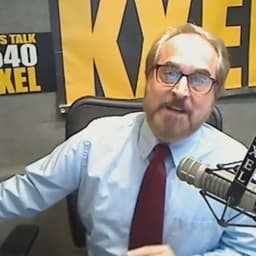
KXEL Live & Local with Jeff Stein · Thu Sep 17, 2026
This is Iowa Talking Points The Candidates Produced by Studio 5 at Mud Advertising and Totally Iowa Media Where you hear from candidates in the November 2026 General Election Now Iowa Talking Points The Candidates
From Studio 5 at Mud and Cedar Falls, here is Jeff Stein.
Hello and welcome.
There will be a new governor and lieutenant governor in January of 2027.
It's an open seat due to the retirement of Governor Kim Reynolds after nearly a decade on the job.
The governor and lieutenant governor run as a ticket and one of the two candidates for governor joins us at the Iowa Talking Points table today.
He is Rob Sand.
Mr. Sand is the Democratic Party nominee.
for Governor, onlinerobsan.com.
Mr. San, thank you for the time, sir.
Happy to be here with you, Jeff.
Your current role as an elected official is as state auditor, and so you've had an inside view of state government these last years.
Give us a sense, first of all, of what is the most pressing issue facing state government, something that the governor can actually do something about.
You know, I
Say in general, there's three issues that we're really focused on in this race.
So I'm going to give you three, uh, cancer costs and corruption.
Now, if you're talking about something the governor can do on their own.
then ending the privatization of Medicaid in the state of Iowa would result in savings, downward pressure on taxes, downward pressure on costs, and increased access to care.
We audited this program.
We saw a 900% increase in illegal denials of care.
But in addition to that, most Iowans, if you've got an HMO-based plan, your taxes went up this year.
in order to help pay for the profits of these private companies.
And I would encourage everyone listening to try to find someone that you know that works in healthcare and go ahead and ask them, hey, how's privatization been for you?
And I'm betting you're gonna hear that they've been nickled and dimed.
It is harder for healthcare providers to keep their doors open in the state of Iowa.
This is compounding with the impact of the coming cuts from the big, beautiful bill.
But I know, you know, my kids are here in Iowa.
They're going to Iowa public schools.
A woman whose kids are about our boys' age, she's closing down her mental health care clinic.
There's also a county supervisor who's got a mental health care clinic in your, probably in your listening area, who's closing his down.
because they're getting nickled and dimed by these companies.
That means that health care is harder for Iowans to access, it's more expensive, and this has been a disaster in the state of Iowa we should end it.
This is something that you have talked about.
Remind the audience how it started and how the governor can fix it because there are certain things the governor can do, certain things the legislature has to do, lay that out
please.
Well I think that's an important thing for people to understand.
Privatization in other states can be successful.
It has been successful in other places, but it has failed in Iowa because of what was done in Iowa.
Number one, we started with our Iowa tradition of good government.
We've typically been a good government state, and so we had actually trimmed a lot of the fat from our program.
using some of the same tips and tricks as these private companies use, and we did that before privatization, so we had already reduced waste fraud and abuse.
Then, in 2016, our program was privatized.
It was done more quickly than anywhere else in the country ever.
And it was also done more completely, including for people whose care is rarely privatized.
When you combine those three things, that is what led this to fail in the state of Iowa.
And I know that because I've been here.
We have audited the program.
I've been as an Iowan talking to other Iowans who have been dealing with this program as long as it's been going on.
And I knew what it was like before.
What I want to do is not move us back to fee for service.
We should keep managed care because we bring a lot of federal money into the state with that.
And my inclination is that we move to nonprofit managed care so that we are making sure that we're pulling in those federal dollars.
But these are mission based organizations who are not just trying to nickel and dime in order to have a profit for shareholders, but they're actually mission focused on health care.
So how logistically does that work?
Is that an executive order of the governor?
How long does it take to transition, et cetera?
Yeah, it's an executive order, but there's a process.
There's I think 700,000 Iowans on this program.
So it's going to take time and we want to be careful about getting it done right.
But yeah, that's something that we can start that process on day one.
One of the other things that we can do on day one with executive order is something that did.
in the state auditor's office.
We changed the rules so that people who work in our office can live anywhere they want in Iowa.
We audit in almost all 99 counties every year.
May as well let people live wherever they want.
And if they want to be in Northwest Iowa, we assign them to more audits in Northwest Iowa.
I grew up in Decora.
Pretty important thing.
I'd have more families move to town.
I remember what it was like when a new kid came.
It was exciting.
I also remember what it was like when a family left.
These are real impacts that you measure by the family in small towns.
And if so, if we can have people who work for taxpayers live out amongst the taxpayers across the state of Iowa, that's really good for our small towns.
And they will have a bigger impact moving to those small towns than how much they will be missed in the Des Moines metro area.
You said you have done it as state auditor.
Yes.
How has that worked in terms of...
in a post COVID world, it's something perhaps that is more easily adaptable, not only in terms of technology, but also mindset as opposed to 20 years ago, I assume.
It's certainly easier with technology.
In fact, we did this right before COVID started.
And what was really wonderful about it that small-town listeners will appreciate is, you know, sometimes you've got someone who's practiced, maybe it's a lawyer, but maybe it's a CPA and they've got their local firm.
but they need somebody to take it over.
Well, we actually had an employee who used our statewide work statewide jobs program to move back down home and then not maybe six months after that, they actually ended up leaving our office to take over for a local CPA who had wanted to retire but couldn't find anyone to take his book of business.
But once he found someone that was already there and he knew they weren't going to just come and go and they were saying, no, I moved here with this job because I want to live here.
They said, great.
Do you want to take over my business?
And because of that, that led to more sustainability there in terms of having CPAs and accountants in small towns.
As mentioned, you have been the state auditor.
What led you to decide to run for governor in 2026?
Yeah, pretty simple answer to that one.
We found a record amount of misspent money across the state of Iowa in my first term.
We did that with a senior leadership team that included an independent and a Republican who had made campaign contributions to my opponent.
I had promoted them.
So it was Iowans working together, the way we traditionally do, solving the world's problems without regard to political views.
And then the legislature and the governor came to town and passed the single biggest pro-corruption bill in Iowa history, literally changing the law to make it harder for the state auditor's office to find misspent money.
Everyone in the state should understand, every single government watchdog that weighed in on this law said it was going to lead to an increase in waste fraud and abuse.
There were many Republicans, independents, and Democrats, all of whom said that exact same thing, and they did it anyway.
So, two conclusions from that.
At the end of the day, I'm not interested in running for a third term to a job where I've been told I can't really do my job, but number two, boy, it sure clarified for me just how out of touch
and corrupt.
Things have gotten in the Capitol building.
Jeff, we're a good government state, more than we are a Democratic or Republican, more than left versus right.
We've traditionally been right versus wrong, right?
I mean, we had Chuck Grassley and Tom Harkin that we sent to DC together, despite the fact that we're in opposite political parties.
I'm 44 years old, 34 of my first 34 years alive, 30 of them, excuse me, we had divided government into mine.
And what we've had is 10 years of one party control.
And if it's gotten to the point where we are at the bottom for economic growth, the top for cancer growth, and their big problem that they want to address is making it harder for the auditor's office to find misspent tax money, then it's time for change.
Do you have a sense that that was because you as the auditor were the only statewide elected Democrat, or was it because of something perhaps even more nefarious than just what I'll call naked political aggression?
Well, it can be a little of column A and a little of column B. And here's my answer to that question.
If I was the kind of person that was happy to merely have a title in life and didn't care about actually doing my job, then even being a Democrat, they would have had less of a reason to do it, but I'm not that person.
I want to do my job.
I'm the kind of person where when you tell me you don't want me to look somewhere, it just makes me want to look there even more.
They had someone that I think it was easy to get parts of their party to go along with because I was in the opposite political party.
But they also knew that they couldn't talk me into not doing my job.
I have been very, very proud as state auditor to be making powerful people in both political parties angry by doing my job.
I won't stop doing that.
I'm going to do what's right.
And a great example of this was
You know, it wasn't just finding misspent money, but it was also standing up to both parties who were using taxpayer dollars to bail out sexual harassment by government insiders, right?
The famous case, there were multiple of these, but the most famous one was Dave Jamison, head of the Iowa Finance Authority, millions of dollars in harassment settlements towards the targets of his harassment, women that he worked with.
Why are we using taxpayer money to bail him out, right?
This is a guy, his...ipers pension.
Probably over the rest of his life is going to pay him north of a million dollars.
And we're not going after him.
And I heard people in both parties tell me why we shouldn't.
Well, Rob, you know, we've never used that law before.
Well, maybe we should start guys.
I mean, when I, when I prosecuted the lottery-rigging scheme, it was some very rarely used statutes.
And I could have said, gee, I don't know what'll happen.
But then I wouldn't have been doing my job.
I did my job.
And they would say, well,
I don't know, Rob, I mean, if we start doing this, we might end up discouraging people from joining public service.
Good.
If you think that a position of trust and power is for you to use to abuse that trust and power to do what you want to do instead of serve ordinary people, then I don't want you in public service.
I could have gone along to get along on this.
I could have just ignored what I knew, what something we could do, and just sat there and been quiet to not make powerful people angry.
I didn't do that.
I voted no multiple times in multiple situations in my position on the state appeal board to say, this is wrong.
And that's what I'm going to be doing if I'm governor.
I'm not there to serve any one party.
I want to serve the people of the state of Iowa.
And if that involves making a lot of powerful people angry with me, so be it.
Rob Sand is the Democratic nominee for governor robsand.com.
In the November 3rd general election, more with Mr. Sand as Iowa Talking Points, the candidates continues in a moment.
One opportunity, change your career.
Mud advertising is hiring product specialists.
$20 an hour, paid weekly.
That's 52 weeks a year plus record-breaking profit sharing.
Let me repeat, $20 an hour plus record-breaking profit sharing.
But we're just getting started.
The best in the business, 401k, company match, gold standard health plans, on-site fitness center, generous pay time off, and so much more.
Apply today and don't look back.
You're watching Iowa Talking Points, the candidates.
Here again is Jeff Stein.
And we continue with Rob Sand.
Mr. Sand is currently the auditor of the state of Iowa.
He's on the November General Election ballot as the Democratic nominee for Governor.
RobSand.com is the website.
At the end of the last segment we talked a bit about partisanship and so I want to start with a question that I'm asking
All candidates, independents, libertarians, Democrats, Republicans.
In 2026, what does it mean to you to be a Democrat?
That's the party affiliation next to your name on the ballot.
What does it mean to you?
Well,
I started as an independent when I first registered to vote and I registered as a Democrat because I realized that I had to in order to vote in a primary in Iowa, which is un-American, that we would tell independent voters they're less equal than the rest of us.
That's wrong and we should change it.
But I registered as Democrat for
Basically, four reasons.
My faith teaches me that what you do to the least of these, you do to me.
I like having clean water to fish in and to drink.
I like having public land to hunt on, but also just for anybody to enjoy.
I don't think your ability to enjoy God's creation should depend on whether or not you can buy a slice of it.
And I remember Bill Clinton balancing the budget and using surplus to pay down the debt.
Those are probably the four biggest reasons that I joined the Democratic Party.
I've said a lot of things in this campaign that some of the people in my party don't like.
I don't really care.
My bigger question is why do we have to be Democrats and Republicans?
And I've yet to get a good answer for that.
That to me is one of the fundamental problems that we share is our democracy feels like it's two private clubs just beating up on each other, not solving ordinary people's problems.
Because they figured out that solving problems is hard, but getting reelected can be easy as long as you lie about your opponent.
Um, so what I want to do is actually end the special legal privileges of both parties.
I don't think they should be able to force us to pick between the lesser two evils.
I don't think independent voters should be silenced in our democracy.
And I think if we did a lot more work focused on accountability for politicians, they'd actually have to serve us in order to have their positions.
So you are running for governor.
And as I mentioned, you've been the state auditor, you've served in the attorney general's office, but I'll give you the opportunity to give people a
Fuller biographical sketch.
Oh, sure.
Cutie came from Decora.
Yeah.
Born and raised in Decora, that's right.
I like to joke four important parts of my upbringing.
Going to church, hunting, fishing, and my first job, which is catching chickens.
And three of those four I still enjoy today.
Very important parts of my life.
Dad was from Decora.
We've been there since we got off the boat from Norway in the 1800s, and my mom's a mutt from Cedar Rapids.
So they first met at Luther and then ended up...
getting married and raising me and my sister up there.
My wife is Christine.
She grew up in Denison area and then Gilbert, which is by Ames.
And we've got two boys.
They're 10 and 12.
They go to Iowa public schools.
They go out hunting and fishing with me and we're in church together on Sundays and we got a dog who's six years old.
So no diapers, no naps, no teenagers.
We're enjoying life right now.
And yet you're going to run for governor.
You didn't have it.
Why am I doing this?
Well, it's a broad question.
You mentioned the list of things, but again, this puts strain on a family and any state office does, but certainly governor in a time where, to your point, folks are rather nasty on both ends of the political spectrum.
Well, my wife and I care a lot about our home state.
We live here.
My wife's family has got a business that's pet food, soup stock, soup broth, animal feed.
They live here.
They care a lot about this state.
I really think that when I look at my life, I've worked hard, but I've been fortunate too.
And I don't think that I could look at myself if I wasn't doing this right now and still believe that I'm someone who's working to serve others.
I think this is a big opportunity.
And like I said in the first half, you know, when they took away the power of the state auditor's office to audit.
Boy, hard to have a more clarifying moment in terms of the need for a truly new direction in Iowa.
And again, what I want to get back to is just that idea of everybody working together.
You know, my grandpa would go to 6 a.m.
Hardee's coffee and then he'd be at 7 a.m.
McDonald's coffee.
My mom has a knitting group and her sewing group and it doesn't matter who you are or what your group is in Iowa, but we do things the same way.
When you're sitting down with that group, some people walk in the door and you maybe close your eyes so that you can roll them.
They're not your favorite and you know, you're going to disagree on a lot of stuff, but you also know that there's days where they say a thing and you go, you know what, that's a good point.
You don't make them very often, but it's a good one.
And across the state of Iowa, you don't take party ID.
when you're doing this work.
You just sit down and you listen to each other and you think about what everybody says, and then if anybody asks you afterwards how is coffee, you say, same as always, solving the world's problems, right?
It's a forward phrase we all use.
I want to get back to that in Des Moines, just the idea of everybody sitting down and listening and focusing on the issues that impact all Iowans lives and having some give and take, you know, the same way we did when I promoted people that I disagreed with in the auditor's office.
This is as I've suggested and you may not agree, but I think you may it is a time with a lot of Barb's being thrown on all sides huge number of independence in Iowa Suggesting they're not real thrilled with either political party So talk about your skill set your experiences that lead a voter to believe you might be the one.
Yeah
who can get people from these different sides to get together to get things done.
Why you- Appreciate that.
With regard to that task.
If we want to get back to divided government, let's start here.
We know I'm going to be working with the Republican legislature.
That to me is no problem at all.
I think divided government again forces us to do our best work.
Just like that Democratic and Republican leader said to my leadership Iowa class probably 15 years ago now.
But this is something I've always done.
You know I was growing up in Decora.
I was a skateboarder We spent two years getting skateboarders to work with Property owners who were not happy with skateboarders to get a skatepark built and we did it When I was a student I put together a class on conservatism because I wanted to encounter ideas that I thought I would disagree with But it's hard to really know until you have a real conversation about it When I ran first aid auditor it was in part to make sure
that the office that was doing Iowa's public corruption investigations had a prosecutor there that could help guide those investigations to make sure they worked in court.
Because everyone was working in the office was all CPAs and accountants.
And then when I won, I promoted people who were an independent or Republican who had made campaign contributions to my opponent.
It is natural to me to think that we should work together and that even a broken clock is right twice a day.
And I think that's what an Iowa tradition is, but it's been forgotten.
And that's how you get to the point with 10 years of one party control that you can say, okay, power crops and absolute power crops, absolutely.
And we know when Iowa takes about 10 years because that's how long it took to make it harder for the auditor's office to find misspent tax money.
It's something that I've done proudly, working with people that I disagree with my whole life.
And I'd love to be doing it as governor, making sure we're steering ourselves towards
common sense solutions.
I should note for the benefit of the audience,
As Mr. Sand was answering, you may have heard rumbles of thunder.
That's not an editorial comment that we're aware of, but there is a thunderstorm as we're recording the program, not severe in nature.
But if you hear that noise, that's what that's about.
I believe I've heard you say on the campaign trail that as you are putting together a staff, department heads, etc.
you would be looking beyond party identification.
And I'm not asking for some sort of quota system or anything, but give us your view on how that would
work.
Well, it's a thing that I would do intentionally.
I want to have people who are independents, who are Republicans, people I disagree with in my cabinet.
To me, that's just, again, common sense.
If you want to do a good job, you got to think about a problem from every angle.
Because every once in a while, even the people you think are mostly wrong, you realize they're only mostly wrong, they're not entirely wrong.
And so having them there for those moments is really important.
It's a position of real impact for the state of Iowa, as is the state auditor's office.
And so I did that when I was state auditor, and I'll do it when I'm governor because I want to do a good job for everybody.
Rob Sand is the Democratic candidate for governor in the November general election.
We're midway through this edition of Iowa Talking Points, the candidates.
More with Mr. Sand in a moment.
Studio 5 at Mud is built to get attention and get results.
From radio and television to digital video and live productions, it all happens inside our 3100 square foot production studio.
An infinity wall, multi-camera live webcast capabilities, massive green screen, audience seating, and a full creative team for pre and post production.
Whatever you need for media or production, get noticed and get results.
At Mud Advertising, we love it when you succeed.
Watch all the programs in the Iowa Talking Point series online at IowaTalkingPoints.com.
Iowa Talking Points, the candidates, continues with Jeff Stein.
And we continue with Rob Sand.
Mr. Sand is currently the state auditor.
He is running for governor.
He is the Democratic nominee, robsand.com, the website, as we near the November general election.
So there is one other name on the ballot, a Republican who won a primary.
Differentiate yourself for voters who say, I see these two guys and their names.
What's the difference?
They're all the same.
Fair question.
Um, I'd like to start with, uh, pointing out a commonality because to the point that you made earlier, uh, things tend to get heated.
Uh, he's a human being and, uh, you know, I know he's a couple of years younger than me, but you know, he's got kids around the same age.
I think it's important for people to remember that everyone who runs for office is still a human being at the end of the day.
That said, I'm happy to tell folks why they should choose me.
I know they have a choice and I respect that.
Here's the bottom line.
We have a lot of issues that we need to address in the state of Iowa, a lot of state-level problems.
You're not gonna get them addressed very well by someone who's a part-time Iowan.
My opponent has lived outside of Iowa for most of the last 20 years.
This is...
plain and simple stuff.
He voted in Kansas in 2018, in 2020, and in 2022.
Now, you may have seen his ad running that says that he bought his ancestor's property in 2014.
He's been mostly living in Kansas since then.
As we all know, you can buy land while you're living somewhere else.
And then he also, after launching his campaign in 2025, the plane that he travels around in spent
75 nights in Wichita to 51 in Belle Plaine, Iowa.
You can tell me what you want about where you live, Jeff.
I'm a numbers guy.
Even in 2026, 75 is more than 51.
When he was asked about this, he said, well, look, if I win, I'll have to change my living situation, but I would be in Iowa as much as humanly possible.
That's what you say when your least favorite in-laws are coming to town.
This is a real issue to me because there's 3.1 million people living in this state that includes my family.
If that's a little bit harder than he thinks it's going to be, it's those 3.1 million people that are going to be pulling the short straw on that.
We have real issues in the state of Iowa and we are not going to make as much progress on all of them as we could as if we have someone who is here all the time.
I think that's a really important distinction.
Now, there's other places where we have disagreements for certain.
At the end of the day, if he's elected, he'll continue what has brought us here, which has been 10 years of one party control.
We'd have another 14.
I think that we need to get back to balanced government, put the culture wars aside, enough division, get focus on the stuff that impacts 100% of Iowans.
And we'll be able to do that if we have divided government.
enforcing both parties to work together.
I think that's the route because that's the Iowa that I grew up in.
We've had that almost my whole life.
I'm not about to put words in his mouth, but I believe I have heard him campaign with a tone of saying that he's coming in from the outside.
Yes, he is a Republican, but he's coming in from the outside.
Am I to presume that
that's a good position to take as your campaigning, but that the policies that he would employ to your knowledge would not differ distinctly from the past 10 years?
Well, let's address the claim.
Kansas is outside of Iowa.
But bigger to the point that he's making, he spent 10 years, an entire decade, working as a political operative.
Ten years is a full-time paid political operative.
He worked in four different states doing politics all the time running a campaign in Montana to avoid Medicaid expansion Working in Colorado working in Kansas until he started a private school down there in 2018 Nobody who has spent a decade working full-time in politics is an outsider
You have laid out a number of policy positions during this summertime in particular post-primary and they are on the website.
Give us a sense of specific things.
Personalities aside, background aside, what's the agenda going forward?
What can Iowans expect in a sand administration in terms of policy?
Sure.
A few things we want to get into.
I think the top three issues that we've been talking about have been costs, corruption, and cancer, and they're all high.
We should want to reverse all of that.
I'm betting that with divided government, the Republican legislature will suddenly be very interested in oversight of the governor's administration, and so I bet they'll reverse the restrictions that they put on the auditor's office.
That would be good.
I also want to make sure that we are tackling our cancer crisis.
This is something I think is personal to all Iowans.
And my kids live here.
I'm raising my kids here.
I'm raising my family here.
They are breathing the Iowa air.
They are drinking Iowa water.
And so this is something that I've got real skin in the game on.
We've got specific plans.
You've been mentioned the website robsand.com.
I hope folks will go there.
We need to do a better job.
with smoking and drinking and exercise.
Those three are largely personal choices for all of us, but the two places where we can make a big difference on the cancer crisis in terms of public policy is with radon and with water quality.
Nitrates do cause cancer.
The problem is politicians have been refusing to fund water quality improvements, even though farmers want to participate.
They sign up for programs, farmers do, and they get turned away.
So we should be making sure that we're actually addressing that.
And then there's nothing that filters water better than wetlands.
If we would do a wetlands restoration across the state of Iowa, that would do a great job, not only of improving water quality and reducing cancer rates, but also giving us more places to have fun outside.
We are 49th in public land.
I think you know this, one of the reasons that people leave the state of Iowa, one of the sources of our brain drain is just frustration with the lack of outdoor opportunities.
So we should fix that.
And then high costs.
We've got plans in education, healthcare and an energy.
and looking at that as well as housing.
Again, I hope folks will go to our website because you can get a lot more depth there than you can with me talking to you here.
But the bottom line under that stuff is there's things that we can get done in the state of Iowa, even while these national tariffs are hard for our economy, even while gas prices are high, there's things that we can do right here in Iowa in Des Moines to address some of these issues.
With regard to the conservation topic, the water quality, et cetera, there have been some programs, pilot projects, if you will, with regard to wetlands, et cetera.
But somebody's got to pay for it at least to get things started.
I'm taking it that that's a priority as you would submit a budget.
More money toward that.
Where would money not be put?
Because again, we've got to maintain a balanced budget.
We actually have to get to a balanced budget before we can maintain one because we've had a $1.3 billion budget deficit for a couple years in a row now.
It's
funded by existing reserves.
It's funded
by
existing reserves for now.
We had a tremendous amount of money come in from Uncle Sam, and that's essentially what's been using to balance this budget.
I think that we can balance it without raising taxes.
In fact, my opponents claim that I want to do the opposite of that is kind of ironically from a video where I did an interview saying, well, I like a good tax cut as much as anyone else, but how are you going to balance the budget?
That is what I said that now he is running around to say something about raising taxes.
No, I want to have a balanced budget.
It's literally the law in the state of Iowa.
Three things that we can do to address that $1.4 billion budget, data centers should be paying a heck of a lot of money in taxes.
They should be getting no benefit from the state of Iowa or current ratepayers in the state of Iowa.
We should treat cannabis the way that we treat alcohol.
They are both dangerous drugs.
You should not abuse them.
But also, we know that people are going to drink and smoke.
And so better that we keep that money in the state of Iowa and fuel our state coffers instead of going over to Illinois.
And then we should put an income limit on the school vouchers program.
They had an income limit in the first year.
It's been removed now.
That's hundreds of millions of dollars every year.
All of those things, if we did them, would make a tremendous impact towards getting us towards a balanced budget.
And again, when I made the comment about reserves, I didn't want, and you were not implying it.
I didn't want anyone to misunderstand.
I just
audited you.
That's all.
Nobody is violating the law.
We still have a balanced budget, but you're talking about balanced without bringing in reserves.
Well, and that's the issue.
Those reserves don't last forever.
Everybody knows this.
You know, so I do 100 public town halls every year, Jeff, and everybody's welcome.
Everybody comes in.
And I usually hand the microphone actually to people who are Republicans.
What do you want to talk about?
I'm not scared of any question.
And I always ask people, okay, let's say that your wealthy uncle dies and leaves you three times, four times what you make in a year, do you quit your job?
I've yet to have a single Iowan tell me yes.
There might be some people out there that would quit their job, but Iowans are gonna be like, no, you gotta work.
And you know, that's not gonna last forever.
But here we are.
Those reserves are going to disappear at this rate in maybe a couple of years.
We just started a brand new trade war with Canada, and I'm the only one out here criticizing this.
That's 30% of Iowa's exports, 30%.
That means our economy is going to take a nosedive, our tax receipts are going to take a nosedive, and that budget surplus is going to disappear even faster.
So we got to do something to address that before it's gone, because if we don't do something to help smooth that out so that we can land at still having that rainy day fund at an appropriate level, we're going to be in a world
of hurt.
Rob Sand is the Democratic nominee for Governor.
RobSand.com is the website, a final segment with Mr. Sand.
Land Iowa Talking Points, the candidates continues after this.
Iowa has a wonderful heritage, and each day I'll share these stories of historic people and events with you.
I'm Jeff Stein.
Join me for the Iowa Almanac program and learn more about this great place we call home.
Now, seven days a week.
Listen on radio stations across the state via podcast or at IowaAlmanac.com.
Signs can set the tone.
Signs can direct, instruct, and motivate, and even seal the deal.
At MUD Advertising, we create signs in every shape, size, and material for clients nationwide.
From point-of-purchase displays that turn heads and drive traffic to campaign signage that brings your marketing to life.
Need to go big?
We do that too, with large format banners, trade show displays, vehicle wraps, and more.
Whatever the message, whatever the size, wherever it needs to go, whatever your signage need, call us today.
At Mud Advertising, we love it when you succeed.
You're watching Iowa Talking Points, the candidates.
Here again is Jeff Stein.
A final segment now with Rob Sand.
Mr. Sand is a Democrat, currently the state auditor.
He is running for governor.
RobSand.com is the website.
Of all of the policies and ideas that you've rolled out at the website, is there a way to prioritize because, yes, you can walk and chew gum at the same time, but are there things that you would point to and tell your staff, let's get to this earlier as opposed to later?
One of the reasons that we are facing a crisis of high costs and high corruption and high cancer rates is that we have a broken two-choice political system that is mostly two private clubs beating up on each other.
and solving problems for ordinary people falls by the wayside.
That's one of the things where if we fix that, then for decades, no matter who it is that has this job, you're gonna have a system where elected officials and politicians are actually pushed into solving problems because you're cutting off their avenues to serve insiders and special interest groups.
There's that line in the Lord's Prayer, right?
Lead us not into temptation.
We have this great tradition in Iowa
saying we should apply that to politicians too.
You know, we were the first state in America to create an independent redistricting commission, first state in America to do a merit-based judicial selection system.
We should move forward and we should be one of the first states to end the special legal privileges of the Democratic and Republican parties.
We should make independent voters an equal citizen, give them an equal right to vote.
We should have not just term limits, yes, but age limits.
We should have cognitive tests.
We should have a civics test that you have to pass before you get on the ballot.
You should be required to do mandatory town halls public town halls where everybody can come in you take non prescreened questions And I think if we did that We'd be in a much better place because then public servants would actually have to be serving the public They couldn't be looking out for insiders and special interest groups once you make them do their jobs Those problems will begin to get addressed at a better rate.
So how does that work?
What's the first step sure sure where you say?
And I happen to be a registered independence.
So therefore I don't participate in primaries, right?
So I show up on primary election day right now I could change voter registration and take a blue ballot or red ballot You're saying you you'd make that easier.
Yeah, dying to
vote.
Look, this is this is The public's primary, right?
Just the people the state of Iowa who were supposed to control this democracy So instead of having two separate ballots for two separate private clubs I don't again
I don't think either party is doing a bang up job of solving our problems.
We should have a single ballot.
Every candidate that is on it, no matter what their party affiliation is, and everyone who's an eligible voter can walk in and you vote for the one favorite that you have.
I think we talked about this four years ago when I did the TV show right here in Mudd Studios.
But everyone can vote for one.
Democrat, independent, Republican, whoever, you send the top four regardless of party affiliation to the general election.
And then general with those four,
I want to do it Fargo North Dakota Invented.
It's called approval voting.
Here are four candidates.
Vote for as many as you approve of, and whoever has the most people that approves them wins the race.
So all of a sudden, instead of it just being, you know, people running around trying to convince everybody that they're lesser or two evils, you actually have a reason to be kind to your opponents, to be honest about them, because you'll understand that my opponents here have got supporters that really want them to win, but some of them are going to be willing to give me support if I'm polite and honest.
And maybe even maybe even inspiring or showing good character We can give people more options and push elected officials to do a better job Just by making politics a lot more like real life, right?
I always remind people you're allowed to have more than one friend and that's great because then People who want to be your friend might be nice to your friend We should make politics more like that people who want you to support might be nice to the people that you they know
you support I've said for years and it's not unique to me, but
with the current primary system.
People run to the extremes to get the nomination and then sprint to the middle for the general election, that introduces a level of disingenuousness.
Does it not to the discourse?
And it does.
And what's wonderful about this is that it puts everyone on equal footing.
Independent voters get an equal right to participate.
If there's two candidates that you really like,
you're not forced to pick between the lesser two evils because you look at the independent candidate, you go, ah, I wish I could vote for him, but I feel like I'll throw, I'm throwing my vote away, right?
If I do, and I don't want to do that.
And so you feel forced into picking one of the two major party candidates, and then it's the lesser two evils.
That's the biggest thing that contributes to every single one of our problems.
They are all united by a system that has totally failed to work for ordinary people and really just works for politicians to get reelected.
So in the legislature,
elected representatives in the House, senators in the Senate can introduce bills.
The governor has a role, right?
The governor can introduce legislation according to our system.
So what's on the short list of bills that you would have your staff draft and introduce in the 2027 General Assembly?
Well, an omnibus good government reform bill.
with all the things that I just laid out, term limits, age limits, cognitive tests, mandatory tone hauls, that's one of them.
And then let's talk about our vouchers program.
It needs oversight, it needs rules.
Right now, private schools can do almost anything they want with public money.
That doesn't make sense.
We're not allowed to audit them.
That doesn't make sense.
I want oversight of public money that is spent by private schools so the public can see how the money's getting used.
I also want to put that income limit back on so that we're not giving this benefit to the wealthiest families, good for them, who are sending their kids to private school anyway, good for them, but focusing it on a place where it makes a difference for people.
And then I want to make sure that the rhetoric of school choice means that actually the students get to choose their school.
Right now, private schools under this law can reject any student that they want, which means that it's not school choice.
Not unless what they meant actually was private schools get to pick their students, private school choice.
I want to propose those changes.
I think those are things that the vast majority of Iowans can agree on.
And again, if we're back into a world where we have divided government, then we're not going to be doing the things that are way over here or the things that are way over there.
It's going to have to be that common sense tradition in Iowa.
We have just a couple of minutes more you're asking Iowans to elect you as the next governor of the state So I'll give you those final moments to make your case to them directly sir.
Sure.
I appreciate that Jeff Folks look I think you've heard if you had 40 minutes hopefully a good opportunity to hear a lot from me about what this race is about To me it's about something pretty simple getting back to an Iowa tradition We have had that tradition of solving the world's problems with whoever happens to be at the table
for as long as I've been alive, 44 years, if you're wondering.
I think that that's important, and that's the way I was raised in Decora.
That's what I believe in right now, and it's what I did at the state auditor's office, promoting an independent and a Republican who had made campaign contributions to my opponent to the most senior positions in the auditor's office.
We worked together, and because we worked together, found a record amount of misspent money across the state.
We also started a government efficiency program that's been so powerful
that it actually has been copied in two other states.
It's called PI, Public Innovations and Efficiencies.
I also challenged officials in both parties who wanted to use taxpayer money to bail out sexual harassment by government insiders.
So I've got a record of being willing to do the things that are right for Iowans and not just go along to get along.
That's in addition, of course, to seven years in the attorney general's office as the chief public corruption prosecutor, prosecuting the biggest lottery-region scheme in American history.
So, I hope you've gotten to know me over the last few years in public service that I've had.
If you haven't, I've got public town halls that are coming up in your county.
We've done a hundred every year, not just in the campaign, but also as state auditor, the way that Chuck Grassley used to with advance notice that everybody can come.
I want to do public service work.
I'm right here in Iowa.
I'm raising my kids right here.
They attend Iowa public schools.
And I think it's important that we get back to that Iowa tradition and we have a governor who's going to be here for everybody, a governor for all.
And I appreciate you taking the time to listen.
Mr. Sand, thank you for the conversation today.
Best of luck on November 3rd.
Thank you.
Appreciate that.
Rob Sand, the Democratic nominee for governor in the November general election.
RobSand.com.
And that brings us to the close of another edition of Iowa Talking Points.
The candidates, thank you for watching.
This has been Iowa Talking Points The Candidates.
Produced by Studio 5 at Mud Advertising and totally Iowa Media.
For more information on this series, go to iowatalkingpoints.com
I am pleased to welcome back on the news line a return guest to the program.
He is former U.S.
Congressman Ken Buck.
He served a decade in Congress from the great state of Colorado.
Last time we spoke with him was with regard to one of the four books that he has authored.
That one was entitled Crushed.
Big Text War on Free Speech.
And thanks to the good folks at Humanics Books, I'm holding in my hand a copy of Ken Buck's brand new book.
It's called Wake Up America, The Rise of Socialism is the Death of Freedom.
Congressman Buck, good morning and thank you so much for the time, sir.
Good morning, it's great to be with you.
What led you to put pen to paper or computer disks to work to put together this book?
Why this book at this time?
I'll tell you, I spent my time in Congress fighting against spending and didn't succeed very much, but I learned a lot about how dangerous our national debt is to our existence as a free nation.
And socialism, more than anything, threatens that our debt, our federal spending, and
I believe the way of life that we have, the opportunities that we can give our children and grandchildren.
And so I just felt it was important to put pen to paper and get the word out.
And I also, it has become more relevant.
You know, I don't know if you've written a book, but it is a year long process.
And so a year ago, as I was putting my thoughts down, I did anticipate
that the Democrat party would see the socialist insurgents win primaries and really start to move the party even further to the left.
Well, as the audience knows, I have.
written books but they are on history and so I'm looking back you are using history to warn us about the future and again it has spiraled so far from the time you sat down to actually put this together what are the lessons of history that are important enough that you were there to you know raise your hand and say I think I think something bad's coming down the pike at this point
Well, you know the the history Unfortunately, I'm old enough now that I've actually lived along not that I knew Abraham Lincoln, but I wasn't far off from him But but the history that we're surrounded with In at least my generation is a history of the Soviet Union failing a history of Castro and and Cuba failing a history of Eastern Europe walking away from from communism socialism a history of Venezuela being one of the great
economic powers of South America and falling into major disrepair as a result of socialist policies.
And then to think that our country is moving in that direction is just scary.
And we're moving in a direction where the left, in order to win elections, has to keep a coalition together.
And that coalition includes the spending that AOC and Senator Sanders and others
on these types of programs.
Ken Buck is our guest.
He served a decade in Congress from the state of Colorado and the brand new book is called Wake Up America, The Rise of Socialism is the Death of Freedom and he joins us on News Talk 1540 KXCL.
And you mention in the, or it is mentioned in the biography to the book that you have seven perfect grandchildren.
So here are these perfect grandchildren
But there are people like them, similar ages, I trust, et cetera, who are looking at capitalism saying, well, that's just not working.
This socialism thing, this is pretty interesting.
How is it that these young people today are so easily led into this when, again, history shows it does not?
live up to its promises, only a few people turn out in a ruling class to be in any way provided for.
How is it that the American youth are being so misled?
Well, it's really, I believe, a combination of things.
One, our education system is failing to instill in our young people the patriotism of the recognition that
uh... our country is flawed but it's still the best country in the history of the world and it has succeeded uh... in delivering prosperity and freedom because of our uh... form of republican democracy and because of our constitutional guarantees of freedom and because of our capitalism and free markets and that combination uh... has really created something our our founding uh... fathers were geniuses and and how they put this together
and geniuses and how they allow for flexibility uh... to to grow out of some of the terrible ills that were occurring before and and in in some ways uh... you know problems that we can't even foresee uh...
we have
that flexibility but i i believe that our education system and just the fact that once you uh... give people a lot of things a lot of services a lot of goods for free
They get used to that, and they think they're entitled to that.
And that is what has gotten us, I would suggest, into the trouble we are in with, again, $40 trillion of debt.
Those grandchildren are going to have to have their own children, and it's going to take those children to rise to adulthood to just simply pay off the debt.
And that's assuming we stop right now and don't incur more debt.
That's certainly not what the founders anticipated, and it certainly has fostered.
this entitlement society that has got us way off the rails from what was intended.
Absolutely, and here's a number of thoughts based on your comments.
One, the $40 trillion debt is just a drop in the bucket.
We have these unfunded liabilities, these promises that we've made to people with Social Security and Medicare
people who've been paying in i started paying into social security when i was sixteen years old and and for someone to now say to me oh no no but the system is is broke you can't get your social security uh... a lot of people are relying on that social security for their retirement and uh... that you know those unfunded liabilities uh... it will well exceed a hundred trillion dollars and so we we have this really serious problem of
expectations in this country.
One of the things that you have done in this book, and I'm so glad you did because often we talk to folks here on the radio, and I'll hear from listeners who say, well, that's all very interesting and scary, but what do we do about it?
You know, they want answers.
You've provided a blueprint of what someone listening right now, as they're getting ready to cast a vote in November, things right now that they should demand their elected officials do, give us a sense of
What you would suggest if somebody in Washington were to give you a call, I don't know how often that happens these days because you're pointing out their flaws, but thank goodness that you are, but what are some of the suggestions?
What could be done?
Well, I wrote a book after I started in Congress called Drain the Swamp and the book was really the theme of the book was send people to Washington, DC who are willing to lose.
who are willing to make the hard decisions that aren't popular and then get sent home to go back and do what they were doing before they went to Washington DC.
And that is still true today.
And that is I think the number one consideration people should have when they look at a candidate.
Is this candidate willing to lose or is this somebody who wants to be a career politician?
Is this somebody who wants to stay in Washington and live the cozy life?
Because it really is necessary to find
uh... people of character who will serve in public office and i i i'd say that the the the one remedy that i believe we need to adopt is the the doge solution the the idea that every committee in congress house and senate will have a subcommittee that will examine the spending for the agencies that they have oversight authority for we need to make sure that every time that we spend
In what we call the discretionary side the Department of Defense Department of Education Department of Homeland Security Those agencies have to spend efficiently and have to reduce the size of the agency and then we have to get to entitlements That's that's the real driver of the deficit.
We've got to find ways to either Increase the size of the economy so we're producing more revenue for our
for our entitlement spending or find ways to reduce the entitlement spending.
Now, everything you just laid out, Congressman, seems common sense, but that's not how Washington works these days.
So how realistic is it if the people do demand accountability?
I mean, is it
I don't want to say maybe it's because it's a gloomy foggy day here and that matches then my mood, but it seems really hard to turn this around.
Do you have some optimism that with the right people and the push from the American public, we can still rescue this?
You know, America's great after coming together after a tragedy like Pearl Harbor, after a tragedy like 9-11.
I'm hoping that we don't have to hit the tragedy
uh... the crisis before we come together people should recognize right now that when they go to buy a house and look at a mortgage that interest rate is that because of our high national debt that interest rate would be lower if our national debt wasn't creeping up every year if they go to buy a car because the cost of
Goods at the that the grocery store are increased because along the way farmers and truckers and others have to borrow money at a high interest rate and they have to pass that cost along so this inflationary cycle that we in that we are in is a direct result of our national debt I am optimistic I'm optimistic because I believe the American people will recognize that federal spending is the problem and
and will demand accountability and when they demand accountability politicians will react.
You write in the book about energy and some of this is tied to quote unquote climate issues but we're speaking especially in rural areas it's now become national but we're speaking in rural areas a lot about data centers.
and they need a lot of room.
And that means they show up in rural areas that don't necessarily have a lot of industry because of this gap between rural and urban.
Are we being led down the Primrose path on these data centers?
We're told that they're the greatest things in the world, but folks don't want them built in their backyard.
Of course, they say that as they are organizing their efforts with smartphones and other data devices.
Is this a lot of promise without a lot of possibility at the end?
I don't, I believe it's a lot of promise with even more promise at the end.
The data centers are essential, in my opinion, just as the internet moved
our economy forward and created prosperity for all Americans and really people across the world.
Just as the enlightenment occurred, the industrial revolution, every time we see something that is disruptive like a data center or a series of data centers,
in in a i we we increase prosperity and freedom and i think that's going to happen again the energy question to me really is that we have these small nuclear uh... reactors that can be put very safely uh... near a data center and and uh... produce energy for that data center that data center then in rural areas creates jobs high paying jobs just as we are becoming so efficient in agriculture that we are
Putting ourselves out of business and agriculture, data centers would create an economic boom in rural America.
I represented a rural district.
I have great sympathy and feelings for the rural district.
I think that this idea of moving our economy into rural areas is a boom for rural America.
just worry about the fact that we only have so much good farmland and if we start paving it over and doing some of these other things I just worry about food supply going forward but because again the money that's being offered to a landowner is just stupid it's just huge money because it's easy ground
That's my main concern but I sure don't know how you tell a property owner that they can't sell it to somebody who wants to give them a big pot full of money.
Right.
Private property rights prevail and some people in my area of Colorado are sitting on oil and gas and they're struggling to make a living in agriculture and all of a sudden a company comes along and says we're just going to take these
two or three acres and and drill and and frack um and is that all right and of course it's all right we have windmills going up in in rural areas now to help produce energy um and and yet the farming can still happen all around the windmills and so i think we are finding ways to help farmers do what they love to do and do what we need them to do for our food supply
and at the same time do our very best to make sure that they have a comfortable living also.
Finally, as you Congressman Ken Buck were writing the book Wake Up America, you're assembling all of these stories and data, etc.
It's one thing to know all the pieces, but sometimes after an author puts it all together and they start reading the proofs of the text, all of a sudden the light bulb comes on, you put things together, maybe you hadn't originally thought connected.
Were there any moments that as you marshaled all the evidence, in other words, that you sort of sat back and read it again and said, wow, this even surprises me and I'm right in the heart of it.
Yeah, there are some things that I noticed in Congress and when I got out of Congress and started writing this book Really struck me and one of them is happening Daily right now and it's so interesting to me these AI companies are begging the federal government to regulate them and And I'm my the bells and whistles are going off of my head because that's exactly what is
The internet companies did thirty thirty five years ago they said all come regulate us and they created all of these.
Regulations all of these laws that kept others from competing with those companies and so the amazons of the world and the medicine and apple they needed these.
Internet laws to protect them from disruption by small competitors And that's what's going on in AI right now.
And so as I was writing this book I just thought of the what big corporations want regulation They want some of this socialism it sounds counterintuitive But they're able in God Frank is a perfect example that I use in the book through Dodd Frank would put up so much pressure on small community banks.
They can't hire enough people to
to keep up with the laws and regulations.
And so the big banks are just gobbling up the community banks.
We need to be very careful of big corporations that suggest that they need more regulation.
I'm always cautious when an industry, and it started with the history of broadcasting 100 years ago, when the industry says to the government, please save us from ourselves.
You just a little nervous about the motives, but.
right
right
much more in wake up america the rise of socialism is the death of freedom the good folks at humanics books published it so that you can pick it up wherever you get your books these days former congressman from colorado ken buck the author and our guest today thank you so much for the extended conversation and the thoughtful messages and best of luck with this latest book
thank you for having me it was a pleasure to visit with
you we'll do it again thank you sir
And Congressman Buck joined us live on the news line on News Talk 1540 KXEL, where Iowa comes to talk.
I am pleased to be joined now on the news line by Bill Hambleton.
Mr. Hambleton is the author of a new book, which was released just a couple of days ago on Tuesday.
It's entitled The Sacred and Profane, A Memoir of Faith and Reckoning.
Bill Hambleton, good morning, and thank you for taking the time, sir.
Good morning, Jeff.
Thanks so much for having me.
This is a very personal story.
It is no doubt a difficult story to recall and Relay the details on give us a sense first of all of why you wrote this book the sacred and profane
Yeah, so it's essentially a spiritual autobiography I grew up a Catholic in Utah and as a religious minority my faith became very important to me and I started discerning a possible vocation to the priesthood as a teenager and
And I was befriended by a priest who presented himself as a mentor, and ultimately crossed boundaries that led to molestation and abuse.
To sort of cut to the chase, I really buried it for years.
I entered the seminary, I studied in Ohio in a seminary, and then in Rome for many years, and ultimately wasn't ordained a priest, and got on with my life and moved into leading Catholic schools as a lay person.
uh... and it and i buried this for for many many many years and it wasn't until uh... few years ago my brother was a heavy rescue fire captain in salt lake for twenty eight years he suffered from ptsd from his job and he he took his life and uh... that sort of brought my own trauma of sexual abuse back to me and so i reported it first to the diocese of salt lake city thirty years after the abuse happened and
was very frustrated by the response, the evasiveness and defensiveness I got from the diocese.
And so ultimately I went public with my story and wrote my book.
It would I imagine be difficult to be the victim of molestation like this when you were young and yet continue to pursue the path.
In other words, I could certainly imagine
Some people who would say well I I'm gonna repress this and therefore I'm going to have nothing to do with this faith I'm gonna look elsewhere Etc.
Etc.
That that had to be a difficult I'll say decision for you to make to stay with your faith and pursue that path
Yeah, no, I appreciate that it was very challenging and to be honest very confusing
uh... you know as a young person i think i you know i would i was confused and ashamed and embarrassed about what was happening to me and i didn't obviously have the words or or or ability to articulate it at that point uh... somehow you know i think my i think my parents for giving me you know a sense of faith that was rooted more deeply in in the sacred that in the institution and i guess i was able to separate uh... you know that this
was a troubled person from the faith that I held so dearly.
But
it was later
in life when I began investigating and found documentation in the diocese that this person had other allegations against him while he was molesting me and those weren't acted on.
And the real point where I was really questioning my faith was more later in life as I reported it,
and found so many aspects of cover-up from the diocese of Salt Lake City that made it much harder.
But even still, I think there was this sense that, in a way, this ban took my innocence and stole my ability to trust for many years, and there was just something inside me that wasn't going to allow him to take my faith as well.
Bill Hamilton is our guest.
Mr. Hamilton is the author of The Sacred and Profane, A Memoir of Faith and Reckoning.
He's kind enough to join us on News Talk 1540KXL.
It must have been especially troubling, that response when you did bring the story to their attention.
Because again, your career has been in Catholic education.
You have held positions of authority.
you have known how to handle complaints on a whole variety of issues.
And I trust the way you handled things for three decades was far different than the treatment you received.
And I'm not suggesting that they necessarily were the same level of concerns that were raised.
You as a professional, you as the reporting victim, but because I don't know.
But that had to be especially maddening given what you did for a living.
Sure, yeah, no, having spent my life working, working for the church, essentially, it was very frustrated, and the most disheartening part was really sort of seeing a troubling pattern.
I reported to the Diocese of Salt Lake City, which obviously was Salt Lake City where I was abused as a teenager, but after I left and went to seminary, that priest had been expelled from the Diocese of Salt Lake City, and I remember as a freshman in college seminary in Ohio being so
grateful that he was gone but that low and behold uh... he when he left utah he ended up functioning as a priest in the archdiocese of detroit and uh... even with allegations of sexual abuse sort of swirling around his name from salt lake city and my freshman year he came down from detroit and visited me in columbus uh... against my will and molested me one last time and so i
you know after i reported the salt lake city and and went through all of that i also reported the abuse to the archdiocese of detroit again you know thirty years after it happened and to the art to the diocese of columbus because that's where it took place and what was most troubling at this heartening to your point is that i saw a similar pattern in all three diocese it wasn't isolated sort of the evasion defensiveness i got the pattern within all three places and the archdiocese of detroit the archbishop wouldn't even meet with me as a victim because
I was told that by the time that I was assaulted, when he was functioning as a priest in Detroit, I had been 19.
I was no longer a minor.
So the diocese wouldn't even meet with me.
So just the pattern of evasion was what was most frustrating that I experienced.
I know very little about how a victim reacts to situations.
My past life as a lawyer on both defense and prosecution of assault victims gives me a little insight, but I don't claim to really know anything.
But I have to think that there's a part of this where you as a young man, even after turning 18, you probably looked inward and said, well, this is a person in authority and it must be something I'm doing.
In other words, transference of blame until
The Reckoning came.
Yeah, there's certainly a sense of it, and I've done a lot of research in more recent years since I've really confronted all of this.
There's such deep shame and embarrassment and self-doubt.
I mean, the self-doubt was really, again, to your point, such a profound part of this.
And as I look into this more and as I've had the opportunity to meet and talk with
survivors like myself of of clergy sexual abuse it seems that one of the most vulnerable categories of victims are are sort of the pious you know young people who are are very zealous for their faith and that creates not just a relationship of of us of authority and subordinate but but a relationship that's almost untouchable in the in the person of the priest and you know while is that that last assault on me
Was for so long so shameful because I felt like I was grown up I was I was still a teenager But I was I wasn't a minor and I should have been able to handle myself and and just the self-doubt that that imposed on me for so long that I wasn't able to handle that appropriately Really, I beat myself up for years about it and and like I said it was it took me 30 years to finally Find the courage to come forward
Bill Hamilton is our guest.
Mr. Hamilton is the author of
of the sacred and profane, a memoir of faith and reckoning released earlier this week.
Get it wherever you get your good books.
I'm looking at the page on Amazon right now.
He's kind enough to join us on KXL.
How did this impact your relationships with others going forward in terms of trust in terms of
devotion.
I believe the biography indicates that you have a wife and daughter, but I have to assume that some of this had any impact, shall we say, on the relationships you formed?
Very much so, yeah.
And you hit the nail on the head with trust.
I mean, it really was trust that I feel was stolen from me.
And I just lost the ability to trust for many years.
I am married.
And, gratefully, I have a wonderful marriage.
But in full disclosure, it's my third marriage.
I was married and divorced twice because I built walls and I didn't let people in.
And that was a very hard thing for me.
With my second wife, I have a daughter who is my world.
And it was really through her wanting so desperately to be a person worthy of her trust.
But I found my way back to trusting others.
uh... you know my my her mother my daughter's mother is not practicing catholic a wonderful wonderful mother not a practicing catholic and so i always raise my daughter in the faith uh... on my own and uh... you know gratefully i have now as i came to grips with all of this i uh... i've met my my partner and my my current wife stacey who is it was incredible and uh... she's jewish and so this is all new to her she's navigated this with me
and and while we have this deep spiritual connection i you know i go to mass alone my wife is Jewish she doesn't go with me and my my daughter has feelings about the other way the church treated me and at sixteen now i i respect her decision not to go to church with me so i continue to go alone but it was that trust that was taken from me and that played itself out in so many relationships for so many years before i was really able to to face this
this is
No doubt going to seem like an odd question.
It won't stop me from asking it, but if you had received When you were reporting the abuse yes 30 years after the fact etc.
But when you were reporting the abuse if you had received a level of empathy or seriousness Would the book have happened
My guess is my guess is not and I almost wonder if the book Was actually much more cathartic and helpful in other words if they had treated you well, which you deserved Perhaps you wouldn't be at the place you are now with the cathartic exercise of writing a book
Now, it's an insightful point, Jeff, and I think you're exactly right.
I certainly, not only did I not want to write a book, I never wanted my story to be public at all.
I never wanted to sue, I never wanted money, I never hired a lawyer, I didn't want any of that.
I simply wanted some acknowledgement and some responsibility and authentic reconciling with the church that I love so much.
And I must be fair to admit, the diocese of Salt Lake City finally did admit
that the abuse happened, and they apologized for the abuse.
But there were also a number of things that I found where there were cover-ups along the way, including a highly placed priest in the diocese who destroyed documents over the years that the bishop admitted to me in private, but would not state publicly.
So there was some apology, but it was only after I went to the press.
I never wanted this to be a public story.
and what i couldn't get anywhere i finally went to the press and it was only after that that the bishop met with me for the first time and and they continue to sort of fight me at every step of the way for any bit of acknowledgement and really the book came out of journaling i started journaling about it uh... just as uh... means of catharsis as you said and that journaling turned into the book so no if i had been met with the level of accountability a level of pastoral concern instead of legality and paciveness
You're absolutely right that the book would have never happened.
Final question.
What is your level of peace with it all right now?
Because again, it's one thing to write the book.
It's another to have to tell the story to guys on the radio over and over and over and relive it, which I applaud you for because it's not easy to do.
But that's what they apparently tell you you have to do if you want people to read the book.
How much at peace is Bill Hamilton these days?
Yeah, and thank you.
That's a thoughtful question, and I appreciate that.
I have to say, thanks be to God, I'm at a wonderful place in my life.
I'm finally at a place where I've dealt with some of this over the last couple years, and I've found an incredible relationship with my wife.
I have an incredible relationship with my daughter, and more than ever in my life, I have a great relationship with myself because I
i'm able to sort of acknowledge this and and and that really has brought me peace you know i as much as i never wanted this to be a public story uh... that the peace i found in writing the book the piece that i found in sort of letting it go letting it be out there in the world and just being who i am with it uh... has really been been liberating for me so you know i i think my faith is as strong as ever i'll never walk away from my faith though i have a lot of
critiques of the institutional and hierarchical church.
Again, I thank my parents for giving me a faith that ran deeper than the institution.
And I have, through all of that, been able to find a real sense of peace.
Now, thank you.
Well, thank you for sharing the story.
Difficult, though it may be.
The Sacred and Profane, a memoir of faith and reckoning the book, Bill Hambleton is the author.
Get it wherever you get your good books released earlier this week.
Thank you, sir, for telling the story and for sharing it with us here.
I appreciate it and we wish you all the best.
Thank you, Jeff.
I appreciate you.
All right.
Take good care, sir.
And Bill Hambleton joined us live on the news line on News Talk 1540 KXEL, where Iowa comes to talk.
News Talk 1540 KXEL, where Iowa comes to talk.
Good Thursday morning to you.
I'm Jeff Stein.
Time for our Thursday RFD 1540 conversation.
Something we do.
every Tuesday and Thursday during KXEL live and local.
And I'm joined now by Dustin Hoffman, supervising editor, lead farm broadcaster, Iowa Agribusiness Radio Network.
Of course you hear reports from the network.
Nine times each weekday Dustin joins us here for this extended conversation as noted Tuesdays and Thursdays.
Lots of conversation about data centers.
and the amount of power that they are going to require and where they're being built, et cetera.
So there's been a lot of talk about this with regard to big cities, but this is an important topic for rural energy cooperatives and related sources.
Give us the information.
Yeah, Jeff, there's already been a lot of debate, especially around rural America about these data centers, because a lot of them are being built out in the outskirts of major metro areas.
I mean, there's the Facebook Center outside of Altoona, where it's pretty rural in that area.
And so a lot of the infrastructure from the cities is actually not out to these places.
And so Jim Matheson of the National Rural Electric Cooperative Association, he's the CEO, is saying that there is basically where these things are going in.
You're seeing an unprecedented demand
from these data centers and they need to figure out how are they gonna meet that demand and also keep things affordable and have the energy on hand for their rural customers who have already been there.
These data centers bring in about 800 megawatts of need for these rural electric cooperatives and that could be...
sometimes triple what these cooperators are able to handle.
So you gotta figure out how are you gonna produce that energy?
How is it gonna stay cost effective for those who are relying on the energy in the first place?
Is it gonna price them out because then you put them in a tough situation.
They don't wanna put their farmers and rural businesses and stuff out of action because the demand all of a sudden for the electric grid is gonna skyrocket.
And so they're looking at all kinds of angles.
Again, how do you deliver it?
in the first place, just deliver it.
How do you do that?
Then how do you do it where it's still reliable so there's not a big energy drain on the grid?
And how do you keep it affordable for those and keep it protected so there's not steep price increases when right now farms really can't afford to have any more price increases anywhere?
Well, and this is something that, again, we're all just kind of working our way through.
And my experience with rural cooperatives is that the members have
a strong role to play in all of this.
You've got local control in that respect and this is kind of the the big foot that comes in and so it really disrupts a lot of the existing system not just the energy part but but just the quality of life if you will or sort of what we've been used to in this part of the world.
Yeah, exactly.
And, you know, they've made comment that, you know, the getting the upgrades to the electrical grid, whether it's urban or rural is something that's been at the forefront of conversations.
We're seeing more electricity demand, whether that's for electric vehicles or for manufacturing growth.
And now you're talking about these data centers.
And so this is a real problem across any grid, doesn't matter where it's located.
But the thing is also, though, is
There's a lot of folks that are a lot of these smaller companies, I should say, rural companies that just don't have the assets to handle this kind of grid work.
And so not only are they facing the logistics, but they're also looking at them.
They need upgrades to public policies on doing these.
They need reform to the permit processing in the country so they can start making these changes that they need to make and make them predictable.
So they, if they're going to put the work into these grids, they can put into work in a way that this still has a chance to grow.
This continues to grow not just grow to where we need it to get this data center or whatever else is needed there But then what can we do beyond that because you don't want to do this another time in say five years?
And so they the permit process is slow It's very lengthy and it's understandable that they need the permit process no one's arguing that but they're saying is we need something predictable There's no predictability in the timeline of when they're gonna get through it by the time they may get a permit the price the project may have changed and so they're also calling for reform
in the permit process to get it done faster to get it done practically to allow them to anticipate rather than have to react to these demands.
And so they need the and like I said, they're also needing upgrades just to keep things going to maintain a normal way of life in rural America.
You got more computers, more machines, more charging going on.
You've got more this, that and everything in between that's needing an upgraded grid system to begin with.
And now you're talking about something that's even
exponentially beyond that and so they're really in a tough spot and they need to figure out how they're going to do this but they can't sit and wait either because the longer you wait the longer it puts the American economy behind to keep these things rolling.
There's also the issue and what you were just quite accurately noting is you want to make sure that it is right sized and the presumption is are we building it big enough to cover the anticipated need?
but there's the reverse side of that where we think we're going to need these and these companies come in and pledge for example in eastern Iowa with next era we pledge we're going to use x amount of output for the next however many decades that all sounds good provided the bubble doesn't burst and there's got to be some concern raised about
Well if you build all of this energy infrastructure and your lead customer, the one that's really helping underwrite the cost, if all of a sudden they go bankrupt, that original agreement is not worth the paper it's written on and so this really is a challenge so you don't just have these empty buildings that are a stark reminder of a failed project.
Yeah, exactly.
I mean there's there's a lot of risk involved, but that you know would be going on without the data centers or anything But you're also talking about these are massive Projects that are being undertaken and plus you also look at the electricity and consumption It's going to need just to get the thing built the utilities that have to go in the the the amount of equipment that has to be running the power That's going to be available while they
wire the thing up and heat the building while they're constructing it and all that kind of stuff.
So I mean, there's a lot of things that have to be considered.
But the thing is, this all comes back down to is there's been a big debate, though, especially in rural America about data centers and whether they're good for the environment or whether they're better for the economy, which which outweighs the other.
And the thing is, they've been saying at the Association, they've been getting questions from people who are concerned and usually against data centers wanting to know what was the association just saying there for it now.
Are they are they just saying, let's
do whatever we have to do.
And they're also trying to be very clear with the customers and those people who are concerned about data centers is their stance is it's not for us to decide.
whether we think they're a good thing or not.
This is why you have voting situations going on.
You have city councils.
You have voters involved in the area that are going to decide whether they do or don't.
That's not for them to decide about the merits of whether or not a data center is a good idea.
Their whole thing is, if it goes through, we need to be ready to supply it.
If it goes through, we need to make sure that we have an upgraded system that works for our farmers and other people on businesses on the rural grid.
that they can still maintain what they're doing without a power drain.
We also have to make sure that if this thing is getting built, we've got enough resources available.
We also need to make sure whether this thing gets built or not.
We have to upgrade the system one way or the other.
So there's a lot in it.
They're trying to stay out of the argument.
They're just trying to say, okay, if we've got to get ready for this, then we need the resources at hand to do this.
And the bottom line is that's, that's absolutely the point.
It's not for them to decide what happens.
It's for them to be ready when whatever happens happens.
To be continued, Dustin, thanks so much for the excellent insight as always.
We'll talk again during KXEL live and local on Tuesday.
Sounds good, Jeff.
Dustin Hoffman, Supervising Editor, Lead Farm Broadcaster, Iowa Agribusiness Radio Network.
Joining us for this RFD1540 conversation as he does Tuesdays and Thursdays, here on News Talk 1540, KXEL, where Iowa comes to talk.
In the Cedar Valley at FM100.5 and everywhere at AM1540 and KXEL.com.