Transcript
Iowa Talking Points--Michael Bridgford--Fri. Sep. 11, 2026
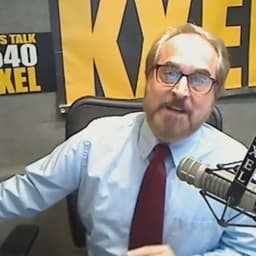
KXEL Live & Local with Jeff Stein · Sun Sep 13, 2026
This is Iowa Talking Points The Candidates Produced by Studio 5 at Mud Advertising and Totally Iowa Media Where you hear from candidates in the November 2026 General Election Now Iowa Talking Points The Candidates From Studio 5 at Mud and Cedar Falls Here is Jeff Stein
Hello and welcome
The election for Southeast Iowa's first congressional district will seem familiar to some as this will be the third consecutive election in which the same Republican and Democrat have been on the ballot.
But a difference this year is the presence of an independent in the race, and he joins us today.
His name is Michael Bridgeford.
As noted, Mr. Bridgeford is an independent on the ballot.
First District Congress, Bridgeford for Iowa.com, the website.
Mr. Bridgeford, thank you so much for taking the time.
Sure.
Thanks for having me.
Excited to be here.
So it is never easy to make the decision to run for office.
It is perhaps more difficult as an independent.
What led you to make the run?
You know, these past 10 years, government just has stopped working, right?
I mean, the two-party system, we've seen the pendulum go from one side to the other.
We're not getting results.
And right now, there's just a lot of alignment where, you know, half the country identifies as independent and our district now, the largest group of voters are independent or no party voters.
And the margin in the house is such a tight margin, a couple of people can make an outsize impact.
And we've got some really serious issues facing our country that are just not being addressed, you know, our national debt, social security, you know, impending issue there.
healthcare system, we could go on.
And so this is the time we need independent representation.
I want to talk about your background a little later, but let's go to those issues.
And as you mentioned, $40 trillion of debt, as I recall earlier this year, we thought we might hit that by election day.
Instead, it was months before and I saw some analysis suggesting we'll be to 50 within 10 years.
All right, so
how does one address that?
You know, I think this is really a potential existential issue for us.
And also, I'll link it back to our affordability crisis that we're in.
You know, it took us from the start of the country to 2009 to get to $8 trillion in currency.
We've just printed $8 trillion in the last six years to fund this debt.
And that's why everything's going up in costs, groceries, housing, utilities.
It's a real driver.
To address it, right now, we're spending $7 trillion a year.
We're only bringing in $5 trillion.
You're going to have to attack it from both sides.
We're going to have to look at ways to raise additional revenue.
We're going to have to look at ways to cut expense.
And it's going to take time.
You're not going to go to a balanced budget in a single year.
Back in the late 90s, we had four years of a balanced budget.
We need to get back to that.
Otherwise, I mean, this is an issue that's just not acceptable for what we're leaving for the next generation.
How quickly can we get to a balanced budget, in other words, not adding to $40 trillion of debt?
Well, I mean, step one, you know, right now, the debt to GDP or our deficit to GDP, you know, 6%, we need to lower that to at least 3% to be in line with, you know, a rough growth for the economy.
Again, I mean, you know, we the one big beautiful bill that added 5 trillion to the debt You know one example I look at Amazon, you know before the one big beautiful bill that's 65 billion in profit They paid 9 billion in taxes after the big beautiful bill.
They had 90 billion in profit.
They only paid 1 billion in taxes, right?
So on these these big tech massive companies they need to be paying their fair share And really look for them to be successful in the long run.
They need to have a healthy American society They need to have our government be healthy
you know, to be successful.
So they should be wanting to help contribute to get us in better shape.
But we're also going to have to look at expenses.
I mean, entitlements over over time, we're going to have to look at reform there.
I mean, we don't want to make any impact immediately to seniors or to anyone that's impacted.
But looking out people on 41, I should be expecting there's probably going to be an impact down the line.
You know, other we need to look at zero based budgeting instead of just adding money to these departments every year.
You know, we need to attack this from all angles.
You know, I know Rand Paul's got a proposal out there right now I think we should be looking at all options and really that's where independent representation It's getting in a room sitting with both sides getting ideas and actually trying to get something done
and again as we've suggested you have to Get to a balanced budget just to take care of the 40 trillion Over some course of time you're going to have to in essence make money so a profit as the government for
couple of generations, if you're even going to make a dent in it, that's a little scary for some of us because, again, you've got to raise revenue and cut, and nobody in Washington shows any disposition for doing that.
How can you help bring people to the table to help them see their ways?
Well, I mean, yeah, it's politically unpopular to talk about those solutions, and that's why the parties, you know, they make these kind of empty promises.
the longer we delay this, the harder the pain, you know, the more pain we're going to be in.
And that's what I think as an independent, you know, we're not answering to special interests, we're not answering to a party boss, truly representing what's best for the country, what's best for the, for the district.
And that's where, you know, one thing for me, it's having to say who the speaker would be, you know, right now that the, the margin in the house is just two votes, just a couple of independents could potentially
You know, really have a say in who this, I mean, it could even be 217, 217 and one into elective speaker, you need to have 218 votes.
And that's where I would want to have a speaker that's committed to having serious conversations about this to address it.
That would make you the most popular guy in the room.
And I have asked libertarians and independents the same question.
So I'll pose it to you.
If you are elected as an independent, would you opt to caucus with either party and if
so, which?
You know, so I'm working with a group.
We launched an independent leadership council, you know, former Senator Joe Manchin's involved.
We just launched this last month and we all committed to not coxswain with the other side.
And so there's a real movement for independence this year.
There's great candidates right around the country, both for the house and Senate.
It's unlike, you know, past years for independent candidates.
And so we're all committed to not coxswain with the other side.
And the other thing I'll say is I know that in Washington, there's some conversations with people
elected now that are frustrated with their parties that I think if some of us started to break through there could be interest to defect and join us because they would have more leverage in the position we would be in and potentially that's where we could get a speaker.
As Senator Manchin himself did to switch to independent at the end of his term.
You used a phrase a moment ago and so I want to ask you to define it, fair share.
We hear a lot of people say tax the rich, pay their fair share, working class, these are words
But you have to quantify it in some way.
So when you say paying their fair share, what does that mean to
you?
Yeah, it's funny you bring that up.
My grandpa Don is 93 and he hates the word fair because to the point you're making, how do you define that?
Everyone has a different opinion of what that means.
You know, I'm in a position now where, you know, look, our working class, middle class, they can't bear an extra burden right now given, you know, all the affordability and inflation crisis that we have going on.
you know, really the, you know, some of these, some of these companies now, they're the size of countries, right?
And so that's where I think, I mean, look at the amount of investment they're putting into AI and it's, I mean, it's in the trillions of dollars, I think for us to start to shore things up.
And, you know, I don't think we need to, one of the problems I think we have in politics is the pendulum swings from one side to another and there's an immediate response.
I think there needs to be more incremental changes.
It's sort of like, you know, the, you know, boiling, boiling frog, right?
If you throw it in, it's going to jump out, but if you turn the temperature up slowly over time,
it gets boiled.
And so I think with some of these changes to revenue and on the expense side, they need to be incremental changes instead of trying to do something all in one year.
So when we're talking about things like fair share, you don't have a dollar amount in mind.
And again, correct me if I'm putting words in your mouth, you're looking at saying, okay, something is out of balance.
We need to have a serious discussion about it.
Is that fair?
Yeah, that's fair.
I mean, look, it's two trillion a year deficit right now.
I think if we could try to tackle four to 500 billion a year, it was over four or five years we're getting to a balanced budget.
And that's where on that number, you'd be looking at both the revenue side and the expense side to try to get there.
And look, there's no silver bolt to this, right?
If there was, they would be addressing it.
But the more we delay it, the worse it's going to be, and it's time to do it.
Well, would they be addressing it?
Because again,
Both sides got elected under the current system.
And so there's not much incentive within the existing framework to make change, which is the whole reason you're involved.
Yeah, but I mean, look what's happening right now.
We're seeing interest rates go up now just in the last week.
The government's, you know, the Secretary of Treasury is trying to implement.
new things to try to address that.
I don't think they're going to be successful over time.
As interest rates continue to go up or if they stay where they're at and as we have to refinance the debt, it's just not an untenable position for us right now.
And so, you know, I think the politicians think they're in control when in reality, the bond markets are in control.
And at some point, they're going to force action.
And again, as we wait for that event,
That's where things are going to be much worse than if we can start to address it.
I mean, it's like Social Security, you know, in 2031, 2032, there's going to be, you know, automatic, you know, 25% cuts if we don't do anything.
We've known this issue since the 90s, since even the 80s that this was coming.
And there's just no attention to it.
So, you know, our government wants to govern from crisis to crisis, you know, one in the morning, two in the morning, the day before to address something that's not acceptable.
I mean, that's not how businesses operate.
That's not how our families, you know, operate.
We need to have serious conversations.
We need to have compromise and we got to work together.
not successful businesses.
Right.
Right.
So some may operate that way, but we never hear of them.
And I typically asked the social security question and since you raised it, how do we take care of that?
Because again, as you quite accurately know, by 2032, automatic cuts are triggered.
History would suggest that Congress will figure it out a week beforehand.
But what can be done without, again, just exploding that deficit further?
I think it's gotta, again, come from both sides.
Right now, there's a cap for payroll taxes at 184,000.
I think we're gonna have to look, and again, it doesn't have to go, that can be incrementally brought up, right?
It doesn't have to go from 184,000 to an unlimited income.
And I think also we're gonna have to look at reforming down the road for younger, I mean, look, a lot of younger folks I know don't think there's gonna be social security at all for them, just based on the way it's working now.
I think we'd be better off reforming it.
That means moving out the retirement age, again, not for anyone in imminently getting Social Security or currently getting it, but for younger folks, folks in college now, they're going to have to, we're all going to have to accept changes one way or the other, whether we can address it in an organized way to make it work or when we're forced to, and that's where we're going to have real
problems.
Michael Bridgeford is our guest at the Iowa Talking Points table.
He is an independent running for Congress on the ballot, one of three in the November election, Southeast Iowa's first congressional district, more with Mr. Bridgeford.
As Iowa Talking Points, the candidates continues in a moment.
One opportunity, change your career.
Mud advertising is hiring product specialists.
$20 an hour, paid weekly.
That's 52 weeks a year plus record-breaking profit sharing.
Let me repeat, $20 an hour plus record-breaking profit sharing.
But we're just getting started.
The best in the business, 401K, company match, gold standard health plans, on-site fitness center, generous pay time off, and so much more.
Apply today and don't look back.
You're watching Iowa Talking Points.
The candidates.
Here again is Jeff Stein.
And we continue this conversation with independent candidate for Iowa's first congressional district, Michael Bridgeford.
Bridgeford for Iowa.com is the website.
Give us a little sense of your background.
I mean, you've been focusing on monetary issues.
That's something you know pretty well.
Yeah.
So I grew up on a family farm, seven generation family farm.
My grandpa had cattle, my grandpa and we lived on the same farm.
We grew up in an 1898 farmhouse, so that traditional upbringing.
Wouldn't trade that for anything in the world.
My dad had hogs, so we're doing hog chores with him, power washing hog buildings in the summer.
A lot of hard work, but just to have family close, it was just really the perfect upbringing.
From there, I went on to study business, and so I've been in small business really my whole career.
So yeah, being tied to the markets and paying a lot of attention.
Again, we've reached a time where normal folks need a razor.
I consider myself a normal person.
I've never run for office before.
But the special interests have just captured both parties to where they're not solving problems and they're answering to them instead of the voters.
And that's why I think it's time for normal folks to say enough's enough and we got to start addressing these issues.
In the small businesses that I have worked with in the past as a lawyer and that I talked to now before a microphone, they mentioned government
overreach as one of the big issues.
What do you think are some of the key issues facing small businesses?
And you can define that as you will.
I think there's a standard definition, but I'll let you make your response.
But what's really facing small businesses?
Well, I think they're getting hit right now with the same issues facing our families with the affordability issues, right?
Everything's going up in cost, rampant inflation.
It's hard to keep up.
And
I think technology is coming fast and furious.
That's having a big impact.
And in some ways, good ways, in some ways, bad ways, right?
And I think there's always the need.
There's always too much red tape.
I think that's where the more we can have competition in free markets, that's always the answer.
And we need to always be looking at solutions there, especially like our health care system.
That's where I think that's a rampant issue.
But businesses, the answer for me is I'm a capitalist.
It's competition.
allowing businesses to really thrive in that environment.
So what are some steps that, based on your own experience, you can go to Washington and say, hey, guys and gals, this is an example of something.
I mean, we had the business ownership interest report issue that may have had, may have had a good reason to begin with, but was misguided in application.
And so that's something Congress should still look at, because at the moment,
it's not permanently removed.
But what are some specifics that give people a sense of what you can bring to the table with your unique perspective?
Yeah.
So, you know, I've been fortunate to sit on both sides of the table as a business owner, as an employee, you know, smaller companies, bigger companies.
And, you know, I'm a big fan of Teddy Roosevelt, you know, when he was president, a big thing for him was a square deal between capital and labor.
And that's what I think really having having
both perspectives there.
I think both sides need to have a seat at the table and having representatives that are really focused on solutions for both sides versus I think right now we see on both sides, on both sides of the aisle, there's too much focus only in one direction.
And so we need to have focus with people with balanced experience to really help solve these problems.
So, you were talking about healthcare previously.
That's a problem for many people, again, from a business standpoint, rural areas in particular.
So, what should Congress do to either fix a current situation or what can they do to, at the very least,
moderate some of the punishment.
Yeah, I mean, it starts with being able to get in a room and talk.
I mean, right now, we're not even seeing that where the sides just can't come together to even talk about these issues.
Why is that?
Why do you
think that is based upon it?
Because again, you've studied this and Senator Manchin has talked about it.
But why do you think the two sides won't even sit down like you and I are right now?
I think when people get elected now, they put on a jersey.
You know, you get a red jersey, you get a blue jersey.
And then it's about what's best for the party, not what's best for the country, not what's best for the people.
And they're just so focused on their party's power and their influence.
And they're so beholden to the special interests and having a party boss to answer to that they just aren't interested in solving these.
And candidly, I think on a lot of these issues, the parties and the politicians would rather fundraise off of these issues rather than seriously address them because it riles people up.
They get the social media sound bites.
And it's just not, you know, we've reached a point where it's not working.
You know, I think in healthcare, you know, we were talking about healthcare, there's so much issue in the middle, you know, the PBMs, you know, they've consolidated to where there's just a few companies that control that, those margins have increased.
We need, again, more competition.
Competition to me is always the answer.
And again, on both sides, I feel as though the special interests are the ones that are kind of leading the, you know, legislation that's being done on each side.
And that's why we're in the mess that we're in.
So,
PBM Pharmacy Benefit Manager, that was something that was unheard of or at least not known or talked about, not all that many years ago.
Because you're a capitalist, has government gotten its finger in too many pots and mess things up?
And I'm even thinking of things like healthcare by trying to fix a solution or fix a problem, or what was a perceived problem, have they made
it worse?
I think in many ways they have with healthcare.
Well, again, I think they're protecting these special interests because that's who's funding them.
They're passing legislation that benefits them.
In a way, the government's getting in the way of competition.
They're getting in the way of just common sense things.
I mean, having price transparency, right?
Healthcare is one of the only things where you don't know what you're going to pay until two weeks later, you get almost a made-up number.
Every other part of our life, that's not the case.
You know, this is just common sense.
It should be bipartisan, but because of the money in politics, they just look the other way and complain about it.
And that's the thing, you know, I hear, you know, from both sides, I see interviews this cycle and they all have a lot of good things to say about what they can do about healthcare.
And I'm talking about people that are currently in Congress.
It's like, well, what are you doing?
Right?
I mean, you have these good ideas, but we need to execute.
And that's where I think independence, being able to be in that middle to bring the two sides together and to just, again, be divorced from those special interests to where we can really speak truth to power.
Well, it sort of is bipartisan,
but the wrong way.
They're all, they're, they're all in it together as the phrase is.
All right.
So you go to Washington as a member of Congress from an important swing district.
It's going to be tight margins.
Again, you could be the most popular guy in the room.
Or unpopular.
Or unpopular.
It's a thin blade.
So what's the solution?
What is a solution?
Now, what's the solution?
What is a solution to the health care issue?
Is it more government involvement?
Is it less involvement?
Or is it much more laser focused than
that?
I mean, I think, again, it's price transparency, it's PBM reform.
These are things that are just common sense items that could bring costs down immediately.
But again, I'll just go back to the higher level of being able to actually be serious about addressing the issues and getting people in the room to work together, because that's just not happening now and that's why we have these issues.
But it's so ingrained.
So how can that, is it a matter of saying,
you may be the only independent elected in the house and you'll start speaking and then be joined by another and another and pretty soon you have that ability or because again and I don't mean to sound fatalistic but the die is cast in a lot of ways and I'm just wondering
I'm not disagreeing with the premise, but I'm just wondering how we get there.
Well, I go back to the speaker.
I think that's, you know, one of the first interviews I did, what would be a thing you would hold the government up, you know, over?
It would be electing the speaker, getting someone that's committed to just these common sense things, right?
Getting a vote on term limits, campaign finance reform.
I think setting up, you know, the rules don't carry over from one Congress to an X. Congress could be organized in a different way where we have more bipartisan committees versus right now where one side takes full control.
And that's where we get a lot of these performative hearings that aren't really, you know, even focused on solving problems.
They're just focused on, you know, the performative nature of it.
And so we, that's where to change, you know, the speaker controls the house, right?
I mean, they set the agenda and that's where we need a speaker that's not just a, you know, that's where I wouldn't be a vote for Mike Johnson or Hakeem Jeffries.
I would want someone that's going to be
you know, focus on changing business as usual.
His name is Michael Bridgeford.
He is an independent on the ballot for First District Congress.
That Southeast Iowa three will be on the ballot in the November election.
Bridgeford for Iowa.com is his website.
We're midway through the program.
More with Mr. Bridgeford as Iowa talking points.
The candidates continues in a moment.
Studio 5 at MUD is built to get attention and get results.
From radio and television to digital video and live productions, it all happens inside our 3100 square foot production studio.
An infinity wall, multi-camera live webcast capabilities, massive green screen, audience seating and a full creative team for pre and post production.
Whatever you need for media or production, get noticed and get results.
At MUD Advertising, we love it when you succeed.
Watch all the programs in the Iowa Talking Point series online at IowaTalkingPoints.com.
Iowa Talking Points, the candidates, continues with Jeff Stein.
And we continue with Michael Bridgeford.
He is an independent who is on the ballot.
Southeast Iowa first congressional district in the November general election.
No easy feat to get on the ballot for those who are not aware
Republicans get a slot, Democrats get a slot.
There are rules for this, and if you're a major party or a recognized party, libertarians had it for a period of time.
What did you have to go through just to be, I guess the phrase is nominated by petition?
Yeah, it was a big, it was a big task.
You know, we launched the campaign in mid-April, and in about 40 days we got nearly 4,000 signatures, and that was all organic.
You know, some candidates hire outside firms to harvest signatures or get signatures.
We did that all, you know, in-house, built a team out.
And again, I think there's a real hunger for this right now.
People are really frustrated with how Washington's functioning.
They're frustrated with both sides.
You look at party approval ratings on both sides.
So going on, we talked to a lot of people and I was out knocking doors, myself getting signatures, going to farmers markets, different community events.
But we've in just a short time to get that in 40 days.
Um, you know, we call, you know, we got invited to the Iowa PBS debate.
I believe the first independent candidate in state history or at least modern state history for that, that was within a hundred days to meet those requirements.
So we've, we've, you know, and now we've got over 20 people working on this campaign.
So, you know, it's been a quiet ride and basically, you know, just over 120 days.
The district,
like many in Iowa, we only have four these days because of population, but you've got some of the larger cities.
like the Quad Cities area, Davenport, Bettendorf, you've got Iowa City, which is an island unto itself, and then you have some of the most rural areas.
Speak, if you would, to your ability to represent all of those very diverse interests, because sometimes they are in competition with one another.
Sure.
And, you know, after the signature phase, the next thing we did, I literally went to every county fair and talked to, you know, people at the fair, talked to both Republicans, Democrats that had booths.
I mean, really,
That's where we're focused on representing people.
And that's where, to your point on it, being a diverse district in terms of rural, urban, suburban, I think that's where, again, right now with what we're seeing with the parties, there's so much outside money that comes in, so much coastal special influence money, interest money that comes into influence these elections.
And that's where we need to have representatives that are out in all corners of the district, in the urban places, in the rural areas.
talking to folks to really be able to represent them.
I mentioned in the introduction that folks have seen the Republican and Democrat candidates three times.
Now, if I'm not mistaken, and so arguably a voter knows the Democrat, knows the Republican, they're learning about you.
So I'll let you have the opportunity to distinguish yourself.
If I'm a voter in the first district and I see these three names, how do we differentiate you from either of the other two?
Yeah, I think it's been a little bit frustrating here recently because I feel as though the other candidates are really not campaigning in the way they should be.
I think they're taking this a bit for granted.
I think they think that they can sort of just buy this, you know, like the other week we had the state fair soapbox.
I think they were the only two candidates statewide that didn't participate in that.
You know, I would mention the Iowa PBS debate.
They haven't accepted their invitations to that yet.
We have accepted.
And it's just...
I could give other examples.
It just seems as though, you know, just like you mentioned, this is their third time running.
They're just not out talking to the everyday Iowan.
They're focused on their sort of safe spaces, you know, party groups.
And I don't think that's enough.
You know, I think we've seen
Iowans are independent thinkers, you know, we look at the first in the nation caucus They want to meet all the candidates, you know, you look at the Republican primary for governor where you know, Randy Fischer he skipped a bunch of debates and had even had an endorsement from President Trump But still didn't you know come out on top So, you know, I think you know, I would also say, you know, I don't receive any foreign lobby money where both of them have so again It really comes back to rep you know, I'm my own largest donor whereas they both
You know millions of dollars and it'll be even tens of millions of dollars and outside spending from special interest groups We really need independent representation.
Iowa has led the way for the country and politics with like said the first nation caucus
This is another way for Iowa to lead the nation in politics and electing an independent to truly represent.
And, you know, the exhaustive majority, not just in Iowa, but Americans, people are really frustrated with how this is working.
It doesn't make sense that half the country now identifies as independent yet.
You know, we do have one independent representative now.
He was elected as a Republican.
He's part of the group I'm working with.
I'm Kevin Kiley from California.
It's time for independent representation to truly represent the exhaustive majority of folks that just want government to work.
Correct me if I miss.
characterize this, but based on what you just said, it's sort of like each of those two sides, Republican and Democrat, are saying, well, we have our jerseys and it's just going to be turned out and we've got to get more of our guys and gals out than they do.
But the reality is that's not where the voting public is.
It's those, I happen to be non-affiliated for a variety of reasons, but
It's almost like they're hoping all of those folks.
folks like you are so disaffected by it that they won't even bother to show up and then they can just fight amongst themselves.
And it sounds like you're trying to give those disillusioned folks another opportunity or another option.
Definitely.
I mean, I think that's one of the issues with the no party voter.
They don't have someone to vote for.
It ends up just being this lesser of two evils.
I mean, I know that for myself and many others that I talk to, we need to have somebody to vote for, someone that's actually running to represent people.
And one thing I would say interesting this year in Iowa,
You know, I think I was, I mean, I'm biased, but I think I was going to be the most interesting state in national politics.
You know, we have the open seat for governor and we have the open Senate seat.
And with both governor candidates, really they're talking more like an independence than they are their traditional partisan, you know, Republican or Democrat.
And so I think that's also going to bring out a large independent vote really from both sides.
Again, you know, things are changing in our politics.
There's a lot of frustration with the establishment.
I think we're seeing that on the left with the DSA, the rise of socialism.
You know, on the right there's frustration, you know, Tucker Carlson, Marjorie Taylor Greene are looking to start a new party.
And this is where, you know, independents really offer a fresh option that's, that's truly focused on doing what's best for the folks in the district and being away from that establishment that's just not working on either side.
I have noted this in the past.
It was pointed out to me again recently that many of these traditional candidates, Republicans and Democrats, they don't put.
their party identification in their ads.
They don't say what party they belong to.
Does it feel like they're either ashamed of it or they don't want to say because it might alienate folks who might be in the situation you were in when you decided to become
active?
Both parties' brands have a bit of toxicity to it right now.
And again, it just goes back to people being frustrated.
The pendulum's been on both sides here over the last 10 years.
They both had full control.
And that was one of the things that was really kind of sad to hear in the signature process, especially getting out in rural Iowa.
A lot of people are just like, you know, I'm giving up on politics.
It doesn't matter what happens.
It's not going to impact me.
It can't improve things for me.
And that's, I mean, the thing that's scary to me, I think that's how you can lose democracy if people just sort of tune out.
And so I see why some of these politicians sort of want to run from the party because of that.
But hey, no one put a gun or the head to make them run as a Republican or a Democrat.
They could run as an independent.
They could truly represent their principles and be free from that special interest money and having a party boss answer to.
This is just the time for this now.
You mentioned obviously growing up on the farm and Iowa reliant on agriculture in so many ways and the domino effect of that.
So what can or what should Congress do to help?
agriculture.
And when I say help agriculture, I'm not necessarily saying that government should get involved and pay for this, but just broadly to overall help and not hurt agriculture.
What would you advocate?
Well, I mean, first of all, we needed a farm bill, right?
The last farm bill was passed in 2018.
Both sides can't come together to solve that.
Again, I think independence maybe being in the middle could help bring that together to get something done.
You know, looking at this recent beef announcement, you know,
In the meatpacking side of things, now four companies control 85% of that industry and two of those aren't even American companies.
That's where I think we need to look at antitrust.
Again, it comes back to more competition, more options for farmers.
I think we see that on the input side as well.
And again, I hear a lot of politicians talking about this now, which is really great, but we actually need to address it versus just having talking points.
And so E15 year-round, that would be as part of a farm bill.
That would be a great thing for our ag, but you know, I come from a family farm, so I would be focused on what's best for our family farmers, and that's where I come from.
So what would that be?
Is it more government involvement in terms of the antitrust?
Is it less government involvement so that you actually don't have to worry about
a crick running through your land and having to file a government report, for example.
There's a balancer.
I mean, I think we definitely need a bit more on the antitrust side.
I think we need some more conservation options for farmers.
And I think that, you know, here in Iowa, obviously, we talk a lot about the water issue and the cancer crisis that we have.
And that's where I think having a farm bill that sort of addresses that.
Because, you know, I mean, those are issues that impact all of us.
Those aren't Republican or Democratic issues.
And, you know, that's where we need government to play a role with both
You know, kind of the carrot, there's a carrot and a stick, right?
I mean, we want to have more carrots, I think, but to play a role to getting us to a better water situation, to bring these cancer numbers down.
You know, farmers do have safe practices, they want conservation, all of those things.
And that's where the government can play a role to help incentivize that.
Before we take the break, I'm going to ask the question that I suppose is the elephant in the room in many situations when you talk with people.
They say, I like what you have to say.
I like that you're a free thinking independent, but I don't know that you can win and I don't want to, quote, waste my vote.
I'll let you respond.
There are many very good responses to it, but I'll just let you respond to a voter in the first district who says, yeah, but if he can't win, why should I vote?
Well, what I would say, again, our largest group of voters are independent voters.
I would say anybody that's representing them that's not an independent, they're being misrepresented.
What we're doing is not working.
You
We've been wasting votes in terms of the results we're getting from government.
From what you're getting on either side, we've been wasting our vote.
It's time to try something new, someone that's focused on actually improving things for you, focused on you, not special interests, donors, not party bosses that are outside of Iowa.
My party is Iowa.
I don't have, you know, not the Republican party, not my party is Iowa.
And that's where, again, Iowa can lead the nation just like they have for the first of the Nation Caucus.
And it's time for it.
Michael Bridgeford is our guest.
He is the independent candidate on the ballot in November in the first congressional district in Southeast Iowa, three candidates, a Republican, a Democrat, and Mr. Bridgeford is the independent.
And a few more moments with him when Iowa Talking Points, the candidates continues in a moment.
Iowa has a wonderful heritage.
And each day, I'll share these stories of historic people and events with you.
I'm Jeff Stein.
Join me for the Iowa Almanac program and learn more about this great place we call home.
Now, seven days a week.
Listen on radio stations across the state via podcast or at IowaAlmanac.com.
Signs can set the tone.
Signs can direct, instruct, and motivate, and even seal the deal.
At Mud Advertising, we create signs in every shape, size, and material for clients nationwide.
From point-of-purchase displays that turn heads and drive traffic to campaign signage that brings your marketing to life.
Need to go big?
We do that too, with large format banners, trade show displays, vehicle wraps, and more.
Whatever the message, whatever the size, wherever it needs to go,
Whatever your signage need, call us today.
At Mud Advertising, we love it when you succeed.
You're watching Iowa Talking Points.
The candidates.
Here again is Jeff Stein.
Final segment with Michael Bridgeford.
Mr. Bridgeford is an independent running for Congress from the first congressional district.
He'll be on the ballot in November along with two others.
Republican and a Democrat, he is the independent, bridgeford4iowa.com.
There has been an awful lot of money, crazy amounts of money going into data centers.
And there are some areas of the country that welcome them.
There are some areas of our state that welcome them, others that say hands off and now you have people saying the federal government needs to get involved to restrict AI or regulate AI.
These are two very different issues, but they conflate in many ways.
So I'll let you take your turn at what you think about this data center, AI, something that wasn't an issue
when this campaign began, really.
Right.
Yeah.
No, this is something that's become a really big deal, not just in Iowa, but around the country.
Um, you know, even in our district in Clinton County, there was a large proposed project.
I actually went to the city council meeting there and the turnout from the community was just blew me away.
I mean, every overflow room was full.
People were waiting outside.
It was over three hours of public comment.
You know, and this is an issue where I don't think we can afford to just leave it to the parties because
as they've done in other areas.
I mean, we could talk about social media where nothing ever got done, right?
They both sides have taken special interest money there.
They've looked the other way.
There's never been any regulation.
Look at some of the impacts on our kids that we're seeing there.
And I don't think we can afford to make that mistake with AI.
I think AI...
You know has impacts us in many ways and obviously, you know college graduates right now college graduate unemployment set an all-time high They need to have independent representation.
That's free from that special interest money to truly, you know, get this right
I did it is a needle that we're gonna have to thread though because you know, we want to stay ahead of China and other adversaries We don't want to seed ground there But we've also got to be looking out what's best for society and on the data center issue I just it goes back to local control and I think that really on a lot of issues But especially data centers, you know, these companies need to be bringing more to the table And they're starting to now with this backlash that we're seeing they are starting to do that which is positive You know, they need you know, people are worried about their utility bills people are worried about water usage
Those are areas where we need to have assurances how things are going to be done the right way and that, you know, these companies are going to bear the costs.
Our communities aren't.
And again, it just goes back to local control to make the right decision.
I've heard many say with regard to the energy issue and the payload property is one example, but there are others across the country where start up a new plant with a guaranteed client, a data center that will fund the cost of the infrastructure.
And then the utility is able to offer additional energy to everyone so that the current users are not bearing the brunt of the big customer.
I don't know the ins and outs of it, but that math seems to work.
The logic seems to work.
Our communities, and again, with your business background, our community is just not driving a hard enough bargain with some of these in order to
Get the full benefits for
their community.
Well, I think we're seeing that change right in front of our eyes I think that was probably the case, you know Six months ago a year ago and now because this issue and it's and it's not just a right or left issue I mean this is people on both sides, you know really concerned really frustrated and again This is where you know, I know some of the the candidates and I were talking about but you know the candidates I'm running against I haven't heard a word from about AI or data centers I think because of the special interest money, they're so concerned about it.
They're coming out against them or not getting that support
And it's just we can't leave this to just for the special interest to dictate what's going to happen here.
This is where we need representatives, you know, involved and listening to people in the communities to making sure that we're getting it right.
I
cannot speak with authority because I've not chronicled it, but I also do not hear a lot from your two opponents.
And so I don't know if they are simply
preaching to the choir, as you suggested, talking to safe areas.
What would you like to hear, either of them, either individually or each separately?
What would you like to hear them talk about at this point, or what would you like to hear them weigh in on that would be different than, in
essence, round three?
Right.
I mean, this is a key issue right here, right?
Like we said, this is, and I was becoming one of the top issues.
Um, and again, and they're not talking about it at all.
It's definitely something they need to be weighing in on.
And given the importance this has in our communities, you know, I'll go back to the debate.
I'd love to see them accept the debate invitation so we can have an honest conversation in a neutral environment so the voters can really make a decision.
I think that's the least that we own, especially that this is the tightest district in the country, right?
I mean, uh, the voters deserve that.
And that's what I hope they'll, they'll, they'll agree to.
You are asking voters in Iowa's first congressional district to cast their vote for you in the November election, and I'll let you use our remaining minutes to make your case directly to them.
Thanks, Jeff.
Again, this is our 250th year of independence.
It's time to renew that independence.
As I said earlier, Iowa has led the nation, you know, with our first of the nation caucus.
By electing an independent of Congress, Iowa again can lead the nation and show that there's a new way
Right now, you know, half the country identifies this way.
The largest group of voters, over 200,000 voters in the first district are independent and party approval ratings at all time lows.
Congress isn't working.
Government is not functioning for us today.
The two-party system, we need to make a change.
In our hands here in the first district, we can deliver that change.
You know, we're in a time where less than 20 districts out of 435 are being competitive.
Iowa is the place to show the way.
to deliver this change so we can actually start addressing these very serious issues facing our country.
We talked about the affordability crisis, our fiscal situation, social security, health care.
We need to have a sharp focus there and we need to do it immediately.
Thank you very much for your consideration.
And thank you for taking the time.
I appreciate it.
Thank you,
Jeff.
Michael Bridgeford, he is the independent candidate on the ballot.
In the November General Election for Southeast Iowa's first congressional district, Bridgeford for Iowa.com is the website.
And that brings us to the close of this conversation.
Thank you for joining us for this edition of Iowa Talking Points, The
Candidates.
This has been Iowa Talking Points, The Candidates.
Produced by Studio 5 at Mud Advertising and totally Iowa Media.
For more information on this series, go to IowaTalkingPoints.com.