Transcript
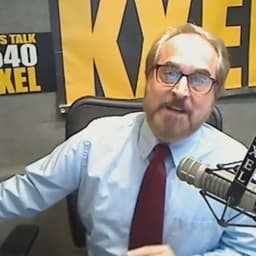
Dr. Robert Malone, Co-Author of "Homesteading for Health"
KXEL Live & Local with Jeff Stein · Fri Sep 4, 2026
This is Iowa Talking Points The Candidates Produced by Studio 5 at Mud Advertising and Totally Iowa Media Where you hear from candidates in the November 2026 General Election Now Iowa Talking Points The Candidates
From Studio 5 at Mud and Cedar Falls, here is Jeff Stein.
Hello and welcome.
There will be a new Iowa Governor and Lieutenant Governor in January of 2027.
Those positions will be open due to the retirement of Governor Kim Reynolds after nearly a decade in the job.
Now the Governor and Lieutenant Governor run as a team and one of the candidates for Lieutenant Governor joins us today.
He is Democrat Dave Mulbauer.
He is running with the gubernatorial candidate Rob Sand.
The website for the team is robsand.com.
Mr. Mulbauer, thanks so much for taking the time.
Absolutely, Jeff.
And thanks for having me here today.
Just very excited to be here.
And talk about the campaign.
Well, let's start with key issues.
And I'm just going to open it up to, from your perspective, what is the most challenging issue facing the state of Iowa for the next governor and lieutenant governor?
Right.
You know, everywhere we go, and Rob's been doing town halls for a long time.
He's on another round of hundred town hall tours.
I've been going all over the state as well.
And people, you know, even in my role as a county supervisor, people just feel like their voices are not being heard, that our political system is broken, that it doesn't work for them.
They feel like our current elected officials is serving special interests and powerful insiders.
It's something that we address, Rob has addressed in all of his town halls.
With that, I mean, no matter where we go across state, I mean, the other issues people talk about, water quality, our high cancer rates, our economy, a number of issues are farm economy.
I mean, I've been a lifetime farmer.
I see firsthand the struggles that we have, you know, with high input costs, like fuel, fertilizer, parts, even being able to get certain parts.
And then our commodity prices, you know, it's been a tough go.
And, you know, I've been out and about a lot of different agriculture events, and I've also been doing a lot of rural events.
We're doing a restore local control roundtable tour.
I really like doing that.
That's right up my wheelhouse with what I've done as a supervisor in the boards I've sat on, but it starts with getting government working for the people again.
When you talk to Iowans, do they express frustration or
Have many just simply given up because they figure everything is baked in, the system is the system, and you just have to do the best you can despite it?
Jeff, I would say just the turnout of town halls, the number of people that are coming, and it's independence Republicans and Democrats that are expressing their frustration of where we're at in the state.
They're frustrated with the cost of things, the economy.
They're really very concerned about us dropping to the bottom half of public schools.
We're 27th in the nation now.
Even you go around and talk about the sky high cancer rates, ask the question in a room full of people, and if they've had cancer or if they know somebody directly who has, about everybody raises their hand.
They are issues in some of these crises that people I do think are frustrated in.
That's why they're showing up because we're there to meet them where they're at and listen to their concerns.
Let's start with agriculture because you mentioned how difficult it is for folks on the farm.
And that, of course, transcends all of the Iowa economy, manufacturing, small town businesses, large businesses, etc.
What can the executive branch of government, and in this case, governor and lieutenant governor working together,
What can you do to help alleviate some of the things you mentioned, the prices, the markets, et cetera?
Right.
And some of that, you know, is federal.
But the thing is, and part of why Rob brought me on is because I've been a lifetime farmer, a generational farmer.
I mean, I grew up farming side by side with my dad.
I went to college for a year and he called me and said, hey, Dave, you want to come home?
And I got an opportunity for you to be on the farm.
And I did.
So I spent my life farming.
I know the direct challenges that we go through.
I've been out there at one or two in the morning working on the combine to get it fixed for the next day to keep going or, you know, we pulled all nighters to plan a field of corn to beat a rain.
We struggled with the markets and wind to market and sell corn or beans and do all that.
I think the biggest thing though is that he brought me on because we realized that the farm economy, the ag economy is truly the backbone of Iowa's economy.
and we need to be the best advocates we can and have those conversations and be that to me to be that ear and mouth to the ground for raw because it's been my livelihood and you know some of what we've rolled out we rolled out an opportunities for all plans with policy that had 50 different
people that backed us and endorsed that plan saying it's a good plan.
They're farmer and ag leaders.
You know, in that opportunities for all, we talk about strengthening, creating an office of rural prosperity.
I love that because I've seen, you know, in our small towns in Western Iowa and all across the state, you know, when a family business on Main Street retires.
Hargit's too tough.
They close the doors and either the next generation isn't there to take over or nobody, you know, you don't have the people to step up and want to buy or continue or expand businesses there.
So we've seen that, you know, our rural communities as well get hurt with, you know, a bad farm economy.
So
We're going to push forward with our opportunities for all.
There's a lot of good plans in there that will help small business and tight small businesses to get going that directly put a focus on our rural communities with the rural prosperity or the Office for Rural Prosperity.
So we're putting plans out to do what we can in our capacity, help develop other markets, help farmers with their needs and their resources.
I like to do cover crops.
It's worked great on our farm.
The programs have fallen short.
they're not sustainable.
I did a, and some of this, like I said, is federal as well, but we can put pressure on them to, you know, when the farmers talk to us, when I talk to them, of what their needs are and what they'd like to do.
I did a three-year equip program, multi-species cover crop.
Worked great.
Loved it and loved doing it.
We also run a cow calf herd that we can, you know, run out there in the fall on stocks and cover crop.
But since I did a multi-species, after three years, the contract was up and...
Well, it can't continue.
You already did it.
We need, you know, sustainable programs that help farmers and help the farm economy.
Now, my understanding, and you know it better from being there, but in talking to people with some of the trade groups that have advocated for more cover crops, they tend to talk about these programs as this is the seed money.
This is the money you need to make it worth the while to get started.
and then you incorporate it.
You're talking about something that would be much more constant, that it would be there every single year.
It's not just here, here you go to get it started.
There's no, you're not planning on any return on the investment by the farmer because the state would be providing that.
One needs to be, you know, a shared opportunity.
Right now, I mean, look, we are, I mean, farm economy is tough.
I mean, you just look at our commodity prices, the inputs where it asks, I figure, and this is a rough figure, but to plant a rye cover crop, figure 20 bucks an acre for seed, 20 bucks an acre to plant it, 20 bucks an acre to determine and actually plant your cash crop, 60 bucks an acre.
You know, rough ballpark, like some of our programs, the idols is 20, 25 bucks an acre cost here.
So farmers will be losing roughly $40 an acre.
same with some of the federal equip programs.
Great programs.
Just would love to see them expanded and sustainable.
You can be $30 to $40 depending on what the program is, but so farmers are pitching in when they do this already, but to ask them to take it all on with a down economy, you're not going to get the people that want to do it because we're struggling to make it through each year now.
Is there the benefit of cover crops in terms of then you have less need for certain fertilizer, et cetera?
Or am I misunderstanding?
Because again, this is your business, not mine.
I just know from talking to people.
Depending on what you do, there can be.
I mean, you can plant certain things that will put nitrogen in soil, but there's a variety of things.
I actually was up at Iowa Cover Crop in Jefferson with the folks there and very, very knowledgeable people and very passionate about what cover crops and the benefits it can do for our soil.
farming economy, but the things I've seen that has directly helped our farm with is soil erosion.
We know till but we do that.
Soil erosion, water quality, just the overall organic matter in the soil, soil health.
We've done it for a number of years, but we've seen that direct benefit and it's been good just farmers, they need the assistance with doing that.
Let's talk about the Center for Rural Prosperity, I believe was the name.
So what will that do?
What is it especially designed to do other than provide an outlet for those who are having issues to make connection with state government?
And that's worthwhile in and of itself, but what's the end goal?
Well, I think the Office of Rural Prosperity and our Opportunities for All Plan, what it really does is it puts the focus and the conversation
on our rural communities and what their everyday challenges and struggles are.
You know, we look at with small businesses, you know, giving them access to economic opportunity, cutting red tape, streamlined application process, helping them in their needs, whatever that is, to get them going into booster economy.
I think, you know, I just even with as being a county supervisor, a lot of what we do
And it makes a lot of impact is the networking and having an outlet to talk about our challenges.
And then you come up with good ideas and what you can do going forward because not every place is the same.
Different rural communities are different.
We say in our Iowa State Association of Counties, you've seen one county, you've seen one county.
But the great thing about that is, you know, you get county supervisors and we network across the state.
I love being on the Executive Board for Iowa State Association of Counties because I'll call somebody up.
on the other side of the state and say, hey, we've been working on this.
I know you've had a similar thing.
What did you do?
And so many different ideas get brought up and people try different things in all of our different rural communities or counties and something might work, something might not.
But with that networking is so important.
He's Dave Mulbauer.
Mr. Mulbauer is on the ballot as the Democrat candidate for Lieutenant Governor, Rob Sand.
Of course, the candidate for governor they run as a team.
RobSand.com is the website for the campaign.
More with Mr. Mulbauer in a moment after we take a short break.
Here on Iowa Talking Points, the candidates.
one opportunity change your career mud advertising is hiring product specialists $20 an hour paid weekly that's 52 weeks a year plus record-breaking profit sharing let me repeat $20 an hour plus record-breaking profit sharing
But we're just getting started.
The best in the business 401k company match, gold standard health plans, on-site fitness center, generous pay time off, and so much more.
Apply today and don't look
back.
You're watching Iowa Talking Points, the candidates.
Here again is Jeff Stein.
And we continue with Dave Mulbauer.
He is the Democrat candidate for Lieutenant Governor in the November.
general election, the governor and lieutenant governor are elected as a team, run as a team.
And before we get back to some of the issues that you mentioned, tell us a bit about yourself.
You mentioned a longtime farmer, lifelong farmer.
Tell us about the operation.
Absolutely.
Yeah,
I grew up in Manila, Iowa, small town.
I graduated from IKM back then.
family farm operation.
I actually lived just a quarter mile down the road from where I grew up on on our farm with my wife, Linda.
Went to college at Warburg, like I said.
Dad called me up in the middle of the year and said, I have an opportunity to come home.
If you want to stick college out, if that's your dream, absolutely.
But he said, if you want to come home, I'd love to have you.
And I jumped at that.
And the experience, I got to farm with my dad for over 20 years before he passed away.
And I grew up farming with him.
I mean, as a little kid.
It's different at that point, isn't it?
It totally is because, you know, you're just there every day with him going through the challenges and coming up with plans and what you're doing and what you'd like to expand on.
And I mean, it is a lot different than growing up and being his buddy at his side.
But even growing up, you know, it was really cool for me.
I mean, I grew up, you go down my road.
It's my sister and brother-in-law that I farm with.
My cousin, Jared, we graduated together.
We run a cow herd together with a group of guys.
He's like a brother.
It's my parents' place.
My place.
You go around the corner.
It's Uncle Jeff, Uncle Gary, Uncle Tom.
We're all right in that area.
So we grew up working on the farm together.
I mean, I grew up on the farm.
My dad and I wrote in the combine with him before I could drop you know actually run equipment And he made me a little steering wheel with the combine buttons and everything so as I'd sit in there for hours on end with him I could play like I was combine and then later grew up to you know run and take it over But I don't kind of get going off of that but
What if it it speaks to the the the reason why you've put such an emphasis in the campaign on
preserving the way of life.
Right.
And then to come back home and raise my own family with my wife Linda just down the road with such a huge opportunity and just special to us.
My wife Linda is a Manning Public Librarian.
She's known around town as Library Linda to all the kids.
And it was cool to me.
Our three kids just started school on Monday.
We'll have a senior, a junior and a sophomore.
All night school.
And they're going the same school I went to.
is now I can't manning.
Actually, manning was our rival in football back then, but you need to grow up in the same community.
I mean, our roots are there.
It's just what we do.
We farm with a great group of guys, like said, my brother-in-law.
Rob and my sister Megan and my cousin Jared.
They're actually at home bailing small square bills today while I'm here.
I mean they've been a huge part of they do what we realize what this means for Iowa and for Rob asking to be a part of the team.
We got things covered you fill in when we're when you can.
Oh that's been really really neat to me as well.
But I also in my background
You know, my dad and my grandpa, Louis, were both Crover County supervisors, and then they later on both served in the house.
So I'm on my eighth year as a county supervisor.
So I followed in their footsteps.
You know, our families had a passion for community service, public service.
So, and kind of the neat thing about that too, Jeff, when I first got elected as county supervisor, I'd come home and dad would be on the farm and he'd say, what'd you guys work on today?
And he never told me what to do, but he'd always say,
I think you should go talk to this person or that person has a lot of really good experience in that area and let me form my own ideas and opinions but you always kind of point you in the right direction with my experience.
Go talk to them and really you know got a lot of networking and just leaning on people that have been there and that's been part of part of my role as a county supervisor you know that's why I said I like being on the Iowa State Association of Counties Executive Board.
because the networking is so valuable to me, just picking people's brain that are experts in their field or that have been through something and bringing that back and implement that in our own county and communities is huge.
Probably more effective for your dad to say, go talk to this guy or this guy as opposed to, well, back in my day, this is how we would have done it.
Right.
I was going to, you've mentioned it, but let me just ask directly.
This experience as an elected official, a county supervisor, what do you think that's going to allow you to bring to the governor's office that is additive, is something that perhaps someone else that Mr. Sand might have chosen wouldn't be able to bring?
Oh, absolutely.
And the one thing, you know, as a county supervisor, like I said before, with the networking and the team we made,
It's about getting down to common sense solutions.
It's about working together.
You know, I know a lot of elected officials, local elected officials are very concerned about, you know, in the last few years, that's why we're doing this restore local control roundtable tour of our hands being tied.
We're very concerned about going forward with our revenue and our budgets with us.
Local electives have been taken off of different boards with reorganization of like behavioral health like right now One of our board members Jean is an advisor now instead of a voting member.
I Truly appreciate local government because it's where rubber meets the road, you know We're the ones that see our our communities the most and people grabs
you go to the grocery store and you get grabbed.
I go to church and get pulled aside.
I go have a cup of coffee and asthma at our co-op with farmers and they'll bend my ear.
So I hope to bring that aspect because we're on the same team together.
Local and state, we should be working together to find common sense solutions and to move our communities forward and fit their needs and give them the ability to do that.
Locals know what their communities are like, what their resources are and
how to best address that.
So they have to have that ability and flexibility to do it, but be a part of those conversations like farmers and some of the things we talked about earlier to best serve their communities.
So I hope to bring that to the eyes and ears of the governor's office.
Well, give us some examples of where local control has been taken away from city or county officials over the course of time.
Sure.
Well, one, you know, like I said, with behavioral health reorganization, you know, we're now an advisor instead of a voting member.
We talk a lot about unfunded mandates where we don't have the input of what those unfunded mandates do to us locally.
One and small thing on that is an example of unfunded mandate and we're working through it and it'll work fine, but our speed limit.
One thing that the county had to pick up was we're doing studies on passing zones, where to place the signs, putting new signs up.
Small but can be very big as far as the time and the effort and the cost to do that, but we didn't get no input on on that We just want to have our voice heard I
just want to make sure I understand on the on the speed limits because it it has hit me as I've gone from county to county where You're not sure if it's a 60 or a 55 you go with what's posted But the the county has the ability to say no, we're not going to bump that to 60 now or the county is stuck with
We have to pay for new signage.
The law doesn't take effect.
The new law until the sign is posted and there are some counties that are dragging their feet because they're trying to study things.
Is that a fair assessment?
That's a
fair assessment.
Another thing that we talked about in our round table, we saw local control and we were told we had to send out another additional mailer through our budget certification process.
The timing of the mailer is very difficult.
It's very confusing.
I think roughly it costs across the state an additional million dollars.
We've said a long time to our legislators that, hey, we don't see this working the way you intended it to, but it's costing us.
We think we could do better.
Let's talk about it.
But we haven't been able to.
And it's just something that was dictated on us.
Things like that, that we feel like we're losing our local control and our voice to be heard at the state level of, of, hey, this is how things are impacting us directly.
Let's work together on
it.
Dave Moelbauer, he is a Democrat running for Lieutenant Governor with the gubernatorial candidate, Rob Sand, in the November general election.
We're midway through this program.
More with Mr. Moelbauer in a moment.
When Iowa Talking Points, the candidates continues.
Studio 5 at Mud is built to get attention and get results.
From radio and television to digital video and live productions, it all happens inside our 3100 square foot production studio.
An infinity wall, multi-camera live webcast capabilities, massive green screen, audience seating and a full creative team for pre and post production.
Whatever you need for media or production, get noticed and get results.
At Mud Advertising, we love it when you succeed.
Watch all the programs in the Iowa Talking Point series online at IowaTalkingPoints.com.
Iowa Talking Points, the candidates, continues with Jeff Stein.
And we continue with Democrat Dave Mulbauer.
He is a candidate for Lieutenant Governor.
You elect the Governor and Lieutenant Governor as a ticket in November.
So, you and Mr. Sand are the Democrats who are running.
He was unopposed in the primary.
He named you as his running, a confirmed by state convention.
That's according to all of the procedures.
There was a contested primary on the Republican side.
That ticket is now set.
So, distinguish for Iowans the differences between the Democrat ticket and the Republican ticket for Governor and Lieutenant Governor.
Sure, sure.
And I would just want to say, Jeff,
Just very honored that Rob asked me.
You know, I've known Rob for a number of years.
I think we met back in 2017.
He was at a event in Templeton, Iowa.
I went over there to watch him, listen to him.
And then throughout the years, as my role as a county supervisor, I'd stopped at the Capitol when we were on business there and pop in and say, how's things going?
And just kind of, we developed a relationship over the years.
And then last spring,
Winner, you know, I called and he said, Dave, come have a coffee with me.
Let's come to Des Moines.
And I want to pick your brain on some farm things, local government.
He said, sure, that's absolutely that's right up my alley.
I can do that.
And I did.
And then he called back and they come back.
I got a few more questions and then kind of got point.
You figured out it was an audition, didn't you?
You're right.
You're right, Jeff.
But, you know, through even getting to know him better through that process.
I just realized, you know, with my family in Crawford County, it's always been about public service and not politics.
It's about working across aisle to come up with solutions.
I mean, our county board, I feel it's very, very close.
I'm the only Democrat on the board, but we work together.
In fact, we call each other all the time and just, how's your family?
How's things going?
Jean, I said earlier, I drive by our house on the way to the courthouse.
If it's a bad day or icy,
She'll say, hey, Dave, pick me up and I'll make you a breakfast sandwich.
But you work together.
We can disagree.
But we come to a common sense solution.
And where I'm going with this is that I've realized through getting know Rob better and through this process is that he's very much like that.
We're very in tune as far as let's get down and work on the issues and work with who.
If it's a good idea, we don't care where it comes from.
As long as it helps Iowa.
I do think, you know, with
with my background as a farmer and local government and Rob's experience
as a
state auditor in his background.
Two different sides of the state.
He grew up in Decora.
I grew up in Manila.
That's one contrast there.
But I think the other thing is we we've rolled out a number of plans, policies, things that people are appreciative of that that we're doing.
You know, we, like I said, we have the opportunities for all plan.
We have the accountability for all plan.
We have the healthier Iowa plan.
We're really laying out there what our vision is.
And I think people appreciate that.
We're not just giving them talking points.
They want to know, what are you doing?
And you can go right to robsand.com and he has them all listed and what each one is.
And there's a lot to it.
There's a lot to read through.
So I encourage everybody to go do that.
The other thing that, you know, Rama's
Going through it almost finished with his I don't know how many number how many round hundred town hall tours he's done now But you know, he's almost finished up with with his latest one and seeing the turnout that we've seen is Incredible our launch event Manning when free first announced me the ticket at level B You know, we had over 200 people there in small small town Manning, Iowa and
And that was pretty special to me as well to see my community and my neighbors and friends and family show up for that as well.
Last night Rob was in Dubuque and had over 500 people.
And like I said, it's everyone.
It's Republicans, independents and Democrats showing up to voice their concern and knowing that they're going to be heard and listened to.
Let's go back to issues and you mentioned education and where Iowa ranks now as opposed to perhaps when you graduated or
Back when I graduated.
What needs to be done in order to restore Iowa to a higher place?
Some of us would say it's rightful place within the top echelon by whatever measure of public education.
Right.
And it what, you know, like I said, when you grew up or I grew up, you know, we, we had some of the best schools in the nation and we've seen the schools consolidate throughout the years over and over again.
Just like my hometown school, IKM, you know, consolidated with Manning, and we end up closing the school in Manila.
That's also, I mean, a detriment to the town.
I mean, not only are they your employer, but utilities, water, electricity, just the activity in town.
When my mom's parents, my grandpa and grandma McCohen moved to Manila, they deliberately bought a house on top of Main Street because of all the kids' traffic.
They loved seeing the kids, we call it scooping the loop in Manila.
It's a big loop that people after school would just do but, you know, people came to town, my own grandparents moved to town to be a part of that and be a part of that livelihood and that action.
So, yes, we've seen the school consolidations and the underfunding and things happen like that.
We need to have a serious conversation on what it looks like to get back on track, what it's going to take to fund schools probably.
I think part of it is
You know, the atmosphere around, we got to support our teachers.
We got to get behind the back.
We have great teachers in our public schools that are trying to do their best to teach kids.
We need to listen to them.
Once again, about like farming and county supervisors and low government, we got to listen to them and hear their voice and work together on moving forward to better our schools and get back to the top half of.
public school rankings.
Well, and you just said we need to support our teachers.
What form does that take?
What does that mean?
Because again, you've talked to the folks, you've rolled out plans about education.
What needs to be done?
That the governor and lieutenant governor can do because there are certain things that are tied to a legislature.
And so I want to make sure that everybody who's listening or watching understands what's possible as opposed to simply aspirational.
Well, I said it's still in your right.
There's things that we're going to have to work on and define going forward of how we work forward to give them the tools and the resources.
We're going to have to look at what the school funding is and how we go forward to give them what they can have in funding to get what they need to do their job.
I mean, there's been this culture atmosphere too, though, and teachers have been somewhat painted public school teachers in a light that they're teaching Communities or Marxism or things like that.
We need to have those conversations and talk directly with teachers, show our communities and our people that they're trying to do the best for our kids.
They always have been.
Even when we were growing up, they want the best for the kids.
A lot of it, we look at our school or voucher program.
Rob talks about this a lot in his town hall tours.
We need to have a fair system.
He talks about getting those voucher programs audited and transparent.
You want public money, it should be the same as what the public schools have to do.
And I think that's a simple ask.
You get public money, live by the same rules.
And that's moving the direction of having those conversations and leading towards the right direction in our public schools.
There may be, I may be wrong with this, but I think there are a number of people who would place a distinction between the teachers and others in the school district, administrators, consultants, etc.
So in other words, when you've said we need to support our teachers, they have our kids best interest at heart.
I'm thinking there are a lot of people listening who would agree with that, but their beef is at a different place.
Do you see some sort of a
not necessarily a disconnect, but a differentiation between the teachers who are there doing lesson plans five days a week as opposed to others who might be steering the school districts in directions.
We know we have fiscal issues, but that may be contributing to the problem of why we've dropped in the rankings.
Now, I think that's something that we will have to work on going forward.
And Robin, I'll have to have those conversations of what it looks like with
the whole gamut of what public schools is, administrators, teachers, parents, and Hamzell's conversations, but something that, you know, very passionate.
Like I said, my kids are going to public school that I graduated from.
Rob's kids are going to public school where he's at.
And, you know, so we're living it.
Our kids are there.
We want the best for them.
And we have to bring everybody together to come up with, like at a local level, bringing everybody together to come up with solutions that work.
Dave Mulbauer is our guest for this edition of Iowa Talking Points The Candidates.
He is the Democratic candidate for Lieutenant Governor, running as a tandem with the gubernatorial candidate Rob Sand.
Again, the Democrat ticket.
One more segment with Mr. Mulbauer.
We'll do it after this break as Iowa Talking Points The Candidates continues.
Iowa has a wonderful heritage, and each day I'll share these stories of historic people and events with you.
I'm Jeff Stein.
Join me for the Iowa Almanac program and learn more about this great place we call home.
Now, seven days a week.
Listen on radio stations across the state via podcast or at IowaAlmanac.com.
Signs can set the tone.
Signs can direct, instruct, and motivate, and even seal the deal.
At Mud Advertising, we create signs in every shape, size, and material for clients nationwide.
From point-of-purchase displays that turn heads and drive traffic to campaign signage that brings your marketing to life.
Need to go big?
We do that too, with large format banners, trade show displays, vehicle wraps, and more.
Whatever the message, whatever the size, wherever it needs to go, whatever your signage need, call us today.
At Mud Advertising, we love it when you succeed.
You're watching Iowa Talking Points.
The candidates.
Here again is Jeff Stein.
A few more minutes with Dave Moll Bauer.
He is a Democrat running for Lieutenant Governor.
Rob's and the Democratic candidate for governor you elect them as a ticket in November and he joins us at the Iowa talking points table now I mentioned your affiliation is Democratic mm-hmm.
I Think it is fair to say even the most optimistic Democrat would say there will still be a Republican majority in the Iowa House and the Iowa Senate after this next election The margin may be different but
If you win the election, you're going to be dealing with folks from the other side, many of whom put in place some of the policies that you've just talked about.
So give me a sense of what Governor Sand and Lieutenant Governor Mulbauer would do in terms of an approach to get things done with folks from the other party up on the third floor.
All
right.
Great question.
But you know, something we've been doing, Jeff, you know, Rob's been
as state auditor um working right now with uh republican house senate governor's office uh me as a county supervisor you know i'm working with a lot of um colleagues that are other supervisors that are republicans you know we're accustomed to working cross aisle what it really comes down to to me is is having those conversations to come up with the grounded solutions um like so one my wheelhouse with
county supervisor and local government.
I know that local governments are very frustrated.
They're upset with the direction that the state has gone and not listening to us, not at least having us as part of the conversation.
That's something we want to bring to table, bring people together, have those conversations, bring local government, bring farmers to the table, bring school administrators and teachers so that they can be a part of it.
And really working with the House and Senate to say, all right, here's what we're proposing.
Here's we brought in all these players, all these people that are directly victim.
And here's the ripple effect, good or bad.
But having those conversations, this is what's going to happen if we do this.
But I think it's so important.
I feel like we've been missing some of that with there's a disconnect between state and local government.
I said we need to get back to working together so we can come up with those solutions.
And I think that's the biggest thing that local governments are just truly asking for.
Let us be a part of that conversation.
But being able to bring them to the table is part of the approach that we'll do as a governor, a lieutenant governor.
Sit down, let's talk things out.
How is this going to look?
How can we implement?
How is it, you know, things that Rob says all the time, things have to be achievable and affordable.
you know, with that in mind, moving forward.
Let's work together to make it happen.
Well, let's go to the item that many people have found to not be achievable or affordable, and that's healthcare.
And you've got public components, private components, but healthcare is not just my insurance and my doctor bills.
There's also a wellness component.
Give us a sense of what the sandmobile ticket would advocate with regard to modifications in the state.
with regard to health care.
Right.
On day one, we talked about reversing the privatization of the MCOs Medicaid.
I'm actually, Jeff, I'm on our hospital board in Manning.
It's our critical access hospital there, nonprofit.
I got a meeting tomorrow morning, 6.30 in the morning right away.
So we've seen the challenges of the MCOs.
You know, we had to put more staff in time towards claim denials.
even after claims are approved of having to come back and audit those things.
So I've seen firsthand in rural community, you know, trying to balance of what services we can best provide in our critical access hospital.
But we know that the MCOs aren't, haven't been working the best.
And we want to go towards a system that does.
and something Rob and I will have to talk about more.
He recognizes that they have not saved us money and they have not bettered our healthcare.
And I've seen that as well on the hospital board.
Also, you know, when we talk about healthcare issues, our sky had cancer rates, you know, in our Healthier Iowa for All plan.
And some of this ties together with water quality, but
He talks about expanding one of the most aggressive expansions of wetlands.
Having an expansion of grazing ground on marginal ground.
I like that.
I'm a cattle guy.
He likes the wetland.
Rob's a huge avid outdoor hunter and loves to be outdoors.
That ties into tourism as well and just quality of life.
Those things can help address water quality and cancer rates.
We talk about implementing a rate on testing.
on a broader scale.
We know that that is part of an issue with the cancer rates.
Even with water quality and the high cancer rates, you know, we talk about implementing buffer strips and like to be back to the cover crop programs and things like that using farm or tax credits that will help implement things that not only clean up our water, add recreation and a better quality of life, but also hopefully help tackle our sky high cancer rates.
Now, you mentioned that is something on day one.
Is that through executive order?
And is there a growing list of other things that might be part of a day one executive order signing ceremony?
Well, Rob has run for governor, so I will let him answer that question for you.
Fair enough.
You are asking Iowans to vote for you for Lieutenant Governor, part of that ticket.
We only have a couple of minutes left, and I'll let you make that case directly to the voters.
All right.
Now, I am just really glad to be here.
Like I said, it talks a lot about my background and growing up in my relationship with how Rob and I got to this point of being Governor and Lieutenant Governor together.
The thing is, the takeaway for me is we've both been here.
We raised our family here.
My role as a lifetime farmer and county supervisor local government Rob brought me on because he said those voices are very important.
I want I want you to be that voice ties in the years for me there Rob as a state auditor and his background growing up in Decora raising his family here as well, you know We've been here all of our I food for islands.
We have I was we have public service in mind now politics
Rob's released a number of plans on his website robsand.com Opportunities for all healthier Iowa for all an accountability for all That shows our vision and our direction of who we are and what we're about in the direction We would like to take Iowa, so I'd encourage everybody to take a look at that But we're here about because it's about public service
Mr. Mulbauer, thank you for the time.
I appreciate it and best of luck in November.
Thanks, Jeff.
Dave Mulbauer, he is a Democrat running for Lieutenant Governor on the ticket with the gubernatorial candidate Rob Sand.
And again, robsand.com is the website for all the information about their proposals and the campaign.
Dave Mulbauer joining us at the Iowa Talking Points table today.
We thank you for being part of the conversation as well.
As Iowa Talking Points, the candidates moves along toward that November general election.
Thank you for being with us.
This has been Iowa Talking Points, the candidates.
Produced by Studio 5 at Mud Advertising and totally Iowa Media.
For more information on this series, go to iowatalkingpoints.com.
It is a privilege to welcome back to the radio Dr. Robert Malone.
He and his wife Dr. Jill Glasspool Malone are the authors of a new book released earlier this month on Sky Horse Publishing entitled Homesteading for Health, One Farm Family's Guide to Food, Land and Self-Sufficiency.
Dr. Robert Malone, good morning, welcome back.
You were on this program regularly, frequently, I should say, during the whole COVID thing to talk about vaccines and such.
But give us a sense, what led to this book, Homesteading for Health?
So a lot of folks don't know that Jill and I were small farmers starting off when we were teenagers, we're high school sweethearts.
working on her dad's lemon and avocado ranch in the central coast of california so we've been farming in one way or another for many decades now and we're currently sitting on our sixth small farm which we booted up from raw hayland we have quite literally homesteaded it in the classical sense in which we bought a very rough property here in madison virginia with no septic no water
no electric power, no fences, no houses.
And we built it out over the last decade, but this is not our first foray into this.
And perhaps it's because of the mindset that we've had of being both small farmers and scientists that allowed us to be so blunt and grounded in our comments during the COVID crisis, but in any case,
What happened to give rise to this in addition to the arc of our personal history was that in our substack Malone.news we had started occasionally writing about almost in a blog style about daily experiences here on this small farm and our readers absolutely loved it and it became one of our most popular series and so it about
Two, two and a half years ago, Joel decided to pull together many of those essays and start formatting them into a book.
And one thing led to another, and this is the product.
What happened along the way to the nation's food supply?
Now I asked that in a very broad way because here I am in Iowa and we've had conversations with folks recently on the radio about well we used to have all manner of livestock and all manner of crops and now it's basically just corn and beans and alternate to supposedly keep the land fresh and it's
Never mind the Maha movement and all of the fake food that we've been eating, some of us, stupidly for many years.
How did we get to this point?
So it's a combination of the forces behind consolidation, both vertical and horizontal integration of the food supply, the food chain, the various sources of material that are used to produce food the way that it's processed.
It's all of that big business thrust vector, as well as government policy.
And in particular, government policy set this whole thing in motion back in the 60s with Earl Butts.
And as the secretary of agriculture under, I think it was three administrations, but prominently Nixon, he took the position that
American farms had to get big or get out, which literally destroyed the small farm and in turn destroyed small towns.
Your folks there that are in your listening range with your 50,000 Watts, probably all remember that or their parents do.
And they've seen the decimation that this has caused as they've been reduced from being essentially independent owners and operators to, in most cases,
you know, something akin to day laborers having to work on a property that is owned by large financial interests or Bill Gates or whomever.
And that didn't have to be the case.
The idea back then was that the United States somehow had responsibility for feeding the world.
And what we ended up doing was exporting grain and beans, as you're saying.
And that
resulted in destruction of a lot of the local agriculture in the nations, particularly Africa, where we were shipping it.
So it kind of was a bad deal all the way around, unless you were one of the ones that was sitting on top of this whole system.
And, you know, that's typically big investment banks and Wall Street types.
It's not folks that are farming from day to day.
I have lived in Iowa my entire life, more than six decades.
However, I'm not involved in farming, but I do recognize and have great respect for what it takes to do it.
It is a unique situation, the family farm, the traditional family farm, not unlike what you and your wife have done with regard to homesteading and, you know, turning this current plot into something from literally just hay.
That's something that's
worth saving at the very least.
Is it not a way of life and what it teaches?
I strongly agree.
I think that the family farm was a key cultural engine that drove America, American culture and American innovation.
Farmers tinkering in their barns in the winter had a lot to do with what happened here with the automobile industry.
Of course, the origin of aviation
And so many other things back when America was absolutely at the forefront of the world with innovation in terms of engineering and machinery.
There's a whole lot about farming and small farming that teach you to be flexible, adaptable, think for yourself, handy with your hands and your mind, and able to solve practical problems in real time.
You can't run a farm without having those skills.
And people have all these stereotypes about farmers and farm families as dull or somehow degenerated in some way.
I mean, there's a lot of that that's in historic literature.
And it's absolutely not the case.
And it's something that we've tried to fight against in our sub-stack with a lot of the things that we put out.
We believe that the quote flyover states and the farm community
are a key important resource and they're a key constituency for us in terms of our readers.
We don't treat them with this kind of casual disregard.
For us, they're key and we treat them with deep respect and this book kind of exemplifies that in the culture behind it.
What we're getting is feedback is people are absolutely loving this, and we're getting super good reviews on Amazon, and they like this combination of us speaking from experience, including many setbacks over decades and decades.
Our personal history, our very practical recommendations about things like animal breeds that are almost never in any of these homesteading books,
And then the last third really talks about the public policy that led us here, that destroyed our food, resulted in the rise of big ag and these big petrochemical fertilizer operations, and ultimately destruction of our soils, integrity, the living soil, which is so important to mobilizing micronutrients and making for healthy food.
Malone.News is the free substack page where you can read the writings of Drs.
Robert and Jill Malone and the new book Homesteading for Health, One Farm Families Guide to Food, Land and Self-Sufficiency.
Get it wherever you get your good books.
It's there on Amazon, but I think it's a little hard to find sometimes.
So I typed Robert Malone Homesteading and it got right to it, but the censors are always out there.
Tell me, finally, because I know time is limited because you're running a farm for crying out loud there, an operation.
For so many years, we've been told, well, don't eat this, don't eat that.
And I'm thinking of things like whole milk.
I'm thinking of things like eggs.
I'm thinking of things
like
butter.
Yes, exactly.
I mean, all these years we've
been told.
Don't eat steak.
God forbid.
Don't even go
there.
But there's this reawakening.
There's obviously the climate for it at the government level.
People are really waking up to the fact that we did much better before these conglomerates started pumping chemicals into our bodies just to make the food look pretty.
Well, it's not only to make it pretty, it's to make it addictive.
So that's these seed oils, this high oil content, this use of sugar.
Remember that RJ Reynolds, when it kind of lost its tobacco business, decided to go into the food business.
And they're experts at making things addictive and selling them to consumers.
So we ended up with a system in which basically what happens is these large corporate operations tear the food apart into its constituents.
They do this with wheat.
That was one of the first examples of how this happened.
And it improves shelf life.
It improves palatability.
But it degrades the overall food content.
And all of those examples that you're citing
What we've had is this kind of scientism, just like we saw with COVID, propagated through the food industry, through USDA, and it's all been at the service of very large corporate interests.
And the consequence is that we've got fatter, sicker, and now have shorter lives.
And that needs to change.
We're having an epidemic of chronic illness, and a lot of that can be traced back to our food supply.
Final thought then, how do we turn this around?
It really just takes each one of us to take a few steps and pretty soon we realize how much better we feel.
Well, remember this.
During World War II, the government launched a campaign because it felt like we weren't going to have enough food for both the GIs offshore and the folks back here in the homeland.
And the campaign was called Victory Gardens.
And at the end of World War II,
we produced all of us collectively here in continental u.s produce so much food from our small plots that the government at the end of the war had to launch another campaign saying stop with the victory gardens because it's not going to be any jobs the g i's coming home to work on the farms because that's what they thought was going to happen um and it proves the point that we collectively each in our own way
can make a huge impact on food, and in so doing, what we can do is regain our own sovereignty, our own control, and it not only provides benefits in terms of your health and the health of the soil to begin, even if it's small stuff like two chickens in your backyard in a raised garden bed, or if you're in an apartment, even a little hydroponic station or a window box, you know, one step at a time,
And often it grows, and soon you've got a greenhouse.
But in that way, we can change this.
We can regain our own sovereignty, our own integrity, the integrity of our food.
And it has not only benefits for us in terms of our physical health, but also our mental health, and most importantly, for our children.
Dr. Robert Malone, it is always a fascinating conversation.
Malone.News for the sub-stack writings, the new book, Homesteading for Health, Drs.
Robert and Jill Malone.
I appreciate it greatly, sir.
I wish you continued success with the farming efforts and please come back again anytime.
Thank you, sir.
Thanks for having me on.
All right, have a fine weekend.
And Dr. Robert Malone joined us live on the news line from
his home base in Virginia with that farm that he talked about.
On News Talk 1540 KXEL, where Iowa comes to talk.
It is always a privilege to welcome the best America's Money Answers man Jordan Goodman.
Now you can contact Mr. Goodman anytime Jordan at moneyanswers.com or if you have a question or a comment you'd like to have me weave into today's conversation send it right now others already have the email is Jeff at KXEL.com the text line is always 319-235-1540 as we say good morning to Jordan Goodman.
Good morning Jeff, good to be with you.
All right, Jobs Report came out today along with a revision for the past month.
What are the numbers?
Much, much stronger than people expected.
This is the exact opposite of last month when it was much weaker than people expected.
It was a complete reversal.
So let me go through the numbers.
Number of jobs created during August, 162,000.
Wall Street had been looking for about 50,000.
It was like triple what people had expected.
The unemployment rate remained the same at 4.1%.
The two previous months were revised upwards sharply.
June was revised upward from 20,000 jobs to 31,000, a gate of 11,000.
July was revised from a minus 23 to a plus 21,000, gate of 44,000.
So those two previous months combined a net addition of 55,000 jobs that we didn't think existed two months ago.
Hourly earnings up 0.3,
So that's a 3.1% rate of wage growth, which is actually less.
It had been about 3.4, 3.5, so that's been coming down a little bit.
As far as the specific industries, total private sector jobs was up 127,000.
Government jobs up 35,000.
So here are the specific industries.
Mining up 3,000.
Construction up 22,000.
I think that's mostly AI centers being built around the country.
16,000, wholesale trade up 8,000, retail up 2,000.
That had usually been 20, 30, 40,000, so much, much lower in retail trade now.
Transportation up 5,000.
Information services down 23,000.
I think that's AI taking over people's jobs in the information business.
Financial services down 11,000.
Professional business services up 10,000.
Private education up
twenty nine thousand health care up thirteen thousand had been much more than that but fifty sixty thousand left left growth in the health care and lesion hospitality which actually was negative last month was plus sixty two thousand and then the labor participation for labor force participation rate came at sixty one point six percent up a slight amount uh... certainly lower than had been about sixty three uh... so go so overall a much stronger
jobs report that people have been expecting.
I want to laser in, if I may, on the government jobs total on the last report, and I'll plead ignorance.
I did not see if that was revised, the government total.
Last month, the government job number went down.
This month, it went up by a substantial amount.
Are there tea leaves that tell us why?
35,000, but it's all at the local and state level.
Federal government jobs continue to fall sharply.
I mean, even though Doge doesn't exist anymore, there's been just an awful lot of cuts and closing of all kinds of federal departments.
So it's mostly local, and I think within local, most of it is education.
I think it's the teachers coming back.
So I think that's where most of the growth is, is the education sector.
All right, so, John's number is higher than expected, and that's not exactly what the president wanted in terms of the impact on next week's Fed meeting.
Well, he likes higher employment.
That's good.
But he doesn't want pressure on the Federal Reserve to raise rates.
Now, next week we get the consumer price index and the producer price index.
And the following week is when the Federal Reserve has their meeting.
And right now, betting on Wall Street is about 56% expecting a rate increase, and 44% expecting them not to raise rates at all.
So it could go either way, and the inflation numbers next week may have some influence on that.
But interest rates rose based on this.
I mean, at the Jackson Hole speech last week that the Fed Chairman Warsh had, the word he used is, we have more work to do when he's talking about inflation.
Translating that means higher interest rates, basically.
And this gives him the cover to do that.
If the employment market is doing better, then that means he can really focus on inflation more, which is still way above their 2% target.
And so that's what people are thinking.
Right now, it could go either way, but I would say it's looking more likely than not that he would raise rates by a quarter point at the mid-September meeting.
And I misspoke.
I got my weeks mixed up.
There is still that data next week.
And then mid-month on the 15th and 16th, I should correctly note, is the Fed Reserve meeting.
Is there anything in the numbers that might come next week that would lead to either leaving rates the same
or something other than a quarter point increase?
I mean, is there something in those numbers that could trigger this to go one way or another?
Well, if you had a big drop in inflation numbers, both wholesale and consumer, that might take some pressure off from raising rates.
But CPI and PPR are not the main inflation gauges that the Fed uses.
What's called the CPE consumer production expenditure.
And that
has been running at about three point four percent still way way higher than the two percent they're looking at so i think it's pretty likely they're going to raise rates those are the only two choices they're not talking about cutting rates that's not in their mind at all it's either keeping the same or raising back quarter
jordan goodman is america's money answers many joins us live on kxl and interest rates you were talking about those going up and two weeks ago we talked about uh... treasury and and here we go again
Well, the 10-year treasury this week went up to 4.8%, which is the highest in about 20 years.
The 30-year bond is up to about 5.3%.
I mean, these are really high interest rates.
And everything the Fed's doing would just put up.
The Fed controls short-term rates, what I'm talking about is long-term rates.
Now, there's some really interesting reasons why long-term rates are going up.
First of all, is the amount of new debt we're adding.
I mean, we're adding something like $2 trillion
New debt per year because of the deficits that we're running and that doesn't seem to be slowing down anytime soon So there's more supply of debt and less demand because the big buyers of our treasures for many many years have been the Japanese Chinese the Canadians the Europeans the Saudis and all for different reasons They're either selling bonds or buying a lot fewer bonds than they had been in the past or more supply less demand means the price goes
the price of money goes up the interest rate and that looks like that's going to continue for a while.
So it's hurting people.
I mean the mortgage rate is up to about 6.7%.
Credit card rates are up.
Small business loans are up.
These rising rates are really slowing down the economy.
We have an email from KXEL listener John who writes as follows our national debt has doubled in the last 10 years Shameful he says the 30-year bond yield is at 5.25% is bond buyback just a temporary relief for a long-term debt problem
It is a very short-term Gambit I guess you'd say which didn't work try secretary Bassett said all right
well
buy back some of the long-term bonds with short-term debt.
It was taking Treasury bill money to buy back Treasury bond money.
The bond market reacted for about an hour, and then rates shot right back up again.
So it did not work at all.
The solution is to get our spending down, which doesn't seem to be fine.
I mean, just think of what the situation is right now.
We've got the war going in Iran, which is costing God knows how many billions of dollars.
It looks like we've been doing it for six months.
And it looks like it could go on for a lot.
So that's a massive new billions of dollars in spending.
And all the other things we spend money on, including interest in the national debt, which is now over a trillion dollars.
So it just seems like the deficits are going to keep going up.
We recently hit 40 trillion in the total debt outstanding.
So I guess that's something that's a marker that we went right through on to 41 trillion.
faster to 41 than we got to 40 as I look at the calculus because again, it's a multiplier.
I mean, it just spirals.
Compounding.
Yeah.
All right.
An
additional debt, but the debt that we took on five years ago at zero and one percent is now maturing and it matures not at one or two percent at four and five percent that we just think.
So even the existing debt we're having to pay more for and there's more of it all the time.
And again, as the war continues, that's affecting oil prices greatly.
Now, gas at the pump here dropped 20, 30 cents within the past week.
I didn't look this morning going into a holiday weekend where you often get a little bump upward, but precious little oil getting through the straight.
That's right.
And diesel hit an all time high today.
Well over $5 a gallon right now.
And a lot of your farmers and truckers using diesel.
So that's going up.
The price of crude oil is now about $90 a barrel on West Texas crude, because very few ships are getting through.
I mean, we supposedly are blockading Iran and preventing all kinds of things, but it's not working.
I mean, the Iran continues to shoot missiles at ships.
We retaliated this week by hitting some of their military installations.
They retaliated by hitting American military bases in Jordan.
It looks like we're in another escalatory cycle, and this doesn't seem to be any possibility of a ceasefire.
Never mind the peace treaty right now.
All right, let's change to some legal topics.
And we've talked before about some of these prediction markets.
And if it walks like gambling and talks like gambling, at least the California court says, yep, it's gambling.
So Cal-Chi and Polly Market and others, these prediction markets, have really exploded dramatically.
And people can bet on all kinds of things, not the political races, sports games, just about anything you want to bet on, you can bet on.
And I think it is betting.
So they've been kind of saying, oh, you know, with just prediction markets, it's not really betting.
So 20 state attorneys general sued
saying these have to be regulated like betting is, which is quite strictly regulated.
Think of what happens in Nevada or something.
And so the federal court in California this week ruled yes.
Prediction markets like Calcium and Polymarket are betting, and therefore are going to come under the regulations that are now for many other betting places.
It's not going to stop them, but it's going to maybe make it a little bit safer.
Well, maybe safer isn't the right word.
More regulated than I can say.
Now, that was a federal court in California.
How broad was that?
Is that impacting?
Is that, again, something that- The whole
country, yeah.
Because there were 20 attorneys general that were part of that suit, so it'll apply to all those states.
And they consolidated into the one action.
That's right.
And Iowa was one of those that had sued Kalshi previously.
All right, we were talking about regulation there.
Regulation at the Securities and Exchange Commission.
It's sort of like taking your eye off it a little bit with what they've proposed.
This is a major proposal the FDF just came out with that companies could release their earnings twice a year instead of four times a year.
So it'd be semi-annual instead of quarterly.
This would be changing something we've had since a bit over 50 years.
The theory behind it is that if companies didn't have to be
doing earnings quarterly, then maybe they'd have a longer term view.
It wouldn't have to be pressured as much.
So we'll see if that happens.
All means less paperwork and so on.
On top of that, the SEC said that they would stop independent auditing of financials of various companies.
Some people think that's a good idea to have independent auditing because it opens the books up to all kinds of manipulation we've seen in the past.
So these are both very controversial.
proposals that the SEC put out, and they may very well happen.
I'm sure companies will be very happy to have to report only twice a year instead of four times a year.
You know, I understand the burdensome nature of reporting requirements, and I could have a conversation about twice a year instead of quarterly, but the independent auditor part, hmm, I get nervous on that one.
Yeah, well, people say that they're trying to de-regulate as much as possible, and businesses like this.
And the auditor's won't like it, but I think it's a protection that you have to be able to trust the numbers and somebody independently checks them just not whatever the company says.
Is this an effort just because we're trying to cut regulation as a broad principle?
I mean, as you've noted, this has been around more than a half century.
I don't know what else would have triggered taking the foot off the gas.
It is broad deregulation.
They're trying to be as pro-business as possible.
And business likes as few regulations as possible.
And if they don't have to pay auditors and they can only do it twice a year, it saves them a lot of money.
I am not an Apple guy.
I have PC devices.
I have Android devices.
I don't have Apple.
But I'm smart enough to know that when Apple sneezes, everybody gets a cold.
And Wednesday is going to be that day, is it not?
So this is their once a year event coming up.
It's coming Wednesday, September 9th.
They're going to introduce their new product line, and people think they're going to have a foldable iPhone, which Samsung already has.
Apple might come out with that.
They're also going to have a whole bunch of new artificial intelligence functions.
Siri, they've had for a long time, but they're really updating Siri to be able to do an awful lot more.
And we'll see what else they come up with.
They're always very tight-lipped about what it is.
But this is the big event where Apple's going to introduce.
And now we have a new CEO as well, because Tim Cook is pretty much retired.
The guy that's been running the hardware division is now going to be running Apple.
So it'll be a new situation to have somebody who's not Tim Cook, Steve Jobs, making the presentations for Apple.
That alone would be worthy of note.
But again, the teasing that we've heard about what might be there
I guess certainly something trendy, if you will, like a foldable phone.
That's the kind of stuff that can really juice sales.
Can they meet potential demand given some of the shortages for components?
I think they can meet demand.
The cost may move.
They've been raising the prices on iPhones because the cost of memory and chips has gone up so much because
all
the data centers are eating up all the chips.
Apple gets the leftovers, I guess you might say.
And they've been raising prices like $200 for an iPhone because of the chip part of it.
But people seem to want to buy it no matter what the price is.
It's been a very strong company for a very long time and they just have to keep
innovating.
a federal judge in Virginia, and monopolistic practices.
I'm trying to connect all the dots.
I'm not sure it makes sense to me.
I'm sure you can make sense of it though.
So Google lost a lawsuit in the spring saying that they are a monopoly and it comes to their advertising business.
And now we're in the remedy phase.
And the federal judge said, you have to change your business practices
Somehow, but he didn't say how but you do not have to sell off your advertising business Which of course is what is the fuel behind Google monopolistic situation so?
Google lost the battle, but won the war I guess you might say because that there really were no specific things that they had to do to meet this and The competition is not happy about this at all because they think Google which controls such a strong part of the search market
is continuing to be monopolistic and be able to charge more for ads and kind of run everything through their system instead of having it be more open.
Is part of this because they have such market penetration, it's hard to think of an alternative?
Because again, the judge says you have to change your business practices, but didn't say how.
Yeah, it's not clear at all.
The one thing that is releasing
We're challenging the Google monopoly is artificial intelligence.
I mean, people today will go to GPT or Claude or other engines to find what they want, not going necessary to Google.
Now, Google, of course, has its own very strong artificial intelligence offering as well.
But when people go to AI, they're not going through Google.
So that is going to be eroding their monopoly to some extent.
But it's still, by far, the most dominant
company in search.
So many things that you keep track of, sir, on a daily basis and we're so grateful for it.
Jordan Goodman, America's Money Answers Man.
Great stuff as always.
Appreciate it.
We'll do it in two weeks, sir.
All right, very good.
Thank you, Jeff.
Appreciate
it.
Take good care, sir.
And Jordan Goodman, kind enough to join us live on the news line on News Talk 1540KXEL, where Iowa comes to talk.
News Talk 1540 KXCL where Iowa comes to talk and good morning.
Blackhawk County will hold a full scale emergency exercise at Waterloo Regional Airport next week.
We get the details this morning from emergency management coordinator Mindy Benson.
Thanks for being back with us Mindy.
Thanks Tim.
Good morning.
So what does this exercise look like as far as what you can tell us?
Or do you have to keep some of its secret to preserve the element of surprise for those that are participating?
We are trying to keep a little bit of an element of surprise.
But yes, we are doing a full scale exercise at the Waterloo Regional Airport on the 9th.
This is going to be a mock airline crash.
So this will practice Waterloo fire and EMS response to a mass casualty incident is what we call it.
We're also looping in both hospitals in well all three hospitals, I should say in the Waterloo Cedar Falls area.
So we're bringing
bringing in a lot of partners in this.
So we're bringing in the hospitals.
We're bringing in fire and EMS.
We're bringing in law enforcement.
We're bringing in DOT.
We're bringing in the dispatch side of things.
So everybody is coming into play with this.
There's probably not.
I would like to say not one person or one side of things.
We're not going to partake in this.
A lot of volunteers have come in.
We're working with the blood bank on this as well.
Our service area six healthcare coalition.
There's so many working pieces in this.
It's hard to list everybody, but the airport director, airport staff.
TSA is going to help us with this.
So there's just a lot of people involved with this.
So it's going to be a large scale incident, but it's been a lot of work, but I think it'll be able, everybody will get a lot out of it in the long run.
And you're providing plenty of advanced notice with more than a week's worth of time for folks to hear about this, so those that aren't actually participating in the drill hopefully will know that it's not an actual emergency.
But do you find that there are still people that call in, call the dispatch center with questions because they see and hear a lot of emergency activity?
We haven't done that portion yet.
Luckily the airport will be closed for innovation, so we will be doing all of this on the runway.
We won't be doing any of this on the outside of the airport, so that will be a huge benefit to that side of things.
We will have signs posted saying there is a drill today, so that should cut down on a lot of that.
But yeah, we will see a lot of responders.
Air care will be there as well.
We're hoping that the weather will be pleasant so they can partake in maybe a liftoff and flying a quote unquote victim to one of the hospitals.
So we will be transporting a mock victim to the hospitals.
The hospitals will be doing their thing.
So it's.
It's been a huge undertaking.
We started this with a tabletop exercise to do a discussion based exercise.
And then this rolled into the full scale exercise.
So it's this has been like a year in advance of planning.
So it does take a lot of time, a lot of effort and a lot of people involved.
But in the long run, this makes us better as a planning entity, as an exercising entity.
And it's kind of one of those things is it's like if you have a
insurance policy, you want it there and never have to use it.
So that's why we do these exercises to make us better in the event that nothing happens.
Let's put it that way.
But if something happens, then we can use these pieces that we put together in this puzzle to make us better for smaller events that may happen.
We're talking with Mindy Benson, Blackwok County Emergency Management Coordinator about an emergency exercise that's going to happen next week.
It's going to be on September the 9th, starting at 9 o'clock, and will involve a lot of emergency personnel with essentially a practice run on what might be necessary in the case of an accident, a mass casualty incident as...
Mindy Benson described and seems like it's well timed from the standpoint of the airport being closed as you alluded to a couple of weeks with the airport essentially offline for runway work and did that contribute to the timing knowing that that was coming?
Absolutely worked with the airport director Steven this he gave us these two weeks to pick the timeline so that worked absolutely beautifully to state hey he said this is when we're closed this is when we should do it so we can have full run of the the airfield.
and the airport as well.
So he was very instrumental in getting this done for us.
He helped tremendously in the planning of this as well as Waterloo Fire, EMS, Mercy One, Unity Point.
Everybody that partook in this planning development was a very, very...
great planning partner in this.
So we, I think this will be very successful in the long run with what we're going to do.
And hopefully the lessons we're going to learn from this to make us a stronger county and planning partners in case something ever happens.
So again, this is a good time for the airport to work on something like this.
For hospitals, it seems like you could never really plan for a good time for this type of exercise or training because you'd never know what's going to be going on from hour to hour.
That's correct.
It is never a good time for a hospital.
It's really never a good time for the fire department and EMS agencies either to know what's going on.
It's really hard to plan around first responders because they never know what's gonna come about.
Hospitals never know what's gonna come about, but they want to participate anyway.
So even if they have a busy day in the
ED, the emergency department, they still want to participate, which is great.
It just shows their resiliency and their wanting and willingness to participate in these drills so they can make themselves stronger, more resilient, and a better planning partner in the long run.
We're talking with Blackhawk County Emergency Management Coordinator Mindy Benson about an emergency exercise, a practice that's going to be happening on September the 9th.
That's Wednesday at 9 o'clock at Waterloo Regional Airport.
And hard to think about this time of year without thinking about September the 11th, which is also coming up in the days ahead.
Is that something in one sense or another as we get to the 25th anniversary of that event that's at least on the
mind of first responders, if not other folks that would be participating in something like this.
It's always in the back of our mind what could happen, what can happen.
It never leaves us.
I started my career on in June of 2001.
So it was very fresh when I started as a 911 dispatcher.
But I will admit that's always something that is
always with us, whether it be a natural disaster, an accident that occurs, hazardous materials event, whatever it is, those things are all, we always carry those things with us, regardless if it happens in the East Coast, the West Coast, you know, we feel pretty, pretty secure here in the Midwest, but we always know it's a huge, first responders, police fire, EMS, hospitals.
Emergency management, we always feel like we're kind of a nationwide family and what happens on the east coast or the west coast or wherever it might be.
We feel those repercussions through us, no matter if it happened.
you know, five days ago, five years ago, or 25 years ago, we carry that with us.
So I think when we practice this too, we just don't try to be resilient for our own agencies.
We try to be resilient for other agencies because sometimes they do call on responders from across the nation to come help.
9-11 was a very great example of that.
So if we can make ourselves resilient here at home, we can be resilient for them across the nation.
So
Yeah, that's definitely something we think about no matter what we do and how we exercise.
So absolutely.
Well, Iowa counties were really prompted to think more about emergency management and to hire emergency management coordinators in the years which followed September the 11th.
And as somebody whose career has mirrored that timeline, Mindy, what do you see that looks different today than it did in the early 2000s?
They do a lot more of what they call ICS training.
Everything's been standardized.
A lot of people don't use what the codes anymore specific codes to their agencies.
They use a lot more plain text that was really initiated back it after 2001 because they had a lot of agencies coming in and everybody was using specific codes to their agencies.
So now they do incident command system.
Everybody tries to do the same thing across the nation.
It doesn't always work.
Sometimes it does, but we use standardized.
ICS or Incident Command Sheets, different things like that so we can all
hopefully be on the same page with what we do.
We do a lot of the same trainings, a lot of the same exercises.
FEMA really tried to standardize that for us with their trainings and things like that that they brought to the US.
So that did help.
We have USAR teams, which is urban search and rescue teams.
There's one in Cedar Rapids.
There's one out in Sioux City.
So those helped with what they did out in New York as well.
So there's a lot of things just
all across the nation that really helped with what happened after 9-11 and they continue to build on that.
We hope and pray that never happens again, but we always continue to practice like what we're doing at the airport just in case something does happen again.
So we try to be resilient.
We try to build resiliency with the practice that we do with the drills that we hold with, you know, planning, training and exercising.
So when something
It does happen.
If something does happen, we're always there and we're always ready to respond.
Again, Wednesday, September the 9th at 9 o'clock, Waterloo Regional Airport will be the scene for a full-scale emergency exercise involving first responders, local hospitals, and emergency management personnel.
Mindy Benson is Emergency Management Coordinator for Blackhawk County.
Thanks for being with us to share the details.
Thanks, Tim.
This is the station where Iowa comes to talk.
News Talk 1540 KXCL.