Transcript
Alexander Ciccone of NTU on Medicaid Work Requirements
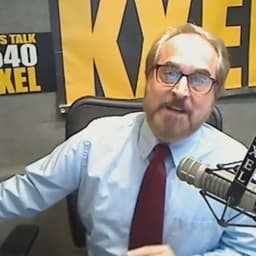
KXEL Live & Local with Jeff Stein · Tue Sep 1, 2026
This is Iowa Talking Points, the candidates, produced by Studio 5 at Mud Advertising and totally Iowa Media.
Where you hear from candidates in the November 2026 general election.
Now Iowa Talking Points, the candidates.
From Studio 5 at Mud and Cedar Falls, here is Jeff Stein.
Hello and welcome.
There will be a new member of Congress representing Northeast Iowa's second district in Washington in January of 2027.
It's an open seat due to the incumbent seeking other office.
There are four candidates on the November General Election ballot, and one of them joins us at the Iowa Talking Points table today.
He is Rick Stewart.
Mr. Stewart is the Libertarian candidate, U.S.
House District 2.
His website is rickstewart.com.
Mr. Stewart, thanks so much for taking the time.
Well, thank you very much for extending the invitation and for what I consider being a responsible party whose
bringing the information on this election to the general public.
Well, we want to hear from you directly on a variety of issues, but I'm going to start with the most fundamental question that people may have.
Why make the run for US Congress in Northeast Iowa this year?
Well, like most people, I think I'm just discouraged with the Congress that we currently have and the one that we've had for quite a while.
And I've lost confidence.
I do not think that they are going to be able to reform themselves and behave as
responsible representatives.
I think that they're going to just have to keep on doing what they have been doing, which is fighting with each other and not paying any attention to the state of the country.
I bring a different perspective.
large-party person.
I'm not a Republican or a Democrat.
I'm a Libertarian.
Our principles are good principles.
I think that people that understand our principles will probably vote Libertarian.
And until we get some Libertarians in Congress, I think we're gonna not be able to progress towards the kinds of ends that all of us want from America.
Now, I have asked Republicans and Democrats this question as well, but I will ask you as a libertarian because I asked the larger party candidates the question because there's so much fragmentation, but for those who perhaps are not fully aware, what does it mean to you to be a libertarian or represent the libertarian party?
Well, libertarian principles are pretty rock solid.
We've had them officially for over 50 years now.
And they've changed almost not at all, which is in contrast to the Democrats and the Republicans in that I don't think they have principles anymore.
If they had something that used to be principles, they've ignored them, changed them, traded them for new principles as they saw fit.
Libertarian principles are
pretty close to the same principles that the founding fathers had back when, you know, 250 years ago, when they both wrote the Declaration of Independence, but also a few years later, the Constitution.
We believe that the Constitution was written by libertarians.
The Iowa Constitution was written by libertarians, too.
You can tell that by our motto, which is, our liberties we prize and our rights we will maintain, that is pure libertarianism.
We believe that we want exactly as much government as we need to have and no more.
So that doesn't mean no government, it means just good government.
doing the things that government should be doing and has to do, and nothing more.
Doing those things extraordinarily well at a low price, and beyond that, allowing people to pursue happiness in their own terms.
That's the essence of libertarianism.
Sometimes people say, well, you know, we have a non-aggression principle.
We don't aggress.
Against you and we ask you to not aggress against us.
We're not going to take your stuff Please don't take our stuff.
We're not going to attack you Please don't attack us.
That's the only rules we really need in life is There's another way of saying it is do unto others as you would have them do unto you That's the fundamental libertarian principle
Give me some examples of where the current government and again
They're all in it together, to a large degree.
Give me an example or two of how the current government has overreached, in other words, gone beyond what you said is, this is what government should do and no more.
Well, to start with, I would just jump right into war.
Both the Republicans and the Democrats have loved war for many, many years, but they refuse to declare war.
Congress
has to declare war before we have a war.
The last war we had was World War II.
So starting after that, we've had all kinds of non-wars that just involved killing a lot of people.
We've won some, we've lost some, but we've never stopped.
Starting with the Korean War with Harry Truman, which was not a war, all the way up to today, the war in Iran, which is not a war, that's what
Congress has done is they've abdicated their responsibility to declare war and consequently the executive, the president, has been enabled to be a war maker since 1947, I think.
That's the best example there is of both of those parties not obeying and following the Constitution and not accepting their own duties as Congress to declare war if we're going to have a war.
Now, there are many other areas where the government, both Congress and the executive, have overreached as anything which is not authorized in the Constitution.
the federal government is not supposed to be doing.
And there aren't very many things that are authorized by the Constitution.
War is one of them.
But instead of that, we've got a superstructure of many, many people that are essentially following the dictates of Voltaire, that great 18th century Frenchman who said, the art of government.
is to take as much money as possible away from one group of the people and give it to a different group of the people.
That's transferring wealth from one set of people to a different set of people.
Certainly not what the founding fathers imagined because that's horrible idea, right?
We shouldn't be transferring money from the people that are in power.
To the people who are in power from the people who are out of power and so any kind of a transfer payment and almost everything falls into that category Would not really be permitted by the Constitution wealth redistribution in other words.
Yeah
in addition to the
pure taking yeah, I prefer wealth Transfer sounds a little bit nicer
Because when you say redistribution, I think that's the second question.
The first question is, should we transfer money from one group of people to another group of people?
If the answer to that is yes, and I'm not saying that's my answer, I'm saying if the answer is yes, the second question is, should we transfer that money from the people who have more money to the people who have less money, or should we transfer it in the other direction?
Should it go from rich to poor, or should it go from poor to rich?
You have to answer both those questions before you can really talk about wealth distribution.
So I prefer calling it transfer.
It is redistribution, obviously.
of all the various issues that we'll discuss today, what is top of mind?
In other words, if you're with a group of people or in a setting like this and you're allowed to select the topics that you want to discuss that you think are most important, what leads the list?
I have a list of five and they're pretty much in order, but the number one item on my list is we need to eliminate all nuclear weapons.
The reason for this is
it poses an existential threat.
That means we could destroy huge portions of this country.
It's even conceivable that we could destroy all human existence in the whole world.
But it's actually a fairly high chance that we're going to do that if you pull experts in this kind of thing.
They will pretty much agree that the chances of nuclear war, which destroys humanity, in other words all of us, within a hundred years, it's like about one half a percent, maybe one percent.
That's not a very high percent, but one percent over a hundred years is a lot.
We can easily get rid of all nuclear weapons.
People think, well, we have to have them because they've got them.
Well, I agree.
If they've got them, we need them.
But neither of us actually need them.
They're extremely expensive to hold, extremely expensive to maintain, and you can never use them.
So no country actually wants them.
They just feel they have to have them.
We need to go to Russia, which is the second largest purveyor of nuclear weapons, and say, let's both of us get rid of all of them.
In about five years.
We should just get down to zero if we do that China will do the same thing because the only reason they have them is us and all the other countries that have them will go We're getting rid of ours, too That's the number one issue on my on my plate.
I have four more If we have time, I'll just go through them briefly, but I'll name them first.
Yes, I want to eliminate the income tax and Replace it dollar for dollar with a land tax, which I can explain later
Number two, I want to eliminate our current immigration system and start a new one, which instead of costing us $30 billion a year, will actually make us a minimum of $30 billion a year.
So that's a $60 billion transfer.
It'll get rid of all of the negativity we have with our current system, and it'll turn immigration into a positive for everybody, Americans, future Americans, people that don't want to be Americans.
Another question I have, and this is, excuse me, it's the same question.
I don't know if you believe in human-made global warming or not.
If you don't, then you're not interested in what I'm gonna talk about.
But also, if you do believe in global warming, you might say, well, it's gonna happen, and so we shouldn't do anything about it.
In that case, that's fine.
You don't care what I'm gonna mention.
But if you believe that humans are causing
Climate change and if you believe that we have a responsibility to do something about it then There's only one solution and that's a carbon tax It's the fastest cheapest most fair way to reduce carbon emissions However, I don't trust the government with that money So I support it's the same exact time a universal carbon tax refund to everybody who lives in a country that
collects a carbon tax.
And hopefully the entire world would participate.
So everybody in the world would get a carbon tax rebate, maybe every three months, maybe every year.
Another question is, and this is going back to income transfers, if you believe that we should transfer some money and you believe that the transfer should be from relatively wealthy to relatively poor, then the fairest way to do that, the easiest way to do that,
is to have a universal basic income.
We can afford it without any increase in taxes really.
And we would just get rid of all the other transfers and just settle for one universal basic income for everyone over the age of 18.
And we will get in depth in each of those four.
I can go far too deep.
We have plenty of time and we want you to go into it in depth.
We'll continue the conversation with Libertarian candidate for Congress, Northeast Iowa's second district.
He is Rick Stewart.
We'll get into those issues and a bit about him when Iowa Talking Points, the candidates continues.
One opportunity, change your career.
Mud advertising is hiring product specialists.
$20 an hour, paid weekly.
That's 52 weeks a year plus record-breaking profit sharing.
Let me repeat, $20 an hour plus record-breaking profit sharing.
But we're just getting started.
The best in the business 401k company match, gold standard health plans, on-site fitness center, generous pay time off and so much more.
Apply today and don't look back.
You're watching Iowa Talking Points, the candidates.
Here again is Jeff Stein.
And we continue with Rick Stewart.
Mr. Stewart is a Libertarian.
He's on the ballot in the November election seeking your support.
to become the representative from Northeast Iowa's second congressional district, you identified five key points or issues or things you like to run on and discuss, and one of them was the eradication of the income tax.
Now, I imagine there will be some people who say, well, we're running a deficit.
How do you plan to generate revenue for the government?
So talk a bit about your plan.
Well, my plan doesn't increase or decrease the government revenue.
It just replaces the least efficient and actually the most outrageous tax, which is the income tax With the most efficient and the fairest tax, which is a land tax.
Now, let's be clear.
That's a land tax.
It's not a property tax So we already pay both of those we pay a land tax and a property tax the land tax is going to have to go up but
We're not going to have an increased property tax, so if you own an acre, the tax is going to go up on that, but if you build a new house, that's not my plan.
My plan is 100% land tax, dollar for dollar replacing the income tax.
People need to understand how bad the income tax is.
There aren't very many ways to tax, but the income tax is the worst you can imagine.
Number one, it taxes people for working.
You want to tax people on things that you don't want them to do.
We do want people to work, so we shouldn't tax it.
But that's not the most egregious part.
The most egregious part is...
The income tax is basically the devil's playground.
And you can tell this by how many pages of regulations there are to implement the United States income tax.
Honestly, I don't know the answer.
I used to think I did, but it's somewhere between 40 and 100,000 pages of income tax regulations.
That should immediately tell you that this is a bad idea because think about your property tax.
It's one page.
They mail it to you.
You look it over, you pay it, you're done.
Income tax is something where everybody is allowed to pass whatever crazy idea they have to tax somebody or to not tax somebody, both of which are egregious examples of
transferring money from one group of the people to the next group of people.
There are thousands of these.
And the reason for it is politicians love it.
They can promise you a tax decrease.
They don't, they aren't mentioning that that means somebody else has to pay more.
Nobody ever says that.
But that's what it is.
It's a continual transfer back and forth every year, depending on the administration of like one fresh thing to another fresh thing to, they start this, they stop that, and it's 100,000 pages.
By definition, that should not be allowed because, as I said, that's the devil's playground.
And that's what they've done.
Politicians have been doing it ever since we started the income tax 100 years ago.
Get rid of it.
Go to a land tax, which is very clean, very simple.
You'll see it once a year when you get your bill and you'll go, oh, what are they going to do with that?
But it's fair.
It's simple.
And it doesn't require any administration and the politicians can't play with it, although they will, of course,
try.
So if you are someone who does not own land, you don't pay tax.
No,
you will pay
tax to your landlord, because he'll get it from you.
But not in terms of a government-imposed tax.
If I am a landlord and you are my tenant, yes, my cost just went up, I'm going to pass that on to you.
But in terms of the government directly taxing, that would not happen unless you owned land.
You only get a bill if you own land.
Another of the issues you mentioned was immigration, and this is something that people have taken a variety of stances on for a variety of years, and we still don't have a resolution.
What is your suggestion?
Well, there's no doubt about it.
Immigration is great for us.
But let's not argue about that.
Let's argue that the current system is worthless.
The current system costs an enormous amount of money and a lot of pain and we've seen a lot of pain recently.
So what we really want to do is charge people for permanent green cards.
Now the United States, excuse me, they issued 1.3 million green cards just last year.
I don't know if that's too many or not enough, but that's something we can decide on later.
The point is, we gave them away.
If we gave you one, you got it for free, pretty much.
I'm gonna auction them off to the highest bidder.
On an annual basis, we will decide, Congress will decide how many green cards do we want to issue, and then they will have an auction, and the highest bidders, the highest, let's say, a million, the highest million bidders, they'll get a green card.
It's permanent.
They'll have to pay money.
It'll probably be a minimum of $30,000, but it's not going to be a million or, you know, it's going to be somewhere above 30.
Let's just say it's $30,000 a piece, a million green cards.
That's $30 billion in income.
And we will not have to spend any of the money that we're currently spending to keep people out.
At the same time, we will issue relatively automatic tourist visas for $75.
to anybody that wants to come to the United States as a tourist.
But if you want to work, you're going to need to win a green card, buy a green card, at an auction.
And it's so easy to administer this, we're practically doing it already, except we're spending money instead of getting money in.
There are additional details that are pretty simple.
If you don't have a green card, but you're caught working,
The person who hired you is gonna have to buy the green card for you right then and there Well, if you think about that just a second you realize Nobody's gonna hire you If you don't have a real green card, so there's no more illegal labor once you're in you're paying taxes You know just like everybody else like like a current green card
We have a few more of the issues, and we'd also like to let the audience know a bit about you personally and your background, and we'll do that after this short break.
We're speaking with Rick Stewart, Mr. Stewart is a libertarian, and he is running for Congress from Northeast Iowa's second district.
Iowa Talking Points, the candidates continues after this.
Studio 5 at MUD is built to get attention and get results.
From radio and television to digital video and live productions, it all happens inside our 3100 square foot production studio.
An infinity wall, multi-camera live webcast capabilities, massive green screen, audience seating and a full creative team for pre and post production.
Whatever you need for media or production, get noticed and get results.
At MUD Advertising, we love it when you succeed.
Watch all the programs in the Iowa Talking Point series online at iowatalkingpoints.com
Iowa Talking Points, the candidates, continues with Jeff Stein.
And we continue with Rick Stewart.
He is the Libertarian candidate on the ballot in the November General Election for Northeast Iowa's second congressional district, rickstewart.com is the website.
We've been talking about some of the issues, but let's learn a little bit more about you.
Now, you and I have met previously in one of your other runs for public office, but give us a sense of your biography that
gives us a sense of your experience that you'd take to Washington if elected?
Well, I'm a native Iowan born in Postville, raised in Makokita, live in Cedar Rapids.
My first career was as a police officer in my hometown of Makokita.
Two years, it was absolutely fantastic, taught me a whole heck of a lot.
But then I got lucky and I started a business as a cooperative in Norway, Iowa, small town, selling herbs and spices to natural food stores all across the country.
Right product, right place, right time.
Never discount the value of luck.
That's a company now, it's still 50 years old today, not today this year.
It's a $250 million company.
profitable, it's owned by every natural food store in the country.
I think we have 40,000 owners.
So Whole Foods, but HIV owns us too.
Anybody that we sell to actually owns the business.
That was 25 years of business experience during which I got my undergraduate degree from co-college.
I got my
MBA from the University of Chicago.
I learned a whole lot about how businesses work, how government works, how taxes work, how people work.
Incredible experience.
When I left, there were 300 people working in the company.
Then I had other things I wanted to do, most of which sounds like fun, I guess.
At least they were for me.
I did a lot of things.
I moved to France and learned to
speak French and had a lot of fun living in Paris and then I moved to Spain and learned how to speak Spanish and had a lot of fun living in Spain.
Then I picked up an apartment in Guatemala where I lived maybe half the time for 20 years.
I was a volunteer hiker.
So my organization supported a school and an orphanage for Guatemalan children by hiking up volcanoes with tourists and bringing them back home safely and generating a quarter of a million dollars a year for a school with 175k through six and an orphanage with 35 kids in it.
That was my major activity but I also traveled
in many other parts of the world.
So I lived in China and studied Chinese, and don't ask me to repeat much, but Ni Ao.
And I traveled to a lot of countries, not for longer periods of time, but extensively.
So I've spent...
time in Cuba a couple times and every communist country in the world really, Laos and Vietnam and Cambodia.
I've spent time in Israel.
I spent six months on a kibbutz in Israel, but I also traveled to the countries around Israel, Jordan and Syria.
Kuwait and Iraq and Iran and Afghanistan I've been to most of the places that have had troubles although I have not traveled very much in Africa so I've seen a lot of the world and I've observed the world because I'm a curious guy and I like to pay attention so I've just paid attention by by being places talking to people doing things and I didn't really have to
do any of that for money because I had saved my money.
I didn't retire because I was rich.
I retired because I saved my money in advance because I wanted to retire when I was 50 years old and I did when I was 48 and a half.
I also hiked the Appalachian Trail from start to finish.
I've been on the Continental Divide Trail.
I've been on the Pacific Crest Trail.
I've had a lot of fun.
I ride ragged rides often as I can, you know, maybe every couple of years.
I just enjoy life and I also read
a lot.
Half of the books I read are classic fiction, all from a hundred years ago.
The other half are current history and economics and nonfiction works.
So that's what I do.
So when folks are going to vote in this general election, they will see four names on the ballot.
a Republican, a Democrat, you as the libertarian and an independent.
What separates you, either in terms of positions on issues, life experiences, et cetera, what separates you from your opponents?
Well, I'm not going to say anything negative about any of my opponents.
And as a general rule, I don't say negative things about anybody.
But it's obvious that two of my opponents are big government.
I mean, big government is Republicans and Democrats.
There's no small government in Washington.
So that clearly differentiates me.
I'm a small government guy.
You cannot compare a small government guy with these giants out there.
My fourth opponent is a good guy.
He's young.
And I have no particularly distaste for youth.
I wish I were a little younger myself.
I'd take it if I could get it.
Well, I've got 75 years of experience, and sometimes they say, well, some guy has one year of experience 75 times, but that's not me.
I have had a lot of experience in lots of different things.
I can do a lot of things.
I can do construction.
I can do factory work.
This is things I've actually done.
I have a degree in diesel mechanics, and I'm a welder.
I have always had fun learning new things, and I've done a tremendous number of new things.
And I hate to say this, young ones, but you need to wait a few more decades before you've got the experience that it takes to see the world the way it really is and not the way that you wish it was.
I can see the world the way it really is, and it's not the way that my opponents see it.
When you identified earlier a set of five issues We've gone through three of them at length another has to do with the carbon tax and that ties into Climate and you were very careful to note depending on how you feel about the issue someone listening they will have a different response but talk about from your perspective the idea of carbon tax and and how that is a way to Achieve the goals you're trying to
Yeah, whether you agree or not, if you do think that there's a problem and you do think we should do something about it, then taxing carbon on a per ton basis is the obvious thing to do.
And in order not to let the politicians get their hands on any of that money, you do a rebate to people on a per capita basis.
So as an example,
34 38 billion metric tons of carbon were emitted last year Who knows I mean I can't I don't know what a metric ton of carbon looks like But if you just divide that by the entire population of the world it works out to like 4.66 metric tons per person man woman and child Okay, so that what what does that mean?
Well that means that if you drive your gas car for 12,000 miles That's about how much carbon you produce
So if everybody in the world had one car, and they drove at 12,000 miles, and they didn't heat their house, they didn't burn any other carbon, didn't have a fireplace, then that's how much carbon would be the amount that we'd all get.
And if you had a carbon tax of $100 a ton, it could be $200 a ton.
But for ease of thinking, $100 a ton, four tons, that's $4,000 that the average person's gonna pay,
But they're also going to get $4,000 or $400 back, right?
It's like you get a $400 check, but you pay $400 and increase taxes.
However, if you didn't use that much, you wouldn't pay that much in tax and you still get $400 rebate.
If you used a lot, like you're flying your private jet around everywhere, you'd pay a lot more taxes than $400.
You'd be paying maybe $40,000 in taxes, but you'd get a $400 check.
So this is a way of transferring money from relatively
rich people because relatively rich people use more carbon to relatively poor people because relatively poor people use less carbon and because of the tax we'd actually have less and less and less and less carbon until we got to zero which is where we sort of need to be and people think well we can't go to zero we have to burn some gas and some coal and some oil and the answer is no because wind solar nuclear geothermal
can easily handle all of the energy needs for the entire world.
And that could be put in place by 2050.
The problem is we need to make sure that that's how we're getting our energy and we're not getting it from fuels which are producing carbon.
One more segment of this edition of Iowa Talking Points, the candidates with our guest Rick Stewart.
Mr. Stewart is the Libertarian Candidate, Second District Congress, that's northeast Iowa.
Our final segment in a moment.
Iowa has a wonderful heritage, and each day I'll share these stories of historic people and events with you.
I'm Jeff Stein.
Join me for the Iowa Almanac Program and learn more about this great place we call home.
Now, seven days a week.
Listen on radio stations across the state.
via podcast or at IowaAlmanac.com.
Signs can set the tone.
Signs can direct, instruct, and motivate, and even seal the deal.
At MUD Advertising, we create signs in every shape, size, and material for clients nationwide.
From point-of-purchase displays that turn heads and drive traffic to campaign signage that brings your marketing to life.
Need to go big?
We do that too, with large format banners, trade show displays, vehicle wraps, and more.
Whatever the message, whatever the size, wherever it needs to go.
Whatever your signage need, call us today.
At Mud Advertising, we love it when you succeed.
You're watching Iowa Talking Points, the candidates.
Here again is Jeff Stein.
Final segment now with Rick Stewart.
Mr. Stewart is a libertarian.
He's on the ballot.
Northeast Iowa's second congressional district, rickstewart.com to learn more about him of the issues that you identified that are important to you.
One has to do with creation of universal basic income.
Tell us what that means and how we would get to that point.
Well, this is an income transfer and it goes from relatively wealthy people to relatively not wealthy people.
It's one direction only.
You would get a check every year.
We have to just guess at numbers, but these guesses are not completely unrealistic of $12,000, $1,000 a month.
It's just cash except some of that could only be used to buy a basic health insurance policy.
You don't have to buy the insurance policy, but you can only use that part for
basic health policy
you're not mandating purchase of insurance you just don't get the money that would be used for
that's your choice if you're Amish you're not going to buy insurance that's fine that's great but you're also not going to get a check just to be clear they probably won't cash the other check either but that's Amish what this it has to be funded right and the the
best way to fund it is the way we currently do, which is a payroll tax.
So anybody who's working is paying a payroll tax of approximately 14.5%.
They say you pay half, your employer pays half, but of course, actually, you're paying all of it.
And that would continue that amount alone by my figures, and this is just back at the envelope, but it's ballpark, right?
We collect $1.75 trillion every year in FICA taxes.
It's not income tax, it's payroll tax.
And that equates to about $6,317 per person over the age of 18.
So we've already gotten half of it paid for just by switching from the whole Social Security Medicare structure to a universal basic income.
And the rest of it can easily be collected by our other transfer programs that we have.
I don't like to use words that have negative connotations, but a transfer program is just welfare.
It means I'm taking money from somebody and I'm giving somebody else welfare.
So a farm subsidy is welfare for anybody that cashes that check.
It's an income transfer.
And I don't want to be derogatory.
I just want to explain how it works.
We have a lot of income transfers in the United States other than welfare.
Okay, and other than Social Security and other than Medicaid, we have lots and lots and lots of them.
If you add them all together and cancel every single one of them and just have a UBI, a universal basic income, excuse me, it's paid for.
So it's not going to cost us anything, but we transition from a hodge podge of ideas with politicians doling out little bonbons here and little bonbon there and taking a little bit back over here.
That system has created hundreds of thousands of pages of federal laws that don't work because we still have poverty and we still have all kinds of problems.
The universal basic income eliminates all that, creates a simple system everybody can understand.
But the problem with some of the things you're suggesting is it takes away the power of the politician to get reelected, right?
Isn't that what they do to a large degree?
They are able to dole out favors here or there, and yet the one hand they complain about the overspending in Washington, yet they also issue news releases to tell you how many millions of dollars they brought back to the district.
Now I'm saying this tongue in cheek, but it just shows it's an uphill battle to do this.
Well, it's not tongue-in-cheek, it's just reality.
That's exactly what they do.
And they fool us all the time.
And it's one of the problems with a two-party system is they're both allowed to do it because they're both playing the same game.
Now, if you have more than two people...
You have what's called triage between the three parties or the four or the five parties.
And all of a sudden you have to start speaking honestly instead of deceptively.
And that's what we need.
We need an incentive system where politicians have an incentive to spend the least amount of money but do the things that they should be doing really well.
Like we should have the federal government running a justice system.
So I don't have to hire my own police force, my own judge.
You know, that's good But we have a broken justice system We have a broken almost every one of our systems is broken because over the course of time politicians have done exactly what you said Exactly what Voltaire said take a little bit here give it to your friend And we need to stop that and fundamentally the whole government needs to be reoriented toward Serving the citizens at the lowest cost possible the most effective way possible and allowing people individual freedom to live their lives
as they wish peacefully without aggressing against someone else, but the freedom to live as was promised to us in the Declaration of Independence, the pursuit of happiness.
When you're elected, you'll be a libertarian in Congress.
I don't know how many others might be elected in this cycle, but if it's a few of you, that's the start of the caucus, right?
That's right.
Absent that, or if there are a few of you and you're trying to leverage
some votes, you might caucus or tend to caucus with the Republicans or the Democrats.
So-called independents do that now to some degree.
And I'm just wondering if you go to Washington either as the lone libertarian or one of the very few, is there a caucus or another that you might align yourself with or would you be in essence totally a free agent subscribing to your principles?
Well, yeah, I would definitely be a free agent.
But I would also be the most popular person in Congress.
And not just because I might be the swing vote.
This is a Congress of 425 people, and it's unlikely that just one representative would be the swing vote.
But the reason that they will both be talking to me is because politicians in Washington would like to be honest.
They're just like us.
They're good people, okay?
But the party system forces them, against their will, to be bad people.
they would appreciate it that they can come and talk to me and talk to an honest politician because I will be the only one unless we have more libertarians elected.
And the politicians in Washington will absolutely, I will be the favorite politician.
I don't have enemies.
I don't have people that I don't respect.
I don't have people that I won't talk to.
I will have a rational discussion and a friendly one with anybody
in this entire country who would like to have one, including every Iowa voter who's going to have a chance to vote for me.
I'm open, I'm available, and whatever I am, I can guarantee you I'm the same person when I go to Washington, D.C.
I'm not going to change at all.
You are asking folks in the Second Congressional District to vote for you in the November general election.
I'll give you our final couple of moments to make your case to them directly.
Well, I hopefully have already made my case, but let me just try and say it again.
We've got a two-party system in America.
It's not working.
It hasn't worked for a really, really long time.
It quit working at least 100 years ago.
Gradually, over the course of those 100 years, the two-party system has turned into what we have today.
It's a system that 85% of Americans don't
trust.
That's outrageous.
But there is absolutely no way they are going to reform themselves.
The Democratic and the Republican Party, they're just like this.
It's the same, no matter which way you look at it, they are the same party.
We need to break that party.
We need to turn it into a multiple party system.
And there's only one way to do it.
Don't vote
for a Democrat or a Republican ever.
Don't get the message.
I'm going to be on your ballot.
Vote for me.
Start the trend.
Make it happen here.
We'll get this fixed.
Thanks for listening.
Thank you for being here and sharing your thoughts and ideals and good luck in the November election.
I appreciate it, and thank you very much for the job you're doing to bring politicians to the Iowans in a manner that you can listen to them and have a rational conversation.
Well, that is the
goal.
Greatly appreciated, yeah.
Thank you, sir.
Rick Stewart, Libertarian on the ballot, Northeast Iowa's second congressional district in the November 2026 general election, and that brings us to the close of this edition of Iowa Talking Points.
The candidates, we thank you for being with us.
This has been Iowa Talking Points, the candidates.
Produced by Studio 5 at Mud Advertising and totally Iowa Media.
For more information on this series, go to iowatalkingpoints.com
Pleased to welcome now on the news line, Alexander Chacon.
Mr. Chacon is the Policy and Government Affairs Manager for the National Taxpayers Union, NTU.org.
Mr. Chacon, good morning and thank you for taking the time.
Good morning, great to be here.
Remind people who may have missed past conversations with some of your colleagues that we've had here on the radio, National Taxpayers Union.
Who are you folks and what do you do?
Yeah, so we're a non-profit advocacy organization on Capitol Hill.
dedicated to making life less taxing for America's taxpayers.
So we focus on a host of fiscal issues that burden taxpayers.
I specialize in health care and obviously federal health care spending is one of the prime drivers of the national debt.
So I've been doing a bunch of work looking at federal health care programs and how they can be more efficient and serve the interests of taxpayers better.
Well, trying to protect the taxpayers' full-time work, given the predisposition of folks in Washington, you penned a piece for the DailyWire.com that was out a week or two ago called No More Free Rides Inside the Fight Over Medicaid.
There were folks who...
We're applauding the fact that we would again have work requirements.
In other words, if you qualify for Medicaid, you should, as you are able, be able to work.
But there have been all manner of people who have fought this and said that it's terrible of what we're doing to people.
What's the true story?
Yeah, so unfortunately, as we head into the November midterms, you're hearing a whole bunch of alarmist and frankly just flat out false lies about this Medicaid work requirements.
So this reform was enacted by congressional Republicans and signed by President Trump last summer in the one big beautiful bill.
And basically what these work requirements do is they require able-bodied adults who earn up to 138% of the federal poverty level, who are qualified for Medicaid, to show 20 hours per week of either work, study, or volunteering.
These work requirements do not apply at all to Medicaid's vulnerable enrollees.
So something that most people don't realize is that before 2010, before Obamacare, Medicaid was a last resort safety net focused on the most vulnerable members of society.
We're talking about folks with disabilities, low-income children, seniors who are living in poverty.
In other words, folks who cannot be reasonably expected to care for themselves.
However, in 2010, Obamacare expanded Medicaid eligibility
to include able-bodied adults who earn up to 138% of the federal poverty level.
Now, the problem with this is that even though we expanded the Medicaid population, we didn't expand the number of providers who accept Medicaid because of the reimbursement rate.
And as a result, when you had more people to care for, you invariably had to ration that care.
And so in recent years, we've seen evidence that the able-bodied adults on Medicaid have been crowding out access to care
for some of those original vulnerable beneficiaries like low-income children.
So these work requirements are extremely important to refocus our social safety net on truly vulnerable members of society.
So if you put more people on the Medicaid rolls, you're obviously going to have more people wanting benefits.
Did they not contemplate?
What a strain this would be on the system, or was this one of these?
It sounds good, and it'll help us get elected in the fall, and we'll worry about the backlash.
That's somebody else's electoral problem.
Well, unfortunately, I think that's exactly the correct take, because if you look at what happened when Obamacare expanded Medicaid, Medicaid works as an open-ended federal entitlement.
So what that means is that when state governments spend money on their state Medicaid programs,
they get matching federal funds.
Now the problem here is that the federal government pays a higher matching rate for that expansion population of able-bodied adults than it does for the original Medicaid enrollees.
And they did this because they wanted to maximize enrollment in the Medicaid expansion.
Now the problem, of course, is that if you're providing states with financial incentives to maximize enrollment among able-bodied adults, well, it's not a surprise that Medicaid expenditures explode
while crowding out access to care for that original subset of vulnerable enrollees.
So, you know, a lot of this problem frankly goes back to the expansion of Obamacare, or excuse me, Obamacare's expansion of Medicaid and the financial incentives that they added to juice up enrollment.
All right.
So even with this juiced up enrollment, even with the strain on services, what could be the objection to saying, okay, you who are able
You're able-bodied.
You're not the people that would be harmed by a little work and effort or schooling.
We have to point out as well.
What's the objection to saying, if you're going to get free stuff from the government, in this case Medicaid benefits, then you should have to give something back.
I mean, there are two issues.
One is the system is overcrowded.
But one, the world would be the problem is saying, you got to work a little bit when you're able.
Yeah, I mean look these work requirements are actually very popular and in fact we have decades of experience with this in the 1990s President Bill Clinton along with Congressional Republicans reformed the welfare and introduced work requirements for example for able-bodied adults on snap or food stamps now the results of that were very clear welfare caseloads plummeted and tax revenue from increased employment went up
And, you know, frankly, when folks listen to what the actual reform is, right, making sure that able-bodied folks are, you know, being active for at least 20 hours a week, frankly, this is a very popular provision and a very popular reform.
Obviously, in a campaign season, I think a lot of, you know, Democrats have an interest in, frankly, ginning up a bunch of, you know, fear about this.
for political purposes.
I mean, recently, for example, we saw a lawsuit by a coalition of democratic states swing the federal government recently this summer for attempting to implement these work requirements.
The coalition of democratic states were alleging that, you know, these work requirements were too broad.
They were too difficult to implement.
But frankly, that's just a bunch of, you know, fantastical politics.
These same states have decades of experience administrating
and implementing work requirements.
As a matter of fact, Nebraska has fully implemented the Medicaid work requirements a full four months ahead of the official deadline on January 1st, 2027.
So, you know, obviously we're operating in a hyper polarized, hyper political environment, you know, leading up to the midterms.
And frankly, you know, I've seen a lot of just, you know, flat out falsehood and misinformation about these reforms.
These don't, you know, apply to vulnerable beneficiaries.
And even for the able-bodied adults that it does apply to, this is a very sensible rule.
It's trying to make sure that if you actually have the functional capacity to work, to make sure that you're actually subject to the requirements.
At the same time, if you're already satisfying the requirements, the federal government has been implementing this in such a way that it makes it easy to verify and to show compliance.
So for example, if you're already working full-time,
you don't need to produce any more paperwork to show that you're complying with these new rules.
So, you know, frankly, I think it's just a question of education at this point, you know, explaining to voters what this form actually does, what it doesn't do.
You know, because I think, again, in a hyperpolarized campaign season, I think, you know, some Democrats can see an opening to try to gin up fear, but frankly, this reform on its face is all about strengthening the social safety net for folks who can't actually work.
And I think that's an overwhelming popular position.
Alexander Chacon is the policy and government affairs manager for the National Taxpayers Union.
You can learn more about the group NTU.org and the piece that he wrote for DailyWire.com.
It was published if you're searching for it on August 21st and it's titled No More Free Rides Inside the Fight Over Medicaid.
Mr. Chacon joins us live on News Talk 1540, KXEL.
Now, from a strict fact standpoint, these work requirements do not apply if you're over the age of 64.
They do not apply if you have disabilities, which are quantifiable as part of the program.
They do not apply if you're the parent of a child under the age of 13.
Those people are exempt.
So, how many people are we actually talking about?
I mean, I know we talk about, you know, able-bodied young men should not be just sitting around on their parents couch playing video games all day, and I know there's plenty of that going on, but what amount of people are actually affected by the work requirements, and how does that then help either reduce stress on the Medicaid system,
or on government benefits, uh, broadly, if these people are working in some respect or, or becoming educated.
Yeah, absolutely.
So these work requirements only apply to that expansion population that was added to Medicaid after Obamacare.
So we're talking about approximately 20 million or so able-bodied adults between the ages of 19 and 64 who are currently enrolled in Medicaid.
If they, you know, if obviously if they have some type of
you know, medical diagnosis that would prevent them from working, obviously they wouldn't be considered able-bodied and they would be excluded.
But these are the only folks who will have to show some type of community engagement.
And it's not just work, right?
I mean, it's things like studying, volunteering in your community, and there's two big sort of factors here.
One, first of all, if you're getting working-age, able-bodied adults out of Medicaid and onto the labor market where they can obtain employer-sponsored healthcare,
you're directly reducing the burden of care for Medicaid, because again, Medicaid only has a relatively fixed number of providers.
So if you expand the population, or if you're not doing anything to expand healthcare supply, you're going to have a huge problem.
So work requirements do a great job by freeing up scarce federal resources in that sense.
But even holding all that aside, we're talking about healthcare here, and we're talking about improving the health of Americans.
Holding down a job is one of the most healthy things you can do.
Victor Franco made this very clear in man's search for meaning, right?
You need purpose and meaning to survive and to lead a healthy life.
And work is at the forefront of this.
And we have, again, a ton of data going back three decades to show the results of President Clinton's welfare reforms.
Folks who entered the labor force showed not just improvements in their mental health, but even in things like their cardiovascular health and physical health.
Frankly, this is fundamentally about health and improving people's health.
And if we can get folks to participate in their communities, to learn new skills, or to actually gain employment experience, I think that's a critical, just foundational aspect of basic health care.
And I think when folks actually understand who this work department applies to, again, it's a very sensible, moderate position.
Well, unless what you're trying to do is to foster a class of people who don't have independent skills and are therefore reliant on the government who then may reward you as the government for your large s by voting for you to stay in power.
I mean, that's the narrative.
It sounds that sounds a little cynical and I apologize, but that's really what's going on.
Is it not?
Well, frankly, it's not so cynical when you look at the federal matching rates.
I mean,
the
federal government pays more money for these able-bodied adults.
So, you know, it's just a question of incentives.
And unfortunately, I mean, you know, you're not being cynical.
You're just, you know, spilling out the facts here.
And again, these work requirements are about dealing with that sort of original, you know, sort of sin of giving more money to that expansion population.
If we can reduce their burden on Medicaid, we're strengthening the social safety net folks are actually leaving.
You're just making too much sense, Mr. Chacon.
I don't, I don't, I don't know.
DailyWire.com for the piece that was published August 21st on this topic and again, NTU.org for the National Taxpayers Union.
Alexander Chacon, Policy Government Affairs Manager for NTU.
Thanks so much for the time, privilege talking to you.
I hope we do it again.
Great talking to you.
Thank you so much.
All right.
Take good care now.
And Mr. Chacon joined us live on the news line on News Talk 1540KXEL, where Iowa comes to talk.
News Talk 1540 KXCL, where Iowa comes to talk, you've likely heard about the virtues of cover crops on farmland.
What about in backyard gardens?
They're just as helpful according to Iowa State University Extension.
Let's learn more from Extension consumer horticulture specialist Aaron Stile.
Good morning, Aaron.
Thanks for being back with us.
Good morning.
So are the benefits of cover crops scalable for the backyard gardener?
Oh they absolutely are and all of the benefits we see from cover crops in larger more agricultural applications we can see in our vegetable gardens as well.
So explain how this works well in a smaller space.
If we're talking about a raised bed or just a typical backyard garden plot, what is a backyard garden they're going to get from those cover crops?
Probably some of the biggest benefits we see is weed control.
It helps with...
adding organic matter to the soil, which is usually a huge benefit for many vegetable gardeners.
It helps kind of break up tough or compacted soils.
it helps again it helps with adding nutrients to the soil.
Some of these things can actually suppress weed seeds from germinating in certain situations and often it creates a really nice kind of mat almost like a mulch on top of the soil to plant through which can help kind of season long with some of the weed control in the vegetable garden.
So I have a sense that
This might be something that would lead a backyard gardener to cringe, but just differentiating what those cover crops are doing versus what weeds might be doing.
Why is it beneficial to be targeted and intentional about putting this
ground cover down this this cover crop down as opposed to say just allowing you know weeds to grow at the end of the season because obviously that would certainly provide some root system it would help with soil erosion which is one of the things that cover crops are supposed to do why are they better than just letting it go feral for the end of the
year.
primarily because all of those weeds are also a problem during the growing season.
And of course they can rob moisture and nutrients from your growing vegetables.
And so what's nice about cover crops is as well as, as long as we terminate them appropriately, they aren't a weedy issue through the growing season and they don't pose that kind of negative aspect that weeds can while we're trying to grow our vegetables during the summer.
We're talking with Aaron Stile of Iowa State University Extension, extension consumer horticulture specialist and talking about applying cover crops and a lot of the knowledge that we've heard about when it comes to large farm operations for backyard gardeners and seeing some of the same benefits.
So let's talk about the soil building because these are plants that are using that soil and I would assume taking some nutrients out of it.
How is it that they put
more back than what they are taking.
Yeah, so cover crops certainly use nutrients and they can actually be used to mine excess nutrients and the reason why this works is because we are incorporating the organic matter that
that is from these cover crops back into the soil and so it gets returned into a spot where the plants can actually use it and so as long as we are terminating and working it into the soil or using it as one of the layers if we're doing kind of a no-till operation those nutrients are retained instead of leached away or something like that.
So you mentioned terminating the cover crop a couple of times.
What does that look like?
And I know it varies from option to option, but how do you prevent those cover crops from actually becoming a problem next spring for backyard gardeners?
Yeah, if you're not careful, cover crops can actually become pretty weedy.
And so we do emphasize proper termination.
And for the home gardener, the most reliable termination method is winter kill, selecting
cover crops that will naturally die over the winter.
And maybe as you become more familiar with cover crops and more comfortable with them, you can move into other methods of termination or crops that don't winter kill, but you can use something like crimping or mowing or something like that to terminate them.
But for a home gardener, we highly recommend selecting species that winter kill so that you don't run into the
issues into the future.
Would that mean also taking up the residual
you know bits and pieces left over the root system of that tomato plant that has died or those peppers that are still there because in some cases I've heard it suggested that you want to get that residual material out of there so it doesn't provide an opportunity for pests to have a food source and then have a running start on the spring the next year but at the same time if the cover crops die over the winter and that other material is gone what's holding the soil in place.
Yeah, so the cover crops, if we're doing a fall planting, for example, it is very beneficial to remove the old tomato vines and all of that vegetable plant debris from the garden.
For all those reasons you just mentioned, it really removes a place for a lot of disease pathogens and particular fungal and bacterial, those kinds of things from infecting things next year.
What's nice though about cover crops is those crops will grow in the fall.
Ideally you would pick something that's relatively quick growing and their root system helps hold things in place through the winter and then into the spring and so that's kind of where this erosion control
benefit can come from and leaving it in place as a mulch can help with the weed suppression.
So it really does kind of help build good soils, which is something that's so important in successful vegetable gardening and something that we always have to work on to keep our gardens productive.
We're talking with Aaron Stile, consumer horticulture specialist at Iowa State University Extension and talking about using cover crops in backyard gardening situations.
Lots of different cover crop options out there as folks who are plugged into the farm community will know.
What do you recommend in terms of those different varieties of seed that might be available?
Yeah, for home gardeners,
We want to try to find stuff that winter kills, so something like oil seed radish is really great for breaking up compacted soils.
winter kills.
We also encourage the use of things like buckwheat which is a pretty fast growing crop and will winter kill.
Winter peas are also another option as well as
oats which and all these things actually work really well together to provide a lot of those benefits because one of the other benefits is depending on the crop you select you can also get some legumes that can help fix nitrogen from the atmosphere and add to your soil too so that's a that's another positive.
So if I walked into my local hardware store this week, those seed displays that were out in the spring are long gone and my hunch is that that local hardware store that was happy to sell me garden seeds probably doesn't have any of this stuff in stock, may not have a supplier.
Where do you get this if you're a backyard gardener and in the right quantity?
Yeah,
especially this time of year you end up
usually utilizing an online retailer, somebody who can ship stuff to you.
And the good thing is, is that most reputable seed suppliers, especially the ones that we often buy our vegetables from,
also have cover crop mixes or cover crop species that you can purchase from them.
And in the new publication that's come out from Iowa State Extension, we list many of those potential seed sources that provide the seed source that is in a quantity that is useful to a gardener.
So rather than pounds and pounds of this stuff, an amount that is actually usable by a home gardener.
So you mentioned that publication which is called Cover Crops for Home Vegetable Gardens.
It's been recently produced by Iowa State University Extension.
It can be downloaded for free from the Extension website.
Any other nuggets in there that you'd want to point out, Erin?
Yeah, well, I mean we've talked about many of the things already in terms of methods for for termination If you're using things other than winter killed Things that winter kill it also talks about many of the attributes
common cover crop species have in terms of which ones are great for soil building, which ones are great for nitrogen fixation, which ones are great for weed suppression, and what mixes of cover crops can work really well in a home garden setting.
It also gives some really good advice about timing in terms of sowing seed.
how to use them.
One of the nice benefits of cover crops can be in breaking disease cycles.
So they are a nice complement to crop rotation.
They can be kind of a fourth rotation to allow an area of your garden to rest and hopefully get rid of some of the disease challenges that might be in that area.
So it talks about a lot of those things.
Well, the benefits of cover crops go beyond what you can achieve if you're farming acres and acres of land.
You can get some of those benefits right in your own backyard garden, as we've been finding out this morning from Iowa State University Extension consumer horticulture specialist Aaron Stile.
Aaron, thanks for being with us.
Yeah, you're welcome.
Happy to do it.
This is the station where Iowa comes to talk.
News Talk 1540 KXCL.
And as KXL Live and Local continues on this Tuesday morning, time for today's RFD 1540 Conversation and for that we draw upon the insight of Dustin Hoffman, Supervising Editor, Lead Farm Broadcaster, Iowa Agribusiness Radio Network.
You hear their reports nine times each weekday on KXL and Dustin joins us here for this extended RFD 1540 Conversation Tuesdays and Thursdays.
Big do-ins in Boone this week.
It is the annual Farm Progress Show, which alternates between Decatur, Illinois and a site near Boone, Iowa.
Here on hand, give us a sense of what to expect in three days of Farm Progress this week.
Well Jeff there's a lot going on and of course a lot of people come to talk to us about what's new in agriculture You know you're gonna have all sorts of ag companies probably making announcements with either new seeds new ag technology New tools that are gonna be available
Of course, they have a farmer population that is going to be looking at a tough economy.
And so they're going to need to see these companies justify where these input costs are going and where the return on investment is going to be.
And I think that's something that these companies have gotten good at in the last couple of years.
But it's not just about the technology and these companies trying to sell things and bring us the latest and greatest.
But you're also going to have people there visiting like US Ag Secretary Brooke Rollins, making her second trip to Iowa in as many weeks.
Of course, we
just heard yesterday and more initiatives coming from USDA to help stimulate the growth of the cattle herd in the country.
Of course, a lot of...
backlash from the cattle industry from ad groups with the announcement that she made during the Iowa State Fair about the importation of 300,000 metric tons of ground beef as we talked about that earlier, Jeff, but hopefully going to see some good news.
But this is one time, as I've mentioned before, that she's going to have to face the farmers.
It's not going to be meetings with a few ad groups and then press conference with just a few people from the media.
She is going to be on the grounds, walking the grounds, and she's going to have to face the farmers right now who are going to be asking
questions about where they see the end game of some of these policy changes going.
So there's going to be that, of course, a lot of great events.
We're going to be there broadcasting.
A lot of people are going to be out there, friends of ours in the industry and the ag broadcasting are going to be there as well.
But one of the premier events and always looking forward to being there.
And again, the slogan is where progress meets possibility.
And so as you know, quite accurately, this is a time when
Folks can trot out new developments, new machines, et cetera.
But as you also accurately noted, it might be a hard sell this year.
I might sit there or stand there with my hands in my pocket saying, well, this is interesting.
I'll learn about it.
But I'm much more concerned about policy and how I'm going to be able to afford it these days.
Do you have any sense at this point, whether or not withstanding about the turnout or exhibitor list, does it seem to be on a pace with the past?
You know Jeff it is an interesting place that you go there I mean it's interesting a viewpoint that you take there We have seen some of the bigger players in the ag industry start
backing down on their their appearance their level of attendance at the farm progress show some big surprises we had from a few companies that they're not even there at all and so you start to wonder where is the incentive we know we've been talking about that with other farm broadcasters when you have an ag economy that's tough we know that there are certain companies that are taking it on the chin as well as some of the companies
Maybe you don't want to have to answer the tough questions about why do I need all of this and where is the justification and where is the return on investment I'm supposed to have for your product.
Some of those big players are not wanting to ask those questions.
And also, you know, there's a lot of places where, you know, if you're looking at tight margins and the majority of people that you have sometimes are coming in looking for what's free rather than what's for sale, you know, that can be a little bit disheartening too.
But we are seeing a few big players not show up.
The crowds, it's going
be interesting how much is going to be mother nature because I mean it's like being in a crock pot already this morning as we're talking.
In fact I'm going to try to get done here I'm going to season and marinate myself before I go out into the crock pot some more.
But we are looking at still usually a pretty strong showing.
A lot more water flowing in these tents for sure but you know the weather can put some things into it but we have seen some of the farmers especially your middle and small sized farmers decrease even more because of the fact that a lot of these things
I mean not everybody's got three quarters of a million laying around for a combine Or half a million for a tractor or more or less you know right in that ballpark You know some people are looking at hey, I can barely afford to put crop protection on I can't afford the latest and greatest technology.
I want to wait till it gets cheaper You know there's some really tough choices being made in farm country and whether or not you can afford to spend three days You know in a destination farm show at premium hotel
prices is just another one of those things on the expense sheet that you really have to think about is it something you need for your operation right now.
And again that does go both ways as you quite accurately note if you're a producer you may just say this is not worth my time especially if the weather is going to be as hot as advertised and it is but again if you're the vendor is it worth your time because you know the audience might be again my analogy hands in pockets
but you also are not making the money you used to make and you may have to scale back and it may not be the wisest move for a company that's struggling to trim its marketing budget but it's always the place people go because it's the first thing that is somewhat fluid as opposed to fixed costs for salary or equipment or rent etc on buildings.
But, you know, we've survived a lot over the more than 70 years of the Farm Progress Show, and so it does have that going for it, I trust.
Oh, yeah, most definitely.
I mean, the agriculture industry, and that's one thing you're going to look at.
It is always these farm shows, and this is not just farm progress.
It's our farm shows all across the country that we are seeing them be great barometers for what the ag economy looks like.
I mean, you look at the, you know, the commodity classic in February, the end of February, beginning of March in San Antonio.
I felt like the attendance seemed to be down compared to years in the past.
And those attendance of those things and those and the company presence is usually a good gauge for how the economy is doing.
Now, we've been through some years where things have been better, you know, and you see more people showing up and people are willing to look at some of the new equipment and the newest in technology.
And, you know, you see that, but when you're seeing belts tighten and that's both in the industry marketplace itself and for the people that are
are looking to buy some of that technology and equipment and seed and crop protection.
When you see that belt tighten, you start to see that gauge.
And you see it in the attitude sometimes of the farmers, too.
When the years are good, you see more smiles, you see more joviality, you see more back slapping going on.
go to these years where things are a little bit tighter and you see more hands in the pockets like you said more staring at your feet on the ground and more even shaking your head as you come out of some tense and it's just you know it's a tough place to be and I think
We need good news to come out of that.
And I think right now, people are going to be looking to folks like the Secretary of Agriculture to bring some of that good news and not just talk.
We need to see something that actually takes a hold.
That's something that's going to sound good on paper, but end up causing us more problems than it's actually bringing us solutions.
And so there's a lot of attitude there.
But again, there's still
a lot of positive to look at.
Farmers are resilient.
Farmers have always been resilient.
Farmers are always the eternal optimists.
You have to be in this business because you've always got to say, I'm going to do as good as I can this year.
Things are going to be better this year.
Things are going to look better next year.
Of course, I'm going to be ready.
You've got a plan for absolutely everything going right.
And one thing I'm sure we're going to hear a lot about is the crop conditions in Iowa.
There has been a, you know, I-35 seems to be bisecting the line of the haves and the have nots.
But even so,
Some of those have nots are still seeing better yields than some of our neighbors in the Corn Belt are seeing.
And, you know, and so we've heard about the East being the garden spot of the Corn Belt compared to places like Illinois and Indiana, Minnesota, the Dakotas, all of our neighbors around us, you know, that's been kind of the garden spot in the West.
For, like I said, for all its struggles has been better than places like Nebraska and the Dakotas.
So I mean, you look at that, you take that with a grain of salt and you may have something that Iowa can at least look back on.
and look at it and say, hey, we're shown on the top of what we can do in agriculture because we've been fortunate this year.
Some 85 acres dedicated to exhibit fields, some 600 businesses or vendors who will be participating, other than what Secretary Rollins may have to say at this time that's rather fluid, especially with the beef story.
What are you looking forward to during your day, day one today at the Farm Progress Show?
You know, I like talking about the latest in where things are going now and technology is great Don't get me wrong, but I like talking with the folks I'll be talking folks from the soybean cyst nematode coalition SCN coalition Finding out where things looking at with crop protection and some of our traits that we have to use to protect our crops I like looking at you know some of the policy questions as well, but there's lots of great things I always like looking for what's the neatest innovation and Sometimes it's even who has got the neatest thing that they're showing off at the
the grounds.
You know, what is the technology?
Everybody's got something, but there's always something that kind of walks away, whether that is a piece of new technology, new innovation, or even sometimes the most cool thing you find at the giveaways at some of these tents.
So there's always something to look forward to.
And of course, it's connecting with some of our old friends in the industry, broadcasters and marketing people that we talk to, and also representatives of these companies that we talk to, and getting that chance to visit with them is always a good time, as always.
Well, stay hydrated, stay as cool as you possibly can.
We look forward to reporting from you and the team from the Farm Progress Show.
And if folks are interested, farmprogressshow.com is the website for all the information.
Take good care, Dustin.
We'll check in Thursday.
Sounds good, Jeff.
Dustin Hoffman, Supervising Editor, Lead Farm Broadcaster, Iowa Agribusiness Radio Network, joining us with information on the farm progress show starting today near Boone on News Talk 1540 KXEL, where Iowa comes to talk.