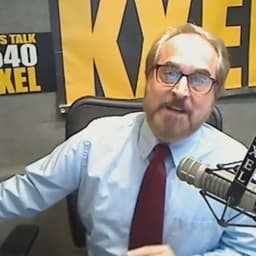
News Talk 1540 KXEL is where Iowa comes to talk.
Hello, I'm Jeff Stein.
We are connected via Zoom with Mike Schreers and Joe Garcia.
And our topic today is something called Cancer Screen Iowa.
I want to give you a website right from the start that you're going to want to make a note of because we're going to reference it during this conversation, iowa.cancercheckpoint.com.
That's iowa.cancercheckpoint.com.
Gentlemen, thank you so much for taking the time.
Jeff, it's good to be with you.
Great to be here.
Mr. Shears, tell us what is this organization?
and how did you get involved with CancerScreen Iowa?
Well, let's go back to the start.
That's a good thing to start with.
CancerScreen Iowa is, as the name suggests, focused on the importance of being screened for the five screenable cancers that represent roughly about 50% of all cancers that are occurring in the state of Iowa.
And unfortunately, Joe and I have a story that is mutual in that we both lost our wives to cancer eight and 10 years ago.
And because we did, Joe never forgot about that.
I didn't either, but it led him to continue to ask questions about why can't we do something?
And of course, in the last couple of years that
that something has become even more compelling and needed than ever before.
So let me sharpen the answer to, CancerScreen Iowa is a non-profit organization designed to get Iowans screened at what the government says, the United States Preventative Services Task Force, screen for the five screenable cancers,
and to do it in a way that captures the ability to deal with cancer at an early stage versus a late stage when more lives can be saved and more money can be also saved.
Joe, do you want to add to that?
Thanks, my CancerScreen Iowa.
The mission is clear.
It's just to get more people screened for cancer.
So we know that Iowa is ranked second in the incidence rate of cancer per capita and is fastest growing.
When you look at our ranking for cancer screenings, we're middle of the pack.
We owe it to all Iowans to get our screening rates as close to number one as possible.
when we're number two in instance rate and fast is growing.
And obviously each of you has sustained significant loss because of cancer.
I dare say everyone listening to this conversation has had cancer affect them in one way or another.
So Mr. Garcia, is there a sense of why all of I'm going to say all of a sudden because in public perception, it seems like all of a sudden.
the the cancer rate in Iowa is so high.
Obviously, as the old saying goes, how did it happen?
Well, slowly at first, then all at once.
But this this stunts people when they hear it, I think.
Yeah, I believe it is shocking to hear that we live in a state, you know, with our children and grandchildren, where the cancer instance rates are so high.
We don't know the
We don't have a definitive answer yet on what's causing the cancer rates to be so high.
We definitely can speculate it's, you know, nitrates in our water, fertilizer, insecticide, pesticide, fungicide in our waters and contaminating our waterways.
But it's still speculation.
We also talk about binge drinking.
Radon is clearly a factor in the state.
What Mike and I have done from a cancer screen Iowa perspective, we've stayed away from root cause purposely because we know how politically charged it is.
And while the scientists and folks smarter than me figure out where, what the root cause is, we want to focus clearly on just getting more people screened.
And Mr. Scheer is one of the things that I learned when I moved to Northeast Iowa was that we had a radon issue.
I grew up in Central Iowa, lived there most of my early life, and then bought a house on the Cedar River, and it was through the chart for radon.
Something I'd never thought of, something I'd never heard of.
This is the insidious sort of stuff, isn't it, that you don't learn about until, sadly, for some people it's too far along to fix.
It's a great word that she used to describe it.
It seems that radon specifically is insidious.
Roughly about seven out of ten homes in Iowa have a radon problem.
It can be measured and it can be mitigated and in fact there's a program, a rural transformation program that the state
Health and Human Services Office is administering with federal funds to get a real substantial start on dealing with radon across the state.
But the problem is, most of us, again, if we've ever heard of it, it was almost casually and otherwise not considered a serious issue until all of this started building up.
And all of a sudden, we're saying, wait a minute.
Where were we three years ago when we hadn't even begun to have a conversation about this?
Well, two years ago, the governor decided to put some money into a research study that the University of Iowa conducted, and that was a helpful first start.
But then after that, so many other people began to say, okay, what can we do?
There is a whole cancer ecosystem out there within the state.
that frankly Joe and I weren't necessarily aware of before this, but that cancer ecosystem are groups that are everything from prevention and early detection to care and support of cancer victims to healthcare professionals and to the whole data side of this.
which I think the data side of this is also part of why we're just hearing about it.
Now we've got real data and we know that we can, uh, we've got a real problem and we can address it.
Mr. Garcia, the screening, the screening would seem to be simple in terms of doesn't take a long time.
There are things that you can screen for, et cetera, but I have a feeling many people say probably won't happen to me.
I'm too busy.
I don't have time for this.
When you are engaged in conversation with people about cancer screen eye when related topics, do you hear that a lot of people either feeling like can't happen to me or I'm too busy or that's the next guy's problem?
Yeah, we hear that a lot.
We hear the fact that people are busy, they have busy schedules, and they continue to put off the screenings.
We know based on data over 90% of the population is behind on when they should get screened, and it really is just about prioritizing.
Just like anything in your life, prioritizing screening because of the importance of getting, you know, when we know cancer in earlier stages, we can treat cancer.
A good example is breast cancer and prostate cancer are virtually at a 100% five-year mortality rate.
if caught in stage one and those those rates fall below 40% if caught in stage four.
So it's really getting folks to prioritize.
We also have bird individuals say that it won't happen to me.
I'll tell a quick story about my wife and I prior to her getting diagnosed and she was diagnosed with stage four cancer.
And we were talking about celebrating her grandmother's 100th birthday.
And we said, how amazing is it to have great genetics in both families?
My grandfather lived till he was 99.
Her grandmother was celebrating her 100th birthday.
And we talked about how great it was to have great genes in each one of our families.
And literally two weeks later, she was diagnosed with stage IV cancer.
given six to eight weeks to live.
She ended up living 10 months.
We're thankful for that time that we got with her.
But coming up with excuses behind why you can't, because you're too busy or it won't happen to you, you never know what genetics are playing in and what environmental factors are playing into cancer and a cancer diagnosis.
We're speaking with Joe Garcia and Mike Schreers.
Our topic is Cancer Screen Iowa.
You can search for that on the web or go to iowa.cancercheckpoint.com.
And when they do that, Mr. Schreers, this is a free way that people can ascertain what kind of risk they are under, correct?
That's right, Jeff.
It's one of the things that I think is unique about Cancer Screen Iowa is that Joe and I and another individual, Justin Miller, have committed a significant amount of time and resources to developing the work plan, the work product of Cancer Screen Iowa.
the web application, which is what you just referred to, is something that allows people to go online, make a couple of clicks and identify their gender, their age, determine which cancers they should be screened for at what age, and they can find out the information that they need.
That might be the questions that are kind of keeping them.
from moving forward.
It might be, well, you know, where can I get this test?
How much does it cost?
Tell me about accessibility, that sort of thing.
And all of those things are a part of moving this along.
Our strategy is to make it easy, frictionless, as frictionless as possible, to get the information so that people can actually move forward and act upon that.
Obviously, Mr. Garcia, this is not medical advice.
This is a way for you as an individual to, as just noted, you tap in a few things about your data, your gender, your age, and a few other things.
It then tells you what you ought to be looking for, which might trigger something in your mind about, hey, this doesn't square with what it should be.
I need to go check this out.
Am I reading this correctly?
You are absolutely reading it correctly.
The most important variable in the equation for a cancer diagnosis is your primary care doctor.
So we've got this great website that will point you in the right direction.
We want to make sure that your listeners are having in-depth conversations with their PCP and really talking through at their age and their gender and even talking about
cancers that have happened in their family and the relationships that they've had.
That's really what we want to keep pointing people back to but we have this great app too and the app allows individuals to go in and put just some simple information in and determine the recommended cancer screenings for them.
It also has the ability to do it with friends and family, which we're really excited about.
So I can invite my brother, my aunts, uncles, cousins, my college roommate.
They can all join me in a friends and family environment.
And I may have a friend that's
that's turning 40 that I can remind that she needs a mammogram and she can come in and it's all you know it's all on a permissions basis she can come in and say I got my mammogram I can send her a positive emoji and say hey great job Melissa um congratulations um or I can nudge my brother and say hey Nathan you know you just turned
55, it's time to get your PSA antigens tested for prostate cancer.
And I can nudge him in that way and get him to go out and get his screening.
And so it takes a village.
I think the more people reminding their friends, family, coworkers, employees, friends at church,
Um, of the age and genders that you're supposed to get screened, we can really elevate these numbers and we can get more folks diagnosed early when we can save lives and save money.
It seems to me, Mr. Shares, that if you were to say to someone, have you had a test for X, whatever it is, they would say, well, sure, I just had that.
And then if they looked back, they'd find out it's been three, five, 10 years since they actually had it.
What's great about Cancer Screen Iowa and this platform that we're talking about in addition to the community that Mr. Garcia just mentioned, if you want, you can sign up for reminders.
That'll tell you it's been three years since your last colon screen or whatever, because again, and I find it to be ever more true as the older I get pretty soon.
Wow, we just did this or it was 10 years ago.
Exactly right, Jeff.
You know,
actually two years or a year ago when we started this effort I went to my doctor and I guess they had scheduled me for our annual conversation and I said have I been screened for everything that I need to be screened for?
The assumption was that I had not yet taken control of that aspect of my life.
And he said, we've got you checked out.
You've had your colonoscopy, you've done the prostate test, the blood test and everything else that you need to, you're taken care of.
But I realized that until that point, it had been kind of a, if it happens, it happens.
If it doesn't happen, well, I guess I don't need to worry about it, which is kind of an ignorance is bliss strategy, which isn't a very good strategy.
But the other thing that we have done here is utilize trusted voices, whether it's a primary care physician or whether it's a friends and family or whether it's an employer and an HR director that sends out a notice to employees and says happy birthday.
I hope you enjoy your birthday and I hope you have many more to ensure that.
visit CancerScreen Iowa and find out if you need to be tested.
Mr. Garcia, it seems to me that I take my car in for service and I trust that they know what to do.
I'm not a mechanic.
I don't know this stuff.
Similarly, I trust my primary care provider and I've had the same one for 30 years and I have no reason to change because things are well because we have the dialogue.
But you have to, do you not say, hey, make sure you test for this or make sure you test for that because I'm gonna paint with a broad brush and I apologize, but with the insurance situation being what it is these days, you have to make sure everything is included because sometimes treatment is, shall we say, more minimal than it might have otherwise been at a different point.
That's about as neutral as I can phrase it.
Yeah, that's good.
Yes, we absolutely have to stay on top of our primary care docs again You can't know you can't expect your primary care doc to know everything all the time and with the the availability of data and data searches now We owe it to ourselves to understand when we walk in That it's now time to start having that dialogue about prostate cancer or
lung cancer.
The most lethal form of cancer in the state of Iowa is lung cancer and most often caused by cigarette smoking.
There's likely a radon contribution to but it's difficult at times to talk about things like smoking because we are embarrassed.
We can really overcome
the lethality of lung cancer if we catch it early and we just have to get used to having those tough conversations with our PCP.
But again, we've got to take the initiative and we owe it to ourselves and our families to understand when we should get screened.
One thing to mention on the insurance side, the Affordable Care Act mandated that cancer screening for the five types of cancer against cervical, breast, colorectal, prostate, and lung.
was 100% paid for, no copay, no deductible, no office visit.
So I want to make sure that the listeners hear that if you have insurance, even if you're on Medicare or Medicaid or private insurance through your employer, ACA mandates, no copay, no deductible, I think that's another hurdle people have out there.
They believe when they go in for the mammogram, it's going to cost something.
It's not.
If you have insurance, it should be free to you.
And you have to examine the explanation of benefits that every time the bill comes, you've got to look at this and again, advocate for yourself.
Joe Garcia, Mike Schreer is joining us on KXEL Cancer Screen, Iowa is our topic.
And Mr. Schreer, as you mentioned a bit ago about employers, that's a great aspect on this because having the employers involved.
at a base level for reminders, etc.
That's going to lead to a healthy workforce.
That's going to lead to a break on insurance rates.
And the computer already wishes me a happy work anniversary, for example, or a happy birthday.
This is a very logical add-on.
How has the Iowa business community responded at this early stage in Cancer Screen Iowa?
Well, every conversation, and Joe and I have had a couple of hundred conversations across the state.
and Justin as well, but a couple of examples.
The Iowa Credit Union League represents something like 1.7 million Iowans.
They are messaging and we are helping them message out to their members, to their member credit unions and to their credit union members the importance of cancer screening.
We've had conversations with the Iowa Farm Bureau, which I think represents something around 65,000 Iowa households times four for just a rough estimate of the people covered.
We've had conversations with the Association of Business and Industry, similar size.
We've had discussions with the Iowa Business Council.
the 21 largest companies in the state.
We've had discussions with the, Joe mentioned that the churches and houses of worship with the Catholic diocese in Des Moines, they're already communicating out to their 82 or 83 parishes.
And they're going to introduce us to other, the other diocese in the state, the Lutheran Church of Hope, which is roughly about 15,000 members.
Wherever there's a possibility of building a partnership that allows us to communicate out to Iowans, we are interested in doing that.
So, you know, it's employers, it's associations, it's cohort groups, let me add a big one, Iowa farmers, 36,000 Iowa soybean farmers are taking a very active interest in this and are going to be communicating.
So wherever there's an opportunity to help get the word out, that I think is the real Iowa power of what makes Iowa unique as a state and as a community and what makes this challenge so important and important, especially in terms of saving lives.
We're interested in
creating the flow, creating the message, creating the opportunity for Iowans to get their answers and to get screened and to save lives.
Mr. Garcia, often when I talk to people about a new venture, whether it's a business or whatever, I talk about how you measure success.
But I have a feeling that the answer on this is you measure success if you hear that one person was
able to have their trajectory changed.
Yeah, success is measured one life at a time.
And we hope that we can prevent even one family from going through what Mike Schreers and I went through with our wives, Linda and Jen.
And the hope is that we
on a massive scale across Iowa, get thousands of more people screened for cancer.
And again, if they're diagnosed, diagnosed early.
The difference between Iowa and the number one state in the country in the number of
mammograms or breast cancer screening that are given is it equates to 50,000 additional females getting checked for breast cancer every year.
Our hope through this effort is that we get to those 50,000 individuals that
You've got to have that wild, audacious goal.
And that's what it is to find 50,000 more females and get them screened.
And at the same time, I think the it happens one life at a time.
Gentlemen, I wish that you did not have to go through the experiences you did.
But what a wonderful tribute to each of your respective spouses and all the family members that have
in other ways been impacted, channeling your efforts in this way.
And again, it's Cancer Screen Iowa.
Search for it by that name.
I found it online.
Therefore, at iowa.cancercheckpoint.com, could not be simpler.
There's an app as well.
But just search for Cancer Screen Iowa online.
Mr. Schweres, I'll give you a final comment on something perhaps that we haven't touched on yet in the conversation.
Well, first of all, the importance of what you're doing, Jeff, I can't highlight that enough.
We're looking, the ability to use the amplified voice of your radio station and your program to get the word out, if that wasn't possible.
Joe and I would still try to reach out to the tens of thousands of listeners that you have, but it wouldn't be possible.
So the ability to speak together, to have this conversation, to recognize that we are doing something that is worth everyone else saying, let me be a part of this.
Let me be a part of it on a personal level.
Let me be a part of it if even they would like on a organizational level.
Or even if they want to make a donation to it, Joe and I aren't making a dime off of this.
Everything is in terms of the nonprofit nature of it.
So I would just say, thanks for what you're doing, Jeff.
Thanks for your listeners, for their interest.
And if there's anything that we can do that we haven't started doing yet that will help the cause, we're interested in doing that as well.
Mr. Garcia, you get the final last word.
Thank you all end like we started we are on a mission to get more Iowans screened for cancer We can't rest on our laurels Given that we are we've got the number two ranking and instance rate per capita And we're the fastest growing and we are ranked only middle of the pack I'm hoping through your broadcast that we can get to one person that goes in for a screening and gets detected early and
and can enjoy the significantly higher mortality rates.
And again, it's a blessing to have people like you that are willing to get the message out.
Mike Shreer is Joe Garcia, Cancer Screen Iowa.
Well, that's the reason the government gives us a license is to share this kind of conversation.
Great respect for the work that you're doing and please do keep us updated as Cancer Screen Iowa moves along.
Thank you.
We'll do.
Thank you, Jeff.
This is where Iowa comes to talk.
News Talk 1540 KXEL.
kxl news time approaching 25 minutes before 10 o'clock this is kxl live and local on a thursday good morning to you i'm jeff stein pleased to be joined via zoom by the secretary of agriculture and land stewardship for the state of iowa the honorable mike nag he joins us from his office in the hoover state office building in de moine mr secretary good morning good to talk to you sir
good morning jeff always great to catch
up
So the Iowa State Fair concluded another record setting run as we've pointed out to folks.
Now, you covered every inch of the fairgrounds and I have not been there since some of the things have changed.
But right next to the Super Bowl is the shed for our friends at the Iowa Agribusiness Radio Network.
Right.
And I know that they have monitors
So that folks can come in and check the markets the old days they'd use a grease pencil on a board now they've got computer monitors and I have it on authority that there was consideration of adding to the markets Something that someone might have suggested would be called a Nagometer which would keep track of number of milkshakes consumed and number of buckets of cookies that were purchased now
I'm told that did not pan out because of the difficulty in keeping track.
I don't know if you're aware of that or if you would endorse such an assessment in the future.
Yeah, I don't
know that I would have liked somebody following me around, just literally recording everything that I was eating on the fairgrounds.
It could get a little ugly.
I want you to know, though,
for
the, I don't know how many years in a row now, but it's typically the case.
you know we have the official scale at the state fair at our varied industries booth because we are the weights and measures people right the gas pump seals those types of things and so it's funny because I weigh in at the beginning of the fair and then I weigh out at the end and for I once again this year I actually lost weight during the fair now I may have been severely dehydrated by the end of the fair but you know what hey hey it's uh it's just how it goes but I'm whatever I do consume is offset by how many steps I'm taking I just want you to know but hey
I love all my farm and ag groups and all the promotion, and I would hate for them to think that I didn't love them and didn't want to enjoy their products and promote them.
So I'm going to do my
job.
I suggested to those who thought perhaps keeping track was a good idea that the caloric output is huge.
Plus, Secretary Pate, and again, he's in charge of elections, counting, right?
He assured us on the radio that this was a calorie free zone at the state fair
I'll take I'll take Paul's word for it.
I think that's a good strategy
Well, we talked earlier this week about all the records attendance and in some of the the sales obviously sale of champions and some of the the livestock but Give us your assessment.
Those are just numbers But give us an assessment from the secretary's chair of this year's fair
Yeah well just a wonderful run there were really a couple things stood out one is that as we talked about Jeff I know we were the whole fair was sort of wrapped in this America 250 theme and the theme was fair spirit which was of course you can be in the fair spirit but it was the spirit of 76 that we were kind of harkening back to it.
There were there were what was so I think so unique it was there were very unique things that really are only going to happen that only happened this year to commemorate you know it's the two hundred and fifty flags representing you know what did the flag look like each year that there had been a the republic and you know the daughters of the american revolution just doing a wonderful job of portraying and talking and visiting with people and.
You know, the red, white, and blue all across the fairgrounds, us being able to commemorate the 50th anniversary of the Century Farm Program.
I think it just time and time again, the pork tent giving away 1,776 pork chops.
You know, just those things time and time again, day after day, I think just really drove home.
I have to tell you that on the last day, I sort of said, you know, maybe there's some of these patriotic themes and patriotic displays that we should just make.
something that happens every year.
It was just that much fun.
So I loved that part of it.
The other part that we always take very seriously at the fair, Jeff, is that I believe that it is one of the maybe the most impactful ag interactions that somebody might have, right?
And so we take that really seriously, whether in the ag building with our displays or the varied industries building or just giving people a chance, go to the Cattleman's beef quarters, go to the pork tent, there's signage, there's farmers that are serving you a meal.
and really try to make the most of that experience to connect with people, little hands on the farm, the animal learning center, and you hope that people walk away with having had a chance to learn something about ag, connect the dots, meet a farmer,
see some animals, ask mom and dad a question, you know, that we all looked at leaning on a fence on a farm somewhere, maybe need to get asked at the fair.
Those are great experiences that are very fun and memorable, but also impactful.
And so I think all the way around it was great.
And then Choose Iowa.
We had a huge Choose Iowa fair, and this is our state's Braindead program for Iowa grown, Iowa made, Iowa raised.
Here's a fun statistic.
A quarter of the vendors at the fair this year,
had sourced ingredients from a Choose Iowa member.
And that number is growing.
We had a few that wanted to that couldn't quite get that hookup made before the fair.
And one fun example was the poutine stand.
Now, what's not to like about poutine?
It's french fries covered with gravy and cheese curds, okay?
Like, give me a break.
This is fantastic.
Fun story here is...
Those potatoes, the french fries were cut from potatoes that were grown up in St.
Ansgar by Kittleson brothers.
They don't grow that variety normally.
They had to research a new variety, plant a new variety.
Those potatoes were dug on the Monday before the fair started, fresh in bags with Kittleson brothers and Choo's Iowa on it.
And everybody was just pumped about this experience.
And all that, it's fun, it's exciting, but it's a business opportunity.
It develops a new market for our farmers.
And that is a cool story that then kind of got to play out.
They told the farm story, people were connecting with Choose Iowa and having a lot of fun and enjoying it.
But little things like that happening time and time again all across the fairgrounds.
It was a great fair for Choose Iowa.
And a big percentage.
of the food sourced through Choose Iowa.
As you mentioned, we have to remember that program has not been around that long.
Three years, we launched it three years ago, and I'm just so pleased.
Our team has done it.
Credit to the team, credit to the members.
360 members, creativity just all over the place.
That was a fun, we have a fair goers can vote on their, you know, there's the favorite new fair food.
We had a, there's also a category of
your favorite Choose Iowa food, meaning all the foods that were sort had local ingredients.
Let me see.
The first year it was the the Hot Beef Sunday, which is fantastic.
The second year it was the Dairy Zone, which is kind of a Des Moines known entity, but they were doing something really special for the fair.
So it was ice cream, big shock.
You know, I had nothing to do with that, by the way.
It's all very above board.
And then this year it was it was Beatty's Melon Patch and they have been selling
watermelon and other melon, you know, cantaloupe at the fair.
It's very fresh, very simple, very clean treat for 48 years, and they source their watermelons from Iowa.
They come from the muscatine area.
And so, isn't that fun?
The beef was the first year, ice cream the second year, and watermelon as being the favorite the third year, just showing the diversity of what we have in Choose Iowa.
And don't mind telling you, as we presented them with their award, they get a big sign, people are walking by going,
We grow watermelons in Iowa?
I mean, multiple people saying that, and I'm thinking, wow, here we go.
This is good for business, but it's also the awareness of you bet we grow watermelons in Iowa.
And I've shared this with you and with the audience before, but when we go to the National Cattle Congress, which is in the heart of Waterloo, and they bring the school children out, most of whom are from a metro area.
Yes.
Have never been near livestock, have never been on a farm, and so you take these young people, and I don't know from ages, but they look like maybe seven or eight years old, and take them through the barns and interact.
I mean, it's a great way to educate people where food, et cetera, comes from, and it's not a branded grocery store.
Right, right, 100%.
And I think particularly around, well, you know, livestock too, because you can touch, you know, there's this,
I milked a cow display there and it's dairy students from Iowa State dairy science students come and people are lined up and I think it's about as impactful for the parents and the grandparents as anybody but those little tykes get up there and they're milking a cow and you just watch the expressions on their faces of what this is what this you know it hands on literally and avoid just again connecting the dots is so important for folks
Mike Nag is the Iowa Secretary of Agriculture in Land Stewardship.
He joins us live on News Talk 1540KXEL.
Well, you mentioned Choose Iowa.
I mentioned schools.
Let's put those together for something that has a deadline coming up Monday.
It does, and this is something that we were able to... We ran a pilot last year, and this is about Choose Iowa program, local food for schools.
And it's just as it sounds, trying to connect school, nutrition, directors, school, lunch service with a sourcing locally.
First I want to say I am so appreciative and and and my goodness the school nutrition directors those dieticians They have got a really challenging job.
They feed those little tykes every single day safe nutritious Food they are friendly faces to these little ones And and then you think or little ones or big ones who are competing in athletics and music and all the types of things and needing their brains to function I've got one of those that are out boat one on each end of that spectrum at our house
but that is a tough job and they've got budgets to keep and they've got resources to manage and they don't always have the ability to make cook from scratch although that's preferred but the other thing is is hey how much time do you really have to source local to go find that beef or to go find that orchard or to work with somebody that can provide you with the tomatoes or the leafy greens that you need for a salad bar what we're trying to do is sort of create an incentive to for that to happen and the pilot was very successful last year
We went as a part of the Farm Act to secure permanency for that program, which we did.
So now we have a local food for schools program permanently funded in the state of Iowa.
However, it's only a couple hundred thousand dollars.
But again, I like to walk before we run.
Let's prove that it works.
Let's show the impact.
Let's get some feedback from everybody.
Let's take that back to legislature and continue to look for ways to grow this.
But there is an application.
Schools need to apply by August 31.
And we already know we had somebody reach it We had a couple schools reach out the day this announcement was made so again That tells me we've got something folks are really interested in and our choose Iowa members are really excited about the opportunity to get their products these great nutritious local quality Fresh foods on the on the lunch tray, and we're really excited about where this can go
I've heard some people say well we need to force schools to
integrate Iowa source products more.
I think we're doing it, right?
Yeah, there's a lot of people talking about it, and I think in ways that aren't really realistic ways, but you know, Jeff, I'm kind of big on this idea that some talk about things, others do things.
I'm in the doer camp.
You know, my bias is towards action.
And by the way, we do this not to say, hey, we got to force schools to do this.
We actually listen to the school nutrition directors
First, you should understand their challenges.
Hey, what do you need?
What is helpful to you?
How do you need to receive things?
Is receiving beef in frozen form gonna be something you can work with or not?
Or do you need it chilled and in 10 pound packages?
There are some very basic things that we need to just connect the dots on.
And far from having government come in and tell people how they're gonna do things, let's listen and then provide a program that works.
We're also working with food hubs.
That was something we did learn was,
Hey, schools, challenging to maybe source from multiple places.
A food hub can actually aggregate that, source that.
So Jeff, if you were buying and purchasing for a school, you might want ground beef, yogurt, and meat sticks, and apples, and you can maybe go to one place to source all that locally.
And that was feedback that we got from those nutrition directors.
Love it.
Can't think of a better place to have that fresh local food show up.
But also this creates business opportunities for those farmers and those businesses to say, now I can sell to an institutional buyer.
at some scale, and that can help me actually make investments in my farm and in my business and all of that.
So it really creates a nice feedback loop there.
And there are some challenges with distribution, not just necessarily with the schools, but as we've talked about the beef situation, and let's pivot to that, but as we've talked broadly about the beef supply, I have heard not only is there a packing issue with very few packers in the country,
But I've heard restaurants and others say there's even a more closed circle in distribution.
So it's sort of like if you don't play ball with us on A, we're not even going to sell you B. And so it's not just as easy as we would like to think from the outside, but give us your sense of the beef situation, especially as it relates to the Iowa economy.
That's very well said.
And so again, we all benefit from more competition in all sectors of this.
And I want to be really clear.
When we talk about any particular supply chain, the beef supply chain would be no different is you need to have profitability throughout the supply chain, right?
Everybody from the retailer or the restaurant on the end of the supply chain to the farmer
and the input suppliers to the farmer.
Everybody needs, there has to be some distribution of income across there, right?
So we can't wish somebody in that chain to not be profitable.
They need to be.
But here's the challenge for farmers.
Remember, they're price takers on both sides, right?
They are price takers when it comes to the inputs.
They are price takers when it comes to the outputs.
And they get pinched.
And that's where we need to make sure we're creating
Doing what we can to create more opportunity more competition, you know Yeah, you've got concentration in the packing industry But there's also been an investment made in small-scale meat processing at the locker level There's some mid-sized processors in the state of Iowa that I think are poised to grow but you nailed it actually an area that we are Really gonna gonna invest heavily in over the next couple of years and this was again funded
by the legislature this past year at our request is that I want I'm going to hire a somebody who who really knows retail and distribution knows the language knows how those just those channels work knows the business model understands then how can we inject choose Iowa and Iowa production Iowa sourced ingredients into those distribution systems
and that we're having convenience stores and restaurants and grocery stores in Iowa looking for Iowa ingredients, Iowa products.
Of course, we need to also make sure the demand is there, right?
You can put a product on the shelf if there's nobody's buying it, right?
So that's the other piece is that we really gotta continue to work on the promotion side and make sure people know what's available.
It's just like this, hey, I didn't know there was watermelons grown in the state of Iowa.
Well, you can apply that across the board.
There's a lot of things that are grown right here and I'll wager.
that it's better quality too.
We visited a greenhouse down in southwest Iowa that is doing leafy greens and basil and did a little experiment because I left there with one of their fresh picked, you know, head of lettuce and said, I'm just gonna see how long this lasts, right?
Because two weeks on, it's still looking good in the fridge.
And the point is that there's stuff that comes from places that it might spend 10 days or two weeks on a truck or in distribution channels.
Before it gets to your fridge, that's why it browns so quickly versus something that's grown here.
Oh my gosh, it's a huge difference.
And I think reminding people of that is really important.
In your house with the growing boys, how does any food last two weeks?
Did you like put a fence around this and say this is an experiment or what?
Yes, you put like duct tape on it.
You say thou shalt not touch.
Oh, Jeff, I've got signs everywhere.
Like, don't put your shoes here, hang stuff up.
Let's try something different.
Don't lay your bag here.
Oh, my goodness.
These boys, I tell you what, they keep us hopping.
I don't have children.
And so I tip of the hat for what this takes.
But we've heard a lot about the need to expand the beef supply.
We need to expand our herds.
Well, there are some downsides in terms of raising large animals in reasonable areas of ground.
And so you're doing some work in the department to work with conservation, but also to make it more attractive for folks to make the investment to expand Iowa-based beef.
I'm interested in that.
I do want to address an announcement that the administration made late last week, and that was about lowering tariffs and allowing for importation of more beef.
I'm getting quite a bit of concern and disappointment actually coming from our beef producers because I think we all understand that affordability at the grocery store at food prices is very much a challenge and a concern for Americans.
We need to understand what are some of the root causes of that, certainly inflation, the cost of energy, all those types of things lead to this.
And I think some of the actions taken by the president and by the administration are not, unfortunately, going to have the impact that they think they might.
And what it actually did was lower the market, which is the very thing that is sending the signal to our beef producers to expand.
The cure for high prices is high prices, right?
It's an incentive.
It's a signal that says you should be growing the herd.
Growing the beef herd is not easily done.
It's a huge investment and it takes some time, but we're starting to see some of those things move.
But when you take away the profitability of beef producers or inject uncertainty, then that can send, again, a signal that says, no, I'm not going to invest.
But what we know in Iowa is that if we want to participate in growing the beef herd, and I think we absolutely can and should, then what we're going to need is more pasture.
And in Iowa, we don't have a lot of idle grassland just laying around that you're going to say, hey, we should now put cattle on this.
And so what it's going to require is us taking land that's being row cropped today and convert it into pasture ground.
And I'll just be clear about this.
There's some ground that's being row cropped that shouldn't be or that it's not as productive.
It's not profitable or you're losing nutrients or you've got soil erosion that's happening because of the slope.
So what we're trying to do is work with farmers and say, look, if you've got acres that you think are in that category,
We think of better use for them, highest and best use is what you're trying to look for while still remaining productive.
Get that ground into pasture.
Get it into hay ground.
And we're seeing this play up.
Very popular.
We've got it.
We've had a program going in eight counties.
We just expanded it to two more with project coordinators, people on the ground, specialists that are working to do this.
And then we actually even went further and expanded into the greater Des Moines Watershed 22 counties where we will pay an incentive
for farmers to take real crop out of production and put it into pasture.
And it has been wildly popular.
In fact, in just a week's time, we actually went through the budget that we had initially allocated for it.
So today we're going to be looking around and say, what else can we do to put a little more into this?
Because when that demand is there, I want to meet it as best we can.
That's how we'll participate in expanding the beef herd in the state of Iowa.
We've got about three minutes left with Iowa Ag Secretary Mike Nag, who joins us live on KXEL.
Let's stick with conservation and effectiveness of soil and water quality has been a big issue.
Healthy soil, right?
We've got the best soil that God put on the planet and we need to keep it that way.
But that requires, if you will, maintenance and testing.
Yes,
100 percent.
Again, this is about, I've said all along, you cannot have a
productive agriculture if you are not taking care of your soil.
And by the way, here's another thing.
I just want to be really clear about this.
We're sort of, some are trying to tee up this false narrative of like, you can either have agriculture or you can have clean water.
You can either have clean water or you can have livestock, but you can't have both.
Not true.
Absolutely not true.
Healthy soils is one of the best examples of this, right?
If we are taking care of our soils, if we are increasing soil health, if we are preventing soil erosion,
That is good for both productivity and for water quality, and let's be smart about this.
There are, as I just said, there are some acres that we really shouldn't be doing row crop on, but that doesn't mean that they have to be just tied up and put away and never used for anything.
Now, let's get them into a productive status.
with pasture.
One of the things that we are expanding here into the fall is an initiative around nutrient management and doing some soil testing.
Soil testing is not new in the state of Iowa, but what we're really trying to hone in on is how much of that nitrate, that nitrogen, is readily available in the soil and naturally occurring.
That's part of having high organic matter and healthy soil is that you actually have naturally occurring, naturally available nitrogen for that crop, which is important for growth.
But we need to get a better sense of
Well, how does that work?
What is the relation between weather, soil types, temperature in the fall, rainfall in the fall?
How does it look throughout the winter months?
What's available to me in the spring?
All of this leads to farmers making better decisions about how to manage their nutrients.
better spoon feed that crop with fertilizer as opposed to putting maybe too much on because you don't know exactly what the crop needs.
So there's tools for that.
Soil testing is one of those pieces that helps inform that and then improve the models that Iowa State University uses.
So I hope what people are seeing is just another example of how we are continuing to invest in helping farmers and landowners make the best decisions that they possibly can with the most up-to-date information that will help them with their operations.
but also helps downstream.
And these are the ways that you'll actually see improvements in waters by collaborative investments, not the blame game.
In our remaining minute, you and I speak monthly.
You're very generous with your time.
When we speak in September, will we have any movement on a federal farm bill by that time?
Well, here I thought you're going to ask an easy question like, are we going to see harvest underway?
Yes to that.
I think there's a chance, there's a chance, but I'm starting to believe that the conventional wisdom says it's after the election that you'll actually see that.
Unfortunately, I'm gonna have to play a little bit of a pessimist here on this one.
But that said, that doesn't mean that I'm trying not to be naive about it.
There's a chance, there's an opportunity, we ought to take it if we can get it, and we ought to push as hard as we possibly can.
I know the delegation, I know Senator Ernst and Senator Grassley are absolutely got shoulders to the wheel on this.
I think there's an opportunity for it to happen.
It would have to happen in September, otherwise it will be in a lame duck after election.
You
know, instead of a counter.
that's tracking your cookie and milkshake intake.
We should have a counter saying, how many months have I asked you about the federal farm bill?
And it seems like infinity, unfortunately.
You
know, I think I did this to you about a year ago.
You asked me and I said, pass, next question.
We kind of chuckled like, oh, that's funny.
That'll
all get resolved quickly.
Here we are.
It's worth fighting for, and that's the thing, and it's too important.
And farmers need certainty.
Actually, it's not just farmers.
It's the farm bill effects, many, many aspects of Iowa, and real development, research, broadband.
I mean, for goodness sake, let's get it done.
It's the food supply for crying out loud.
No big deal, right?
No heavens.
Well, I'll ask you next month about it too.
Mr. Secretary, it is always a privilege, and we'll do it again next month if not before.
Thank you, sir.
Appreciate it.
All right.
Take good care.
Take a listen to this segment from a brand new documentary.
The president decided to withdraw all troops by September 11th to go to zero.
The military had advised him not to go to zero instead to keep a residual force behind permanently.
President's decision was to withdraw completely.
pretty consistent, but I felt we should not withdraw with a force of about 2,500.
We would be able to maintain support for the Afghan military.
The president decided against it, against keeping any forces.
His decision was based on the assumption that if he kept forces there, that...
the US might get reentangled in conflict in Afghanistan.
segments from a brand new documentary released earlier this week entitled the path to zero the withdrawal from Afghanistan and I'm pleased to be joined on the newsline by a return guest to the program he is Michael Pack Mr. Pack is the producer and director of the path to zero that's the latest addition to Wall Street Journal opinion docs
through Mr. Pack's company Palladium Pictures.
Mr. Pack, good morning and congratulations on the new effort.
Thank you.
It's good to be back with you, Jeff.
You're very generous with your time in sharing your work with the KXEL audience, and I appreciate it.
So the path to zero, it has already gotten so many hits online.
Tell us what led you to focus on this at this time.
Well, as you know, it's in our series, as you mentioned, with the Wall Street Journal, WSJ, opinion docs, and the theme of that series, the purpose of that series is to re-examine issues and events from the recent past that have been under-reported or misreported or memory holds, and sometimes there are big events like this one that just weren't reported properly.
We noticed that the fifth anniversary of the withdrawal from Afghanistan was coming up, and it seemed like a perfect thing to look at.
And so we released it yesterday, the 26th, which is the fifth anniversary of the horrible Abbey Gate bombing that killed 13 service members.
So that's what led us to do it, and we found a lot of interesting things along the way.
Well, give us a sense of some things.
I want to say, and I hate to paint with such a broad brush, but I'm going to suggest that most of the people listening to this conversation were horrified by what happened and could not understand why we withdrew in the manner we did, and they're looking for some explanation.
And I trust that this hour long, just short of an hour long documentary, covers a lot of that ground.
That's right.
The first part of the film is about
the decisions to withdraw.
So President Biden decided to go to zero, hence the path to zero, in April of 2021, early in his administration.
And he wanted all troops out, zero.
No one left behind, nothing, no, zero troops.
Everyone gone by a date certain.
First it was September 11th and then August 31st.
So lots of other decisions sort of came, you know, cascaded out of that decision.
So
We decided to leave Bagram Air Force Base once the center of U.S.
operations
in
Afghanistan.
We left equipment behind.
We did not continue to support the Afghan military and on like that.
And each one of these decisions, we talked to some of the decision makers and get their sense of why it happened.
But one thing leads to another and as we said,
To one of these people have no days later by the time they get to the next decision.
There are no more good options left So it's cascading bunch of bad decisions and then it ends with the Taliban sweeping through the country largely unopposed until finally Kabul falls in mid-August and Once Kabul falls then all these horrible things that some of which people know some of which they don't happen everybody in Kabul and the problem of Afghanistan that
feels that how them is going to kill them, charges the airport.
And the airport is overrun by thousands of Afghans that want to escape.
And you can see how desperate they are.
We saw everyone remembers, or many remember, the image of the C-17 taking off with Afghans clinging to it, until they were in the air and they fall to the ground and are killed.
So these people are desperate.
They're afraid to tell them how the man's going to kill them.
So they're there at the airport, H-Kai Airport in Kabul,
And the Marines have to get them out of the airport because if the airport is overrun, claims cannot leave or take off.
So how are you going to evacuate anybody?
The whole evacuation could fail.
So the Marines try for a night and a day to get these
People off the airport, but they shoot in the air.
They use non-lethal means.
There's no way to get them out because they're afraid if they leave the airport, they're going to die.
So there's no way the Marines can get them out.
So finally, the military brings in the CIA-trained unit, the zero units.
And they are Afghan nationals that have been working under CIA control for six or seven years in the countryside fighting the Taliban.
And they're brought into the airport, and as one of the sergeants in the film says, they cleared the airport in a couple of hours, which we failed to do over a day.
And how do they do it?
They did it the only way you could possibly do it, which is they shot people in the crowd, ran over them with cars.
So the calculus changed.
I mean, now, if you stay at the airport, these zero units are going to kill you.
See, you might as well leave the airport and take your chances where they tell you that.
So they changed the calculus, but they did it by killing
and running over civilians that we're just trying to flee the Taliban, people who are on our side.
It's a horrible thing to think about.
Horrible.
Really horrible.
And finally, the airport is cleared.
And then after that, those same people joined by many others are outside the airport at these gates that have been closed, East Gate, North Gate, and Abbey Gate, begging the Marines to let them in.
Who are you going to let in?
And who's going to be evacuated?
So these young Marines at the gates have to, as they say, play God and decide who's going to go in and who isn't.
And the rules keep changing.
So one day, you have to have a US passport or a special immigrant visa to go, but your family can't go.
So those people, families that get through the gates somehow, the Marines have to escort the women and children out through the exit gates.
where the Taliban are likely to kill them.
So it's a pretty horrific thing to have to do.
But then the next day, suddenly these families can leave too.
So these young women are faced with the fact that they have taken women and children out to be executed.
It didn't have to be executed.
So they have to live with this feeling that they've done something really wrong.
And that's called moral injury.
And it's a horrible thing to have to deal with.
You know, what do you do when you feel you've done something wrong or witnessed something wrong?
And so we really, a part of a large purpose of the film is to give these people the kind of sympathy and support that they deserve.
And then, of course, it all culminates with the final bombing.
Abby gave the I.D.
explosion to kill 13 American servicemen and wounded and killed, you know, a lot more Afghans and
civilians and wounded a lot more American soldiers.
There was such a level of waste and that is far too pure a term, but so much of what you've just described was wholly unnecessary.
And I dare say many people listening to this conversation, this is the first time that they've heard about the killings in this way.
Was their complicity
a narrative that the government in power at the time in this country was pushing on a willing, formerly mainstream news media to, in essence, sanitize what was going on, doubling down on bad decision after bad decision?
Well, I think that the, for one thing, you know, the mainstream media is very sympathetic to the Biden administration and didn't want to cover their failures.
And this was the beginning of the administration.
For another, this was the period of COVID.
And the news media covered COVID every day.
And even on the press conferences where President Biden or his team were talking about Afghanistan, the first item at every press conference was COVID.
So COVID, to some extent, pushed it out of the news.
But I don't think the media was anxious to cover it anyway.
They wanted to buy the story that came from the Biden administration about how it was all going super well until it wasn't.
It was they all paid it.
You know the Biden administration painted a rosy picture about it up until the last minute up until August.
I believe it was Paul Gigo being interviewed in the documentary The Path to Zero who put much of this squarely on the president, President Biden because he wanted to have a claim in history as in and I'm paraphrasing Mr. Gigo.
Obama couldn't end it.
Trump couldn't end it.
I'm going to be the one that gets us out of there.
When you're much more worried about your biography and a room in your presidential library than you are the actual policy, this is what you get, if I may say.
That is true.
That is a very good paraphrase of what Paul should have actually did say in the film.
That's right.
He wanted to do it.
He wanted to be the hero, the one that ended the war.
That's right.
That's hubris.
You know, it's like a Greek tragedy hubris.
It brings a downfall every single time.
We're speaking with Michael Pack.
Mr. Pack is the producer and director of The Path to Zero.
This is the latest in the WSJ Opinion Docs series through the Wall Street Journal Opinion Division and Mr. Pack's company, Palladium Pictures.
This was released yesterday and you can find it online.
There's, it's on the YouTube, the WSJ opinion docs, lots of places to see this and learn an awful lot.
What, as you and your team put this all together, what made you sit back in the chair and either say you didn't know it or you didn't appreciate how this fact over here fit into the whole picture until you started threading it together for a documentary?
Well, first of all, let me remind your listeners that it's free on all those sites.
It's not behind the Wall Street Journal paywall.
I was really shocked by the zero-unit story.
I mean, it was sort of there buried in other news accounts, but I was really shocked, shocked that a unit, an Afghan unit, under U.S.
control or shooting and killing and running over innocent civilians.
I mean, maybe I accept what
General McKenzie, the head of SENDCOM and others said that there's no other way to clear the airport.
The Marines couldn't do it.
The whole thing would have been over, would have been a disaster.
Maybe there was no other way, but the fact of the matter is this happened, and it's a horrible thing that happened, a shocking thing.
I'm shocked even now.
I can hardly believe that it did happen, except that I heard it from the mouth of the people in the film.
Sergeant Gonzalez was there and witnessed it, and he says it, but
You know, I've interviewed many other Marines, some of whom couldn't go on camera.
A lot of the Fed's department did not let any uniformed military appear in our film.
But we heard from a lot of them off camera, off the record, that they witnessed the same things that Edward Gonzalez and Joe Loud talk about in our film.
And it's shocking.
It shocks me every time.
It shocks me to contemplate it now.
It's horrible.
That is the most striking thing of the conversation And the the the focus and and I applaud you for this to do the appropriate focus on the moral injury aspect because again That is something that I would suggest the layperson and I never wore the uniform I'm so grateful that there are those who do but we asked them to do Virtually impossible things and then we assume everything's going to be okay
You can't see that and be okay, especially when you consider what we've been talking about and how just thinking about it is important.
I can't imagine what it would be like to be there in uniform and be responsible for in any way contributing to this.
That's got to be just torturous.
It's horrible
horrible to contemplate exactly so I've never even heard the word moral injury before I started working in this film And I have a vast number of my friends many of whom were journalists never heard it either so I don't think my ignorance is unique Let alone understood it or heard how it worked out.
I mean, it's really I feel for these people in a deep way and
You know, we have Joe Loud, one of them has a foundation.
We have his website and our film.
And I feel that more needs to be done to help and support these people.
And I hope my film leads to that.
From a straight layperson standpoint, I mean, I'm just sitting here in a chair watching things from the Midwest in a nice, secure location.
All right.
It seems that the reputation of the United States
Got a pretty serious black eye through this whole thing now I would suggest that that pales in comparison to those killed and what those suffering the moral injury are dealing with but on the global stage it just seems like this was yet another in a series of mistakes and it would undermine our credibility throughout the world and I'm curious as to your viewpoint
I agree with you.
Paul Chagall, he mentioned already, who is the editor of the editorial page and is the journalist from the West Regional in the film, and they're a great man in his own right, makes the point in the film that this involves inner enemies.
It looked like American weakness.
It looked like America was feckless and couldn't get anything done.
And it was noticed as he says to paraphrase him again, in Moscow, in Beijing, in Tehran,
you know, in Gaza and embolden our enemies.
They thought there was American weakness, whether they were right or wrong about that, but it emboldened them.
And we are paying because we pay for those consequences even today.
And those consequences are also hard to measure, but they are also horrible to contemplate.
I draw back into my memory of the last helicopter out of Vietnam.
and the scene was so eerily reminiscent five years ago in Afghanistan.
And the parallel of the people, the natives, the people on the ground saying, we supported you, you said you would take care of us, you said you would fix everything, and you're hightailing it out of town.
Now I'm oversimplifying, obviously, to make the point, but why should any citizens, if they know of the situation, why should they?
Believe in what the US government says it will do and I'm now making quite a leap in thinking of Iran We've heard this administration say well if the people would just rise up Hmm.
Well first there are no weapons.
They were confiscated long ago, but second This is not a good track record.
I don't care who's in the Oval Office
That is really true if they rise up will America support them
It's hard to ask them to take that risk.
That is a very good point.
It definitely does not look like we know how to back our friends and stand by them.
Thinking of all the people that we simply left behind in Afghanistan, all the people who helped and supported America.
Joe Loud, one of the people, a sergeant we interviewed, talks about his brother had a translator that he couldn't get out.
He was also in the military.
I mean, there are many, many of such stories.
I mean, we promised we'd get them all out.
President Biden, directly, promised to get them all out, but we didn't.
And it's a horrible thing to think about.
And you're exactly right, Jeff.
People all over the world that noticed that.
And that's in Vietnam.
Ironically, President Biden, who, you know, remembers well, who was raw from Vietnam, you know, really wanted this to not look like that.
He did not want an image like the helicopter taking off from the Saigon Embassy.
But what he got was worse, way worse.
You know, the C-17 with people dropping and clinging to it, it's wheel wells and dropping from the sky.
I mean, it was more horrible.
by far, I think, even within the horrible scenes in Hanoi in, I guess, 1975.
The new film just released yesterday.
About a one-hour documentary called The Path to Zero, and let's close by Michael Pack having you tell us exactly the easiest way for people to watch this after we finish our conversation.
Well, I can gather to the Wall Street Journal website or the Wall Street Journal YouTube page and simply search for The Path to Zero.
You can see all of the four so far, documentaries we've done with the Wall Street Journal, more coming at the Wall Street Journal page for that, which is wsj.com slash opinion docs.
Or go to our website, ladiesandpictures.com, where you can navigate to any of these sites and all of our previous work as well.
It is fantastic stuff, a great addition to the conversation, and I'm so appreciative not only that you do the work, but that you're so generous with your time talking with me about it and informing the audience.
We'll talk again very soon, Mr. Pack.
Appreciate it.
I hope we do.
Thank you again, Jeff.
Thank you for having me
on.
Absolutely.
Anytime.
Michael Pack is the director and producer of The Path to Zero.
That's the latest in the WSJ opinion doc series.
And again, it's free, not part of the Wall Street Journal paywall.
Palladium Pictures, the company he and his wife set up for these very important films.
We spoke with him not long ago about the lockdown dissidents.
That was released in June.
And now the brand new one, the path to zero and zero, you heard explained, how is it that we got to the zero force being there at the airport?
And again, it's part of the WSJ Opinion Doc series, Michael Pack, our guest live on the news line on News Talk 1540 KXEL, where Iowa comes to talk.
News Talk 1540 KXCL, where Iowa comes to talk.
Most people won't need an extensive training program for a fitness event that's planned for this fall.
But if you want to start stretching now, the countdown is on for the 2026 Healthiest State Annual Walk.
It's scheduled for October the 7th.
And this morning we talk with Jamie Haberle, Executive Director of the Iowa Healthiest State Initiative.
Thanks for being with us.
Thanks for having me.
So how long has this annual 30 minute walk been part of the healthiest state efforts?
Yeah, so this is our 16th annual walk across the state of Iowa.
It's kind of hard to believe it's been six.
This will be our 16th walk happening.
And when you say across the state of Iowa, that might sound pretty aggressive to some people who are at the beginning of their fitness journey.
You're not asking anybody to walk from Council Bluffs to Davenport.
No, we're not doing a what walking version of right.
I guess if you want to say no, we've been hosting.
There's been walks registered in all 99 counties for several years now.
And so that's really trying to just get people in all 99 counties to have at least one registered walk.
And so we're excited to encourage people just to sign up, register for their walk.
It's easy and simple to do.
30 minutes to be a participant.
And so that might just really be a matter of blocks for some people that are in town.
And let me ask about any particular timing or other details, anything that you want people to be doing in any particular way when it comes to plotting out this walk.
Yeah, so we're just asking people to get 30 minutes and that might be, you know, maybe it's around the track that's in your community.
Maybe it's out on the gravel roads here in rural Iowa as well.
I mean, it's really just identifying 30 minutes of time that you can get out and join your friends, your coworkers, your kids, take your pets out, whatever that might look like.
It's going to look different for everyone across the state of Iowa.
There is no right or wrong way to do it by any means.
We're just really encouraging people to, you know, start taking those
to improving their overall health.
It is a serious topic.
You're encouraging people to be healthy, but are there some fun ways that people have embraced this or made this their own kind of event in the past?
Yeah, so I think, you know, every community kind of does it differently.
Some communities will come together and actually make it a full community event.
So they'll, you know, say they're all going to walk for 30 minutes and maybe at the end of it, they're actually doing like a community meal together and meeting up and bringing the community together.
I think that's the nice part about the Healthiest State Annual Walk is you can make it your own and you can also, it reinforces the importance that walking, A, it's easy, right?
It's accessible, it's affordable, you don't need it.
a bunch of crazy equipment.
You just need a good pair of walking shoes.
But it also really brings together social connections because you can walk with community members, you can walk with your family together.
And so that's what I think is nice about walking.
Not only addresses our physical health, but it also addresses your social well-being and then also has a positive impact on our mental health as well.
And so it's really kind of touching all of the aspects of overall health and wellness for one individual.
We're talking with Jamie Habrol, who's the Executive Director of the Iowa Healthiest State Initiative, coming up on Wednesday, October the 7th, the 16th annual.
Iowa Healthiest State Walk and registration is underway.
You mentioned that the whole community sometimes register for this.
What are some other good groups that make sense and that are logical for putting one of these together for whatever group of people it might be that they represent?
Yeah, so we have many schools across the state that participate and get the kids out, whether it's from your elementary program all the way up to your high school program, and they incorporate it within that day, however, is appropriate for their schedule.
We also have several workplaces across the state of Iowa who may do either a morning walk or even a noon walk.
They identify ways to really bring together their coworkers within their organization and make it maybe fun and entertaining for the coworkers as well.
come together.
So really there are no limitations as the type of group that can register the walk because we also have individuals who maybe they don't have a strong social connection in their community but they want to get out and walk and be part of the movement that we are doing here in the state of Iowa and so we encourage that individual to also register and be part of the thousands of Iowans who are actually walking that day on October 7th as well.
Well, and why would you say it's important to register if if someone is thinking about this and it's October the 6th and they haven't found some other group to go out on a walk with?
What's the value of of doing the registration?
It is free.
There's no charge to participate I don't think you're sending anybody t-shirts either, but what's what's the value of registering?
I think part of it is that you are part of the movement and you're part of a larger group and a part of the larger conversation that is happening in our state about the importance of our health and our overall well-being.
And so you will be receiving messages and you can also share your own posts and pictures of what you're doing in your own community.
And I think it's just celebrating the importance of all of us coming together to really uplift and move forward in terms of Iowa's health and wellness here in the state.
So October 7th is a ways off, and of course, Iowa is a pretty big state.
So the weather in one corner of Iowa might be different than the weather in another corner.
Anything that is in place for a rain date, if there would be a statewide rainstorm on the 7th?
So we have walked in the rain before in the past, because you're correct.
There could be rain in one part of the state, and it could be sunny and hot in the other part of the state.
also encourage people just to dress for the weather.
So typically it's been pretty warm still in early October, but we have had rain, so making sure that you have the right gear, whether it's a rain jacket, whether it's an umbrella.
Obviously, if there's thunderstorms or tornadoes in the areas, let's hope there aren't an October that you would need to seek shelter, but we really don't set a rain date.
We really hope for the best that we have the greatest weather, but it's also just reminding all of us that we need to dress for the weather, that the rain isn't going to melt us.
that you can actually have a lot of fun, especially with kids.
They love to jump in puddles and do those types of things too.
So it can kind of bring back the childhood in you if we do have a rainy day.
But let's hope that it's a sunny, beautiful October day because that's the best time of the year in Iowa.
Talking with Jamie Habrol, who's the executive director of the Iowa Healthiest State Initiative, their annual walk for Iowa's Healthiest State on Wednesday.
October the 7th and they're encouraging registration for participation whether you're an individual or whether you want to plan an event for a group and thinking back to 2011 when this was still a new concept for folks.
What's different today?
How far has this event come from a purely the event standpoint and do you see some broader things that make you say we've made some progress in those 16 years?
Yeah, so the walk really was kind of that start somewhere, the Iowa Healthiest State Initiative and when we've continued to grow and evolve, obviously the walk each year continues to take place.
We have more people participating today than we did back even in 2011.
But we've also continued to expand some of the work that we're doing to just bring awareness and I think opportunity and access.
So we oversee and manage a program called Double Up Food Bucks and we just celebrated 10 years of that program and that program is about getting
access to fruits and vegetables.
So Iowans historically, we like our corn and our potatoes, but we don't always like those other fruits and vegetables.
And so as Iowans, we actually about 7% of Iowans are meeting the daily recommendation for fruits and vegetable consumption.
So that's really low.
And we know that fruits and vegetables have a really positive impact on your overall health.
And so it can help reduce risk around diabetes, obesity, cancers, heart disease, right?
And so like, how do we continue to encourage
to consume more fruits and vegetables.
You can still have that great sweet corn that we grow here in Iowa.
Can we add some other fruits and vegetables to the plate as well?
So Double Up Food Box is really helping individuals have access to consuming more fruits and vegetables for those individuals that are receiving SNAP benefits.
We also have programs like produce prescription where we work with healthcare providers to prescribe fresh fruits and vegetables to individual Iowans that have chronic diseases that are related to our diet.
So such as diabetes, for example.
And then we also work in the space of mental health and really working to reduce the stigma
that surrounds mental illness here in the state.
One in five Iowans deal with the mental illness.
So we need to be talking about mental health, just like we do talk about our physical health.
And then the last thing is really kind of bringing all of those things together is working on a common message around five or more fruits and vegetables, two hours or less of recreational screen time, one hour of physical activity and zero sugary drinks.
And it's called five, two, one, zero healthy choices count.
So those four habits are really the habits we're trying to encourage all Iowans.
but especially working with our younger kids, our youth here in Iowa, how can we build those healthy habits today so that they aren't living with some of the chronic diseases that many Iowans are living with today.
So we've continued to grow and expand since 2011.
The walk was kind of the starting point, but looking at the holistic whole person and how we can really start to move Iowa forward and taking some of those small steps that really do have a positive impact long-term on your individual health.
30 minutes is manageable for a lot of folks when it comes to getting out, taking a walk, and hopefully enjoying some time outdoors as well at the same time.
Anything else that's on the calendar when it comes to the healthiest state initiative that you're also planning for?
So we do have in October, we will be announcing our Healthiest State Annual Awards winners.
And so we have four individual award winners that will be recognized that are doing great things in their communities, within their schools, whatever that might look like.
And so we'll be announcing all four of those in October.
Each week of the month of October, we will announce one of the winners and we've been traveling to these different communities, four communities to really capture the story and understand the great work that they're doing because you can have an impact.
not only on your personal health, but you can really have an impact on the health of your community.
And so we wanna celebrate that because we know that health isn't easy always, right?
I mean, there's a lot of things that make health hard.
And so we wanna celebrate the amazing work that Iowans are doing in this space.
Jamie Haberle is executive director of the Iowa Healthiest State Initiative.
The Healthiest State Annual Walk is coming up Wednesday, October the 7th.
You can find out more.
You can register individually or with a group.
Organize something for your workplace or your community at IowaHealthiestState.com slash walk.
Jamie, thanks for being with us.
Thanks so much for having me.
This is the station where Iowa comes to talk.
News Talk 1540, TXCL.
And as KXEL Live and Local continues, in this 8 o'clock hour on a Thursday, time for today's RFD-1540 Conversation and for that, we drop on the inside of Dustin Hoffman, Supervising Editor, Lead Farm Broadcaster, Iowa Agribusiness Radio Network.
You hear their reports nine times each weekday.
Here on KXEL, and Dustin joins us here for this extended RFD-1540 Conversation Tuesdays and Thursdays.
A merger between two transportation companies is getting close attention in the ag sector because of possible impact on supply chain.
Give us the details.
I know that you're watching this because you're a train buff in addition.
Well, yeah, that I am, Jeff.
And of course, we are looking at the possible merger between Union Pacific and the Norfolk Southern Railroads.
Now, that is looking at a big east-west merger from coast to coast.
And there are, like I said, there are those in the ag industry that are a little bit wary about it.
We heard from recently from the National Grain and Feed Association, and that they're asking the surface transportation board to reject the merger.
Some have come up obviously opposed to it before.
The ink was dry on the price release.
But the fact is they've looked into a lot of some of the logistics of it over the last year and taking a look at what's going on and talking about the impact it's going to have and what that would be for the grain trade as a whole.
You're talking about less competition for hauling your stuff across the United States.
that sets up more problems, you know, similar to what we see in the beef industry and even in the fertilizer industry.
And so having even less competition is tough enough.
I mean, you look at the merger between Canadian Pacific and its purchase of Kansas City Southern, you know, a couple of years back and the amount of questions that raised and that was going across three countries, not just the United States.
And so you're looking at one here, it's just going to be across its own United States.
And so that could be
a big problem.
You know, you're having another class one railroad, and this will be in one integrated system.
And so you're looking at these mergers, you're looking at all these situations, and the provisions that they have with the surface transportation board also includes the fact that they have to actually maintain and enhance competition for the public good.
And according to many ag groups and many other groups, this is going to do the complete opposite of this.
And so that's why they're
you know, in a tough situation right now.
And this is why we're starting to see more competition and sort of more opposition to it than we have before, especially some of these ad groups that have, like I said, taken their time and looked at what they're they're seeing.
They're not seeing a lot of competition.
They're not seeing assurance plans for service.
They're not seeing as much for dispute dealings and what our rates can even look like.
And so that's there's a lot of questions that still need to be answered.
And that's why they're hoping that this doesn't for lack of better turns and no
unintended this can get railroaded through.
Well this is an interesting time with regard to transportation because you've got this proposed rail merger.
We have issue with regard to river transportation because depending on the water levels you're either not able to transport because it's too shallow or if there's flooding well you can't transport then we've got even more waivers of the Jones Act to move products.
On the sea through foreign flagged vessels, that includes not only fuel but fertilizer, it's an ever-changing dynamic and I dare say many folks not involved with agriculture would not consider the rail issue as being as important one as it is.
You know exactly it and I mean there are so many things as you mentioned there water levels, you know Competition in getting our supplies back up the riverways and also you look at the cost of fuel right now Those trains have to run on something trucks have to run on something Obviously trains can haul a lot more than a truck can but you also got to look at what the fuel bill is going to be You got to look at the time it's going to be for bottlenecks in some of these major hubs where you've got to switch cars around to get them to their
destinations.
And that's not saying if there isn't already delays, but you can still have people.
But if you consolidate that workforce anymore, that can be a big problem as well.
And so you've got to look at all the possibilities, look at all things.
And again, rates are going to be the big one.
Because if you take Norfolk Southern away as a competitor, Union Pacific and vice versa, all of a sudden, you don't have anybody competing against them for some of that cross country business.
And you know, it's
Gonna be a tough situation.
I mean, like I said, look at the beef packing plans right now.
You don't have competition.
They're doing whatever they want, whether it's closing plans, whether it's
to telling you how much they're going to pay for it and what they're going to do to the markets.
I mean, we could have that happening as far as shipping as well for getting our products here and getting our products out of there.
And so this is, this has got long reaching tentacles into the ag industry.
And again, this is not just agriculture.
You're talking about rural America has businesses and things that get hauled around, not just grain, but ethanol, lumber products, you know, anything that we can ship by rail, everything we do ship by rail is going to be affected by this.
And as we look at the current tone at the federal level, and this is not an opinion, I'm not saying it's good or bad, but the federal regulators in this administration have shown a much more permissive attitude with regard to mergers.
And I just wonder at what point there might be some enough backlash, as you've described,
by interested groups that it might cause the government to get involved, either try to block the merger or at least delay it.
And that could cause some problems too, as we have seen over the course of time in the airline industry, when prior administrations tried to block or did block mergers, and then you've got carriers that just simply go out of business.
I'm just wondering if anyone has been positing a thought with regard to
the government involvement and the possibility of passage of a merger.
Yeah, that's another big what if that we have and I mean and not only just whether or not they permit it to happen But also how deep of a dive are they taking on this?
Are they going to give it the scrutiny it deserves before they make a decision?
I mean that's what a lot of these groups are that are opposed are saying at least take a look at this at least consider the arguments we have Because you know if you just go ahead and rubber stamp these mergers eventually yeah, it looks great for big companies, but you know You know and you know they think it's a booming thing
for the economy, but when you have no competition, you're setting these high rates and that becomes a problem for American businesses.
That's not only going to affect to me the economy, but it also affects the opinions at the ballot box.
Um, it can affect how people are doing business in this country with, with being able to do business.
Big companies that use rail are going to be able to afford this with no problem.
Smaller companies, smaller elevators that are going to do this.
Are they going to be able to afford it?
Or are we going to see more consolidation and more big, uh, you know, cooperative mergers where we see the little guy swallowed up by the big guys now that that doesn't happen already.
But we could see the
even further exacerbated this it can trickle down into many different realms of agriculture small business you know businesses in the rural America and much more and of course that's just the agriculture side of it we're not talking you know the hauling of cars or talking about you know food products or whatever have you that goes on or ethanol oil whatever have you that goes on these on these trains you know other kinds of fuel coal wood whatever
you want to put on there it's just there's so much so many questions about this and just rubber stamping a merger is not a big deal because you know Norfolk Southern and UP are usually not hurting that bad for business I mean Norfolk Southern
controls just about everything, east of the Appalachians and even a few places west.
Union Pacific takes up a lot of the corn belt, the Midwest and to the south and into the western part of the United States.
So it's not like two of these very big companies are really hurting for how much ground they cover.
I mean, it's not like when Kansas City Southern was gonna be sold one way or another and it's which big company gets to buy them.
It was more of a, you know, you've got two big companies that control
Already all of the shipping across this country east to west now they want to become one company and put our even tighter grip on you know on the on the on the Control of that shipping.
That's where it becomes a big problem and a big situation where we're gonna need to look at this We're gonna need to understand what the impacts are gonna be and there's a lot of businesses that could again be affected
negatively and maybe some positively by this, but they've got to weigh that out and they've got to weigh it correctly.
Great insight is always Dustin.
Thanks for the time.
We'll do it again Tuesday.
Sounds good, Jeff.
Dustin Hoffman, Supervising Editor, Lead Farm Broadcaster, Iowa Agribusiness Radio Network, and don't forget the excellent weekend program, Weekend Ag Matters, a full half hour Saturday mornings at 6 or if you prefer or in addition Sunday morning at 11 30 and Dustin joins us here for this extended conversation, RFD 1540 Conversation Tuesdays and Thursdays on News Talk 1540 KXEL where Iowa comes to talk.