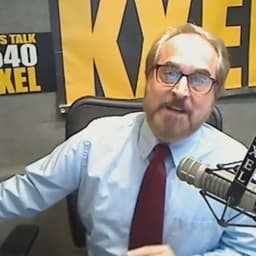
I am pleased to welcome on the news line, Tyler Martinez.
Mr. Martinez is Director of Litigation at the National Taxpayer Union Foundation's Taxpayer Defense Center.
You learn more about the National Taxpayers Union and their work online at NTU.org.
Mr. Martinez, good morning and thank you for taking the time.
Well, good morning.
Thank you for having me.
The topic here at one point, I mean, people may look and say,
Making liquor at home.
Well, who really cares?
Well, obviously a lot of people do to the point that we have a difference of opinion, no pun intended, between two different U.S.
Circuit courts of appeals on the issue.
Explain if you would, first of all, how that situation came to be.
What is at issue here and how is it that depending on where you live in the country, it might be legal.
or it might not
sure well it's five o'clock somewhere so let's you know bro distilled some moonshine and let's get going
yes
sir so there is a federal ban on distilling your own liquor at home making gin making bourbon any of those sorts of things and you say well wait a minute i have a buddy who brews beer at home
That law was changed in the 1970s under the Carter administration.
Jimmy Carter allowed for people to brew beer at home, but that same rule didn't happen for distilling liquor.
And there's a lot of people that want to do this as a hobby.
In the same way that people brew beer, they want to distill liquor.
They want to try their hand at making gin or making bourbon or making vodka, whatever.
But the federal government bans that.
And so two different people in two different places
decided to challenge that.
And what's funny is you talk about a circuit split, what happens is two courts of appeal, United States courts of appeal have disagreed on whether or not this ban is constitutional.
The question is, is the federal government allowed to do this under either the taxing power of Congress or the ability of Congress to regulate commerce?
Are they allowed to outright ban something that happens only at home?
Somebody's only distilling at home.
They're not selling it.
They're just making it for them themselves and their friends.
And what we ended up with was two different courts coming up with two different answers.
The Sixth Circuit Court of Appeals, which covers everything from Michigan all the way down to Tennessee, says that that ban is constitutional and the government can say that you can't distill liquor in your own home.
Tennessee and Kentucky famous for bourbon and whiskey and all those sorts of things you're not allowed to but the district Court of Appeals which covers Texas and Mississippi and the other parts of the southern United States says oh no no no that ban is unconstitutional so now if you live in Mississippi the last state to repeal prohibition if you live in Mississippi you can distill liquor but if you live in Kentucky you cannot make your own bourbon.
And this is the sort of thing I remember from law school.
This is the sort of thing the Supreme Court is more likely to take up as the circuit court rulings are appealed.
In other words, what the Supreme Court does not want is a difference like you've described where you cross a state line and all of a sudden behavior is either legal or illegal.
Where are we at in the process to determine whether or not this is
a case that the Supreme Court, because they only take what 3% of all cases that come up before it as potential cases every year, what's the timetable where we might know if the High Court will be able to resolve the dispute?
So right now,
the the challengers in both cases have in one case they won and so uh... you know they're happy uh... the challengers in out of the sixth circuit uh... have lost and so they have asked the spring court to review this case they point out how there's if you cross state lines at a different rule and that can that can't be in one of the spring court uh... criteria for taking a case and we take something like sixty cases a year out of the thousands upon thousands that are that are applied to them
They say, is there a rule that is so consistent between the courts of appeal?
And we have that here.
So my organization wrote Amicus Curiai, that means friend of the court, wrote a friend of the court brief that said, hey, you cannot do this.
And oh, by the way, the federal government's taxing power doesn't go that far.
You can't use something in the taxing world to ban activity.
You can only use it for raising revenue.
And if you're not raising revenue, then that's not part of Congress's taxing power.
One of the arguments might be that they're trying to protect Revenue generation does that argument hold any water whatsoever or in this case whiskey?
I don't know if it holds the whiskey I think I need some in order to really to buy it yeah because think about it what what the government is saying is Because we're not sure that we would be able to tax every home Every home distiller
on every, you know, jar of whiskey that they make.
Because we couldn't do that efficiently.
Therefore, we can ban it.
And that is kind of strange, especially when you have here, the challenger here said, I'm willing to fill out the paperwork.
I'm willing to pay the taxes.
I will declare it.
And just because it's hard to collect taxes does not a reason that you can ban activity.
Arguably an example, back in the early days of the internet when, you know, Amazon was just one of a few booksellers online,
You always needed to pay sales tax or sometimes called use tax for anything that you bought and We Amazon didn't used to collect that for you on your behalf It used to be that at the end of the year you were supposed to put on there's a line item on a lot of tax forms in the States that say you know I bought
Whatever I bought so many books and I have to pay my taxes Well people didn't do that and it was very consistent because people didn't know they were supposed to do that nonetheless They couldn't ban buying books across state lines either and in the same way here Just because it's hard to collect taxes doesn't mean that you can use it as an excuse to ban it
We're speaking with Tyler Martinez.
Mr. Martinez is director of litigation for the National Taxpayers Union Foundation's taxpayer defense center
You learn more about NTU and its work online at NTU.org.
He's kind enough to join us live on News Talk 1540KXL.
You alluded to this earlier, but let's really drive home the point.
It's one thing to say, well, you know, sorry, you don't, we're not going to let you make hooch at home.
Yes, your friend can make beer, but it's not one of those pivotal matters.
Except the precedent that is set by this, the example that is set, if they can regulate
your distilling of spirits at home, that just seems to be an opening they can drive a truck through to regulate your private behavior.
Am I missing something?
You're not.
That's exactly the problem.
If you can call anything a tax and you can call any, you know, any part of not collecting that tax, well, therefore I can ban it.
That is
a backdoor way for the Congress to regulate every single aspect of somebody's life.
And that is not how our constitution set up.
Our constitution set up as Congress has limited powers.
The federal government has limited powers.
They're only supposed to do certain things, national offense, post office, interstate trade, that those sorts of things are important, but they're not supposed to be doing everything.
The government that's best under the founders
political theory that the government that's best is the one that's most local.
It's the one that you know your neighbors and you know your neighbors in the state, your neighbors down the street, that's the most important part.
To give Congress this sort of power to let Washington DC decide what's best for people in Iowa would not be what we founded on 250 years ago.
That is just not what the American system is.
And if you're making things at home,
ostensibly for private use but you might share it with someone else it sort of seems like nobody's business certainly not government's business but again this this could impact home-paced businesses this could impact just what you do in the privacy of your own workshop whether you're somebody who engages in shooting in fishing any other sort of sports like that this could have impact on your ability to
Frankly, row your own boat.
Yes.
You brought up fishing.
That's a perfect example.
There's technically a tax on sporting goods and a particular fishing equipment.
There's lots of people in my family that love to make their own fishing lures and those sorts of things.
That technically could be banned under the government's theory.
They could say, because I can't tax you for making your own fishing lures for fishing on your own pond, on your own land,
uh... therefore we can ban it because we couldn't get a tax out of uh... out of that there's no limiting principle there's no limit to the government's ability to regulate private home activity under this theory and so it's it's a lot bigger than just distilling you know somebody says i don't you know i i i'm a key holder i don't really care about uh... about moonshine who cares this could be this can impact and anybody
activity, anybody's hobby, woodworking, fly fishing, archery, you name it, it could be regulated this way.
And they could use the same argument I trust to say, well, we don't know what you're going to put in that moonshine.
And so therefore, from a health and safety perspective, blah, blah, blah, would be the same thing with loading your own ammo or
I don't know, restringing your archery bow, whatever.
I'm gonna get into categories I know nothing about.
But the point is, when the government says, well, we know better than you and we can protect you from yourself, well, you let that door open, it's hard to get it closed again.
Exactly.
And how is this any different than going over to our friend's house and having them cook you a meal?
I don't expect the, you know, federal health inspectors from the US Department of Agriculture to come over and inspect somebody's kitchen that they are not trying to kill me.
They're not going to poison me.
They're going to, you know, they're going to serve me a nice meal and be hospitable.
The idea that the government can do this and worry about health and safety also gives you no limiting principle.
There's no, there's no way that the government, that
Federal agents can knock on your door for anything, and that's why this case is so important.
Well, you just now gave them the idea.
You realize that, Mr. Martinez?
Well, I'll be ready to fight it, too.
I'll be ready.
They do it.
Now that's the spirit.
That's what we were looking for.
Where could people learn much more about this at the straight?
I think if you go to the NTU.org website, there's a nice video that you've done previously on the topic.
Where else can they go to learn more?
They can learn from our website, NTU.org.
slash TDC, that stands for Taxpayer Defense Center.
You can see all of my brilliant or sometimes not brilliant legal work, but you can see all of the stuff that we're doing.
We care about freedom in a lot of ways and the tax code should only be focused on raising revenue.
And that's what we fight for is rational tax administration.
It's about raising revenue.
It's not about regulating people.
Nice article on this dated August 20th, if you're searching.
for it on the website.
Mr. Martinez, thank you so much for the excellent conversation.
I appreciate it greatly and continued success with this.
We'll hope that you keep us posted on it.
Well, dude, thank you for having me.
All right, take good care now.
Tyler Martinez, Director of Litigation at the National Taxpayers Union Foundation's Taxpayer Defense Center,
NTU.org slash TDC for Taxpayer Defense Center, and you can learn more about this major split between two U.S.
Circuit courts of appeals on the issue of federal home distilling, whether the ban on the federal, by the federal government on home distilling, and how that could have implications much more broadly on how you live your life.
We are pleased to be joined now on the news line by Jonathan Dever.
Mr. Dever is a former elected official in the state of Ohio and he is the author of a forthcoming trilogy, The Grift Trilogy.
Mr. Dever, thanks so much for taking the time.
Well, thank you.
I appreciate the opportunity to be on your show.
I gave a very brief bio, but you have a much more extensive background.
Give us a sense of your experience and background that leads to authoring a trilogy on grift.
Well, it's kind of interesting.
I started my career as a lawyer out in a little small town, which I'm sure many of your listeners are familiar with, about 1,600 people.
And that's where a good friend of my grandfather
I grew up, whose name was Bill Faxby.
So some of you that are a little bit older from the Nixon era would remember that name.
He was the attorney general that walked into the president's office and suggested his resignation.
But he used to be a good family friend.
So I started out there, got involved in real estate and banking law, and built a practice out of that.
A lot of it was agricultureally based at first, and then it migrated into bigger and bigger projects and oil and gas, those types of real estate transactions.
And I quickly realized that they're so much broken.
And when you're actually in the trenches trying to help your average consumer, you realize how much is busted.
And I decided that back home I was going to try to fix it, and the only way I could truly fix it was to run for office and was elected in a
a seat that I had no business getting elected in and outperform the index by 20 points a couple of times, which was really kind of an amazing feat.
But it led me to become the chairman of the banking committee right out of the gate.
And we started this process of massive reforms.
And my goal was to put myself out of business in the areas of law that were really a cancer that caused a lot of cost, a lot of waste and abuse in our system in Ohio.
And then from there, my dive got deeper and deeper into banking and politics and what I'm calling just the grift.
And over several decades, I've seen what I call the art of the extraction and politics and medicine and agriculture across the country and really decided that it was time to start writing about it and getting it out there so that the average person when
you know when they're listening to your program when they're watching tv watching the news they're frustrated but they don't really know why uh... and so the goal was you know stuck first let's show people the pattern so that when they see it they'll recognize it and then the second book which i start that's where i started uh... with the cost the human cost of how these uh... these grifters hurt people at the end of the day that's the problem is that it's about hurting people it's not about making people's lives better
And then in my last book, I provide some public policy solutions and some corporate solutions.
So if you're working in a small business, a big business, there are ways that you can change that culture.
A lot of the things that they taught us in law school, and I am a lawyer as well by education and license.
It in no way prepares you for the real world of getting into the whole thing I mean I think of the times that I said across the table from someone who wanted to start a small business and we had to have this extended conversation about all the paperwork and all the legal formalities etc and the ongoing reporting functions etc they just want to Do what they're good at and provide a good product for people
Government over time has gotten in the way and who benefits from it?
Sounds like government.
Unfortunately, that seems to be the truth.
A lot of the rules today are designed by a couple of individuals.
You know, there's an entire industry out there which I haven't partaken in yet.
That's called the lobbying community.
And there's a lot of good guys in there, but I always used to laugh that
Um, if I want to be in the top five worst professions, you know, I'm all I need to do is become a lobbyist because.
Been a banker, been a lawyer, I guess a politician, uh, right?
I've had a couple of used cars, so I sold those in a
used car sales
move, get some bad raps.
And so if I had a lobbyist that had the top five most hated professions, uh, in America, but, um, you know, the other side of it is you got to have good people with good intentions, trying to make the right changes and your.
You're right.
These things don't.
They don't get fixed overnight.
And when you're looking across, I'm a retired attorney at this point, but I agree with you 100%.
When you're looking at these rules, these regulations that are imposed on the small businesses, they have very, very little to do with making sure that the product or service is safe, sound, and effective and meets the demands of the marketplace.
They're all about a political agenda.
or corporate agenda that's being run through a state legislature or federal legislature and a lot of those are designed and you know architected by the people that show up in these rooms and in these conference rooms in these committee rooms and so your average iowan you know they don't know what's going on at your state house uh... it's it's not something that's reported very much and they're not actively involved in that they they'll have a representative and a founder
uh... that'll go to your capital and they'll pass these walls and they'll have these conversations but very very little uh... of the time is spent talking to you you know the local coffee shop owner local barber uh... they make these rules that they put on them but they're not taking they're not getting their feedback and so part of what i advocate for always is you know it uh... i don't know if it was jefferson or one of our founders that always uh... said that if you are derelict in your public life
You will receive what you the work that you put into it, right?
So if you don't participate in that that's a public policy process and then you're at the mercy of the folks that do show up and the people that show up or You know, they're they're paying lobbyists.
They're paying people to show up and so the average citizen It's hard when you're when you care about the what I like to call the three G's and stole it from a friend of mine It's gas Gerber and groceries.
You know, you're worried about putting gasoline in your car.
You got you got to feed your babies
Right, and then you got to feed the rest of your family, and you got to take care of your bills, and that's your priority.
You know, taking time out to pay attention to what your elected officials are doing, local level, school board, state house, or even Washington, it's a big ask.
But it's becoming more and more important.
And so, again, that's why my writing is focused on, all right, well, when you see these things out there, you really don't understand why, but if you can recognize a pattern in it, then it's going to empower you to act and to do something about it.
the end of the day, the government works for us, not the other way around.
Jonathan Dever is our guest, and the trio of books, and I'm looking at the notes from your sub-stack, so correct me if I'm making a mistake here, volume one, book one, called The Grift that identifies the situation is scheduled for release early next year.
Book two in the series is called The Broken, and that focuses on the human toll of the situation you explain in book one.
And then book three, hope in the darkness, and that is where a lot of folks, when we have people on the program, I get emails and texts afterwards saying, that's all really nice to know the information, what can we do about it?
And again, that sounds like the final book gives us a bit of optimism, a bit of hope.
The concept of sharing all of this in book form,
What led you to that?
Because again, you have a sub-stack, you speak, you write, you're involved.
What led you to select?
And by the way, I've written books myself.
I think they're a fantastic vehicle.
Obviously you do, or you wouldn't have undertaken this massive effort.
But what led you to say, no, this needs to be in book form collected in one place, three volumes.
Well, I originally started just
with hope in the darkness.
That's where I started, and it was an amalgamation of just years of writing random thoughts.
And one day I realized very quickly that I needed to break it out.
Look, we're lawyers the way we're trained.
And so we think, how do you digest a whole bunch of information in a way?
And how do you transmit that information to your clients, to your business, especially in business?
How do you translate this complicated regulatory tax world
in a way that's really, really simple.
So you have to relate the material and show people what's really going on under the hood.
And so by breaking it out into three pieces, to me, it was just more about how do we get this information to folks so that they can understand.
The hardest part, I mean, I listen to a lot of radio shows and broadcasts and read a lot myself.
And what I found is that there's just so much frustration, right?
We're living in kind of like this purple-faced universe of America.
Everybody's angry and pointing fingers at each other.
Kind of reminds me of the fraud website that the White House just put out.
One side says it's fraud.
The other side says it's mismanagement.
And they're screaming about that, about what to call it.
Well, as a citizen, I'm just mad that they're wasting $229 billion a year and that it's accumulated over $3 trillion on our debt and we're paying interest on a debt based on fraud.
That's really where we should be mad.
But that's not what we focus on, right?
We're focusing on the argument on the labels of these things.
So, and that's the distraction.
So I really felt as, you know, as a lawyer and somebody who served in the legislature that people needed to have something that they can refer to, that's not going to get taken down by an internet crawler, right?
That's not going to disappear.
Just like your Bible, you print it.
if you want to or you can have an app, but I like my physical one.
I put that in my bookshelf and I pull it out every day and read it.
It's right there for me.
And so I wanted something that people could have in their hands as a resource.
So when they're confused or they're upset, not only do they have a way of identifying what it is, but kind of a blueprint on how to deal with it at the local level and also at the state and federal.
There is something comforting about looking up at the shelf and knowing the book is there.
as opposed to looking at an account online and all of a sudden saying, wait, what happened to this book?
And I don't think it's too much of a stretch to suggest.
And I don't think you went this far, but I will at some point.
If some powers that be don't want you reading things, they'll disappear from your digital device or your online account and they hope that you won't notice that it's missing or that it's altered or something.
Printed page, that's got some permanency to it that gets past anyone who wants to float a new narrative, shall we say.
And I don't disagree I mean you can just look at it something as simple as you know you pay for a movie right that we used to just buy him I kind of laugh at my ungen X so I've had to buy my music about six times You know a person it was an eight track in the old old car that my dad had and then you had to go from that to a cassette tape
Uh, and everybody's a little bit older is laughing because they know I'm right.
And then you had to get it.
And then you had to get a CD, right?
And then it had to go over to iTunes and now it's got a, now you don't even own it.
You just stream it.
Um, and, uh, or you buy it through some thing, but you don't have a physical copy of it.
And, you know, I've gone on and bought, quote unquote bought movies.
Um, and then they disappear.
Uh, so you don't have them anymore.
So you pay for the lifetime rights to it.
And then they changed their terms and conditions on Netflix or.
you know, prime or whatever.
And then the next thing, you know, you don't own that feature film anymore.
So it's very much the same way.
And during COVID, we saw a lot of that occur.
Disagreement was taken down.
So yes, you're right.
It is a thing that could happen.
We've seen it happen in the past.
We do live in a country that shuns that and prohibits that, but
It doesn't mean that someone will engage in that behavior.
They'll get corrected, but our justice system is a little slow, so it takes some time.
I'm with you, except you forgot record albums.
I'm old.
Oh,
well, that's right.
You're vinyl.
You're LPs.
You're absolutely
right.
I'm older than you are.
That kind of
predated, that predated the eight track.
You're correct.
But I do have some, I still have some of those LPs in the old record player around, so.
We would buy the new record and immediately make a copy onto eight track because it had an eight track player in the fancy stereo at home And then you could use it in the car.
So yeah, there we go.
I think there's some people listening who are nodding So help me out here.
There's an example There's a story floating around and and and I think you have details on it.
So I'll ask Whenever a state we learned this to a little degree at the federal level, but whatever a state
Starts auditing and trying to get a list of employees and then we see vacant jobs And I think you have some data from North Carolina, but we can be general on this They go through and they say oh, okay, these jobs are vacant.
Well if they're vacant then why are we giving the agency the money that would have gone with the position it seems to me that what's happening is They say they have all these positions, but then they're in essence pocketing the money
or because money is fungible, they're using the money that was allocated for a certain job for other purposes because heaven forbid that a government agency ever turned back money it didn't spend because then it'll seem like, well, we must not be important.
Am I misreading this situation?
No, you're actually dead on accurate.
If you had a bullseye, you hit a dead center.
That is the reality of it.
North Carolina, the auditor of state, he found just slightly over a billion dollars.
Now that's a billion with a B in case my voice isn't clear enough on the radio of funds that go into these various agencies for jobs.
And those jobs are not filled.
In that state, it was roughly about 8,000.
When the auditor pulled that out, the legislature
passed a law that put it online and had some sort of measure of accountability.
But it wasn't a lot.
It saved immediately about a thousand, so it took it down to 7,000, which is an improvement.
But what they found is that there were 190 jobs specifically that had been unfilled for a decade, that they've just been sending money to these agencies.
The agencies then take the funds and they just spend it on whatever they want to spend it on.
instead of the salaries that were earmarked by the legislature because the money just goes straight to the agency so i call it a ghost payroll because that's kind of what it is we're we're we're claiming that we have these positions and they're outstanding but there's there's no accountability is the biggest problem we have in government is uh... structural gap really really good at pointing out what's wrong i mean government's great at that politicians are great at that but we're terrible at actually fixing things
I recall at various times working for colleges and universities where someone in a superior role said, well, we have to spend it all plus a bet.
We have to go in the hole on our budget or else they won't refund us to this level in the future.
And of course, my reaction was, but that's wrong.
That's a that's a game and it's like well, yeah, but that's what that's how it's played That's part of the problem.
Is it not mr. Dever that that too many people get into it and they quickly become Coopted by the phrase well, this is how the game is played and that's gotten us to at the federal level of $40 trillion debt that will increase by I think 25% in the next decade
Absolutely, I mean I think there's a another
analogy that would be really helpful for people to visualize because I think when we talk about the national debt, specifically in the way governments spend money, I mean, you're 100% right.
They have this belief that if they don't spend it, then they're not going to get it.
And then there's this also this belief that they should just get an automatic 6% increase year over year.
And when you don't get the increase, it's called a cut.
So I don't know about your average, Iowan, but I'm from Ohio.
And if I need $100 to pay my bills,
And I get $100, I'm happy.
When I get $106, I'm super happy because someone just gave me an extra $6, but I don't call it a cut because they said, well, I can't afford to give you the 6% increase that I did, but we'll make sure your bills are paid.
So only government operates that way when they don't get an increase that's cut.
It doesn't make a lot of sense.
But they campaign on that.
But one of the things that I think is really important with a national debt that we just don't talk about,
And that's the power of the exponential.
Now, some folks out there remember that, but it's probably going back to junior high math.
But the idea here is that there's a certain point where the growth of this thing, because we're not paying it off, we're not paying it down.
It used to be in the good times, you would reduce your spending and you would take those surplus funds and you would reduce your debt.
and you would save for the future.
It's kind of like Joseph and the Bible, right?
I know we're going to have a bad seven years.
We're going to have seven years of planning.
So we're going to save.
So when the times are rough, we're going to be prepared and safe, right?
We don't do that anymore.
We just print the money.
And there's a whole reason for that, of course.
But the exponential is interesting because, you know, if you take a page out of your Bible, you can fold a piece of paper over on itself about seven times.
And then after that, you can't.
But assuming you could indefinitely,
You fold it 10 times, it's a centimeter thick, okay?
You fold it 33 times over on top of itself.
It's the height of the Empire State Building.
You keep folding it until the 44th fold, it touches the moon, and by the time you hit 50, it's touching the sun.
And of course, once it touches the sun, the whole thing burns down.
So the question I always ask when it comes to the economy of this, if we're not growing and we're not increasing our economy,
When is that fold going to go from 49 to 50 when the whole thing burns down?
And that's the thing that we have to be careful of.
Um, as citizens, when we're electing politicians, do they understand money?
Do they understand debt?
Uh, do they understand what fold we're on and what can they do to not take us from, you know, if we're on 33, let's not go to 50 real fast.
Yeah.
Well, here's the problem.
You're just making too darn much sense.
I think that's the problem.
We're just all sitting there nodding and the people in power, it's going to take a while to turn it around.
Jonathan Dever, our guest, he's currently the Chief Operating Officer of Proximity Incorporated.
We'll talk about them with him another time, but let's focus on the fact you can follow him on Substack with his writings and the forthcoming trilogy on GRIFT starting next year.
Mr. Dever, this was a great conversation.
Do come back, sir.
I would love to.
Thank you so much for having me today.
All right, take good care and say hello to everyone there in Ohio Forest.
Jonathan Dever, our guest on the news line live on News Talk 1540 KXEL, where Iowa comes to talk.
And again, if you're searching for his writings online, Jonathan Dever, D as in dog, D-E-V as in victory, E-R, Dever.
And you'll find the sub-stack writings and all other items.
And again, he joined us on the news line.
News Talk 1540 KXCL where Iowa comes to talk.
If you're on vacation and looking for a great breakfast, the Oakwood Inn in Spirit Lake has one they're pretty proud of.
Oakwood Inn is up for a national best breakfast award from an organization that represents bed and breakfasts and small independent hotels all over the country.
Bridget and Bill Johnson operate the Oakwood Inn and the Lake Okabohji area, and we talk with Bridget Johnson now.
Thank you for being with us.
Thank you.
What's on this breakfast menu that has put you into this group of semifinalists with four other properties from all around the country?
I think what people are find memorable about our breakfast is we have some of the best scones, muffins, you know, a lot of those kinds of things that people love that they don't often make themselves, but we make everything from scratch.
And so.
A lot of times our guest tells us that it reminds them of other times with their grandparents or they never take the time to sit down and enjoy a breakfast like this and I think it stays with them so that makes it pretty popular.
I understand besides some of the things that are actually on the menu there are some distinctive ways that people can enjoy this terrific breakfast.
We like to be a little flexible.
We'll deliver breakfast to guest rooms if they'd like.
Otherwise, we do serve in the dining room and it is a three-course breakfast.
But we'll also do a box to go if somebody just wants to sleep in or has an early schedule outside of our breakfast times.
And it's the same thing regardless of what timing they ask for.
Now, does the menu change from day to day?
Are there some specials or how do you decide what is going to be served to guests, especially those that might be staying for a little bit longer than one night?
We actually have the same menu for everybody, but it does change every day.
We kind of go on a seven to ten day rotation and that can be a variety of, we might have scones two or three times during that time, but a different flavor.
You know, we will, we try to alternate between savory and sweet.
in the mornings just to mix it up a little bit for our guests who are staying for quite a while.
And then sometimes it depends on the profile of the guests that we have in.
When we have a lot of corporate guests, we will do a little different breakfast respecting the timing that they have to enjoy breakfast versus somebody who is here on a getaway and wants a leisurely time at breakfast.
We're talking with Bridget Johnson of the Oakwood Inn in Spirit Lake.
Their breakfast is up for a National Craft Lodging Award presented by Select Registry.
And so finding out about that.
But for those that aren't familiar with the Oakwood Inn, could you set the scene for us and tell us a little bit about what things look like for somebody staying there?
So we are a 13 room bed and breakfast here on two acres in the center of the Iowa Great Lakes area.
We have gardens that surround our property which we maintain ourselves.
We have 15 different garden beds and our property is an adults only kind of quiet luxury focused property.
So when you're going to the lakes area we're
right in the center of everything, but you can get away from all the hubbub and have a really quiet and relaxing place.
And so we try to emulate that through all of the service that we provide.
Our property has several parts to it, which provide for outdoor enjoyment, the pavilion, a covered pavilion.
We have a patio, outdoor patio with a wood fireplace, a gazebo, as well as some paths through our garden.
So
having an idyllic location and getting the chance to look out at this terrific scenery all the time and being in a place where people want to be to spend their vacation, that sounds like something a lot of people might say, hey, that's great.
I'd love to be able to do that.
What's a little bit more complicated about operating an inn, a bed and breakfast, even in a great setting than what people might
realize?
Operating a bed and breakfast, you have to really love it, to be honest with you.
For us, it's not a job.
It's a lifestyle.
And that makes some things that people might find very difficult.
That's just the way we do things around here.
Balancing the time between time for guests, time for breakfast.
time for gardening and then also our own personal time sometimes is a little challenging during the height of the summer season but what we enjoy we know our guests enjoy so we enjoy sitting on the verandas looking at the gardens at the end of the day our guests love that they are always out on the patios of the verandas just relaxing and it's
more of a labor of love for us and so we try to make time the whole day for all the different parts of the property and I think our guests enjoy seeing us in our different modes.
I can go from breakfast mode to garden mode to checking guests in mode and wearing three different
outfits through the whole day.
It's being all encompassing for our guests is kind of a it's a talent that my husband and I are able to do and our guests like seeing us in action.
How did you and Bill get started with this?
We had always wanted to do something like this when we retired but thankfully we did not wait that long.
We were in Houston, Texas, and I was working for a luxury hotel chain that was being bought out.
And so my job was changing.
And so we decided, what do we really want to do with our lives?
And when we came home to the Upper Midwest for Christmas, this property was for sale.
So we took a look at it and decided this was the time.
And here we are, 10 and a half years later.
We're talking with Bridget Johnson who operates the Oakwood Inn in the Lake Okabohji area along with her husband Bill.
They're up for a National Craft Lodging Award for their breakfast and we're finding out a little bit more about the experience.
We're getting near the end of the 2026 summer travel season.
What's 2026 been like for somebody in the hospitality industry but in a very specialized corner of it?
You know, we have our guests who make reservations in advance and we know when they're coming.
They come about the same time every year.
And then we have a lot of people that are new to coming to the area.
And then this time, this year, we had a lot of last minute reservations, people waiting.
And when I say last minute, I'm saying three weeks out or less to.
make their reservations, which is different for us because we oftentimes have reservations on the books much, much earlier than that.
But I think it showed that people were
deciding to take a last-minute trip someplace and maybe stayed more centrally located than venturing further out.
But it was a very busy season here in the area.
And so we have been keeping very, very busy.
That's for sure.
So you alluded to some of those people that are regulars who you might see year after year and in a vacation spot where people might tend to go, where they have fond memories and where they want to be in the summer.
It's just what they imagine for their summer time off.
I imagine that those traditions, those things that they've done can be a good thing, but it might also be kind of hard to break through.
Do you have any strategies for reaching people who love coming up to the Iowa Great Lakes, but maybe who haven't stayed with you before?
We do a lot on social media.
We do a lot of digital advertising and things like that, but it's really, I think it's about being able to provide an experience that our guests will write a review and comment about online.
the whole evolution of online advertising has changed so much and we tried to keep everything, all of our content relevant.
We tried to embrace what the new things are that people are looking for in in a stay and add them in.
Our rooms have
have robes and they have shower steamers and things that that might be different than other places in the area and we always try to to think of that next thing that our guests might
want to pamper themselves with when they come to the area.
And so I think that word spreads a little bit about some of those types of things.
And I also think the fact that we're adults only in a very family centric area does provide even people that are needing a getaway for their anniversary and grandparents have the kids and, you know, it provides them a
space to be and I think they start telling their friends that as well to say, hey, you know, you have to try this out.
So I think a lot of our newer business comes from referrals just like that.
If I was talking to a different B2C entrepreneur,
I would anticipate that they might measure success or might measure their possibilities for future growth by opening a new location.
But obviously in your situation, that's totally the antithesis of what you're doing and what you're trying to provide.
So how do you measure success?
How do you plan for growth?
What does growth even look like in this, again, this niche that you have in the hospitality industry?
I think growth can be measured in
several ways.
My husband and I have our own goals that we want to accomplish and we've accomplished a lot of them.
Two years ago we added two more rooms to the property and you know we always are adding gardens and those types of things which which does show growth but I think also in the elevating our reputation we get more reviews
than pretty much any other lodging facility in our area, despite the fact that we only have 13 rooms and they all have a lot more than that.
And I think that being able to consistently provide an exceptional experience.
year after year is a growth for us because that means that we don't stay the same.
We're constantly evolving and our guests are recognizing that and we are continuing to exceed their expectations.
So that's probably the best way that we measure our growth.
how how this the shoulder seasons and the off season work too.
You know we have been constantly trying to do better in those areas and we've had four corporate retreats this year whereas and that has been a big growth area for us as well.
So just being recognized for the flexibility of the property can also represent that.
Bridget Johnson, along with her husband Bill, operate the Oakwood Inn in Spirit Lake in the Okuboji area.
They're up for a Kraft Lodging Award for the best breakfast from Select Registry.
We'll wish you all the best.
Bridget, good luck winning that award.
I think that it's going to be announced towards the end of the year in November, and we'll hope that the breakfast that you guys have been serving get all the judges' attention.
Well, thank you very much.
We are very honored to be considered for this and we'll see what happens.
This is the station where Iowa comes to talk.
News Talk 1540 KXCL.