Transcript
HCC Women's Leadership and Empowerment Conference
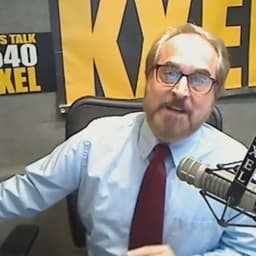
KXEL Live & Local with Jeff Stein · Tue Aug 25, 2026
News Talk 1540 KXEL, where Iowa comes to talk.
Hello, I'm Jeff Stein.
Coming up on Thursday, September 24th, a day long annual conference to be held at Hawkeye Community College in Waterloo.
It's the Women's Leadership and Empowerment Conference, and I'm joined in the studio by Stacey Kramer of Hawkeye Community College.
Thanks so much for taking the time.
Thanks for having us.
And by Abigail Kissel with the University of Northern Iowa.
Thanks for joining the conversation.
Thank you.
All right, so Stacy, tell us first of all, women's leadership and empowerment conference.
How long has this been around and what is the purpose?
This is our seventh annual conference.
Initially it started as a leadership conference geared towards professional women.
It has evolved over the last few years and I believe it would have been about four years ago that we added
the empowerment component to it.
We know that women lead in various capacities in their lives around the community, not just in a position of formal leadership titles.
So the empowerment portion is to address that and help to embolden them to really step into their leadership abilities and their skills that may be natural.
It may be something that they're just working on improving and building that muscle.
Abby, with regard to the Cedar Valley in particular, this is obviously open to anyone, but are there certain challenges that a conference like this can help attendees address as they then move forward in their careers?
I think not everybody sees themselves as a leader so when it's a leadership and empowerment conference some people kind of shy away from that or say well you know that's that's not really me well then we're there to empower you and what can you do in your position you may not be the the top executive at your company you may be just starting out you may be a college student we have student tickets as well because we want all women from all walks of life to be welcome at our conference so we really try to find
something for everyone and just welcome them wherever they're at in their journey and help bring them to the next step.
And it seems appropriate Stacy as Abby mentioned there are discounted registration rates for students as opposed to the already reasonable rate so you're hoping to have a mix of people and I assume also not just limited to women.
Not at all.
We recognize too that we have a lot of people in the community who
Maybe in this same position, it's not a formal leadership title in their job or maybe not a formal leadership title in their professional clubs, their community.
And so all of the topics that we have that we offer will apply to anybody.
If you go to www.hawkeyecollege.edu slash women's dash conference type all that in there.
It'll take you right to the page or just search on Google or wherever you search for women's leadership and empowerment conference and Waterloo and you'll find it there as well.
Abby, the list of speakers and presenters.
I mean, this is extensive.
Where did you draw this list from?
Honestly, a little bit of everywhere.
Every year we have people coming to us saying, you know, hey, we heard about you, you know, do you have speakers for next year?
So we've really built upon that in the last seven years.
You know, we try to support a variety of backgrounds, of interest as well in our speakers, people who are well-known, people who are just starting out, just trying to find a little bit of something for everyone.
So this starts with registration and breakfast at 7.30, and then the conference runs from 8 until 4.30 again.
Thursday, September 24th with a social hour afterwards.
And Stacey, I find it interesting, you've got opening keynote speakers, but then they are also the closing keynote speakers.
That's not an accident, obviously.
Not at
all.
We learned that the good way is by trying it a year ago and realizing that being able to bookend our keynotes provides a lot of anticipation when you're able to open the conference, know their energy,
know their voice, know the topic that they're coming in with and they are providing a lot of great information at the beginning of the conference and then at the very end it's the same dynamic duo as we've been calling them because Sarah is from the Des Moines area and Farah is from the Chicago area and what's very neat about bringing them in together is that they've worked together professionally and never worked together
in person.
So this will be the first time that Sarah and Farrah get to work together in person to bring their knowledge base to our audience.
Author and Speaker Sarah Noel Wilson and Farrah Harris, a psychotherapist and workplace belonging expert, the keynote presenters.
Abby, this year, the theme is how are you writing your leadership story?
How did you come upon that?
And what does that mean for an attendee?
Really every year our committee kind of looks at what were our interests, what were our high attended sessions, things like that.
We'd look at who we have for speakers potentially, but every year we come up with kind of a different theme.
In the last couple years we've kind of used that empower her kind of tagline of unleashing potential, owning your story, leading with courage, and just kind of running with the idea of
variety of authors from the Cedar Valley.
And everybody has a background.
Everybody has a story.
Not everybody knows how to share it or how to grow their story or promote their story.
And so how can we help them on that journey of writing their own story, figuring out how to put a pen to paper, figure out how to highlight their journey and advertise themselves when they are looking for a new job or a promotion or things like that.
It also seems to me, Stacy, that when we're talking about writing your own story,
We all understand stories.
From the beginning of time, we're read stories by our parents and then we read books and maybe some of us write books.
But the concept is we understand a story.
If you said to someone, all right, document this game plan for success or achievement, that seems daunting.
But when you break it down to tell us your story, that's distinctive and approachable, I would assume.
That's the intent is our story.
of our life, sometimes we don't get to write those chapters.
Life writes those for us.
And this is a theme in hopes that our attendees will gain the knowledge, gain the courage, have the empowerment to say, no, I'm the author of my story.
And this is how I'm going to go forward with it from here.
What we have realized in the seven years that we've been working on and growing this conference is that
I'm not singling out women.
However, we know that women do bring a lot more than just what's going on for their next day's schedule at work to the office or to their position of leadership.
Women bring so much more from family to health to financial to just personal issues that are going on in their lives.
They bring that to work with them.
We've recognized that over the last several years and started to accept that.
So part of the empowerment journey in this conference is to address all four of those areas, to let women, let attendees know that we are addressing those, to help to strengthen those areas, to recognize, yes, they are bringing those.
I hate to call it baggage, but it's certainly part of the mental load.
It's coming to work with us.
It's coming to our leadership positions.
It may be holding us back.
We're hoping that by addressing these four areas in breakout sessions,
that women will be able to maximize their potential and take that next step, whatever it is that in their story that they want to add to it.
And in that way, the organization can reach its potential.
We're speaking with Stacy Kramer.
Business Training Coordinator with Hawkeye Community College, Business and Community Education, and Abigail Kissell, Assistant Director of UNICU, University of Northern Iowa, Center for Urban Education.
We're talking about the Women's Leadership and Empowerment Conference taking place at Hawkeye Community College on Thursday, September 24th, day-long event.
Go to www.hawkeyecollege.edu slash women's-conference for all the information.
We mentioned the keynotes, Abby, but Stacy just brought up the fact that there are breakouts.
That was going to be my question.
You have a lot of people for attendees to learn from.
That allows a lot of customizing of the experience, does it not?
Yes, and we kind of learned and navigated over the last couple of years what that looks like.
So how can we allow attendees to individualize their experience?
So we do.
We have a health breakout, a financial breakout, a professional breakout, as well as a personal growth.
breakout.
All of these are just again to kind of help wherever the women are at in their story or people are at in their story to grow where they feel they want or maybe they know you know right now I'm struggling with XYZ or maybe this time this year you know something different than last year.
So we have some repeat names occasionally in our speakers so that if they missed it in the previous years they can come back and learn from another speaker but the four areas allow people to personalize it.
We are repeating some sessions that we know are going to be very
high interest.
We've also learned that in our seven years of experience where, you know, some of them have long line out the door waiting to get in and we don't quite have enough seats.
So that's why we offer again another session later in the afternoon.
Stacy, who are some of these other folks?
We talked about your bookend keynotes, but who are some of the other folks that are from the area or that people might recognize from their work?
The way that we have the conference set up is that we have the bookended keynotes.
Then we have General Session.
We have Dr. Selena Peerman.
A lot of people know her name.
She's been a subject matter expert and trainer in the entire Cedar Valley area for quite a while.
We have Kara Hensie and Megan Toll.
We're really happy to have Heather Woody to come back this year.
She's another subject matter expert and trainer that a lot of our professionals know in this area.
We have Scott Hagberg who's doing another General Session to discuss AI,
and the use of AI.
We know that that's a topic that evolves on a daily basis.
And so we still have another five weeks to actually firm up what that's going to look like.
It will change right up until the day.
It
will change right up until the day.
And then John Kramer, who is the Director of Public Safety at Hawkeye, will have a session on taking care of yourself and being safe in ways to do that.
What are some things people have said about the conference in the past that might encourage
folks hearing this conversation to give a serious consideration.
I think one of the biggest things is the opportunity to network.
Network with other women in the Cedar Valley, network with other people across Iowa.
We've had some out of state individuals.
We have our guests who are from all over.
Last year, one of our keynote speakers was on Survivor, very well known.
And so, you know, the ability to
get to see that person in person, get to know them in person, get a little piece of that.
We have the network session at the end of the conference, but really all throughout it, there's opportunities to connect with individuals and businesses.
We
also have
lots of vendors that table at our conference.
And so those are all women owned, locally owned vendors who are businesses who we've either reached out to us or we've reached out to them with the opportunity to promote their business and also connect to
our network and allow for individuals to know their story that they've created in the Cedar Valley with their business.
How many attendees typically are you planning for, Stacy?
Every year is different, but as you look toward 2026, how many folks might be able to network with one another in one place?
If you look at the capacity of the room in Tama Hall that we use, we're held to just under 200 people.
But once you add not just the attendees, but the vendors and the sponsors and of course our way about really great, fairly large committee that's our planning committee, it's really running somewhere between 220 and 230 people.
What I like about that is it is a manageable size.
You're not overwhelmed.
You're not going to get lost in the crowd, but yet it is big enough so that you can again customize or personalize the experience.
It is.
And for the last couple of years in my opening comments, I've taken a poll and raised of hands and said, because we were at our fifth or our sixth year, how many people in the audience have been here every year?
How many people of this is your first year?
And it's been very interesting to see that it's a definite mix of both.
We have some long, long running attendees.
I actually have a sponsor who messaged, proactively messaged me and said,
I'm ready to sign up as a sponsor.
This is my favorite event of the year.
I said, can I, can I quote you on that please?
And then again, from talking to those who was their first time, how did you hear about it?
Oh, somebody in my department came last year and it's my turn to come and we're really excited about this.
And again, Abby, people can attend and I'm one of those who just likes to go to these things and sit, but you're missing the opportunity if you don't.
interact with others that's really the the benefit you can learn just like I might be a bump on a log but it's much better if you
Bring your people skills that day as it were.
Absolutely.
Yes.
And we've, we always try to push people just a little bit out of their comfort zone and, you know, in different sessions, having people sit by new people or introducing themselves or telling a little snippet of their story to each other.
But the really great thing, and I think probably my favorite thing about this conference and being part of the committee is that I get to see this group of people every year.
I get to come back with the committee and you know I've built some really great relationships.
I recently had a baby and these women surrounded me and it was a bit of a rough time there for a while and but I felt empowered by them and it wasn't just at the conference but all year round because
We've built that network.
We've built that atmosphere that we get together one time a year in person.
But it's more than that.
It really is.
It's more than that.
And I did want to mention we do have a Facebook page where attendees can search that as well.
The Women's Leadership and Empowerment Conference is on Facebook, and then we do have an event as well for the seventh annual.
And we post information there and updates there as well.
That's another way to stay connected.
We do use the Huvva app, and that also allows for networking.
So on there, you can share your business card, you can share your LinkedIn, you can share your personal contact information if you wish.
But it just again allows for networking in another way.
So if you're not someone who...
wants to walk up to somebody, there's other ways to do that as well.
So whatever you're comfortable with.
Stacey, what's the most gratifying thing for you being involved in the planning and execution of this event?
There's several gratifying things about this.
Like Abby said, just the relationships that we've built from the committee.
But being able to look at this as a
being involved with this from the very beginning and watching the evolution of it and then watching it grow, watching a lot of the same people come back, hearing the feedback about how much an attendee has really gotten from the breakout sessions, how much it meant to them, how they're applying that, either at work or in their personal lives.
There's a sponsor company from last year, someone who I worked with on a professional level who
When I spoke with her about the potential for their company being a corporate sponsor, she said, I need to get out of my shell.
I really want to become a public speaker, but it terrifies me because one of the benefits to a corporate sponsorship is that you have a few minutes to address the attendees, talk about your business, and then introduce the next speaker.
And just to be able to have that initial conversation with her,
that that company committed to that sponsorship and then to watch her face her fears and address that room of 200 plus women.
It's stories like that about empowering someone to make that next step and to be able to see it and to know that our our event helped her.
Our event was a big part of that.
So that's it empowered me.
So that was very, very gratifying to watch.
And Abby, in addition to the things you've mentioned, what's really gratifying to you about being involved with this?
Really selfishly, my own growth.
I did not start out the first year with this conference.
I didn't know it existed for the first.
I think my first year was the third annual conference.
And after that, I attended
for a year or two, and then I joined the committee.
And that's where I really started coming out of my shell.
Kind of as Stacy said, at first it was kind of intimidating.
You know, I was new to the professional world, fresh out of college, and just kind of getting my feet wet with the networking piece.
And now I, you know, do a lot of our marketing.
I run our social media page.
It's helped me grow.
help be part of my story.
These women who I'm surrounded with now are part of my story.
They're part of my family.
And so that, yeah, like I said, selfishly, is the growth that I've been able to make and the empowerment that I felt with this opportunity in the Cedar Valley.
And the unique thing is, is I started out at Hawkeye.
I no longer work at Hawkeye.
We have women on our committee from all over the Cedar Valley.
So it is held at Hawkeye Community College.
They're kind of our home base.
But really, it's people from everywhere.
And so that's the really cool thing is that it's all of us working together and all of our schedules look crazy.
Some of us have kids, some of us have grandkids, some of us have a job, some are retired.
It's just all different walks of life coming together to...
to have the same purpose or same goal, you know, one day a year to lead and empower others.
Which is a great example and prototype for the message of the entire conference.
I would be remiss to not take this opportunity to thank our corporate sponsor, Edward Jones Financial, and to thank Hawkeye Community College.
They've been extremely supportive over the last seven years to not only serve as our home base, but to provide the venue
and to provide some funding toward each additional year's conference.
Seventh annual Women's Leadership and Empowerment Conference held at Hawkeye Community College at Tama Hall Thursday, September 24th.
It's day long and you can search for Women's Leadership and Empowerment Conference on Facebook or on the web directly www.hawkeyecollege.edu slash women's-conference.
Stacey Kramer of Hawkeye.
Happy kiss of you and I. Thanks so much for coming in and sharing the information and success to you on the 24th.
Thank you for having us.
This is where Iowa comes to talk.
News Talk 1540 KXEL.
Newstalk 1540 KXEL, where Iowa comes to talk.
The 2026 Farm Progress Show is conveniently located in Boone, particularly convenient for Iowa State University.
ISU will have a significant presence and experts on hand for a wide range of ag topics.
The Farm Progress Show is September 1st through 3rd, and let's get a preview of what Iowa State will be doing there from Jay Harmon, Associate Dean at Iowa State's.
of Agriculture and Life Sciences.
Good morning.
Good morning.
So when you have an audience like this right on your doorstep, like you do every couple of years, so what do you want to tell them?
Well, we try to show them some innovative things going on and maybe that are applicable today, but we also try to throw in a few things that are kind of...
maybe on the peripheral of their actual work, but might be just interesting too.
So we try to attract a good cross-section of people and we love to have our staff there and just have great conversations with people.
The timing seems like it could be good, could be challenging.
Of course, it's right before harvest for farmers.
It's right at the start of the school year for Iowa State, but this is nothing new.
You've done this every couple of years for quite a while now.
How do you fit this into the calendar every other year?
Well, we start the planning process pretty early.
We'll start by around January starting to think about the next cycle.
So there's a lot of people get together and talk about the ideas and the ideas shift and morph as we go along.
And it becomes easier because we've got some staff that are just really great at working it out.
It's important for us to have a good presence because it's just a few miles down the road.
We'd look pretty absent if we weren't there.
We're talking with Jay Harman, who is the Associate Dean at Iowa State's College of Agriculture and Life Sciences.
Iowa State will have a significant presence at the upcoming Farm Progress Show in Boon.
only about a week away at this point, September 1st through the 3rd, and let's talk about some of the subject areas that you'll have some experts there to share information with, roughly 100, maybe 150,000 attendees, depending of course on weather and maybe some other factors, but what kinds of things are those subject experts going to bring to those who are in attendance?
Okay we've got quite a quite a breadth here and I'll kind of just go through them and we can if you have questions we'll jump on them as we go.
One of them is efficient nitrogen management that's a big one right now that people are concerned about and there's the Iowa Nitrogen Initiative which has some public funds in it and then some of the commodity groups got behind the funding and we
have partnered with them and they've been doing research all over the state gathering information and then putting it into a model called in fact and so that group will be there and that's a very that will draw a lot of interest I think to discuss.
We have a group that will be on prairie strips and pollinators that that's more if you have a
area in your field that's not as productive.
Maybe you lose money on that part of the field every year.
It talks about there's some programs where you can put in some prairie and of course the monarchs is part of that as well.
And that's been around a little while.
One of them that I think is exciting is the AI in agriculture.
And when I've had to adjust my thinking, I came from the livestock area and AI meant something different than it means now, but artificial intelligence is very important.
And there'll be some things there where they've developed some different programs as well.
Yeah, we think of AI and probably be thinking about someone in California sitting in front of a computer.
Whether it's the AI models, the AI companies, how plugged into the needs of farmers and producers are these AI models?
What can actually be done with them on the farm when we at least have a sense that they may not be developed by people who've ever seen a farm before?
Yeah, luckily the ones that they're going to be talking about, some of them are developed by some of our faculty in agronomy.
And so there's one that's on crop scouting that you can take pictures of things and it'll sort through and tell you what's the diagnosis.
And you can look at insects and tell what kind of insects you have.
And so luckily that one's been vetted.
But if you're using one off the shelf, you don't always know what that background is.
it is kind of important and and I've used some for other things that I've got some answers that I knew weren't right so um so it is important so we'll have good discussions there as well there's a group called the crop protection network and they develop a lot of resources for um disease and and um and insects and so forth in crops it's a national group so it's a there are
faculty from all over the country that come together.
Many states have fewer and fewer faculty focused on this area and so they work together and have created a lot of great resources and that'll be there as well and that's an online presence and many good things there.
The Iowa Soybean Research Center will be there as well to talk about some of their work.
We also have weather resources.
So we've got a climatologist that'll be there.
She can talk about the weather system we have where we collect data at weather stations across the state.
And they're in a database that you can access here on campus.
There's one.
They've listed it as ag well-being.
And this is an area that's essentially mental health and all the stress in the farming community.
this is an important area that we've worked with our human sciences counterparts here on campus to help deliver.
When we first rolled this out a few years ago, the first
generation of it, I thought, oh, farmers are going to say, why are you wasting my time in a meeting talking about this?
But we had a lot of people that say, you know, I've got a friend that I'm worried about.
And you don't ever know really the true impact of that.
But I think this is a very important program.
It's a way that people know who to call if they're worried about somebody or if they've got their own concerns and feel like.
talking through them.
So it's an area we've tried to partner with and it'll be there.
We have some horticulture things going.
I think that there's a vegetable production and then the plant and insect diagnostic lab here on campus will be there as well and turf grafts management and I think turf grafts may even have like a you can put the ball into a
into a golf green that's there and you know I'm sure it'll have an ISU logo on.
Last year they had a little place or last time uh with a you can kick a football through the upright or something so we have uh we have a strong turf grass program and so they've they've set some stuff up there and then uh the last one on my list is the mushroom cultivation so we have
a young lady that's headed up that where people are growing their own mushrooms and we have classes on foraging for mushrooms.
So that's one of those things that's probably not directly applicable to people that'll be at the fair as far as the money making, but it might be something that they're interested in as a side thing.
We want to have a few things that are a little entertaining besides just business.
The Farm Progress Show is a week or so away in Boone, September 1st through 3rd.
We're talking with Jay Harmon, Associate Dean of Iowa State University's College of Agriculture and Life Sciences about what Iowa State will be presenting there.
A lot of different content that you just told us about, Jay.
Will the different experts be there at different times?
How will folks be able to find the things that they really want to hear about or be able to encounter those, make sure that they block out the right time to be at the tent in the right segment?
We'll have kind of a rotation.
And so if you want to talk to a particular person,
I don't have the list of who's going to be there then, but we'll have a staff there that's familiar with it.
And if we can't answer your question, we'll be sure and get you connected to the person that can.
Many of our field staff from extension will be there to help.
but then the people mainly involved in these projects will rotate through and take different shifts.
So I don't have anybody signed up for every hour there.
Nobody is going to take that for the team, but that would be a long time and a lot of talking, but they really love to interact with people.
And here, you know, they're working on campus developing things and they want to know what.
the end users think and many times those opinions are just very important that we hear even if they're not always easy to hear.
we look forward to those interactions.
Well, that was going to be my last question.
You're not planning to spend three days just talking at people, getting some feedbacks important.
Are there some things that the department has learned in past farm progress shows that you've been able to bring back and then work with some of the information that you've heard from producers?
Yeah, certainly.
You know, we try to use producers for needs assessment all the time and some of our field staff are working with farmers enough that they hear about them often.
And so we try to really attune extension and research activities to fit those.
And at the Farm Progress Show, we really try to have those discussions and maybe we'll build relationships that we can follow up with in the future.
Somebody tells us something we maybe haven't heard and
We say, are you willing to take a look at this for us and give us some feedback?
So I don't know if it's something that we've learned from the Farm Progress Show as much as just learned from interacting with farmers.
We're here to make an impact on agriculture.
And so we need to know where they are and their partners with us in this.
It's an important part of the relationship.
Jay Harmon is the associate dean at Iowa State University's College of Agriculture and Life Sciences.
They will have a significant presence at the Farm Progress Show September 1st, 2nd, and 3rd in Boone.
The Iowa State exhibit space will be at the corner of 7th Street and Central Avenue.
And Jay, thanks for being with us.
Thank you.
This is the station where Iowa comes to talk.
News Talk 1540 KXCL.
And as KXEL Live and Local continues, time for the Tuesday RFD-1540 conversation.
And for that, as per custom, we drop on the inside of Dustin Hoffman, supervising editor-lead farm broadcaster Iowa Agribusiness Radio Network.
You hear the reports nine times each weekday on KXEL.
And Dustin joins us here for this RFD-1540 conversation.
Extended conversation Tuesdays and Thursdays.
after a stint at the Iowa State Fair back in the studios in Des Moines and the fair did not end before we got word that probably divided an awful lot of attendees and that has to do with beef.
Tell us what happened and what was the reaction.
Well, Jeff, we did get word on Friday morning ahead of Ag Secretary Brooke Rollins visit to the Iowa State Fair that the Trump administration had authorized the importation of, I believe, 300,000 tons of beef for ground beef products to come in from other countries.
Of course, those countries were not named.
Many are suspecting Brazil and Argentina.
And of course, there's concern about that.
The administration tried to say it was because of the fact that it's going to help us rebuild our heifer retention.
and bring prices down at the supermarket.
Well, for right now, just before we even get into some of the secretary's comments, where she was talking about how this is gonna boost it, you also remember the border starting to reopen to Mexican beef here today, of course, very much staggered and very controlled in that reopening because of the screw warm situation.
But there is concern over where is this beef coming from?
How are we gonna know what beef this is?
Is it beef?
And of course the big question is how do you expect three months of this to help retain a heifer herd or restart to grow the heifer herd when it takes so much longer than three months to get a heifer from being born too ready to produce or to keep heifers and get them to produce.
I mean it takes nine months for a gestation of a cow so to have a calf.
So I mean you're already looking at that question if the heifer is even ready to go.
So there's a lot of questions.
There's a lot of very
Adam and arguments on both sides of it on our Facebook page.
both from farmers and consumers.
And I think that's the double-edged sword that a lot of people need to realize in looking into this.
The farmers are getting a now a market that is tanking since this.
We've seen triple-digit losses.
Monday saw triple-digit losses on Friday.
Tuesday, it's anybody's guess how the markets are going to end today.
But you know, it's the fact of the matter is it's a big blast to the cattle markets.
Now, part of that was to hopefully bring some prices down at the grocery counter.
And before we get
Let's go back to the farm side of it, Jeff.
It's the fact that, yes, farmers are making money on cattle right now if they're selling them.
And that's where a lot of consumers are seeing that part of it.
We know the calf producers, the ones that are selling calves to these feedlots and these finishing operations, they're making money right now.
And, you know, that's just the way the market bounces.
Some markets are making money, some aren't.
But you have to understand this is after years of them scraping to get by, many cattle operations folding because of the cattle prices.
Up to you know as soon as three years ago and further back that you know It was a losing proposition to be in the cattle market and those that survived are now reaping the benefits of that War hard work and stick to it in this and and now they are suddenly the bad guys and understandably so they're making money But they haven't for so long and some of those farms were going under but then you look at the farmers that are feeding out the steers and yes They're selling those cattle for a boatload of money talking with the NCBA president last Saturday
for Saturday the Fair.
You know, he's talking about, yes, they're bringing in a dump truck to handle the money, but you're driving that dump truck right to the next supplier to get the replacement herd that you're gonna now feed out for this growing this season.
You know, and whether it's a feedlot, whether you're finishing them on grazing lands or whatever have you, it costs money to replace those steers and that's not cheap right now either.
So that money is not really staying in the farmer's hands for very long.
Now,
there are somebody making money between that and the eight to nine dollars you're spending for a pound of hamburger at the grocery store now it's not the grocery store making money on that as much either they're making money yes don't get me wrong but they're not making as much as you think and they're definitely not the farmers are definitely not the ones making money but again it's a double-edged store we've said this many times before two percent of the population of the United States is in agriculture and farms
98% do not, but 100% of us eat.
And farmers and urban people alike know what that sticker looks like on the beef products in this country right now.
I mean, it used to be as we were talking about yesterday in our show that...
We look at these situations of, you know, ground beef used to be the fallback, that no matter how tough times were, maybe you can't afford a ribeye, maybe you can't afford a T-bone, but you can get some ground beef and hamburger helper, you know, or whatever have you, and you can make that stretch a long ways.
And you can still make ground beef stretch a ways, but at $9 a pound, it's by far not the fallback option that it used to be when economic times are tough.
And so that's why you're seeing still more demand on the pork sector.
You're seeing that demand shift to the pork sector, which is
already hurting the cattle prices and the cattle producers to begin with.
But now you add this on top of it in a depressed marketplace.
That's going to be a tough pill to swallow.
But again, it's a double-edged sword.
I'm not saying that I by means agree with this decision.
And I'm not saying by means that I don't understand where the thought process was to getting there.
But it's going to be a mess for the cattle producers.
How big of a blow is it going to be to the marketplace?
And what is it really going to mean for consumers?
Are we going to see?
significant decrease in those ground beef prices because I mean if you're talking about ruining America's farmers and taking away a robust marketplace them to save a dime or 15 cents a pound nothing's been gained then
so much there to unpack including the fact that I've just noticed in my own shopping you know maybe I'll stop by to get some pork and I look at the price per pound and then I go to the beef
area of the grocery store and I see the price per pound and I think well I love me some beef but when you start talking this many dollars a pound difference you know a good solid Iowa chop as opposed to ground beef hmm you know I mean it's no surprise that people might pick something that's more cost-effective or efficient and also helps Iowa's leading in the nation producers
But I also saw something over the weekend from someone posting that it's not just the processors that have kind of banded together, and we've heard about this.
Congressman Fiendstress and Der Grassley have led on this.
But we also have what could be seen as monopolistic practices by some of the distributors.
So for example, if you're a restaurant and you want to go with a certain product,
If you don't follow what limited menu, if you will, no pun intended, that they offer these suppliers, well then you're aced out or you have to buy things at much higher price.
So there are a lot of components, as you pointed out.
It may well be that producers are finally getting their due, but A, they have to pay more for the replenishment, which you mentioned, but the whole distribution, the processing and distribution side, there are so many layers before we actually get
to me putting a beef roast in my shopping cart.
Oh, exactly it, Jeff.
And again, this goes back to the situation we're looking at.
If companies are doing the work, obviously a company, no matter who's doing it, is in business to make money.
We understand that whether it is the shipping companies, whether it is the processing, whether it is the distributors, whether it is whoever else between point A and point B that is going to be handling it, the grocery stores, whoever's handling it is obviously in the business to make money.
And so there's going to be markup over what they've paid for it.
But the fact of the matter
is what farmers are taking home for their...
for their profit margin is very, very thin compared to the profit margins of everybody else along that chain between the pasture to your plate.
And so that is the big concern we have, the big broad concern we have is what is this going to do to America's farmers?
I mean, you're telling this big alleviation for the consumers.
And of course, like I said before, the consumer price, we've talked about this is high.
It's really tough.
Like I was telling you before we started
talking here today Jeff I paid $9 a pound for 80-20 just yes on Sunday.
and I needed it.
Now I could have gotten some cheaper the day before but it expired that same day and while you know the difference between Saturday and Sunday is not a lot it's just sometimes a risk you don't want to necessarily take and that's the only way you can get affordable prices is if you're looking for the sticker that says special because it's going to expire the next 24 hours then you're finally getting beef into a price range that most people can afford right now and that's a tough place.
I mean you look at the fact that poultry has become more affordable boneless skinless chicken breasts and boneless skinless chicken thighs have become more affordable than beef and those things were extremely marked up because of the fact that they were already deboned and de-skinned for you and so therefore it became less work and it was more of a convenience thing but when those prices are cheaper than what you're paying for a pound of hamburger I mean that's an attention grabber and so that's
That's a tough situation that we're in.
And again, like I said, I'm not supporting your decision.
just based off of consumership and I'm not necessarily again you know talking about from this there's two ways of looking at this but the farmers are the ones taking it on the chin when they already have narrow profit margins to feed these animals if you're feeding them grain you're already paying good prices right now for corn and possibly wheat if however you mix your food rations no matter where you are see local listings for where you're at for your cattle operation but whatever you're using costs money to feed them.
unless you're growing your own, but are you growing enough to offset how much cattle you've got to feed?
And so those are all things that need to be thought of.
And when you have a narrow profit margin, and then the administration goes and knocks the leg out from underneath you.
That makes it really hard to balance and hold on.
And we could be seeing a cattle market that's under pressure once again, especially when you have places like Tyson shutting down their plants in Jocelyn and taking about 3,000 head a day off the processing capacity.
That means demand and supply are going to become even further separated, which means that is probably the only thing keeping the markets out of a free fall right now.
And this being an election year.
and with us being only what, 70, 65, 70 days before election day.
You just know this issue's gonna come up and already has hit the headlines and it's caused a real split between candidates on the ballot of the Republican stripe and their people in the White House.
Yeah, very much so.
You've got folks that are looking and it's going to affect the whole thing.
It's not going to be just farmers and urban here and rural versus urban.
It's going to be someone's getting affected by this almost negatively on both sides of the aisle right now.
Both sides of the issue has not been doing good.
Consumers are paying more and they're angry they're paying more.
Farmers have just got their market kicked out from underneath them and they're upset about it too.
That does not bode well for anybody that is in an incumbent situation right now.
I shouldn't say not bode well, but it puts pressure on them.
Probably a pressure they don't need right now.
And it's going to be a tough sell.
I mean, there were a lot of...
people that were standing behind the Secretary of Agriculture Rollins there at the fair when she was having her press conference and there was a lot of uneasy faces because they know that there are cattle producers in this state that are not happy with this announcement.
Excellent insight Dustin.
To be continued to be sure we've not heard the last of this.
Thanks for the time today.
We'll do it again Thursday.
Sounds good Jeff.
Dustin Hoffman, Supervising Editor, Lead Farm Broadcaster, Iowa Agribusiness Radio Network, and he joins us for this RFD-1540 Conversation Tuesdays and Thursdays on News Talk 1540KXEL, where Iowa comes to talk.