Transcript
Rebecca Stoil, Author of "Tied to Their Country"
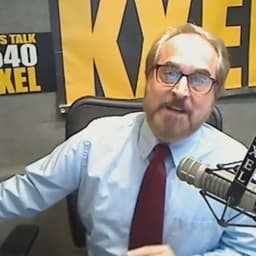
KXEL Live & Local with Jeff Stein · Mon Aug 24, 2026
News talk 1540 KXEL where Iowa comes to talk 40 years ago.
Iowa was mired in the 1980s farm crisis that era and the shortcomings of the federal response to the farm crisis.
have long-lasting reverberations.
That's the argument Clemson Professor Rebecca Stoyle makes in her new book, Tied to Their Country, the Farm Crisis, Agrarian Activism, and the Rise of Rural Anti-Federalism.
We're joined by Dr. Stoyle.
Now thanks for being with us.
Thank you so much for having me.
The farm crisis obviously a very painful time for a lot of people in this part of the country.
Is there a particular story or incident which represents the period when you think about that era?
There are so many stories in my book and one of my real intentions when I wrote this was even though I'm telling not just a
even a Midwest picture but a national picture was to keep it focused on the individual points of human suffering because there were a lot of them and so keeping it a human scale story I think one of the things that still haunts me not a particular story and there's many stories like this throughout the book
is the internalization of the feeling of personal failure, that people went to bed at night and woke up in the morning with a feeling that they had done something wrong.
And that they, because their farm wasn't working for them or wasn't providing for their family in the way that it used to, that this meant something was wrong with them or they had ruined their family's legacy.
And I think for both the farm community and the non-farming community,
Being open about this that just because something isn't working out right for you doesn't mean you've ruined everything I'm continuously haunted by the very many stories of farmer suicides of Families just leaving overnight leaving their communities leaving their entire support network because they just can't face their neighbors for another day and so
While there's a lot of stories like that, I think what really hits me is the enormity of the scale of individual human suffering during the farm crisis.
So I've got stories in the book from here in Georgia.
I've got stories from Iowa.
One of the interesting things is that Oklahoma, the internalization of the crisis hits a lot later.
So in Iowa, you're seeing people taking very extreme measures in 83, 84 in Oklahoma.
In 86, 87, you begin to see these horrific stories of murder, suicides, or really kind of terrible things.
And this rolling crisis of human suffering that kind of cuts a swath across rural America doesn't really leave my mind, even as I'm done writing the book, even as the book is out.
And I think that's why the end of the book isn't a happy ending.
it reflects back on some of these really extreme stories of individual level suffering.
We're talking with Professor Rebecca Stoyle.
Her recent book is tied to their country, the Farm Crisis Agrarian Activism and the Rise of Rural Anti-Federalism.
And I think we were going to give a quick summary of the Farm Crisis.
Times were pretty good in the 1970s.
That led to a lot of leveraging.
And then when times weren't so good as we got into the 1980s, those loans came due and a lot of reverberations happened from then.
at, what was going on when it came to the response and identifying these problems in their early stages, or maybe more accurately not identifying them on a macro level?
Well, first of all, I'm going to note that my book
is very nonpartisan in spreading the blame across both the Carter and Reagan administration.
So traditionally, when we think about the farm crisis, we think about the 1980s because that's when it tended to grab a lot of headlines.
A lot of the initial farmer mobilization about the struggles of family farmers started in the Carter years.
So farmers were warning about this back in
77, 78, 79.
The situation just kept getting worse.
So why did the situation get worse?
It's a little bit like asking, so what caused World War I?
It can sometimes take one factor to create a great success, but it takes a lot of mess ups to create a great failure.
And that's a lot of what happens during the crisis years.
So yes.
farmers are heavily leveraged.
There's this idea in the 1970s that the world is about to face a Malthusian crisis that everywhere else other than America is going to run out of food.
And so if America can just produce and produce and produce and produce, it's going to give us a tremendous amount of leverage in the world.
And Secretary of Agriculture Earl Butts talks about agri-power as a response to petroleum power, something that we're very acutely aware of today.
Part of what happened was that due to advanced technologies in agriculture, the world didn't run out of food.
Not just America got better at producing, but a lot of other countries frequently with American help got better at producing.
So we ended up in a situation where there was tremendous overproduction.
And as I'm sure we all know, overproduction is going to drive down your farm gate prices significantly.
At the same time, there had been a lot of speculative investment in agricultural land.
So it became, and of course, USDA was saying to farmers, you know, get bigger, go home, right?
We want to see, they'd say fence road offense, all these different terms basically, encouraging farmers to expand their properties.
So farmers were buying at a time where land values were relatively high.
They were leveraging their assets significantly, right?
Taking mortgages out against the holdings that they already had.
And then as many people from the 80s remember,
That's when the interest rate crisis started to hit.
So we already have farm gate sale prices dropping significantly and your interest rates start skyrocketing, right?
A lot of people when I start talking, I think, oh yeah, I remember my mortgage rate hit 20% and things like that.
And now we talk about high interest rates and struggling around high interest rates, but they're 13 points lower than they were.
in kind of peak interest rate crisis in the 1980s.
So we end up with a tremendous shortage of cash.
We end up with farmers who have borrowed in the hopes that agriculture is going to be facing increasing demand in ways that it didn't end up facing.
And we end up then as a result with plummeting agricultural land values.
So that property that you leveraged in order to take out another loan is now worth less than it was.
when you took out the loan.
So in housing crisis terms, you end up with a lot of folks who are, I think they said upside down and underwater, right?
Where you're in spiraling debt and also the properties that you've leveraged against your loans actually aren't even worth the value of your loans anymore.
So this creates, and I want to emphasize this, this creates a crisis for farmers across many different.
modes of production across many regions in the United States all at once.
And I think that's something that makes the farm crisis unique and significant is that we tend to think of Iowa, we think of Nebraska, perhaps we think of Minnesota.
Here in Georgia, there was a significant farm crisis as well, right?
And when we see the collapse of small holdings of family farms in a lot of places, we see it across the country all at once because these are giant economic factors that impact farmers regardless of your weather patterns, regardless of what it is you're producing.
Rebecca Stoyle is a professor at Clemson University her recent book tied to their country the farm crisis agrarian activism and the rise of rural Anti-Federalism so you've talked about the individual desperation that Farmers are feeling at this time you talked about some of the failures that led to this moment What's the reaction when it comes to sizing up how farmers in the 1980s?
had to respond or felt that their only response was what?
So there's a couple of different responses.
I think that, first of all, I'd note that with the exception of myself, Dr. Reine Kerberg at Iowa State, there's not a lot of historians who are kind of looking back and saying, so what happened here?
What was the response?
How did this play out?
I think
At the time, when you think about kind of the range of emotional responses, people were literally going through what you might identify as different stages of grief, right?
There were people who were desperate, who were sad.
There were people who were in denial and thought, well, you know, it's going okay for me, which means the other guy must have done something really wrong for it not to be going okay for him.
And then there's anger.
And there is a lot of anger.
And the anger, I'd say it increases, but in fact, it kind of works like a sine wave.
So there's a really high level of anger at the tractor-cade protest in Washington, DC in 1979.
It's really notably different from previous tractor-cades.
So there had been tractor-cades in previous years.
And the 1979 tractor-cade, it's very, very angry.
And by that point, they're angry because...
Many farmers have come to Washington where they thought that their representatives and the president to himself marketed himself as a farmer was going to listen to their concerns and when year after year passed and the Farm Bill came through and it didn't meet a lot of the concerns particularly of smaller scale farmers that
concern that mobilization toward political activism turned into anger and frustration.
And I think when we talk about this kind of anger response to the farm crisis, the reason that agrarian mobilization is the first set of words in my subtitle is because to my mind, all of the responses stem from
the failure of agrarian mobilization to move the dial in ways that were meaningful for the average farmer.
So it's not that folks didn't try other things before they got mad and frustrated.
It's they did.
The level of grassroots mobilization was incredible.
We have a ton of farm organizations that start up during the late 70s, whether it's
AAM or wife, right?
They're all kind of emerging during this period as a grassroots mobilization to try to alleviate some of the concerns.
And then when they discover that for various reasons, they're not having the political efficacy that they had hoped for.
That's when you begin to see anger and frustration and distrust and all of these other kind of real negative emotional
reactions to farm policy that we see in the late 70s and early to mid 80s.
If we're talking about farmers who were active in the late 1970s or into the 1980s, the heart of the farm crisis, at this point, if those farmers were in the prime of life, I think we can say across the board that group is...
Now comprised of people we could call seniors, well past the prime of life.
There's at least one, if not a couple of generations who are on the farm today.
And I'm curious what you see as the impact of this anger, this distrust on these later generations who are now the ones who are in rural communities and leading farm
operations.
part of it is that there is a well-earned cynicism toward the desire or the capacity of the federal government to help you when you need it most.
And so I think that there is this feeling that historically farmers aren't listened to.
And that's something that we see arise in American history at specific points in American history.
I know that in high school American history, my students tend to learn about the populist movement, right?
And that
emerges from this deep sense that people are listening to at the time, the robber barons and not to the plurality of Americans who at the time are on the farm.
And then we see it arise again in the 1930s.
We see these big agricultural movements like farmers holiday cessation and such.
And then we see it again.
in the 70s.
And I think that the internalization here is that there's a little bit of cynicism as to the utility of that kind of grassroots politics, that even if we talk, not too many people are actually listening to us.
I think that that's added to by the increasing sense that farmers are a small numerical.
minority in the broader picture of American employment that wasn't the case in the populist movement right at the time they they were the employment engine driving a lot of America but as agriculture has moved away from entire states as
Farm operators are kind of pushed to the margins of political society I think that sense of alienation has only gotten worse not necessarily better And of course the fact that ours are you know single-digit percentages of the American workforce Neither helps farmers own perception of their political potential nor does it help
the degree to which they're listened to outside of those districts where farming is truly a big deal.
And I'm cognizant that I'm talking to folks in Iowa where there are still congressional districts where farming is the big story.
But it used to be the big story in almost every state.
Every state had congressional districts.
that were entirely agriculture dependent.
And that has ceased to exist.
So the number of, say, members of Congress whose districts are really dependent on agriculture for their daily lives has declined as a result of voices that farmers are able to present in Congress.
have become more and more and more limited.
So I do think that for the current generation, if there's a perception that it's sometimes hard to get your message heard or message across, I think that in this case the perception is not out of sync with reality.
Rebecca Stoyle is the author of a recent book tied to their country, the Farm Crisis Agrarian Activism and the Rise of Rural Anti-Federalism.
She's a professor at Clemson University, Dr. Stoyle.
Thank you for being with us.
Thank you so much.
This is the station where Iowa comes to talk, News Talk 1540 KXEL.
Well, Buckeye corrugated, we used to be the Hawkeye corrugated division here.
So I think it was 2011, if I remember correctly.
Somewhere right around there, BCI bought Hawkeye corrugated.
Since then, BCI has been growing crazy.
They saw a lot of growth, a lot of opportunity here and invested in this plant.
2018, they built a new building.
moved it from the old building that we used to have.
It was not really, you know, a top of the line manufacturing facility, but this one, however, is brand new, top of the line, super clean, super bright.
And BCI is constantly investing in this for our Cedar Valley.
They see tons of potential, tons of potential.
What do you actually produce at the Cedar Falls operation?
So we do point of purchase displays, corrugated packaging, anything that you can make out of a corrugated substrate we can make.
We do high graphics, digital printing.
We've got a wide network of capabilities that we use.
We have 12 plants total and we use all of them.
They all kind of have different capabilities.
We're
all
constantly working together, but high graphic, high displays, anything from just a standard shipping box to, you know, like a end of store displays and Lowe's or Walmart or Home Depot or any of them.
How many people are employed in Iowa?
Just over 70.
And is that an uptick from the past based upon the new facility and the growth that Buckeye under that name has experienced?
We've actually seen a small decrease in the amount of people here, but we're going over exactly what that looks like for us in our next coming year.
But we've had a lot of automation.
We've had a lot of things go really well for us, but it is a small decrease from what we've had in the past.
Well, given what
folks across the country are going through in the industry, being able to be relatively stable.
That's not a bad thing at all, especially with the infusion of capital for the physical plant and the broad plan that Buckeye must have for all of its operations.
Absolutely.
And we're looking at expanding, you know, to new shifts here in the future.
I'm hoping quarter one, we start another shift.
So that's a small.
set back for us to be down a few people.
We're working very hard hiring and we're growing like crazy right
now.
Manufacturing is very different now than in past generations.
Give us a sense of how it is different in this industry now than may have been the case 20, 30, 40 years ago.
I've been corrugating making this type of product for almost 20 years.
Personally, I've worked on the machines that
You know, make the paper, I've been in the mills all the way to the converting equipment.
And the amount of technology in the machines nowadays, 15, 20 years ago, it was wrenches in your pocket, tape measures on your hip, and you maybe sometimes put tape somewhere that you don't necessarily want it, right?
Nowadays, it is all computerized.
Most of these machines, some of the new machines that we're installing here, you don't even go inside of them anymore.
So there's
Huge safety positives right because I mean you're working directly with the knives on the old machines You got to climb in and out all the time these ones all computerized setups you preload it you just hit a button Do do do and then you're good to go I mean it is really fascinating for what I got trained and how to set up these machines to how in the world they operate now all computerized all electronics
So the efficiency allows you to produce more higher quality.
That does mean occasionally a little modification of workforce, but the efficiency allows you to build even bigger operations.
It's just all part of the cycle of a business these days.
Yeah, these old machines used to produce, for instance, you know, flexos, they'd be some around 80 to 120 boxes a minute.
They're installing them across the country and even into ours upwards of 400 boxes a minute.
And again, if you're going to ratchet up the number of items produced, you have to have additional safety components.
As you've mentioned, you don't go in the machines anymore.
And that dovetails with something that brought the Buckeye Cedar Valley operation to my attention.
And that is an OSHA designation.
A lot of times people hear the word OSHA.
and they get a little nervous.
You folks were looking for, oh, should have been involved.
Tell me about that.
You're not wrong, right?
Like you work in these manufacturing environments and everyone's like, oh, no, that's a dirty word, right?
We had a conversation with the team when they were here.
We had a nice celebration on Friday.
We invited the families out and we told them, right?
I want you guys here because this is exactly what we accomplished.
We're making the commitment not only to the individual, but to the families that this person will come home the same way that you sent them to work.
And with us, you know, we said, who knows that more?
Who's taking the time to gather all that information?
Who
Understands manufacturing at the point of safety being the goal and OSHA really stands out there.
We just did a recertification So it would have been just under three years ago BCI was certified for the first time for the sharp organization BCI Cedar Falls was in the first three Certified plants in the state of Iowa.
There's over 50,000 employers and they were within the first three There are now a total of six.
So we're one of six out of 50,000
in Iowa that have this certification.
We invite them right in the door.
As general manager, I have a personal relationship with our OSHA representative.
We know each other by name.
We have our phone numbers and we talk to each other.
And that's in a preventive way as opposed to, again, the old days, if they know your number, that's not a good thing.
That's not what you want.
But again, the proactivity is really important.
Get ahead of it.
You can't put body parts back together.
not to be like that but you want to be ahead of it.
It is that serious and we should take that seriously and we should step forward and put that energy into it.
OSHA of course is the Occupational Safety and Health Administration at the federal level and this SHARP designation.
SHARP stands for Safety and Health Achievement Recognition Program.
So what all did you have to do to be recertified originally and now recertified and be able to fly the SHARP flag literally?
It's very stringent.
Obviously OSHA has very standard procedures, very rigorous things that you have to go through and put into place in order for them to say, you're a safe facility, right?
You got to look at your confined spaces.
You got to look at your chemical information.
You got to look at all your job analysis.
You got to look at your lockout tag out.
You got to really have the right procedures in place.
The thing that stands sharp out is it's one thing to sit in a room and type up all these programs, right?
The other thing that Sharp says is that your recordable incident rate needs to be lower than the average in your industry for three consecutive years.
So you also not only have to have all the programs in place that are audited, they do conversations with your folks, they walk your floor, they look for evidence, but you also have to have the outcome of being less than your industry average for three consecutive years.
So it also is a very long period of time, an amount of work to get through before you can get that certification.
So it's education and more importantly, performance over a period of time.
It's not just that you did a Zoom webinar and got a certificate and everything is good.
This is commitment on everybody's part.
Correct.
What kind of reaction have you gotten from the employees when you first said, okay, we're going to start working with OSHA and we're going to do this and we're going to recertify?
Did that give them an initial sense, I would guess, of skepticism that then became the buy-in that's necessary or what?
You know, maybe I wasn't a part of the conversations when they did the original one, but
From my perspective and what we've had here, we already had a really nice safety culture.
Everybody was involved.
We've got a safety committee of approximately 15 people.
I wouldn't say skepticism was the right way.
They were excited.
At the end of the day, they know what this means and they know when they get to walk out there to a clean shop that has clear defined safety policies, that has easy to understand expectations.
And we've looked into their jobs with
they're buying too.
Like, hey, how does this job work for you?
What is the danger in your area, right?
Like we've taken all that into account.
I think it gives your team a heck of a lot of confidence in you as a leader and a manager that you're taking their side.
And I suppose I asked about initial skepticism because given the way the world is these days, we often look at something and say, oh, sure, this, you know, here's something else that comes down to pike, but by demonstrating.
that this is not just lip service.
You're serious about it.
That gives you the buy-in to where you feel really good about inviting the families in for a celebration.
The employees want their families to be there because, again, that helps you with a good work environment, a good product, safety, but yes, retention of employees as well, I trust.
Yeah, and not only just retention, because obviously we want to make sure that they go, but we hope that this is a good marketing tool for us to bring new people on.
you know at the end of the day this is something to really tout and to really talk about openly you know and obviously we would like to encourage any other business that would you know want to participate into this you know to give us a call to talk about what it's like and you know how it goes I'll be honest the OSHA reps that we have to deal with and the process where it is everybody wants the same thing to keep people safe from the people on the floor
through management, all the way through OSHA representation, we just want to keep people safe.
If we're working hard to do that, there's no button heads.
Well, let's close with something you alluded to, which is recruiting people.
So as you look toward the next five years, technology changes, the needs of the industry may change.
You're looking to ramp up a bit.
What do you see the Cedar Valley operation of Buckeye?
Where do you see it in five years?
Well, I'm going to be as optimistic as I should be here and with where we're going, I think we're going to double in size.
Maybe not completely impersonal, but in overall amount of product, we want to really take this on.
Our team is looking into the future for something that is just amazing.
I think we could easily employ 85 people.
maybe even slightly north of that and continue to grow.
We want to
provide high-paying, good jobs that keep people safe.
You walk into an area that's clean, that's bright, you feel heard, and we think that this is the great way to start it.
Welcome back to Inside Home.
Business is grateful you're listening to us from wherever on the planet you happen to be.
With me is Ro Crosby.
You would know that name because she is the founder, CEO and president of something called Tarot International.
And we're going to take a little different dive on Tarot International today.
You, as a listener to this broadcast, have heard
Her team speak about many different things and row as well all about achieve lead and outclass how businesses can get more out of their people and themselves by this personal training advice and and While we've had this relationship for a long time I thought it would be really interesting to dive into the history of tarot and find out more
from Roe Crosby.
Roe, welcome to the Business News Hour.
Grateful you're with
us.
It's always a pleasure to be with you, Michael.
Thanks for the invitation.
You're quite welcome.
33 years you've been in this business, co-founded with your husband, Ted.
Hence the name Tarot, right?
Well, partially correct.
The name Tarot is a combination of my name.
I'm the row and he, Ted was the TE part.
So Tarot, actually we didn't start the business together.
I just started it on my own.
He happened to be a wonderful advisor, but he had, he had a full career as well and was just a cheerleader.
Yeah.
Well, I think having a good cheerleader in the background is always important.
And, uh,
and Ted was that cheerleader.
So tell us a little bit about the history of Tarot.
How did you decide to start a training company center here in Iowa?
Well, that is an interesting path and complicated possibly a little by the time in history that it happened So in 1990 when I was transferred from my home in Canada to Iowa as the result of an intercompany transfer The company I worked for wanted to start a training department and back then
the HR department, Human Resources, was actually still called the Personnel Department.
So corporate training wasn't really a business function that had a seat at the table, but the company I worked for saw the value in education for its employees.
And I thought it would be an interesting challenge.
Quite frankly, there were very few people that had credentials in corporate training back then.
My main qualifications were that I used to teach models how to walk on a runway.
which is probably more relevant than it sounds when you consider the tarot ended up teaching presentation skills.
But I came out of the accounting function and back then the personnel department reported to the accounting and finance.
So me and another sales guy that they pulled out of another acquisition were challenged to start a training department and I absolutely fell in love with corporate training.
It was so different than traditional education
because you got to apply it immediately to the nature of the work people were doing and could see growth in real time and application in real time.
So three years later, when I married my husband and his son moved in with us and I decided I was going to leave my full-time employment, it seemed like that would be a really interesting business to start.
I always had the entrepreneurial bug.
So I started tarot back in 1993 with the idea that we could take a really deep dive in some topics.
One other thing I'll share with you is that as a corporate trainer, you're at a bit of a disadvantage because you have to serve the broad needs of a
group.
Yes.
When you do what I did with tarot, that gives you the gift of specialty.
And we could take very, very deep dives on very few topics.
so that led to what we're probably most famous for, which is research-based curriculum.
That's one of the outstanding things about tarot, is the research that you do.
And I know before we opened up the microphone for this conversation, you indicated that you're usually prepared with all kinds of notes.
And today you don't have any, but you
have this unique ability to explain exactly what tarot is and what you do.
When we call tarot, tarot international, what does that mean, Ro?
Well, that's changed over the years, Michael.
When I first named the company tarot, tarot international, that was kind of aspirational.
I was from Canada, so I felt like I was still being authentic in
in calling it international but I didn't know for sure if we were going to have the opportunity to work across national borders and I'm very pleased to be able to say within a few years we were traveling internationally and we've now delivered training on the ground in 14 countries and we've got graduates from more than 40.
Wow.
Do you keep up with some of your graduates?
We do.
A big source of our business growth is actually our graduates.
So when people really choose to embrace their learning and apply it, they become quite successful in their career, also for other reasons.
We're not taking credit for people's career advancement, but they do give credit to some of these sets of skills Tarot has helped them build.
So as they get promoted, move on to different companies or move into
More senior positions they often call us and say I've got a group for you.
I want them to have the same experience That's probably our biggest source of new business is graduates who have been promoted
of course One of the things I think that's interesting about tarot now from very humble beginnings 33 years ago over the years you've built a cadre of individuals who have been trained by tarot
to become trainers themselves.
Is that accurate?
Yes, we're very good at training trainers, and most of the time we're training our own to deliver our own curriculum.
But we have actually helped other organizations build the training capacity inside their companies.
And we embrace an independent contractor model.
About half of our trainers are actually 1099 people, which turns out
to have been a brilliant business decision.
Yes.
Because when, and you'll especially appreciate this, Michael, whenever there's a downturn in the economy, the two budgets that get cut most quickly are marketing and training.
And those are
the...
I have to...
Yeah.
We're
laughing together.
I get that.
And you know,
Just a real quick story from our advertising agency, back in the downturn, I don't know, 2008, 2008, whatever it was, that is what many corporations said, oh, we're going to cut our marketing budget.
And we said, no, no, no, no, no, no, no.
Now is the time to increase your marketing budget because you will take market share away from others who have stopped marketing.
Would you agree with that?
I would completely agree with that.
And I would extend a very similar argument to training that when you start, when the economy is hurting a little and your people aren't as busy, that's the time to invest in them.
Because pulling people off the job for training is actually one of the barriers to it.
But I also do understand the employers and the business owners' consideration.
Once they start making budget cuts,
The first place they're going to look is to external providers, like your ad agency or my training company.
By the time they start cutting internal staff, you know that they're hurting pretty deeply.
So I get where they're coming from, but from a strategic standpoint, if they're truly long-term thinkers, cutting marketing, advertising and training when there's a little downturn in the economy is a real missed opportunity to gain a commitment.
competitive
advantage is that's what that's all about over the years row Crosby is our guest ladies and gentlemen she is the founder president and CEO of tarot international we're talking a little bit about the history of that company and their research-based training talk to me a little bit about that research-based training I know that you're big on
testing individuals to see where they land in the Myers-Briggs world.
But what else goes into the research that you do, say, for Speak Your Way to Success or outcome-driven sales?
Well, thanks for asking about this.
We're very proud of the research that we do, and it really falls in two areas.
One is related to the content, the actual topic that we're training, whether it's presentation skills or delegation or sales.
And quite frankly, most of this research is available in the public domain.
We happen to enjoy reading the white papers and the scientific studies and all of the books.
our clients don't so they really appreciate that we're taking a look at not just what is a best-selling book or a recently published article but what actually stands the test of time and interpersonal skills we can go back thousands of years on that research so that's fascinating we also do our own research so we do pre post post post testing of our graduates so we've got some original research
And then the second column of research is the process of learning.
And that's something that's a real differentiator for tarot is we take a look at not just what's useful for these people to know, but what's useful for them to apply and how can we facilitate a learning experience that's engaging, that is applicable, and that
safely takes people out of their comfort zone so that we have the best possible chance of behavior change and that's a body of research all unto itself.
I imagine that would be.
One of the things I think that's so critical and then we've helped on a number of your projects.
One is the whole idea of public speaking.
I'm always surprised.
Maybe because I am a public speaker and it doesn't affect me.
But individuals say that they fear a public speaking almost more than they fear death.
There are several research studies say that they fear it more than death.
Yes.
So for somebody like you and somebody like me, you go, what are you talking about?
But that's a very real fear.
And you train on
taking that fear out of people in a very public setting, right?
We do.
We've got methodology to help people really get a hold of that fear.
We don't tell them they're not going to feel fear.
They may not feel confident, but we want them to present so that they look and sound confident.
And the research on this is pretty fascinating if you consider the impact of the sympathetic nervous system and the fight-or-flight response.
I believe the reason people fear public speaking more than death is death, for most of us, feels sometime off in the future.
And the concept of it's a little bit scary.
But if somebody comes up to you and says, I need you to make a speech or I need you to speak up in this meeting,
that engages the fight-or-flight response in real time and that response is designed to keep our species alive.
And it takes all of the energy in our body away from non-essential things like thinking and digestion and a lot of functions that we need over the long term and puts it like it runs all you it increases your blood flow to the extremities so you can run away.
when people experience the fight-or-flight response, they lose creative and cognitive thought, and they want to flee or they want to fight.
And that's what we see frequently happen in the workplace.
Now, of course, the threat is not a physical one, but our physiology has not evolved as quickly as our civilization, and our fight-or-flight response actually responds as if you're facing an oncoming bus.
Fascinating.
Fascinating.
I had no idea behind the science of that, which you do, but it is a fascinating conversation to learn what happens when some people do fear the opportunity to speak in a small group or in front of a larger group over
the years.
And it also explains why simply telling someone
You're great.
You've got this.
You know what you want to say.
Just be confident.
Doesn't work.
So what our training does is teaches them to engage the parasympathetic nervous system, which is the one that calms them and relaxes them.
That's a better recipe for success than simply telling someone they have
it.
Yeah.
You know, one of the things I remember so well is when
who does a masterful job, and I believe he's retired now, Carlos, would always talk about it's not just what you say, but it's how you stand, how you position yourself when you are speaking that helps relax you.
Is that accurate?
The stance we assume when we're communicating is absolutely fascinating research.
It has implications to us.
And there's been a lot of research done over the last 20 years.
So even though we could access it back when we designed the program, the research continues to support it.
When somebody is standing with an open symmetrical stance, it actually is a clue to your brain that you're not facing a threat.
And so you can think more clearly.
What's interesting is that very same stance
when you're interacting with someone else communicates confidence and competence.
So by standing with an open stance, so no fig leaf, no crossed arms, no crossed legs, no standing on one leg.
When we have our head held high and our shoulders back, your mom knew what she was talking about when she told you this.
We not only signal to our audience that we are confident, we also signal to ourselves that we are.
Amazing stuff.
Over the 33 years that you've been doing this with Tarot International, have there been any surprises?
Have there been any things that just raised their head and you go, oh, hey, there is a training module there that we haven't discovered yet or
Any surprises whatsoever that you can remember that have, well, that have jump-started an idea, Vitero?
I don't know if there's so much surprises, because perhaps they were predictable, but the changes in technology.
So in 1993, I carried around a slide carousel.
and a VHS camcorder.
And not all of your listeners know what a slide carousel is.
We used to send slides off to a photo lab to be shot and put in 35 millimeter slides.
And then we moved, we also had overhead projectors.
Now we've got PowerPoint, there's all kinds of presentation technologies.
And I would love to create a museum of how the technology has changed over time.
And yet what's so interesting and maybe surprising is what we look for in our leaders hasn't changed.
What we trust in communication hasn't changed.
So these skills are somewhat enduring.
And now that we're facing a world with artificial intelligence, both generative and agentic,
It's really interesting to think about what is the implication for the human skills.
And I thought tarot was a great idea in 1993.
As I'm contemplating my own retirement, I think it's a better idea in 2026.
And I am so excited for the next generation of leaders at tarot that are going to get to take this idea further.
Yeah.
One of the things, and you touched on technology and all of that with regard to slides and
Printers.
Oh, yeah, I'm with you.
We have overhead projectors that you'd write on and But I'm much older than you are so but I
well not not much but we both briefly remember the Elmo
Boy what you mentioned technology One of the things that I Have witnessed and I know you have as well is
Is technology, I mean while all holding a very powerful piece of technology in our hand, whatever the phone is that you happen to have.
Sometimes I worry though that that communicative ability really pushes us further apart from reality with people that we could build a closer relationship with.
In other words,
You go out to dinner sometime.
I see couples bent over the screen of their telephone rather than having a conversation Troubling
Very troubling you and I share the same view on that and I suspect many of your listeners actually share this view as well One of the things that is important in the process of learning so it's part of our methodology is to create awareness
And once we are aware of things, we can make different choices.
And when people start to understand that notifications are meant to interrupt us, that infinite scroll removes natural stopping points and that the algorithms amplify emotionally charged content, once we realize that, we stop acting on autopilot and we can consciously make different choices.
And I think that's the challenge.
for every one of us.
This device we hold in our hand is just a miracle and it makes information so accessible and artificial intelligence is really, really exciting in having yet another thought partner.
But if we don't realize that these things are also products that have been psychologically designed to impact us with addictions, we can really go down a very troubling path.
So my wish for humanity is that we all put these things in perspective, use them to improve our productivity and enhance our knowledge and our interests.
But good grief, lift up your head, make eye contact with the person across the table from you.
But try walking through an airport with your device in your pocket instead of your hand.
Yeah.
Yeah.
And when you go to the grocery store, just slide over to one side of the aisle.
while you're accessing your grocery list on your phone.
With me is the founder of Tarot International.
Her name is Ro Crosby.
Ro, almost the final question.
What have you learned?
In 33 years, certainly, you have learned a lot about human interaction, about the importance of investing in people.
their talents the very slogan of tarot is achieve lead an outclass I think that's one of the really surprising things about your company is that everyone and I mean everyone from Jan to Allison everybody that's there is first-class they comport themselves with a such a solid
amount of professionalism.
And it's not stuffy.
What's with that?
Well, thank you.
I believe that's probably baked into our culture, probably partly because of my leadership and mostly because I've been fortunate enough to attract people to the organization that have really embraced this mission and live what we teach.
And if I were to summarize a couple of things that I've learned over the years, I don't like the past tense of the word educated.
How many of us describe ourselves as educated because we got the university degree or something?
We're all a work in process, including those of us at Tarot that teach these skills.
I am astonished at how much I'm still learning about myself and others.
even 33 years into this.
I have not achieved mastery.
I just happened to be a few pages ahead in the book and have chosen a career
really helps people learn this stuff and all of us on the Tarot team learn together with them.
And the second thing that I believe with is our superpower is actually taking people out of their comfort zone.
at a time when everybody wants ease and wants comfort, people come to tarot to be uncomfortable because they fundamentally know that's where meaningful change happens and our job is to create a safe environment for it and I have to compliment you and thank you Michael because I'm not usually uncomfortable in interviews but talking about myself and coming as as you mentioned to your listeners, slightly unprepared for this conversation.
You have successfully thrown me out of my comfort
zone.
Well, you know, we have enjoyed a very close relationship over the years and I you know, I have Truth be told I have interviewed many many individuals.
I mean over 4500.
I think it is
in the years that I've been dying now, right?
It's somebody who walks up to me on the street and say, hey, thanks for doing that interview with me.
And I've been going, okay, help me.
Because sometimes I just don't remember.
But one of the things I think is so vitally important.
And the final thing is how important it is for individual corporations.
Leaders of corporations to take the opportunity to invest in their people and clearly Tarot is a leader in that and again I've had the opportunity to to interview trainers of all sorts and I think the research-based work that you do is Simply outstanding.
So thank you for 33 years since 1993 for crying out loud and
I just treasure these moments.
So thank you, Ro for spending time with us.
Well, thank you for the partnership and thank you for the invitation to talk today.
That once again is the voice of Ro Crosby, the founder, president and CEO of Tarot International.
You can find out more about Tarot and all the wonderful things that they do for individuals as well as corporations by going to their website.
That's tarot.com.
T-E-R-O.com.
My name's Michael Libby.
Have yourself a great day.
Be safe.
Be well.
Be careful.
Most of all, be good to your fellow man.
Good day.