Transcript
America's Money Answers Man Jordan Goodman
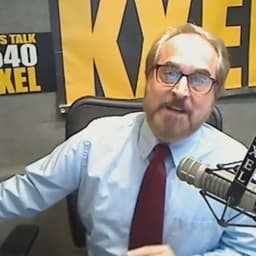
KXEL Live & Local with Jeff Stein · Fri Aug 21, 2026
It is a privilege to be joined now live on the news line by Joby Walters.
Mr. Walters is the author of a forthcoming book entitled, Cut Free, A Hell's Angels Ride to Redemption.
Joby Walters, good morning, and thank you for taking the time, sir.
Good morning,
Jeff.
Good morning.
Give us a sense without giving away everything in the book, but talk about your past life.
What led you down the path you took for so many years?
Well, if we'd mentioned it all, Jeff, it'd be a novel rather than a, you know, the chapters we have in a book of my life.
A
real country, you know, country boy from Ohio, you know, started out and going to school, working at Penn's old station, motorcycles coming in and out, you know, back in the chocolate days, 1972, 70, you know, I was around that, boxing with the mechanics, just having a good old young boy time.
and then off the service, which I served five years.
Well, when I come back, um, it's just horizons, man, just chasing horizons.
I didn't want to stay there.
There was nothing for me there.
And so I went searching and I got on another bike and, and here I go, you know, on a, on a triumph cross country, hardtail.
And, um, that was, you know, when 78, 79, when I got back and then I ran into a club down in West Virginia.
I was on my way around and
It was called the Avengers, and I had a bad battery, as a matter of fact, and they were having a national meeting in Huntington, West Virginia, voting in a new state president.
And I thought, well, where else to get a battery?
Let me go introduce myself.
Sure.
And I had no fear of anything, really.
I mean, yeah, you know, I fear God at the time, but I just get around and, you know, I have a good identity wherever I go.
So I got a battery.
I got
a cold beer and I got invited to stay around.
I got work and we was going to a national, they said, well, you know, you want to go up there with us as a guest.
And I said, no, I'll go as one of you.
And that started the, you know, pretty much one percenter club, Avengers, Michigan, Ohio, West Virginia.
And it didn't last very long.
You know, I got run over just about run off the road, not knowing who it was, had an idea, you know, maybe the pagans.
and broke my ankle.
And so I took a reprieve and went back and healed up a little bit and kind of just put my, put my patch on ice because, you know, I was looking for brotherhood.
I was looking for family and I still searched and searched.
So off I went again and through all that, you know, off into Arizona, I always wanted to go there.
And I went back to it and I hung up that biker lifestyle.
I rolled into Arizona on old hardtail sports.
and setting up the park, sipping whiskey with some bums.
And a cowboy got out of a pickup truck and walked over and said, I always call him cowboy, cowboy hat.
He wore it.
And hey, I got a trailer of hate unload.
You want some work?
I said, absolutely.
So off I went to South Mountain Stable, Ponderosa Stable down there in South Mountain Phoenix and worked hard, got the job done.
And I was asked, hey, you're a pretty hard worker.
You have no horses.
I said, in my younger days, but I can adapt.
I hung up at Harley for a cowboy hat, vest and cowboy boots, and I learned to trade.
For a number of years, I'm a professional guide, outfitter, mountain lion hunter with hounds, bear, elk.
I've packed mules all over the country at the western states.
I've been a wrangler around some real, real cool places with other stables.
There's a mountain Jeep tour, geology, history, plant life, wildlife, Arizona, and how would a guy, like you want to know, you know, just have that and then boom off into the Hell's Angels.
Well, here it is in a nutshell, you know.
I go to Canada.
I'm around and I don't drink.
1992, June 3rd, 1.30 in the afternoon, Durango, Colorado.
I hung it all
up.
Smoking, drinking, partying.
I was done.
I was a good pool player.
So I continued some of that.
Well,
I got back from Ontario, Canada, and bear hunting up there, guiding bear hunters on them big lakes up there.
And some friends of mine came up to me and said, hey, uh, Don, a friend of yours, meet her shot pulled together, hung out together.
And I said, she's dating a Hell's Angel.
And that's when the dirty does.
And a year before that, the dirty doesn't out of Phoenix when Hell's Angel.
And that was the only way the Hell's Angels go get into Phoenix is make them Hell's Angels because they wouldn't go get by the dirty does.
And they were pretty
Pretty infamous pretty well, you know all of them are bad.
Don't get me wrong.
Hell's Angels are bad, but them boys are bad right with them.
Mm-hmm.
And I said, well look, you know, she's a grown woman.
So I went to see him and See her.
Mm-hmm.
And when I went into the bar up arrow fell road She squealed come out from behind the bar gave me a hug and Hoover Hoover servant was sitting there.
Hell's Angels.
I said introduce me to your friend.
Mm-hmm
And she did, and he said, he didn't know the language.
He said, you're that tour hunting guide she talks about.
And I said, yes, sir.
He said, well, she told me you used to ride with a club out of West Virginia.
I said, yeah, I said, I've rode with the Avengers for a bit.
He said, well, I'm from Michigan.
And Michigan is full of Avengers.
Every county up there has Avengers in it.
And I thought, well, okay, I said, we're going to do some name dropping or what are we going to do?
And at that time, I was thinking about building another bike.
I mean, it had been a long time and I had it, you know, single, everything.
I thought I want to build another one.
Well, that's how I got with the Hells Angels.
Hoover will build the bike.
He had a rolling chassis.
I talked to him about it, created some money, said, I got a pickup.
I ain't got nothing to do.
While you're building yours, you know, we can get together and I'll get this rolling chassis, get a motor, and everybody will be happy.
And then we went to Oakland.
Johnny Angel and Sonny Barger were moving to Arizona.
And I said, well, I got a truck with scooper and get them parts.
And Johnny Angel had a garage full.
And we took a trailer.
And I said, am I going to meet Sonny?
He said, I'm more likely.
I thought, well, cool.
I'm not a hang around.
I'm a cowboy.
I'm going to build another motorcycle.
And it just so happens, you know, that I knew that language.
I knew men like that.
And I could, you know, I could talk to a drunk or a lawyer and not, not try to hide anything.
You know what I mean, Jeff?
Sure.
Yeah.
Yeah.
And so we got up there and I did meet Sunny Barger and Noel and they had horses.
They were moving there.
And I asked her, what kind of horses you got?
Noel, let's go.
Peppy Peppy Badger.
I said, oh, I've ridden some of Peppy Sand Badgers before and I'm kind of horses quarter horses.
And she just like, well, who's this guy?
And Sonny was listening with a smile on his lips.
I glanced over at him and he looked at who he said, where'd you find this guy?
And Hoover said to him, there's more about him than you think.
So back to Arizona.
Sonny move in there.
I'm a horseshoer.
I trimmed horse trimmed those horses for him Saddled up with him a few times hung out got my motor built paid Hoover and Sonny asked me there in front of Hoover He said what are you gonna do when you get that bike pulling?
And I look right at him both.
I said I just think I'll join your club and I asked Sonny Barger I said it'd be an honor when I got it running going to church Thursday night.
I said
We'll buy something to ride up with him.
And I said, it'd be an honor if you just bring me up and sponsor me to Hell's Angels.
And Sonny with us, he has that one second to think about what he's going to say with a storm reaching for that trick.
And he said, if you've got balls and I don't have a problem with that.
And that was my beginning in the Hell's Angels.
So again, all of this, and this is fascinating, but.
You're searching right you're looking for family you're looking for community and and and so so And and this is this is impertinent of me But could have gone a very different direction if you had run into somebody else who showed you friendship and kindness Could have gone a very different way early on because you were just searching for those folks who'd show you the caring that you needed at that point
Very well put.
Yeah, I couldn't I couldn't have said it better.
Yes, you know Here's a here's an identity that I'm taking on and I know how to live it and I was looking for that I always chase the horizon and chase the prolonged long time Okay, and even with the Hell's Angels, you know, it's like, you know, you put that patch on and You better be the man wearing it.
You better be the man making it.
Don't let that pack make you Because that that'll get you hurt that'll get you killed that'll get you stowed out people read that
And when I put that patch on, I made that patch.
And it was a religion.
And not drinking or doing drugs or anything, I've seen it all.
But I could see trouble coming before it even got there, too.
Even on Sunday's book signing tour, I was right beside him, rode beside him, slept there, same room, ate with him, and watched over him.
And I was arrested three times on that tour because of guns and fighting.
Had to wait on me.
And then, you know, you get everybody together and that, that helps handle patch in a big, big area.
And you see from every, every turn of the country on the world run or, or USA run and the comrade and the brotherhood that you're looking at and you, you believe it, you feel it.
But it also puts a target on your back.
I found out I fought for that club.
I bled for that club.
I went to prison for that club, but it was all because of me.
It was the identity I traced.
I felt I had to do it.
I will do it and to me at the end of it When I was stranded by myself all alone after a conflict with the Vagos that I went to prison for Nobody was gonna take a bullet for me man.
Mm-hmm and and and where was the brotherhood?
You know,
okay now this is
good.
There's some good men there, man
But this is what's fascinating.
I want to first remind the audience who might have joined after we started talking.
My guest is Joby Walters.
Mr. Walters is the author of the forthcoming book Cut Free, A Hell's Angels Ride to Redemption.
He joins us live on News Talk 1540KXEL.
So you fought, you bled, you went to prison for the brotherhood.
At what point
Was it during the prison sentence?
Was that the point where you said, well, wait a minute, they're not here for me.
What was I doing?
No, I took God to prison with me.
I didn't
find him in there.
Okay.
You know, when that time came and I looked and I said, I'm done.
I am done.
And so I was facing a lot of charges on the Harris casino fight and
Trying to save a brother Hills Angel from dying in their mouth to mouth and CPR and a gun gun by my knee and a knife in my hand and You know, I've seen all that and everything and then going and doing something that I'm you know, I'm gonna go to prison for I I fled I fled to Mexico and a brother of mine Tom Dishon He's in my book.
You're gonna have to read it and read about it.
You know, it's a
He sent me a box.
I had a way to be, you know, to find me down there.
ATF looking for me, Jay Dobbins, that outfit, U.S.
Marshals, they were hunting me, hunting me hard.
And if anybody could go to Mexico and hit the Sierra Madres and find ranchers to hunt on, and when I mean hunt, taking my hounds and my horses and go down there and make a living, saying goodbye to all of it.
And then just overnight peeling that pack off, stuffing a box and saying you had enough.
Losing that identity right there.
You know, it's it's wrong It's the wrong place you're in if that's not it and God was tugging at me then and that box Tom sent to me was nothing but a big Bible material from people in the church cassette tapes of Psalms and and preachings and Me down there all alone say goodbye to your family It just it was it was hard man.
It was hard
you know and then when I when I did come back and did go to prison you know I had quit I had quit I had enough I quit and I'm in I'm in the courtroom there knowing that I might get eight years you know after a bunch of charges where I dropped from the Harris casino and the eight years I was probably going to get was to fight with the Vagos everybody procrastinating all the Vagos and bull head this and that Joby's in Kingman
And I told him down came Creek.
I said, Hey, I'm going to bullhead and look for these guys.
And I'm going, you know, just like I say it in my, in my book, you know, I'm going for a retribution man.
We're going to, we're going to handle this.
Nobody showed to a couple of men.
And we thought we won or did we win?
You know, did I win?
No, I didn't.
And I turned around in that courtroom.
Everybody thought Joby's going to talk.
He's out of the club.
Why wouldn't he?
I turned around in that courtroom and looked at the back of the room there with men I knew that were wearing clothes like me and you today.
And I said, I'm going to prison by myself.
Leave me alone.
I'm done.
I'm done.
And I've hid from nothing.
And I followed God, you know, when I came back.
You know, across after reading everything, Thomas sat down to me and just praying.
And I know what the Holy Ghost is like, man.
You know, I read a book across in the switch place when I was young and had a person pray over me and it scared me to death.
But I was ready for it the next time, like 40 years down the road, like he like like he traveled Moses around.
He brought me out of it.
Richard got me and I was ready.
That's what's fascinating.
That's what's fascinating because again,
The message was delivered to you long before.
Yes,
but as is always the case You have to be ready to receive it and you were ready to receive it in your own time Which made it much more genuine and much more deeply felt I trust as opposed to just sort of going along and And and wearing that patch if you will but not really believing in it.
That's it.
That's it
You know that That patch on your back Lord don't like that It's something that you idolize and everything and when I got done with that and yes, I was ready I was more than ready And he he put me out on a ranch when I got done and out, you know out of out of prison I've had four wives during these periods and they're good good women Excellent, you know, but it was just me man me
You know, I let some people down.
I hurt my family.
You know, everybody worried about me, and I didn't really know it.
I mean, when you're looking for family and you're getting that brotherhood, I should have been looking at the family already had.
And I finally, finally got that after, you know, being gone and then going to prison, the support I had.
And I just looked back on it today as, you know,
Just about 10 years of learning.
Thank you, Lord.
And this book, it's not a book about just another young, hey, you know, redemption road here.
It's much, much further than that.
It's an argument that me and the Lord had for 40 years and still discuss things today.
Back when I read The Cross and the Switchblade at 15 years old, why would a rural boy from Ohio have a book like that in his hand about gangs?
Look where it led me mm-hmm that whole trip.
Yeah, I Added it up.
I said well that's where it started That's where that I'm scared leave me alone and he did for a while But he was always there and I found it and I felt it right in this book brought back so much Like I say it could be a novel But it was I let you say it was a novel experience, you know
Catamount LLC is the publisher of the book which comes out on September 22nd cut free a Hell's Angels ride to redemption
I have to ask how did it get to the point where you wrote a book?
I mean it the story is the story is fan is fantastic and because of how it is ending for you right now I mean that the redemption that that's that's what it's all about all
right but
but again that can be for many people a very private thing what led you to say
I want to share this and have a website and a book.
What is it about this that you hope to get from it?
What do you hope people get when they read the book?
Well, it started, I always thought, you know, I got a story.
You know, Jay Dobbins, an ATF agent, you know, portrayed it as, you know, he was my prospect.
You know, we, I had a lot of conspiracy things going on, you know, with him, as far as, you know, going to prison for those charges of dropping everything, but right back to it, I felt.
Back in the mountains and I thought you know, I need to write a book I wish I could and I always thought to myself I have a great story people told me my cowboy buddies told me man You got a heck of a story.
You know, you ought to write a book.
You ought to
write a book that cost a lot Well, I I was at the ranch friend of showed up with two people They drew an elk tag for my unit unit 23 South and it's a premier unit for bull elk and they had a man with them Robert Johnson
and he drew the tag and my buddy asked, he said, what can, can you help us?
I said, well, yeah, absolutely.
I said, what we'll do is you come out to the, you know, where I live, middle of the ranch.
And that's a long, hard mile of dirt, bad road
where I
live.
And I asked God one day, why here?
He said, well, you'll get to know me better.
I sure did.
He came out there and Robert and we met and he walked into my cowboy camp, my house.
And I said, well, we got a kitchen and we can do this.
And you got people coming to help and I'll help.
And he looked it over and he said, you got a tape measure and pencil and paper.
This place has got potential.
And you know, I'm in construction a lot and I got a lot of stuff.
And the Lord told me, turn him loose.
And I did.
And the five days that he come with trailer loads of stuff to work on my house with me,
I made the comment, well, I didn't know you stored, you know, you stored stuff at Home Depot, you know, things like that.
We shared.
We went deep.
It was a Christian that saw his eye and we sat on the floor and leaned up against the block wall and drank coffee and talked about God and what things should do.
And he said, you ought to write a book.
Found out that that man had cancer after the hunt and I didn't know it.
Nobody had said anything to me and it spread real bad on him.
It was over, oxygen.
And John Coates came to me and he said, hey, you know, if you want to see him, you better get down here.
And I went down and it was for the love of that man.
He upped my game, man.
He really did.
He upped my game with God and everything about life.
And I wish I'd have known him, you know, more and longer, but knowing his family and his friends in Christ.
I know him a lot better today with what's been going on.
Well, and again, people come in, people come into your lives when they come into your lives for a reason.
Yes.
And when he, and I asked him, you know, went down to visit him and looked at him and, you know, Amanda, you just know like that and you have a bond with and you look at him and say, man, and I asked him this, he's a brave man.
I asked him this, what's it feel like?
What's it feel like?
And he knew what I meant.
And to the people out there, what it meant was,
What's it feel like that tomorrow morning you may grow your last breath and and and be standing in front of God?
I Wanted to know what did it feel like and he said I'll never forget it.
He said I am so ready Amen, you know and that's when John came about and Dana's wife came forward and said we're gonna write a book and We're gonna we're gonna get this done.
We're gonna get your story and and Robert
Laying there ready to ready to cash it in and told himself Told John you find a ghost writer for Job and Dana you help and get money.
Let's get it done.
You help Joe be write a book and After two years and four months, I'll say we have
cut three.
And the cut three part of it is cutting three from the title.
It could have been the 81 lives of Joby Walters or something like that, you know, some with a hammer and, and, and liking bolts and all that.
But God threw it off Ephesians two, one through 10.
He led us the whole way with this team I have today.
We made some wrong choices.
We made some wrong choices, wrong mood with different writers.
And, uh, but we was able to battle through it.
The only way we was able to do it is a team I have and knowing that God is in this and he's there.
He's all over it.
He, you know, people say, well, you need to write down a, uh, a little thing.
You know, you could just blur it out for 20 minutes testimony.
I tried that.
I can't write nothing down.
And I said, okay, Lord, you know, cause he says in the book, he will give you the words and he always does.
He always does.
So that's how those books come about, you know?
On love and sharing and God.
And what I wanted to do, cut free.
That's the name we came up with.
That's what God gives us.
And it's about a knife that I used to have.
And my identity at the same time as a knife, sharp, brutal, stabbing my life.
Some painful, some not.
I just want to be able to, if I could, my goal, one person, yes, let's change his life, 1000, 1% or 1000 men in prison.
If I can bring them to God, then that's, that's my goal.
That's my goal right there.
What you're wearing on your back is not worth something that other, other member across the hall has made trouble for you over a woman or a bad drug deal.
Every one percenter club out there today, man, the pagans, the outlaws, the bandidos, the vagos, the Mongols, the Hells Angels.
I could keep going, sons of Silas.
I know them all.
I know all of them individually in some areas of it.
And they're all fighting on the same front to each other for what?
For what?
That's what I have to say about that.
There's something better.
I don't have what you need out there, but I know who does.
And his name's Jesus.
You know?
It is a fascinating story from a fascinating storyteller.
Uh, Joby Walters, thank you for sharing all of this and I want to make sure we get everything in here.
JobyWalters.com, J-O-B-Y, JobyWalters.com is the website.
There's a trailer for the book.
You can, uh...
get connected to to help spread this word.
September 22nd is the release of the book from Catamount Publishing.
Cut free a Hell's Angels ride to redemption.
Blessings to you, sir, for for being able to put this into words that everyone can understand and I wish you great success with it.
Thank you.
Thank you.
And I say, you know, just a little prayer towards you.
You know, we have to thank God for the modern day communication, you know, from one side of the
plan it to the other to be able to bring this word about, you know, and I, I appreciate you having me.
I really do.
And, uh, by my book and it's, it's a great story, but it's a true story.
God bless her.
Thank you so much.
We'll let you get back to it.
God bless you.
Thank you very much.
Yes, sir.
Joby Walters joined us live on the news line.
And again, the book is entitled cut free a hell's angels ride to redemption.
There are ways that you can get involved with newsletter and a pledge and even a chance to receive a limited edition knife, hence cut free.
And he joined us live on the news line on News Talk 1540KXEL where Iowa comes to talk.
Always a privilege to be joined on the news line by Jordan Goodman.
Mr. Goodman is the America's Money Answers man and he joins us on alternate Fridays.
Now you can contact him in between Jordan at moneyanswers.com.
Or if you'd like to submit something now to be involved in this conversation, we've got the text line, 319-235-1540, or send me an email directly, jeffatkxl.com.
I've got a note or two here from listeners.
We'll weave into the conversation.
But first, welcome to Jordan Goodman.
Thanks for being here.
Good to be with you, Jeff.
OK, so these interest rates just keep going up and up with the treasuries.
What does that mean?
Give us the details first, and then tell me please what it means.
Well, it's quite dramatic.
The 30-year Treasury has risen to about a 5.3% rate.
The 10-year Treasury has risen to about a 4.7% rate.
Those are the highest since about 2006, 2007, about 20 years.
They're going up for several reasons.
First of all, the deficit is going up a lot.
The war is certainly adding to the cost there.
Higher borrowing pressure is putting rate...
pressure on interest rates to go up in that way.
A lot of foreign nations who in the past were big buyers of treasuries like Japan, China, Canada, a lot of European countries say no, they're not buying anymore because they don't like what we've been doing with tariffs.
So a lot of our big buyers of treasuries have kind of gone away, in some cases like China actually net sellers of treasuries.
So this week, Treasury Secretary Besant
So he's going to help the situation by buying back $4 billion worth of long-term bonds and paying for it with short-term debt, which is a pretty risky strategy.
Short-term debt is much more volatile.
Long-term debt, you haven't locked in for 10 or 30 years, but he's trying to help the bond market a little bit there.
And then the big number of this week, I know you've been waiting for this for a long time, Jeff.
We finally hit $40 trillion in total outstanding debt, $40 trillion for the first time ever.
So all this puts upward pressure on interest rates.
And it seems to me that the projection earlier this year was that we would hit 40 trillion around election day.
This is 75 days prior to that.
I guess I'm to assume that the debt is accumulating at a faster rate than even the projections of earlier this year.
That's correct.
That's correct.
I mean the war has had a big role to play in that.
That's one thing because we're spending billions on
munitions and everything over the war.
And the second thing is remember the tariffs were declared illegal by the Supreme Court in February, so the government collected about $166 billion.
It's now having to refund.
So that adds to the deficit as well, on top of all the other factors I mentioned before.
So, we've got a new Fed chair.
Do we have any sense of how he's reacting to some of this news?
Because, again, a lot of these economic numbers of late, you've noted, are not exactly stellar.
You're speaking today, within an hour or so, at Jackson Hole, Wyoming.
This is the annual gathering of all the big central bankers around the world.
And Kevin Warsh is going to give a speech.
probably was going to say that our primary uh... concern is inflation and that's kind of hawkish and at the last uh... board meeting they had it was a nine to three vote nine to keep it where they are three to raise interest rates on one hand inflation seems to be quite sticky way above the target of two percent they have sometimes four percent sometimes five percent depending on which number you you look at
And if things get worse for the straight up for moves and the oil keeps getting, not getting through there, that's going to raise the oil prices more, which has already been happening.
So that's on the inflation side.
But as you say, on the economic side, we're definitely showing signs of weakness.
This week, we had retail sales.
We're quite weak.
Even Walmart set its slowest pace in sales in quite a few years.
We had the very bad unemployment report a week ago with a net loss of 23,000 jobs.
Wall Street had been looking for a gain of about 80,000.
And the consumer conference is at one of those lowest levels in a long time.
So just a lot of weak economic news.
So the feds kind of caught between a weakening economy and higher inflation.
This is a classic stagflation dilemma, I guess you might say.
My guess is that the White House is going to try to exert some public pressure.
on the Fed as had been done, unless there's still a bit of a honeymoon and Warsh has a little bit of a leash to be more independent because it sounds like the situation is quite the opposite of what the president would want.
He keeps talking about dropping interest rates.
I don't see how they can lower interest rates with inflation being where it is.
I mean, the best the president can hope for
is they keep rates the same in their mid-September meeting.
That's the best they can hope for.
The worst, from his point of view, is those three votes grow, and more people say we've got to raise rates to stop inflation.
Now, one of the core reasons when inflation is going up is what's going on in the Gulf of Iran and so on.
Basically, we had a two-month so-called ceasefire, a lot of fire during that ceasefire, that expired this week.
So there's no ceasefire, there's no peace talks, there's no negotiations.
Both sides are kind of still waiting who goes first.
But I think it's pretty clear we're going to have increased hostilities.
It could be quite violent in both directions.
We could hit all kinds of things, including private, I guess you'd call it, you know, civilian infrastructure like bridges and power plants and so on.
And the Iranians have lots of missiles left.
They're still already shooting at ships, and they could shoot at all the infrastructure in the Gulf nations, and Bahrain, and Kuwait, Saudi Arabia, and UAE, hitting power plants, desalination plants.
I mean, that's a big one, because they don't have any natural water.
So if they hit their desalination plants, they kind of quickly run out of water there.
And never mind Israel as well, and U.S.
military bases.
That seems to be the way things are going is is escalation is coming in the military side which puts upward pressure on oil prices Because not a lot of ships are getting through the straight of her moves right now just a trickle compared to what you asked before the war
I thought I heard a report today that some leader in Iran declared victory
in the war today.
They should
have a big parade down there, yes.
No target there.
We have this going back to the interest rates.
We have this from a KXEL listener and you've addressed a bit of it, but I'll ask his question directly.
Why is there such a spread between the Treasury bond yield at 5.249% and the effective federal funds rate at 3.63%?
He asked, could our massive debt have something to do with it?
Well, the Fed Reserve controls the Fed funds rate.
That's the target that they have, and they've had it at 3.5 to 3.75 all year.
They have not changed rates all year.
So that's something that they control.
That's kind of the overnight rate that banks lend to each other overnight.
The long-term rate is set by the market, not by the Fed.
It's influenced by the Fed, but not set by the Fed.
And interest rates, long-term interest rates, as we mentioned, have gone up so dramatically, up to about 5.3 on the 30 year.
For all the reasons we just said, fewer buyers, the deficit going up dramatically, more inflation.
All these things are long-term reasons why long-term interest rates keep rising, and that affects directly mortgage rates, which are tied to these things.
Business loan rates, it slows the economy and rates go up.
People just can't afford to buy homes, for example.
Jordan Goodman is America's Money Answers Man, and he joins us live on News Talk 1540, KXCL.
You have indicated that really the only growth sector in the economy is data centers.
However, professional sports teams on occasion, that seems to be a pretty good investment.
Well, yeah, so a guy named Mark Walter bought the Los Angeles Lakers a year ago at about $10 billion, and last week he sold them for $12.5 billion.
Now, he has all kinds of financial issues and he's being investigated for all kinds of things.
I guess you this would be called the fire sale of the Lakers.
And apparently he's also a big owner of the Dodgers and other big sports teams.
He may have to sell those as well to raise money to battle all these lawsuits and things.
But this is the highest price, $12.5 billion for any professional sports franchise ever.
Last year, the Seattle Seahawks who just won the Super Bowl were sold at about $9.9 billion.
So, yes.
This is what's holding up our economy data centers and selling a professional sports team
Well, and it's interesting one of the purchasers for 12 and a half billion Bob Iger who ran Disney for many years, which of course owns ESPN etc And they have the rights to the the NBA
That's right.
So Bob Iger but not as a Disney person.
He kind of has retired now, right?
He's the former CEO of Disney but not anymore
And Joshua Kushner, that's a name people seem to remember a little bit.
He's got together.
He has a big hedge fund.
Now this is Bob, not by Beiger's personal 12 and a half billion.
They led the deal, but this is raised from private equity in various other places.
But yes, a very prominent name now owning the Laker.
Two prominent names, Bob Beiger and Joshua Kushner.
Of course, Joshua Kushner's older brother is
Jared Kushner, who is President Trump's son-in-law, there.
We
got all that said.
And more than son-in-law, yeah.
He's a Middle East negotiator, real estate developer, par excellence, and married to his beautiful daughter.
Yes.
Well, I just... Madam
Trump always talks about...
I just went with the lineage, yes.
He's obviously far more than sending your son-in-law over to negotiate deals.
We have had a lot of concern about food safety.
We have been concerned about beef and something called the screw worm coming in from Mexico.
Obviously, all the Taco Bell situation, and I say that broadly, it's more than just that.
Well, now we have eggs.
I mean, there's some real problems with regard to safety of our food supply.
Well, it really is.
So the FDA this week recalled 19 million eggs that came from a farm in Texas.
over concern about Salmonella risk.
There have been a hundred cases of Salmonella reported so far with about 26 hospitalizations, and it seems to be growing.
The whole food safety staff that's monitoring these things at the FDA has been cut back dramatically as part of the Doge cuts, so that may have something to do with it.
But yes, let us, you know, there's been several things we've had these outbreaks.
It just seems there's fewer people watching what to do about it, and they're only catching it after it spreads.
And I suppose to some degree, quick action after you see an outbreak, yes, that's a good thing, but if in fact some of the preventive measures are no longer being addressed, that
could have a domino effect because again it's one thing to say produce well now you got eggs now you've got beef I mean that that is that's some frightening stuff for anyone who likes to eat and I think that's all of us
the preventive part is inspections and so I think they have fewer inspectors at the farms to see if there's a problem that that's what's been cut back and I think that's the result of that
Jordan Goodman, America's Money Answers Man, joining us live on News Talk 1540, KXEL.
I have, I recall, decades ago when we were just getting into the internet websites, this is the early 90s, and there were arguments being made about should a web provider be a common carrier, like a telephone.
In other words, as a lawyer, I represented an internet provider.
And they wanted to limit some of the things that people were posting.
But the problem is if you start limiting it, then you're at that point in the law, you were assuming responsibility for everything.
You couldn't have it both ways.
You couldn't say, well, we don't have anything to do with it while you then try to enforce content restrictions.
So here we are 30 years later and a whole bunch of attorneys general getting involved against the biggest of the big.
Well, what came out of all that was they're not common carriers, and social media platforms like Facebook and Google and so on do not control and are not responsible for what is said on them.
That kind of gave them a big exemption.
But now, the Attorney General and a lot of big states, California, Colorado, Kentucky, New Jersey, and other places, are saying that Facebook has violated child privacy laws and consumer protection laws
by an effect kind of addicting, particularly teenagers, to social media platforms causing all kinds of mental health issues, including suicide and antics.
So this week, there was the beginning of the suit and the hearings.
The attorneys general are seeking $200 billion in damages.
Now if they win, this would be similar to what happened back in the 90s with tobacco.
Remember we had
The big suits against the backhoe company saying they were putting cigarettes out knowing they were going to harm people and they did it anyway They're saying the same kind of thing Facebook knew it was going to cause all kinds of damage and they did it anyway So it's going to be a very very high profile case I think Facebook has a few lawyers on its side that will make their arguments as well
one or two and and to to
Bring home the point when I was talking about the common carriers It was long settled that if for example someone calls you on the telephone and threatens you You cannot sue the phone company for damages because that was just the conduit and the US mail is the same way and email is the same way but this is different because these are products that these entities developed and Hidden within them are all of these addictive things much like nicotine
it's the algorithm basically and they see what you're doing what you're interested in they feed you more of it and it becomes addictive and uh... in a lot of schools now saying you can't have your cell phone during school hours because it's just so disruptive to to learning uh... so it's a major issue here uh... on one side uh... facebook and google all the social media platform say we have to have freedom of speech and we can't be responsible what goes on there
on the other side saying, because of the algorithms, you are controlling what's going on, what people see, and you feed their addictions in various ways.
So it'll be a very interesting court case.
I think they need you in the court to actually make the decision for them in this case, Jeff.
I am happy to be a high-paid expert for whatever is necessary.
The emphasis is...
Which side would you take if you were an expert here?
The high-paid?
I'm going by high-paid.
There was...
This is so off point, but I was asked to be an expert witness in a case once where it was a broadcaster was suing his employer.
Each side listed me as an expert.
Well, that's good.
You got paid twice.
Well, I didn't get paid at all.
That was the bad part because nobody had checked.
They just said, well, you know, he wrote a book on this stuff.
And so the one side that did talk to me says, what are you doing being an expert on their side?
I don't know.
They just picked it out of the air and started listing names.
It's ridiculous.
Well, that's one way to not lose.
It's sort of like these folks who give to both political candidates.
Figure out
they weren't that's different.
That's perfectly legal.
I think you have to be an expert on one side of the other I don't think you can be an expert on both sides.
That's that's what you tried It's it it's legal to to contribute to try to buy policy Yeah, but but okay.
Well, let's go back to speaking of things that have gotten people riled up What's our data center update this time?
Alrighty, so in video this week pledging a hundred and five billion dollars
to finance a mammoth data center in Picton, Ohio, the southern part of Ohio.
It's going to be leased to open AI.
This data center in total is going to cost $500 billion for one data center.
So they're helping finance about a fifth of it, only $105 billion.
Now on top of that NVIDIA just got together with six of the largest Wall Street asset management firms to create a $500 billion fund
to finance data centers all over America.
So the amount of money pouring into data centers is just staggeringly huge.
I mean, one data center at 500 billion.
Can you imagine how big that's going to be?
So that's on one side.
On the other side, a lot of states are saying, we don't want this here.
New York state, I think even Pennsylvania, and say we want like a moratorium on it for at least a year, it's become a real political issue in several places.
Several people just lost primaries.
around the country because they were in favor of data centers, and the public rose up against it.
So this is a mammoth battle.
As we've said before, this is a major source of economic growth for the United States.
About half of our GDP growth is because of data centers, and construction, and the computers, and the electricity, and the water, and everything that goes in them.
It's a major economic stimulus right now.
The Republican running for us and it in Michigan I believe just came out supporting a moratorium on data centers and our news is full of it Just a different city every day coming up with with something so it's That's quite a and
they're not opposing impact in Ohio
Which will soon start glowing on its own All right, so so Canada here we here we go again, right?
Yes, so this week Trump
threatened a fifty-percent tariff on a lot of major canadian exports, the three big ones being aluminum, steel, and lumber.
Mark Carney does not back down, the head of Canada says, all right, we'll hit you right back.
So they kind of got to the brink, and then they cooled off for a moment.
They're having trade talks that could go either way, but this is a major trade relationship in the United States.
And if in fact that goes into effect, and we hit them with fifty percent tariffs and they hit us,
This hurts your farmers.
I mean, they get energy.
They get a lot of, I think, something like 60% of the fertilizer that American farmers use comes from Canada.
So it could be a major hit to the economy if this trade war really explodes.
And remember, this is after President Trump's tariffs were declared illegal by Supreme Court.
He just ignores it, just keeps, okay, you know.
He doesn't really have the authorities supposed to be Congress involved in these things.
He just keeps going ahead and doing it anyway.
Well, there are a few different laws that allow things for certain periods of time, but this one with Canada is also in the shadow of USMCA renegotiations.
That's
right.
So he's overriding an agreement that he agreed to and signed at his first term.
That's correct.
I'd say to be continued, but that seems redundant, doesn't it?
Jordan at moneyanswers.com is how you can reach Mr. Goodman.
He's always quite generous with his time and joins us on Alternate Fridays.
Jordan, thank you so much.
It's always informative.
Appreciate it, and we'll talk again in two weeks.
All right, very good.
Thank you, Jeff.
Take good care now.
Jordan Goodman joined us live on the news line on News Talk 1540KXEL, where Iowa comes to talk.
Newstalk 1540 KXEL, where Iowa comes to talk and good morning.
And this weekend at the Cedar Falls Historical Society, they'll be breaking out the maps.
Mapping Cedar Falls is a free program on Sunday at two o'clock.
It'll be held in the 315 Clay Street building and will be open to folks who want to learn a little bit more about how Cedar Falls came to look as it does today.
We're talking with Julie Huffman-Clinkiewicz Collection.
manager and curator for the Cedar Falls Historical Society.
Thanks for being back with us.
Thanks for having me, Tim.
So it's hard sometimes to picture what a community might have looked like if you're really familiar with it and know what it looks like now.
What do you hope that people will learn from this program?
Well, like every community, Cedar Falls started out very small and has obviously grown.
But I think that the interesting thing is how the city has grown.
And I think that they'll be very surprised at what the core plot was, the original plot of Cedar Falls, and how the bits and pieces that were added onto it have formed the city that we live in now.
We have a very diverse collection of maps that I could draw on to illustrate that.
And I'm using everything from plat maps to atlases and erd's eye views.
So it'll give a very good overview, I believe, of how the city has grown.
This is just a suspicion, but my guess would be a lot of people probably assume that the first house in Cedar Falls would have been at Main and First Street, right?
That main intersection.
I'm guessing that's not quite how it was.
Well, as far as the first house in Cedar Falls, of course,
The original founders of Sea of Falls, William Sturgis and Erasmus Adams, built their cabins.
And actually, William Sturgis' cabin was close to where the Ice House Museum stands now.
And Erasmus Adams' house was close to the intersection of Waterloo Road and 18th Street.
So they were a fair distance apart when you consider that there was nothing in between them, except dense woods.
But yes, as far as where the first house was, those would be the first structures that were built in Cedar Falls.
We're talking with Julie Huffman, Clinkowitz Collections Manager and Curator at the Cedar Falls Historical Society, ahead of a program that's free on Sunday at the 315 Clay Street Building, mapping Cedar Falls everybody invited to attend.
So tell us when Cedar Falls began to take a shape that we might recognize.
The actual earliest map that we have of Cedar Falls is the 1853 Platte map that accompanied the attestation that was filed in the Blackhawk County Courthouse.
This was when a number of people went over to the courthouse and documented the fact that Cedar Falls existed.
This is what it looked like.
This was how the lots were drawn out in the original Platte.
and to get that all done on paper, okay?
And that's when I talk about the original plaid of Cedar Falls.
That's the portion of the city that I am referring to.
I start the program by going back just a little bit, setting the stage with how Iowa looked in the 1840s and how Cedar Falls was at the edge of the frontier.
So that's the earliest map that I'm using that actually is of Cedar Falls.
Now were those flat maps actually what was on the landscape or was some of that aspirational like we want this to be an area where we're building streets and setting aside lots for the years ahead?
It certainly could have been aspirational.
There was certainly parts of the city that were platted out and then it took a long time for houses to be built on those lots.
I can't answer that absolutely, but I would suspect that in 1853, given the population of Cedar Falls, that there were certainly lots in the original plaid that had not been built upon.
Were there some turning points as you look at these maps and how they
sort of fit together over the course of time to present a moving picture of the Cedar Falls landscape.
Are there some key moments that you look back on and say this is where the community changed and why it looks today like it does as opposed to how it might have looked had this moment not happened?
Well, I think the period after 1850 and 1850, there were very few people living in Cedar Falls in between 1850 and 1870, other than it was.
the population just kind of exploded.
And so it's very interesting to me to see how many people became involved in the real estate business and platted out various sections of the city.
You have people whose names reoccur, people who were involved over and over, Malarkey owned several swaths of land, but...
It was property that they owned and then they decided well I can really make some money here if I stop doing whatever I'm doing with this land and I can plot it out in lots because the population is growing and people need a place to live.
So I think that's very interesting how so many people saw an opportunity in this city and took advantage of it.
We're talking with Julie Huffman, Klinkowitz, collections manager and curator at the Cedar Falls Historical Society, talking about historic maps of Cedar Falls, which you can take a look at as part of a free program on Sunday at two o'clock.
And are there some other people who really were key to how things progressed with the Cedar Falls development in that era?
Well, obviously the Overman family was instrumental to...
the House Cedar Falls developed, in fact, the fact that Cedar Falls developed at all, because when William Sturgis came in with Erasmus Adams, Sturgis actually didn't stay in Cedar Falls very long.
And John Overman came in and bought out Sturgis' claim.
did the things that Sturgis claimed that he wanted to do, but he never got around to, such as building a dam and then digging a mill race and building a mill.
So John Overman actually got around to doing those things.
And by building the first mill on the mill race, he really set the stage for Cedar Falls' economic development.
Let's look back say at the turn of the 20th century or maybe a hundred years ago What kind of map information do you have around that time that?
Would look different how would that look different than than these early plots of Cedar Falls?
Well the atlases were really on
important.
They would generally give you a map of the county or of the township and then a zero in on the cities and those maps at least gave you a sense of where the streets were being laid, how the city was being laid out.
One thing that I think is very important for Cedar Falls' development is that by and large most of the the streets in the
not just the older part of the city, but most of the streets are north, south, east, west, the cardinal directions.
Personally, I think that that's important for economic development because when you have people coming into the community who don't know your city, it's much easier for them to find their way around if your streets are going in the cardinal directions and you can give easy directions.
So those atlases were very important.
There's also a series of maps
that date from the late 19th century to the early 20th century, they're called the Sanborn Fire Insurance Maps.
And those maps were developed so that insurance companies would know how much liability they might have in a city.
And they included all sorts of interesting information that you would never be able to find just in any other written record.
They tell us what the buildings were constructed of.
They tell us where the standpipes for water were located.
It did the buildings have gas in them, coal-fired furnaces, things like that.
So those maps are very precise, detailed maps, and those are very useful for tracking the development of the city and the built environment.
Well, certainly some fascinating information that's out there and available.
Let me come back to the idea that it can be challenging to picture a place that you are familiar with trying to imagine it looking different as it may have in the past if you weren't there to see it.
Is there something that you hope that people who attend this program on Sunday will be able to see figuratively as they look around at downtown Cedar Falls or the landscape of the community in general?
Well, I hope that by the time that the program is over, they will have a better idea of how small the community was and how settled it was in the environment.
How we were surrounded by woods and streams and hills and prairie and how that environment has changed over the years with the construction of roads and structures.
We don't really think about that.
But even in my lifetime, I can think back and remember where various roads went and how they looked and then they were regraded and all that hill isn't there anymore.
So I hope people have a sense of that.
Julie Huffman-Clinkowitz is collections manager and curator at Cedar Falls Historical Society.
She'll be leading a program on Sunday mapping Cedar Falls.
It's free at the 315 Clay Street building starting at 2 o'clock.
Everybody invited.
Julie, thanks for being with us.
Thanks for having me, Tim.
This is the station where Iowa comes to talk.
News Talk 1540 KXCL.