Transcript
Food Author Hank Shaw on End of Summer
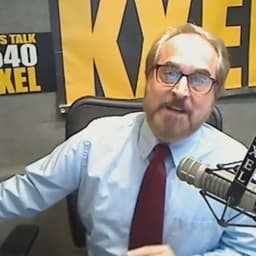
KXEL Live & Local with Jeff Stein · Mon Aug 17, 2026
If you were kind enough to hear the Todd Starnes National Radio Show last week as I was filling in for Todd, we talked about a report released by the Department of Health and Human Services called Wolves in White Coats.
It was a striking.
set of data and I wanted to continue that conversation today and I'm pleased to welcome on the news line first time we've had the pleasure of speaking with Maria Kefler.
Ms.
Kefler is a former middle and high school teacher.
She is a co-founder of a group called Advocates Protecting Children.
You find them online at AdvocatesProtectingChildren.org.
Ms.
Kefler, good morning and thank you for the time.
Hi, thank you so much for inviting me.
This is a really important topic.
It is indeed.
And what led you to focus on this topic or advocacy on behalf of children after your career in the classroom?
What was the pivotal point where you made the shift away from lesson plans to
this?
This is not what I expected or wanted to be doing with this part of my life, I'll say.
But I left teaching a while ago to be a stay-at-home mom.
And in 2018, I got invited by a friend to go to a transgender students policy working group meeting that she had stumbled over on the public school website where our kids were in school.
We went to this meeting and it was some students, their parents, transgender-identified students, and their parents, some administrators and teachers sitting around a table talking about what they wanted to see for policy in the school system around transgender students.
And the takeaway for us from that evening was that they considered parents a threat, that if the parents weren't, and I'm using error quotes here,
on board yet with gender ideology, then the school needed to hide things from the parents to so-called protect the children.
And I was horrified by that.
When did schools decide that they know better for children than their parents do?
So that was how I rudely got introduced to this.
went back into teaching for a few years after my kids got older and was blessed to be at a private Christian school where this nonsense was not tolerated, but it is still going strong in a lot of schools around the nation.
It's striking you mentioned 2018, that's before COVID and that was the time and I have said
repeatedly nothing good came out of COVID and if any small positive came out of it, it was the fact that parents got to learn what their kids were being taught because of the distance learning.
You were ahead of that curve by a couple of years.
I imagine as an educator and I taught college students for 25 years, I imagine as an educator you were horrified at what they were suggesting from an administrative standpoint and then couple that with being a parent yourself.
Yeah, I was horrified and we actually pulled our children from public school about a year after this discovery when we saw that boys were being allowed into the girls Bathrooms and vice versa.
That's a terrible protection issue for girls and Yeah, it was hard to believe because we've known for a very very long time that the best predictor
of students' success academically and as well in life, but especially academically, is having parents who are involved.
And schools have tried for decades to get parents more involved, but now all of a sudden, oh, we're going to cut parents out of the picture.
And that's just ridiculous.
They want parents to be involved when it has to do with what, raising money through candy bar sales for field trips, but heaven forbid that you actually tell us what to do in teaching the children.
That's far different from when you started as a teacher, I assume, and far different than when I went into the college classroom.
Yeah, when I came through my teacher training classes, I'm licensed as a public school teacher in two states.
And I went through my teacher training in the early 90s, and there was none of this gender ideology, promoting, you know, alternate sexualities.
It just wasn't part of the curriculum.
But I've learned now that younger teachers who are coming out of the colleges, coming out of the system, they're being taught that they might be a child's only safe space.
So they're being given this savior complex.
and they're being taught that parents are untrustworthy, parents are abusive, and it really sets them up to search for kids that they can so-called save.
It's just nefarious, it's a multi-tentacle beast, and it's horrifying in every place that it rears its ugly head.
It's especially bad it would appear to me in K-12.
Now, I don't have children, but
I know from being the one in front of the classroom, I had an experience once where I don't even remember the situation, but it just struck me that whatever I tell these young people is all they're going to know on the topic.
And so there's a huge responsibility on the part of the professor, the teacher, whoever is that authority figure to present the information in a fair and balanced manner.
But when we're talking K-12, when we're talking about authority figures, who are the children to question?
They're just going to take this information.
And for generations, kids have dummied up when their parents say, what did you learn in school today?
Ah, nothing.
I mean, it's just ripe for abuse.
And we have seen over this past decade or more just how bad the abuse is, I would suggest.
It absolutely is.
And what you're describing
where the teachers are telling the students something different than their parents would tell them.
There's a couple reasons that they're doing that.
One, as you said, we know from psychology the first thing you learn about a subject is the thing you tend to believe.
That's why it's so important to teach your kids truth young before they learn things that aren't true.
And we also know from psychology that once you have a belief about something,
It's very, very difficult to get you to change that belief.
It's called belief persistence.
So the activists are going after our kids.
I know that sounds sensational, like I'm a tinfoil hat conspiracy theorist, but I can tell you, I've seen it.
They're not even hiding it.
They're going after our kids at the youngest ages because good parents aren't talking to their children about sex and gender ideology at those ages because it's age and appropriate.
So the teachers are setting up this situation where the child has to decide whom he or she believes.
Do I believe what my mom and dad say?
Do I believe what my teacher said?
And there's a lot of peer pressure at school.
When my daughter was in fifth grade, the teacher said something about transgenderism.
My daughter was still in public school at that point.
It was the last year she was in public school, by the way.
My daughter said, you know, my family and I don't believe that that's a good, healthy thing.
And the teacher said, oh no, no, that's wrong.
Some people are transgender and that's a good thing.
And my daughter at 10 years old stood there alone in the classroom.
No other student was going to back her up even if they believed what she said.
That's a terrible, terrible position to put a child in.
We're speaking live with Maria Kefler.
Ms.
Kefler is a former
teacher, and is co-founder of Advocates Protecting Children.
They're online, AdvocatesProtectingChildren.org.
She is also the author of a book released just short of two years ago called Desist, Detrans, and Detox.
Getting your child out of the gender cult.
Desist, Detrans, and Detox.
It's available wherever you get your books these days.
I am struck by this Wolves in White Coats report.
It was it was amazing to me although it should not have been because it's bad enough to have this agenda this narrative But then you throw the prophet motive on top of it.
I mean this is just ghoulish stuff How did this report strike you when you saw it?
Oh, everyone who's been fighting this for any length of time shouted hooray when this report came out.
These are things we've known for a while.
And we've been begging for lawmakers, policymakers to step up and do something about it.
Yes, you talked about the profit motive for this.
If you research, sex reassignment surgery market report,
And I'm only talking about sex reassignment surgery where they amputate your genitals and try to create faux genitals.
And ghoulish is almost too benign a word for this.
It's really Joseph Mengele level experimentation.
But if you Google Sex Reassignment Surgery Market Report, you'll find a number of market reports that describe sex reassignment surgery as a gross market
expected to be worth around four billion in the next few years.
And that's a billion with a B. Doctors who do these experiments are making money hand over fist.
We had a sad situation.
A family reached out to us about five years ago when their son, who was 15, said that he thought he was actually a girl.
At the time, we gave him the advice, get him out of the school he's in because the school was affirming it.
Take away a smartphone.
Cut off his social media, because those are the vectors.
Those are the three, the trifecta of trans, where it's coming to kids.
Unfortunately, they didn't do those things.
And a couple of weeks ago, they called us back.
Their son is now 20, and he just had elective vaginoplasty, which is where the doctor amputates his penis and tries to create a faux vagina with the skin that's left.
And it's horrific.
And the doctor who does these procedures drags on his website that he does 100 vaginoplasties every year.
That's about one every three days.
That's one doctor.
And we know there are about 300 gender clinics around the United States.
And he's not the only one at his clinic.
So you can do the math and imagine how profitable this has been.
And they are destroying people's lives, their bodies, their health, their fertility for the money that they're making off of this issue.
I am a capitalist, but holy cow.
I mean, as a lawyer, you charge what you think is appropriate, but you also know when you're taking advantage of someone.
And I would suggest that medical professionals have a higher calling and should be at a higher standard.
And so when you start talking about things like growth industries,
I understand paying off your loans and I understand keeping the lights on at a clinic, but again, whatever happened to do no harm.
That's the question.
That is the question.
And cosmetic surgeons, one of the tenants that they are supposed to follow is never sacrifice function for form.
So a plastic surgeon, Dr. Patrick Lappert, he's been fighting this for a long time.
I heard him speak about this and he said like rhinoplasty, when you're doing a nose job on somebody, you would never ever make their nose less functional just so it looks the way they want it to.
But when it comes to gender medicine, they're cutting the healthy breasts off of young girls who want to present like boys.
The GoFundMe page, they stopped letting you see
how many of a certain type of fundraiser they had on their page a few years ago.
And I think they did that because people were seeing how many young women in the United States were trying to raise money for what's euphemistically called top surgery, but it's an elective double mastectomy.
When the last time I thought before GoFundMe stopped sharing those numbers, there were over 40,000 young women trying to raise money to have their breasts cut off.
And I can only imagine it's more than that now because that was probably four or five years ago.
It is just frightening stuff, frankly.
Tell us about advocates protecting children, the organization.
How did you become involved with founding that?
And what do you folks do?
We support anyone who is trying to deal with gender ideology in an ethical and honest way.
We established the nonprofit in order to provide resources for people.
Mainly, we aim at families.
Families who are dealing with this get told they have to affirm or their child will commit suicide.
That is a nefarious, emotionally manipulative lie with no research data behind it.
And we wanted people to have honest resources for what do I do now?
How do I help my child?
We support churches.
We have a children's ministry curriculum for teaching kids truth.
It doesn't even use the word gender ideology, transgender or anything.
It just teaches children.
God made people male and female.
That's all there is, nothing else.
Secondly, some people don't know that and might tell you something different, and isn't that sad that not everybody knows the truth?
And third, God created you exactly the way He wants you to be as a boy or a girl, a very simple truth-based curriculum.
We started it again because there are a number of people in our organization who have dealt with this issue in their families, and they wanted to provide others the help that they didn't have when they were going through it.
The fact that you have to say there are boys and girls and God made them different the fact that you have to say that is It is just indicative of how far society has fallen or how far we've let it fall But thank goodness advocates protecting children and other like-minded groups are there to resist that narrative and again, I'll mention the book desist
Detrans and detox, getting your child out of the gender cult, written by Maria Kefler, our guest.
And again, AdvocatesProtectingChildren.org.
Ms.
Kefler, thank you so much for the advocacy and the work.
I wish you were out of business, but unfortunately it looks like there's a lot that still remains to be done.
And thank you for taking the time to do it.
Thank you so much.
I know we wish we could just work ourselves right out of a job, but we'll keep trying.
Until that day, thank you so much for the time.
Thank you.
Bye-bye.
And Maria Kefler joined us live on the news line on News Talk 1540KXEL, where Iowa comes to talk again.
AdvocatesProtectingChildren.org is the website.
Pleased to be joined now on the news line by a return guest to the program.
He is Steve Malloy.
Mr. Malloy is a senior fellow at the Energy and Environment Legal Institute, former transition team member for the Trump EPA in Trump 1.0.
And you find him online at junkscience.com.
Steve Malloy, good morning and thanks for the time.
Well, good morning, Jeff.
Thanks for having me back.
Remind people how you got interested in disputing some of the
narrative with regard to science.
Again, this is not exactly probably the career path you had intended as a younger man.
Well, yeah, so I've been doing this for 36 years.
I've, you know, focused on environmental, public health, science.
A long time ago, I used to be a securities lawyer, but when Saddam Hussein invaded Kuwait in 1990 in the spark market,
went into a bear market i lost my job i got hired by a lobbyist regulatory lobbyists dc who is working on environmental risk assessment in the army because i have a background in science and statistics out so it worked out and you know next thing i do i was also i was uh... working for the department of energy trying to figure out whether e p a policy was based on science or politics of course it was based on politics not science and so i just you know wound up doing this is just sort of a search for
truth in in what's going on science-wise you know we hear all these scary things all the time uh... about the air pollution, water pollution food added, everything and so i work on that trying to figure out what what's what science-wise and uh... so it's it's kind of an unusual career path didn't plan on doing it but you're right
well and good thing too because uh...
that voice, your voice is necessary because of all of the stuff that is not fact-based.
And I think back over this, I guess at one point it was global cooling, then it was global warming, and the world was coming to an end.
I don't know how many times in my lifetime the world was going to come to an end, and now we call it climate change, which
I guess you can't dispute because the climate has changed from day one, but despite the fact that this narrative is pounded into people's heads through the formerly mainstream media, it sounds like voters these days are just not buying it in terms of it's not all that important to them.
Yeah, so CNN came out with a poll last week reporting that only 3% of voters prioritize climate.
as an issue, and it's not really unusual, I recall, ahead of the 2022 midterms.
There was a New York Times poll they tried to hide, but it showed that only 1% of likely voters were interested in climate.
And I don't think voters have ever really been interested in climate.
We all put up with the weather.
Every year sometimes it's hot.
Sometimes it's cold.
Sometimes it's wet.
Sometimes it's not.
You know, that's just the way the weather is.
Normal people don't think of it in terms of, well, if I don't eat meat today, the weather's going to be better.
But of course, that is how climate alarmists want you to think about it.
But normal people don't really care about this.
We have much more important things, especially voters to consider.
But nonetheless, climate is a real issue in that the people that advocate it, they want us to give up fossil fuels.
They are behind the rise in energy prices.
They have helped destroy our grid with wind and solar, and they've been handsomely rewarded from the Inflation Reduction Act, what President Trump calls the Green New Scam.
has given them $500 billion to play with.
There's still $600 billion to play with in the future.
And although President Trump, he thinks climate is a hoax, and he has fought against the Green New Scam, the fact is it's still there.
And when President Trump goes away, I fear that this is going to come back.
Well the problem with it coming back is there are a lot of people making money off of the scam and so again as long as there is that profit motive you're going to find folks who will Advocate with their dying breath that this is the way to be but yeah, what's interesting is and again there are certain issues that are
the big single issue for a voter, right?
I mean, we've heard about single issue voters for a long time.
It sure doesn't seem that climate rises to that level, which leads me to think two things.
One, the folks on the left who see these numbers, their jaws drop because obviously they can't believe it because they have drunk the Kool-Aid on it.
But the second thing about it is that
There's been so much invested in scaring people this way.
If the voters aren't buying it, if it's not that important, that group is going to lose an awful lot of perceived power, aren't they?
Well, power and prestige.
I mean, can you imagine Al Gore walking back?
What has earned him his $300 million fortune?
When is that going to happen?
all these industries that have sprung up from wind industry, solar industry, EVs, batteries, and all the green consulting, green tech, those people are never going to let it go away.
They want that government, there's so much government money
that
has been thrown at this.
And in a lot of places,
You know, our grid really is at risk because we have all this wind and solar which has made the grid less reliable.
They tried to pile on EVs, making things worse.
And then at the same time, we have the rise of the data center, which is a power hog.
And I know that a lot of people are ambivalent or don't want data centers, but you know what, then give up your phone and give up your computer because data centers are what
bring the internet to us, and AI, and whether you like it or not, AI is a future.
And AI is really just, you know, super-duper processing of information.
So, you know, we're stuck with this crippled grid.
We've got this growing, burgeoning industry.
Of course, President Trump wants to reindustrialize the country so we need more energy.
And, you know, these are forces that cannot coexist.
you know, green, so-called green energy and reindustrializing America and AI.
It's not possible for those two to get along.
We're speaking with Steve Malloy.
Mr. Malloy is a senior fellow at the Energy and Environment Legal Institute.
JunkScience.com is his website as well.
He joins us live on News Talk 1540 KXEL.
The concern that I have always had, and we've had this conversation before, is that, all right, the climate is changing.
Got it, because it always has.
But what can we do to either stop that if, in fact, that is something that we would want to do?
But more importantly, are we making it appreciably worse?
Because, again, the world's been around for a very long time.
I don't know that we are the ones that are going to cause the balance to go into the ditch.
Yeah.
Well, you have great questions.
I don't know that we have enough time today.
Well, give
it a go.
Just give it a go.
What I can tell you is that it's summer, it's fall is coming, then winter, then spring.
That climate cycle has not changed.
The temperatures we measure, yeah, they've changed a little bit, but not really on a climatic scale and not in the way that alarmists like this promoted.
We're really unsure about
How much temperatures have changed?
Right now, we're in this El Nino.
There's an El Nino cycle, which is warming, mysterious warming of the Pacific Ocean.
We know it's natural, but we can't understand it.
And it's really what's been driving our weather for the past 40 years.
Every time there's been warming, it's been because of one of these El Ninos.
It's not greenhouse gas emissions, because when the El Nino is over, the temperatures sort of dribble back down.
to where they were before, but then there's, you know, another El Nino will come by, and if it's a super El Nino, it really sort of jacks up temperatures and changes weather patterns.
You get extreme weather in different places.
So, you know, we don't really understand this, and it makes little sense to cast aside fossil fuels, which all of society depends 100% on.
You know a lot of the climate alarmist want to get rid of fossil fuels I mean this is not possible.
I mean 100% of our everything you cannot do anything in our modern society without fossil fuels.
You can't build a nuclear power plant, which is emissions free.
You can't build or install a wind farm, solar farm, and you can't do anything without fossil fuels.
You know it makes little sense to blame fossil fuels and and we do have natural explanations for all this So it's complicated is climate changing.
Yeah, you're right climate has is constantly changing but Not really in a discernible way The weather is always different for sure and weather is unpredictable and and you know when every day is unpredictable It's really hard to predict the future right because you just
It's all unpredictable.
Well, and again, we're here in Iowa and it's August.
And so I can tell you that in a given 36 hour period, we're going to have everything, right?
The only thing we're not going to have is locus, you know, and some days, you know, you might even have that.
So if and I did see the clip from the CNN segment posted online.
where their data analyst, Harry Enten has no filter.
I figured out, right?
I mean, he's just pointing to the numbers and he's circling things and the anchors who've had their talking points are just, you know, dumbfounded by it.
But, you know, he's darn near crouching on the ground pointing at the bottom of the chart.
This is the only, you know, only 3% of American voters say climate change is the top issue.
Okay.
So let's close with this.
That being the case and let's assume that is the case.
Those who have a lot at stake, financially, et cetera, from the narrative, they're going to be changing their tactics, I assume, to try to win over followers.
Are we about to enter another scare tactic period of time, as we had, which led to the abandonment of so many other good forms of energy, like nuclear?
Well, we are going to see, and you can see it now, the scare tactics about the weather are ramping up, and they're trying to blame the El Nino cost of weather on emissions.
I don't think that's going to work because everyone knows about the El Nino.
But what they are going to do is they're going to abandon, they're going to talk about climate less because it's just not working.
They're going to go to other issues like affordability.
There have been pieces in the New York Times written about this, about how climate is not, they're writing climate is not working for us so we have to go for like affordability or immigration or something else that's going to advance their socialist agenda because that's what climate is all about.
Well, we'll we'll look forward to seeing what they try Because again 3% last I checked that's almost within the margin of error of the stupid pole.
That's a rounding error for crying out loud Steve Malloy.
It is always informative and always appreciated.
Thank you for the time sir.
We'll talk again soon
All right, Jeff, thank
you.
All right, take good care.
Steve Malloy joined us live on the news line, junkscience.com, the website.
And you can check out his work also through the Energy and Environment Legal Institute website.
That's where he is a senior fellow.
And again, he's on the X machine, Twitter X machine at junk science as well.
And he posted that clip that I just mentioned where even
even the CNN person says.
Despite all the talk of climate change, voters simply put, don't care.
Top issue in the midterm vote, economy rated number one by 54%.
Climate change, only 3%.
That's math anybody can do.
News Talk 1540 KXEL where Iowa comes to talk by February each year.
Just about all of us are ready for winter to be over.
Sometimes we're ready a lot sooner than that.
What about summer fatigue?
Author Hank Shaw writes about the outdoors and about cooking from things that are gathered from the outdoors.
In a recent article, Shaw wrote about the dark at the end of the tunnel and waiting for autumn.
We welcome Hank Shaw back to the program this morning.
Hank, good morning to you.
Good
morning.
Thanks for having me on the show.
So when you shared that article on your To The Bone newsletter, you wrote,
Make no mistake, some are still rules here, but autumn is coming.
Thank God.
Tell us more about that sentiment.
Oh, I mean, there's all kinds of threads that we can trace on this one, not the least of which is because, well, hunting season isn't is an autumn and that's a huge one for me at least.
But what I'm really meaning that's sort of more universal is I think everybody who's listening to this can really understand the kind of frenzy that we all have in.
late May, all of June, most of July, you know I'm looking out of my window right now and it's finally sort of starting to get a little bit darker and so the days are a little bit more manageable and less insane because I think when we live a northern life like we do here it's everything everything we're all at once while you can you know there's this whole idea of
Oh my god, the summer's so short.
We've got to do everything all the time.
And then, I'll be honest, I think most of us out there get a little bit afraid.
To reiterate, you are from Minnesota.
You're on the other end of this connection wearing a Minnesota hat right
now.
So very much in the Northern landscape.
But you do write about and note that your summers include fishing, gardening, cooking, preserving.
So that does sound like a pretty idyllic way to spend those warmer months.
It's not bad.
I'm not complaining.
Don't get me wrong.
The thing about it, though, is even in my life where I have a lot of unstructured time and I work for myself, it's not like I'm not working, but I can kind of move pieces around.
And not everybody can do that.
But you can't do everything.
There could be mushrooms to pick.
There could be garden stuff to do.
There could be fish in the river.
There could be, and it's even in my existence where all I'm doing is writing and cooking and doing things where, you know, essentially creating content to use the modern parlance of it, there's always something I'm going to miss.
And then you get that FOMO.
And I think that FOMO is really universal for kind of everybody in the summertime.
We're talking with Hank Shaw, who is a James Beard Award winner and author and writer, particularly about cooking from the outdoors, taking things that are in nature and available and bringing them into the kitchen.
So as somebody who has some flexibility as you describe and who is able to spend a lot of time outdoors, tell us how you're preparing for fall and
those particular things that you do gathering and taking on a harvest that looks maybe a little different than it would for what we think of in Iowa?
Yeah, I mean really it's living here in Minnesota.
It's one of the reasons why I moved here.
I used to live in Northern California.
And normally California is the opposite.
It's sort of the land of the lotus eaters.
It's, there's something fresh and local, the weather, even when it's cold is like not really cold.
And it never snows and that whole thing.
And so it was just this kind of weird level existence, you know, they, they say in, they say in California, another damn day in paradise, you know, and, uh, I, I actually actively moved away from that because I, I like the seasonality because what it does is a cook.
And it does as a gather and a hunter and an angler is it really makes me focus on these months here in the summertime to essentially be like a squirrel, right?
Where two days from now, I'm going to go up north to northern Minnesota to pick hazelnuts.
And if you miss the hazelnuts, you miss them.
Like it's, that's the thing about nature is it doesn't wait for you.
You know, you can, you can hold corn in a field for a little bit and that's, you'll be okay.
Usually, but.
Nature just moves, moves, moves.
So if let's say I missed that window for picking these hazelnuts next week, the squirrels would eat them all.
So I would have none for the whole year.
It's a constant series of, do I really want this?
Yes, I do.
So you have to make time and make effort to go and get this thing.
And then you have to actually
figure out what to do with this thing.
So a lot of people, you know, I know in Eastern Iowa and places like that, there's black walnuts and people will crack black walnuts in the wintertime, but, you know, you got to gather them in the fall.
So otherwise the squirrels get them all.
And it's very similar to that, but it's layers upon layers upon layers, you know, there are runs of fish that you don't want to miss, you know, the catfish in the Red River on the border of North Dakota and Minnesota, they really only run for a couple of months a year.
And then
After that, could you catch one?
Sure, but if you really want to do it right, you've got to be there when the fish are there.
And the same thing for hunting seasons.
Shifting from a place like California to northern Minnesota, how did you figure out what these timelines were?
If you're in a place where you weren't, what did it take to establish that and to learn those things that maybe the rest of us in our environments have the opportunity to pick up on if we take the time to see it?
I think you just hit the nail on the head, is you take the time to see it and you open your eyes whenever you're around.
And also I have friends.
I mean, one of the reasons why I moved here is because I have a very excellent expert community of fellow hunters and anglers and foragers who, you know, I'll get a text message from somebody, hey man, hazelnuts are ready.
And I'm like, okay, gotta go.
And so the,
you know the the collective knowledge of of me and my friends and colleagues and such have has helped me a lot and it's flattened the learning curve quite a bit but there's still a lot of trial and error where you know just yesterday I went out looking for a very particular mushroom a lobster mushroom and they weren't there but they were chicken in the woods so that's cool um and you know that's the other piece to all of this is
It's not really grocery shopping because you don't necessarily know what you're going to find or if you're going to get anything.
So you have to be very flexible.
We're talking with author and cook Hank Shaw.
You can find out more about Hank's work at honest-food.net.
And when it comes to just that, you know, getting the things that are available versus getting what's.
maybe on your list.
Could you give us a sense of what sort of adjustment that was for you?
Because I know when you've been with us in the past, you've said that you very rarely are at the grocery store.
You're looking as much as possible to find what you can from either gardening or hunting or the natural world around you.
Yeah, I mean I still kind of like that like I still buy a lot of dairy It's still by you know beer.
I have root beer in the past, but you know, it's Maybe in the winter you can't do everything.
But yeah, it's the thing is well a couple things one I'm a graduate of the University of Wisconsin so go Badgers and I've lived here in the Twin Cities before so I have a kind of a rough outline of what's here and what's available
you know what to go after and kind of when so I had a blueprint to work with but it's been filled in remarkably since I moved here three years ago and I mean it's what happens if you're out and about almost well really every week and in the season except for that crazy period where you know this is what I wrote about in the piece that you that you mentioned is
there's a rest period at the end of it so that's the coolest part because in California you can do everything that I do right now but the fact is there's going to be something fresh next week and then next week and then after that here in the north everything shuts down so when you you know preserve things and pickle things and dry things and freeze things and make really cool you know flavored oils or whatever whatever um you have this long period
from, you know, where I live, it's Thanksgiving to about March, where that's it.
It's what you got.
That's what you're going to use.
Like, of course you can go supermarket and get asparagus in January, but that's terrible.
I would, I highly just, that's not me, man.
I'm like, I love asparagus in the spring.
I'm not eating in the winter time.
So that period where you're done, you know, you're done hunting, you're done.
I mean, you ice fish.
but you're done with all of the plant stuff, then you get to enjoy it, and you get to eat down your stores, and you get to do all of the cool stuff that you enjoy the harvest, essentially, and you have a longer period to do that in the north than you would in a place that's a lot warmer.
Well, you alluded to hunting already, and I suspect that maybe your hunting season could be a little different than somebody who has one weekend a year to go out deer hunting.
That's their window, and that's it.
If the weather isn't cooperative, if something comes up, there's not another opportunity.
What does hunting season look like for you, Hank?
Every year is different.
I also travel quite a bit and I do what I call culinary hunts in Oklahoma a fair bit and so I'm in Oklahoma doing those and that's where people will come to the lodge that I work with and I teach them how to butcher things and how to prepare game and how to cook the game and then they hunt in the mornings.
Like we're doing a dove and teal hunt in September and then we're gonna do a waterfowl hunt in December.
So we do that sort of thing all the time.
Those tend to be the anchors of my hunting season, but I'm always out in September.
For me, September is bird season.
So the first opening weekend or so, it's always dubs.
And then, you know, you got sage grouse and then you've got, you know, all the prairie grouse like Sharpies and then hungarian partridges up north.
And then it kind of rolls into pheasants.
And then at some point, you know, I mean, it's deer season and, you know, it's
Deer season is interesting for me because I have shot a few big bucks, but normally I'm trying to fill a freezer like most guys.
And so the deer hunting for me is almost like checking a box.
You know, if a giant rack buck comes by, absolutely, I'm going to put them on the ground, but I don't care that much because what I really want to do is get red meat for my year because I don't buy meat.
I haven't bought meat or fish more than a handful of times in
more than 20 years.
So if I want to eat a steak, it's going to be a, you know, elk or deer or something like that.
If I want to eat chicken, it's going to be pheasants or grouse.
So it's, in that sense, my hunting season is geared towards what I think I'm going to eat over the next year or so.
So a lot of pheasants, rabbits, snowshoe hairs, a deer, hopefully.
you know ducks I do a fair bit of duck and goose hunting too and I really enjoy that as well and then you know sometimes you do weird stuff like I think I might go rail hunting this year which is a fairly unusual water bird that I just have never hunted them and I kind of would like to do it so there's that kind of stuff too.
Well, we're coming up on the 10th anniversary of your book, Buck Buck Moose, which I know allowed you to connect with a lot of people, very successful.
When you look back on 10 years since that came out originally, what are the things that come to mind about the success of that project?
Oh man, that's been a life-changing book.
I mean...
Buck Buck Moose came out in 2016 and it was at the time it was everything I knew about all big game hunting and big game cooking and processing and not just white tails but it's sort of deer specific but um but I you know I've hunted all of the big game animals so uh I poured everything I knew into it and 10 years went by and people kept buying it and the book has sold over a hundred thousand copies.
It's kind of mind-boggling.
to think about.
And so many people have enjoyed this book.
And, you know, at the 10-year anniversary, I realized about a year ago, so about nine years in, that, God, I know so much more.
I have learned so much.
I've hunted more.
I've encountered more variation.
And, you know, the mastery is involved in dealing with variables.
And, you know, I've hunted on the Mexican border.
I've hunted, you know,
in the tundra.
I've hunted all these places and I've worked with the game from them and I've just learned an enormous amount and so we decided to expand the book.
The book is you know 32 new pages and there's more than 30 new recipes so there's a whole bunch of new stuff in it.
I've completely reworked.
all of the recipes in there to reflect everything that everybody's talked to me about and that I've learned over the last decade.
Lots of like 200 new photos, it's pretty wild.
It's basically a brand new book and I'm super stoked for it to come out.
And that's, it's almost zero, the end of September.
Well, we'll look forward to that, Hank.
Thanks so much for being with us.
I know you're looking forward to September for many reasons and we're glad to have your insights as we get down towards the end of summer.
I really appreciate you having me on the show.
Thank you.
This is the station where Iowa comes to talk and you've heard from author Hank Shaw, James Beard Award-winning author and cook.
You can find more from him at honest-food.net.
This is News Talk 1540 KXCL.