Transcript
Janice Fiamengo, Author of "The Goddess That Failed"
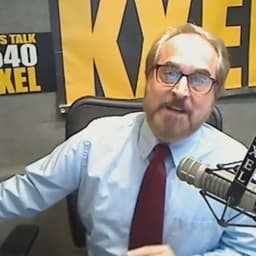
KXEL Live & Local with Jeff Stein · Mon Aug 10, 2026
Pleased to be joined now on the news line by Professor Janice Fiamengo.
Professor Fiamengo is the author of a book released just last Tuesday entitled The Goddess That Failed, Feminism's Unending War Against Men, Families, and Civilization Itself.
Janice Fiamengo, good morning, and thank you for taking the time.
Well, thank you very much for having me on your program.
Give us a sense of your background.
I spent, as this audience knows, 25 years teaching college students.
You spent plenty of time in the classroom as well.
Yes, I spent probably more than 25 years, but about that as well, mostly at the University of Saskatchewan and the University of Ottawa, and it was that experience that really
heightened my awareness about the damage that feminist ideology is doing to our young people.
Now this was something that you studied, right, to doctorate level, correct?
What was it that you were taught that then you found later the two just did not square one to the other?
Well, basically, I was taught that the entire history of humankind was the history of men oppressing women, particularly white men oppressing women and other victim groups.
I was taught that there's no country really worse than the United States of America, that it's an imperialist, misogynistic, white supremacist, colonizer country, that we should align ourselves with America's enemies.
that women as innocent victims should not be held to account for their actions and that we should pay women particular heed because of their allegedly greater empathy, greater awareness of social justice, and ability to avoid the toxic masculinity that allegedly characterized all men and men's aims and actions.
Once I got into the classroom, I realized that I had been lied to about everything.
And I looked out at the sea of young faces in front of me.
And I felt particular empathy for the young men in my classrooms.
And I was just overwhelmed, really, by an awareness of how unjust it is that we should make young men bear this burden of guilt on their shoulders.
telling them that their sex is responsible for everything that's wrong in the world, and that all they can do now is apologize for their alleged privilege, even while they are the victims of affirmative action and have been for the past 40 years, but they're supposed to apologize for their privilege and take a step back and let their morally superior sisters and colleagues
You know take control of the world and allegedly leave it to lead lead us to some sort of utopian future
There was a moment in the classroom for me when I don't even recall the specific situation It may have been that students were doing presentations And so I was able to be more of an observer than the one staring at them from the front of the classroom But it occurred to me in that moment And I had not done it very long
These people in this room these students they know nothing about this topic and anything that they learn they will learn from me based upon what I say and that was a huge awakening and Realization of responsibility, right?
It's not just a matter that after while you carry in some yellowed notes and speak from a podium and off you go If they were going to learn about a topic because I told them that
And I'm imagining that as you indicated, as you look at these young faces and you realize, wait a second, the stuff I was told is wrong, that had to be quite a moment for you in terms of trying to reconcile things tied to what you had believed and what you were doing as a professor.
Yes.
Well, and one of the most...
The fundamental realization that I came to was that my job in the classroom should not be to indoctrinate students.
I had that belief in a way that what I was supposed to be doing was creating foot soldiers for feminism and for social justice generally because allegedly the world was in such a bad condition and North America
was such an unjust place that it would be wrong of me not to indoctrinate my students to try to radically transform their societies.
And I realized that I don't want to exaggerate, but a large majority of my fellow professors deeply believed and still believe today, and probably even more, that that is their primary role.
not to teach facts and history or the subject in an objective and balanced way, but to indoctrinate and study after study, of course, shows that most university professors are ideologically on the left, even on the radical left.
I had a colleague in the English department at one of the universities where I taught who actually had a picture of Lenin
up
on the
architect of communism in Russia, up on his door.
That person was his hero.
And so when one realizes that students are not even being exposed to a variety of perspectives, just to these very toxic leftist ones, particularly as I say this one, encouraging women to believe themselves victims and to see the whole world through that lens and to
to allow the bitterness and the anger and the envy and the resentment to shape their worldview, to come to understand marriage and childbearing as forms of sex slavery, which is what Frederick Engels claimed in his 1884 book on the origin of the family private property in the state where he compared married women to oppressed workers
in an oppressive society and the husband was allegedly the bourgeois capitalist.
All of that, we can clearly see how that leads today to an atmosphere of bitterness, of hysteria, of accusations, of discontent, poll after poll survey after survey showing that women are less happy and less satisfied with their lives.
As they reported in surveys since the 1970s, and regard men with suspicion and distaste, there was a survey just recently out of the UK, and I can't imagine it's too much different in North America, that found that while nearly three quarters of young men under 30 had a positive or very positive view of women, only about less than 50% of
women had a positive or very positive view of men.
Half the number of women as men reported that they wanted to marry and have children.
These obviously have, you know, really dire ramifications for our future.
Well, and beyond that, recently in this country there was a report about the low percentage of young men in the workforce.
They're just perfectly happy to sit at home and let someone support them, whether it's their parents or their female partner.
And I have to imagine after all of these years of being indoctrinated that you're not worth anything.
You're the oppressor.
You're the terrible person in the dynamic.
I can imagine a number of them would take not only a subservient role, but
feel defeated and lose all spark, which I serious, well, I don't know what the, if that plays into the narrative of those who promote this or not, is to have men feel just fully emasculated to where they don't even go to work.
Well, exactly.
I think it absolutely does play into that agenda.
The last thing that leftist feminist and generally socialist
people want is men who are active and who are able to take leading roles in their communities and their families.
They don't want family.
Family is the bulwark against these kinds of, you know, controlling ideologies.
And of course, I mean, it is understandable that men are drawing back.
They've been told by feminist leaders quite uncontradicted
for decades that that's what they should do.
And they know that the regular things that men have wanted to do to meet a woman, fall in love, marry and have children, those things are very dangerous now for men.
A man can lose everything.
If his wife decides she wants to divorce him and accuse him of something,
which at 70% of divorces, I think it even goes up closer to 90% in cases where the woman is highly educated.
But overall, 70% of women initiate divorce.
And the divorce courts, I have a chapter on that in my book, are stacked with feminist ideologues who believe that fathers don't necessarily play any important role in their children's lives.
All a bitter and disgruntled ex-wife has to say, not that every woman will say that, but that every woman can.
All she has to say is that she's concerned that her ex-husband is going to be violent with the children.
She doesn't have to have any evidence.
And the father can find himself barred from his children's lives.
He may be a visitor once every couple of weeks, or he may not be able to see them at all.
And young men aren't stupid.
They see this happening to their friends that may have happened to their own fathers.
Many of them are growing up without fathers, so they don't have male role models in their lives.
And they look around.
They see a society that continually tells them that they're at best expendable and at worst absolutely not wanted at all, a danger to everyone, predators, useless.
and undesired.
So it's a very sad thing and very worrisome.
The male suicide rate is very high.
Many men are dying deaths of despair from addiction.
Many of them are just dropping out and trying to figure out a way simply to go on existing in a society that doesn't seem to like them at all.
The goddess that failed feminism's unending war against men families and civilization itself released last week by our guest dr. Janice Fiamengo She joins us live on news talk 1540 kxl at some point as a college professor you started speaking out about The things we've been talking about today
I guess the first question is what led you to speak up and secondly, I trust that was not looked upon with favor at your institution or among colleagues.
It certainly was not generally looked upon with favor.
Of course, I had a few wonderful colleagues who were supportive and overall I would say that in my department I was fairly treated.
I think many of my colleagues just thought privately that I was a crank.
but they maintained a civil demeanor.
But no, the universities are entirely feminist compliant.
Any dissent from radical feminism is frowned upon.
And the thing that drove me to do it was really just the realization that I had been lied to and that so many of the perspectives that were being taught
were false, even just very basic things, like the idea that women had to fight so hard for the right to vote.
I'm embarrassed to admit this, but I actually believed right through the period when I was writing my PhD that all men had had the right to vote, and no women had had the right to vote, right up until 1920.
The reality is much, much more complex.
There were property and income qualifications that governed men's rights.
Of course, men had related responsibilities and obligations that came with their right to vote.
When women gained the right to vote, they did not have to shoulder similar responsibilities such as
the responsibility to risk life and limb to defend one's country at time of war.
Women did have the right to vote in local school board elections, for example.
There were all sorts of women who were business owners who were very active in their communities, who ran charities, who campaigned for temperance legislation.
They had a voice in their societies.
It's simply not true that women were powerless victims.
So it was that realization of how deeply both women and men are being miseducated about things that just drove me to begin speaking out and also just the relentless anti-male campaigning that goes on on campuses.
It's almost unbelievable that we've allowed it to become this bad.
There are kangaroo courts on college campuses where
Young men can be accused of sexual harassment or sexual misconduct and they can be expelled from school and really have their entire career dream derailed by a false allegation and it seems very few people care.
You know, it's just the anti-male tenor of things at a university in Canada.
There was a thing called a masculinity confession booth in which
They parodied the Catholic confession in which both young men and women were invited to confess their sins of hypermasculinity.
Women, of course, didn't have to confess anything personally, but they could confess that they had encouraged hypermasculinity.
Instead of calling it out, men, of course, had to confess that they had done terrible things in its name.
A never recognition of all the wonderful things that, let's call it, hypermasculinity have done.
in our world, the absolute necessity of it, you know, the denial of recognition and gratitude for how men have built civilization.
I think that, you know, this is the civilizing part.
The title is that the recognition is necessary that men build civilization.
They are driven in a way that it's actually not clear women are to protect, to provide, to create,
systems to innovate, to problem-solve.
Women do wonderful things too, of course.
I'm not wanting to take away any woman's contribution, and they have played honorable roles in the building of our civilization, but it is not clear that they're able to lead in the same way that men are.
And a final point on that is that it seems to me that
The feminists have it absolutely backwards.
Feminists are always claiming that men hate women.
And in fact, what I have found is not that all women hate men, but that many women have a certain resentment against men, certainly exacerbated by decades of feminists proselytizing, that weakens their ability to truly empathize with and care about
boys and men, and that worries me too.
If we're going to ask women to be leaders in our society, I think we need to take a hard look at what feminist leaders have said about men, and it is not a pretty record, and I include a lot of feminist leaders' statements.
You cannot find any equivalent statements by men about women expressing so much hatred, so much abhorrence, and even exterminationist glee, the desire to see men eliminated.
It is unthinkable that men would ever express that and still be revered as leaders of a movement allegedly for equality and liberation.
It's amazing insight, Dr. Janis Fiamengo.
the goddess that failed, feminism's unending war against men, families, and civilization itself.
You get it wherever you get your good books these days.
It was released last week.
It's a fascinating conversation.
I hope you'll come back and we'll continue discussing the issue in the future.
Well, thank you so much for giving me the opportunity.
Take good care now.
And Dr. Janice Fiamengo joined us live on the news line on News Talk 1540, KXEL, where Iowa comes to talk again.
The book is entitled The Goddess That Failed.
News Talk 1540 KXCL, where Iowa comes to talk nitrogen fertilizers, one of the biggest costs for many corn farmers.
Practical Farmers of Iowa has a program to help farmers find the right
rate of nitrogen to use in their fields, lowering their fertilizer costs while also protecting the water quality around them.
Right now, let's get details about the program from Sean Dangler, Practical Farmers of Iowa's Crop Nutrition Coordinator.
Thanks for being with us.
Yeah, thank you for having me.
I'm happy to be here.
So this program dates back to the last time that there was a spike in fertilizer prices.
What was the context of creating what's known as n-rate risk protection?
Yeah, I think the biggest thing is we know, I think we've been for years, we've had our n-rate trials that we have done, and we kind of thought there was a program.
We've seen that farmers can make cuts to their nitrogen without sacrificing their yield.
And in addition, if they have practices, they don't necessarily have to be doing them.
But we've seen with people using cover crops and other type of practices that they might want to cut back their nitrogen.
Maybe they can save costs somewhere else.
And we want to make sure that they know that they're going to be at the right rate and help them out in this program.
Helps kind of provide that incentive and backstop to do that.
Because as a farmer, it can be kind of scary to be like, I'm just going to cut my rate back.
We want to be able to be like, yeah, we can do it.
We've seen it work for other farmers, and we can see that it might work for you as well.
What do the numbers suggest about the rate of nitrogen application that's typical versus what's actually needed?
Yeah, that's a good question.
We have a variety.
Obviously, we work with farmers in Iowa and in some of the surrounding states as well.
But from what we can tell is of the qualified people that are eligible to receive a payment.
Now there's some things that go into it.
We see that only 9% have actually gotten a warranty payment for us.
So there's a good selection out there of people that have made these cuts in doing that.
And on average, for how long this program has been going on, we've seen farmers take a cut of about 30 pounds of nitrogen per acre.
And like I said, only 9% of actually through have qualified to receive that payment by triggering basically that they go below 95% of their 10 year average yield.
In addition, they're not filing a claim on, you know, if they had wind rain hail that is strictly just nitrogen related.
Well, we'll get to the specifics of the program
and what some
of those percentages are.
related to in just a second.
Sean Dangler is crop nutrition coordinator for Practical Farmers of Iowa.
We're with him talking about a program called End Rate Risk Protection that Practical Farmers of Iowa offers.
So I guess my other question, Sean, before we get into some of the nuts and the bolts of the program is, how did we get to this point where producers were applying considerably more nitrogen than what their fields really need to get the same yield?
I mean, that's that's a good question.
I mean, there's there's a variety of reasons why Producers do that.
I can't speak to each an individual One I can speak to my example when I used to farm and that type of stuff is usually, you know You want to make sure you have enough nitrogen out there if you look at like what Iowa State University They have stuff out there that shows you there's a pretty big yield hit if you apply less
the nitrogen that you need versus if you just slightly overapply a little.
So the incentive is there to apply maybe slightly more than you are.
But over time, maybe someone tells it, hey, maybe you got to tweak up a little bit, maybe tweak down, and you kind of just keep doing the same thing a little more, and maybe you add just a little more and that type of stuff.
And so that can lead to maybe you're overapplying or what you're hearing from other people who are doing that.
And we just want to provide those people confidence that they can come to our program and be able to be like, okay, I'm going to make this decision for myself and figure out where actually my end rate, my nitrogen rate will be at.
So there's a farmer out there listening right now who hears, I can get some resources for reducing my nitrogen, not to mention the fact that I'm saving on my fertilizer cost.
That sounds pretty good.
What kind of steps do they take then to get the ball rolling and figure out if this is something that's really the right thing for them?
Yeah, so I would recommend going to our website practicalfarmers.org and looking up our end rate risk protection program That's gonna obviously just reading that you can read through we have all the details all the information there that will really give you a good background on that
And if it seems like it's something you're interested in, you can apply online.
We have a nice little Apply Now tab at the top of the page of that, the End Rate Risk Protection page.
In addition, you can give us a call too.
We're more than happy to talk about it or sign you up over the phone.
That's basically the easiest way to do that, to learn more and to figure out if this program is kind of the right fit for you.
Is there some initial testing that either practical farmers of Iowa does or that the farmers should be doing themselves to say, all right, this is what things look like in my fields that I'm working?
Yeah, so basically what we kind of do is like, if you think, hey, I think I can make this cut, you sign up, we'll call you, we talk it over.
and we figure out if if that cut that you want to make you tell us what your typical nitrogen rate is and it doesn't matter how you apply it we all we care about is the pounds of nitrogen that's going down in that you're putting down so if you you know if you side dress or you do it all in the fall you do some in the spring you do some side dress top dress that type of options like whatever it is it just comes down to your total pounds of nitrogen and so we will talk that over to you to see if that cut is something we want to warrant to
pay you because we are going to give you $5 an acre for no matter whatever acre that you we do end up enrolling in the program.
Now you get $30 an acre if you come below again like that 95% of the 10-year average yield, but that's just nitrogen related.
Talking with Sean Dangler, Crop Nutrition Coordinator for Practical Farmers of Iowa about PFIs
end-rate risk protection program.
I'm interested about the feedback that you've gotten from farmers.
Again, this is a program that's been in effect for several years and so they maybe feel like they're taking a risk the first time maybe dipping their toe in and hoping that this works out.
What's the reaction like in October and November when they have some data to look at after harvest?
Yeah, I think honestly the best thing that we can have is we have a farmer up there in Minnesota, Benjamin Storm.
And he said, this program gave me the confidence to lower my nitrogen rate across my whole farm.
And in 2025, I raised the best corn I've ever grown using the lowest amount of nitrogen I've ever applied.
I think that's the easiest way to say that.
I can tell you all the things that I believe that I think it will work for you.
But just hearing that quote, I think says it all.
And I know in the information about this program, it does mention that there are eligible counties, which would suggest then that there are ineligible counties.
Where is this something that is being applied and where are places that are excluded?
Yes, I can say if you're listening here in Iowa, every county in Iowa is eligible for that.
Now, if you touch other parts of Wisconsin, it's about the southwest part of Wisconsin, maybe a little bit of central Wisconsin.
and Southeast South Dakota, a little bit of Central South Dakota, but otherwise Minnesota, Iowa, Missouri, Illinois, Nebraska, all those counties, anyone can apply to it and be eligible.
So we've been talking about the farm, the producer side of this program.
One of the goals in addition to saving farmers some input costs from their fertilizer on the other side though is helping to improve water quality.
Are there any measurements that you can do and say we're seeing this that we can relate directly to this program as opposed to other efforts that are going on there to try to reduce some of the
runoff?
The easiest way is we can tell you how many pounds of nitrogen we've saved and that's less nitrogen and which becomes you know nitrates that get into our water supply.
That's what we're trying to do right now and we can tell you how many that we've done for fat and I think looks like on our website here you can check it out between 2022 and 2025 we've saved about 1.6 million pounds of nitrogen have been reduced.
And Sean, just want to wrap up with, I know the process is very straightforward.
If you go to the website and you mentioned that folks can call in, but any other information that they ought to have at hand, either when they're making that phone call or that they might want to look at as they're sizing up the program and reading about the details, just to try to make sure that they have all the parts and pieces that they need to make the right decision.
Yeah, I think the biggest thing is we do work with our FSA, with the local FSA office or wherever you certify at.
And so what's ideal to make the process go quicker and some back and forth stuff is to make sure you know what farm track numbers of the fields that you want to enroll in and the CLUs with that.
Now that's very specific details, but that's probably the most crucial thing we get hangups on.
is we'll talk to a farmer, we'll get through most of the program, it's fine, and we'll get you that far enrolled, but we can't fully enroll you until we get your farm track CLU numbers from the FSA office, because then we can work from that point forward, we should be all good to go, but yeah, that's about the biggest thing.
The other part is obviously we're doing conventional corn, organic corn unfortunately is not eligible for the program.
Well, an enrollment for the End Rate Risk Protection Program is open through the end of April in 2027, so certainly plenty of time for folks to take a look at this.
Sean Dangler is Crop Nutrition Coordinator for Practical Farmers of Iowa.
Thanks for being with us.
Thank you, Tim.
I appreciate being able to spread the good word.
This is the station where Iowa comes to talk, News Talk 1540 KXEL.