Transcript
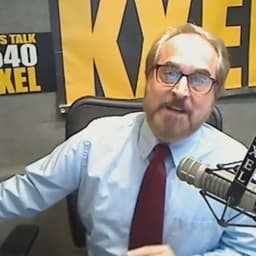
Michael Levine, Author of "Authentic PR"
KXEL Live & Local with Jeff Stein · Fri Aug 7, 2026
And as KXAL Live and Local continues, please to welcome via Zoom a return guest to the program.
He is the publicist and author Michael Levine.
His most recent book, which came out just a few weeks ago, is called Authentic PR, How Transparency Can Transform Your Business.
Mr. Levine, thanks so much for the time, sir.
Brother Jeff, it's good to see you.
It's been, I think, you indicated two years since I've been on your blessed station.
It has been, and I regret that we did not fill the gaps much sooner, but we will fix that going forward.
So you've had an extended career as a publicist, and this is at a time, I dare say, where the things we knew about reaching audiences, whether it is
from a microphone like this, whether it is as a publicist, the game is much different now than it was 40 years ago.
It's much different than it was 10 years ago.
It's remarkable.
One of the biggest changes, Jeff, of course, is that the metabolism rate of the world has unalterably changed.
The world is moving faster and faster and faster and faster and faster and faster.
than it did even 10 years ago.
So let's think about something kind of interesting or curious.
When Abraham Lincoln was assassinated in 1865, it took the average American six weeks to learn of his assassination.
So if you were an American in
any state you can think of.
It took about six weeks to learn of his assassination.
And today, that same thing would take about six seconds.
So what we're establishing, I guess, is that the world is going faster, faster, faster, faster, faster.
Therefore, the challenges for communicators, whether they be media, whether they be podcasters, whether they be business owners, whether they be documentary filmmakers, storytellers in any way, if you have a message that you're trying to communicate to the world, the pressures on you to be fast, relevant are greater than they were even 10 years ago.
So it's an interesting and challenging way in certain ways.
But as Bob Dylan said, Jeff, better start swimming or you'll sink like a stone for the times they all are changing.
It's only been a hundred years since we've had instantaneous mass communication with the advent of radio.
and now television and now these things we hold in our hands that we still call a phone, but I'm not sure anybody uses it to make a call even anymore.
That seems so trite.
So in an era where everyone thinks they are a communicator, how difficult is it to craft a very deliberate message and have it land where you intend?
How difficult is it?
I think
for people willing to adapt to the times in which they live, I think it's not as difficult as one would imagine.
If, however, you're stuck in your old ways, like Bob Dylan said, you better start so many or you'll sink like a stone for the times they are changing.
The reason I wrote Authentic PR, which Simon and Schuster recently published,
is because I believe it is the right message at the right time.
What audiences are craving?
Well, let's talk first about what they're not craving.
They're not craving BS.
They're not craving what I guess it was sometimes referred to as jive talk, right?
They're not craving that.
What they're craving is authenticity, transparency, and vulnerability.
And so I listen to radio and TV commercials and I see some large companies put out messages that are so obviously absurd.
So obviously not true.
Spectrum business.
We care about you, the customer.
Well, have you ever tried to call Spectrum or any large corporation?
and they tell you as they put you on hold for 20 or 30 minutes, your call is very important to us.
Well, really?
Well, if it's very important to you, why are you making me wait on hold for 30 minutes?
Why won't you allow me to talk to a live human being?
Anyway, I think audiences are craving authenticity, transparency, vulnerability, and if you as a communicator are honest,
Authentic, transparent, vulnerable.
I think you're going to find audiences responding well.
If, on the other hand, you're going to hide behind, again, what I guess used to be called jive talk or BS, people can smell that.
And they can smell it today by virtue of social media and other things faster and more profoundly than ever before.
I am reminded the other day I was at an auto dealership to get the car serviced and they had this wallpaper type music playing.
Sure.
And I had PTSD because it was the same inane music that Dish Network uses and I have spent far too many hours on hold dealing with Dish Network to get my service adjusted, etc.
And so
even in a situation where it's this inane filler, it's now having a negative effect on me because it's that earworm.
And what that message, that music, that nonsensical music sense to you is, hey, Mr. Customer, we care so little about you that we're going to put up whatever crappy music we choose.
And it hits you consciously and subconsciously.
By the way, I presume that Dish Network has a customer service department that's as awful as most large companies.
And so if I were talking to the president of Dish Network, I would say to him or her, dear friend, can I make a suggestion?
Go out and buy authentic PR and not only you, you should read it, but your entire leadership team should read it because if you don't,
In 10 years, you won't exist.
Is it a factor of how much messaging has been thrown at us in the last decade?
Is that what is leading people to crave the authenticity?
Because again, they've been inundated with old school spin and they're savvy.
A 12-year-old child
today sees more messages in power.
than a 12 year old child 30 years ago did in a week.
They're bombarded.
So how does one, as a communicator, stand out?
Well, one of the greatest ways of standing out is being authentic, transparent, and vulnerable.
People crave it.
You know, here's a good life lesson for us, Jeff, maybe, for business owners listening to this, for anyone.
In life, it's generally a good idea.
to fish where the fish are.
See, Jeff, if I came to visit you tomorrow and we decided to go fishing, I don't think we'd have a real good experience if we stuck our fishing pole in a pond that didn't have many fish.
Or if we took your fishing pole and put it in your bathtub, I don't think we'd have a good experience.
If on the other hand we went to a pond that had a lot of fish, I think we'd do better.
So where are the fish?
Where are the fish?
I think the fish are in messages today that are vulnerable, transparent, authentic.
People like it.
That's where the fish are.
So
fish where the fish are,
friend.
It is to some degree, I don't know if I want to say ironic, that may not be the right word.
But when you say, if you want to reach a customer, you need to be authentic.
You need to be transparent.
That's what good communication, whether it's
interpersonal.
You don't need to be authentic or transparent.
You only need to be authentic if you want to win.
If you want to screw around and waste time and money and energy, then communicate in an old-fashioned way where the fish aren't.
But if you want to be victorious in this new modern world, you better be authentic, transparent, and vulnerable.
So, and I think the companies that are having the most trouble are the large ones who think that they can just con their way through massive amounts of spending into victory, and it's just not possible.
So, if you are a business owner listening to the conversation.
Yeah.
and you either handle your own messaging or you hire someone because of the professionalism necessary.
Or you
had someone working for you internally
that does it.
Sure.
Or you do use it.
Yeah.
So what are the things you yourself as the, it's your business.
So what should you be looking for to make sure that the communication is ringing true with the audience in the way we've discussed?
I
think
first and
foremost, Jeff, would be wise for any communicator to try to think of their messages through the prism of the consumer.
The best way to know a customer is to be a customer.
The best way to know a customer is to be a customer.
Let's imagine you own a Chick-fil-A franchise.
Well, the first rule of success in running a Chick-fil-A franchise is attendance.
Show up.
and show up on nights and weekends and watch and see and explore and check and look and go into the bathroom and understand that when you are the owner in Chick-fil-A, your Chick-fil-A, people will treat you differently.
Send your friends and your family in.
Are they smiling, you know?
And look at the world through the consumer prison.
You know what I find Jeff the biggest mistake I find in businesses today is if you own a business today You're sitting someplace on the planet and you're deluged with questions Some are small some are medium some are large, but you're getting questions Coming at you all the time if you're an owner of business
The larger the business maybe the more questions, but you're getting questions and some of these questions are very small and some are large and some are medium but what I find businesses doing mistakenly is They're answering the question from the perspective of what's good for the owner What's good for the staff and what's good for the shareholder?
Exactly the wrong perspective
To hell with what's good for the owner.
To hell with what's good for the staff.
To hell with what's good for the shareholder.
What's good for the customer.
The customer.
The customer.
Now, let's imagine one person has a dental practice.
Let's imagine you're a dentist.
You have a dental practice.
All right, now I'm talking to this nice dentist and I say Mr. Dentist, what are your hours?
And the dentist says well, we're here Monday through Friday 8 to 4 and I'd say well, why is that?
And say well, that's the hours we've always had I'd say well, why is that?
He'd say well because
And what we learn in the conversation is the reason they have eight to four hours is because that's what's good for the owner, the staff, and the shareholders or the partners.
Now, if I then said to the dentist, well, Doctor, do you open on Saturdays?
He'd say, no, we're only open Monday through Friday.
I'd say, well, don't you think that some of your patients would like to come in on a weekend when they're working during the week?
It's a well, you know things they're busy and what he's really saying is I don't want to come in on the weekends That's what he's really saying.
I don't care about my customers.
I care about going to my son's little league practice or You know going to a boozy brunch of some type.
That's the wrong attitude We've got a common problems not through the prison.
What's good for the owner or the staff?
Well, what's good for the customer?
patient, how can we be of service?
Does that make any sense?
Well, it makes perfect sense.
And it's also why there are some of these businesses, thinking of health care in particular, they're open until seven, one or two nights a week,
or they should be, they should be.
And, and whether they want to open on nights or weekends should be answered to the question, is it better for the customer, the patient,
It's staggeringly simple, but it is opposed because, unfortunately, America as a society and a culture has become, frankly, a bit too relaxed in its approach to customer service.
We all demand it, but we won't offer it.
Correct!
Oh my God, I would print that as a t-shirt, Jeff.
Hold on let's do that again.
We all we all demand good customer service But we won't provide it Because providing it requires extra effort it requires extra work extra time extra effort extra smiling I mean, you know Starbucks is a massive American corporation.
It's having a lot of problems right now
The problems are they got away from their original mission.
Their original mission was to create a coffee house that was a third place, not home, not work, a place you could go, a third place, not home or work.
You could go and read the newspaper and talk to a friend and go on a first date or interview a person for a job or visit with a friend.
It was the place you could go.
comfortable chairs, warm lighting, and gracious barista service.
The baristas were very hospitable because Starbucks had a policy that if you work 20 hours a week, you got health insurance.
Well, so the baristas said, well, Jesus, I don't want to lose this.
I better be pretty friendly.
But over time we get lazy and complacent and now if you walk into a Starbucks You're basically walking into a to-go coffee shop with good lighting Where the people the baristas look constipated that didn't have to happen McDonald's another corporation going through vast changes now.
Well, my goodness gracious
If they had stayed consistent to their original core principles, they wouldn't have been in trouble in the first place.
But that requires hard work, hard work, not 40 hours a week.
It requires nights and weekends and really exceptional effort for exceptional results.
Authentic PR, How Transparency Can Transform Your Business.
The latest book by our guest, Michael Levine.
It is published on Rare Bird Books.
It came out.
It's
Simon and Schuster.
Rare Bird is the LAP's published, but Simon and Schuster published it.
Available, of course, on Amazon or any place, and there are books that are sold, and I really commend it to you, not just if you're a business owner.
If you're anyone
trying to get a message across in the world.
That would be my perspective.
And we have many, many, many, many case studies in the book.
So what that means is you can buy this book and go out and get a yellow highlighter and just yellow highlight the thing and steal every damn idea for your own.
So that's cool.
That's the whole point.
Mr. Levine, it's always a privilege.
I thank you, sir, for the time.
As always, we'll do it again sooner than later.
I hope so.
Jeff, you're terrific.
I see why you've been successful.
You're quite good at what you do.
You're very kind.
Thank you, sir.
Thanks, friend.
Bye.
I am pleased to welcome now on the news line, Richard Serret.
Mr. Serret is the writer of Tales from the Rock and Roll Twilight Zone.
Mr. Serret, thanks so much for taking the time and good morning to you, sir.
Hey, good morning, Jeff.
Great to be here.
Give us a sense of your background that led to this interesting collection, Tales from the Rock and Roll Twilight Zone.
Well, I was one of those kids buried in his parents' basement, spinning vinyl records.
in the seventies, I was in the classic rock at a very young age, but what jumped out at me was, and maybe even it eclipsed the importance of the music to me, although I love the music, was these unanswered questions.
And I would subscribe to these different fan magazines and read all about, you know, the untimely deaths of people like, well, they were my heroes, Jimmy Hendrix and Janice Joplin and Brian Jones, the founder of the Rolling Stones.
Later, of course, Kurt Cobain, Amy Winehouse, coincidentally all dying at the age of 27.
And it's not just limited to those.
I mean, the list of famous musicians who died at the age of 27 is as long as my leg.
But we focus on sort of the big four.
Brian Jones, Jim Yurkes, Janice Joplin, and Jim Morrison all died at 27 within two years, beginning in July 69, ending in July 1971.
So the book is really, not just exploring unexplained depths, but also the occult connections, the intelligence organizations and their connections to rock and roll.
Now, as somebody who started spinning those vinyl records on the radio in 1980, we're contemporaries, I think, in that respect, you know, I think when you're into the music or it's part of your job, like it was mine,
you focus on the business aspects.
It takes a bit to step back and start connecting dots.
And again, the list of those who left us at age 27, staggering, you know, cross generations, et cetera.
At what point did you start, you know, pulling the threads and tying some of this together?
Well, those kind of questions sat with me in the back of my mind, my subconscious mind for many years, and then I began my career in talk radio, and I started out as a producer.
And then in 2000, I got my first show, so I was behind the microphone, and I had to figure out how am I going to fill three hours on a Sunday initially.
And these sorts of questions just popped up.
Well, why don't I talk about these things?
Not only, you know, the world of rock and roll, the high strangeness in all aspects of life, UFOs, the paranormal conspiracies.
And so once I had a platform, that's when I started to dig a little bit deep.
So on some of these, you were talking about the connections, whether it's the occult or etc.
What are some of the things that if someone picked up
a copy of Tales from the Rock and Roll Twilight Zone at the bookstore and starts paging through.
What's going to jump out at them where they're going to say, well, I didn't know that?
Well, the entire first section of the book, the first four chapters, are dedicated to the Beatles.
The section is called The Beatles Enigma.
In the first chapter, I suggest, and this is based on research and a lot of years of thinking about this,
that the Beatles and Beatlemania was not this organic cultural phenomenon that washed ashore beginning in February 1964 when the Beatles performed on the Ed Sullivan show.
The idea here is that the Beatles, although incredibly talented, they were unwitting participants in a major Psyop.
The Beatles or the British Invasion was not a metaphorical invasion, it was an actual invasion and British Invasion, particularly the Beatles, were engineered.
Perhaps
with the cooperation of intelligence organizations and the Tapestock Institute, which was studying mass psychology, human behavior on a massive level.
So, and this is going to be a simplistic question, but I'll just ask it directly.
How did you come upon that?
And why have we not heard more about it?
I happened upon a a
former graduate student of the great Marshall McLuhan who was Canadian who Canada's Communications guru and of course we know the is that the phrase the medium is the message Marshall McLuhan believes that secret societies controls of the arts and his Graduate student Nelson Saul sat down with me and walked me through for example John Lennon and
In 1969, came to Toronto to perform with the Plastic Ono Band, and he wanted to meet Marshall McLuhan.
They sat down and they talked for hours, and Marshall McLuhan basically laid it out on the table for John Lennon that he was a puppet and that the Beatles were, again, unwitting participants, and that they were being used to shape culture and to subvert America's youth.
Just after the Kennedy assassination, of course, the youth culture, they were traumatized, they were vulnerable.
Income to Beatles almost like being inserted into a program like software to normalize drug taking and questioning authority and institutions.
And basically to sow discord.
Again, they weren't aware of this.
McLuhan set Lenin straight.
According to the legend, he stormed out of that meeting.
with Yoko Ono, very angry, but came back several hours or maybe a day later, sat down with McLuhan again and slowly began to realize that McLuhan was right.
And this perhaps shapes Lenin's career going forward.
Did it inspire him to quit the Beatles?
Perhaps.
Did it influence his music?
Well, in 1973, he released an album called Mind Games, and he explores some of these themes.
Now, this is something that I'm intrigued by.
They're unwitting participants.
So how does that play out?
Because I could understand if there were influences that controlled the lyrics, the songs, the manner of presentation, et cetera.
And I could see how in essence they might be unwitting if they just went along with it because they trusted managers or forces, et cetera.
But how does it work in the broader scheme?
I'm not disputing the point.
I'm just trying to understand how it works in the broader scheme.
Yeah, exactly.
It's a great point, Jeff.
Well, and I don't, you know, I don't have a document that shows that some shadowy figure with MI6 handed John Lennon a guitar and send him to Americans that now go subvert the youth.
Yes.
There is no smoking gun, but we do know, for example, and first of all, you know, in terms of them being unwitting,
They had the machine behind them.
What separated the Beatles from some very talented buskers that perform in the subways or on the streets here in Toronto?
I've
always asked myself that question.
Why are they not performing at huge stadiums and why don't they have huge record deals?
They are incredibly talented.
Well, they didn't get the machine behind them.
And I think the machine, whether it's very powerful executives that recording studios,
and an overlap with intelligence groups.
We know intelligence groups have always been interested in winning the hearts and minds of people.
But when you look at, for example, the Tabistock Institute in London, which was after the Second World War, it was focused on mass behavior and manipulating behavior and how to influence and perhaps subvert certain groups, youth culture, for example.
There's also a lot of overlap between what the Tabistock Institute was, and I like to think of it as Sigmund Freud meets the Ministry of Defense.
A lot of overlap between what Tabistock was doing and MKUltra.
And for example, up here in Canada in Montreal in the late 50s and 60s, Dr. Ewan Cameron, who was funded by the CIA, was part of an MKUltra project.
He was taking women who were admitted to hospital for postpartum depression.
exposed them to massive doses of LSD, wiped their memories clean, and then subjected them to something called psychic driving, which is a psychological torture where you're forced to listen to an endless message on a tape, like a reel-to-reel tape recorder, playing over and over and over again.
To have a stock understood the power of that, and if you look at popular music, particularly in the early 1960s, incredibly repetitive, you could say it was a form of psychic driving.
And we know that music, and they understood this as well, they, the Tabasco people, MKUltra, other intelligence groups, understood that music can bypass the analytical mind, and it can affect emotion on a very deep subconscious level.
It can evoke feelings of anger, melancholy, rebellion, joy, certainly as well, euphoria.
The Muse Act system, we're familiar with the term elevator music, and we used to hear Muse Act playing in grocery stores.
That's a deliberate attempt to, again, subvert the analytical mind and it can affect your nervous system, your heart rate, your blood pressure.
They used to pipe it into factories during the Second World War in America to promote greater productivity because it was essential to national security.
And they knew that certain musical passages, notes,
Certain guitar riffs, for example, could, again, affect your emotional state, at a subconscious level, and certainly your heart rate nervous system.
It could increase productivity.
That's the power of music.
Richard Serret is our guest.
The book released a few weeks ago, Tales from the Rock and Roll Twilight Zone.
The subtitle, as I see it here on Amazon, eerie enigmas and supernatural secrets from rock's darkest corners.
He's kind enough to join us live on News Talk 1540KXEL.
Music appeals to us in different ways at different times in our respective lives.
There are times I'm listening to a CD in the car.
This is starting to show my age, but I'm listening to a CD in the car and All of a sudden a song comes on that I've listened to a hundred times, but it hits me in a very different way and I'm just wondering given everything that you're talking about here Some of this is potentially instantaneous, but we all come to some of these songs at different points or they mean different things to us a different Passages in our lives.
How does that all fit into it?
Or is that just, if you will, those who are promoting this playing the long game?
They may not get Stein the first time he hears the song, but ultimately we will.
It almost sounds like you're describing what we used to call an earworm.
You know, a tune gets stuck in your head.
It plays again on an endless loop sometimes.
Yeah, but what I'm talking about and no, you're right about your worms.
Those things.
Yeah, good luck.
You shake your head trying to knock it out.
But I'm talking about the lyrics hit you a different way where all of a sudden like you're listening and you're hearing them almost for the first time.
It's not the repetition part.
It's the part of, you know, I've heard this song before.
I know the lyrics, but wow, they have different meaning to me because of where I am in life.
Well, I think music is one of those things that recruits almost the entire brain simultaneously.
When
you hear a song for the first time, your brain is constantly asking, what's the next note?
What's the next word?
And every time the song surprises you just enough, not too much, it rewards you with a little burst of dopamine and a pleasure chemical.
That's why a great hook feels almost addictive.
Then you add lyrics and and unlike ordinary speech lyrics are fused to rhythm and melody and Neuroscientists believe that combination makes them far more memorable than spoken words because they're encoded in in again multiple parts of the brain at once So you're not just remembering the language you're remembering emotion rhythm rhyme melody even when you were You know the first time you heard it even
it seems fresh every time.
That's why people can't remember what they had for breakfast, but they can still sing every word of a Beatles song they first heard 50 years ago.
That's such a good point because as you were talking, I was thinking, all right, if you were a kid in school and you were supposed to memorize and recite a passage of something, you know, that was a Herculean task, but you could recite to this day
Again, lyrics of songs that you remember from 40 and more years ago.
Tales from the Rock and Roll Twilight Zone is the book.
Richard Sarrett is our guest.
You get it wherever you get your good books these days.
I'm looking at Amazon, but you use whatever platform you prefer.
Now, I'm looking at this really detailed, illustrated book cover.
And I'm calling you from Iowa.
And so when I see a headline and a pair of spectacles and the headline says Buddy Holly plane crash, I have to ask how does February 3 1959 fit into this book?
Well, there's a section in the book.
It's all about premonitions.
after death communications.
And I got to know Peggy Sue Garen.
Of course, she's kind of the first goddess of rock and roll.
She was Buddy Holly's high school sweetheart.
His muse, the inspiration for two Buddy Holly in the cricket tunes Peggy Sue and Peggy Sue got married.
Peggy Sue passed away a few years ago, but we got to know each other a little bit.
And we sat down and she told me about a series of premonitions, three dreams, in fact, that she had very vivid, powerful dreams.
She never claimed to be a psychic or
have what's known as second sight.
It never really happened to her before or after.
But she related these dreams to Buddy Holly and pleaded with him not to charter an airplane.
He was in the midst of the winter dance party tour.
They were on a dilapidated converted school bus with no heat driving through Iowa and the Midwest in February.
All the members of the band, including Carl Bunch, the drummer, were suffering from
influenza, Carl Bunch had crossed by, he was admitted to hospital.
But in
these dreams, Egisu clearly saw a small plane go up and come down and crash into a snowy cornfield.
And each time she pleaded with Buddy not to charter a plane, I mean, he had married by this time, someone else, and she had married, but they still stayed in touch.
And he kind of brushed it off with a laugh and thanked her.
But
Of course, we know that, uh, February 2nd, the evening of February 2nd, after performing at the surf ballroom, uh, he got on that plane with a big bobber and Richie balance and the, uh, he crashed and it played out almost exactly the way that Peggy Sue Garen saw it.
Now, in addition to that, she also believed that Buddy's plane may have been sabotaged.
What led her to believe that the Premonition?
No, uh, this came from, um,
She traveled to New York with Buddy when he was recording.
I think they were called the Temple Studio Recordings.
And they also stopped off in Philadelphia to appear on American Bandstand with Dick Clark.
People may not know that prior to the Paola scandal, Dick Clark was, well, he was not the most likable person.
He became known as America's oldest teenager.
He was a tough character to deal with.
And after appearing on American Bandstand, the producers came up to Buddy and said, we'll take the check back, please.
And Buddy Holly looked at the producer and said, when Dick Clark starts writing and performing the music, he can have the check back.
He stormed out of there.
But Buddy Holly quickly determined, Buddy Holly quickly established himself as a maverick.
He was young.
He was not going to take any nonsense.
And shortly after that, in Philadelphia, coincidentally, perhaps or not, where American Bandstand was produced, boxes and boxes of pirated songs were uncovered.
Buddy Holly recorded on the melody lane, I'm sorry, on choral records, on choral records.
But these Buddy Holly records were stamped with the melody lane labeled.
In other words, they were pirated.
And this became part of the Paola scandal.
Buddy Holly was prepared to testify at the
the Payola scandal hearings that began by Bobby Kennedy.
Peggy Sue was adamant Buddy would have been there to testify and she would have been right alongside with him.
Buddy Holly was not liked by a lot of recording executives because, well, he had a mind of his own and he wasn't going to take nonsense and the recording industry at that time was like the Wild West with a lot of corrupt individuals and mobsters involved.
The mere fact and again he was a young man But to say when Dick Clark starts writing and performing the music he can have the check back I just love that I mean again that that that's part of the That's part of the tail That makes the music industry so interesting tails from the rock-and-roll twilight zone Richard serrat the author you get it wherever you get your good books these days This is fascinating stuff.
I really look forward to diving into this deeper, and I hope you'll come back again
Anytime, Jeff.
Thank you.
Thank you.
Take good care now.
And Mr. Sarrett joined us on the news line from his home base in Canada on News Talk 1540 KXEL, where Iowa comes to talk.
News Talk 1540 KXCL where Iowa comes to talk much of the baby boom generation has moved into retirement or at least given serious consideration to what retirement will look like a little further in the future.
They might also be thinking about things like senior housing and long term care.
We're going to talk about those topics now with Chris Hansen, CEO of Western Home Communities and Western Home Services in Cedar Falls.
Thanks for being with us.
Oh
my pleasure great to be with you.
So baby boomers in a lot of ways have reshaped American life from their early years to today.
Now what does it look like to be a senior after the baby boom generation has arrived at that point?
You know I totally agree with you and by the way just for transparency sake I am a boomer right in the middle of it.
I think the
The big thing is, boomers are, we've just never been willing to be labeled.
And so even the whole term senior, I think a lot of us are, like myself, are major sufferers of boomeritis where we've thought we could beat the aging game by trying to stay in shape and so we've worn all our joints out and everything else.
The thing is, we've been talking about the boomers are coming, the boomers are coming, especially in the, and I refuse to call what we do in industries, but in the profession of taking care of people or being with people.
And so they just are ready to continue to live their lives.
The old mold is not going to work.
The sheer numbers that are coming at us.
I think people don't really understand that only about nine or 10% of seniors actually reside in senior housing.
So if you think about that, especially from a Western home perspective, if we doubled all of our infrastructure as the boomers come through, we would still only be taking care of.
that same 10%.
So it's incumbent on, I think it's going to force us.
I know it is and we're adapting to it.
We've got to figure out how to allow boomers to stay in their own home.
How do we bring service delivery models around that?
I think the cool part is we're not so tech adverse.
And so again, nobody wants big brother watching or anything like that.
But if we can get some technology to augment living
with freedom, living as independent as possible for as long as possible.
That's what we're all about.
Well, let me come back to what you've seen change since you worked in this field initially to today as this different cohort of people are coming through.
What are the demands that they're bringing or asking for?
We are absolutely putting the traditional care model, my
marketing team and the team out there will tell you that I don't really want to hear about care anymore.
If people don't understand that we care for and care about people, then we've totally missed the line.
What we're evolving into, and again, I think it's what the boomers want, kind of back to that whole boomeritis conversation, people want to live well.
And they want to live as independent as possible.
They want their own autonomy as much as possible.
We're no longer, especially the boomers, you're not going to force them into a situation.
They're going to demand.
A lot of them have the resources.
I know resources is going to be a problem for a lot of folks.
But at the same time, so what we've got to do is flip this thing on its head.
We're totally moving to a wellness-led model.
Instead of having clinicians involved.
We love clinicians But it's just like you and I we we go to the doctor when we've got an issue We don't call the doctor to see how we're going to live our life today And so that's that's really what we're trying to do.
So with that comes all kinds of amenities I call it or we call it holistic wellness things present physically, but what's the root cause could be spiritual could be fiscal could be
you know, emotional.
So how do we try to figure out how to engage with the folks that are working with us and help them live that best life again as independent as possible?
We're talking with Chris Hansen, CEO of Western Home Services and the Western Home name very familiar to folks in the Cedar Valley for services provided to seniors on a wide spectrum.
Let's talk about folks maybe in their late 60s, early 70s, potentially retired, but into that stage of their lives, maybe by a year or two, they've gotten a routine, they're comfortable.
What are they thinking about when it comes to things like long-term care, the future of where they're going to live?
What should they be thinking about as well?
Thank you for the first part of that.
What are they thinking?
They're not thinking enough.
We all live in a little bit of
in time in space in and I think we do do a good job of planning but senior living especially thinking about if things start to become more acute or more frail Where are those services going to be provided?
Historically there's been enough supply providers Cedar Valley is very blessed with a lot of really good providers
But we've had that availability I will tell you that going forward as this again the boomers have been coming the boomers have been kind of the boomers turn 80 this year the beginning and so The pressure is going to be you're not going to be able to just pick up the phone in the future and say hey I've You'll fall and I can't get up and I need help and I'm gonna need to come in here.
Do you have anything available just to
Pure numbers that are coming at us are gonna very much limit that So the second part of your question, what should they be thinking about?
It should be getting in their mind's eye Who they would want to have provide services either in home or if it needs to be some type of in building care or in facility care Who you would want
Provide that and then build some type of relationship affiliation with them Like with us.
We've got our wellness center.
That's external therapy programs We thrive era in home.
Okay, but try to get a relationship built so that you Have a plan for when and if that does happen plus just as age progresses that there could be some opportunity for you to Be part of an organization
acknowledging a certain level of unpredictability that comes with with life is there a timeline like how far in advance is it even possible to try to tab that to know I've got my ducks in a row or maybe I need to be working on this because I've reached this stage whether that's an actual age or something else
you know it's it's hard sometimes you know it's
Kind of like how long you're gonna live.
Thank God we don't know because if we did know that's all we would concentrate is on on that date and literally thank God It's kind of a bit of the same thing.
I can tell you we're working with a With a with a company out of out of California that Actually takes about a 12 12 to 15 questions
And then they put that through 500 million different data points, if you can believe that.
They're very insurance and actuarial.
And by comparing those data points to those questions, they say they are within 65% accuracy of whether you will need some type of, I'm gonna call it long-term supports and services, and what type you might need and for how long, which gives you some basis.
If you answer another 10 questions, they actually say they can get that up to an 85% accuracy.
And so then we're back to, do you really want to know?
But again, having that relationship, having a relationship with a organization provider that has multiple levels in home care, independent living, and by independent, it really means
Taking care of helping with a meal helping with bi-weekly housekeeping bi-weekly flat laundry If you're really more of a congregate independent, it's not necessarily about health services at that point, but it can certainly evolve
We're talking with Chris Hansen, CEO of Western Home Services based in Cedar Falls, and you alluded to the fact that there is quite a bit more senior housing and senior options than there might have been, say, 50 years ago in the Cedar Valley.
It seems like it's expanded tremendously, especially if you're along and south of Green Hill Road in Cedar Falls.
Has the demand...
Still outstripped that supply.
I know you made reference to some percentages, but are you optimistic that the supply can catch up to the demand?
No, I'm not.
Now that's in the near term.
And of course, you know, we've all got to use our futuristic hats too as well.
So what could some of today's senior housing actually
Camille into down the road But I think the other thing that gets to be a little of a misnomer is that this Baby boom generation even though it's what 20 years wide or long That hump in that 20 years is major
And with all of the advancements that continue to be made and living well and all of that, that life expectancy is going to go along.
I kind of an old farm kid, so I kind of kid that this isn't just a little feeder pig that's going through this python.
This thing is a, we're going to be here for a while.
And so I think what I can tell you what we're looking at is instead of thinking that we're going to continue to force people through
our bricks and sticks.
We're moving away from that.
And what we're doing is we're working with how can we go out into the community?
We've got a fortified life plan, which is a continuing care retirement without walls.
But we've also got our whole Thrive Arra brand, which is our wellness, but also our home and community based services.
And so how can we help keep people in home instead of needing to transition?
How can we avail our
wellness, our therapy, our nutrition, all of the things, spiritual care, all the things that we provide for our residents on our campus.
But how can we also do that externally and virtually in all the different ways?
And again, tie it to some more technology.
The big topic that we haven't talked about
government safety net programs that we've been hearing for a long time may run out and not look at least like they do now at best.
Is that something that keeps you up at night?
So right now I happen to be the chair of the Iowa Health Care Association and through my 30 plus years I'd been public policy chair of both trade associations.
So I spend a lot of time in Des Moines and in DC talking about Medicaid in particular, Medicare, Social Security.
The answer to that is yes.
Especially with some of the pressures that are today, none of us want to pay more taxes than we have to.
But at the same time,
We we also have to support infrastructure in order to take care of people and take care of people the right way As far as I'm concerned on the Medicare side I would also encourage people as a as a provider in the profession and space Make sure you really research if you're going to truly switch to a Medicare Advantage plan It all feels the same from that
tober to november uh sign up period and everything that comes across the tv it feels like that's all the same uh if they if anybody's gonna need services but you can get a little more your dental and vision or sneakers or gym memberships and all that i would just tell people to make sure and look at who that provider network is for that plan if you are really looking at a medicare advantage plan and then just really
continue to listen to the news talk radio but just what's going on in the world about you know delay delayment in whether somebody can actually go and getting pre authorizations and all these things because it can be a very nasty business and it can be where people think they're lined up to do something and that provider might actually not even take that group as a payer so I would just
caution everybody to really spend some time talk with ship talk with to make sure where you're going With that program and that those providers that you would want to utilize actually accept that as a payer but as far as You know the threat around Social Security the threat around Medicare just solvency and Medicaid I think that gets a little hyped up for
today's senior, you know, I'm not going to get political here, but it really does just boil down to math and data.
When this was all formulated, it was built on a Pego system.
So all the employees that were working, then that would go in and that would cover those that had retired on a social security basis and Medicare.
Well, part of the challenge has been, especially the boomers and as we've
as a country kind of outsourced a lot of these jobs, that pay side, again because of the sheer numbers of boomers and we're totally outweighing the workforce here, that pay go system is a real challenge.
And especially as we live longer and all those things.
So I know it is, it's a very hard political conversation.
But I can tell you how we, you know, a lot of the ways we run our organization is we try to
grab all the data we can.
We try to manage by being able to measure what that data is saying.
And there's just going to come a time when that Pego system is as it is right now, it's going to get in danger.
And again, not trying to be political, but we've got to keep bringing jobs back to the country.
And we've also the whole immigration conversation.
This workforce to take care of the boomers is going to get harder and harder.
So we've got to figure out, in my opinion, we've got to figure out the legal way to get people here to support and to take care of our people.
We certainly are going to do it ourselves, but just the sheer numbers, we're going to run out of some talent.
Chris Hansen is CEO of Western Home Services based in Cedar Falls with us sharing some insights on the current state and future state of senior care and senior housing.
Thank you for being with us on this program.
Oh, again, my pleasure.
Thanks for asking.
This is the station where Iowa comes to talk.
News Talk 1540 KXCL.
And it is always a privilege to go to the news line and speak with America's Money Answers man, Jordan Goodman.
Jordan at moneyanswers.com is how you can reach him anytime.
And if you'd like to contribute a thought or a question to this conversation, send it now.
Text line is 319-235-1540.
Email Jeff at KXEL.com.
Jordan Goodman, good morning, sir.
Great to be with you, Jeff.
All right, so the unemployment numbers came out today.
The net shows one thing, but if you separate government from private, it shows a little something else.
Give us your analysis, please.
Well, it was still a big, big miss, big negative compared to what people expected.
They'd been expecting about 80,000 jobs to be created in July.
We had a loss of 23,000 jobs.
That was a big swing.
The unemployment rate actually went down.
to 4.1% from 4.2.
And that's because a lot of people are leaving labor force.
They've given up looking for jobs, so they don't count, basically.
Not that the number of jobs is going up, but the number of people looking for them is going up.
The two previous months were revised downwards sharply.
June was revised downward from 57,000 jobs to 20,000 jobs, which is a loss of 37,000.
And then May was revised downward from 129,000 to 63,000, a loss of 66,000 jobs.
So those two previous months combined a net loss of 103,000 jobs on top of the loss of 23,000 jobs in this latest month of July.
Now, one of the things that may have affected it is the World Cup caused a lot of employment in all the places around the country where they were having
hotels and bars and you know the stadium is being filled and after that ended uh... people think maybe that cost uh... more unemployment in the leisure hospitality space but that's kind of a a one-off factor uh... the other thing is uh... uh... so the average hourly earnings we're up to thirty seven dollars and sixty two cents which is an annual wait
rate of wage growth of three point two percent which has been coming out had been three point four now it's coming down a bit so okay i'm going to go to the specific areas now jeff so private sector jobs were up thirty thousand government jobs were down fifty three thousand specific areas uh... mining down two thousand construction up twenty two thousand i think that's all building a identity of centers manufacturing up five percent
Wholesale trade up 5% retail down 19% transportation up 10% Information technology up 11% financial activities down 14 professional business services up 18 Private education was up 25,000 but public education was down 50,000 and health care was up 22,000 and As I mentioned before leisure and hospitality was weak down
40,000 as the World Cup ended, and the final number, labor participation rate, 61.4.
That's been coming there.
Remember, they've gotten up to almost 63, and now it's down to 61.4.
So overall, I would say quite a weak jobs report.
Now, it's interesting the way the markets reacted to it.
They reacted very positively, actually.
Great that nobody has jobs.
The stock market went up.
It's been on a tear this week, going up dramatically.
and interest rates fell sharply, the tenure treasury fell sharply.
The feeling is that this might take the pressure off the Fed Reserve from having to raise interest rates if the economy is that weak.
Is it not a good thing to see positive growth in the private sector as opposed to the public sector?
In other words, and I made the distinction before you answered the first question on this, we have positive job growth in the private sector.
Without the government propping up the payrolls on the other side or is that too simplistic of you?
No, I think that's a good good It's always better to get private sector than public sector jobs.
I agree But if you look at the public sector remember the total public sector private sector jobs was 30,000 All of it's in building AI data centers when you get down to it.
We're feeding those that's the strong area of the economy but as you know in your area agriculture is weak and
you know, manufacturing is weak.
We just have this one bright spot where they're spending hundreds of billions of dollars building all these data centers.
So all the people employed there and all the construction workers and all the computers and the chips and piping and everything that goes into it, that's booming.
But that's about the only bright spot we've got right
now.
You mentioned the Federal Reserve.
They do not meet in the month of August.
They meet again in September, but this is more data that they would have to consider and
the markets are reacting as if this is a good thing.
The way they're looking at it is it takes pressure off the Fed Reserve from having to raise rates.
People don't think they're going to lower rates, but at their September meeting, the current thinking before this number came out was like 60% of economists think they were going to raise rates, and now that's down to like 40%.
We still have on the other side of the ledger inflation, and we've got oil prices that have been
all over the place here, but that's feeding into the economy.
So it's certainly part of the Federal Reserve Board.
In the last meeting, there was a nine to three vote.
The three votes were to raise interest rates because they were worried about inflation, particularly because of oil prices.
So that inflationary impact is being offset by this weak unemployment number.
In the 1970s, they used to call this stagflation.
The economy is not growing and you have inflation at the same time.
So it's kind of feeling like that right now.
Jordan Goodman is America's Money Answers man.
Jordan at moneyanswers.com.
He joins us live on News Talk 1540 KXEL.
On again, off again, on again, off again, the conflict with Iran and that's affecting
everything with regard to trade in particular of course oil and the gas we pay at the pump because as you have taught us many times it's a global market.
It is and even this week we've gone back and forth several times we have a peace deal they're shooting at our ships at the same time and it's very unclear to me which way it's going to go I would say the betting would be we're not going to have a peace deal
because the Iranians basically do not agree with what we're asking for, which is that the straight-up form moves be an international-free waterway, no tolls being collected or anything like that, or them controlling it.
They have to give up all their nuclear ambitions, which I don't think they want to do.
Stop funding all of your proxies, Haslah, the Houthis, Hamas.
I don't think they want to do that either.
But they're getting bombed to smithereens whenever they don't comply with what Trump wants.
So it's unclear which direction is going to go, but I'm betting that the war is going to escalate more.
And the straight-up form is not going to be open.
But the market moves on hope.
And oil had gotten up to about $90 a barrel, and it went down to about $73, and now it's about $77, all based on the prospects of peace and war.
So it makes for a very volatile time.
We are concerned about the cost here.
But as you have noted, it's not a cost issue for folks in Europe, especially as they look toward winter.
It's having availability at any price.
That's correct.
That's correct.
Because remember, Europe had been living off of Russian natural gas for a long time.
And starting with the Ukraine war in 2022, it's been four and a half years here.
They kind of weaned themselves off Russian gas, and they were getting
They're biggest natural gas from Qatar through LNG.
And the Qatari refineries got bombed and are offline for five years.
So that alone is really going to hurt Europe.
And oil as well.
So yes, it's price, but it's also availability.
And you're already seeing it in some places.
You see gas lines.
You're seeing industries shutting down or having fewer days that they're open.
airlines, you're grounding planes.
I mean, that's just the beginning.
This is going to go on.
We've been tapping into our emergency reserves around the world as well.
We're going to run out of those at some point.
So if this Iran situation and the Strait of America does not get open soon, it's going to cause a lot of pain, not only in the higher prices, but in literal shutoffs of energy, because we don't have the oil and natural gas people need to survive.
Yet the oil companies are displaying rather hefty profits.
Yes, they're enjoying the situation very much.
So this week, Saudi Ramco's profits were up 33%.
Exxon's doubled.
They made $14 billion in the quarter alone.
Chevron's profits rose by 500%.
And all the rest of the BP...
Yes, they were enjoying higher oil prices.
Now, it goes the other way, too.
When oil prices go down, they go down.
But they make a nice target, I guess you might say, for all of people's pain.
The president has already pointed out that these companies are making huge profits.
That was before these reports came out.
But again, nothing will change on that.
You've already mentioned that the stock market
Just keep setting another record.
We're just becoming almost immune to it because of this AI thing, which again, some of us are a bit skeptical about.
Why isn't, you mentioned the Treasury now at 4.7.
What's leading to that?
Is it a global market failure or what?
Well, long-term interest rates, the 10-year Treasury is up to about 4.6, 4.7, something like that, which is the highest it's been in quite a few years, back to I think 2008.
There's several factors.
First of all, we continue to pump out new treasuries, issuing a lot because of the deficits we have to keep funding.
A lot of foreign governments are not buying our treasures.
In fact, they're selling our treasures.
China, Japan, Canada, Europe, all the big buyers of treasuries are kind of going elsewhere for it.
So there's fewer buyers and more supply.
That means the price goes down and the yield goes up to attract higher buyers.
That is expensive to the government, and they have to pay more for debt.
It adds that interest burden.
This year alone, in 2026, the government has to turn over $9 trillion worth of debt, meaning it's coming due from past years, and it has to be refinanced into new debt.
It's obviously going to be refinanced at higher rates than it was originally issued.
Remember the COVID years when interest rates got down to zero, the Fed brought rates down to zero for several years, those were the good old days for issuing treasuries at very, very low rates.
Those bonds are now maturing and they're going to be renewed at four, four and a half percent.
So that's why the interest burden alone is now over a trillion dollars going to keep rising as the turned over bond refunds continues to add to the interest burden.
Jordan Goodman is America's Money Answers man.
Jordan at moneyanswers.com.
He joins us live on News Talk 1540, KXCL.
One of the things that I knew when I spent about a quarter century teaching college students is the cost of education kept going up and the indebtedness that these young people were taking on just kept going up and going up.
And these were at either public universities or private colleges.
I did not work for a for-profit college, but the debt was the same for that sort of situation.
Now a federal court has intervened and
They went crossways with the Department of Ed on the topic.
That's right.
So this federal court ruled that 170,000 students around the country were defrauded for these for-profit colleges that provided basically worthless degrees, and that federal court erased $11 billion in related student loans to those for-profit colleges.
The Department of Education was against this, supposedly they're supposed to be for students, but
They said, no, no, we want to defend the for-profit colleges.
This is the largest class action settlement in American history, and it was led by something called the Project of Predatory Student Lending.
See, this is what we need in our lives right now, Jeff, is the project for predatory student lending.
And so a lot of people are going to get relief by being defrauded, if that makes you feel better.
Well, the college still got money and the government guaranteed it, right?
So it's sort of like I just paid the tuition.
That's right, but you didn't get much for it.
No.
Well, neither did the students, apparently, as far as an education.
But I mean, and I could see why, and I may not have this right, but I could see why the Department of Education would oppose the move simply because the government's on the hook.
That's correct.
Yep, it was not a good deal all the way around.
A lot of these happened even during COVID, where people did remote schooling, you know, and they went through the course, but it didn't really give them skills.
They were marketable skills when they came out.
So, yeah, this was a big scandal, I would say, the largest class action settlement in American history.
And yet, if you will, the bad guys, they got the
money.
know I keep going back to this but
you are correct
okay I don't like that the students were defrauded and harmed okay I don't like that but I also don't okay
anyway how can you get the money back from them they're gone many of these for-profit colleges disappeared
they went out of business then there were some in this area and in some very well-known names that used to be staples of advertising on late night infomercials and television and just poof
probably
not doing that anymore
probably left the left bills in their wake as they took the cash oh goodness all right let's let's talk about mergers and in a very different context I was talking with the guest yesterday with the concept of labor unions and the feeling that the mood in Congress was shifting a little bit
on the topic, and so we're some of these companies gonna hurry and take care of some things before Congress passes laws that might not be as favorable.
There are some corporate mergers that are on the docket right now because they believe there's a favorable government, government regulators who are favorable to it.
They're rushing to get those done before things change.
That's correct.
So just to give you some total numbers, the first half of this year,
There were $3.2 trillion of mergers announced, which is up 45% from a year ago.
And some of the big ones going on right now, Nextera Energy wants to buy Dominion Energy for $67 billion in the utility space.
Cisco is buying Jetro Restaurant Depot, which is a supplier to restaurants for $29 billion in the food distribution business.
Stripe.
wants to buy PayPal for $53 billion, which would be one of the largest financial service mergers ever.
And this is exactly the situation.
It's not as much laws.
It's really more with regulators.
And the feeling is the Federal Trade Commission and the Department of Justice Antitrust Division are saying, go ahead, merge away, the bigger the better.
And that is the exact opposite you had.
Remember under Biden and you had the FTC with Lena Kahn?
She was striking down mergers all over the place.
So the big companies and even more their investment bankers who make Billions of dollars and fees on these things are saying move ahead right now while the environment is still there because it may change
Obviously folks in this area are paying attention when you said next-era energy They're the folks who are trying to resurrect the payload nuclear power plant to provide energy for wait for it full circle moment here a data center
So, look at that, the conversation comes full circle and we didn't even plan it.
Jordan, do you have any sense that some of these are in trouble?
I mean, they're rushing to get it done.
No, the
Justice Department and FDCs, they go for it.
Complete opposite view from under Biden, which was stopping things.
For example, it stopped Spirit Airlines being taken over by JetBlue and then Spirit Airlines went bankrupt and disappeared.
And I think there are times when mergers do make sense.
And that was an example of it.
And they stopped that as well.
They stopped Kroger's and Albertson's getting together.
But these are huge.
I mean, these utilities, that is going to be a monster utility, having Dominion and next-door energy in the same company.
But that's what they're saying.
Go for the big mergers and the investment bankers are using that as a marketing tool.
Say, do it now while you still can.
Always great insight from America's Money Answers man, Jordan Goodman.
Mr. Goodman, thank you so much for the time.
We'll do it in two weeks, sir.
All right.
Thank you, Jeff.
Appreciate it.
Take good care now.
Jordan Goodman, he's the best.
America's Money Answers man, and he joined us on the news line from his home base in North Carolina on News Talk 1540 KXEL, where Iowa comes to talk.