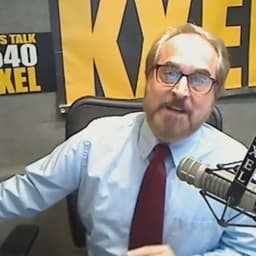
It is always a privilege when we can connect with Mark Mix.
Mr. Mix is president of the National Right to Work Committee, and he is also president of the Companion National Right to Work Legal Defense Foundation, nrtwc.org, for the Right to Work Committee.
Mark Mix, good morning, and welcome back to KXEL.
Sir, how are you?
I'm doing great, Jeff.
Good to be with you.
And did I hear your interview in Dustin Hoffman?
Yeah, people get that confused.
He's a great guy, however.
If I told you there are two ends in Hoffman, that's not going to help in radio, but that's how we separate it.
We should just tell people, come meet Dustin Hoffman at the Iowa State Fair next week and see what happens.
That could be entertaining.
National Right to Work Committee, you folks have been so generous with your time sharing the work that you do with us here on the radio, but for those who may have missed the conversation,
The National Right to Work Committee, the National Right to Work Legal Foundation, two separate groups.
Who are you, folks, and what do you do?
Well, Jeff, really, basically, it's very simple.
We believe that workers should have the right to join unions if they choose to do so.
But we also oppose the idea of forced compulsory unionism that, unfortunately, is written into federal law, been in federal law since the 1930s.
We promote the cause of right to work, and we believe that workers should be able to choose whether or not they want to financially support labor unions.
You know, and this argument, Jeff, gets more and more intense all the time because of the increased nature of the political side of organized labor.
Not the workplace negotiation side, not the representation side of workers, but the political side of it.
And that makes a big difference.
Iowa's a right to work state.
You can join a union if you want.
It's one of the 26 states that have law in the books today, as we talked.
And it's a very simple concept.
Again, you know, a lot of people would say this is somehow against the worker.
It's not.
We believe in supporting the worker in their choice of where they want their money to go and how they want it spent and giving them the choice and the chance to hold union officials accountable for the work that they do.
You know, as the calendar turned to August already, we're looking ahead to Labor Day heavens.
Where did this year go?
But as Labor Day 2026 approaches, you're at that.
majority of states that are right to work, but that was not easy to get to, first of all.
And there's always somebody wanting to take that away in a broader level.
So what's the status, if you will, as Labor Day approaches?
Yeah, Jeff, you know, we've got battles in a couple of states, states like Nevada and Arizona, where there's talk of attempts to repeal the right to work law.
The good news is there's been one state that's done that.
We had a right to work law in Michigan for 10 years.
And as soon as the Democrats took control by one vote in the House and one vote in the Senate, the first bill, one of the first bills they introduced in the Senate,
And the House was the repeal of the right to work law.
And within a couple of weeks of convening that legislature, they repealed the right to work law.
So workers in Michigan again are forced to pay dues and fees to keep their jobs.
Those battles are pretty intense, as you might guess.
We've had a couple of battles in Iowa.
I think we go back to 19, gosh, I want to say maybe 1995 or something like that, where we had a pretty big battle there when Chet Culver was the governor.
He never talked about repeal of right to work.
he decided that uh... one felt safely elected he and uh... speaker murphy decided to push a bill we had a fairly significant battle out there at the time and and i got maybe this is two thousand five if i'm you know i get my bandage i i get ten years on either side of an event so yeah so uh... anyway we we we fought that back in and haven't had really had a lot of discussions about uh... repeal of right to work in iowa specifically but we've had quite another state like virginia this last session they tried to introduce the bill to repeal right to work that was stopped there
But there's always something to do.
There's no question about that.
I'm still getting over the PTSD when you said Governor Chet Culver.
So it's fine.
It's all fine.
So you've got an acting labor secretary in place now at the time Trump 2.0 was getting off the ground.
Your organization was very clear that you did not think the original Trump choice for labor secretary was the best one to Advocate on behalf of the administration and what it said its policies were she is no longer there for a variety of reasons give us a sense from
the desk of the National Right to Work Committee from your perspective about the acting secretary and this nomination process going forward midway through the Trump term.
Yeah, Jeff, you know that that nomination back at the beginning of this term of Trump's administration was one that we opposed out there that actually went public and Convinced the prayer would try to convince the president that it wasn't a good idea This was a basically a what appears to be a stop to Sean O'Brien the president of the Team Struzio Union Basically, he went to Mar-a-Lago with Lori Tevez-Durimer who was just recently had been defeated in her race for reelection for the House of Representatives Morgan
And he said, President, this is the person you want.
He can bridge the gap between union members and your administration.
And frankly, bridging the gap between union members and the administration was really a false dichotomy that O'Brien painted for Trump, because basically she was supporting organized labor officials.
She was one of three Republicans that supported the repeal of all the right to work laws in the country and supported a bill called the PRO Act, which was a
tremendously large sock to organize labor union officials not rank-and-file workers the union officials there's a little bit of that going on still in the united states congress we can talk about that acting secretary keep following uh... is then uh... nominated and he's working his way through the confirmation process initially enough jack if you remember under the by the ministration uh... president biden the uh... he basically nominated julie who was the labor secretary in telephone you had all kinds of problems out there with corruption and fraud and other things
And she could never get a vote, and she could never get an affirmative vote by Democrats or Republicans in the Senate.
So she was this acting secretary for basically the entirety of the Biden administration.
There was some special rule that allowed her to continue serving even though she couldn't get confirmed.
With Sondering, it doesn't look like there'll be a problem.
Keith Sondering is the acting secretary.
He was in the Trump administration at the Department of Labor in the first term at a couple different agencies.
He's been confirmed by the Senate, I think, three times on three different occasions.
for three different jobs so the only thing that would change now would be you know democrat opposition to a trump nominee not to the fact that he's already been confirmed by the senate a couple times with you know fairly
comfortable majority.
So we'll see.
He's doing well.
The Department of Labor, despite what happened in the first year and a half, where travel across the country was somehow investigated and found wanting and a relationship with a security guard and some other things that were going on that were not very representative of the Trump administration.
forced that labor secretary out of where she was.
But we're pleased right now.
Shondling has a decent record, so we'll see what happens as we go forward.
I can't help but point out.
So the union leader says to the administration, she can bridge the gap between you and union workers.
I would respectfully suggest that gap was bridged and it was called the election.
It was the union leadership that was out of step.
Yeah, absolutely, Jeff.
That disconnect, you're right, and that's an important point to make, and I'm glad you made it.
The disconnect between rank-and-file workers that are represented by union officials and the political stands of union members and the union, well, political stand of the union bosses, if you will, or the leadership is quote-unquote, is that the disconnect is going larger and larger.
I mean, just Michigan, we got another example of it on Tuesday.
You know, despite the United Auto Workers Union giving their support and their endorsement to LCI Ed,
You know, most of the union members, as we understand it, in Michigan voted for the other person in that race, and that's what made the race so close.
But yet, you had the United Nurses Union, National Nurses Union, you had the American Federation of Government Employees, you had the UAW, you had, gosh, I think it was one or two other big unions that endorsed IED.
But yet, you know, and what was promoted as a 15%
Uh, you know, majority likely had on election day turned into a 1% election for this guy.
And frankly, the margins were so close.
You know, the union, the UAW is taking credit for his nomination.
I don't think most UAW members, I'm just guessing here.
Um, but I think the evidence is pretty clear that the most union households are not on the same side as the union officials that claim to represent them.
Mark mix is our guest.
Mr mix is president of the national right to work foundation national right to work.
I'm sorry, National Right to Work Committee, National Right to Work Legal Defense Foundation, nrtw.org for the Legal Defense Foundation, and nrtwc.org for the National Right to Work Committee.
He's kind enough to join us live on News Talk 1540, KXEL.
Explain to me the Faster Labor Contracts Act of all the things that are pending in the Senate.
As we are speaking, the Agriculture Committee is meeting to mark up the well-delayed
a five-year farm bill.
It may include E-15, it may not.
There's a nomination for an attorney general.
They want to hold Dr. Fauci in contempt.
There's all manner of things they want to do before they bail for four weeks.
So I have paid no attention.
So I have to ask, what in the blazes is the Faster Labor Contracts Act and do we need it?
Yeah, Jeff, this is what was part of the so-called PRO Act in the last Congress that was basically co-sponsored by every Democrat in the House and the Senate, and its ability to dramatically expand the power of organized labor.
Specifically, Senate Bill 844 has been introduced by...
Republican Senator Josh Hawley of Missouri, and what it does is it puts the federal government in the position of imposing working conditions on workers, whether they get a chance to vote on those conditions or whether the employer agrees to those conditions of employment for up to two years.
So the bill says this, once the union is certified, there's a vote to certify union, meaning the union's been quote unquote selected, that negotiations must begin within 10 days and those negotiations must be completed
Completed Jeff for every single condition of employment in 90 days.
And if they're not, this is one of the things that we call the great lies in our world is the government will come in and the government's come to help.
And so the government will send in a federal mediator or mediators and they will go to the workplace.
Actually, they're not mediators.
They're arbitrators, and they will go to the workplace and decide within 30 days of what the conditions are going to be, and they will propose the conditions of employment.
If neither side agrees to it and neither gets to a quote-unquote contract, the federal government will impose working conditions on a private business for up to two years.
That's this bill.
It's dramatically expanding the power of government over labor in the country and employers in the country.
And really, it's a cause without a need, frankly, because these two contracts, they do get negotiated.
Unions are in place in about 6% of the private sector workforce across the country.
But this is a federal government position by a Republican with another Republican co-sponsor from Ohio by Bernie Moreno.
And then, now just recently, Senator Roger Marshall from Kansas has co-sponsored the bill.
And it's pending in the Senate.
It's already passed the House of Representatives, Jeff.
This same bill was discharged by 220 Democrats and, well, 211 Democrats and nine Republicans.
It got voted on the House for its past.
It's moving over to the Senate.
We haven't got any clue about what's going to happen to the bill in the Senate at this point.
But this is a really dangerous bill, expanding dramatically the power of government in the private sector workplace.
You and I have talked on the radio before, Mr. Mix, about the fact that Senator Hawley has an inconsistent record on some of these issues.
That's probably the best way to phrase it.
And no politician is going to be lockstep with what you may want or not want.
But his positions have been somewhat curious.
And I suppose Senator Marshall, I think, is up for reelection this year.
I don't know if that, if he has election year, found election year religion on this issue, so to speak, or what, but it's disturbing.
And I get it, Missouri, you've got some metro areas.
Ohio, obviously, metro area.
I sort of get it, but...
Well, again, as you say, it's a solution in search of a problem.
Is it not?
There's not even good data on this topic of other than a few anecdotal episodes.
There's not much data to suggest this is a pressing need that the US government needs to address.
Yeah, I would agree with that.
And, you know, it takes some time to talk about how you're going to run a business with a third party involved between employees and employers.
And when you're talking about literally every condition of employment,
I mean, that's something that comes not only with economic interest and concerns, but also just the idea of how you operate a business.
And the fact that the federal government would say, hey, you've got to have this all decided within 90 days.
And if you don't, well, we'll make sure you get one within the next 30 days.
And again, the employees wouldn't even get a chance to vote on whether or not they accepted it or wanted it.
So it's a real problem.
And again, government intervention has proven to be
That's your mental just about everywhere it's occurred.
And, uh, obviously there's a lot, there's a different view on this, but Jeff, it just doesn't make any sense.
And, um, and you're right.
I mean, Iowa is the best case study for politicians changing positions prior to elections.
When you get to see it four years going, running and, and they go, they come to see you publicly and tell you that their positions change from time to time based on how they think they can fair in elections.
And I was the ground zero for that, frankly.
We call it the ethanol question.
in this state.
It's, you know, will you eat the deep fried butter on a stick at the state fair and pledge undying devotion to ethanol?
And that's really the marker.
This may be an unfair question and so don't hesitate to tell me if so, but John Deere, Deere and Company, came to one of the large unions and said, yeah, the contract's not up for two years, but here's our offer.
We'd like you to approve it.
In other words, they've made a proactive offer.
Is that to some degree because of some of the shifting landscape?
And again, I don't expect that you know that situation and the union claims it's low-balling and they're not going to negotiate early, et cetera.
But the bottom line is, will businesses given this potential change or the climate change, if you will?
with certain Republicans.
Is that going to lead businesses to take different action to try to forestall what could be coming down the road legislatively against them?
Well, in this case, Jeff, I think the legislation at this point covers newly certified unions.
So if there's an existing contract, that's a different story.
Look, if the union is going to start negotiating two years in advance, I think that's probably a good idea.
Because waiting until the last minute means that there'll probably be some kind of disconnect or some argument or some disagreement that causes people to walk out.
And certainly that's not what you want.
So the fact that the union would say, hey, let's get started, let's start negotiating because we've got a contract that'll expire in two years.
I think that makes sense.
In this case,
The economics change dramatically, Jeff.
I think we see that sometimes.
They change faster than people can predict.
And certainly, the economics drive a lot of this about what a company can do or what they can't do.
And unions look at it oftentimes, and they look at it as a zero-sum game, that somehow, if the business can win in something, then they lose.
But that's not the case.
and i think the attitude about that are changing with workers they understand in person particularly employers looking to keep people on staff to to produce things they've got to take care of their employees and we know that and i think that's one of the reasons why the union density is dropping across the country unit officials would argue something different but i think employers understand taking care of employees is you know kind of priority number one when it comes to running a business or being successful in business and being able to make a profit frankly
Now, and you're right that the legislation is obviously for new businesses, but I'm just getting a maybe I'm misreading it.
You're there in the in the sewer as you're properly calling it.
You've taught me it's not a swamp.
It's a sewer because Sewers are man-made.
Yes, which I give you credit for coining but
If the climate is shifting, if it just feels like the landscape is turning, prior reliable votes aren't anymore, I just wondered if maybe that's gonna lead businesses to potentially try to preserve what they can before the law comes in and makes it difficult.
Exit question, and thank you for this extended conversation.
Are you optimistic about the movement that you've devoted so much of your career to?
Jeff, I'm always optimistic.
I mean, it would be hard to wake up in the morning and go to work and do what we do in helping to protect individual employees across the country.
At some point, we're going to win this.
Forced unionism didn't belong in the law.
It doesn't belong in the law, and it won't belong in the law before too long.
I don't know when that's going to be, but look, the idea of unionization was a good thing in the past.
It's a good thing today, and it'll be a good thing in the future, but there's no place for force and compulsion.
Unfortunately, that's where the battle lines are drawn on
Some private organization getting the privilege to say to you, Jeff, you've got to pay us in order to work.
That's wrong.
The American people knows it's wrong.
But being right doesn't guarantee wins in the public policy process.
You've got to keep working, organizing and mobilizing and educating.
And that's what we're trying to do here at Right to Work.
What a fantastic summation to the whole conversation.
National Right to Work Committee, nrtwc.org.
National Right to Work Legal Defense Foundation, nrtw.org.
That group helps people in the state of Iowa.
They have a history of helping folks across the country.
But if you have a question about your legal rights or what your employer is doing, they'll answer it.
The cost is free.
And if there needs to be action taken, they're the people to do it.
Did I get that right?
You did, Jeff.
Thank you.
Always a privilege.
Mark Mix, president of these great groups.
I appreciate it.
Take good care, sir.
We'll talk sooner than later.
All right.
And Mr. Mix joined us live on the news line.
Mark Mix, President, National Right to Work Committee and National Right to Work Legal Foundation joined us on the news line live from the sewer.
I think they're in Virginia.
That's not enough of a buffer, but it's something.
Here on News Talk 1540, KXEL, where Iowa comes to talk.
NSKXL Live and Local continues.
Time to tell you about an annual event which is coming up this Saturday at the Lynn County Fairgrounds in Central City.
It's CVARC, the Cedar Valley Amateur Radio Club's annual Hamfest.
And I'm joined on the news line by the Hamfest Chairman, he's David Kreib.
Thanks so much for taking the time, sir.
Thank you for having me.
So tell us first of all, Cedar Valley Amateur Radio Club.
You pronounce the acronym C-VARC.
Who are you folks and what do you do?
Well, we are a club, a gathering, a group of amateur radio enthusiasts who have banded together here in eastern Iowa to promote the hobby, to utilize the spectrum that we've been allocated and promote this amateur radio hobby.
All right, now let's talk about that spectrum because, again, it used to be, I think, that people were much more in tune with different radio band frequencies.
I remember growing up, now this dates me about 50 years ago, but I had a radio that had an AM band, an FM band, the weather band, the police band, you know, you switched all these different bands and people were more cognizant of that sort of thing.
But now that we have all of these different communication methods out there, I'm not sure that they fully
understand.
So let's talk about the band that you in particular are focused on.
Well, broadly speaking, the ham radio operators have been given bands of frequency in the shortwave band, and that should evoke images of
Communication during wartime or emergency shipboard communication, these frequencies can travel around the world.
And also the higher frequencies that are often used by broadcasters, FM, TV.
And these frequencies have a more local tendency.
And so for community communications,
uh... we have been given these frequencies which we use also so there's many different frequencies bands to choose from and uh... we get the most out of them
and tell us again why this is important in today's world with all the different communication outlets and ways to get messages across because my personal experiences the more different ways we have
frankly the less reliable each one is and the the original methods of mass communication or point-to-point communication this way just seem to still be the best but you tell me why is this still such a necessary thing for communications
well it's it's a question that that has many different answers
Broadly speaking though, what our ham radio operators enjoy is a communication medium that requires no infrastructure.
So if you think about cell phones, for example, which have become the predominant means of communication in this past generation, you have fiber optics and towers and repeaters that are necessary for a person to make a
send a message from point A to point B. And as we recall from our recent experience with the Dratio, this infrastructure can be fragile.
And people who are concerned about maintaining contact with loved ones have turned to a more robust solution, which is absolutely exemplified with what we use within the ham radio community.
So, Hamfest is, as I believe I mentioned, an annual event that we have talked about here on the radio, and it is coming up this Saturday, 8 a.m.
until 2 p.m.
for the events, and it's at the Lynn County Fairground in Central City, so what is Hamfest and who should be involved?
Well, this is...
our annual gathering.
Primarily it is pitched as a commercial enterprise where we can buy and sell equipment.
If you are looking for a piece of equipment, you are likely to find it here.
With so many people active in the electronics and communication industry here in Iowa and Cedar Rapids particular, there is a lot of equipment around.
And so this
at face value is a big swap meet with tailgaters and indoor vendor tables and a great opportunity to answer questions, but as well it's also a social gathering.
All of our people come out to this event and the people that you may have only talked to on the air, you have a chance to meet them face to face.
And it's a great learning opportunity.
If you are a person interested in STEM education, science, technology, engineering, et cetera, this is your chance to get a hands-on experience to learn about the things that you may have only seen on the internet or read about in books.
It will be present there.
It occurs to me that
a lot of folks over the course of time have hobbies and then they fall away.
And when you're talking about this form of communication, my sense is that those folks who really get into it and had gotten into it at a younger age, this is not one of those things that they put away.
In other words, I've got a stamp collection in the closet and I'll never go back to it, but I have a feeling that you have folks who have been lifelong aficionados
And they love working multi-generationally to bring new people along.
Oh, absolutely.
We have individuals within our group who have been licensed longer than you or I have been on this planet.
And the amount of knowledge and experience that is accumulated over that time is really kind of staggering.
But so many of us were bitten by the radio bug as young people
with a radio hidden under the pillow at night, so you can listen to that ballgame from 500 miles away.
And as we mature, as we learn more, the interest transitions from being a consumer of communications to being a participant.
And that's a thrill that never goes away.
So many of our group have been active.
Again, as I mentioned,
many, many decades.
We're speaking with David Kripe.
He is the chairman.
Hamfest is coming up this Saturday from Seavark, the Cedar Valley Amateur Radio Club, Lynn County Fairground in Central City.
The events are from eight in the morning until two in the afternoon and he joins us on News Talk 1540 KXL and in an effort to really get the young people involved.
Nowadays we call it STEM as an offshoot of that, but
It's free for those folks and pretty small cost for the adults who come along with those kids.
Absolutely.
$10 entry fee and free for those 18 and under.
There are a lot of other folks who are involved as well, various groups.
You can't do this all by yourself.
Well, absolutely.
Aside from the outward
Appeal to amateur radio operators.
We see people who are interested in antique radio Audio files who may be looking for that rare vacuum tube are likely to find it here If you have an interest in electronics or even just a curiosity this is an event where where you will definitely find your your curiosity tickled
the flea market stuff interests me because again there are folks who
will take their wares to various events, but sometimes you have very narrow focus in terms of either as a patron what you're looking for or as a vendor what you have.
This is a perfect marriage, isn't it?
Well, absolutely.
A lot of us within the hobby can kind of focus on a narrow bit or narrow branch of technology, but you are likely to see many, many different
aspects of communication from broadcast listener enthusiasts, shortwave listeners to people who like to utilize satellites or bounce signals off the moon.
It's a very broad, broad hobby and you'll see many aspects of it displayed here.
And the good thing about it is it's a nice Saturday and you're straddling the noon hour and food is available on site as well.
Well that's one of our
favorite aspects.
Old guys, we enjoy our meals and the Lynn County 4-H is providing that for us this year.
Always a favorite part.
Now, there's also a way for folks to be certified and to do amateur radio testing.
Talk if you would about that as an ancillary part of Hamfest 2026.
Well, absolutely.
Many of our listeners know, Ham Radio, Amateur Radio is a licensed service.
It's expected that you have some knowledge of what you're getting into, because this spectrum that we use is indeed valuable.
It's granted to us by the federal government.
And in order to use it properly, it's expected that we have some licensing training certification, if you will, in order to do so.
And these
Exams are offered multiple times through the year and indeed also this weekend.
They are available on a walk-in basis.
Just show up and let your presence be known and we can accommodate you and wish everybody the best of luck.
How did you first get involved in this?
This is something I know that you've been involved with in this capacity for a number of years, but how did this bug first bite you?
Oh goodness, well, I've been interested in radio from a very young age.
Built a crystal radio with an oatmeal box and a spool of magnet wire and have been playing with it, oh goodness, 50 plus years.
first got licensed in 1981 and having worked as an engineer in many different electronics companies, found a good community of encouragers who have promoted the hobby and maintained the interest through the years and it's been a joy.
And this has become family activity for many folks.
Well, yeah, you will see multiple generations in the hobby.
In my case, I've got two kids who have licenses.
My wife is licensed and looking to get a couple of nieces on the air here in the next few years.
The Sea Vark, Sea Vark stands for Cedar Valley Amateur Radio Club Hamfest is this Saturday at the Fairgrounds in Central City.
And the best place to go online for information, let's make sure that I get this right, it's w0gq.org.
That's w0gq.org.
And we're talking about this event, but you folks get together on pretty much a monthly basis, the hobbyist, the enthusiast, correct?
Oh yes, we meet once a month, details for the
Meetings are listed on the website, but we gather.
We have a brief business meeting and an informational and entertaining program following that.
Meetings are free to attend and we encourage interested people to come out and learn more about what we do.
And if you just have questions, you're not sure about the whole thing, you want to get back involved.
Well, there are a lot of folks who want to share that information with you and you can find that contact information again on the website, w0gq.org.
And again, that's where you can find all the information under the events tab for this Saturday's Hamfest at Lynn County Fairgrounds.
Best thing for you after all these years, David Kreip, of being the chair of this event.
Absolutely.
It has been such a fun.
It's so rewarding to do.
And I get to see my friends that I get to see once a year at this event.
That's enough reason for me.
Plus, you got food.
That's always a good reason.
The Cedar Valley Amateur Radio Club, Hamfest, it's Saturday.
And again, go online.
You can either just search for it in the search engine or go online, www.wzerogq.org.
Mr. Crepe, thanks so much for the time.
And best of luck with this great event on Saturday.
Thank you so much.
This is where Iowa comes to talk, News Talk 1540, KXEL.
News Talk 1540 KXCL, where Iowa comes to talk.
During an Iowa Almanac segment earlier this summer, you might remember hearing about aviation pioneer Helen Huntley.
Her story and others are included in a new book about women flyers.
Lady Daredevils, American Women and Early Aviation.
The book is just out within the last several days.
The author is Dr. Barbara Ganson, who joins us this morning.
Thanks for being with us.
Oh, thank you.
It's a real pleasure to be here today.
So you are a history professor at Florida Atlantic as well as being a pilot yourself.
So was there a moment where you realized you wanted to collect and share all the stories that are in this book?
Yes.
Actually, I have an Iowa connection.
My mother was in the Army Air Corps.
US Army Air Corps, but was trained as a whack there in Des Moines.
So she went through boot training, boot camp right there in Des Moines.
And I had brought her to come live with me in 1999.
Her health was declining.
And by training, I work on Latin American history, but then I couldn't go off to Latin America.
So I thought, well, I like to connect with her interest.
And my family is also from Ohio, one of the aviation states.
Whereas a child, my mother had gone to the Cleveland Air Races.
So I do have a chapter on the great race across America, the women's first transcontinental air derby.
That really brought me to the topic.
But I wasn't a pilot at the time, and I thought to really understand these women aviators, I'd better learn to fly.
And so I became a private pilot and also an owner of a 1965 Cessna 172.
So let me ask about that before we talk about some of these women who you feature in this book.
Just did you find that having that personal experience really did change your perspective or did it open up some doors to some stories that you may never have found out if you weren't around the airport and around other pilots?
Yeah, I think both definitely.
Again, in terms of analyzing
some of the aircraft, you know, the accidents of the era.
And then it opened up opportunities to become a member of the 99s, the International Women's Pilot Association.
And through that, I was able to interview a number of women aviators, including Eleanor Smith, who was 99 at the time, and actually voted the best pilot, woman pilot in 1930.
So, yeah, having that perspective, it really improved the quality of my manuscript.
We're talking with Dr. Barbara Ganson, who's the author of a book that's just out as of late July, Lady Daredevil's American Women and Early Aviation.
And I made reference to Helen Huntley, who is a woman who...
really found some unique ways to get involved in aviation at a time where there weren't necessarily a lot of opportunities.
What struck you about her story?
Well, what was interesting about her story is that she was one of the original eight stewardesses that flew for United Airlines, but she was a pilot and she was
Iowa's first licensed pilot in the state of Iowa.
So that set her apart from some of the other women aviators at the time.
But of course, you had Amelia Earhart that came to live in Des Moines during her formative years.
She and her sister were the first girls in Des Moines to wear bloomers, but at the time were gym clothes.
and was, again, a very active child and young person.
But there were other women aviators.
from Iowa that had interesting stories.
Nita Schnook was born in Illinois, but she went to Iowa State and got her license in Iowa.
And she was Amelia Earhart's first flight instructor.
And she was a farm girl.
But then went on to get married, gave up flying.
But Amelia, in contrast, embraced having a career in aviation.
and began the first woman to fly across the Atlantic as a passenger in 1928, and then as a solo pilot in 1932.
Interest
was certainly there.
What sort of barriers were there for women in this era, the first few decades of the 20th century, who saw flying, saw this new industry, this new opportunity, but maybe didn't have a real direct route to getting to participate in it.
either had to find some ways to do it like Amelia Earhart or had to find some other ways to prosper in the industry?
Well, there were different routes into aviation.
Sometimes some of these women had a brother that was a pilot and so there was an interest on the part of the family.
Ruth Law comes to mind.
She was
an early woman pilot who got her license in 1912, and her brother was a daredevil parachutist.
She flew aircraft, she flew the longest cross-country flight in the United States in 1916, and became a very successful aviator, earning as much as $50,000 a year in the late 1910s.
She also volunteered to fly for the US Army during World War I, along with Catherine Stinson.
So her story was interesting.
But you have other women that were very affluent and could afford to own aircraft.
And there were more than 108 women that own aircraft during the interwar period.
But I think the route of becoming a parachutist opened up a lot of doors.
early 20th century.
If you were a parachutist, you'd be paid like $200 per jump.
Today, skydivers pay to jump out of aircraft, but at this time, you could actually earn a living.
And that brings to mind Phoebe Omley.
I would say of all the women from Iowa, she was born in Des Moines.
She was the most accomplished women aviator.
She actually fell in love with her flight instructor, but she was like a, she was a parachutist and set a record early on, jumping from about 15,000 feet.
And she would do like a double parachute jump where she'd have jumped out of a plane and then had two or three parachutes and would do free fall in between.
But she went on to
become the humanitarian flyer during terrible floods in Mississippi.
She and her husband helped rescue numbers of people that needed their assistance by putting platoons on their aircraft.
She also, in 1928, became the first woman to compete against men in a major air race.
and then went on to win the Women's Air Derby in 1929 in the Light Division.
And then she was in charge of the Women's Air Marking Program.
She campaigned for Franklin Dillon Air Roosevelt all across the country.
And then he assigned her to very important executive roles within government in which she helped test.
the different types of landing gear and aircraft.
So a really incredibly accomplished woman.
There's a wonderful book about her.
There's a historian by the name of Janane Sherman about V.B.
Ombley.
So she's very notable.
We're talking with Dr. Barbara Ganson, who's the author of a recent book just out this summer, Lady Daredevil's American Women and Early Aviation.
If we think back to, say, 1920 or that decade, the 1920s, the aviation industry was quite a bit different than it is today.
There weren't airlines in the sense that we would think of them.
If someone wanted to get into aviation, man or woman, what were the opportunities that were out there and how would they begin to do that?
Well, sometimes in the case of women, actually there were a lot of opportunities.
for women during this era.
There were employers that would pay their employees or secretaries to learn how to fly.
If you were gifted at riding and became a journalist, you could earn enough money to take flying lessons.
Another way was just if you hang out at the airport, there were some women aviators who
at a very young age, as young as 10, would become an airport kid and get rides.
There's one by the name of Ruth Schaefer-Flescher, whose father was an airport manager, and that was very helpful.
So having connections do make a difference.
But these women did face a lot of obstacles.
Financial was one.
In the case of Elizabeth Bessie Coleman, the first
woman of color to earn her license because of prejudice, she had to learn French and go to France to learn to fly.
But she was backed by a newspaper, the Chicago Defender.
And so women, if you really wanted to fly, there were opportunities.
And these women had a lot of grit.
Bessie Coleman, one of her most famous quotes was,
I refuse to take no for an answer.
So these women, even though they may have suffered engine failure, they would get out and fly again.
Well, well, most people would just kind of give up and say, well, this is just far too dangerous.
But there were women, too, who realized that this was a dangerous activity.
And so they chose other directions, particularly those that got married and want to have children.
They realized, well,
That was another rewarding experience for them.
You've told us about Helen Huntley and Phoebe Omley and Netta Snook and some others with Iowa Connections.
Were the opportunities in Iowa and the Midwest any different than they were in other parts of the country?
Were they better?
Were they more difficult to find here?
I would say they'd be better because of the terrain.
Again, that open terrain like Kansas was ideal.
Wichita produced a lot of women aviators.
You had major manufacturers, particularly out of Kansas, Oklahoma, Texas.
There were opportunities in the Midwest, probably better than some of the other states.
Well, finally, Dr. Ganson, where do you find stories like this about people who were doing pretty exceptional things but who may not have been getting the same sort of spotlight as someone like Amelia Earhart, obviously?
Well, you have to be able to visit a lot of different archives.
You know, often I would go to public libraries.
I spent two years going through the biographical files at the National Air and Space Museum Archives in Washington, D.C.
There are wonderful collections, like private collections like that of Catherine Stinson and her sister at the University of New Mexico.
So again, you have to travel quite a bit and seek out stories.
More recently, ancestry.com is helpful.
So you can see what kind of connections women aviators had and their family experiences could show up there.
Well, certainly some remarkable women and their stories chronicled in Lady Daredevil's American Women and Early Aviation.
The book is just out here this summer.
The author, Dr. Barbara Ganson, Professor of History at Florida Atlantic University.
Thank you for being with us to share some of the stories.
Well, thank you.
A real pleasure, Tim, to be here today.
Thank you.
This is the station where Iowa comes to talk, News Talk 1540.
TXEL.
Welcome back to Insight on Business.
Grateful you're listening to us from wherever on the planet you happen to be.
We have with us a returning guest.
Deb Brown has been with us in one shape or another since November of 2013.
Can you believe it, Deb?
That's been a
while.
Crazy, isn't it?
Yeah, it's been a while.
Wow.
And you and Becky McRae, which is Save Your Town, you guys
were with me that November morning, years ago, when you first started.
Is that accurate?
That is accurate.
Yeah, she did.
She had come in to tell him to visit.
Um, you know, as a friend had come in to visit, we'd been doing 140 character conferences.
Remember those?
Yeah.
And it was at that point around November 2013.
We said, well, let's work together.
Let's try something.
So let's, first of all, let's clear the deck and talk to me about what is it that your group does?
What is the name of your group and what do you do?
So it's Becky McCray and Deborah Brown, our co-founders of Save Your Dot Town.
We work with rural communities.
One of the things we do is the survey of rural challenges.
And the reason it's so powerful, it's because rural people tell us what their challenges are, instead of, oh, some media going in and figuring out what they are, right?
And then we take those challenges and address them, often in keynotes, onsite visits, webinars, all kinds of different ways.
We speak at national...
conventions and that sort of thing as well because we are both rural people and we get it and we listen to what people are telling us.
Yeah and I think and I didn't do the research
completely, but I believe here in Iowa we have 99 counties and I believe that only six or eight of those counties actually grew in population over the past five years and most of our rural communities and counties have been losing population and I suspect, Deb Brown, that that may be what's been going on across the country or are things changing?
Actually, the numbers are not indicative of what's really happening.
My personal belief, we know that younger folks are not having kids, so family sizes are going smaller.
Our baby boomers are leaving as in hopefully going to heaven leaving, right?
So that changes things as well.
And I choose to look at it like the best people are left to do the best things they do.
Yeah, and one of the things about that change in demographics is you're absolutely right.
Um, younger people are waiting longer to have families.
Their, their families are much smaller than what they were 50 years ago.
And that all has a direct impact on the quality of life in many of our rural communities.
So when you're, when you're out there.
And if I remember correctly and we've had this discussion in the past actually you and I went to Webster City one day and had lunch Remember that
I do Absolutely at the gridiron
actually at the gridiron.
Yes, we were we did an out-to-launch segment there and it was lovely by the way and You know we talked even then
And that's back in 2017, I think it was.
We talked even then about what rural communities could do to reimagine themselves.
Can you speak to that a little bit?
I can, actually.
One of the things that we see is the play between the old way of doing things and the new way of doing things.
So when I talk about old way, it used to be that a select group of men made the majority of the decisions for the community.
And that no longer works.
It's changing.
Everybody can now be involved in quality life and new business and entrepreneurship, all those things that matter to rural people.
So we're seeing more and more involvement from people in the community and newcomers to the community as well.
So that's one thing you can do is welcome the newcomers and have them be involved in decisions about your community.
Iowa State University did a 99 town study over 20 years, and everybody either lost something, gained something, major disasters, missed me, kind of, it was everything everywhere, right?
But what they found out, the commonality was that communities that thrive, survive and thrive, are the ones that are open to new ideas.
and welcoming newcomers.
Yes.
And one of the switches in demographics are the large amount of female entrepreneurs in large and small towns.
Yes.
Yes.
Definitely.
Finally.
Yes.
Definitely.
Yeah.
I shouldn't say finally.
They've probably been there all along but weren't getting credit for
it.
Right.
The things that we've seen in many rural communities that
are around the Greater Des Moines Metro is where we headquarter at, are things like small restaurants and bars and flower shops and businesses along bike trails, distilleries, there are breweries out there and all of these things, you know, don't have to happen in a
urban environment, they can happen in a rural environment.
As a matter of fact, I remember a family trip that we did in Wyoming a long time ago and we drove 28 miles to a steakhouse and people in Wyoming think nothing of driving a half an hour or 45 minutes to go to dinner.
And that happens here in Iowa and in many locations of the rural United States.
Yes?
Yes on the regular and you know in our survey Michael we don't just they don't just tell us about challenges
they also share about the overlooked assets and those include things like entrepreneurship and the social bonds natural resources of course
The workforce that's there is dedicated, and surprisingly, or maybe not, broadband has progressed and is in more and more places.
So these are things that make it possible to have that small business, the opportunity to try your idea out.
People don't care if they drive 30 minutes for a good steak.
And that's just a given these days, I think, for rural people for sure.
Yeah, it is a remarkable transformation.
One of the other things I think that we've talked about in the past are towns that have buildings that may be vacant.
And from what I understand, Save Your Dot Town goes to some of these places and say, what happens if we reimagine the utilization of this building?
Something you do?
Yes, actually, I'll share a story.
I was in Natchez, Mississippi in February.
Now, you think that might be a big town, but it's under 15,000.
And it's a wonderful community.
And I was working in African-American neighborhoods with blacknatchez.org.
And one of the things that we did, Joe, the founder of that organization,
sent me pictures of empty lots and empty buildings, and then I put them through my AI and just added things like park.
doors and paint and new roofs, you know, just so you could imagine what it looked like.
So when I came for the trolley tour, which was great, we got to ride around and see everything.
And then after lunch, a group of people, we all came back and more joined us so that we could look at these before and afters and really start to imagine what was possible.
Because until you see it for a lot of people, you don't see it.
You just walk by it and don't even think about it.
So that stuck with me when people talk about AI and how it's just so awful.
Well, no, it's really not.
I don't think.
It depends on how you use it.
And for me, that's a good way to use it.
but also we did the tour of empty buildings in Webster City and that was in 2013.
I remember
that.
And by showcasing the empty buildings and taking people through and they could visit with the realtor and the owner, they could see what was in the basement.
They could see was the foundation really bad or not.
They really got the opportunity to say, I could do something with this building.
I have a new business.
You know what?
We can share this building.
Three of us.
So ideas really started to bubble up.
You got it.
You got to showcase him.
You got to be out there and let people know.
Hey, these are our possibilities.
How can we make this happen?
Our guest is Deb Brown.
She is a returning guest to the news hour.
She's been with us several times.
She and Becky McRae make up save your dot.
town.
This is a rural redevelopment opportunity for people across the United States to get involved.
One of the involvement pieces is the annual survey that you do about rural challenges.
Talk to us a little bit about that.
Where does it go?
How do people get a hold of it?
When is it open?
And what's the importance of identifying those challenges?
Well, first of all, it's biannual.
It's every other year and it actually gets the ground level insights from rural residents about their challenges assets, so
It's not someone from a large company from a big city coming in and saying, this is what I see in your town.
It's actually world people telling their truth as they know it.
And we know that that's important.
In fact, this is the sixth round of the survey.
That's 12 years of data coming in from world people in US and Canada and New Zealand and Portugal and other places that have responded in the last.
11 years.
You can find the survey link.
I'll give you the direct link.
It is saveyour.town forward slash survey2026.
If you make it to saveyour.town, you'll find the survey
link.
And we will have links to all of this up on the radio blog as well so that you can find where you're going to go to take part in the saveyour.town
and you are semi, well...
Bye, annual.
Bye, annual, thank you.
I've got to mention that we've seen some interesting things over the last 10 years.
The things that pop up all the time, those persistent trends, it's youth out migration, downtown decline, workforce shortages, and then marketing for struggles for local businesses.
here's what's been moving fast.
And I know you can relate to this, because I think it's everywhere.
It's housing, childcare, and support for small businesses.
They all kind of roll together.
If you can't find someone to take care of your kids and a house to live in, how are you moving to the community?
And how are you finding a job?
That's important.
And we already talked about assets.
I'm going to pick on you a little bit.
Because you are media and our world problems really are not one size fits all.
We know the survey reveals some nuance that's lost in media or policy conversations.
So what the survey does, it really does stereotypes and it shows some commonly assumed issues.
that are not always the top concern of rural residents.
My favorite that we've seen over and over is commercial buildings, access or getting commercial buildings ranked far higher as a real challenge than loans or pitch competitions.
Stop throwing money on us.
We know where to get that.
Help us find a building and help
us fix it
up.
We sit clean, right?
Right.
We've watched over the past several years, and to go back into this rural redevelopment idea, a number of people, particularly young people, are seeking a softer life, and not maybe softer, a quieter life.
And they're starting to move back to rural communities.
Where they can find a affordable housing and be perhaps utilize Broadband internet that's now available everywhere almost and Start a home-based business.
Are you seeing an uptick in that as well?
Yeah, absolutely.
I think it's I like how you said
softer life because it really isn't, but it's a more convenient life and it's a more opportunity for them, frankly, to be a big fish in a small pond.
They can be actively involved in the arts and traditions and activities.
That's a little harder to do in a big city where, you know, that opportunity is there.
And we have also seen lots of times people say we're all areas like culture.
And that is so not true because there are lots of events and activities around the arts and artisans, foods, traditions, different nationalities.
That's important.
Our immigrant communities are extremely important.
That's one thing we see.
They also, crime and drug abuse is really at the bottom of the survey.
People just don't see that like they do
larger communities.
Yes, they're still there, of course.
But it's not a big as a concern.
I've had the opportunity to live in urban areas You know, I'm originally from Detroit, so you can't get more urban than I think that was and I've also lived close to a community of 39 people and It had a general store in a post office as a matter of fact So I've lived both sides of that and I can I can say you know that
living in a ultra rural area, I think our county seat was 400 people.
And yeah, small.
Was that Wyoming?
That was southern Illinois, as a matter of fact.
That's not surprising either.
Yeah, deep in southern Illinois on the borders of the Ohio and Mississippi River.
And in that lifetime, I can, I mean, and that's been years ago.
But you move into a place like that and people are not standoffish.
They want to be assistive wherever they can be helpful.
And I found that to be really different than living in an urban environment where sometimes you don't see your neighbor for two or three months.
Or talk to them ever.
Yeah,
definitely.
And if you do see them, I know another thing that
People assume is that small towns want to recruit upside businesses.
You know, that's traditional economic
development.
Let's bring in the big factory to save us.
We didn't hear that.
Very few responses have said that over the years.
Instead, people are talking about growing their own small businesses.
I have an idea.
Let me figure out how to make this turn into a business.
And folks can start from their garage or their basement or their home.
And then there are paths along the way in a small town.
You can do pop-ups.
You can do incubator programs.
You can do shared spaces.
You can just work your way up until you're in that spot.
You've tested your idea.
You've tried it out.
You know if it works.
Now you're ready to start a brick and mortar business.
Or maybe you're not.
Maybe you're happy right where you are and both are acceptable.
Well, one of the things that is top of mind.
I know in many places is remote work and individuals in small towns now with enhanced internet capabilities can have a really good life doing remote work.
And it doesn't all have to go overseas.
I mean, you can hire somebody from Jefferson, Iowa, for example, and have somebody working remotely from a small town.
I
mean there's so many opportunities and I'm not talking about you work for a brick and mortar huge company and they let you work from home.
Those are opportunities but those aren't the bigger ones that I'm seeing.
The ability to utilize the tools that are out there now to create a product that people need.
It's so much easier for a larger concern to hire somebody to do their graphic design.
And you don't have to be in their office to do that.
That's right.
I mean, that's just one example.
And there are dozens of others that can fill that void.
Our guest is Deb Brown, ladies and gentlemen.
She is Save Your Dot Town, and we're talking about the biannual rural survey that they do about challenges in rural United States and beyond.
When you do the survey, you're collecting data from
All over the world?
Yes.
The survey is meant for rural people to fill up, to answer the questions.
And we don't determine what rural is.
We believe that you can self-identify.
Either you are, or you are not.
Right.
We go with you, OK?
Whatever you believe, then that makes you what you are.
It's easier than for us.
We don't have to determine.
Oh, if you live in a town over 15,000, you don't count.
Well, that's not true.
Some 20,000 towns are the only town in a hundred mile radius.
Like some rural, right?
So yeah, self-identify and people come from all over.
Of course, the United States primarily.
But we have some pretty strong Canadian followers and a few in New Zealand and even a couple in Portugal.
And we're looking forward to whatever your world.
Please feel free to answer the survey and the results are released.
We're doing a level headed best to have the results released in January of 27.
Got it.
For this last round.
But you can view all of the results over the last 10 years at savior.town and click on the world survey link.
That brown's been our guest ladies and gentlemen final question for you Debbie because this survey goes all over and people who are listening to this broadcast We find amazing that you know the thousands of downloads that we get often start in places like Germany and Norway for crying out loud.
We don't know why but they do and
Are you seeing differences in challenges in other countries versus parts of the US?
You know, rural is rural.
That's kind of my thinking.
There are some similarities, but of course there's some differences too.
For example, Portugal, I've been a couple of times and I've done some work in the rural communities.
It's a socialist country.
So the way that they address business and funding and that sort of thing is different.
So that makes for...
more differences back when their factories closed.
I think it was 15 years ago, but don't quote me.
Literally, people just up and left their small town and moved to the big cities, walked out, and the factory owners too.
So now you have these small towns across rural Portugal that just have a bunch, a few older people in them that just weren't gonna leave.
That was their home.
Now,
They are noticing that younger people are moving back to these small towns.
Because they can create the quality of life and the work and the kind of things they want to do.
And they're sharing that all throughout the large towns.
It's so much fun to watch and pay attention to.
It
is a trend, ladies and gentlemen.
Our guest has been Deb Brown, she and Becky McRae.
our savior dot town.
And we've been talking about rural life and opportunities in rural parts of the world.
And thanks again for doing this, Deb.
This is always such a pleasure to reconnect with you.
We mentioned off air that I think we first connected back when we were doing what the 140 character conferences.
Yeah, I think you're right.
Yeah.
Yeah, it's been a while.
That was when Twitter was limited to 140 characters and we would have meetups all over.
And it
was so much fun too.
Oh
my, back when Twitter was fun.
Yeah.
And back when Twitter was fun.
Deb Brown, thanks so very much for spending time with us.
I do appreciate it.
Thank you, Michael.
It's been my pleasure.
That once again is our friend Deb Brown from saveyour.town.
Want to take part in the Rural Survey?
All you have to do is go to their website.
It is saveyour.town.
And you can participate in the Rural Economic Development Survey.
Challenges and opportunities in rural America and beyond.
My name's Michael Libby.
Have yourself a great day.
Be safe.
Be well.
Be careful.
Most of all, be good to your fellow man.
Good day.
And as KXEL Live and Local continues, time for today's RFD1540 conversation.
And for that, as per custom, we draw upon the insight of Dustin Hoffman, supervising editor, lead farm broadcaster Iowa Agribusiness Radio Network.
You hear their reports nine times each weekday here on The Blowtorch, and Dustin joins us here.
Tuesdays and Thursdays for this extended conversation.
I looked at the calendar.
Today is Thursday, one week from today.
The Great Iowa State Fair opens, and I know you'll be in conversation with all manner of producers and politicians, et cetera.
And it's always going to come down, is it not, to things like the weather?
I was at a gathering in June in the rural area, and there had just been rain through there.
And the first thing people said after, how are you doing is, how much rain did you get?
So how's weather playing out with everything this year
you know that is probably the first thing we're going to talk about at the state fair with everybody's how's the weather doing out in your neck of the woods how's it looking is it dry is it a little bit how much rain did you get you know that kind of thing because that is.
the biggest driver in the markets right now, especially once you get past that July 4th stage and corn is pollinating, beans are getting ready to set pods and fill pods if they have already been on setting.
And so there is a lot of concern on that.
We talk about all kinds of things that affect the markets throughout a given year.
Maybe it's oil prices, maybe it's a war in the Middle East, maybe it's the Black Sea region.
Whatever it is, tariffs, this, that and everything.
what it all comes down to the second half of the growing season is weather and that's because the fact that if the weather doesn't hold and we don't have a crop that gets made we've got nothing to sell and that ultimately affects the marketplace more than anything else out there I mean you know everything has a little bit of a hitch on it and you know and and and that's that's normal in the economics of it but
Right now, they're looking at a weather forecast that is relatively low stress for some of these crops.
You know, we were talking, we took our first look at the forecast yesterday.
And of course, two week forecast, that can always change.
I usually don't get too worried until it gets to be about 36 hours away myself.
But the forecast looks.
pretty well low stress, you know, upper 70s, low to mid 80s, you know, nothing too crazy, nothing like these heat domes that we saw in the end of July to put stress on the crops during some of their most stressful periods.
Now corn, thankfully is getting some of that stress removed, but they had it right at a, you couldn't have picked the worst time to have a heat dome like that settle over.
Now, does that can affect everything, make it really bad?
No, not necessarily.
So the rains, the timely rains could help this, it's going to probably help this corn recover, you know, barring anything like a
Rachel coming up on almost six years ago, we shouldn't see anything major out there that's going to affect it.
There's not a lot of stress in these forecasts.
But the thing is, you still have El Nino out there.
El Nino.
The Japanese have called it the Godzilla El Nino.
I heard one analyst say that he's calling it Godzilla El Nino versus Mothra, which is the Federal Reserve, because you still got to throw in supply and demand and all those things.
And so it's kind of a monster versus monster kind of thing, as far as making sure that we have a, you know, a supply and economy that's able to be trade competitive and all of that.
And so because we're
still looking at China and you know are they gonna have demand are they gonna hold what are they gonna do after they buy all these loads that they say they're gonna buy and do they eventually take delivery because again we've said this before many times this is a handshake agreement and so yeah it's gonna be a it's gonna see that there's not much really enforcement there now President Xi is also set to visit in September
And that is being watched closely, especially with the midterm elections coming up.
And it's going to be, will trade frictions increase?
Will they decrease?
What's going to happen?
And a lot of analysts are saying that if the president wins in the midterms, if you want to call it that, that we could see China back off a little more because of the fact that they know they've historically not been able to do a lot of business with the Trump administration.
If the administration claims it as a victory during the midterms, you may see them still be more cautious in their purchases unless they absolutely need to come to us.
So there are these two factors, the weather that we are talking about, but also as you've mentioned, supply and whether or not you've got a market for it.
And we had an awful lot of rain over the Independence Day holiday that's leading to some potential national
disaster declarations.
There was some pretty significant nasty weather in south central Iowa earlier this week.
But I know, and I think you and I have talked about this before, most areas are getting the rain they need at the time they need it.
So are we feeling good about things short of the fact that it could change in an instant as folks in these parts know six years ago?
You know, that is going to be, you know, I learned not to hang my hat on the fact that, you know, we've talked about this many times, too, is I don't count the bushels until they're in the bins.
You know, after that derecho that really, I think, drove home for the younger generation of farmers and people in agriculture that, you know, it's not made.
You can have all the potential in the world, but until you actually get it in the bins, it means absolutely nothing.
And, you know, right now you're looking at the weather like you were just mentioning.
If you look at the situation, we've been talking about this with market analysts quite a bit too.
It seems even though the Mississippi River is traditionally the division between the Eastern Corn Belt and the Western Corn Belt geographically, it's become more and more in the last couple of years.
And especially this year, you can see it.
I-35 has become more of the dividing line.
The anything East of 35 has gotten plenty of rain, timely rain, sometimes maybe too much rain.
But then you get to
west of I-35 and you start to see the dryness.
That's what we're seeing northwestern Iowa, western Iowa, Nebraska, Dakotas, even up into Minnesota.
So you're talking about an area that's, you know, basically being divided by an interstate.
That's, are they getting enough rain?
You know, we talked about the south central part of the state getting some storm damage.
You talked about the damage and the flooding in the eastern part of the state.
And Des Moines had some flash flood warnings up around that 4th of July holiday too.
And we've had some heavy rains in the month of July.
But the fact of the matter is you don't have to go very far to see some that are going without.
And so that's, that's a big concern here is are these, did these storms develop enough to get rain in the West?
Well, it looks like they did, you know, at least in the Western part of our state, you know, and so that helps.
So that's helped Iowa out a little bit as analysts are looking at it.
Now, how much is that going to help?
Well, I don't know.
Is it going to slow down at least the, the, what could be a disintegration or not a disintegration, but a lowering of some of those crop estimates, probably, but how much is it going to stop it?
How much is it going to turn?
around how much damage was done by the heat and the dry conditions.
We don't know, you know, until everything gets put in.
But, you know, they're still talking that, you know, we had the first analysis of crop yield estimates coming out and they're talking over 200 bushels per acre estimated for Iowa.
And so, you know, that in corn.
And so that is going to be a big number.
Now, are we going to hit that?
Well, is the East strong enough compared to the West's loss in heat and dryness?
We'll have to wait and see.
But there are so many factors out there.
And whether is the biggest one and whether in and of itself is not just one tab on what it does to the markets.
There's so many different, you know, lower aspects, the rain, the wind, the dryness, the drought.
I mean, there's so many things that Mother Nature can throw at us.
And like I said, in a very short distance geographically, that can make your head swim a little bit when you're looking at this situation.
Do we get a sense because everything is interconnected?
Do we get a sense that if
and I'm underlining the word if multiple times here.
If production in this part of the world, Iowa the Midwest, comes through as is currently anticipated, will there be a receptive market for it because the supply is not as strong from other places?
Again, you focus on South America quite a bit because of your travels and interest.
I'm just wondering if
strong or at least a predictable US market if that is going to be of benefit on the world stage based upon potentially deficiencies there.
It can be.
I mean, there's so many things going on.
This goes also back to some of those other factors.
We're talking about obviously weather.
La Nina usually benefits South America and it makes it a little bit tougher for us.
We've switched to an El Nino, which usually flips the table and makes it a little tougher for Brazil.
Now we've seen some of those production numbers while still good, a little lower.
That's why we've seen China be a little more interested in buying and also because of the fact that we were a little bit discounted price.
And so we have that.
But you also look at the Black Sea region.
There's a lot of wheat that comes out of there over a third of the other world's wheat production comes out of there a large amount of corn comes out of there So we're not the obviously us in Brazil are not the only ones producing corn and so when you have that up in the air when you don't have us a Stable area in the straight of hormones for moving fertilizers and other wheat products and other grains and stuff too that becomes an issue So that's where those other factors start to clamp on and make the weather You know news a little heavier because if you're in a tough
situation where you're not getting great production, you know, let's say we have, you know, the Western Corn Belt, the great example, again, wheat, the soybean factory that is Nebraska, you know, for what we do here, Nebraska is one of the one of the best soybean producing states we have.
And if they are dry, and then you couple that with areas that can't get their grain moved, how much weight does that put on a weather element when it's dry?
How much does weight does that put on the war premium?
If you know, the weather doesn't hold up for for Nebraska or Western Iowa to make up the
soybean factory.
I mean, so they start to intertwine more as you look at those situations.
Weather is the big pull.
It's everything else that kind of hangs on.
It's the dead weight pulling on you as you're trying to swim up the upstream.
There's a lot of factors that all intertwine, but weather is going to be that primary driver.
And if we can't do the shipping and we have businesses or countries that look a little more profitable because
If we have a higher ring, a higher result in our harvest, we're going to probably go lower because of heavy carryout.
So that makes us a little more attractive on the global market.
It does not make it attractive at the elevator when you're trying to sell your crops, but it makes it attractive on the global stage to bring down that carryout.
And the sooner we bring down the carryout, the sooner those prices can start to stabilize again.
Great insight, as always, Dustin.
Thanks so much for the time.
We'll listen for the weekend program and talk to you again here on Tuesday.
Sounds good, Jeff.
Dustin Hoffman, the supervising editor, Lead Farm broadcaster, Iowa Agribusiness Radio Network, and yes, the weekend program, Weekend Ag Matters Saturday mornings at 6, or if you prefer, or in addition, Sunday mornings at 11.30 full half hour from the network.
And Dustin joins us here for this extended RFD 1540 Conversation Tuesdays and Thursdays on NewsDoc 1540 KXEL, where Iowa comes to talk.