Transcript
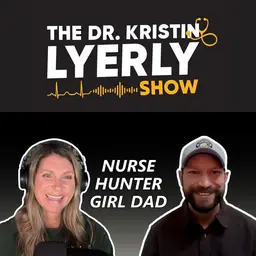
Mitchell Berman: Nurse. Hunter. Girl Dad. Could He Flip WI-01?
The Dr. Kristin Lyerly Show · Wed Sep 23, 2026
We're in the position we are today because our politicians, you know, like my opponent, are too far removed from what regular people are dealing with.
And so when you're looking at pieces of legislation, it's hard to, you know, understand or have empathy for how that's going to affect people back home if you have no idea what they're going through.

Hello and welcome to the Dr. Kristen Lyerle show.
I'm Dr. Kristen Lyerle and I'm gonna let you on just a little secret.
Doctors tend to get all of the like the credit and health care, but you know who actually runs things?
It's the nurses.
If you know, you know, and the nurses also get the love.
My guest today just happens to be a nurse, but not just any nurse.
He is also a nurse in the emergency department.
He has cared for veterans at the VA and he's a girl dad from rural Racine County who also happens to be the candidate in a targeted district.
That means it's a flippable, winnable district.
in Wisconsin's first on in the southwestern corner of the state.
I'm so excited about this conversation.
Mitchell Burman, welcome to the show.
Hello.
Thank you so much for having me.
I really appreciate it.
This is a long time coming.
We've been talking about doing this because, you know, you're a nurse and I'm a doctor and we
have
kind of a thing.
So I'm so glad we finally have been able to make this happen.
Me too.
I'm glad we can make our schedules work and I'm excited for this conversation as well.
Your schedule has gotten really crazy because recently you weren't a targeted district before but now the National Party recognizes that this is winnable.
You are the candidate and we are all in.
How has that changed things for you in the last week?
it's been a whirlwind but let me tell you it is it's incredible because I think it's just a little recognition that now the National Party sees what we see and what we've been seeing on the ground here the amount of excitement the amount of enthusiasm you know we've been holding dozens and dozens of events around the district and
It's standing room only at our events.
The amount of people that are coming out, the amount of people that are ready for change is just incredible to see and it's really nice to have that recognition kind of from the national level that they see that too and that they're really wanting to be helpful here in a race like ours where we're going to flip this seat in November.
I really believe that and I've believed it from the beginning because the numbers in the district are favorable and you are an incredible, compelling candidate.
So let's start there.
Who is Mitchell Berman?
Yeah, well, I appreciate it.
You know, I'm a rural Wisconsin kid.
I grew up in a small town.
I had working class parents.
My dad owned a small roofing company that he kind of built from the ground up.
My mom worked long hours in the foundry and I went to public schools.
I grew up hunting and fishing.
You know, I was a first generation college student.
I had to work.
three jobs just to try and make ends meet so you know I know what it's like to struggle you know to look at your bank account and wonder how you're going to make it to the end of the month and you know once I graduated with my nursing degree I just spent
majority of my time working in the emergency room, just because I love the critical thinking aspect of it, the kind of the fast pace, the really having to be a problem solver and really working on things in quick fashion to make sure that you can help take care of people.
And so I spent almost two decades working in the ER and 11 of those years at the VA.
And so I just really reveled at the opportunity to be able to kind of give back to those that sacrificed so much for us and our freedoms and our country.
And so that was the honor of my life up until this administration came back in.
And when Doge and them came in and started indiscriminately firing people and making it more difficult.
for us to do our jobs at the bedside.
That's when I realized it was going to take somebody from the ground floor standing up and fighting for change if we were actually going to see it.
Yeah, it's this grassroots fight and people like you with the stories that you carry with you.
Being an emergency department nurse, you see people in their worst moments who are struggling, who often can't get care because they can't afford it.
They don't have a doctor they can see within range.
Our healthcare system is so fundamentally broken.
Is there a story?
that you can think of when you were working a patient who has inspired you as you continue on this journey.
Yeah I mean you know there's numerous stories and that's and that's sort of sometimes I think the sad part about it is that you know I can tell you a story.
But unfortunately, it's not unique.
Because like you said, this system, which seems so flawed, it affects so many people across the board.
And the one thing that I like to highlight about the emergency room is not only do we see the physical aspect of care, broken bones, illnesses, but we see the social aspect.
And so, you know, when we see people who are down and out who can't afford their utility bill, right?
And, you know, then their oxygen machine goes off at night and they have a, you know, a COPD exacerbation or something like that.
It brings them to our emergency room.
You know, we also see the implications of folks who are finding it harder to just be able to make ends meet because of the, you know, tariffs causing prices to be up for everybody because of inflation, you know.
And so,
You know, we see a lot of different things in the ER, mental, physical, healthcare stuff as well as like I said, kind of the social issues that kind of bubble to the surface when we're struggling.
Yeah, I mean the ER is a catch-all and it's hard now.
it's gonna get so much harder after the first of the year because of what the Trump administration calls the one big beautiful bill.
If you live in rural Wisconsin, there's nothing beautiful about it.
We've already lost hospitals across the state, across the country.
I can speak to obstetrical units.
We've lost over half of our obstetrical units in Wisconsin in the last 20 years.
It's getting so much worse and it's gonna be much worse
After January 1st, this is going to be your problem when you're elected because not only will you be a representative in Congress, but you are a healthcare professional.
So other members of Congress are going to be looking to you to help fix this problem.
Where do you even start?
Well, I mean, I think you hit the nail on the head, right?
And I do this, and I talk about this a lot when we're out on the trail, is that, you know, even if you don't get your health care through Medicaid, even if you didn't get your insurance for the Affordable Care Act, these cuts and the loss of the subsidies are going to affect you, right?
You can have great insurance through your employer, you can have Medicare, but hospitals are cutting services.
And we're starting to see it already.
I mean, if you don't lose your hospital altogether, as you alluded to.
And so it doesn't matter if you have great insurance, if when you go to the hospital, the person that you need to fix your problem isn't there.
And so, you know, for us, I know one thing is that we lost, you know, 24 seven MRI coverage.
So if you come to the emergency room and you're having symptoms of a stroke, you know, we have a medication we can give you to resolve those symptoms.
We have to have an MRI though.
And so now we have to stabilize you, put you in an ambulance and send you to a hospital downtown.
That could be a half an hour to 40 minute delay based off of, you know, traffic.
And so that could be the difference between you ever walking again.
talking again or surviving for people and so that's what's at risk here and especially you know like you said after these Medicaid cuts go into effect in 2027 we're going to be back to a time and place that you know I remember when I was a fresh grad out of college when we had a lot of folks who were underinsured and uninsured and you know we're using the emergency room as their primary place for health care.
and typically what happens people wait longer they come in sicker and they end up with poorer outcomes because of that and so you know I really take issue with it and it's a it's something that I really look forward to being able to work on once we're successful here but
I want to make sure that folks can afford to go with the doctor, that the services are there when they need them.
Fully funding Medicaid, making sure that safety net is there for folks.
Restoring the ACA subsidies so that folks can afford to get to the doctor while we work on then the monstrosity that is the monopolies and the vertical integration that exists within healthcare to make sure that healthcare is a right and not a privilege for folks who can afford it.
And people may not realize.
They may think, well, I'm not a Medicaid, so it doesn't affect me.
I'm not on the ACA, so it doesn't affect me.
My hospital's not going to close.
It's fine.
Maybe all those things are true.
But when people lose their coverage and they then seek care in the emergency department that they can't pay for,
All of those expenses end up getting absorbed by the rest of us who can pay.
So you may not think it's affecting you, but it absolutely is affecting every single one of us.
Yeah, exactly.
And one other thing that you said that I want to highlight is that how important the arrival to the emergency department.
versus getting treatment time is like the door to balloon time with strokes and heart attacks and all of these other urgent situations where you need treatment right away.
If you don't get that treatment, it affects your long-term outcome and it may cost you your life.
That could happen to any one of us.
This is what you see every day in the emergency department.
Yeah.
Yeah, and I think again, it's it's because we have a system that I feel like has gotten too far removed from what it's supposed to do, right?
We're supposed to be focused on patient outcomes taking care of people.
That's why I got into this line of work Excuse me.
It's because I love taking care of people and
it's seemingly feeling like the longer I've been in it, the harder that is for me to do.
And I think that has a lot to do with, I feel like, you know, private equity has bought up hospital organizations and we're focused on profits and not people.
And so a lot of the changes that are happening within the healthcare system are driven towards making money and not...
what the end result is for the patient.
And I think we need a really reverse course where we're headed to make sure that the focus becomes on providing care for people and making sure that they leave our departments in better condition than they came in.
I
couldn't agree more.
And as you know, I am an OBGYN doctor.
So reproductive health care is my bread and butter.
You've personally
been down a really tricky road when it comes to reproductive health care.
And I think your willingness to share your story is really moving.
Tell us, in your own words, what have you been through and what have you learned from it?
Sure.
You know, for me, me and my wife are
you know, family journey was a tricky one.
We had difficulty early on having children.
We had multiple losses early on in our pregnancy.
And at one of those times, you know, I had to take a medication that they're currently talking about restricting or making it harder to obtain a methylprisone.
And, you know, thinking that at that point, you know, my wife's life
could have been placed at risk because a politician in Washington wants to draw an arbitrary line on this spectrum of health care is unconscionable to me.
Working in health care, I understand that reproductive care is health care.
There's no place for a politician in the exam room between patients and doctors.
And, you know, our journey led us to IVF.
And so I have two beautiful daughters at home, which I'm so thankful for.
But I know the extreme costs and the sacrifice that families need to make in order to pursue that dream of having a family.
And I want to say the ups and downs and the emotional tolls and the financial tolls that it takes on you.
And my wife and I just recently.
did another embryo transfer to extend our family and went through all of the things that you know, I think
people go through and it's normal and it's nice to talk about because I think people don't talk about this and you know to your point I think this happens more frequently than people are led to believe or think but so we had a transfer we had a positive pregnancy test initially so that excitement is there and this was our last embryo so this was our last opportunity to have another another child and
Unfortunately for us our early ultrasound because in IVF they do you know very early ultrasound a
lot of ultrasound
progress You know we didn't have the growth that they wanted to see and so we ended up with what they call blighted ovum or non viable pregnancy and so again we found ourselves in a position of requiring a medication that you know
the Republicans in this administration have talked about making more difficult for women to access.
And our doctor actually said to us, we get care in Illinois.
She said, you know, do you want me to write the prescription for a pharmacy here in Illinois so you can pick it up without any problems?
Or would you like me to write it for you for your?
pharmacy in Wisconsin, where some of our patients have had difficulty getting this medication, because the pharmacists are able to, at their discretion, you know, decide if they're going to give you this medication.
And you know, that's a difficult position to be in, or a kind of a question to handle when, you know, we're finding out that
you know we're in this position where we're finding out our pregnancy isn't going to progress like we would like and you know it's another door it's also a door closing on our on our future family and so those are questions that people shouldn't have to field.
um, in those situations.
And I think, you know, having it happen to you and knowing someone who's been through these journeys and, um, and talking about it, I think I just wanted to normalize it for people that, you know, it's this, that question of where you get your medication shouldn't come up.
You should just be able to be taken care of, especially in these times that are so emotional.
And so that's why I'm happy to share my story because I think people need to hear it and understand that pregnancy and fertility is a complex issue, but there is no place for politicians to be in that conversation.
And I think that when it comes to making sure that...
women have access to the medication and the care that they need, that there also shouldn't be a question of where you can get it.
It should be available for them wherever they are.
I'm so sorry, first of all.
This is your family, and obviously family means so much.
You've done a lot to get to this point.
And you're entirely right.
It's crazy that you can get a medication in Illinois that you can't get in Wisconsin because of pharmacist discretion.
When it's something that your doctor agrees that you need and you know you need and you're already hurting, let's change that.
Yeah, I agree.
On behalf of you.
Let's talk more about your family.
You've got two amazing daughters.
You've got a wife who is on this journey with you.
What do they think about you running for Congress?
This is a really big deal and it affects all of you.
They're very excited and, you know, I think the best thing for me is that they're all in.
You know, this is something that
I didn't jump into headlong.
It took a lot of planning and considering before getting into this race.
We had long discussions, you know, last year, early on in the spring, and I sat down with, you know, our representative, Bo Kahn, had a conversation with him.
I had a conversation with, you know, assembly leader or assembly, hopefully assembly leader here soon, but minority leader brought a new bower.
And folks just kind of talking about my background and where I'm just coming from and the idea of running.
office and whether or not they thought it was a good idea and then after very encouraging conversations with them we built a team of folks from you know around the country who have run competitive congressional races before and so with all that in place you know I felt pretty comfortable about getting into this race and but then I went down and sat down with my wife and said
Okay, this is what we're in for.
This is gonna be all in.
They're gonna come after me.
They're gonna make me out to be a bad guy.
They're gonna do all these things.
We're gonna have to, we're gonna be in the spotlight.
And I wanna know, are we ready for this?
And I had to leave my job at the VA.
In order to run for office as well.
So a job that I loved and you know when I got that job and I was there for a while I said they're gonna have to drag me out of this place because I've never leave it and you know to kind of risk all that safety and security for my family and my girls I I had hesitation Getting into the race and it was actually my wife who said
You know me and the girls are gonna be fine and we're gonna make it work And she's like you're gonna be really good at this and I will support you in whatever you decide She's like but think about all of the families think about all the other people that you could help
by by taking this on and by being successful and she's like I know when you put your mind to something you make it happen so she's like I think you should do it and so and she knows me very well because I do have a lot of hobbies and I do get you know kind of hyper fixation on them but
No, and she's really the one and she's the rock that is really in this time held our family together and taken on a lot of responsibilities around the house that you know because of the campaign and the necessity the necessities to kind of be out on the trail all the time But they're incredible and my girls know what I'm doing it for You know if you ask them they're like daddy wants to make lives better for people and and that's the long and short of it
Wow, that's beautiful
because it has to be a family event.
It's
not just about you.
Actually, it's about your community.
It's always about the people that you serve.
But this is a tricky district.
This district has good numbers, but the past couple of cycles, it hasn't been good for Democrats.
What makes 2026 different for you, Mitchell Berman, in Wisconsin's first congressional district?
Yeah, I think again, I think you need all the right ingredients You know, I think you need to have an environment where people are ready for change.
I think you need to have a candidate who I think offers something different Than what we currently have and I think there is just a stark contrast between myself and Brian style, you know, if you look my opponent
He is, you know, the empty suit.
He is part of the problem in Washington.
And we're in the position we are today because our politicians, you know, like my opponent are too far removed from what regular people are dealing with.
And so when you're looking at pieces of legislation, it's hard to, you know, understand or have empathy for how that's going to affect people back home.
If you have no idea what they're going through.
you know, he's working at the behest of the special interests that are filling his campaign coffers and who are looking for him to pass beneficial legislation for them, which is an example of, you know, HR1 and the big beautiful bill, right?
It passed the House by one vote when it got out of there.
That was Brian Stiles' vote, you know, and it gave the largest tax cut.
to billionaires and millionaires well you know cutting food assistance from seniors and kids in school and you know and cutting a trillion dollars from Medicaid over the next 10 years and adding four and a half trillion dollars to the national debt you know mortgaging our children's future so you know I was born and raised in a rural town like I said you know I live I built my forever house in a rural
part of Racine County.
My children go to public school.
My wife and I both still work in a community hospital that takes care of people here in our community.
We're invested here.
You know, I know what an honest day's labor looks like.
You know, I had an uncle who had a dairy farm.
I had a grandfather who had a dairy farm.
I spent a lot of time out there when I was a kid.
You know, I know it's like to pick rocks in the spring and
you know, scrape stalls after, after the cows go out.
But honestly, you know,
I Oh, hold on one second.
All right.
So you were talking about differentiating yourself from Brian style, how you
are invested, you've got your forever home, I'm gonna jump in with a new question and
that'll be
like a clean cut.
Sounds good.
So you've pledged no corporate PAC money and you've raised most of your money from individual donors and that is totally different than your opponent who is completely in bed with giant donors and is beholden to them.
What does your approach to this campaign say about who you will answer to?
I think it says everything about who I'm going to answer to, and that's the people here in the district.
I mean, our representatives in the House of Representatives, right?
Like our members of Congress, we're supposed to be the branch closest to the people.
We're supposed to be visible in our communities.
We're supposed to hold town halls and listen to our constituents.
We're supposed to have office hours where we can meet with people to talk about problems that they may be having and doing constituent services.
That's not happening in our district.
You know, our representative is not doing that.
And so I make a pledge to people that I will be visible in the district.
I'm going to hold town halls.
I'm going to hold listening sessions.
I want to know what's going on.
So I have that information to be able to make the best decisions for us here in Wisconsin, its first district in Southeastern Wisconsin, in Washington.
And without talking to people, how do you know?
And I think...
That brings up a bigger problem and the no corporate PAC money pledge that I've taken is that it's because they're not working for us.
You know, they're working for the people that are filling their campaign coffers and if you look at the amount of money that's already been spent in this race.
I'll tell you, you have to look at who's spending it.
You know, crypto has just put down an ad buy for about over half a million dollars in ads in this district.
And it's not at my behest, right?
It's for my opponent who also passes some pretty beneficial legislation for them.
So I think that's the difference is that I'm going to be working for the people here in southeastern Wisconsin to make sure that I can improve their lives and not working for
special interests and big banks and billionaires to make sure that they can make more money.
Well, you know, folks like you and I are struggling.
In order for you to win this district, you are going to have to pull over some independence and probably some people who have traditionally voted for Republicans.
So how do you talk to a hunter or a fisherman in rural Racine County who's voted Republican their entire life?
But now, you're their person and it's clear to you, but you still have to win them over.
Yeah, I mean, especially if they hunter fish.
I mean, we can have long, we can have lots of conversations about that.
I mean, we could go on and on.
But I think the biggest thing is understanding that a lot of the problems that we're dealing with today are not partisan.
I think everything wants to be made partisan right now, especially by Republicans and my opponent, because they don't have any policies to run on that have improved people's lives.
So they want to sow fear.
They want to sow division.
They want to make me out to be a bad guy and say, well, don't vote for him because this, that, and the other.
But that's only because they can't talk about what they've been doing.
And so a lot of the issue is like cost of living.
making sure that you can afford to go to the doctor and pushing it.
back against some of the blatant corruption that's going on in Washington right now.
Those aren't partisan issues.
And so when I'm talking to folks, um, it doesn't matter if you're a Republican, a Democrat, or an independent, all of those things matter to them.
And I'll tell you, we've been going out to events.
I've had plenty of Republicans come up to me and say, Hey, you know, I've never voted for a Democrat in my life, but I'm going to support you because they know the things that we're talking about are across the board affecting people here and.
I'm just looking to improve people's lives, not change them.
Yeah.
And we know, we've already talked about your family and how important they are to you.
When you think about the future of Wisconsin and what you're building for your daughters, what do you want them to see?
Cause that's going to be your legacy.
Yeah.
I want them to see that I was able to help provide opportunity.
because I think that that's a word that doesn't get used enough.
And I think our role as representatives and the role of Congress and our government is to make sure that people have opportunities, right?
If you look at where we are right now in this country, the average first-time home buyer is 40 years old, right?
The number one cause of bankruptcy in this country is medical debt.
And
Folks are struggling to put food on the table because of these blanket tariffs that have been imparted.
They're struggling to put gas in their tanks because of this directionless war on Iran.
all policies that my opponent has supported, making it more difficult for people at home.
And it makes them more difficult to have opportunities, to be able to grab that next rung on the ladder and be able to pull themselves up and be able to create a better life for them and their kids.
And I think this is the first time in a long time in this country where our children are facing a future that is going to have less opportunities than we had.
And so that's
that's the legacy that I would like to change.
I'd like to make sure that our kids again are at a point where they can afford to get a higher education and whether or not that looks like trade school or a four-year degree but then they're able to come out in the workforce and have a great job where 40 hours a week affords you the ability to purchase a home, put food on your table, raise a family and you know and have a little leftover to save for a rainy day or
heaven forbid spend you know enjoy your family and go on vacation um and where you can afford to go to the doctor and you know one accident or one illness doesn't bankrupt you and take everything that you've worked for uh i think that those are really reasonable propositions uh and i think that that's what everybody wants
i think sometimes republicans make it seem like everybody wants a handout but i really believe in what i hear you saying is
people want to be able to have a job where they can earn a living wage and have a house, have education, put food on the table, gas in their tank, maybe a vacation every once in a while, hit up a pack or game, all of those things that make life reasonable.
And we've not created a society where our kids can see that vision for the future.
And we have to bring it back to that.
That is that opportunity that you're talking about.
Exactly.
Exactly.
And think again, it just comes down to choices.
It's the choices that our representatives make.
And the choices that have been made have cost prices to go up at the grocery store.
have caused gas to go up in the pump, has made education unaffordable, has taken away opportunities for people, and in my profession, in nursing, to be able to get advanced degrees, because they've made it more difficult to get, you know, loans for graduate school.
And so, you know, and the other thing is this Brian-style, my opponent, he voted for the sixth.
time against the war powers resolution to bring our brave service members back home from this direction that's worn around and you know and to help decrease prices at the pump.
I mean we're looking at 650, it's probably higher than that now for diesel when farmers need to be out in the field harvesting their crops.
They're already dealing with loss of markets because of the tariffs and now the cost of diesel and cost of fertilizer.
These are choices that are being made by representatives who are not thinking about us.
They are thinking about their billionaire donors, the folks that are funding their campaigns, and ensuring that they make sure they create an environment that is beneficial for them, and it's not an environment that's beneficial for us.
We need to get back to a place where our representatives know what we're dealing with, have walked a mile in our shoes, and are going to advocate for policies that help improve our lives.
And that's what I'd like to do.
It's so ironic that they're called representatives because they're not representing us.
They're not
showing
up.
I think you called Brian Stiles an empty suit and I couldn't agree more.
Where is Brian Stiles?
He's not around for the people.
You've talked about how Republicans have approached you and said they've never voted for a Democrat before, but they're going to vote for you because they believe in you.
We've seen the Democratic Party understand how flippable this district is and they are investing in it.
You have some internal numbers that also show data.
We love data because we're healthcare professionals.
You've got real data that shows that you can win this race, don't you?
Yeah, I mean we've had some incredible polling come out and Honestly it even surprised us and I think that just goes to show again like as long as we have The right message and we're talking to people and people are hungry for change You know we can make things happen and we can make that change happen and we can Kind of build on that hope and those opportunities and our numbers show us up to points after positive bios in our polling so
So once we tell people what we're about and they're informed of who we are and who Brian's style is, and they're both positive bios about both of us, the polling has us at 5048.
So
what
you're saying is when people know who you are, they want to vote for you.
That's it.
That's it.
So that's our biggest hurdle and or our biggest advantage here is that we have a lot of room to grow.
with our name recognition.
So the more that we get out there and talk to people the more we're able to reach folks and they hear our message and through that relational campaigning people leave our events inspired and excited and they go home and they tell you know their brother and they tell their cousin their neighbor they tell five people about us with that continued growth.
numbers only get better and so we're feeling really encouraged and I think again the National Party has seen that and they see that we're in a position to win this district and as long as we continue on this trajectory that we're on and we keep inspiring hope in people we're gonna have a Democratic representative from southeastern Wisconsin.
I hear you saying that what you need our listeners and viewers to do is
Talk about you.
Tell their friends.
Help get the word out.
Share this information because you are the right person in the right place at the right time.
Who can help bring this home for the future of Americans?
Yes?
That's it.
Yeah, baby.
How do we do it?
Where do people find you on your socials and what is your website?
Yeah, so all of our socials are linked on our website.
So the easiest place to find everything is to go to bermanforcongress.com.
And then if you scroll to the bottom, all the socials on there, and we're very active on Facebook, Twitter, X, I guess Twitter and X are the same thing now.
Instagram, all the socials.
TikTok even.
And you know, we're out there really just trying to share our message with folks.
Let people know that we're really just looking to ensure that they have a better tomorrow than they had today.
Opportunity.
That's it.
Yeah, we will link your website, all of the socials in our show notes.
Mitchell Berman, thank you so much for taking the time out of your crazy busy schedule to spend a little precious time with me.
You're incredible and I'm so looking forward to you representing Wisconsin's
first.
Christian, it's been my pleasure.
I appreciate it.
All right, friends, you heard what nurse Mitchell Berman said.
Like, share, subscribe, comment.
We want to hear from you.
He needs you to get the word out, so let's make it happen.
Thanks for hanging out with us.
We'll see you next time.