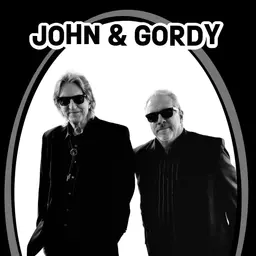
Hey, good morning and welcome to the John and Gordy in the morning show here on WMDX in Madison, part of the Civic Media Radio Network.
I'm not John and I'm not Gordy.
I'm Matt Rothschild.
The guys are off today since they've been doing double duty.
So I'm subbing in for them and I'm here with our great producer, Dom Lee.
Dom, how you doing?
I'm
doing all right.
It's a little cold in the studios.
I don't know if you felt that, but I decided to turn up the thermostat because I...
My hands, you know, I'm kind of a skinny guy, so I need a little bit of circulation going through my veins.
Well, I'm not so skinny, so I had to take my sweater off.
I run hot, so there you go.
Listen, you and I have arranged a terrific show this morning.
If I might say, we're going to be talking about the Democratic candidates for governor in this first half hour.
And if you want to tell us who your choice for governor is, just give us a call at 608-879-8255.
That's 608-879-8255.
You can also text at that number.
Then we got Nick Ramos at 635.
Nick is the executive director of the Wisconsin Democracy Campaign.
We'll be talking about Donald Trump and his latest obscenities.
And then at 7.05, a staff member of the International Crane Foundation, that terrific group up in Baraboo, will be here to talk about a bill that's coming up for a hearing in just a matter of hours up the street at the Capitol, a bill to allow the hunting of sandhill cranes of all things.
Finally at 7.35, Jeff Mandel, the head of Law Forward, will be dropping by, so it should be a lot of fun.
I also have a poem and a couple of bird songs for you.
these next couple hours.
But first, I'm relieved to say that the Democrats have a roster of great candidates for governor, some of whom were just at the Alliance Center yesterday for a forum on homelessness.
Dom and I have been hearing from them over the last couple of weeks as we've had a parade of candidates.
come through the office
right here down.
Yes, yes, and it's been amazing.
I feel like I have to wear a suit every single time, you know, because I know yesterday we talked to Crowley, right?
Yeah, we talked to Milwaukee County Exec David Crowley.
In the evening and in the morning we talked to Missy Hughes, Secretary Hughes, former Secretary of Wisconsin Economic Development Court, WEDIC.
And we've had other candidates come through here.
They've been coming through because I've been doing a podcast for Civic Media here for the last year and a half called Wisconsin Forward.
And I'm giving each of these candidates about a half hour basically just to introduce themselves to our audience and to Wisconsin voters.
So you can find the Wisconsin Forward podcast at civicmedia.us.
Uh, and just look for the Wisconsin forward podcast there.
Um, and we also have other candidates coming through.
We've got Calderoy's coming in this
morning.
Uh, and, um, a couple others.
So it's been fun just to meet them.
Some of them I've met before in my, uh,
previous incarnations.
I can tell, yeah, some of them, they knew who you are as soon as you walked through the door.
I was like, wow, okay.
Well, I've been around a while, so what are you gonna do?
Anyhow, we'd like to offer you a snippet of some of these interviews so you can get a flavor of the candidates in their own words, in their own voices.
Let's start off with State Rep here in Madison, Francesca Hong.
So that's state rep Francesca Hahn.
She is running for governor.
She's our rep here in the Madison area.
Dom, I wanted to get your sense of her listening to her right
there.
She was very well-spoken.
I know when she came through here, she was one of the first, you know, kind of candidates that we've interviewed, and she was very well-spoken.
She was very nice, and she sounds like she knows what she's doing, you know, and she's...
And she's very, I feel like she's very, you know, upfront about stuff and she doesn't, you know, let things, let things go under the wing.
So that's, that's what's really nice about.
Yeah.
You know, I liked her speaking style.
It was so quiet, whispery, yet substantive.
And it just made me.
listen more closely, focus more intently on what you were saying.
And it also, it had the intimacy of just a one-on-one conversation, which is what we do.
But, you know, sometimes when we have candidates in here, they're more rehearsed, should we say.
And hers was more of a conversation.
I thought a lot of more conversations.
A couple of things she mentioned there I wanted to follow up on.
I mean, I thought her
dignity, opportunity, economic security was a good pitch.
Certainly every Wisconsinite should have dignity, opportunity, and economic security.
And then I almost laughed when you played the end bit because she talks about being this fall mouth legislator.
We asked her later in the conversation about that, and she just said, you know, it's who I am.
But, you know, we had the...
The buzzer ready in case you let loose with it with a swear word while she was here But she she didn't didn't do that But she's not afraid to do that and I asked her about it and she said you know to I am I've been in restaurant work my whole life, right?
That's how we talk and You know, she's not gonna You know put a bros
colored glass over things that are lousy.
If they're lousy, she's going to say so in plain English.
And for her, that plain English can be a little bit strong.
Yeah.
And I felt like I knew her my whole life.
When she walked in here, I was like, oh, wow, you know, it felt like I was also in the room with you guys having that conversation.
So it was really, it was really a really nice interview.
Yeah.
And the lane that she's taking in this race is kind of the AOC lane.
uh, you know, both because they worked in the restaurant, uh, business and bar business, but also because they're democratic socialists and not afraid to talk about it.
And so I talked with her about what it meant to be a democratic socialist and, uh, what that, that means to her.
So if you want to listen, uh, more to my interview with representative Francesca Haun, you can just go to a civic media.us and look up the Wisconsin forward podcast.
So, who do we have next?
We have Lieutenant Governor Sarah Rodriguez.
We do,
yes.
Awesome.
Let's take a listen.
So that was Lieutenant Governor Sarah Ryder.
We guess who was in here just a few days ago.
We got a text saying Matt and Dom are lighting up the morning.
We appreciate that feedback.
You can call or text to and tell us how you're taking the show right now.
608-879-8255.
That's 879-8255.
And also tell us who your favorite candidate is for governor.
What I liked about...
Sarah Rodriguez Dom was, you know, she talked about listening to people who probably didn't vote for Republican constituents.
And that's good.
And I like the fact that she's saying she'll stand up to Donald Trump.
She didn't mince any bones about that.
And later in that conversation, I talked to her about public health, because she was a public health nurse before she became Lieutenant Governor.
And she also had
a job with some health companies too.
And just what RFK Jr.
has been doing to the public health of this country and the citizens of Wisconsin and how dangerous it is and how people are gonna suffer as a consequence, especially kids who aren't being immunized.
She used to work at the Centers for Disease Control and Prevention.
And so she has a great perspective on these issues.
of public health.
What did you make of the lieutenant governor?
I also thought it was another great conversation.
That was, I think, the day after, and it was just, it went right on through, and she definitely is, you know, louder.
She has a different approach than Francesca Hong, where she's, you know, again, outspoken, and she likes to get her ideas through, and she does like just to have a conversation, even with people who don't necessarily agree with her.
So I like that part about her too.
And just to give the listener the heads up, what I do is with each candidate, I just start out every conversation, why do you want to run for governor?
And this is essentially what they answer the Dom is plucking for us.
But I also tell them, we're not going to edit this.
We're not going to mess around with their answers, do anything in production.
We are giving them an opportunity to talk to you, the citizen of Wisconsin, about what their vision is.
for the state, how they would react on a number of issues, especially dealing with Donald Trump and what issues are most important to them.
So it was pretty wide open.
And I think it lets you get a real feel for
where they're coming from.
And so, you know, we're gonna come back after the break and hear from another candidate or two and take your calls at 608-879-8255.
You're listening to John and Gordy in the morning.
I'm Matt Rothschild, subbing in for them on the Civic Media Radio Network.
We'll be right back.
Good morning and welcome back to the John and Gordy Show.
John and Gordy in the morning here on WMDX in Madison, part of the Civic Media Radio Network.
Of course, I'm not John and I'm not Gordy.
I'm Matt Rothschild.
The guys are off today.
They've been working double shifts.
So I'm pitching in for them this morning.
I'm here with our great producer, Dom Lee.
We're talking about the Democratic candidates for governor this half hour.
Who is your favorite?
Call us.
608-879-8255.
That's 608-879-8255, as you heard in the jingle.
And we do have a caller.
We have Joe from Madison.
I always like listening to Joe and her thoughtful questions and comments.
Joe, how are you this morning?
Great.
Great to hear your voice.
I'm glad to hear it.
Say hi to Dom too.
And that jingle is like a
a cup of coffee on supercharge.
It does wake you up.
It's great.
I was interested in just offering a few thoughts about the candidate, Kelda Royce.
And there are a couple of things about her that
really struck me.
I went to a meet and greet with her and one of them was that she too is more than willing to go take the fight on elements from the federal government coming down from Trump and company and tackling them more than willing to do that.
I mean it was elbows up clearly on that situation.
She had a couple of things that I thought that she said that separated her from this other pool of very talented candidates.
One item was that she, in the time she's been in the legislature off and on for a long time, and that she's the only candidate so far that's ever served on joint finance, which is, of course, the committee that is in charge of crafting the bill, which is, of course, with the governors that...
directs our direction in the state.
So she has that experience behind her.
She also has the experience of knowing the legislature before Walker and this current group of Republicans got in and after.
So she's got, you know, some ways to look at the legislature in terms of how to adjust things so that they work better.
And then the final thing she has, which to me is just a game changer,
is that she is really in favor of allowing every citizen in the state to partake of the state health care system and the state pension system.
And I'm telling you, the gift that is for people to know that their pension is going to be well managed by one of the most well managed pension systems in the country for sure, possibly in the world, and then in the state health care system.
system where you increase the number of people in the pool and then increase the power that you have for directing good healthcare for people in the state.
I just thought that those that last item in particular is a game changer.
When the state pension fund was devised back in the 1930s when things were so dire, they had planned that everybody could participate.
But because of Republicans at the time, you know, saying no, they couldn't get that through.
All they could get through were people who were employed by the state.
If other people in the state working as a farmer, hairdresser, whatever had an opportunity to partake of this system and the power of having these smart, smart, smart people direct your money and they're directed to be stable about it.
They've done a great job.
So anyway, that was a game changer for me.
I thought that would really change a lot of people's lives to reduce the worry on those two items of pension and healthcare.
So, thanks, Matt.
I appreciate the opportunity to talk.
It's a great idea to have these candidates on and just say we're not going to edit it, just you make the case.
Thanks a lot.
Thanks, Joe.
I'm glad you're appreciating what we're doing over here at Civic Media.
And yeah, we're going to have Kelderoyce here in the studio at 8.30 this morning.
And so if you want to hear that conversation, it'll be at civicmedia.us at the Wisconsin Forward podcast.
I think we have time to listen to
a bit of Missy Hughes who was the secretary for the Wisconsin Economic Development Corporation under Evers and then 17 years before that, first 17 years before that worked at Organic Valley.
Let's take a listen.
So that was Missy Hughes.
She's running for governor.
She was at the Economic Development Corporation under Evers.
She is taking kind of a different pitch, wouldn't you say, Dom, than the other candidates we've interviewed?
She's not really talking to the base so much.
Yeah, I agree.
I 100% agree with you.
Yeah, yeah.
And, you know, maybe it'll work.
You know, she says she's running on I'm not a politician and people are sick of politics as usual and they're sick of politicians as usual.
Right.
Certainly Donald Trump made hay on that.
Bernie Sanders, to some extent, made hay on that, too.
We'll see if the Lieutenant Governor can do that and whether Missy Hughes can do that.
I mean, Lieutenant Governor was talking as a politician.
Missy Hughes is an anti-politician.
We'll hear a little bit more from one more candidate when we're back, and then we're going to have Nick Ramos from the Wisconsin Democracy Campaign.
You're listening to John and Gordy in the morning.
I'm Matt Rothschild.
Subbing in for them here on the Civic Media Radio Network.
And please stay tuned.
Hey, good morning.
Welcome back to John and Gordy in the morning here on WMDX in Madison, part of the Civic Media Radio Network.
By now, you must have guessed, I'm not John and I'm not Gordy.
I'm Matt Rothschild.
The guys are off today since they've been doing double duty.
I've been called in from the bullpen.
So here I am with our great producer, Dom Lee.
We're talking about the Democratic candidates for governor, wondering who your favorite candidate is.
Let us know at 608-879-88.
two five five, give us a ring, 608-879-8255 or send us a text.
Love to hear from you.
It was great to hear from Joe right before the break.
She always has substantive things to say, which I really appreciate.
So Dom, we had one other interview with a Democratic candidate just last night at six o'clock.
Milwaukee County Executive David Crowley came into the studios here at Civic Media to sit down with me for a half hour conversation.
about why he's running for governor.
Let's just take a listen to a bite of that.
So that was county exec David Crowley from Milwaukee.
I knew him when he was in the state legislature.
I thought he was very impressive.
What did you think?
I thought so too.
And especially that little snippet that we got, it was a great conversation.
And I was also a part of that.
I went to University of Wisconsin Oshkosh the past four years, about six months ago.
And I'm currently still paying the repercussions of that tuition cost with that UW system.
what he's talking about is very real and happens to a lot of people.
Yeah.
I mean, when a candidate for governor of Wisconsin says the UW education is no longer affordable, I think everyone needs to stand up and take notice because it used to be a promise here.
If you got good enough grades, you could get into the UW either here in Madison or other places and it wouldn't cost you an arm and a leg.
But
now it costs you an arm and a leg is you just
found out as a newly minted grad.
Yeah, and on top of that, you know, I was originally from Illinois, right?
So I came to UW Oshkosh without a state tuition, and that's even more, you know?
I can't imagine, I can't imagine just what in-state tuition is.
I don't really know the exact numbers on that, but it's probably a pretty hefty amount.
And then were you able to get in-state tuition the next couple of years, or were you out of state the whole time?
I was out of
state the whole time, yep.
the whole time and that's a burden just a little bit you know just a little bit I gotta gotta be careful about my about my apartment rent let me tell you
yeah I mean you and everybody else because as David Crowley then pointed out what is affordable it's not just the UW system we had a long talk about rent prices of rent price of housing in part because hedge funds
from California are going into Milwaukee and elsewhere in Wisconsin and just buying up properties.
They're absentee landlords.
They don't care about the community.
They're not from the community.
They don't live in the community.
And they're just speculating on real estate which drives up the price of housing if you own, drives up the price of rent if you're a tenant.
And so David Crowley,
He comes from one of the poorest districts in the state, the most incarcerated zip code in the state down there in Milwaukee.
And he speaks from real experience.
He talked about being kicked out of several places when he was growing up in high school, having had to move from one apartment to another, one eviction notice after another.
So he has a real personal experience about what this affordability crisis means and can speak to that with real personal knowledge.
And I also thought he was a very affable, likable guy.
And on top
of that, you know what?
He smelled good.
He smelled good.
I gotta know what his cologne was.
It was just, oh man, yeah.
He was a great interview yesterday and we appreciate his time for sure.
Yeah, just a wonderful smile, too.
Very likeable man.
And so this is the series of interviews I'm doing on my Wisconsin Forward podcast for Civic Media at CivicMedia.us.
We've got Kelda Royce coming in for a half hour interview later today, this morning, even.
And then Brett Halsey, who I knew in a previous incarnation and who has run in
previous incarnations for governor too.
And he's coming in tomorrow morning.
So we're, uh, we're trying to get a good, uh, sampling of the folks who are, uh, running.
We also had Ryan Stern at, I know he came in too.
And we have that up on our, uh, civic media website under the Wisconsin forward podcast.
So, uh, it's trying to give you the Wisconsin citizen, you the listener to civic media, you the visitor to civic media.us a sampling of, uh,
this good bench that the Democrats have in this race for governor.
Always interested in who you think you'd like to see in the governor's chair now that Governor Evers is retiring.
The phone number is 608-879-8255.
So give us a call, send us a text.
One thing I liked about both David Crowley and the Lieutenant Governor, Sara Rodriguez, was the way they saluted Governor Evers.
who's on his way out the door, obviously.
And they both commended him for the way he's handled his office.
And I thought that was impressive.
I've not always been the biggest Governor Evers fan.
I wanted him to be a little stronger on the budget.
I was hoping maybe he would have vetoed the whole thing.
That wasn't his style.
And I wanted a bit more of a fighter, though he's been a good.
goalie, I guess, against these Republicans.
But I also, I always just kind of chuckled, because, you know, I'm a political sports writer, if you will.
And as a political athlete, he never struck me as
a great athlete because he is not a great public speaker.
He can't debate.
He was the worst debater on stage the first time you ran.
And yet his authenticity rang true, which is what the lieutenant governor talked about and what county exec David Crowley talked about when they saluted the outgoing governor.
So that's our little series on who's running for governor.
Who your favorite is you can still call us here at 608-879-8255 and let us know But we're gonna switch gears here for a second because a friend of mine has just walked into the studio Nick Ramos executive director of Wisconsin democracy campaign.
Good morning Nick.
Good morning boss man.
Happy Wednesday.
It's Wednesday, right?
I think so.
All right.
I think all day long as they say How have you been
doing?
I mean, it's just been a crazy time, man.
I mean, you know, it's an off year technically because we don't have any elections or anything happening, but it feels like the world's on fire, man.
So it's busy every day.
Yeah.
Well, the world is on fire.
It's on fire literally with global warming.
It's on fire with our country, our democracy on fire.
which is one reason I wanted to have you in here today because, you know, it's just been crazy what Donald Trump has been doing to our democracy.
What's your take on that?
We
don't have enough time to talk about it, man, but, you know, real quick...
Cliff notes version I mean the institutions that we've assumed would always be there are literally getting steamrolled on every single day and people don't I guess in a state like Wisconsin I mean we feel the impacts through snap benefits being taken away up and down we think we feel about like These health insurance premiums that are gonna be skyrocketing here.
I mean but
There's a lot of other things that are happening around the country that I don't think it's been really felt here in Wisconsin yet.
So, you know, everybody's kind of just going on like it's business as usual when it's not.
What are some of those other things we haven't felt yet that's coming our way?
Well, I mean, we got a taste of it when Judge Hannah Dugan got arrested in her courtroom in Milwaukee, you know, ICE presence in our communities.
I mean, they're trying to normalize it and legitimize it.
And yet.
Last time I checked man child daycare and schools and some of these other places.
I don't think I want ice agents in there
Yeah, it was one of the questions I asked these candidates for governor, you know, what are you going to do if your governor and, you know, and ISIS in Wisconsin, are you going to protect our citizens here?
They all said they would, of course, but, you know, it's a it's a tall it's a tall task.
Yeah, we've got some sheriffs in some counties, you know, working hand in glove with ice.
And, you know, we haven't seen anything like that in this country, at least since, you know, the roundup of Japanese Americans in World War Two or
or Chinese Americans of the late 19th century.
I think it's interesting that history somehow always repeats itself, but also when we have these very authoritarian powers that end up taking over what they do.
They try to erase, you know, parts of our history so that we can't look back and be able to learn from them and that things like this can happen.
And so we're living in historic times.
I say that every year, but man, does it feel realer than ever right now?
Yeah, I couldn't get more real.
I wish it was less real.
I wish we were living in less interesting times.
Yeah, you and me both, man.
And I'm glad my parents aren't here.
My dad fought the Nazis in Europe.
That's the shocking thing to me.
Every family in America almost has a father, if you're my age, or grandfather, or great-grandfather, who fought in World War II against the fascists.
And now we have a guy who's a fascist in the White House.
You don't say.
I mean, it's unreal.
And every day there's a...
There's a new obscenity from this guy.
He lives for the drama, too.
As long as he's a classic narcissist, so as long as we're thinking about and talking about him, he's happy.
He
loves calling reporters piggies,
man.
Yeah, what do you make of that?
I mean, on Friday, he called a reporter from Bloomberg, the correspondent, Katherine Lucy, quiet piggy, because she was doing a follow-up question on the Epstein files.
Well, I was that rich for one
but two also I would say Beyond the humor part of that like when you have the president of the United States saying that to you know someone in their press corps Like it would it would make me afraid to ask questions You know to this man and fear that I'm gonna get berated or get talked down on
so and even worse I mean, you know what goes on in social media, you know They'll get all sorts of you know hateful
comments, and then maybe threats.
That's the serious thing.
I mean, people are getting threatened.
And he has no regard for the media.
And we'll talk about that a little bit more when we come back.
My guest is Nick Ramos.
I'm Matt Rothschild here on The John and Gordy Show on the Civic Media Radio Network.
We'll be right back.
Maybe talk a little bit about Prince Mohammed bin Salman.
Hey, welcome back to the John and Gordy show.
John and Gordy are off today.
I'm Matt Rothschild, subbing in for them.
Delighted to be with you and with my producer, Dom Lee.
If you want to join our conversation, please do so.
Give us a call.
Send us a text, 608-879-8255.
That's 608, of course.
879-8255.
And with me still in the studio here is an old friend of mine, Nick Ramos, the executive director at the Wisconsin Democracy Campaign.
Thanks for hanging on, Nick.
Hey.
Pleasure to be here, boss man per usual.
Always answer the phone, always answer the call.
So before the break, we were talking about this reporter from Bloomberg, Catherine Lucy, who on Friday dared to ask the president an obvious question about the Epstein files.
And he called her piggy and said, quiet piggy.
That's how he treats women.
And then the White House press office, of course, couldn't apologize for the president.
No, they had to defend the president.
So they came out with a statement that said, this reporter behaved in an inappropriate and unprofessional way.
And then they said this, which is just playground, playground bully stuff.
If you're going to give it, you have to be able to take it.
I mean, it's just how old are these folks at that White House press office?
They're all
about 14.
Dude, I mean, they got internship in those accounts, man.
You see the memes and stuff.
I honestly, like, it's, it's really disappointing because I feel like we're normalizing so much juvenile behavior for what used to be an office.
It didn't matter what party it was, you respected it.
And now it's like.
I mean, making Kelly a while ago said, man, Trump called people pigs, slobs, dogs, and he's called, talk about women, man.
And this is the guy who's supposed to be representing our country, man.
Do you think this is really a role model for kids to look up to?
No, but the amazing thing is we knew this from day one.
We knew this from the first campaign and still the guy got elected.
Oh, because people are sitting here and saying things like, well, I only care about tax breaks.
I only care about, you know, what financially is going to be beneficial for me.
of kind of the social and some of the dignity aspects of our society and I'm kind of disappointed that we let this behavior just run rampant instead of checking it in real time because again we want our we want our reporters be able to ask questions and not get
absolutely swatted and talked, talked down to.
I
mean, we could have checked it in real time.
I remember after that Hollywood tape came out the first time he was running with this disgusting comment.
There was Kellyanne Conway on Fox News that night saying, just what you're saying.
Oh.
People don't really care about that.
They care about jobs.
They care about the economy.
And, and then, uh, you know, and then the women's vote, you know, 53% of white women voted for the guy anyway.
So it was just unbelievable.
And he's still ridiculing, uh, reporters again yesterday.
Uh, there was Trump, uh, he brought Crown Prince Mohammed bin Salman, a Saudi Arabia, the White House, praised him appallingly.
If you can catch this as a protector of human rights, despite the fact that the CIA can.
He was behind the horrible murder and grotesque.
Jamal Khashoggi.
Mutilation of, as you say, Jamal Khashoggi, Washington post-colonist.
Trump said he knew nothing about it.
That is, that Khashoggi was killed by Ben Salman.
Trump says Ben Salman knew nothing about it.
And then in typical anything-is-justified mode, Trump adds, a lot of people didn't like that gentleman.
Jesus.
Yeah.
And then he said, things happen.
I mean, it's just unbelievable what Trump was saying.
And then he says, me and the Crown Prince were really good friends.
And then when a reporter from ABC, Mary Bruce talked, asked Ben Salman about it, Trump called the inquiry about Khashoggi, a horrible insubordinate.
Uh, and just a terrible question and said, I think the license should be taken away from you at ABC because your news is so fake and so wrong.
I mean, this is the guy who has no respect for the first amendment, no respect for freedom of speech, no respect for freedom of the press, no respect for human rights.
Preach right now, man.
Preach because honestly, like first and foremost man prayers to Jamal Khashoggi's family man.
Nobody deserves to be tortured and killed like the way that
man
was killed.
And then to have to watch basically.
one of the benefactors and the people that are folks are alleging it was behind you know the murder and assassination of this man like You know you're inviting him into the the oval office.
You give him the red carpet You know you're over here basically legitimizing this man's presence all over it basically an arms deal I mean we're exchanging weapons for money and this guy's talking about all the investments and it basically means that
If you can pay your way to play with Trump, he does not care if you are doing, you know, humanitarian, like, absolute, like, trying to kill people and, like, doesn't matter at the end of the day that you end up doing the most nefarious things as long as you're willing to pay Trump.
Yeah, if the money's coming in and he doesn't care.
He also has this...
Love affair with the strongman.
Oh, that's why he loves Putin.
I mean, that's why he loves she that's why he loves Muhammad bin Salman You know these guys who are tough guys.
He'll talk about them.
They're really tough You know that's his you know, he's a he's a gangster
want to be gangster.
Now he's a real gangster because he's got the power to be a real gangster.
And he loves the fellow gangsters.
I guess
we'll see what happens when these Epstein files get released, man.
Let's see who's the real gangsters at the end of the day.
Because honestly, there's nothing gangster about pedophilia.
And I got to tell you that like that right now, you get to watch him cozy up with the strongest man out here.
But yeah, he's one of the weakest presidents I've ever seen in my life.
And you know, we can't give him legitimacy.
Otherwise, yeah, he becomes a strong man.
Yeah.
But he's weak, yet he has, you know, he's a weak man.
He's a sick man.
Amen.
But he's a four year old with nuclear weapons.
I guess that's true, too.
So, you know.
And so, you know, that's one of the reasons I can't sleep at night.
I mean, there are a lot of reasons looking at what they've done to our democracy here.
As you said at the beginning, Nick Ramos, the Wisconsin Democracy Campaign, a lot of our fabled.
checks and balances are falling by the wayside.
A lot of the institutions are not holding up.
But the
people are fighting, Matt.
But the people are fighting.
That's what's keeping us alive right now.
That's what's keeping our democracy alive.
So I want to thank you for being our guest on the John and Gordy Show.
Nick Ramos, Executive Director of the Wisconsin Democracy Campaign.
Hey, man.
Invite me more, dude.
Oh, anytime.
And we'll be right back after the break to talk about...
Sandhill Cranes and why some Republicans in the legislature up the street want to start shooting them.
Please stay tuned to the John and Gordy show on the Civic Media Radio Network.
Hey, welcome back to John and Gordy in the morning on the Civic Media Radio Network here on 92.7.
As you've guessed by now, I'm not John, I'm not Gordy, I'm Matt Rothschild.
The guys are off this morning anyway.
They've been covering the afternoon shift, so I'm subbing in for them today.
Happy to be here with you, with Dom.
You can join our conversation, 608-879-8255.
Give us a call, send us a text, 608-879.
8255.
You can tell us who your favorite candidate is for governor.
You can tell us your reaction to Donald Trump's treatment of reporters, especially women reporters, his cozying up to the crown prince of Saudi Arabia, the torturer and murderer.
Or you can talk to us about birds because in this half hour.
We are going to be talking about a bill that's at the state capitol this morning.
There's a hearing at nine o'clock.
I might run down there after the show and give a piece of my mind because Republicans want to start hunting sandal cranes here in Wisconsin.
And with me to discuss that now is Ryan Michalesco.
He's the communications and advocacy specialist for the International Crane Foundation up in Barrabu.
Ryan, welcome to the John and Gordy show.
Thanks for having me on, Matt.
They're going to have to get you a jingle like that.
Yeah, I can't wait.
I really appreciate you coming in.
And I want to give you an opportunity to tell our listeners a little bit about the International Crane Foundation, which I was happy to visit for the first time in about 30 years last summer.
And you've just got incredible exhibits up there.
of being able to see all the different kinds of cranes around the world.
It's quite a treasure of Wisconsin.
If you, the listener, haven't been up to Baraboo to the International Crane Foundation, you've got to get up there sometime.
Yeah, thanks again for having me on, you know, the International Crane Foundation is really a Wisconsin story at its heart.
ICF was founded by two renowned ornithologists, Dr. George Archibald and Dr. Ron Sowie, who met studying at Cornell and decided to work on cranes together.
Ron's family had a horse farm in Baraboo and offered to lease it to Ron and George for a dollar a year to start ICF and begin their work with cranes.
Well,
that's a good price.
It
really is.
And of course, we've since expanded.
You know, there's 15 species of cranes around the world.
We have two here in North America, 10 of the 15 are threatened or endangered.
The most abundant species, the sandhill crane, we're here to talk about today.
And the other is the whooping crane, which is highly endangered.
And we also have those here in North America.
Not only in North America, you have them here in Wisconsin.
I don't know if I'm supposed to say it, but you can see them sometimes up at a fork on Mars.
Don't scold me now.
Yeah, absolutely.
You know, whooping cranes are really special birds.
There's only about 700 in the wild in all of North America.
We're really fortunate that we have some here in Wisconsin, like you said.
ICF has been leading the reintroduction effort of the whooping crane, trying to bring those birds back to the Midwest, the upper Midwest.
In many ways, there's a backup to that wild flock that has this really incredible migration from all the way in far North Canada to the Gulf Coast of
Texas.
golf in Texas.
But I've seen
whooping cranes in southern Columbia County in a farmer's wetland in the fall, not this fall, several falls ago when they started their migration south.
And they've just started their migration now.
So keep your eyes out.
There are still whooping cranes flying around Wisconsin, aren't there?
There are.
Yes, there are.
We've had some sightings this past weekend.
We actually hosted our Great Midwest Crane Fest up at the Crane Foundation and the Aldo Leopold Foundation this past weekend.
Welcome to a lot of people to our site and to Salk County in Wisconsin.
A lot of people from out of state were able to come and enjoy the cranes.
So it was a really great opportunity, but they were here to see the sandhill cranes that we're here to talk about today.
So let's talk about this bill.
What's wrong with it in your opinion?
Let me give you a little bit of background.
This is an issue that we've been dealing with for 12 years.
This is the third time in 12 years that these bills come forward, or similar bills.
For that time, the folks bringing it forward have really made this issue about.
crop damage.
Sandhill Cranes do cross crop damage.
There's no hiding that.
And they can cause significant crop damage.
And for a long time, that's been the excuse for this bill, why we need a hunting season.
It's to solve crop damage.
That's been pretty much the one talking point.
And in reality, there's never been evidence that a hunting season is going to solve crop damage.
And in fact, last year, the Crane Foundation and our expert researcher who's going to testify this morning and Lacey served on the
slate of study committee on San Hill Cranes down at the Capitol as well.
And that committee met for six months to hear testimony, listen to experts come in from US Fish and Wildlife Service.
We had former folks from the DNR.
We had farmers on the committee.
And overwhelmingly, that committee heard that there's no evidence that a hunting season is going to solve this issue.
And that's why they just can't be linked together.
It's not a good
thing.
different solution for the crop damage that sandhill cranes cause?
Yeah, there is.
And it's one that ICF started helping develop years and years ago with the field testing that we conducted in our Briggsville study area.
And that's an area in central Wisconsin where we've been studying sandhill cranes for 30 plus years, banding them out in the field, monitoring them, seeing which territorial pairs are coming back, how many chicks are being laid.
So we have a lot of data on these birds.
And you're exactly right.
is that non-lethal deterrent, it's a seed treatment that goes on the corn, and basically the grains don't like the taste of it.
They try the corn, they spit it out.
We acknowledge that it's not an entirely perfect solution, but neither is a hunting season at all, so we really can't tie these two things together.
It's not entirely perfect because it costs a lot, or what's the downside?
Yeah, exactly.
You know, it's an added cost for the farmer, and farmers have enough costs, so that's what we've been working to do, and what we think
the most meaningful solution here is that the state is able to provide those farmers the support that they say they need.
Now, if I'm listening here in Dane County to you from the International Crane Foundation talk about this and I'm a skeptical person, I'm gonna say, look, the Sand Hill Crane population has just gone through the roof.
You can throw a rock and hit one if you're walking down the sidewalk.
The population has grown tremendously, it seems, from a casual observer's perspective over the last 30 years.
What's wrong with a little bit of hunting?
Yeah, well, you know, let's go back even a little bit further than that.
1940s Aldo Leopold, renowned conservationist here in Wisconsin, estimated that there were only about 20 pairs of sandhill cranes left in the States.
Really?
In less than 100 years, we've made a remarkable comeback.
But that doesn't mean they're out of the water.
There's still a lot of threats that these cranes are facing.
A really new and novel threat is highly pathogenic avian influenza.
This is something that cranes around the world are being hit by.
Is
this the same bird flu that's hidden?
chickens and turkeys?
It's similar bird flu, H5N1, but highly pathogenic avian influenza is really carried and really can harm wild bird flocks.
What we've seen just in the last month in Europe, they're experiencing outbreak and common cranes, which are very similar to sand hill cranes and their ecology, their threats and how they interact with humans.
And they've lost 35 to 40,000 birds just in one month.
Wow.
And this spring in Indiana, Tennessee, Kentucky, those
It's a little bit further south during migration.
And we lost up to 4% of the eastern population, which is the population that Wisconsin's a part of.
So that's a big number.
What's 4% of that population equal to?
That's about 3,000 to 4,000 birds.
So when we only have a population of 100,000 birds in this flyway, and a lot of people equate Sand Hill Crane population to the total population, but the central flyway, which most people think of, that's the one that goes notoriously through the Platte River in Nebraska, that's about.
10 to 12 times the size of our population, so.
You know, I went to the Platte River in Nebraska once.
Isn't it incredible?
It's incredible, but I was about two weeks early.
It was a cold and slow spring, so I missed the massive numbers of sandhill cranes.
I did see some, mostly I saw snow geese.
There were snow geese everywhere, but you know, I'd never seen a sandhill crane until I came to Wisconsin 43 or 45 years ago, and
I just fell in love with the sandal cranes.
And you know, I've been a bird watcher since I was five years old, four years old, and I'm 67.
I always wanted to see a sandal crane.
I always wanted to see a hooping crane.
I had a book about the hooping crane population flying down to Aransas, wildlife refuge in Texas, sitting next to my bed when I was a little kid.
And I've been down to Aransas to see the hooping cranes there, though just my luck.
I was sick that day.
So anyway, I've always been
been worried about the hooping crane population.
And one of the things that worries me about this sandhill crane bill is not so much that it's gonna impair the population of sandhill cranes, though it might, but that it could impair the population of hooping cranes, because some hunters who are out there may mistake a sandhill crane for a hooping crane, or they may be migrating together, which they do sometimes, right?
And then the population of hooping cranes is jeopardized.
Yeah, that's absolutely right.
On the Sandhill Front, we have a lot of evidence having studied these birds for 30-plus years right here in Wisconsin that we think they could be nearing their carrying capacity.
Just this year, our data is showing that, and this could be because of the HPAI outbreak in the states earlier this year, but 32% fewer sandhill grains on the territories that we study this year, and only one in five
territories produced a chick.
And we think those are really important numbers because cranes aren't ducks or geese.
They're very different.
They're long live.
They take a long time to successfully mate and breed and even longer time to successfully fledge young.
And that means their numbers just don't rebound like they could if we have a hunting season in the state on their critical breeding grounds, you know, that could that could have significant effect.
What happens here affects the whole population.
And I saw a press release you put out and showed that
Actually, a couple years back in Oklahoma, hunters did, you know, kill four whooping cranes.
Yeah, that's something we've heard time and time again.
You know, this was even testimony provided to the legislative study committee that no real hunter, no good sportsman would kill a whooping crane, but.
Accidents happen, and unfortunately, it only takes one.
You're right.
In 2023, four Oklahoma hunters pled guilty to killing four whooping cranes in 2021.
And that's really devastating.
That was about a percent of the wild flock in that Iran's wood buffalo population.
But here in Wisconsin, we only have about 70 whooping cranes in the whole eastern population.
The loss of one would be years and years of setback.
And I'm not against hunting, period, but it just doesn't seem that sporting to me.
to be hunting a bird that is that big.
I mean, their wingspan are about six feet, seven feet.
And they're slow flyers.
I mean, that can't be a tough shot seeing these giant birds flapping their wings or gliding ever so slowly in the sky in a flock.
It can't be that tough a shot or that.
invigorating or exhilarating a hunt.
Yeah, you know, I don't think that's what this is about at all.
I grew up as a hunter, and I just think that there are some things that don't need to be hunted, and sandhill cranes are one of them.
Ryan, what do you hunt?
I grew up hunting turkey, deer, big sportsman, but I'm a proud birder now and spend a lot of time out in the field enjoying observing birds.
And you know, that's another thing that maybe we can talk about after the break, but there's a lot of good numbers about how birders really contribute to the economy and the fiscal nature of this bill is also important to discuss.
You know, I'd like to pursue that because birding in Wisconsin, I just found out yesterday, one out of three Wisconsinites is a bird watcher.
It's an
incredible thing.
That's twice the national rate.
We're one of the highest percentage of bird watchers in the country.
We'll be talking a little bit more about birds, the Sand Hill Crane Bill.
I'm speaking with Ryan Michalescu, communications and advocacy specialist for the great organization Up in Baraboo, a real treasure of Wisconsin.
It's the International Crane Foundation.
I'm Matt Rothschild, subbing in for John and Gordy on John and Gordy in the morning here on WMDX, the Civic Media Radio Network, and we'll be right back.
That's the sound of sandhill cranes.
I'm Matt Rothschild subbing in for John and Gordy on John and Gordy in the morning here on the Civic Media Radio Network WMDX here in Madison 92.7 We're listening to that voice of the sandhill crane because I'm speaking with Ryan Michalescu
the Communications and Advocacy Specialists for the International Crane Foundation up in Baraboo, and I urge you to go visit there if you haven't yet.
It's a terrific place.
The phone number to call if you want to join the conversation or text us 608-879-82.
We did get a text from Steve in Mount Horrib who says, I've been hunting all my life.
I'm not going to eat a sandhill crane.
People are just going to shoot them for fun and leave them lay.
This is a bad idea, he says, to open a hunting season for cranes.
And I agree.
Dom, our great producer, Ryan here, asked at break, what is the difference between a sandhill crane and a whooping crane?
Do you want to take that?
Yeah, I would say here in Wisconsin, the biggest consideration between the two is their rarity.
Endangered whooping cranes and sandhill cranes both were reduced to really low numbers in the past century.
Sandhill cranes didn't get quite as low, so they've been able to make a much more successful comeback.
But whooping cranes lost most of their genetic material.
There are no more whooping cranes.
cranes left here in the Midwest.
And of course, only a handful left in that larger wild flock in the central US.
And when a population gets that low, it's hard to bring them back.
You need genetic diversity in a flock.
And the loss of just one bird loses a lot of that genetic diversity.
But in terms of their physical structure, sandhill cranes are gray birds.
They're a little bit smaller than whooping cranes.
Whoopers are very tall, bright white, black wing tips with a bright red head.
And they're beautiful birds, they really
are.
Sorry, if they were flying, would you be able to tell the difference, or would it be just slightly?
Yeah, it can be hard to tell them apart, especially when you only have one whooping crane, a big flock of sandhills, it can be challenging.
It's not easy.
And some sandhill cranes are lighter gray than darker gray or rusty gray.
Exactly, there's a lot of variation in their coloring, especially from juvenile to adult and from months of the year when they're breeding versus not.
But the hooping crane is pure white, except for the little tips of black on the wings.
They're white as Ryan's dress shirt
right now.
They're
that color
white.
And so if you see one, you'll know it for sure, especially if you see it pretty close.
But the problem is you've got a flock of 20 sandal cranes and two hooping cranes, and you're shooting at the flock.
You know, you can, you can nail one.
Yeah.
And think about the times of the day that you're hunting early morning, you know, low light.
Uh, it can be hard to tell them apart and, and misidentification is a big issue.
That's what the hunters put guilty to in Oklahoma.
Uh, and, and just since the elk hunt in Wisconsin was established nine elk if mistakenly been shot during deer season.
So, um, you know, misidentification happens.
Yeah.
That's not a big herd either.
So, uh,
You mentioned before the break, Ryan, how burders contribute to the state, or you wanted to talk about that, so go.
Yeah, absolutely.
The US Fish and Wildlife Service, about every five years, does a national recreation survey where they break down all the different recreation types.
And two of the big ones are, of course, wildlife watching, birding, and hunting.
But what we hear a lot of times is how much hunters contribute to the economy.
And I think it's time that we talk about how much birders and wildlife watchers contribute to the economy.
Wildlife watchers, they're 148 million, which is about 10 times hunters, 14.4 million.
is $96.3 million in terms of revenues generated by burders, $250 million, which is about five times that of hunters at $45 million.
That's a lot.
Do you have it broken down in Wisconsin or is that gonna take a little more research?
That'll take a little more research, but you know fish and wildlife service if you're listening.
We love those numbers
get on it You wanted to talk a little bit more about this bill that is in the state Legislature today.
There's a hearing at nine o'clock up at the Capitol about this bill that Republicans have introduced that would allow the hunting of sandhill cranes in Wisconsin You mentioned there's some fiscal problems with that.
Yeah, you know
This bill goes back to the Legislative Study Committee, which along party lines voted this bill out and referred it to the Sporting Heritage Committees and the Assembly and the Senate.
And today, the Senate's bringing that forward for a hearing.
That's in Room 201 Southeast of the Capitol at 9 a.m.
And of course, we invite you to attend, hear the testimony from all the different groups, and of course, share your own if you'd like.
But the big problem with both of these bills is they're not fiscally responsible.
aside from all of the issues with the population, aside from all of the issues with misidentifying whooping cranes, aside from bird flu, these bills are going to lose money.
They're going to cost the Wisconsin taxpayer the DNR fiscal estimate that looks into these bills.
They do this for all the legislation that comes through the capital that you refer it out to an agency to do the math.
SB 112, which is the bill that came out of the study committee, which had a lot of great things in it for farmers, although they shouldn't be tied to a hunt.
That bill would lose $400,000 annually.
However, one of the things we're going to contend with today is a substitute amendment introduced by Senator Staffschult, the chair of the Sporting Heritage Committee, who's having the hearing today, pulls out all of that farmer funding, reduces the permit fees, and will lose probably about $1.6 million a year.
So really, taxpayers are paying for a few hunters that want to hunt cranes, not the other way around.
I'm speaking with Ryan Michalescu.
He's the communications and advocacy specialist for the International Crane Foundation up in Baraboo.
If someone's been listening and they want to know more about the International Crane Foundation, how do they find out more?
If they want to support the great work that the International Crane Foundation does in preserving these tremendous species, iconic species, how do they help?
Yeah, the best thing they can do is go to www.savingconcranes.org.
You can read about our great work there.
You can become a member.
Today, the most important thing you can do is show up at 9 a.m.
at the Capitol Room 201 Southeast for this hearing.
And the website again, savethecranes.org.
Savingcranes.org.
Savingcranes.org.
There you go.
That's the International Crane Foundation, one of the great treasures of the state of Wisconsin.
Ryan Michalesco, thanks so much for being my guest today.
It's a great meeting you.
Yeah, thanks for having me on.
And we'll be back in just a couple of minutes with Jeff Mandel, the head of Law Forward, this great nonprofit legal organization that is fighting the anti-democratic forces in Wisconsin.
and Andy in the country.
So you'll want to stay tuned for that.
We'll be right back on John and Gordy in the morning on the Civic Media Radio Network right here, 92.7.
Radio Network.
I'm Matt Rothschild.
John and Gordy are doing the afternoon shift today, so I'm subbing in for them this morning.
Happy to do so.
I'm glad they invited me.
I'm glad Dom invited me.
And you can join our conversation at 608-879-8255.
That's 879-8255.
get a text from Joel in Madison, wondering where is it legal to hunt sandhills and what the population of sandhill cranes in the Platte River?
What that population is, it's tens of thousands, hundreds of thousands is my memory on that.
Where is it legal?
I just looked it up.
Alabama, Alaska, Arizona, Colorado, Idaho, Kansas, Kentucky, Minnesota.
That's a surprise.
Montana, New Mexico, North Dakota, Oklahoma, South Dakota.
Tennessee, Texas, Utah, and Wyoming.
A lot of states are hunting the sandhill crane.
And when I was out west once, we were on a road trip and we went into a bar and there was a sign about the sandhill crane hunt.
I just couldn't believe it.
But then, you know, it's a thing for some of these states.
But it's a real question of preserving a species, actually preserving two species because of the danger of hitting a hoping crane.
And I didn't realize how
short, the small, the population of sandal cranes was in Wisconsin back in Aldo Leopold's days.
So that was kind of interesting.
And again, the International Crane Foundation are a great place.
With me now, changing subjects back to democracy subjects, Jeff Mandel, head of law forward, a pro-democracy law firm here in Wisconsin that's just a few years old, but it's just done incredible work on a whole broad range of pro-democracy issues.
Jeff, thanks for coming in.
Thanks for having me, great to be here.
You know, I was at your website yesterday and I saw that you followed, you and Russ Feingold, former US Senator, Russ Feingold, filed an amicus brief and a campaign finance lawsuit that I was not that familiar with, so I wanted to bring you on and have you talk about that.
Yeah, it's a really important case.
And we in Wisconsin have a particularly profound understanding of this.
What happened is that Vice President J.D.
Vance, before he became Vice President when he was still in the Senate, he brought a lawsuit challenging a provision of federal campaign finance law that limits how much money individuals can give to a political party and how much money the political party can then give to an individual campaign.
This is part of
long-standing campaign finance law, part of the McCain-Feingold bill.
So
that's where Russ
comes in.
Exactly.
And what we did with this brief is we explained to the court, which is almost certainly going to rule for the National Republican Senatorial Committee, which is the plaintiff here, we explained that you only have to look at Wisconsin to see what the consequences of this are.
Because here in Wisconsin,
We have limits on how much you can give a state candidate.
The federal limit's around $3,000.
The Wisconsin limit for a statewide candidate is $20,000.
Yes, crazy.
But even crazier.
Here in Wisconsin, we eliminated, while Governor Walker was in charge, we eliminated the exact kind of limits that they're talking about here, so that an individual can give unlimited funds to a political party, and a political party can give unlimited funds to a candidate.
even in a nonpartisan election.
And so if you look at our Supreme Court elections here in Wisconsin, that over the last decade have gotten just absurdly expensive from elections that a decade ago were maybe six or $10 million total spending to one earlier this year that was over $115 million in total spending.
And we were able to show, regardless of candidate, regardless of party, specific times,
that wealthy, I mean, really, really wealthy.
I'm not talking about people with money.
I'm talking about the top one-tenth of 1% maxed out to the candidates.
That is they and their spouse or others in their family gave that $20,000 limit.
And then at the same time, made an even larger contribution to the party.
that supported that candidate, and lo and behold, a couple of days later, a contribution from the party in almost the same amount went straight to the campaign.
And it's fueling this explosion in campaign spending, and it's just not good for democracy.
It's been bad in Wisconsin, and we wanted to make sure the court understood that.
And it's a bad in a bipartisan way.
I mean, they're super rich Democrats and super rich Republicans who are doing it and just makes a mockery of any campaign finance limits if the limit is $20,000 to your favorite candidate for state Supreme Court.
And then you want to get and then you give $20 million to the party that then turns around and gives that 20 million to the candidate.
Why have a $20,000 limit in donations?
It's absurd.
But the answer isn't to get rid of all contribution limits.
It's it's to not allow those
that you're filing this amicus brief about.
But look, in Wisconsin, on the Republican side anyway, we have people like Diane Hendricks and Dick Elon just giving huge amounts to outside, so-called outside groups, but they're hand in glove with the campaigns.
And, you know, we saw what Elon Musk did here, too, in trying to influence a Supreme Court race.
So it's a huge problem.
You say the court is going to rule against you.
It's just going to drive another stake in the heart of McCain's fine goal.
I think that's right.
And the federal courts and particularly the US Supreme Court have just been chipping away at that law since it was passed.
And this obsession that there is no difference between money and political speech is wrongheaded.
And it's really, really harming our democracy.
And we're going to need a new Supreme Court or an expanded U.S.
Supreme Court that's going to go back to that says in the United Decision and a dissent by Justice John Paul Stevens, who talked about that fallacy and we got to overturn these decisions.
But that's a way off.
Yes, we exist in a world right now where there is a solid majority, a super majority on the U.S.
Supreme Court.
that unfortunately is really hostile to democracy.
And so what is the horizon on this change that we need to make?
Well, I think the horizon is pretty long.
Either we need to amend the U.S.
Constitution to change the way our Supreme Court is structured, and amending the U.S.
Constitution is a difficult and lengthy process.
or we're going to need to see a sea change in the membership on the court.
And that too is going to be a difficult and lengthy process.
We haven't had a majority of justices appointed by a Democratic president in 80-some years.
I think we'll hit a century before there's a real chance of
that.
Yeah, this is a long way off, unfortunately.
There is a movement to amend the U.S.
Constitution that says corporations aren't persons and money isn't speech.
There are a lot of activists here in Wisconsin with Wisconsin United to amend and other groups that are pushing that.
It's a national movement needs to be supported, even though it's long term.
Rome wasn't built in the day, so we've got to remember that.
Well, I have you here, Jeff Mandel of Law Forward.
Got to ask you about Trump's pardon last week, sweeping pardon of
anybody
who was involved in the effort to overturn the 2020 elections.
It's deeply, deeply distressing.
We know that, you know, on inauguration day, President Trump pardoned everyone who was involved in the January 6th insurrection.
Now,
You know, recently, we don't know exactly when, but within the last couple of weeks, they've pardoned all the people who created the conditions for that January 6th insurrection.
And what I mean is, the people behind the fraudulent elector scheme, recall that on January 6th, as the protesters were breaking into the Capitol, they were there to try to pressure then Vice President Pence.
And what they wanted him to do...
was to count these fake elector certificates.
If there were no fake certificates, there really wouldn't have been an insurrection.
There would have been nothing to demand.
And what we showed through our litigation here in Wisconsin is that the entire scheme, the entire notion of these fake certificates began in Wisconsin, was executed here in Wisconsin, and then spread to other states.
It wouldn't have happened anywhere if it hadn't happened here.
You blew the lid on this thing.
You were there before anybody else.
We were.
We were pushing this well before even there was a January 6th committee in Congress to investigate this.
As early as February of 2021, we were pushing here in Wisconsin to have investigations and to condemn this just profoundly anti-democratic behavior.
What you had was 10 individuals, the designated representatives, if the Trump-Pence campaign had been reelected.
These were the 10 individuals who had been designated to cast Wisconsin's electoral college votes.
And they decided.
That they knew better than 3.3 million of their neighbors and that even though Biden had won the election in Wisconsin They were going to sign something that said no no no We are the true and correct electors and Wisconsin votes for Trump.
It's really just shocking and completely unprecedented nothing like this had happened in American history and it is it is
Disappointing and dangerous that the president is pardoning these folks and trying to say that this is okay
And those fake electors they did that even after the Wisconsin Supreme Court had said
The challenge to the election was invalid and that Biden was the, uh, was the person who won the race here in Wisconsin.
That's correct.
And, and, and one of the things that some of them have said at times as well, we didn't know we were doing this just in case, but it simply isn't true.
One of those fraudulent electors, uh, from lacrosse, a gentleman named Bill Feehan, uh, he recorded a podcast later that week where he talked about being in the room together at the Republican, uh, party head.
quarters before they went across the street to the Capitol and how deflating it was and how sad they all were when the news came that the Supreme Court of Wisconsin had affirmed this and that this was over.
They still went across the street.
They still had this meeting.
They still sent this stuff to Washington.
They still in January tried to get it directly into the hands of.
of Ron Johnson to get it to Vice President Pence that day.
They just kept persisting.
They would not accept the will of the voters.
And you exposed all that at Law Forward, and you sent letters to DA issues on here in Dane County to Attorney General Josh Call urging an investigation.
The DA, as far as I can tell, didn't do anything.
Correct me if I'm wrong.
And the Attorney General didn't go after the false electors, but ultimately did go after a couple of the
lawyers.
Correct.
It took almost four years, but last summer, the summer of 2024, Attorney General Kahl did file charges against
three lawyers who were ringmasters of this and that prosecution is ongoing.
It is unaffected by the president's pardon.
He can only pardon people for federal offenses.
He cannot pardon or stop state investigations.
And so that prosecution is ongoing and we are hopeful that it will yield a good result.
And you also had a successful civil suit though.
Talk about that a
little bit.
We did.
We brought the first in the nation civil suit against the fraudulent electors and we were able using that to get information and to reveal how this really had started here in Wisconsin.
We wound up settling that case so that we could make that information public and we could before the 2024 election make sure that everyone understood exactly what had happened and how.
But those folks promised not to be electors again and they promised not to do anything like this again.
And they admitted that Biden was legitimate president too.
Yes, they did.
Well, I just greatly admire the work that you're doing over there at Law Forward.
If someone's listening now and wants to support you, it's getting on donation time.
End of the year, fundraising, I'm sure you're needing some help.
We all need some help, especially the great nonprofits in Wisconsin that are working for democracy.
How could someone support Law Forward?
Go to lawforward.org slash donate.
We are a 501c3 non-profit, non-partisan organization.
Donations are fully tax deductible.
And you can see all that we're doing.
Cool, we'll be right back.
Stay tuned.
Hey,
Matt
Rothschild here.
I love that song.
Thanks for listening to John and Gordy in the morning.
John and Gordy will be on the staff, so I'm subbing for them this morning.
I've had a lot of fun doing so.
Thanks for listening.
I'm here with our great producer, Dom Lee.
It's been quite a morning, Dom.
It really has.
It really has.
I'm feeling up, though.
I'm feeling ready to go.
I didn't have any energy drinks this morning.
Thank the Lord.
And I don't plan on.
So it's been a great morning, though, Matt.
Thank you for coming on.
You know, I've enjoyed our guests.
I want to...
Thank Nick Ramos of the Wisconsin democracy campaign and Ryan Michael Esco of the International Crane Foundation up in Baraboo.
Jeff Mandela was just in here from law forward.
Thank you, Dom.
It's always fun working with you either on the podcast Wisconsin forward or here subbing in as I do occasionally.
I want to thank John and Gordy too for for giving me this opportunity.
It's always a pleasure for me to be on civic media.
I believe in the mission of civic media.
So I appreciate.
that opportunity.
You can join our conversation here, 608-879-8255.
If you want to get in on the talk here, we've got a call from Dick of Madison.
Dick, what's on your mind?
Can I go back to birds for a minute?
Sure, please do.
You would have loved the first house I had.
I lived in Law City in the Arboretum.
My kids grew up there, and I'm telling you, we've seen everything you could imagine.
Egrets.
sandail cranes, turkeys towards the end were starting to take over, and every other kind of critter down there, coyotes, it's just crazy.
I mean, the arboretum is a real treasure.
And when I moved to Madison 45 years ago and then got married, I was hoping to move into the arboretum just for that reason, just because the birds and wildlife are great there, Dick.
So thanks so much for the call.
I want to continue the conversation about birds for a second, because this winter should be a good winter for what we call winter finches.
little birds and medium-sized birds coming down from Canada because the food supply, the seed supply is diminished up there.
So there are reports of evening gross speaks coming down from Canada.
I saw one report they've come as south as Salk County.
I would love to see an evening gross speak here in Dane County.
Evening gross speaks are the cousin to the rose-breasted gross speak, which you'll see in the springtime in May and June in Wisconsin.
but they're a little bit bigger.
They have different colors.
They're yellow, black, and white with a huge beak, hence the name.
And usually I see them up in Minakwa, Boulder Junction, occasionally, but there's a big migration coming south.
So let's take a listen to the voice of the evening gross speak.
They come in flocks and usually make a lot of noise.
That's sometimes how you will figure out they're there in the first place.
Here is the song or the cry of the evening gross speak.
So that's something to be watchful for.
There are other finches like red poles, which is a tiny little finch-like bird with a black cap and a red throat.
They've been seen in Dane County.
Pine Siskins is like a little female goldfinch with gold wingbars.
What is it, Pine
Siskins?
Pine Siskins.
Wow.
They're coming down also.
And then a lot of times people here in Dane County have white breasted nut.
hatches of the common nut hatch, but there's a smaller one that comes down from Canada, which is called the red breasted nut hatch.
And so they are being seen.
I've seen them at my feeder.
here in Dane County.
So look for a smaller nut hatch than usual with a slightly different coloration.
You might think, boy, what is that?
Is that just a regular nut hatch?
No, it's a red-breasted nut hatch.
So it's going to be a good winner for these funky birds.
These Canadian finches, as I call them.
You know, every time I get to guest host a show on civic media, I like to talk about birds, but I also like to...
Talk about poetry just a little bit and leave you with a verse or two So here is a famous Shakespearean sonnet about the fall and about getting older which I am And so I just want to give it a quick read if you'll bear with me sonnet 73 from William Shakespeare That time of year when thou mayest in me behold when yellow leaves are none
or few to hang upon those bows which shake against the cold, bear ruined choirs where late the sweet bird sang.
In me thou seeest the twilight of such day as after sunset faded from the west, which by and by black night doth take away death's second self that seals up all unrest.
In me thou seeest the glowing of such fire that on the ashes of his youth doth lie, as the deathbed whereon it must expire.
Consumed with that which it was nourished by, this thou perceivest, which makes thy love more strong.
To love that well, which thou must leave air long.
I've always loved that sonnet by William Shakespeare, that sonnet 73.
Consumed with that which it was nourished by.
is an incredible line that is stuck in my head since I first read that sonnet when I was in college.
We have a couple texts come in from listeners.
Mark says, growing up in Douglas County, he always had evening gross peaks in the winter at his feeders.
A good point, Mark, and he has both of his not hatches on his feeder right now.
I love that.
Talking about feeding evening grow speaks they love black sunflower seeds.
So do the nut hatches They love black sunflower seeds for the finches.
That is the pine siskins and the red poles Niger seed get the Niger seed out there.
They love that and Sometime in the winter when it's cold out throw some suet on the ground not just hanging on a basket throw it on the ground for the birds to eat that can't
get on the feeders that the woodpeckers are
hogging.
I know so much about birds now, man.
I know so much about birds.
I'm
Tonya Dom.
I'm a bird evangelist.
So there you have it.
I want to thank everyone for calling, for listening, for texting, thanking our guests again.
I want to thank you again, Dom.
I really enjoy working with you.
And I enjoy the opportunity to be on WMDX and to be on the Civic Media Radio Network.
I'll catch up with you next time.