Transcript
How Faith Leaders Are Mobilizing for Democracy in Wisconsin
Community Voice · Mon Oct 12, 2026
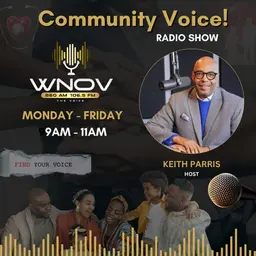
Community voice. I'm your host Keith Parris. I want to thank everybody for joining us this morning. I really want to thank. Right out for. Just depressing me before the program. It wouldn't be me. Man, what a downer. I would tell you this though. I mean, without even going into a detail, I'm gonna say this, man.
I'm going to always stand ten toes down with the people I know personally. Right. That I know. Clark. You know how like people say stuff about the wheel? Clark. You want to stand ten toes down? I won't. Throw them under the buses quickly. I did that to one of my colleagues. So, you know.
Do this do this terrible. I didn't do Chris 11. You went about I don't know him. I don't know if he had on the WNLB shirt. He's an imposter. I don't know who that you know. Ooh, so good morning. How was your weekend Clark? Good, good, good, good. Yeah, man. Yeah, man. My uh, it was so funny yesterday. Um, to watch how people change quickly out of their packer gear into their brewery.
I just wore my backpack. Yeah, Caitlin, Caitlin and Kevin got it. They went to the game yesterday because I guess the gold games in Milwaukee. Yeah. And so, man, that's great. They fight the traffic and get there and the Packers beat the Bears. Hey, I mean, whoop the fit on them boy. I mean, listen, they won Bears, man. They was more like, you know, like Cubs. Cubs. Yeah. So that was that was good. So then we had a little break in between.
And we we ended up I Stayed up man. I watched I watched the whole game man. I was watching last night I was watching some everything man. I was I watched the Brewers Then I would turn from the Brewers and watch the Bucks. Yeah, AJ Green, baby letting it fly. We got what by Charlotte though. Oh, the knipple play No Yeah, so it turned out to be you know what?
You know, they're coming back to Milwaukee. Whatever happens in LA, they're coming back to Milwaukee. I don't know, man. I think we might. I don't know, man. No, no, no. I know this is a far-fetched thing. Yeah, it really is. They've been pulling out the broom. But we're one game. We're gonna sweep them. No, but you know what? I think Trevor McGill's reaction was so great last night. He said, you know what? We won't be swept.
Yeah. Yeah. Yeah. Yeah. Yeah. Yeah. Yeah. Yeah. Yeah. Yeah. Yeah. Yeah. Yeah. Yeah. Yeah. Yeah. Yeah.
What I mean this Tom Brady had the head. No, no, he had the Seattle Oh, he called too. Oh, did he eat the first show? I'll point for him the car. Yeah. No, he ain't gonna call him. You gotta work. You gotta work. You gotta work. But yeah, man, just just watch that game. I was highly upset for two reasons. Just like I said, the Wiz pitch count was too high.
And he only went with three innings. Was it three or four? He went three innings. They are good. I know. So all the pitches that he missed on, they was falling off. So again, which made his pinch count go high. He was in the 80s. Yeah, he has been. And it was something that the manager, Robert said. He said, he knows we can hit his fastball. Yeah. He said during the interview.
It was obvious. So, you know, but I mean the fact and then the whole irony was terrain then hits a home run out of game, which is the MO of the Dodgers who was doing more, you know, small ball base, you know, let's see what could happen. But the number and the Dodgers had this issue in the in the Atlanta series. They left a lot of people on base. Listen, the wheels had the base loaded.
and got that guy to hit into a normal place. Man, this ain't the regular season. Exactly. These are folks who know what they're doing. And again, they showed the difference. Because they were showing like the Dodgers compared to the Guardians, the Rays, and the Brewers and what those salaries look like. Oh yeah. So let's see what happens at four today.
be great to go out of here. I'm going out there baby. See you there person. I was your weekend man. Man, it was actually good man. Uh man, I did a lot of I did a lot of productive things. Uh I had to play at the packing house on Friday. So, uh I was at the packing house with Joe before you go.
Let me thank Michelle for being at Zion Hill Church yesterday. She preached? Sort of. You preached? Let me just tell you right there. If I ever had decided to be a preacher. Oh, I'm coming.
You talking about some good service? I'm coming because I know you're gonna be you're gonna beat up enough Enough now I was and I was telling Michelle in between the programs that I I Was surprised
of the number of people who clearly did not understand the referendum questions. That was surprising to me because I mean she couldn't, we ended up on that parking lot waiting for her to get out. We can get off that parking lot to 1230. We were done at a quarter to 12. So it just showed and you can see people coming out and I'm getting text messages thanking me for bringing this little note. Look, I'd asked my pastor. He was very supportive of it. But.
the level of information and I think it's going to tie into some of the folks we're going to be talking to this morning and how churches have captive audiences. Absolutely. They have captive audiences. And so, you know, I know that there's some faith leaders who say that I'm not political and I'm not asking you to be partisan, but you are political.
because when you go down and ask for the zoning variance to put your church in, that's a political act, right? So I'm saying that there are things out there that can impact your parishioners. Whether or not those times are considered a charitable contribution. Right. And I can write them off. All of that makes a difference. All those things that you and I understand, so then that makes you can play with everybody. That's a whole different conversation, right? But I'm just saying that the level we have to, and I'm going to take,
a lot of responsibility myself of this is letting people kind of know what it was. So when you brought out the information guides and look, all folks do it. I can remember regularly at Metropolitan, we would get the conservative voters guides along with the other piece. And I knew that whole church thing was going to be one of those things where, you know, because people so
what's the word for it? We're so locked into our thing and our thoughts and we call ourselves defending the faith. And a lot of times they're using that to take advantage of us. Prop 8 out in California, I thought was interesting that the Mormon church is giving the Juneteenth Museum $3 million. But then last year,
And we'll probably see them again this year at the Freedom Fund dinner. There was a table that the saints, the church of the Latter-day Saints have bought. Now, we can go back and forth. About why? I said, you can ask questions about why. Right. Oh, I know why. I know why. Hang on. She didn't get it, Clark. We're trying it again. Here. OK. Yes. OK.
Um No, this is real time production But we're talking about the the church giving the money to the museum so I just think but it was the Mormons who put a lot of money into defeating proposition eight out in
California. Now what was prop eight? Prop eight was the recognition of same sex marriage. And the difference was black folks who came out and voted in support of prop eight and they did it on religious grounds. I can tell you very, very prominent pastor here. Now look, the first time Barack Obama ran, you couldn't find a black person in America who wasn't going to vote for Barack Obama.
And they weren't going to say it publicly, right? Mm, evidently, my brother, who didn't vote in the election at all, but keep going. OK. But what he did, he didn't vote for McCain. Yeah, he didn't. He just didn't vote at all. He didn't vote at all. Right. But I'm saying you couldn't find even there were black Republicans, right, who voted for rock. That's history. Yeah. The same pastor who was all Barack is my boy. And when Barack had the freedom to come out and say he supports same sex unions.
marriages, that was the excuse that this guy needed. And he backed up on and somebody put it in the chat last week. And I don't get them anymore. Man, they just cut off my porn. Always talk about Jimmy Swagger and Swagger Ministries as a religious porn. What I mean by that is they got some of the greatest singers.
That music be bangin'. That music be bangin'. And how much of it has been modeled on black church services. And then Donny gets up and Donny does Donny.
His mama on her program. She does Francis and that that article that they sent us about the number of black people who are sitting in these white congregations and how they're decoupling us from religion and my response to the people were well I think those some of those folks had a predisposition already They thought a certain way. Yeah, and man. I'm really bad one But let me tie it into when you were talking about Clarence Thomas. Okay There were a lot of black people
Who supported Clarence Thomas? Oh, yeah because of Anita Hill and his whole thing you got a black man trying to get up now almost said it this Negro had been black in years and Then what happens is that then when you catch it now you want to do your fall back and go we the people OJ Simpson was OJ until he caught the case, right?
Now he's a black man being victimized by the justice system they talk about when they took the jury out to his house
Yeah, and uh, I don't know if it was Kardashian who they had the oh it's Johnny Cochran had the bright idea. Oh jay got nothing but pictures of him and white folks and it wasn't about I did like that was the selling point that was one of the selling points when they visited the house right and then the church was like these black people and it was a Kardashian Kardashian you see there's more black people in this house than I've ever seen in this house where these pictures come from from the private collection of Cochran art right and put so
It becomes important. Michael Jackson shows up with the nation of Islam during his case. Right. And he had been Michael. But you show up with the nation. When you had no race. You had your pajamas on with your umbrella. You was high. For Donald Trump saying that black people like me because I'd call cases, I'm paraphrasing. Right. Hey y'all, let's not be so...
Kind of use a big word. Yeah, let's not be so malleable. Oh Here's the other thing and they were talking about those Crowley the ads Mm-hmm Alicia Martin are you for? Well, I mean Because they well, you know cuz those were all public clips
So they went and grabbed you know, because what she was going in about the health care situation, I think that's what it was. But yeah, I had a number of people be like, what's up? Supervisor Martin. Like y'all know. Public record. Y'all know. Public record. They pick and choose what they want to use. And that was a good one. So anyway, so thank you. We really have to raise the level. And I love how you incorporated this.
I had told the story was done racing doing exit polling and young brother Okay, and the sister came when he walked out sister said I know you voted, but did you vote right? Did you vote right, you know, so that's the younger folks And look these ads have been tested. Oh, they know
You know, I know what works. You mentioned last with their triggers. Yeah, they know. And look, do you know that there's some internalized racism that we have? I mean, that there is some internalized white superiority that we walk around with. We don't believe that you are capable of doing some of these jobs, right? Because black folks just don't get big jobs like that.
I don't know what your background is. I don't want you to mess it up because if you mess it up, you're going to mess it up for all of us. It'd be embarrassing. It's a whole bunch of reasons why we don't trust one another to have these jobs. At Metropolitan and the DC Sniper was captured. And we got 40 kids.
We had 40 kids out there. So, you know, this teaching opportunity. So what do you all think? It's a black man. What do you all think? I'll never forget this sister raised her hand. And she said, I can't believe a black man did that. And I was going, oh, why? Because it's not part of our, our, our, our, our portfolio is not part of the profiling. She go, no, I can't believe that any black person can be that organized. It floored me. She was like 17.
It's your mind.
But it's also about exposure to because sweetheart, there are tons and tons of examples of black folks being that organized, whether we're talking about the civil rights march of 1963, the Montgomery bus boycott. That's a whole stuff. But there are tons of examples. So it's about what you're the man. Exactly what you're being fed and how people talk about it. Because the one thing a lot of us don't do is give ourselves credit for our organizing skills. When you go back and you watch the move.
with Bayard, Rustin, and how they were able to pull all of that together out of nothing in that amount of time. Come on, man. You got buses being coordinated all over the country. A gay black man and a Jewish woman. Those are the two. What you accomplished. What you accomplished in that amount of time. But we don't give ourselves credit. You know, we'll see.
something that black people have done and just take it for granted, but some of my white do the same things like, oh my God. No, we do this every day, y'all. We figure it out every day. Now, as such the entertainers said at Barbershop that Muhammad was the Jackie Robinson of crime. Because normally don't meet that profile.
Right. But for every rule, there is an exception. We gotta, I mean, we just gotta be smarter. It's just like I heard something in church yesterday. This pastor said in church yesterday that, you know, we losing all of our stores like CBS, Walgreens, because black folks keep stealing. And, you know, you ain't thinking about the elderly black woman that gotta now ride the bus.
And I don't want to just say, you know, so bad. I'm like, man, I hate you. Can't raise your hand in church. Be like, sir, I need you to flesh that all the way out because we now know that there were many corporations that were using false information about deaths to be able to justify coming out of communities. And so this was not just the black folks is bad. Black folks is horrible. Y'all still in in the stores is closing that there were people that didn't want to serve us any longer.
It was no longer profitable or whatever the issue was and so they use crime report and they've now and you can Google these stories where they now have had to come out and admit No, it was not about Yeah, solely about a high degree of theft in the area. We just want to get out of here And then I want to and here's the thing about being in our silos They're also closing stores and poor white communities. Yeah And and because you're dealing with poverty
not race, you deal with poverty and there's certain behavior that might be associated with poverty. So again, thank you, thank you, thank you. It was, I'm gonna tell Kennedy's mom though she'll be able to, because Kennedy, her mom, that's how she dressed when she went to church at that age.
Number one, that's how my mama dressed me. Right. So I definitely have an affinity and an appreciation. In fact, if my mama said where I go to church today, she would be hot with me because they just didn't play there in Alabama. You you went like you was going someplace. You know. And I mean, when I say that baby was clean down to them shoes, but she she was clean. She got this thing about you got to see her, though, with like, we're keeping her and she's there for the day. And Rhonda's getting ready for work.
That's her opportunity to go to put makeup on. Oh my god. She's getting but she's been watching, I guess, these TikTok videos on how to apply makeup. Really? Yeah. Well, you know, it was interesting getting used to seeing because she had her headphones on her tablet in her hand and I had to smile because I was just thinking about the evolution of it all. You know, I remember I would give coloring books and crayons to keep, you know, Derek busy. And so to see her with the tablet and I said,
It's crazy, but I'm going to tell you, I've gone to tons and tons and tons of churches. What you all do as I heal with those children actually coming up for a few minutes to receive a word. And there are people, you know, they got the youth ministry and the kids going to separate rooms and that. But to be a part of the service.
I just thought that that's I just I love when y'all do that. I think it's cool Yes, bring your Bible $5.00. I know I saw the little boy grab his off the seat. I remember you had told me I was like, dang, I could have had me $5.00. So what I did was because in some kids who either lost the Bible, not the kid was we wrote a scripture on each envelope and then
in order to open the envelope, they had to read that scripture to their parents. Really? Right. Okay. Well, I do, I just, I like... I wouldn't have meant to actually read them or just open it up, but... I do. I like that they were incorporated into the services, not like a side room. And, you know, those things are important, but just for that brief period of time that you are a part of worshiping with the congregation. Well, that's probably when I was growing up, the youth.
We're a vital part. I mean you choir saying everything. Okay, so we were always part then, you know, you got oh Oh, you see there's a dr. Joy Dr. Well, let's do this. Yeah, I'm gonna Yeah, we're gonna we're gonna go to a break but again Michelle. Thank you. Thank you. Thank you for having us such a community treasure and we just really
I really appreciate you so much. I'll get you that $5 envelope as soon as I get out of here. Right there on the counter for you. Put it in your name. It's right there on the counter. Hey, you're listening to Community Voice. We're going to take a quick break and we'll be right back.
Good morning. Can you guys hear me? Hi, welcome back. And we're inside Community Voice. And from time to time, we do a series of conversations called Faith Justice Politics. Let me make sure I'm pronouncing it right. Dr. Krystalins? Frederick? I did it wrong.
Good effort. A plus for effort. It's just Chris Lynn, like Christmas. Chris Lynn. Yes. Frederick Stanley. Correct. Former MPS administrator. And we have also joining us my video, Dr. Joy Gobbins. She is the pastor of, you know what I found out?
St. Mark is the second oldest black church in Wisconsin. We're not doing that this morning. No, no, no, no. No, the history piece. My former classmate, Dr. Lawrence, well, Bishop Lawrence Kirby, St. Paul's down in Racine is the oldest, but certainly in Milwaukee, St. Mark is the oldest. Yeah, I didn't know that until he runs around bragging about it. So, but again, historic St. Mark AME church. Good morning. Welcome back.
Good morning. Good morning. How are you this morning? I'm good. And we're here to talk about a group face United to save democracy. Yes. So who wants to go first? Dr. Stanley? I'll let Reverend Dr. Joel Galbin go first because she is the immediate past state representative for that organization. It is a national organization and they have state leads.
Reverend Dr. Joy L. Garman served as the state lead for two years up until 2025 in addition to several other roles that she holds locally as well as internationally. And so when you talk about the AME church and our involvement in
issues around democracy and voting and what's not that is something that we take a Tremendous amount of pride in we're active we're boots on the ground type of organization and Again, she was a the inaugural state lead in that capacity. So I will turn it over to her
Good morning. Good morning. Good morning. We want to, the Faiths United to Save Democracy is a group that is actively, actively doing the deep dive in battleground states to preempt possible
to preempt to actively be prepared for anything that would impede a person's right to vote, particularly in battleground states. And we've learned, oh, we've had to accept the reality that Wisconsin, you know, we are Wisconsinites and we are who we are. But indeed we are being forced into a much, much bigger fight. And we have to decide how we're going to participate in it. One of the things that we work with
The Amy Church, we work with a lot of different organizations. The thing about the Faith United to Save Democracy is for those persons who are interested in the deep, deep dive around what's happening and why it's happening, this is the place for you.
If you're interested in becoming a pole chaplain or a pole peacekeeper, which means that is for laypersons as well as clergy, there is an excellent training.
on how to what your legal rights are, what your ethical responsibility is, and also there is some training around that that connects us not only to local modes of restitution and information and access to those persons who connect.
who can navigate situations as they pop up in real time. This platform and this group can connect us to those persons locally as well as nationally. And so if you are interested in becoming a poll peacekeeper, we want to invite you and Dr. Stanley has the details on how you can hop on that call tomorrow night at 7pm Eastern.
7 p.m. Central Standard Time and so you can get access to that training and so if agitators show up in whatever form they may show up.
You can be trained how to de-escalate. You can be trained on what numbers to call and how to respond when people are being turned away. And you can receive the appropriate certification to where if someone tells you you don't have the right to be there, you have the certification that can demonstrate in real time why you have the right to be there. And so for those persons who are interested in engaging in that way, we invite you to that call on tomorrow night at 7 p.m.
I am part of what had interest me in having the conversation with one ordained Baptist minister. So that would be it. When we think about this intersection of faith, faith traditions, religion, and the areas of politics, and particularly around justice, do you see, obviously,
But this is kind of a softball lap. So what is the connection then between this prophetic responsibility to seek justice and then civic engagement? Why did I wake up this morning knowing that you were going to ask me that question? I just know that's where we were going to start out. And the simple answer is Jesus.
Read something other than the King James. Read the New Revised Standard Version. Read the New Living Translation. Jesus is the reason. I mean, Jesus is the reason. Pick a, pick a, let's do it this way. Pick a popular, the first story about Jesus that comes to your mind. The party. The party? The water in the wine?
Yeah. For me, as a preacher, it's supposed to be when he preached his first message, right? We want the real you. No, no, no, no. That is the real me. He quotes Isaiah, right? He goes to Isaiah and talks about his ministry and why he was called. Can you tell the preach good news, right? Right, right, right. Right. So I would, I would, from that, from that perspective,
It is Jesus, but this then has to come I'm reading a great book by Senator Reverend Dr. Raphael Warnock divided by the Black Church. And they talk about this whole thing where how we've been taught about Jesus is not necessarily the Jesus that
Dr. Kelman is referring to, right? Am I? Yes, absolutely. And I asked you to give me the first story of Jesus that popped into your head so that I can tell you about the Jesus that the AME Church preaches and embodies. Even when Jesus turned the water into wine, that was a radical statement that challenged the social economic standards of the world.
His first miracle was to change and it challenged what folk believed about what was appropriate at a party, what you were supposed to do at a party, what even the responsibilities of Christ and Jesus were in the world. And for a lot of people who want to separate social justice from Jesus, they struggled with that passage of scripture that his first miracle was at a party.
And so that his first miracle in scripture challenges this notion that some denominations, I mean, I call it slave religion, slave religion, which tells us about what's going to happen when we get to heaven. And that's the thing that we focus on. And so that way we don't have any responsibility for what's happening right now. And that was a good survival tool.
for the enslaved, right? But we are in a different place and in a different kind of enslavement now. And so we can choose to see the fact that Jesus turned water into wine as his first miracle at a party as a way of even challenging the church's understanding of what the Messiah was supposed to look like, what the Christ was supposed to look like. And when Jesus came out of the wilderness, the other scripture that you were talking about, I mean,
Just read it. One of my favorite passages, Luke chapter four, when he came out of the wilderness, he went to the church and opened up the scroll and read, you know, that the spirit of the Lord is upon me to preach the gospel, the good news, to set the captives free, to lose the bonds of people. If that's not social justice, what is? And so for us as AMEs, we understand the liberation of Jesus Christ is not just for when we get to heaven.
that we believe that Jesus came so that we might have life and have it more abundantly now. And that eternity does not begin when we die. Eternity begins for us when we are birthed into this world. And so eternity includes our life on this side of the Jordan and our life face to face with Jesus. We believe and we preach a gospel of Jesus Christ that even now we are in the presence of God always. God doesn't have to find us. God is everywhere we are.
Jesus came in the world as Emmanuel, God is with us. Jesus, which means Yahweh, Jehovah saves. God, Jesus came in the world according to the gospel, according to John, came into the world in a new way so that he could be with us and we wouldn't have to wait to get to heaven in order to be in the presence. And so if we believe that about Jesus, then that means we believe in the prayer that we pray, the Lord's prayer, you know, heaven.
The kingdom of God is now in heaven as it is on earth, which means we are to bring about wholeness and peace in this life as well as the next. And in the system in which we live, that means we have to participate. Jesus participated in the systems as he worked to dismantle them.
The healing of the woman at the well was just about her physical healing. In his conversation, he restored her back to community. The raising of the woman's dead son was not just about breathing life back into that boy's body, but it was about restoring her back to community and giving her the only access that she had to engage with the world to have an income.
in that system, if you did not have a husband or a son, you could not sell property, you could not engage in business, you could not access anything. And so when God restored her son, he restored her back to having all that she needed to prosper in this world. And again, as I referred to Senator Walnut's book where he talks about our black mind, it is where,
And I've kind of I'm trying to reconcile this I can remember early on where people would say well Jesus was a revolutionary and not in the sense that we think a revolutionary, right? I mean Jesus especially when it came to the accountability of systems Now he couldn't control the Roman system. He had impact on the Jewish system Which at times was very oppressive to the people. So let me ask when you talk about Jesus then the Messiah the Christ
Am I wrong in saying that only oppressed people not I'm not talking about our whole Christian cat. I'm talking about in terms of a need of a savior a Messiah the when Nicodemus came to Jesus at night Scriptures in the Baptist came to ask what must I do be saved that is not why Nicodemus came and that's not why he came at night
He came he was he was impressed by what he saw Jesus did he wanted to know are you fulfillment of the scriptures which was to liberate The oppressed people Did I that's what I got from it and then
generation veered to, you know, how do you get eternal life and a man needs to be born again. And even then a man needs to be born again. Anybody who deals with adult education knows you have to unlearn to learn when you teach in adults, right? Unlike children where you feeding in adults, you've got to get rid of, as they said, a wood stock, some of the bad asset that's out there in terms of, so I, you know, so I think kind of getting back to this whole thing about justice. There's a young man down in Chicago. Mr. Eric Wallace, very conservative.
Black Theologian. And when I asked him the question about justice, he first said, social justice, that's a trigger. No, I'm talking about justice. Period. Period. And does the church have a responsibility to seek justice? Absolutely. And if, and absolutely, and if you people study
If people actually do a word search on justice as used in scripture, it's not about just us. The word that is translated in the English towards justice is not about just us. It's about returning the world to wholeness, which includes the environment.
which includes all of creation. And so we have to be mindful of that. And you said one thing, and then I'll let Dr. Stanley respond as well. You said that Jesus came to Jesus, the Jesus of scripture deals with just the church and the Jewish institution and didn't have an impact on the Roman society. Actually, he did. And you used, okay, okay. Thank you. What I'm saying is that he did, obviously he had impact.
on Roman society because he got crucified. And Nicodemus was a Roman official. Right. And so, yeah, it was, but Jesus was not crucified by Pilate because of him being king of the Jews. He was a threat to Roman rule. And Romans were very, very, that Roman rule was Roman rule, very brutal.
people in terms of that. So no, I was just saying in terms of that because even you have that scripture about paying taxes, right? And we're running on the thieves of that which is God. No, so I just think we don't look at Jesus that way. I think we look at Jesus now, the Savior, you know. That's a safe, soft Jesus. Yeah, and then, you know, I'm a Baptist. So Jesus dies every Sunday at my church.
you know because that's what we're looking at that whole beatific eternal life and we're not looking at our present situation and if we're veered away from that we're not going to see just as I was mentioned Eric Wallace and so he was saying that the problem that he's having is black folks are sitting in these churches and they're being politicized and politicized if you sit in Jimmy Swagger's church yep just the other way
Did you see the articles that are going around now about the...
Yes. And the fact that these congregations that are intergenerational and a diverse city of race and economic background are desensitizing people to the call of Jesus Christ. And we reminded in each one of the Gospels that when Jesus, for us, it's a AME is a part of our every Sunday morning worship that when
The question is, ask what must I do to be saved? To love God with all of your heart, with all of your soul, with all of your mind. This is the great and first commandment. And the second is liken to it, to love your neighbor as yourself. That you can't, so we have to wait. That is the call to justice. To get to heaven, to love our neighbor? I'm sorry. That's a justice call. Yeah. Because we don't have to, yeah. That's a call to justice. To love you, make sure they have health care.
access to decent health care. To love your neighbor is to make sure that our children are educated. To love your neighbor is to make sure that everybody is safe, not just to love your neighbor. And the other part, which is the scripture, old and new, is about social justice. There is a command to see after the foreigner in the land, the orphan in the land,
as well as the widows in the old and the New Testament over 200 times. I think it's 280 something times. Is that not social justice? It's a responsibility. Yeah. It's a responsibility. Talks about eternal life. I would go to Matthew 25. There specifically says, here's what you do. And I used to hear this all the time. You're not going to get it on your good works. Well,
I don't know, Jesus did a lot of good work. I don't know how, because, and this is probably a different conversation I'll bring you back on, how we have to deprogram ourselves from a lot of what you call, um, enslavement religion. I no longer look at watch service the same way I did and I talk to you.
about watch service. Y'all don't know if you remember we have this conversation here but there's a lot that we do and and and I think that then that becomes the thing about again around our whole thing about civic engagement. The difference between the time of Jesus was that the Jewish people were not Roman citizens as a general rule. Paul was but for the most part they were subject to Rome. Well we're US citizens and so there's certain
unalienable rights and one of those is that something we have to keep in ourselves defining for ourselves because left to the way they define it maybe we're not yeah but but I think that when you begin to look at how important in a democracy the franchise is the vote yes that's that's the distinctive part of what makes a democracy is the political system not like ancient Greek
democracy where it was only people who had land who were making these decisions. This is more of a pro-territ in theory. This is how it works. And so I just wanted to start to do that. And then we'll talk about the importance of civic engagement, understanding the issues and who has the responsibility to do education as it relates to that. Again, fake justice politics, Dr. Chris Lynn.
Stanley, I got it right. Dr. Roy Galman. And again, we're going to take a quick break. Can you hold on? You good? Yeah, we'll be right back. All right.
with your host, Keith Parris. All the way live. Oh man, that's what, that's why you do super duper. Super duper. Yeah. Off air, Dr. Stanley, Dr. Arminar, we're having this conversation about faith, faith.
United. I did three years of speech pathology, so if I don't get those TH's out, you know, bringing on my speech pathology teacher. It's one of the best programs. I highly recommend speech for everybody. Yeah, I loved it because she gave us a whole lot of candy. Um, motivation, motivation. But we were talking about this is a, um, could I use the term ecumenical group, um, faiths.
United to Save Democracy. How extensive is that in terms of representation of different faith traditions? All faiths, I would say. Pastor Joy, did I get that correct? I know they're Catholic, Baptist, Jewish. I think every denomination you can name, there is some representation. I don't know that we have it to that extent in the state of Wisconsin, but that's the goal.
Nationally, it does. And so when we have the national training, you see people from various states and people who are even non-believers. I mean, I think the whole idea, again, it's meant to focus on the fact that democracy, if we truly value it as a country, we have to realize now that it's shaky.
And that's the question I was going to ask is every time and part of my my my job here is certainly doing election cycles. I have folks coming in and you always hear this is the most existential election of our lifetime. When we look at the threats to democracy, might that be an appropriate description of the importance of this election?
And when I said earlier that this group, one of the things that I like about this group, and if you're interested in this kind of thing, this group, Faith's United to Save Democracy, does a deep dive to help you understand how fragile and how real the statement is that democracy is truly under attack. And so it helped, they do, and they share the information on the front end of, and helping us walk through and to see
the dismantling of democracy and what will happen. You don't have to like it, right? And for those of us who are people of color, those of us who happen to have been blessed to be born female, you know, this democracy hadn't always been kind to us, right? It has been used, it has been weaponized against us to keep us in place to sustain the supposedly those who have power. But at the end of the day,
Without it, it's going to be catastrophic for everybody, except for about 1%. And so we have to rise above our theological differences in order to save our people. And this is what this group is about, and giving us, naming it.
with factual information developed by scholars and people who are gifted in this area and then helping us to see what we can do at the local level to empower our people and to understand what's happening and then to become and the action that this particular group is moving us towards is being present at the poll, being trained and equipped with the information to serve as poll chaplains and to serve as peace
Now, by no stretch of the imagination is this particular group addressing all the ills, right? And so, but they do have a specific role that they are going down, which is a part of what we need to do to make sure that we preserve democracy so that we can preserve ourselves at the same time.
And for those churches who think social justice, and this is not the work of God, it'll be interesting when they are called to pastor people who are restricted from leaving their house or who have been imprisoned or have been kicked out of the country, and there's nobody in the pew to pastor. Where's social justice then? You know, you referred to this article,
whether it's work that they've done with the Brookings Institute in terms of people who might find themselves, as you said, in an intergenerational, interracial kind of environment. But there's some history here. Prior to, I want to say Ronald Reagan, specifically so-called fundamentalists, Pentecostals, were not involved.
and the electoral process as a general rule. As a matter of fact, they considered it worldly, and so there was a certain level of disengagement. And let me say this about the Republican Party. The Republican Party had a very strong libertarian streak, people like Barry Goldwater. I worked for Planned Parenthood. There is an award that Planned Parenthood gives to Republicans who are like Barry Goldwater, because Barry Goldwater
was very supportive of a woman's right to an abortion because of the lived experience he had with his daughter and having to take his daughter across state and she got pregnant in college for an abortion. What I'm saying is so, but very libertarian, right? You know, very states, right? They're libertarian. But when they began to look at numbers and I think it was Phyllis Shapley, there's another guy, Richard Vigory, Mr. First Mass Mill.
Republicans then made this, I said this compact with the devil, and they brought in Jared Farwell, the moral majority. All I'm saying is that, so then you have those folks there who got involved, but they got there for two issues, right? LGBT and abortion, right? So now more and more and more and more, you see, if you do have these people in those situations, it's more of the so-called social issues, though I think hunger is a social issue.
I think homelessness is a social issue. So I'm just wondering in terms of, is that part of the thing? And so even with black churches, you saw, even though it was the black church that was very involved in the civil rights movement, I think when you go to Memphis, you begin to feel like, I see how ecumenical the, the garbage men strike was in terms of religious support. There's a Methodist church that they, they met at obviously the Baptist churches. And then Dr. King's last speech.
was done at the historic Mason Temple Church of God in Christ. What I'm saying is, so how do we, when you say we put our theology or our different religious catechisms to the side, how do we do that? I think this is hard for me. This is a hard conversation for me to even imagine because I don't know a black church that didn't see hunger,
and nakedness as a social justice called the Christ. I don't know that church. I don't know that tradition. I've never experienced, I didn't grow up in a tradition. I've seen it in my adulthood and the manifestation, but I can't speak to how
we move a church or how we move a people because that's not my experience. I don't, and the, and the, and the Baptist and the church of God and Christ folk that I was around and a part of as a child and even in my adulthood and college and even now in my ministry in the 20 something years I've been a pastor is they understood social justice as the call of church. What I do remember
is when you remember when the movement family first came out and they were sending all that material to black churches for free and all of that. That was the of them shifting our narrative from feeding the hungry and clothing the naked to who was gay and who was having an abortion. That wasn't on our top list.
And then they start sending some of our pastors coming into our communities and taking our pastors and sending to their schools and indoctrinating them into that. And so even the white churches, that was not always a part of there. But I think all of that is not God. That whole infiltration, if I could use, into both
into the church, into Christian churches was not of God or Christ. It was a part of what we're now seeing, where the Christian church is being used by people who don't care nothing about our God and don't love our Jesus, using our faith against us to divide us. And while we're focusing on somebody having an abortion and whether somebody who's not even coming to our church,
can marry somebody. They're not paying tides. They're not coming to our church. They're not interested in our God. We've shifted our focus to that. And now, and now, and now, and now we so focused on that in a way we were not focused on 30 years ago, that we're willing to sacrifice health care, education. Basic necessities. What we can preach and not preach in our pulpit.
They're coming after. Because we're focused on something that God didn't spend a whole lot of time talking about. What he did talk about was loving your neighbor. And feeding the whole red clothing in the neck. The first time I ever saw Don't Ask Don't Tell was in the black church. Yeah. I'm just real talk. It wasn't like all the fucking gay people just showed up at our door. Gay people didn't hear since the very beginning.
And then that gets into a whole lot of, like, a lot of pieces that we go into. But no, that was there. And then I could see the collateral damage that was being based on a, and I tell people all the time, don't use the scriptures as a weapon. Please, no. Certainly against ourselves, understanding that. So understanding the issues become important.
Again, your organization specifically or this group is specifically looking at what's happening at the polling place, correct? What happens after or November the 4th in terms of faith? Oh, okay. So let me use this opportunity to make a plug because Reverend Joy has referred to it. So tomorrow at 7 p.m.
We do have a virtual rally and that rally is again is not limited to Milwaukee. It's really meant to be a statewide rally and it's for anyone, everyone who is interested in learning more about what is and you're not going to get it all, but at least your eyes can be open to what's really at stake here. You know, a lot has changed since 2024. You know, 2024, we would just walk to the polls, you know, if you wanted to and.
probably didn't think too much. But I don't know about you, but the day after the election in 2024, I would say my life has been different since then. Is that not the understatement of the year? I'm just saying some people got over it. I don't know. I'm still feeling it was cute the first time around. It ain't cute this time. Okay, so this work is really about how voter education is not something that
begins an end during an election cycle. It's something that's ongoing. And there are a lot that has happened since that time until now. I mean, we don't have time today to get into all of it. So tomorrow at 7 p.m. and it only lasts an hour.
is an opportunity to really rally people in understanding why it's so important to take a few hours out of your day and encourage others to get out to the polls, to know that it's safe. It might be not the easiest thing to do, but it's safe. It's safe now. We don't want to speak things into existence that don't, but if we are not actively engaged in ensuring that it remains safe,
then we are passively engaged in letting things happen. So we actually are at a place where we have to make a choice. We have to make a conscious decision about whose side are we on. We're not endorsing any candidates. That's not our issue. Our issue is about protecting the right to vote.
Well, when I when I have the folks on from souls to the polls, they always do the disclaimer that they are nonpartisan. Right. And I think people understand the difference. Now, there's some people get up close to the line. But nonpartisan means you're not supportive of any established political party. Correct. Am I correct? Correct. So then it becomes the issues, which then gets us to their three referendum questions.
on the ballot. I know one of them purposely written in such a way that it would be attractive to vote yes, because you said the church doing COVID, not that they were my friends, but I did have a real big diversion, diversion from some of the religious leaders who felt like churches should have stayed open.
And I was going, no, and if you knew what was going on at that time in Michigan, Church of God and Christ loss, I think like four bishops. And all in Georgia, there were eight Baptist pastors who succumbed to COVID. And a lot of that was because we're in enclosed spaces. But I think when they say, should they be able to close houses of worship, then a lot of people feel like that might be an attack on religion. Do you see that as an attack on religion?
For me, I think we do have to be mindful of what we are forced to do. And also at the same time, what's in the best interest of the people God called you to serve. And I did not close my church because the government told me to.
We closed our church and moved and we were already on a social media platform because I'm responsible for the lives of my congregation and the church, the black church, the black church is I understand it. The black church carries a lot of weight with the community, even with the un-church.
And so what we do and don't do tells people who have never, especially a church like St. Mark, what we do and what we don't do, what we talk about and what we don't talk about sends a signal to the community, whether they are church or un-church, whether they will ever come into the walls of St. Mark, whether I should take this seriously or not. And so for us at St. Mark, we closed because it was important for my membership to be safe, but also,
so that the community could see that this was serious, that this was not some fabricated thing that was designed to
whatever. But this was not some conspiracy that this was an actual virus that was killing people who had issues already. And so for us, we did stop meeting in person, but we continued on our platforms. But at the same time, we also became a place that was able to hand out food in spite of the pandemic that we were able to do.
screenings, we were able to do care for our people in a different way. Our bishop was with us on Sunday and one of the things that he said that reminds me that is powerful even in that situation and in all the things that we face as clergy and congregations, even with voting, we have to be mindful and all the other issues, we have to be mindful that we don't replace God with tradition. Yes.
And so I have to meet in person in the way that we worship in the way that we've always worshiped for 100,000 years. Inspired because that is the tradition. That's not God. That's worshiping the tradition. We are able to care for our people in ways that preserves their eternal life. And so even with voting and what we talk about from the pulpit, no government.
I don't care what laws they pass if we decide not to vote that will limit the powers of a congregation. The government will never tell me who I can marry and who I can't marry, regardless of what's on the books. The government will never be able to tell me what I can preach and what I can't preach from the pulpit that God.
said. And they can write the laws. I have to decide whether I will obey them or not or whether I will go to whatever the consequences are. And that is true for me as a godly leader, as it should be for all. But sometimes in our traditions, particularly in our historical denominations, we worship the tradition rather than the God. We view scriptures through what we want to be true.
and what we've always experienced in face of what the scripture actually says. And if I can go back to the scripture that is often so misquoted, not that you misquoted it, because I know you know better, I know you know, Reverend, that you quoted about give unto Caesar's what Caesar's and give unto God what's God. But we also remember that passage of scripture, the Pharisees had come to trick Jesus.
And Jesus says, I know what you came for. You hypocrites, you tried to slip me up to put me in conflict with the government. How about this? Give Caesar what's his and give God's what's God. But those of us who are believers know that what everything belongs to God, including Caesar and his money. And so Jesus actually flipped it back on them because they were the Pharisees. They know the scripture is better than most folks. And they knew that they believed that everything belongs to God. And so in him saying that,
And so for those of us who believe after Jesus Christ, we are to believe that everything belongs to God, even our vote. Even our vote belongs to God. Even if we choose not to vote, it's still that action actually belongs to God. And we have to be good stewards over our vote as a right in these yet to be United States. I'm sorry.
I didn't preach Sunday until you did it all today. I didn't preach Sunday until you did it all today. I didn't preach Sunday until you did it all today. I didn't preach Sunday until you did it all today. I didn't preach Sunday until you did it all today. I didn't preach Sunday until you did it all today. I didn't preach Sunday until you did it all today. I didn't preach Sunday until you did it all today. I didn't preach Sunday until you did it all today. I didn't preach Sunday until you did it all today. I didn't preach Sunday until you did it all today. I didn't preach Sunday until you did it all today. I didn't preach Sunday until you did it all today. I didn't preach Sunday until you did it all today. I didn't preach Sunday until you did it all today. I didn't preach Sunday until you did it all today. I didn't preach Sunday until you did it all today. I didn't preach Sunday until you did it all today. I didn't preach Sunday until you did
Because there are people who thought and again many people Made that decision not so much they knew or they saw the statistics who was impacting primarily Initially, I just wonder just as a kind of general philosophical does government not only have the right have the responsibility stepping sometimes to
I don't have words here to save us from us. I think a philosophical idea. I think these yet to be United States has always been double-minded. We'll put on our money and God we trust. We'll hang the Ten Commandments. We'll include God in
I'll say liturgy using the church in our constitution and in our foundational and yet we're not all talking about the same God. I do think because of the system we live in, all of the systems we live in, it is the responsibility of the church and believers.
And I will say whatever faith tradition you believe, all of them believe that we should look after the poor, the sick, the hungry, the widows, the orphan, the underprivileged. You can't fight all of them. And so we have a call. Yeah, all of it.
We get distracted by the enemy in all of its forms that it shows up and sometimes in church language from that mandate. And so if we believe that mandate, then that means we're to use all of the institutions available to bring that to bear. And so it becomes our responsibility to force the government to live up to what it said it was going to do in the first place. We are charged to force the government.
to live up to what we believe God would have for the kingdom of God. It is the responsibility of believers to stop sitting in churches that don't teach the gospel of Jesus Christ. To stop sitting in churches that hate particular groups and says God loves. We have to decide.
people have to decide that some of this stuff that we are sitting under, we have to stop sitting under and participating in it. And the church has to stop allowing people to believe that all churches are the same. The beauty of the AME church, that I'm grateful that God called me to serve in, is there is no distinction between social justice and Jesus Christ.
Ezekiel Gillespie, one of the founders of the St. Mark AME Church. There were many. He participated and he was, he sued the state of Wisconsin for the right to vote and won, right? There was no AME church in Milwaukee and he and a group of people said, we want a church of Allen.
and call for a preacher to come because they understood the work of Richard Allen, the founder of the AME Church. Richard Allen was a part of the Free African Society, and if you never heard of it, Google it. They were an interdenominational, an interfaith group of people who got together to feed the hungry, to educate those who were enslaved and those who were free.
to provide apprenticeships, opportunities for people. They built houses. They were able to elevate a community out of the system, using the system to get them out. That is the birth of the AME Church. And so for us, there is no separation.
between being Christian and social justice. There is no separation between using and making the system serve the people of God to build the kingdom of God while we work to go to heaven. There is no separation between the good works because without faith, good works is dead, but there's no scripture that says we're not supposed to do. Once you're saved, you spend the rest of your life working to bring about the kingdom of God.
on this side and that requires us to do social justice. And so people have to be responsible for what you're allowing to be spoken into your spirit because you can read your Bible and know that some of this stuff that you're hearing is not aligning with what the Holy Spirit is saying on the inside of you. But sometimes we allow the culture to keep us in bondage, the culture of church.
to keep us in bondage. And the pastor is afraid to say it, even though sometimes he knows it to be different because the folk in the pew are so committed to the comfortability of what they are believing rather than stretching that they are in a bond. Well, the people not ready for me. But the people, and so, yeah, you, you, you, and so that I'm just grateful that I'm an AME and we are committed.
Now, we are not a perfect church because we're full of humans. But I am grateful for the work of the African Methodist Episcopal Church that gives me a place where I don't have to decide between community and building my community and what the Bible says about God's people. We have a caller. Okay. Calling. It sounds like you have your radio up. Turn your radio down. Good morning.
Yeah, good morning to you. I was just going to the ladies there and they seem to be very founded if they believe in what they have to teach. You asked the question and you said for them on that on that on the ballot, it's going to be should we close churches? No, I didn't say churches. I said general houses of worship that would include Senegal's mosque, different temples that be able to close religious.
places of assembly. Now, to make a vote on that, knowing that some people depend on the place of worship as a faith, maybe a faith healing or a faith protection, you know, why? I mean, I never really got clear and she said for her church, but as a whole, so what she desires for her church, she think she'd go for all places of worship.
That's why I was able to answer it. What did she say? Maybe I missed something. And I can't hear it. I can't from my end. I can't hear it. It's a little guard. Yeah. So basically as what Dr. Goldman said, it wasn't the government as much as her concern for the safety and health.
of her congregation that they ended up closing down the church and then going to other forms of worship, i.e. the technical platforms that were available. In the process of that, we see the damage that was left on the church, the aftermath of what happened. The church people went wayward. People decided to go.
Well, hold on though. Hold on. People decided to go virtual. The church was really wounded behind that and hurt. I really believe that. I can't speak for Saint Mark. I could tell you though, financially, many churches not only stay where they were, they're giving increased doing COVID.
So with that that whole fear that we're gonna lose offerings Really didn't manifest itself and I heard this from pastors of very large churches when very high overhead It was some other things the government also did but so they didn't as matter of fact some people were saying there was an uptick in their giving Which I thought how long how long did that? I'm saying as long as people were out That that that that but again, I can't speak for every church
But I could tell you that across the board you did not hear even Jimmy Swagger ministry talk about how much money they lost because they didn't People went on to find other and guess what people went on to seek other righteousness man outside of their own righteousness that had been given to them because of that internet because of that virtue Teaching me one more thing. I gotta go here. She talked about social justice
Now, the difference between social justice and socialism, would you like to explain that to me, Pastor? Well, I can't. I'm not a socialist person, and so I don't spend a lot of time and energy on the idea of what socialism is and the conversation. I hear it a lot in politics, and I hear it a lot in some
religious conversations, but I cannot speak to that. I can speak to the social justice of Jesus Christ, and that's what we follow. And the basis of the social justice of Jesus Christ, Jesus talked and spent time with those who held places in political power, Nicodemus.
was a power agent in his community, both in the Roman government and in his own oppressed community. And Jesus talked with him. Jesus talked with every marginalized group and elevated their life and set them free from something physical and something connected to social justice. That is the word that we are asking.
Please don't talk over me until I'm finished because I didn't speak when you were speaking. So let's be respectful. And so for me, that is the social justice that the church is after. That is the social justice that my denomination teaches and preaches about and does all of the pieces around education about. And so the comparison to this other piece, I cannot speak to that effectively because that is not my area of expertise or any
space that I spend time on. And so thank you so much. Well, I appreciate your I appreciate your question. I mean your answer to the questions. But I still didn't I didn't receive. I mean, I got I got an answer. But you know, it is what it is. And so our democracy is definitely under attack. But I can't
see it being under attack. When you go back and talk about voting and you look along, the black man has been able to just say black man has been able to vote here in Wisconsin. We're, you know, we're protecting the southern, the southern confederacy. Those people down there, I guess they all, you know, belongs to us. And I understand about Jesus being a social, having a socialist ministry, feeding the five down. No, no, no, no, Jesus was, Jesus did social justice work.
Social justice, I agree with you. He said 5,000 not including women and children. He stopped on the side of the road and gave some I gotta I gotta take a break and I hate to cut you off, but let me just give you I did major in political science So let me give you socialism is how government works, right and a lot of what you benefit from is America's form of socialism though We never describe it as that
your public schools your park system all these things that's a certain level of socialism now we get into some other things where it's more pejorative but i'm just saying when you look at that social security is socialism all right appreciate you man hey you're listening you still got some time are we are we because this is like 1030 and we i know yeah let me tie flies you good or are you able to hang yeah
Yes, I was yes, I am. Thank you. You listen to Community Voice. We're going to take a break. We'll be right back with your host, Keith Parris. Thank you. Thank you as this two hours blew by. You started out with sports so you're not going to put all that out. OK, 15 minutes as we were trying to get technical. Yeah, yeah.
So again, there will be a rally tomorrow night. Yes, tomorrow evening. I don't want people to think night and then miss it. It's seven o'clock tomorrow. It's Zoom. It's virtual. I don't know how we get the information out. If you can help us with that would be great. Again, we're really, really gearing up for the next election. But again, for us is
Every election is important. You need to be actively engaged. You need to have a plan about when you're going to vote and how you're going to vote. You don't wait and then just show up at the polls. Being an educated voter is really our goal here because when you know what's at stake, you can vote differently. Let me thank you for that because if there's been a bit of a failure,
We have been so focused on getting people to go vote. And the story I was telling about when I was doing a little poll work down in racing, but people need to be mindful of why they're voting and what they're voting for. We need to get them there. Yeah. Right. I mean, you know, but I think those of us who are in certainly those with microphones for lack of better who have to be able to make sure that one, the correct. That includes the pulpit, right?
Anybody with the microphone certainly from the pulpit. I I I love what Otis Moss the third does down at Trinity where he takes five minutes Every Sunday to deal with some political social issue outside of what he's preaching about. Okay, so I do believe that and trust me it is happening in pulpit But again it gets back to
Ralph feel warm we still are we still have a divided mind and Because we still on this side of the Jordan so yeah, and and and I Sunday Sunday school lesson was about the generation that followed Joshua and You know, there's this generation who did not know You know what God had did and I think the responsibility falls on the generation prior to To make sure
that we're doing this every Sunday, every Sunday, every Sabbath on Saturday, Jewish kids are in Sabbath school. And they're learning their history, so it would never be repeated again. And I think, because even what I had brought it up with the Sunday school instructor, he was going on about God, I said, but you know what, I think this is also an object lesson for those of us in this diaspora, where we have a responsibility to talk about
And look, it's how you look at it, but we are where we are because of God. Amen. And I think the generation, but then to know your history, right, to understand how God was working. That's one of those things God reveals herself, God through history.
We see. Oh, I catch it on this. God's self is fine. That's right. I catch it on here, you know, and I will do that. Oh man, I got people. They protest in the right letters to the station. But no, I think that how we need to understand and be able to, and I think that that's the responsibility of the pulpit. You, we have a few. We see the working of God and then help people recognize.
that the workings have got. I want to know when you're going to invite us back because you just putting so many things on the table today that I know that Pastor Joy is like, I know you're not expecting me to tie any of this stuff up because it's so wide open. No, but I think it's, but I think the, the sell your point is there. You know, and it gets back to that original question I asked about our prophetic responsibility. And, and, and because of where we find ourselves now,
It is we have a prophetic responsibility, but it's not like the children of Israel in the wilderness You know, we're in America now. And so then we're still the need for prophecy is and I use that and I know when I was growing up you go to certain things prophecy was suit saying no, no, no, no prophecy is one of those things if You decide to follow God. This is what happens, but if you don't
this is what happens to speak truth to power, right? And regardless of what the circumstances might be for you, it is your guess 70 moment, you know, where your humanity wants to do something else, but the call for the greater good of humanity is bigger than myself in this moment. And so I always say to a lot of folks, you're going to have a guess 70 moment in your life where it's all on the line.
and I heard these dudes said Jesus had to be a black man. So why? Because he died for it. Carla, welcome to the program. Real time. Yeah. Hey, good morning. Keep moving, but keep finished. Good morning. Kurt, Kurt Harris here. Oh, hey, Kurt. Hey, Kurt. Hey, Mr. Harris. I'll call you when you get started. Kurt has been trying to set me up with you to give you on the program. So,
I know. Thank you, Kirk. Well, thank you for the conversation you've had with Pastor Joy and Dr. Shalind this morning. I have thoroughly enjoyed it, and even though it's a continuation of a sermon I hear in church every time. Okay. Yeah, okay. Yeah, I appreciate the sermon being made to the general public, especially the black community, because I know this station reaches further than just Milwaukee. I've listened to it out almost already.
But I just want to say thank you for the conversation this morning. It's been very enlightening and particularly how to put the political arena into the church discussion without suggesting that they should be separated. So anyway, thank you Keith. Yeah, and I think that that's been another piece too.
in terms of what the Constitution says, basically what the Constitution was saying that there would not be a state religion. Right? And part of that was why a lot of those folks. Or state denomination. Right. And so when I argued when people said America was founded on Christianity, no, it was not. And I think the deity was only mentioned once in all of those things. These folks were secular. Yes. And this is going to surprise folks.
Israel is a secular nation. Okay. Okay. Now religious folks have outsized influence, but it's still a secular and you want it to be secular. I do. I do not want anyone to tell me what I should believe. How should believe? How should worship even what I preach about today in the Johnson amendment kind of went to that. But thank you, Trump, because a broken clock is right.
Twice a day. And so he said, we're not even going to enforce that. Great. Great. He's my pastor. He has to say that. So I just want to make sure you know that. And let me say this about the AME church in terms of the empowerment of women, especially women in leadership, in terms of black religion in America.
It was the AME Church. I'm trying to think. What was her name? Was it Lee, this woman? Pastor Joy, let me introduce her. Reverend Dr. Joy L. Gaulman is the Connectional President of Woman in Ministry, which is founded on Jurena Lee's impact on religion, as we call it today.
specifically the denomination of the AME church, now let Reverend Dr. Joy Elgalman expound on that. Was there a question? Or just? It wasn't a question, it was a statement. You tell us a little bit more about what it was. When I read her story, I was so fascinated by that. And then it was something that you said when you were talking about your grandmother when you were on here and your grandmother, when did she stop reading? Because she never got the Ephesians, right?
Oh, that is Howard Thurman's grandmother. Howard Thurman's grandmother. Howard Thurman, who is the great, the earliest and the greatest Black theologian. There is, he was also a native of Daytona Beach, Florida, my home state. And his grandmother, his grandmother would make him read. She could not read. She was...
enslaved at a point in her life and she could not read or write but she would have him read but there were parts of the Bible she would not allow him to read because for her it was not the way it had been interpreted was not the will of God and the God she knew and understood.
um and for and I have not read war knocks um book um but that is part of the the two minds that we we probably you know we is black for we have several minds we have in order to survive amen amen amen and so right you know um and so some of us
We know, and that's what I was speaking about before, Holy Spirit is operating. And we know some of that stuff that's coming from the pulpit don't have nothing to do with God. And yet we sit, we live according to what Holy Spirit is speaking to us, right? But we don't challenge it and we continue to sit. We don't even challenge it in private with the leadership.
That what is the Bible really saying about that and at some point those of those who are in the pew have to Be prayerful Be prayerful
be prayerful about what some of these churches are preaching as the word of God, if it does not line up it. And I'm not telling anybody to go to war with their pastor on social media or on Sunday morning worship, but we can be prayerful and we can speak to in the way we show up.
and the way we live our lives and the way we spend our money. And we have to be responsible in the pew as a part of that. And so I too have spent some time, there are parts of scripture that I don't preach from because I don't possess the bandwidth to unteach some stuff for some people.
Right. And at some point we have to be mindful that the oppressor has pulled out passage of scripture to enslave us. And we need to be real careful when we pull out a verse of scripture to enslave somebody else. All right. My wife is currently reading the Daniel Thomas book when God saw me as black. I have not. Oh man, it's kind of where I tell people that, you know,
In some ways I'm a woman. That's when it comes to this but really you are it's okay When God saw me as black the Danielle Thomas Incredible book and let me say this yesterday
and children and you fellowship, we were doing a whole thing. I have to go through a whole thing about, you know, what the Bible, how the Bible was constructed. And I just didn't pass. And I walked as I was walking. And I said, I said, and Jesus was white. And somebody said, no, he was not. He was Middle Eastern. OK. All right. Because no, because everything you're talking about.
And I don't know who made this quote. I mean, I hear this all the time where the sister said that all of us are recovering from white supremacy, talking about the white supremacy we carry in ourselves. A lot of these Eurocentric things that look, I went to a Catholic school. So less than the Eurocentric.
you know, peace of Catholicism and religion, European religion and what it does. But as long as we have these images where we see God as white, it then perpetuates because God, what did the slave master look like? Oh, the God that we see at the top of the Sistine Chapel. So I think that a lot of times we have to, man, this has been, this has been wonderful. Again, give them the information for the rally tomorrow night and give them the website they can go to where they can stream it.
Okay, so again, it's tomorrow evening. That's October 13, 7 p.m. It's virtual. You can get that information. I'm not sure if you can access it on the website, but visit turnoutsunday.com and it is the word visit. Visit.
turnoutsunday.com for more information on how to register for that rally as well as the training to become a poll chaplain or a peacekeeper. Again, Dr. Stanley, we'll put it up on the St. Mark, um, on the St. Mark. Yeah. Facebook. Okay. I'll try to get it on the website, but that's somebody else who has to do that. But if you can find us on, um, Facebook, we'll have the flyer up there.
Dr. Galman, thank you. Thank you. Thank you. I hope I'll be able to get you back if you'd like to come back. And no, as part of the conversation, I think that is important. But man, I appreciate you. I appreciate your ministry there at St. Mark's. And Dr. Stanley, thank you. You're welcome. Thank you, Clark Kent. Hey, man, I'm with the Brewers at four o'clock this afternoon. All right, go Brewers.
Apostle. Bishop, chairman of the board, God bless you. So again, let me thank Dr. Stanley, Dr. Kalman. Thank the college. Thank you. I would love to do it again. Let's work it out. Okay. The good Lord willing, the Creek, don't rise. I hope to talk to everybody tomorrow and as always, go from this place in peace.