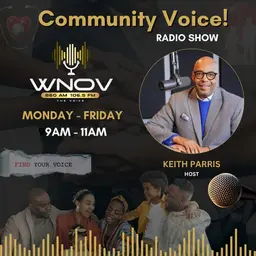
Can you hear me? All right, so welcome to the program
Man, well, I tell you, way to get the program started. Hey, man, we're joined in studio by the one and only Mr. Walt Love. What's happening there? Hey, man, how you doing this, Walter? I'm good, I'm good. You grow, grow, grow now. You're not still baby love, are you? You know what? You want me to tell you something about that? Yeah. Honestly, I'm going to rebrand that. Are you? Yeah.
Yeah, I'm going to rebrand that in the correct way because it's my real name and other people use love and that, and it's not their real name. Right. So I have to go through all of the legal ramifications to do my own name. You know, people go out there and I don't know if people realize this. They'll purchase your domain. Yeah. Yeah, they'll go out and they'll take. I found out that I didn't control K-P-A-R-R-I-S.
Somebody else that already did that, so I need to get with my lawyers. Amen. You're here to talk about a very special event that's happening this weekend. Tell us about this weekend. We're having a very nice event. I did this event last year. Recognizing some people that I think are worthy of being recognized in this industry.
for want to meet our maker. You know, far too often, too many times, nobody really recognized what we do in the community as radio personalities, TV personalities that are minority. You know, you have a lot of other avenues for those other people and those other sources with me having been the former vice president of Urban Network and Urban Network Digital. And they're rebranding that as well. And
Miller London who used to be the owner of Urban Network gave me the word with on fact he was here last year he would be here today well this weekend but there's another thing called the radio black radio Hall of Fame so he's on the board of that or something like that and so he will be there dealing with that as opposed to being here this weekend so
And then so we bring different artists with this. And mind you, Keith, I need sponsors because I'm doing this all by myself with one assistant, Chandra Staples. And so we did last year, we did 803 Fresh who had wedding fans at. We did Tony Armani and I liked them girls and them cowgirls. And we stuck with the Southern Soul and adults.
kind of genre and this time we got my buddy my friend who I did work with in Arkansas I had a show with him in Arkansas and I thought he was just awesome and that's mr. Breeze and Breeze does if you love me I have to let him do that cuz that's his thing but me him also
We got a young man that's going to do the Teddy Pennygrass and Barry White renditions. And we have Shayla Marie, which is a local girl who does melodic jazz. We've just added Star Red. And then we've got King Slow as the other artists there. We've got Brother Breeze on. What's happening, man? And we have... How y'all doing?
Can't hear him. Y'all got him with the volume? Yeah. Can you hear me? Yes, I can hear y'all. You got that new mic on. Turn your mic on. Turn your mic on, Breeze. Hold on. Yeah, turn your mic on. Yeah, you probably on it. It's showing green. So with Breeze having, I've seen his show, he's done well.
He's a very nice person to work with now. I work with a number of people in this industry music wise and I can tell you Some of them are very difficult to deal with sitting across from one of
I'll check for what I got him up on the pot. We're up here. What about what about on the video here? It's on his end. Just can't hear we can't hear you breeze. Yeah, I don't I don't know. It's it's it's somebody or he can just call in. Yeah, just having to call in real quick and then we can get his audio. Are you using your cell phone with this link breeze? Yeah, was I supposed to use a computer or something?
You are if you if you're not then we're gonna give you a phone number to call and then you I'll type it to you and put it in the chat for you and I'll put it in here All right, well, we'll go on y'all can hear him so we asked the question
So you said you saw him in Arkansas. Actually, I did a show with him at Arkansas. OK, I was I was the promoter with my what we did this thing called the loves. OK, my brother, my sister, we all got involved and we did a show with Breeze in Arkansas and he impressed me. OK, you know, and it's hard to do that, you know, and especially a young brother coming up in this industry, you know, it's it's not easy.
And he's humble. And those are the kinds of things I look for. I actually didn't do a show with some other major artists because of their attitude. Because I'll walk away from a show in a minute. Because I don't have the time for the demagoguery.
But that's what's happening. But Breeze, they can hear you outside. I mean, other people can hear you. We can't hear you. But we're going to ask you a series of questions. And then you can just give me the thumbs up when you finish answering that question that way, because we can see you. Can we close caption it? Can we close caption it? No, no. Well, we can actually. I don't know if you close caption it. So what type of music, when we've described your John Ray, what is your type of music?
Well, um, I like to say Southern Soul, but I know a lot of people say the Southern Soul like a big melting pot like a blues R&B so Stuff like that, but I just like to say Southern Soul just to help, you know get the name out there, you know, so But yeah, Southern Soul music
Okay, and I believe he said Southern Soul. Southern Soul. Yes. And, you know, that's a big craze and I'm trying to bring some of that here to Milwaukee because, you know, Milwaukee do like that kind of music. And I just, it's, but I really appreciated, you know, how humble he was. And that's why I really wanted to work with him. Now we hear Southern Soul. What's the roots of Southern Soul?
Delta, Mississippi, Arkansas, Alabama, Tennessee, down there, that kind of thing. You know, it kind of branches off from Albuquín, BB King, all of that kind of stuff, but then with a R&B kind of feel to it as well. So it's a mixture, I think. Breeze, what do you think?
Right exactly. That's what I said. Like it's uh, it's a big Milton pot of like I said rdb so expensive blues And it's just one of those things man. It came came about begging them in the 90s and early 2000 man We just trying to keep that thing going. You know, we put our own speed into it Yeah
It's a big melting pot, like I said, R&B is so expensive, blues. And it's just one of those days, man. It came about back in the 90s and early 2000s, man. We just trying to keep that thing going. You know, we put our own speed into it. Now, where are you from originally? Yeah. Philadelphia, Mississippi.
Philadelphia, Mississippi. There's a lot of history in Philadelphia, Mississippi. That's the three civil rights workers. Yeah, he's agreeing to that. I didn't know that. I probably knew it, but I didn't know it, realizing that it was actually in Philadelphia, Mississippi.
So what we got going on is a 30 second delay because we're trying to get the answers from Breeze and then we're talking. Also, Breeze, I know you're in Michigan this weekend and then you're leaving from Michigan and coming over here to grace us with your phenomenal sound and the ability with your show.
Tell me I know that you think I mean I know that you were talking to me about the fact that you've got some new music that you're gonna do I mean everybody kind of know the song if you love me love me for real What was the the idea of behind your new song and what it is? What direction are you going with that? Well, I believe you know it started my head with idea for a feature with with love
And like I said, I got Love Me For Real, you know what I'm saying? And it's, you know, it's one of the greatest, greatest love songs for Southern Soul, you know? But I'm more of an upbeat guy, you know? So I've always wanted a song that people can dance to. And so that's when I came up with this song, Half Stepping. It was perfect timing because the night before, you know, I spoke with West Love about doing some music together.
you know I contacted one of my producers got a beat and you know we you know I just want everybody to dance as hard and as best they can all someone 227 so that's why I did the half set
It sounds good, man. I tell you, I know that he also had, you know, people do line dances to some of your music as well, right? And do you have an actual line dance that people do? Actually, yeah, yeah. Actually, you know, Love Me For Real is a slow record. It was never meant to be a line dance song, but they did.
a line dance to my song. As you know, I was supposed to be in the middle walking last year, man. I want to apologize to everybody, but Jackson is, I don't know. I don't know what's up with the flights and stuff, but there was a girl there named Prussia Cooker, Anita Hinsley. She the one made the line dance to love me for real. She was there. And so I couldn't be there, but she was there doing a line dance for me, you know, so I want to thank her. But this year,
I can't think of her name, but there's another girl that knows dance that's going to hit the stage with me. So I can't wait.
All right, man. Appreciate you, man. But first time in Milwaukee? No, sir. It's not my first time. Well, it's my first time performing in Milwaukee. But believe it or not, I wrote my very first song at the age of eight years old in Milwaukee, Wisconsin. We used to live in Milwaukee back in 1997, 1998. So yeah. Milwaukee counted my home, you know what I'm saying? So I'm coming back. All right, man.
We get ready Okay
All right, so what we're gonna do now for you folks that are on Facebook and YouTube we're gonna play some Breezes music if you want to actually hear the music then you need to go to the civic app go to Tune in or you can go to our website because we can't do it over YouTube and Facebook appreciate you man. Yes, sir. Just hold tight
the music still to be playing. If you're last thing you got to say, what would you say to the people here? I'm sorry, I said it again. Oh wow, I got you. The last thing, if you wanted to say something to the audience in Milwaukee for coming up Saturday night, what would that be?
Number one thing is, y'all get ready for a great show. I think one of the things that I've always took pride in is giving people a great show. So you want to waste your money, you know, you got a great show for you. And I can't wait to see y'all. Thank y'all. All right, man. Appreciate it. Nice talking with you, man. All right, and welcome back home, man. Yes, sir. All right, Mr. Walk Love, again, that's the, is that me? Ace? Ace's lounge.
6081 North to Tony Avenue. And if you don't get them tickets there, you can always call 4147934566. And I'll bring you the tickets, whatever they are. And plus, I will be at ACES Lounge today from three to six. You can pick up your tickets there. At 6081 North to Tony Avenue, I will be there in person from six, from 3 p.m. to 6 p.m. today. All right, appreciate you. Yeah, yeah.
We are going to give away some tickets today. So right here on this station. Oh man. Oh, I love his voice, man. If I had your voice, I'd go on the radio. All right, you listeners to Community Voice. 414-4445-250. If you want to win a set of tickets, you can call right now. 414-4445-250.
We'll take a quick break and we'll be out of here.
1.5 FM with your host, Keith Parris. Is the song stuck in your head? No, I'm just doing, you know. Sometimes we have like extended breaks in that music break and I get a chance to hear, we use Valdez in the country. And so Keon had found all these renditions of Valdez in the country and so they integrate different renditions when we're coming back.
and so some of them just, you know, like a good tone gets stuck in your head, man. And I love watching when people are sitting here waiting to come back on the air, maybe. Like, okay. That's a little catchy. That's a little catchy, catchy. Be vibing to it. Yeah, right, right, right. Again, four lines open, y'all. If you want to win a set of tickets for the show that's coming Saturday, you can call right now, 414-444-525-0, 414-444-525-0.
Well, we can go from there. Let's see. This is from bi-fishing414. I'm a bass fisherman, and I wrote a song for myself. I play it, I sing it, but I can't get an artist to actually sing it. I would love that. I'm going to get ready and make a video for it. I wish I could. OK.
Well, you know, we always cite one of the great blues men of all time, Mr. Calhoun Tubbs. One of the greatest blues men of all time, Mr. Calhoun Tubbs. So again, if you want to win some tickets, 414-444-525-0, 414-444-525-0, I got, you know, Walt here, man. Your career has been...
It's for a long time. Yeah, I'm about you know, 25 years old and I know that we have a caller caller welcome to the program. Hi, good morning. Good morning. How are you? I'm not feeling too good, but I sure want to go to the conference. Well, if you ain't feeling too good, how you gonna get to the conference?
That's right now. You're going to be all right. What a healing. When we was kids and you too sick to go to church, but then you thought she was well enough to go to the movies. You don't go to church. You ain't going to the movies. That was so unusual about Milwaukee throwback Thursday. But we, a lot of my friends, man, I had classmates from different parts of the country. They go to movies on Saturday. They said, not Milwaukee. We go to movies Sunday afternoon. That was
That was the thing, huh? Right after. Right after. If you went to church. No, we went to church. Yeah. Yeah. My mom and them, they can't wear your butt well Saturday night. Sunday morning, you're going to church. And I like what she did. Well, anyway, you want to set a ticket. Hopefully you feel well enough to be able to get there on Saturday. And again, we thank you for listening. Jermaine is going to get your information. All right.
All right. All right. You know, one of the things you were talking about with that person that emailed in about trying to get someone to sing their song, you know, there are a number of people across the country trying to do that, but there's a process, you know, BMI and ASCAP. If you can contact BMI ASCAP and look at the particular person that you're trying to place a song with, that might be the first place to start.
Yeah, make sure your song don't sound like anybody else's song. Oh, yeah Robin thick copyrighted first Yeah, that ain't Marvin Gaye then when you first played the song we thought it was Marvin Gaye You know so yeah, like October London said yeah, I based my music on on that so in his more his
is sound as opposed to still in the song. Robin Thicke stole the song. Well, when you really look at it, if you listen to October London's album, he has some joints on there that sound like Marvin Gaye. But then when you play certain songs, he sound nothing like Marvin Gaye. So he has his own song, his own sound. He said he was doing that just as a trippy. Come on.
But what I'm saying is, you can do a style that's different than doing the song. Still in the meat of the music, but then writing your own words, you stole from him. And yeah, so when you hear that Robin Thick song, it's like, wait a minute, it's sexual healing. It's like, I don't know, man. Yeah, man. It is hard because if you're an artist,
Obviously you heard somebody else's they're very if there's anybody that has like you just Generically it just came from you. No, you heard something else. Well, yeah, you put your spin on it Yeah, you put your spin on it So all of the chords that's in a song has been played already. It's just been arranged differently So that's all it is to every chord that's on the scale has been played and put together. It's just
again arranged differently. So it might sound like something with certain chords because there's only so many chords, you know, that you can play. And you heard that from a musician who knows what that is and how that is. Yeah. And it's on a certain amount of bars that you can go and you, you, you out of bounds. Like eight bars. Yeah. Well, I mean, you can go eight, 12, 16, it depends on how you structure the song. Yeah. I mean, because you go in and then if you go and you look.
At the song credits, sometimes when people go in and do their little thing, and you'll see who actually wrote the song. Yeah. Right. And I might add this to it, but they have to do it because that's publishing those royalties. Yeah, man. And so look, people, man, worked hard in the industry to be able to make sure. And that's what made streaming not streaming file sharing.
when it first came out because the industry hadn't caught off in terms of technology. And they said, look, man, I'm just letting Walt listen to a little piece of music that I got. And we just share it. And it was just like, yeah, but we were like, and some of those files would just be garbage, man. I mean, I mean, it would just be garbage. But you know what, for Keith, everybody think this song is great. Because I was too baby, you know what I mean? You know what I'm saying? It's the actual files of song. I might be trying to.
The first one in fire song. Yeah, but the quality of the file. Okay, the music. Yeah. Yeah. But look, didn't they say back? Back in the day with albums, right? That they put garbage on the albums on the beach side because those was those was called album fillers. Yeah. So they would, you know, they would fill out, you know, the album because certain record companies had a requirement that you needed 12 to 16 songs on your project. Right. So they would
just create something just to fill it out, just to meet that quota. And then I was, I don't know who the rapper was. He was talking to a young dude who just got in the game. He said, man, you don't put all your hits on one album. No, no, no. You know, he was like put a couple on the garbage. See now, though, with streaming, you know, and with Apple Music, I don't have to buy the whole album. See, but this is the thing that I've never, I never forgot this, man, that we was in a meeting with Usher and Ricola.
And Rico was like, oh yeah, you know. I mean, because I tell real stories, I tell true stories. My boy, Usch. No, I just said my boy. But I said I was there, even though I got a joint, you know. But so he told us, man, that they were sitting around and Little John had presented them that record, yeah. And Usch are laughed at the record. They laughed at it. I mean, they had jokes about it. They say this record is garbage.
But it was just one minute they was doing to actually fill out the album It turned out to be his biggest hit today to this man to this day And it says certain songs that we think is trash be the biggest records And that's even that's happened of quite often with the b-side kind of a thing Yeah, I'm a b-side guy man because one of the great b-side records I thought of all time
was the Jackson five. I think it could have been on Dancing Machine when they did. All I do is think of you. Oh my god, man. I was wearing that out. I was wearing that one out. Call a welcome to the program. Good morning. Good morning. How are you? I'm fine. I'm doing well.
All right, well, okay, all right, you called in for the tickets and I didn't do a requirement for the first set so
All right, Jermaine will get your information. Thank you very much. Oh, you're welcome. Caller, welcome to the program. I don't have any more tickets. So you better be calling. Just check it out. We see how I'm doing. What's happening? What's going on, man? What's happening, man? All right, all right. This sound like the mailman.
Oh man, we be trying man. We be trying. Who am I speaking with? This is the male man. What's happened to male man? That's what's going on brother. Man, nothing much man. So you're going to be up in the joint on Saturday huh? Man, I'm getting there. I'm going to get in there. Get through there. I'm going to get through there. I'm going to look at that your name man. Is your government name Melvin?
So you'll be here as part of the show on Saturday, so when you when you when you when you get here and you perform What can people expect man?
You're never gonna do a different variety of music. Yeah, Walt said if close our eyes and listening to you, man, they thought Teddy be in the spot. Man. Tell them that's their gratitude, man. Tell them that's their gratitude. The man is good, I'll tell you. I went to Illinois in some area that I hadn't been in like 20 years just to see him. Okay. And I was like, wow.
you know, and I've seen Teddy live, you know, and to do that, I was like, wow, it brought me back to when, you know, Teddy was doing his thing. Yeah, man, if you do turn off the lights and everybody getting up trying to find a light switch, you know, people in the club looking for that light switch, man. It's gonna be some trouble. Yeah, it's gonna be some trouble.
Teddy, Teddy, Teddy was a bad boy. Teddy was a bad boy and I'm a dude. I remember watching the concert with Teddy and I always joke, I was going to throw my drawers on the stage. Teddy, Teddy, Teddy brought it, man. He didn't do concerts for women only. I know, right, right. And the little teddy bears. Yeah, man, but Teddy, Teddy, that hit him.
I had a young lady I was dating in college and she always talked about Teddy. I got to see this dude. And how many of us even knew? We always thought that was Harold Melvin singing with the blue note. Yeah, that was Teddy. It was Teddy. So what was it about Teddy? And I think you do a little Barry White. What was it about their music, their sound that attracted you? Well, you know what my mom's brother, when I was young, man, he used to ride around all day listening to it.
Teddy Pindagrad, Tyrone Davis, and he would date, you know, they just pay this stuff over and over again. Right. You know, and I just, uh, I caught that groove, man. And I was like, man, that guy, that's a bad guy right there. And, uh, you know, I just started singing them, man. And, uh, hey, that's what it is. Yeah. He's bringing a band. Okay. He's bringing a band. He's going to do this live. Yeah. He was talking about the, the, the late Tyrone Davis who had a bar here.
back in the day. He had a bar here, man. I had a chance to meet Fred White, Maurice White's brother. And he talked about, he said, oh man, you from Milwaukee. I go, yeah. He said, man, I spent there all the time. Y'all had a joint up there called the turning point. I was like, yeah, okay. Now you're a Chicago native? I'm not my favorite Chicago Aurora. You know, you bring up
Tyrone Davis, Tyrone Davis, M.D. was my M.D. to recently, like maybe two years ago, he's had. Okay, okay. Some of you don't know. So we say that you do a lot, you're doing that old R&B smooth. So as a musician, do you think we're getting away from that?
Oh, yeah, we definitely need to get back to it man. You know, that's that's what music was music. Okay But the thing is a problem I see is a lot of people can't sing that type of music You know y'all the older guys man. That's the guys could sing man. They came from the heart with it, you know, right? Well, I heard this doing the World Cup. They said that when you hungry You run harder
And when you know, because you think about what what goes into what we call blues. A lot of that man was, you know, people's struggles, right? Yeah, you know, that's why I, you know, a lot of people, that's why I like country. Because when you sit up and listen to the lyrics, yeah, they don't, those are white boys blues.
Man, it'll make you cry, man. Man, it'll make you cry, man. I never looked at it really like that. Oh, man, no, man. You know, I went to school in Nashville four years, so all I heard was country, right? And, you know, at some point, you know, once you dismiss it, it's playing, you start listening to the lyrics. And you go on like, dude. But it says a lot about...
And that's the thing about this construct about race in this country because we're probably more like Than we want to acknowledge, right? Yeah, and in the South black folks lived adjacent to white folks, but they was all pulp Yeah, and there's something that comes out of that experience or a broken heart is universal
I concur. You know, it hurts, man. We talk about some of those songs that you... Oh, that Teddy talk about Teddy. I don't love you anymore. Wait, wait, wait. It don't hurt now. Oh! Oh! Oh! It don't hurt now. Oh, man. If you don't know me by now, man. If you don't know me by now. Oh, man. Never know.
Yeah, man. So, you know, it is the lyrics. My colleague here, who is just a musician par excellence, I heard one in shows. And he was singing some music, said, dude, I'm going to go home and divorce my wife.
You got a man when you do a song, man.
Because we be trying to be all hard. Oh, yeah. Yeah. But if you don't know me by now, you know, then you be going, oh, no, here's one of my favorite ones. If you think you lonely now. Yeah, yeah, yeah. Yeah, that's a rough one, man, because you sit up here, man. So I think I think it's I think it's it's this beautiful man that you that you're keeping us alive because you're right, man. That's such a big part of our history. Certainly when you think about
Barry White and when you think about Teddy Pendergrass, you know, like the 70s. You know, every now and then we ask, what was the best decade for music? And it really depends on what decade you grew up in. I think I grew up in like three decades. So I'm gonna take the 70s and I will take the 90s.
Okay. Yeah. Yeah. I'm gonna take the seventies and the nineties. The nineties, you know, and I had to, I had to fall back. There was a lot of good stuff in the nineties. But how much of that though was the music from the seventies being sampled in the nineties? Yeah. Yeah. I was gonna say the seventies and nineties. Yeah. That's what. Cause the eighties had that old electronic disco. We still coming out of discos, electronic beginning of hip hop, but hip hop was taking the samples from the seventies.
Right. Yeah. Yeah. Those were the beats that they were using. So I think you got to, you know, do our take our hat off the hip hop because I think they, they, you know, you kept going and then I didn't realize we were talking about Kelly Price was here. Yeah. And what was the song right out of slept the night away? No, no. Yeah. Well, that's part of it. I see the tone. I see the tone. No, no, no.
She had some good song. No, no, no, no. Y'all give me the lyrics. As we laid. Yeah. Oh, that's what that was. That was Shirley Murdoch. Originally. Yeah. I forgot that Shirley Murdoch had did it before Miss Price. But when Kelly Price did it, there was all these young people who she was the one who did it. Yeah. And I forgot it was it was Shirley Murdoch. Shirley Murdoch. Yeah. And boy, and they were singing that song from
It seemed like from experience. Every dude was out there like the 90s. They was in there like the 90s. They was pulling in. They was in that Carl Thomas zone out there. They slept the night away. That's all swarming from the Jews. Crying and caring all that they say. Hey, Millman. Yes, Clare. Clare, do you need me to bring that scooter for you?
Hey man, you ain't gonna get on that scooter. I heard my bag doing Juneteenth, right? So we now doing a live remote. And they said we brought the scooter for me. I never got on that scooter. They out there doing wheelie. Don't do that. Hey, the only problem I'm gonna have is trying to get it from Bebo, man.
So, are you from Chicago originally?
He's a roar. Well, that's still Chicago, right? OK, you said roar. Waze world. I know nothing about a roar, man, until Waze World came out. That's a little city outside of Chicago.
Yeah, it's sound like you've been up here once or twice, man. Oh, yeah. Yeah. Leave all my man. Okay. Take back WB. Okay. Well, man, we appreciate you again. And again, this is Saturday, October the third. Yes, sir. Ace's Lounge. Ace's Lounge. Ace's Lounge. Ace's Lounge. Ace's Lounge. Ace's Lounge. Ace's Lounge. Ace's Lounge. Ace's Lounge. Ace's Lounge. Ace's Lounge. Ace's Lounge. Ace's Lounge. Ace's Lounge. Ace's Lounge. Ace's Lounge. Ace's Lounge. Ace's Lounge. Ace's Lounge. Ace's Lounge. Ace's Lounge. Ace's Lounge. Ace's Lounge. Ace's Lounge. Ace's Lounge. Ace's Lounge. Ace's Lounge. Ace's Lounge. Ace's Lounge. Ace's Lounge. Ace's Lounge. Ace's Lounge. Ace's L
All right, man. All right. Appreciate you, man. Thank you for being a good sport to see y'all, man. And hey, man, like I said, let's get along. All right. But that's the fun. My god, Randy. That's the fun, man. We're going to have some fun, y'all. All right. All right, brother. Well, thank you, man. Yeah, you got one more pair of tickets. I got another pair of tickets. You got one more pair of tickets. Give them to me, man.
And let me get back on Kelly price visually Visually I I didn't see her because soon as she got up
Right out, right out, jump up, block the view. And you got to see that. Oh, I was there videotaping that. Yeah. You know, it was crazy. So right out, right out do what he always talk about when I come to see him, like, I'm a hater.
So, I'd be sitting there with my arms folded, you know, doing that and that and that. So, right out, man. Right out was over there hating so hard on everything. He's hating on the weather. He ain't done everything. No, I tell you. Wait, wait, wait. No, no, wait. No, I won't tell the story. I won't tell it. Okay, nobody. So, he only just hated. I just, you know, he just like this. And I'm mad at the sound, man. Oh, man. But then, when she got up and say, I'm like, where'd the right out go? Rancher states. Because he was shared because...
I'm going to tell you why I rented stage because when she sent her engineer out there and when he got her sound right, right? But man, that as an artist. It made me feel some kind of way because I'm always like when people come to our city and they get on these stages and we halfway do things when they leave here and you go to other cities and you hear them talk about Milwaukee, it makes you feel some kind of way to when you love your city. So when you hear artists say.
Man, man, I just came from Milwaukee and the sound was off it. This and this and that and man, they need some, you know, good sound and it makes you feel a certain kind of way. So when you see that, it's like, man, come on, y'all, let's, let's, you know, get it better. Yeah, cause this show was mad. Yeah, I was mad for it. And then I got mad cause he blocked my view of the show.
So we all mad. Hold on. I got mad because my team was videotaping the whole thing all day. But it turned out really good. It turned out great. Dude, that crowd that evening, man. I've been out there for years, never saw a crowd like that before. We videoed that. We did the drone. We did the GoPro. We did the, and I got the Komodo Red, movie cameras and stuff. You know, I have a movie company, an independent film company now as well. I got a script.
Okay. He got a song. He made me put it on the soundtrack of the script. Welcome to the program. Hello. Hello. I call for some tickets for Saturday show. What your name is?
All right, all right. Well, all right, let me I guess you won This is another step in this process Right now has to get your information. So hopefully you got the first step now. We got to do the second step
I appreciate you. Thank you for calling. Hey, again, Walt Love. Thank you, ma'am. I appreciate you. And again, that's... I have to mention two people. Minister Khalif is going to be there with King Slow. They're doing a thing called The Matrix. Okay. And Jazz, who is... Jazz Evans, who is the... going to be directing most of the stuff. Okay. He's going to be there as well. So I have to reach out to those guys. And the portrait team, I am now Keith.
the vice president of poetry and open mic for the state of Wisconsin. So we're doing that as well. All right. All right. You'll listen to Community Voice again when you think Mr. Walt Loveman being here with us. We're going to take a quick break and we'll be right back. Welcome back and we're joined in studio by Ms. Keanna Spencer. She is the CEO.
of Solid Skrull Behavioral Health. How are you? Wonderful. We'll let that a little bit so we can hear you. Wonderful. Good, good. So tell us about, tell us a little bit about you and then tell us about Solid Skrull. Okay, yeah. So I'm Kiana Spencer, um, about me. So I, um, okay.
Too late now, Yuri. Say, too late now. Too late. Alright, you good. Come on.
Are you a native of Milwaukee? Yes, nice icebreaker. Thank you. I'm from Milwaukee. I grew up in Northline, so right on 22nd and Lancaster. So with you at Mad City? Were you at Madison, Vinson, High School? No, Hamilton. Hamilton High School. How'd you get away over there? My brother chose, like back in the day, you had to go to school, your brother, you got to ask my brother. So my brother chose Hamilton, and then I just had to go to the schools he went to.
because he was older. That's a long ride. Well, it was better because we got the city, the school bus. So, like, we had heat on the way to school. Yeah, Doc. I'm sorry to tell you. Yeah. We got on the yellow buses and we had heat. Yeah. And if you sat right behind the bus driver, you got that box of heat so your feet was warm. So I was always in the front. I used to be mad when somebody else got that seat.
Is that right? So after Hamilton? So I went to UWM. I didn't finish there. I finished at South University in Savannah. So my degrees are in accounting finance. And then I had children alone the way I had to. And so I want to.
Okay, so I had children along the way I had two children and I started accounting firm first and then I got into I actually Did therapy myself so like EMDR therapy I went into it with an ideal that I had this one concern and we started like peeling back a lot of
layers of like childhood trauma and things that I didn't know I had not healed from or things that I had just like maybe suppressed. And so when I came back home to Milwaukee, I decided to open up behavioral health here so that the community can experience what I experienced, the healing that I got. Some of the assessments we do with some of the men we work with, we do the ACE.
You know, the adverse childhood experience and going to it's amazing how many of us are walking around with unresolved issues around trauma from what we saw because kids are resilient. You know, in a lot of ways we bury it, we see it, you know, keep it moving. And then something happened that a trigger that why is it so important then for us, you know, you sought out counseling.
But I do know that there's a stigma attached to that. Yeah, you know, just to rewind a little bit, the counseling experience started with me when my dad died. I was like 19. So my dad died. He was 38. He died of esophagus cancer. And I remember somebody like asking me how he was doing and he was dead. And I said, oh, he's doing really well. So like I hadn't really processed it. And so I was like, oh, you know,
maybe I need to get some help so I just started counseling I wasn't really like committed to it but I learned some tips then but then like I put my daughter in counseling when she was acting out in school and I did get a lot of slack about that like about me just kind of
Being an orthodox like no you just need to take her to church and She just need the Bible. So I did have a lot of Pushback and even when I was going to therapy it was oh You crazy or you so like we so you don't have to be crazy to go to therapy You just know that you need to get on the other side of what's going on with you, you know, and and it's it's fascinating
that you talk about sometimes, I don't know where we would be without the church. So let me start it with that. But I think that sometimes we put too much premium in our faith, understanding that we live in a material world. And those material things are real and you have to deal with it. And I think it helps, like there's people who love to go to faith-based counseling.
Mm-hmm, but there's still some science there. Yeah science back. Yeah. Mm-hmm. So like I Always was said like I didn't let what people say kind of deter me from doing what I wanted to do But because I know what I need, you know, what she was best for me. Nobody else can determine that for me. Um, so I But I always say well God put counseling here
You know like there's methods or there's different I guess products that you subscribe to that It's not like always just going to the altar is some things from the altar that you can like go out and receive help to so and I I want to say that like I love God so
I am not against church. You know, and I don't think, what's this mean? I don't think we have to explain that there are some things like, great, if I'm sitting up dealing with a broken leg, for example, right? I'm probably gonna go to a doctor. I'm not gonna go to the altar. But that's real talk, it's real talking.
You know understanding when it's appropriate and if nothing else I think sometimes we do a lot of damage we get into denial Not understanding. I have some very difficult conversations on these airways where people are their belief system Is so strong that then they dismiss anything else Right and trying to say they can coexist. Mm-hmm, right So the baby and the importance of being able to when you're in trouble to get help you talked about grieving
Yeah, you know and and grief counseling is important because how people process grief Yeah, and it's so many different types of grief too, you know, but yeah, it's Because you can get a lot of trouble processing grief, you know, like you well, you you can act out You know, you can get on drugs you can so there's a lot of if you don't process it properly you're looking for an escape so
your escape might be something smaller than fight, you know, but those untapped or untamed anger from your grief, it can get you in trouble. It can have you in a penitentiary or dead. It's funny that we are even having this conversation because we started off this morning on the first show.
And they asked me how I was doing and I told her and the listeners then that October is a hard month for me because in 1998 is when I lost my best friend. He was like my brother. He was shot and killed. And the day before we had recorded a song in the studio and and we spoke that night when I dropped him off and I was supposed to come pick him up that next day.
But what happened was, you know, it was a lot of stuff that was happening in that morning. So I was trying to leave and I couldn't leave because it was a lot of stuff that was happening. And, you know, I was trying to leave and I could call back into the house for whatever reason. Long story short, when I finally got the chance to leave and I was walking out is when I saw his cousin running down the block. I really didn't pay him no mind until he got close up on me. But then he told me that my friend
who was like my brother, he was shot. So we drove over to his house off of Burla and I didn't see any paramedics. I didn't see any, you know, police tape. So I'm thinking, okay, maybe somebody made a mistake. So we went to his, his grandmother's house, run the doorbell and how I knew it was something wrong is when his grandmother came to the door, she was crying. She was like, please go check on my baby. They say he's laying in the middle of the street. So I asked her where she told me where.
We ended up driving over in that area. So as I got close to the area, I'm thinking, OK, I don't see any police tape. I don't see any paramedics. So it must be a lie. But I ended up turning the corner. And when I turned the corner, I saw the tape, saw the police. So I jumped out of my car. I left my car running. I jumped out. And as I was running up to the detective, I looked to my left and I saw his shoe.
And I knew it was his shoe, because he just had them shoes on the night prior to us being in the studio. And I took off, and I ran past everybody. And they were trying to grab me, but I was trying to get to them. So when I ran down to the corner and looked and saw them laying on the grass, that's when reality hit me. And this was almost like 30 plus years, but then I've been dealing with, how do you get over
I feel like if I would have got there, he wouldn't have been in the situation because he would have been with me and we'd have been on the whole. Oh, a different side of town. So since he has passed, I only been to his grave site twice. When they buried him, I remember his daddy looking at me, telling me, make sure that they put my son away right. And I sat there and watched him put him in the ground. And then after they was done, I sat there till about eight o'clock. So it was dark outside.
But I couldn't believe that he was gone. And to this day, I still struggle with that. Because I've tried everything. And people say, you don't talk to somebody. The witch is cool. But at the end of the day, after I'm done talking, just like I'm talking now, I still deal with the reality of I feel like if I would have got there. Yeah. I think so. Therapy will give you tools of how to cope with that guilt that you have.
Also, I experienced that a little bit with my dad. I was only 19 when he died, but I still always think if I knew to tell him to go to doctor's appointment, if I would have knew to do those kind of things, or if only I knew this. But it's not your fault. Everybody has a date anyway. So it's not like you can change that path.
for them how much of a though with human beings we like to think we control things we cannot control that's our problem because you got other human beings who want to control other human beings you know like so but yeah like then but like with grieving it's there's no proper way to grieve you know you have to
You have to go through your path of that process. But it looks like you've been dealing with it for a long time. You might just need to unpack it. But I think my issue is, and I hear all of that, but it's how do you unpack? Like, how do you do that? Like, I've been hearing this for years, or you need to let it go. You need to talk to somebody. I get it. But every time I talk to somebody, just like I'm talking now, I still feel the same way.
So I might so you got to find a therapist. That's a match for you Like I went to I have had a lot of therapy But once I found my match is when I got so how do you know if this if it ain't working for you find somebody else That's simple I don't know because I think it's like
Every time I talk about it, and I've been talking about it since he, you know, since he passed. And I'm still like, okay, well, I still feel the same way. I still feel this, like, it's hard for me to even play the song we recorded. We recorded this song with the Lattimore brothers, which was going to be our single and we had a deal on the table. So when I look at that CD at my house,
I walk right past and like I can't play this because if I hear his voice it just triggers me so it takes me back to October 1998. But you know it's um and you said it and you said it so therapeutically everybody's gonna die and I don't know if there's an ideal way a person dies for survivors, right? I mean it could be short term it could be a
long-term illness, it could be an accident, it could be all these things. And again, I'm not a therapist, but I do know I am kind of in the human modification business. One of the things to talk about when it comes to forgiveness is, you know, you have exoneration, you have pardon, but the most effective way is release. I just got to let it go. You know, I can't change what it is. For years as a kid, you know, after my father was killed, I kept thinking, this ain't real.
Yeah, this ain't real. They say I wouldn't accept the reality. Yeah until one point I had a conversation someone one of the therapists and we got the talking and She asked me a couple of questions and then it came to do You can't you can't change it. Yeah, it doesn't happen and but we
We do we hold on and then there's all the unresolved things that we had there. You talked about guilt You know, there's remorse. There's survival remorse, right? You see a lot of that with guys coming out the military Like my guy got killed and I survived. Why did I why did I live and he didn't so there's all these Questions and I think that that's why talking to somebody Is important and certainly talking to someone who doesn't have an emotional yeah, right because
then that turns into, but someone who's just going to kind of give it to you straight. And then you, then I think it's up to you to kind of figure, I love what you said. You get the tools. It's up to me then to utilize the tools, right? To trust the technique, to go through the process. It's like, I talked about physical therapy. When you first get there, you ain't seeing no change. I'm doing exercise, but little by little. And then one day you look up.
And I hate to use this term, but you yield. But part of it was the work that you put in. The journey. Yeah, that makes it so. I think it's certain for black people. Look, you're already human. And then you got the other layer, this whole thing in terms of being descendants of enslaved Africans in America and all the trauma that comes along with that. Yeah. Man, I know I found myself just here recently a few weeks ago.
probably like a week or two, I was sitting right here and I just picked up my phone and I thought about it. Now, you know, internet, whatever, it wasn't like around like that. So I just said, I'm gonna Google his name and see what pop up. Why did I do that? When I put his name in, the story came up and what happened. So I'm reading it and I'm like, ah, then I started filling in and reliving it all over again. Like,
And I was sitting right here, and I was saying to myself, why did I just do that? But so now there's something unresolved that you that is causing that so that you got to the bottom of what's that was unresolved there. He's gone. Well, so like it could be something I hate to put it to you like that that has been resolved. Yeah, that that that now the question becomes.
I'm sorry, go ahead. Because in Africa, they say as long as we speak that person's name, they live, right? And so it is the memories of that. And I think I remember in philosophy when we talked about this whole thing about what is finite and what is infinite. Life is finite. There's a set time, right? And so in that, and you talked about the journey. And so I think that sometimes we forget that
Yes, they had an insurance guy one and we were talking about actuaries, right? Yeah, like, you know at this age and but 21 year olds don't think they're gonna die 21 year olds are dying every day And then you have somebody in their 90s, you know, so how do I how do I resolve that? Some of the folks then who would take advantage of your services. Oh
anybody anybody like there's a ray like it because we are mental health and substance use so like yeah so it's anybody if you're like going through his situation he like right now I think when I see stuff about my dad
I'm happy. It brings me joy. You know, like I just had a person. We had a reunion like North line reunion this summer. So I went to it and I seen this guy that used to live like couple of houses away from my dad. And he was he ended up sending me a picture.
I think it was his mom, my dad, all these. And it was from the 80s. And it brought me so much joy to see that people are still sending me pictures or still remembering my dad. Because I've healed, I've processed that trauma, but I carried it for a long time. I didn't realize I hadn't healed from that.
Until I went back into therapy and found my the therapist that was a match for me And we got through like we got like it's almost like peeling the onion back. So it's like something that Like that's compound that's probably causing your you to have this Pain every time you think of him because you should have joy that's your friend
I mean, I have a joy. I think it's more of sorrow because he's not here. And I remember the conversation that we had before he passed away, because he just had his daughter two weeks before he died. So, and I remember, you know, that was around the time that when I had my daughter, she was about, she was a few months older than his daughter. And we were standing in front of his house and he was like, man,
I want to be a dad just like you. Like, man, I want to be there for my daughter. So seeing his daughter now, I saw her on accident. And when I saw her, she's a split image of him. So it just broke me like, oh, my God. Like, man, like I was best friends with your dad. And it's just. You seem like you're carrying too much. You know, like you're carrying too much responsibility. That's not yours.
You know, it's funny, I was sitting there just talking about grief, and I was sitting with a young lady past a couple months ago now, Marcy Patterson, and she died suddenly. I mean, like, when nobody saw it coming, right? And from time to time, even now, you know, I get a little, oh, man, you know. But I think also, for me, though, one, it showed me how much I appreciated her.
that that you know I cared that much you know that you know i'm still yeah yeah it's hard though i mean yeah and i think the other thing is um what i'm saying i talked about like my grandmother like we was just at a cousin wedding this weekend and we all talked about our like it was just
good time anyway and we talked about like when we got weapons you know like when we talked about the good the good and the bad but we like shared that you know when I was getting those weapons it didn't seem like good times. My mother said this and I think there was some optical things too that my mother used to say that
She gets so upset with my grandmother. She said, I can't believe that woman is my mama. You're right. When you look back on it now, then it was painful. But now I look back and you kind of laugh. Or even things that we probably make bigger than the action. Yeah, yeah. Because now that you're older, I can't believe that was a problem. Right. Yeah. But one of the things I think I'm more willing now
To accept responsibility for my behavior You know people come up with all these different things and what I mean by that is if there's and there's a lot of time for reflection and and contemplation But I'm a little bit more in the past. I wasn't always willing to accept Is that like male ego like because I
Because I can own my mess. You know, I've always been pretty good at it. Now, sometimes I'll defend it. Well, OK. Yeah. So that's not male. I'll defend it like where I don't think it's a problem. The problem is somebody else. But then you look back at hindsight and basically you're responsible for what you do no matter what somebody else do to you. And I wish I could do that more in real time.
As opposed to doing a post mortem on it like dude, if you you know, I say that consequences are forethought not an afterthought. Yeah. Yeah. Yeah. You know, so now I look back and go like, oh, I would do that differently. But I think we need to avail ourselves when we find ourselves in difficult situations to go and talk to someone. And though it, you know, be entitled therapy, therapy is part of healing. Yeah.
And a lot of times it's just a matter of how we're healing. Yeah, and then some people don't see that they have an issue or they believe that or a concern, like they'll say, well, why I got taught somebody else, I can just talk to my friends. Well, your friends aren't trained. And then you don't really know the motive.
of the the the advice that you're getting you know like because you could have a friend for years and you realize that person wasn't really your friend but you have been getting advice from that person you know so you don't really know know the motive so I've always like I don't like to tell my end in my personal business because
You you can go tell it like a therapist can't you know like they can't go tell what we're talking about in here You know, so like I don't I just like to keep keep my business mine and when I have concerns I'll talk to my therapy. I remember my mom talking about what you could talk to me. I'm like, oh, no
Wanda Sykes when she came out to her mom She said oh lord, oh lord, why could you give the cancer? So no, I mean sometimes no you're the folks that you are closest to
the most difficult folks. Yeah, they're going to have those conversations with and and so probably a third party who doesn't again, right? Does that have an emotional stake in the situation like if if I'm in a train, right? They just train to deal with. Your concerns and then a lot of times like if our therapists are not can't do it, they'll like refer you to somebody else. You know, I don't know if you've seen it.
I can see why I won all the awards of this shrinking shrinking or Apple tea It talks a lot about Therapist, but then the therapist have their lives. Yeah, you know and how they're coming up trying to get people to be better. Oh man, they live in a dysfunction. So my my clinical director will say she always says a therapist is here because
They want to get their own stuff together like so you went to school because you it was something that Like you saw that oh, I got to get I don't want to be that and then I want to get my own stuff together as well because I see what like maybe something that they see Generations is happening in their family. So if they can train themselves they can train somebody else Yeah
It's one thing. Yeah, yeah With me, you know, that's what he's talked about people who are in prison solitary confinement is so difficult because all you have is time to spend with you and you're looking at you and we all know that you know, you know, we dress up and We look like everything is okay. And then you will hear about someone who you thought everything was okay
And they might do something, you know, really extreme like kill themselves. Yeah, and you said if they would have every day had no clue no clue Because we can we can bury it we can hide it we can masquerade it I think for a lot of people Who who? Used the church they were dealing with a lot of trauma mm-hmm, and they just thought like man if I could just
Again, especially and let's just be adults here around six issues of sexual orientation in our community. Yeah, that's a difficult one, right? Wanda Sykes, when she told the story, she's trying to say, you know, for my mom, this is like, I deal with cancer better than I could deal with the fact that you might be gay. Yeah. And then when you put that religious layer on it, then it's like, wow. And you don't know. And then we look at the suicide rates.
which is something we had a discussion a couple of weeks ago. And Carmen and I kind of talked about it briefly too, where we think it's a myth that black people killing themselves. It is not a myth. Yeah, yeah. And you're seeing an increase. Yeah, I just seen a guy on Facebook around like thinking he was, or it was a real, I don't know if that's faithful to Instagram, but anyway.
he did he was like coming out that he thought he was gay because he was you know sexually molested and that this is instead of speaking out for years this is why you see like because people will laugh at you and talk about you and instead of that men are choosing to shoot themselves and kill themselves instead of having the shame right of dealing with that
Yeah, when you see the the survivors of the Catholic Church Oh, yeah, and you hear them talking and you know just all the guilt all the confusion the shame Yeah, it's not even that far that you're hopeful you're helpless at that age and afraid to talk to somebody about it cuz cuz you're you're ashamed that you just got sexually
Right right and being able to and again because all the things when women who are sexually assaulted Right and you don't at people don't understand that Sex is the weapon used but it's about violence and control, right? We focus on the sex piece. What were you wearing? What did you do? What did you say? No, it's that's the victim. Yeah, and we're victimizing the victim. Yeah
Have a call call her welcome to the program Good morning Good morning to you, but I was just listening to you in the therapist, you know, what is there any medicine? cure for For this what was the cure somebody gave me a cure but I just like to hear what your cure is and I tell you a good movie to watch With the and don't judge me now
the good movie to be that would watch that to watch and see what therapists go through and how they actually deal with this call the confessions of a call girl and It's a heavy. It's a heavy piece man because it's a therapist that deal with these ladies and It's really something to watch. It's called confessions of a call girl came out about 98 99 but anyways is there a cure for a trauma and
stuff like that. Do you ever thought of that? Um, I just want to set the record straight. I am not a therapist. I own the therapy. Um, so I own the behavioral health, but I'm not the actual therapist. So, um, but far as cure for trauma, no, like you're gonna face trauma.
Like you're gonna go through something like there's we don't live in the utopia so There's not like a a magic pill and hey, I'm I'm free you just have to So to speak a magic pill for it I talked to a psychiatrist and We were sitting down chopping it up and he was talking and he said listen There is a cure for this, but people won't accept the cure
The cure is just simple. It's so simple. He said, man, they can keep bringing me all that money. I want to prescribe psychiatrists. He prescribed me it and everything. He said, they want to keep bringing me that money. They can. It's OK. I want to help them the best I can. But in most sessions, when a person starts to talk about something that happened in the past, what he's doing is scratching around a scab.
and it depends on how deep he gets into the conversation that he can start to scap, believe him again. The only way to letting that heal totally, time will heal it, it's called acceptance. You accept it, you charge it to the game, you keep it moving. That's how our ancestors were able to get us to where we are today, simple acceptance. And along with some of that acceptance, there were rules, you know, where he stays here, here, here, stays here, is here, here, here, you know.
So anyway, I don't know if accepting cures trauma. It's just you accepting the trauma. How do you deal with it then? Because you'll never be able to get it. I think that's coping is different than healing. Healing is processing the trauma, right? Well, the thing is, is that once you accept it and go on about it, then you keep pushing, you know, in that madness.
you find ways to accept it. It might be unacceptable, but you have to, that's the only way you're going to heal because you can't reset the brain. If you reset the brain, my goodness, you wake up a zombie or amnesia, knowing nothing. So you won't be able to turn memory off. But what you can do is accept the past and keep it moving. Now that's from a professional, but the people who watch you guys ain't doing nothing.
and see what their possession is going to do. Psychiatrists, psychologists, and even psychiatrists. It's called Confessions of a Cargher. Hey, you're listening to Community Voice. We're going to take a quick break, and we'll be right back. Welcome back, and we're in studio with Ms. Kiana Spencer. She is the founder and CEO of Solace Grove. How did you come up with that name?
I was actually living in Arizona at the time, and I was driving past this place, and it kept saying Grove. And I was like, oh, I like that, the Grove. And I just kept like, OK, I know it's going to be Grove behavioral health, but it got to be something in front of it. And I think it was a relative of mine who said so. And I was like, oh, perfect, perfect. Yeah.
All you folks who are fans of the University of Mississippi, right there when they go in, there's a place called The Grove that the players walk through as they go on to the field. That's football in the South. Carla, welcome to the program. Good morning. Good morning. Good morning. Hello.
I have a guest in here talking about something. So you just got out the hospital? No, no, no, no. I was discussing about how they try to kill a lady twice. Okay. And she's still living. Okay. But you, you, you just got out the hospital, right? No, let me, let me tell you something. I called Monday.
No, you didn't. No, you didn't. No, you didn't. No, you didn't. No, you didn't. No, you didn't. You didn't. You didn't. You didn't. You didn't. You didn't. You didn't. You didn't. You didn't. You didn't. You didn't. You didn't. You didn't. You didn't. You didn't. You didn't. You didn't. You didn't. You didn't. You didn't. You didn't. You didn't. You didn't. You didn't. You didn't. You didn't. You didn't. You didn't. You didn't. You didn't. You didn't. You didn't. You didn't. You didn't. You didn't. You didn't. You didn't. You didn't. You didn't. You didn't. You didn't. You didn't. You didn't. You didn't. You didn't. You didn't. You didn't. You didn't.
Yeah, that's right. I got left on hold. You're called Michelle. I've heard you twice on Michelle's. No, I didn't write out right. I called you Tuesday and you left me on hold for 20 minutes. I didn't think he'd wait for 20 minutes, 20 minutes. Yeah. In the other time, he was like, yeah, you wait. We ain't try to hit that jack. You know what? I used to do public assistance, right?
And there was something called the 10-day requirement. Any changes required 10 days to call in, right? People never let me tell my story. No, no, you late. But let me tell you what they would do. They call it the fall ring once. They let a ring once, not let a ring. Let me get to it.
All right, man. So do you have a question for my guests as we sit here and we talk about behavior health? Oh, that is a behavior. Washington died. The woman down in Tennessee. Because it won her time and God said he wasn't ready. And they tried to do lethal injection. Why is she survived? Yeah, I read that actually this morning. And that's exactly what I said. I said, well, God got the final say.
But what do you what do you say take me back to the room? But how like as a person that's on death row mentally it has to mess with you because do you wait at that whole day? It's been 30 years to die to die. Well actually shoot this but to kill it yesterday but they and they stayed it and then they said no we're gonna kill you. Right so then so then after they try and then it don't work.
Now it's like, okay, so what do we do put her back in prison? Yeah, because doctors jobs are to save lives and you're there basically kind of facilitating that the taking the taking of a life So how you gonna try to kill a person and realize it didn't work and then
Try to say well, and there's been challenges to this. Does it under the cruel and unusual punishment? I think it is because you remember law-abiding citizens where they mixed the chemical he mixed chemicals up on purpose and it made them suffer suffer when they killed me Yeah, yeah, so and her lawyer talking about she want to sue like Well, I think the other piece of it is it if you're on death row, you know, they put you on suicide watch
You're not allowed to kill yourself You can't do it yourself you got to let them do it exactly You try to kill a person it don't work so now you have to emergency
uh, rushed them to the hospital to save their life. Is that what they did to her? Yeah, they rushed her to the hospital. So she didn't die. They rushed her to the hospital to save her life. To not die, but the intent was to kill her. See what I'm saying? So why, what was the life saving effort for? Why rushed her to the hospital? Then she could have just died like you wanted. So you saved her, so what, so she can spend the rest of her life
prison? No. So they can try again. So they can try again. But I heard that they can't do it after they tried. No. I mean, though you can't do it. They can. That's that's the whole. It's in the whole another state that you can't but I think this particular case right because they had a botched execution in May.
Right. And then they had rescheduled it for the next year. Right. So that was in Tennessee. Right. So I think Tennessee still has that law. They don't know how to kill. Oh, man, that's brutal. Yeah, it could be that water down, man. You know, and then because some people have suggested that maybe if we did public execution,
And people see how awful it is. That then maybe people might change their opinion on the death penalty. Death penalty is not a deterrent. It is not, it's never been a deterrent. I mean, yeah, cause this most, most crimes, crimes of passion, you know, and you're not sitting up here thinking like, oh man, I get the cheer for killing you. So yeah, that, that one was, and let me do this real quickly. I'll give Kayla Flynn.
Now who's Kayla Flynn? Kayla Flynn is the former American Idol. Yeah, his wife. This had to be the shortest jury deliberation ever because I remember getting home. They said the jury has got their instructions to go to deliberate afternoon. It must be like one o'clock. He was guilty as a fool. So all they did was with the lunch. My buddy tells the story. There's a movie out Judge Roy D.
And so, you know, he was a judge. Dude had did something. Gary Cooper is in it. Walter Brennan. And so now they're having a murder trial. He had a murder. So he got this jury. So the, the, forming the jury said, how long should we be out before he's guilty? Wow.
So I was always predetermined. But yeah, that's crazy that, you know, you and then that gets into this whole thing about families and the one thing you cannot bring back your loved one. Yeah. You know, and I understand people want that that vengeance and and just the level of bitterness and anger because someone took something from it. But it's it's a complicated, it's complicated. Yeah. And that's the cell final, you know.
Yeah, like when you were saying that you just sat there at his casket all night, because that was it after that. That's the Friday night of life. Yeah. There's only there are very few rules where there are no exceptions. Yeah. And death is the one that I know that there's been no exceptions. Yeah, I think I went to a funeral once and it was like a wake up call, like, you know, you're going to pass away, but the guy, the pastor said,
We all got to go this way We all got and I was like right we all in here will be In a casket or dead at some at some point and when Meach was talking about what get our ancestors through We had a different theology taught us Archaeology was this thing of deferred gratification you get yours when you die and go to heaven
Mm-hmm. Right? Mm-hmm. And so... Yeah, you gotta be a good little slave. Right, right. And that hope, when Dante, during the Dark Ages, did the Infernal, a lot of that was, what happens when we die? Because people were dying all around us. And when we're made mindful of our mortality, that triggers a whole lot of things. A whole set of fears. Right, fears. And certainly, in the greatest fear is the unknown. Yeah.
And again, it's that whole thing about human beings believing that we control. And a lot of things we just don't control. It's out of our control, yeah. It's out of our control, man. And I ain't going to even talk about the randomness of life. That's hard for people to accept. And I asked some of my clergy brother and sister, does God have favors? Oh, good question. Yeah, I mean, that's a tough one. What did they say?
We tie ourselves into pretzels trying to Believe that but then if I do accept that then I was the very guy here. He was saying that our enslavement Was because of some evil we did I'm talking about no evil Yeah, no, no, I got to go to Gory Island when I was in Senegal and we got to see we went to what's called the house of slaves and
they were just capturing and like the French and put them in like these 20 like they were they were really small but like 20 people I think it was 10 by 10 women sell men sell children sell and then they even had a prison so even after that they only let them out once a day but they even had a prison if you went to jail like what could be worse than this box that you already got a man and it's Senegal so it's
hot and um the prison um is this hot so you can't even stand up when you go in there so you go in there and you like hunched over in this prison and then it's like and then after you survived all that there's the dork of no return and then so the lucky ones got to survive is so-called and
go and spend the rest of their lives in enslavement. And then this was because they were just living their lives and you captured them. I have and I had this thing like I believe genocide is wrong. I believe enslavement is wrong. It's in the Bible. It's still wrong. And that's hard for us.
because that was used to justify that. And then the other thing is once Europeans deemed not just Africans but Asians and indigenous First Nation people as less than human, that could then justify all kind of aberrant behavior as it relates to it. So, and that gets us back to the importance of counseling because nothing else, it brings my humanity.
Because that's what's suffering. It's my humanity. Not my blackness, my humanity. So people want to be a part or take advantage of the services you offer there at Solace Grow. Give us some information. Yes, we are on, we are at 9235 West Capital. So we are on 92nd and Capital. We offer telehealth and in-person. We have a diverse group of
therapists we do also have bilingual therapists too so we can do Spanish full Spanish speaking and we do like the driver safety programs all the court orders for several counties and mental mental health so we can like anxiety co-occurrent anything you're dealing with basically
Yes, mm-hmm and anything else that like you're dealing with and in and also all substance use All right. Let me thank mr. Walt Love. Let me thank mr. Breeze. Let me thank the mailman and See Anna cana Spencer. She's there at solace grow and this is really good and she talked about how nervous she was but
I think she comported herself very well. Oh, thank you. Thank you, Clark Kent. Yeah, I'm here. Apostle, thank you. You're going to learn a little quick. Don't be afraid to laugh. And as always, go for this place of peace.