Transcript
From Sandwiches to Gospel: A Journey Through Culture and Community
Community Voice · Tue Sep 8, 2026
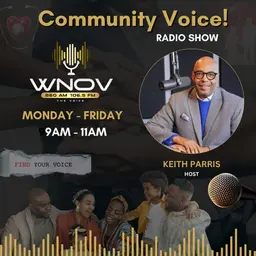
Good morning. Welcome to Community Voice. I'll be your host Keith Ferris. I want to thank everybody for joining us this morning. Good morning, Clark. Hey, man. What's up, man? Say it again, Clark. Who you with? Who you with? Okay, there we go. I don't think we were with you earlier, bro. You work this weekend? Uh, yeah. Okay. Apostle. Bishop. What's happening, man? Hey, man. Uh, you know,
a sandwich ain't a sandwich if you ain't got no bread. It's funny. I preached about that. I preached about that son. Oh, see? See? See? The God showed me, man. They have a peanut butter and jelly sandwich without bread. That's it, Doc. Listen here, man. Then I got, then I got the reminiscent and dude, that's crazy. That's the key of G. Got the reminiscent and
Started thinking about when I was a little, little guy, down with my uncle and aunt, and Sunday, oh boy, when they got a TV, Sunday, because you know in the south, what we call lunch is the biggest meal. And then you do what is called supper, right? And so man, they made me a mayonnaise sandwich and life was good.
See look here we go. Right in the garbage, sandwich spread sandwiches. See here, there you go. I love it. We grew up military, so we didn't grow up poor. I said that wasn't even poor when I was doing well, man. Oh my God, I know people did served sandwiches. Yep, sandwich spread. Catch up. Catch up sandwiches. Barbecue sandwiches. Like, man, it was something about the sauce, man. Barbecue sauce, sandwich spread. You know nothing about that.
Yes, she liked that. What is that?
A sandwich is a sandwich. That's what I was getting. That's what I was getting. That's what I was getting. That's what I was getting. That's what I was getting. That's what I was getting. That's what I was getting. That's what I was getting. That's what I was getting. That's what I was getting. That's what I was getting. That's what I was getting. That's what I was getting. That's what I was getting. That's what I was getting. That's what I was getting. That's what I was getting. That's what I was getting. That's what I was getting. That's what I was getting. That's what I was getting. That's what I was getting. That's what I was getting. That's what I was getting. That's what I was getting. That's what I was getting. That's what I was getting. That's what I was getting. That's what I was getting. That's what I was getting. That's what I was getting. That
Bread. You know it's something about having two pieces of bread. Yeah. Amen. Can you have a hamburger? Not without bread. You can't have a hamburger without the burger. You can have a patty. You can have a patty. But in order for it to be, that's just like a song. You can have lyrics and music separately. But when you bring it together. Uh-oh.
Ah, shit. It becomes a song. Help us. Help us. You can have a beat over here. Yes, sir. And we're over here. When you put that thing together. Oh, you got a sandwich. You got a sandwich, man. Yeah. What brought man come down to me? A sandwich. A sandwich. From the slowest flow of fifth row. He made a sandwich. Sandwich. We all talking to you. See, see.
when you're making the cake you can have flour and eggs and all of the things that you need to make the cake but it don't become a cake until you what put them together happiness that's right I talked about the bread of life
No, that's a patty
You're talking about the Salisbury steak out the box
Uh, get my uh, fit ready for this year. All right. Friday. All right. Dominic Denham's uh, always, I can't say, you know, if I can't say a word, I can say this about my colleague. She, she bring the swag. Oh, she do. Oh, she bring the swag. Nobody will believe it though. And then, and then she's very good at making an entrance. Oh, yeah. I am not. Yes, you are. I am not. Yes, you are.
Are you here? Do the move. Do the move. Do the move. Do the move. Do the move. Do the move. Do the move. Do the move. Do the move.
Man, come on, man. You just, you know, it's called me-bushy. You are key today. I was watching something. Nose be all in it. And the guys, they were legs crossed. They were in a prep school. And he said, where do you summer? And the guy said, man, he said, oh, good. See, that's off the beaten path.
May? No, really. I'm going to start a move to the Hamptons. I'm sorry. I got to start that. That's how I like sign. Money, money, money. So I want to go to the Hamptons. And then Doron put me on. I was not familiar with Telluride. Yes. Telluride. Telluride. Telluride, Colorado. Oh. It's like we're a lot of world-class folks trying for the Olympics scheme.
So you was bougie so you had your
They have pasta over here, and then you add some sauce and your meatballs different. No, you know, well, well. These were separate things. They weren't just in a big pot together. Because what I don't like is how the spaghetti swells up and gets so big that it's almost kind of gummy. I like for the spaghetti to hold its form. Do you eat them? Yes.
Yeah, well, you know, well, you know, the noodles swell. No, because it depends on how far you cook them. Let's not get it because J.D. will call in. And J.D. has never made mac and cheese that we have seen in life. That's because of you. We talk about invisible mac and cheese. That's because we don't see Clark food. We don't see Debo food.
Clark has a wife. You know, people got a wife right there. So how do I explain why? Because when Clark could he got to cook cook for the house. So he bring us leftovers. When I cook, I cook for me and my son and we two bulls in the house. So we eat everything. So then the next day is not the level. I was watching the movie that the hate you give.
And remember, she was dating a white dude in school, right? Yeah. So she's going to take him home to meet her militant daddy. He'd been wanting to meet us. So they trying to prep him, her and her brothers trying to prep him on blackness. So he got the first question right. But then there was the second question. Is macaroni and cheese a meal or a side? It's a meal. He go, it's a meal. It's a meal. And she goes, she.
And this is what he said. He said, because it comes out of box. Oh, yeah. You are automatically disqualified. Cooking it out of box, man. It's a side. Doc, you got to get the noodles, season them, season that water real good. Because I was like, the first time I went to a public school as a sub, and I saw that they had certain keys like macaroni and cheese and milk.
And maybe a dinner roll. And I was like, what is this? And they was like, no. Something to stick to your stomach. And then they asked him, they said breadcrumbs. They go, no. No, you're putting breadcrumbs on top of the macarons. No. This is for a lot of what Alisa Deek say, are listeners of the other hue. Do not put breadcrumbs on your macarons. Oh, the first question they asked him was pumpkin pie.
Sweet potato pie. He got that right. So, yeah, sweet potato pie. But then when they asked him about back roadie and cheese, it was like... They should have asked him about dressing or stove topping. Because I went... Dressing or stuffing. That's the question. Stuffing. Because I would hear the same difference, I just say. Because I went by one of my friends' house for the holiday one time. Thanksgiving. And I walked in and there was some of the strangest stuff I've ever seen because I saw a green bean casserole.
I saw stove topping and the mac and cheese had bread crumbs. So I knew where I was when I saw the food. And boy, when I tell you, you know, you try to, you know, you know, be polite. You try to be polite. Oh my God, listen here. Let me tell you, my daughter-in-law makes a green bean cat. I had never.
eating green bean casserole refused to eat it. All of the commercials made it look a mess. My daughter-in-law served it. I think the first Thanksgiving I did with them. So was it green bean or string beans? They're the same thing. Well, black folks cook string beans.
You all know we have our Blackheart cultural debate. Right. And we go back and forth on this one. Let me tell you, for all you Scratch cornbread people, y'all can notch up a victory. Rhonda made some cornbread from scratch. Amazing. I thought it was Jiffy. Boy, please. She made it from scratch. No way. The consistency is different. No, no, no, no, no, no, no, no, no. That's not what made it. No, no.
The taste but I'm just saying yeah, like I've been making cornbread from scratch since I was 11 years old My mother taught me how to cook I could in that black cast iron skillet and it had a beautiful golden rim on it Yes, you do
Unless you really know. Join it and nothing. That's the whole thing. That's your power. Let me see. I can tell you ain't had no drinking. Milk. You are not. You ain't had no cold. You ain't had no real cold. If you think that the rim and the crust on Jiffy. It is the same as scratch. Yes, it is. I gotta agree. I gotta agree with you. You don't know what you're talking about. The look is completely different. It is. The look is different.
when you taste it. And regular scratch cornbread is heavier. Yeah, it depends on how you make it. Jiffy is all light, like cake. No, like cake. No. Jiffy is light. And I got it. Look, look, it's fair. All I'm saying, I acknowledge this. I acknowledge this. Rhonda was a jiffy person, but she went and found a recipe, right? Yeah. And she did it.
So I'm just saying, not one for a scratch. My cornbread is made with real cornbread. I'll put. And what is Jiffy made with? Cornbread. It don't look the same. It don't look the same. When you mix it up real corn, when you mix it up your own for a scratch, your meal, your flour, your baking soda, your blah, blah, blah. It don't look the same. It don't take all that to bake cornbread. It doesn't take all that to bake cornbread. Bake bacon grease over in it.
to help stir it in. Boy, please. There's some buttermilk. We come to your house right now. Let's go. Let's go. She said, go and put some of that back frack over there. There you go. You gotta have some of that grease off during that hot. Then it gotta be hot. It gotta be hot. You load it in there. Call her. Call her. Welcome to the place. And then let my mama put some crackers in it. Go on there. Oh, Jesus. We going down south. Your back foot bread with crackers in it. Fire amazing. That's all I'm saying.
Thank you very much. It's been a long time. Good morning. Good morning. Yeah, but Michelle is exactly right because Jiffy makes a number cake. And who wants cake with your greens or whatever? I like cake though. I like it. Yeah, that is the worst. But anyway. Because I'm like Michelle. The full lines are open. Are you Jiffy lovers?
You get that black cast size skill she is. You can do Jiffy and the black cast size skill. Yes it is. Yes it is. I'm the caller. But anyway, I said I'm the caller. I'm the host. Now everybody knows it rules. Something got to get in the way. Welcome to the program. I'm the caller. We know you the caller. I'm the host.
But anyway, yeah, and the spaghetti, I'm like her on that, even though I'm from the South and I know all about the cornbread family. I mean, hot sauce sandwiches and everything. Oh, I've never heard of hot sauce sandwiches before. You're right, I like it. Now I can't even eat bread, so I'm pissed about that conversation. You know, so I have to eat a breaded sandwich. And the spaghetti, try the angel hair spaghetti, Michelle.
Well, so he's the way the sauce separate. I hate that mixed up mess. Anyway, all right. I have a great day. Oh, oh, oh, oh, oh, oh, oh, oh, oh, oh, oh, oh, oh, oh, oh, oh, oh, oh, oh, oh, oh, oh, oh, oh, oh, oh, oh, oh, oh, oh, oh, oh, oh, oh, oh, oh, oh, oh, oh, oh, oh, oh, oh, oh, oh, oh, oh, oh, oh, oh, oh, oh, oh, oh, oh, oh, oh, oh, oh, oh, oh, oh, oh, oh, oh, oh, oh, oh, oh, oh, oh, oh, oh, oh, oh, oh, oh, oh, oh, oh, oh, oh, oh, oh, oh, oh, oh, oh, oh, oh, oh, oh, oh, oh, oh, oh, oh, oh
And you know, some some turkey, all that type of stuff, macaroni, cheese, greens and yam. And one lady said, you're going to make us a what? I said dressing. Do you mean stuff? Because there's stuff I said, no dressing. Black or white. Come on, Keith. You know. No, not with all this business around here. I don't know. I got to check now. So hold on. So I had to I had to make a panda stuffy and a panda dress. So what was the difference? How do you make?
No, what was the difference between stuff and infusion? What is wrong with you? P.W.R, Sam? Let's see. Is this the bounce? Yeah. Rhonda Taylor-Paris, 7490. I put honey in it to make it sweet life here. Oh, Jesus. Yeah, I mean, people say, yeah. Oh my God, yes. And just like, you know, it's how much people don't know.
When that corporate come out the oven, you run that butter. It's soft. Yes. Yes. Butter over the top. I'm hungry. Woo! Like, and look. Robin, our receptionist just said, yeah, Jiffy tastes like cake. And it is a difference. It is a difference. Consistency is different. Oh, whatever. Y'all just look. But Jiffy literally just said, what's the difference between stuff and dressing? I know you didn't mean that. Boy. I know that was a joke. I know that was a joke. Because.
Originally, people would cook, they would put what we call dressing in and cook it with either the turkey or the chicken. So they would stuff the turkey. Yes, that's where the word stuffing comes from. Well, yeah. But nah. This is a different type of. This is a different type of. Because even if you don't put, like...
We don't, I don't do my dressing in the pain with the turkey. Uh-oh. Now we sound it like a coat now. My dressing. I don't do, I do my dressing separate. I don't do my dressing with the turkey anymore. My mother used to do dressing. Turkey was laid down in there stuffed in the cavity. I don't do it like that. Um, but there's no way anybody looks at stuffing and everything. In fact, the stuffing is what I would use for filler in my dressing.
I just said that. My mother used to do it that way. That's what I'm saying. But you only put a little bit in the cavity. Not all of it goes in the cavity. You just put a little bit. So why not put the dressing on the turkey? On the turkey? Yeah. No, I saw some people down south actually like. They they send the turkey on top of the dressing down in the dressing and then they stuff it in the cavity.
They don't put it on top. No, no, no, no. I'm talking about the one I saw down south. I saw them do this. Like, like, you know, they had to, they had to turkey in the pan. Is it not raw turkey? No, no, no, no, no. It was cooked. Oh. So it was cooked. And they had.
after they cook the turkey presentation. Oh, okay. That's what I was doing. I'm just saying because this is the beginning of your holiday. And you got close to this food which is, I think this is how they go. That and Fred Chirkel's heart would have her way. We won't be doing this. He already told you. It was about disrespect. What the how they really civilized the disrespect and stealing.
Of course, croutons, no ma'am. I agree with Ms. Teresa. I put it in dressing too, side dish. I made a cornbread.
I made a cornbread. I made a cornbread to use a Jiffy. Anything is possible if you can cook. I agree. Well, yeah, but I mean, that ain't a regular cornbread though. And you know what? We did, my mother always made it from scratch. My grandmother made it from scratch. We used to think, yeah, but we used to think because there used to be a store called Learners right next door to QFNH back in the day. And they had a big bin and Jiffy was like 10 cents a box.
So we felt like that was for Poe people. And man, who was it? Brett Parler's mama made something, Jiffy. And I was like, OK. My granddaddy would have alga syrup and cornbread. Mix it in just a little dash of milk. A little butter. Jiffy couldn't even hold up to no alga syrup. Alga syrup would turn Jiffy into shreds. But he would have cornbread. That is like the best syrup. So what's that thick syrup?
That's what it is. No, I think he's thinking Cairo. It's like, it's like real thick, which was nothing about Cairo, but they used that for baby formula back in the day. Sure did. They used it for baby formula back in the day, boy. And just so clarification, like on the fruit times, it was in there as filler because it's the same thing as people who would put toast, like they would toast bread.
and put it in here. It was just what a good time is. Yeah. It is just so that's what people like. Hard bread. It ain't number bread. And back in the day, your parents with that's what you do with your stale bread. Yeah. You could toast it up. And I remember cornbread in our house when we would have cornbread throughout the year, like, you know, whatever, leading up to the holidays, cornbread, extra cornbread got frozen. Yeah. So that when it was time to make your dressing, you just pulling them bags out the freezer and you have to make all that cornbread.
Thank you very much. You just brought back memories. And let's do this up before Michelle gets out of today's the anniversary of our late colleague, his transition, brother Eric Vaughan. And we sit in his seat. Who would ever thought? When he said, Keith, you could do radio. Who would ever thought Keith would actually be on radio?
Yeah, and I want to thank one of the listeners flagged it. I tell people all the time, I'm terrible on anniversaries. I don't even know my own in terms of like when I started radio, I forgot actually one of my wedding anniversaries. I don't even remember when it was. I just know sometime in October. So I mean, I have got off on anniversary. So I want to thank the person who flagged it and say, Hey, Michelle, remember that today is Eric Vines.
the anniversary of his passing, this brother who, to Keith's point, for all that Eric was, and when I tell you we would go to rounds, I started calling into his show to disagree with him. Heckler. Yeah, I was not Meach, but, you know, yeah, me and Eric would go to rounds, and I remember vividly one day he said, you know, tell her to hold on, I held on, and he said, let me get your number.
I want you to come in and do a segment." And I was like, huh? And, you know, from that, did a weekly segment with him in Demond Means. Dr. Demond Means, we did a Friday segment. And, you know, what I always loved and respected about him, he was not someone who tried to hoard and like, you can't get in, you can't come in. He opened doors and made opportunities possible for people.
And I remember Keon used to jokingly say you'll never give up your mic because you give up your mic Yeah, you don't get it back asking the creature. Yeah, you'll give up your mic You know, he was talking about in radio like Like how I have people come in and feel in for me that if they do a great job then you know like potentially somebody looking at like taking your job and I always tell them first of all these jobs don't belong to me but second of all
I believe what Lena always said in her office, iron sharpens iron. I want a squad of cold people around me. Because that makes the whole station better. And then that means we knocking down other stations, we knocking them off the block. So I've never been afraid of people that are amazing. Because the other thing is, I know I always got stuff to learn. And so Eric was one of those people that, and we had some test moments, test moments.
more just mutual just admiration, you know, for getting to the heart of a matter. His voice was so melodic and soothing. Like, your day was off if you didn't hear Eric showing in the morning. It just was off. I understand what people call me, like, hey, we good? What's going on? Because I could time it. And there was not not our Al, but there was another Al.
who would call in and he'd call in every morning at 10 minutes to eight. I knew I was on time for work. I'd be pulling in the parking structure like, oh, I'm on time. Nah, this brother, he meant a lot. I remember when he went to network news, you know, and I was...
Chow 12 and I was giving him grief about he had the little patches on his sleeves looking all the herringbone jacket And then I was messing with faith faith said I bought that jacket Because I was really cuz he looked all stately. I was like, what is this? We used to sport that in college He was of a certain type of bougie you'll to even though he tried to act like he wasn't he was a little bougie on his own too my mother would
to call his program when he was at MCS. And one time I'm listening, and he go, let's go to Inez. And then Inez started talking. I said, boy, Inez sounds a whole lot like Cliffy. My mother used her middle name. Really when she was gone. When she called it. That was like the first time we all learned what his last name was. You know, because everybody thought Vaughn.
His last name went Vaughn. And then it was like, no, it was borderly. And, you know, watching and listening to Erica grow up. And his first interview was with Dick Gregory. Was it? Right. Remember, someone couldn't do it. His first time one. And so his first interview is with Dick Gregory. Well, what a way to start. I mean, but he came out of D.C., you know, and so, and he, yep. And he had a he had an arrogance about him.
you know that uh like because I think that's why me and him used to go at it because I was like dude do you think you want that because you're from DC and I remember when we finally met in person uh after we got over like meet each other and laugh because you know I always tell the story he tells people all the time I didn't look like what he thought I was gonna look like he said he always thought I was gonna be life-scan when we met and I was like what is that about so that was another thing for us to fight about really yeah he always told he told people um
I want to say it was my friend Cynthia Wilson. We were at a 1290 holiday party. Okay. And I went and my friend Cynthia, uh, she was like, Oh, let me introduce you to Eric. You have never met Eric. And we went over there and he stood there and complete disbelief when I was standing there. He was just like, uh, Michelle. I was like, yeah. And then later down the road, he told me, he said, I thought you, I thought you would be light skinned. I was like,
I'm still trying to get to that. Yeah, yeah, yeah. Drop your head around that. Oh, I got at him. I got at him. And then, you know, we fought and then we moved on. I mean, not that, you know, I he did though. He had a head conjured up a whole image of what he thought I would look like. Well, you know, when when I met you, you and you and Donna came in.
And then the crazy thing was when we first, you know, that was the angry one. Yeah. I'm the nice one. Make no mistake about it. But I believe Michelle, um, when she came in the door and she saw me over there, WGOV said, Oh,
Oh this dude here. I said a few things.
This He was such a know-it-all and he'll say something like it came straight from Jesus you know But what you would give you something like oh, no, that's the facts and you know, let it just let let that alone I've told you what it is like if you get out of here But only but before I go Every now and then I actually do this
Every every blue moon for no reason whatsoever. I never thought I would be this person, but
That's the only message I have from him on my phone because I am a person I delete messages and After he passed I stopped deleting my messages from people. So behind Eric the next one is my mother On my birthday Singing happy and my mother sounded atrocious Happy birthday, but it was because of Eric that I stopped erasing voices I made sure to keep at least
one message from every one of my friends that have left me a message. So I know that for Faith Colas and his daughter Erica, grandbaby, you know, I don't think these days ever necessarily get easier, but hopefully they, you know, they don't hurt as much and it's better
memories and more laughing than it is the tearfulness. Anybody that's ever lost somebody, you know, these days can be bittersweet. Clark came in the other day with his Obama cap on in honor of his pops. So he said, you know, I said, I'll never, you know, live to see. He said, we never give it a black president. And so that presidency means, you know, something different for Clark than it does for other people. But
I know that everybody here at this radio station, on behalf of the WV, what is it? WNOV. It's about to say V-O-N-W-N-O-V, our family. You know, while Keon is top of mind because his death was most recent, nobody will ever forget Eric Vaughn or, and there's so many other people that we have lost, unfortunately, connected to this station and in this, this field.
I see Ernie G's wife and his sister-in-law all the time. And, you know, that steals things. So I'm glad you took a second and pulled me in on it. I appreciate that. The opportunity to say it on the air. That was a good brother, and we miss that man. You're listening to Community Voice. We're going to take a break, and we'll be right back. With your host, Keith Parrist. Welcome back. Yeah, I ain't going to get me angry.
You should have solved this. It was like, here we go again. Man, man, the revolution will not be televised. It's going to be more broadcast, more live stream. Let me do, let me, let me just do my recap. Wow. Doesn't feel like a Tuesday, but it is a Tuesday. Hey, let me, let's see. So, okay. I don't care what everybody say. Western Michigan got robbed. Okay. They got robbed.
Come on, man. What a home job. I don't know if I watched Western Michigan play. Western Michigan played Michigan in the big house. And how they get Michigan? It was no seconds on the clock. Now, here's the rule. Come on, man. Because the dude was out of bounds as soon as he touched the ball, then the play was considered over. So everybody saw the end of the game. Western Michigan was dominating Michigan at home. And man, and so then they did a Hail Mary.
Everybody was out there. Everybody was out there. Everybody was out there. Everybody was out there. Everybody was out there. Everybody was out there. Everybody was out there. Everybody was out there. Everybody was out there. Everybody was out there. Everybody was out there. Everybody was out there. Everybody was out there. Everybody was out there. Everybody was out there. Everybody was out there. Everybody was out there. Everybody was out there. Everybody was out there. Everybody was out there. Everybody was out there. Everybody was out there. Everybody was out there. Everybody was out there. Everybody was out there. Everybody was out there. Everybody was out there. Everybody was out there. Everybody was out there. Everybody was out there. Everybody was out there. Everybody was out there. Everybody was out there. Everybody was out there. Everybody was out there. Everybody was out there. Everybody was out there. Everybody was out there. Everybody was out there. Everybody was out there. Everybody was out there. Everybody was out there. Everybody was out there. Everybody was out there. Everybody was out there
Michigan University played basketball there, but I'm just telling you, man, now again, and then Frankie, Frankie came out, said, no, it's the rules. Now, when Frankie's down with it, because Frankie is conspiracy with a cue, I was like, okay, so that was the rule because everybody was out of bounds. The first person who touched the ball, as soon as they touched it, the clock stopped miraculously.
with one second left, giving Michigan another shot. Man, listen, they cheated. I don't care how nobody's spinning because again, the clock showed whether it was touched or not. There was no seconds on the clock. Well, there's no time. And then they said what was on the field, which was crazy because then I don't know if people saw last night SMU played Florida State and the power went out. And they didn't have a scoreboard. So they didn't have a scoreboard. They didn't have a clock.
They didn't have instant replay, so I fell asleep, so I don't know who won the game. But they said if it came down to replay, what if you have a play like what happened with Michigan? So it's a crazy weekend for college sports. People are already speculating that Fickles gone in Wisconsin as well. He should be. And it's funny, that Shamrock game, Rhonda and I,
Thank you, Gerard Randall. We got a chance when they played the first time they played the Shamrock game down in Soldier Field. That game was originally scheduled for Lambeau Field because of COVID. So they played that game in 21. We went down for that game. But I, you know, I don't know that Wisconsin is going to be a tough year. And I'm part of the Grateful Red, but it is going to be a tough year. Call a welcome to the program. Good morning.
Good morning and happy Tuesday to all of you. Respectfully, I would like to ask you a question if it's okay. It's okay. All right. Do you feel, because I'm a good kind of political, you know, we have a lot of black men who vote and I know a lot of people voted for this orange man. Do you feel when it comes to black men that they are the female genitalia of our pit bull that's breastfeeding her?
12 puppies. And the reason why I asked this is because I have heard several times the orange man gave them the room, the opportunity to be a man. And I'm like, well, you was already a man before the orange man, or they say daddy is home. And I'm like, well, your gene pool, your mind thought, and your strength is so too powerful for him to be your daddy.
And I understand when it comes to a lot of things that they can challenge that they know that is wrong They were making excuse so they can agree. So my real question to you is They would tell you you need to follow the Bible or Christianity Is it true that it wasn't no white people in the Bible? Because if there was no white people in the Bible, how can they tell you follow something?
That they was never a part of well is that's not true They are especially the New Testament Romans and remember during that time Rome dominated Palestine. So they are white people in the Bible Okay, okay. Well, thank you for that question. We're going back to the first question Do you feel that the black Republican men are pussy willows and then the line, you know, I mean I Try to understand
Where or why people might subscribe to the Republican Party, I don't For some people is business for some people, you know, and you always have exceptional Negroes, right? You always had the ones who just ain't like like them other ones. Yeah, you know, we want to separate ourselves So I think that there's a lot and then I think they see a political opportunity, right?
You know, it's like when Will was saying to me that Tom, it was tough because Tom Tiffany didn't believe in Juneteenth Day and Juneteenth is his birthday. So, I mean, it's hard for me to understand that. I was talking to my nephew who graduated with honors from Rice and he was he was trying to say that he was a conservative. And I said, well, point out a conservative thing. And then he pointed out, well, I didn't vote for Trump. Good for you. You voted right. But I.
I think for some people, you're always going to have the exception to the rule. The majority of black folks, if I can speak, I was at the meeting last week. The majority of black folks have scoped Trump's game. They scoped it in 2016, right? But you had some folks who, you know, if they offer you a job, maybe I'll give up my soul. And you see that a lot of times with folks where it's not just the black folks around them. It's the white folks around them who literally giving up their soul, but do not underestimate the power
power. Because I was just trying to figure out because this individual could never last, nor survive in a black man's shoes. He does not know about working 30, 40, 50 years. He does not know about taking care of kids. He does not know about being so powerful that you would make the Jesus and the devil second guess their decision.
So I just needed to respectfully ask, and I apologize about asking if it was too much. I think we always have to understand that there is the law of opposites, right? If you have an up, you have a down. If you have a right, you have a wrong. You want to believe that everybody's going to do what's right.
But then right becomes relative based on the eye of the beholder You know, there's something that's called situational ethics, right? Like there's some people that they believe so strongly that thing that they believe in that they're not gonna give up their soul for and then there'll be others who you know So I know I but I think that Whether they will admit it publicly or not. There's probably a lot of regret now
Because I was just trying, okay, I'm sorry for cutting you off, I'll do this and go ahead. Go on. Because I'm trying to figure out like what's the conservatives because I mean falling asleep at the stoplight with your door hanging out the car with the straight sheet and the car like you a gunshot victim is not conservative. Seeing that you are so religious and you're doing everything that's the exact opposite and getting caught is not.
So I'm just trying to figure out what is conservative and real black men do not steal cats. The woman is going to want to give it to them. So I'm trying to figure out when they said he's a manly man. Real black men don't sit here and run from the service and say they got gross scarves. So I'm trying to figure out why would they put it. But Al, you bring up something.
this whole idea toxic masculinity is a direct reaction to uh inferior masculinity people do not feel fully and whatever that is because that's a moving target right in terms of what is masculine what is male what is it is to be a man but i think people compensate right and and so
Yeah, I think people get over and you get what, but what a lot of these black Republicans will probably not tell you publicly, but they found out privately that they have to put up with a whole lot of racism, right? And, and, and, you know, you see it, you see it happening in real time. You see policies that are detrimental to, to black folks or just folks in general. I just saw, I'm reading the article on this, uh, senator from
Kansas and he was a OBGYN guy and they talked about the number of people he sued for unpaid medical bills, right? Now when you look at it and this is the piece of it, you know, we concentrate a lot on race, but don't don't miss class because the people that he was suing were poor white people in rural areas who didn't have money.
And so there's a lot that appeals people can appeal to your emotions. I think the other thing you talk about conservative when you look at black people. You know, we are, we believe in big government because we understand the benefits of government, right? But then at the same time, we're socially conservative, right? That you have a lot of black people who don't.
Believe in abortion rights. You certainly got a lot of black people who do not believe in the rights of LGBTQ folks You know and so then you almost had this contradiction because on this level I would be considered socially conservative and you're right It's religion that drives a lot of that and then on the other side We understand that there's government and the importance of government so you know because the Republican Party was the party of business
Right. It was the libertarian party. What it means is that you could pretty much do whatever you want to do as long as you didn't hurt anybody else. They believed in state rights, you know, so that has changed. And I think it was the deal that they cut under Ronald Reagan with the moral majority and Jerry Falwell that really kind of changed the Republican party because part of that.
You know, it was Northeastern Republicans that got the civil rights and the voting rights bill over in the 60s, right? You know, you don't have those type of Republicans anymore. You know, they're dying to war, very conservative, xenophobic, homophobic. I mean, the whole thing, you know, we ran a whole campaign on on men playing in women's sports, which doesn't happen.
But the way people talk about it, you thought that it was happening, but nobody's ever seen. All the people call in and ask me and no one do to ask me, hey, man, should women be playing in men and women's sport or go course not? Because it doesn't happen. Well, I just want to say thank you for answering this question. And I just want to say thank you. And before I go, even though they're against the LGBT,
a ten-year-old boy does not have ovaries, so please stop trying. Bye-bye. All right. Let me read some of these. So Florida State did lose. That coach is about to lose his job. Real black men don't steal cat. Oh, wow.
Chase it though Chase that cat. Yeah It's just the dog give me oh my god, oh man when that one came out. Whoo Listen to community voice. We're gonna take a quick break. We'll be right back Welcome back as I was doing the flute
We have in studio with us, Mr. Ryan Gray. That gots to be the longest hand clap in the history of clapping. I appreciate it. Let me get everything out then. Like they do in graduation. Yeah, just then clap. You know, this happened over at a Holy Redeemer.
you know, funerals. You know, sometimes they have to do the wrap-up music. So we have Mr. Jones' memorial service, and soon minister William Mohamed got up, and the musicians started playing. He said, dude, I ain't even started talking yet. You know, I'm playing the wrap-up music. But we have Mr. Ryan Gray. He's Curator and Cultural Strategist for the Institute for Preservation of African American Music and Arts.
That's that beautiful building you see right there. That's what about 30? 32nd and Hampton, 3200 West Hampton. Right there Hampton. Yes, sir. Welcome man. Thank you so much for having me. Hey man, thank you for coming in and he's here to talk about legacy in song.
Absolutely. So, you know, I am super, super, super excited. I am doing everything I can. I also share IPAMA on Facebook, so they also see that they are, that I am talking about them. So, a legacy in song that's coming September 18th at 7 p.m. So, the concept is celebrating 100 years of gospel recorded music, not gospel music, because we know gospel music has been around since forever.
But IPAMA, we are the Institute for the Preservation of African American Music and Arts. Matter of fact, we just had a name change on August 16th, Bishop Daniel's birthday. We renamed it as the Bishop Daniel's Institute for the Preservation of African American Music and Arts. And that was one of his last brainchilds before he transitioned. And the goal of IPAMA is designed to consistently bring art
education and liberation within the community. Bishop had this concept where why do children and why do other individuals have to leave their community in order to have something nice? And so IPAMA, it has become that space where
Whether there are events or whether there are cultural arts such as September 18th, we're able to have so the community can enjoy. So September 18th is a world-class event where we're having some of the best of Milwaukee on from Russell Smith to Ashley Jasper. We're even having a couple out of LA, Kendra and Jeremy Jeffers. They have played with some top artists, Grammy-nominated artists. Also, Kimmet Farland.
out of Chicago will be with us as well. And so they'll be going down a musical journey of a hundred years, starting with Arizona Drain's, Mahalia Jackson, Thomas A. Dorsey, you name it's going to be songs about that. And then from there, we're also having an exhibition, a gospel exhibition that you were able to go to before the 7 p.m. show and after the 7 p.m. show, where you're able to see a whole bunch of music, gospel, musical artifacts, even from
individuals such as Dr. Mademois Clark. Some of her material and things that her family, such as the Clark sisters have loaned out to us will be there as well. So we talk about gospel music as part of African American history. How would you place that? What's the importance of gospel music?
Gospel music in African-American history is very important. I think it's very vital. I think oftentimes when you consider, when you look back through the movement of the 60s and the 70s for sure, you always could hear gospel music playing. You could always hear even when Dr. King had to give his speech. Mahalia Jackson was there and she was singing before...
He even gave his powerful, I have a dream speech. Matter of fact, it was Mahalia Jackson who was a pioneer gospel matriarch. She told him, tell him about your dream. That's how it even all started. And she said, Martin, tell him about your dream. And so gospel music has always had a strong, strong and pivotal role in the role of civil rights and even just the advancement of black people.
And some of those songs are correct in terms of the civil rights struggle. There were songs that were adjusted in terms of lyrics when they called marching music. And they would march to those particular songs. We think about, people talk about Professor Thomas Dorsey. Yes. And as I was thinking about doing that time also, Sister Rosetta Thar, people who
not only had influence and then, you know, you work your way up to the, um, the fifties and then we have the sixties with James Cleveland. And at the same time with James Cleveland, then you have, which became one of those similar moments. Well, let's get back to Thomas Dorsey and Precious Lord.
Yes, yes, yes. A lot of mainstream Baptist churches would not allow that song. No, no, they would not. They thought it was too bluesy. It was too bluesy. He was advanced for his time as every time when you have a new person coming in that is contemporary, they'll shut it down and then eventually embrace it.
And at that time, he was a blues person. He played behind a blues musician. He played behind a lot of people. And when I was looking up the history and speaking to some historians and what have you, that caught me off guard because that's all we listen to now. That's all we hear at funerals. But at one point it was shown. But you know, and it's fun. And I know some people are really...
this thing about so-called secular music, and then what we call church music. But really, they both influence each other. I would say so. You know, where you think, yeah, there's some blues in gospel because, and we always say gospel should be good news, but that is not what gospel really was. Gospel was, but when we did our Lamentations,
expressing our pain. You know, when Thomas Dorsey wrote Precious Lord, that's a limitation because he had lost his wife, had lost his child, and he was going through something. And so that's part of, even in the Bible, you know, the whole book of Lamentations, it talks about, so there's that whole emotional piece. Absolutely. Where we're sharing our experiences. Absolutely. You know, Marvin Sepp never would have made it. He did that song after his father died.
Absolutely. You know, and so when I think, so I think sometimes I always ask the question if I talk to write out and I say, you know, if if you playing, we don't react to people who would be classical musicians like we do to blues, you know, but I'm saying it's all still this expression and and I don't know this is me. I really do believe that music comes from the creator.
oh yeah some things come from the heart especially black gospel music there's only a story that we can tell but only the way we can tell it and that other individuals who've been connected somewhat to our experience can understand it.
Even Tamela man take me to the king the first part that she opened up with his truth is I'm tired Who can't sometimes relate I was getting a little tired of that song, but that's a different piece It comes from it comes from our experience it's interesting you mentioned the Clark sisters, you know
They tell I don't know if they tell the story obviously with Maddie Moss Clark being your mama You ain't playing no R&B in the crib, right? So they said they would go buy their friend's house sneak it Open up the window. I was talking I'm not gonna call this person's name, but very prominent songwriter said brother I'm not trying to be funny, but I knew you grew up Pentecostal, but I'm hearing a little James Brown That's okay and and and and you would hear
gospel with James Brown, I think. I think everybody inspired everybody. Yeah, and maybe if we just take it out of this whole thing about morality and just get into that it is an expression. So the fact that you're about 100 years of recorded gospel music, you know, and then so what would be and I know you got what would be.
Some of those, let me use this word, similar moments in gospel music in terms of particular song or indoor songs that you think people go like, oh yeah, that was a game changer. I think we're going to have some songs from Thomas A. Dorsey. So we're literally starting from the 1920s all the way to 2020s. So people want to hear things from...
Thomas say Dorsey. I'm not going to say the song. Um, the hell you Jackson, I won't say the song. And then you're going to probably start grooving when it comes to the Walter Hawkins hit and the Edward Hawkins hit because, you know, that was really pivotal. Um, I've been told by one of the artists, they plan on singing a few numbers from the clock sisters. We even got a Hezekiah number coming in.
Kirk Franklin number coming in. You brought the Sunset Show the whole lot like Master Blaster. It is. Stevie was going to win it. But you know she did admit that she did get that feel or that vibe from him. That's how she created it. Or even when James Cleveland.
took, Jesus is the best thing that ever happened to me. From Gladys Knight. From Gladys Knight? Yeah. You know, I mean, I think that that is the thing which gets us bent to some of the controversy. People like Kurt Franklin. And they got stuff from us too now from the church. Ray Charles got a whole bunch of stuff from the church as well. Oh yeah. But you know, Kurt Franklin, who I just think, he's a game changer obviously in terms of what he did and really
Incorporating those beats, you know, because that that's that's where music is now Will you be? So I'm asking I'm sorry. I'm asking you personally. Oh, yeah What would be your about Rushmore if you had let's put five or Mount Rushmore if you had five that's tough
My Mount Rushmore of gospel music. I would say like a song of song. Yeah. Oh, that's a tough one. That's why that's real tough. Can I say some of the people instead? Yeah, I'm gonna start old that I'm a little young. I would say obviously time to say Dorsey would be on that Rushmore. I'm gonna run up to Shirley Caesar. I think
She was killing the game during her time. She's on that Mount Rushmore for me for plethora of reasons. James Cleveland. A lot of the songs, you know, that our parents, my parents grew up on was from a James Cleveland song. I think that's three.
I'm still saying, oh, I suppose Walter Hawkins don't wait till the battle is over. Shout out now. Be grateful. Thank you. Thank you, Lord. Like, what are we doing? Change. Oh, there you go. That's the one. You know, Walter Hawkins has to be on there. What is that number four? Yeah. Um, then I would have to put Kirk Franklin in there, I think.
He transitioned us over he showed us that gospel is not in a box at all As many of them did but he showed that hey, you know, you could be multi-dimensional and still be focused on one main thing You know, they always asked a question. What is an album like any album that you just sit out listen to beginning to end? Toneys out the box That was a good one dude. Oh my god musically. Yeah, he's he's oh my god what I mean it was
And we were coming home from church and they was playing God is not forgot. I was like boy, I just think when you think about that and then people who
You know when you talk about because thank you Lord was actually for what that wasn't even one of the songs they was putting out Yeah, that's what I heard but it was a and you go to YouTube and they had the jam where they start jam James Moore is singing You know and then you go like oh and then it became like a staple Yeah, you know in terms of church and then of course I know there's a little controversy at the Stellars this year because they didn't do a Memoriam for Richard Smallwood, but obviously they should have
Church music, you know terms acquired music and blending classical with gospel. Oh my god And I think that and the great thing about and and I think the honor is really due to Bishop Daniels Musically the footprint that he and and and and pastor Daniels Carter
Left on the city since we I was a kid It has been and then I would also put in Bishop Daryl Hines in terms of just locally What it meant or Joe Nathaniel there with the majestic and even before them the harmonics they were just that music and and and how You know, I think I just watch a documentary, okay
I think it's soul music But it featured It was local. Mm-hmm. I want to say PBS possibly. Yeah. Yeah, PBS. No, this was a Netflix. No, he wasn't in that one, but Okay, sure I Think it's I know which one you're talking about. Yeah, I can't think of the name soul food. Okay. Yeah, and it talks about gospel song Netflix
Yeah, no, that's not it. I'll find it but I was I was Just locally when it went in and people talked about it. So you you you're gonna have some of These great voices absolutely Yeah, I think That was the one having some of the most amazing people I'm Russell Smith. Yeah, my brother if you know Russell Smith, you know
He can carry a crowd all by himself. And I'm not going to tell you what song. And I will give you a little hint. He's working on a mentally right now. Hey, Clark, who did you think Russell was? Randy Watson?
You know, it is. Where and look, by no stretch of the imagination is the black church perfect.
But the black church was the refuge and the music got us through Some you know, I could think about it. There's been times in my life And there was a song. Yeah, they got you there that got me through I remember this song and my goddaughter we call fight on and Just listening
To it because I was like in a real tough time. I was like ready to give up So to be able to do that I think that that's the uplifting part of it where it allows us to To express and specifically gospel we're not talking about Negro spirituals or we're talking like gospel has his own just Some of the you like I said, I'm sitting up here now and I'm just but for me
And I wish I would have had an opportunity to talk to Walter Hawkins, to ask him, because, you know, he was seminary train. He went to Smallwood, went to Howard's Divinity School. He wanted to have a deeper understanding of scripture, so, you know, when he wrote his music. But I wanted to ask him when he was thinking about change and what that was because...
Yeah, but what it what it represents That song it's it's funny that you say that because I listen to smokey Norfolk story and he Exactly and that song is so powerful. It's a great song, but it's so powerful because it came from a place When he wrote this song he was hurting so he was in a place of reality of okay, God, I need you
So I need you now. Yeah, so so to express how I'm feeling It's more than just words. So let me put it in song. Let me put it in the melody So everybody that's in that place where smoky was you could relate to that song because so you can feel it It's a feeling. Yep. Yep. What I've learned is that gospel song often
is a private prayer or testimony exposed. I think it's a, I need you now, that's a prayer. Precious Lord, that's a prayer. There's so many other songs that I could think of that are prayers, they just put a melody to it. I've had some good days. I've had some good days. I've had some bad heels to climb, but I won't complain. He complained in the song, but he's not gonna continue to. I'm much I love.
Let you know that what I'm talking about. Absolutely. But I'm grateful through it. Absolutely. Gospel is all about the triumph. It's all about the tragedy or the trials of life. But then most times it always ends with a triumph. It's how am I going to make it? How am I going to get through it? And like you said, everybody has that one gospel song. I'll never forget when I was in college and they were saying that
I was so confused and I can't recall it to this day, but it was a certain Tamela man song. It wasn't take me to the king I listened to that song so much till I think I may have gotten tired of it But it helped me so much it literally gave me wisdom it gave me it fortified me to stay in prayer and stay confident
And eventually things did work out. So I think gospel is that navigation, often that we pay, often that we enjoy at the writer's expense. And I think the other thing is we learn through music. Like you learn to alphabets through a song. And so your ability to be able to, and I know, maybe depending on if Greek or not, how you learn, how you remember those alphabets and all those things that we do. So music is that gift.
And it's a divine gift. And sometimes people, I'll just, because when I walk into church on Sunday, there's usually some song I've been playing, and I walk in singing it. And they're wondering, what's up with me? I'm going like, because sometimes singing to myself.
What's that song, Encourage Yourself? Yeah, Encourage Yourself. But I love, and I had just suggested this to one of our ministers of music, and I thought his voice would be perfect for, if I can't say a word, I'll just play my hand. I remember hearing that, not as a song, but people would, that would be their expression, because when you think about how difficult it is to be descendants of enslaved Africans living in America. Absolutely.
you know, sometimes, you know, it makes you want to holler. And in Greek tragedy, it's called pathos or cathartic. I can release. That's what catharsis does. It allows me to release. And that's why I'm not hard on people who, it was in the church that they were able to find refuge and they were able to find release.
because putting up with what they had put up with, I mean, it's maybe that's what the scripture means by train up a child when they're young. I think it's a feeling that only gospel music can provide, I believe.
There are other songs that people listen to sexually and I think are great songs, but gospel just has its own. It has its own thing to it. And I think, you know, especially as we were designing the exhibit and putting the final touches on it that everyone will see on the 18th of September, we kept asking ourselves, what is the experience going to feel like? And the goal is that when you walk in there, you you understand this isn't just a song.
This is my testimony. This is their life. This is something that I recall. And so in the exhibit, people are gonna go back to those moments that you were talking about, where they're able to think about that song that really gave them that refuge and gave them that strength and walk out more so saying, hey, I have a song. I mean, I recorded nowhere, but I have a song. You know, speaking of that, since you brought it up. Brother Ryan? Yes, sir.
I have a song that I believe needs to be included that night, okay? And this song is called, It Take A Thousand Horses To Pull Me Away From God, okay? That's deep. I wonder who wrote it. Take A Thousand Horses. You know, I had a, I tell people. We'll talk about it. Thank you, mama. And thank you much, mama, this year at Baptist Church, where I had such an ecumenical upbringing.
And one of the great praise songs in my mind is that he's a wonder. In my soul. Oh my God. Now, which version of it? Because it's the lyrics. He's a wonder. In my soul. No, see what I'm saying is two versions of it because it's the slow version. He's a wonder. Yeah, I got that. In my soul. That's what I want to hear. He's a wonder in my soul.
He's a wonder in my soul. Yeah, I think it is. Bless his name. But again, that expression about the vastness and the wonder. And there is, and I know we had, there was this interesting debate. There is a song, and this was a theological divide, or denominational divide. The Lord will make a way.
Yes, sir. In the Baptist Church, we say somehow. Yeah. In the Pentecostal Church, they say, oh, yes, he will. And then we're going back and forth. Somehow, yes, he will. Man, this is, this is. Both of it is true, right? Both of it is true, right. You know, but it was like, OK, because I spent a lot of times, you know, I'm a novice etymologist, which, you know, I always want to know the source of the word, what the word means, that word.
becomes important and So I understood the the back and forth. There's a particular song that is think it's Troy Snead Mm-hmm. Oh, yeah, yeah marvelous guy. Yes, so it's me. Yes, and I see take that preposition out. He's not up
He is D. He is D. Absolutely. You know, but I understood the sentiment. So, let's give the particulars time, place. Yes, sir. September 18th, 7 p.m. doors open at 6.30 at I-PAMA. That's on 32nd in Hampton. Again, it's the, well, now it's the Bishop statue of Daniels Institute for the Preservation of African American Music and Arts. Again, on the corner of 32nd in Hampton, doors open at 6.30 on
September 18th and the program begins officially at 7pm. Uh, right. Can you put me on the pre-program so I can see my thousand horses? Hey, come to these things at 630. Let's see what we can do. I'm here at 630. I hope you do. Hey, bro, put him in the loud. He's a loud man. I got a special room for him. He can see a lot of new horses there.
Thank you. Thank you. Thank you again. That's September the 18th at our Palmer.
and doors open at 6 30 starts properly at 7. Absolutely. Appreciate you, man. Again, and we'll mention it. Yes, sir. Up to it. You're listening to Community Voice. We're going to take a quick break. We'll be right back.
We're not doing that with Clark. We're not. No, sir. I'm not participating in that. I, uh, I use, uh, I'm referring to a message that I, that I preached called stay on your square. And, uh, I use, um, be angry, but said not.
And I said, you know, no matter what, don't let anybody throw you off your square, right? So, right out and Clark was having a conversation and Clark said, yep, that's what you get. We're messing with the man upstairs. I said, or the woman. Hey, Jack. No, sir. Let's see. Let's go into.
And my boy John Daniels just text me and said, I hope you caught me right a thousand horses. To pull me from God. The Calhoun tells us God's with music. We said a thousand horses. I wrote a song about it. You want to hear it? Here we go.
Let me go. Let's see. Let's see. Out the Box by Tonya was everything. Musically, that is one. That dude. Oh my God. And then I understand he went through everything he had to go through. But, you know, and that's the thing about when you're ahead of your time.
That that people don't understand it. They don't understand you But you have to keep your eye on the prize stay focused on You know in the beatitudes Jesus ends it about you know if they if they Persecute me and they persecuted the prophets before me they're gonna persecute you and and that's the thing about it, you know in New York
With something as genuine and you know just you know on point they say it's the truth and That's the problem a lot of times that people you you're at a point, you know, we were talking about Edwin Hawkins, I mean Walt Hawkins, but we talked about Edwin Hawkins and We're Edwin Hawkins when he did Oh happy day
really the first gospel song to do a crossover. First time I ever heard Oh Happy Day wasn't in church. It was on WNOV. And I was a kid and I thought, oh, that's a jam. You know, and so when you think about how it changed, how people would express, you know, because certainly for those of us who came from the South,
in those churches, usually you had, you didn't have, if you had a piano, y'all was doing really well, but you had a guitar, maybe a tambourine, a washboard, and we were able to create music. And when you look at the Psalms, for example, people don't realize the Psalms are poems, and if you're a canter, you know the melody to that particular Psalms.
So it is and even now because we so sophisticated when people bring in your Your musical guests they're considered what? Psalmist Yeah, and so it is but it's been able to capture us and to be able to express Wow, I mean, I don't know where I'd be without and that and I just love music man. I mean, I love it so much
And maybe, you know, I should have, maybe I should have trained and studied, but, you know, I had some other things. Man, did you see on the Wayne's brother when, when Marlon Waines was singing, Oh Happy Days? Oh my God, it is the funniest thing you will ever see.
So, I mean, when we go to break, I'm gonna show you Doc listen. When I saw that, I was on the ground, man. This cast song, Oh Happy Day, because they was in the play. It was him and Keith Sweat. They was doing this play, I think it was called Mama Fried the Chicken or something. Something was the name of the play, but he was taking over Keith Sweat part and Keith quit the show.
This do song Oh happy days at the end man. It is the funniest thing you would ever see in life It is Man when you when you When you hear now, let me do this because I am a hater Some of this y'all trying to do you ain't got no business doing I'm just saying I Remember I went to this particular church They was singing this song
Right out, they couldn't even get through the song, they got so happy. Oh, and I go like, I ain't never heard, who is this song? And it was Jonathan Nelson's I Am Healed. It didn't sound nothing like I Am Healed. I start from this perspective, if I'm gonna do somebody else's song, I'm gonna do their song and I'll be very careful when I try to go in and do some alterations on it.
You know, the person who wrote the song knew exactly what they were doing. They knew exactly the effect they were trying to get. So they don't need any help from Keith. So you know what would be nice if we just kind of step this in here. And then we're going to go here. But somebody did learn though. I did learn this. And I don't know if this is even a part of music theory. Do you get in trouble after you try to repeat the chorus three times?
Well, you really do well. You can't let me let me let me roll at that. Yeah, you can get into trouble Yeah, because if you get lost and you probably will now if the people are getting with you then you can You know that you can kind of set it That it's not to repetitions and they're not getting bored which you stand at that part So you would have to really be a good choir director to actually do that. I think you know and again
I'm not a trained musician. I said, good rule of thumb is do three. I get up out of there and get up out of there. And then if we need to go back, then let's go back. Somebody was doing, what do they call it? 711. 711. Yeah. You do seven words 11 times. What? I thought they were shooting dice.
Seven words. Seven words. Seven words. Seven words. Seven words. Seven words. Seven words. Seven words. Seven words. Seven words. Seven words. Seven words. Seven words. Seven words. Seven words. Seven words. Seven words. Seven words. Seven words. Seven words. Seven words. Seven words. Seven words. Seven words. Seven words. Seven words. Seven words. Seven words. Seven words. Seven words.
Was that when they was on the with the gates the TBA? Yep. Oh Yes, sir, dude. I was in tears. I mean and if you know her story, you know, she's a trained soprano But and then she did it in front of what is Rambo she did in front of daddy Rambo who wrote the song and I and I didn't get to this little piece of it
America is a, oh man, it's a stew. And what I mean by America is a stew is culturally, it's a stew. And when you think about, if you listen to white Southern gospel music, sounds an awful lot like black Southern gospel music. So what do they have in common?
They were poor, right? I mean that and so in that again remember the word we use, limitations out of your pain and so they were dealing with material deprivation too. Now you put on top of us we got to deal with racism but they and so when you listen to some of those songs and you go like, what are my favorites all written by this guy? Mercy says no.
Oh my God. Oh my God. But it was a Clint Brown. If you ever pull it up, Mercy said, and then, um, what's, um, C.C. Winans, she really made it. But oh man, Mercy says no. Oh, that's one of my favorites. Call her. Welcome to the program. Good morning. Good morning. Good morning. Now you guys got a serious topic this morning. You know, you as a people sort of black people.
You guys don't speak a man? No. Can you give me better now? Yeah. The people we, you know, the things we miss you as a people, the gospel music take us to a place where we can find some relaxation in the spirit of God. Yeah. Because all the things that we experienced when you're ready to go on worship, you want to watch all that old mess. You don't want to enter the gate with the best experience of it.
Well, you got a good gospel song. My dad used to near the cross. Yes, sir. That thing there. I can think about that thing. Yeah. And just imagine being in the presence of the Lord. Yes, sir. Not him on the cross. He doesn't expound. That situation is just
knowing that he is doing everything that I've been through. Ha, I'm ready to preach about you. Yes, sir. Yes, sir. No, bro, because we ain't taking up no offerings, so you have to do this one. Gratis. Thank you. I'm gonna tell you something, man. We didn't have that. Well, what we did. Yeah. Yeah. Oh, it got us through.
I'm not, I'm not even going, I mean, you know, and, and I know I'm a progressive theologian, but I also know, you know, Ron and I visited a Unitarian society. We went to a Unitarian society meeting. They don't call them services. And, and I like reason, right? I mean, I, I, you know, if you talk to me, we sit down, we can talk about reason from a philosophical theological perspective.
But there is something, and the Greek word for it, and I mentioned it earlier, is pathos. Our passions, our emotions, those things are real too. And we put that in our soul. And so our soul needs nourishment. And thank God for the gift of music, you know, because when...
and understand that you had a person who went through some things and experienced God on a level and that's what said out so you know he's a wonder in my soul. In my soul. Yeah and you know I would change it to she's one. All right I'm about to cut his mic off and here he goes. This guy is ruffling my feathers.
I'm gonna tell you man, honestly, if our younger people had a feel of what we experienced as you in the church setting, that's what I'm saying. Maybe there'll be a more calm and spirit and won't need all these substance abuses to get themselves tried to get over the hump. But I gotta say this though, we spent a lot of time in church with a lot of that.
But, but here is the difference with that, Keith, because that is true. But the difference is that we had praying grandmothers, praying mommas that were there. So now, nowadays, the mommas and grandmommas is kicking in and smoking with them. So that whole, that whole system of.
structure is no longer. So what are you, what are you saying? You're saying we have cooler grandmothers today because we can smoke with our grandma? Well, no, I'm saying, I'm saying, I'm saying, I'm saying, my grandmother cool. A young fool, a young fool will eventually become an old fool. So you would have to change your ways from the youth. And again, we have these parents that grew up in that type of
world and they're exactly so they're passing it on and that's the generational curse or blessing that we live under because it's passed down prime example that generational curse and blessings exist the children of Israel those people that that had disobeyed God yes they died off but it took 40 years for them to die off and everybody that was connected to them had to wait for these people to die off
So, that curse, that whole generational curse was passed down to them until it was eliminated. Go on, man. Well, it wasn't eliminated. Well, no. Hold on. Hold on. I mean, what I'm saying is, it's Tuesday, but it was able to move on. It was able to move on. So, it's been 40 years. Well, isn't there something when Joshua died?
And I think it's in the book of numbers. Doesn't this start off? There was a generation that arose who knew not to generate. So that was after Joshua. Yeah, but it took for those people to die off for a whole new generation to come in. To do the same thing that the old generation did. How do you say it today? All the things that these generation X and all these they're going through and the way in these parents has gotten corrupted in these areas that now
Is that that's generally I think we can raise did we have parents who partied in the past? Yeah, but you also had parents that pre cuz I got I got a friend and and she talks about how when they were kids That they she said this is why she don't like sleeping on couches now because their parents would take them to card parties and they literally all night
because the parents were there playing cards. Yeah, but all I'm saying is that the the type of change but it's still it's still kind of the same thing. No, but you I had more people praying back then than you do now. How do you know how many people are praying now compared to them? Because look at it. I don't know. I don't miss the key. You can see the difference. Yeah, you can see it. I don't know.
see I don't know what your experience I don't know what your experience has been but I can tell you that some of the people some of the worst toe-up lives I saw came from families with that mama prayed and prayed and prayed and prayed that generation you know we keep saying evil evil is present too Keith
So, so, so, so, so, so, so what I'm saying is just because mama prayed that don't mean that Satan didn't come in and don't assume that mamas are not praying today but we see the results of the results of mama praying this was still tripping. Hold on. Okay. You want to play the devil? Yeah. Yeah. He he he planned it and I'm going with him. Listen, prime example, prime example.
Thank you. He's poking a bear Jack. I mean he's poking it. I mean up close. That ain't so but that's my new cologne. It's called poke the bear.
Yeah, you the devil. We can smell you coming up in here smelling all like sulfur and blue fire. Smell like damnation. Smell like damnation. He knows that you ain't the devil. Let me get this next call to that appreciation. Duh, you so stupid. Oh man. I'll be in here with that red suit on. Call a woman to the program.
Thank God, I ain't grand. Thank God, I ain't grand mom and daddy and the prayer mom. Yeah. I question it. Hey, hey, George, your phone going in and out. Oh, I'm sorry. I'm doing the Meach. I'm sorry. Um, y'all talking about people, parents, smoking weed with their kids and all that stuff. Yeah. So if they legalize weed, will your opinion change?
Well, well, hold on, hold on. No, no, no, no. What do we, what do we make it right though? No, no, I'm not saying I'm just making social. I don't think it's right or wrong. Well, so when you had a picnic, we talked about your grown kids. Very rarely do I drink. If I drink twice a year, that's a lot for me. So if I have to drink.
So you're deaf a lot. So are we talking about grown kids though, George? Yes. Yeah. Oh, well, hey, what if you grow, you do whatever you want to do because you're grown. But people, but people understand that usually if they are smoking, they're smoking with their adult children. People have a problem with that maybe because marijuana in the state of Wisconsin is illegal. But George's point is, but you can have a beer with him. Now, I understand what he's saying. Now, if your kids is grown and you've already, you know, you've already raised your kids.
Now they're grown enough that they got to make their own choices again Well, let's ask this question and I don't know if this is Jermaine Or God which one no no Jermaine to the g e r m a oh Jermaine. Yeah, is it Jermaine to the subject you didn't know your name is smoking weed and drinking And I will put in smoking are they send
Well, if you look at the scripture that talks about... You don't have a scripture in there for weed. No, no, no, no. Hold on. No, no, no, no. Just let me finish. Hold on. You know, let me set this thing up. You could say yes or no. No. The only reason why I kind of pushed back.
We push it back on. If you let me set the thing up, then you'll see. No, Reverend, we don't have time for you to set it up. You need to finish it. Tell him about the dream, buddy. He was dying after that point. Tell him about the dream, buddy. Just get to the dream. OK, well, I think this is what I think. I think too much of anything is bad for the body.
too much food. It's bad for the body. It's not a sin. It's just bad for the body. Okay. Too much air is bad for the body. It's not a sin. I don't know about all of that. Well, the only reason why I say that. Not enough air. Well, the only reason why I say that is because if you sit under cold air for too long, you're going to get sick. So, yes or no is drinking, smoking and getting high. Are they since? Yes or no? This is
I don't want to lead anybody astray so I'm real careful and cautious. You ain't lead nobody nowhere. That's not a question. Like you gotta follow it. The only reason I said it is because if I give you oxycodone, if I give you the stuff that the doctors prescribed to you, that's a drug. Why you can't answer the question? Because we is a
it comes from the ground. I can't and so does alcohol don't come. Yes, it does. It comes from grapes. It comes from hops. No, wait. Hold on. Hold on. Hold on. Wine comes from and where the grapes come from the ground. But what I'm saying is, hold on. Now, I'm not pushing back. Yes, you are. Wait. No, because you tried to avoid it. No, I'm not pushing back because I'm saying too much of anything. The Bible talks about overindulging. Okay.
So that's what I'm saying. I ask is drinking if smoking if and smoking weed is that a sin? That's the question I ask. Different religions. No, it ain't different. I can't answer the question because I don't I mean my thing is I believe that that falls under that scripture of if meet a fence or person, don't do it in front. I ain't talking to you. You're doing it by yourself. Ain't nobody seen you when I'm saying if you in the crib by yourself.
If you in the crib by yourself, can't nobody see but you and the good Lord the good Lord Okay, does she think it's a sin? I don't think himself I don't know I'm not This guy is digging
A hole that bulldozed all our asses. Yes and no question. He took a text. He laid out his ribbons. I'm sorry. I'm going to tell you like this. It's an out of no question to me because when I was growing up, it was a sin to smoke and drink. I mean, but it was a sin to go to the movies back in the day. It was a sin to play marbles.
The church mothers of old used to say it's a sin to play marbles because it's in the Bible. But the Bible don't say that. The Bible say Marvel not and because the old saints of old can read that well they contribute that to being you playing Marvel. I'm having my Reagan moment from the exorcist.
the Bible say the Bible say Marvel R is M. A. R. V. I gotta with to all of that. I still ain't heard. Is it a sin? Yes. Well, then if I gotta go, let me say I need to feel. I need to feel. One, two, three, four.
I'm out here. Let me thank Mr. Ray. Clark Kent, thank you. Push your old button, KJL. Thank you. Jermaine Wright, I thank you. I'm no longer here. When was in the Batman? Jim Carrey played the enigma? Oh, it was the enigma. The enigma. Yeah, I just had an enigma. Yeah. Well, I think, no, but wait a minute.
Hey y'all, the Good Lord will accrete the rise. Hope to talk to you back tomorrow. And as always, go from this place and peace.